
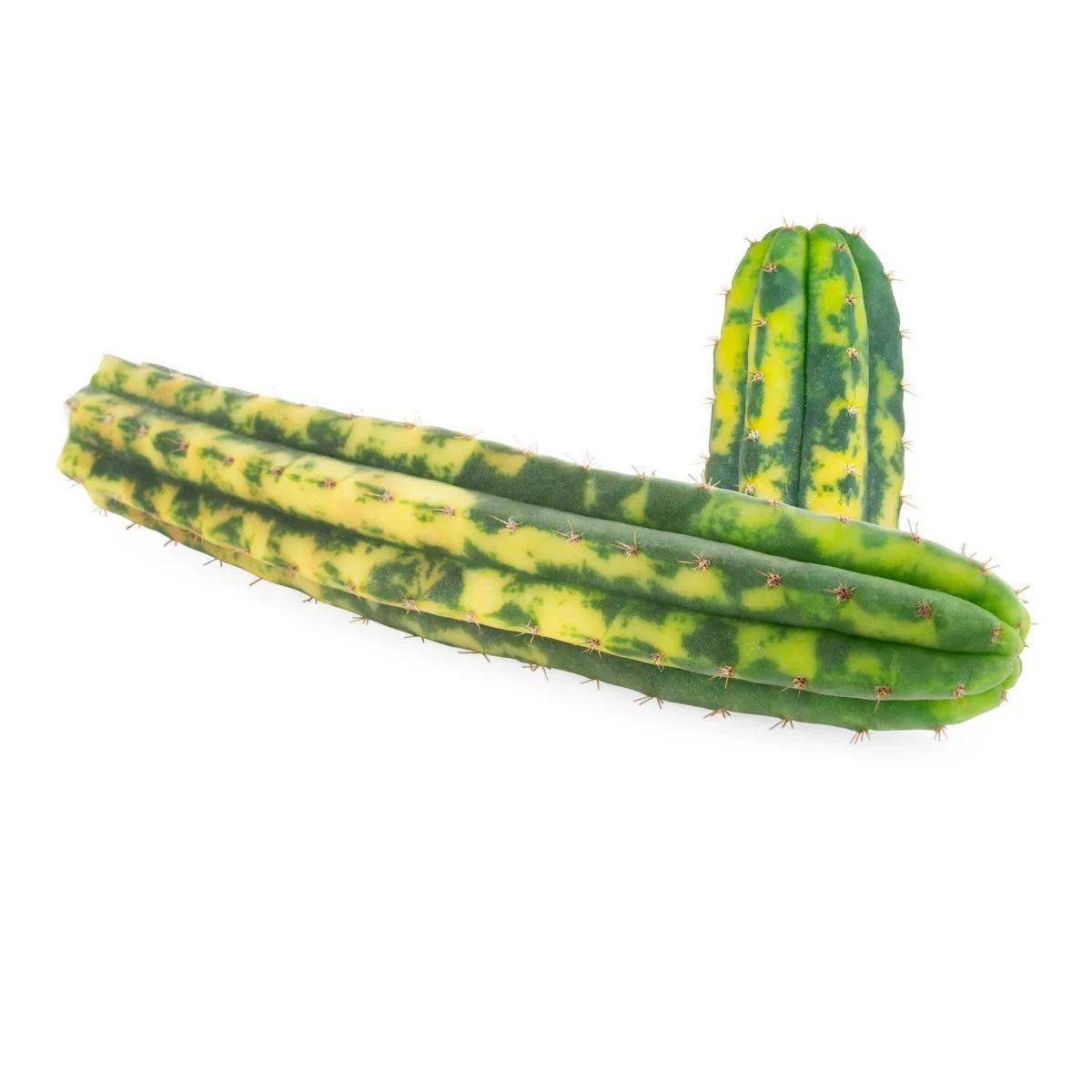
San Pedro Variegated (Echinopsis pachanoi variegata) Buenavista
Mescaline cacti
by Azarius
Variegated San Pedro Cactus "Buenavista" — A Rare Cultivar You Won't Find in the Wild
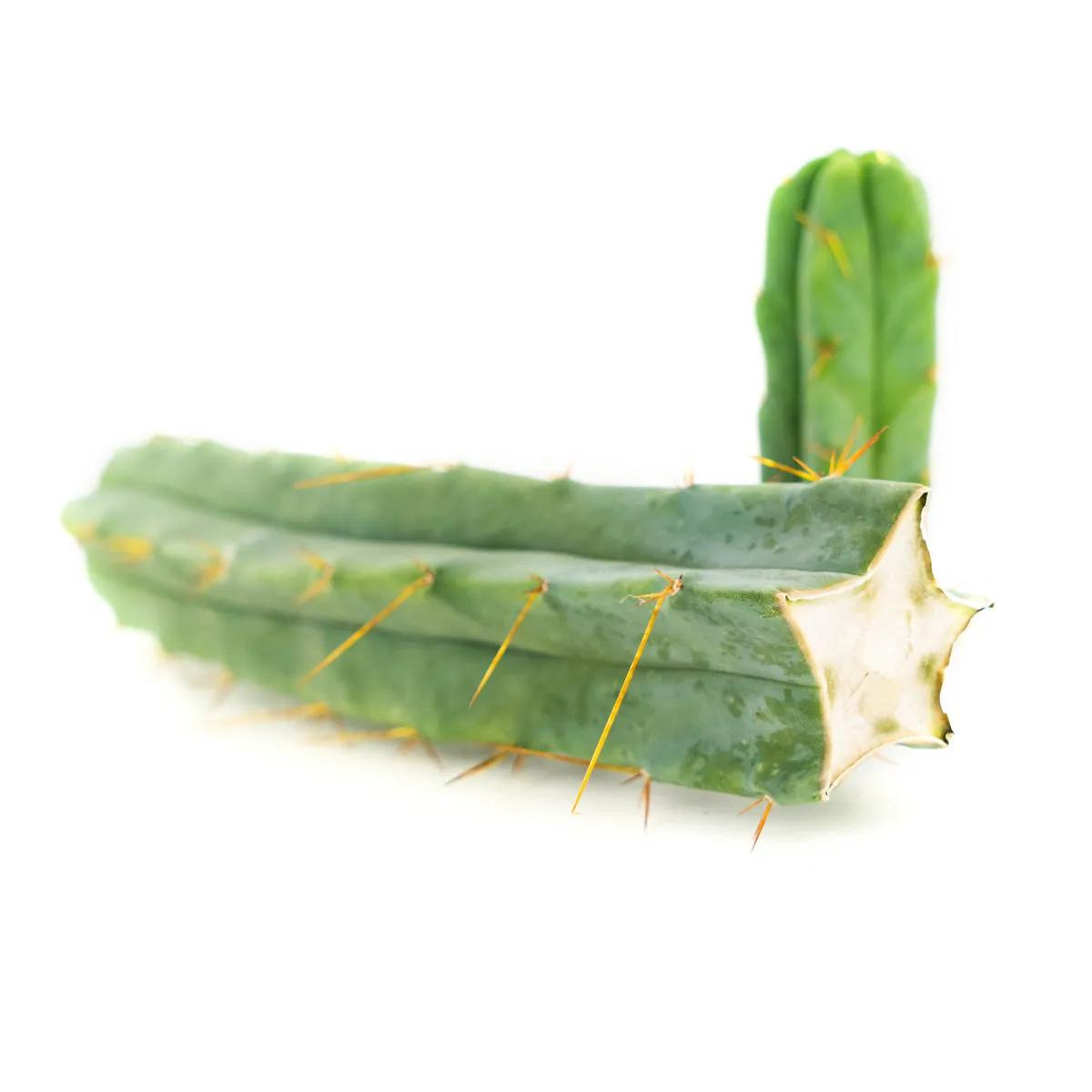
Variegated San Pedro "Buenavista" is a cultivated variety of the San Pedro cactus (Echinopsis pachanoi) that displays striking yellow-green variegation across its ribs — a trait you won't encounter on any mountainside in Peru or Bolivia. This particular cutting traces its lineage back roughly 20 years to a small nursery in Buenavista, Tenerife, where a regular San Pedro specimen gradually developed its distinctive colouring through years of selective breeding and cloning. We stabilised the variegata into mother stock, and now you can add a piece of that history to your own collection.
What You Receive
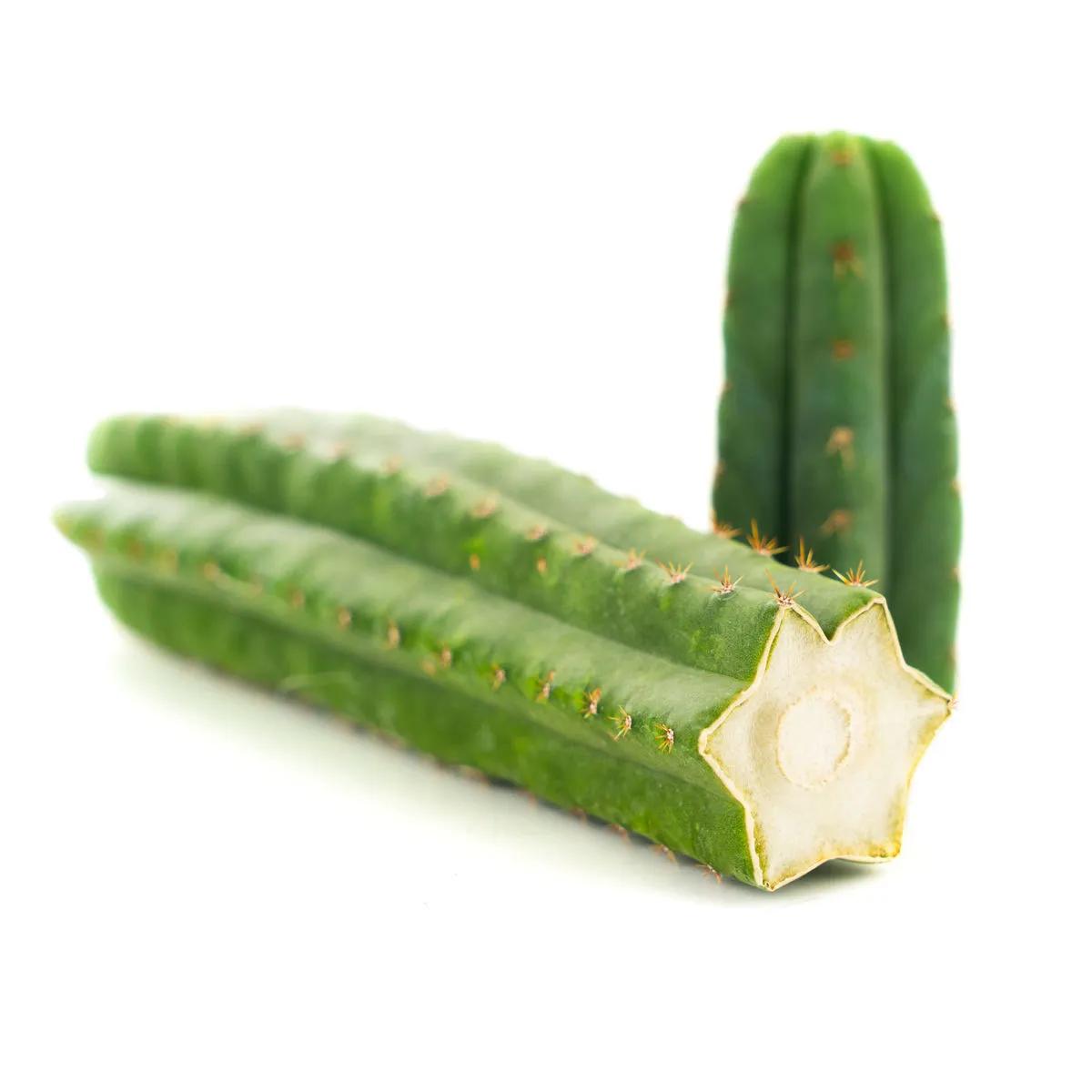
This listing is for a single small cutting measuring 10–11 cm. It arrives unrooted — you'll need to let the cut end callous over before planting. Each cutting carries the characteristic yellow-green variegation of the Buenavista line, though the exact patterning varies from piece to piece. That's the nature of variegated cacti — no two cuttings look identical, which is half the appeal.
| Specification | Detail |
|---|---|
| Species | Echinopsis pachanoi (syn. Trichocereus pachanoi) |
| Cultivar | Variegata "Buenavista" |
| Origin of cultivar | Buenavista, Tenerife, Canary Islands |
| Rib count | Up to 7 |
| Cutting size | 10–11 cm (small) |
| Variegation | Yellow-green sectoral and mottled |
| Climate preference | Mediterranean — hot, dry summers; mild winters with light rainfall |
| Native habitat (species) | Andes Mountains, 2,000–3,000 m altitude |
| Growth habit | Columnar, fast-growing for a cactus |
| Rooting method | Callous cut end 7–14 days, then plant in well-draining soil |
Growing a cactus collection? Pair this Buenavista cutting with a standard San Pedro (Echinopsis pachanoi) or a Peyote (Lophophora williamsii) to round out your mescaline cactus shelf. If you're serious about propagation, a sharp grafting knife and sulphur powder for wound treatment make the whole process cleaner.
Why This Variegated San Pedro Deserves a Spot in Your Collection
Standard San Pedro is already a handsome cactus — tall, ribbed, fast-growing by succulent standards. The wild species colonises Andean slopes at altitudes of 2,000–3,000 metres and has been part of traditional Andean culture for centuries. But the Buenavista variegata takes it somewhere else entirely. The yellow-green patches where chlorophyll is partially absent create a marbled effect that shifts as the cactus grows, meaning your cutting will look different in 6 months than it does today.
Here's the honest limitation: variegated sections photosynthesise less efficiently than fully green tissue. That means this cultivar grows a bit slower than a regular San Pedro, and it needs slightly more care with sun exposure — too much direct midday sun can scorch the lighter patches. Think of it as the difference between a workhorse and a show horse. Both are San Pedro, but this one rewards a bit of extra attention with something genuinely unusual to look at.
We've been stocking cacti since 1999, and this Buenavista line is one of the few variegated San Pedro cultivars we've seen that holds its patterning reliably across cloned generations. Other variegated San Pedro specimens exist, but many revert to solid green after a generation or two. The Buenavista stock has spent roughly 20 years adapting to a Mediterranean climate on Tenerife, which means it thrives in conditions with hot, dry summers and mild winters — good news if you're growing outdoors in southern Europe or in a well-lit conservatory further north.
How the Buenavista Variegata Compares to Standard San Pedro
| Trait | Standard San Pedro | Variegated "Buenavista" |
|---|---|---|
| Colour | Uniform blue-green | Yellow-green variegation, mottled and sectoral |
| Rib count | 6–8 typical | Up to 7 |
| Growth rate | Fast (up to 30 cm/year in good conditions) | Moderate — reduced chlorophyll slows growth |
| Sun tolerance | Full sun once established | Bright light; protect pale sections from harsh midday sun |
| Climate origin | Andes, 2,000–3,000 m | Cultivated in Tenerife (Mediterranean climate) |
| Collector value | Common, widely available | Rare — stabilised variegata from 20+ years of breeding |
| Contains mescaline | Yes | Yes (same species) |
How to Root and Grow Your Variegated San Pedro Cutting
- Unpack your 10–11 cm cutting and inspect it. Some minor blemishing or dry spots on the cut end are normal and not a sign of disease.
- Stand the cutting upright in a dry, shaded spot with good airflow. Let the cut end callous over for 7–14 days. The wound should look dry and slightly hardened — no moisture, no soft spots.
- Prepare a pot with well-draining cactus soil. A 50/50 mix of organic potting soil and perlite or pumice works well. The pot needs a drainage hole — no exceptions.
- Place the calloused end about 2–3 cm into the soil. You can support the cutting with small stakes or stones if it wobbles.
- Wait 5–7 days before the first light watering. This gives any micro-damage from planting time to seal. After that, water when the top 3–4 cm of soil is bone dry.
- Position in bright, indirect light initially. Once you see signs of new growth at the tip (a lighter green or slightly glossy patch), you can gradually introduce more direct sunlight — but keep an eye on the variegated sections. If the yellow patches start browning, pull it back from the light.
- During the growing season (spring through early autumn), you can feed once a month with a dilute cactus fertiliser at half the recommended strength. In winter, stop feeding entirely and reduce watering to once every 4–6 weeks at most.
The Mescaline Connection: San Pedro in Traditional Andean Culture
San Pedro (Echinopsis pachanoi) has been used in traditional Andean ceremonies for centuries — archaeological evidence from the Chavín de Huántar temple complex in Peru dates its use to at least 1300 BCE. The cactus contains mescaline, a phenethylamine alkaloid, alongside trace amounts of other alkaloids. According to Wikipedia, the wild species is a fast-growing columnar cactus found at 2,000–3,000 m altitude in the Andes. The Buenavista cultivar shares the same species identity and alkaloid profile as its wild counterparts, though individual alkaloid concentrations can vary depending on growing conditions, age, and genetics.
We're not going to pretend this cactus is only ornamental — you already know what San Pedro contains. But this particular cutting, with its rare variegation and collector status, is genuinely something most people grow for the look of it. Either way, it's a San Pedro through and through.
Frequently Asked Questions
Will my Variegated San Pedro cutting look exactly like the photos?
No. Variegation patterns are unique to each cutting — some will have broad yellow sectors, others more mottled speckling. That's the nature of variegated plants. Every piece from the Buenavista mother stock carries the trait, but the exact distribution differs.
Can I grow Variegated San Pedro outdoors in northern Europe?
Only during summer. This cultivar adapted to Tenerife's Mediterranean climate over 20 years, so it handles hot, dry summers and mild winters well. North of the Alps, bring it indoors before temperatures drop below 5°C. A sunny windowsill or conservatory works through winter.
Does the variegation affect mescaline content?
Variegation reduces chlorophyll in affected tissue, which can influence overall alkaloid production. However, Echinopsis pachanoi variegata is the same species as standard San Pedro, and mescaline is still present. Exact concentrations vary by individual specimen and growing conditions.
How fast does Variegated San Pedro "Buenavista" grow?
Slower than a standard green San Pedro. Regular specimens can push 30 cm per year in ideal conditions. Expect roughly half to two-thirds of that rate with the Buenavista variegata, since the yellow-green sections photosynthesise less efficiently.
Can I graft this cutting onto another cactus?
Yes. Grafting onto a vigorous rootstock like Pereskiopsis or Trichocereus bridgesii can speed up growth significantly and is a common technique for variegated specimens. Use a clean, sharp blade and match the vascular rings as closely as possible.
How do I stop the variegation from reverting to solid green?
If new growth comes in fully green, prune it back to the last variegated section. The Buenavista line is more stable than most variegated San Pedro, but occasional green pups are normal. Removing them encourages the plant to push variegated growth instead.
What's the difference between this and other variegated San Pedro on the market?
The Buenavista cultivar has been selectively bred and stabilised over roughly 20 years from a single nursery in Tenerife. Other variegated San Pedro may come from random mutations that haven't been stabilised, meaning their offspring are more likely to revert to green.
Last updated: April 2026
Related products
You might also like
Medical disclaimer. This content is for informational purposes only and does not constitute medical advice. Consult a qualified healthcare provider before use of any substance.