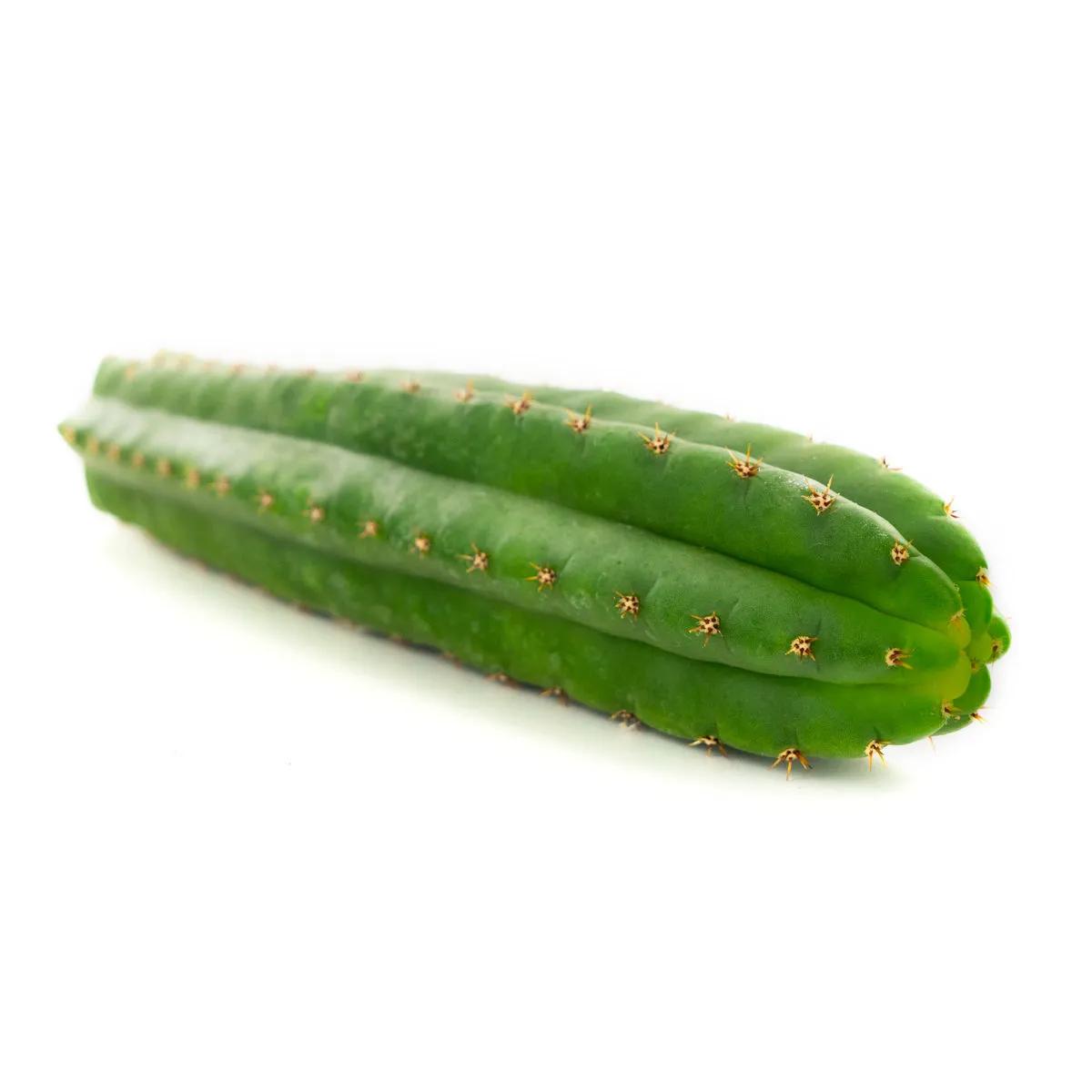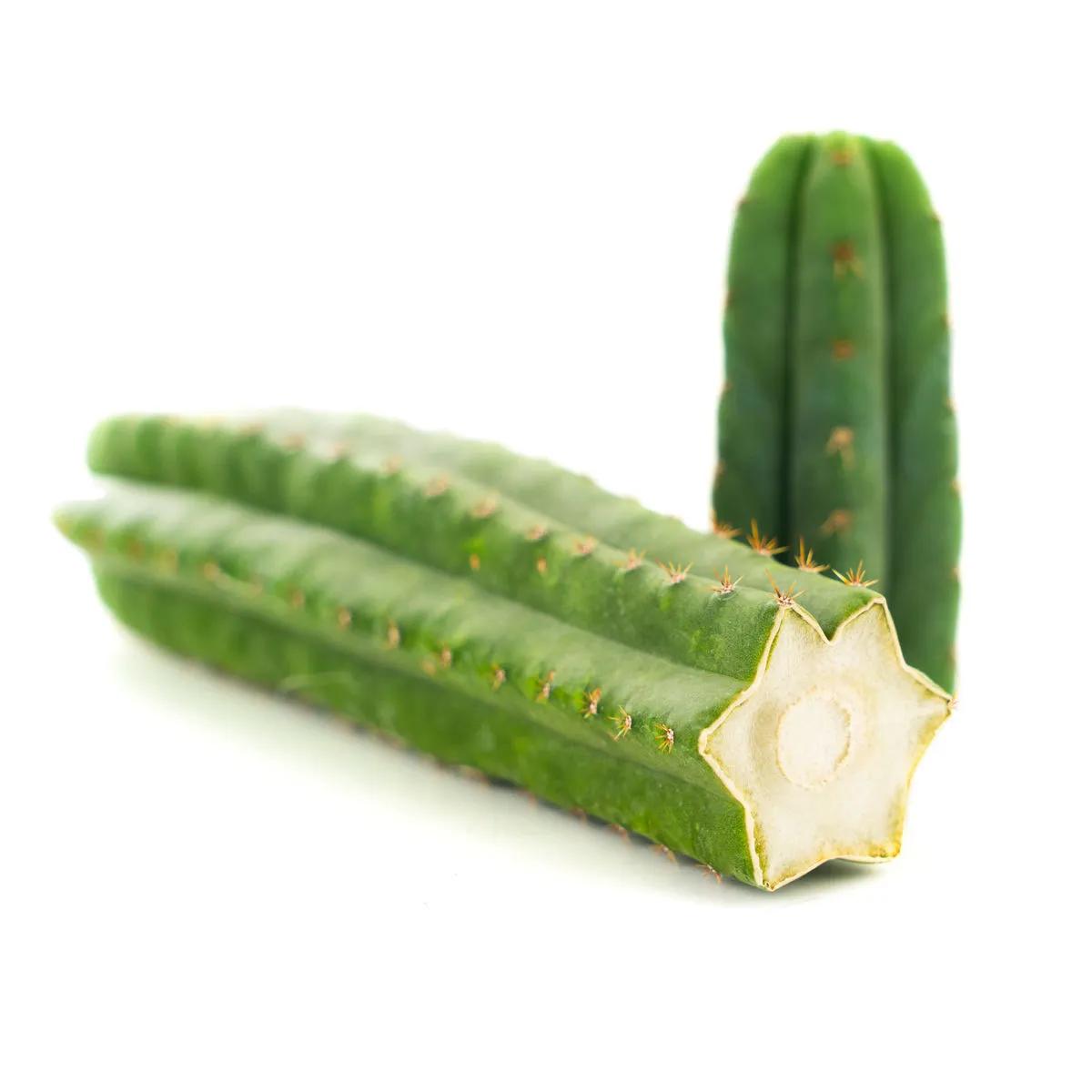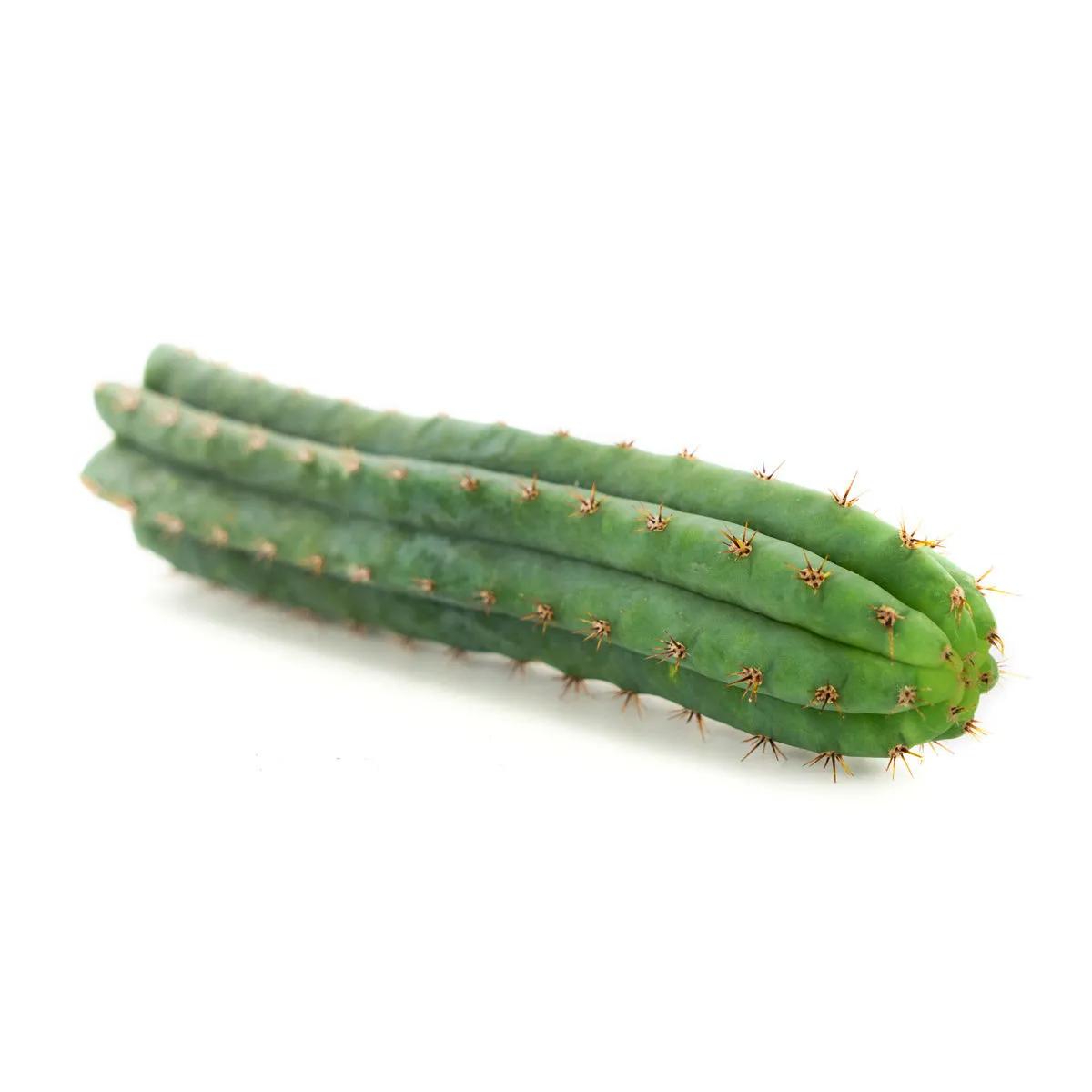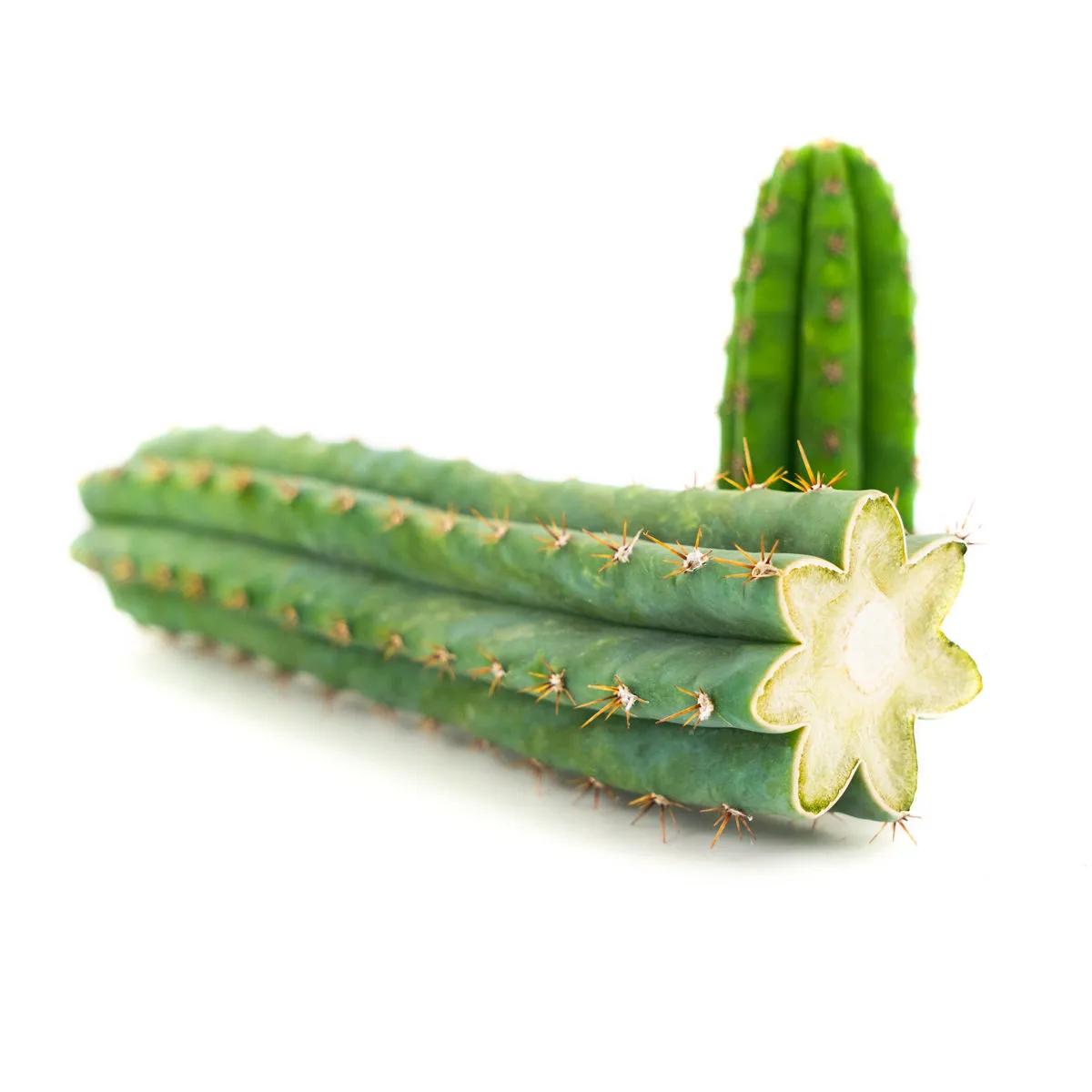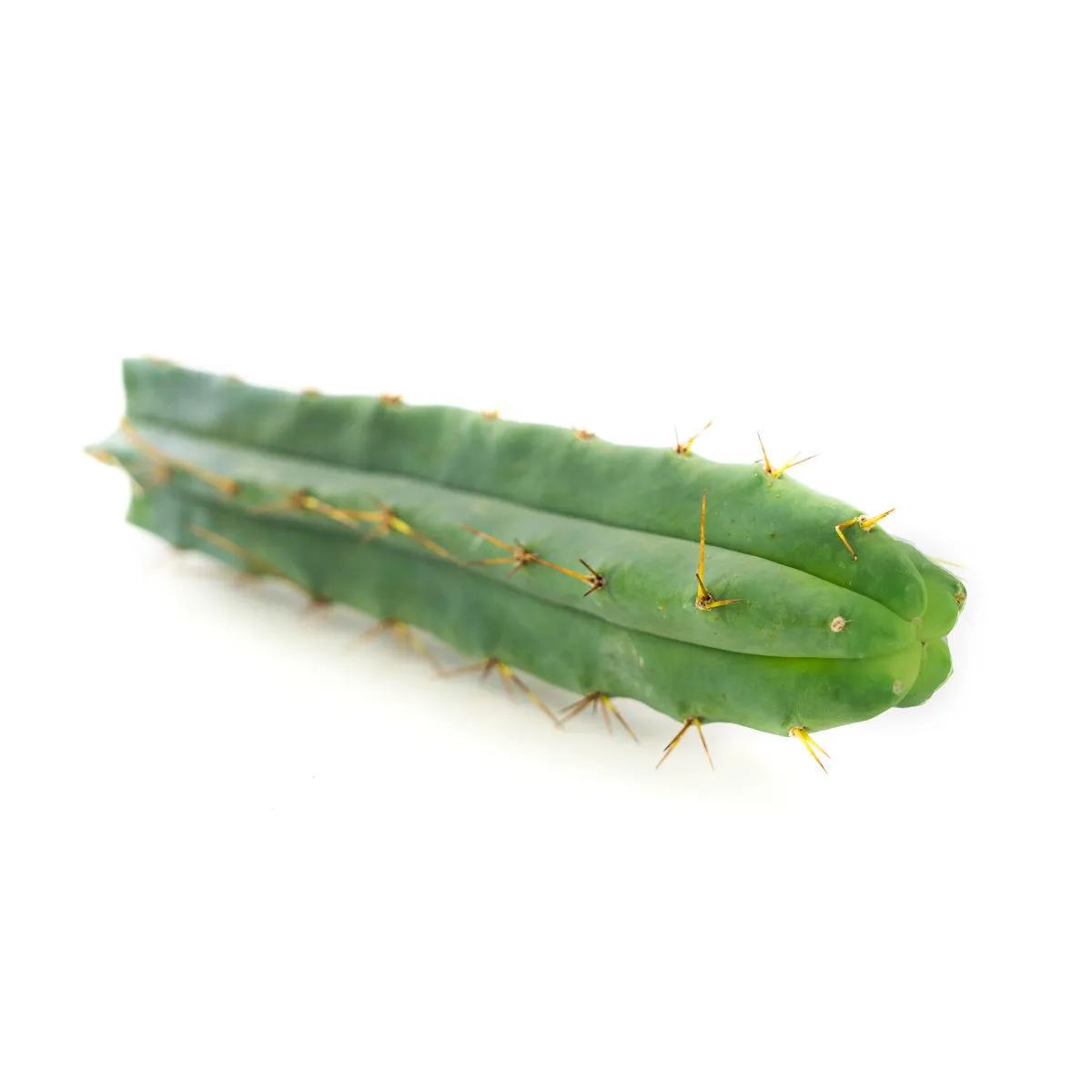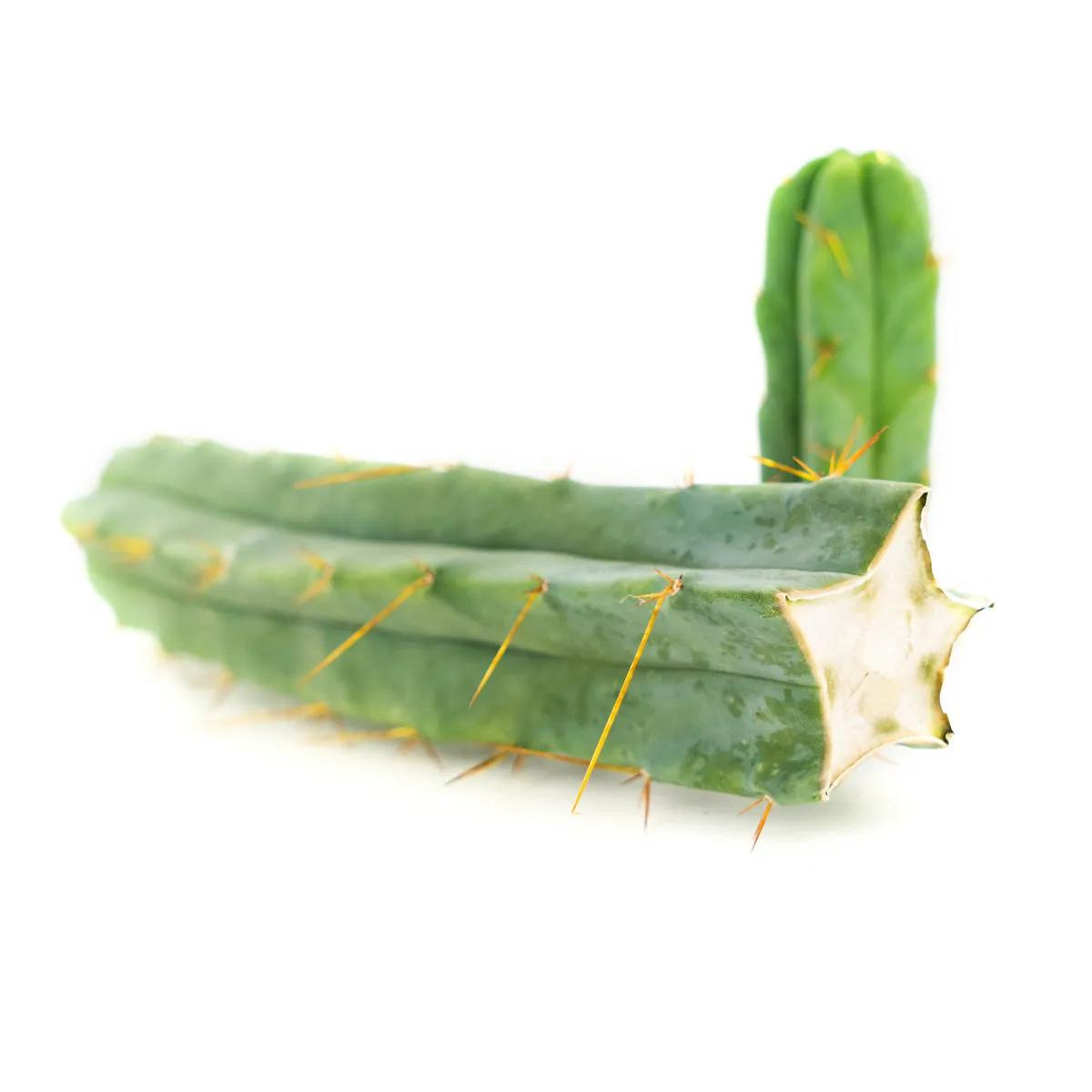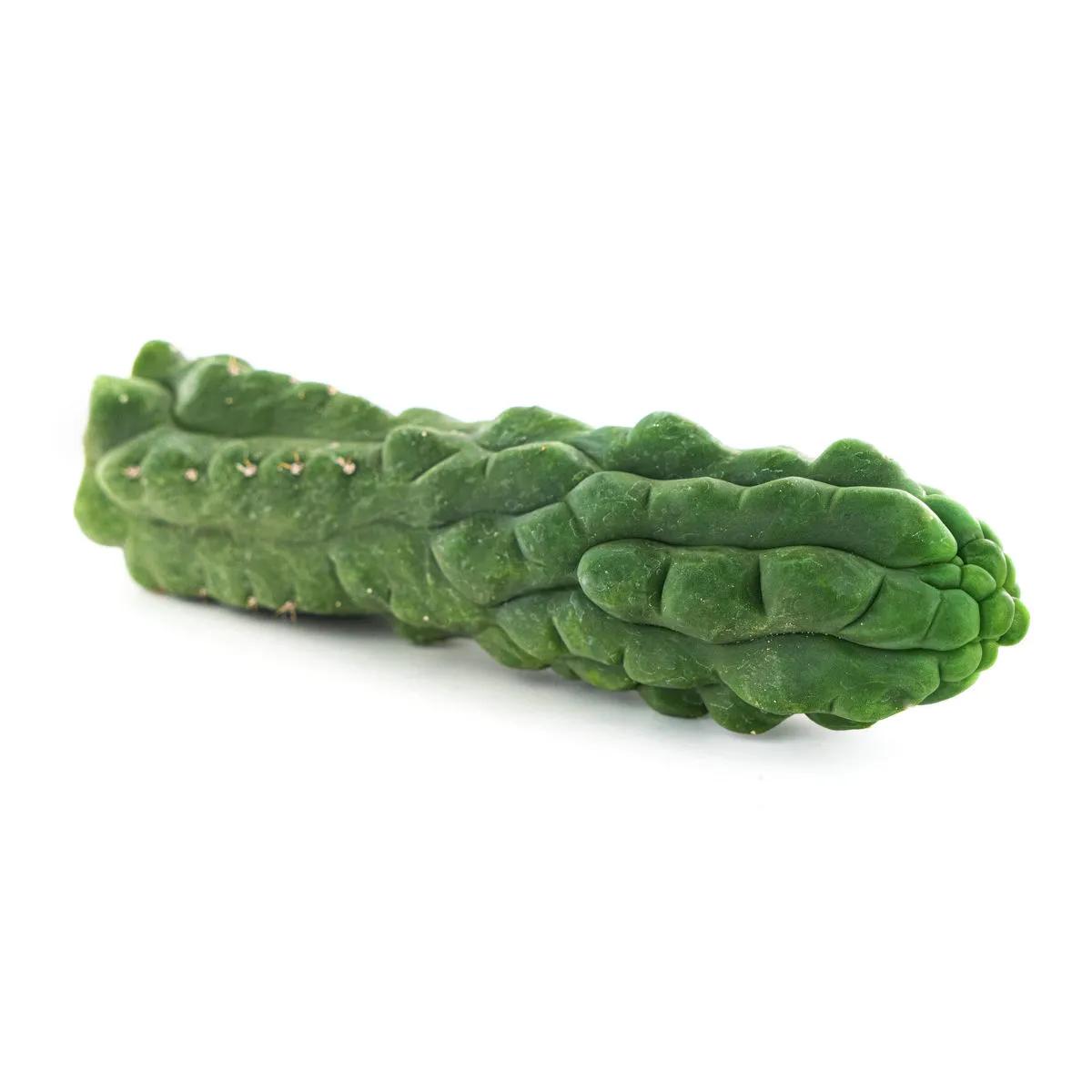
San Pedro Monstrose (Echinopsis pachanoi var. Monstrose) is a rare mutant cultivar of the classic Andean San Pedro cactus that grows in wildly unpredictable, sculptural patterns — no two specimens ever look alike. Same species, same alkaloid profile as the standard pachanoi, but with a "monstrous" growth habit that twists the ribs into shapes you couldn't draw on purpose. For collectors, it's one of the most interesting Echinopsis pachanoi variants we stock.
Why the Monstrose is worth a slot in your collection
Because every single cutting looks different. The "monstrose" designation in cactus taxonomy refers to abnormal, irregular growth — uneven ribs, asymmetric tubercles, and bulging segments that emerge in patterns the plant itself seems to invent as it goes. Unlike the cristata (crested) form, which fans out flat, the Monstrose stays roughly columnar but warps and bulges along the way.
Genetically, it's still Echinopsis pachanoi. The same cactus that's been used in Andean ceremony for more than 3,000 years, according to ICEERS. The mature height is comparable to standard pachanoi, and according to ethnobotanical research published in The ethnobotany of psychoactive plant use (Alrashedy & Molina, 2016), Echinopsis spp. including Trichocereus pachanoi share the same alkaloid family across cultivars.
How the Monstrose compares to other San Pedro variants we stock
If you're choosing between the rare Echinopsis pachanoi cultivars on the shelf, here's how they break down.
| Variant | Growth habit | Best for |
|---|---|---|
| Standard San Pedro | Straight columnar, 6–8 ribs | First-time growers, classic look |
| San Pedro Monstrose | Irregular, bulging, unpredictable | Collectors who want a one-of-one specimen |
| San Pedro Crested (cristata) | Fan-shaped, fasciated growth | Sculptural display pieces |
| 7-Ribbed San Pedro | Columnar with unusual rib count | Pachanoi purists chasing rib variation |
| Super Pedro (scopulicola) | Smooth, fast-growing column | Growers prioritising height |
Honest limitation: because the Monstrose grows unpredictably, you can't pick the shape. We grade and ship healthy specimens, but if you're imagining a specific silhouette, you'll be disappointed. Embrace the surprise or buy the standard pachanoi.
Specifications
| Botanical name | Echinopsis pachanoi var. Monstrose |
|---|---|
| Common name | San Pedro Monstrose |
| Origin | Andes mountains, South America (parent species) |
| Growth habit | Monstrose — irregular, unpredictable rib formation |
| Mature height | Comparable to standard pachanoi (up to several metres over years) |
| Cold tolerance | Tolerates cool temperatures well |
| Sunlight | Bright but indirect — avoid harsh direct sun |
| Soil | Free-draining cactus soil |
| Watering | Sparse once rooted; susceptible to fungal rot if overwatered |
| SKU | SM0073 |
How to grow San Pedro Monstrose
Easy. Echinopsis pachanoi is one of the most forgiving "holy cacti" you can grow — the Monstrose is no exception. It comes from the high-altitude Andes, so it handles cold far better than most desert cacti.
- Plant the cutting in free-draining cactus soil. Any standard cactus mix from a garden centre works.
- Choose a bright spot with indirect sunlight. Direct midday sun scorches young pachanoi, especially indoors behind glass.
- Wait for the cut end to callus over (a few days to a week) before planting if you've just received the cutting.
- Water sparingly — once the roots establish, this cactus needs very little. In winter, basically none.
- Watch for fungal issues. Overwatering is the number one killer. The Monstrose is less fungus-sensitive than some cultivars, but still — when in doubt, don't water.
- Repot every 2–3 years as it outgrows its container.
Sensory note: when the cactus is healthy, the skin has a slightly waxy, blue-green sheen and the spines are short, stubby, and surprisingly soft compared to a true desert cactus. If it starts looking yellow or shrivelled at the base, you've watered too much.
Pairs well with a proper terracotta pot and a bag of mineral cactus soil — both give the roots the drainage they need to avoid the fungal rot that kills more pachanoi than anything else. If you're starting a collection, the standard Echinopsis pachanoi and the San Pedro Crested make natural shelf-mates alongside this one.
What's in San Pedro cactus
San Pedro contains mescaline, a phenethylamine alkaloid also found in the North American peyote cactus. According to Drug–drug interactions involving classic psychedelics (Malcolm & Thomas, 2022), mescaline (3,4,5-trimethoxyphenethylamine) is the principal alkaloid in both Lophophora williamsii and the South American Echinopsis pachanoi. According to Psychedelic medicine: a re-emerging therapeutic model (Tupper et al., 2015), mescaline acts as a 5-HT2A serotonin receptor agonist on pyramidal neurons.
According to The epidemiology of mescaline use (Agin-Liebes et al., 2021), Trichocereus pachanoi is also known traditionally as "huachuma" in Andean contexts, with documented use spanning several millennia per ICEERS ethnobotanical records.
This guide is written for adults. Information about traditional use and pharmacology applies to adult physiology — this cactus is not appropriate for people under 18.
Frequently Asked Questions
What is San Pedro cactus?
San Pedro (Echinopsis pachanoi) is a columnar cactus native to the Andes mountains of South America. According to ICEERS, it has traditional ceremonial and medicinal use dating back more than 3,000 years and contains the alkaloid mescaline.
Does the Monstrose variety contain the same alkaloids as standard San Pedro?
Yes. The Monstrose is a mutant cultivar of Echinopsis pachanoi with the same alkaloid profile as the standard variety. The "monstrose" name refers only to the abnormal growth pattern, not to chemistry.
Why does each Monstrose cactus look different?
Monstrose growth is a spontaneous mutation that causes irregular rib formation. The cactus develops bulges, twists, and uneven segments in patterns that aren't genetically fixed — so every specimen grows into a one-of-a-kind shape.
Is San Pedro Monstrose hard to grow?
No, it's one of the easier cacti. Echinopsis pachanoi tolerates cold better than most cacti thanks to its Andean origin. The main risk is overwatering, which causes fungal rot — water sparingly and use free-draining cactus soil.
How tall will it grow?
Mature height is comparable to standard San Pedro pachanoi, which can reach several metres over many years. Growth is slow — expect a few centimetres per year under typical home conditions, faster outdoors in warm climates.
Should I put it in direct sunlight?
No. Bright, indirect light is best. Direct midday sun — especially through window glass — can scorch the skin. A shaded outdoor spot or a bright windowsill that doesn't catch full sun works well.
Last updated: April 2026