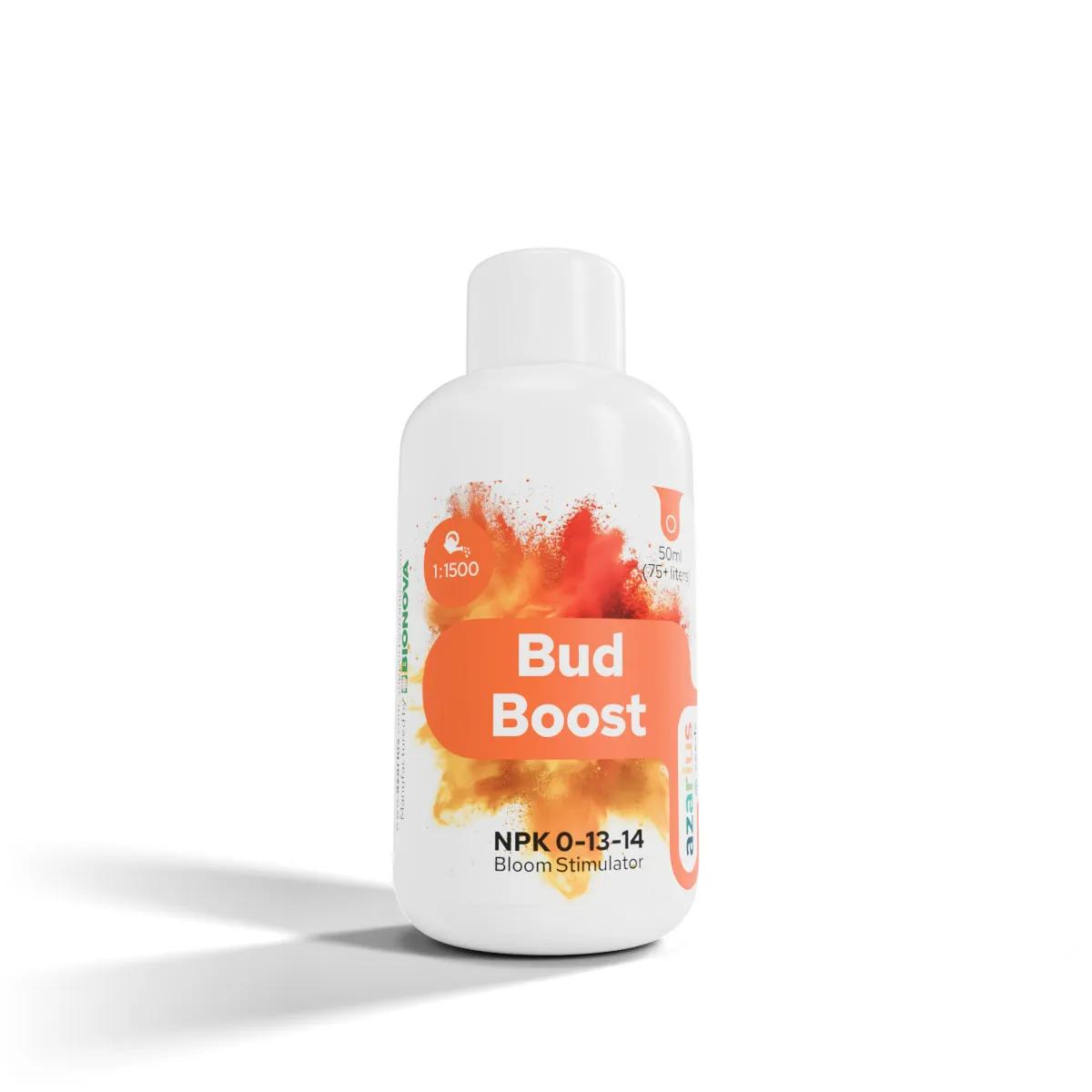
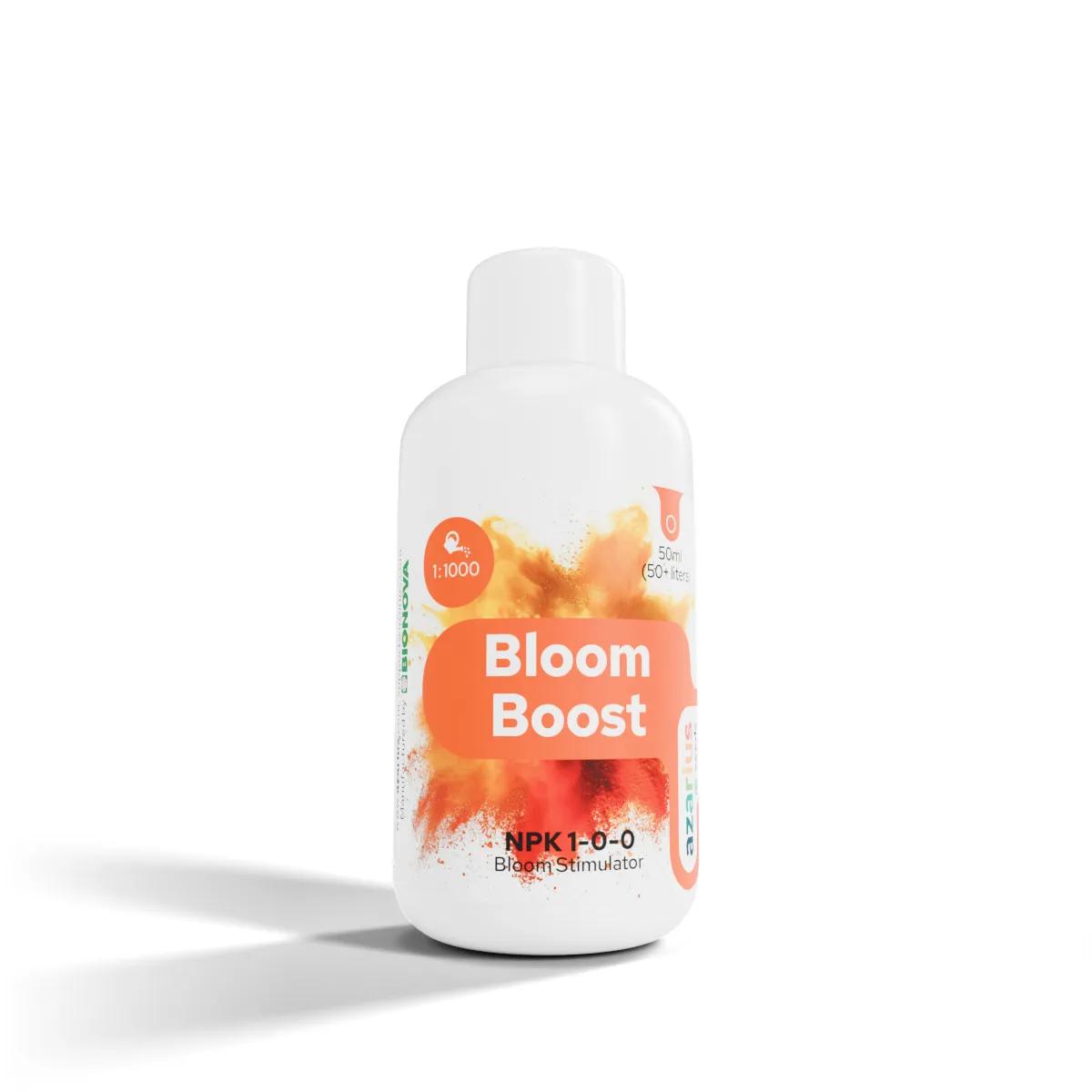
Bloom Boost Bloom Stimulator for Bigger, Denser Buds
Azarius Bloom Boost is a 100% natural bloom stimulator that combines organic nitrogen, kelp extract, and humic acids to drive heavier, more resinous flowers during the flowering phase. Unlike standard base nutrients that simply feed your plants, Bloom Boost actively improves how efficiently your plants absorb and use those nutrients — meaning more of what you feed actually ends up in the buds, not wasted in runoff.
Why Your Bloom Feed Needs a Boost
Most growers dial in their base nutrients and call it done. That gets you decent results. But the difference between decent buds and genuinely impressive buds — thick, sticky, room-filling aroma — comes down to what happens alongside your base feed. Bloom Boost fills that gap.
Here's the thing we've seen time and again since 1999: growers who add a dedicated bloom stimulator during weeks 2 through 8 of flowering consistently pull heavier, denser harvests than those running base nutrients alone. The kelp extract in Bloom Boost delivers natural plant hormones and micronutrients that your base feed simply doesn't contain. Humic acids act like a taxi service for nutrients — they chelate minerals and carry them directly to the root zone where they're immediately available. And the organic nitrogen keeps your plant strong enough to support all that extra bud weight without yellowing out too early.
The honest limitation? Bloom Boost isn't a base nutrient. It won't replace your regular NPK feed. Think of it as the difference between a decent meal and the same meal with proper seasoning — the foundation matters, but the finishing touches are what make it memorable. If your base nutrition is off, fix that first. If your base nutrition is solid, this is where your results jump up a level.
What's Inside Bloom Boost
Three active components do the heavy lifting, and each one has a specific job during flowering.
| Ingredient | Function | Why It Matters in Bloom |
|---|---|---|
| Organic Nitrogen | Maintains chlorophyll and enzyme production | Prevents premature leaf drop so plants can photosynthesise right through late flower |
| Kelp Extract | Supplies cytokinins, auxins, and trace minerals | Stimulates cell division in flower sites, increasing bud density and resin output |
| Humic Acids | Chelates nutrients and improves root-zone CEC | Makes existing nutrients in your medium more available — less waste, better uptake |
Everything in the formula is fully water-soluble, which matters more than you'd think. Poorly soluble bloom additives leave salt deposits in drip lines, clog emitters in hydro systems, and create nutrient lockout in soil. Bloom Boost dissolves cleanly and won't gum up your system — we've run it through NFT channels and drip-to-waste setups without a single blockage.
Bloom Boost vs Standard PK Boosters
If you've used a PK booster before (phosphorus-potassium), you might wonder what Bloom Boost does differently. Standard PK boosters dump extra P and K into your feed to push flower formation. That works, but it's a blunt instrument — too much P locks out calcium and magnesium, too much K causes tip burn. We'd pick Bloom Boost over a basic PK booster because it takes a different approach entirely: instead of just adding more minerals, it makes your plant better at using the minerals already present.
That said, Bloom Boost and a PK booster aren't mutually exclusive. Many growers in our community run both — Bloom Boost from week 2 of flower for the uptake benefits, then a PK booster in weeks 4-6 for the final push. The humic acids in Bloom Boost actually make PK boosters more effective by improving their bioavailability. If you're only going to add one product to your base feed, though, we'd go with Bloom Boost. The broader range of benefits — nitrogen balance, kelp hormones, humic chelation — gives you more for your money than phosphorus and potassium alone.
How to Use Bloom Boost
- Begin adding Bloom Boost from week 2 of the flowering phase. During week 1, your plants are still transitioning — let them settle in before introducing the stimulator.
- Add 4 ml per 5 gallons (approximately 19 litres) of nutrient solution during the first week of use. This is your starting concentration.
- Increase the dose by 1 ml per 5 gallons each subsequent week, working up to 8 ml per 5 gallons by mid-flower.
- Mix Bloom Boost into your nutrient solution after your base nutrients are already dissolved. Add it last, stir well, and check your EC — you shouldn't see a significant spike.
- Continue through week 8 of flowering. If you flush before harvest, stop adding Bloom Boost when you begin your flush period.
- For foliar application, use 2-3 ml per 5 gallons and spray during lights-off. Foliar feeding works best in early flower (weeks 2-4) before buds are too dense to dry properly.
One thing to watch: don't eyeball the dose. A syringe or graduated measuring cup costs next to nothing and prevents overfeeding. Organic nitrogen is gentler than synthetic, but more isn't always better — stick to the recommended range and let the humic acids do their job of maximising uptake from what's already there.
Works in Any Grow System or Medium
We've tested Bloom Boost across soil, coco, deep water culture, drip-to-waste hydro, and aeroponics. The fully water-soluble formula means zero residue in reservoirs and no clogged drippers. In soil, the humic acids have the added benefit of improving soil structure and microbial activity — your beneficial bacteria and fungi will thank you. In hydro, the clean dissolution means you can run it through fine mist nozzles in aero setups without worrying about blockages.
| Growing Medium | Application Method | Notes |
|---|---|---|
| Soil | Root drench via watering | Humic acids also improve soil CEC and microbial life |
| Coco Coir | Added to nutrient solution | Helps buffer coco's natural tendency to lock out calcium |
| Hydroponics (DWC, NFT, Drip) | Mixed into reservoir | No salt buildup — safe for recirculating systems |
| Aeroponics | Mixed into reservoir | Fully soluble — won't clog mist nozzles |
| Foliar Spray | Sprayed on leaves during lights-off | Best in early flower only (weeks 2-4) |
Specifications
| Specification | Detail |
|---|---|
| Brand | Azarius |
| Product Type | Bloom Stimulator |
| Key Ingredients | Organic Nitrogen, Kelp Extract, Humic Acids |
| Formula | 100% Natural, Fully Water-Soluble |
| Application Rate | 4-8 ml per 5 gallons (19 litres) |
| Application Phase | Flowering — Week 2 through Week 8 |
| Compatible Media | Soil, Coco, Hydro, Aero |
| Application Methods | Root drench, Reservoir mix, Foliar spray |
| Salt Buildup Risk | None — fully soluble formula |
Complete your flowering setup: pair Bloom Boost with a solid base nutrient for the flowering phase and a quality pH meter to keep your root zone dialled in. If you're growing in a tent, check our carbon filters and extraction fans — dense, aromatic buds are exactly what you want in the jar, not floating through your flat.
Frequently Asked Questions
Can I use Bloom Boost alongside my existing PK booster?
Yes. Bloom Boost and PK boosters work through different mechanisms — Bloom Boost improves nutrient uptake and provides kelp-based growth hormones, while PK boosters add extra phosphorus and potassium. The humic acids in Bloom Boost actually make your PK booster more effective. Just monitor your EC to avoid overfeeding.
When should I start using Bloom Boost during flowering?
Start from week 2 of the flowering phase at 4 ml per 5 gallons. Week 1 is a transition period — your plants are still stretching and adjusting to the light cycle change. From week 2 onwards, increase by 1 ml per week up to 8 ml per 5 gallons.
Will Bloom Boost clog my hydroponic system?
No. The formula is fully water-soluble with zero residue. We've run it through NFT channels, drip emitters, and aeroponic mist nozzles without any blockages. No salt buildup, no sediment in the reservoir.
Is Bloom Boost organic?
Yes — 100% natural ingredients. The nitrogen source is organic, the kelp extract is derived from seaweed, and humic acids are naturally occurring compounds found in decomposed organic matter. Safe for organic growing methods.
Do I need to adjust pH after adding Bloom Boost?
Always check pH after adding any product to your nutrient solution. Bloom Boost has a minimal impact on pH compared to synthetic additives, but small fluctuations can occur. Keep your pH in the optimal range for your medium — 5.8-6.2 for hydro, 6.0-6.5 for soil.
Can I use Bloom Boost as a foliar spray?
Yes, at a reduced rate of 2-3 ml per 5 gallons. Spray during lights-off to prevent leaf burn. Foliar application works best in early flower (weeks 2-4) — once buds develop, moisture trapped in dense flower sites can invite mould. Switch to root-only application from mid-flower onwards.
How is Bloom Boost different from a standard bloom fertiliser?
A bloom fertiliser provides NPK — the raw building blocks. Bloom Boost is a stimulator, not a fertiliser. It improves how your plant absorbs and uses those building blocks through humic acid chelation and kelp-derived plant hormones. You still need your base feed; Bloom Boost makes it work harder.
Last updated: April 2026