
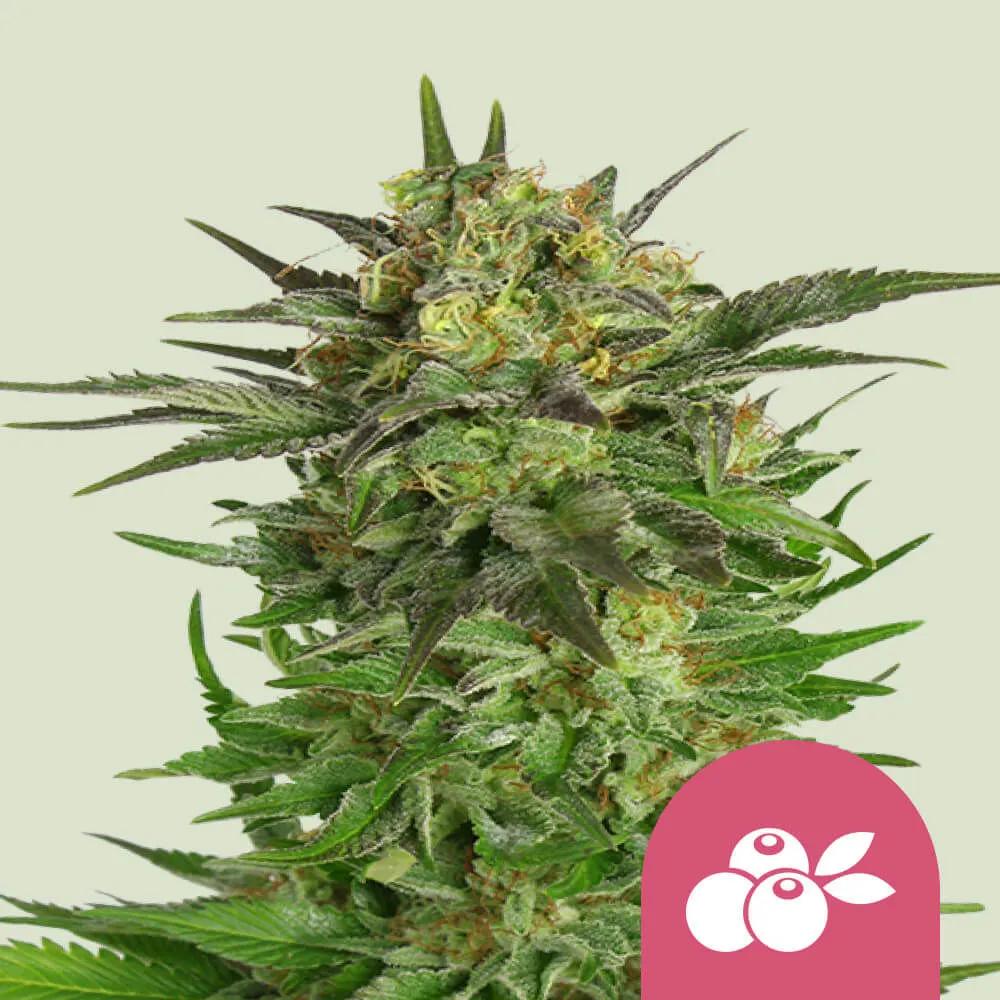
Haze Berry Feminized Cannabis Seeds by Royal Queen Seeds
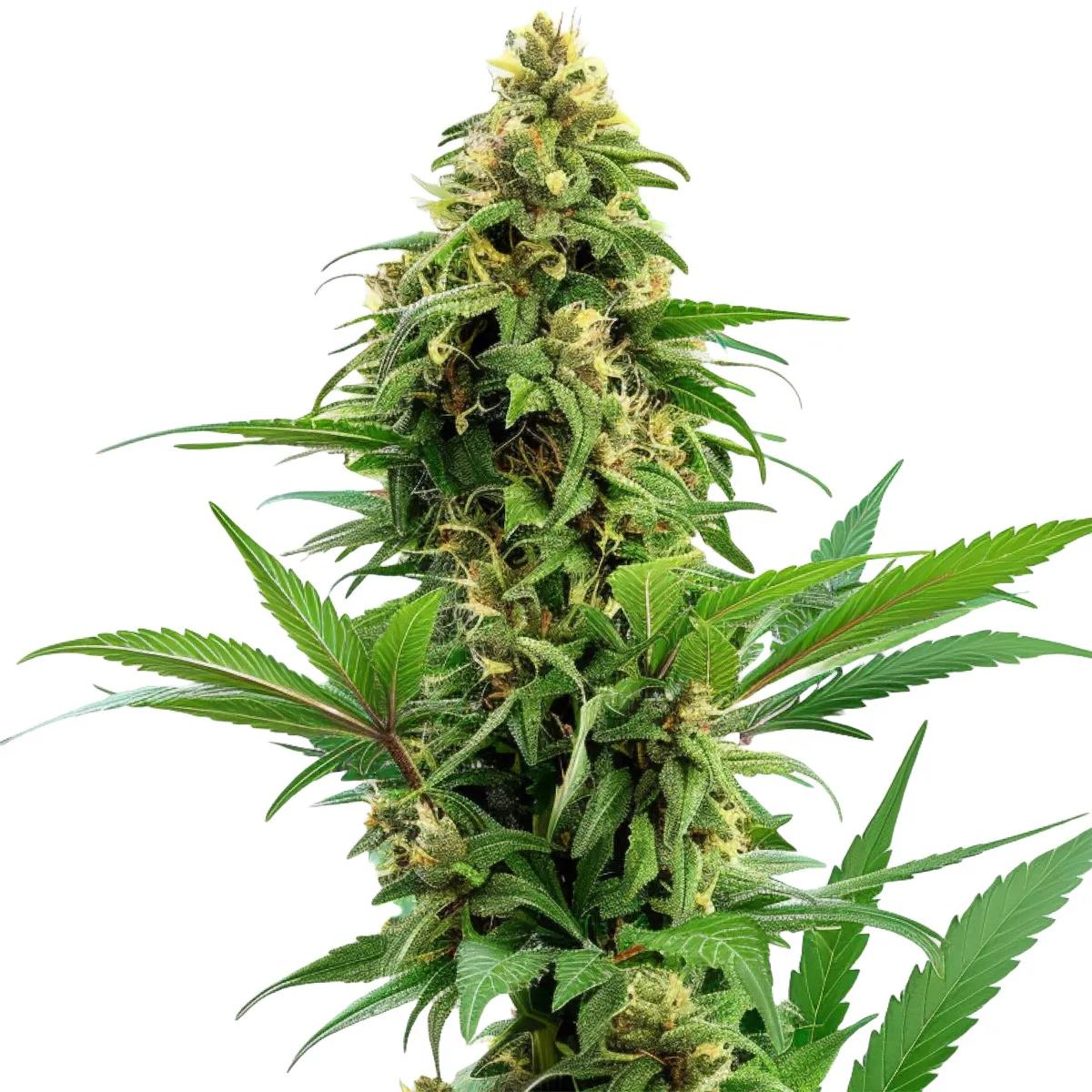
Haze Berry is a sativa-dominant feminized cannabis seed strain from Royal Queen Seeds that crosses two legendary genetics — Blueberry and Shining Silver Haze — into an 80/20 sativa-indica hybrid built for flavour chasers and growers who want reliable, generous harvests. With a flowering time of 9–11 weeks, indoor yields of 525–575g/m², and outdoor plants pushing up to 650g/plant, this strain delivers both in the grow room and in the jar. The sweet berry aroma is unmistakable — think ripe blueberries with a smooth, hazy finish that lingers.
How Many Haze Berry Seeds Do You Need?
| Pack Size | Best For |
|---|---|
| 1 seed | Single-plant test run — get to know the strain before committing. Good if you're tight on tent space or running a Sea of Green alongside other genetics. |
| 3 seeds | A small personal grow. Enough to select the best phenotype and still have a solid harvest. We'd pick this one for most home growers. |
| 5 seeds | Room to experiment with different training techniques or environments. Gives you a proper feel for the strain's range. |
| 10 seeds | Serious run. Fill a 1.2x1.2m tent or a full outdoor plot. Best value per seed if you already know you like the Blueberry-Haze profile. |
Haze Berry Strain Genetics and Lineage
Haze Berry descends from two of the most celebrated cultivars in cannabis history. The mother side is Blueberry — believed to be from an original DJ Short clone, the same genetic line that swept the High Times Cannabis Cup in 2000 and essentially defined the "berry" flavour category in cannabis. The father side is Shining Silver Haze, Royal Queen Seeds' own take on the classic Haze lineage that traces back to the original Haze Brothers genetics from 1970s Santa Cruz.
That 80% sativa / 20% indica split shows up clearly in how the plant grows. You get the tall, stretchy structure and long flowering time from the Haze side, but the Blueberry genetics keep things slightly more compact than a pure sativa would be. Indoors, expect plants between 60–100cm. Outdoors, they can stretch to 180cm — still manageable for a sativa-leaning hybrid. The indica influence also shows up in the bud structure: denser and fatter than a typical Haze, which is partly why the yields are so generous for a sativa-dominant strain.
| Specification | Detail |
|---|---|
| Seed Bank | Royal Queen Seeds |
| Seed Type | Feminized (photoperiod) |
| Genetics | Blueberry x Shining Silver Haze |
| Sativa / Indica | 80% / 20% |
| Flowering Time | 9–11 weeks |
| Indoor Height | 60–100cm |
| Outdoor Height | Up to 180cm |
| Indoor Yield | 525–575g/m² |
| Outdoor Yield | 600–650g/plant |
| THC Content | 20–22% |
Haze Berry Flavour and Aroma Profile
The flavour is where Haze Berry really earns its name. Crack open a cured bud and the first thing that hits you is ripe blueberry — not artificial or candy-sweet, but that deep, slightly tart berry scent you get from actual fruit. Underneath that, there's the classic Haze spiciness: a peppery, almost incense-like note that adds complexity and stops it from being one-dimensional.
The smoke itself is smooth and sweet. No harshness on the inhale, and the berry flavour carries through on the exhale with a lingering sweetness that sits on the palate. If you've ever grown or smoked DJ Short's Blueberry, you'll recognise that signature flavour immediately — Haze Berry inherits it faithfully. The Haze side adds a subtle earthy undertone that grounds the sweetness. It's the kind of strain where people in the room will ask what you're smoking.
Depending on your growing conditions — particularly cooler nighttime temperatures during late flowering — the buds and leaves can develop blue and purple hues. It's not guaranteed, but when it happens, you end up with some of the most photogenic cannabis you'll ever grow. Fat, dense buds dusted with trichomes, streaked with purple. Looks as good as it tastes.
Haze Berry Growing Guide: Indoor and Outdoor
Haze Berry is a forgiving strain to grow, which makes it a solid pick if you're moving beyond your first couple of harvests and want something with a bit more character than a basic indica. The one thing to be aware of: that 9–11 week flowering time is longer than most indica-dominant strains. If you're used to 8-week harvests, you'll need to adjust your schedule. The extra wait is worth it — those final two weeks are when the berry terpenes really develop and the buds pack on their last layer of density.
- Germinate your Haze Berry seeds using the paper towel method or directly in a starter plug. Royal Queen Seeds' feminized genetics have strong germination rates, but keep your medium moist and warm (around 22–25°C).
- Transplant seedlings into their final containers once they've developed 2–3 sets of true leaves. For indoor grows, 11–15 litre pots work well given the modest 60–100cm indoor height.
- During vegetative growth, consider topping or low-stress training (LST) to manage the sativa stretch and create an even canopy. This strain responds well to training and will reward you with more even light distribution across the bud sites.
- Switch to 12/12 lighting when your plants are roughly half the final height you want — the sativa genetics mean Haze Berry will stretch noticeably during the first 2–3 weeks of flowering.
- Monitor humidity carefully during weeks 6–11 of flowering. Those dense, fat buds can trap moisture, and the last thing you want is bud rot at the finish line. Keep relative humidity below 50% in late flower.
- If you're growing outdoors, Haze Berry thrives in warm, Mediterranean-style climates. Plants can reach 180cm and produce up to 650g/plant. Harvest timing will depend on your latitude, but expect mid to late October in most European climates.
- Flush for the final 1–2 weeks before harvest to let the plant use up stored nutrients. This is especially important with Haze Berry — the berry flavour comes through much cleaner in a properly flushed bud.
- Dry slowly (7–10 days at 18–20°C, 55–60% humidity) and cure in glass jars for a minimum of 2 weeks. The berry terpenes intensify significantly during the cure. Patience here makes a noticeable difference.
Haze Berry Effects: What to Expect
With THC levels in the 20–22% range, Haze Berry delivers a strong, uplifting cerebral effect that leans heavily into the sativa side of its genetics. The onset is energetic and creative — the kind of effect that makes a Sunday afternoon feel like it has potential. It's traditionally associated with mood elevation and a clear-headed, focused feeling rather than a foggy or disorienting experience.
The 20% indica genetics make themselves known after the initial cerebral phase settles in. There's a mild body relaxation that follows — not the kind that pins you to the sofa, but more of a general loosening up. Think warm bath, not tranquilliser dart. The combination makes Haze Berry a daytime strain for most people, though the body component means it's not as racy or anxiety-prone as some pure sativas can be.
One honest note: at 20–22% THC, this is not a beginner strain in terms of potency. If you're newer to cannabis or have a lower tolerance, start small and give it 15–20 minutes before deciding you need more. The sativa onset can be deceptively gentle before it builds to full strength.
Haze Berry has traditionally been popular among medical users, though we'd point out that individual responses vary significantly. According to the AI-generated competitive analysis, the strain is commonly discussed in the context of anxiety and chronic pain management — but these are user reports, not clinical findings. If you're growing for a specific medical purpose, talk to a healthcare professional who understands cannabis.
Growing Haze Berry indoors? Pair these seeds with a complete grow tent kit to control the environment through that 9–11 week flowering period. A carbon filter is non-negotiable once those berry terpenes start filling the room around week 6. If you're after a similar flavour profile with a shorter flowering time, check out Royal Queen Seeds' Blueberry — the parent strain that gave Haze Berry its famous taste.
Why Haze Berry Seeds Deserve a Spot in Your Grow
We've been carrying Royal Queen Seeds since the early days, and Haze Berry is one of those strains that consistently gets reordered. The reason is simple: it delivers on every front without any one trait being a compromise. The yields are genuinely impressive for a sativa-dominant strain — 525–575g/m² indoors puts it in the same territory as many indica-heavy producers. The flavour is distinctive and memorable, not generic "fruity" but actual recognisable blueberry. And the effect profile hits a sweet spot between energetic and relaxed that works for a wide range of situations.
The one downside? That flowering time. At 9–11 weeks, you're looking at nearly three months from flip to harvest. If you're running a small tent with a tight rotation, that's a significant commitment compared to an 8-week indica. But here's the thing — the extra time translates directly into denser buds, higher terpene content, and bigger yields. You're not waiting for nothing.
Compared to growing a pure Haze (which can run 12–14 weeks of flowering and stretch to unmanageable heights), Haze Berry gives you 80% of the sativa character in a much more practical package. The Blueberry genetics keep the height manageable and the flowering time reasonable. It's the best Haze-family strain for growers who don't have cathedral ceilings in their grow room.
Frequently Asked Questions
What type of cannabis strain is Haze Berry?
Haze Berry is an 80% sativa / 20% indica feminized strain from Royal Queen Seeds. It's a cross between Blueberry (from DJ Short genetics) and Shining Silver Haze. Photoperiod, not autoflowering — you'll need to switch to 12/12 lighting to trigger flowering.
What effects can I expect from Haze Berry?
An uplifting, cerebral onset with creative energy, followed by a mild body relaxation from the indica side. It's traditionally a daytime strain. At 20–22% THC, it's potent — start conservatively if your tolerance is low.
What does Haze Berry taste and smell like?
Ripe blueberry on the nose with a peppery Haze undertone. The smoke is smooth and sweet with a berry flavour that lingers. Proper curing (minimum 2 weeks in jars) intensifies the berry terpenes significantly.
How long does Haze Berry take to flower?
9–11 weeks from the start of 12/12 lighting. That's on the longer side for a commercial strain, but the extended flowering period is what produces those dense, terpene-rich buds and generous yields.
Can Haze Berry be grown both indoors and outdoors?
Yes. Indoors it stays compact at 60–100cm and yields 525–575g/m². Outdoors in warm climates it can reach 180cm and produce up to 650g/plant. Outdoor growers should expect harvest around mid to late October in Europe.
Will Haze Berry turn purple?
It can. Cooler nighttime temperatures during late flowering encourage blue and purple hues in the buds and leaves, inherited from the Blueberry genetics. It's not guaranteed — it depends on your specific phenotype and growing conditions.
Is Haze Berry suitable for beginner growers?
It's a good second or third grow. The strain is forgiving and not overly demanding, but the longer flowering time and sativa stretch require a bit more planning than a compact indica. If you can manage basic training techniques and humidity control, you'll do fine.
How does Haze Berry compare to growing pure Haze strains?
Much more practical. Pure Haze strains can flower for 12–14 weeks and stretch to extreme heights. Haze Berry's Blueberry genetics keep it to 9–11 weeks and a manageable 60–100cm indoors, while retaining most of the sativa character and flavour.
Last updated: April 2026
Related products



You might also like

Medical disclaimer. This content is for informational purposes only and does not constitute medical advice. Consult a qualified healthcare provider before use of any substance.