
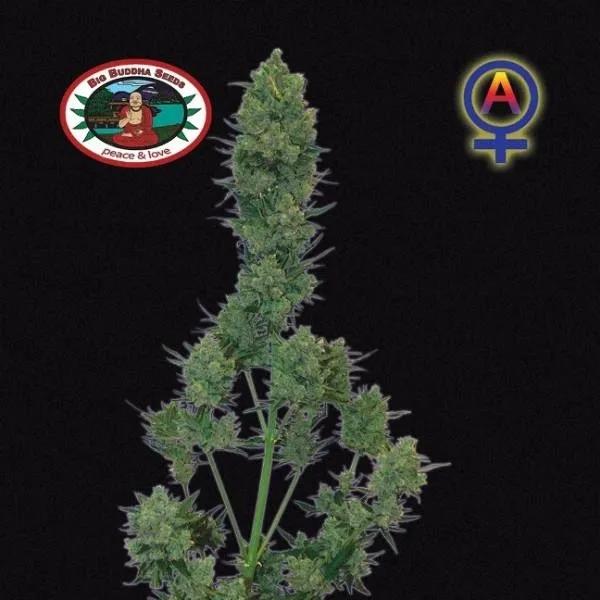
Blue Cheese Autoflower
Cannabis seeds
by Big Buddha Seeds
Blue Cheese Autoflower Cannabis Seeds
Blue Cheese Autoflower is an autoflowering feminised cannabis seed from Big Buddha Seeds that packs the legendary Blue Cheese flavour into a fast, fuss-free plant. Winner of the Spannabis Best Hydro award in 2013, this strain crosses a prized Blue Cheese clone with Big Buddha's 3rd generation autoflowering genetics — giving you dense, resinous buds in roughly 10 weeks from seed. If you've smoked the original Blue Cheese and loved it, this auto version delivers that same nostalgic, cerebral intensity without the photoperiod fuss.
This guide is written for adults aged 18 and over. The growing characteristics and sensory profiles described below apply to mature plants cultivated from these seeds.
Why Grow Blue Cheese Autoflower Seeds?
Blue Cheese Autoflower seeds give you a Cannabis Cup-winning genetic line in a format that doesn't need light schedule changes. Big Buddha Seeds didn't just slap "auto" on the label — they bred their 3rd generation autoflowering line into a proven Blue Cheese clone, which means the terpene profile and resin production genuinely carry over from the photoperiod parent.
We've seen plenty of autoflowering conversions that lose the character of the original strain. That's the honest risk with autos — sometimes the Ruderalis genetics water down the flavour or the potency. With Blue Cheese Autoflower, Big Buddha appears to have dodged that bullet. The cheesy, fruity, skunky nose comes through properly, and the buds grow dense and compact rather than the airy popcorn you sometimes get from lesser auto genetics. THC levels in the Blue Cheese lineage hover around 20–23%, so expect a plant that doesn't pull its punches.
The real selling point? Time. From germination to harvest in approximately 10 weeks. No messing about with 12/12 light cycles, no worrying about light leaks triggering hermaphroditism. You plant it, feed it, and it does its thing on an internal clock. For growers working with limited space or short outdoor seasons, that's a genuine advantage over photoperiod Blue Cheese.
Blue Cheese Autoflower Flavour and Aroma Profile
The smell hits you before the smoke does — old-school blueberry sweetness layered over a pungent, unmistakably cheesy funk. That cheese note isn't subtle. According to research published in the Journal of Natural Products (PMC11223244), fatty acids such as those found in cannabis can produce aromas described as "fatty, waxy, or cheesy," which helps explain why Cheese strains smell the way they do. Blue Cheese Autoflower adds a fruity blueberry top note and a spicy skunk backbone underneath.
On the inhale, you get that indulgent fruity cheese flavour — it sounds odd if you haven't tried it, but it works. The exhale carries more of the skunk spice. According to research on cannabis olfactory profiles (PMC9651054), "blue cheese" is recognised as a distinct aroma descriptor among trained assessors, sitting alongside berry, skunk, and earthy notes. This strain earned its name honestly.
One honest note: autoflowering strains can sometimes produce a slightly lighter terpene profile than their photoperiod parents. Most growers report Blue Cheese Auto holds up well, but if you're comparing side by side with a well-grown photoperiod Blue Cheese mother, the photo version may edge it out on sheer pungency. That said, for an auto, this is about as flavourful as it gets.
Blue Cheese Autoflower Effects
The Blue Cheese Autoflower high leans hybrid — you get a cerebral onset that settles into full-body relaxation. The indica side of the genetics brings physical calm, while the sativa contribution keeps your head engaged rather than completely couch-locked. Big Buddha describes it as a "nostalgic cerebral-cosmic high," which is marketing language, but it's not far off what growers report.
According to a review published in the International Journal of Environmental Research and Public Health (PMC9271575), cannabis affects nearly every system in the human body, including the central and peripheral nervous systems. The specific experience depends on the cannabinoid and terpene profile of the individual plant, your tolerance, and how much you consume. With THC levels in the 20–23% range for the Blue Cheese lineage, this isn't a strain to underestimate — particularly if you're newer to cannabis.
Traditionally, Cheese-family strains have been associated with evening and nighttime use. The indica dominance in Blue Cheese Autoflower makes it a better fit for winding down than for getting things done, though the initial cerebral lift can feel quite sociable before the body effects take over.
Growing Blue Cheese Autoflower Seeds
Blue Cheese Autoflower is a forgiving strain to grow — Big Buddha Seeds specifically positions it as suitable for novice cultivators, and we'd agree. Autoflowering genetics mean the plant transitions from vegetative growth to flowering on its own schedule, typically beginning to flower around weeks 3–4 and reaching harvest readiness by week 10.
According to research on terpene synthase gene expression in cannabis (PMC8426550), the expression of these genes can vary significantly between cultivars. What that means in practical terms: your growing conditions — light quality, nutrients, temperature — directly influence how much of that Blue Cheese flavour and aroma your plant actually develops. Good genetics are the starting point, not the finish line.
| Specification | Detail |
|---|---|
| Seed Bank | Big Buddha Seeds |
| Seed Type | Autoflowering Feminised |
| Genetics | Blue Cheese Clone x 3rd Gen Autoflowering Line |
| Indica/Sativa | Hybrid (Indica-dominant) |
| Approximate Seed-to-Harvest | ~10 weeks |
| THC Range (Blue Cheese lineage) | 20–23% |
| Difficulty | Beginner-friendly |
| Seeds per Pack | 5 |
| Awards | Spannabis Best Hydro 2013, Cannabis Cup lineage |
How to Grow Blue Cheese Autoflower
- Germinate your seeds using the paper towel method or directly in a small pot of moist, light soil mix. Taproots typically emerge within 24–72 hours.
- Plant the germinated seed about 1–2cm deep in your final container. With autos, transplanting can cause stress that stunts growth, so start in the pot you intend to finish in — 11–15 litre fabric pots work well.
- Provide 18–20 hours of light per day throughout the entire lifecycle. Autoflowers don't need a light cycle change, and more light hours generally means more energy for bud production.
- Keep nutrients light during the first 2–3 weeks. Autoflowers have a shorter vegetative phase, so heavy feeding early can cause nutrient burn before the plant has the root mass to handle it.
- Watch for the onset of flowering around weeks 3–4. Switch to bloom nutrients gradually. Blue Cheese Autoflower produces dense, compact buds, so good airflow around the canopy helps prevent mould in the final weeks.
- Begin checking trichomes with a jeweller's loupe from week 8 onwards. Harvest when trichomes shift from clear to mostly milky with some amber — typically around week 10, though some phenotypes may run a few days longer.
- Dry slowly in a dark, ventilated space at around 18–21°C and 55–60% humidity for 7–10 days, then cure in glass jars for at least 2 weeks. The cheese and blueberry terpenes develop noticeably during a proper cure.
Blue Cheese Auto vs Photoperiod Blue Cheese
The question most growers ask: is the auto version as good as the original? Here's a straight comparison.
| Feature | Blue Cheese Autoflower | Photoperiod Blue Cheese |
|---|---|---|
| Time to Harvest | ~10 weeks from seed | 8–9 weeks flowering + 4–6 weeks veg |
| Light Schedule | 18–20h throughout | 18/6 veg, 12/12 flower |
| Plant Height | Compact — typically under 100cm | Medium — 100–150cm |
| Yield Potential | Moderate | Higher (longer veg = bigger plant) |
| Flavour Intensity | Strong for an auto | Slightly more pungent |
| Difficulty | Beginner-friendly | Intermediate (light schedule management) |
| Multiple Harvests/Year | Yes — fast turnaround | Limited by light cycle |
If you want maximum yield and the absolute strongest expression of the Blue Cheese terpene profile, the photoperiod version still has the edge. But if you want speed, simplicity, and the ability to run multiple cycles in a single season, the autoflower is the smarter pick. We'd grab the auto for a balcony grow or a small tent where you want results without complexity.
Growing Blue Cheese Autoflower indoors? Pair these seeds with a complete grow tent kit — tent, light, ventilation, and carbon filter sorted in one go. A carbon filter is especially worth it here; the cheese smell is no joke, and your neighbours will notice without one. A jeweller's loupe for trichome checking rounds out the essentials.
What to Watch Out For
Blue Cheese Autoflower is genuinely easy to grow, but "easy" doesn't mean "ignore it." The dense bud structure that makes this strain so appealing also makes it susceptible to bud rot in humid conditions. If you're growing in a climate above 65% relative humidity during the final weeks of flowering, invest in a dehumidifier or ensure strong airflow through the canopy. We've seen growers lose beautiful Blue Cheese buds to botrytis in the last week before harvest — gutting when you're that close.
The other thing: autoflowers don't recover well from stress. If you overwater, overfeed, or transplant at the wrong time, the plant doesn't have the vegetative runway to bounce back like a photoperiod strain does. Get your setup right before germination, not after. Start in your final pot, keep nutrients conservative early, and let the plant tell you when it wants more.
Frequently Asked Questions
What are Blue Cheese Autoflower effects?
Blue Cheese Autoflower produces a hybrid effect — an initial cerebral lift followed by full-body relaxation from the indica-dominant genetics. With THC levels in the Blue Cheese lineage ranging from 20–23%, the effect is pronounced. The indica side tends to dominate as the session progresses.
Is Blue Cheese Autoflower easy to grow at home?
Yes. Big Buddha Seeds designed this strain for growers of all experience levels. The autoflowering genetics remove the need for light schedule changes, and the plant stays compact — typically under 100cm. Start in your final pot, keep nutrients light early on, and you'll do fine.
How long does Blue Cheese Autoflower take from seed to harvest?
Approximately 10 weeks from germination to harvest. Some phenotypes may take a few extra days. Check trichome colour with a loupe from week 8 onwards to time your harvest accurately.
What does Blue Cheese Autoflower smell and taste like?
Expect a pungent blend of blueberry sweetness, funky cheese, and spicy skunk. The cheese aroma is strong — a carbon filter is recommended for indoor grows. The flavour on the inhale leans fruity and cheesy, with skunk spice on the exhale.
Does Blue Cheese Autoflower have any side effects?
Common side effects associated with cannabis strains in this THC range include dry mouth and dry eyes. According to a review in the International Journal of Environmental Research and Public Health (PMC9271575), cannabis affects multiple body systems. Start with a small amount if you're unfamiliar with the strain.
How many seeds come in a pack of Blue Cheese Autoflower?
Each pack contains 5 feminised autoflowering seeds from Big Buddha Seeds.
Can I grow Blue Cheese Autoflower outdoors?
Absolutely. The compact size and fixed flowering schedule make it well suited to balconies, gardens, and guerrilla grows. Plant after the last frost and harvest roughly 10 weeks later. Watch humidity levels during the final flowering weeks to prevent bud rot on those dense nugs.
Last updated: April 2026
Related products

You might also like
Medical disclaimer. This content is for informational purposes only and does not constitute medical advice. Consult a qualified healthcare provider before use of any substance.