
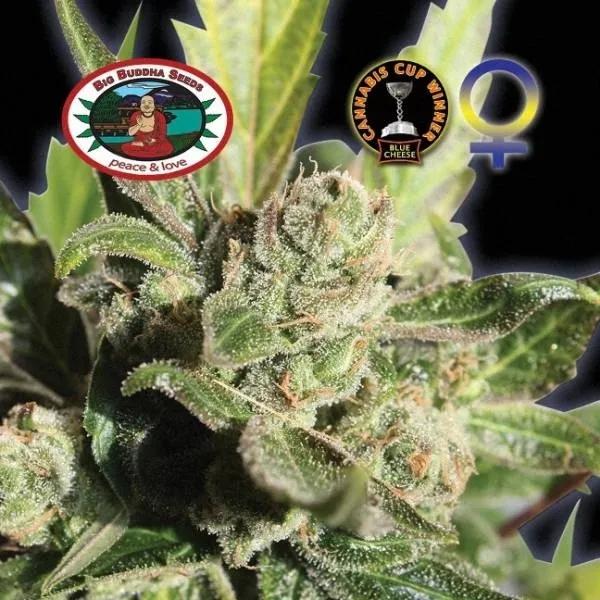
Blue Cheese
Cannabis seeds
by Big Buddha Seeds
Blue Cheese Feminized Seeds — Fruity Cheese Genetics from Big Buddha Seeds
Blue Cheese feminized seeds are an indica-dominant hybrid cross of Big Buddha Cheese and Blueberry, bred by Big Buddha Seeds. This strain took 3rd place for Best Sativa at the 2006 Cannabis Cup — a surprising result for something with indica-leaning genetics, but it speaks to the uplifting quality of the high. Five feminized seeds per pack, roughly 9 weeks from flip to harvest, and a growth pattern that stays compact and bushy without much intervention.
Blue Cheese Seeds — What's in the Pack
Each pack contains 5 feminized Blue Cheese seeds from Big Buddha Seeds. Feminized means every seed develops into a female plant — no sexing, no culling males, no wasted space in your tent. Five seeds is a solid number for a personal grow. Run them all in a 120x120 tent, or keep a couple back as insurance. The genetics here are Big Buddha Cheese (itself a Skunk #1 phenotype that became legendary in the UK) crossed with Blueberry, the classic indica from DJ Short. That Blueberry parent is where the fruity sweetness comes from, layered on top of the funky, sharp cheese aroma that Big Buddha Cheese is known for.
The result smells exactly like you'd expect from the name: a pungent cheese base with a blueberry-jam sweetness that rounds out the sharpness. Crack a jar of dried Blue Cheese buds and it fills the room — this is not a subtle strain. If discretion matters, a carbon filter is non-negotiable.
Blue Cheese Feminized Seeds — Specifications
| Spec | Value |
|---|---|
| Seed Bank | Big Buddha Seeds |
| Genetics | Big Buddha Cheese x Blueberry |
| Type | Indica Dominant |
| Sex | Feminized |
| Flowering Time | Approximately 9 weeks |
| Growth Pattern | Compact, bushy |
| Seeds Per Pack | 5 |
| Awards | 3rd Place, Best Sativa — Cannabis Cup 2006 |
Running Blue Cheese feminized seeds indoors? Pair them with a complete grow tent kit — tent, light, ventilation, and carbon filter in one box. Saves you the headache of matching components, and the carbon filter will handle that cheese-and-berry funk before your neighbours start asking questions.
Growing Blue Cheese — What to Expect
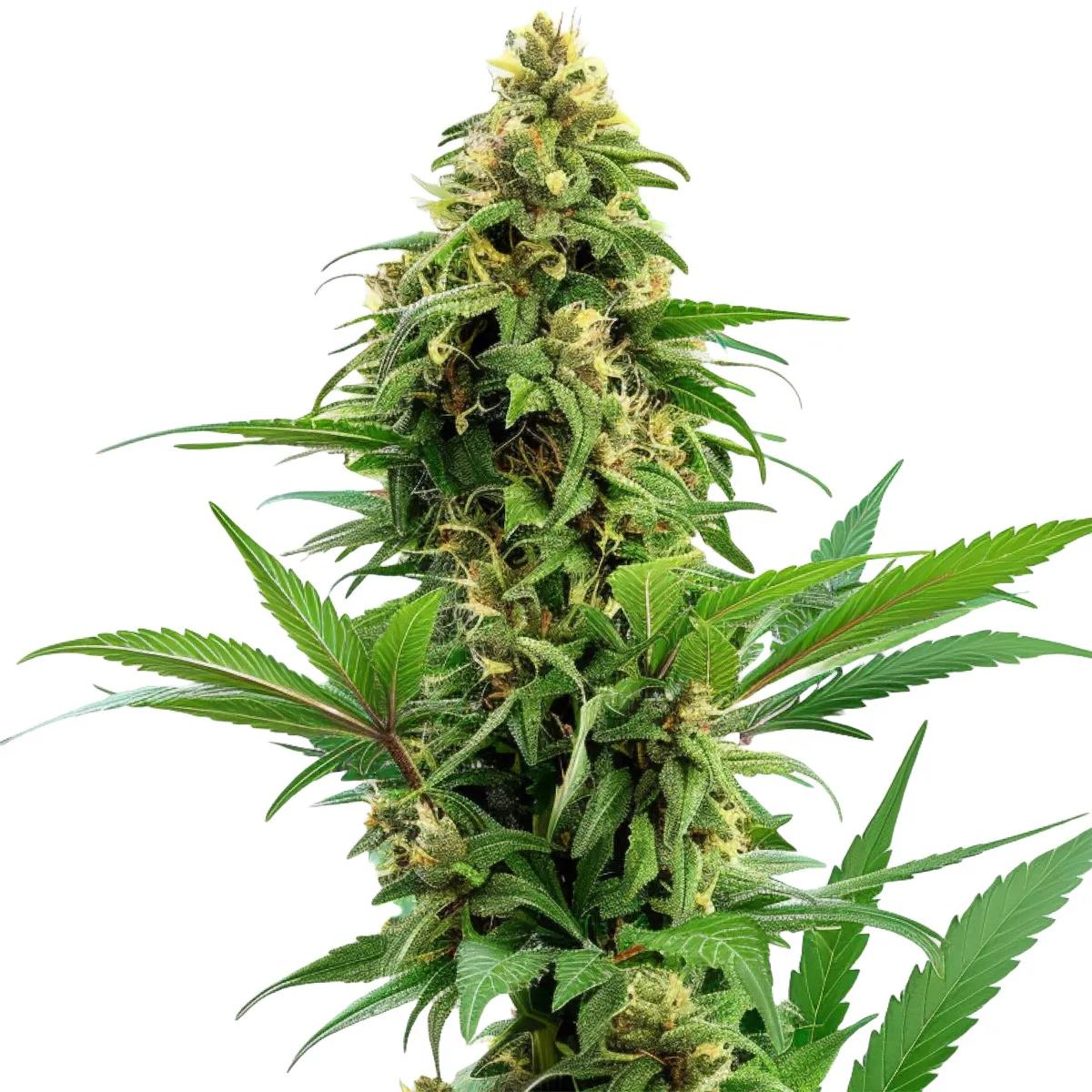
Blue Cheese feminized seeds grow into compact, bushy plants that don't stretch much during the flowering flip. That makes them a strong pick for smaller tents — a 60x60 or 80x80 handles them without height issues. The indica-dominant genetics keep internodal spacing tight, so you get a dense canopy with a thick main cola as the centrepiece. Side branches fill in nicely but the main cola does most of the heavy lifting in terms of weight.
Flowering takes around 9 weeks from the light switch. That's fairly standard for an indica-dominant strain, and in our experience Big Buddha Seeds' flowering time estimates tend to be accurate rather than optimistic. You'll see the buds stacking on resin from week 5 or 6 onwards — the trichome coverage on Blue Cheese is genuinely impressive, especially on the main cola and upper canopy.
One thing to watch: the compact, bushy structure means airflow through the lower canopy can get restricted. If you're growing in a humid environment, do some light defoliation around weeks 2–3 of flower to open things up. Blue Cheese isn't especially mould-prone, but stagnant air and dense buds are never a good combination. A small oscillating fan aimed at the canopy solves most of this.
Blue Cheese Aroma and Flavour Profile
The terpene profile on Blue Cheese is one of those rare cases where the strain name tells you exactly what you're getting. The dominant aroma is a sharp, funky cheese — inherited directly from the Big Buddha Cheese parent, which itself descends from an old-school UK Skunk #1 cut. Layered underneath is a sweet, jammy blueberry note from the DJ Short Blueberry side. According to research published in the Journal of Natural Products (2024), fatty acids found in certain cannabis phenotypes produce aromas described as "fatty, waxy, or cheesy" — and Blue Cheese is a textbook example of that chemistry in action.
When you grind the dried flower, the cheese comes forward first, then the berry sweetness fills in as the terpenes volatilise. It's a complex, layered scent that develops as the buds cure. Give them at least 2 weeks in jars before you judge the final aroma — freshly dried Blue Cheese smells good, but properly cured Blue Cheese smells outstanding.
Blue Cheese vs Other Cheese Strains — How It Compares
If you already know you like Cheese genetics, the question is which Cheese to grow. Here's how Blue Cheese stacks up against two common alternatives:
| Strain | Genetics | Flowering Time | Aroma | Growth Pattern |
|---|---|---|---|---|
| Blue Cheese (Big Buddha Seeds) | Big Buddha Cheese x Blueberry | ~9 weeks | Cheese + blueberry sweetness | Compact, bushy, dominant main cola |
| Big Buddha Cheese | UK Cheese (Skunk #1 phenotype) | ~8 weeks | Pure sharp cheese, less sweetness | Bushy, slightly taller |
| Royal Cheese (Royal Queen Seeds) | Skunk #1 x Afghani | ~8 weeks | Earthy cheese, less fruity | Medium height, moderate branching |
Blue Cheese is the best Cheese variant for growers who want that classic funky cheese profile but with a fruity twist that makes the aroma (and the smoke) more complex. The Blueberry genetics also contribute to the resin production — those DJ Short genetics bring serious trichome coverage. If you want pure, uncut cheese funk with nothing else, go for the original Big Buddha Cheese. But we'd pick Blue Cheese for the added depth.
Why Blue Cheese Feminized Seeds Are Worth Growing
There are a lot of Cheese crosses on the market. Most of them are forgettable — someone crosses Cheese with whatever's trending that year and calls it a day. Blue Cheese is different because the Blueberry parent actually complements the Cheese genetics rather than fighting them. The indica structure from both parents means you get a plant that stays manageable, flowers in a reasonable timeframe, and produces a fat main cola without needing a support net.
The 3rd place finish at the 2006 Cannabis Cup — in the Best Sativa category, no less — tells you something about the effect profile. Despite being indica-dominant in structure and growth, the high has an uplifting, cerebral quality that caught the judges off guard. According to WebMD's strain database, Blue Cheese genetics are approximately 80% indica and 20% sativa, with around 2% CBG content alongside the primary cannabinoids. That CBG — cannabigerol, a non-intoxicating cannabinoid that research suggests may work alongside THC and CBD in what's sometimes called the entourage effect — adds another dimension to the overall profile. As noted in a 2021 review in Alternative Therapies in Health and Medicine, "all components of the cannabis plant likely exert some therapeutic effect, more than any single compound alone."
The honest limitation: Blue Cheese isn't the highest-yielding strain in the catalogue. The compact growth and dominant main cola mean you're getting quality over quantity. If you're chasing maximum grams per square metre, something like a Critical or Big Bud cross will outproduce it. But gram for gram, the resin coverage and terpene complexity on Blue Cheese is hard to beat at this price point.
How to Germinate Blue Cheese Feminized Seeds
- Soak seeds in a glass of room-temperature water (20–25°C) for 12–18 hours. They should sink to the bottom — give stubborn floaters a gentle tap.
- Transfer seeds to damp paper towels on a plate. Fold the towels over so seeds are covered, then place a second plate on top to create a dark, humid chamber.
- Keep the plates in a warm spot (22–25°C). Check every 12 hours and re-dampen the towels if they start drying out.
- Within 24–72 hours, you should see taproots emerging. Once a taproot reaches 1–2cm, it's ready to plant.
- Plant each seed taproot-down in a small pot of lightly moistened seedling soil or coco, about 1cm deep. Cover loosely — don't pack the soil.
- Place under a gentle light (T5 fluorescent or LED at 50% power) and maintain humidity above 65%. Seedlings should break the surface within 2–4 days.
Frequently Asked Questions
Is Blue Cheese a sativa or indica?
Blue Cheese is indica-dominant — roughly 80% indica, 20% sativa. It placed 3rd in the Best Sativa category at the 2006 Cannabis Cup, which reflects its surprisingly uplifting effect profile despite the indica-leaning genetics.
How long does Blue Cheese take to flower?
Blue Cheese feminized seeds flower in approximately 9 weeks from the light flip to 12/12. Big Buddha Seeds' estimates on this strain are reliable — expect harvest around day 63.
Does Blue Cheese smell strong during flowering?
Yes, very. The cheese-and-blueberry terpene profile is intense from around week 4 of flower onwards. A carbon filter and proper extraction fan are essential if you're growing indoors and want to keep the smell contained.
What's the best tent size for Blue Cheese?
Blue Cheese stays compact and bushy, so an 80x80cm tent handles 2–4 plants comfortably. A 60x60 works for 1–2 plants. Height is rarely an issue — these don't stretch much during the flowering transition.
Do I need to train Blue Cheese plants?
Not necessarily. Blue Cheese naturally develops a dominant main cola with tight branching. You can LST (low-stress training) to open the canopy for more even light distribution, but the plant produces well without any training at all.
How does Blue Cheese compare to the original Big Buddha Cheese?
Blue Cheese adds Blueberry genetics to the original Big Buddha Cheese. The result is a fruitier, sweeter aroma alongside the classic cheese funk, plus heavier trichome coverage. The original is purer cheese flavour with slightly faster flowering (around 8 weeks).
Are Blue Cheese feminized seeds good for beginners?
Yes. Feminized seeds remove the need to identify males, the compact growth stays manageable in small spaces, and the 9-week flowering time is predictable. Blue Cheese doesn't demand expert-level attention to produce solid results.
Last updated: April 2026
Related products
You might also like
Medical disclaimer. This content is for informational purposes only and does not constitute medical advice. Consult a qualified healthcare provider before use of any substance.