
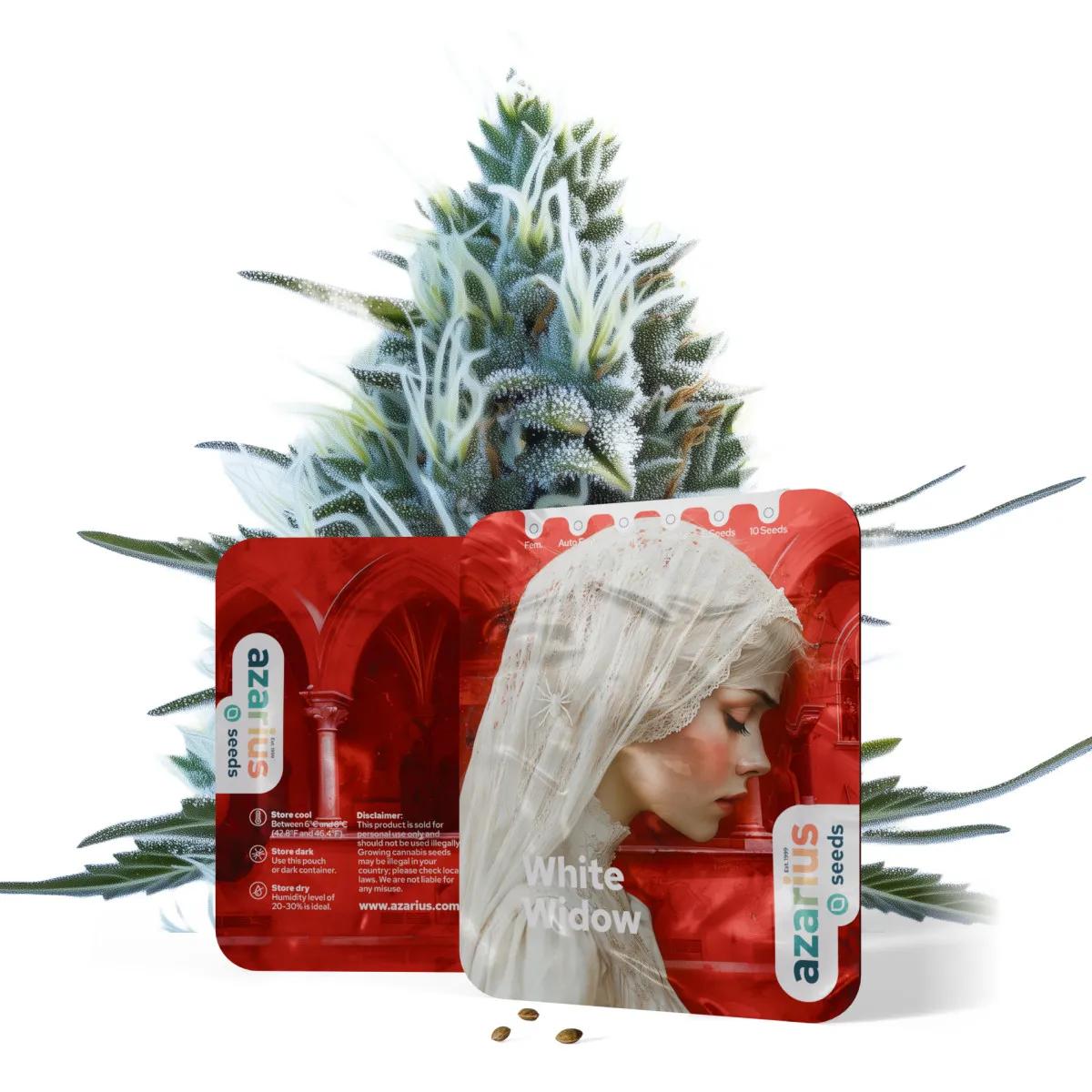
White Widow Auto Cannabis Seeds
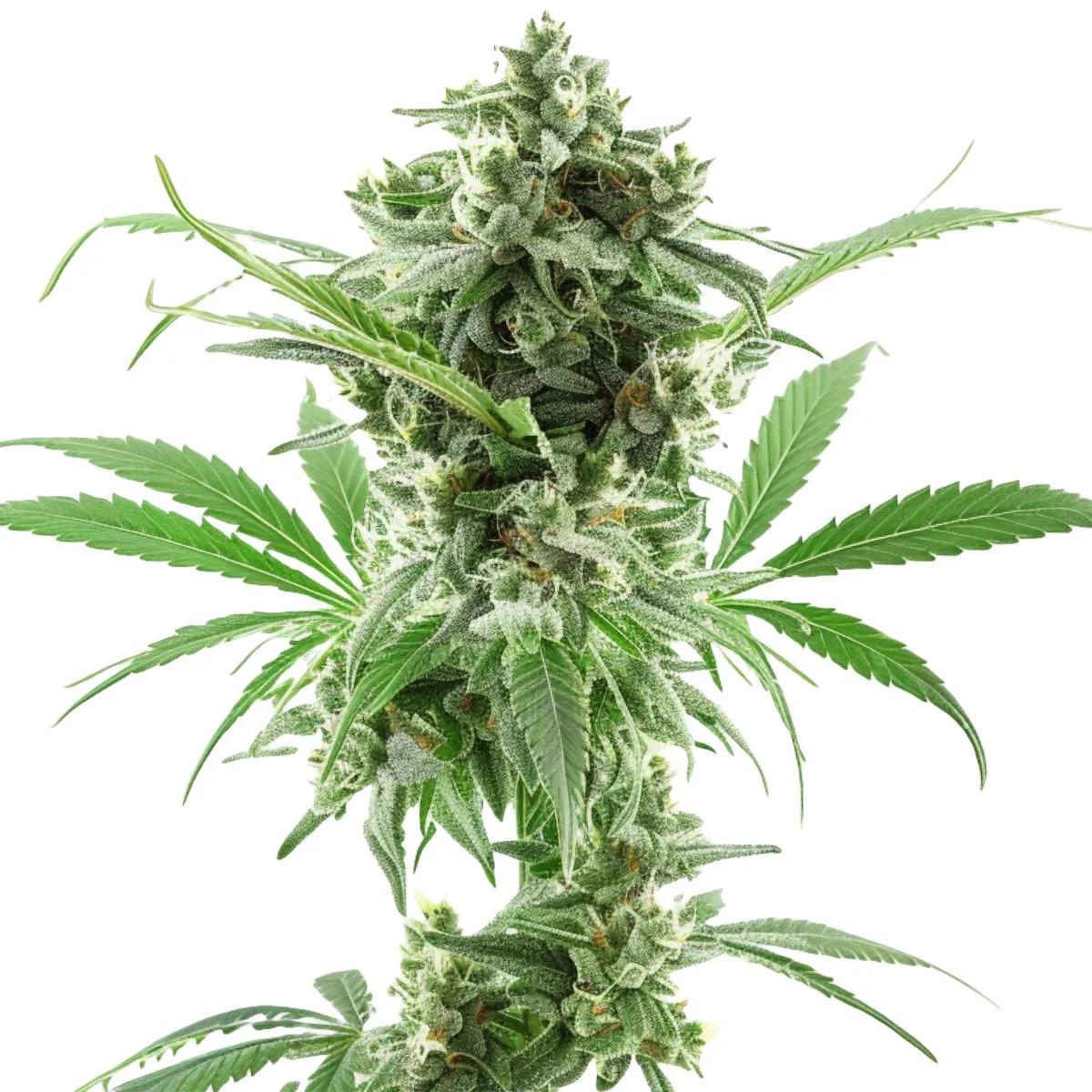
White Widow Auto is a feminised autoflowering cannabis seed that finishes in roughly 11 weeks from seed to harvest. This cultivar crosses the legendary White Widow with Ruderalis genetics, delivering a well-balanced 60% Sativa / 40% Indica hybrid that flowers on its own schedule. Bred in the Netherlands, it carries the same resin-heavy reputation that made the original White Widow a coffeeshop staple since the mid-'90s — only now it finishes faster and forgives more. According to research published in Frontiers in Plant Science, White Widow is recognised among breeders and connoisseurs for its potent psychoactive profile (PMC, 2023). Data from the EMCDDA confirms that cannabis cultivation for personal use continues to grow across Europe, with autoflowering cultivars becoming increasingly popular among home growers (EMCDDA, 2024).
How Many Seeds Do You Need?
White Widow Auto seeds come in packs of 1, 3, 5, or 10. Growing in a single tent? Three seeds gives you a nice canopy without overcrowding a 60x60 or 80x80 space. Five or ten seeds make sense if you're running a larger setup or want to select the best phenotype across multiple grows. If it's your first autoflower run, start with three — enough to learn from without losing sleep over a single plant that stalls. You can buy White Widow Auto seeds individually if you just want to test the genetics before committing to a larger pack.
Flavour and Aroma Profile
The dominant terpene in White Widow Auto is myrcene at roughly 40%, which delivers an earthy, herbal base with musky undertones. Caryophyllene follows at 20%, adding spicy, almost black-pepper warmth. Pinene sits at 15%, rounding things out with a clean, resinous sharpness. The remaining 25% is a mix of minor terpenes that pull in citrus and fruity sweetness. The overall impression is of a walk through a pine forest after rain, with a peppery kick that catches the back of your throat.
On the inhale, expect woody and spicy notes up front. The exhale is where the fruit comes through — subtle, not candy-sweet, more like dried berries than a smoothie. Not the loudest-smelling plant in the tent, but once you break open a cured bud, the room knows about it. According to research on cannabis terpenes, myrcene and caryophyllene are among the most commonly occurring terpenes in cannabis cultivars and contribute significantly to the aromatic complexity of a given strain (PMC, 2020). A 2024 study also explored the properties of myrcene in preclinical models, observing measurable effects on stress-related behaviour in mice (PMC, 2024).
| Terpene | Proportion | Character |
|---|---|---|
| Myrcene | 40% | Earthy, herbal, musky |
| Caryophyllene | 20% | Spicy, peppery, warm |
| Pinene | 15% | Pine, resinous, fresh |
| Other | 25% | Citrus, fruity, sweet |
Growing These Autoflower Seeds
Seed-to-harvest time for this strain is approximately 11 weeks: about 2 weeks in seedling stage, 3 weeks of vegetative growth, and 6 weeks of flowering. Because it's autoflowering, you don't need to adjust your light cycle to trigger bloom — the Ruderalis genetics handle that. Run 18/6 or 20/4 from seed to chop and you're sorted.
Indoors under strong LEDs, growers report yields around 300 g/m² in optimal conditions. Outdoors in a warm, sunny climate with decent soil, individual plants can push up to 550 g. Those are best-case numbers — your mileage depends on light intensity, nutrients, and how well you manage the environment. One thing we've noticed from customer feedback over the years: autoflowers don't recover well from heavy stress. If you're going to defoliate, be conservative. Take a few fan leaves at a time rather than stripping the plant bare. These genetics bounce back, but they're on a fixed clock — there's no extra veg time to compensate.
On nutrients, keep it lighter than you would with a photoperiod strain. Community growers consistently recommend starting at half the manufacturer's recommended dose and working up. Autoflowers are smaller plants with less root mass, so they burn more easily. Two litres of water per feed is a solid baseline for plants in medium-sized pots during mid-veg.
| Specification | Detail |
|---|---|
| Genetics | White Widow x Ruderalis |
| Strain Type | Hybrid (60% Sativa / 40% Indica) |
| Flowering Type | Autoflowering |
| Seedling Phase | ~2 weeks |
| Vegetative Phase | ~3 weeks |
| Flowering Phase | ~6 weeks |
| Total Seed to Harvest | ~11 weeks |
| Indoor Yield | Up to 300 g/m² |
| Outdoor Yield | Up to 550 g/plant |
| Seed Type | Feminised |
| Available Pack Sizes | 1, 3, 5, 10 seeds |
Running this autoflower indoors? Pair it with a complete grow tent kit — tent, light, ventilation, and carbon filter in one box. A propagation kit is worth picking up to nail the seedling stage, and a pH meter pays for itself quickly with autoflowers since they're less forgiving of nutrient lockout. If you're growing in soil, a pre-mixed organic substrate saves you the guesswork on amendments. Order your seeds alongside a jeweller's loupe so you can check trichome ripeness at harvest time.
Why This Strain Deserves a Spot in Your Tent
The original White Widow has been a fixture in Amsterdam coffeeshops since winning the Cannabis Cup in 1994, and it hasn't left the conversation since. The auto version keeps the genetics intact — that frosty, resin-caked appearance, the complex terpene profile, the balanced character — but strips away the need for light cycle management and long veg periods. For a grower working with limited space or limited patience, that's a meaningful trade.
Where this cultivar really shines is in its resin production. The trichome coverage on a well-grown plant is genuinely impressive — buds look like they've been dipped in sugar. That makes it a strong candidate if you're interested in making dry sift or bubble hash from your trim. The 60/40 Sativa-Indica split means the plant stays relatively compact without turning into a lanky mess, which is exactly what you want in a tent.
The honest limitation? Autoflowers cap out on yield compared to photoperiod versions of the same strain. If you're chasing maximum grams per square metre and don't mind a longer grow cycle, the photoperiod version will outproduce this one. But if you want a fast turnaround — seed to jar in under three months — and you want something that practically grows itself, the auto version is the smarter pick. We'd take three quick auto harvests over two slow photo harvests any day of the week, especially in a small setup.
How to Grow This Autoflower Step by Step
The full grow cycle takes approximately 11 weeks and requires no light schedule changes at any stage.
- Germinate your seeds using the paper towel method or directly in a small pot of moist, light soil. Keep temperatures between 22-26°C and humidity around 70% during germination.
- Once the seedling emerges (days 3-7), place it under 18-20 hours of light. A gentle LED or CFL works well at this stage — no need for full power yet. Water sparingly; the roots are tiny.
- Transplant to your final pot (7-15 litres) as soon as the first true leaves appear. Autoflowers don't like being transplanted mid-grow, so move early or start in the final container.
- During the 3-week vegetative phase, introduce nutrients at half the manufacturer's recommended strength. Increase gradually only if the plant looks hungry (pale new growth, yellowing lower leaves).
- Flowering begins automatically around week 5. You'll see white pistils forming at the nodes. Maintain your 18/6 or 20/4 light schedule — do not switch to 12/12.
- Through the 6-week flowering period, keep humidity below 50% to reduce the risk of mould in those dense, resinous buds. A small oscillating fan pointed at the canopy improves air circulation around the canopy.
- Harvest when 70-80% of trichomes have turned milky white under a jeweller's loupe. Amber trichomes indicate a more sedative profile. Chop, trim, and hang-dry in a dark room at 18-20°C and 55-60% humidity for 7-10 days before curing in glass jars.
Autoflower vs Photoperiod: Quick Comparison
| Factor | Auto Version | Photoperiod Version |
|---|---|---|
| Seed to Harvest | ~11 weeks | ~16-20 weeks |
| Light Schedule | 18/6 or 20/4 throughout | 18/6 veg, 12/12 flower |
| Indoor Yield | Up to 300 g/m² | Up to 500 g/m² |
| Difficulty | Beginner-friendly | Intermediate |
| Multiple Harvests/Year | Yes (up to 3-4 indoors) | Typically 2 |
Frequently Asked Questions
Is this strain good for first-time growers?
Yes. The autoflowering genetics remove the need to manage light cycles, and this cultivar is forgiving of minor environmental fluctuations. Keep nutrients light, don't overwater, and you'll get a respectable harvest on your first run.
How much does this autoflower yield indoors?
Under strong LEDs in optimal conditions, expect around 300 g/m². Actual results depend on pot size, light intensity, and how well you dial in temperature and humidity. Outdoor plants in warm climates can reach up to 550 g each.
What does this strain smell like?
Earthy, spicy, and piney — thanks to dominant myrcene (40%) and caryophyllene (20%) terpenes. There's a subtle fruity sweetness underneath, but the overall profile is woody and robust. A carbon filter is a good idea if discretion matters.
How long does it take from seed to harvest?
Roughly 11 weeks total: 2 weeks seedling, 3 weeks vegetative growth, and 6 weeks of flowering. Some phenotypes may finish a few days earlier or later depending on conditions.
Do I need to change the light schedule?
No. Autoflowering strains flower based on age, not light cycle. Run 18 hours on / 6 hours off from seed to harvest. Some growers push to 20/4 for slightly more growth, but 18/6 is the standard and gives the plant a rest period.
Can I grow this strain outdoors?
Absolutely. It thrives outdoors in warm, sunny climates and doesn't depend on seasonal light changes to flower. Plant after the last frost and you can harvest in as little as 11 weeks. Multiple outdoor runs per season are possible in southern climates.
How does the auto version compare to the photoperiod version?
The auto version finishes faster and requires no light cycle adjustment, making it simpler to grow. The trade-off is yield — the photoperiod version typically produces more per plant because you can extend the vegetative phase. Flavour and resin production are comparable between the two.
Where can I buy these seeds?
You can order them right here at Azarius in packs of 1, 3, 5, or 10 feminised seeds. We ship from the Netherlands and stock is updated regularly.
Last updated: April 2026
Related products



You might also like


Medical disclaimer. This content is for informational purposes only and does not constitute medical advice. Consult a qualified healthcare provider before use of any substance.