
Storz Bickel Volcano Complete Guide: Setup, Temps & Cleaning
Definition
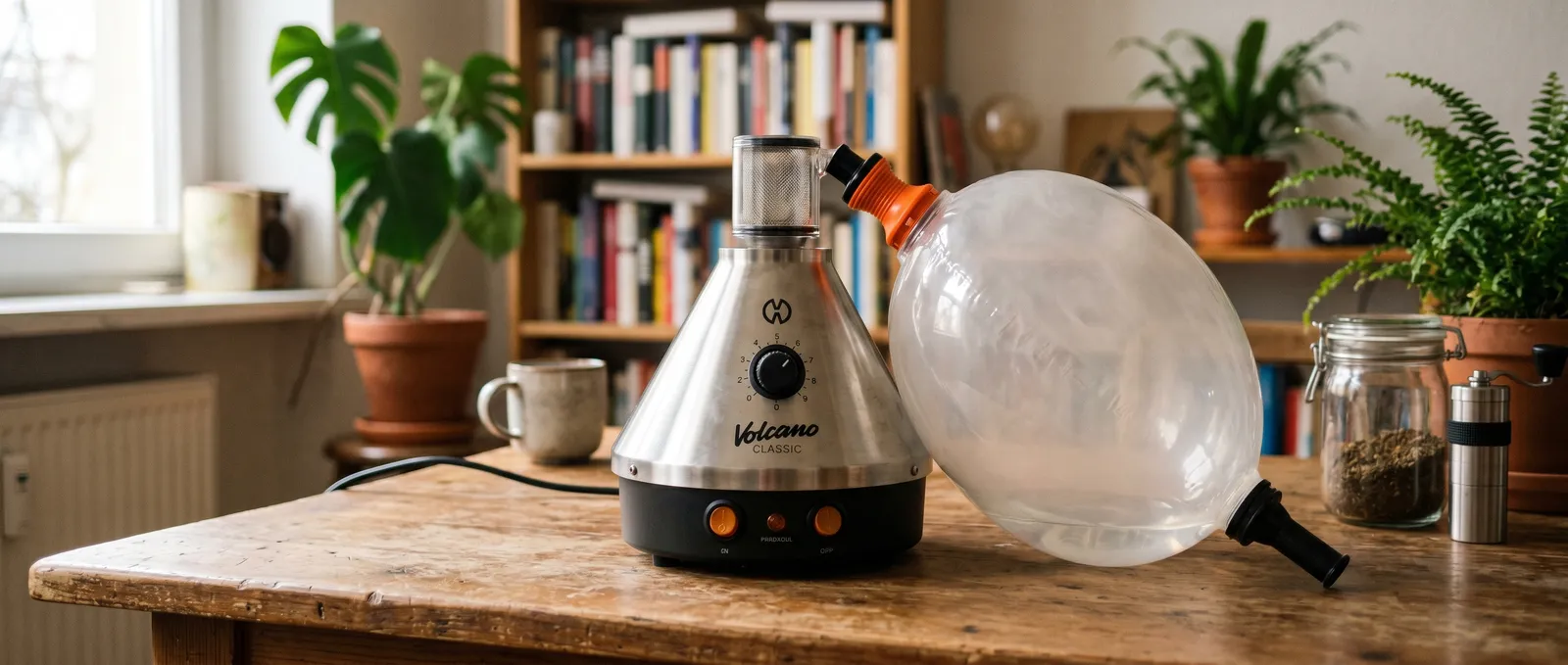
The Storz & Bickel Volcano is a convection desktop vaporizer that fills detachable balloons with vapour — a system clinically validated by Hazekamp et al. (2006) for efficient cannabinoid delivery with minimal combustion byproducts. This step-by-step guide covers everything from first setup and temperature selection to cleaning schedules and common mistakes.
What the Volcano Actually Is
The Storz Bickel Volcano complete guide starts here: the Volcano is a convection desktop vaporizer that fills detachable balloons with vapour, offering one of the most efficient extraction methods available for dry herb. Built in Tuttlingen, Germany — the same town that produces half of Europe's surgical instruments — the unit heats herb in a detachable filling chamber using convection (hot air passes through the material rather than a heated plate touching it), and the resulting vapour inflates a food-grade plastic balloon — the "bag" — which you then detach and inhale from at your leisure. This Storz Bickel Volcano complete guide covers setup, temperature selection, packing technique, balloon management, cleaning, and long-term maintenance for adults who want to get the most out of their device.
Storz & Bickel received ISO 13485 certification (the quality-management standard for medical devices) for the Volcano Medic line, and a 2006 study by Hazekamp et al. confirmed that the balloon delivery system produced vapour with a cannabinoid-to-byproduct ratio significantly better than combustion. The European Monitoring Centre for Drugs and Drug Addiction (EMCDDA) has referenced vaporisation as a harm-reduction approach in multiple reports, and the Volcano was one of the earliest devices to receive clinical attention in that context. That research shaped how the vaping community thinks about desktop units — the Volcano wasn't just popular, it was clinically validated early on.
Step 1 — Unboxing and First Setup
The first setup takes under ten minutes and requires only a flat surface and a power outlet. Out of the box you get the conical base unit, a power cable, a filling chamber (the orange-topped assembly), a set of balloons with mouthpieces, a dosing capsule magazine, liquid pads for concentrates, a brush, and a grinder. Before first use, run the unit empty at 190 °C for five minutes. This burns off any residual manufacturing dust or oils. You'll notice a faint plastic smell — that's normal on the first heat cycle and should disappear entirely by the second or third run.
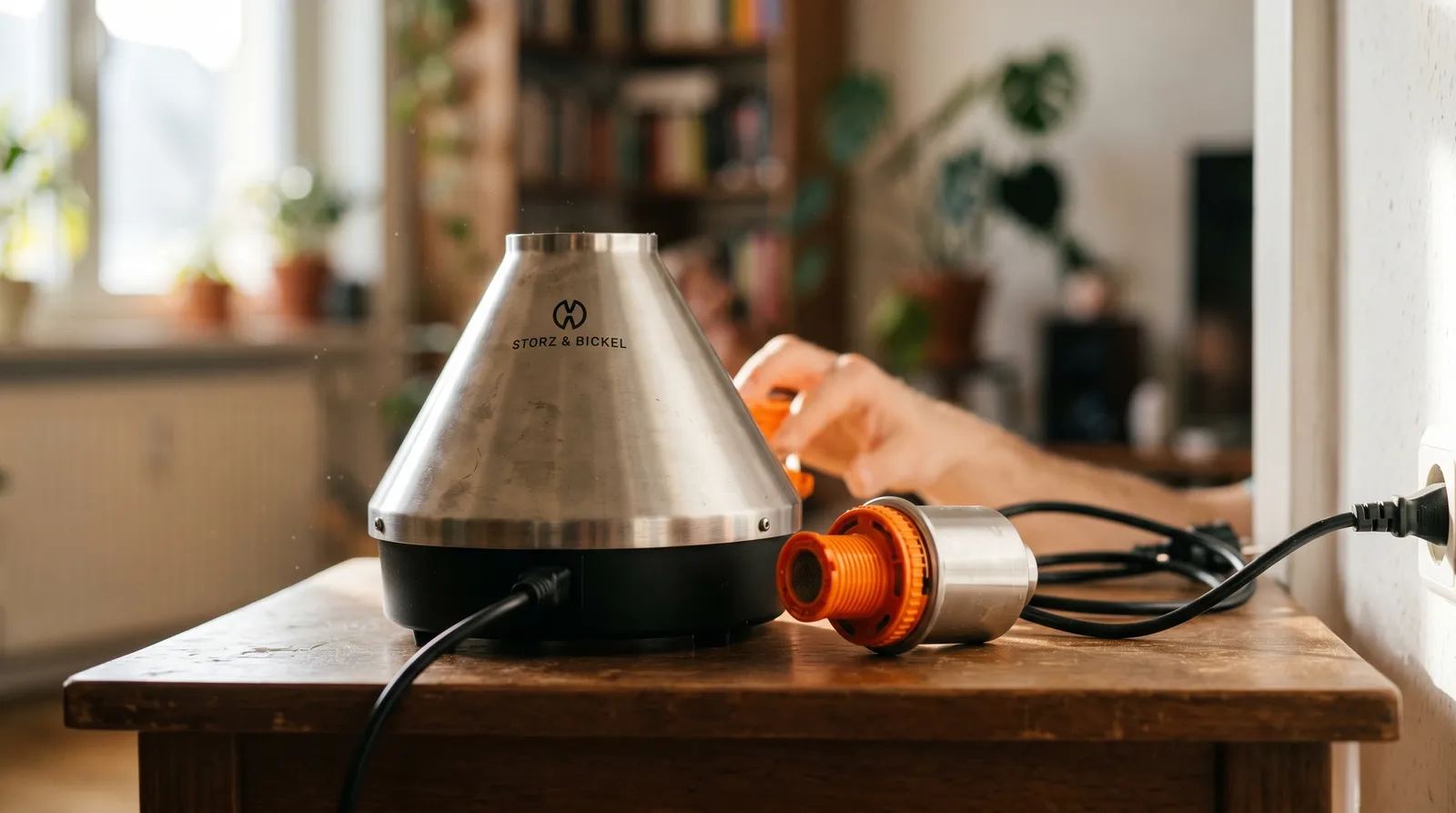
Place the Volcano on a flat, stable surface. The unit weighs roughly 1.8 kg (Classic) and has a wide base, so it's not going to tip easily, but a wobbly table and a hot convection heater aren't friends. Plug it in, flip the power switch on the back, and let the temperature dial (Classic) or digital display settle to your target. The Classic model uses an analogue dial with numbered positions rather than exact degree readouts — position 6 sits at roughly 185 °C, position 7 at around 200 °C. A 2010 user-community mapping project by FC Forum members measured each dial position with thermocouple probes, and their data broadly aligns with Storz & Bickel's own documentation.
Step 2 — Grinding and Packing the Chamber
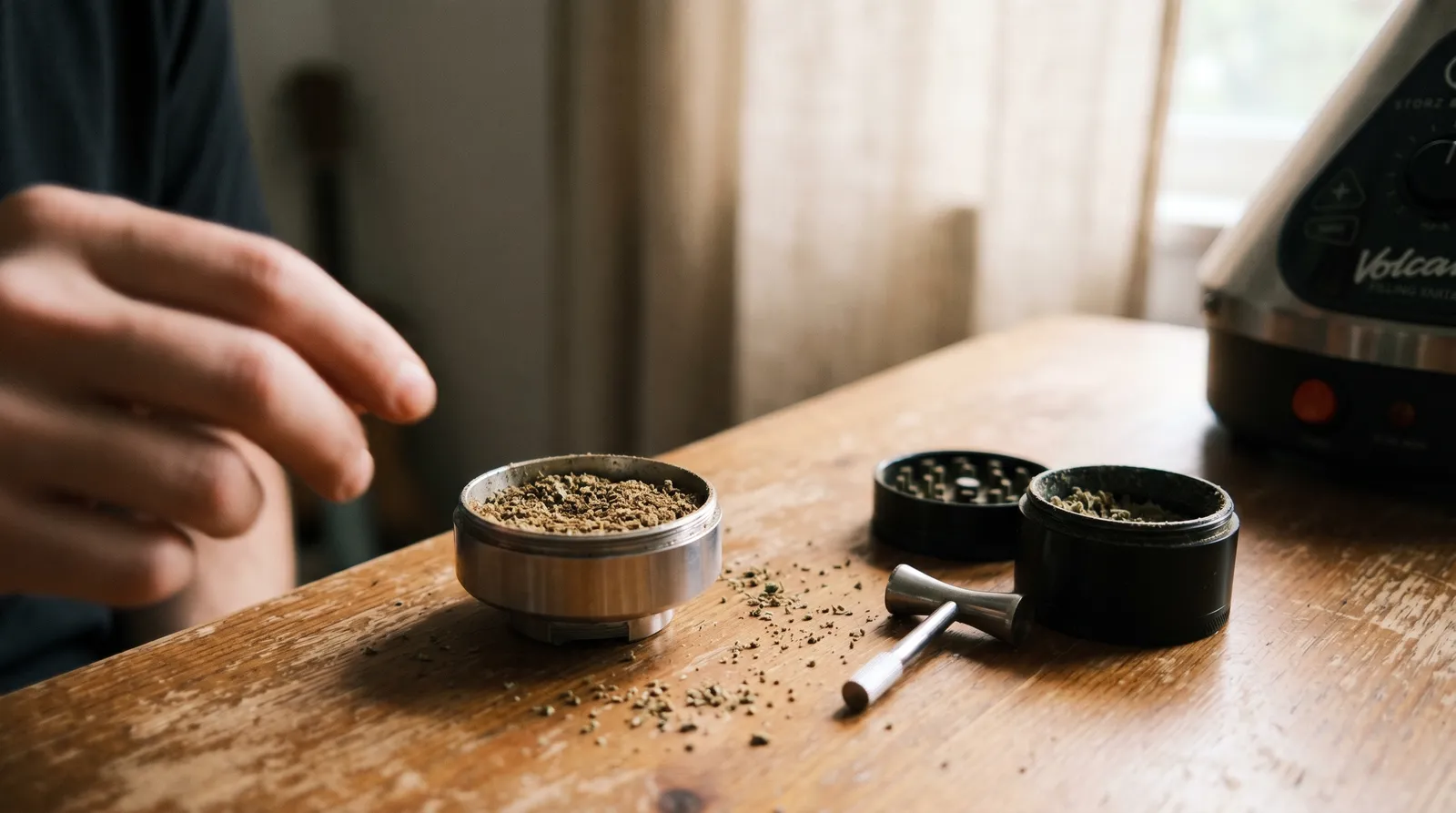
A medium-fine grind produces the best results in the Volcano's filling chamber. You want a consistency coarser than espresso but finer than hand-torn. Too fine and the mesh screen clogs within a session; too coarse and airflow channels form through the herb, leaving pockets unextracted. A four-part aluminium grinder from SLX or Santa Cruz Shredder does the job well here; the ceramic coating on the SLX keeps material from sticking to the teeth, which means a more uniform particle size.
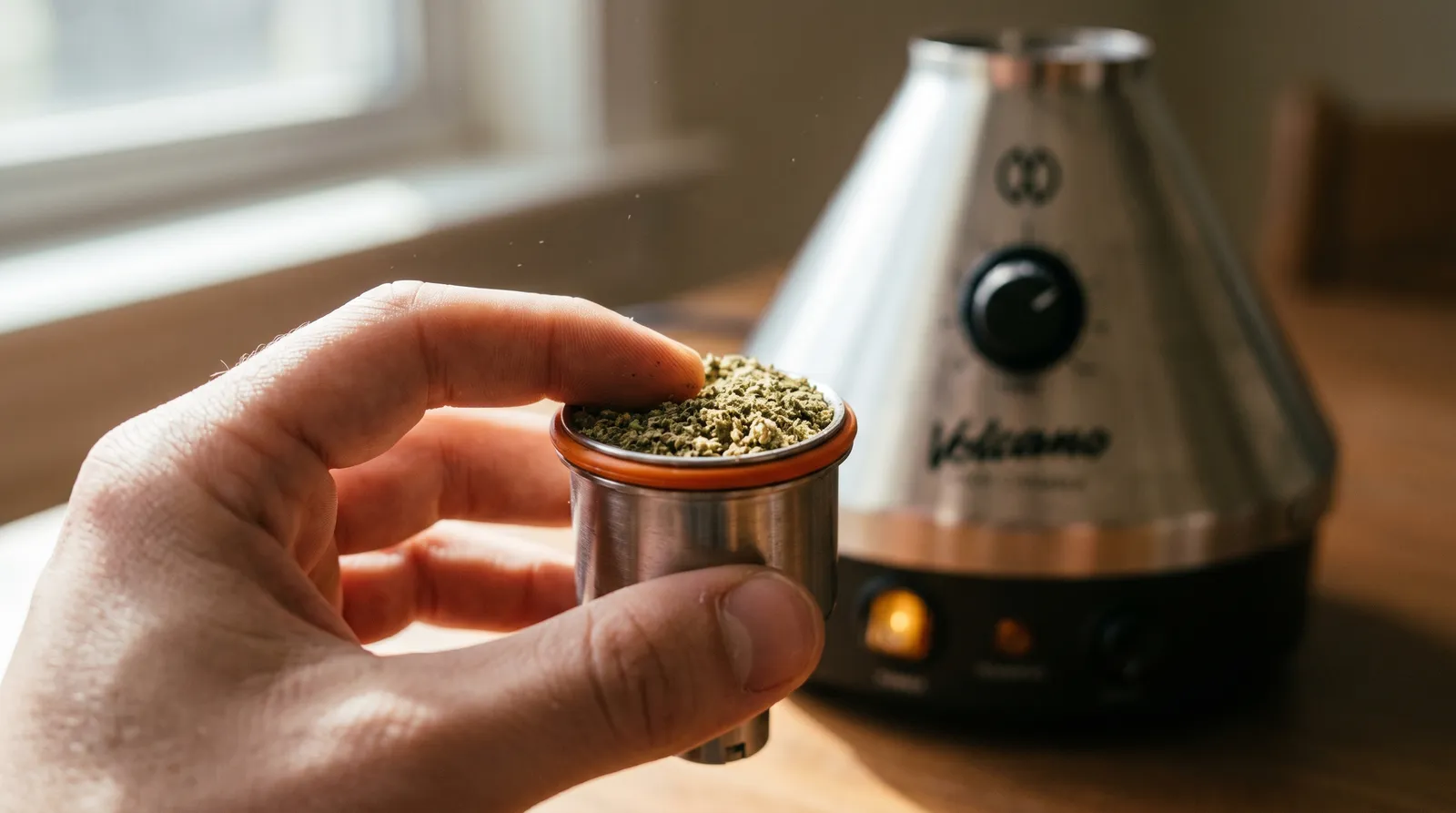
The filling chamber holds roughly 0.15–0.3 g comfortably. You can fill it more, but packing tight restricts airflow and produces thinner bags. The sweet spot: fill the chamber about three-quarters full and give it a very gentle tamp — not compressed, just levelled. If you're using the dosing capsules (the small steel mesh pods), each one holds approximately 0.15 g. These capsules keep the chamber cleaner and make swapping material mid-session fast, though they do slightly reduce airflow compared to loading the chamber directly. If you want to buy dosing capsules in bulk, Storz & Bickel sells magazine sets that hold eight capsules each — a worthwhile addition for anyone who sessions frequently.
Step 3 — Choosing Your Temperature
The ideal starting temperature for the Volcano is 180 °C, which captures lighter terpenes and early cannabinoid release before stepping up for fuller extraction. Different compounds volatilise at different thresholds, and a stepped approach extracts more from the same bowl than blasting at maximum heat.
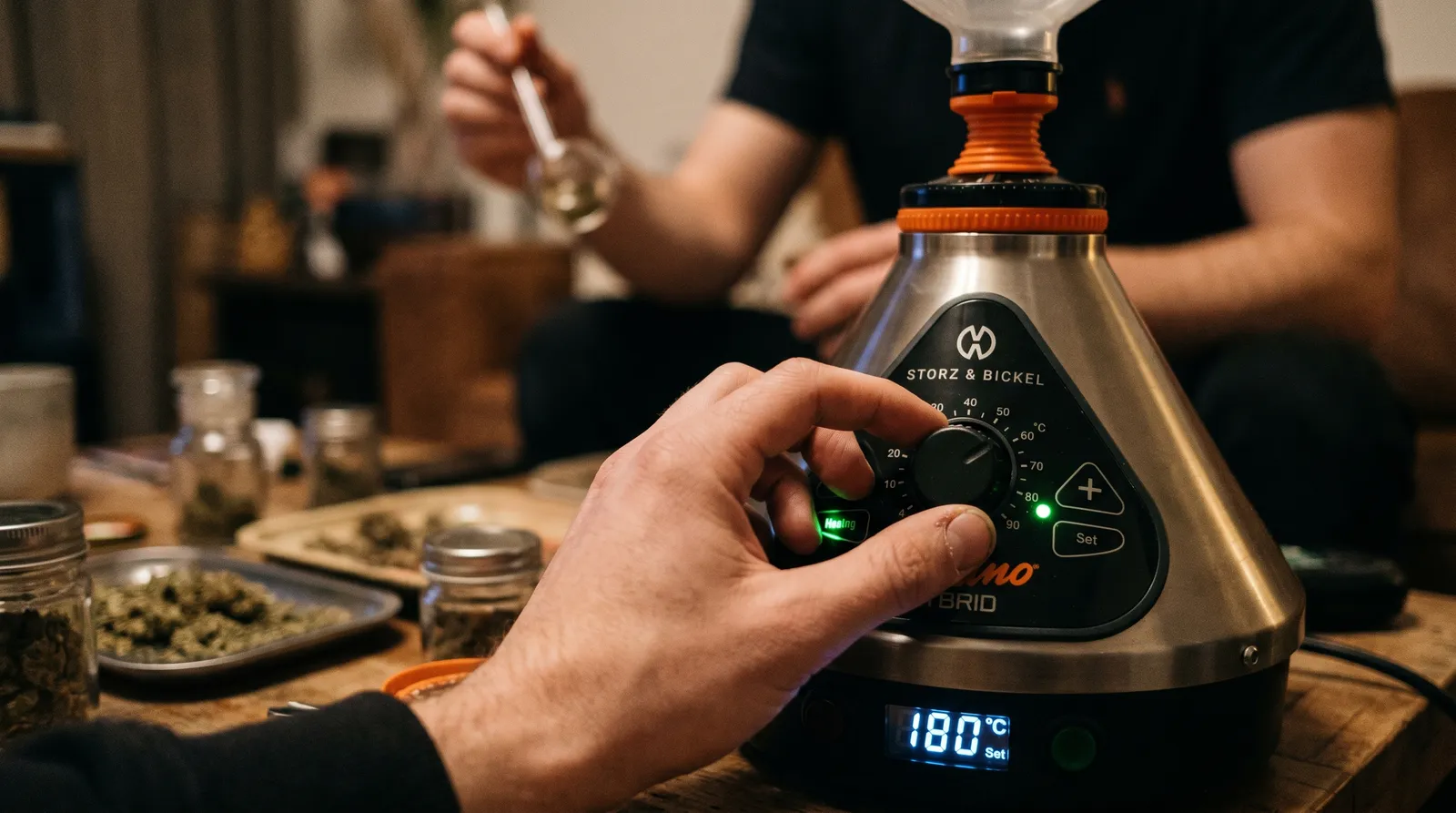
| Temperature Range | What Volatilises | Vapour Character |
|---|---|---|
| 160–175 °C | Lighter terpenes (myrcene, pinene), some THC begins to release | Thin, flavourful, minimal visible vapour |
| 175–195 °C | THC peak volatilisation (~157 °C boiling point but efficient extraction occurs higher), CBD begins (~160–180 °C) | Medium density, balanced flavour and visible cloud |
| 195–210 °C | Remaining cannabinoids, heavier terpenes (linalool, caryophyllene), some CBN | Thick, less flavourful, more visible vapour |
| 210–230 °C | Final extraction — approaches combustion threshold above 230 °C | Very thick, harsh if pushed too high, diminishing returns above 220 °C |
A practical approach: start your first bag at 180 °C, your second at 195 °C, and your third (if the material still has life) at 210 °C. Each bag captures a different slice of the plant's profile. The first is all flavour; the second is the workhorse; the third squeezes out whatever's left. According to Hazekamp et al. (2006), over 80% of available cannabinoids were extracted across three balloon fills at stepped temperatures, with diminishing returns beyond the third fill.
Stay below 230 °C. Above that threshold, you're approaching combustion territory, and the whole point of the Volcano is to avoid it. If the spent herb comes out dark brown, you've extracted well. If it's black and smells acrid, you went too far.
Step 4 — Filling and Detaching the Balloon
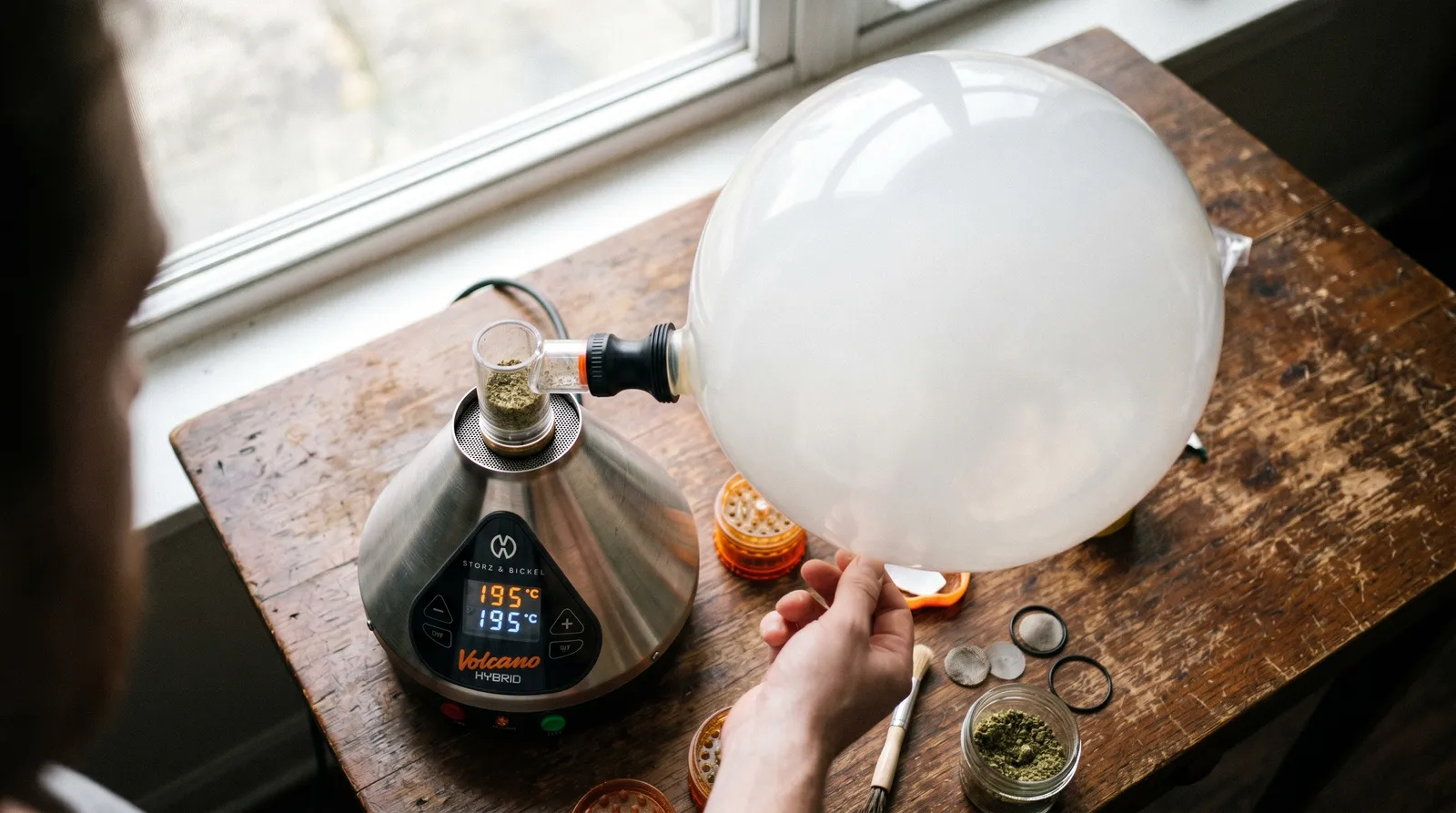
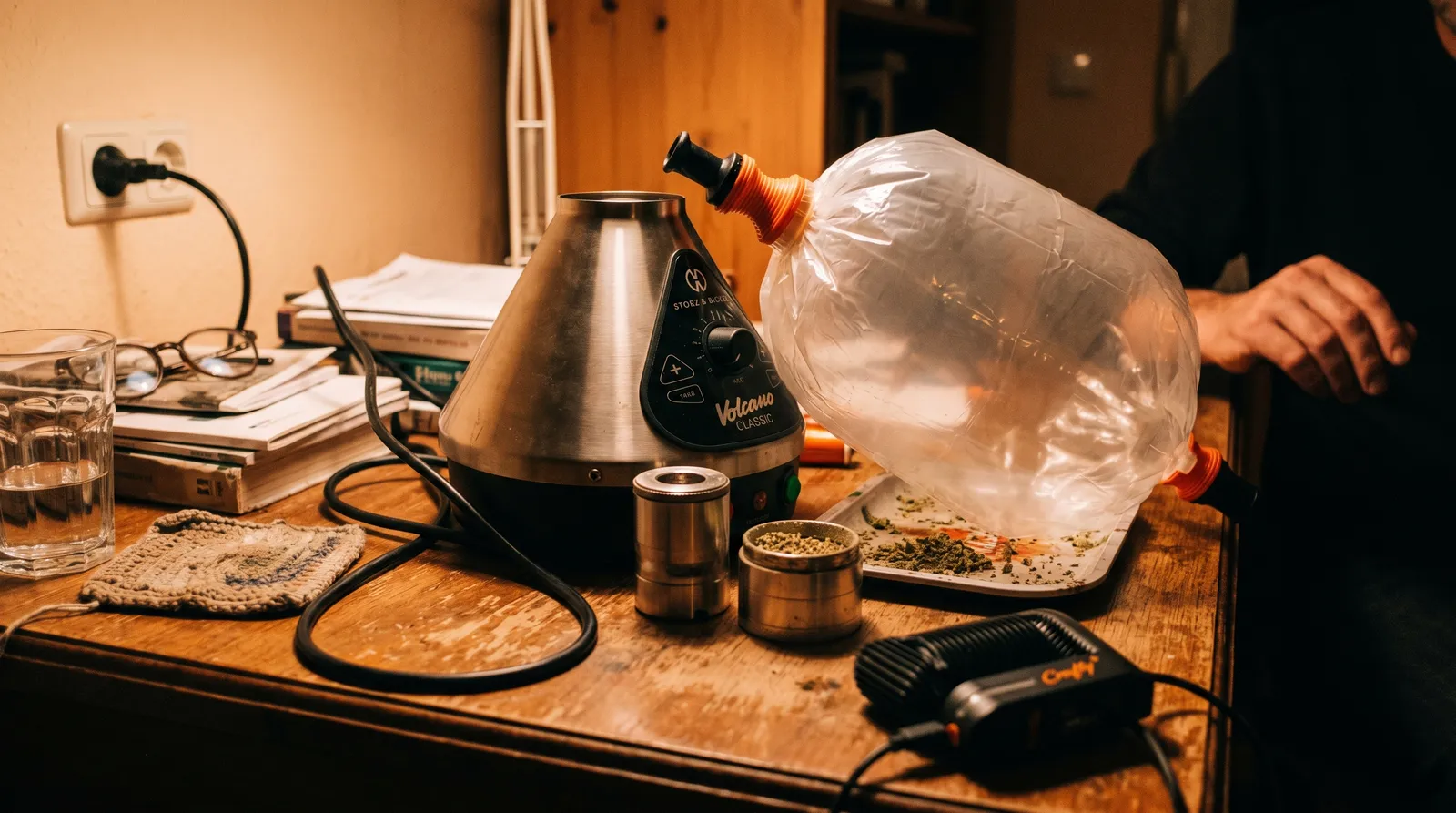
A standard-length balloon fills in 30–40 seconds once the fan is engaged. Attach the filled chamber to the Volcano's top, then clip the balloon assembly (the "Easy Valve" or "Solid Valve" depending on your model) onto the chamber. The Easy Valve uses pre-made balloon bags with integrated mouthpieces — when one wears out, you replace the whole unit. The Solid Valve lets you cut your own balloon length from a roll, which is cheaper long-term but requires a bit of DIY assembly.
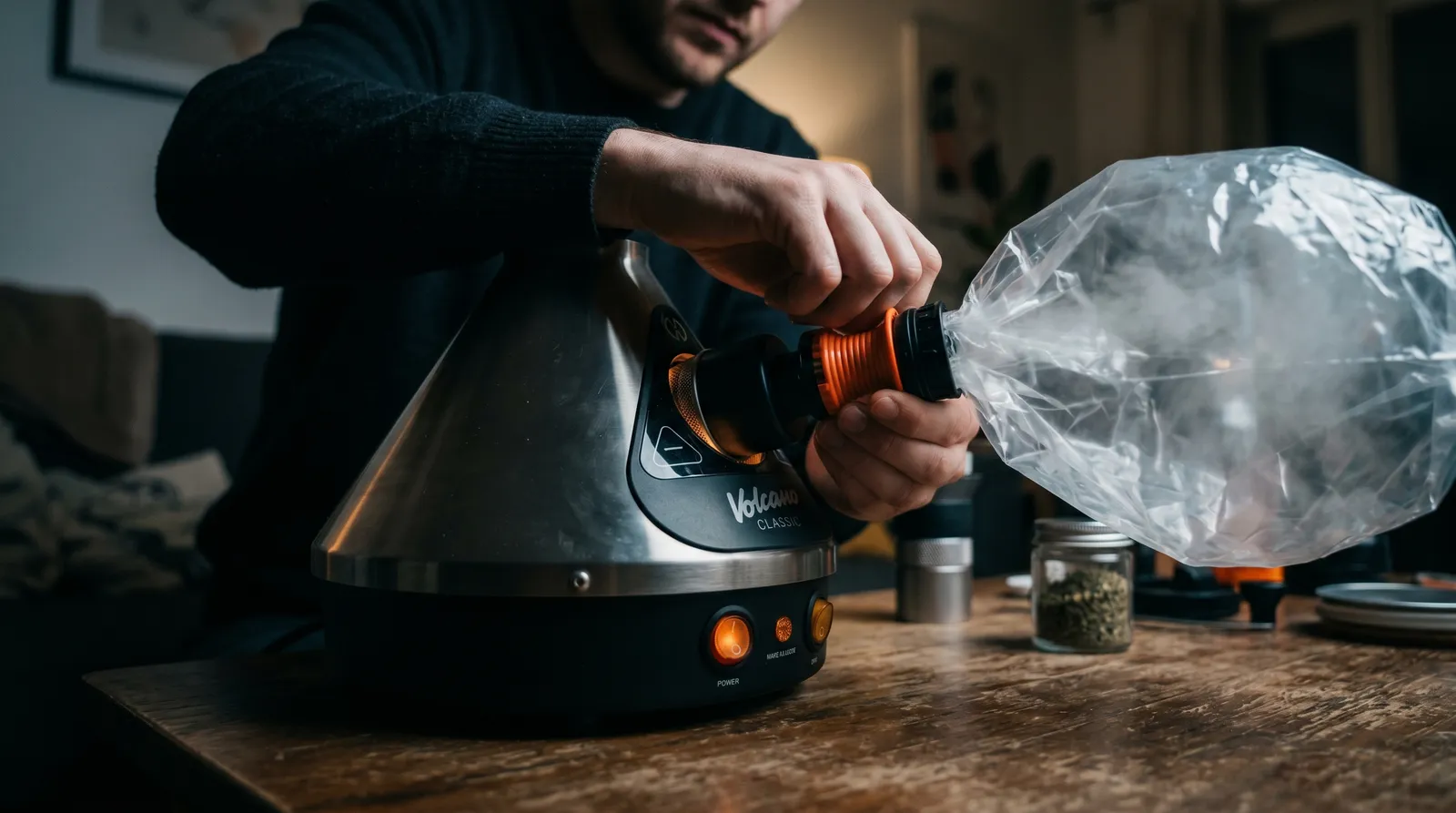
Once everything's clipped together, press the air pump button. The fan forces hot air through the herb, up through the chamber screen, and into the balloon. You'll see vapour cloud the bag — thicker at higher temperatures, wispier at lower ones. When the bag is full (it inflates like a pillow), switch off the fan, detach the balloon from the chamber, and inhale through the mouthpiece at your own pace.
One thing worth knowing: vapour potency in the bag degrades over time. A 2009 study by Pomahacova et al. found that THC concentration in a Volcano balloon dropped measurably after about 10 minutes at room temperature. So fill it, use it, then fill another — don't stockpile inflated bags on the coffee table like party balloons.
Step 5 — Getting the Most from Each Bowl
Most bowls yield two to three good bags before the material is fully spent. After the first balloon, remove the chamber and give it a gentle shake or stir with the included brush. This redistributes the herb and exposes fresh surface area to the airflow. Reattach, bump the temperature up 10–15 °C, and fill another bag.
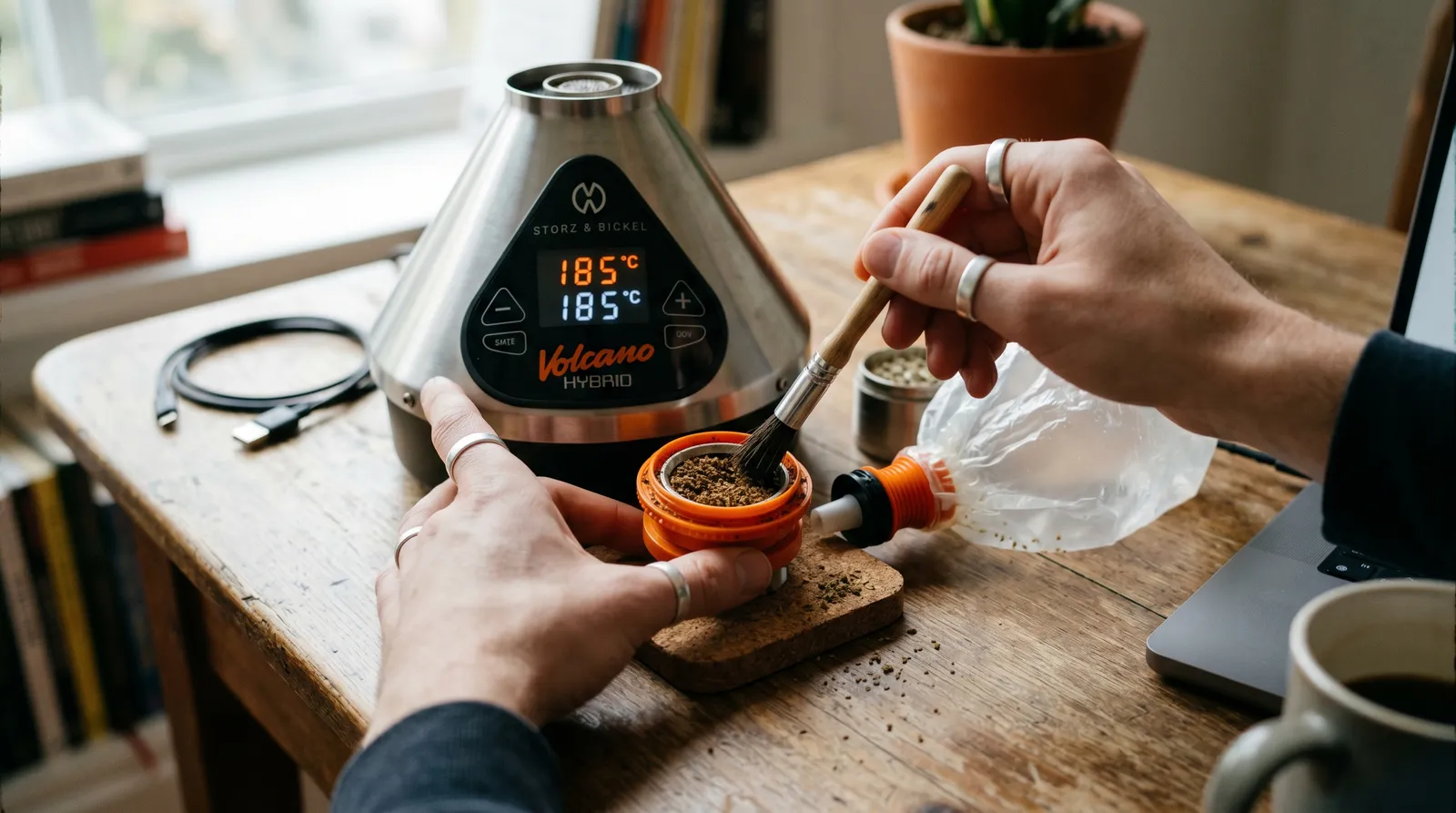
How do you know when a bowl is done? Taste is the best indicator. When the vapour starts tasting like popcorn or stale toast, the volatile compounds are exhausted. Visually, spent herb should be an even medium-to-dark brown. Uneven colour (green patches mixed with dark) means the chamber wasn't packed evenly or the material wasn't ground consistently.
For concentrate use, place a small amount of wax or hash onto one of the included liquid pads, sandwich it in the filling chamber, and run at 190–210 °C. The liquid pad prevents concentrate from dripping through the screen. Expect thicker vapour and faster extraction — one bag usually does it. You can also order the Storz & Bickel drip pad set separately if you go through them quickly.
Step 6 — Cleaning and Maintenance
Regular cleaning every 10–15 sessions keeps the Volcano performing at its best and extends the life of screens and valve parts. Here's a cleaning schedule that keeps performance consistent:
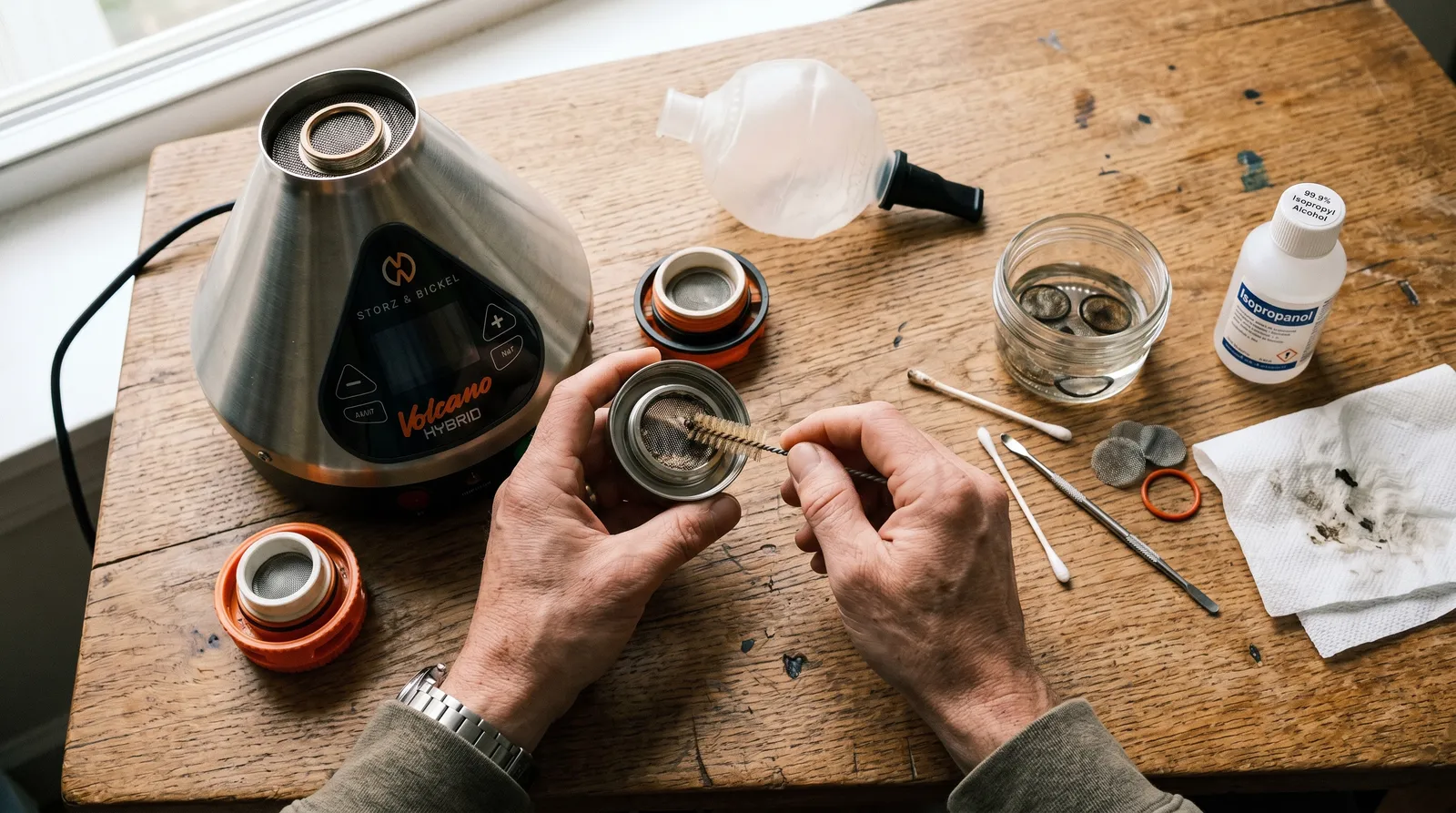
After every session: Empty the chamber, tap out spent herb, and brush the screens with the included brush. This takes about 15 seconds and prevents residue buildup.
Every 10–15 sessions: Disassemble the filling chamber (the screens unscrew from the housing) and soak all removable parts in isopropyl alcohol (90%+ concentration) for 20–30 minutes. Rinse with warm water and let everything air-dry completely before reassembling. Make sure you do this in a well-ventilated space — isopropyl fumes in a closed room aren't pleasant, and near heat sources they're a genuine safety concern.
Every 50+ sessions or when airflow feels restricted: Replace the screens. Storz & Bickel sells replacement screen sets, and fresh screens make a noticeable difference to draw resistance. The Easy Valve balloons themselves should be replaced when they start looking cloudy or develop a stale taste — typically every 50–100 uses, though heavy users might swap sooner.
The base unit itself doesn't need much. Wipe the exterior with a damp cloth. The heating element is sealed inside and shouldn't be tampered with. The aluminium body dissipates heat efficiently, so the exterior stays warm but not hot during operation — another nod to that German engineering.
Common Mistakes and How to Avoid Them
The most common Volcano mistake is overpacking the chamber, which restricts airflow rather than increasing vapour output. More herb doesn't mean more vapour. It means restricted airflow, uneven extraction, and a bag that takes twice as long to fill with half the density. Three-quarters full, gently levelled — that's the target.
Starting too hot. Jumping straight to 210 °C works, but you'll miss the terpene-rich lower-temperature flavour entirely and the session will be shorter. Stepped temperatures reward patience.
Ignoring the screens. Clogged screens are the number-one cause of "my Volcano doesn't hit like it used to." Regular brushing and periodic soaking keep airflow where it should be.
Using a grind that's too fine. Powder clogs the mesh, passes through into the balloon, and makes cleaning a chore. Medium-fine is the goal — visible particle structure, not dust.
Leaving filled bags sitting around. As noted, vapour quality drops after about 10 minutes (Pomahacova et al., 2009). Fill and use promptly.
Volcano Classic vs. Digital — Quick Comparison
The Classic uses an analogue dial while the Digital offers precise single-degree temperature control — both share the same convection heating core. Storz & Bickel produces the Volcano in two main variants available through Azarius: the Classic and the Digital (sometimes called the Hybrid in its latest iteration). Both use the same filling chamber and valve assemblies. The core vaping experience is identical.
| Feature | Volcano Classic | Volcano Digital |
|---|---|---|
| Temperature control | Analogue dial (positions 1–9) | Digital display (40–230 °C in 1 °C increments) |
| Heat-up time | Approximately 3–5 minutes | Approximately 3–5 minutes |
| Auto shut-off | No | Yes (after 30 minutes) |
| Build | Stainless steel cone, same footprint | Stainless steel cone, same footprint |
| Weight | ~1.8 kg | ~1.8 kg |
| Valve compatibility | Easy Valve and Solid Valve | Easy Valve and Solid Valve |
The Digital's advantage is precision — if you want to dial in exactly 188 °C because you've found that's your sweet spot, you can. The auto shut-off on the Digital is a genuine safety feature if you tend to forget appliances are on — the Classic will sit there heating indefinitely until you flip the switch.
How the Volcano Fits into a Wider Setup
The Volcano is a dedicated home-session device — not portable, not discreet, and not designed for quick single hits. That's by design. If you want something for on-the-go, Storz & Bickel's own Crafty and Mighty portables use similar convection-hybrid heating in a pocket-friendly format. For a different approach entirely, DynaVap's manual butane-powered vapes and TinyMight's on-demand convection portables offer alternatives that don't require mains power.
For a deeper look at how convection and conduction heating compare across different vaporizer types, see the Azarius convection-vs-conduction guide in the encyclopedia section.
Where to Buy the Volcano
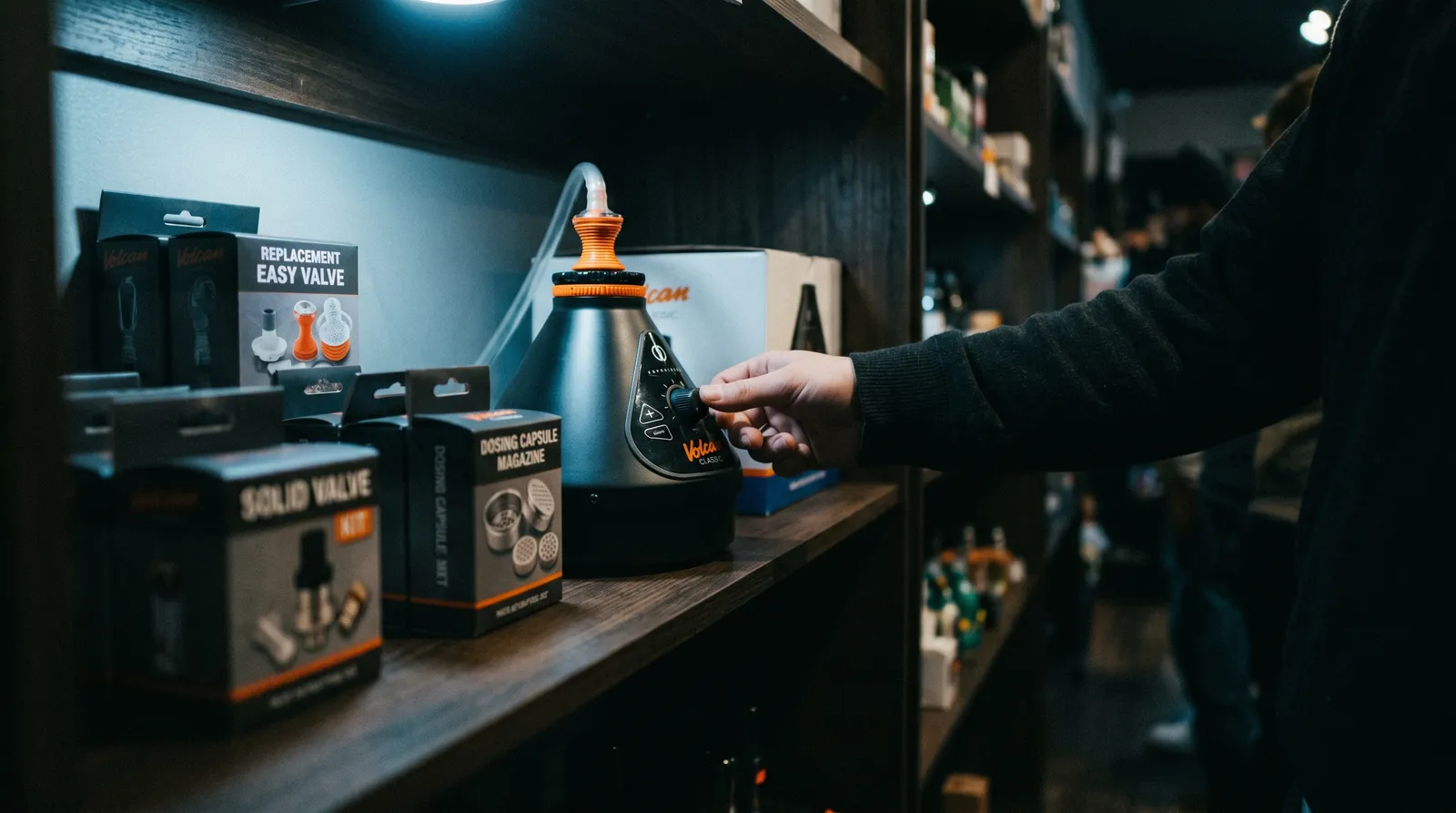
You can buy the Volcano Classic and Volcano Digital directly from the Azarius headshop, which stocks both models along with replacement Easy Valve sets, Solid Valve kits, dosing capsule magazines, and balloon rolls. Ordering through Azarius means you get the full Storz & Bickel manufacturer warranty (three years) and access to the complete range of accessories. Replacement screens, liquid pads, and grinders are also available to order individually — worth picking up alongside the unit so you're set for the first few months of use.
References
- Hazekamp, A., Ruhaak, R., Zuurman, L., van Gerven, J., & Verpoorte, R. (2006). Evaluation of a vaporizing device (Volcano) for the pulmonary administration of tetrahydrocannabinol. Journal of Pharmaceutical Sciences, 95(6), 1308–1317.
- Pomahacova, B., Van der Kooy, F., & Verpoorte, R. (2009). Cannabis smoke condensate III: The cannabinoid content of vaporised Cannabis sativa. Inhalation Toxicology, 21(13), 1108–1112.
- Storz & Bickel GmbH. (2023). Volcano operating manual and ISO 13485 certification documentation. Tuttlingen, Germany.
- European Monitoring Centre for Drugs and Drug Addiction (EMCDDA). (2018). Vaporisation as a harm-reduction strategy: Technical review. Lisbon, Portugal.
Last updated: April 2026
Frequently Asked Questions
9 questionsHow long does vapour last in a Volcano balloon?
What temperature should I set my Volcano to?
How often should I clean my Volcano filling chamber?
What is the difference between Easy Valve and Solid Valve?
How much herb should I put in the Volcano chamber?
Can I use concentrates in the Volcano?
Is the Volcano worth it compared to cheaper desktop vaporizers?
How long does a Volcano last?
Can I use the Volcano with a water pipe instead of a balloon?
About this article


Adam Parsons is an external cannabis and psychedelics writer and editor who contributes to Azarius's wiki as both author and reviewer. On the writing side, he authors Azarius's kratom and kanna clusters, drawing on exten
This wiki article was drafted with AI assistance and reviewed by Adam Parsons, External contributor. Editorial oversight by Joshua Askew.
Medical disclaimer. This content is for informational purposes only and does not constitute medical advice. Consult a qualified healthcare provider before use of any substance.
Last reviewed April 26, 2026
Related Articles
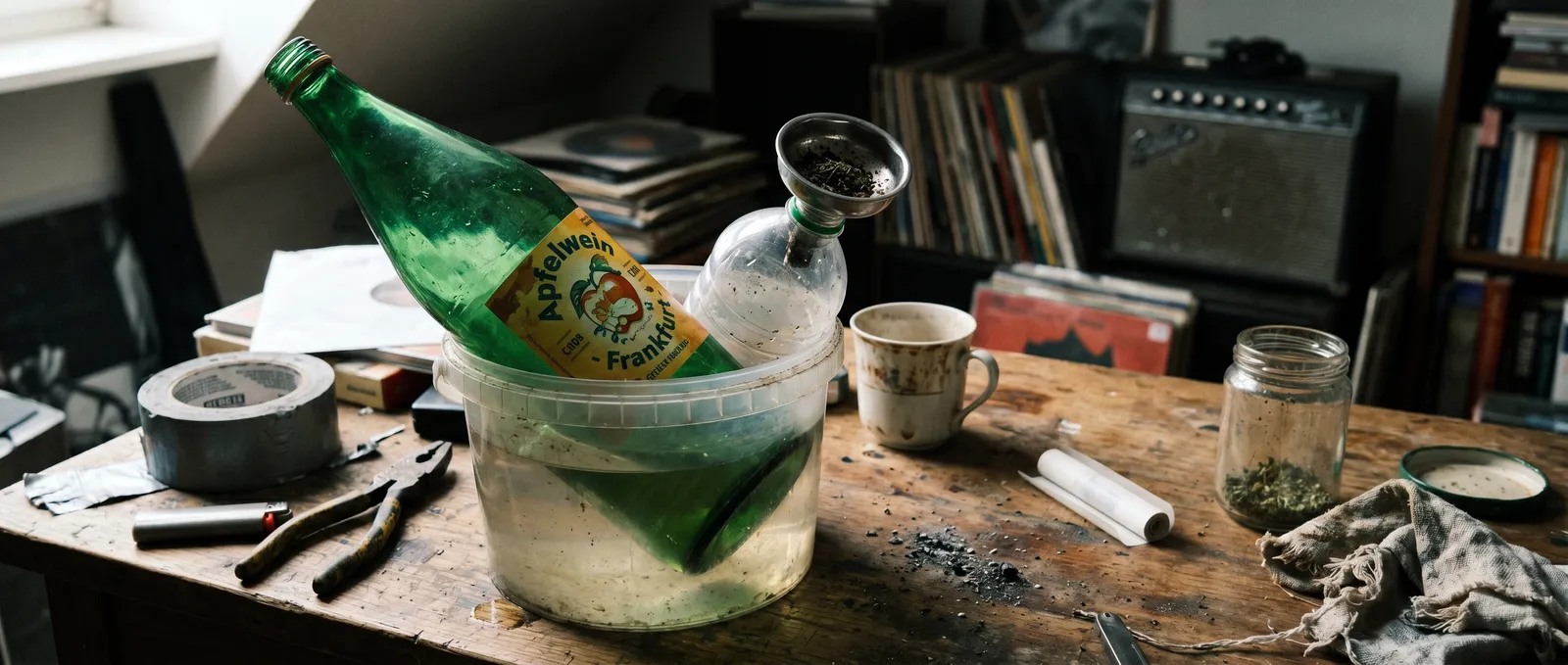
Gravity Bongs Explained: How They Work and Why
A gravity bong uses water displacement to pull concentrated smoke into a chamber, then forces it into your lungs under positive pressure.
TinyMight Boundless XMAX Premium Portables Compared
The TinyMight 2, Boundless CFX/CFC and XMAX V3/Starry/Ace represent three tiers of portable dry-herb vaporizer — from budget conduction to premium convection.
How To Clean a Vaporizer: Step-by-Step Guide
How to clean a vaporizer is a straightforward maintenance routine that keeps your device tasting fresh, drawing smoothly, and lasting years longer than a…
ROOR Grace Glass Black Leaf Blaze Brand Comparison — Glass Bong Guide
Four borosilicate glass bong brands — ROOR, Grace Glass, Black Leaf, and Blaze Glass — dominate the European market at different price points.
Joint Filters Crutches Glass Tips Activated Charcoal — Buyer's Guide
Joint filters range from simple card crutches that block loose herb to activated charcoal tubes that trap 40–60% of gas-phase toxicants like benzene and…
Quartz Banger Temperature and Care Guide
A quartz banger's performance depends almost entirely on temperature control and maintenance.
Arizer Portable Lineup Compared: Solo vs Solo 2 vs Solo 3 vs ArGo
Arizer's portable vaporizers all use borosilicate glass vapour paths and session-style heating, but differ meaningfully in battery architecture, heating…
Kief: What It Is and How to Collect It | Full Guide
Kief is the fine, powdery accumulation of trichome heads that detach from cannabis flower during grinding or handling.
Rolling Papers Compared: RAW vs OCB vs Elements vs Rizla
Rolling papers vary dramatically by material, thickness, burn rate, and adhesive — and those differences shape every session.