
Rolling Papers Compared: RAW vs OCB vs Elements vs Rizla
Definition
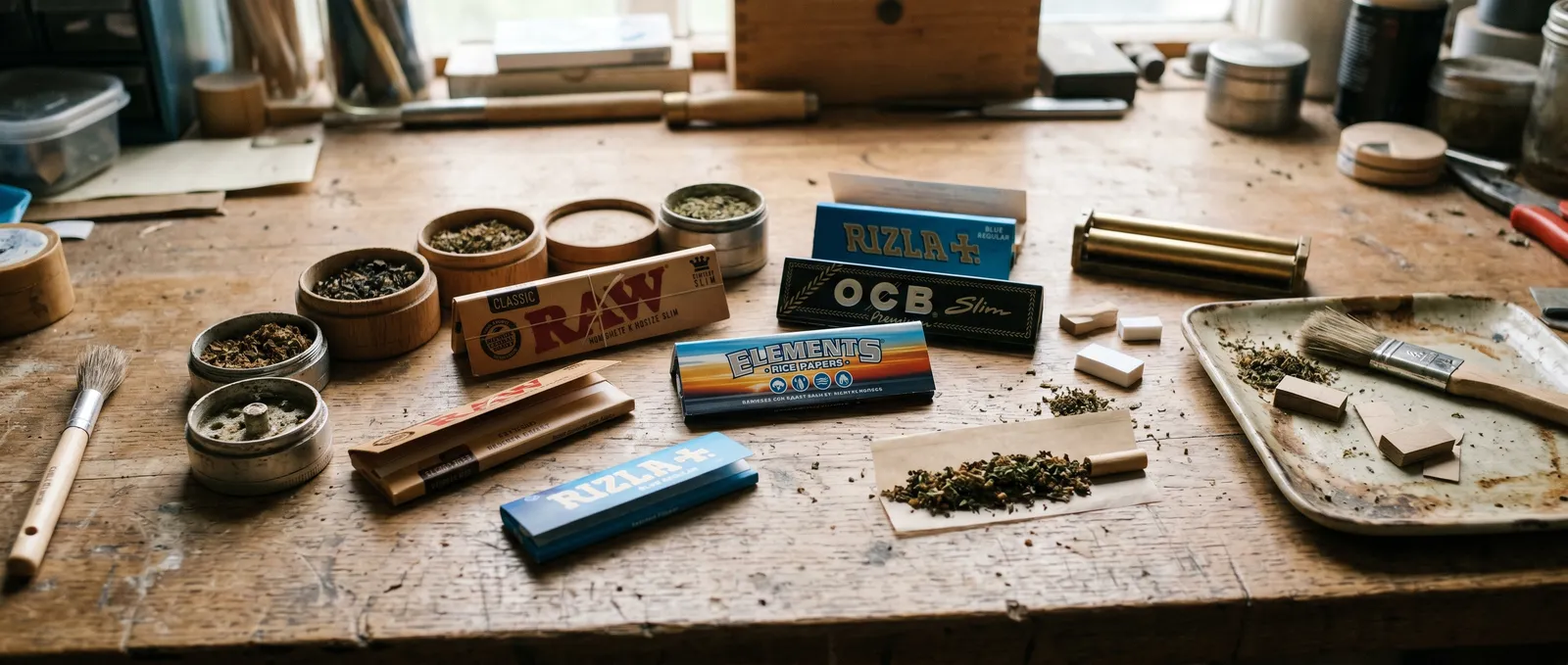
Rolling papers vary dramatically by material, thickness, burn rate, and adhesive — and those differences shape every session. A 2020 study in Environmental Research found significant variation in trace element levels across paper types (Pappas et al., 2020). This comparison breaks down five major brands — RAW, OCB, Elements, Rizla, and Smoking — by the specs that matter most to adult rollers.
Rolling Papers Compared: At a Glance
If you roll your own, the paper you wrap around your herb matters more than most people think. Material, thickness, burn rate, adhesive type, and even the ash left behind all shape the experience. This comparison covers the five major brands stocked across European headshops — RAW, OCB, Elements, Rizla, and Smoking — broken down by the specs that actually affect your session. This guide is written for adults (18+).
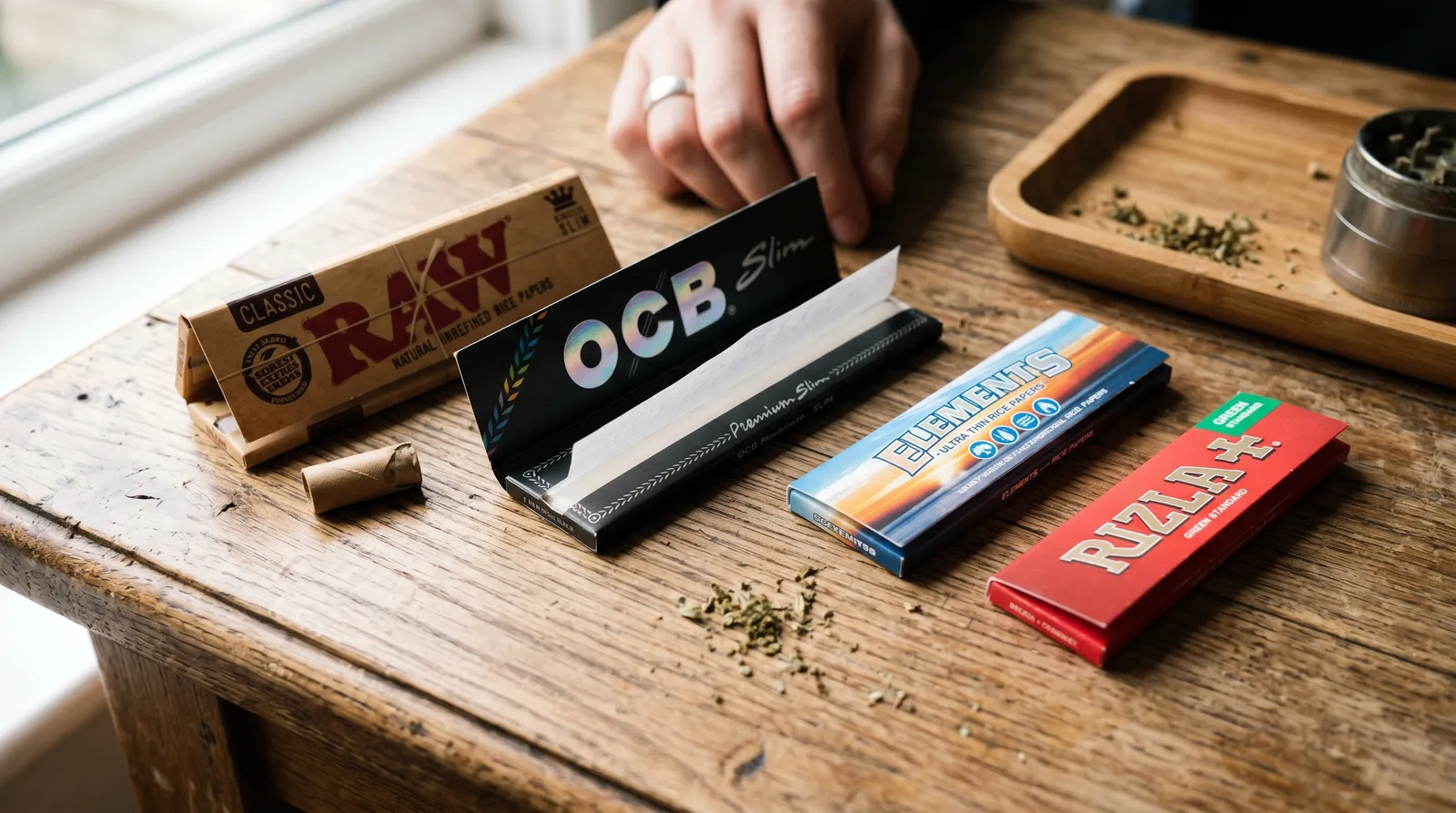
| Brand | Primary Material | Bleached/Unbleached | Thickness | Burn Speed | Gum Type | Taste Profile | Flagship Line |
|---|---|---|---|---|---|---|---|
| RAW | Hemp / hemp-flax blend | Unbleached | Thin to ultra-thin (Black line) | Slow to medium | Natural tree sap | Faint earthy, peppery note | RAW Classic, RAW Black |
| OCB | Flax (lin) / bamboo (Bamboo line) | Both (Virgin = unbleached) | Ultra-thin (Premium Black) | Medium | Natural gum arabic | Very neutral, near-tasteless | OCB Premium Black, OCB Bamboo |
| Elements | Rice | Unbleached | Ultra-thin | Slow | Sugar gum | Near zero — almost no ash | Elements King Size Slim |
| Rizla | Wood pulp / hemp blend (varies by line) | Both (Silver = bleached, Bamboo = unbleached) | Thin to standard | Medium to fast | Gum arabic | Mild paper taste on thicker lines | Rizla Silver King Size |
| Smoking | Rice (Master) / wood pulp (Deluxe) | Both | Ultra-thin (Master) to standard | Slow (Master) to medium | Gum arabic | Clean on Master line, slight paper note on Deluxe | Smoking Master, Smoking Gold |
Paper Material — the Single Biggest Variable
The material your paper is made from determines almost everything else: how it burns, how it tastes, how easy it is to roll, and what ends up in the ash. There are three main families you'll encounter.
Hemp papers
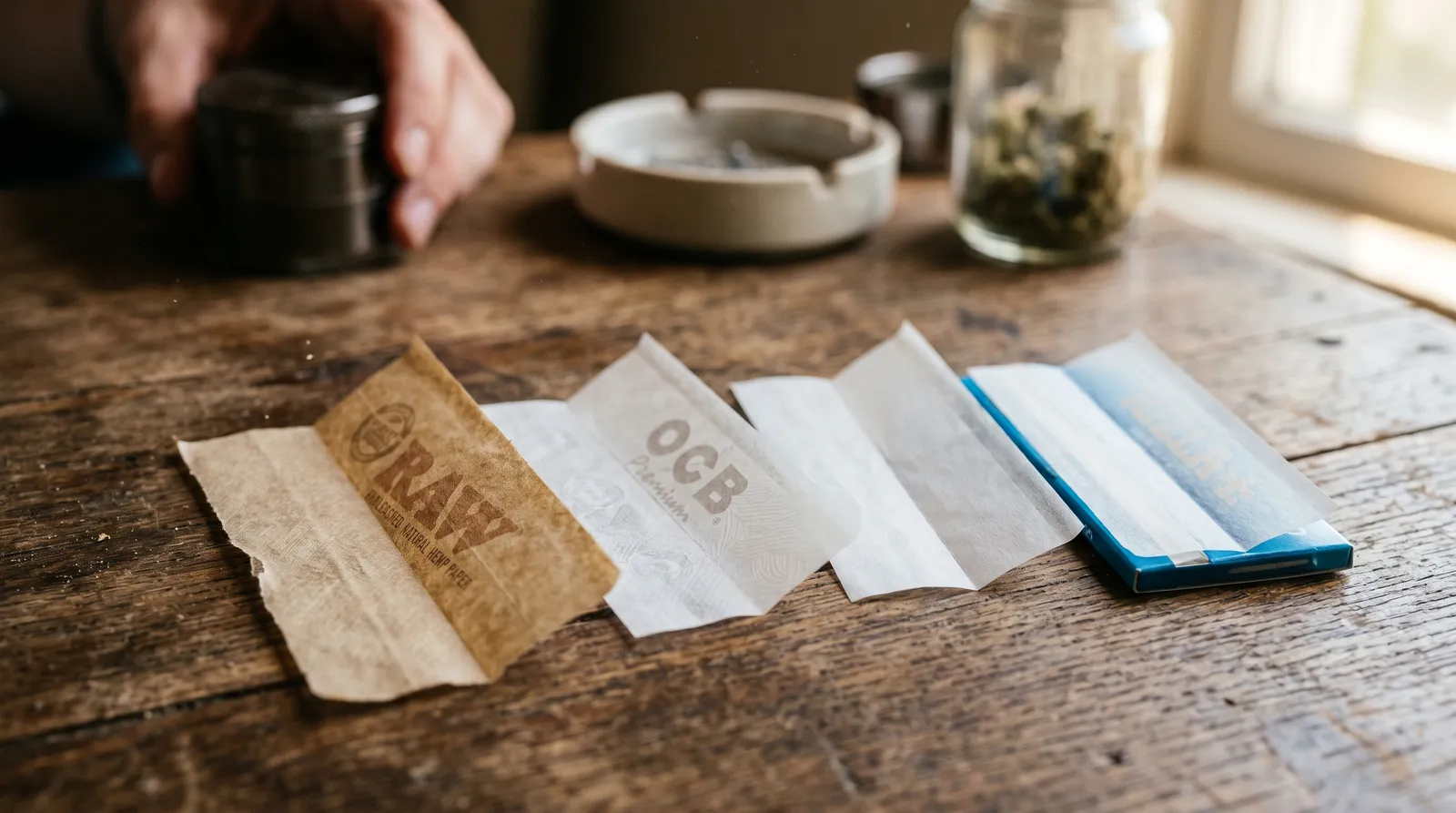
RAW built its reputation on hemp. Their Classic line uses an unbleached hemp-flax blend that burns evenly and has a slightly earthy, sometimes peppery flavour. The fibres are thicker than rice, so the paper has a bit of grip — good news if you're still developing your rolling technique. RAW Organic Hemp takes this further with a certified organic fibre and a slightly smoother finish. The trade-off is that hemp papers are rarely the thinnest option on the shelf; they prioritise even burn and structural integrity over transparency.
Rice papers
Elements and the Smoking Master line both use rice as their base. Rice papers are the thinnest you'll commonly find — hold an Elements sheet up to the light and you can practically read through it. They produce minimal ash and almost no discernible taste. The downside: rice papers can be tricky to roll if your fingers are dry or your herb isn't ground evenly. They don't grip the way hemp does, and they're more prone to tearing mid-tuck. Experienced rollers tend to love them; beginners sometimes find them frustrating.
Flax and wood pulp
OCB's classic lines use flax (lin), which sits somewhere between hemp and rice — thinner than hemp, sturdier than rice, and nearly tasteless. Their Premium Black line is one of the thinnest flax papers available. Rizla's traditional Silver line, on the other hand, uses wood pulp, which is the oldest paper material in the rolling game. Wood pulp papers are forgiving to roll and widely available, but they tend to burn faster and can carry a noticeable papery taste, especially in the thicker variants. If you've ever rolled a quick cigarette from a corner-shop booklet, that was almost certainly wood pulp.
Bleached vs Unbleached — Does It Matter?
The shift toward unbleached papers has been one of the clearest trends in the rolling paper market over the past decade. RAW popularised the brown, unbleached look; OCB followed with their Virgin line; and even Rizla now stocks unbleached options. The logic is straightforward: bleaching introduces chlorine or calcium carbonate processing steps that leave trace residues in the finished paper.
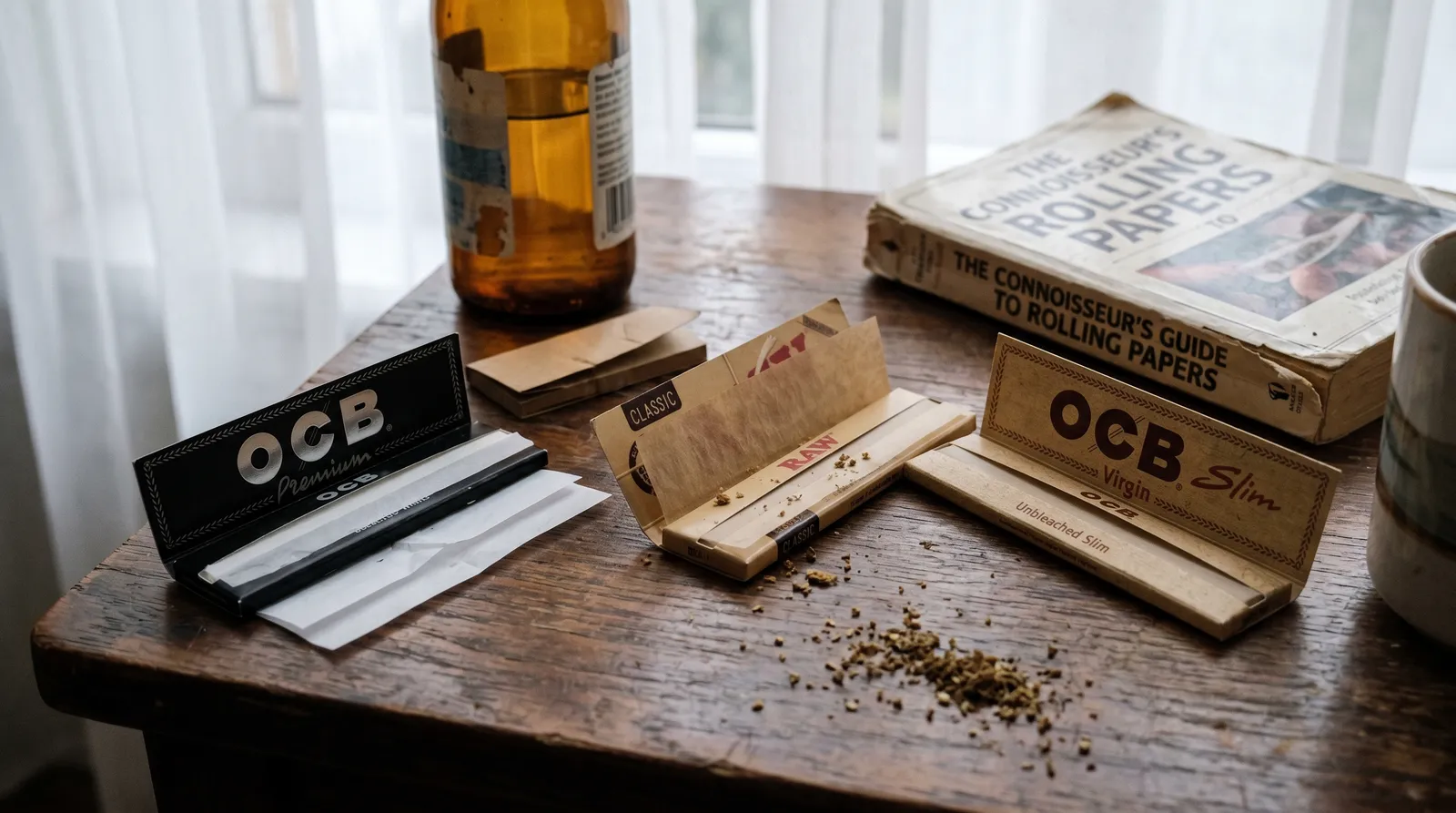
A 2020 study published in Environmental Research analysed heavy metal and elemental content across multiple cigarette paper brands and found significant differences in trace element levels between paper types (Pappas et al., 2020). While that study focused on manufactured cigarettes rather than hand-rolling papers specifically, the underlying chemistry applies — the fewer processing chemicals involved, the fewer residues end up in the final product. Unbleached papers skip that step entirely.
That said, modern bleached papers from reputable brands like OCB and Rizla use refined processes that leave very low residue levels. The difference between a bleached OCB Premium and an unbleached OCB Virgin is real but subtle. If minimising chemical exposure is a priority for you, unbleached is the obvious choice. If you prefer the handling characteristics of a specific bleached line, you're not making a catastrophic decision.
Burn Rate and Evenness
Nothing ruins a session faster than a paper that canoes — burns down one side while the other stays intact, creating an uneven, wasteful mess. Burn behaviour depends on three things: paper thickness, material density, and how evenly you've packed your roll.
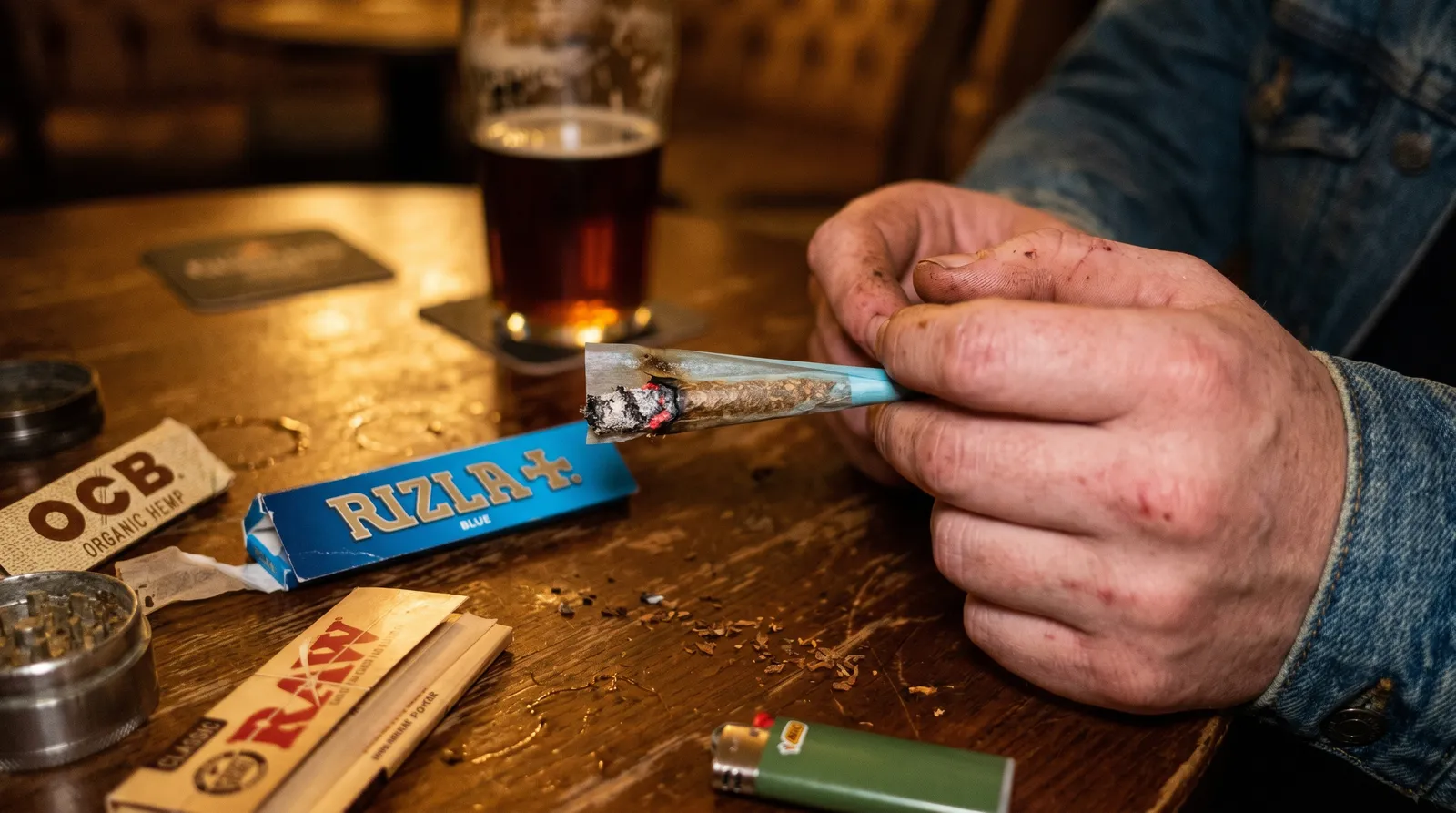
Rice papers (Elements, Smoking Master) tend to burn the slowest because they're the thinnest — less material means less fuel for combustion. Hemp papers (RAW) burn at a moderate pace with good evenness, partly because the fibres create a consistent density across the sheet. Wood pulp (Rizla Silver, Smoking Deluxe) burns the fastest, which is fine for a quick smoke but less ideal if you want to savour things.
RAW Black deserves a special mention here. It's RAW's ultra-thin line — thinner than their Classic but still hemp-based — and it splits the difference between the slow burn of rice and the easy handling of hemp. Community forums consistently rank it among the best all-round performers for even burn, and it's become one of the top-selling SKUs in European headshops for good reason.
Adhesive Gum Lines Compared
Every rolling paper has a gum strip along one edge. Lick it, stick it, seal the roll. Simple enough — but the adhesive composition varies, and so does its behaviour.
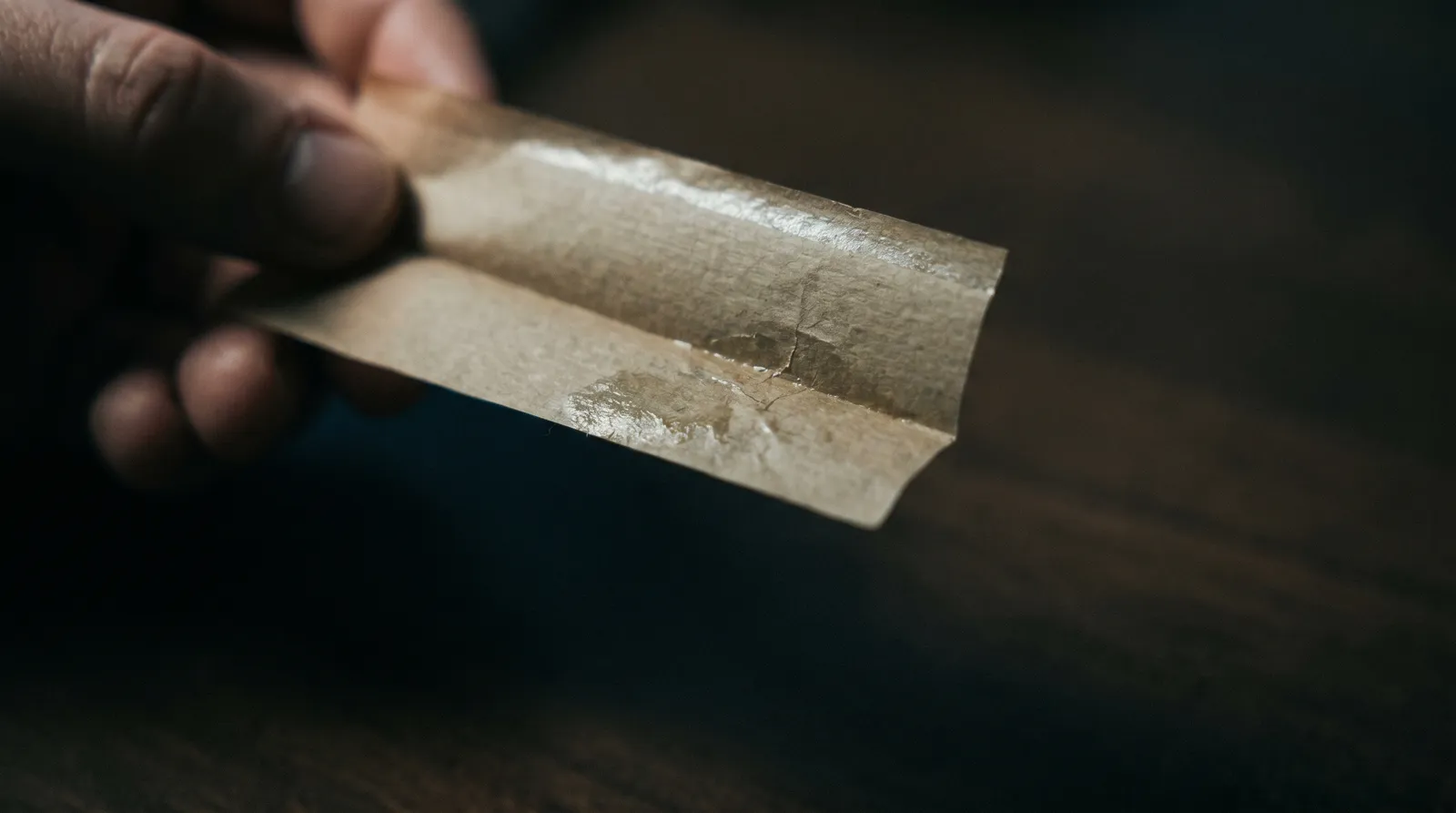
RAW uses what they call "natural tree sap" gum. It's sticky, seals well with minimal moisture, and holds firmly once dry. The gum line is fairly wide, which is forgiving for beginners. Elements uses a sugar-based gum that's thinner and requires a bit more precision — too much saliva and it can slide; too little and it won't seal. OCB and Rizla both use gum arabic, a plant-derived adhesive that's been standard in the paper industry for over a century. It works reliably and has no discernible taste.
Smoking brand papers also use gum arabic across their range. Functionally, the differences between gum arabic and RAW's tree sap are minimal for most rollers. Where you might notice a difference is in humid conditions — sugar gum (Elements) can get tacky in your booklet if stored in a damp pocket, while gum arabic and tree sap hold up better.
Size Formats and Tip Compatibility
All five brands offer the standard sizes: single wide, 1¼, and king size slim. Most also offer pre-rolled cones for people who'd rather pack than roll. RAW and OCB both sell booklets with integrated paper tips — the "with tips" format — which saves you carrying a separate tip booklet.
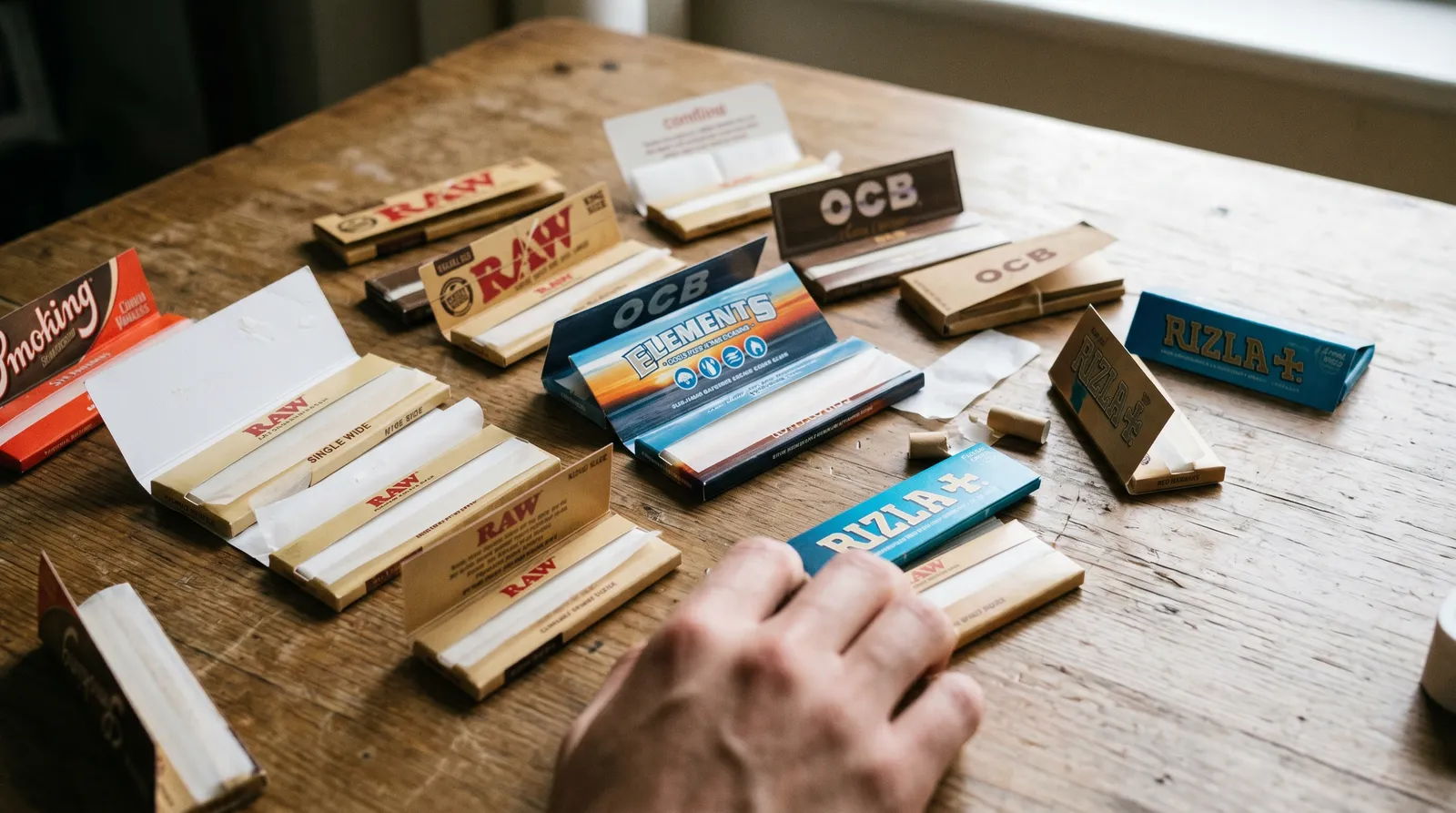
For king size slim (the most popular format in Europe by a wide margin), the paper dimensions are nearly identical across brands: roughly 108mm × 44mm. The real variation is in the booklet count — RAW Classic King Size Slim packs 32 leaves, while some OCB booklets contain 32 and others 50 depending on the line. Elements King Size Slim typically includes 33 leaves. Check the count before assuming you're getting the same value per booklet.
If you prefer pre-rolled cones, RAW dominates that segment with cones available in 1¼, king size, and even oversized formats. OCB and Elements also stock cones, though with fewer size options. Cones are worth considering if you find rice papers difficult to hand-roll — you get the same thin, clean-burning material without needing the manual dexterity.
What About Flavoured Papers?
Juicy Jay's is the main flavoured option in the European market. They use a soy-based ink system to add flavour directly to the paper — strawberry, blueberry, watermelon, and about two dozen others. The flavour is noticeable on the lips and mildly in the smoke, though it fades after the first third of the roll.
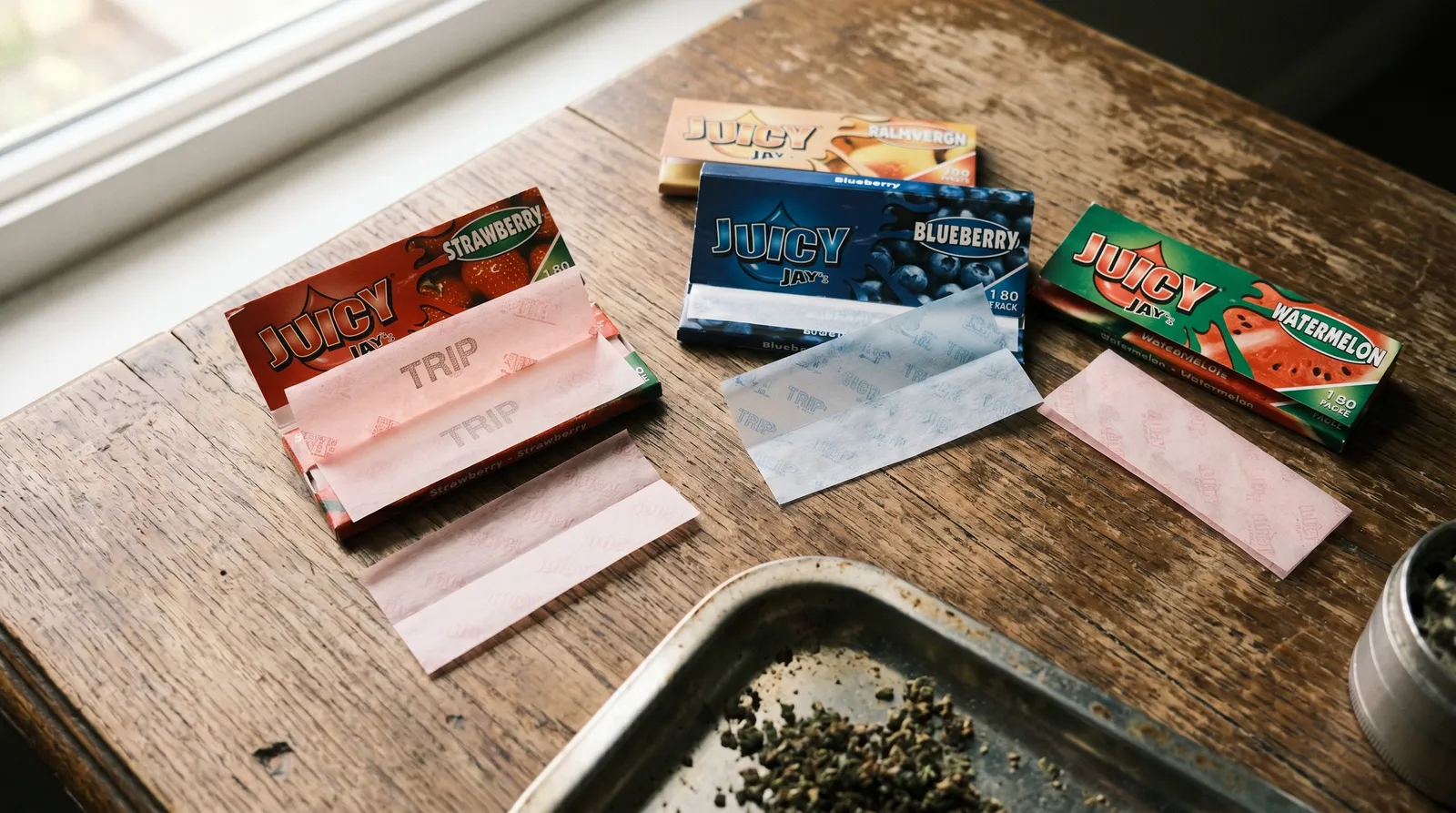
Flavoured papers are thicker than any of the standard brands compared above, and they burn faster. They're a novelty rather than a daily driver for most people. If taste purity matters to you, stick with the unflavoured options — Elements or OCB Premium Black will give you the least interference with whatever you're smoking.
Trace Elements and Safety Considerations
A 2021 study in the journal Inhalation Toxicology examined combustion byproducts from various rolling paper materials and found that paper composition meaningfully affects what the user inhales (Brokl et al., 2021). Gold-leaf and metallic novelty papers performed worst, releasing elevated levels of heavy metals during combustion. Standard hemp, rice, and flax papers performed significantly better, with rice papers generally producing the least combustion residue due to their lower mass.
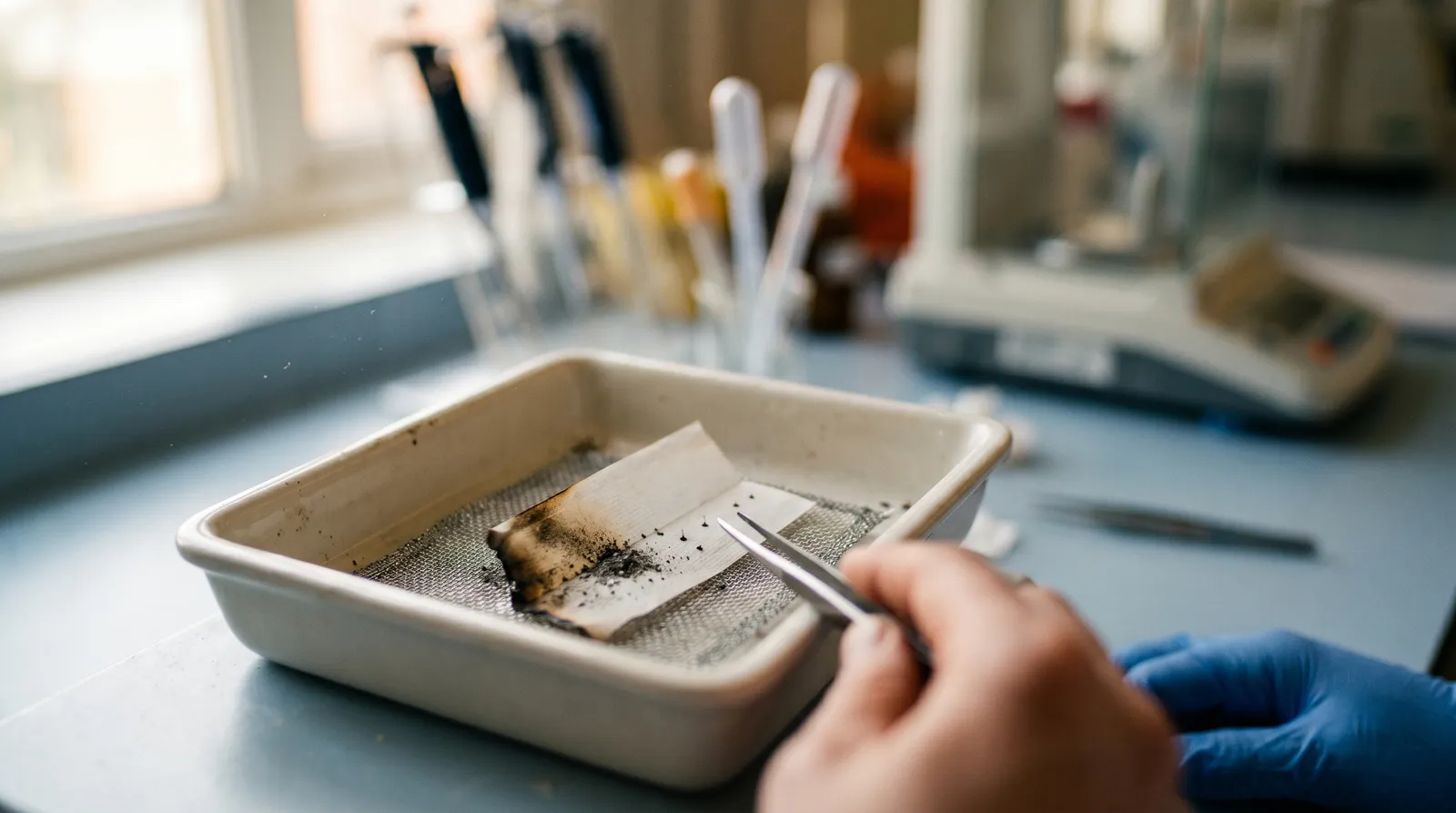
Separately, research published by Pappas et al. (2020) in Environmental Research found measurable levels of copper, lead, and other trace elements in cigarette papers, with significant variation between brands and paper types. The concentrations were generally low in major commercial brands, but the study highlighted that paper choice is not a zero-impact decision — it's a variable worth considering, especially for daily users.
The practical takeaway: unbleached, thin papers from established brands (RAW, OCB, Elements, Smoking, Rizla) sit at the lower end of the risk spectrum. Avoid no-name bargain papers and novelty metallic wraps. And if you want to eliminate paper combustion from the equation entirely, a dry-herb vaporiser removes the variable altogether — see our vaporiser comparison guides for that angle.
Which Paper Suits Your Rolling Style?
There's no single best paper — there's the best paper for how you roll and what you prioritise. Here's a quick decision framework:
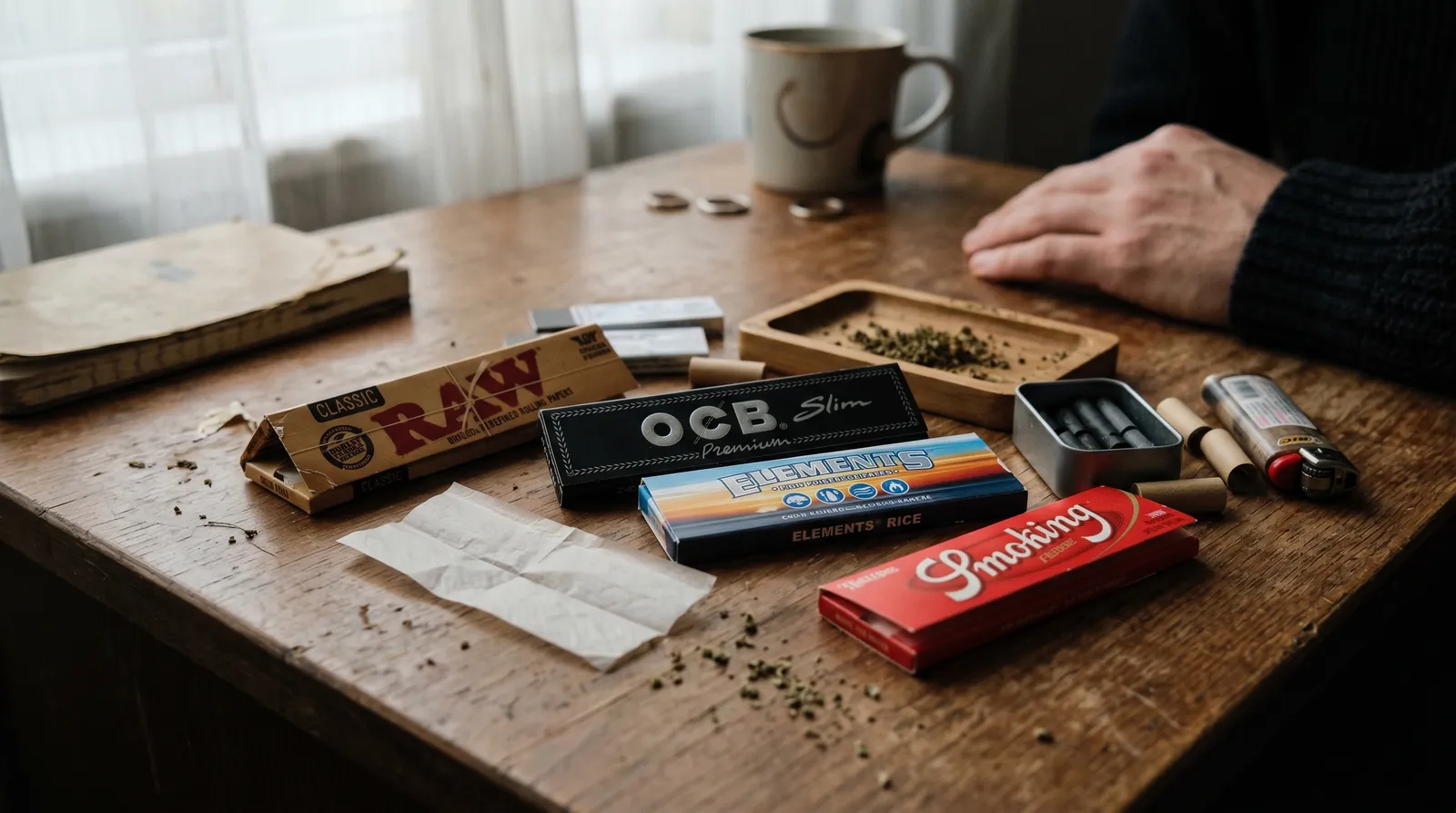
- Still learning to roll? RAW Classic or Rizla King Size. The thicker material forgives sloppy tucks and uneven packing. Hemp grips better than rice.
- Want the cleanest taste possible? Elements rice papers or OCB Premium Black. Both are ultra-thin with minimal flavour interference. Elements edges it on thinness; OCB edges it on ease of handling.
- Prioritise slow, even burn? RAW Black. It combines hemp's structural consistency with a thinner profile that burns slowly without canoeing.
- Care about unbleached and organic? RAW Organic Hemp or OCB Virgin. Both skip chlorine processing entirely.
- Want sustainability credentials? OCB Bamboo uses bamboo fibre, which grows faster and requires less water than hemp or flax. It handles similarly to their flax papers.
- Prefer not to roll at all? Pre-rolled cones from RAW, OCB, or Elements let you pack and go.
Pair any of these with a decent filter — activated charcoal tips for maximum filtration, glass tips for reusability, or standard paper tips for simplicity. The filter choice affects draw resistance and cooling at least as much as the paper choice affects taste.
This guide covers hardware for adults (18+). Use of vaporizers, bongs, pipes, dab rigs and rolling accessories is for adult use only. Verify your local laws on the substances you choose to use — Azarius does not provide legal advice. Consult a qualified professional if you have a health condition or take medication.
References
- Pappas, R.S. et al. (2020). "Toxic elements in tobacco and in cigarette paper." Environmental Research, 188, 109811.
- Brokl, M. et al. (2021). "Combustion byproducts of rolling paper materials: implications for inhalation exposure." Inhalation Toxicology, 33(3), 89–101.
Last updated: April 2026
Frequently Asked Questions
8 questionsAre unbleached rolling papers safer than bleached ones?
Why do rice rolling papers burn slower than hemp?
What is the difference between RAW Classic and RAW Black?
Do flavoured rolling papers affect burn quality?
Which rolling paper material produces the least ash?
Can the gum strip on rolling papers go bad in humid conditions?
Which rolling papers are easiest for beginners to roll with?
What type of gum strip is used on rolling papers and does it matter?
About this article


Adam Parsons is an external cannabis and psychedelics writer and editor who contributes to Azarius's wiki as both author and reviewer. On the writing side, he authors Azarius's kratom and kanna clusters, drawing on exten
This wiki article was drafted with AI assistance and reviewed by Adam Parsons, External contributor. Editorial oversight by Joshua Askew.
Medical disclaimer. This content is for informational purposes only and does not constitute medical advice. Consult a qualified healthcare provider before use of any substance.
Last reviewed April 25, 2026
Related Articles
Gravity Bongs Explained: How They Work and Why
A gravity bong uses water displacement to pull concentrated smoke into a chamber, then forces it into your lungs under positive pressure.

Storz Bickel Volcano Complete Guide: Setup, Temps & Cleaning
The Storz & Bickel Volcano is a convection desktop vaporizer that fills detachable balloons with vapour — a system clinically validated by Hazekamp et al.
TinyMight Boundless XMAX Premium Portables Compared
The TinyMight 2, Boundless CFX/CFC and XMAX V3/Starry/Ace represent three tiers of portable dry-herb vaporizer — from budget conduction to premium convection.
How To Clean a Vaporizer: Step-by-Step Guide
How to clean a vaporizer is a straightforward maintenance routine that keeps your device tasting fresh, drawing smoothly, and lasting years longer than a…

ROOR Grace Glass Black Leaf Blaze Brand Comparison — Glass Bong Guide
Four borosilicate glass bong brands — ROOR, Grace Glass, Black Leaf, and Blaze Glass — dominate the European market at different price points.
Joint Filters Crutches Glass Tips Activated Charcoal — Buyer's Guide
Joint filters range from simple card crutches that block loose herb to activated charcoal tubes that trap 40–60% of gas-phase toxicants like benzene and…

Quartz Banger Temperature and Care Guide
A quartz banger's performance depends almost entirely on temperature control and maintenance.
Arizer Portable Lineup Compared: Solo vs Solo 2 vs Solo 3 vs ArGo
Arizer's portable vaporizers all use borosilicate glass vapour paths and session-style heating, but differ meaningfully in battery architecture, heating…
Kief: What It Is and How to Collect It | Full Guide
Kief is the fine, powdery accumulation of trichome heads that detach from cannabis flower during grinding or handling.