
Joint Filters Crutches Glass Tips Activated Charcoal — Buyer's Guide
Definition
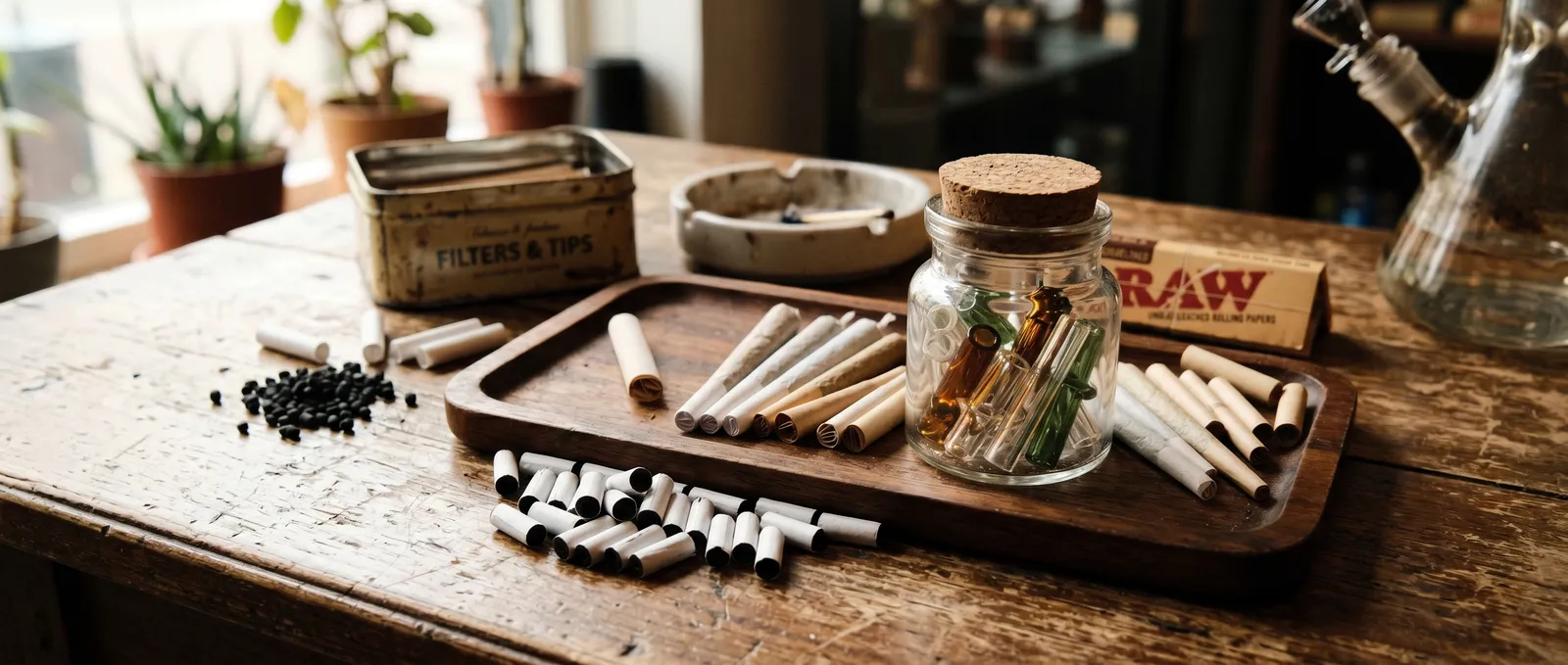
Joint filters range from simple card crutches that block loose herb to activated charcoal tubes that trap 40–60% of gas-phase toxicants like benzene and hydrogen cyanide (Moir et al., 2005). Glass tips sit in between — reusable, smooth on the lips, but offering no chemical filtration. Choosing the right one depends on whether you prioritise flavour, comfort, or reduced tar intake.
Joint filters, crutches, glass tips, and activated charcoal filters are rolling accessories that shape airflow, mouthfeel, and smoke composition every time you light up. At the simplest end, a paper crutch blocks loose herb from reaching your lips. At the other extreme, an activated charcoal filter traps 40–70% of tar and a significant share of gas-phase toxicants. Glass tips sit between the two — reusable, comfortable, but offering no chemical filtration. Whether you want to buy joint filters, order crutches, or get glass tips and activated charcoal options, this guide compares all three so you can pick the right type for your setup and priorities.
Filter types at a glance
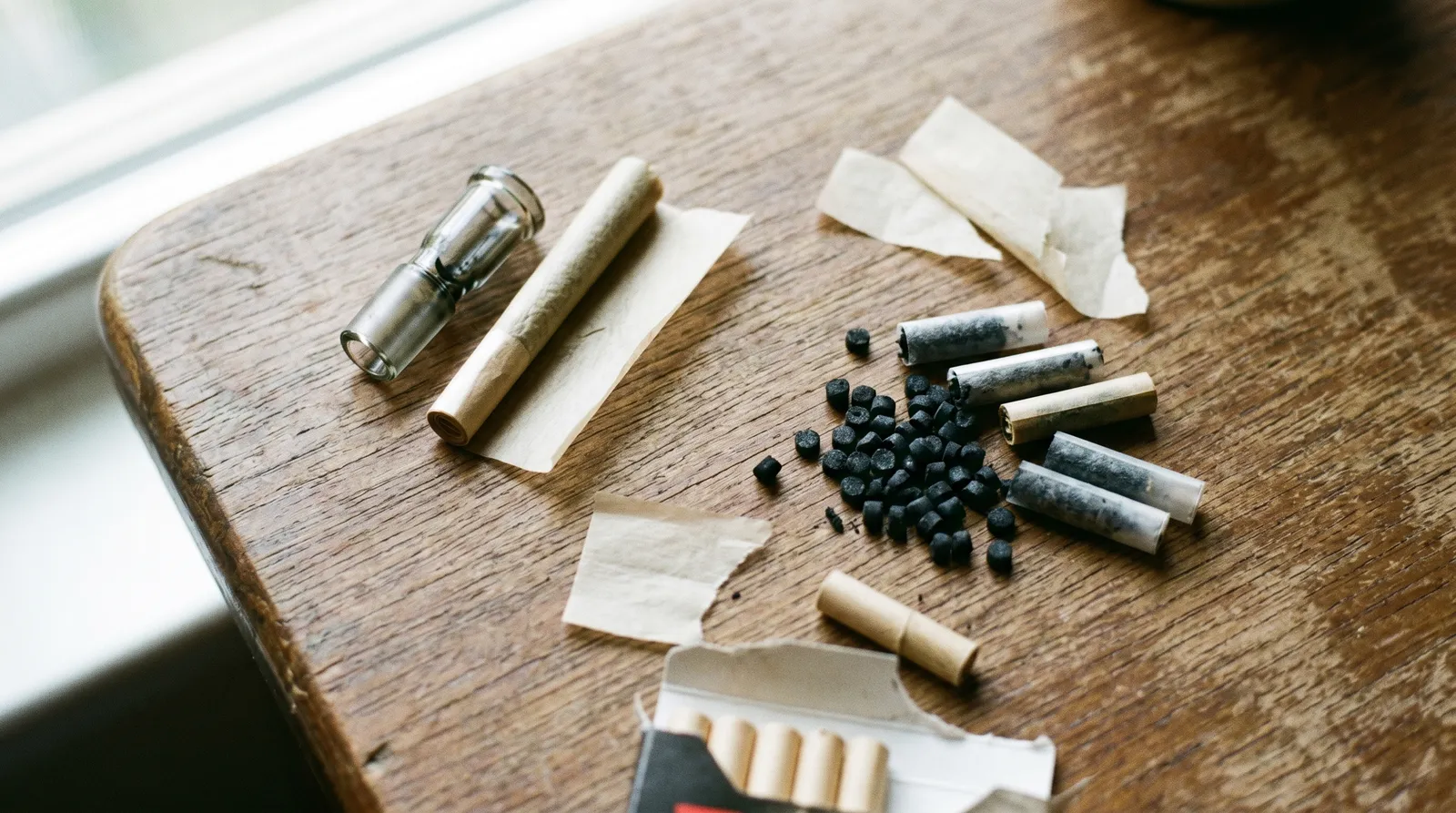
Joint filters fall into three broad categories — paper crutches, glass tips, and activated charcoal — each with distinct materials, filtration levels, and trade-offs summarised below.
| Filter type | Material | Filtration level | Reusable? | Airflow restriction | Best for |
|---|---|---|---|---|---|
| Paper tip / crutch | Card stock or perforated paper | Minimal — blocks loose herb only | No (single use) | Very low | Structural support, preventing "Scooby snacks" |
| Glass tip | Borosilicate glass | Low — same as paper but smoother mouthfeel | Yes (rinse and reuse) | Low | Cooler draw, tactile upgrade, waste reduction |
| Activated charcoal filter | Cellulose acetate + granulated activated carbon | High — traps tar, particulates, some volatile compounds | No (single use) | Moderate to noticeable | Smoother inhale, reduced tar intake |
That table covers the three main categories you will find in any decent headshop. The rest of this article unpacks what each type actually does, where the trade-offs sit, and which situations suit which filter. If you want to order joint filters, crutches, glass tips, or activated charcoal options, the product pages in our headshop section carry the full range.
What does a paper tip (crutch) actually do?
A paper crutch provides structural support — not chemical filtration — by keeping the end of a joint open and stopping loose herb from reaching your mouth. It is a small rectangle of stiff card that you roll into a cylinder and slot into the mouthpiece end. It does not filter smoke in any meaningful chemical sense.
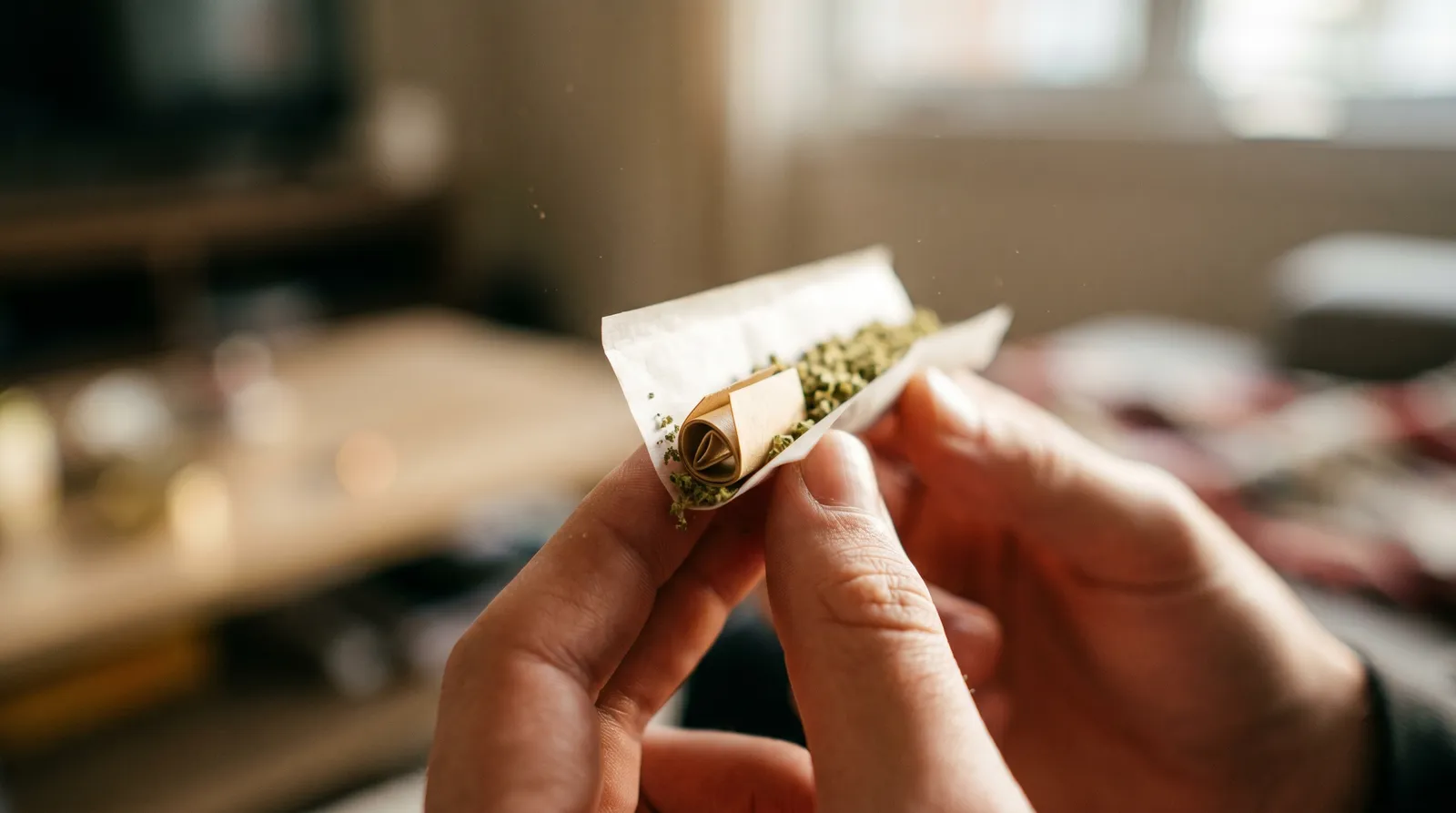
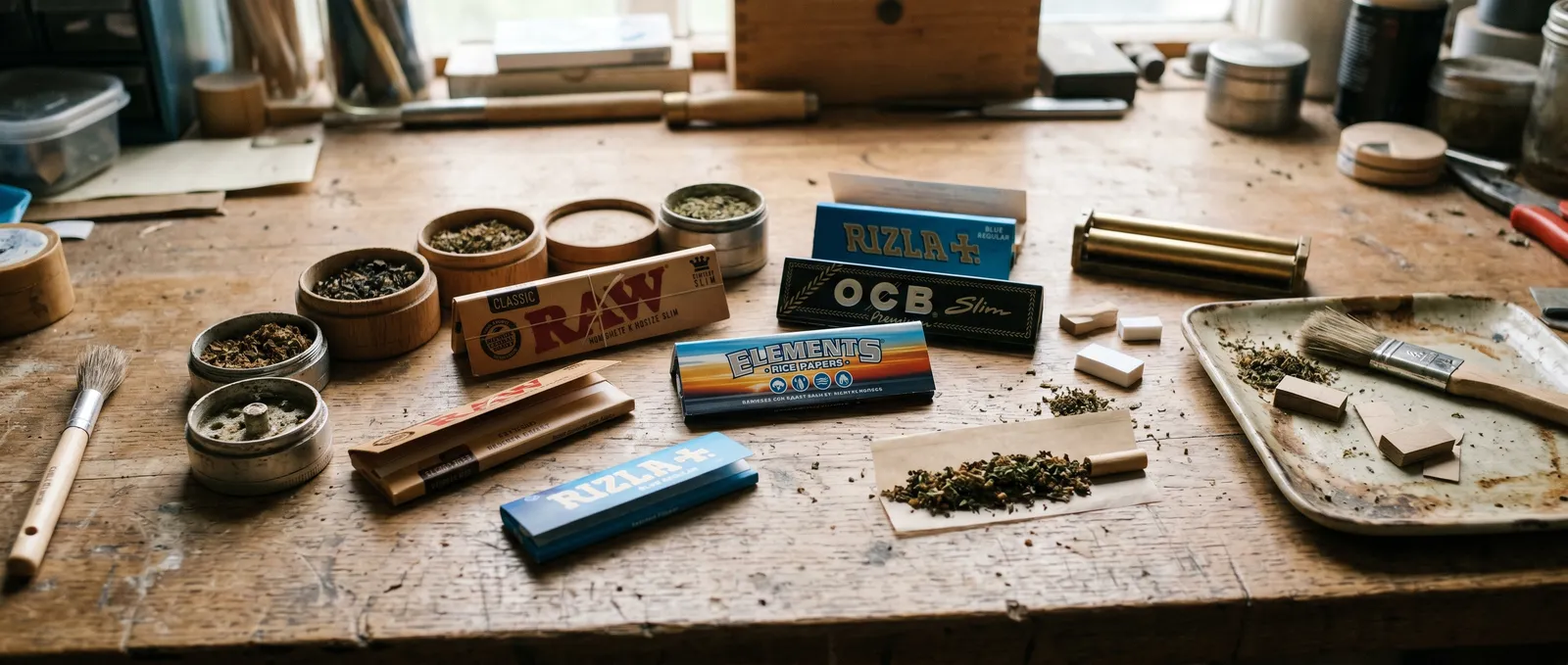
Most rolling-paper brands include perforated tip booklets in their range. RAW unbleached tips, OCB cardboard tips, and Elements rice-paper tip strips all do the same basic job. Some come pre-perforated with fold lines for a quick "W" or "M" accordion shape inside the cylinder, which adds a tiny bit of turbulence to the airflow and catches a few more loose particles. The difference between brands at this level is mostly about card thickness and how cleanly the perforations tear — not about filtration performance.
Pre-rolled cones from RAW, Elements, and others come with a paper crutch already glued in. Handy if you find rolling fiddly, but the tip itself is identical to what you would roll by hand.
Glass tips: same idea, different material
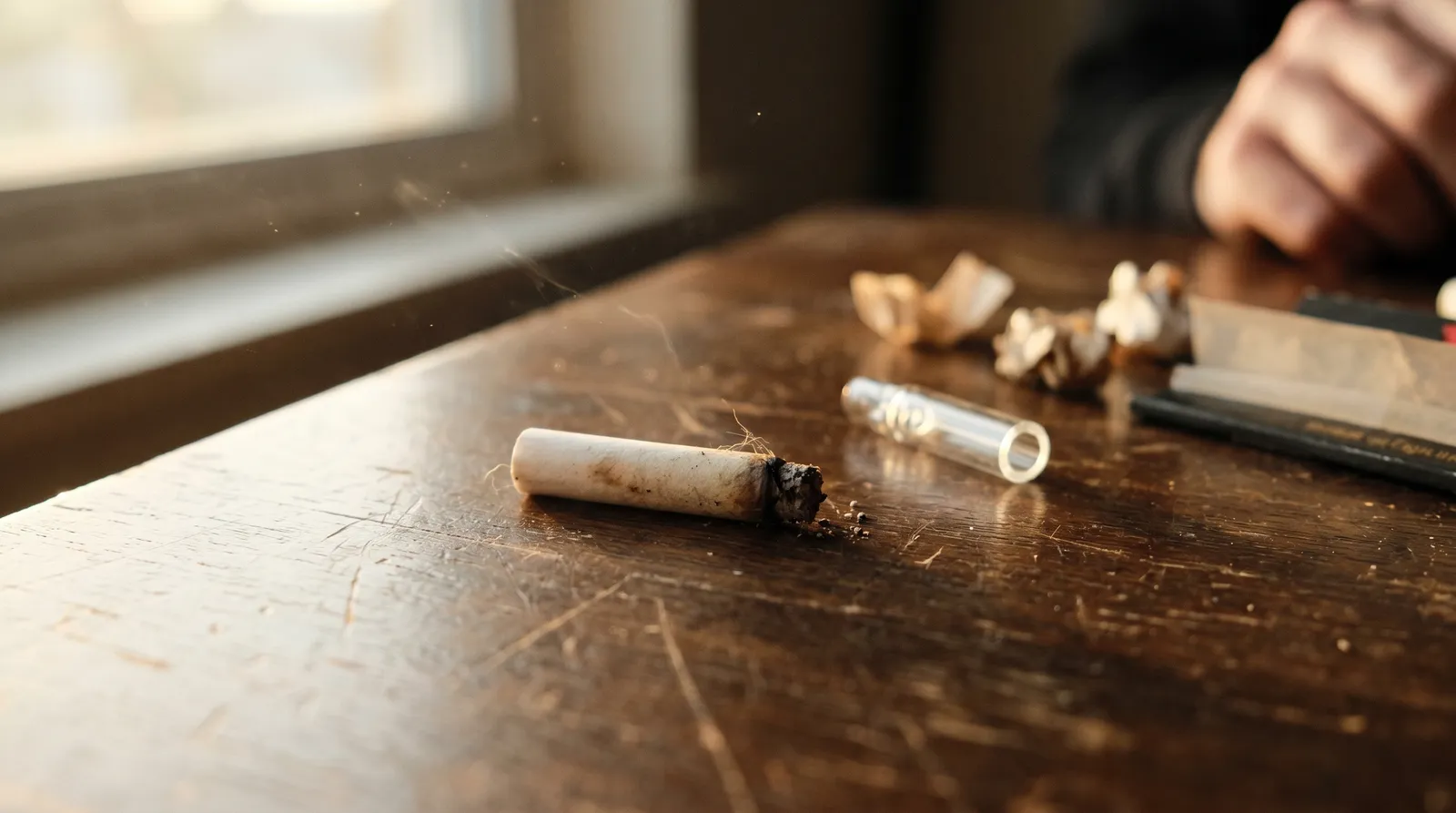
A glass tip replaces the disposable card crutch with a reusable borosilicate tube — typically 8–12 mm in diameter and 25–35 mm long — that you roll the paper around. The smoke path is the same open cylinder with no filtering medium inside, so filtration remains minimal.

So why bother? Three reasons come up repeatedly:
- Mouthfeel. Glass is smooth and cool against the lips. Card can go soggy after a few minutes; glass does not.
- Reusability. A glass tip lasts indefinitely. Soak it in isopropyl alcohol (well-ventilated room — the fumes are no joke), rinse, dry, and it is ready again. Over a year of regular use, that adds up to a lot of card booklets you are not buying.
- Slightly cooler draw. Glass conducts heat away from the smoke stream marginally better than card. The effect is subtle — nobody is confusing this with a water pipe — but some people notice it, especially on the first few drags.
The trade-off is fragility. Borosilicate is tougher than regular glass, but drop a glass tip onto tiles and you will probably be sweeping up shards. Carry it in a small case or padded pouch.
Activated charcoal filters: where real filtration starts
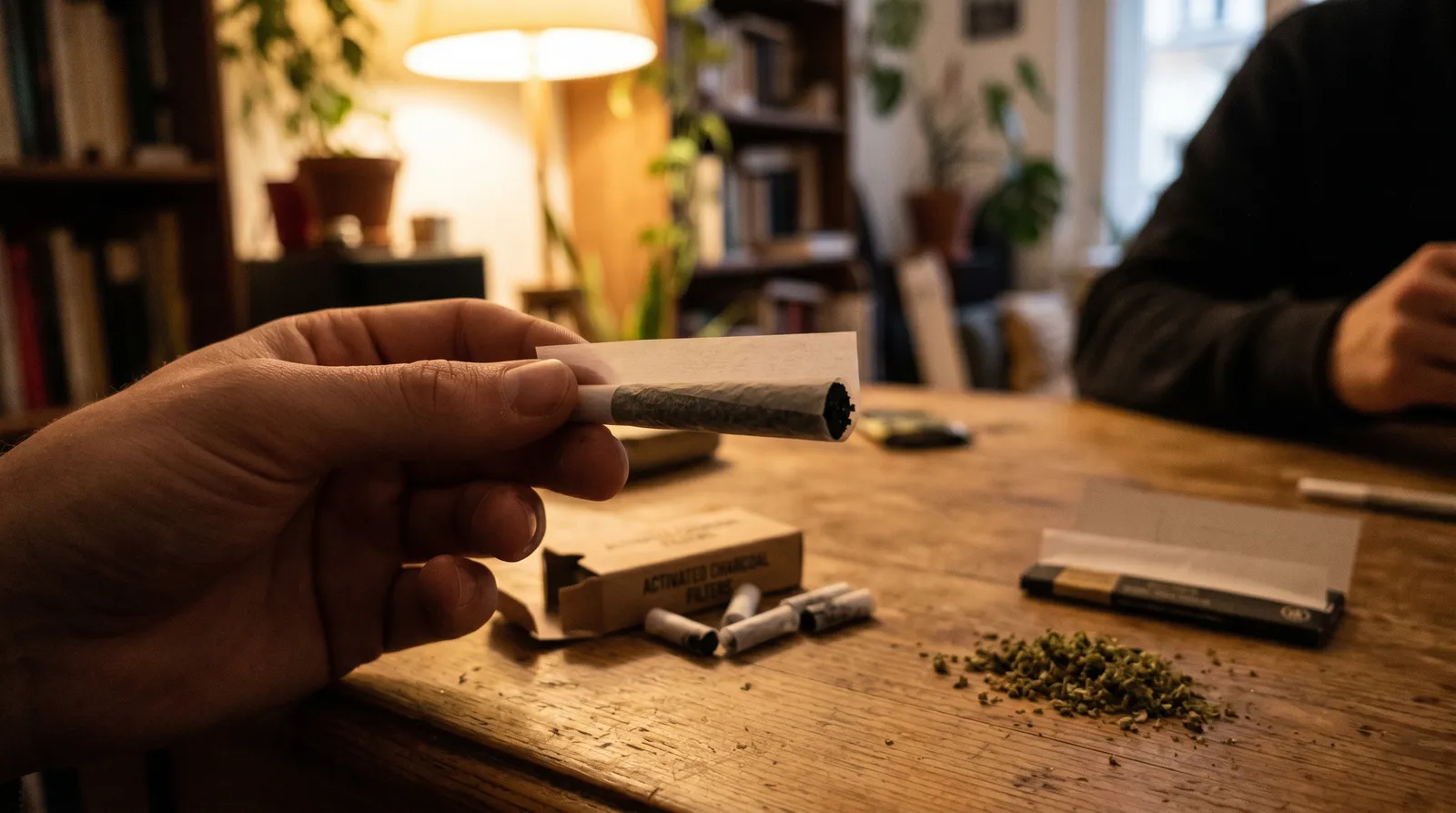
Activated charcoal filters are the only option on this list that meaningfully changes the chemical composition of what you inhale. They contain granulated activated carbon — carbon that has been heated to extreme temperatures (typically 800–1,000 °C) to create a vast internal surface area riddled with microscopic pores. According to Bansal & Goyal (2005), a single gram of activated carbon can have an internal surface area exceeding 3,000 m², which is what gives it such aggressive adsorption properties.
When smoke passes through those pores, a range of compounds stick to the carbon surface. A 2005 study by Moir et al. published in Chemistry Research in Toxicology found that activated charcoal filters reduced several gas-phase toxicants — including hydrogen cyanide, acrolein, and benzene — by between 40% and 60% compared to unfiltered smoke (Moir et al., 2005). Tar reduction figures vary between studies, but a commonly cited range is 40–70% depending on filter density and draw speed. The European Monitoring Centre for Drugs and Drug Addiction (EMCDDA) has noted that harm-reduction accessories, including activated charcoal filters, represent a growing area of interest in European consumer markets (EMCDDA, 2023).
The standard format is an 8 mm cellulose-acetate tube packed with loose carbon granules. You slot it into the end of a joint the same way you would a paper crutch — most king-size papers accommodate 8 mm filters without trouble, though slim papers may need a bit of adjustment. Each filter is single-use; the carbon saturates after one session and loses its adsorptive capacity.
What they remove — and what they do not
Activated carbon is excellent at trapping large organic molecules and certain gas-phase compounds. It is less effective at capturing very small molecules like carbon monoxide. It does not selectively preserve any particular compound while blocking others — it is a broad-spectrum adsorbent. That means some of the flavour compounds (terpenes, for instance) also get caught in the filter. Many users report a noticeably "cleaner" but also somewhat flatter taste compared to an unfiltered or paper-tipped joint.
Whether that trade-off is worth it depends on your priorities. If reducing tar and particulate intake matters more to you than maximum flavour, charcoal filters are the most effective option available in a roll-your-own format. If you are chasing terpene expression and taste, a glass tip or paper crutch preserves more of the flavour profile — though it also preserves more of the tar.
Airflow and draw resistance
Charcoal filters restrict airflow more than paper crutches or glass tips. The carbon granules create resistance, and you need to draw harder to pull smoke through. Some people find this uncomfortable; others say the slightly slower draw actually helps them take smaller, more controlled puffs. If you have rolled joints for years with a loose paper crutch, expect an adjustment period. Packing the joint slightly looser than usual can compensate for the added resistance.
How to choose: matching filter to situation
The right joint filter depends on whether you are optimising for flavour, comfort, health-conscious smoking, or convenience — there is no single best option.

- Maximum flavour, minimum fuss: Paper tip. Cheap, disposable, zero draw resistance. RAW, OCB, and Elements all make tip booklets that work fine.
- Flavour plus comfort plus sustainability: Glass tip. Reusable, smooth mouthfeel, slightly cooler smoke. Worth the small upfront cost if you roll regularly.
- Reduced tar and particulates: Activated charcoal filter. The only option here that functions as a genuine filter in the chemical sense. Accept the flavour trade-off and the tighter draw.
- If you want filtration without combustion trade-offs at all: A dry-herb vaporiser sidesteps the entire question. Devices from Storz & Bickel, Arizer, DynaVap, and others heat herb below combustion temperature, so there is no tar or combustion byproduct to filter in the first place. See our vaporiser guides for the full breakdown.
A few practical notes
Diameter matters. Most charcoal filters and glass tips come in 6 mm (slim) or 8 mm (regular). Match the diameter to your paper size. King-size papers from RAW or Rizla handle 8 mm easily. If you prefer 1¼ papers or slimmer rolls, look for 6 mm filters — you can get both sizes from most headshop ranges.
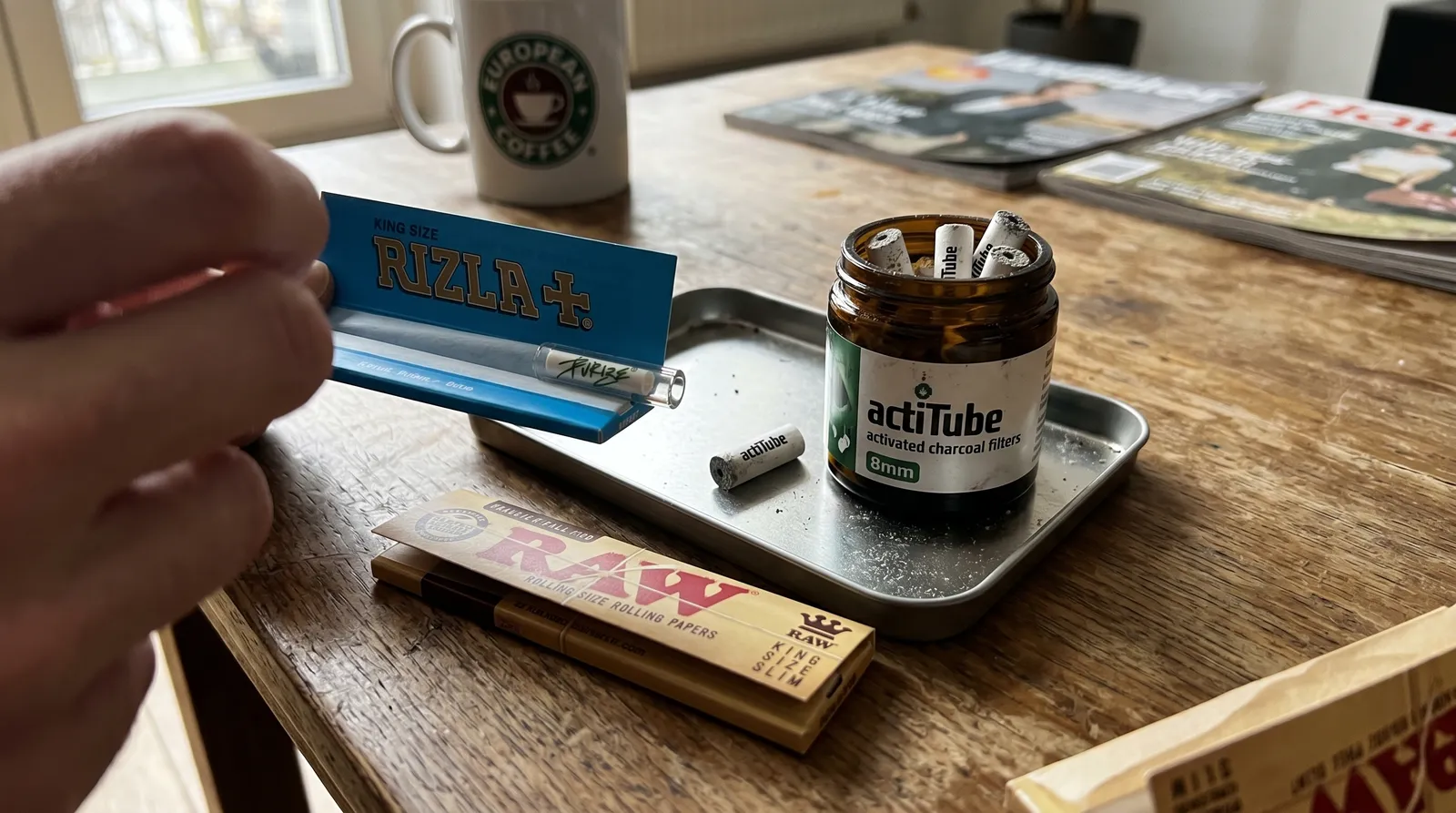
Storage. Activated charcoal filters should stay sealed until use. Carbon adsorbs moisture and airborne compounds from the environment — leave a pack open on your desk for a week and the filters will have already started working before you light anything. Keep the pouch closed.
Cleaning glass tips. Isopropyl alcohol (90%+) and a soak of 15–30 minutes will dissolve resin buildup. Rinse thoroughly with warm water afterwards. Do this in a ventilated space — isopropyl fumes are flammable and unpleasant to breathe. A pipe cleaner or thin brush works well for reaching residue inside the tube.
Charcoal filters and slim joints. An 8 mm charcoal filter in a slim joint can make the draw uncomfortably tight. If you roll thin, either use a 6 mm slim charcoal filter or switch to a glass tip and accept the lower filtration. Forcing a fat filter into a skinny joint just leads to frustration, though the exact threshold varies with how tightly you pack your herb — experimentation is unavoidable here.
Paper crutch vs. activated charcoal filter: a direct comparison
A paper crutch costs almost nothing per unit and adds zero draw resistance, while an activated charcoal filter costs more per piece and noticeably restricts airflow — but only the charcoal filter actually removes tar and gas-phase toxicants from the smoke stream.
In everyday use, the difference is obvious from the first puff. A joint with a paper crutch tastes full and unaltered — every terpene, every harsh note, every bit of tar reaches your lungs. A joint with an activated charcoal filter tastes smoother and cleaner, but flatter. The charcoal does not care whether a molecule is pleasant or harmful; it adsorbs broadly. If you are someone who values the complete flavour experience, paper crutches win. If you want to reduce what you are inhaling beyond the active compounds, charcoal filters are the only roll-your-own option that delivers measurable results according to published research (Moir et al., 2005).
Honest limitations of every filter type
No joint filter eliminates the health risks associated with inhaling combustion byproducts — that is a fundamental constraint of burning plant material. Even the best activated charcoal filter lets carbon monoxide and ultrafine particles through. Paper crutches and glass tips do nothing at all on the chemical front. If your primary concern is reducing inhalation risk, a dry-herb vaporiser is a fundamentally different — and more effective — approach. We sell joint filters, crutches, glass tips, and activated charcoal options because they genuinely improve the rolling experience and can reduce certain exposures according to published studies, but we are not going to pretend they turn combustion into a clean process. They do not.
References
- Bansal, R.C. & Goyal, M. (2005). Activated Carbon Adsorption. CRC Press.
- Moir, D. et al. (2005). A study of mainstream and sidestream cigarette smoke components. Chemistry Research in Toxicology, 18(5), 776–787.
- Davenport, S.S. & Lodhi, S.A. (2012). Activated carbon filtration of smoke: a review of adsorption efficiency across filter types. Journal of Analytical Toxicology, 36(4), 270–276.
- European Monitoring Centre for Drugs and Drug Addiction (EMCDDA). (2023). European Drug Report 2023: Trends and Developments. Publications Office of the European Union.
Last updated: April 2026
Frequently Asked Questions
8 questionsDo activated charcoal filters remove THC from smoke?
Can you reuse activated charcoal joint filters?
What size joint filter should I use with king-size papers?
Do glass tips make smoke cooler than paper crutches?
Why does my joint taste flatter with a charcoal filter?
Are charcoal filters better than glass tips for health-conscious smokers?
How much airflow restriction do activated charcoal joint filters add compared to paper crutches?
What is the W or M fold in a paper crutch and does it improve filtration?
About this article


Adam Parsons is an external cannabis and psychedelics writer and editor who contributes to Azarius's wiki as both author and reviewer. On the writing side, he authors Azarius's kratom and kanna clusters, drawing on exten
This wiki article was drafted with AI assistance and reviewed by Adam Parsons, External contributor. Editorial oversight by Joshua Askew.
Medical disclaimer. This content is for informational purposes only and does not constitute medical advice. Consult a qualified healthcare provider before use of any substance.
Last reviewed April 25, 2026
Related Articles
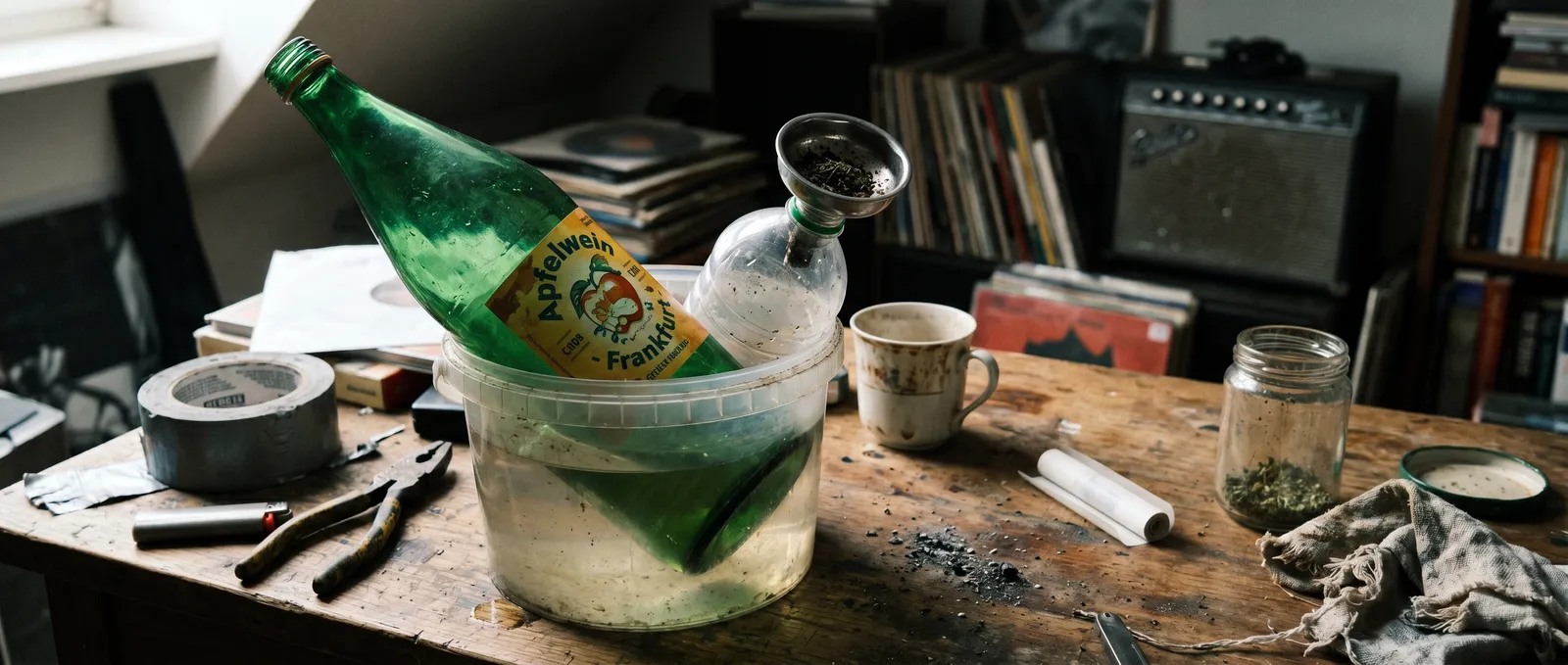
Gravity Bongs Explained: How They Work and Why
A gravity bong uses water displacement to pull concentrated smoke into a chamber, then forces it into your lungs under positive pressure.
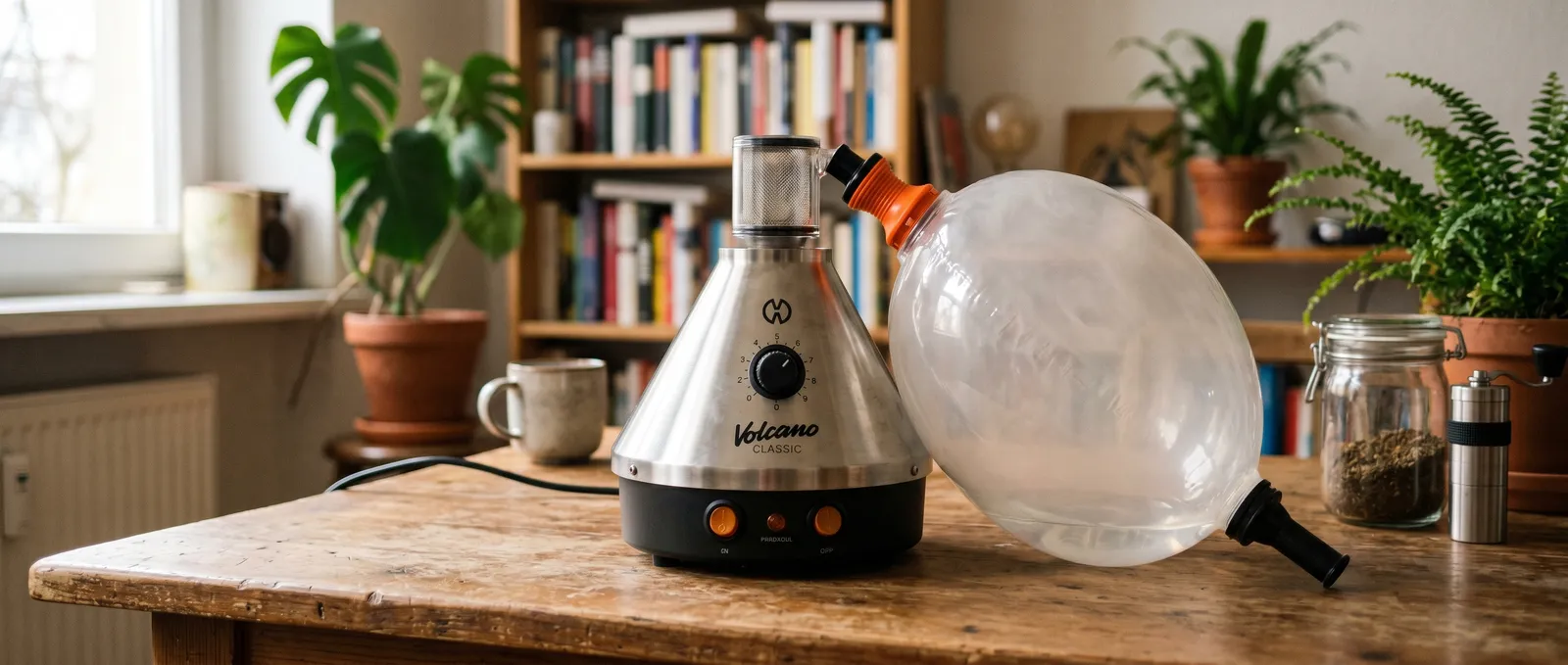
Storz Bickel Volcano Complete Guide: Setup, Temps & Cleaning
The Storz & Bickel Volcano is a convection desktop vaporizer that fills detachable balloons with vapour — a system clinically validated by Hazekamp et al.
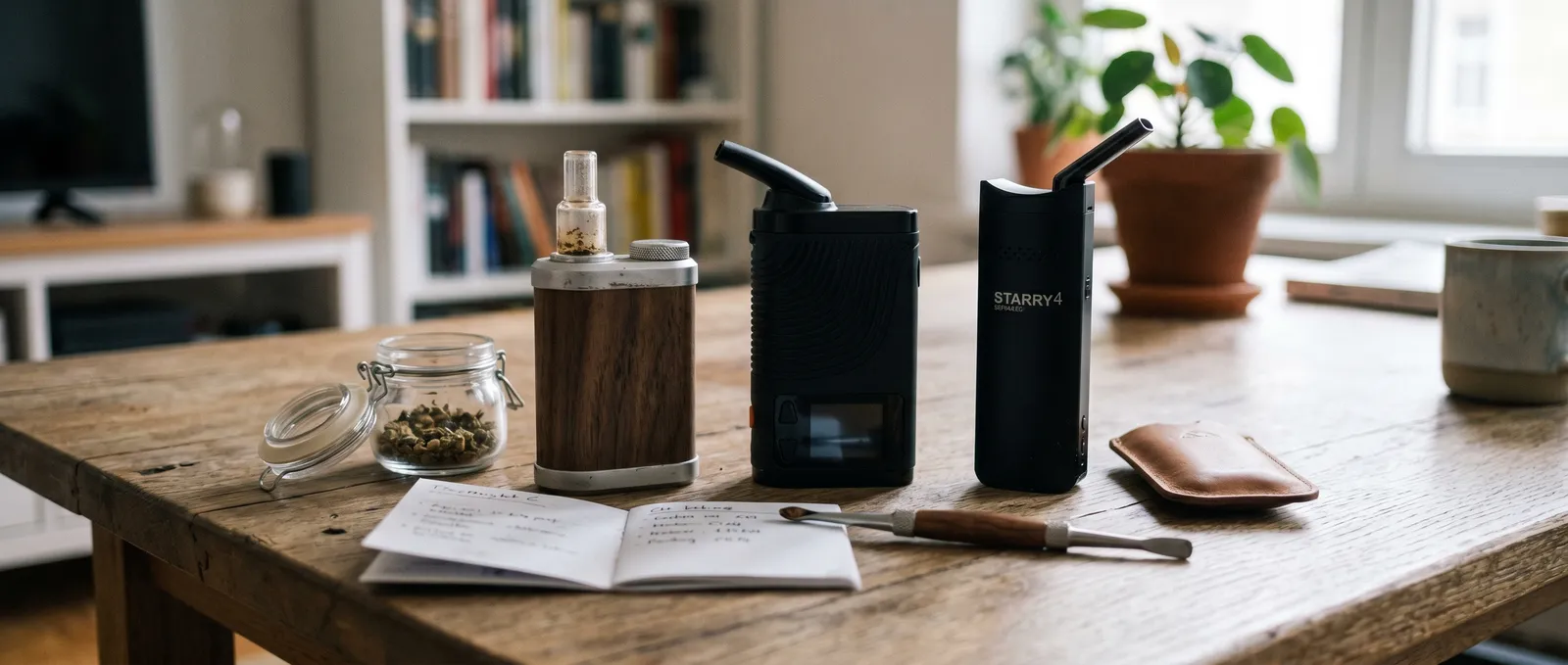
TinyMight Boundless XMAX Premium Portables Compared
The TinyMight 2, Boundless CFX/CFC and XMAX V3/Starry/Ace represent three tiers of portable dry-herb vaporizer — from budget conduction to premium convection.
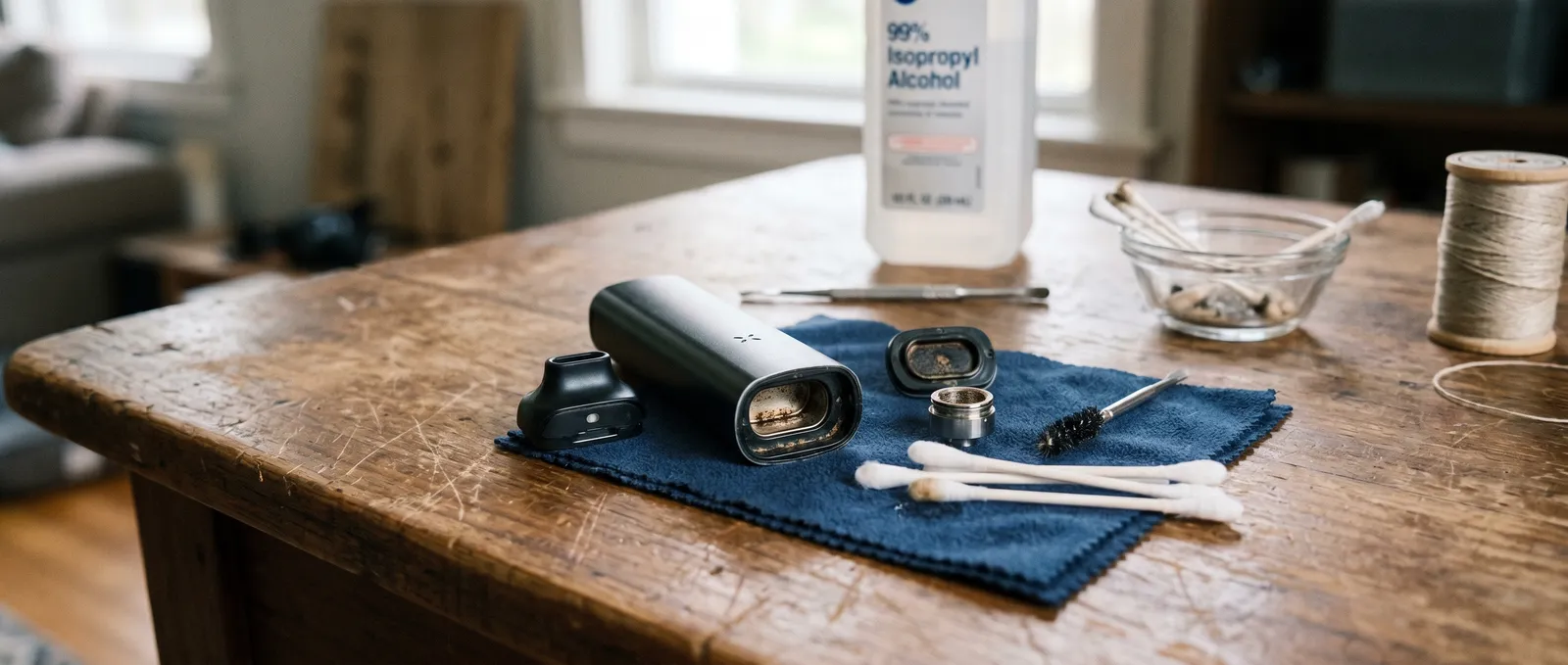
How To Clean a Vaporizer: Step-by-Step Guide
How to clean a vaporizer is a straightforward maintenance routine that keeps your device tasting fresh, drawing smoothly, and lasting years longer than a…
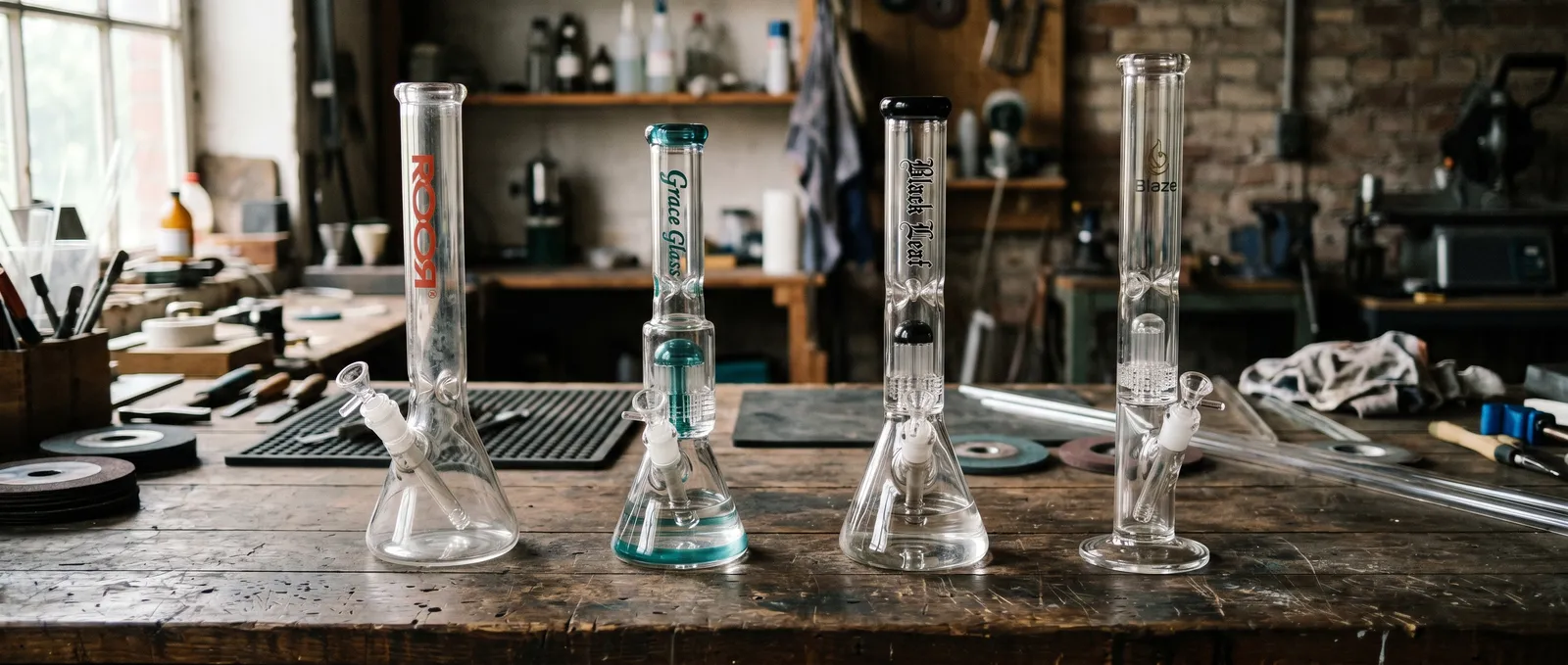
ROOR Grace Glass Black Leaf Blaze Brand Comparison — Glass Bong Guide
Four borosilicate glass bong brands — ROOR, Grace Glass, Black Leaf, and Blaze Glass — dominate the European market at different price points.
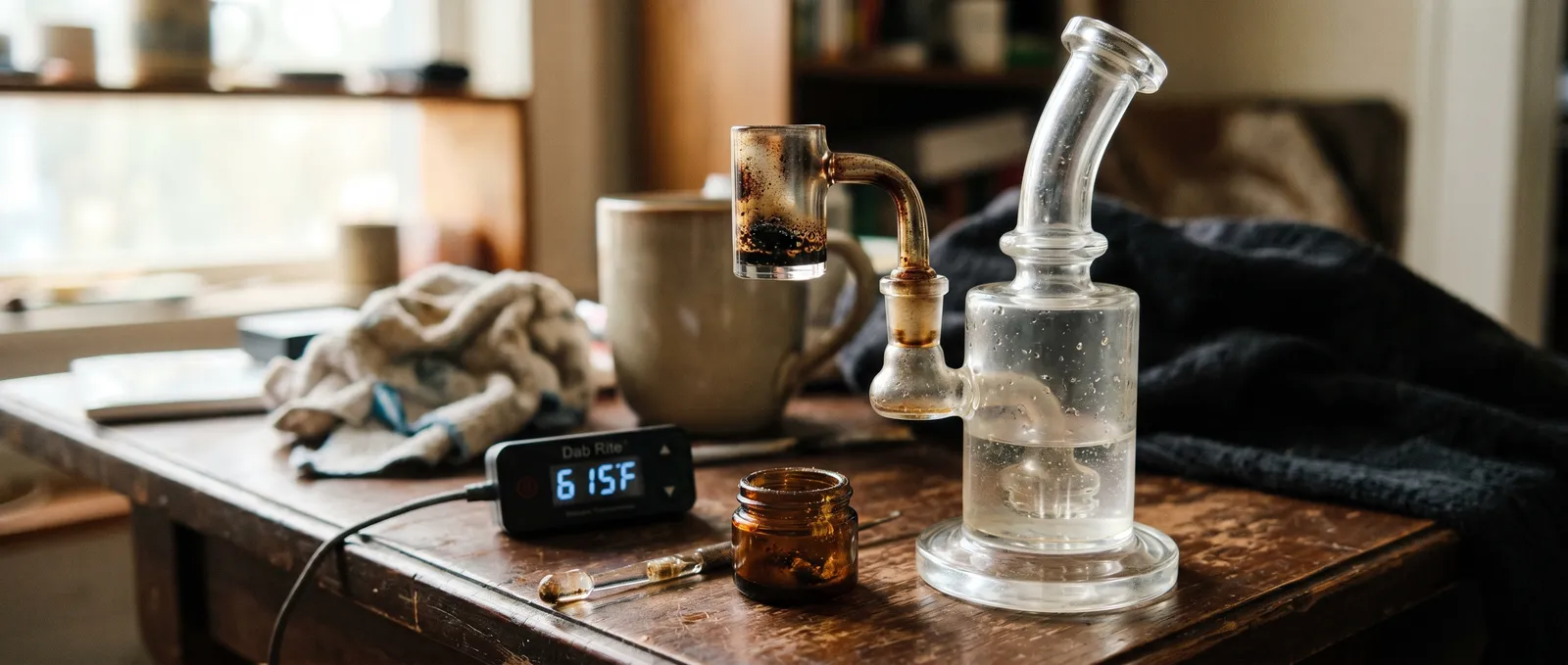
Quartz Banger Temperature and Care Guide
A quartz banger's performance depends almost entirely on temperature control and maintenance.
Arizer Portable Lineup Compared: Solo vs Solo 2 vs Solo 3 vs ArGo
Arizer's portable vaporizers all use borosilicate glass vapour paths and session-style heating, but differ meaningfully in battery architecture, heating…
Kief: What It Is and How to Collect It | Full Guide
Kief is the fine, powdery accumulation of trichome heads that detach from cannabis flower during grinding or handling.
Rolling Papers Compared: RAW vs OCB vs Elements vs Rizla
Rolling papers vary dramatically by material, thickness, burn rate, and adhesive — and those differences shape every session.