
Wild Vs Cultivated Reishi
Definition
Wild reishi develops complex triterpene profiles through environmental stress, while cultivated reishi offers consistent beta-glucan yields and standardised dosing. A 2017 phylogenetic study by Loyd et al. found that specimens sold as wild G. lucidum were frequently misidentified species entirely. The real quality driver is substrate and extraction method, not origin alone.
18+ only — this guide covers bioactive mushroom supplements intended for adult use.
Wild vs cultivated reishi is a comparison that examines how growth origin affects the chemistry, safety, and efficacy of Ganoderma lucidum supplements. The "mushroom of immortality" in classical Chinese medicine grows naturally on hardwood trees across temperate forests in Asia, Europe, and North America, but is also grown commercially on everything from oak logs to sterilised sawdust blocks. The question isn't just "which is better" — it's which specific compounds you're after, how much variability you can tolerate, and whether "wild" on a label actually means what you think it means. If you want to buy reishi supplements or order reishi extract, understanding the wild vs cultivated reishi distinction matters more than most marketing copy suggests.
Disclaimer: The information in this article is provided for educational purposes only and does not constitute medical advice. Reishi supplements are not intended to diagnose, treat, cure, or prevent any disease. Always consult a qualified healthcare professional before starting any supplement regimen, especially if you are pregnant, nursing, taking medication, or have a pre-existing medical condition. Regulations on mushroom supplements vary by country — check your local laws before you order or get any product mentioned here.
| Dimension | Wild Reishi | Cultivated Reishi |
|---|---|---|
| Triterpene content (ganoderic acids) | Generally higher and more diverse — up to 150+ individual triterpenes identified in wild specimens (Cör et al., 2018) | Lower triterpene diversity unless grown on hardwood logs; sawdust substrates produce fewer ganoderic acids |
| Beta-glucan content | Variable — depends on tree host, altitude, season of harvest | Often higher and more consistent, especially in controlled-environment farms; polysaccharide yields of 1.2–4.6% reported (Boh, 2013) |
| Standardisation | Virtually impossible — each fruiting body is chemically unique | Batch-to-batch consistency achievable; extract standardisation to specific beta-glucan or triterpene percentages is standard practice |
| Contamination risk | Higher — heavy metals, pesticide drift, and misidentification all documented | Lower when grown indoors on tested substrates; organic certification possible |
| Availability | Rare — wild reishi is genuinely uncommon; most "wild" product on the market is mislabelled | Year-round supply; global market estimated at over USD 4 billion annually |
| Cost | 3–10x more expensive per gram than cultivated equivalents | Affordable; price driven by substrate type and extraction method |
| Environmental impact | Overharvesting documented in parts of China and Southeast Asia | Sustainable when managed; log cultivation mimics natural growth with lower ecological pressure |
Triterpenes: The Wild Advantage
Wild reishi produces a broader and more concentrated range of triterpenes than most cultivated reishi. Ganoderic acids — the bitter compounds responsible for much of reishi's pharmacological interest — are produced in greater variety and often higher concentration in wild fruiting bodies. According to a review by Cör et al. (2018), wild Ganoderma lucidum specimens contained over 150 distinct triterpene structures, whereas cultivated specimens on sawdust substrates typically expressed a narrower range.
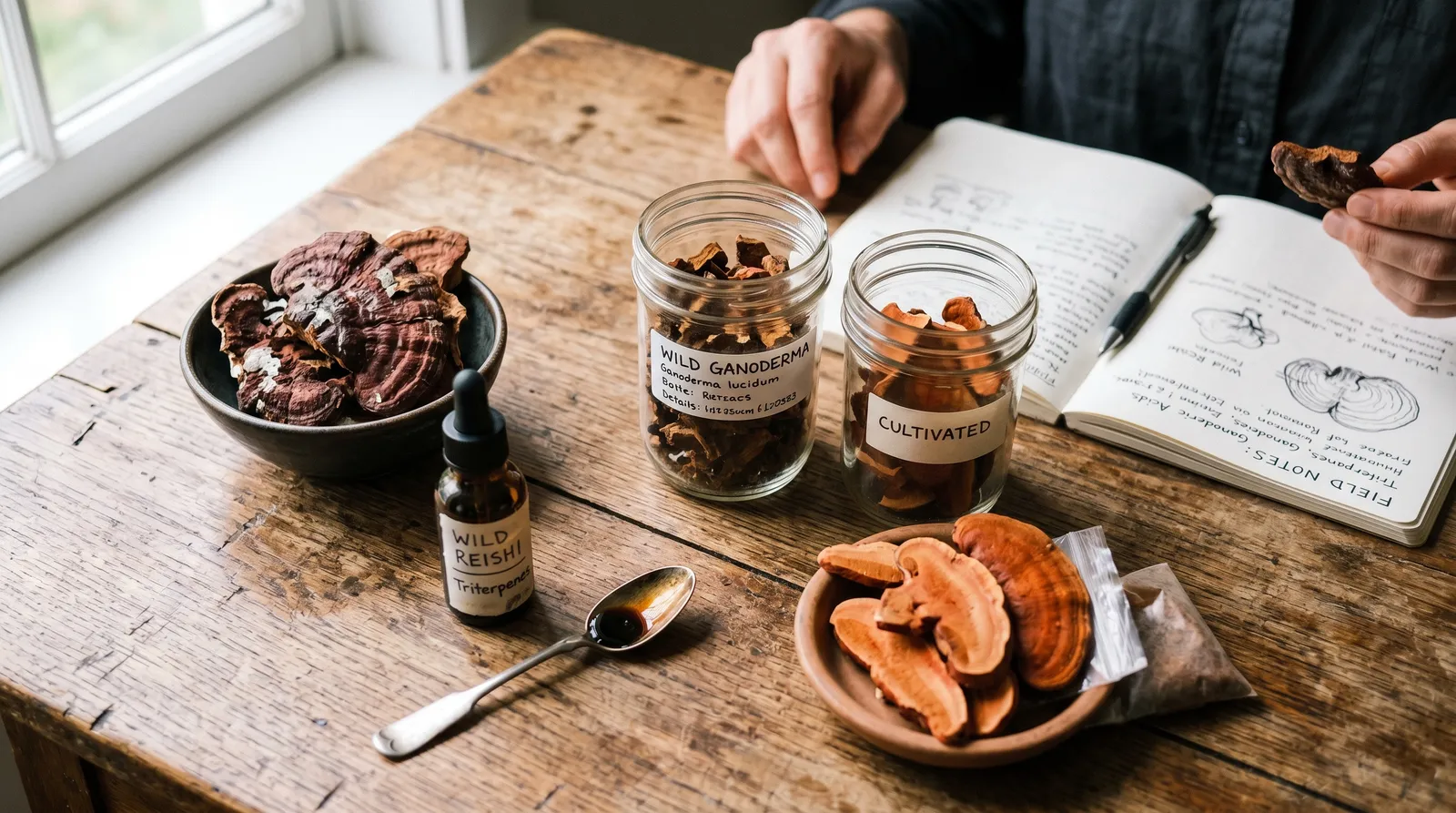
Why? Triterpenes are partly a stress response. A wild reishi fruiting body growing on a dying hemlock in a Korean mountain forest is dealing with competing fungi, temperature swings, UV exposure, and insect attack. Each of those pressures triggers secondary metabolite production. A climate-controlled grow room in Fujian province, by contrast, keeps conditions stable — great for yield, less great for chemical diversity.
There's a middle ground, though. Log-cultivated reishi — grown outdoors on inoculated hardwood logs — produces triterpene profiles closer to wild specimens than indoor sawdust cultivation does. A 2017 study by Luo et al. found that log-grown G. lucidum fruiting bodies had ganoderic acid A concentrations roughly 40% higher than sawdust-block equivalents from the same genetic strain. If triterpenes are your priority and wild isn't an option (or budget), log-cultivated is the next best thing. Anyone looking to buy reishi for triterpene content specifically should ask the supplier about substrate before anything else.
Beta-Glucans: Where Cultivation Wins
Cultivated reishi consistently delivers higher and more predictable beta-glucan yields than wild-harvested specimens. Beta-glucans — the immunomodulatory polysaccharides that drive most of the clinical research on reishi — benefit from the controlled conditions of commercial cultivation. Boh (2013) documented polysaccharide content ranging from 1.2% to 4.6% in cultivated fruiting bodies, with the variation largely attributable to substrate composition and harvest timing.
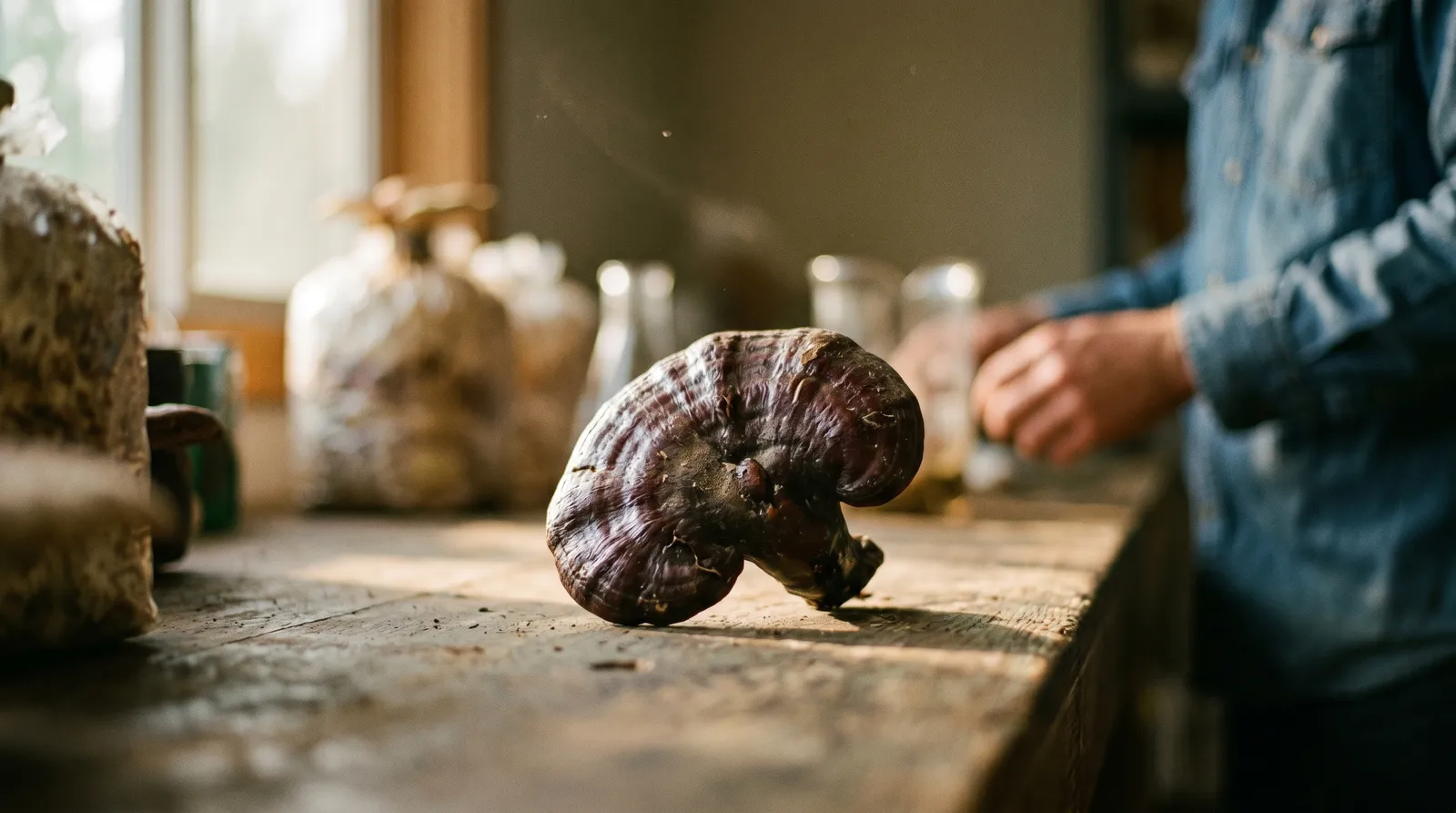
Wild reishi beta-glucan content is harder to pin down. A fruiting body harvested in July from a birch tree in Finland will have a different polysaccharide profile than one harvested in October from a plum tree in Yunnan. That variability isn't necessarily bad — it just means you can't standardise it, and you can't replicate a dose reliably.
For anyone using reishi specifically for immune support — where the research points to beta-glucans as the primary active fraction — cultivated extracts with a verified beta-glucan percentage on the label are the more practical choice. Look for products that state actual beta-glucan content (not just "polysaccharides," which can include starch fillers from grain substrates). A 2020 analysis by Realgear Labs tested 20 commercial reishi products and found that beta-glucan content ranged from under 3% to over 45%, with the variation almost entirely explained by whether the product was made from fruiting bodies, mycelium-on-grain, or a hot-water extract.
The "Wild" Label Problem
Most reishi sold as "wild-harvested" or "wildcrafted" is not genuinely wild. The global demand for wild reishi far exceeds the actual wild supply. Genuine wild Ganoderma lucidum is rare — you might find one or two fruiting bodies per hectare of suitable forest, and they take months to mature. The economics don't scale.
What often happens is semi-wild cultivation: logs are inoculated with reishi spawn and placed in forest settings. The mushroom grows outdoors, exposed to natural conditions, but the genetics and substrate are controlled. This is arguably the best of both worlds — environmental stress for triterpene production, known genetics for consistency — but calling it "wild" is a stretch.
True wild reishi also carries identification risks. The Ganoderma genus contains over 400 described species, and visual identification is unreliable. A 2017 phylogenetic study by Loyd et al. found that specimens sold as G. lucidum in North America were frequently G. sessile or G. curtisii — related species with different chemical profiles. Without DNA verification, "wild reishi" on a label tells you less than you'd think. The EMCDDA and similar regulatory bodies have noted the broader challenge of botanical identity verification in the supplement market.
Substrate Matters More Than "Wild or Cultivated"
The substrate a reishi mushroom grows on affects its chemistry more than whether it is classified as wild vs cultivated reishi. Here's the hierarchy, roughly ordered by chemical complexity:
- Wild fruiting bodies on hardwood — highest triterpene diversity, lowest consistency, highest contamination risk, rarest
- Log-cultivated fruiting bodies (outdoor) — strong triterpene and beta-glucan profiles, moderate consistency, lower contamination risk
- Sawdust-block fruiting bodies (indoor) — good beta-glucan yields, lower triterpene diversity, high consistency, scalable
- Mycelium-on-grain (MOG) — fastest to produce, cheapest, but often contains significant starch from the grain substrate, diluting active compounds
That last category — mycelium-on-grain — deserves a warning. MOG products dominate the North American market because they're cheap and fast to produce. The mycelium is grown on sterilised grain (usually rice or oats), and the entire mass — mycelium plus undigested grain — is dried and powdered. A 2017 analysis by Nammex found that some MOG reishi products contained less than 5% beta-glucans and over 60% starch. You're essentially paying for rice flour with a hint of fungus. This isn't a wild-vs-cultivated issue; it's a fruiting-body-vs-mycelium issue, and it matters more than origin.
What the Research Actually Uses
Every major clinical trial on reishi has used cultivated material with standardised active compound content. The most-cited human trials, including a 2003 randomised controlled trial by Gao et al. showing immune parameter changes in advanced cancer patients at 5.4 g/day of polysaccharide extract, used cultivated fruiting body extracts with defined polysaccharide content.
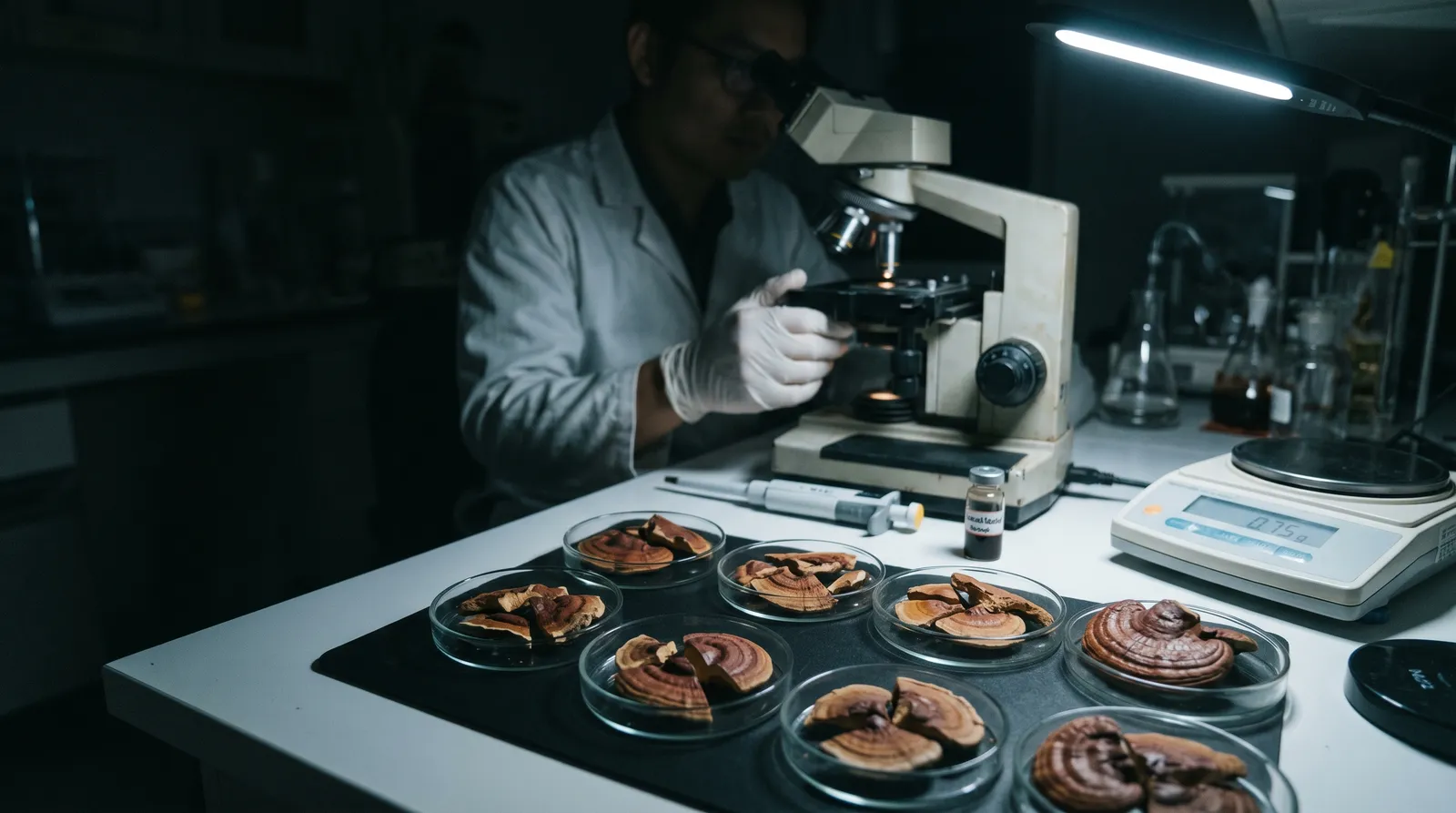
A 2016 Cochrane review by Jin et al. examined five RCTs on reishi for cancer treatment and found that while reishi extracts could enhance immune response when combined with conventional treatment, the evidence was insufficient to recommend reishi as a standalone therapy. All five trials used cultivated extracts. No clinical trial to date has compared wild and cultivated reishi head-to-head in humans — the data gap is real, and anyone claiming wild reishi is "clinically proven" to be superior is extrapolating from chemistry, not outcomes.
That said, the triterpene fraction — where wild reishi shows its advantage — is increasingly studied for anti-inflammatory and cytotoxic properties in vitro. Ganoderic acid A has shown dose-dependent inhibition of inflammatory cytokines in cell models (Liu et al., 2015). Whether the broader triterpene diversity of wild specimens translates to meaningfully different effects in a living human body remains an open question. The pharmacokinetics of individual ganoderic acids are still poorly characterised.
How Wild Vs Cultivated Reishi Compares to Other Mushroom Debates
The wild vs cultivated reishi debate mirrors similar discussions around lion's mane, chaga, and cordyceps — but reishi is unique in how much the triterpene fraction shifts between growth methods. With lion's mane, the key compounds (hericenones and erinacines) are present in both wild and cultivated fruiting bodies with less dramatic variation. With chaga, wild birch-grown sclerotia are genuinely distinct from cultivated mycelium in ways that make the wild form arguably non-substitutable. Reishi sits in between: cultivated material is perfectly functional for beta-glucan-focused use, but the triterpene story gives wild and log-cultivated specimens a real, measurable edge. If you're browsing the Azarius mushroom supplement range — including products like the Reishi Extract by McMyco or the Mushroom Complex capsules — understanding this spectrum helps you get what you actually need rather than what sounds most impressive on a label.
Reishi Vs Lion's Mane: How Big Is the Wild-Cultivated Gap?
The wild vs cultivated reishi gap is significantly larger than the equivalent gap for lion's mane. Lion's mane produces its key neuroactive compounds — hericenones in the fruiting body and erinacines in the mycelium — under both wild and cultivated conditions with relatively modest variation. Reishi's triterpene diversity, by contrast, can drop by 50% or more when moving from wild hardwood growth to indoor sawdust blocks. If you order lion's mane from a reputable cultivator, you're getting something chemically close to wild material. With reishi, the substrate and growing environment create a much wider quality spectrum, which is why the wild vs cultivated reishi question keeps coming up in ways it simply doesn't for other functional mushrooms.
Reishi Vs Chaga: A Different Kind of Wild Dependency
Chaga represents the extreme end of wild dependency — its signature compound, betulinic acid, derives from the birch bark the fungus parasitises, meaning cultivated chaga mycelium literally cannot produce the same chemistry. Wild vs cultivated reishi is a more varied conversation because cultivated reishi still produces the same compound classes, just in different ratios. You can get a genuinely effective cultivated reishi product; with chaga, the case for wild is structurally stronger. The Beckley Foundation has noted in broader psychoactive and bioactive research contexts that growth environment profoundly shapes fungal chemistry — a principle that applies across the medicinal mushroom category.
Practical Verdict
Cultivated fruiting body extracts are the best choice for most people looking to buy reishi for general immune support. Ideally hot-water or dual-extracted, with verified beta-glucan content above 20%, they're what the clinical research is based on, they're affordable, and you know what you're getting.
If you're specifically interested in the triterpene fraction — for its anti-inflammatory or hepatoprotective properties — log-cultivated reishi grown outdoors on hardwood offers most of the chemical complexity of wild specimens without the contamination risk, supply issues, or label fraud. True wild reishi is a luxury item: interesting, potentially superior in certain chemical dimensions, but impractical for consistent supplementation.
Either way, check the label for actual compound percentages. "Reishi extract" without a stated beta-glucan or triterpene content is like buying wine labelled "grape drink" — technically accurate, practically useless. The Azarius wiki article on reishi covers extraction methods and what to look for in more detail. We're honest about the limits here: until someone runs a proper head-to-head clinical trial comparing wild vs cultivated reishi in humans, the "wild is better" claim remains plausible chemistry, not proven medicine.
Last updated: April 2026
Frequently Asked Questions
10 questionsDoes wild reishi have more triterpenes than cultivated reishi?
Is wild-harvested reishi on supplement labels actually wild?
Is mycelium-on-grain reishi as effective as fruiting body reishi?
What substrate produces the best cultivated reishi?
Has any clinical trial compared wild and cultivated reishi directly?
Where can I buy quality reishi supplements?
Is wild reishi safe from heavy metal contamination?
Why is cultivated reishi often higher in beta-glucans than wild reishi?
Can you tell the difference between wild and cultivated reishi by appearance?
Is red reishi the same species whether wild or cultivated?
About this article


Joshua Askew serves as Editorial Director for Azarius wiki content. He is Managing Director at Yuqo, a content agency specialising in cannabis, psychedelics and ethnobotanical editorial work across multiple languages. Th
This wiki article was drafted with AI assistance and reviewed by Joshua Askew, Managing Director at Yuqo. Editorial oversight by Adam Parsons.
Medical disclaimer. This content is for informational purposes only and does not constitute medical advice. Consult a qualified healthcare provider before use of any substance.
Last reviewed April 19, 2026
References (9)
- [1]Beckley Foundation (2022). Research briefings on fungal bioactive compound variability and growth-environment dependencies in medicinal and psychoactive species.
- [2]Boh, B. (2013). Ganoderma lucidum: a potential for biotechnological production of anti-cancer and immunomodulatory drugs. Recent Patents on Anti-Cancer Drug Discovery, 8(3), 255–287.
- [3]Cör, D., Knez, Ž., & Knez Hrnčič, M. (2018). Antitumour, antimicrobial, antioxidant and antiacetylcholinesterase effect of Ganoderma lucidum terpenoids and polysaccharides: a review. Molecules, 23(3), 649.
- [4]EMCDDA (2023). European Monitoring Centre for Drugs and Drug Addiction — technical reports on botanical supplement regulation and identity verification challenges in the EU market.
- [5]Gao, Y., Zhou, S., Jiang, W., Huang, M., & Dai, X. (2003). Effects of Ganopoly on immune functions in advanced-stage cancer patients. Immunological Investigations, 32(3), 201–215.
- [6]Jin, X., Ruiz Beguerie, J., Sze, D. M., & Chan, G. C. (2016). Ganoderma lucidum (Reishi mushroom) for cancer treatment. Cochrane Database of Systematic Reviews, (4), CD007731.
- [7]Liu, C., Dunkin, D., Bhatt, D., & Bhatt, D. (2015). Anti-inflammatory effects of Ganoderma lucidum triterpenoid in human Crohn's disease-associated intestinal epithelial cells. The FASEB Journal, 29(1 Supplement), 747.15.
- [8]Loyd, A. L., Richter, B. S., Stament, P. E., & Smith, M. E. (2017). Taxonomy and phylogeny of Ganoderma species in the southeastern United States. Mycologia, 109(5), 756–770.
- [9]Luo, Q., Di, L., Dai, W., Lu, Q., Yan, Y., & Yang, Z. (2017). Comparison of the chemical profiles and antioxidant activities of Ganoderma lucidum from different cultivation substrates. RSC Advances, 7, 39727–39737.
Related Articles
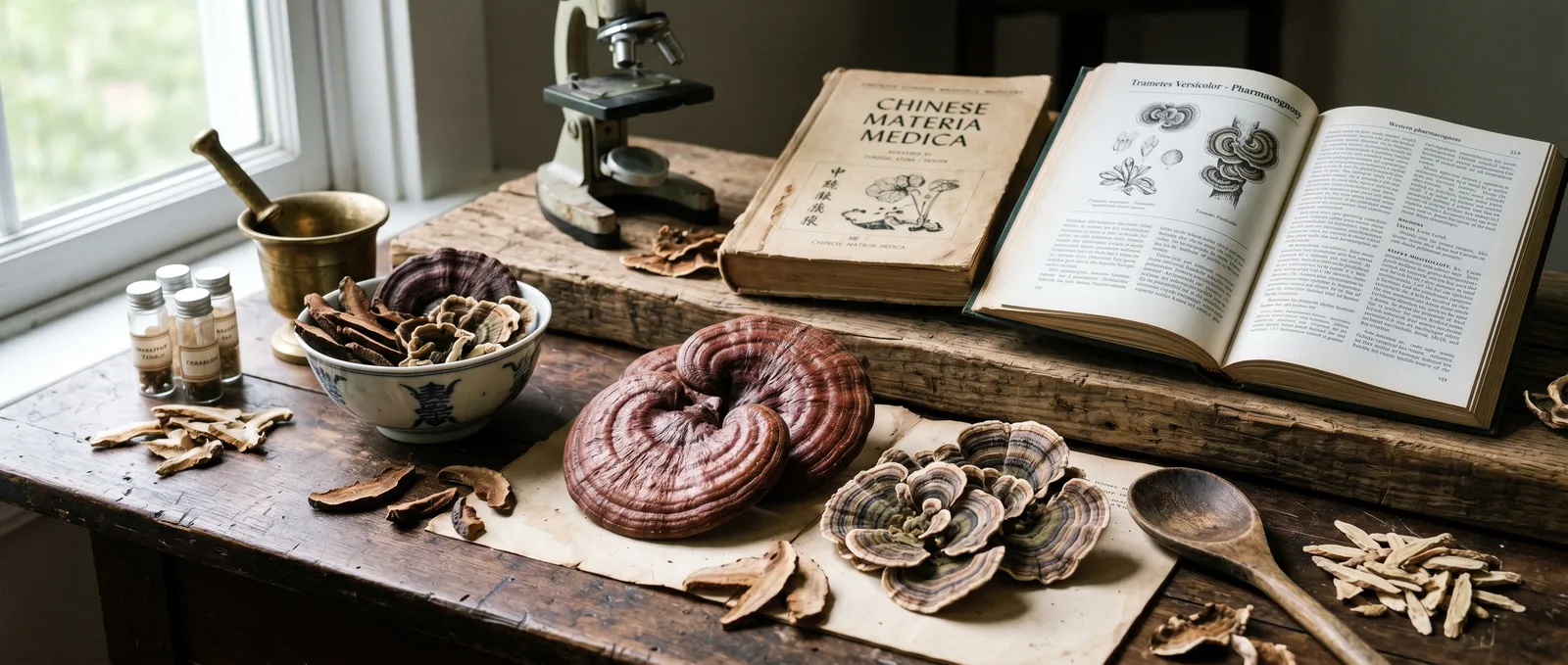
Medicinal Mushrooms TCM Western Pharmacognosy Guide
Guide to medicinal mushrooms TCM Western pharmacognosy — how reishi, lion's mane, cordyceps are classified, extracted, and studied.
Research on Immune Modulation by Functional Mushrooms
What does research on immune modulation by functional mushrooms actually show? Beta-glucans, Dectin-1 signalling, human trials, and the honest gap...
Allergic Reactions & Mushroom Sensitivities
Understand allergic reactions and mushroom sensitivities: mould cross-reactivity, shiitake dermatitis, species-specific risks, and safer product…
Turkey Tail Trametes versicolor — Buy Supplements
Buy turkey tail Trametes versicolor supplements at Azarius. PSK and PSP evidence, beta-glucan dosage, extraction methods, and safety.
Triterpenes In Medicinal Mushrooms
Triterpenes in medicinal mushrooms are a class of 30-carbon terpenoid compounds produced as secondary metabolites by several functional mushroom species…
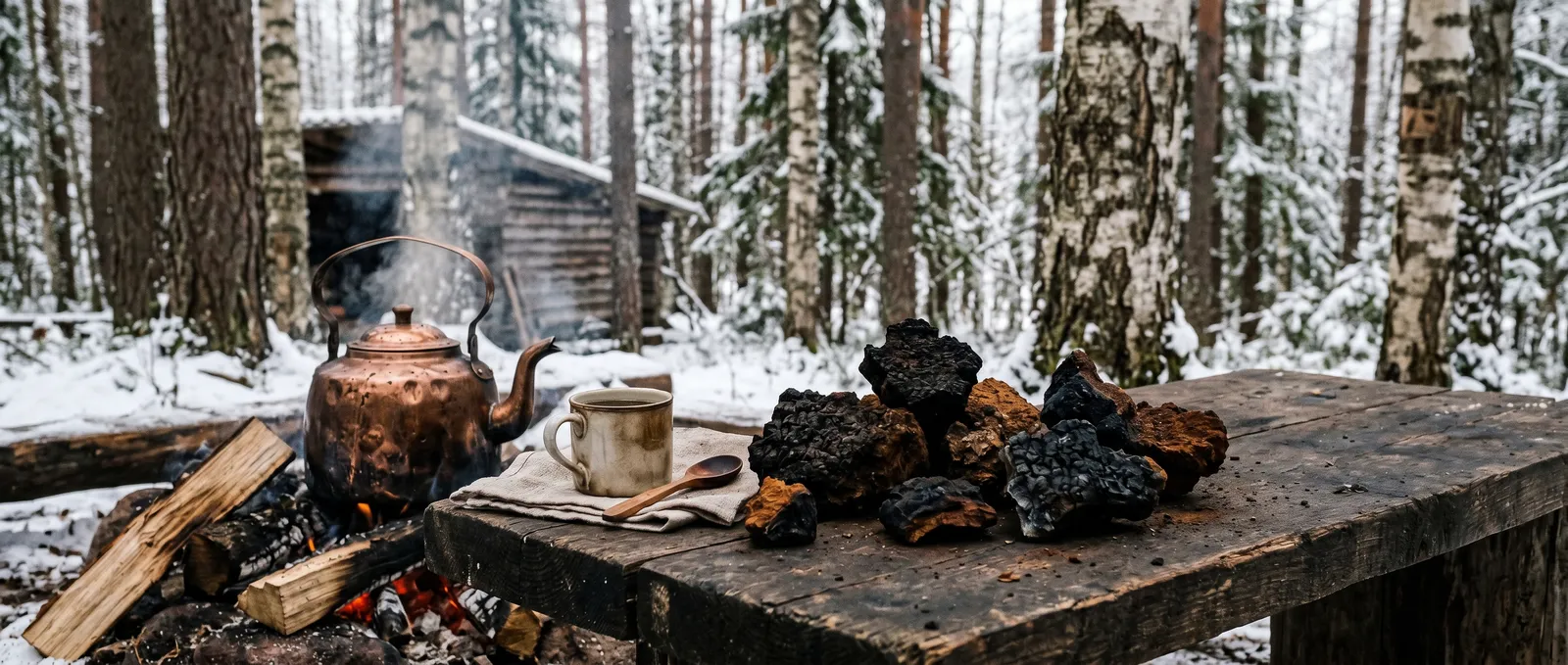
Chaga Siberian Nordic Folk Use
Chaga Siberian Nordic folk use is a centuries-old tradition in which indigenous Siberians and Nordic communities brewed the birch-parasitising fungus…
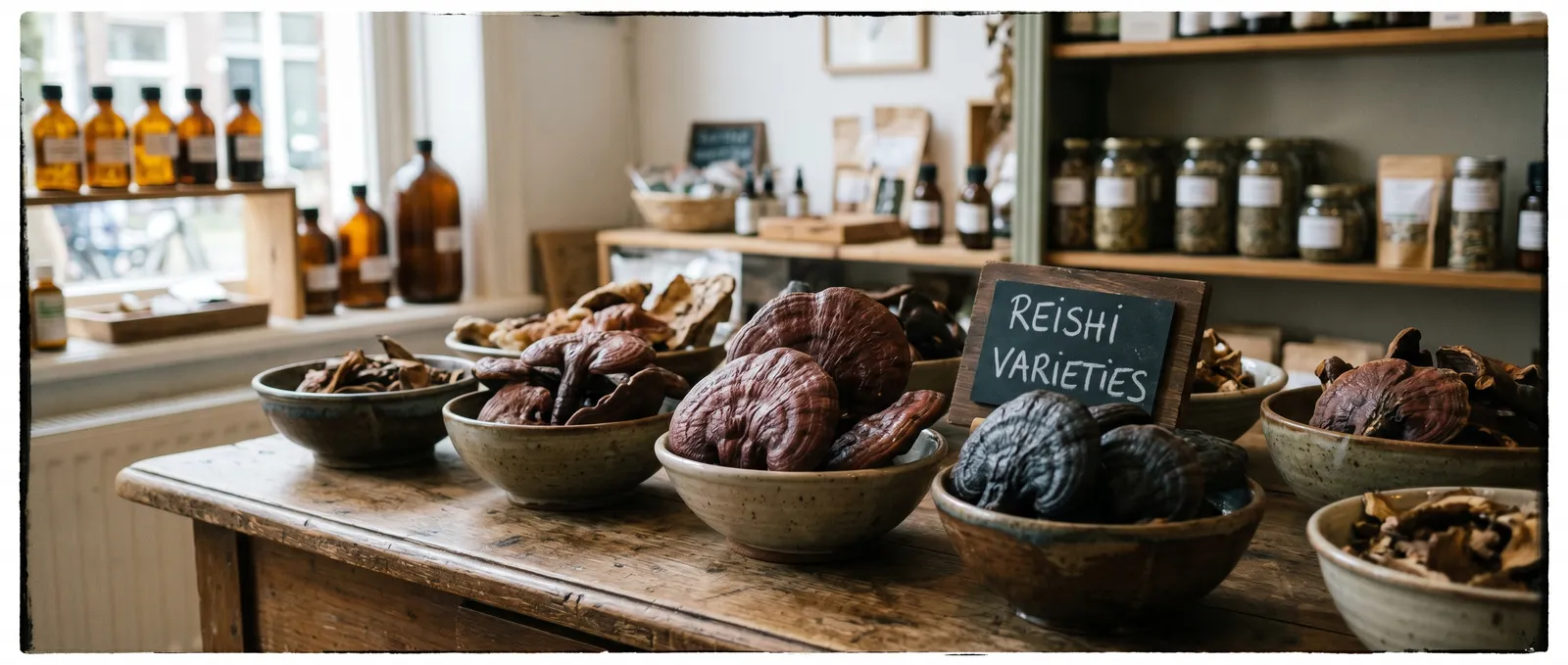
Red and Black Reishi Varieties
Red reishi (Ganoderma lucidum) and black reishi (Ganoderma sinense) both fall under the lingzhi umbrella in traditional Chinese medicine, but they differ in…
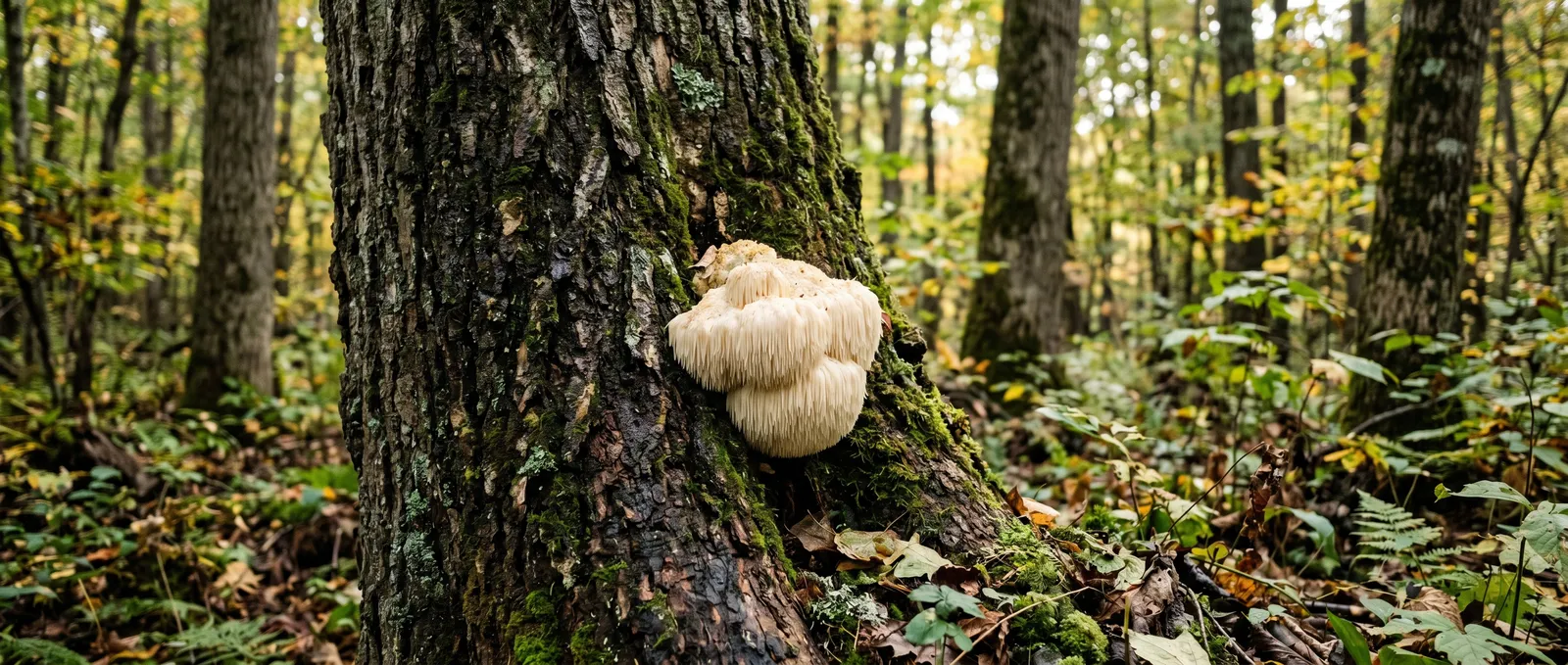
Lion's Mane Identification & Habitat
Hericium erinaceus is a tooth fungus that fruits as a single white, spine-covered mass on wounded or dead hardwood trees.
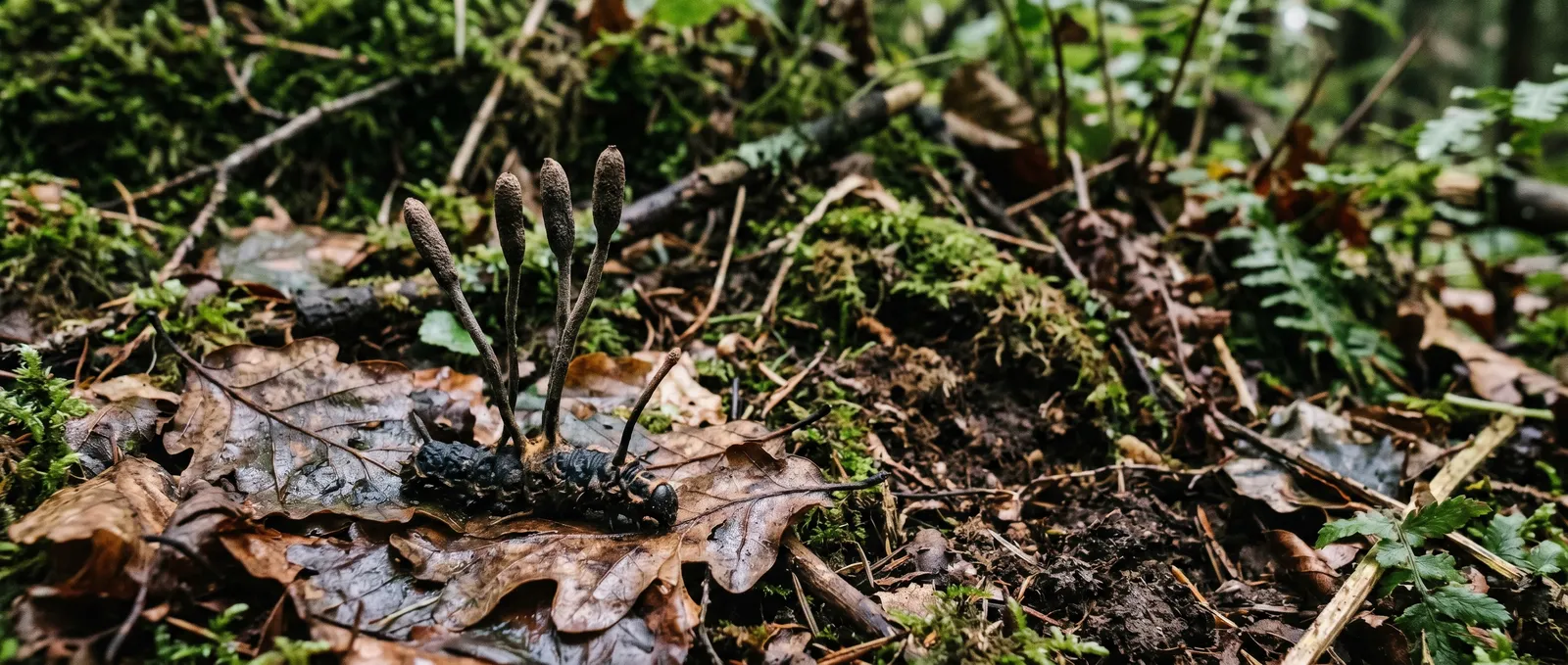
Cordyceps Lifecycle
The cordyceps lifecycle is a parasitic biological sequence in which a fungus infects an insect host, colonises its body from within, and erupts as a…