
Brewing Reishi Tea
Definition
Brewing reishi tea requires a decoction — a sustained simmer of 45–90 minutes — rather than a simple steep, because the chitin cell walls of Ganoderma lucidum resist quick extraction. Hot-water decoctions yield 20–40% polysaccharides by dry weight from the fruiting body (Batra et al., 2013), making this the traditional method for accessing reishi's water-soluble beta-glucans and bitter triterpenoids.
18+ only — this guide covers preparation of a bioactive fungal extract and applies to adults.
Brewing reishi tea is a decoction method that involves simmering dried Ganoderma lucidum fruiting body in water for 45–90 minutes to extract water-soluble beta-glucans and bitter triterpenoids from behind the mushroom's tough chitin cell walls. Unlike a simple herbal infusion, brewing reishi tea demands sustained heat because chitin — the same structural polymer found in crustacean shells — resists quick extraction. Get the method wrong and you end up with expensive brown water. Get it right and you have a bitter, earthy brew that actually contains what you're after. Hot-water decoctions yield 20–40% polysaccharides by dry weight from the fruiting body (Batra et al., 2013), making this the traditional and most accessible route to reishi's bioactive compounds.
Why Reishi Needs a Decoction, Not a Steep
Reishi requires a decoction rather than a steep because its polypore cell wall is made of chitin, which does not break down in a brief infusion. Most herbal teas are infusions — you pour boiling water over plant material and wait. That works for soft leaves and flowers where the active compounds sit near the surface. According to a review by Cör et al. (2018), the beta-glucans responsible for reishi's immunomodulatory activity require sustained heat extraction to become bioavailable. Triterpenoids — the compounds behind the characteristic bitterness — also need prolonged contact with hot water to dissolve at meaningful concentrations.
The practical difference is stark. A quick steep of sliced reishi produces a faintly tinted liquid with minimal bitterness. A 60–90 minute decoction yields a dark, mahogany-coloured brew that tastes unmistakably medicinal. If your tea isn't bitter, you probably haven't extracted much.
Step 1 — Choose Your Starting Material
The best starting material for brewing reishi tea is dried slices or broken pieces of the fruiting body, using 3–5 g per 500 ml of water. You have three common options:
- Whole dried slices — the traditional choice; simmer cleanly and can be reused for a second or third extraction.
- Broken pieces — increased surface area means slightly faster extraction.
- Powder — extracts the quickest but turns the liquid murky and can be tricky to strain.
For a standard decoction, dried slices or broken pieces work best. The European Medicines Agency's herbal monograph references traditional doses of 1.5–9 g of dried fruiting body daily, so a single pot of tea made with 5 g sits comfortably within that range (EMA, 2015). If you want to buy reishi in a form ready for brewing, Azarius stocks both dried reishi slices and reishi powder — either works, though slices are more forgiving for beginners.
Step 2 — Prepare the Mushroom
Preparation means breaking or cutting whole slices into pieces roughly the size of a postage stamp to maximise surface area. Some people soak the slices in cold water for 30 minutes before heating — this softens the material slightly and may help with initial extraction, though no published study has quantified the difference for reishi specifically.
If using powder, measure 2–4 g (roughly 1–2 teaspoons). You'll add it differently — see Step 4.
Step 3 — Simmer Low and Slow
The ideal simmer is the lowest heat your hob can manage — small bubbles rising lazily, not a rolling boil. Place your reishi pieces in a saucepan with 750 ml of cold water. The extra volume accounts for evaporation — you'll end up with approximately 400–500 ml of finished tea. Bring the water to a gentle boil, then immediately reduce the heat.
Simmer for a minimum of 45 minutes. Traditional Chinese preparation often goes 60–120 minutes. The longer you simmer, the more concentrated the extraction — though returns diminish after about 90 minutes. A 2017 study by Skalicka-Woźniak and Garrard found that hot-water extraction times beyond 2 hours did not significantly increase total polysaccharide yield from Ganoderma species.
Keep a lid on the pot, slightly ajar, to limit evaporation while allowing some steam to escape.
Step 4 — Strain and Serve
Strain the liquid through a fine-mesh sieve or cheesecloth into a jug or directly into cups. If you used powder, a coffee filter or fine cloth is better — the particles are small enough to pass through a standard sieve.
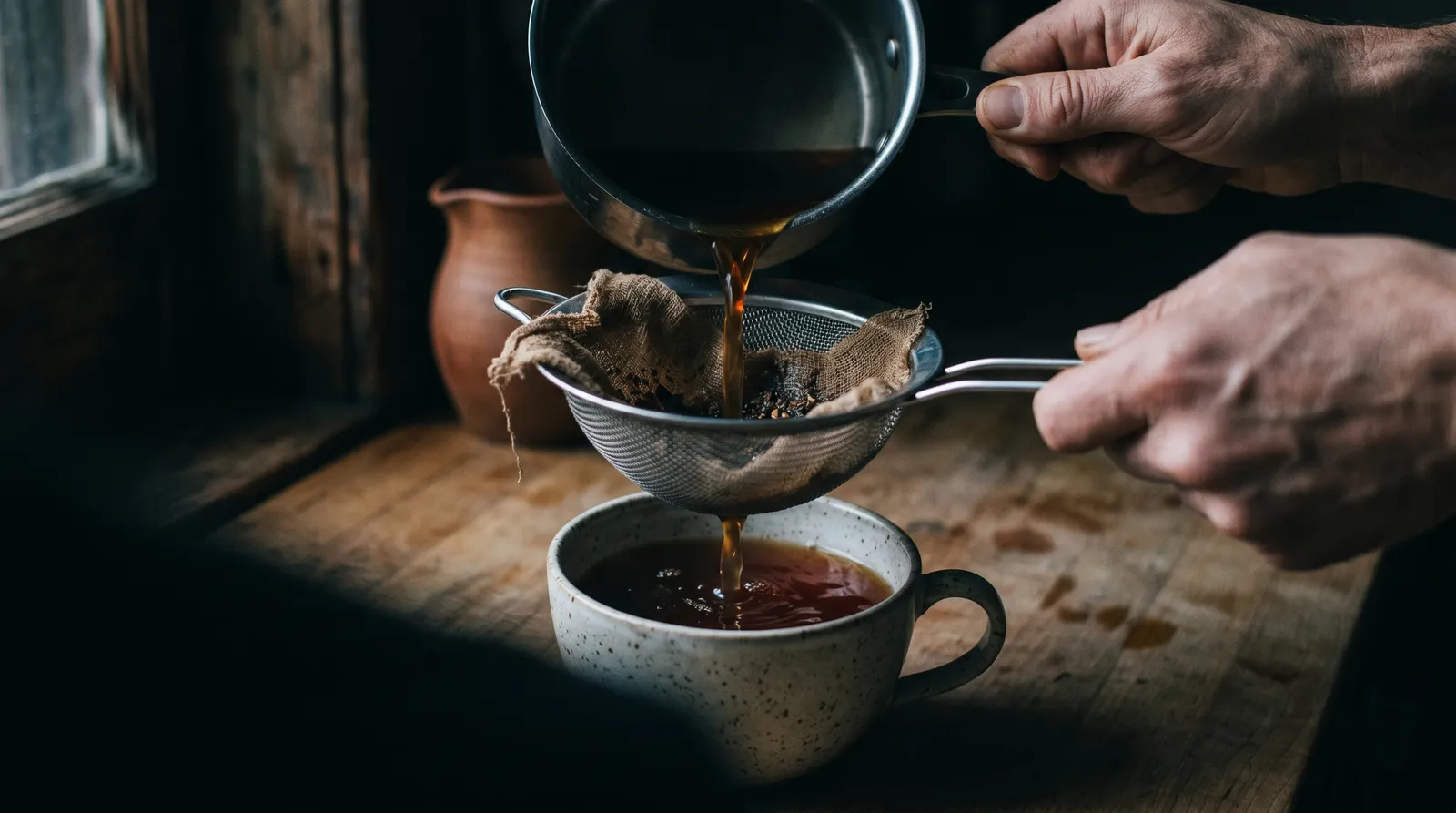
The finished tea should be dark amber to deep brown. It will taste bitter and woody, with an earthy undertone. This bitterness is a rough quality indicator: the triterpenoid ganoderic acids are intensely bitter compounds, so a bland tea likely contains fewer of them.
To make it more drinkable, add raw honey, a slice of fresh ginger, or a squeeze of lemon after the tea has cooled slightly below boiling. Some people add a cinnamon stick during the last 10 minutes of simmering — it rounds out the flavour without masking the bitterness entirely.
Step 5 — Re-Extract the Same Material
Dried reishi slices can handle two or even three extractions before the material is spent. The second brew will be lighter in colour and less bitter — you're pulling out the remaining water-soluble compounds that didn't fully dissolve the first time. After the third extraction, compost the spent material.
If you want to combine the extractions, simmer the same slices a second time with fresh water, then blend the two batches together. This gives a more complete extraction profile in a single drinkable volume.
Reishi Tea vs Other Extraction Methods
A hot-water decoction is the simplest extraction method but it is not the most complete. Here is how common approaches compare:
| Method | Primary compounds extracted | Equipment needed | Time |
|---|---|---|---|
| Hot-water decoction (tea) | Beta-glucans, some triterpenoids | Saucepan, sieve | 45–120 min |
| Alcohol tincture | Triterpenoids, ganoderic acids | High-proof alcohol, jar | 4–6 weeks |
| Dual extraction (water + alcohol) | Beta-glucans and triterpenoids | Both of the above | Weeks + decoction |
| Commercial capsule/extract | Varies by manufacturer | None (ready-made) | N/A |
Hot water pulls out polysaccharides (especially beta-glucans) effectively, but some triterpenoids dissolve better in alcohol. A dual extraction — water decoction plus a separate alcohol tincture — captures a broader spectrum of compounds. This is why many commercial reishi supplements use a dual-extraction process. However, if you're specifically brewing reishi tea, you're doing a water-only extraction. It still delivers a meaningful dose of beta-glucans: Batra et al. (2013) reported that hot-water extracts of G. lucidum fruiting bodies contained 20–40% polysaccharides by dry weight. For a deeper comparison of extraction methods, the Azarius wiki article on reishi extraction methods covers this in detail.
Common Mistakes When Brewing Reishi Tea
The most frequent mistake is not simmering long enough — fifteen or twenty minutes is not a decoction. Below are the errors we see most often:
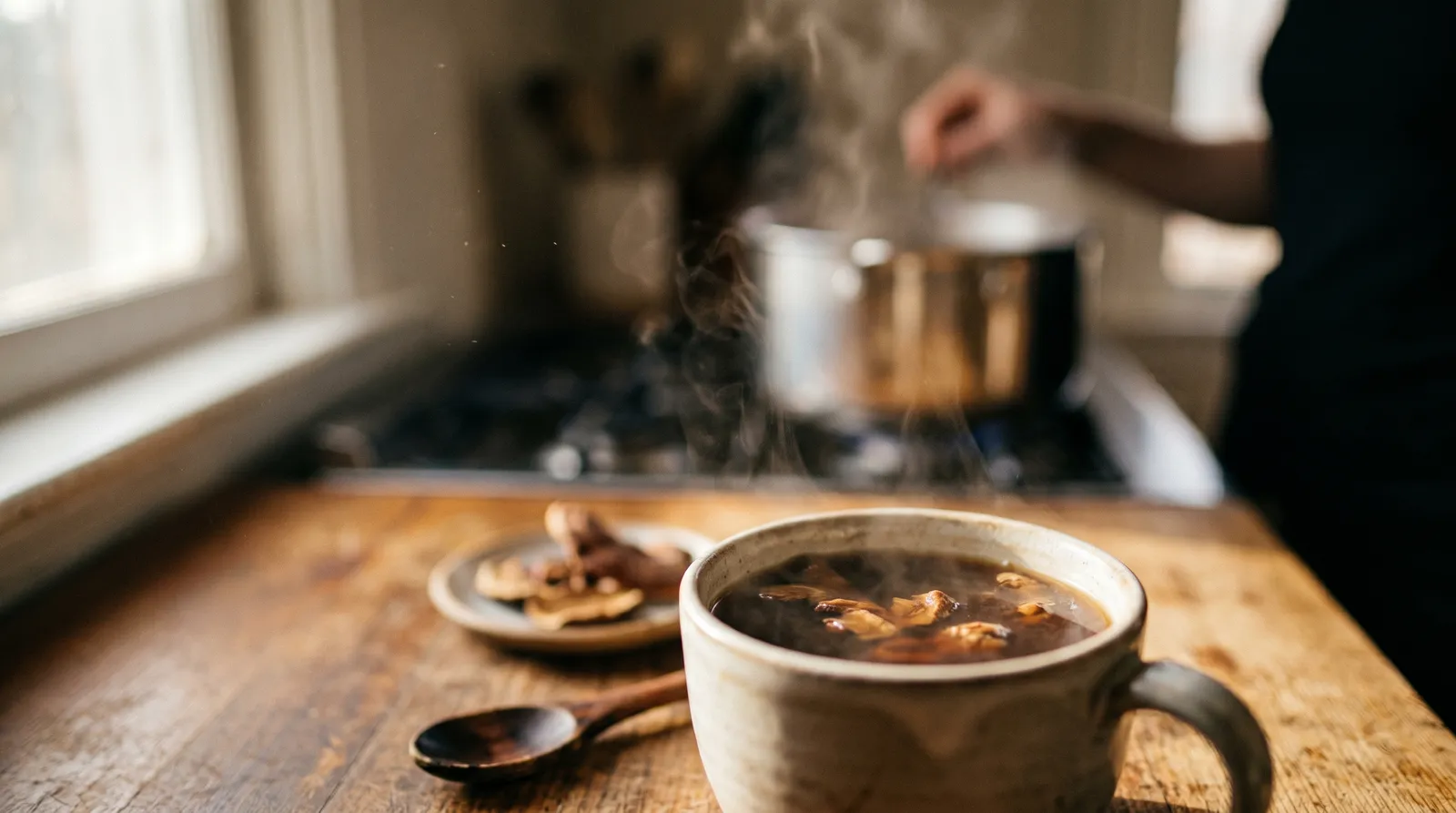
- Boiling too hard. A vigorous, rolling boil causes rapid evaporation and may degrade heat-sensitive compounds. Keep it at a gentle simmer — barely bubbling.
- Not simmering long enough. The chitin cell wall needs sustained heat. Give it at least 45 minutes, preferably an hour.
- Using too little material. A single thin slice in a litre of water produces a homeopathic dilution, not a tea. Stick to 3–5 g per 500 ml.
- Ignoring bitterness as a signal. If the tea tastes like slightly flavoured water, you haven't extracted enough. Bitterness means triterpenoids are present. Embrace it or mask it with honey — but don't mistake a mild brew for a successful one.
- Storing at room temperature. Reishi tea has no antimicrobial preservatives. Refrigerate leftovers and consume within 2–3 days.
What to Order for Brewing Reishi Tea
To get started with brewing reishi tea you need dried Ganoderma lucidum fruiting body in a form suitable for decoction. Azarius carries dried reishi slices and reishi powder. For your first brew, order the slices — they are easier to work with, strain cleanly, and allow re-extraction. If you already own a fine straining setup, reishi powder is a valid alternative that extracts faster. Either way, buy from a supplier that sources whole fruiting body rather than mycelium-on-grain, as the fruiting body contains higher concentrations of triterpenoids according to data reviewed by the EMCDDA and independent analyses.
A Note on Safety
Reishi is generally well tolerated as a tea, but it is biologically active and not without risk. A systematic review by Jin et al. (2016) noted that reported adverse effects include nausea, dry mouth, and digestive upset, typically at higher supplement doses rather than traditional tea preparations. Reishi may interact with anticoagulant and antiplatelet medications due to its potential effects on blood clotting. If you take blood thinners, immunosuppressants, or diabetes medications, the dedicated Azarius wiki article on reishi safety and interactions covers the specifics.
Disclaimer: This article is for informational purposes only and does not constitute medical advice. The information provided has not been evaluated by the European Medicines Agency for therapeutic claims. Reishi (Ganoderma lucidum) is a biologically active substance that may interact with medications. Consult a qualified healthcare professional before use, especially if you are pregnant, nursing, taking medication, or have a pre-existing medical condition. Azarius does not accept liability for any adverse effects resulting from the use of information presented here.
Last updated: April 2026
Frequently Asked Questions
10 questionsHow long should you simmer reishi tea?
Can you reuse dried reishi slices for a second brew?
Why is reishi tea so bitter?
Is it better to use reishi slices or powder for tea?
Does boiling reishi tea destroy the active compounds?
How should you store leftover reishi tea?
How much dried reishi should you use per cup of tea?
Can you add honey or other flavours to reishi tea?
Can you drink reishi tea on an empty stomach?
Should reishi tea be made with cold or hot water first?
About this article


Joshua Askew serves as Editorial Director for Azarius wiki content. He is Managing Director at Yuqo, a content agency specialising in cannabis, psychedelics and ethnobotanical editorial work across multiple languages. Th
This wiki article was drafted with AI assistance and reviewed by Joshua Askew, Managing Director at Yuqo. Editorial oversight by Adam Parsons.
Medical disclaimer. This content is for informational purposes only and does not constitute medical advice. Consult a qualified healthcare provider before use of any substance.
Last reviewed April 24, 2026
References (2)
- [1]Sliva, D. (2003). Ganoderma lucidum (Reishi) in cancer treatment. Integrative Cancer Therapies, 2(4), 358-364. DOI: 10.1177/1534735403259066
- [2]Hobbs, C. (1995). Medicinal Mushrooms: An Exploration of Tradition, Healing, and Culture. Botanica Press, Santa Cruz, CA.
Related Articles
Medicinal Mushrooms TCM Western Pharmacognosy Guide
Guide to medicinal mushrooms TCM Western pharmacognosy — how reishi, lion's mane, cordyceps are classified, extracted, and studied.
Research on Immune Modulation by Functional Mushrooms
What does research on immune modulation by functional mushrooms actually show? Beta-glucans, Dectin-1 signalling, human trials, and the honest gap...
Allergic Reactions & Mushroom Sensitivities
Understand allergic reactions and mushroom sensitivities: mould cross-reactivity, shiitake dermatitis, species-specific risks, and safer product…
Turkey Tail Trametes versicolor — Buy Supplements
Buy turkey tail Trametes versicolor supplements at Azarius. PSK and PSP evidence, beta-glucan dosage, extraction methods, and safety.
Triterpenes In Medicinal Mushrooms
Triterpenes in medicinal mushrooms are a class of 30-carbon terpenoid compounds produced as secondary metabolites by several functional mushroom species…
Chaga Siberian Nordic Folk Use
Chaga Siberian Nordic folk use is a centuries-old tradition in which indigenous Siberians and Nordic communities brewed the birch-parasitising fungus…
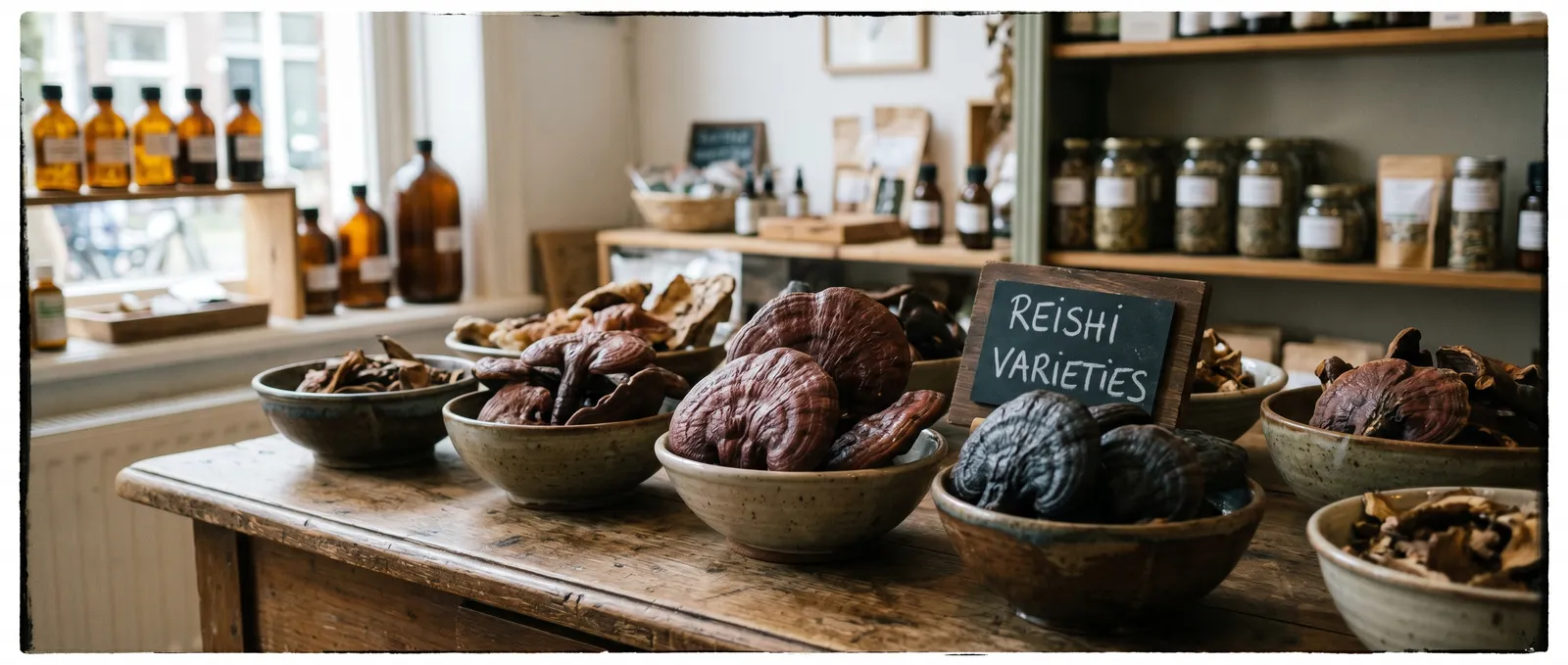
Red and Black Reishi Varieties
Red reishi (Ganoderma lucidum) and black reishi (Ganoderma sinense) both fall under the lingzhi umbrella in traditional Chinese medicine, but they differ in…
Lion's Mane Identification & Habitat
Hericium erinaceus is a tooth fungus that fruits as a single white, spine-covered mass on wounded or dead hardwood trees.
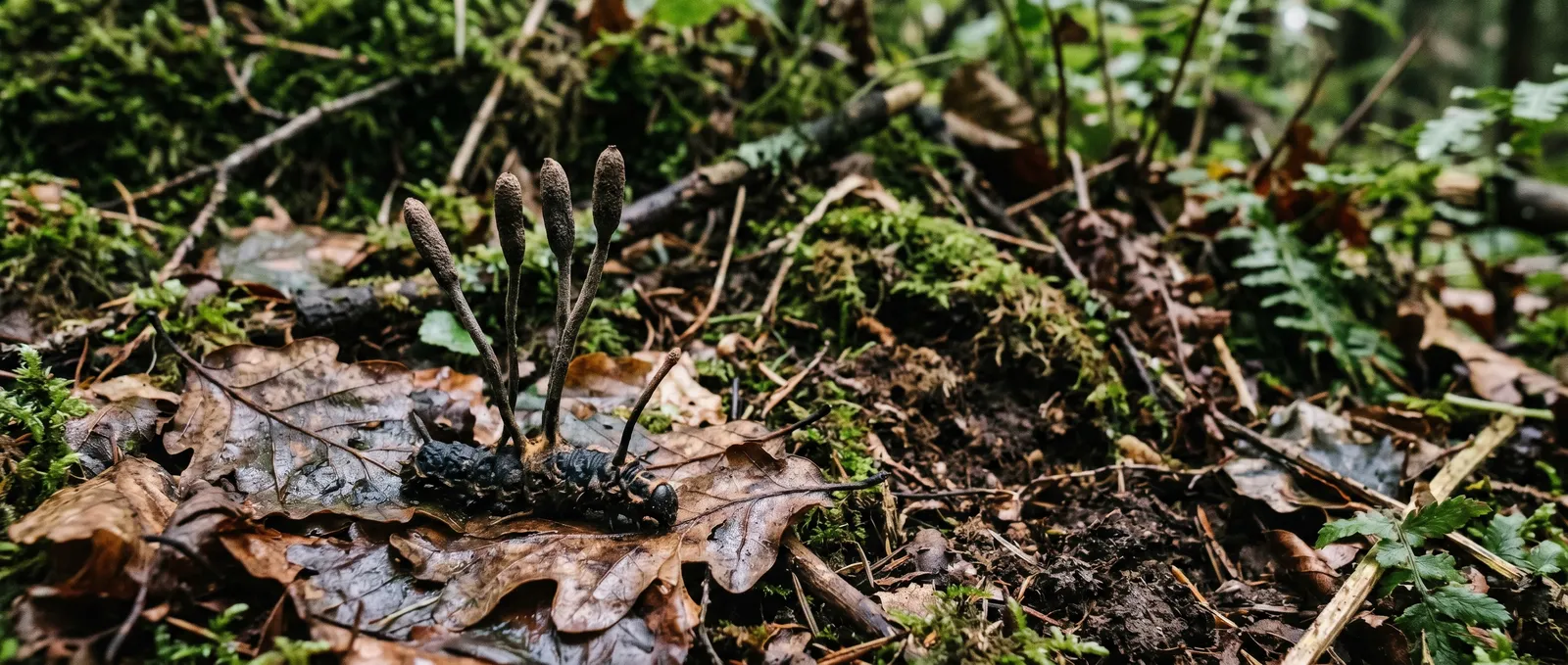
Cordyceps Lifecycle
The cordyceps lifecycle is a parasitic biological sequence in which a fungus infects an insect host, colonises its body from within, and erupts as a…