
This article discusses psychoactive substances intended for adults (18+). If you have a health condition or take medication, consult a doctor before use. Our age policy
What Is Kratom? Effects, Dosage & Safety
Definition
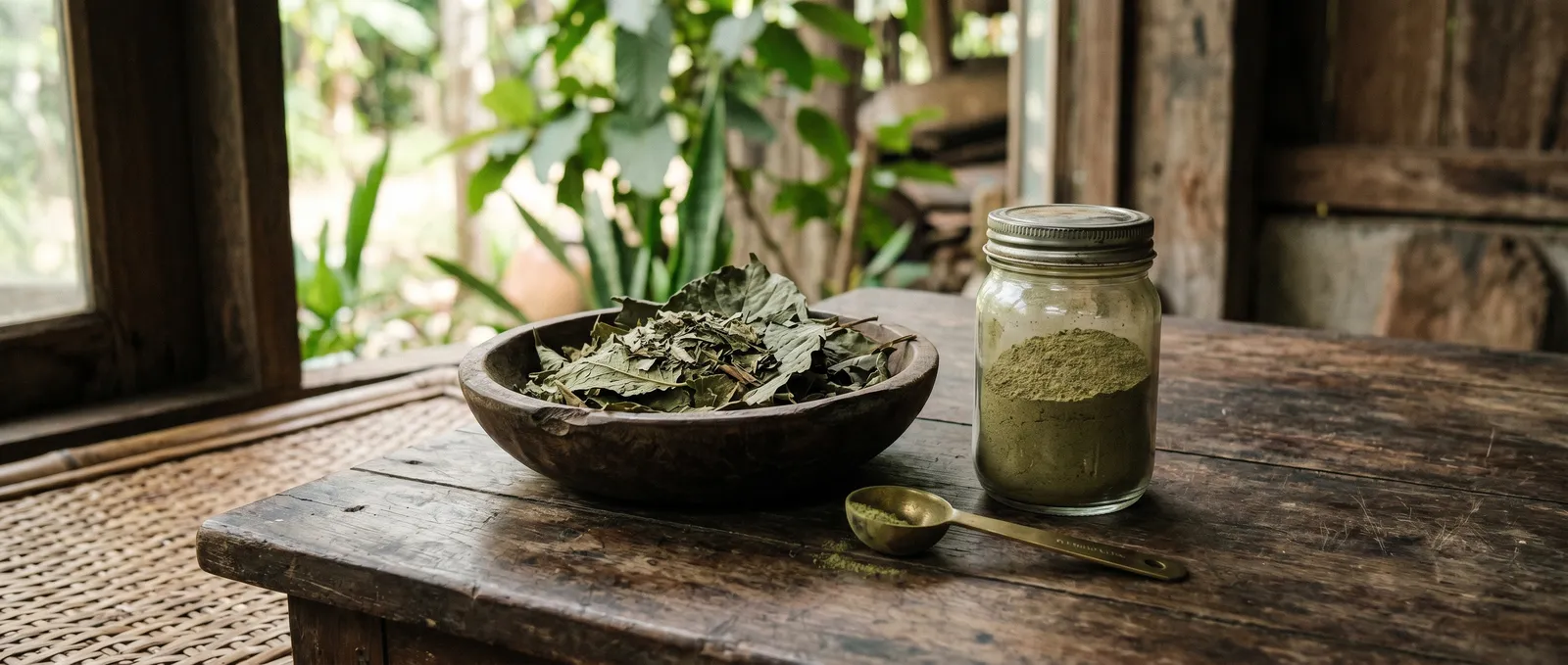
Kratom (Mitragyna speciosa) is a Southeast Asian tree in the coffee family whose leaves contain mitragynine and 7-hydroxymitragynine, partial mu-opioid agonists producing stimulant effects at low doses and sedative-analgesic effects at higher doses (Kruegel & Bharat, 2016).
Kratom (Mitragyna speciosa) is a tropical evergreen tree in the coffee family (Rubiaceae) whose leaves contain alkaloids that bind to opioid receptors in the brain. At lower doses, users typically report stimulant-like effects; at higher doses, the experience shifts toward sedation and pain relief. Native to Southeast Asia, kratom has been chewed and brewed for centuries — and has become one of the most debated botanicals in modern pharmacology.
Adult audience (18+). The dosing ranges and effects described in this article apply to adult physiology. This content is not intended for minors.
Key Facts
- Active compounds: Over 40 alkaloids identified, with mitragynine (accounting for roughly 66% of alkaloid content) and 7-hydroxymitragynine as the primary psychoactive constituents (Kruegel & Bharat, 2016).
- Receptor activity: Mitragynine and 7-hydroxymitragynine are partial agonists at the mu-opioid receptor — distinct from full agonists like morphine (Kruegel et al., 2016).
- Traditional use: Documented ethnobotanical use in Thailand, Malaysia, and Indonesia stretching back at least 150 years, primarily among manual labourers and in folk medicine (Suwanlert, 1975; Singh et al., 2016).
- Effect profile: Dose-dependent — stimulant effects reported at lower amounts (1–5 g leaf powder), sedative and analgesic effects at higher amounts (5–15 g leaf powder) (Grundmann, 2017).
- Forms available: Dried leaf powder, capsules, crushed leaf for tea, concentrated extracts, enhanced leaf, and resin.
- Dependence risk: A recognised withdrawal syndrome — including irritability, muscle aches, insomnia, and nausea — emerges with daily heavy use (Singh et al., 2014).
- Safety data: Hepatotoxicity case reports exist, though the population-level incidence and mechanism remain under investigation (Kapp et al., 2011).
Commercial Disclosure
Azarius sells kratom products and has a commercial interest in this topic. Our editorial process includes independent pharmacological review to mitigate commercial bias.
Contraindications
Kratom carries meaningful interaction risks. Do not combine kratom with any of the following without consulting a medical professional who is informed about your use:
- MAOIs (monoamine oxidase inhibitors, including some antidepressants and ayahuasca) — risk of serotonergic and cardiovascular crisis.
- Other opioids (prescription or otherwise) — additive respiratory depression risk.
- Benzodiazepines — compounded sedation and respiratory depression.
- Alcohol — increased sedation, nausea, and CNS depression.
- CYP3A4 inhibitors (clarithromycin, ketoconazole, grapefruit juice, and others) — may elevate active alkaloid levels by slowing hepatic metabolism (Kamble et al., 2020).
- CYP2D6 inhibitors (fluoxetine, paroxetine, bupropion, and others) — similar metabolic interference, potentially increasing exposure to mitragynine.
- Pregnancy and breastfeeding — neonatal withdrawal has been reported in case literature (Eldridge et al., 2018).
- Pre-existing liver disease or concurrent use of hepatotoxic medication.
- Personal or family history of substance use disorder — kratom's opioidergic action carries dependence potential, and this risk is elevated in predisposed individuals.
History and Origin
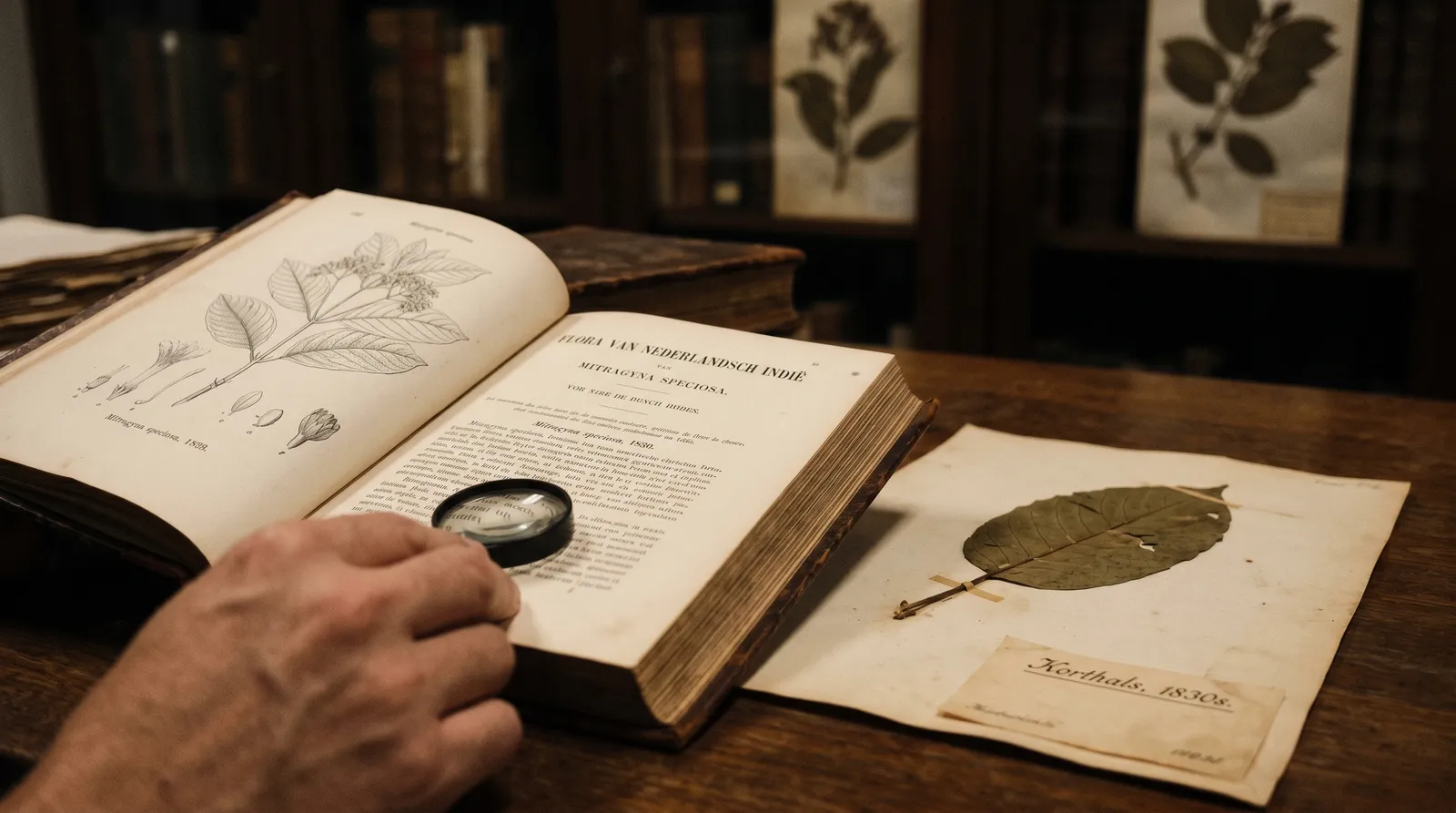
The earliest Western description of kratom is credited to the Dutch colonial botanist Pieter Willem Korthals, who documented Mitragyna speciosa in the 1830s. The genus name references the shape of the leaf stipules, which Korthals thought resembled a bishop's mitre. But the plant's human history runs far deeper than European taxonomy.
In Thailand and Malaysia, labourers — particularly rubber tappers and rice farmers — have chewed fresh kratom leaves or brewed them into tea for generations to manage fatigue and physical discomfort (Suwanlert, 1975). The Thai physician Suwanlert published one of the first clinical surveys of kratom use in 1975, documenting patterns of daily consumption among working populations in southern Thailand. In Malaysia, traditional use was similarly embedded in rural labour culture, with local names like ketum and biak-biak.
Western interest accelerated in the 2000s, as dried leaf powder became widely available through online vendors. The shift from fresh-leaf chewing in Southeast Asia to concentrated powder and extract consumption in Western markets fundamentally changed the dose profile — and the risk profile along with it.
Chemistry and Active Compounds
Kratom leaf contains over 40 structurally related indole and oxindole alkaloids, but two dominate the pharmacological picture. Mitragynine typically constitutes 12–66% of total alkaloid content depending on leaf origin and processing, with most commercial Southeast Asian leaf clustering in the 60–70% range, while 7-hydroxymitragynine is present at much lower concentrations — usually under 2% of total alkaloids — yet is roughly 13 times more potent than mitragynine at the mu-opioid receptor (Takayama, 2004; Kruegel et al., 2016).
Both compounds are partial agonists at the mu-opioid receptor. This matters: unlike full agonists such as morphine or heroin, partial agonists have a ceiling effect on receptor activation. According to Kruegel et al. (2016), mitragynine shows a binding affinity (Ki) of approximately 230 nM at the mu receptor, while 7-hydroxymitragynine binds at roughly 40–70 nM. The partial agonism is thought to explain why kratom's respiratory depression risk appears lower than that of classical opioids, though this does not mean zero risk — especially in combination with other depressants.
Beyond the opioid system, mitragynine also interacts with adrenergic, serotonergic (5-HT2A), and dopaminergic receptors (Kruegel & Bharat, 2016). This polypharmacology likely accounts for the stimulant effects at low doses, which classical opioids do not produce. However, the relative contribution of each receptor system at different doses is still not fully characterised — most binding data comes from in vitro work, and translating that to real-world human pharmacology involves significant uncertainty.
| Alkaloid | Typical % of Total Alkaloid Content | Primary Receptor Activity | Relative Potency (mu-opioid) |
|---|---|---|---|
| Mitragynine | 12–66% | Partial mu-opioid agonist; adrenergic, serotonergic | Baseline |
| 7-Hydroxymitragynine | Up to 2% | Partial mu-opioid agonist | ~13x mitragynine |
| Speciogynine | 3–7% | Smooth muscle relaxant (limited data) | Minimal opioid activity |
| Paynantheine | 3–9% | Smooth muscle relaxant (limited data) | Minimal opioid activity |
| Speciociliatine | Variable | Under investigation | Under investigation |
Effects Overview
Kratom's effects are dose-dependent in a way that genuinely confuses people who expect a linear relationship between "more" and "stronger." At lower amounts (roughly 1–5 g of plain leaf powder), most users report increased energy, alertness, and sociability — closer to a strong cup of coffee than to an opioid. At higher amounts (roughly 5–15 g of plain leaf), the profile shifts toward sedation, analgesia, and what some users describe as a warm, relaxed state (Grundmann, 2017; Swogger et al., 2015).
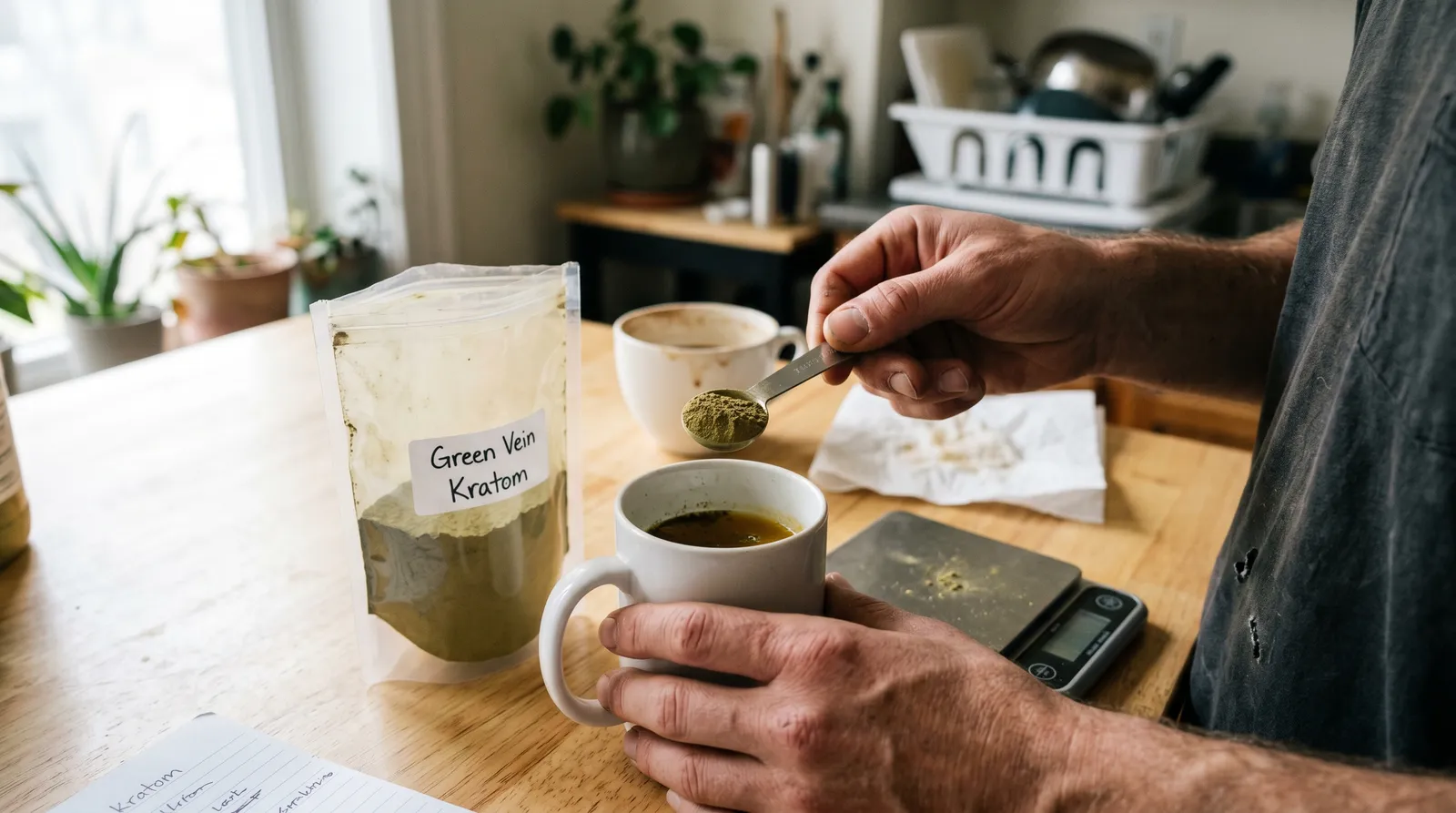
Onset, peak, and duration vary by method of consumption and individual metabolism. The pharmacokinetic data that exists comes from small-sample studies with wide variance, so treat the following table as a rough guide rather than a precise timetable.
| Method | Onset | Peak | Duration | Notes |
|---|---|---|---|---|
| Powder (toss and wash) | 15–30 min | 1–2 h | 3–6 h | Fastest oral onset; bitter taste |
| Tea (steeped leaf/powder) | 15–30 min | 1–2 h | 3–5 h | Some alkaloid loss in straining |
| Capsules | 30–60 min | 1.5–2.5 h | 3–6 h | Slower onset due to capsule dissolution |
| Extract (concentrated) | 10–20 min | 0.5–1.5 h | 2–5 h | Higher alkaloid load per gram; tolerance escalation risk |
Common side effects — particularly at higher doses or in new users — include nausea, constipation, dizziness, dry mouth, and sweating. Nausea is the most frequently reported acute negative effect in survey data (Grundmann, 2017).
A note on the "strain" question: the commercial vocabulary of red, green, white, and yellow vein kratom implies distinct pharmacological profiles. The evidence base for this is thin. Alkaloid content varies by growing region, harvest time, drying method, and storage conditions, but controlled studies comparing vein colours under standardised conditions are essentially absent. Some users report consistent differences; this has not been confirmed in published research.
Dosage
All figures below refer to plain dried leaf powder. Extracts are pharmacologically distinct — they concentrate mitragynine and 7-hydroxymitragynine to levels that make leaf-based dose ranges dangerously misleading if applied to extract products. If you are using an extract, the dose in grams is dramatically lower and depends on the concentration factor (often labelled as 5x, 10x, 50x, etc.).
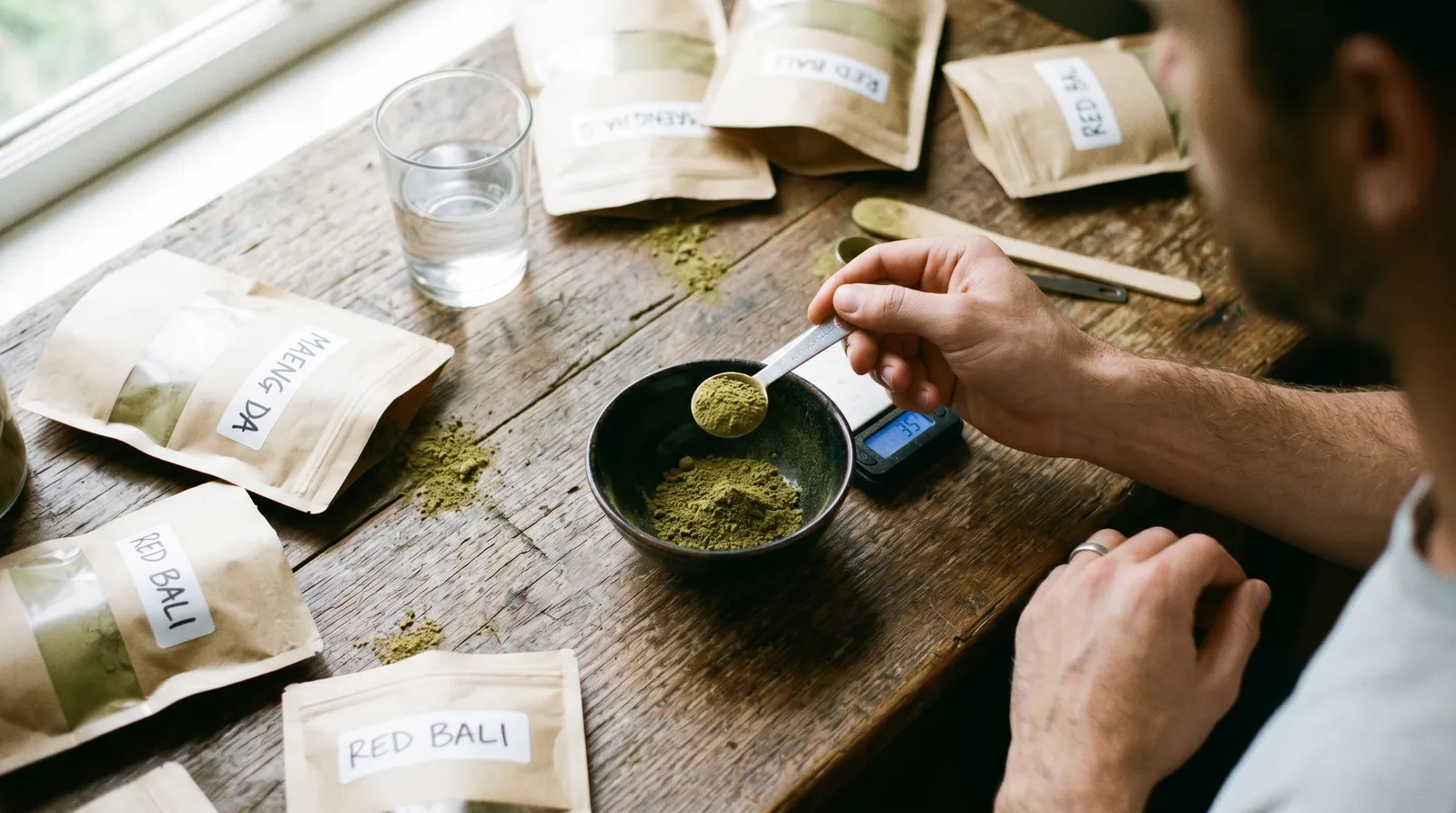
The following ranges are drawn from published survey and clinical data (Grundmann, 2017; Veltri & Grundmann, 2019). Individual responses vary with body weight, tolerance, stomach contents, and product alkaloid concentration.
| Level | Leaf Powder Range | Reported Character | Risk Level |
|---|---|---|---|
| Threshold | 1–2 g | Mild stimulation; subtle | Low |
| Light | 2–3 g | Noticeable stimulation, mood lift | Low |
| Common | 3–5 g | Stimulant-to-sedative crossover depending on individual | Moderate |
| Strong | 5–8 g | Pronounced sedation, analgesia; nausea more likely | High |
| Heavy | 8–15 g | Strong sedation; high nausea and side effect probability | Very High |
Extract dosing: Concentrated extracts may contain 5–50 times the alkaloid density of leaf powder. A dose of 0.5 g of a 10x extract delivers a roughly equivalent alkaloid load to 5 g of leaf. Extracts carry a substantially higher risk of rapid tolerance development and withdrawal (Singh et al., 2014). Dose figures for leaf are not interchangeable with dose figures for extracts — treat them as different substances in practice.
Tolerance develops rapidly with consecutive daily dosing. Users who dose daily often report needing to escalate within one to two weeks to achieve the same effects. Spacing sessions — ideally with at least two to three days between uses — is the most commonly cited strategy for managing tolerance, though controlled studies on optimal spacing are absent.
Preparation Methods
Tea: The most traditional method. Simmer 2–5 g of leaf powder or crushed leaf in water for 15–20 minutes, strain, and drink. Adding lemon juice (citric acid) may improve alkaloid extraction. Some users brew a second wash from the same material. Straining removes plant matter, which can reduce nausea compared to consuming raw powder.
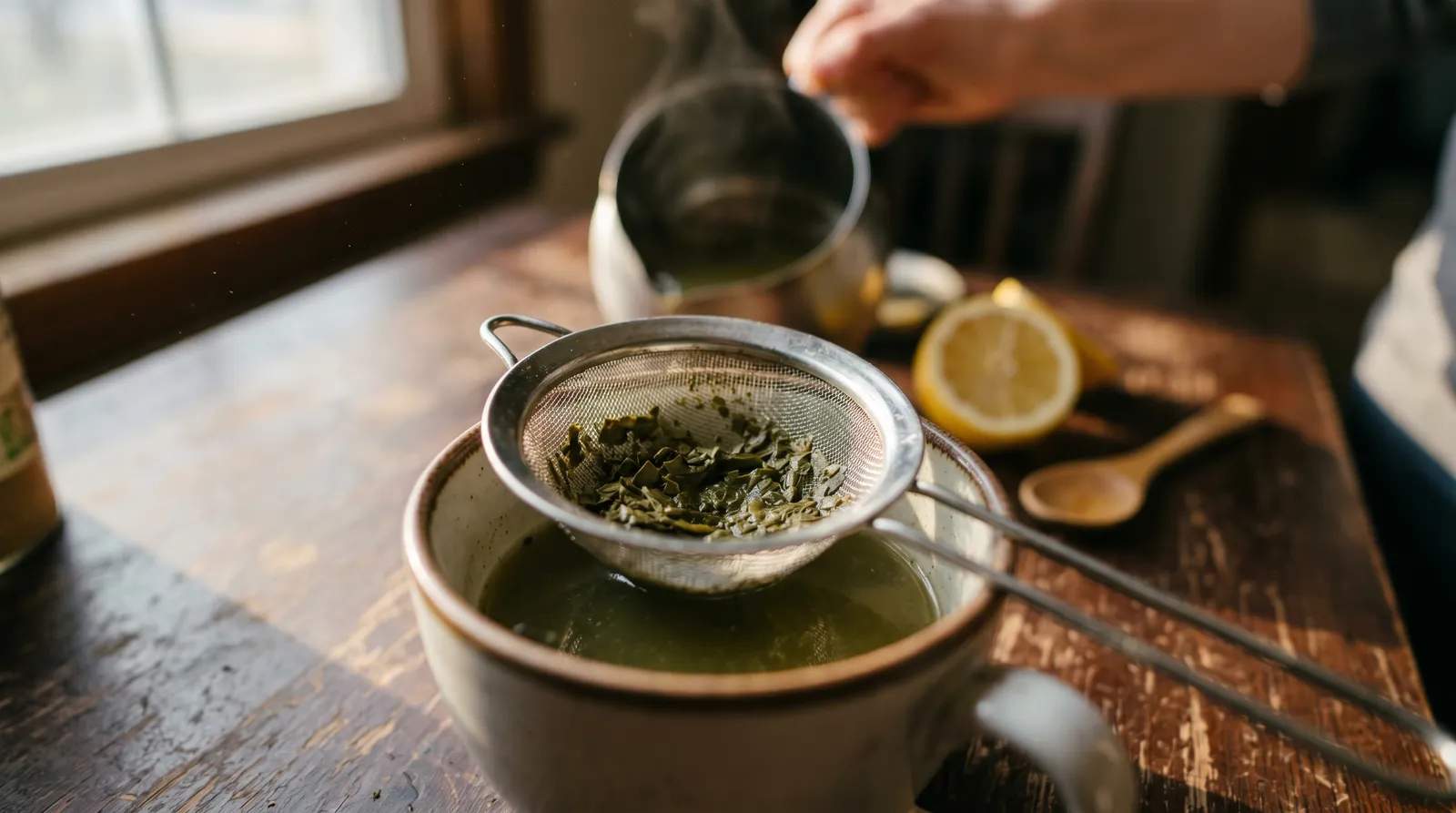
Toss and wash: Place measured powder on the tongue and wash it down with water or juice. Fast and direct, but the taste is intensely bitter. Mixing the powder into a small volume of warm water or orange juice beforehand makes it slightly more tolerable.
Capsules: Pre-filled or self-filled gelatin or vegetable capsules. Slower onset because the capsule must dissolve first, but avoids the taste entirely. Capsules make accurate dosing straightforward — a standard 00 capsule holds roughly 0.5 g of packed powder.
Extracts and enhanced products: Concentrated forms — resin, tincture, or enhanced leaf (plain leaf coated with extract) — deliver higher alkaloid loads per gram. These are not simply "stronger kratom." The altered alkaloid ratio, particularly the elevated 7-hydroxymitragynine proportion in some extracts, changes the pharmacological and behavioural risk profile. Approach extract products as a separate category with separate dosing considerations.
Safety and Drug Interactions
Kratom's safety profile is complicated by the gap between traditional use (fresh leaf, chewed or brewed) and modern Western use (concentrated powder and extracts, sometimes combined with other substances). Most serious adverse events in case literature involve polydrug use or concentrated products (Anwar et al., 2016).

Withdrawal: A recognised withdrawal syndrome occurs in daily heavy users, with symptoms including muscle aches, insomnia, irritability, nausea, diarrhoea, and cravings. According to Singh et al. (2014), withdrawal severity correlates with dose and duration of use. The syndrome resembles mild-to-moderate opioid withdrawal and typically resolves within one to two weeks, though individual experiences vary considerably.
Hepatotoxicity: Case reports of liver injury associated with kratom use exist (Kapp et al., 2011), but the population-level incidence is unclear. Whether the hepatotoxicity is caused by mitragynine itself, contaminants in commercial products, or individual susceptibility factors (such as genetic CYP polymorphisms) remains under active investigation. Anyone with pre-existing liver conditions or taking hepatotoxic medications should avoid kratom entirely.
Respiratory depression: Kratom's partial agonism at the mu-opioid receptor appears to produce less respiratory depression than full agonists at equivalent analgesic doses. However, combining kratom with other CNS depressants — benzodiazepines, alcohol, other opioids — removes this relative safety margin. Nearly all kratom-associated fatalities in published case series involved co-ingested substances (Henningfield et al., 2018).
Contamination: As an unregulated botanical product, kratom powder quality varies between sources. Salmonella contamination prompted a public health investigation in the United States in 2018. Heavy metal contamination has also been documented in some commercial products. Product sourcing and testing matter — though making claims about specific products' purity requires auditable evidence, not assumptions.
Drug Interaction Table
| Substance / Class | Interaction Mechanism | Risk Level | Notes |
|---|---|---|---|
| Opioids (prescription or illicit) | Additive mu-opioid receptor activation | Severe | Respiratory depression risk; potentially fatal |
| Benzodiazepines | Additive CNS depression | Severe | Sedation, respiratory depression |
| MAOIs | Serotonergic and cardiovascular interaction | Severe | Includes pharmaceutical MAOIs and ayahuasca |
| Alcohol | Additive CNS depression; hepatotoxic combination | High | Increased nausea, sedation, liver strain |
| CYP3A4 inhibitors (ketoconazole, clarithromycin, grapefruit juice) | Slowed kratom metabolism; elevated alkaloid levels | High | Kamble et al. (2020) identified CYP3A4 as a major metabolic pathway |
| CYP2D6 inhibitors (fluoxetine, paroxetine, bupropion) | Slowed kratom metabolism; elevated alkaloid levels | High | Relevant for people on common SSRIs/SNRIs |
| Other sedating herbs (kava, valerian) | Additive sedation | Moderate | Limited formal data; caution warranted |
| Caffeine | Opposing stimulant/sedative effects | Low | Common combination; generally well-tolerated at low kratom doses |
The interaction profile above is not exhaustive. Kratom's inhibition of CYP2D6 and CYP3A4 means it can theoretically alter the metabolism of a wide range of pharmaceuticals — including some antidepressants, antipsychotics, and cardiovascular drugs. If you take any prescription medication, the safe assumption is that an interaction is possible until specifically ruled out.
Extract Versus Leaf: A Critical Distinction
This point deserves its own section because it is the single most important variable in kratom's risk profile that users routinely underestimate. Extracts concentrate the active alkaloids — particularly 7-hydroxymitragynine — to levels that plain leaf simply cannot reach. A 50x extract is not "50 times stronger leaf." It is a pharmacologically different product with a different ratio of active compounds, a different onset profile, and a dramatically different tolerance and dependence trajectory.
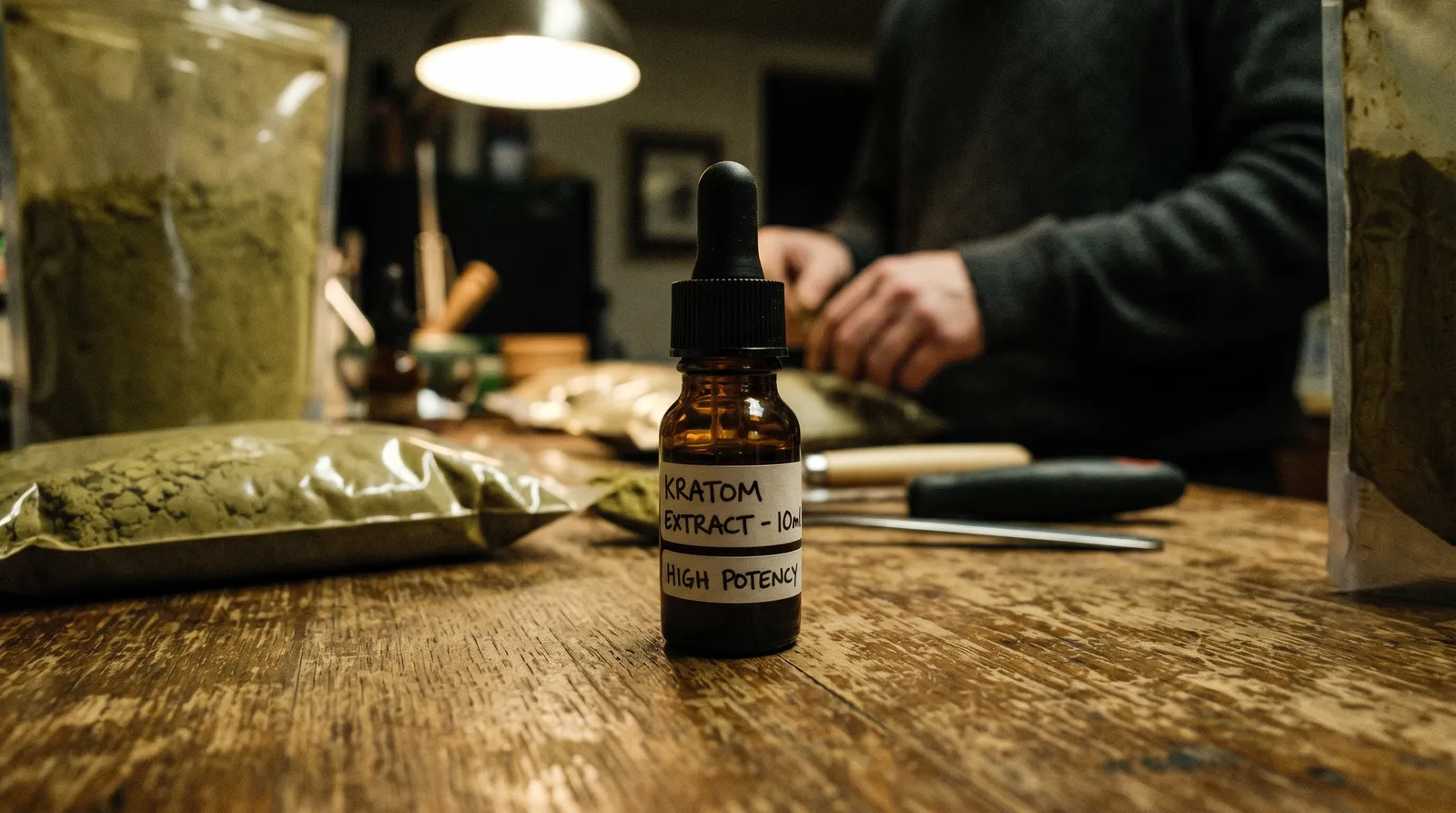
According to survey data reviewed by Veltri and Grundmann (2019), users of concentrated products report higher rates of dependence, more severe withdrawal, and faster tolerance escalation compared to users of plain leaf. If you are new to kratom, extracts are not an appropriate starting point. If you are an experienced leaf user considering extracts, treat the transition as you would switching to an entirely new substance — because pharmacologically, that is closer to the truth.
Kratom and Opioid Cessation
One of the most discussed — and most contested — aspects of kratom use is its role in opioid cessation. Many users report using kratom to manage withdrawal symptoms when stopping prescription or illicit opioids. Survey data from Grundmann (2017) found that a significant proportion of kratom users in the United States cited pain management and opioid withdrawal as primary motivations for use.

The evidence here is genuinely mixed. Some researchers, including Swogger and Walsh (2018), have argued that kratom's partial mu-opioid agonism could make it a useful transitional tool — similar in concept to buprenorphine — for people tapering off full agonist opioids. Others point out that substituting one opioidergic substance for another does not constitute cessation, and that kratom itself produces dependence with daily use.
No randomised controlled trials have evaluated kratom for opioid cessation. The existing evidence consists of survey data, case reports, and observational studies — enough to suggest the phenomenon is real, but not enough to establish efficacy, optimal protocols, or comparative safety. Anyone considering this path should be aware that they are entering genuinely uncharted clinical territory.
Emergency Information
If someone has taken kratom and is experiencing severe symptoms — difficulty breathing, loss of consciousness, seizures, or unresponsive behaviour — call emergency services immediately.

- EU emergency number: 112
- Netherlands Poisons Information Centre: +31 30 274 8888
- UK (NHS): 111 (non-emergency) or 999 (emergency)
Tell medical staff exactly what was taken — the substance, the amount, the form (leaf, extract, capsules), and any other substances consumed alongside it. Medical professionals need this information to treat effectively. Do not withhold details out of embarrassment or concern.
Last updated: April 2026
Legal Status by Country
12 countries · Last updated Apr 19, 2026
| Country | Status | Notes | Verified |
|---|---|---|---|
| DK | Illegal | Scheduled under Executive Order on Euphoriant Substances since 2009. | Apr 19, 2026 |
| GB | Illegal | Psychoactive Substances Act 2016 prohibits supply. (source) | Apr 19, 2026 |
| PL | Illegal | Listed under the Act on Counteracting Drug Addiction. | Apr 19, 2026 |
| SE | Illegal | Scheduled as Narkotika since 2011. | Apr 19, 2026 |
| FI | Restricted | Treated as a medicine under the Medicines Act — sale requires authorisation. | Apr 19, 2026 |
| FR | Restricted | Not explicitly scheduled but import via postal channels is routinely seized. | Apr 19, 2026 |
| IT | Restricted | Mitragynine added to list of monitored substances in 2016; sale restricted. | Apr 19, 2026 |
| CZ | Grey Area | Not explicitly scheduled; enforcement varies. | Apr 19, 2026 |
| ES | Grey Area | Not scheduled; sold by ethnobotanical shops. | Apr 19, 2026 |
| PT | Grey Area | Not scheduled; available via specialty retailers. | Apr 19, 2026 |
| DE | Legal | Not scheduled under BtMG; sold freely. (source) | Apr 19, 2026 |
| NL | Legal | Unscheduled; sold openly in smartshops. (source) | Apr 19, 2026 |
Legal disclaimer: This information is provided for educational purposes only and may not reflect the most current legal status. Laws change frequently. Always verify the legal status in your jurisdiction before purchasing or possessing any substance. Azarius does not ship products to countries where they are illegal.
Frequently Asked Questions
10 questionsIs kratom an opioid?
What does kratom withdrawal feel like?
Can you overdose on kratom?
Does the colour of kratom (red, green, white) actually matter?
Can kratom cause liver damage?
How is kratom extract different from kratom leaf powder?
Can you mix kratom with medications that affect CYP enzymes?
How long does it take for kratom to kick in and how long do effects last?
How long does kratom take to kick in?
Can you mix kratom with alcohol or other substances?
About this article


Adam Parsons is an external cannabis and psychedelics writer and editor who contributes to Azarius's wiki as both author and reviewer. On the writing side, he authors Azarius's kratom and kanna clusters, drawing on exten
This wiki article was drafted with AI assistance and reviewed by Adam Parsons, External contributor. Editorial oversight by Joshua Askew.
Medical disclaimer. This content is for informational purposes only and does not constitute medical advice. Consult a qualified healthcare provider before use of any substance.
Last reviewed April 23, 2026
References (14)
- [1]Anwar, M., Law, R., & Schier, J. (2016). Notes from the field: kratom (Mitragyna speciosa) exposures reported to poison centers — United States, 2010–2015. Morbidity and Mortality Weekly Report , 65(29), 748–749. DOI: 10.15585/mmwr.mm6529a4
- [2]Eldridge, W. B., Foster, C., & Wyble, L. (2018). Neonatal abstinence syndrome due to maternal kratom use. Pediatrics , 142(6), e20181839. DOI: 10.1542/peds.2018-1839
- [3]Grundmann, O. (2017). Patterns of kratom use and health impact in the US — results from an online survey. Drug and Alcohol Dependence , 176, 63–70. DOI: 10.1016/j.drugalcdep.2017.03.007
- [4]Henningfield, J. E., Fant, R. V., & Wang, D. W. (2018). Psychopharmacology , 235(2), 573–589.
- [5]Kamble, S. H., Sharma, A., King, T. I., et al. (2020). Metabolite profiling and identification of enzymes responsible for the metabolism of mitragynine, the major alkaloid of Mitragyna speciosa (kratom). Xenobiotica , 49(11), 1279–1288.
- [6]Kapp, F. G., Maurer, H. H., Auwarter, V., Winkelmann, M., & Hermanns-Clausen, M. (2011). Intrahepatic cholestasis following abuse of powdered kratom ( Mitragyna speciosa ). Journal of Medical Toxicology , 7(3), 227–231. DOI: 10.1007/s13181-011-0155-5
- [7]Kruegel, A. C., Gassaway, M. M., Kapoor, A., et al. (2016). Synthetic and receptor signaling explorations of the Mitragyna alkaloids: mitragynine as an atypical molecular framework for opioid receptor modulators. Journal of the American Chemical Society , 138(21), 6754–6764. DOI: 10.1021/jacs.6b00360
- [8]Singh, D., Müller, C. P., & Vicknasingam, B. K. (2014). Kratom ( Mitragyna speciosa ) dependence, withdrawal symptoms and craving in regular users. Drug and Alcohol Dependence , 139, 132–137. DOI: 10.1016/j.drugalcdep.2014.03.017
- [9]Singh, D., Narayanan, S., & Vicknasingam, B. (2016). Traditional and non-traditional uses of Mitragynine (kratom): a survey of the literature. Brain Research Bulletin , 126, 41–46. DOI: 10.1016/j.brainresbull.2016.05.004
- [10]Suwanlert, S. (1975). A study of kratom eaters in Thailand. Bulletin on Narcotics , 27(3), 21–27.
- [11]Swogger, M. T., Hart, E., Erowid, F., et al. (2015). Experiences of kratom users: a qualitative analysis. Journal of Psychoactive Drugs , 47(5), 360–367. DOI: 10.1080/02791072.2015.1096434
- [12]Swogger, M. T., & Walsh, Z. (2018). Kratom use and mental health: a systematic review. Drug and Alcohol Dependence , 183, 134–140. DOI: 10.1016/j.drugalcdep.2017.10.012
- [13]Takayama, H. (2004). Chemistry and pharmacology of analgesic indole alkaloids from the rubiaceous plant, Mitragyna speciosa . Chemical and Pharmaceutical Bulletin , 52(8), 916–928. DOI: 10.1248/cpb.52.916
- [14]Veltri, C., & Grundmann, O. (2019). Current perspectives on the impact of kratom use. Substance Abuse and Rehabilitation , 10, 23–31. DOI: 10.2147/sar.s164261
Related Articles
Blue Lotus vs Kanna: Effects & Safety
Blue lotus vs kanna compared — Nymphaea caerulea's aporphine profile against Sceletium tortuosum's mesembrine chemistry, with interaction warnings.

Lotus Clinical Research Overview
What does lotus clinical research actually show? A critical review of Nymphaea caerulea and Nelumbo nucifera pharmacology, preclinical data, and…
Kanna South Africa To West History
Sceletium tortuosum was used by San and Khoekhoe communities in southern Africa for centuries before European colonists first documented it in the 1660s.
Sceletium Tortuosum Plant
Learn about the sceletium tortuosum plant: botany, alkaloids, fermentation, safety warnings, and where to buy kanna.
Kanna Pharmacokinetics Explained
Complete guide to kanna pharmacokinetics: how Sceletium tortuosum alkaloids are absorbed, metabolised via CYP2D6, and eliminated.
Kanna Chemistry: Sceletium Alkaloids Explained
Kanna chemistry explained: mesembrine, mesembrenone, their mechanisms, how fermentation and extraction change alkaloid profiles, and why it matters…

Rapé Shamanic Snuff Guide: How to Use It Safely
A practical rapé shamanic snuff guide covering dose, kuripe technique, effects, nicotine safety, interactions and Amazonian tradition.
White Sage Salvia Apiana Cultural Smudging Guide
Salvia apiana is a non-psychoactive shrub native to southern California's coastal sage scrub, burned as ceremonial incense in Indigenous North American…

Mulungu Erythrina Traditional Amazonian Use — Bark, Alkaloids & Research
Erythrina mulungu is a Brazilian legume tree whose bark has been brewed as a calming decoction in rural folk medicine for generations.