
This article discusses psychoactive substances intended for adults (18+). If you have a health condition or take medication, consult a doctor before use. Our age policy
Kratom Traditional Use in Southeast Asia
Definition
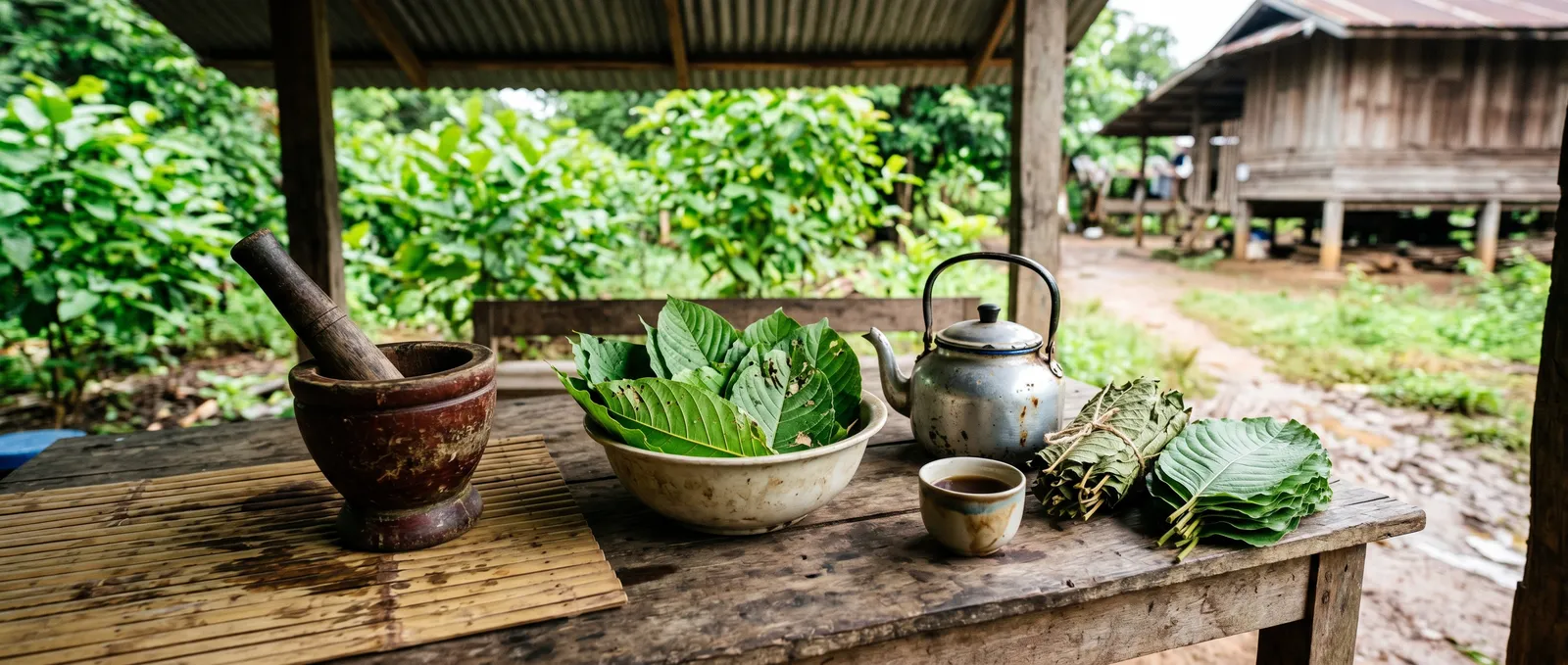
Kratom traditional use in Southeast Asia is a centuries-old practice in which labourers and healers across Thailand, Malaysia, and Indonesia chewed fresh Mitragyna speciosa leaves or brewed them into tea for sustained energy and pain relief. Ethnobotanical records dating to the 1800s document a dose-dependent pattern: stimulating at lower amounts, sedating and pain-relieving at higher ones.
Kratom traditional use in Southeast Asia is a centuries-old practice rooted in the daily lives of labourers, healers, and rural communities across Thailand, Malaysia, and Indonesia. Long before kratom (Mitragyna speciosa) became a subject of Western pharmacological debate, it was a working plant — chewed by farmers, brewed by healers, and woven into the rhythms of village life. The traditional use of kratom in Southeast Asia stretches back centuries, documented in ethnobotanical literature as far back as the mid-1800s. Understanding how these communities actually used the leaf — and why — offers a grounding perspective that's often missing from modern discussions about the plant. If you want to buy kratom leaf suited to traditional-style preparation, plain crushed leaf or dried powder is the place to start — not concentrated extracts.
Adult audience (18+). The dosing ranges and effects described in this article apply to adult physiology. This content is not intended for minors.
The Earliest Records of Kratom Traditional Use in Southeast Asia
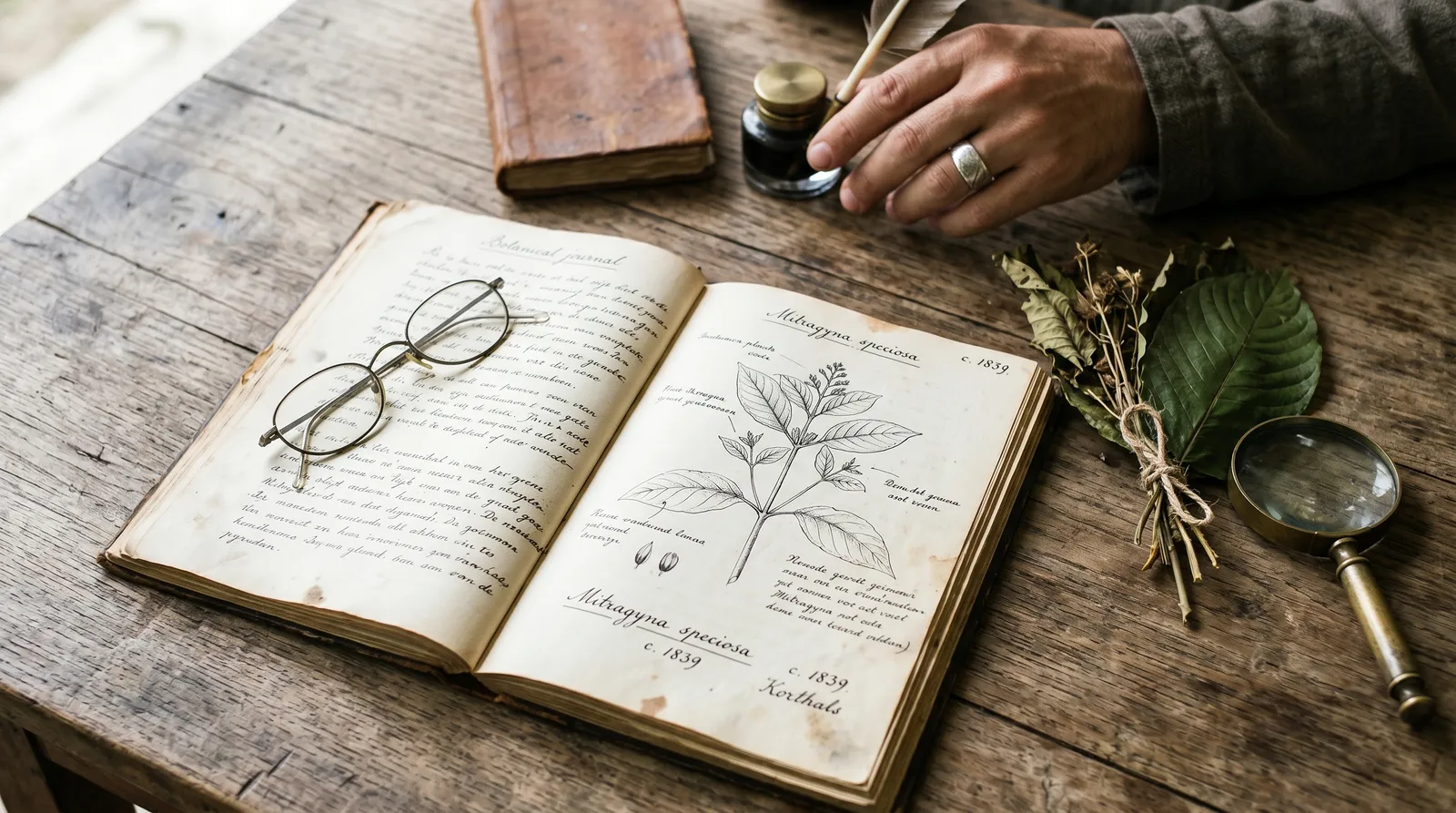
The first Western account of kratom traditional use in Southeast Asia dates to 1839, when Dutch botanist Pieter Willem Korthals described Mitragyna speciosa after observing its use in the Malay Peninsula. By 1895, E.M. Holmes had documented the plant in more detail, noting that locals chewed the fresh leaves as a substitute for opium (Holmes, 1895). But the practice itself was clearly far older than any European's field notes. According to Suwanlert (1975), Thai communities in the southern provinces had been chewing kratom leaves "since time immemorial," with oral traditions suggesting use going back several hundred years at minimum.
The plant grows natively in tropical lowland forests across Thailand, Malaysia, Indonesia, Myanmar, and Papua New Guinea. It thrives in wet, humid conditions and can reach heights of 25 metres — a proper canopy tree, not a shrub. In its native range, it was never an exotic or rare commodity. It was simply there, growing alongside the rivers and in the forests where people worked.
Who Used Kratom Traditionally and How They Prepared It
Male agricultural labourers engaged in physically demanding outdoor work were the typical traditional kratom users, according to every major ethnobotanical survey of the practice. Suwanlert's 1975 survey of Thai users in the southern provinces found that the overwhelming majority were men in occupations such as rice farming, rubber tapping, or fishing. They chewed fresh leaves throughout the day, typically starting in the morning, to manage fatigue and sustain energy during long hours in tropical heat. Reported daily consumption ranged from around 10 to 60 fresh leaves per day, with heavy users sometimes exceeding that (Suwanlert, 1975).
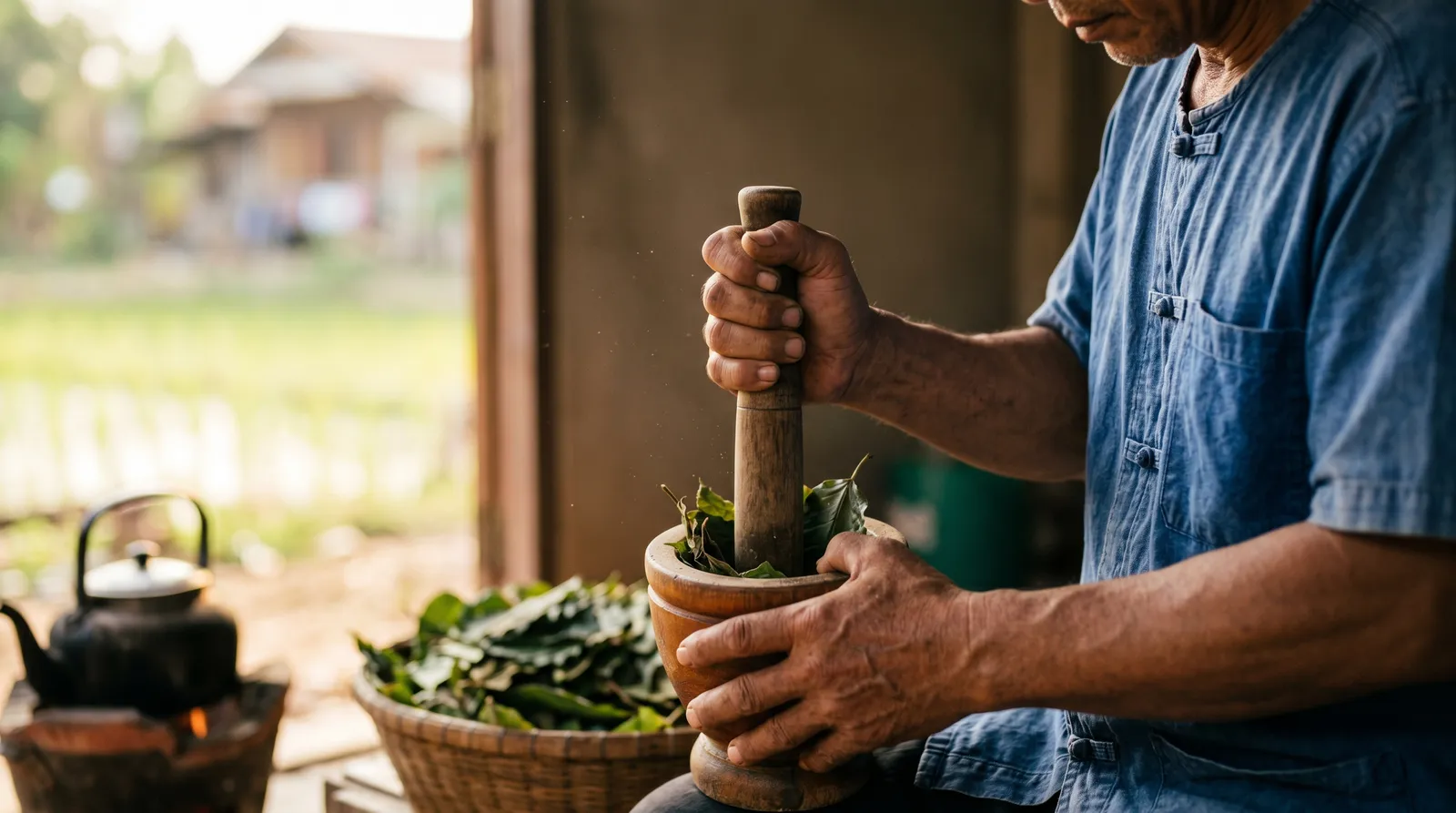
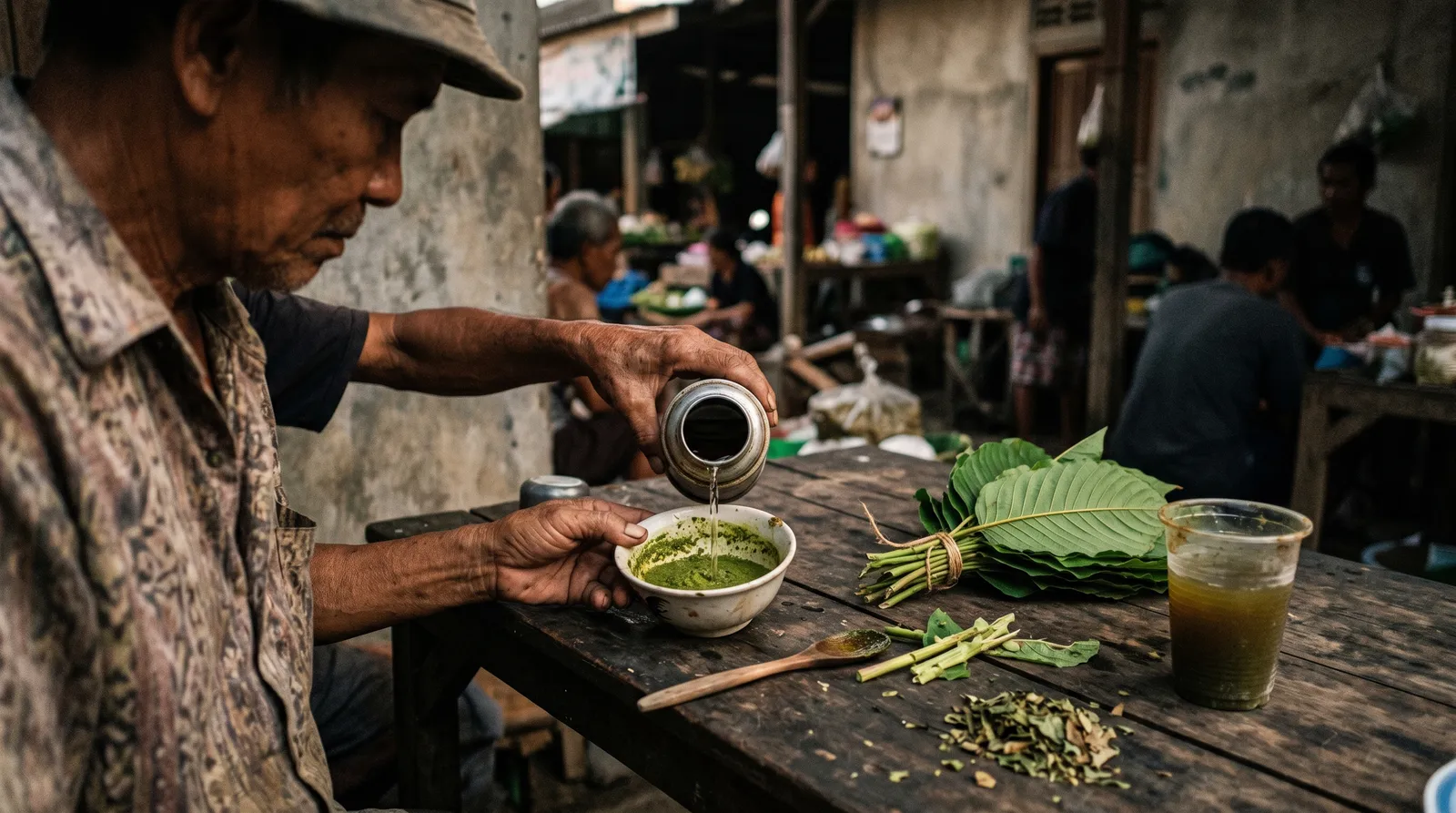
Fresh leaf chewing was the most common method. Workers would strip the central vein from the leaf — it's fibrous and unpleasant to chew — roll the remaining leaf material, and chew it slowly, sometimes for extended periods. The taste is intensely bitter. Some users added salt, sugar, or lime paste to cut through the bitterness. Others simply endured it.
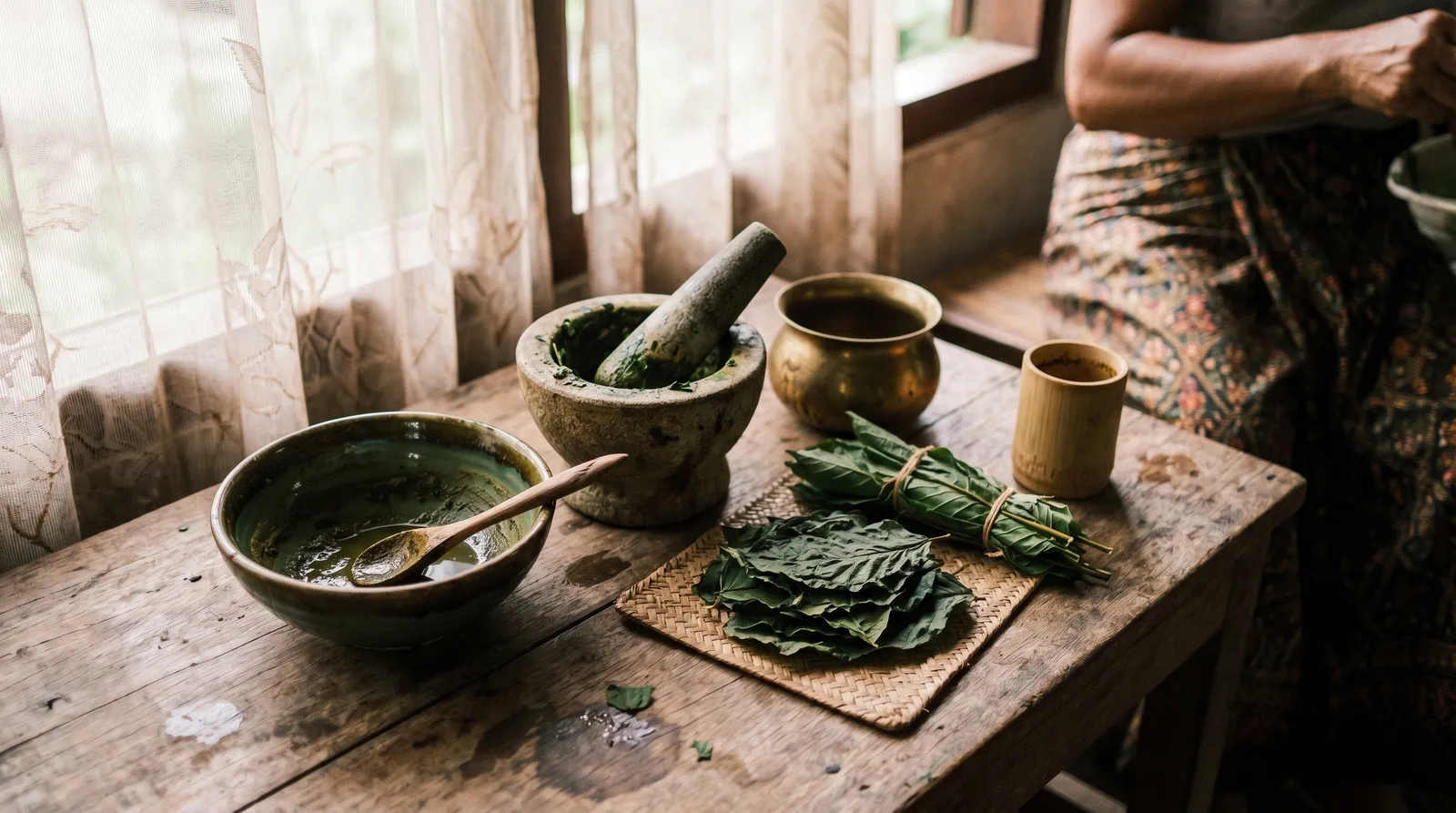
Brewing the leaves into a tea or decoction was the second major preparation method, particularly in Malaysia and parts of Indonesia. In Malaysia, a traditional preparation called ketum or biak-biak involved boiling fresh or dried leaves in water, sometimes with added sweeteners or coconut milk. In some Thai communities, a similar boiled preparation was consumed communally.
A critical point about kratom traditional use in Southeast Asia: these were fresh leaves or simple dried-leaf preparations. The concentrated extracts available today — which meaningfully increase mitragynine and 7-hydroxymitragynine levels relative to plain leaf — did not exist in traditional practice. The pharmacological profile of a fresh leaf chewed in a Thai rice paddy is substantially different from that of a modern extract product, and the two should not be conflated.
Traditional Preparation Methods Overview
Four main preparation methods account for virtually all documented kratom traditional use in Southeast Asia, each suited to local customs and available materials. The table below summarises the key approaches documented in the ethnobotanical literature.
| Method | Region | Material | Description |
|---|---|---|---|
| Fresh leaf chewing | Thailand, Malaysia | Fresh leaves, vein removed | Rolled and chewed slowly throughout the day; salt or lime paste sometimes added |
| Boiled tea / decoction | Malaysia, Indonesia | Fresh or dried leaves | Leaves boiled in water, sometimes with coconut milk or sweeteners |
| Dried leaf powder | Indonesia, Thailand | Sun-dried leaves, crushed | Dried leaves ground and mixed into water or food; less common historically |
| Topical poultice | Malaysia, Thailand | Crushed fresh leaves | Applied directly to wounds or sore muscles by traditional healers |
| Characteristic | Traditional Use (Southeast Asia) | Modern Western Use |
|---|---|---|
| Primary material | Fresh leaves or simple dried leaf | Dried powder, capsules, concentrated extracts |
| Alkaloid concentration | Lower (unprocessed plant material) | Higher, especially in extract products |
| Typical pattern | Small amounts throughout the working day | Intermittent or variable dosing |
| Social context | Communal, visible, embedded in daily labour | Often solitary, purchased commercially |
| Primary motivation | Sustained energy for physical work | Varied: energy, relaxation, pain management |
What Traditional Users Reported
Traditional users consistently described two distinct effect profiles depending on the amount consumed — a dose-dependent pattern that modern pharmacology has since confirmed. At lower amounts — roughly 1 to 5 grams of dried leaf equivalent — users reported increased energy, alertness, and capacity for sustained physical labour (Tanguay, 2011). This stimulant-like profile was the primary reason for daily use among labourers. Farmers described being able to work longer and harder in the heat, with reduced perception of fatigue.
At higher amounts, the effects shifted. Users described sedation, pain relief, and a general sense of calm. Traditional healers in Thailand and Malaysia used kratom preparations in this higher range for managing pain, diarrhoea, cough, and as a topical poultice for wounds (Burkill, 1935). Some communities also used it as a traditional remedy during opium withdrawal — a practice that has obvious echoes in contemporary Western interest, though the evidence base for this application remains contested and limited to observational data and self-report surveys rather than controlled clinical trials.
This dose-dependent duality — stimulant at low doses, sedating at higher ones — is one of the most consistently documented features of kratom traditional use in Southeast Asia and aligns with what modern pharmacology has established about mitragynine's partial agonism at mu-opioid receptors and its interactions with adrenergic and serotonergic systems (Kruegel & Bhowmik, 2016). The European Monitoring Centre for Drugs and Drug Addiction (EMCDDA) has also noted this biphasic pattern in its assessments of kratom, lending further institutional recognition to what Southeast Asian communities had observed empirically for generations.
The Social Context of Kratom Traditional Use in Southeast Asia
Kratom occupied a socially accepted, functional niche in traditional Southeast Asian communities — distinctly different from opium or alcohol in terms of cultural perception. Suwanlert (1975) noted that kratom users in Thailand were generally regarded as hard-working and functional, in contrast to the social stigma attached to opium users. Chewing kratom was seen as something a responsible labourer did to get through the day, closer in social perception to drinking strong coffee than to recreational drug use.
In some Malaysian communities, offering kratom tea to guests was a gesture of hospitality, similar to offering tea or betel nut. The plant was integrated into daily social rituals rather than set apart as something illicit or transgressive. Swogger and Walsh (2018) describe this as a pattern of "normalised, functional use" embedded within working-class communities — a framing that's worth keeping in mind when comparing traditional patterns to modern Western consumption habits, which often involve dried powder or extracts consumed in very different social contexts.
There's also a religious dimension, though it's less well-documented. Some Thai Muslim communities in the southern provinces used kratom preparations during Ramadan to manage fatigue and appetite during fasting hours. Tanguay's 2011 report for the Transnational Institute documented this practice, noting it was considered culturally acceptable within those communities.
Dependence in Traditional Settings
Heavy daily users in traditional settings did develop dependence — the ethnobotanical literature is clear and consistent on this point. Suwanlert (1975) documented withdrawal symptoms among heavy daily users in Thailand, including muscle aches, irritability, runny nose, diarrhoea, and jerky limb movements. These symptoms are consistent with the recognised withdrawal syndrome described in modern clinical literature (Singh, Müller & Vicknasingam, 2014). Users who consumed large quantities daily — 15 or more leaves, multiple times per day, for years — were the most likely to report dependence.
That said, the severity of traditional-context dependence appears to have been relatively mild compared to opium dependence within the same communities. Suwanlert described kratom withdrawal as uncomfortable but not dangerous, and most users he surveyed were able to stop without medical intervention. Whether this is because fresh leaf delivers lower alkaloid concentrations than modern products, because traditional use patterns included natural breaks, or both, is not entirely clear — the data from this era is observational and limited in sample size.
We should be honest about the limits of what we know here: nearly all the data on traditional dependence comes from a small number of observational studies conducted decades ago, with limited sample sizes and no control groups. The picture is consistent but far from complete.
Traditional Versus Modern Use
The gap between traditional Southeast Asian kratom use and modern Western consumption is significant and worth spelling out clearly. Traditional users chewed fresh leaves or brewed simple teas from dried leaf material. Modern users frequently consume finely milled dried powder, capsules, or concentrated extracts — forms that deliver alkaloids faster and in higher concentrations. A 50x extract is a fundamentally different product from a fresh leaf, both pharmacologically and in terms of risk profile.
Traditional use was also overwhelmingly daily and functional — small amounts throughout a working day — rather than intermittent or recreational. The social controls were different too: use was embedded in community life, visible, and self-regulating in ways that solitary consumption of purchased products typically is not. The EMCDDA's kratom drug profile highlights this distinction between traditional and modern consumption patterns, noting that the context of use significantly shapes both the experience and the risk.
None of this means traditional use was risk-free, or that modern use is inherently reckless. It means the context matters enormously. A practice that developed around chewing a few fresh leaves in a rice field doesn't automatically translate into a safety profile for concentrated extracts consumed in a completely different setting.
How to Try Traditional-Style Kratom Preparation
Brewing crushed dried leaf into a simple tea is the closest modern equivalent to traditional kratom preparation — no extracts, no capsules, no concentrated products. If you want to buy kratom leaf suited to this approach, look specifically for crushed or whole-leaf options rather than fine powder or extract products. Azarius stocks plain crushed kratom leaf and dried kratom powder in its kratom category, both of which work well for traditional-style brewing.
The method is straightforward: simmer crushed leaf in water for 15–20 minutes, strain, and sip slowly. Some people add honey or lemon to manage the bitterness, much as traditional Malaysian users added coconut milk or sweeteners to their ketum preparations. Starting with a small amount — a few grams of dried leaf — mirrors the conservative approach that characterised everyday kratom traditional use in Southeast Asia among working communities.
For more on how the plant's active compounds work at the receptor level, see our Kratom Pharmacology: Mitragynine and 7-Hydroxymitragynine wiki page. For practical harm-reduction guidance, the Kratom Safety and Interactions blog post covers contraindications — including interactions with MAOIs, other opioids, benzodiazepines, and CYP3A4/CYP2D6 inhibitors — in detail. Our Kratom Strains and Vein Colours Explained wiki page provides context on how different leaf varieties relate to traditional harvesting practices. You may also find our Kratom Dosage Guide blog post useful for calibrating amounts when brewing traditional-style tea. Browse the full kratom category for all available plain-leaf products, or check out Kratom Bali Crushed Leaf in the product range for a good starting point.
Where to Buy Kratom for Traditional-Style Preparation
Plain dried kratom leaf or crushed leaf is the appropriate product for anyone wanting to replicate traditional preparation methods. Azarius carries several options in its kratom category, including crushed leaf suited to brewing and plain dried powder for those who prefer that format. When you buy kratom for traditional-style use, avoid extract products — these are modern inventions with no equivalent in the historical practice of kratom traditional use in Southeast Asia.
Good starting points include Kratom Bali crushed leaf, Kratom Maeng Da powder, and Kratom Thai dried leaf — all plain-leaf products without added extracts or concentrations. These are the formats closest to what traditional communities actually consumed, and they allow you to experience the plant's natural alkaloid profile as it was used for generations. You can also order kratom sampler sets to compare different leaf varieties side by side — a useful way to get a feel for the subtle differences between regional sources before committing to a larger quantity.
Comparing Kratom to Other Traditional Stimulants
Kratom served a comparable social and functional role to other traditional stimulant plants used by labouring communities across the tropics. Coca leaf chewing in the Andes, betel nut use across South and Southeast Asia, khat consumption in the Horn of Africa and Arabian Peninsula, and yerba maté in South America all share a similar pattern: a mildly psychoactive plant, consumed in minimally processed form, integrated into daily working life and social rituals. Like kratom traditional use in Southeast Asia, each of these practices involved the whole or simply prepared plant rather than concentrated extracts, and each occupied a normalised, functional niche within its culture of origin.
The comparison is instructive but has limits. Kratom's pharmacology — partial mu-opioid agonism combined with adrenergic activity — is distinct from the mechanisms of coca (local anaesthetic and dopamine reuptake inhibition), khat (cathinone-driven monoamine release), or betel (muscarinic cholinergic stimulation). The dose-dependent shift from stimulation to sedation that characterises kratom is not a feature of most other traditional stimulant plants. So while the cultural parallels are real and useful for context, the pharmacological comparison should not be pushed too far.
Frequently Asked Questions
How did traditional Southeast Asian users consume kratom?
The most common method was chewing fresh leaves with the central vein removed, sometimes with salt or lime paste to cut the bitterness. Brewing dried or fresh leaves into tea was the second major method, particularly in Malaysia. Concentrated extracts did not exist in traditional practice.
How many kratom leaves did traditional users chew per day?
Suwanlert's 1975 survey of Thai users found daily consumption typically ranged from 10 to 60 fresh leaves, with heavy users sometimes exceeding that. Most users were agricultural labourers consuming small amounts throughout the working day.
Did traditional kratom users experience withdrawal symptoms?
Yes. Suwanlert (1975) documented withdrawal symptoms in heavy daily users, including muscle aches, irritability, runny nose, and diarrhoea. These align with the recognised withdrawal syndrome described in modern clinical literature, though severity appeared milder than opium withdrawal in the same communities.
Why did labourers in Southeast Asia chew kratom leaves?
Primarily to manage fatigue and sustain energy during long hours of physically demanding outdoor work in tropical heat. Ethnobotanical surveys consistently describe increased alertness and reduced perception of fatigue at the lower doses typical of daily working use.
Is traditional kratom leaf chewing the same as using modern kratom extracts?
No. Traditional use involved fresh leaves or simple dried-leaf preparations, which deliver lower alkaloid concentrations than modern concentrated extracts. Extracts meaningfully increase mitragynine and 7-hydroxymitragynine levels, creating a substantially different pharmacological and risk profile.
Where can I buy kratom leaf similar to what traditional users consumed?
Plain dried kratom leaf or crushed leaf for brewing tea is the closest modern equivalent to traditional preparations. Azarius stocks plain leaf and powder products in its kratom category. Concentrated extracts are a modern invention and do not reflect traditional use patterns.
What is the difference between kratom traditional use in Southeast Asia and modern Western kratom consumption?
Traditional use involved fresh or simply dried leaves consumed in small amounts throughout a working day within a communal social context. Modern Western use typically involves dried powder, capsules, or concentrated extracts consumed intermittently and often in solitary settings, with higher alkaloid concentrations and different risk profiles.
Disclaimer: This article is provided for educational and informational purposes only. It does not constitute medical advice. Kratom is not an approved pharmaceutical product. If you have health concerns or are taking medication, consult a qualified healthcare professional before using kratom. The traditional practices described here reflect historical and ethnobotanical documentation and should not be interpreted as recommendations for self-treatment.
Last updated: April 2026
Frequently Asked Questions
10 questionsHow did traditional Southeast Asian users consume kratom?
How many kratom leaves did traditional users chew per day?
Did traditional kratom users experience withdrawal symptoms?
Why did labourers in Southeast Asia chew kratom leaves?
Is traditional kratom leaf chewing the same as using modern kratom extracts?
Where can I buy kratom leaf similar to what traditional users consumed?
When was kratom first documented by Western botanists?
Where does the kratom tree grow naturally and how large can it get?
What role did kratom play in traditional Southeast Asian ceremonies?
Did traditional users brew kratom as a tea?
About this article


Adam Parsons is an external cannabis and psychedelics writer and editor who contributes to Azarius's wiki as both author and reviewer. On the writing side, he authors Azarius's kratom and kanna clusters, drawing on exten
This wiki article was drafted with AI assistance and reviewed by Adam Parsons, External contributor. Editorial oversight by Joshua Askew.
Medical disclaimer. This content is for informational purposes only and does not constitute medical advice. Consult a qualified healthcare provider before use of any substance.
Last reviewed April 24, 2026
References (8)
- [1]Burkill, I.H. (1935). A Dictionary of the Economic Products of the Malay Peninsula . Crown Agents for the Colonies.
- [2]European Monitoring Centre for Drugs and Drug Addiction. (2021). Kratom (Mitragyna speciosa) drug profile . European drug monitoring bodies.
- [3]Holmes, E.M. (1895). 'A new Nauclea from the Malay Peninsula.' Pharmaceutical Journal , 55, p. 237.
- [4]Kruegel, A.C. & Bhowmik, S. (2016). 'Synthetic and receptor signaling explorations of the Mitragyna alkaloids.' Journal of the American Chemical Society , 138(21), pp. 6754–6764. DOI: 10.1021/jacs.6b00360
- [5]Singh, D., Müller, C.P. & Vicknasingam, B.K. (2014). 'Kratom (Mitragyna speciosa) dependence, withdrawal symptoms and craving in regular users.' Drug and Alcohol Dependence , 139, pp. 132–137. DOI: 10.1016/j.drugalcdep.2014.03.017
- [6]Suwanlert, S. (1975). 'A study of kratom eaters in Thailand.' Bulletin on Narcotics , 27(3), pp. 21–27.
- [7]Swogger, M.T. & Walsh, Z. (2018). 'Kratom use and mental health: A systematic review.' Drug and Alcohol Dependence , 183, pp. 134–140. DOI: 10.1016/j.drugalcdep.2017.10.012
- [8]Tanguay, P. (2011). Kratom in Thailand: Decriminalisation and Community Control? Transnational Institute/International Drug Policy Consortium.
Related Articles
Blue Lotus vs Kanna: Effects & Safety
Blue lotus vs kanna compared — Nymphaea caerulea's aporphine profile against Sceletium tortuosum's mesembrine chemistry, with interaction warnings.
Lotus Clinical Research Overview
What does lotus clinical research actually show? A critical review of Nymphaea caerulea and Nelumbo nucifera pharmacology, preclinical data, and…
Kanna South Africa To West History
Sceletium tortuosum was used by San and Khoekhoe communities in southern Africa for centuries before European colonists first documented it in the 1660s.
Sceletium Tortuosum Plant
Learn about the sceletium tortuosum plant: botany, alkaloids, fermentation, safety warnings, and where to buy kanna.
Kanna Pharmacokinetics Explained
Complete guide to kanna pharmacokinetics: how Sceletium tortuosum alkaloids are absorbed, metabolised via CYP2D6, and eliminated.
Kanna Chemistry: Sceletium Alkaloids Explained
Kanna chemistry explained: mesembrine, mesembrenone, their mechanisms, how fermentation and extraction change alkaloid profiles, and why it matters…
Rapé Shamanic Snuff Guide: How to Use It Safely
A practical rapé shamanic snuff guide covering dose, kuripe technique, effects, nicotine safety, interactions and Amazonian tradition.
White Sage Salvia Apiana Cultural Smudging Guide
Salvia apiana is a non-psychoactive shrub native to southern California's coastal sage scrub, burned as ceremonial incense in Indigenous North American…
Mulungu Erythrina Traditional Amazonian Use — Bark, Alkaloids & Research
Erythrina mulungu is a Brazilian legume tree whose bark has been brewed as a calming decoction in rural folk medicine for generations.