
This article discusses psychoactive substances intended for adults (18+). If you have a health condition or take medication, consult a doctor before use. Our age policy
Kratom Strains: What the Colours and Names Actually Mean
Definition
Kratom strains are a commercial labelling system that categorises products from Mitragyna speciosa by vein colour and regional name. While widely used by vendors and consumers, these distinctions have a weak evidence base as pharmacological categories. Dose, processing, and extract concentration likely matter more than strain name.
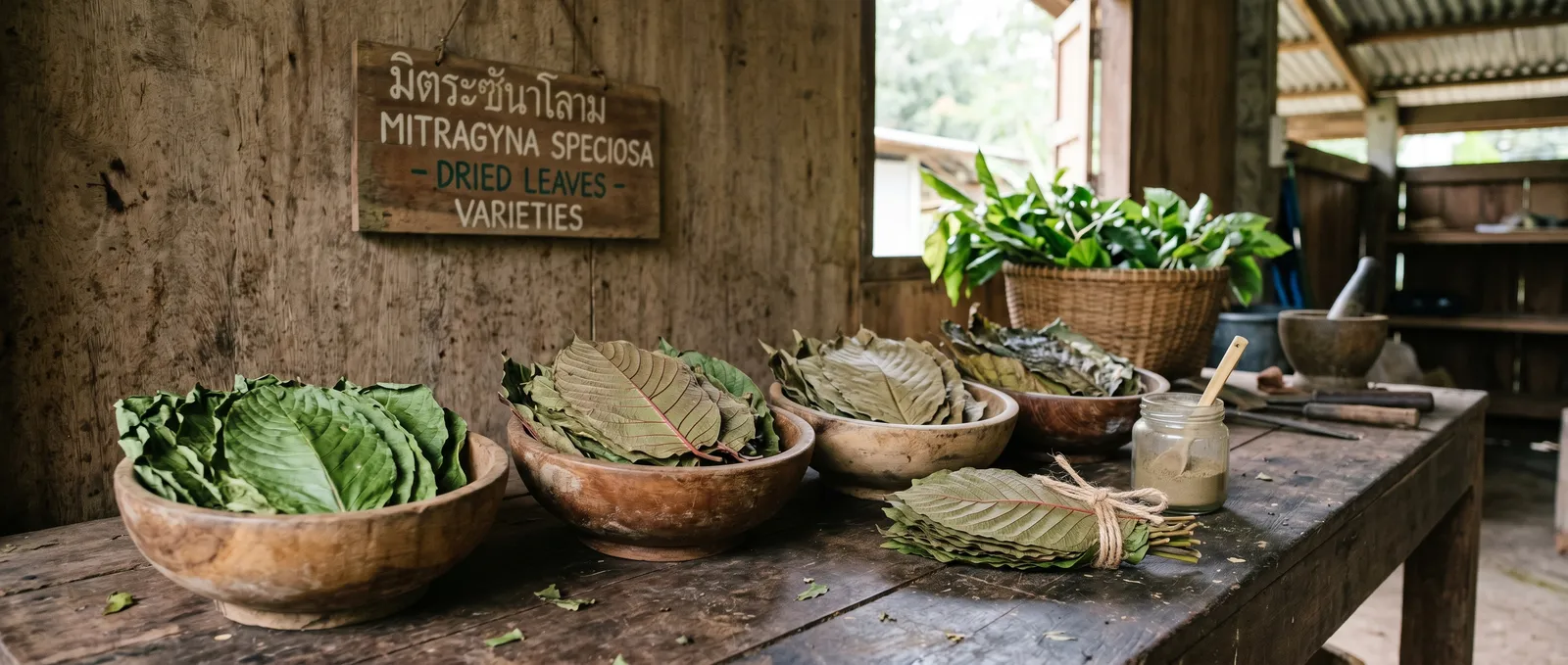
A kratom strain is a commercial label that categorises products from Mitragyna speciosa — the tropical tree native to Southeast Asia whose leaves contain opioid-receptor-active alkaloids — by vein colour (red, green, white) and regional name (Bali, Maeng Da, Malay). Walk into any smartshop or browse any online vendor and you'll see dozens of named kratom strains, each promising a distinct profile. The reality is more complicated, and quite a bit less tidy, than the marketing suggests. This article unpacks what kratom strains refer to, what the science actually supports, and where the gaps sit between commercial labelling and pharmacology.
Adult audience (18+). The dosing ranges and effects described in this article apply to adult physiology. This content is not intended for minors.
Disclaimer: This article is for informational purposes only and does not constitute medical advice. Kratom is a pharmacologically active substance that carries real risks including dependence, withdrawal, and drug interactions. Do not use kratom as a substitute for professional medical treatment. If you are taking medication or have a health condition, consult a qualified healthcare provider before using kratom. The information here reflects published research and our commercial experience — it is not a recommendation to use kratom.
Where Do Strain Names Come From?
Kratom strain names are a Western commercial invention layered on top of a plant with genuine natural variation, not a traditional botanical classification. Kratom grows natively across Southeast Asia — Thailand, Malaysia, Indonesia, Papua New Guinea. Traditionally, communities in these regions chewed fresh leaves or brewed them into tea, and they didn't sort their trees into colour-coded categories.
Most kratom strains combine two elements in their name: a vein colour (red, green, white, or sometimes yellow/gold) and a regional name (Bali, Borneo, Thai, Malay, Maeng Da). The vein colour ostensibly refers to the colour of the central leaf vein at harvest. Red-veined leaves come from more mature trees or later harvests, white from younger leaves, green somewhere in between — at least, that's the story. The regional name suggests geographic origin, though in practice the vast majority of commercially available kratom is grown and processed in Indonesian Borneo (Kalimantan), regardless of what the label says. A bag labelled "Thai" almost certainly didn't come from Thailand.
Then there's Maeng Da, which translates roughly to "pimp grade" in Thai slang. It's used across the industry to signal a supposedly stronger product, but it's not a botanical variety — it's a marketing term applied to batches that vendors consider above average in potency. A product labelled Maeng Da is a vendor's selection of what they consider their best batch, not a genetically distinct plant.
Vein Colours and the Evidence Gap
Controlled research does not reliably support the claim that red, green, and white kratom strains produce pharmacologically distinct effects. Some users describe reds as more sedating and whites as more stimulating, with greens sitting in the middle. This framework dominates online forums, vendor websites, and comparison charts.
Here's the problem: there's very little controlled research supporting these distinctions as pharmacologically meaningful. A survey by Grundmann (2017) of over 8,000 kratom users found that respondents did report different subjective experiences across vein colours, but the study relied entirely on self-report — no chemical analysis of the products consumed, no blinding, no controls. According to a 2020 analysis by Prozialeck et al., the alkaloid content of commercially available kratom strains varies enormously even within the same labelled strain, and the drying and curing process (sun-dried, indoor-dried, fermented) likely affects alkaloid ratios more than vein colour at harvest. European drug monitoring bodies's risk assessment materials on kratom similarly note the lack of standardisation across commercial products and the difficulty of drawing pharmacological conclusions from strain labels alone.
What we know with confidence is that Mitragyna speciosa contains over 40 identified alkaloids, with mitragynine and 7-hydroxymitragynine being the most pharmacologically significant. Both are partial agonists at mu-opioid receptors (Kruegel et al., 2016). The ratio between these two compounds — and the presence of other alkaloids like speciogynine, paynantheine, and corynantheidine — shapes the overall effect profile. But whether vein colour reliably predicts that ratio is, at best, unproven.
Some users swear by specific kratom strains. That's real subjective experience, and it shouldn't be dismissed — but it also shouldn't be confused with pharmacological evidence. Expectation effects are powerful, batch-to-batch variation within a single strain name can be enormous, and nobody is running double-blind crossover trials on Red Bali versus Green Malay.
What Actually Drives Differences Between Kratom Products
Processing, dose, and alkaloid concentration are better predictors of kratom's effects than strain name or vein colour. If vein colour is an unreliable predictor, what does matter? Several factors are better candidates for explaining why one batch of kratom feels different from another:
| Factor | Impact on Effects | Controllable by Consumer? |
|---|---|---|
| Alkaloid concentration (mitragynine %) | High — directly determines potency | No (rarely disclosed on label) |
| 7-hydroxymitragynine content | High — more potent at mu-opioid receptor | No (requires lab analysis) |
| Drying and processing method | Moderate to high — alters alkaloid ratios | No (rarely disclosed) |
| Leaf maturity at harvest | Moderate — older leaves tend to have higher alkaloid content | No |
| Extract vs. plain leaf | Very high — concentrates active compounds | Yes (check product type before you buy) |
| Dose | Very high — stimulant-to-sedative shift is dose-dependent | Yes |
| Strain label (vein colour + region) | Low to uncertain — not reliably linked to chemistry | Yes (but predictive value is weak) |
Alkaloid concentration. The total mitragynine content of dried leaf powder typically ranges from about 1% to 2% by weight, though some analyses have found samples outside this range (Lydecker et al., 2016). 7-hydroxymitragynine is present in much smaller quantities — usually below 0.05% in plain leaf — but it's considerably more potent at the mu-opioid receptor. Small shifts in these percentages can meaningfully alter the experience.
Drying and processing. Indonesian producers use different drying methods — direct sun, shade, indoor, and sometimes fermentation. Fermented kratom (often sold as "yellow" or "gold") undergoes oxidative changes that may alter the alkaloid profile. This processing step probably accounts for more product-to-product variation than the colour of the leaf vein before harvest, though formal comparative studies are scarce.
Leaf maturity. Older, more mature leaves tend to have higher alkaloid concentrations. Harvest timing matters, but it's rarely disclosed on product labels.
Extract versus plain leaf. This is the single most important distinction in the kratom market, and it has nothing to do with kratom strains. Extracts concentrate mitragynine and 7-hydroxymitragynine relative to leaf powder, sometimes dramatically. A "50x extract" is not 50 times stronger in a linear sense, but it is a pharmacologically different product with a steeper dose-response curve, higher dependence risk, and faster tolerance development. Any conversation about kratom strains that doesn't separate extracts from plain leaf is missing the most consequential variable. For a detailed breakdown, see the Azarius Wiki article on kratom extracts.
Dose. At lower amounts (roughly 1–3 g of plain leaf powder, based on survey data from Veltri & Grundmann, 2019), users more commonly report stimulant-like effects. At higher amounts (5 g and above), sedating and analgesic effects tend to dominate. This dose-dependent shift is better documented than any strain-specific effect pattern and likely explains much of what people attribute to kratom strains differences — someone who takes 2 g of a "white" and 5 g of a "red" is comparing two different doses, not just two different colours.
Comparing Kratom Forms: Powder, Capsules, and Extracts
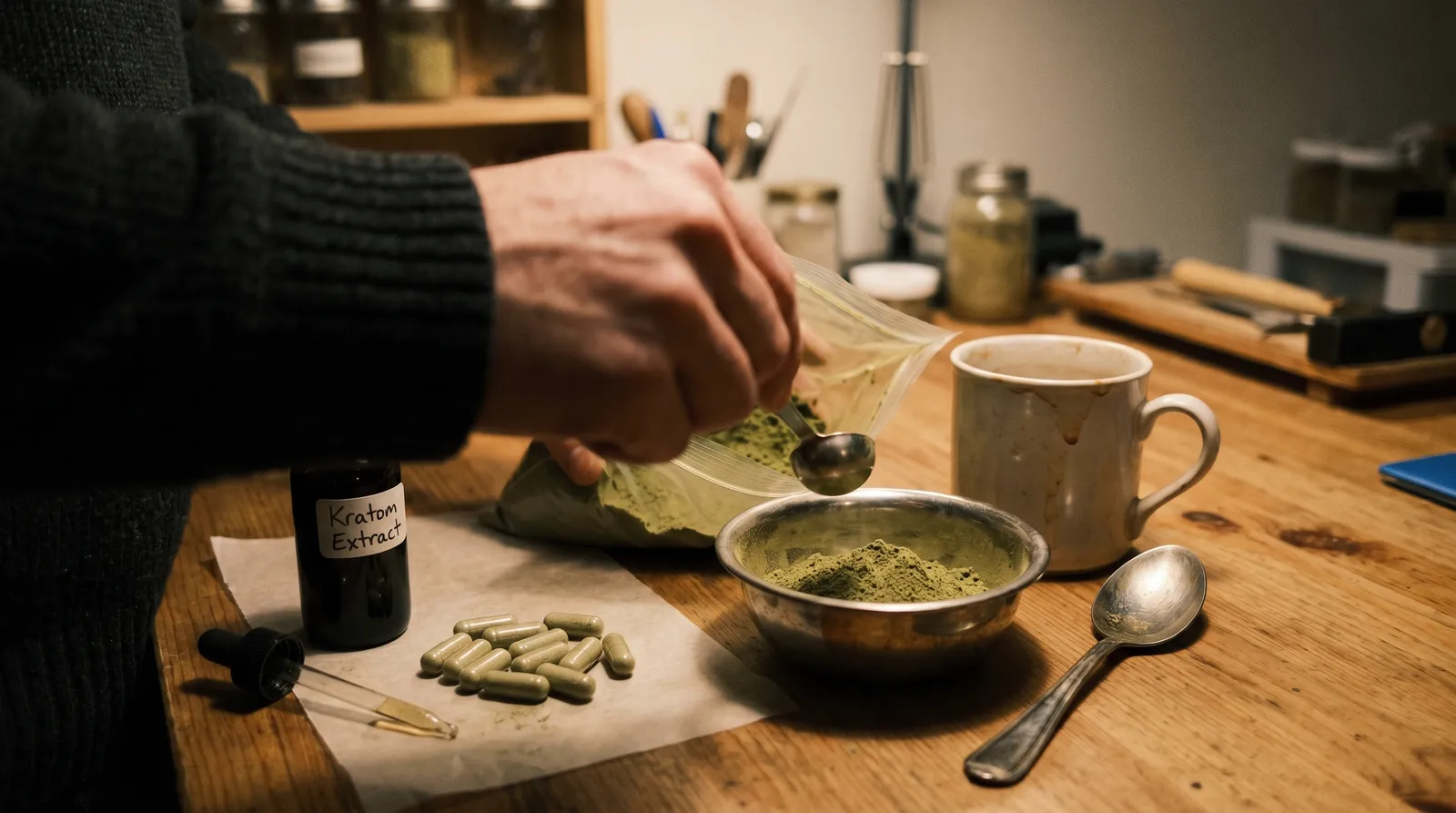
The form you choose shapes the experience at least as much as any kratom strain label. Plain leaf powder offers the full spectrum of alkaloids and the most dosing flexibility. Kratom capsules contain the same powder but are easier to dose consistently and avoid the bitter taste — the trade-off is slower onset since the capsule must dissolve first. Kratom extracts are a fundamentally different product: concentrated, faster-acting, and carrying a steeper tolerance and dependence curve. If you're looking to get started with kratom, plain leaf powder from a consistent supplier is the most forgiving format for learning your response.
| Form | Onset | Dosing Flexibility | Tolerance Risk | Best For |
|---|---|---|---|---|
| Plain leaf powder | 15–30 min | High (scale recommended) | Moderate (dose-dependent) | Beginners; those who want full control |
| Capsules | 30–45 min | Moderate (fixed per capsule) | Moderate | Convenience; avoiding bitter taste |
| Extracts | 10–20 min | Low (potency varies widely) | High (concentrated alkaloids) | Experienced users only |
How Kratom Strains Compare to Other Ethnobotanicals
Kratom occupies a unique pharmacological niche among commercially available ethnobotanicals because its primary alkaloids act on opioid receptors, unlike most other smartshop botanicals. Kanna (Sceletium tortuosum) works primarily as a serotonin reuptake inhibitor and PDE4 inhibitor — a completely different mechanism that produces mood-lifting and anxiolytic effects without opioid-receptor activity. Blue lotus (Nymphaea caerulea) contains apomorphine and nuciferine, which act on dopamine receptors and produce mild sedation through yet another pathway. The comparison matters because customers sometimes treat these products as interchangeable "herbal relaxants," but their pharmacology, risk profiles, and interaction potential are fundamentally different. Kratom carries opioid-type dependence risk that kanna and blue lotus do not. See the Azarius Wiki articles on kanna and blue lotus for detailed profiles of those botanicals.
We'll be straightforward about a limitation: even as a vendor, we can't guarantee that a given kratom strain name maps to a specific alkaloid profile. What we can do is maintain consistent sourcing so that the same product name from Azarius stays as close to the same product as agricultural reality allows. That's the honest ceiling of what strain labels deliver.
Making Sense of Commercial Vocabulary
Kratom strain names function as rough batch identifiers rather than pharmacological categories. They're a way for vendors and consumers to communicate about products that do, in practice, vary. If you've had a good experience with a specific product from a specific supplier labelled "Green Malay," buying it again is reasonable. The label is a batch identifier, even if it's not a pharmacological one.
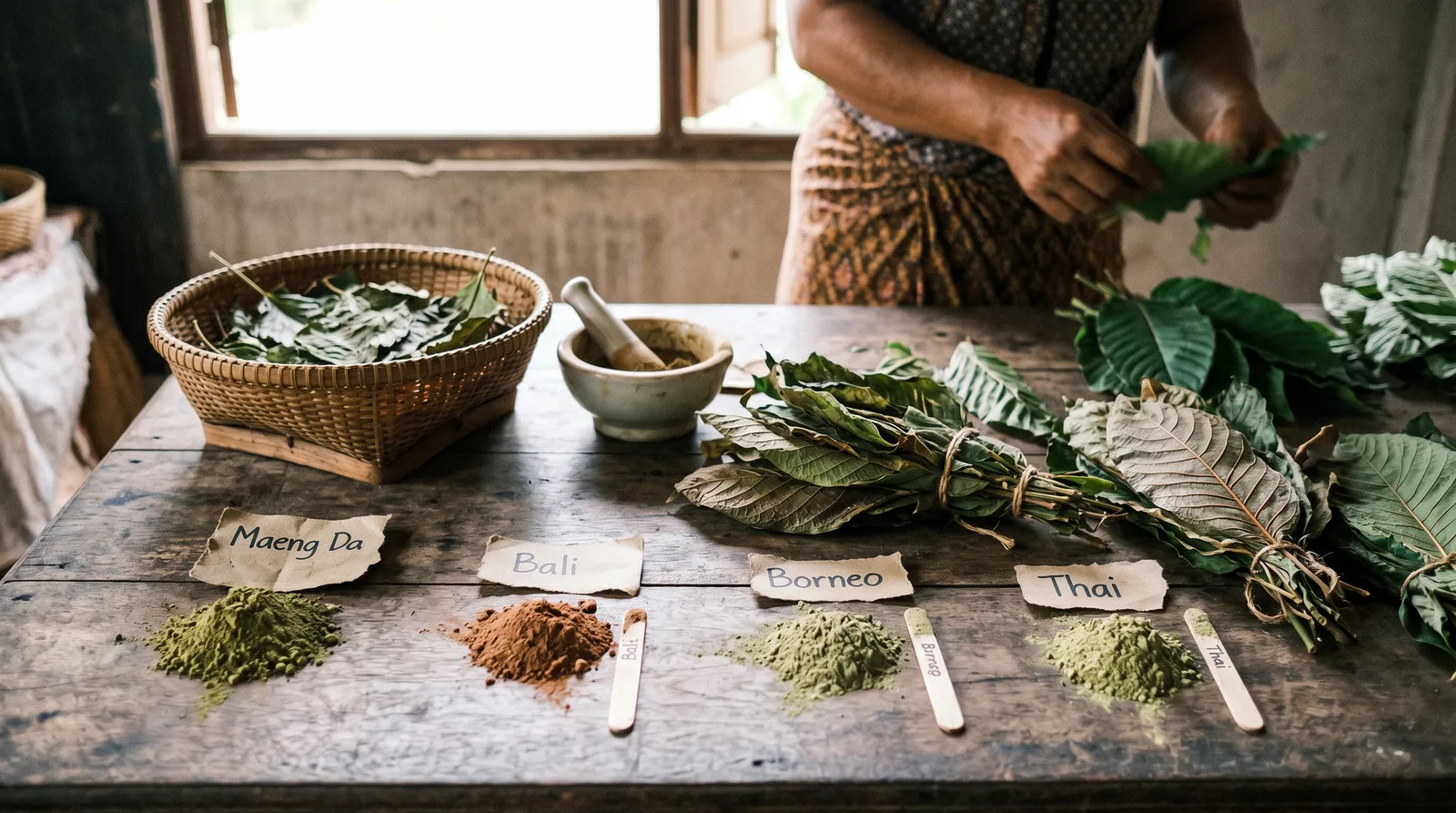
What's less reasonable is building an elaborate mental model where each named kratom strain has a fixed, predictable effect profile. The comparison charts floating around online — "Red Bali: sedation 9/10, stimulation 2/10" — present a precision that doesn't exist in the underlying data. They're compiled from user reports and vendor descriptions, not from analytical chemistry or clinical observation.
Yellow and gold kratom strains deserve a specific note. These aren't a separate vein colour — there's no yellow-veined kratom tree. Yellow and gold products are typically made through a modified drying or blending process. Some vendors blend red and white, others ferment green leaf. The result is a product with a different flavour and possibly a different alkaloid ratio, but "yellow" as a category is even less standardised than the primary three colours.
How Sourcing and Testing Shape What You Get
The supply chain behind kratom strains matters more than the label on the front of the bag. Most commercial kratom originates from smallholder farms in Indonesian Kalimantan, passes through regional aggregators, and is exported in bulk before being repackaged under brand-specific strain names in the destination country. At each stage, batches may be blended, relabelled, or split. A single harvest can end up sold under three different strain names by three different vendors.
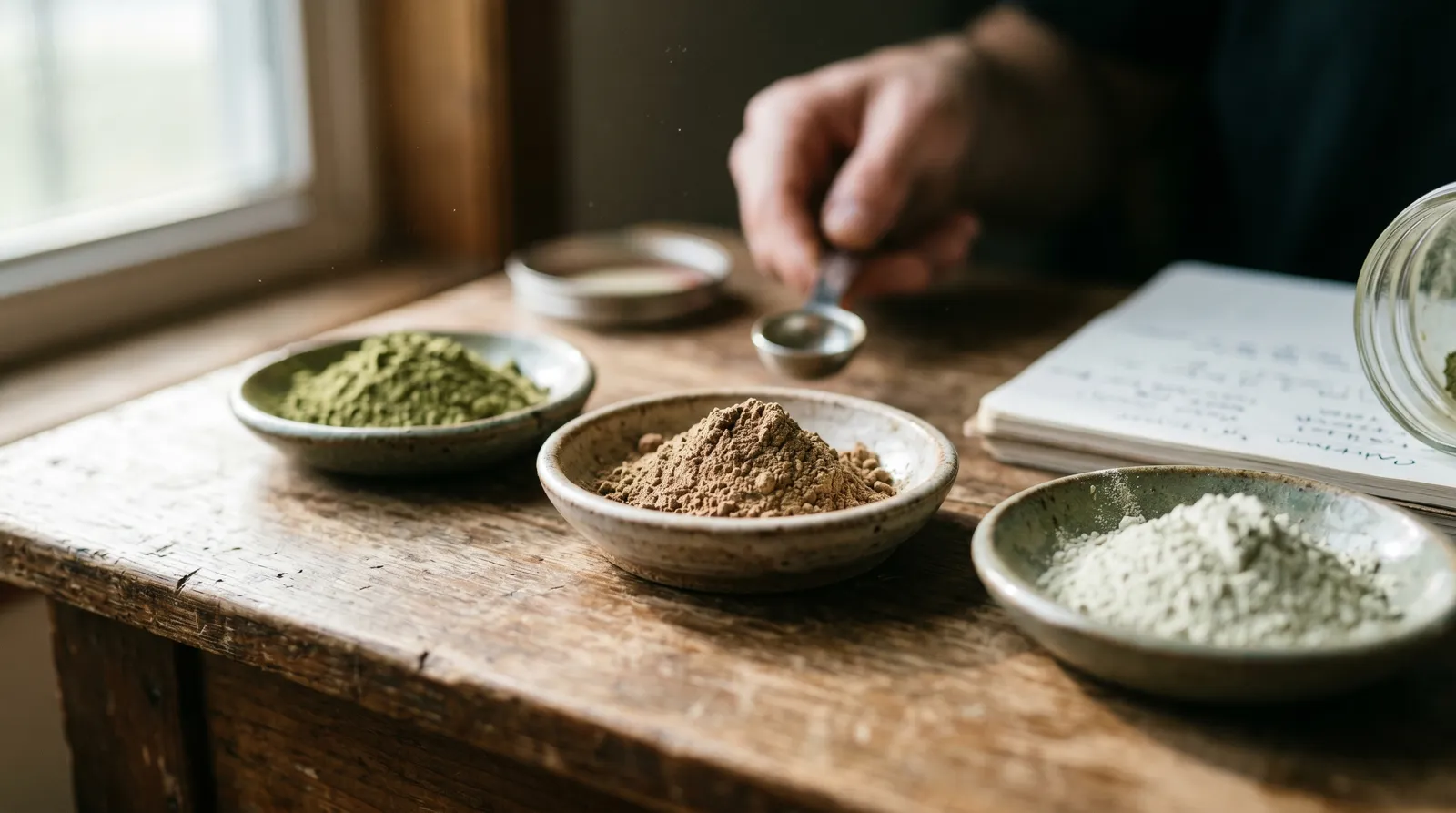
Third-party lab testing — for alkaloid content, heavy metals, and microbial contamination — is the most concrete quality signal available to consumers. Not all vendors test, and not all who claim to test make results accessible. Asking whether certificates of analysis are available tells you more about product quality than any strain name can. Vendors who publish batch-specific test results are offering a level of transparency that strain labels alone cannot provide.
We should be transparent: the kratom supply chain is opaque, and even vendors with good intentions face limits on traceability. We test our products and maintain long-term supplier relationships, but we can't claim perfect visibility from leaf to shelf. No vendor honestly can. What we can promise is that when something tests outside acceptable parameters, it doesn't reach the catalogue.
Practical Takeaways
The most useful approach to kratom strains is to treat dose and product form as the primary variables and strain name as secondary. If you're trying to navigate the strain market, a few principles are more useful than memorising strain charts:
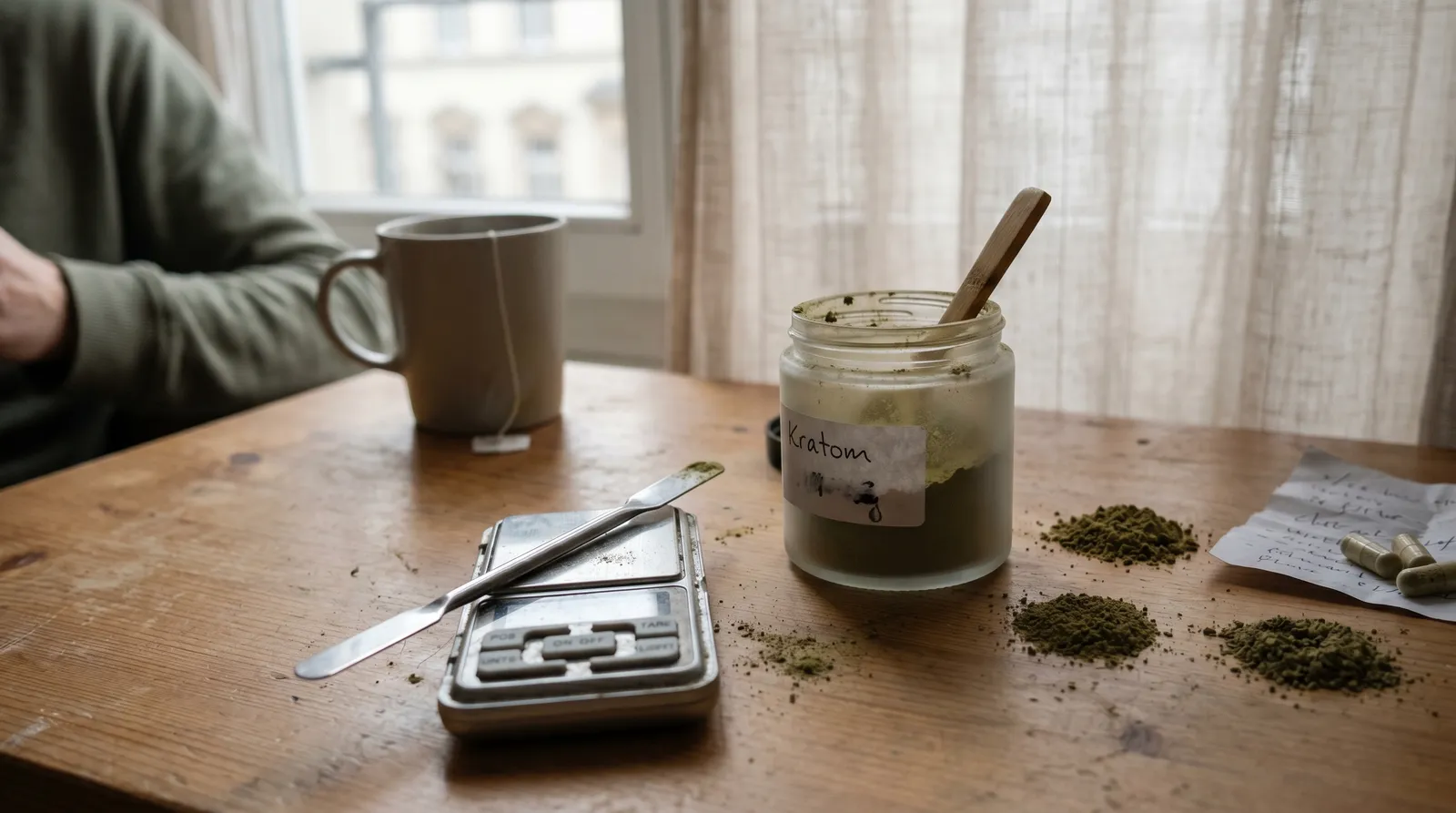
- Dose matters more than colour. The stimulant-to-sedative shift across the dose range is the most reproducible finding in kratom user surveys (Grundmann, 2017; Smith et al., 2021). Start low — published surveys indicate most users begin with 1–3 g of plain leaf powder — and adjust based on your own response.
- Supplier consistency matters more than strain name. A reliable supplier with consistent sourcing and processing will give you more predictable results than chasing a specific kratom strain name across different vendors. Prioritise the supplier's track record over the label.
- Extracts are a different category. Treat them as pharmacologically distinct from leaf powder. Dose figures for leaf are not interchangeable with dose figures for extracts. Tolerance and dependence develop more rapidly with concentrated products.
- Tolerance develops with daily use. This is true regardless of which kratom strains you rotate between. A recognised withdrawal syndrome emerges in daily heavy users, and rotating between strains — a common folk strategy — has no controlled evidence behind it as a tolerance-mitigation approach.
- Check interactions. Kratom interacts with several classes of medication, including MAOIs, other opioids, benzodiazepines, and CYP3A4/CYP2D6 inhibitors. For the full list, see the Azarius Wiki article on kratom interactions and safety.
Related Azarius Products
Azarius carries a range of kratom strains across vein colours and forms — leaf powder, capsules, and extracts. Browse the kratom category for current options. For related botanicals, see the Azarius Wiki articles on kanna and blue lotus.
Last updated: April 2026
Frequently Asked Questions
8 questionsDo different kratom vein colours have different effects?
What is Maeng Da kratom?
Is yellow kratom a real strain?
Does rotating kratom strains prevent tolerance?
Why does the same kratom strain feel different from different vendors?
What matters more for kratom effects — strain name or dose?
How long do the effects of kratom typically last?
What is the difference between kratom powder and kratom extract?
About this article


Adam Parsons is an external cannabis and psychedelics writer and editor who contributes to Azarius's wiki as both author and reviewer. On the writing side, he authors Azarius's kratom and kanna clusters, drawing on exten
This wiki article was drafted with AI assistance and reviewed by Adam Parsons, External contributor. Editorial oversight by Joshua Askew.
Medical disclaimer. This content is for informational purposes only and does not constitute medical advice. Consult a qualified healthcare provider before use of any substance.
Last reviewed April 24, 2026
References (6)
- [1]Grundmann, O. (2017). Patterns of kratom use and health impact in the US — results from an online survey. Drug and Alcohol Dependence , 176, 63–70. DOI: 10.1016/j.drugalcdep.2017.03.007
- [2]Kruegel, A.C. et al. (2016). Synthetic and receptor signaling explorations of the Mitragyna alkaloids. Journal of the American Chemical Society , 138(21), 6754–6764. DOI: 10.1021/jacs.6b00360
- [3]Lydecker, A.G. et al. (2016). Suspected adulteration of commercial kratom products with 7-hydroxymitragynine. Journal of Medical Toxicology , 12(4), 341–349. DOI: 10.1007/s13181-016-0588-y
- [4]Prozialeck, W.C. et al. (2020). Pharmacology of kratom: an emerging botanical agent with stimulant, analgesic and opioid-like effects. Journal of the American Osteopathic Association , 112(12), 792–799.
- [5]Smith, K.E. et al. (2021). Kratom alkaloids: interactions with opioids, polymorphisms, and pharmacokinetic considerations. Frontiers in Pharmacology , 12, 682535.
- [6]Veltri, C. & Grundmann, O. (2019). Current perspectives on the impact of kratom use. Substance Abuse and Rehabilitation , 10, 23–31. DOI: 10.2147/sar.s164261
Related Articles
Blue Lotus vs Kanna: Effects & Safety
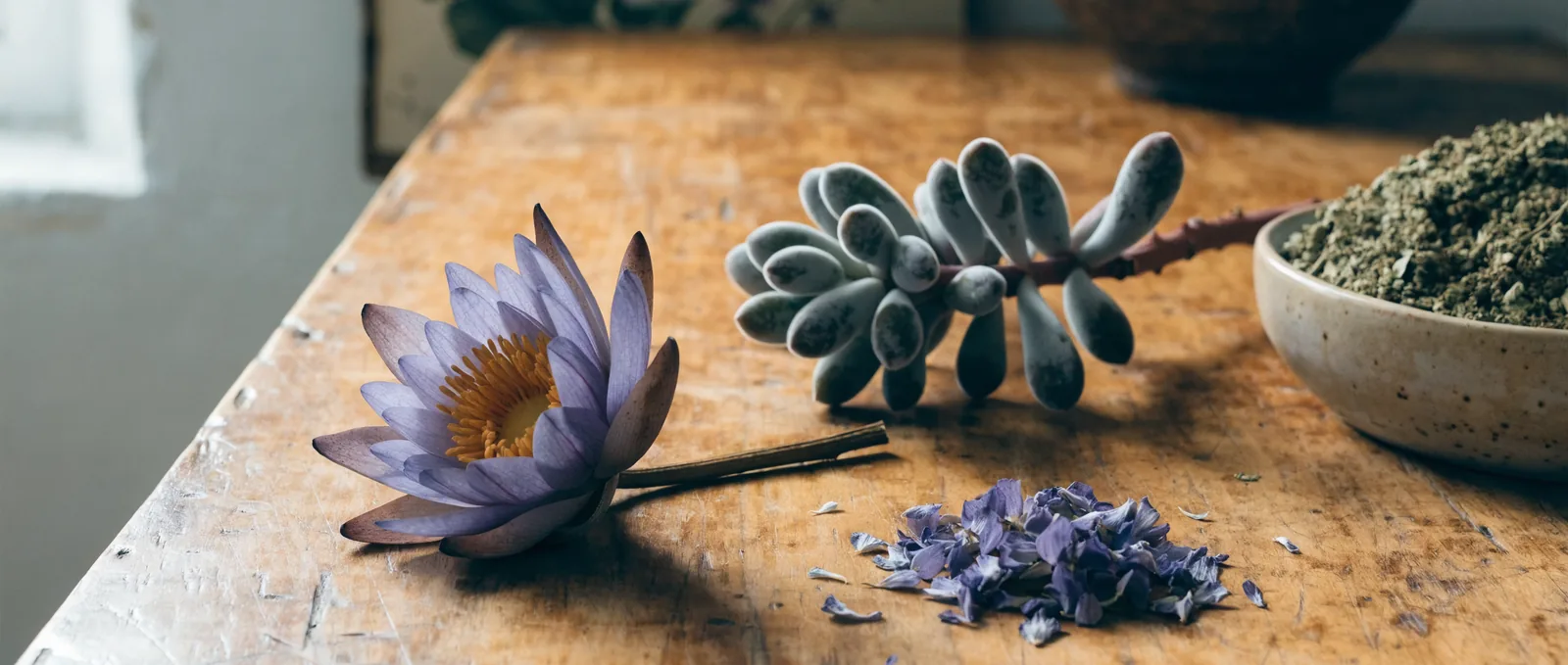
Blue lotus vs kanna compared — Nymphaea caerulea's aporphine profile against Sceletium tortuosum's mesembrine chemistry, with interaction warnings.

Lotus Clinical Research Overview
What does lotus clinical research actually show? A critical review of Nymphaea caerulea and Nelumbo nucifera pharmacology, preclinical data, and…
Kanna South Africa To West History
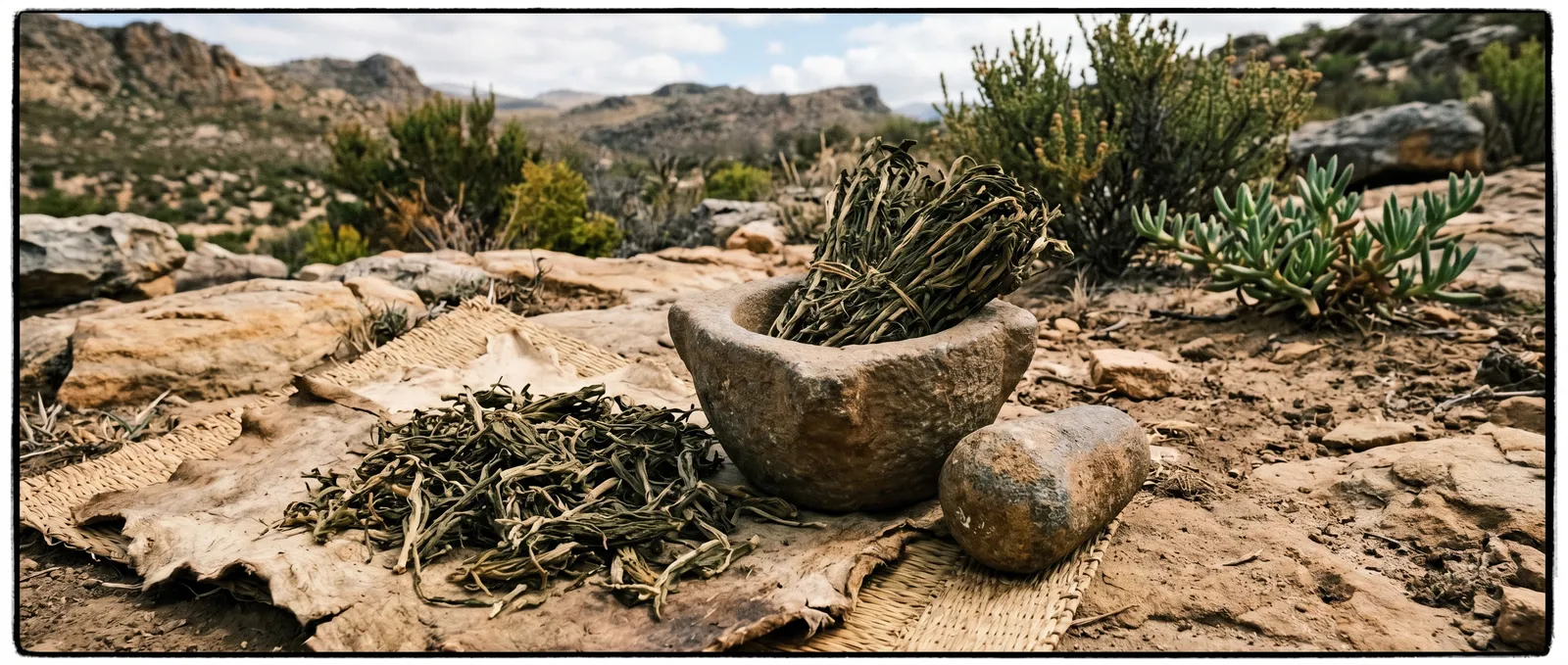
Sceletium tortuosum was used by San and Khoekhoe communities in southern Africa for centuries before European colonists first documented it in the 1660s.
Sceletium Tortuosum Plant
Learn about the sceletium tortuosum plant: botany, alkaloids, fermentation, safety warnings, and where to buy kanna.
Kanna Pharmacokinetics Explained
Complete guide to kanna pharmacokinetics: how Sceletium tortuosum alkaloids are absorbed, metabolised via CYP2D6, and eliminated.

Kanna Chemistry: Sceletium Alkaloids Explained
Kanna chemistry explained: mesembrine, mesembrenone, their mechanisms, how fermentation and extraction change alkaloid profiles, and why it matters…

Rapé Shamanic Snuff Guide: How to Use It Safely
A practical rapé shamanic snuff guide covering dose, kuripe technique, effects, nicotine safety, interactions and Amazonian tradition.
White Sage Salvia Apiana Cultural Smudging Guide
Salvia apiana is a non-psychoactive shrub native to southern California's coastal sage scrub, burned as ceremonial incense in Indigenous North American…
Mulungu Erythrina Traditional Amazonian Use — Bark, Alkaloids & Research
Erythrina mulungu is a Brazilian legume tree whose bark has been brewed as a calming decoction in rural folk medicine for generations.