
This article discusses psychoactive substances intended for adults (18+). If you have a health condition or take medication, consult a doctor before use. Our age policy
Kratom Effects
Definition
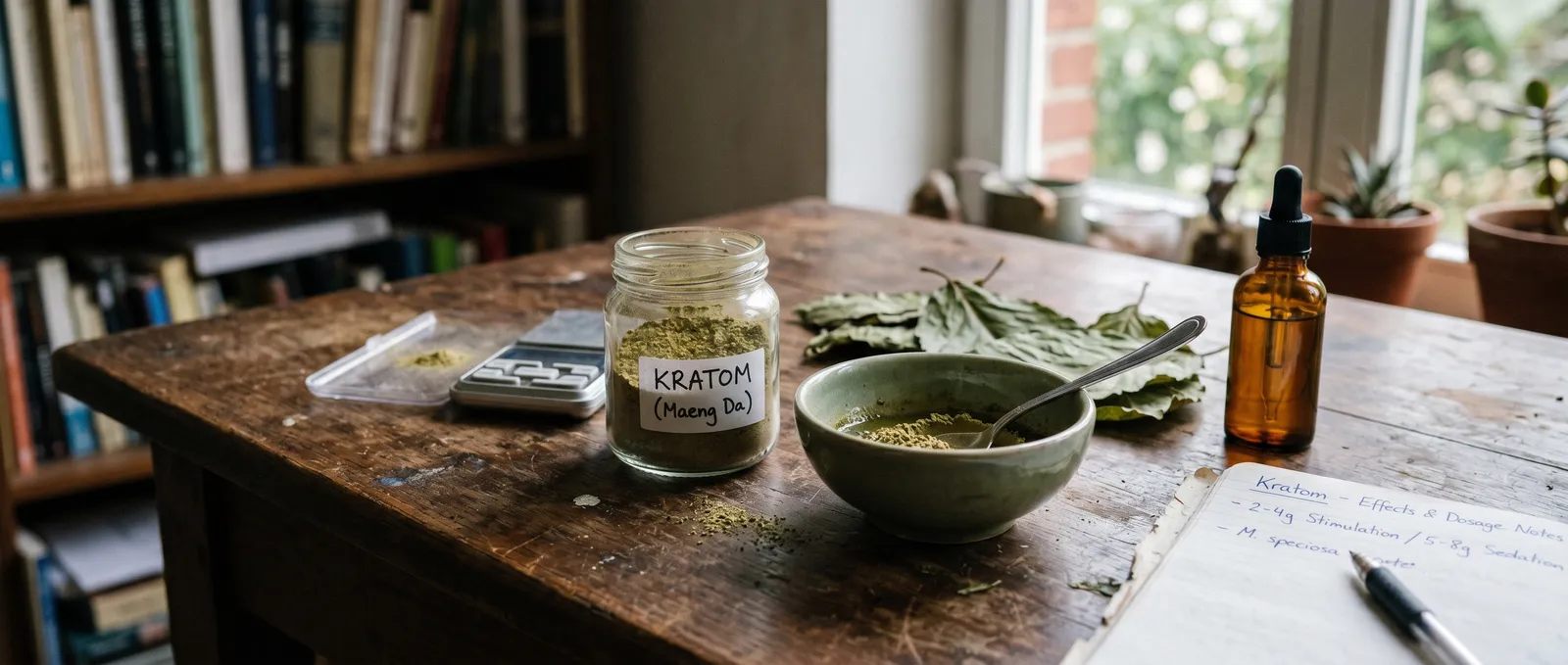
Kratom effects is a dose-dependent, biphasic pharmacological response produced by Mitragyna speciosa leaf: lower doses tend toward stimulation, while higher doses shift toward sedation and analgesia. The primary alkaloids — mitragynine and 7-hydroxymitragynine — act as partial agonists at mu-opioid receptors, but also engage adrenergic and serotonergic pathways, producing a profile distinct from classical opioids.
Kratom effects are the dose-dependent, biphasic responses produced by Mitragyna speciosa leaf, whose two principal alkaloids — mitragynine (roughly 60–70% of total alkaloid content) and 7-hydroxymitragynine (under 2% but ~13× more potent at the mu-opioid receptor) — act as partial mu-opioid agonists while also engaging adrenergic and serotonergic pathways (Kruegel et al., 2016). In short, kratom effects is a pharmacological phenomenon where small amounts tend toward stimulation, while larger amounts shift toward sedation and analgesia. That two-faced character is what makes this plant genuinely unusual among psychoactive botanicals — and what makes understanding the pharmacology behind kratom effects worth your time before you measure out a dose.
Adult audience (18+). The dosing ranges and effects described in this article apply to adult physiology. This content is not intended for minors.
How Kratom Actually Works in the Body
Kratom produces its effects primarily through two alkaloids — mitragynine and 7-hydroxymitragynine — both of which are partial agonists at the mu-opioid receptor. These are the same receptors targeted by morphine and codeine, but kratom alkaloids behave differently from classical opioids in several important ways. According to Kruegel et al. (2016), mitragynine also interacts with adrenergic, serotonergic, and dopaminergic pathways, which likely accounts for the stimulant qualities at lower doses that pure opioid agonists don't produce. 7-hydroxymitragynine is roughly 13 times more potent than mitragynine at the mu receptor in animal models (Takayama, 2004), but it's present in raw leaf at much lower concentrations — typically under 2% of total alkaloid content versus mitragynine's 60–70%.
This matters because extracts concentrate both alkaloids, and the ratio can shift substantially depending on the extraction method. An extract standardised to, say, 45% mitragynine is pharmacologically a different product from dried leaf powder. Any discussion of kratom effects that doesn't distinguish between leaf and extract is missing something critical.
Stimulant Effects at Lower Doses
At doses up to roughly 5g of raw leaf powder, kratom's dominant kratom effects are increased energy, alertness, and sociability. Survey data from Grundmann (2017), covering over 8,000 kratom users, confirmed this pattern, with respondents comparing the effect to strong coffee — unsurprising, given that Mitragyna speciosa is in the same botanical family (Rubiaceae) as Coffea. Some users describe improved focus and mild mood elevation at these doses, though controlled studies confirming cognitive effects are absent.
The stimulant phase typically sets in within 15–30 minutes of oral ingestion on an empty stomach and may last 60–90 minutes, though pharmacokinetic data remains limited. A study by Trakulsrichai et al. (2015) measured a mitragynine half-life of roughly 23 hours in a small sample of chronic users, but this doesn't translate neatly into duration of felt effects, and individual variation is wide.
Sedative and Analgesic Effects at Higher Doses
Above approximately 5g of leaf powder, kratom's opioid-receptor activity becomes the dominant driver of its effects, producing pain relief, muscle relaxation, and sedation. According to Veltri and Grundmann (2019), self-reported analgesic effects were among the most commonly cited reasons for use in a survey of over 2,700 respondents, with many describing it as an alternative to prescription painkillers. Research suggests kratom may have analgesic properties based on its receptor pharmacology (Kruegel et al., 2016), though large-scale clinical trials confirming efficacy and safety for pain management have not been completed. The European Monitoring Centre for Drugs and Drug Addiction has flagged kratom as a substance of interest, noting the need for further clinical investigation into both its therapeutic potential and risk profile.
At high doses — roughly 8g and above of leaf, or proportionally less with extracts — some users report pronounced sedation, nausea, dizziness, and constricted pupils. Nausea is probably the most common unpleasant effect, and it serves as a rough ceiling indicator: your body is telling you that you've taken more than it wants to process.
Extracts Change the Dose-Response Curve Substantially
A concentrated kratom extract delivers more mitragynine and 7-hydroxymitragynine per gram than plain leaf, fundamentally altering the dose-response relationship. Whether a resin, tincture, or enhanced powder, these products shift the alkaloid ratio, compress the dose-response curve, and increase the risk of adverse effects, tolerance escalation, and dependence. A product labelled "50x" or "full-spectrum extract" is not simply "stronger kratom" — it is pharmacologically a different product.
Dose figures cited in survey research (Grundmann, 2017; Veltri & Grundmann, 2019) refer overwhelmingly to leaf powder. Applying those gram ranges to an extract is a recipe for a deeply unpleasant afternoon. If you're using an extract, the effective dose in grams is far lower, and the margin between a desired effect and nausea or excessive sedation narrows considerably. In any form — leaf, powder, or extract — understanding this distinction is essential before choosing a product.
Vein Colours and "Strains" Lack Strong Pharmacological Support
The commercial distinctions between red, white, and green kratom strains are largely unsupported by alkaloid analysis. The vocabulary is everywhere — red vein for relaxation, white vein for energy, green vein for something in between — but a 2020 analysis by Griffin et al. found significant alkaloid variability within commercially labelled "strains," with overlap between categories that undermines clean pharmacological distinctions. Alkaloid content varies between batches, drying methods, harvest times, and individual trees far more than it varies by the colour of the leaf vein at harvest. Some users describe consistent subjective differences between products labelled as different vein colours, but controlled data supporting those categories as pharmacologically meaningful is currently lacking.
Tolerance Develops Rapidly With Daily Kratom Use
Tolerance to kratom develops within as little as one week of consecutive daily dosing, consistent with its partial mu-opioid agonist mechanism (Singh et al., 2014). The receptor downregulates in response to repeated stimulation, and users find themselves needing more to achieve the same kratom effects. The escalation pattern is well-documented in both clinical literature and user surveys.
A recognised withdrawal syndrome exists for daily heavy users. Singh et al. (2014) documented symptoms including irritability, muscle aches, insomnia, runny nose, and mood disturbance — a profile that overlaps with mild opioid withdrawal. Whether moderate or occasional users develop clinically meaningful dependence is less clear; the evidence is mixed, and most case reports involve daily high-dose use over extended periods. Long-term safety data beyond a few years of chronic daily use remains sparse.
For a deeper look at the dependence profile and strategies for managing tolerance, see our article on Kratom Tolerance and Dependence on the Azarius wiki.
Nausea, Constipation, and Liver Risk Are the Primary Safety Concerns
The most commonly reported side effects of kratom at any dose are nausea, constipation, dry mouth, and dizziness (Swogger et al., 2015). At higher doses, add sedation, sweating, and itching to the list.
Hepatotoxicity has been reported in case studies — liver injury linked to kratom use, sometimes severe enough to require hospitalisation. However, the mechanism is under investigation, population-level incidence is unclear, and many case reports involve polysubstance use or pre-existing conditions that complicate attribution (Overbeek et al., 2019). European drug monitoring bodies (2021) includes hepatotoxicity among the adverse effects warranting further investigation. The risk appears to be real but difficult to quantify with current data.
Kratom should not be combined with other opioids, benzodiazepines, alcohol, or MAOIs. It inhibits CYP2D6 and CYP3A4 enzymes, meaning it can alter the metabolism of a wide range of medications — including common antidepressants like fluoxetine and paroxetine, and antibiotics like clarithromycin. Pregnancy, breastfeeding, pre-existing liver disease, and a personal or family history of substance use disorder are all contraindications. For the full interaction profile, see our dedicated article on Kratom Drug Interactions on the Azarius wiki.
Kratom Sits Between Stimulant and Sedative Botanicals in Its Effect Profile
Kratom occupies an unusual middle ground between stimulant herbs and sedative ones. At low doses, the experience is closer to a strong cup of coffee or a mild kanna lift — alert, sociable, with a slight mood boost. You can compare this to products like Kanna Extract UC2 or Kanna Extreme on the Azarius catalogue. At higher doses, the sedation and analgesia resemble what you might get from a potent valerian or kava preparation, though the mechanism is fundamentally different. Kava works primarily on GABA receptors, while kratom's sedation is opioid-mediated. That distinction matters for safety: combining kratom with other GABAergic substances like alcohol or benzodiazepines carries compounding respiratory depression risk that kava alone does not. For those exploring relaxation botanicals, our Kava category and Herbal Relaxants wiki article offer useful context.
Kratom Effects Vary Predictably by Dose With Plain Leaf Powder
The following table summarises the dose-dependent kratom effects profile based on available survey and pharmacokinetic research.
| Dose Range (Leaf Powder) | Dominant Effect Profile | Common Duration | Key Risks |
|---|---|---|---|
| 1–3g | Mild stimulation, alertness, sociability | 1–2 hours (limited data) | Nausea in sensitive individuals |
| 3–5g | Stimulation transitioning to mild analgesia | 2–4 hours (limited data) | Nausea, dizziness |
| 5–8g | Sedation, analgesia, muscle relaxation | 3–5 hours (limited data) | Heavy sedation, nausea, constipation |
| Above 8g | Strong sedation, pronounced opioid-like effects | 4–6 hours (limited data) | Nausea, vomiting, dizziness, wobbles; doses above 8g were not commonly included in published survey data |
Duration and onset figures are drawn from small-sample studies and user surveys (Trakulsrichai et al., 2015; Grundmann, 2017). Individual variation is significant. These figures apply to leaf powder only — extract doses are substantially lower and not interchangeable with the ranges above.
Significant Gaps Remain in the Kratom Effects Literature
There are real gaps in the kratom effects literature that deserve honest acknowledgement. No large-scale randomised controlled trials have been completed for any indication. Long-term safety data beyond observational surveys is sparse. The interaction between kratom alkaloids and specific medications is inferred largely from in-vitro enzyme inhibition studies, not clinical pharmacokinetic trials. And the subjective variability between batches — even from the same supplier — means that personal experience with one product may not predict the next. We try to be straightforward about these limits rather than paper over them.
Disclaimer: This article is provided for informational and harm-reduction purposes only. It does not constitute medical advice. Kratom is a pharmacologically active substance with real risks including dependence, withdrawal, drug interactions, and potential liver injury. Do not use kratom as a substitute for professional medical treatment. If you are taking medications, pregnant, breastfeeding, or have a pre-existing health condition, consult a qualified healthcare professional before use. The information here reflects published research as of the date shown; it may not capture emerging evidence or regulatory changes.
Last updated: April 2026
Frequently Asked Questions
10 questionsWhy does kratom feel stimulating at low doses but sedating at high doses?
Are red, green, and white kratom strains pharmacologically different?
How long do kratom effects typically last?
Do kratom extracts produce different effects than leaf powder?
Can you build tolerance to kratom quickly?
Is it safe to combine kratom with other substances?
How long does it take for kratom to kick in?
What is the difference between mitragynine and 7-hydroxymitragynine?
Why does kratom sometimes cause nausea or stomach discomfort?
How soon after ingestion do kratom effects begin?
About this article


Adam Parsons is an external cannabis and psychedelics writer and editor who contributes to Azarius's wiki as both author and reviewer. On the writing side, he authors Azarius's kratom and kanna clusters, drawing on exten
This wiki article was drafted with AI assistance and reviewed by Adam Parsons, External contributor. Editorial oversight by Joshua Askew.
Medical disclaimer. This content is for informational purposes only and does not constitute medical advice. Consult a qualified healthcare provider before use of any substance.
Last reviewed April 24, 2026
References (9)
- [1]Griffin, O.H. et al. (2020). Alkaloid content of commercially available Mitragyna speciosa products. Drug and Alcohol Dependence , 216, 108271.
- [2]Grundmann, O. (2017). Patterns of kratom use and health impact in the US — results from an online survey. Drug and Alcohol Dependence , 176, 63–70. DOI: 10.1016/j.drugalcdep.2017.03.007
- [3]Kruegel, A.C., Gassaway, M.M., Kapoor, A., et al. (2016). Synthetic and receptor signaling explorations of the Mitragyna alkaloids. Journal of the American Chemical Society , 138(21), 6754–6764. DOI: 10.1021/jacs.6b00360
- [4]Overbeek, D.L. et al. (2019). Kratom (mitragynine) liver injury: a case series and clinical implications. Journal of Clinical Gastroenterology , 53(7), e305–e309.
- [5]Singh, D. et al. (2014). Traditional and non-traditional uses of mitragynine (kratom): a survey of the literature. Brain Research Bulletin , 126, 41–46.
- [6]Swogger, M.T. et al. (2015). Experiences of kratom users: a qualitative analysis. Journal of Psychoactive Drugs , 47(5), 360–367. DOI: 10.1080/02791072.2015.1096434
- [7]Takayama, H. (2004). Chemistry and pharmacology of analgesic indole alkaloids from the rubiaceous plant, Mitragyna speciosa. Chemical and Pharmaceutical Bulletin , 52(8), 916–928. DOI: 10.1248/cpb.52.916
- [8]Trakulsrichai, S. et al. (2015). Pharmacokinetics of mitragynine in man. Drug Design, Development and Therapy , 9, 2421–2429.
- [9]Veltri, C. & Grundmann, O. (2019). Current perspectives on the impact of kratom use. Substance Abuse and Rehabilitation , 10, 23–31. DOI: 10.2147/sar.s164261
Related Articles
Blue Lotus vs Kanna: Effects & Safety
Blue lotus vs kanna compared — Nymphaea caerulea's aporphine profile against Sceletium tortuosum's mesembrine chemistry, with interaction warnings.

Lotus Clinical Research Overview
What does lotus clinical research actually show? A critical review of Nymphaea caerulea and Nelumbo nucifera pharmacology, preclinical data, and…

Kanna South Africa To West History
Sceletium tortuosum was used by San and Khoekhoe communities in southern Africa for centuries before European colonists first documented it in the 1660s.
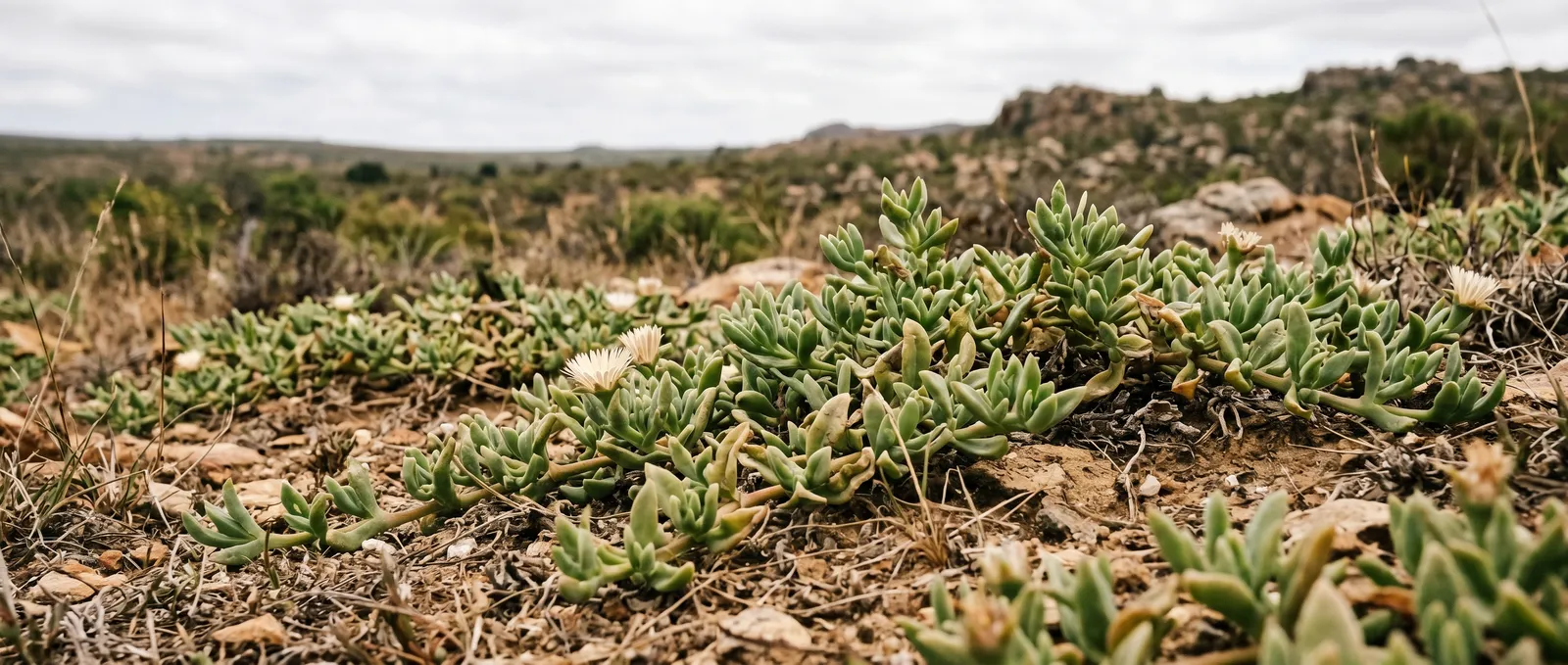
Sceletium Tortuosum Plant
Learn about the sceletium tortuosum plant: botany, alkaloids, fermentation, safety warnings, and where to buy kanna.
Kanna Pharmacokinetics Explained
Complete guide to kanna pharmacokinetics: how Sceletium tortuosum alkaloids are absorbed, metabolised via CYP2D6, and eliminated.

Kanna Chemistry: Sceletium Alkaloids Explained
Kanna chemistry explained: mesembrine, mesembrenone, their mechanisms, how fermentation and extraction change alkaloid profiles, and why it matters…

Rapé Shamanic Snuff Guide: How to Use It Safely
A practical rapé shamanic snuff guide covering dose, kuripe technique, effects, nicotine safety, interactions and Amazonian tradition.

White Sage Salvia Apiana Cultural Smudging Guide
Salvia apiana is a non-psychoactive shrub native to southern California's coastal sage scrub, burned as ceremonial incense in Indigenous North American…

Mulungu Erythrina Traditional Amazonian Use — Bark, Alkaloids & Research
Erythrina mulungu is a Brazilian legume tree whose bark has been brewed as a calming decoction in rural folk medicine for generations.