
This article discusses psychoactive substances intended for adults (18+). If you have a health condition or take medication, consult a doctor before use. Our age policy
Kratom and the Liver
Definition
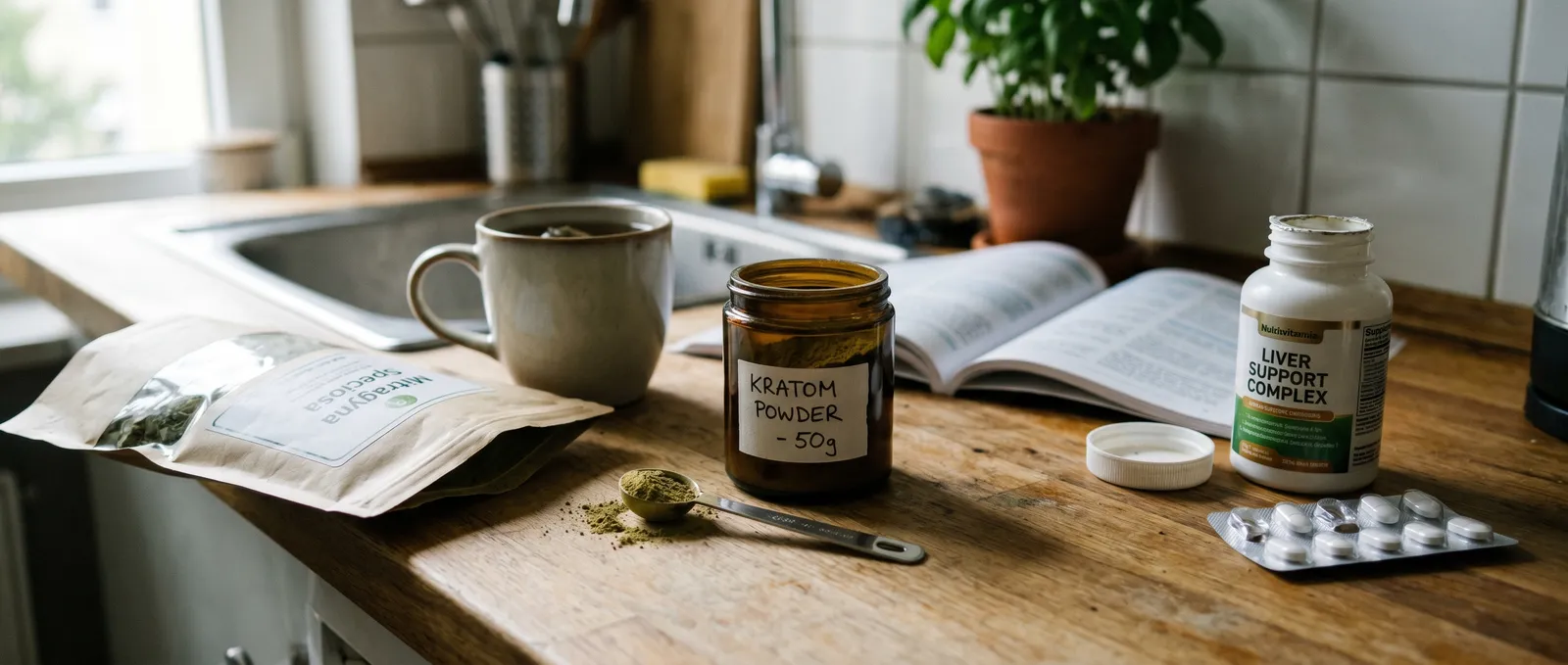
Kratom alkaloids are extensively metabolised by the liver via CYP3A4 and CYP2D6 enzymes. Case reports of liver injury exist, though population-level incidence remains unquantified. Understanding the pharmacology, risk factors, and warning signs helps users make informed decisions about hepatic safety.
Disclaimer: This article is for informational purposes only and does not constitute medical advice. Kratom is a substance with documented health risks including potential liver injury. Always consult a qualified healthcare professional before using kratom, especially if you have pre-existing health conditions or take other medications. Do not use this content to self-diagnose or self-treat any medical condition.
Adult audience (18+). The dosing ranges and effects described in this article apply to adult physiology. This content is not intended for minors.
Kratom and the liver is a topic that generates real concern — and a fair amount of confusion. Mitragyna speciosa alkaloids are extensively metabolised hepatically, meaning your liver does the heavy lifting every time you dose. Case reports of liver injury exist, and they're worth taking seriously, but the actual population-level risk remains poorly defined. Here's what the pharmacology, the case literature, and the gaps in our knowledge actually look like.
How Kratom Is Metabolised
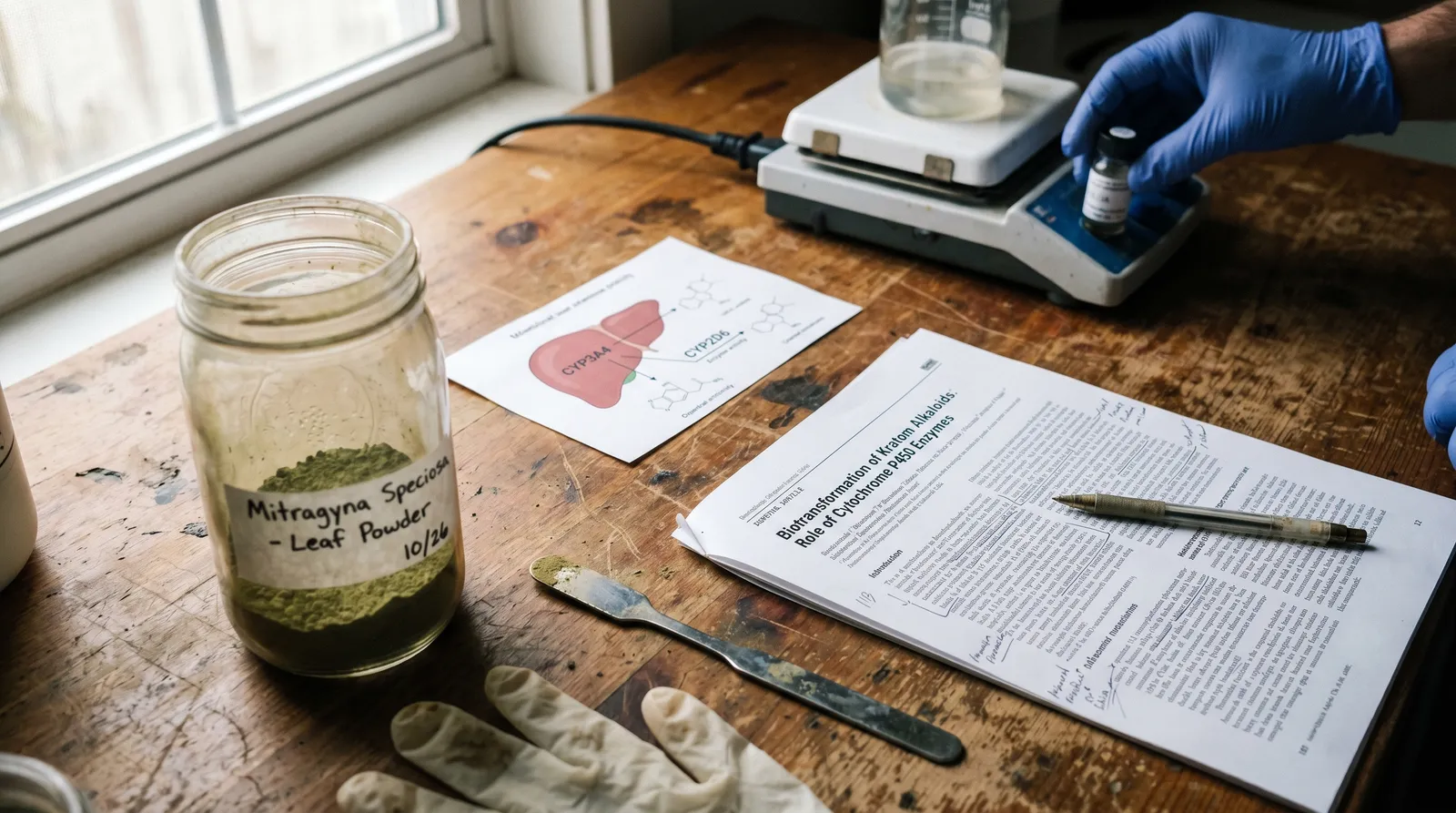
Kratom alkaloids are processed primarily by cytochrome P450 enzymes — specifically CYP3A4 and CYP2D6 — in the liver. Mitragynine, the most abundant alkaloid in kratom leaf (making up roughly 66% of total alkaloid content according to Kruegel & Grundmann, 2018), undergoes extensive first-pass hepatic metabolism through these enzyme families. These same CYP enzymes process a massive range of pharmaceutical drugs, which is exactly why drug interactions with kratom are a genuine concern rather than theoretical hand-wringing.
CYP3A4 handles the bulk of mitragynine's phase I metabolism, converting it into several metabolites. One of those metabolites is 7-hydroxymitragynine, which is roughly 13 times more potent at the mu-opioid receptor than mitragynine itself (Kruegel et al., 2016). So your liver isn't just breaking kratom down — it's actively converting a milder compound into a stronger one. This bioactivation step matters. It means that anything affecting CYP3A4 activity — whether that's grapefruit juice, ketoconazole, clarithromycin, or genetic variation — can shift the pharmacological profile of what you've actually consumed.
CYP2D6 plays a secondary role, and this enzyme is famously polymorphic: roughly 6–10% of Europeans are poor metabolisers, while 1–2% are ultra-rapid metabolisers (Bradford, 2002). The practical upshot is that two people taking identical amounts of the same kratom product can end up with meaningfully different blood levels of active metabolites. This isn't unique to kratom — it's true of codeine, tramadol, and dozens of other CYP2D6 substrates — but it does mean that individual responses to kratom are harder to predict than most users assume.
Hepatotoxicity: What the Case Reports Say
Kratom-associated liver injury has been documented in several dozen case reports published between 2010 and 2022, though population-level incidence remains unknown. A systematic review by Osborne et al. (2022) identified cases presenting as cholestatic hepatitis (bile flow disruption), hepatocellular injury (direct liver cell damage), or a mixed pattern. Symptom onset typically occurred within 1–8 weeks of regular use, and most patients recovered after discontinuation — though a small number of cases progressed to acute liver failure.
The pattern in these reports tends to look similar: elevated liver enzymes (ALT and AST often climbing to 10–20 times the upper limit of normal), jaundice, dark urine, and fatigue. Liver biopsies, where performed, have shown intrahepatic cholestasis and portal inflammation. A 2020 case series published in the Journal of Clinical and Translational Hepatology (Kapp et al., 2020) documented eight cases, seven of which resolved within two months of stopping kratom use.
That said — and this matters — nearly all published cases involve confounding factors that make clean attribution difficult. Polysubstance use is common in the case literature. Some patients were taking paracetamol (acetaminophen), alcohol, or other hepatotoxic substances concurrently. Product adulteration is another variable: case reports rarely include alkaloid analysis of the actual product consumed, so we often don't know the dose, the mitragynine content, or whether the product contained contaminants. A 2019 laboratory analysis found that some kratom products on the US market were contaminated with heavy metals including lead and nickel (Prozialeck et al., 2020), which introduces an entirely separate hepatotoxic pathway. The European Monitoring Centre for Drugs and Drug Addiction has similarly flagged inconsistent product quality in European kratom markets as a complicating factor for risk assessment.
The proposed mechanism for kratom-specific liver injury isn't fully established. Some researchers suggest an idiosyncratic reaction — meaning it's not dose-dependent but rather an immune-mediated or metabolic hypersensitivity that affects a small subset of individuals. Others have pointed to direct mitochondrial toxicity observed in in vitro studies (Saidin et al., 2023), though extrapolating from cell cultures to human livers is always fraught. The honest assessment is that we have a plausible signal, a collection of case reports, and several candidate mechanisms — but no confirmed single pathway and no reliable way to predict who is at risk.
Extracts Versus Leaf: The Dose Matters
Kratom extracts deliver substantially higher alkaloid concentrations per gram than plain leaf, making them a categorically different product from a liver-safety perspective. This distinction is not optional when discussing kratom and the liver. A 50x extract doesn't literally contain 50 times the alkaloids gram-for-gram, but the concentration difference is real and pharmacologically significant. Survey data from Grundmann (2017) found that most traditional users in Southeast Asia consume roughly 1–5g of raw leaf per session, while some Western extract users may be ingesting alkaloid loads equivalent to many times that amount.
If hepatotoxicity has any dose-dependent component at all — and the in vitro mitochondrial data suggest it might — then extracts carry a categorically different risk profile from plain leaf. The case literature doesn't always distinguish between extract and leaf use, which is a significant gap. But from a harm-reduction standpoint, treating extracts as pharmacologically distinct products rather than simply "stronger kratom" is the only sensible approach.
The following table summarises the key differences relevant to hepatic load:
| Factor | Plain Leaf Powder | Concentrated Extract |
|---|---|---|
| Typical mitragynine content | 1–2% by weight | Variable; often 10–45%+ by weight |
| Alkaloid load per 3g dose | ~30–60 mg mitragynine | ~300–1350 mg mitragynine (estimated) |
| 7-hydroxymitragynine presence | Trace (<0.05%) | Often enriched during extraction |
| Hepatic metabolism burden | Moderate | Substantially higher |
| Dose titration difficulty | Easier (larger volume per dose) | Harder (small measurement errors = large dose swings) |
| Case report representation | Often unspecified | Often unspecified |
Risk Factors and Who Should Be Cautious
People with pre-existing liver conditions face the highest risk of hepatic complications from kratom use. Given the current evidence base, several groups should exercise particular caution or avoid kratom entirely. Pre-existing liver disease — including fatty liver disease, hepatitis B or C, cirrhosis, or any condition that already compromises hepatic function — is the most obvious red flag. If your liver is already under strain, adding a substance that requires extensive hepatic metabolism and has documented (if rare) hepatotoxic potential is not a gamble worth taking.
Concurrent use of other hepatotoxic substances amplifies risk. Alcohol is the big one — chronic alcohol use damages hepatocytes and depletes glutathione, the liver's primary antioxidant defence. Paracetamol at high or frequent doses is another concern. Certain prescription medications, particularly some statins, anticonvulsants, and antifungals, carry their own hepatotoxicity profiles and share CYP metabolic pathways with kratom alkaloids.
CYP3A4 and CYP2D6 inhibitors deserve specific mention. If you're taking fluoxetine, paroxetine, or bupropion (CYP2D6 inhibitors), or clarithromycin, ketoconazole, or ritonavir (CYP3A4 inhibitors), these drugs can slow kratom metabolism and increase circulating alkaloid levels — potentially raising both the opioid effects and any hepatotoxic risk. For a complete breakdown of drug interaction mechanisms, see our dedicated article Kratom Drug Interactions.
Comparing Kratom Liver Risk to Other Substances
Kratom's hepatotoxicity risk appears to fall well below paracetamol and well above most common herbal teas, though direct comparison is difficult due to limited epidemiological data. Putting kratom and the liver into context requires acknowledging what we know about other substances people routinely consume:
- Paracetamol (acetaminophen): The leading cause of acute liver failure in the UK and US. Toxicity is dose-dependent and well-characterised. Kratom's case report count is a tiny fraction of paracetamol-related liver injury.
- Alcohol: Chronic use causes fatty liver, alcoholic hepatitis, and cirrhosis through well-established mechanisms. Population-level liver damage from alcohol dwarfs anything attributed to kratom.
- Kava: Another botanical with documented hepatotoxicity case reports. European drug monitoring bodies and several EU member states restricted kava sales over liver safety concerns in the early 2000s. The parallel to kratom's regulatory situation is instructive.
- Green tea extract (concentrated): High-dose green tea extract supplements have generated their own collection of hepatotoxicity case reports, leading to EFSA safety reviews. Like kratom, the concentrated form carries different risk than the traditional preparation.
- NSAIDs (ibuprofen, diclofenac): Carry documented hepatotoxicity risk, particularly with chronic use. Diclofenac-associated liver injury is well-established in the pharmacovigilance literature.
The comparison isn't meant to minimise kratom's hepatic risk — it's meant to calibrate it. We honestly don't have the epidemiological data to rank kratom precisely on this spectrum, and anyone who claims certainty in either direction is outrunning the evidence.
Monitoring and Harm Reduction
Periodic liver function testing is the single most effective harm-reduction measure for regular kratom users. A simple blood panel measuring ALT, AST, ALP, and bilirubin is inexpensive and widely available. This isn't alarmism; it's the same advice that applies to anyone taking a substance with documented hepatic metabolism and case-reported liver injury over extended periods. Baseline values before starting regular use, followed by a check at 4–6 weeks and then periodically, would catch most developing problems early — when stopping kratom typically allows full recovery.
Warning signs that warrant immediate attention:
- Yellowing of the skin or eyes (jaundice)
- Unusually dark urine
- Persistent nausea or abdominal pain in the upper right quadrant
- Unexplained fatigue that doesn't resolve with rest
- Pale or clay-coloured stools
- Itching without rash (may indicate cholestasis)
These symptoms indicate possible cholestasis or hepatocellular injury and should prompt urgent medical evaluation. If you present to a doctor, being straightforward about kratom use helps them order the right tests — liver injury from kratom can mimic autoimmune hepatitis or drug-induced liver injury from other causes, and the treatment approach differs.
Keeping doses moderate — survey research by Grundmann (2017) and Smith et al. (2023) suggests most users reporting positive outcomes without significant adverse effects consume 1–5g of plain leaf powder per session — and avoiding daily use where possible both reduce cumulative hepatic exposure. Tolerance develops rapidly with consecutive daily dosing, which tends to push doses upward over time, compounding any dose-related risk. Opting for plain leaf powder from vendors who provide batch-tested alkaloid content and heavy metal screening offers a meaningful layer of protection compared to untested products.
The Bottom Line
Kratom-associated liver injury is real but appears to be rare at the population level — the incidence rate remains unquantified because we lack large prospective studies. The mechanism is still under investigation, with idiosyncratic reaction and direct mitochondrial toxicity both on the table. Most documented cases resolve after discontinuation, but a small number have been severe. Pre-existing liver conditions, concurrent hepatotoxic substances, CYP enzyme inhibitors, high doses, and concentrated extract products all plausibly increase risk. Regular users benefit from periodic liver function monitoring and from paying attention to early warning signs.
For a broader overview of kratom safety considerations, see our pillar article What Is Kratom? and the dedicated Kratom Drug Interactions guide.
Last updated: April 2026
Frequently Asked Questions
10 questionsCan kratom cause liver damage?
What are the signs of liver problems from kratom?
Are kratom extracts harder on the liver than plain leaf?
Should regular kratom users get liver function tests?
Does mixing kratom with alcohol increase liver risk?
How does kratom liver risk compare to paracetamol or kava?
Can CYP450 enzyme variations affect how kratom impacts the liver?
Can medications that inhibit CYP3A4 make kratom more dangerous for the liver?
How long does it take for the liver to recover after stopping kratom?
Can occasional kratom use still affect the liver?
About this article


Adam Parsons is an external cannabis and psychedelics writer and editor who contributes to Azarius's wiki as both author and reviewer. On the writing side, he authors Azarius's kratom and kanna clusters, drawing on exten
This wiki article was drafted with AI assistance and reviewed by Adam Parsons, External contributor. Editorial oversight by Joshua Askew.
Medical disclaimer. This content is for informational purposes only and does not constitute medical advice. Consult a qualified healthcare provider before use of any substance.
Last reviewed April 24, 2026
References (9)
- [1]Bradford, L.D. (2002). CYP2D6 allele frequency in European Caucasians, Asians, Africans and their descendants. Pharmacogenomics , 3(2), 229–243. DOI: 10.1517/14622416.3.2.229
- [2]Prozialeck, W.C. et al. (2020). Evaluation of the mitragynine content, levels of toxic metals and the presence of microbes in kratom products purchased in the western suburbs of Chicago. International Journal of Environmental Research and Public Health , 17(15), 5512. DOI: 10.3390/ijerph17155512
- [3]Grundmann, O. (2017). Patterns of kratom use and health impact in the US — results from an online survey. Drug and Alcohol Dependence , 176, 63–70. DOI: 10.1016/j.drugalcdep.2017.03.007
- [4]Kapp, F.G. et al. (2020). Intrahepatic cholestasis following abuse of powdered kratom (Mitragyna speciosa). Journal of Clinical and Translational Hepatology , 8(1), 79–84.
- [5]Kruegel, A.C. & Grundmann, O. (2018). The medicinal chemistry and neuropharmacology of kratom: a preliminary discussion of a promising medicinal plant and analysis of its potential for abuse. Neuropharmacology , 134, 108–120. DOI: 10.1016/j.neuropharm.2017.08.026
- [6]Kruegel, A.C. et al. (2016). Synthetic and receptor signaling explorations of the Mitragyna alkaloids. Journal of the American Chemical Society , 138(21), 6754–6764. DOI: 10.1021/jacs.6b00360
- [7]Osborne, C.S. et al. (2022). A systematic review of kratom (Mitragyna speciosa) and liver injury. Drugs and Therapy Perspectives , 38, 260–267.
- [8]Saidin, N.A. et al. (2023). Mitochondrial toxicity of mitragynine and its analogues in human hepatocytes. Toxicology in Vitro , 87, 105528.
- [9]Smith, K.E. et al. (2023). Kratom use in the United States: demographics, use patterns, and clinical correlates. Journal of Addiction Medicine , 17(3), 315–322.
Related Articles

Blue Lotus vs Kanna: Effects & Safety
Blue lotus vs kanna compared — Nymphaea caerulea's aporphine profile against Sceletium tortuosum's mesembrine chemistry, with interaction warnings.

Lotus Clinical Research Overview
What does lotus clinical research actually show? A critical review of Nymphaea caerulea and Nelumbo nucifera pharmacology, preclinical data, and…
Kanna South Africa To West History
Sceletium tortuosum was used by San and Khoekhoe communities in southern Africa for centuries before European colonists first documented it in the 1660s.
Sceletium Tortuosum Plant
Learn about the sceletium tortuosum plant: botany, alkaloids, fermentation, safety warnings, and where to buy kanna.
Kanna Pharmacokinetics Explained
Complete guide to kanna pharmacokinetics: how Sceletium tortuosum alkaloids are absorbed, metabolised via CYP2D6, and eliminated.

Kanna Chemistry: Sceletium Alkaloids Explained
Kanna chemistry explained: mesembrine, mesembrenone, their mechanisms, how fermentation and extraction change alkaloid profiles, and why it matters…

Rapé Shamanic Snuff Guide: How to Use It Safely
A practical rapé shamanic snuff guide covering dose, kuripe technique, effects, nicotine safety, interactions and Amazonian tradition.

White Sage Salvia Apiana Cultural Smudging Guide
Salvia apiana is a non-psychoactive shrub native to southern California's coastal sage scrub, burned as ceremonial incense in Indigenous North American…

Mulungu Erythrina Traditional Amazonian Use — Bark, Alkaloids & Research
Erythrina mulungu is a Brazilian legume tree whose bark has been brewed as a calming decoction in rural folk medicine for generations.