
This article discusses psychoactive substances intended for adults (18+). If you have a health condition or take medication, consult a doctor before use. Our age policy
Kanna vs SSRIs
Definition
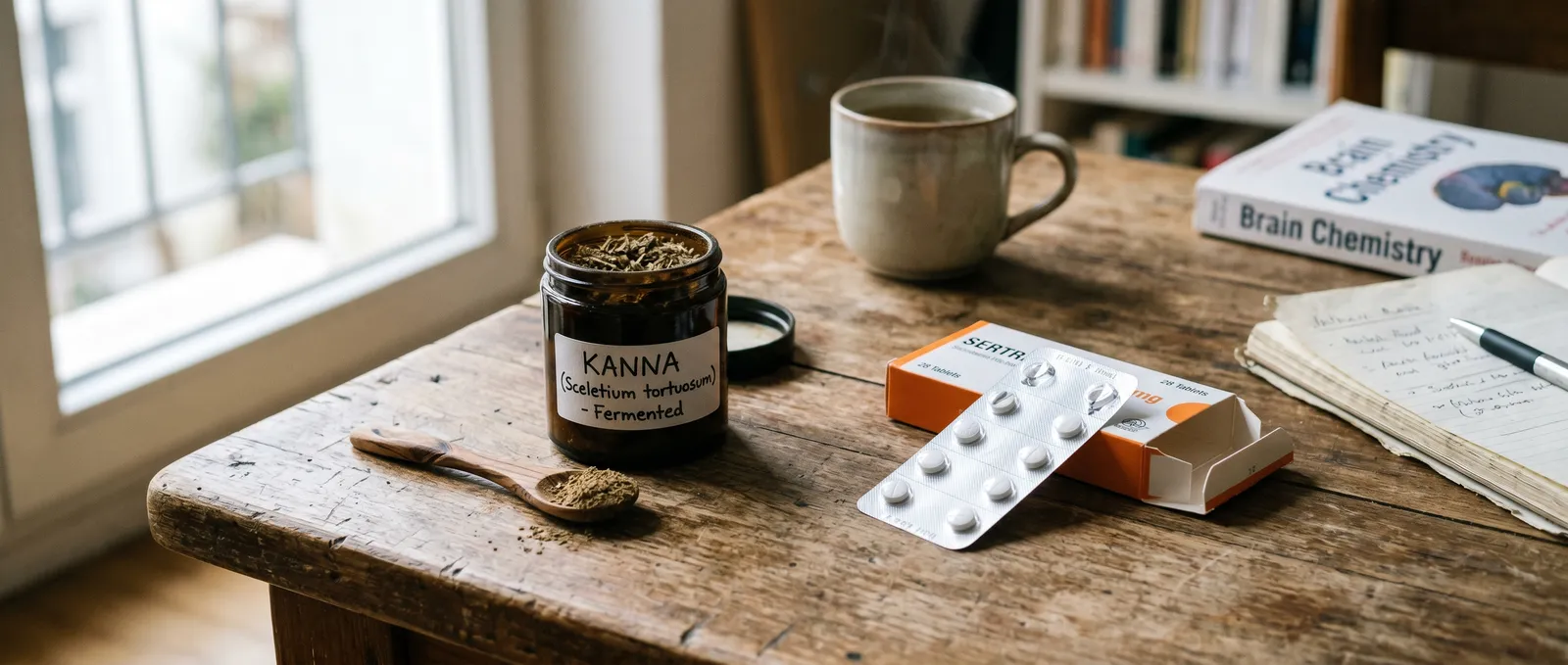
Kanna (Sceletium tortuosum) and SSRIs both increase serotonergic activity — kanna via mesembrine's proposed serotonin reuptake inhibition (Harvey et al., 2011), SSRIs via selective SERT blockade. That shared mechanism makes their comparison pharmacologically interesting and their combination genuinely dangerous.
Kanna (Sceletium tortuosum) and selective serotonin reuptake inhibitors (SSRIs) both interact with the serotonin system, but that shared mechanism is precisely what makes comparing kanna vs SSRIs complicated — and combining them dangerous. This article lays out what each substance does, where the pharmacology overlaps, where it diverges, and why the interaction between the two is the single most critical safety point in the entire kanna conversation.
Adult audience (18+). The dosing ranges and effects described in this article apply to adult physiology. This content is not intended for minors.
| Dimension | Kanna (Sceletium tortuosum) | SSRIs (e.g. sertraline, fluoxetine, citalopram) |
|---|---|---|
| Source | Southern African succulent; used traditionally by Khoisan peoples as fermented plant material (kougoed) | Synthetic pharmaceutical compounds, prescribed since the late 1980s |
| Primary mechanism (proposed) | Serotonin reuptake inhibition (in vitro); PDE4 inhibition also proposed — relative contribution in humans not settled (Harvey et al., 2011) | Selective serotonin reuptake inhibition — well-characterised in thousands of clinical trials |
| Key active compounds | Mesembrine, mesembrenone, mesembrenol (Sceletium alkaloids) | Single defined molecule per drug (e.g. fluoxetine, sertraline) |
| Evidence base | Small clinical trials on one specific standardised extract; in-vitro pharmacology; ethnobotanical record | Hundreds of randomised controlled trials; decades of post-market surveillance; Cochrane meta-analyses |
| Onset (reported) | Minutes to under an hour depending on route and form; wide inter-individual variance | Therapeutic effect typically 2–6 weeks; side effects may appear within days |
| Duration of single dose | Users report 1–4 hours depending on form and route | Continuous plasma levels maintained by daily dosing; half-lives range from ~24 h (sertraline) to 4–6 days (fluoxetine) |
| Standardisation | Varies enormously — raw plant material, fermented kougoed, and concentrated extracts (up to 50:1 or higher) are not interchangeable | Pharmaceutical-grade; exact mg per tablet, batch-tested |
| Combination risk | Do NOT combine. Both increase serotonergic activity. Co-administration risks serotonin syndrome — a rare but potentially life-threatening condition. | |
How SSRIs work — the 30-second version
SSRIs block the serotonin transporter (SERT) in the brain, preventing neurons from reabsorbing serotonin after it has been released. The result is more serotonin lingering in the synaptic cleft for longer. According to a Cochrane review of 313 randomised controlled trials (Cipriani et al., 2018), SSRIs are more effective than placebo for major depressive disorder, though effect sizes are modest and individual response varies. They are among the most widely prescribed medications on earth — roughly 1 in 6 adults in England received an antidepressant prescription in 2022/23 (NHS Business Services Authority, 2023). The European Monitoring Centre for Drugs and Drug Addiction (EMCDDA) has noted the broader trend of increasing psychoactive substance use across Europe, a context in which understanding kanna vs SSRIs becomes increasingly relevant for harm reduction.
The therapeutic effect builds gradually over weeks as downstream receptor adaptations occur. Side effects — sexual dysfunction, emotional blunting, weight changes, discontinuation symptoms — are well-documented and common. SSRIs are not casual substances, even though their ubiquity can make them seem routine. Understanding this background is essential for anyone weighing the kanna vs SSRIs question seriously.
How kanna interacts with serotonin
Kanna's principal alkaloid, mesembrine, inhibits serotonin reuptake in vitro — meaning it acts on the same transporter that SSRIs target (Harvey et al., 2011). Mesembrenone, another major alkaloid, shows affinity for the same site. A second proposed mechanism, PDE4 (phosphodiesterase-4) inhibition, may contribute to the mood-related effects some users describe, but the relative importance of each pathway in living humans has not been resolved.
Here is where intellectual honesty matters: most of the published clinical data on kanna's effects comes from trials using a specific standardised extract at defined doses. That preparation has a controlled alkaloid profile. Raw kanna plant material, fermented kougoed, and the various non-standardised extracts available on the market have not been tested in the same trials and cannot be assumed to produce the same effects at the same doses. The alkaloid ratios in fermented plant material differ from those in unfermented material, and concentrated extracts amplify the serotonergic load substantially compared to chewing the raw plant.
Some users report mood lift, reduced social tension, and a sense of calm from kanna. Clinical trials on the specific standardised extract have reported effects on anxiety- and stress-related outcomes in small samples (Terburg et al., 2013). These findings are real but preliminary — small sample sizes, short durations, and the extract-vs-plant-material distinction all limit how far you can generalise. We are honest about that limitation because overstating the evidence would be irresponsible in a kanna vs SSRIs discussion where people's health decisions are at stake. The Beckley Foundation has highlighted the broader need for rigorous clinical research into plant-derived psychoactives before efficacy claims can be responsibly made — a principle that applies directly here.
The overlap — and why it matters
The core danger is pharmacological redundancy: both kanna and SSRIs increase serotonin availability at the synapse. If both SSRIs and kanna increase serotonergic activity — one by blocking SERT pharmacologically, the other by blocking SERT (and possibly inhibiting PDE4) via plant alkaloids — then combining them creates a situation where serotonin accumulates beyond what either substance would produce alone. This is the textbook setup for serotonin syndrome, and it is the central risk in any kanna vs SSRIs comparison.
Serotonin syndrome sits on a spectrum. Mild cases involve agitation, diarrhoea, and rapid heart rate. Moderate cases add muscle twitching (clonus), hyperreflexia, and sweating. Severe cases can progress to hyperthermia, seizures, and organ failure. It is rare, but it is a medical emergency when it occurs, and the risk is directly proportional to the total serotonergic load on the system (Boyer and Shannon, 2005).
Do not combine kanna with SSRIs, SNRIs, MAOIs, tricyclic antidepressants, or other serotonergic substances (including 5-HTP, St John's Wort, MDMA, or classical psychedelics). This is not a theoretical concern — it is the most critical safety point in the kanna vs SSRIs comparison, and it applies with even greater force to concentrated extracts, which deliver a higher alkaloid dose per milligram than plant material.
Anyone currently taking an SSRI or another antidepressant should not use kanna without direct medical supervision. And "I stopped my SSRI last week" does not make it safe — fluoxetine, for example, has an active metabolite (norfluoxetine) with a half-life of 4–16 days, meaning pharmacologically relevant levels can persist in the body for weeks after the last dose.
Can kanna replace an SSRI?
No — the current evidence does not support using kanna as a replacement for prescribed SSRI therapy. Here is why.
SSRIs have been tested in hundreds of large-scale randomised controlled trials involving tens of thousands of participants. Their effect sizes, side-effect profiles, discontinuation risks, and drug interactions are characterised in granular detail. They are far from perfect — response rates hover around 50–60% for first-line treatment, and side effects drive many people to seek alternatives — but the data behind them is enormous.
Kanna's clinical evidence base consists of a handful of small trials on one specific standardised extract. Terburg et al. (2013) found that a single 25 mg dose of this extract reduced amygdala reactivity to threat-related stimuli in 16 healthy volunteers — an interesting neuroimaging finding, but not a depression treatment trial. Other small studies have reported anxiolytic effects, again using the specific standardised preparation. No published trial has compared kanna head-to-head with an SSRI for any diagnosed mood or anxiety disorder. No long-term safety data for chronic daily kanna use exists in the published literature.
Framing kanna as "a natural alternative to SSRIs" is not supported by the current evidence, and doing so risks real harm — particularly if someone discontinues a prescribed medication in favour of an unstandardised plant product without medical guidance. This is a limitation we state plainly: the kanna vs SSRIs comparison is not a contest with a winner — it is a pharmacological reality check.
Where they genuinely differ
Despite the shared serotonergic mechanism, kanna and SSRIs diverge in several pharmacologically meaningful ways when you examine the kanna vs SSRIs question beyond the surface level.
Onset and duration. SSRIs require weeks of daily dosing before therapeutic effects emerge. Kanna, depending on form and route, produces noticeable subjective effects within minutes to about an hour. Some users describe this as a meaningful practical difference — they use kanna situationally rather than as a daily regimen. Whether situational use produces meaningful long-term mood benefits is unknown.
Mechanism breadth. SSRIs are designed to be selective — they target SERT with minimal direct action on other receptors (though downstream effects are widespread). Kanna's alkaloid profile is more varied: mesembrine hits SERT, but mesembrenone and other alkaloids may contribute PDE4 inhibition and possibly other actions. Whether this broader profile is an advantage, a disadvantage, or irrelevant in practice is not established.
Standardisation. An SSRI tablet contains a precise, verified quantity of a single molecule. Kanna products range from raw plant material with variable alkaloid content to standardised extracts with defined mesembrine concentrations. This variability means that dose-response relationships are harder to predict, and switching between products can meaningfully change the pharmacological load — a point that matters enormously for anyone weighing kanna vs SSRIs from a safety perspective.
Discontinuation. SSRI discontinuation syndrome is well-documented: brain zaps, irritability, flu-like symptoms, rebound anxiety. Whether kanna produces analogous withdrawal effects after chronic use is simply not known — no study has examined it. Some users report no issues stopping; others describe a period of low mood. Without controlled data, these remain anecdotes.
The extract vs plant material distinction
The answer depends entirely on what form of kanna is being discussed. This point bears repeating because it is structurally important to the kanna vs SSRIs comparison.
Chewing fermented kougoed — the traditional Khoisan method — delivers a relatively modest alkaloid dose spread over an extended period. A concentrated 50:1 extract taken sublingually delivers a much higher mesembrine load in a much shorter window. The serotonergic interaction risk scales accordingly: extracts carry greater weight than plant material, and anyone comparing kanna vs SSRIs needs to specify which kanna they are talking about.
Clinical trials on the specific standardised extract used doses in the range of 8–25 mg. Users of raw plant material report using substantially higher weights — sometimes several hundred milligrams to grams — because the alkaloid concentration is far lower. These are not interchangeable numbers, and treating them as such is a genuine safety error.
Kanna forms and concentrations
Kanna is typically sold in three forms, each with a different alkaloid concentration: fermented plant material (traditional kougoed), and concentrated extracts such as UC2 and ET2. Fermented kanna plant material has the lowest mesembrine load per gram. Concentrated extracts deliver a substantially higher mesembrine load per milligram and are documented in the research literature as more pharmacologically active. Extract potency does not change the fundamental serotonergic interaction profile — contraindications apply to all forms.
For broader context on how kanna fits into the field of natural mood-supporting substances, the Kanna (Sceletium tortuosum) and Kanna Dosage Guide wiki articles provide pharmacological background, and Herbs for Mood and Relaxation covers related ethnobotanicals.
Bottom line
Kanna and SSRIs both act on the serotonin system, but they are not equivalent. SSRIs have a deep evidence base, pharmaceutical-grade standardisation, and well-characterised risk profiles developed over decades. Kanna has a long ethnobotanical history, promising but thin clinical data (limited to one specific standardised extract), and a product range that varies enormously in potency and composition.
The single non-negotiable point in the kanna vs SSRIs discussion: do not combine them. The serotonergic overlap creates a real risk of serotonin syndrome, and that risk is amplified with concentrated kanna extracts. If you are currently taking an SSRI or any other antidepressant and are considering kanna, speak to a qualified clinician first — and factor in that SSRI metabolites can linger for weeks after your last dose, particularly with fluoxetine.
Kanna is an interesting plant with genuine pharmacological activity. It is not a validated replacement for prescribed antidepressant therapy, and the evidence base does not currently support that framing. Treat the kanna vs SSRIs comparison with the seriousness both substances deserve — and if you decide to buy kanna, choose your product form carefully and start low.
Related Azarius products
If you are interested in exploring Sceletium tortuosum, you can buy kanna in several forms from our selection — including traditional fermented plant material (Kanna Fermented), Kanna UC2 Extract, and Kanna ET2 Extract. Each has a different potency profile. Make sure you understand the extract-vs-plant-material distinction outlined above before choosing a product. For those exploring related ethnobotanicals, our Herbs and Seeds category and Mood and Energy collection offer further options worth browsing.

Last updated: April 2026
Frequently Asked Questions
9 questionsCan I take kanna while tapering off an SSRI?
Does kanna work as fast as an SSRI?
Is kanna's serotonin reuptake inhibition as strong as an SSRI's?
How long after stopping an SSRI is it safe to try kanna?
Does kanna cause withdrawal symptoms like SSRIs do?
Can kanna cause serotonin syndrome on its own without an SSRI?
Why is kanna's evidence base so much smaller than that of SSRIs?
Can kanna and SSRIs be combined safely?
Does kanna show up on the same mechanism studies as SSRIs?
About this article


Adam Parsons is an external cannabis and psychedelics writer and editor who contributes to Azarius's wiki as both author and reviewer. On the writing side, he authors Azarius's kratom and kanna clusters, drawing on exten
This wiki article was drafted with AI assistance and reviewed by Adam Parsons, External contributor. Editorial oversight by Joshua Askew.
Medical disclaimer. This content is for informational purposes only and does not constitute medical advice. Consult a qualified healthcare provider before use of any substance.
Last reviewed April 24, 2026
References (7)
- [1]Boyer, E.W. and Shannon, M. (2005). The serotonin syndrome. New England Journal of Medicine , 352(11), pp.1112–1120. DOI: 10.1056/nejmra041867
- [2]Cipriani, A. et al. (2018). Comparative efficacy and acceptability of 21 antidepressant drugs for the acute treatment of adults with major depressive disorder: a systematic review and network meta-analysis. The Lancet , 391(10128), pp.1357–1366. DOI: 10.1016/s0140-6736(17)32802-7
- [3]Harvey, A.L. et al. (2011). Pharmacological actions of the South African medicinal and functional food plant Sceletium tortuosum and its principal alkaloids. Journal of Ethnopharmacology , 137(3), pp.1124–1129. DOI: 10.1016/j.jep.2011.07.035
- [4]NHS Business Services Authority (2023). Antidepressant prescribing trends in England 2022/23.
- [5]Terburg, D. et al. (2013). Acute effects of Sceletium tortuosum (Zembrin), a dual 5-HT reuptake and PDE4 inhibitor, in the human amygdala and its connection to the hypothalamus. Neuropsychopharmacology , 38(13), pp.2708–2716. DOI: 10.1038/npp.2013.183
- [6]European Monitoring Centre for Drugs and Drug Addiction (EMCDDA). European Drug Report series.
- [7]Beckley Foundation. Research programme on psychoactive plant compounds and policy reform.
Related Articles
Blue Lotus vs Kanna: Effects & Safety
Blue lotus vs kanna compared — Nymphaea caerulea's aporphine profile against Sceletium tortuosum's mesembrine chemistry, with interaction warnings.
Lotus Clinical Research Overview
What does lotus clinical research actually show? A critical review of Nymphaea caerulea and Nelumbo nucifera pharmacology, preclinical data, and…
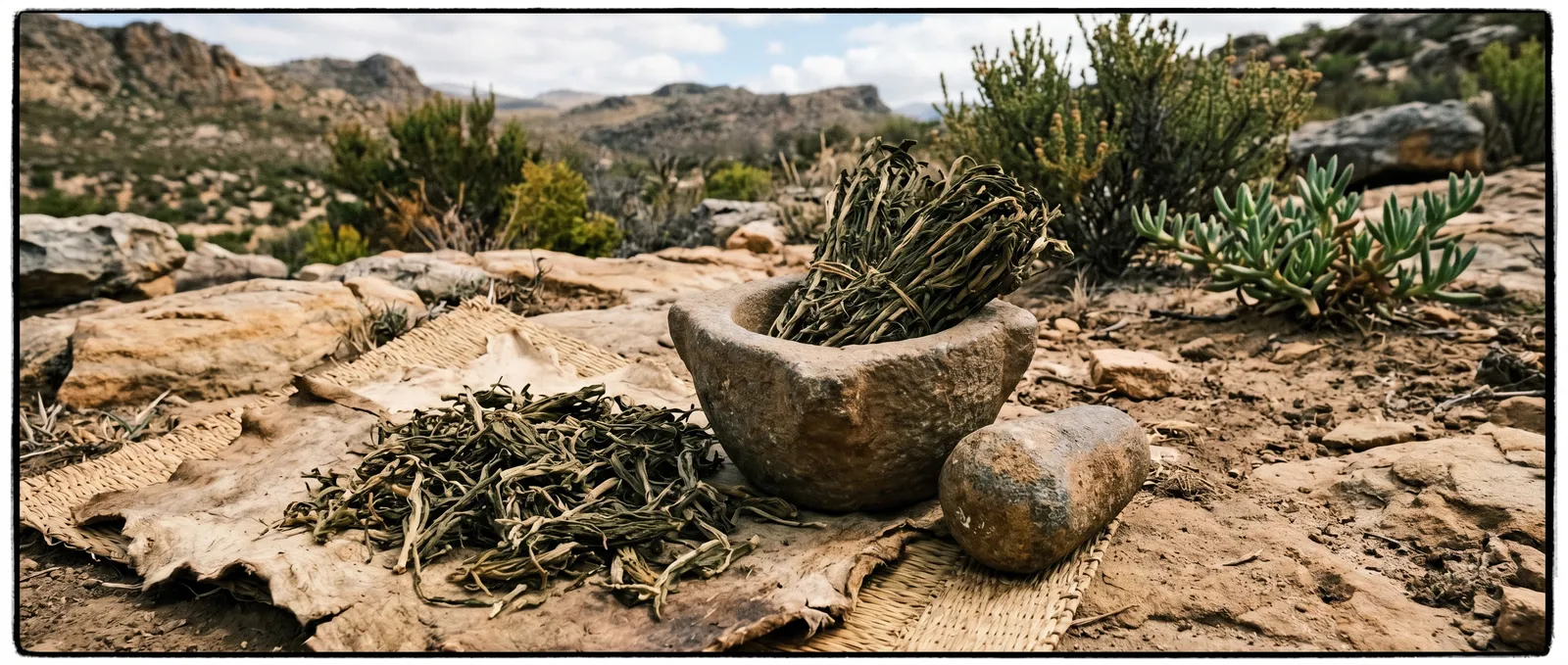
Kanna South Africa To West History
Sceletium tortuosum was used by San and Khoekhoe communities in southern Africa for centuries before European colonists first documented it in the 1660s.
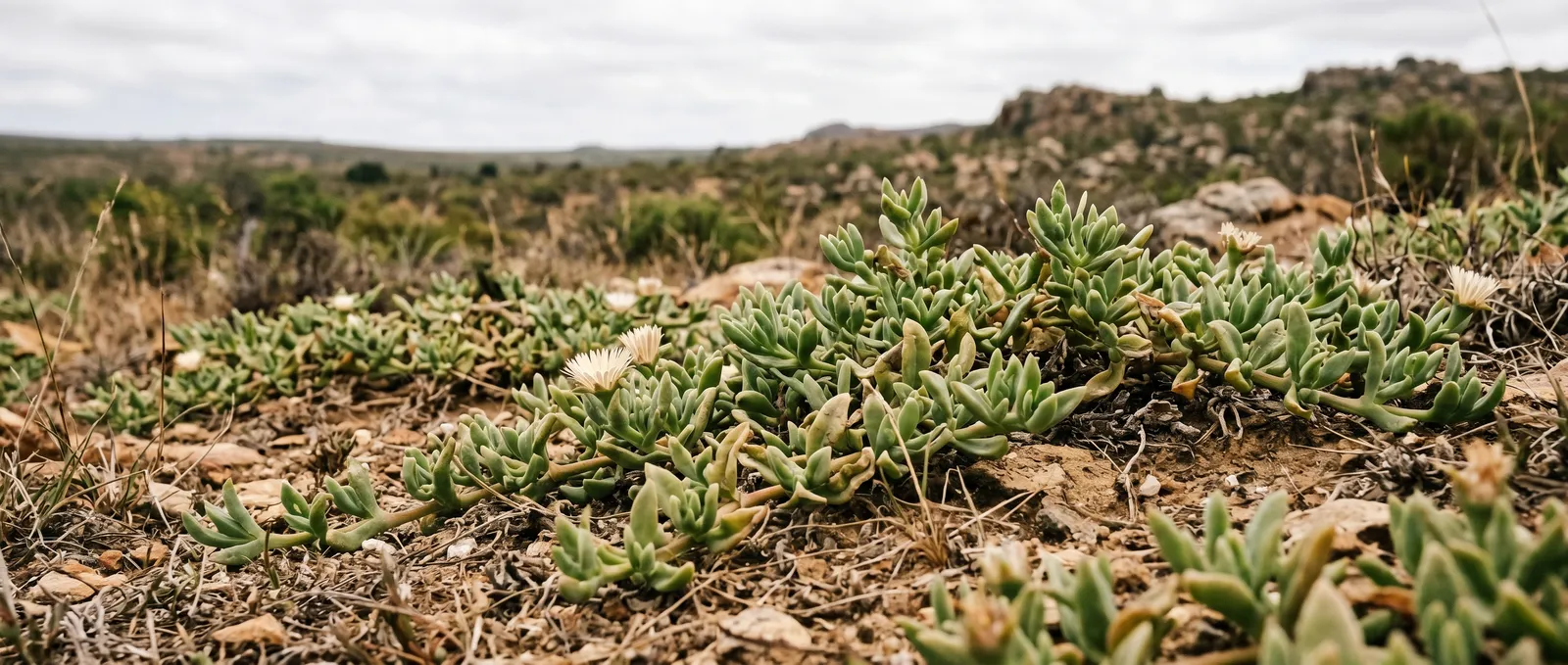
Sceletium Tortuosum Plant
Learn about the sceletium tortuosum plant: botany, alkaloids, fermentation, safety warnings, and where to buy kanna.
Kanna Pharmacokinetics Explained
Complete guide to kanna pharmacokinetics: how Sceletium tortuosum alkaloids are absorbed, metabolised via CYP2D6, and eliminated.
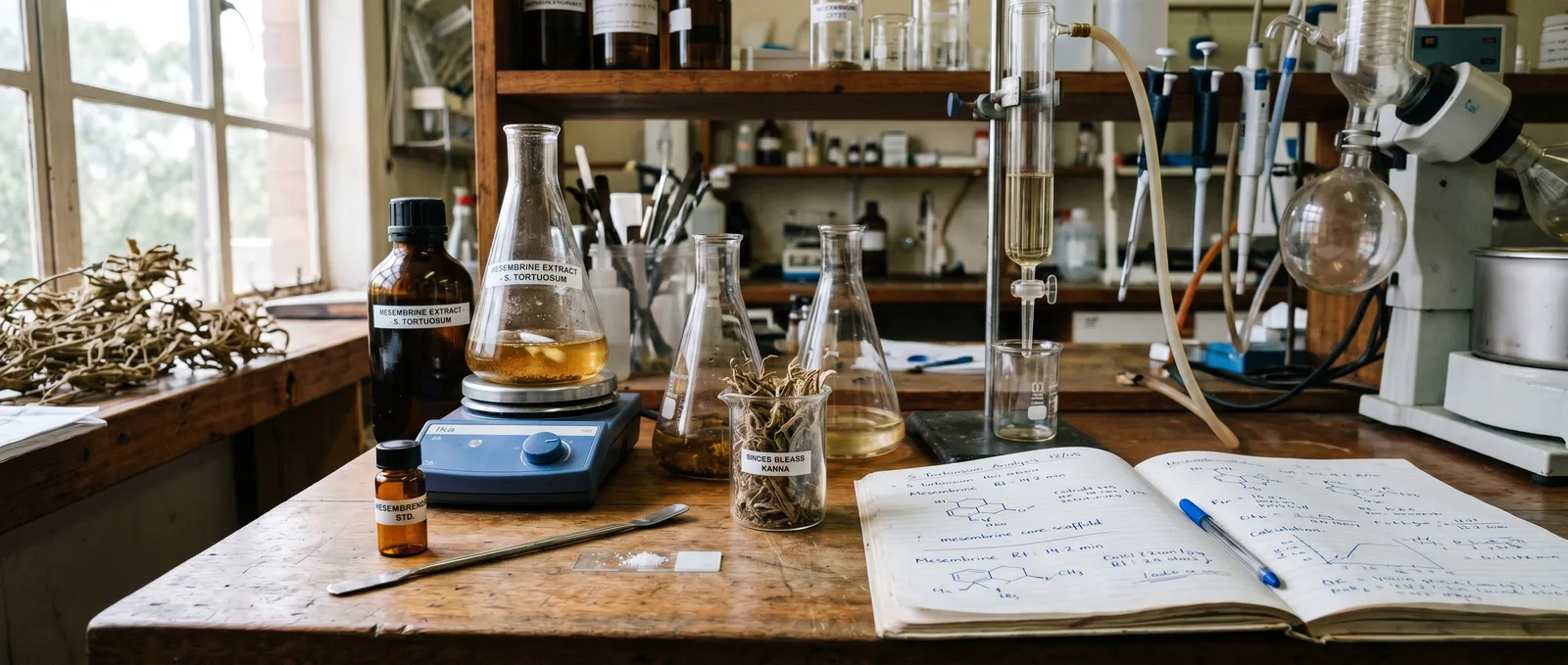
Kanna Chemistry: Sceletium Alkaloids Explained
Kanna chemistry explained: mesembrine, mesembrenone, their mechanisms, how fermentation and extraction change alkaloid profiles, and why it matters…

Rapé Shamanic Snuff Guide: How to Use It Safely
A practical rapé shamanic snuff guide covering dose, kuripe technique, effects, nicotine safety, interactions and Amazonian tradition.

White Sage Salvia Apiana Cultural Smudging Guide
Salvia apiana is a non-psychoactive shrub native to southern California's coastal sage scrub, burned as ceremonial incense in Indigenous North American…
Mulungu Erythrina Traditional Amazonian Use — Bark, Alkaloids & Research
Erythrina mulungu is a Brazilian legume tree whose bark has been brewed as a calming decoction in rural folk medicine for generations.