
This article discusses psychoactive substances intended for adults (18+). If you have a health condition or take medication, consult a doctor before use. Our age policy
Smoking Vs Tea Vs Extract Lotus: Comparing Consumption Methods
Definition
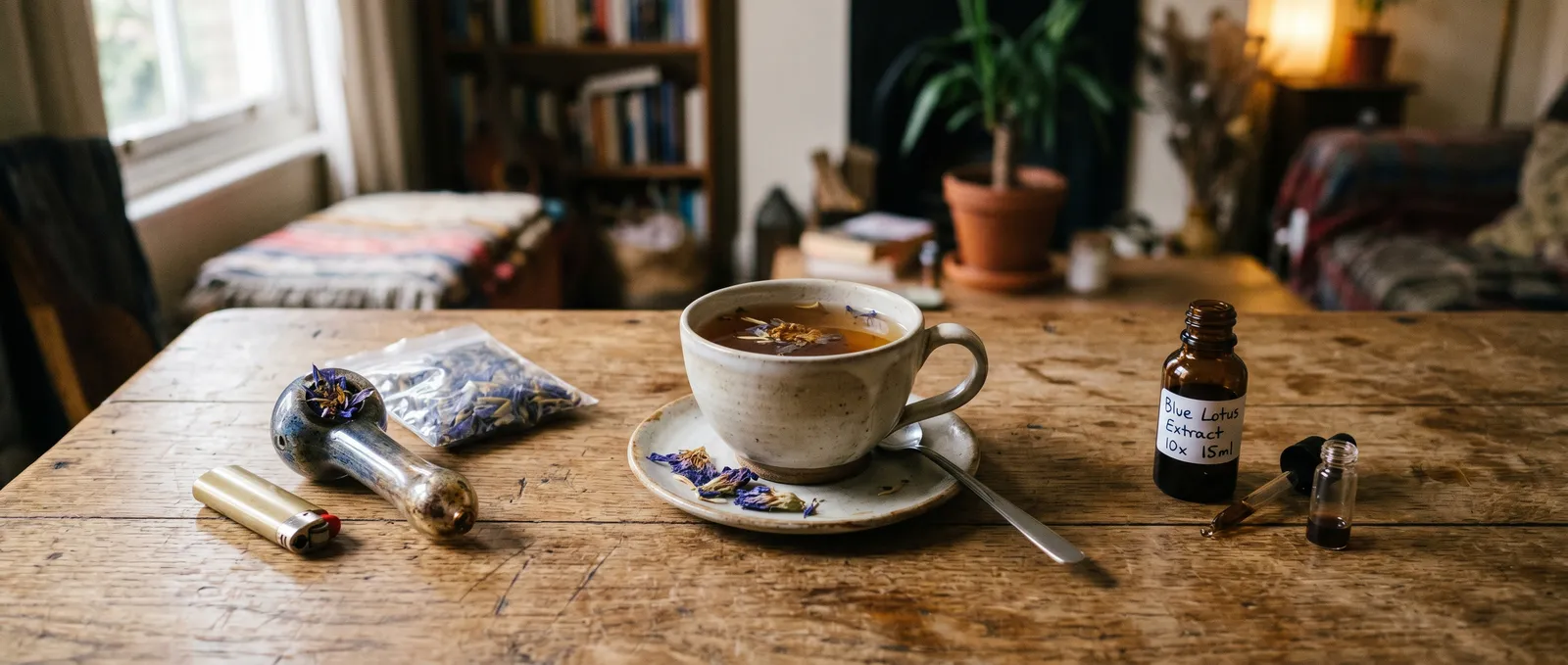
Smoking vs tea vs extract lotus is a comparison of the three main consumption routes for Nymphaea caerulea (blue lotus) and related species that determines onset speed, duration, alkaloid bioavailability, and risk profile. Combustion (smoking) is the fastest but least efficient route; tea offers moderate extraction without respiratory risk; concentrated extracts deliver the highest aporphine alkaloid load per serving and demand careful dosing. No controlled human study has directly compared bioavailability across these routes for Nymphaea caerulea (Agnihotri et al., 2008), making user reports and general pharmacokinetic principles the primary guides.
Smoking vs tea vs extract lotus is a comparison of the three main consumption routes for Nymphaea caerulea (blue lotus) and related species that determines onset speed, duration, alkaloid bioavailability, and risk profile. Whether you're working with Nymphaea caerulea petals, Nymphaea ampla (white lotus), or Nelumbo nucifera (pink/sacred lotus), the method you choose is a variable that shapes every dimension of the experience. Smoking vs tea vs extract lotus consumption matters because the pharmacology doesn't change but the pharmacokinetics absolutely do — combustion is the fastest but least efficient route, tea offers moderate extraction without respiratory risk, and concentrated extracts deliver the highest aporphine alkaloid load per serving and demand careful dosing. This article breaks down each route so you can make a genuinely informed decision before you buy any lotus product.
Important: This article is for informational purposes only and does not constitute medical advice. If you are taking medication or have a pre-existing health condition, consult a qualified healthcare professional before using any lotus product. Individual responses vary, and none of the statements in this guide have been evaluated by a medicines regulatory authority.
Head-to-Head Comparison
The smoking vs tea vs extract lotus comparison reveals meaningful differences in onset, duration, efficiency, and risk across all three methods. The table below summarises the key dimensions. Every row is unpacked in the sections that follow. Note: figures are approximate and drawn from user-reported ranges and limited analytical data — controlled human pharmacokinetic studies comparing these routes for Nymphaea caerulea specifically do not yet exist.
| Dimension | Smoking (dried petals) | Tea infusion (hot water steep) | Concentrated extract (resin, dried, or liquid) |
|---|---|---|---|
| Typical onset | 1–5 minutes | 15–30 minutes | Varies by form: sublingual liquid 5–15 min; oral resin/dried 15–40 min |
| Reported duration | 30–90 minutes | 2–4 hours | 2–5 hours (amount-dependent) |
| Alkaloid delivery efficiency | Low — combustion degrades a proportion of aporphine alkaloids | Moderate — hot water extracts nuciferine and apomorphine, though not completely | High — pre-concentrated, so milligram-for-milligram the strongest route |
| Amount control | Poor — variable inhalation depth, combustion losses unpredictable | Moderate — steeping time and petal quantity are controllable | Best — extract strength is standardised or at least labelled by ratio |
| Combustion byproducts | Yes — carbon monoxide, particulate matter, PAHs | None | None (unless smoked; extract on carrier herb reintroduces combustion) |
| Practical barrier | Low — pipe, rolling paper, or vaporiser | Low — kettle, cup, strainer | Low to moderate — requires accurate measurement (milligram scale recommended) |
| Interaction risk weighting | Lower per session (less alkaloid absorbed) | Moderate | Highest — concentrated aporphine load increases cardiovascular and dopaminergic interaction potential |
Smoking Dried Petals
Smoking is the fastest route to onset but the least efficient in terms of alkaloid delivery per gram of material used. Inhaled aporphine alkaloids — principally nuciferine and the closely related apomorphine analogue identified in Nymphaea caerulea — cross the alveolar membrane and reach the brain within minutes. Users report a gentle, mildly sedating warmth that fades relatively quickly, typically within 30 to 90 minutes.
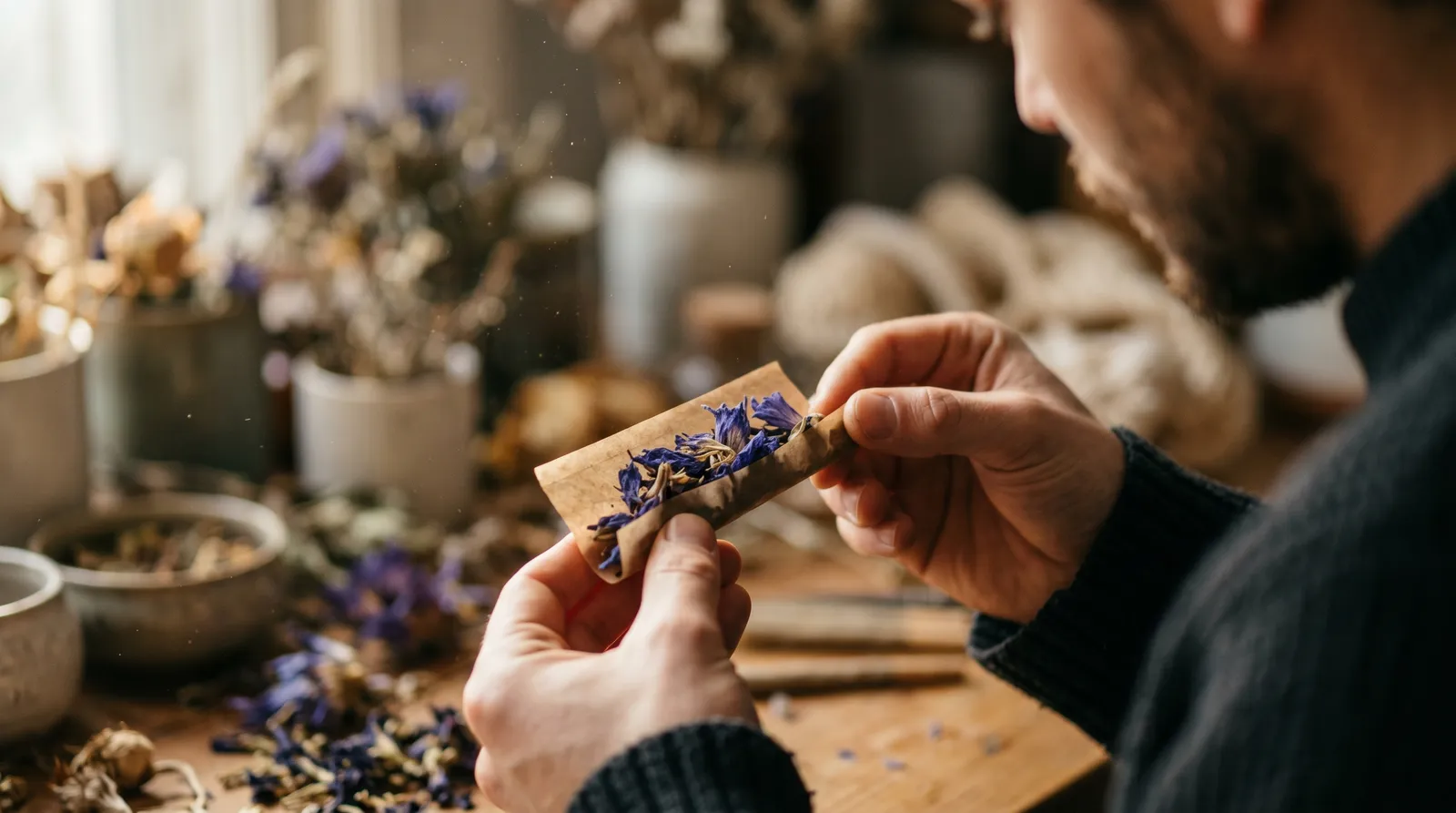
The catch is combustion. Burning any plant material generates carbon monoxide, polycyclic aromatic hydrocarbons (PAHs), and fine particulate matter. A 2012 analysis published in Chemical Research in Toxicology (Maertens et al., 2012) demonstrated that herbal smoke — regardless of the plant species — contains many of the same harmful combustion byproducts found in tobacco smoke. The plant being "natural" does not exempt it from basic combustion chemistry. The European Monitoring Centre for Drugs and Drug Addiction (EMCDDA) has similarly noted that combustion of herbal products introduces respiratory risks independent of the plant's pharmacological profile.
There is also an efficiency problem. Heat degrades a proportion of the aporphine alkaloids before they ever reach your lungs. No published study has quantified the exact thermal degradation curve for nuciferine during combustion, but the general pharmacological principle is well established: thermolabile compounds lose potency when burned. You're inhaling some active material, but you're also literally setting some of it on fire.
Vaporising at lower temperatures (around 100–150 °C) may reduce combustion byproducts while still volatilising some alkaloids, though again, specific data for Nymphaea caerulea vaporisation temperatures is thin. Users who report vaporising blue lotus petals generally describe a milder effect than smoking, which may reflect incomplete volatilisation at those temperatures or simply the absence of the carbon-monoxide-induced head rush that combustion adds.
The short duration of smoked lotus is both a feature and a limitation. If you want a brief, mild wind-down — say, 30 minutes of gentle relaxation before bed — smoking delivers that. If you're after a longer, more sustained effect, tea or an extract makes more sense. Many customers who order Blue Lotus (Nymphaea caerulea) dried petals for smoking eventually explore tea preparation with the same material once they discover how mild the smoked experience is.
Tea Infusion
Tea is the most traditional and, from a harm-reduction standpoint, the lowest-risk lotus consumption method because it eliminates combustion byproducts entirely while still delivering a meaningful aporphine alkaloid profile over a 2–4 hour window. Brewing Nymphaea caerulea or Nymphaea ampla petals as a tea follows a practice with deep historical roots. Archaeological evidence from ancient Egypt — tomb reliefs and papyrus imagery — depicts Nymphaea caerulea steeped in wine, which would have functioned as both a solvent and a social ritual medium. A hot-water infusion follows the same basic extraction principle, minus the alcohol.
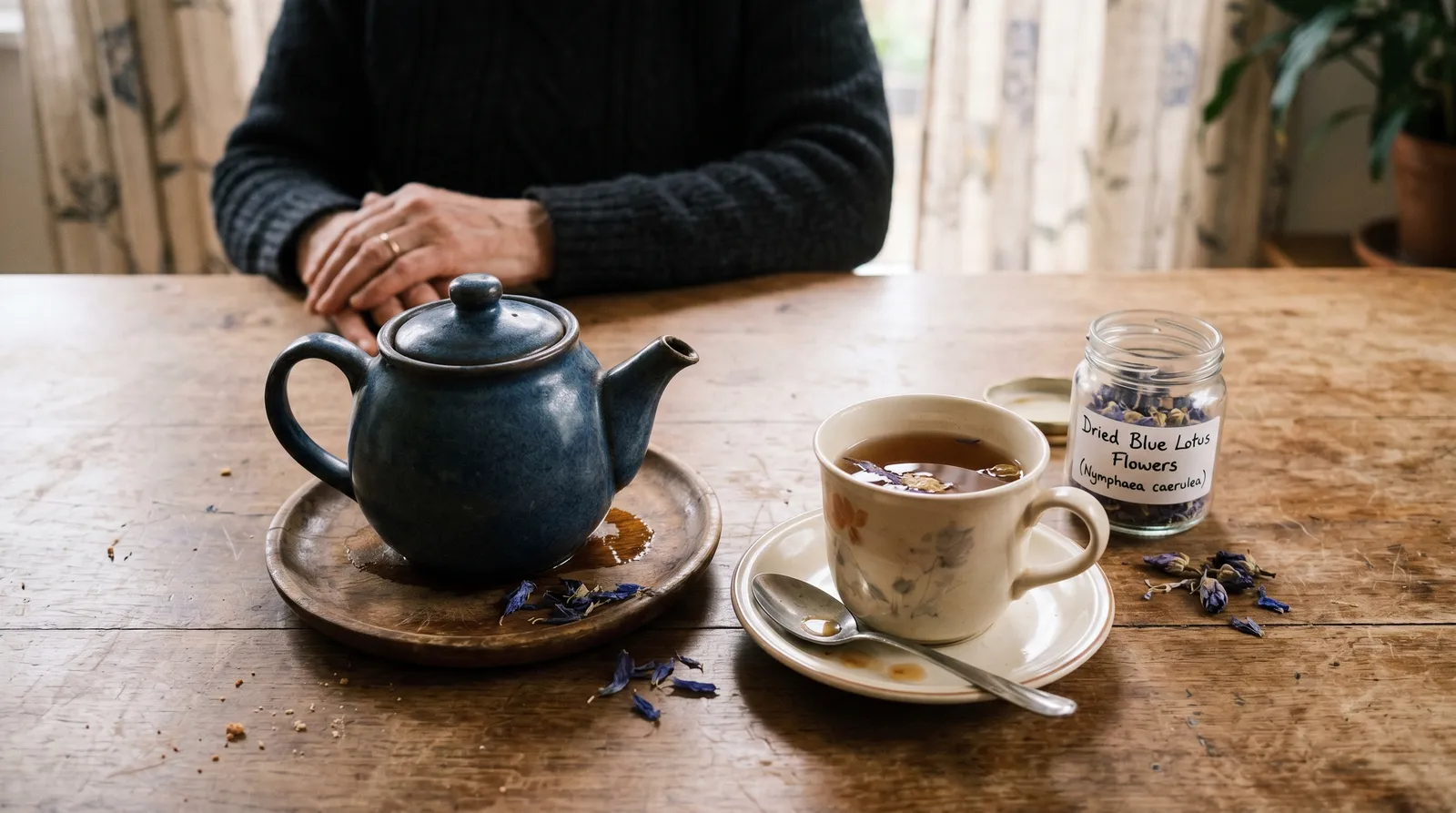
Steeping shredded petals in near-boiling water (around 80–90 °C, not a rolling boil) for 10 to 15 minutes extracts the water-soluble fraction of the aporphine alkaloid profile. Nuciferine has moderate water solubility, so a well-steeped cup does deliver a meaningful amount — but extraction is not complete. Some alkaloid content remains locked in the plant matrix. Users who report the strongest tea effects typically describe using 3–5 g of dried Nymphaea caerulea petals per cup and steeping for the full 15 minutes, sometimes with a small amount of lemon juice (the acidity may improve extraction of alkaloid bases, though this is inferred from general alkaloid chemistry rather than lotus-specific data).
Onset is slower — 15 to 30 minutes — but duration extends to 2–4 hours, which users generally describe as a gradual, warm relaxation with a mildly dreamy quality. The reported dream-enhancement effect (more vivid or lucid dreams when consumed before sleep) is one of the most commonly cited reasons people choose this route, though no controlled study has confirmed the mechanism or magnitude of this effect. It remains firmly anecdotal.
For Nelumbo nucifera (pink/sacred lotus), the alkaloid profile differs. Nelumbo shares nuciferine with the Nymphaea species but adds nelumbine, liensinine, and neferine — bisbenzylisoquinoline alkaloids with distinct pharmacological properties. A tea made from Nelumbo nucifera petals is not interchangeable with a Nymphaea caerulea tea in terms of effect, even if the preparation method looks identical. According to Paudel and Bhatt (2017), liensinine and neferine from Nelumbo nucifera demonstrate cardiovascular activity in preclinical models, including effects on cardiac ion channels — a profile that does not apply to the Nymphaea species.
Tea has no combustion byproducts. That alone makes it the harm-reduction default for anyone who wants to explore lotus without adding respiratory risk. If you want to get started with tea, Blue Lotus shredded petals offer a finer cut that steeps more evenly than whole petals.
Concentrated Extracts
Concentrated extracts deliver the highest alkaloid load per unit weight of any lotus consumption method, making them the most potent route and the one that demands the most careful approach. Whether dried powder, resin, or liquid tincture, extracts concentrate the aporphine alkaloids relative to raw plant material. A 10x dried extract, for instance, theoretically contains ten times the alkaloid load per gram compared to shredded petals. This makes extracts the most potent route by weight, and also the one that demands the most care.
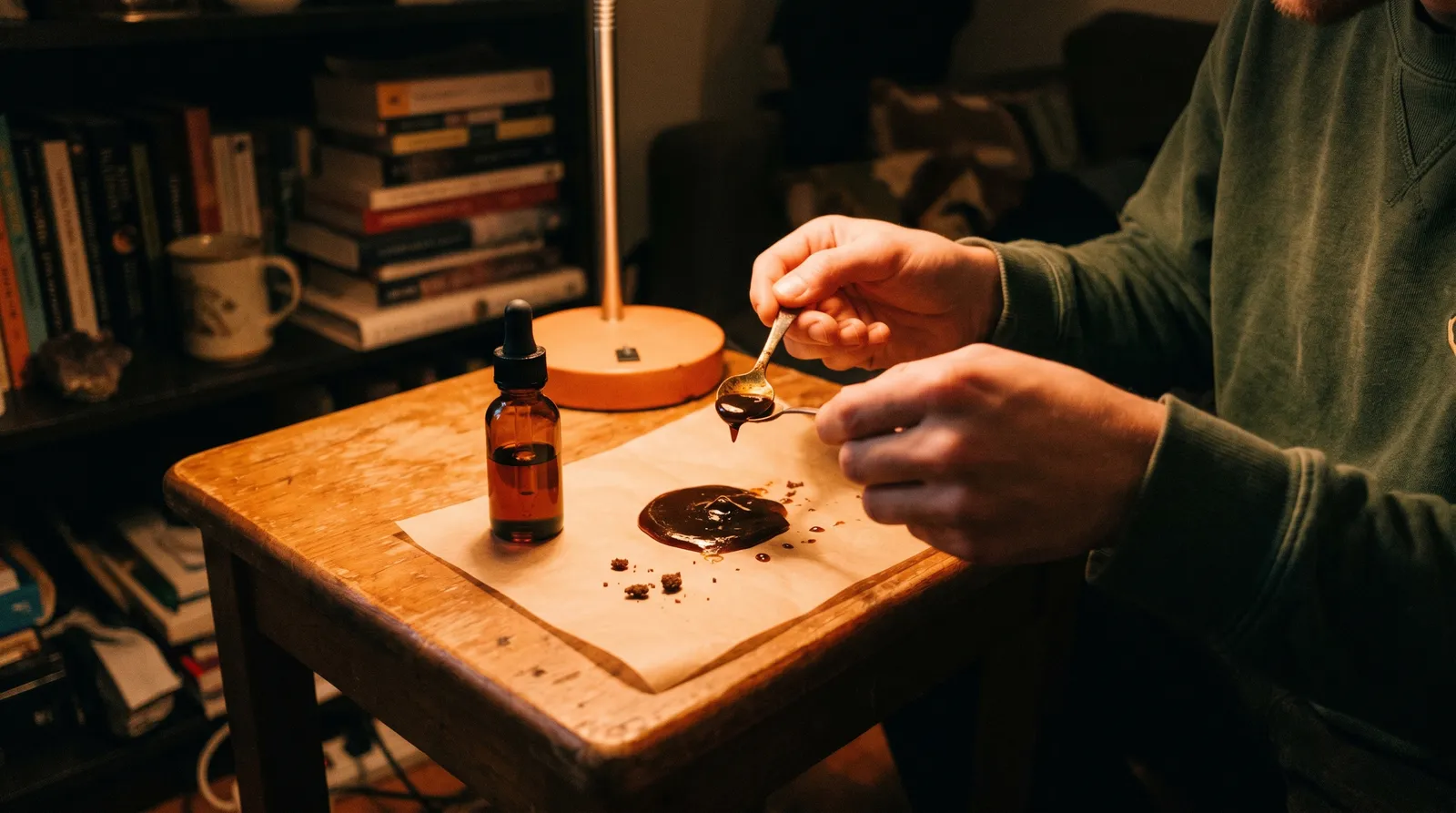
The critical point: extract amounts are not interchangeable with petal amounts. If a user is accustomed to brewing 5 g of Nymphaea caerulea petals as tea, the equivalent extract amount would be a fraction of a gram, depending on the concentration ratio. Overshooting is easy, especially with resin (which is sticky and difficult to portion precisely without a milligram scale). The cardiovascular and dopaminergic interaction concerns that apply to all lotus consumption apply with greater weight to extracts, simply because the alkaloid load per serving is higher.
Liquid extracts taken sublingually (held under the tongue) offer faster onset than oral extracts — roughly 5 to 15 minutes — because the alkaloids absorb through the oral mucosa and bypass first-pass liver metabolism. Dried extracts and resin taken orally behave more like tea in terms of onset (15–40 minutes) but deliver a stronger and often longer-lasting effect due to the concentrated alkaloid content.
One practical advantage of extracts is consistency. A well-made extract with a labelled concentration ratio gives you a more predictable starting point than eyeballing a handful of petals. The flip side is that extract quality varies between producers, and independent alkaloid assays for commercial lotus extracts are uncommon. What's labelled "50x" by one producer may not match another's "50x" — there is no industry-standard assay protocol for lotus extracts. When you buy a lotus extract, always check whether the producer specifies the source species and provides any analytical documentation. Blue Lotus 20x extract and Blue Lotus 100x extract are both available for those who want a pre-concentrated product.
Alkaloid Delivery and Bioavailability
Bioavailability differs substantially across the three routes, even though the active compounds are the same. The aporphine alkaloids in Nymphaea caerulea — principally nuciferine and the apomorphine analogue — interact with dopamine receptors. Proposed partial agonism at D1 and D2 receptors has some in-vitro support (Agnihotri et al., 2008), but human pharmacokinetic data remains limited. What we can say is that the route of administration changes how much alkaloid reaches systemic circulation and how fast.
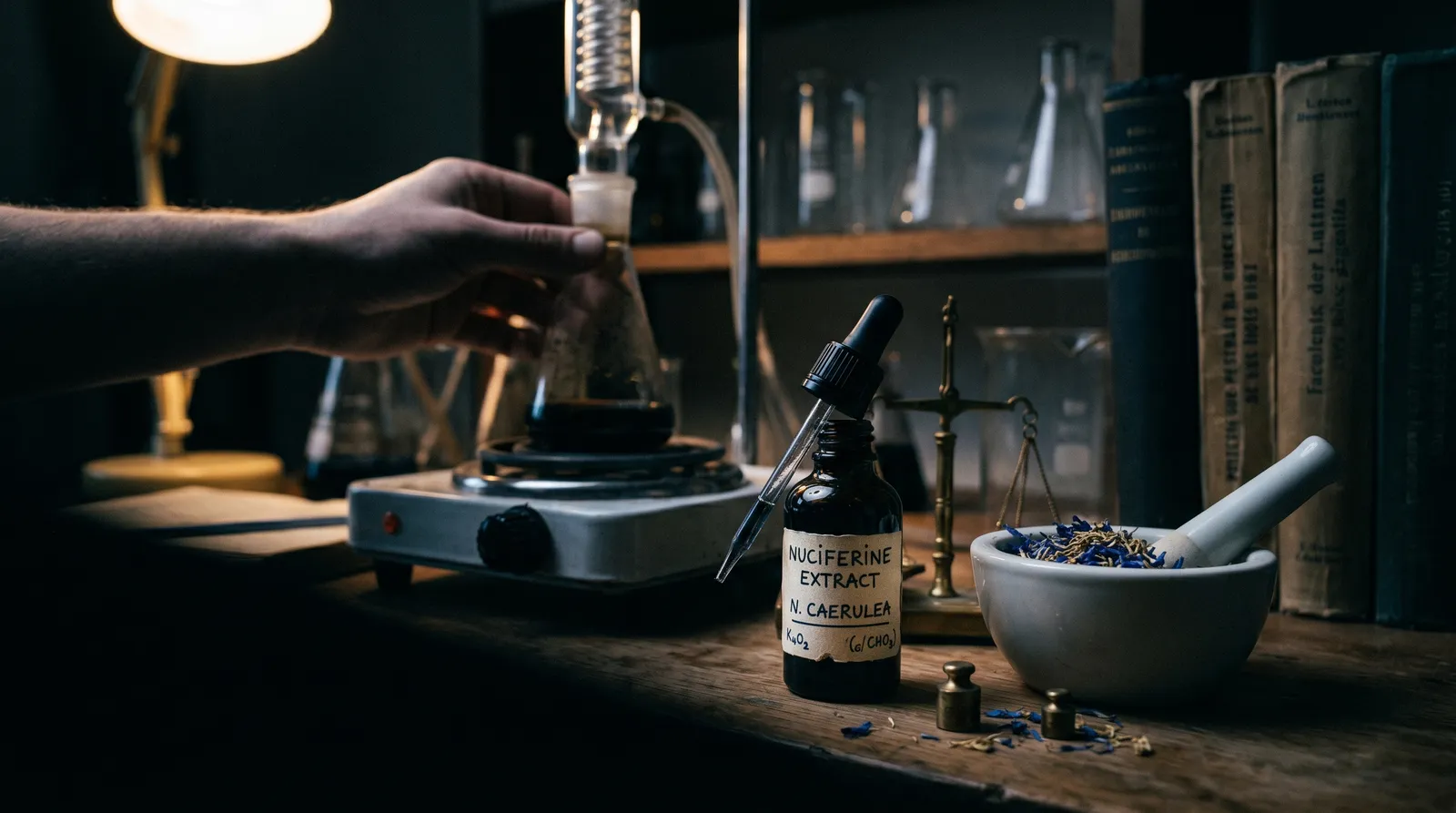
Inhalation (smoking or vaporising) delivers alkaloids rapidly but inefficiently — combustion destroys some, and the total amount absorbed per session is relatively low. Oral routes (tea, oral extract) are slower but deliver more total alkaloid over a longer window, subject to first-pass metabolism in the liver. Sublingual liquid extract partially bypasses first-pass metabolism, which may explain why users report it as subjectively stronger milligram-for-milligram than the same extract swallowed.
No published study has directly compared the bioavailability of nuciferine across these three routes in humans. The reasoning above is extrapolated from general pharmacokinetic principles and user reports — not from lotus-specific clinical data. This is a genuine gap in the evidence base, and we think it's important to say that plainly rather than dress up extrapolation as certainty.
What We Honestly Don't Know
The current evidence has real limitations that shape how much confidence you should place in any guide on this topic, including this one. No controlled human trial has compared the pharmacokinetics of smoking vs tea vs extract lotus consumption for any Nymphaea species. The onset and duration figures cited throughout this article come from user reports and general pharmacological reasoning — not from clinical measurement. The thermal degradation rate of nuciferine during combustion has not been quantified. The dream-enhancement effect, while widely reported, has zero controlled evidence behind it. And the concentration ratios on commercial extracts (10x, 50x, 100x) are manufacturer claims that rarely come with independent analytical certificates. We present the best available information, but we want you to know where the edges of that information are.
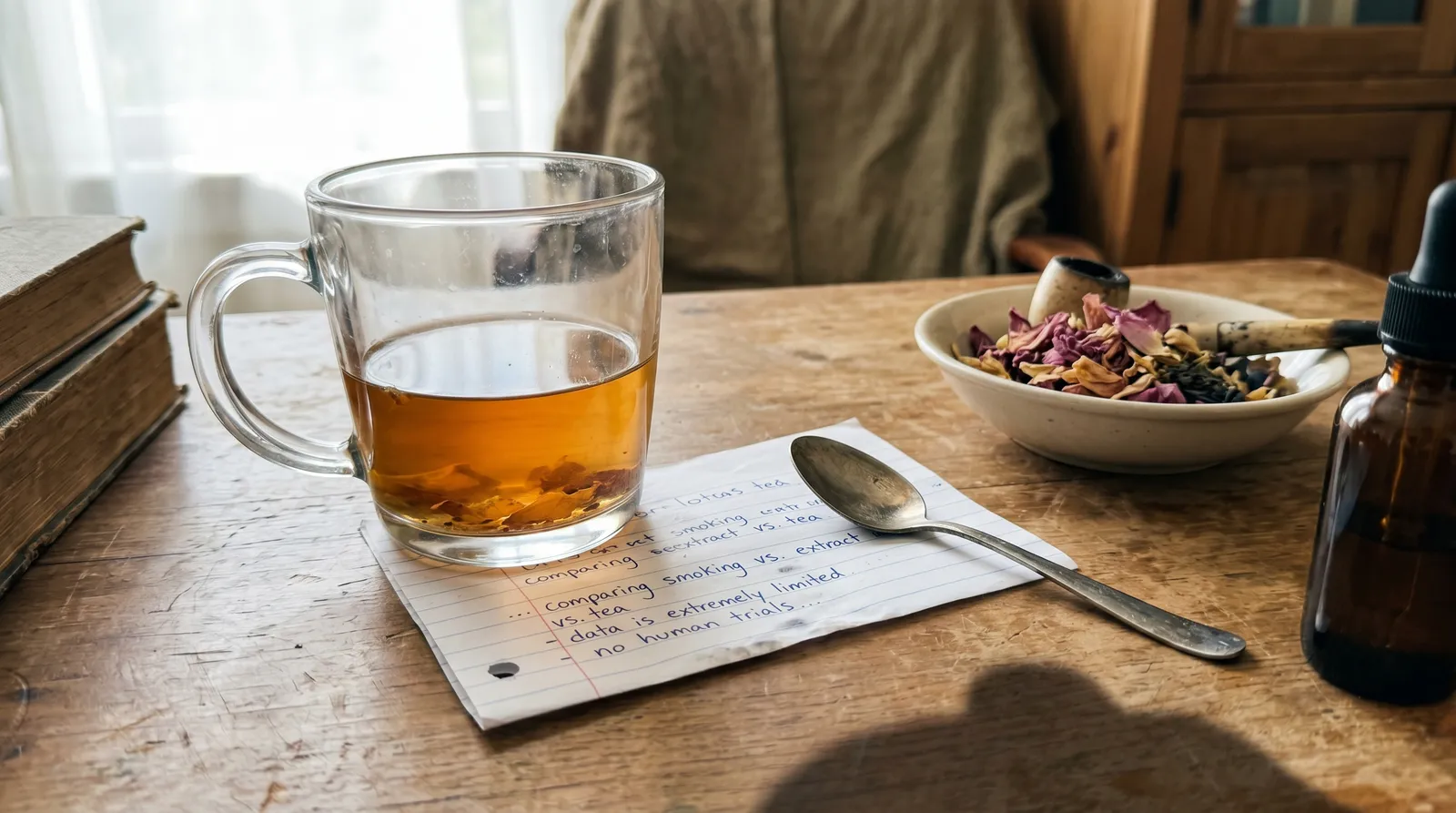
Safety Considerations Across All Three Routes
The core safety profile applies regardless of route: the aporphine alkaloid profile of Nymphaea caerulea carries specific interaction risks that scale with the amount of alkaloid absorbed per session. Extracts carry the highest per-serving load, tea is moderate, and smoking delivers the least — but none are without interaction potential in the presence of certain substances.
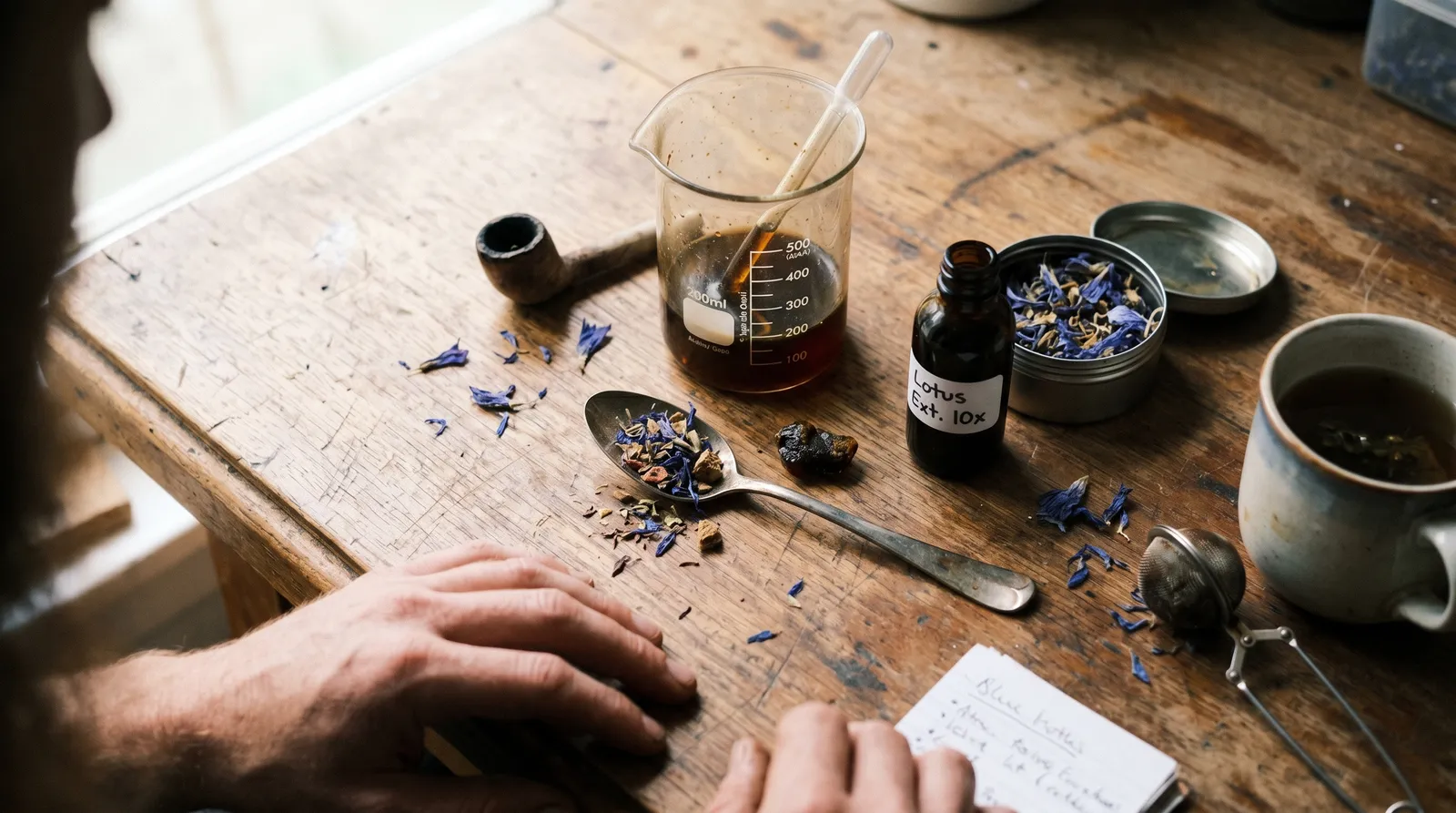
Apomorphine analogues can lower blood pressure according to pharmacological literature on aporphine-class compounds. Anyone taking antihypertensive medication, or anyone with cardiovascular concerns, should be aware that combining lotus with their medication may produce additive blood-pressure-lowering effects. This concern scales with the amount of alkaloid consumed: extracts carry more interaction potential per serving than shredded petals brewed as tea.
The dopamine-receptor activity of aporphine alkaloids also creates interaction potential with dopaminergic medications: levodopa, pramipexole, ropinirole, and therapeutic apomorphine itself (used in Parkinson's disease management). Stacking exogenous aporphine alkaloids on top of prescribed dopaminergic therapy is pharmacologically reckless. The same caution extends to dopamine-receptor-active antiemetics such as metoclopramide and domperidone, and there is a theoretical concern with MAOIs (monoamine oxidase inhibitors) via the aporphine class. For a complete breakdown, see the dedicated lotus interactions article in this wiki cluster.
The mild sedation that users report — across all three routes — plus the anecdotal dream-enhancement effect make driving or operating machinery clearly inappropriate within approximately four hours of use. This applies whether you've smoked a small pipe, drunk a cup of tea, or taken a sublingual extract.
Smoking adds a route-specific risk: combustion byproducts. Chronic inhalation of any burned plant material damages respiratory tissue over time. If you're choosing between routes purely on a harm-reduction basis, tea or oral extract wins every time.
If you are taking medication or have a pre-existing health condition, consult a qualified healthcare professional before using any lotus product.
Which Route Suits What
The best method depends entirely on your goals, sensitivity, and risk tolerance — there is no universal winner in the smoking vs tea vs extract lotus debate.
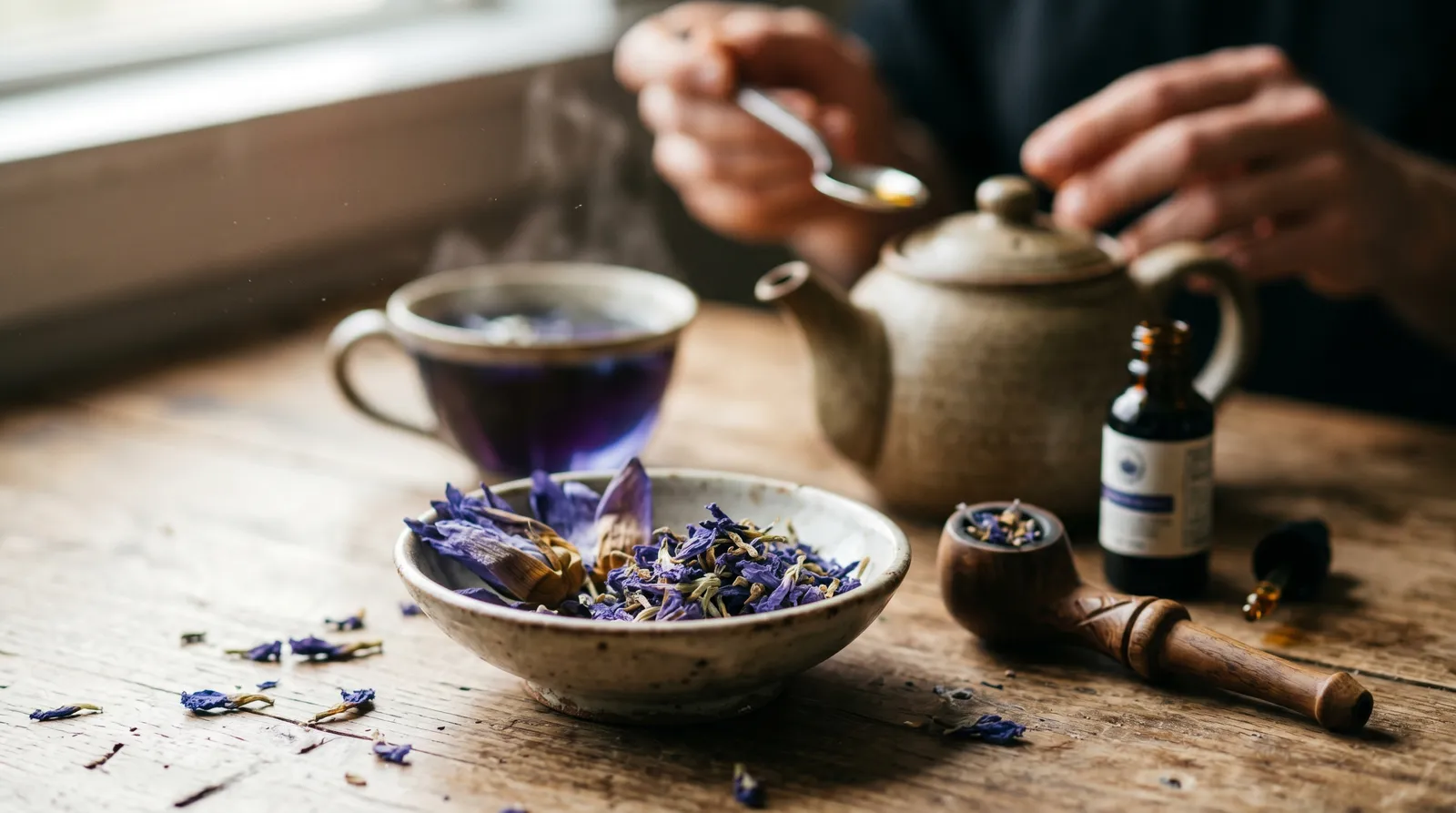
If you want a brief, mild experience with fast onset and don't mind the respiratory trade-off, smoking dried Nymphaea caerulea petals delivers that. It's the least efficient use of your material, but it's quick and simple. You can buy Blue Lotus (Nymphaea caerulea) dried petals as a convenient starting point.
If you want a longer, gentler arc — particularly the reported dream-enhancement quality — tea is the traditional choice and the harm-reduction default. No combustion, reasonable extraction, and the ritual of preparation is part of the experience for many users. Dried whole petals or shredded petals are the most practical starting material for tea. You can also order Blue Lotus shredded petals if you prefer a finer cut that steeps more evenly.
If you want the strongest, most controlled experience with the longest duration, a concentrated extract is the tool for the job. But it demands respect: use a milligram scale, start conservatively, and remember that the interaction risks scale upward with concentration. Extract amounts are not petal amounts. Treat them as entirely separate preparations. When you get a lotus extract, always check whether the producer specifies the concentration ratio and the source species. Blue Lotus 20x extract and Blue Lotus 100x extract are both available for those who want a pre-concentrated product.
And whichever route you choose, know what species you're working with. A Nymphaea caerulea tea and a Nelumbo nucifera tea are not the same drink. The genera are in different plant families, with only partial alkaloid overlap. Mixing them up is not dangerous per se, but it does mean your expectations may not match the experience — and in a harm-reduction context, accurate expectations matter.
Last updated: April 2026
Frequently Asked Questions
10 questionsDoes smoking blue lotus destroy the active alkaloids?
How long should I steep lotus petals for the strongest tea?
Are lotus extract doses the same as dried petal doses?
Can you vaporise blue lotus instead of smoking it?
Why do people report more vivid dreams from lotus tea than from smoking it?
Which lotus consumption method is safest?
How long do the effects of blue lotus last depending on the method?
Do I need a milligram scale for blue lotus extract dosing?
Can I mix blue lotus with wine like the ancient Egyptians did?
Does combining lotus tea with smoking produce stronger effects?
About this article


Adam Parsons is an external cannabis and psychedelics writer and editor who contributes to Azarius's wiki as both author and reviewer. On the writing side, he authors Azarius's kratom and kanna clusters, drawing on exten
This wiki article was drafted with AI assistance and reviewed by Adam Parsons, External contributor. Editorial oversight by Joshua Askew.
Medical disclaimer. This content is for informational purposes only and does not constitute medical advice. Consult a qualified healthcare provider before use of any substance.
Last reviewed April 19, 2026
References (4)
- [1]Agnihotri, V.K. et al. (2008). 'Constituents of Nymphaea caerulea .' Phytochemistry Letters , 1(1), pp. 44–50.
- [2]EMCDDA (European Monitoring Centre for Drugs and Drug Addiction). Drug profiles and risk assessments for novel psychoactive substances. Available at: emcdda.europa.eu.
- [3]Maertens, R.M. et al. (2012). 'The genotoxicity of mainstream and sidestream marijuana and tobacco smoke condensates.' Chemical Research in Toxicology , 22(8), pp. 1406–1414.
- [4]Paudel, K.R. and Bhatt, N. (2017). 'Phytochemical and pharmacological profile of Nelumbo nucifera .' Evidence-Based Complementary and Alternative Medicine , 2017, Article 9080.
Related Articles
Blue Lotus vs Kanna: Effects & Safety
Blue lotus vs kanna compared — Nymphaea caerulea's aporphine profile against Sceletium tortuosum's mesembrine chemistry, with interaction warnings.
Lotus Clinical Research Overview
What does lotus clinical research actually show? A critical review of Nymphaea caerulea and Nelumbo nucifera pharmacology, preclinical data, and…
Kanna South Africa To West History
Sceletium tortuosum was used by San and Khoekhoe communities in southern Africa for centuries before European colonists first documented it in the 1660s.
Sceletium Tortuosum Plant
Learn about the sceletium tortuosum plant: botany, alkaloids, fermentation, safety warnings, and where to buy kanna.
Kanna Pharmacokinetics Explained
Complete guide to kanna pharmacokinetics: how Sceletium tortuosum alkaloids are absorbed, metabolised via CYP2D6, and eliminated.
Kanna Chemistry: Sceletium Alkaloids Explained
Kanna chemistry explained: mesembrine, mesembrenone, their mechanisms, how fermentation and extraction change alkaloid profiles, and why it matters…
Rapé Shamanic Snuff Guide: How to Use It Safely
A practical rapé shamanic snuff guide covering dose, kuripe technique, effects, nicotine safety, interactions and Amazonian tradition.
White Sage Salvia Apiana Cultural Smudging Guide
Salvia apiana is a non-psychoactive shrub native to southern California's coastal sage scrub, burned as ceremonial incense in Indigenous North American…
Mulungu Erythrina Traditional Amazonian Use — Bark, Alkaloids & Research
Erythrina mulungu is a Brazilian legume tree whose bark has been brewed as a calming decoction in rural folk medicine for generations.