
This article discusses psychoactive substances intended for adults (18+). If you have a health condition or take medication, consult a doctor before use. Our age policy
Sterile Handling Mushroom Cultivation: Prevent Contamination
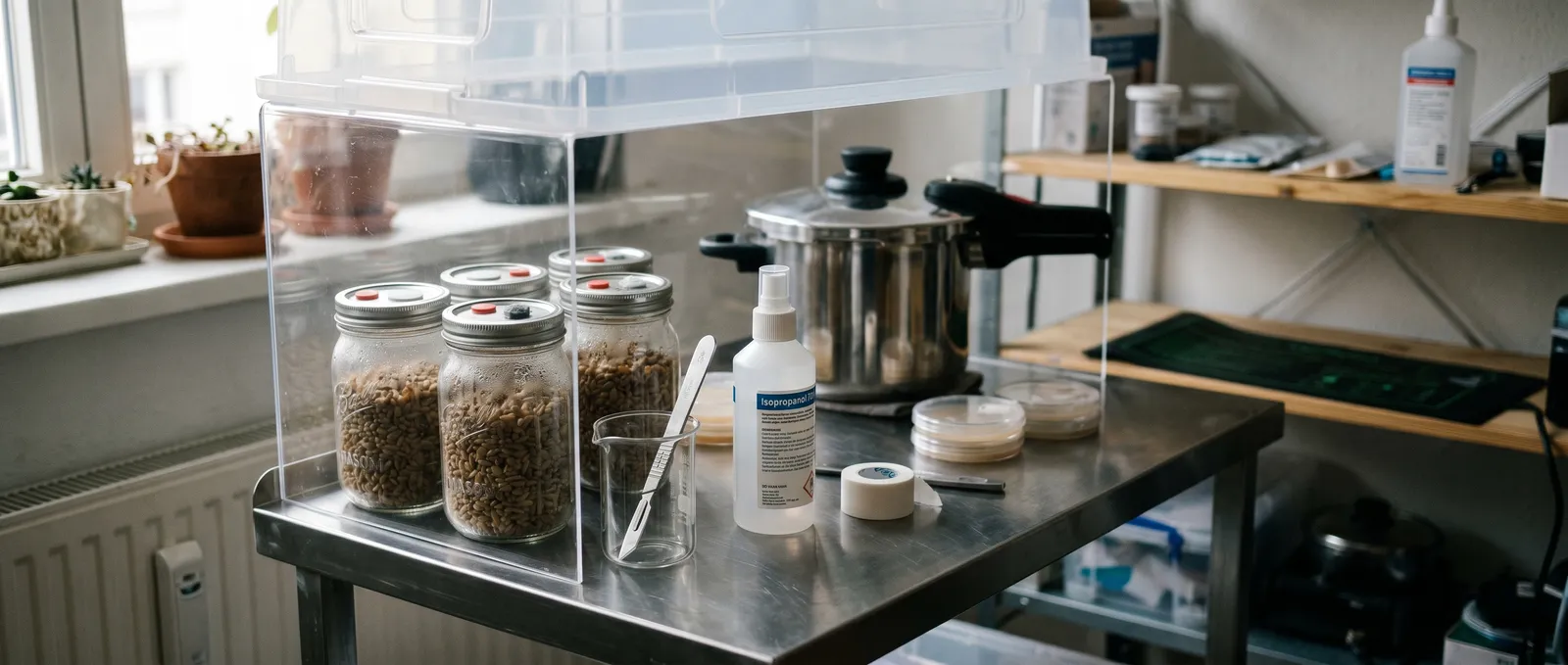
Definition
Sterile handling in mushroom cultivation is the set of habits — surface disinfection, glove discipline, still-air technique, clean water — that keeps contaminants out of a colonising substrate. According to Stamets (2000), a single Trichoderma spore can overtake Psilocybe cubensis within 72 hours, making technique the decisive factor in home-grow success.
Sterile handling mushroom cultivation is a discipline that keeps bacterial spores, mould, and human skin flora out of your substrate so the mycelium wins its race against competitors. Contamination is the single biggest reason home mushroom grows fail, and sterile technique is what separates a full flush from a binned kit. This guide is written for adults aged 18 and over who buy a Psilocybe cubensis Grow Kit or Ready-2-Grow Bag and want the practical sterile handling mushroom cultivation steps that matter on a kitchen counter — not a laminar flow lab.
The logic is simple: your mycelium is in a race against everything else that wants to eat that rye grain. According to Stamets (2000), a single opportunistic Trichoderma spore can outpace cubensis mycelium within 72 hours on a warm, humid substrate. You cannot sterilise a living-room. You can stack the odds so heavily in the mycelium's favour that contamination rarely wins.
Step 1: Prepare the workspace before the kit comes out
Clean the surface first, open the bag second — a pre-prepped surface is the foundation of every other step in sterile handling mushroom cultivation.
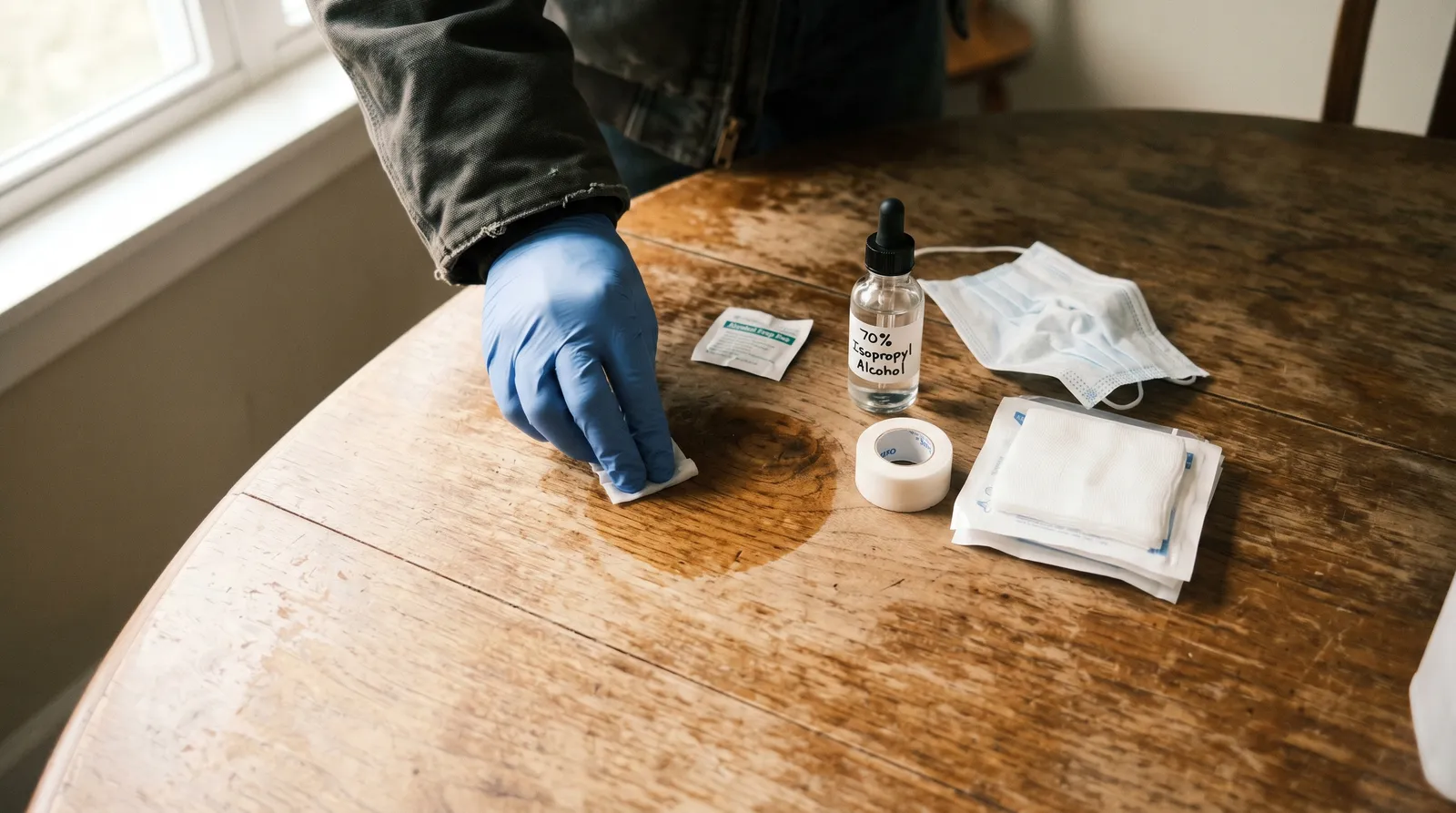
- Clear a smooth, non-porous surface — glass, sealed laminate, stainless steel. Wood and fabric hold spores.
- Wipe twice with 70% isopropyl or ethanol. 70% kills more effectively than 99% — the water content slows evaporation and gives the alcohol contact time (CDC Guideline for Disinfection and Sterilization, Rutala & Weber, 2008).
- Shut windows, turn off fans, close the door. You want still air. Airborne contamination drops measurably within 10–15 minutes of the air settling.
- Remove pets, houseplants, and open food from the room. Pet dander and potting soil are rich contamination vectors.
Step 2: Personal prep — you are the biggest vector
You are the largest contamination source in the room. Human skin carries Staphylococcus and Bacillus species that thrive on grain substrates, and a single ungloved hand is the classic failure point.
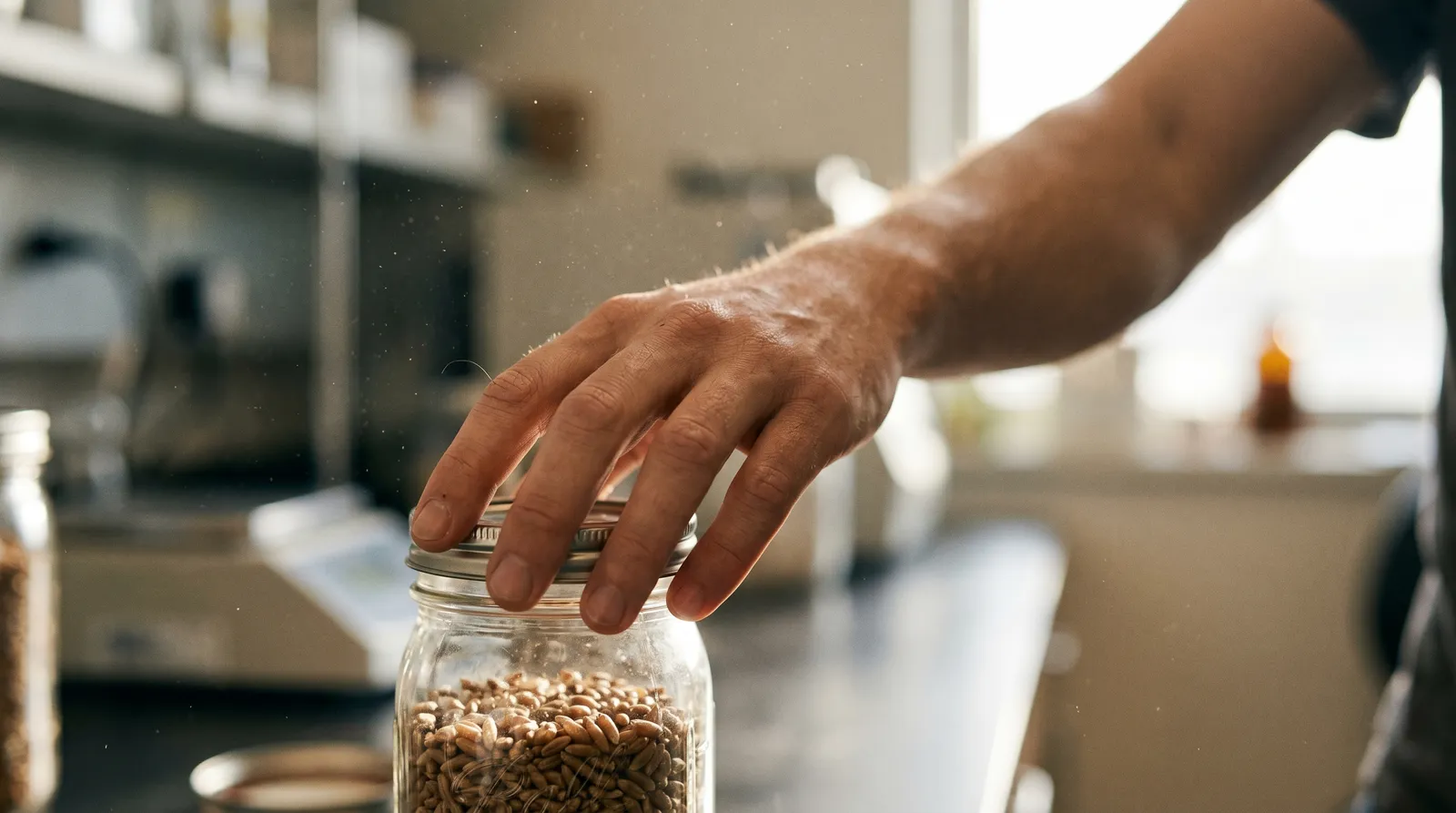
- Shower before a colonisation check or misting session if you can — or at minimum change into a clean long-sleeved top that hasn't been near a kitchen, bin, or garden.
- Tie long hair back. Remove watches and rings (spore traps).
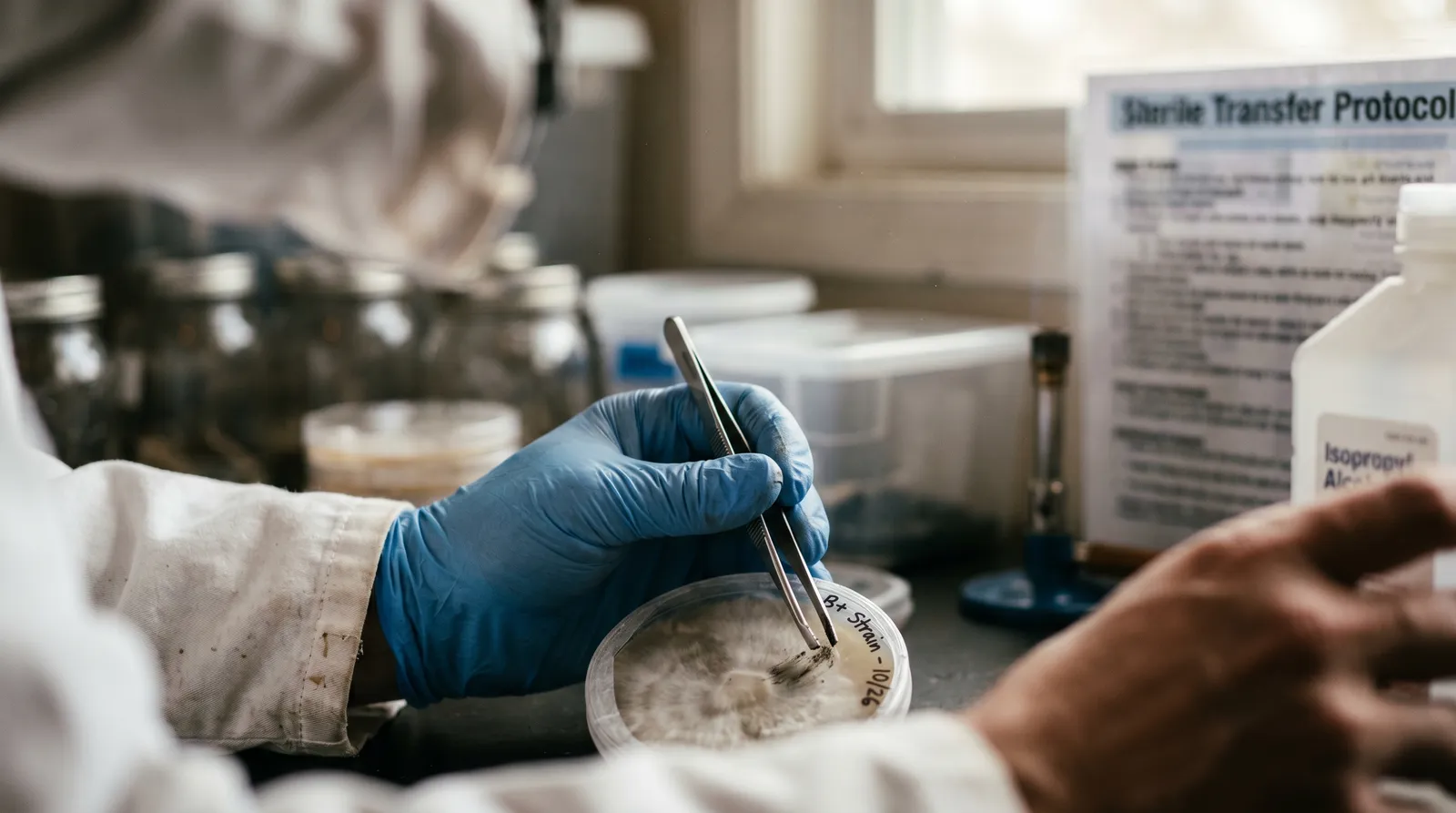
- Wash hands to the elbow with soap for 30 seconds, then spray nitrile or latex gloves with 70% IPA and rub until dry. Re-spray between every opening of the kit.
- A surgical mask is cheap insurance — your breath carries plenty of microbes. This matters most during the casing-layer soak on a Golden Teacher Grow Kit or when you crack a Ready-2-Grow Bag open for the first misting.
Step 3: Still air vs flow hood — what home growers actually need
Home kit growers do not need a laminar flow hood. Grow kits and R2G bags are designed around still-air technique, and the reason it works is simple: airborne spores fall, while disturbed air circulates them.
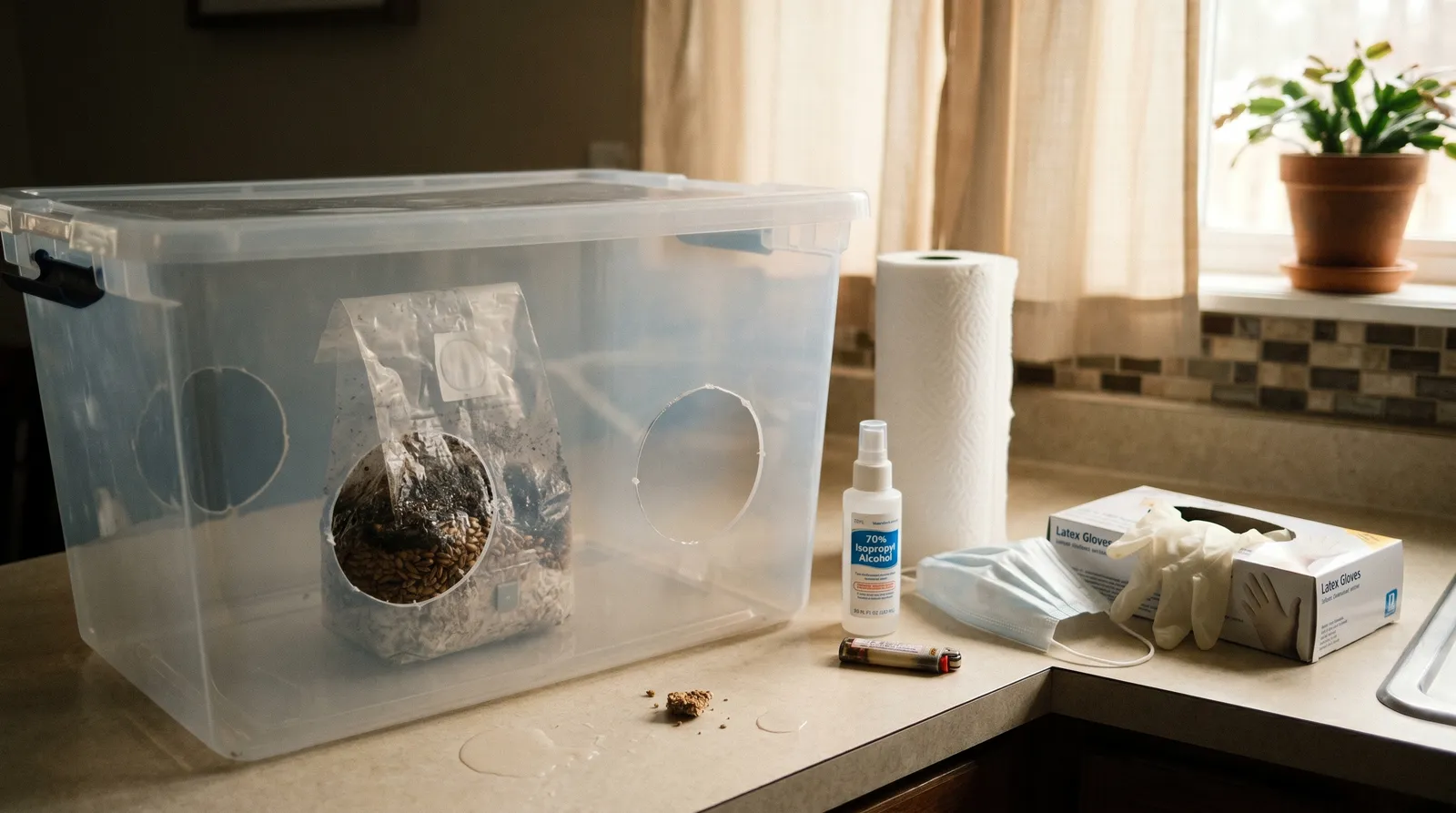
A still-air box (SAB) — a clear plastic tub with two arm holes — is optional for kit growers but worth building if you plan to do anything involving exposed substrate (grain-to-grain transfers, liquid culture inoculation). Wipe the interior with IPA, let it sit closed for 10 minutes before working, and work with your hands low so any falling particles land behind the substrate, not on it.
The table below summarises when each approach is appropriate:
| Technique | When to use | Kit format | Risk level |
|---|---|---|---|
| Open-room still air | Misting sealed kits, quick openings under 10s | Grow Kit, R2G Bag | Low |
| Still-air box (SAB) | Extended exposed-substrate work | Grain transfers, LC inoculation | Medium |
| Laminar flow hood | Agar work, mass inoculations | Lab-scale only | Low (if used correctly) |
| No prep / kitchen counter | Never | Any | High — expect failure |
Step 4: Handle the substrate with the fewest touches possible
Every opening of a kit is a contamination event — minimise them.
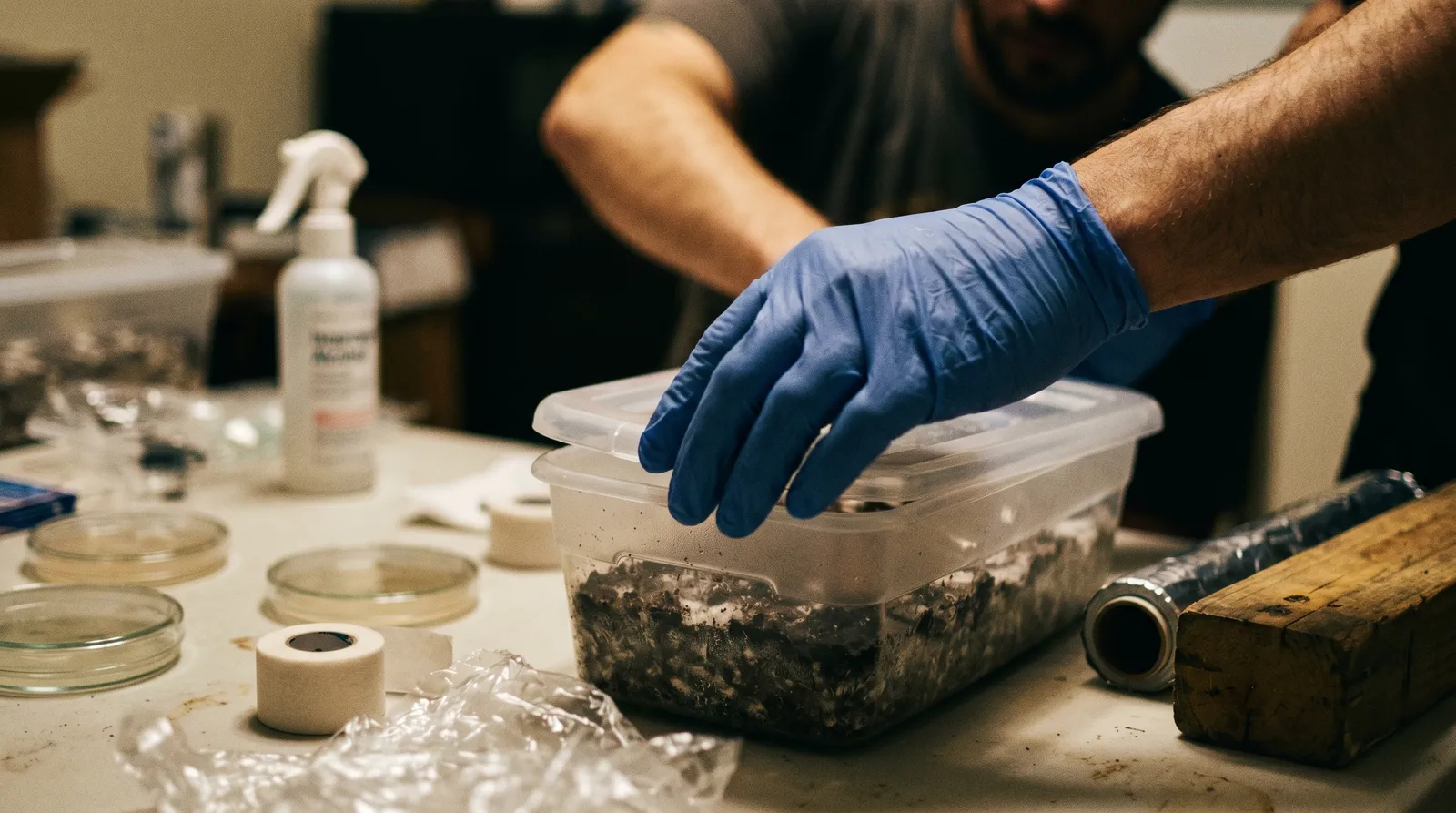
- Initial soak (Grow Kit format only): fill the bag with cold tap water, close with paperclips, soak 12 hours in the fridge, then drain. Don't touch the cake surface. Mist the inside of the bag — not the mycelium directly.
- Misting and fanning: lift the bag, spray 2–3 pumps of distilled or boiled-and-cooled water at the bag walls, fan with the bag edge 3–5 times, re-seal. Total open time: under 10 seconds. Humidity target 90–95%, temperature 22–24°C.
- R2G bags: the sealed Ready-2-Grow Bag format has a built-in filter patch and needs no misting until the injection port is opened at fruiting. Follow the enclosed instructions — fewer touches, less risk.
- Harvest: wash hands, spray gloves, twist fruits at the base. Don't cut — a blade on one mushroom then another is a contamination bridge.
Step 5: Water quality matters more than people think
Water source is a hidden contamination variable most growers ignore. Tap water varies enormously — chlorinated municipal water (most of Western Europe, including MAPS and EMCDDA member states' reporting regions) is usually fine for misting but can suppress mycelium at high concentrations. Distilled, reverse-osmosis, or boiled-and-cooled water is safer. Never use mineral water with visible sediment — mineral films can harbour biofilm.
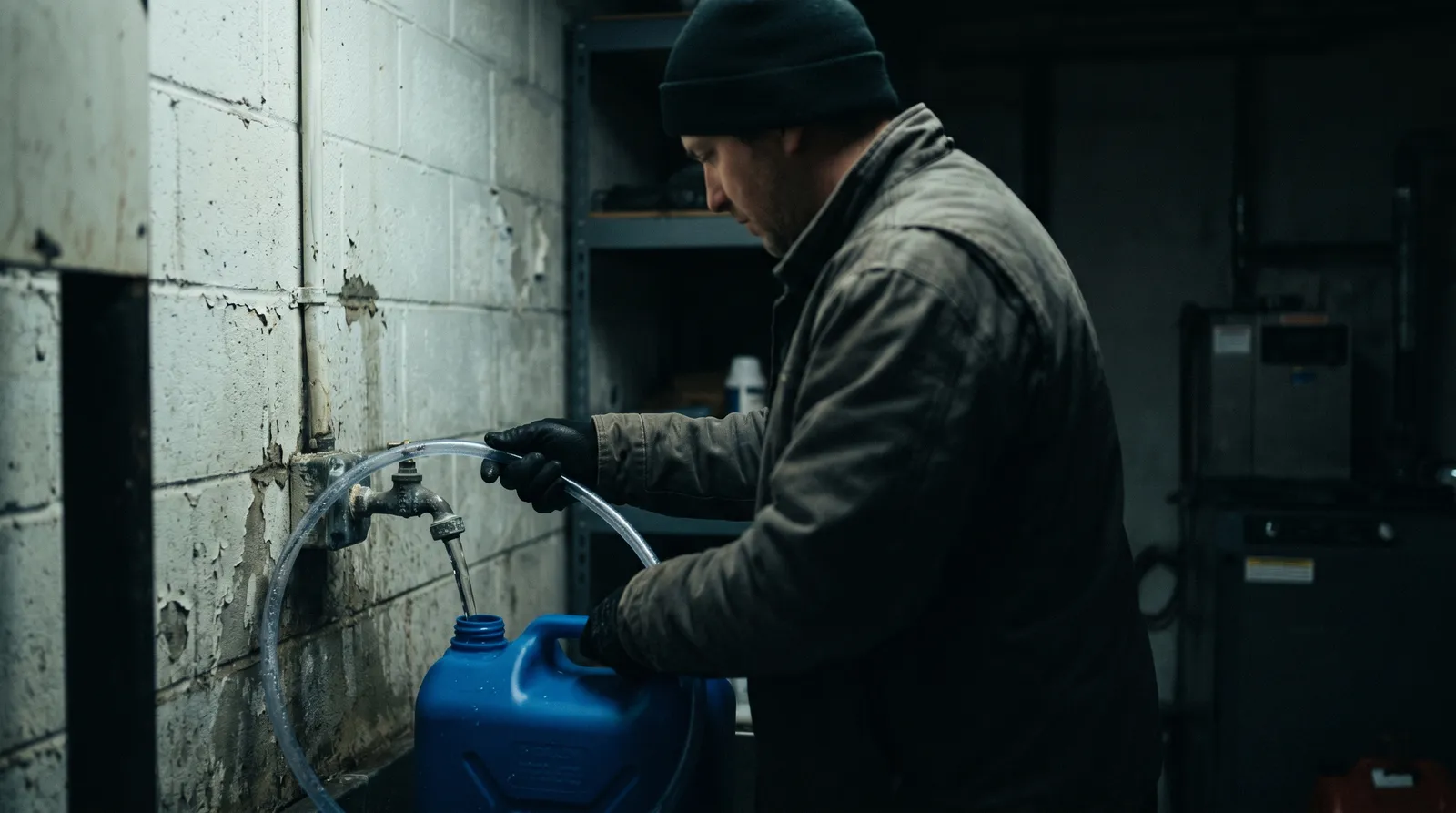
Spray bottles themselves go bad. The nozzle and tube grow biofilm within 2–3 weeks of tap-water use. Empty, rinse with IPA, air-dry weekly. A single cloudy spray bottle has ended more flushes than any airborne spore — honest limitation: this is the one failure mode we can't catch by eye until it's too late.
Step 6: Know what contamination looks like
Spotting contamination early saves the rest of your grow room. Sterile handling fails sometimes, and knowing the signatures tells you whether your technique needs tightening.
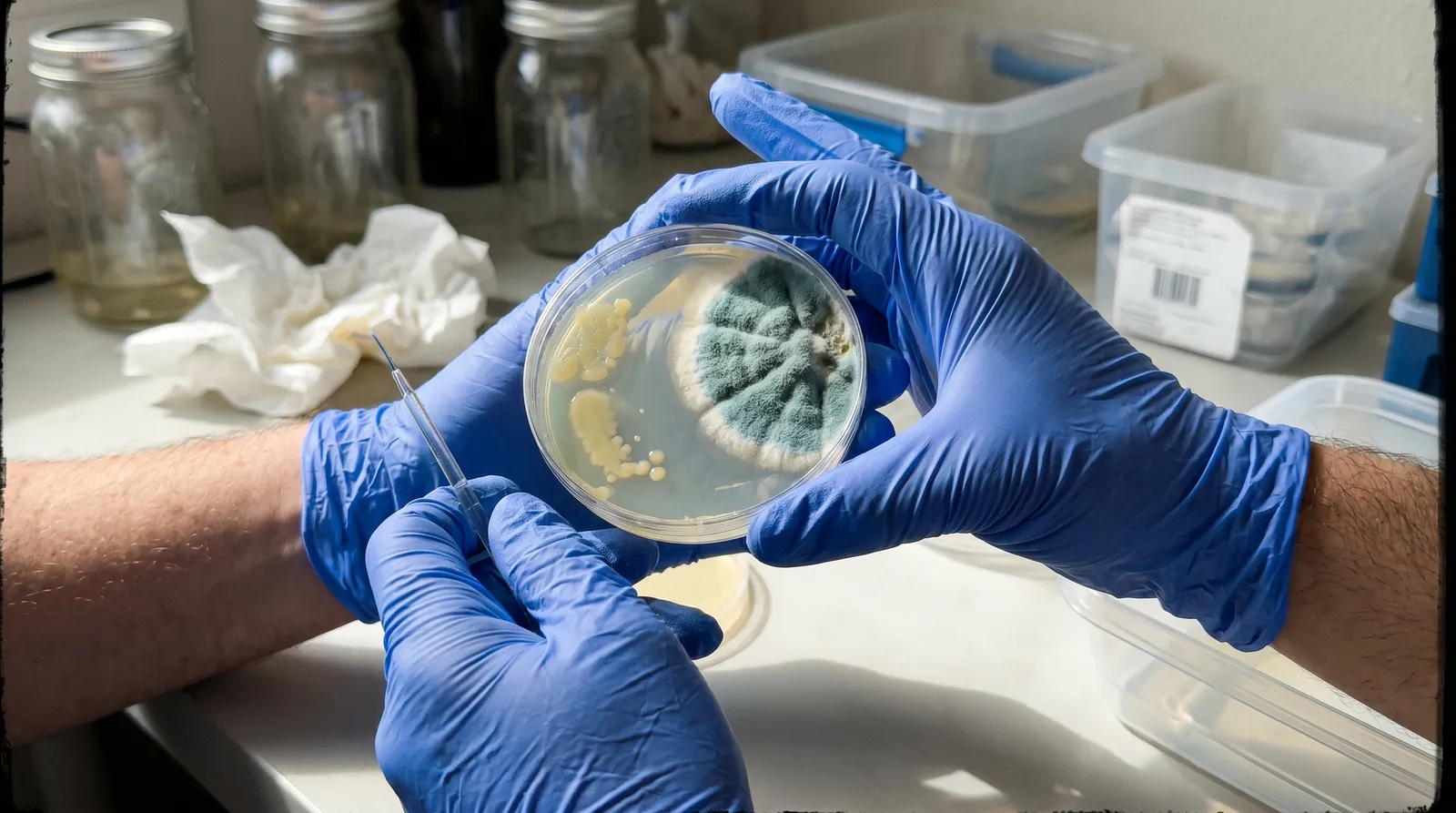
- Trichoderma (green mould): starts white, turns bright forest-green within 24–48 hours. Toss the kit. Do not try to salvage.
- Cobweb mould: fluffy, fast-spreading grey-white "spiderweb" over the casing. Sometimes treatable with a hydrogen peroxide mist (3% food-grade, light spritz) if caught within hours — but binning is safer.
- Wet rot / bacterial blotch: slimy yellow-brown patches, sour smell. Pseudomonas. Bin the kit.
- Pink bacterial contamination: salmon-pink streaks on grain. Bin the kit.
- Blue bruising: not contamination. Psilocybin oxidising where you handled the mushroom. Harmless.
Contaminated kits go straight into a sealed bag and into the outdoor bin — not the compost, not the food waste. You don't want Trichoderma spores settling on the next kit you order.
Step 7: Ongoing room hygiene
The grow space gets dirtier over time if you don't manage it — room hygiene is a continuous practice, not a one-off prep.
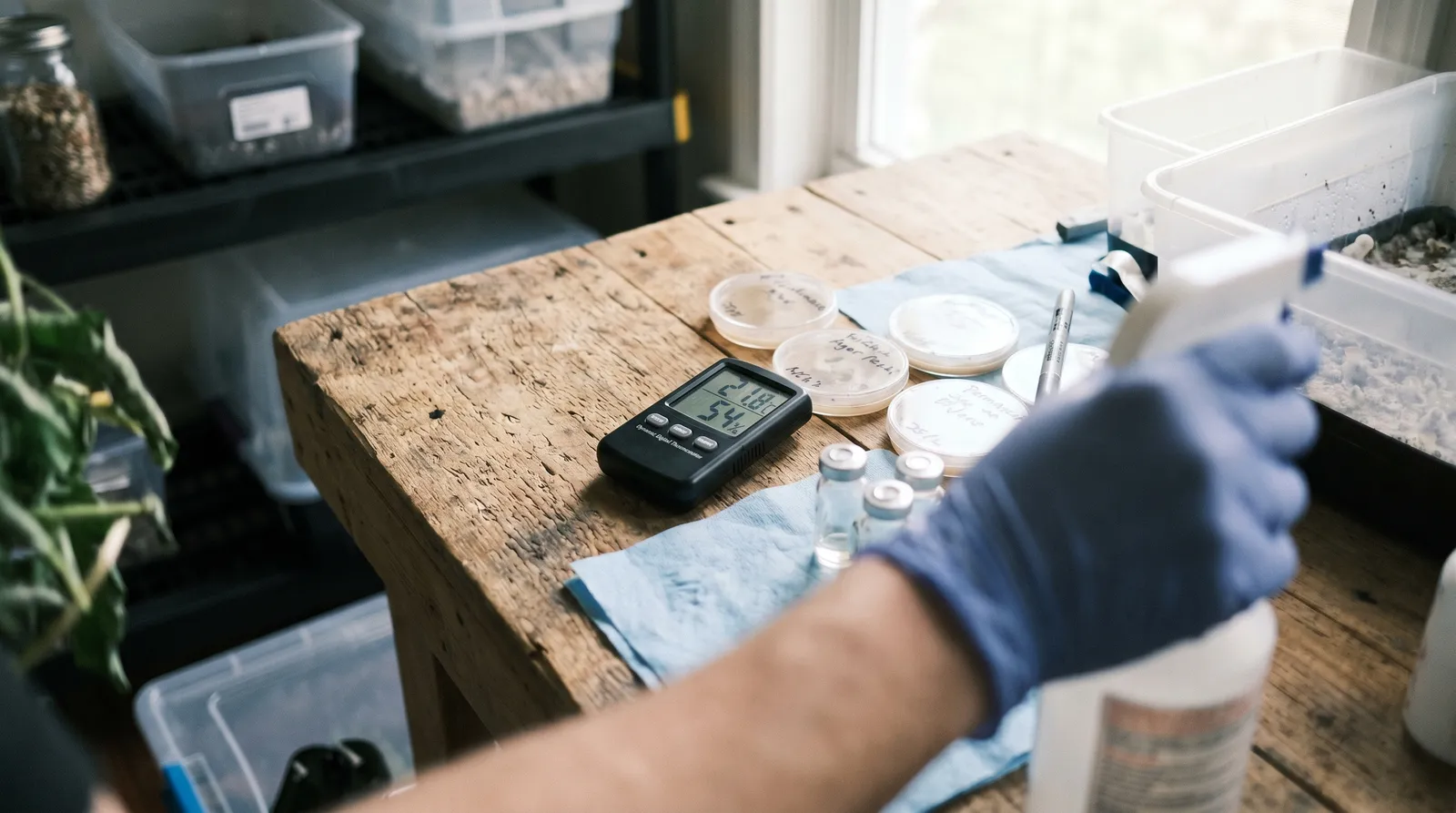
- Wipe surfaces with IPA weekly, not just before each grow.
- Keep the grow space separate from food prep. Kitchens are Trichoderma factories — old bread, fruit bowls, compost bins all shed spores.
- A cupboard or spare room beats a kitchen shelf every time. A dedicated plastic box with a lid (clear, so light enters) beats both.
- Between grows, strip the space, wipe everything with IPA, and leave it empty for 24 hours before the next kit goes in.
- Respiratory PPE (FFP2 mask) at dry-harvest stage — mushroom spores in high concentration can trigger hypersensitivity pneumonitis in susceptible people, documented in cubensis farm workers (Cox et al., 1988).
Common mistakes that break sterile technique
- Opening the bag in the kitchen right after handling raw food.
- Using a spray bottle that previously held cleaning product, plant food, or perfume residue.
- Touching the substrate "just to check if it's moist enough." If in doubt, mist the walls, don't poke the cake.
- Leaving the kit near a heating vent — dry, moving air accelerates both contamination and dehydration.
- Re-using gloves between sessions. Fresh pair every time, sprayed with IPA before the first touch.
- Inoculating or handling sclerotia-forming species (Tampanensis, Mexicana) with kit-format technique — truffle cultivation has its own protocols; if you're working with a truffle culture rather than choosing to buy finished truffles from the Azarius range, treat it as a separate discipline.
Consumption, dosing, and experience-design are out of scope for this guide — see the psilocybin hub for those topics. For interactions, psilocybin is contraindicated with MAOIs, SSRIs, and lithium; see the dedicated psilocybin interactions article for the full picture.
Educational information only. This guide covers sterile handling mushroom cultivation technique for harm-reduction and educational purposes. It is not medical advice. Individuals with respiratory conditions, immune compromise, or mould allergies should consult a qualified healthcare professional before handling any mycological material. Mushroom spores in concentration can trigger hypersensitivity reactions (Cox et al., 1988); use appropriate PPE. Information reflects current best practice as of the last update and may be superseded by newer research.
Last updated: April 2026
Frequently Asked Questions
8 questionsDo I need a laminar flow hood to grow mushrooms at home?
What concentration of alcohol works best for surface disinfection?
Can I save a kit that has cobweb mould on the casing?
Is tap water safe for misting a grow kit?
How long should I wait between opening the kit and closing it again?
Do I need to wear a mask when handling a grow kit?
What is a still-air box and do I need one for a mushroom grow kit?
How often should I re-spray my gloves with alcohol during a mushroom grow session?
About this article


Adam Parsons is an external cannabis and psychedelics writer and editor who contributes to Azarius's wiki as both author and reviewer. On the writing side, he authors Azarius's kratom and kanna clusters, drawing on exten
This wiki article was drafted with AI assistance and reviewed by Adam Parsons, External contributor. Editorial oversight by Joshua Askew.
Medical disclaimer. This content is for informational purposes only and does not constitute medical advice. Consult a qualified healthcare provider before use of any substance.
Last reviewed April 25, 2026
References (1)
- [1]Cox, P. A., Sperry, L. J., Tuominen, M., & Bohlin, L. (1988). Pharmacological activity of the Samoan ethnopharmacopoeia. Economic Botany, 42(4), 487-495. DOI: 10.1007/BF02862793
Related Articles
Cannabis Hermaphrodite: Identify, Prevent, Act
A cannabis hermaphrodite is a female plant that develops male pollen sacs or banana-shaped anthers (nanners), self-pollinating and seeding your harvest.
DIY Cannabis Fertilizer: Homemade Nutrient Guide
DIY cannabis fertilizer guide: compost, teas, banana ferments and feed schedules, with safety notes and cited research for home growers.
What To Do With Male Cannabis Plants: 6 Practical Uses
What to do with male cannabis plants: identify, isolate, breed, extract, or compost. A practical 6-step guide with sourcing and safety notes.
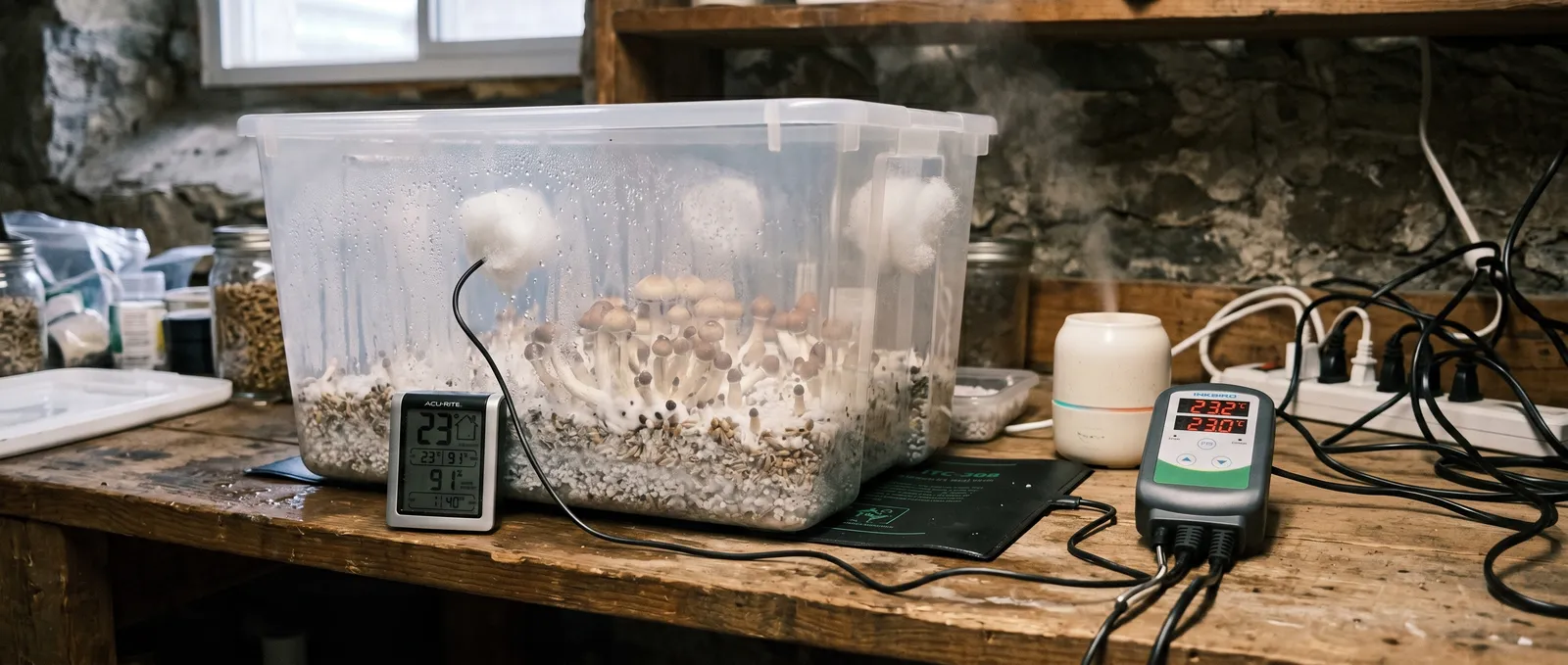
Mushroom Grow Kit Temperature & Humidity: Full Setup Guide
A temperature humidity control grow kit is the small set of climate tools — hygrometer, heat mat, humidifier or perlite tray — that keeps a mushroom fruiting…
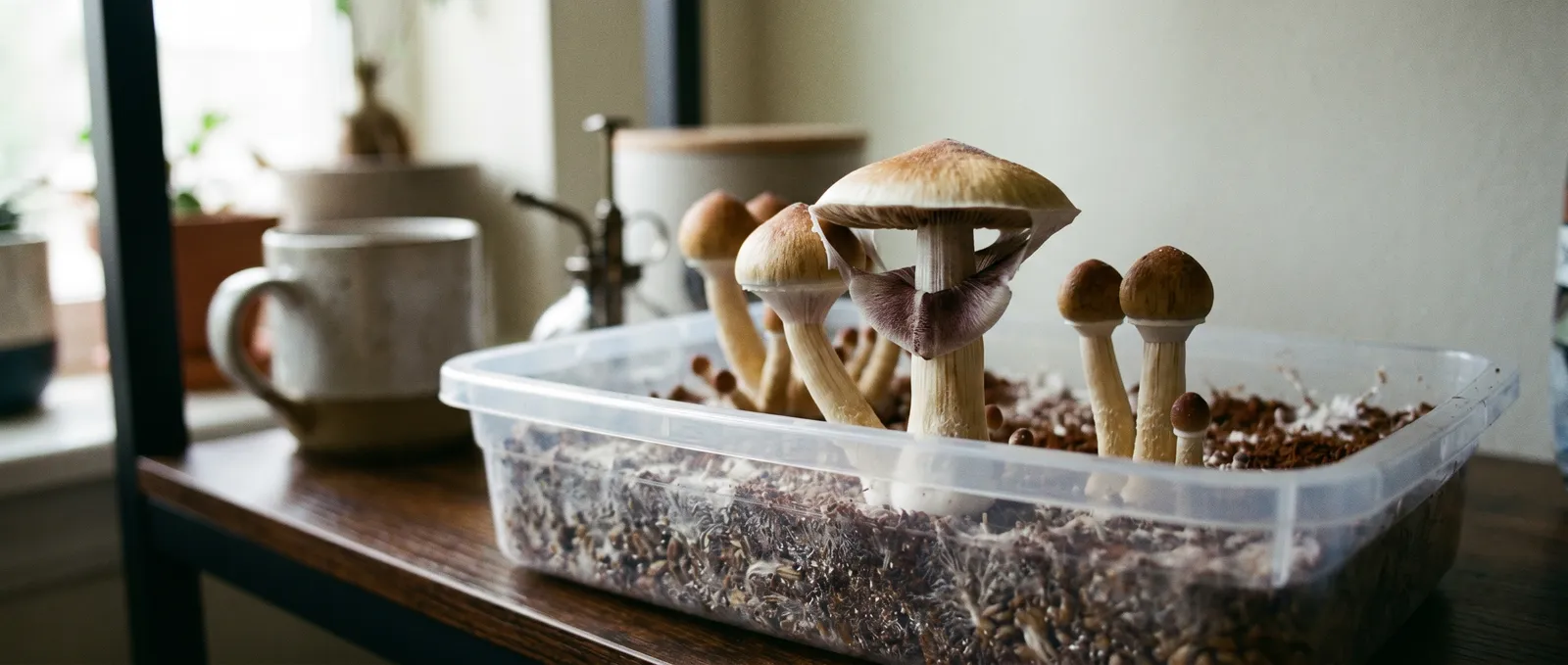
When to Harvest Mushrooms: Veil Break Timing Explained
Harvest timing veil break is a cultivation technique that uses the tearing of the partial veil on maturing Psilocybe cubensis to mark peak alkaloid content.
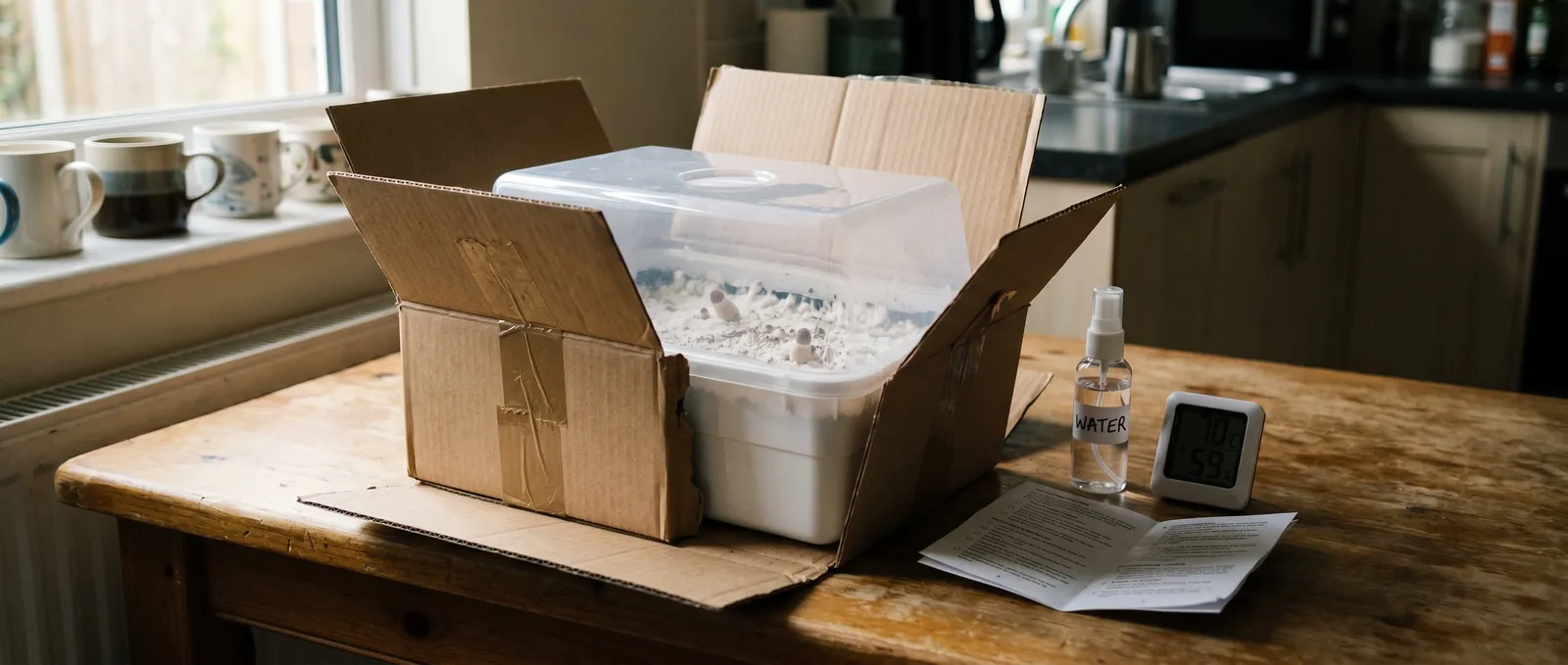
First Grow Checklist: What You Need for Mushroom Kits
A first grow checklist is the short list of supplies and environmental conditions needed to run a home psilocybin mushroom kit from inoculated substrate to…
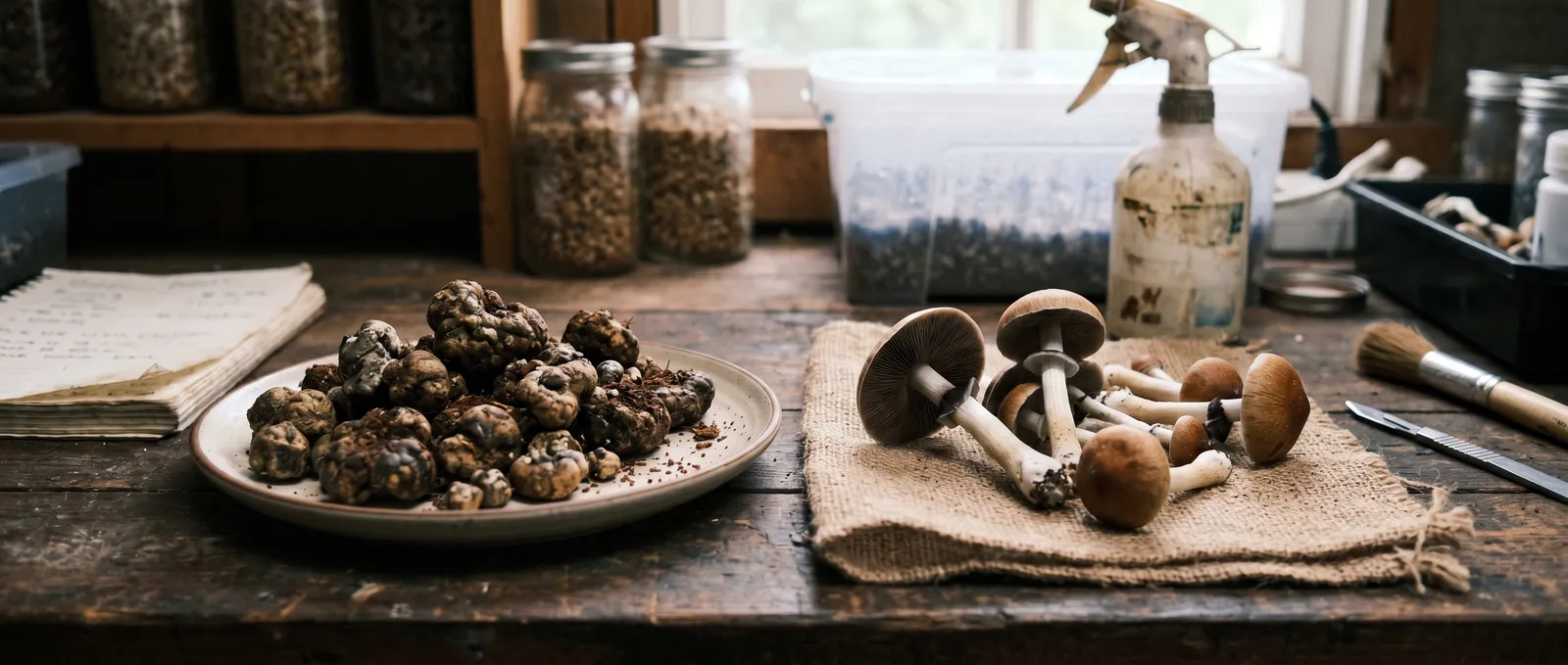
Sclerotia vs Fruit Bodies: Cultivation Comparison
Sclerotia and fruit bodies are two different life stages of Psilocybe fungi: sclerotia are hardened underground mycelial storage bodies (the 'magic…
Storing Dried Mushrooms Long Term: Full Guide
Storing dried mushrooms long term means keeping well-dried Psilocybe fruit bodies in airtight, opaque containers with desiccant, cool and dark, to slow…
Drying Mushrooms Air Desiccant Oven: Methods Compared
Drying mushrooms air desiccant oven refers to the three home methods for reducing fresh fruit bodies from ~90% water to cracker-dry (<5%). Gotvaldová et al.