
This article discusses psychoactive substances intended for adults (18+). If you have a health condition or take medication, consult a doctor before use. Our age policy
Lemon Tek Method & Dosing: Step-by-Step Preparation Guide
Definition
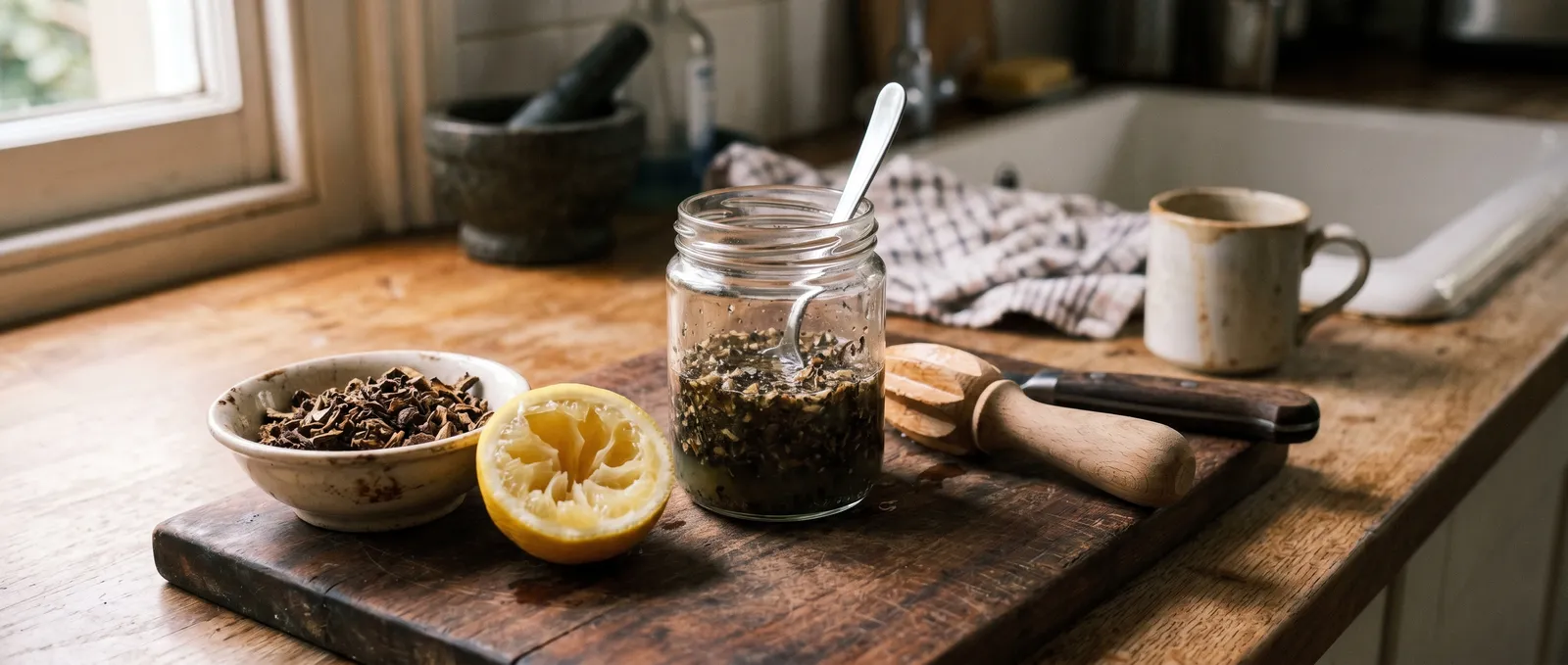
Lemon tek is a preparation method where ground dried psilocybin mushrooms are soaked in fresh citrus juice for 15–20 minutes before consumption, producing faster onset (10–30 minutes) and a compressed peak. The citric acid partially dephosphorylates psilocybin to psilocin before ingestion (Kamata et al., 2005).
What lemon tek actually does
Lemon tek is a preparation method where ground dried psilocybin mushrooms or sclerotia are soaked in lemon or lime juice for roughly 15–20 minutes before swallowing the whole slurry. The citric acid (around pH 2.0–2.5 in fresh lemon juice) partially mimics stomach acid, dephosphorylating some of the psilocybin into psilocin before it hits your gut — which is why users report faster onset and a sharper, more compressed experience (Kamata et al., 2005; Tsujikawa et al., 2003). This guide is written for adults. Effects and timing described below apply to adult physiology; these preparations are not appropriate for anyone under 18.
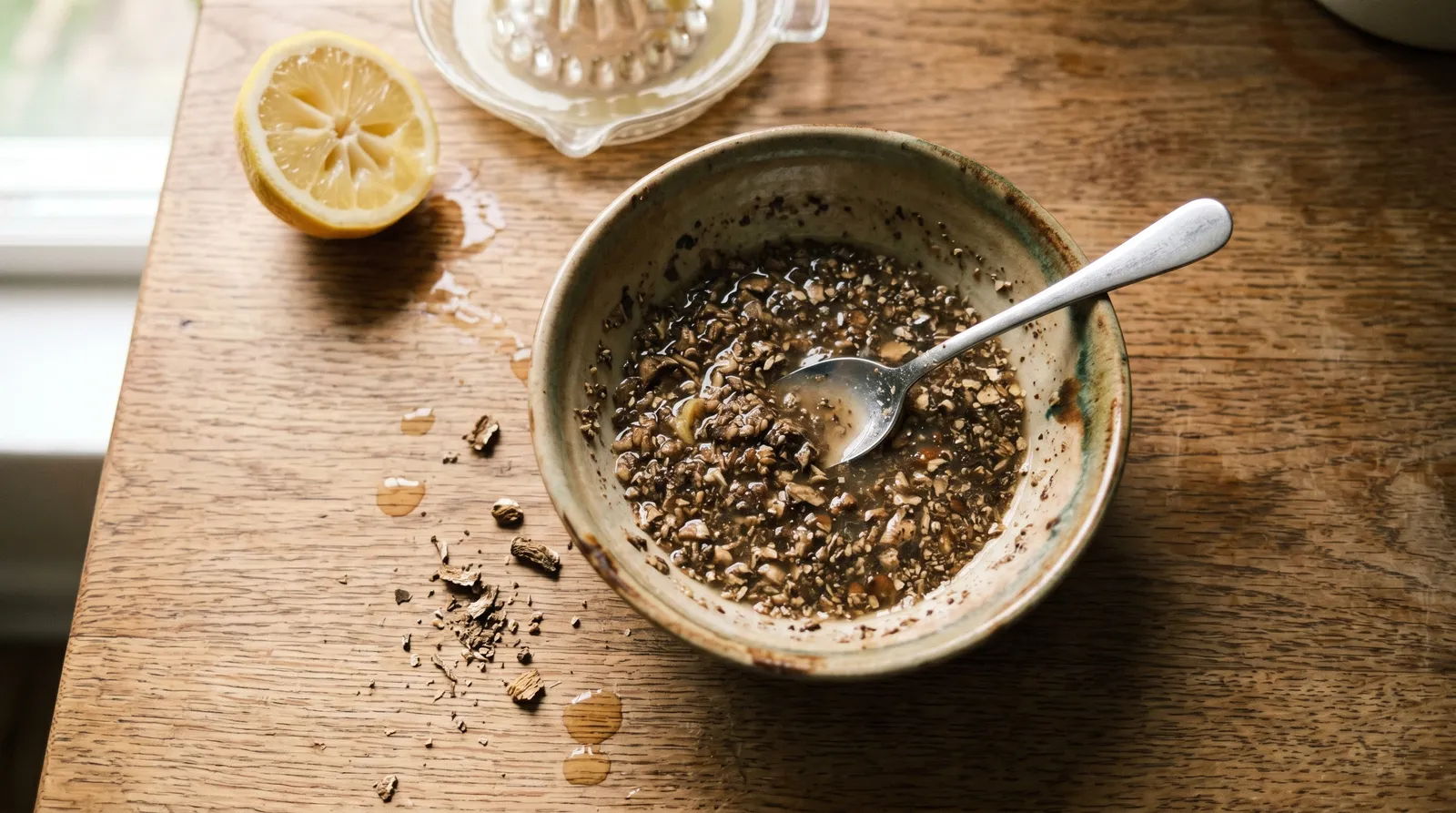
Worth being upfront: the "conversion" story is partly folklore. Psilocin itself is unstable in solution and oxidises readily — the bluing you see when an acidified citrus slurry sits too long is partly psilocin degradation (Lenz et al., 2020). Most of what makes the citrus-soak method feel stronger is probably faster absorption of intact psilocybin plus reduced first-pass workload, not wholesale chemical conversion. Effects still kick in 10–30 minutes after drinking, versus 45–90 minutes for dry mushrooms on an empty stomach.
This article covers the preparation method only. For dose ranges, set and setting, interactions, and what the experience actually feels like, see the psilocybin hub — consumption pharmacology lives there, not here.
What you need
You need dried psilocybin material, fresh citrus, a grinder, a glass vessel, and a timer — nothing exotic. If you buy lemons at the market, pick heavy ones with thin skin; they yield more juice per fruit.
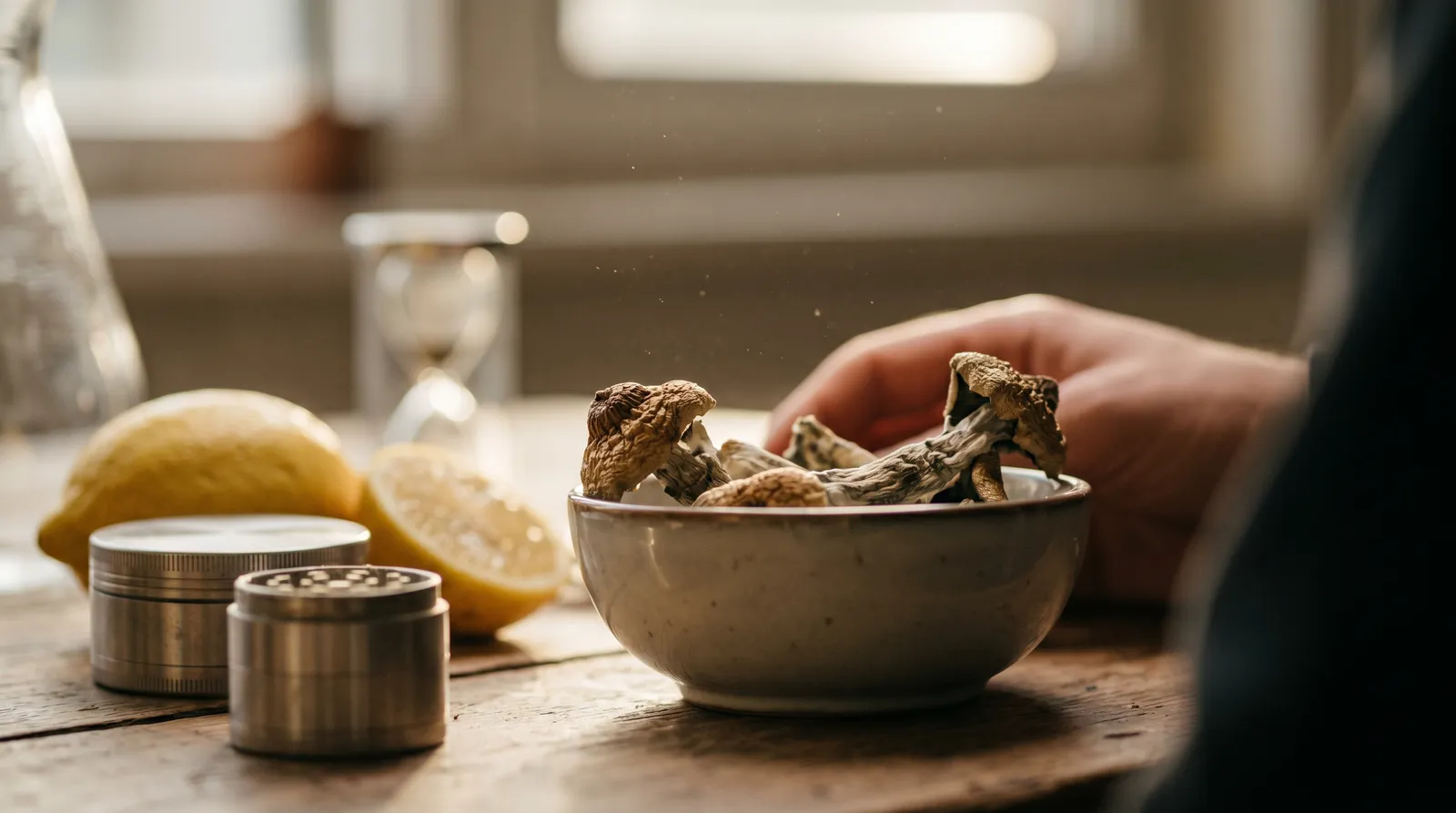
- Dried psilocybin mushrooms or dried sclerotia (fresh truffles need roughly 5× the wet weight to match dried equivalent — and the numbers get wobbly fast, so dried is cleaner for this method)
- Fresh lemons or limes — 2–3 lemons yield enough juice for most single servings. Bottled juice works but the pH drifts higher with preservatives.
- A coffee grinder, pestle and mortar, or a clean herb grinder dedicated to this use only
- A small glass or shot glass (not metal — citric acid plus reactive metals is bad chemistry)
- A fine sieve or tea strainer if you want to drink just the liquid, or skip it and swallow the pulp
- A timer — guessing at "about 20 minutes" is where inconsistency creeps in
The method, step by step
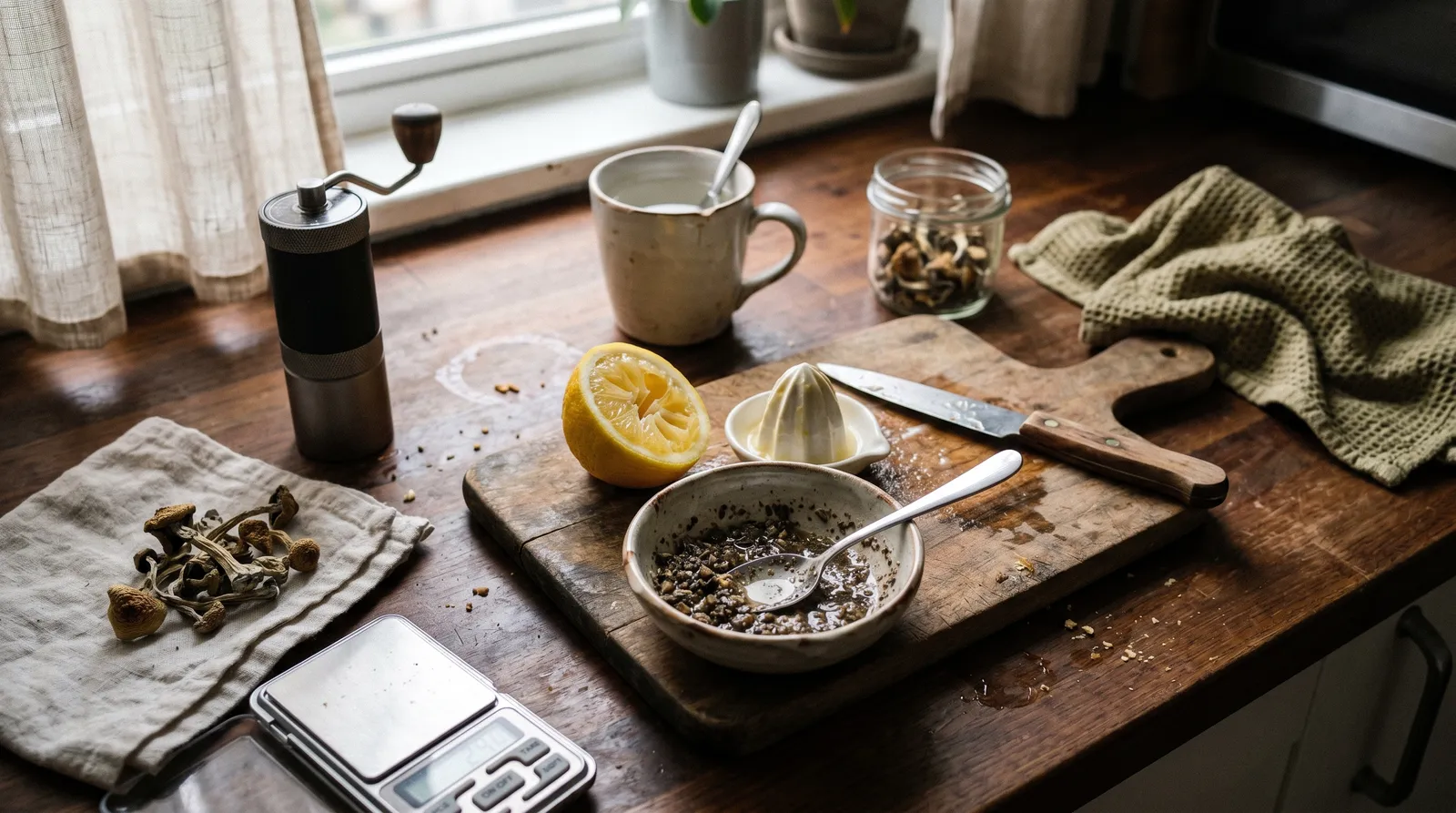
The method is five steps: weigh, grind, soak in fresh citrus for 15–20 minutes, drink the whole slurry, and wait at least 90 minutes before considering a redose. The table below summarises the timing and temperature ranges the method depends on.
| Step | Time | Temperature | Key detail |
|---|---|---|---|
| Weigh and grind | 2–3 min | Room temp | Scale to 0.01 g; fine powder |
| Add fresh juice | 1 min | Room temp | 30–50 ml, powder submerged |
| Soak | 15–20 min | Below 25 °C | Stir every 5 min |
| Drink | 1–2 min | Below 70 °C | Pulp and all |
| Onset to first effects | 10–30 min | — | Do not redose inside 90 min |
Step 1 — Weigh your dose, then grind
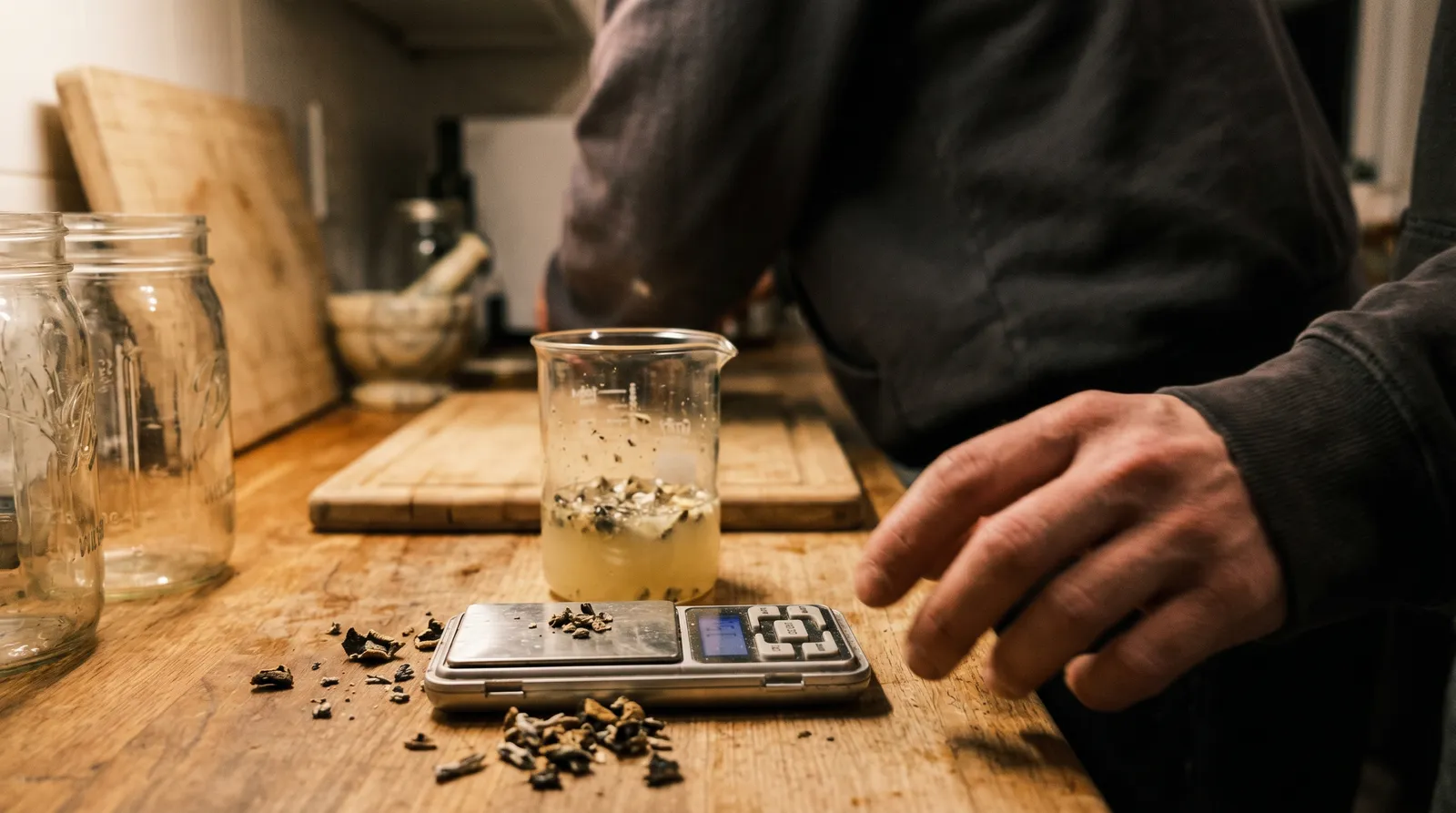
Use a scale that reads to 0.01 g. Guessing dry mushroom weight by eye is how people end up with double what they intended — cubensis caps are hollow and deceptively light. Grind to a fine powder. Chunky bits don't extract properly and float awkwardly in the juice. A coffee grinder gives the most consistent texture; five to ten seconds is enough.
Step 2 — Add fresh juice, just enough to cover
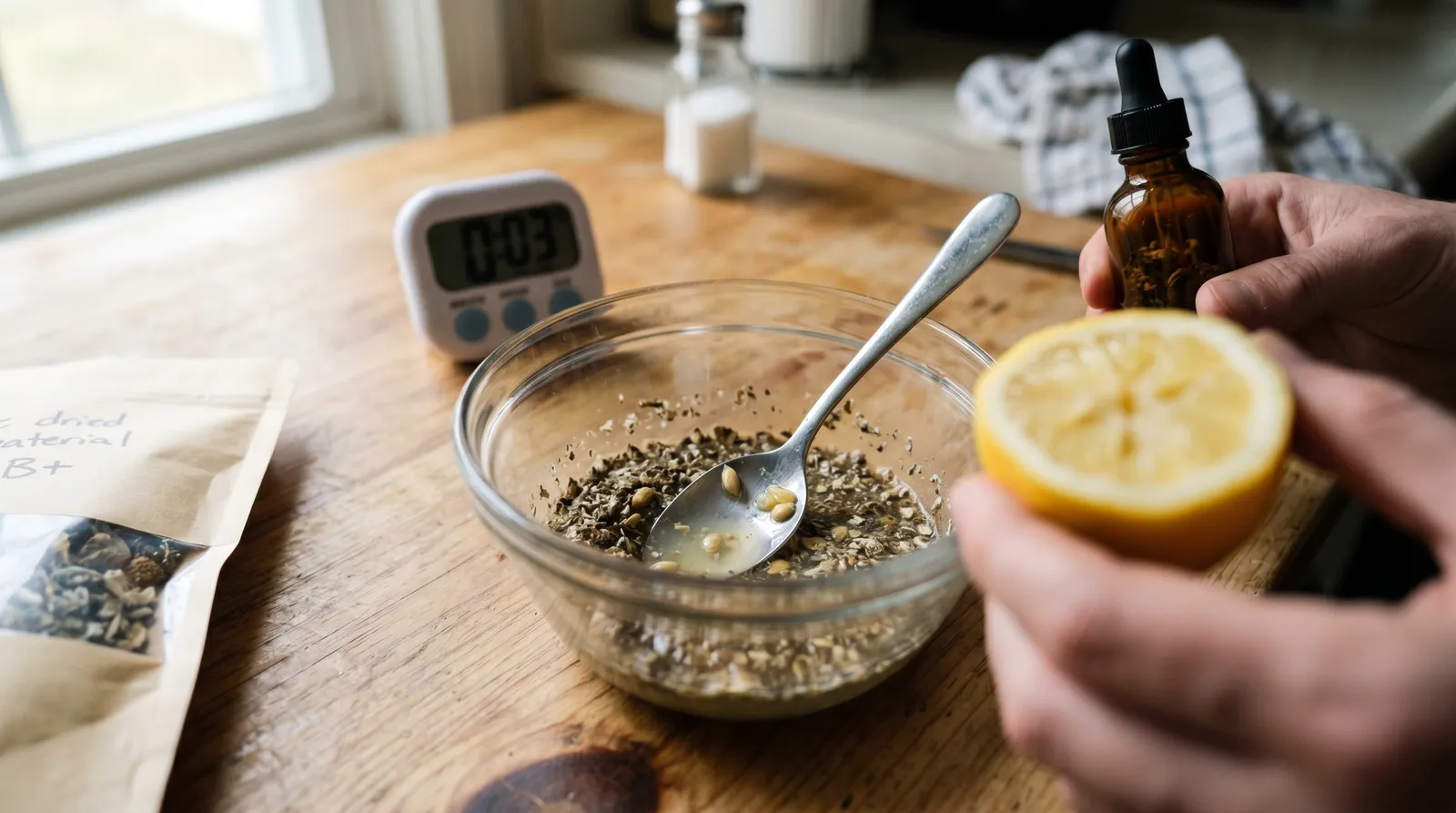
Juice two lemons straight into the glass with the powder. You want the powder fully submerged — roughly 30–50 ml for a standard portion. More juice doesn't mean more extraction; it just dilutes the slurry and means more sour liquid to drink. Stir with a non-metal spoon until it looks like a muddy smoothie.
Step 3 — Soak for 15–20 minutes, stirring occasionally
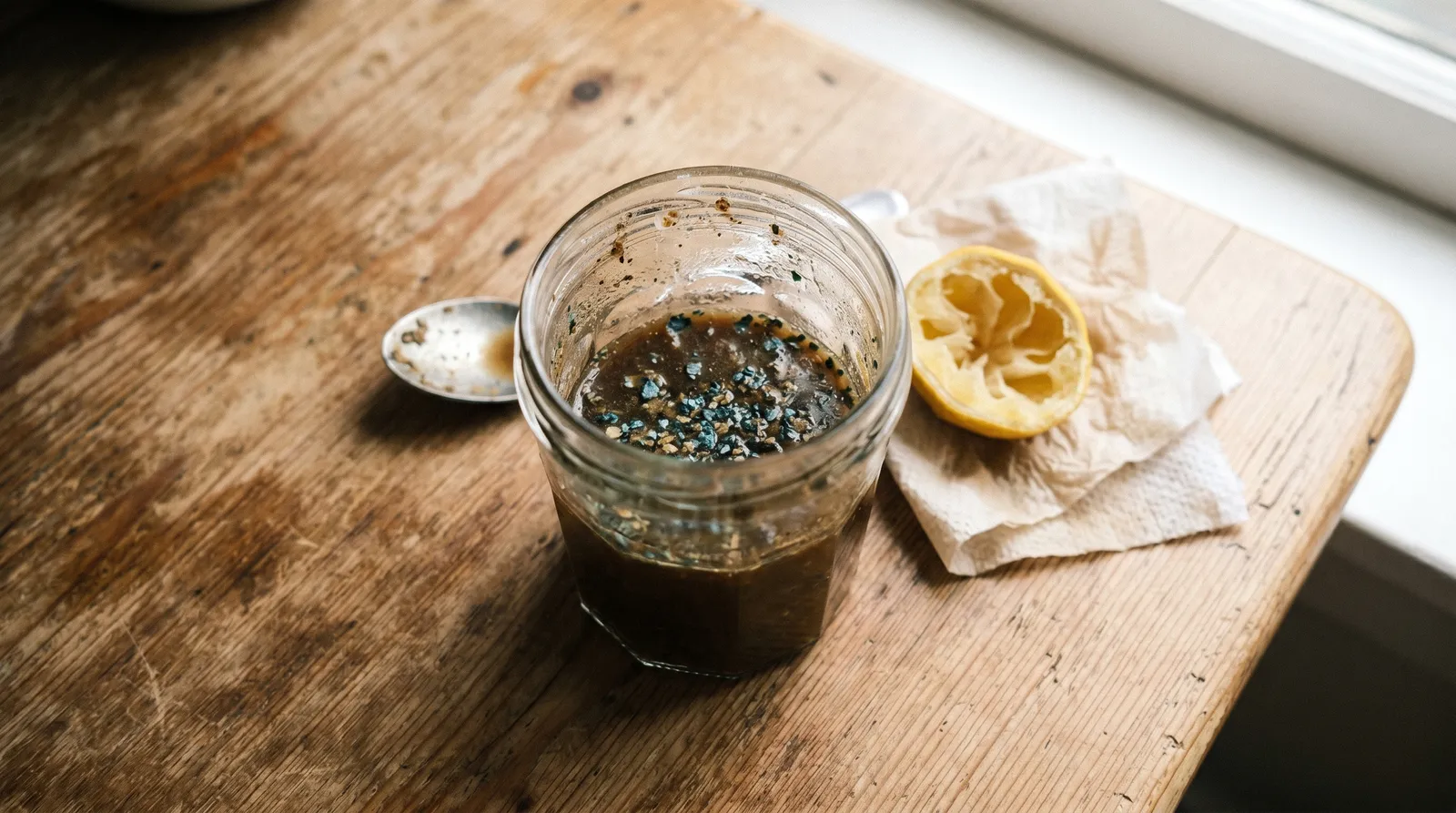
This is the window most community protocols converge on (Shroomery user protocols, 2008 onward). Shorter than 15 minutes and the acid hasn't had time to work through the cell walls; longer than 25 minutes and psilocin oxidation starts outpacing the benefit, with the slurry visibly darkening toward blue-grey. Give it a stir every five minutes to keep the powder in contact with acid rather than settled at the bottom.
Step 4 — Drink everything, pulp and all
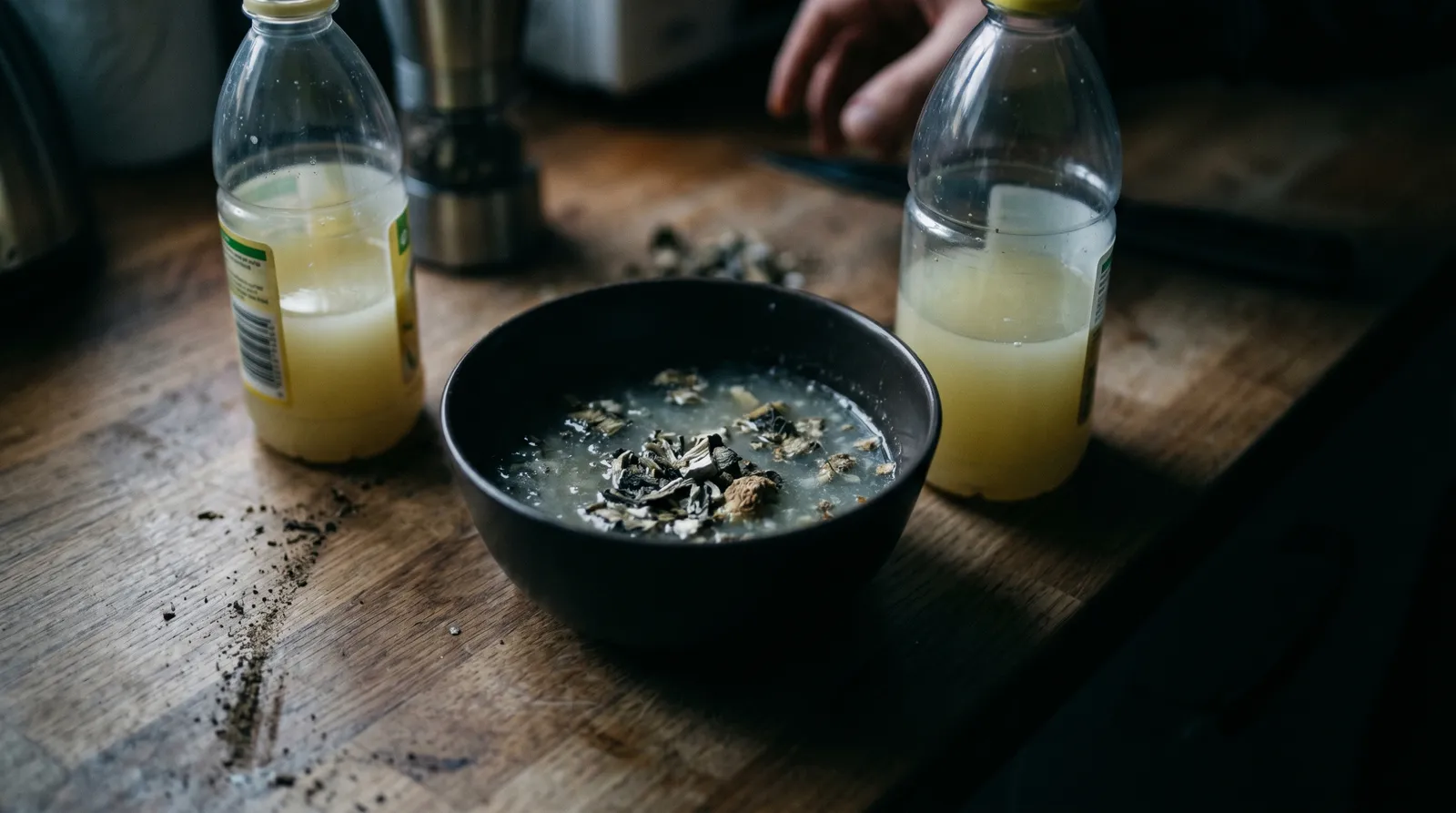
Straining removes most of the remaining intact psilocybin bound up in the fibre. If the sourness or texture is an issue, sieve the liquid into a cup, then add a splash of warm (not hot) ginger tea or water to the leftover pulp, stir, and drink that chaser too. Hot liquid above 70 °C degrades psilocin further, so keep it warm at most (Gotvaldová et al., 2021).
Step 5 — Wait at least 90 minutes before considering a redose
Onset is faster with this method — often 10–20 minutes to first effects, peak around 45–90 minutes, total duration 3.5–5 hours versus 5–6 for dry — but the compressed curve tricks people into thinking the dose is "weaker than expected" at the 30-minute mark. It isn't. It's building faster. Redosing early is how these citrus-prepared trips turn into something much heavier than planned.
Dose calibration for lemon tek
Most users report this method feels roughly 1.2–1.5× the intensity of the same dose eaten dry, with a shorter total duration. That's based on self-report from community surveys rather than controlled studies — no peer-reviewed pharmacokinetic trial has directly compared citrus-soaked vs dry oral psilocybin in humans, so the multiplier is practical folklore, not measured fact. The EMCDDA monograph on hallucinogenic mushrooms provides European-context background on potency ranges across species.
If you know your dry-weight threshold, don't match it 1:1 when switching to this method. A dose that felt moderate dry may feel noticeably stronger lemon-tekked, packed into a shorter window. For precise dose ranges for cubensis fruit bodies and for sclerotia — which contain roughly a tenth the alkaloid content of dried cubensis by wet weight (Gartz, 1994) — the psilocybin hub has the proper breakdown. Dose conversion between species, fresh vs dried, and dry vs lemon-tekked is where most first-time mistakes happen.
Combining psilocybin with MAOIs, SSRIs, or lithium carries real interaction risks — lithium especially has documented seizure reports (Nayak et al., 2021). The dedicated psilocybin interactions article covers this in full; the citrus-soak method does not change the interaction picture, only the onset curve.
Common mistakes
The most frequent errors are heat exposure, stale bottled juice, cross-contaminated grinders, uneven batch mixing, eating too recently, and lemon-tekking undried sclerotia. Each is avoidable with a bit of preparation.
- Using hot water or hot tea for the soak. Heat above 70 °C accelerates psilocin breakdown. Room-temperature citrus juice is the whole point.
- Bottled lemon juice with preservatives. Sodium benzoate and potassium metabisulphite shift the pH and the chemistry. Fresh fruit gives the pH range the method was designed around.
- Grinding in a blender you use for food. Psilocybin-active dust lingers. Keep grinding equipment separate and clearly labelled.
- Scaling up for multiple people in one container. Uneven mixing means one person gets a heavy slurry and another gets mostly juice. Prepare individual portions in individual glasses.
- Skipping the empty-stomach rule. Lemon tek's speed advantage vanishes if there's a plate of pasta in the way. Four hours fasted minimum.
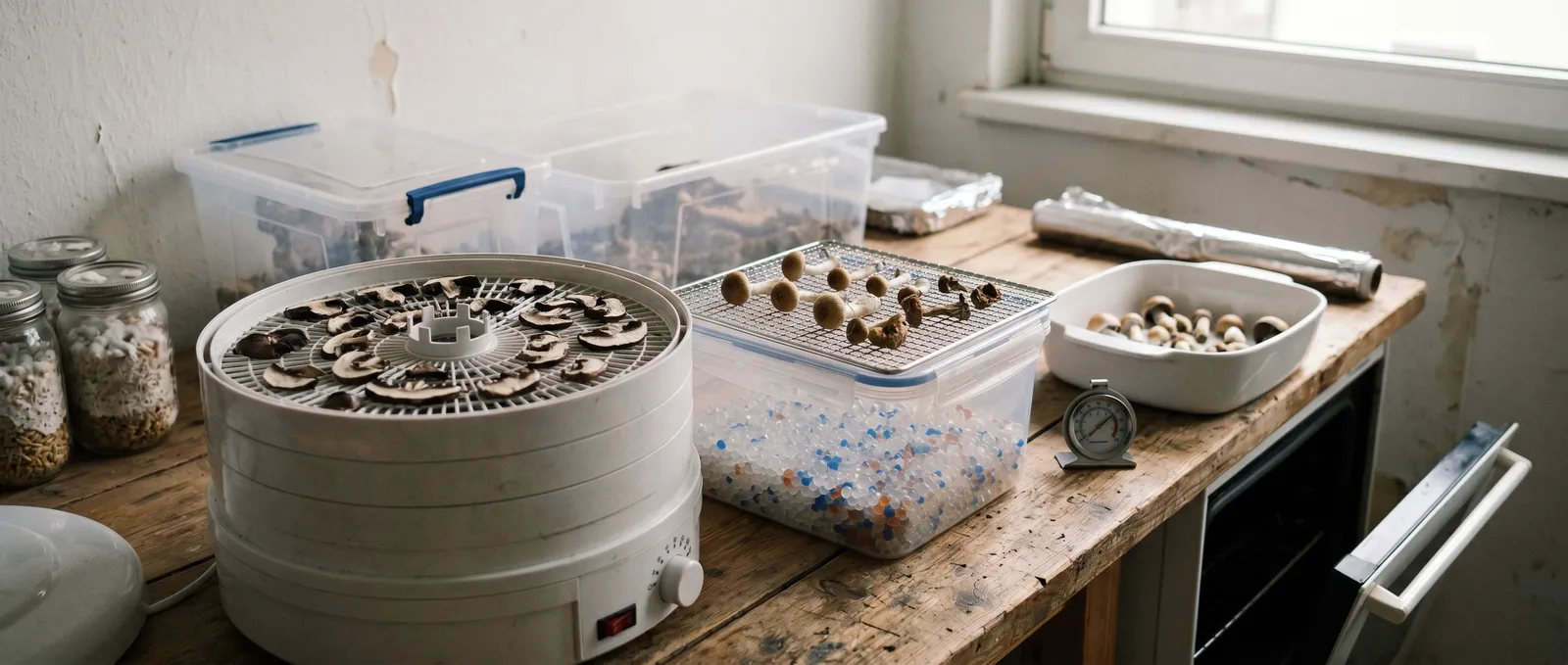
- Lemon-tekking sclerotia fresh. The water content in fresh truffles dilutes the citric acid and makes dose estimation a guessing game. If you're working with sclerotia, dry them first (food dehydrator at 40 °C or desiccant over 24–48 hours) and weigh dry.
Why people choose this method
Three reasons turn up consistently: faster onset, reduced nausea, and a more predictable peak shape. Customers who order lemons alongside their dried material usually cite the first two.
Faster onset is useful when planning a shorter experience around daylight hours. Reduced nausea — the first-hour body-load during a dry-mushroom dose is partly chitin in the cell walls being broken down, and pre-digesting with acid seems to soften that for many people (though not all — some find the sour slurry itself triggers nausea). And a more predictable peak shape: compressed, cleaner, less of the long plateau that dry mushrooms produce.
It's not universally better. Dry mushrooms give a gentler on-ramp that some users prefer, and the longer duration can feel less rushed. Tea preparation — steeping ground mushrooms in warm (not boiling) water with a squeeze of lemon for 10–15 minutes — sits between the two in speed and intensity. Capsules go the other direction: slowest onset, longest duration, most body-load.
Storage and shelf life of prepared slurry
Don't store a prepared slurry — drink it within half an hour of mixing. Psilocin oxidises rapidly once in solution, with visible bluing within hours at room temperature and noticeable potency loss within 24 hours even refrigerated (Lenz et al., 2020). For longer storage, keep the dried material dry, dark, and cool — properly dried cubensis retains roughly 80% of initial alkaloid content after three months in a sealed jar with silica gel, though the data comes from cubensis fruit bodies and sclerotia-specific numbers are thinner on the ground (Gotvaldová et al., 2021).
Harm-reduction notice. This article is educational. Psilocybin affects mood, perception and cardiovascular function, and interacts with several medication classes including MAOIs, SSRIs and lithium. If you have a personal or family history of psychosis, bipolar disorder, or significant cardiovascular disease, psilocybin is not appropriate for you. Start low, go slow, and have a sober, trusted person present. Seek medical advice from a qualified clinician for any health concerns.
Last updated: April 2026
Frequently Asked Questions
8 questionsHow long should mushrooms soak in lemon juice?
Does lemon tek make mushrooms stronger?
Can you lemon tek fresh truffles instead of dried mushrooms?
Why does lemon tek reduce nausea for some people?
Should you strain the lemon tek before drinking?
Can you store prepared lemon tek for later?
Can you use lime juice instead of lemon juice for lemon tek?
Do you need to grind mushrooms into powder for lemon tek or can you use whole pieces?
About this article


Adam Parsons is an external cannabis and psychedelics writer and editor who contributes to Azarius's wiki as both author and reviewer. On the writing side, he authors Azarius's kratom and kanna clusters, drawing on exten
This wiki article was drafted with AI assistance and reviewed by Adam Parsons, External contributor. Editorial oversight by Joshua Askew.
Medical disclaimer. This content is for informational purposes only and does not constitute medical advice. Consult a qualified healthcare provider before use of any substance.
Last reviewed April 25, 2026
References (4)
- [1]Lenz, C., Wick, J., Braga, D., García-Altares, M., Lackner, G., Hertweck, C., & Hoffmeister, D. (2020). Injury-triggered blueing reactions of Psilocybe magic mushrooms. Angewandte Chemie International Edition, 59(4), 1450-1454. DOI: 10.1002/anie.201910175
- [2]Gotvaldová, K., Hájková, K., Borovička, J., Jurok, R., Cihlářová, P., & Kuchař, M. (2021). Stability of psilocybin and its four analogs in the biomass of the psychotropic mushroom Psilocybe cubensis. Drug Testing and Analysis, 13(2), 439-446. DOI: 10.1002/dta.2950
- [3]Gartz, J. (1994). Magic Mushrooms Around the World. LIS Publications, Los Angeles, CA.
- [4]Nayak, S. U., Davis, A. K., Griffiths, R. R., & Strain, E. C. (2021). Naturalistic use of psilocybin and behavior change. Journal of Psychopharmacology, 35(8), 994-1009. DOI: 10.1177/02698811211007267
Related Articles
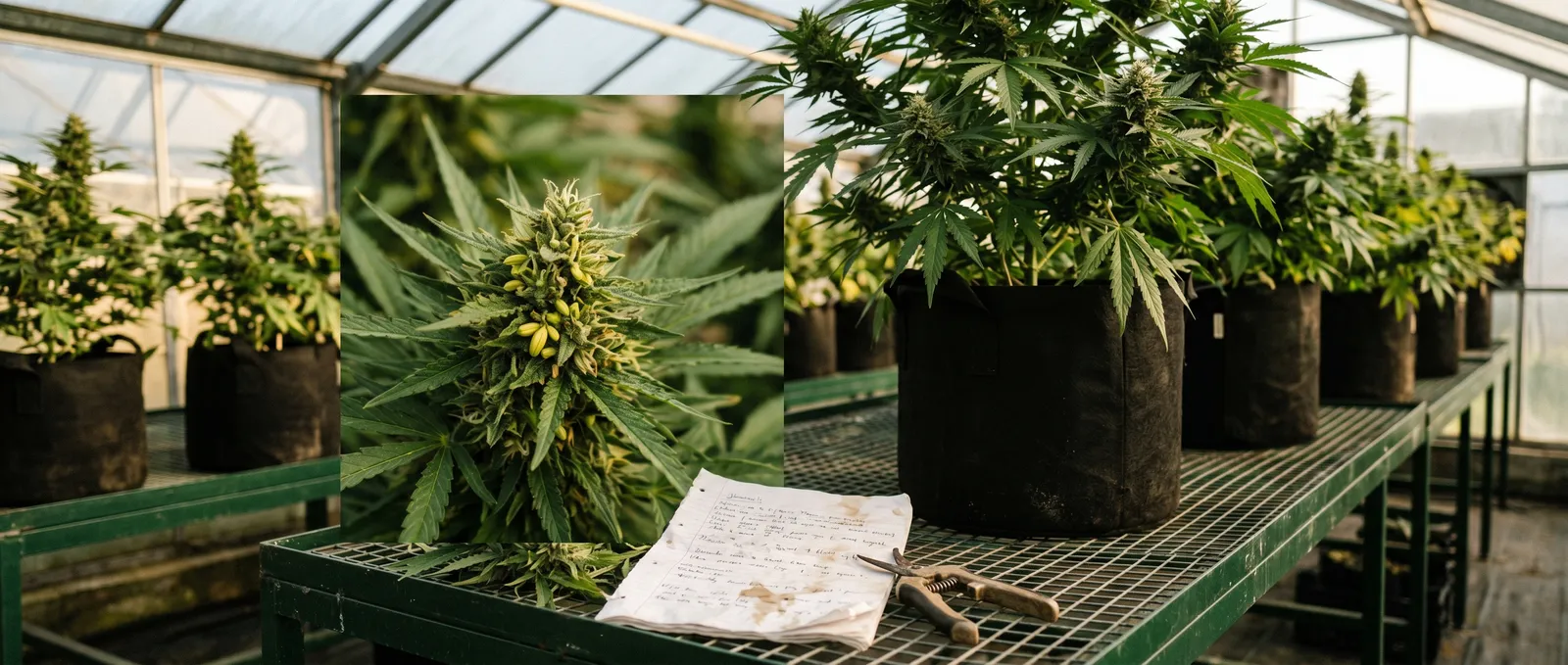
Cannabis Hermaphrodite: Identify, Prevent, Act
A cannabis hermaphrodite is a female plant that develops male pollen sacs or banana-shaped anthers (nanners), self-pollinating and seeding your harvest.
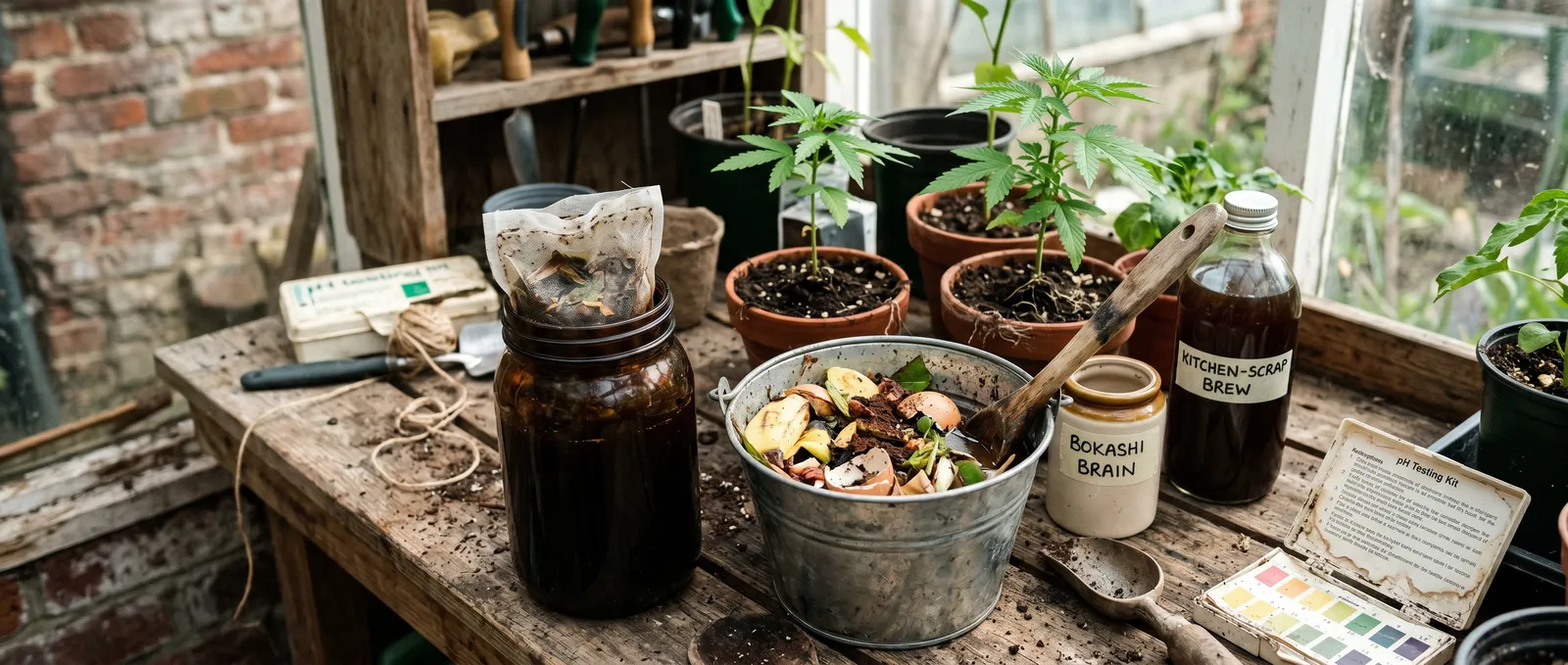
DIY Cannabis Fertilizer: Homemade Nutrient Guide
DIY cannabis fertilizer guide: compost, teas, banana ferments and feed schedules, with safety notes and cited research for home growers.
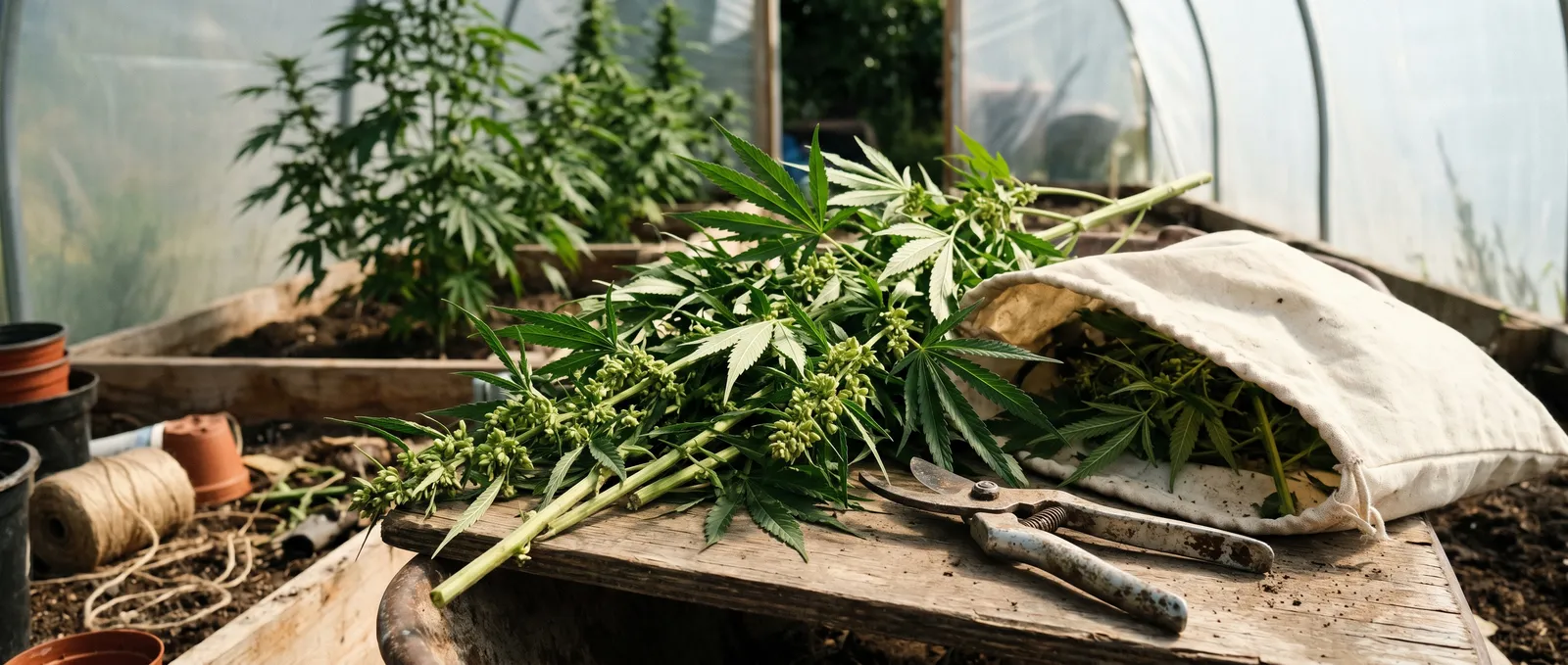
What To Do With Male Cannabis Plants: 6 Practical Uses
What to do with male cannabis plants: identify, isolate, breed, extract, or compost. A practical 6-step guide with sourcing and safety notes.
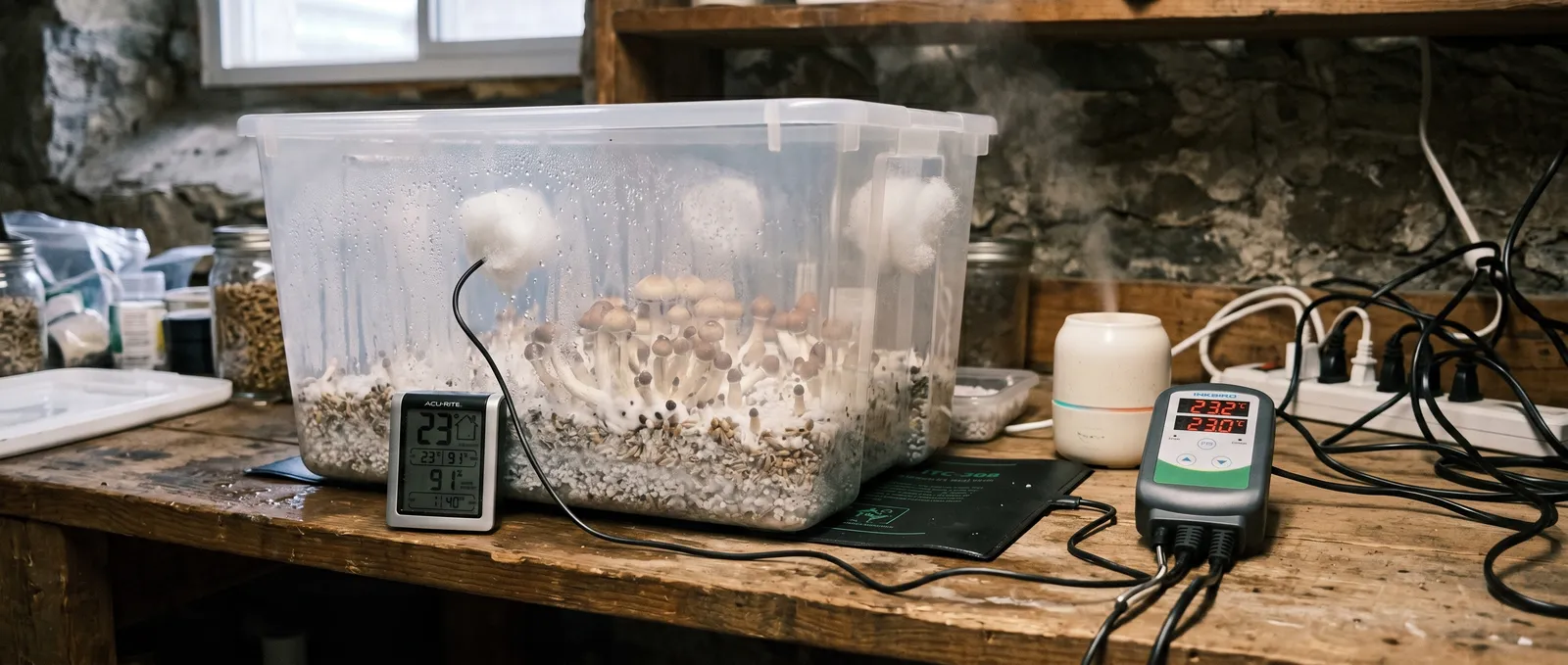
Mushroom Grow Kit Temperature & Humidity: Full Setup Guide
A temperature humidity control grow kit is the small set of climate tools — hygrometer, heat mat, humidifier or perlite tray — that keeps a mushroom fruiting…
When to Harvest Mushrooms: Veil Break Timing Explained
Harvest timing veil break is a cultivation technique that uses the tearing of the partial veil on maturing Psilocybe cubensis to mark peak alkaloid content.
First Grow Checklist: What You Need for Mushroom Kits
A first grow checklist is the short list of supplies and environmental conditions needed to run a home psilocybin mushroom kit from inoculated substrate to…
Sclerotia vs Fruit Bodies: Cultivation Comparison
Sclerotia and fruit bodies are two different life stages of Psilocybe fungi: sclerotia are hardened underground mycelial storage bodies (the 'magic…
Storing Dried Mushrooms Long Term: Full Guide
Storing dried mushrooms long term means keeping well-dried Psilocybe fruit bodies in airtight, opaque containers with desiccant, cool and dark, to slow…
Drying Mushrooms Air Desiccant Oven: Methods Compared
Drying mushrooms air desiccant oven refers to the three home methods for reducing fresh fruit bodies from ~90% water to cracker-dry (<5%). Gotvaldová et al.