
This article discusses psychoactive substances intended for adults (18+). If you have a health condition or take medication, consult a doctor before use. Our age policy
Grow Kit vs Ready 2 Grow Bag: Which to Pick
Definition
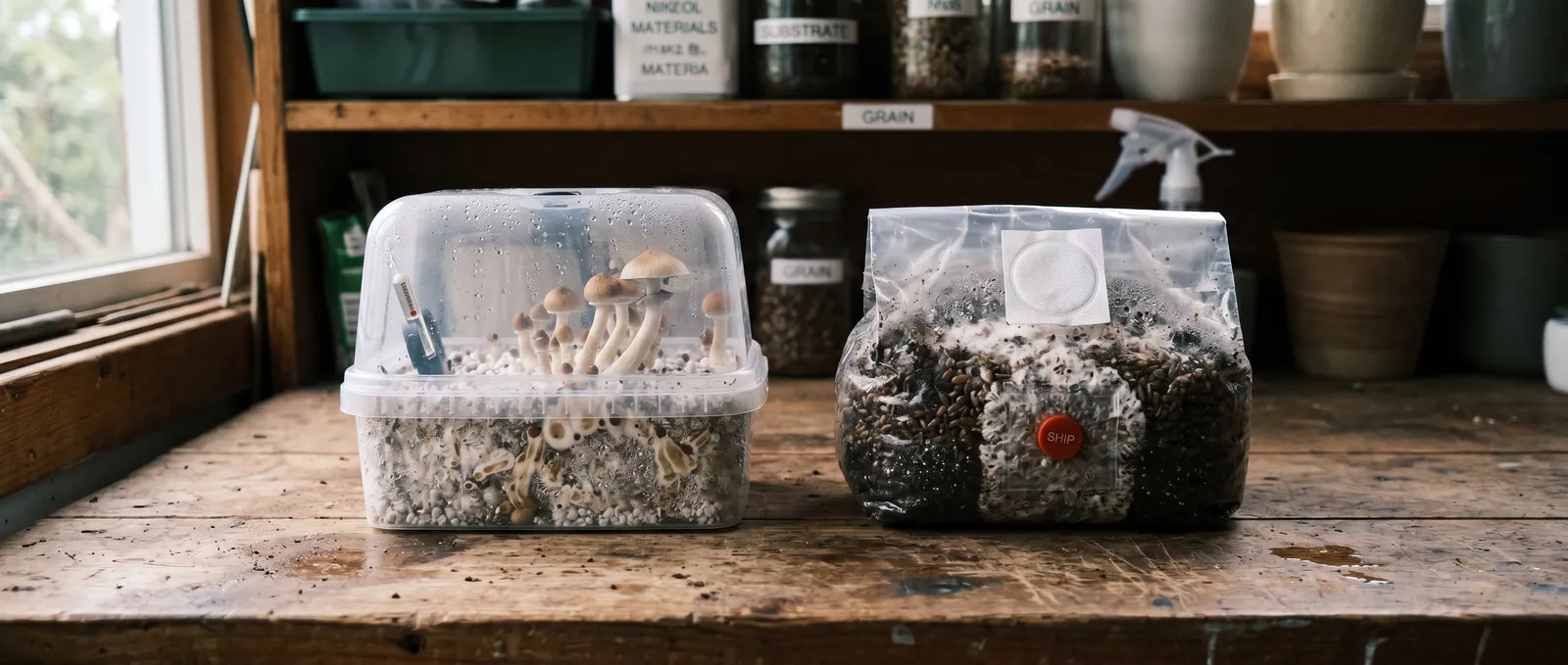
The grow kit vs Ready 2 Grow Bag choice compares two Psilocybe cubensis home-cultivation formats: a tub with rye substrate and casing layer designed for multiple flushes, versus a sealed 2 kg all-in-one bag built for one clean flush. Both target 22–25 °C fruiting conditions (Stamets, 2000) but differ sharply in handling and contamination exposure.
Adult use only — this guide is written for growers aged 18 and over.
The grow kit vs Ready 2 Grow Bag decision is a format comparison that helps home growers pick between two Psilocybe cubensis cultivation systems with very different handling profiles. One is a rigid plastic tub with a rye-grain substrate and perlite-vermiculite casing layer designed for 2–4 flushes; the other is a sealed 2 kg all-in-one bag built for a single clean flush. Below you'll find a direct comparison so you can order the format that fits your setup, plus what each actually requires once you get it home.
| Dimension | Grow Kit (plastic-tub format) | Ready-2-Grow Bag |
|---|---|---|
| Format | Rigid plastic tub, rye-grain substrate, perlite/vermiculite casing layer, transparent outer bag with microporous filter patch | Sealed 2 kg all-in-one bag, pre-inoculated, integrated filter, no separate casing layer |
| Assembly | Open tub, sit it in the bag, add water to the bag reservoir, seal with paperclips | Cut slit, place in fruiting position, mist the inside of the bag |
| Flushes | Typically 2–4 flushes when rehydrated between each (vendor documentation) | One bag, one flush — designed as a single-cycle product |
| Strains available | 8: B+, Cambodia, Golden Teacher, Mazatapec, McKennaii, Mexican, PES Amazonian, Treasure Coast | 9: APE, Enigma, Golden Teacher, Hillbilly Pumpkin, Jack Rabbit, Jedi Mind Fuck, Makilla Gorilla, McKennaii, MVP |
| Fruiting temp | 22–25 °C ambient, substrate ≥ 21 °C | 22–25 °C ambient, bag interior self-regulates humidity |
| Humidity handling | Active — mist the bag walls 1–2× daily, FAE 2–3× daily | Passive — bag holds ~95% RH internally; light misting only |
| Contamination exposure | Higher — casing layer is re-opened for each flush | Lower — sealed until harvest, single exposure event |
| Best for | Growers willing to mist, re-dunk, and chase multiple flushes | First-timers and anyone who wants hands-off, one-and-done |
Two formats, same goal: getting a Psilocybe cubensis flush out of a cupboard without a lab. The grow kit vs Ready 2 Grow Bag question comes down to how much fiddling you want to do, how many flushes you want to chase, and how forgiving the format is when your humidity or sterile technique slips. Below: what each format actually is, where they diverge in practice, and how to pick.
What the two formats actually are
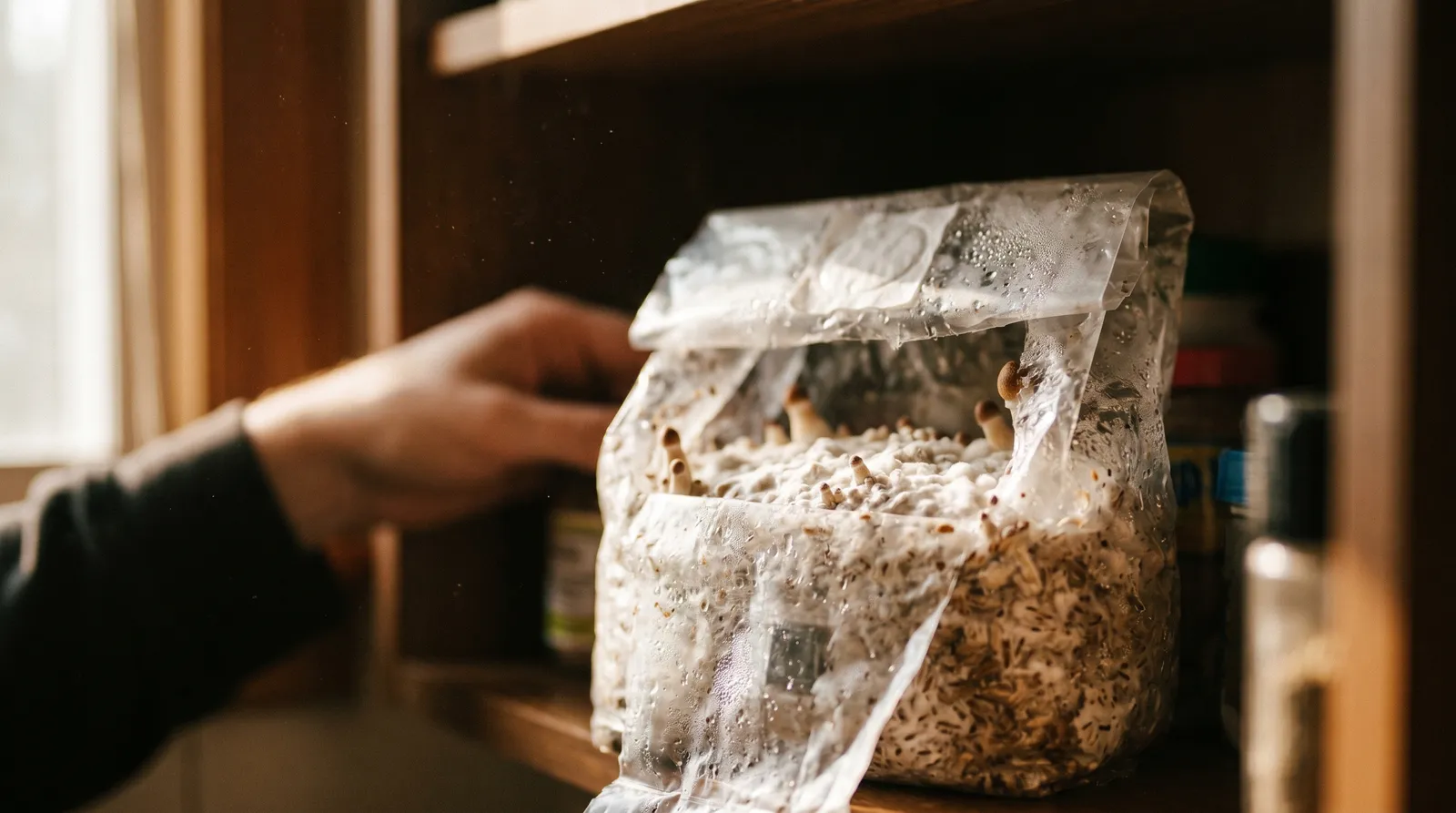
The grow kit vs Ready 2 Grow Bag split is really a split between a multi-flush tub system and a single-flush sealed bag. The tub-style grow kit is the format most European home growers cut their teeth on since the early 2000s. You receive a rigid plastic tub containing a fully colonised rye-grain substrate with a perlite-and-vermiculite casing layer on top — the white mycelium has already done its colonisation work at the vendor's lab. The tub sits inside a transparent outer bag with a microporous filter sticker that lets CO₂ out and fresh air in. You add cold water to the bag for 12 hours (the "cold shock" that triggers pinning), pour the water out, seal with paperclips, and wait. Vendor documentation for this format typically cites 2–4 usable flushes over roughly 6–10 weeks, assuming you rehydrate ("dunk") the cake between flushes.
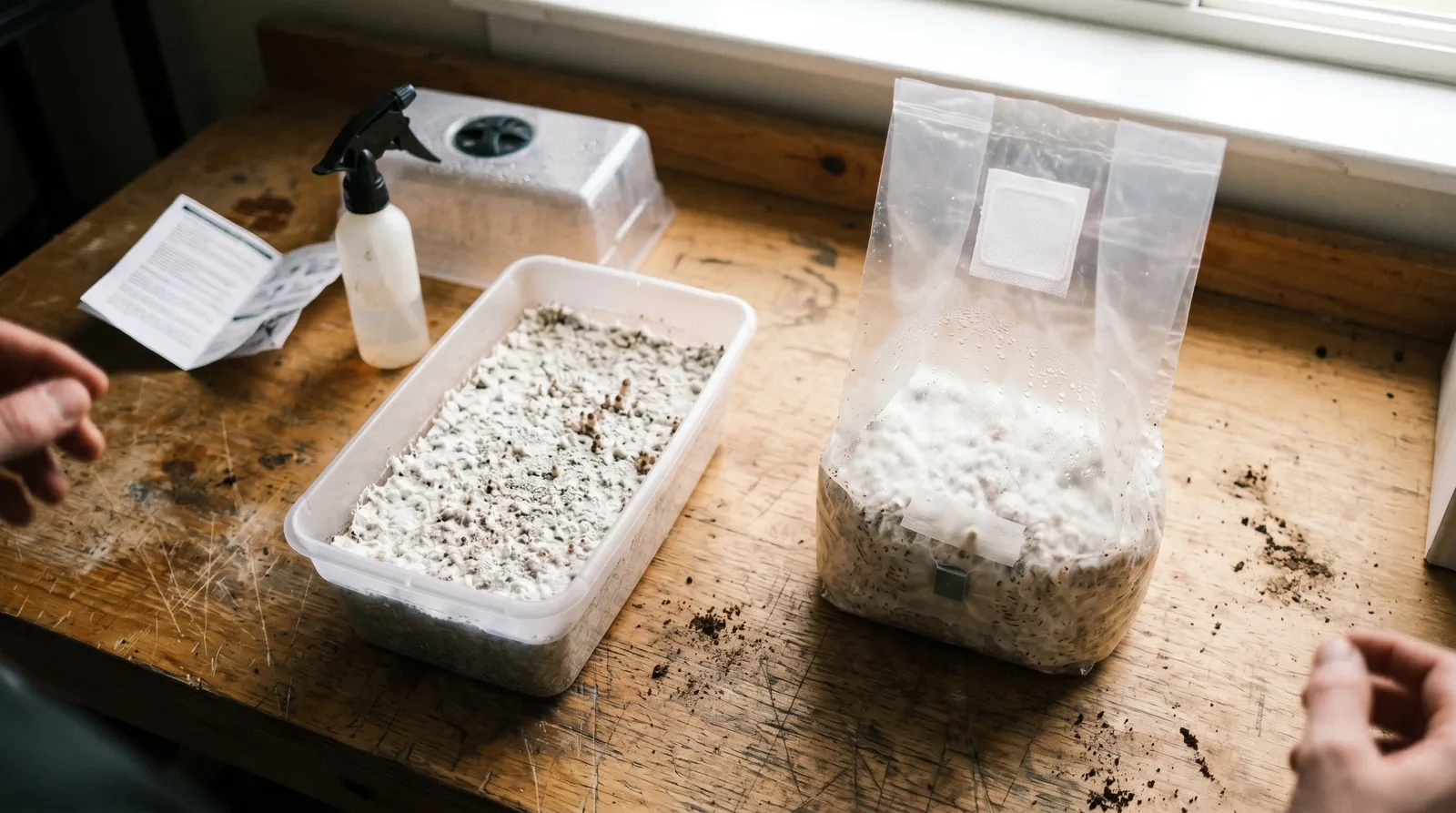
The Ready-2-Grow Bag is a newer format built around one principle: fewer touch points, fewer contamination events. The entire 2 kg substrate lives inside a single sealed bag with an integrated filter patch. There's no separate casing layer to expose, no tub to lift in and out, and no paperclip-and-mist dance. You make a small opening, position the bag upright, and let it fruit. Because the bag is engineered around a single flush cycle, expectations shift — you get one strong flush rather than chasing diminishing returns across four.
Assembly and the first 48 hours
Tub kits need a cold shock within hours of unboxing. Fridge-temperature water (around 4 °C) goes into the outer bag, covering the casing, for 12 hours. Dunking hydrates the cake and signals the mycelium that it's time to fruit. After pouring the water out, two paperclips seal the bag, and the whole thing goes into a spot sitting at 22–25 °C ambient with indirect light. Pinning (tiny white primordia on the casing) usually appears within 5–10 days.
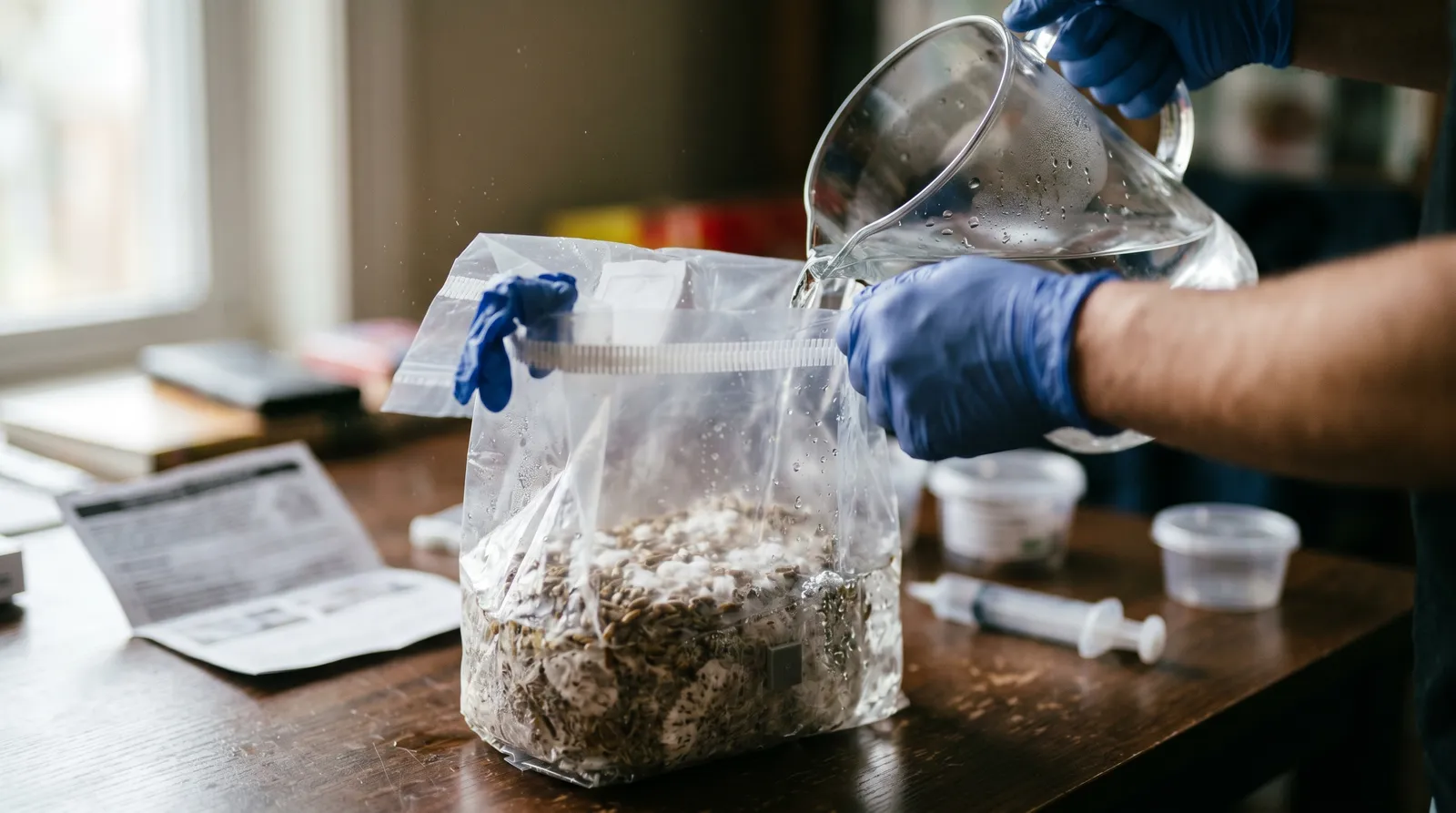
R2G bags skip dunking entirely. The substrate is already pre-hydrated at the correct moisture level when it leaves the vendor's production line. Open the bag according to the supplier's instructions (usually a specific slit pattern), mist lightly to season the internal air, and park it at 22–25 °C. Pinning timelines are broadly similar — 7–14 days — though the absence of the cold-shock step means temperature stability during that window matters more.
Neither format requires a still-air box or flow hood. Both are pitched at living-room growers. The handling difference isn't sterility gear — it's how many times you open the thing.
Contamination risk — where they really differ
Every time you open a grow kit, you introduce a contamination risk event. Trichoderma (green mould, typically appearing as patches on the casing layer or in the substrate edges), cobweb mould (wispy grey-white growth that looks like spider silk, often confused with young mycelium), and pink bacterial wet-rot are the three common failure modes across both formats. Bigwood and Beug (1982) and subsequent contamination-control literature consistently identify substrate moisture extremes and air exchange with non-sterile environments as the main vectors.
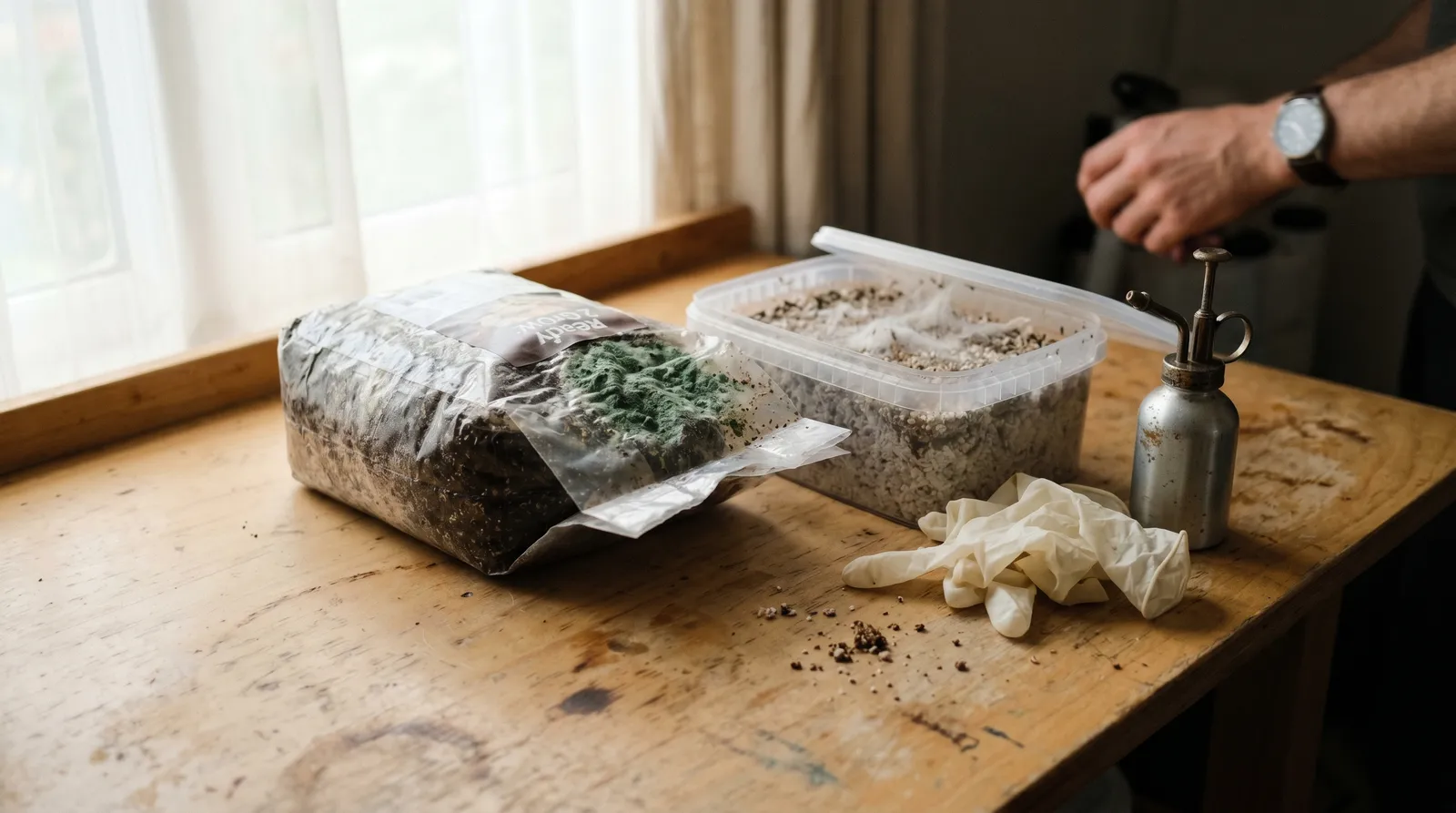
The tub format opens the casing for dunking, opens again for each flush, and typically opens 1–2× daily for misting. That's a lot of exposure across a 6–10 week run. The R2G bag is sealed from day one to harvest — one exposure event, at the end, when you pick. For growers whose ambient environment isn't particularly clean (pet hair, mouldy basement, recently renovated room with dust), the R2G format structurally sidesteps a lot of what kills tub kits.
The trade-off: when a tub contaminates, you often see it on flush 2 or 3 and can still salvage the first harvest. When an R2G bag contaminates, the whole bag is gone. Neither format should ever be salvaged past visible contamination — green, pink, or wet-rot means bin the whole thing, wash the area with diluted bleach or IPA, and start again.
Yield and flush economics
The tub format is a multi-flush product and the R2G bag is a single-flush product — that single distinction drives everything about expected yield. Vendor documentation and community-verified protocols (Shroomery cultivation forum, ongoing threads) describe the tub format with flush 1 typically the heaviest and flushes 3–4 tailing off sharply as nutrients deplete. Total wet-weight yield across all flushes varies enormously by strain, ambient conditions, and how disciplined the grower is with rehydration — which is why specific gram figures from any single source should be treated with scepticism.
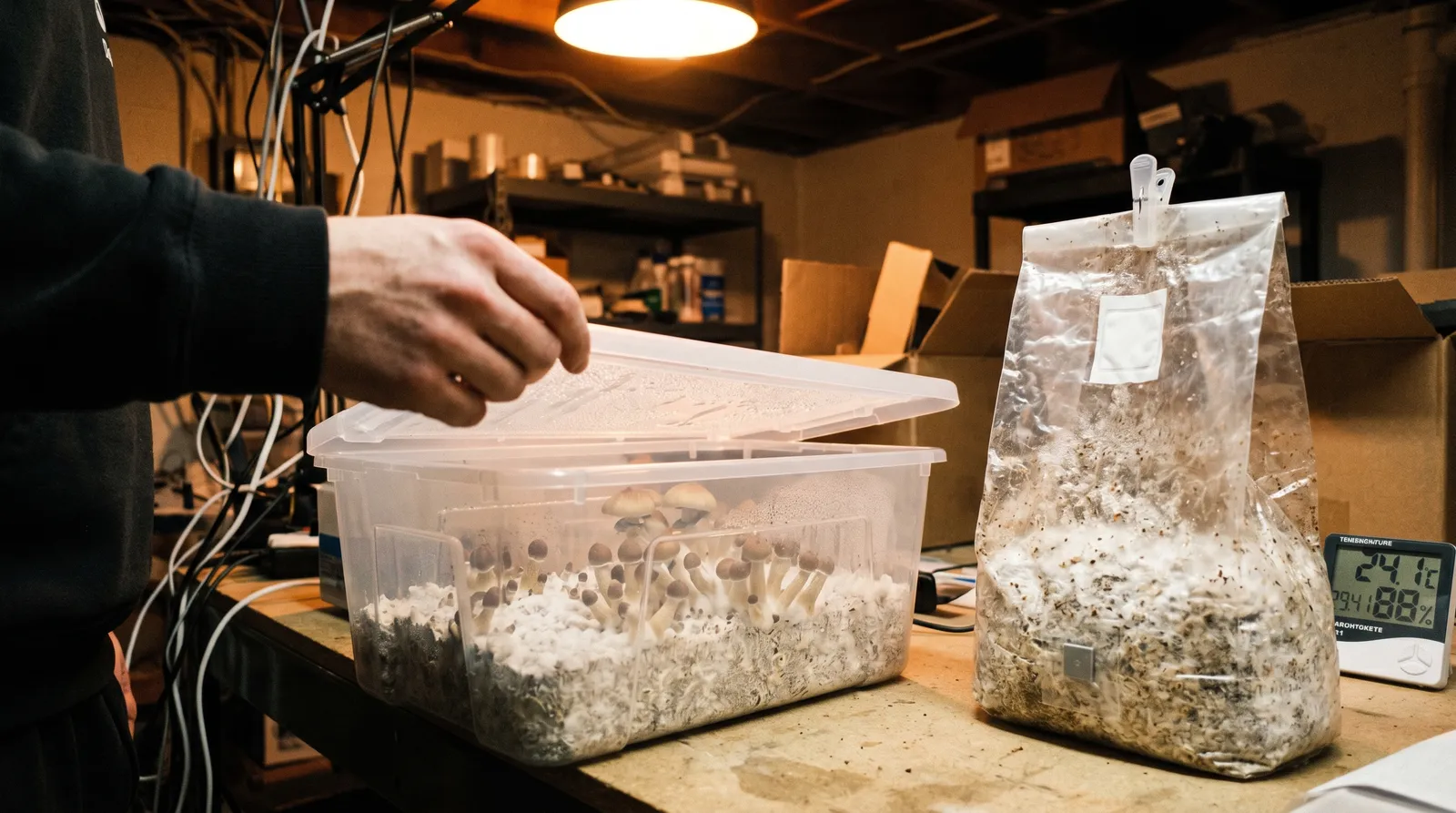
The R2G bag is built around a single concentrated flush on 2 kg of substrate. You don't get to chase a second round, but the first flush has more substrate behind it than a single tub flush does. For a first-time grower, this tends to produce a more satisfying "big harvest day" and less of the "my second flush looks rubbish, what did I do wrong" anxiety.
Strain choice also shifts the economics. Golden Teacher, available in both formats, is famously forgiving and produces well across multiple flushes in the tub format — if you want to practice dunking and extending a run, it's the obvious candidate. Stronger or trickier genetics like APE (Albino Penis Envy) or Jedi Mind Fuck only appear in the R2G format and are better suited to a single clean flush anyway, since they tend to be pickier about conditions.
Temperature, humidity and fresh air exchange
Both formats want 22–25 °C ambient during fruiting. Below 20 °C, pinning slows or stalls; above 28 °C, the substrate warms past the mycelium's comfort zone and contamination risk climbs. P. cubensis fruiting temperature ranges are well documented in Stamets' Growing Gourmet and Medicinal Mushrooms (2000) and broadly agreed across vendor manuals, and the EMCDDA drug profile on hallucinogenic mushrooms records similar ambient conditions across European cultivation reports.
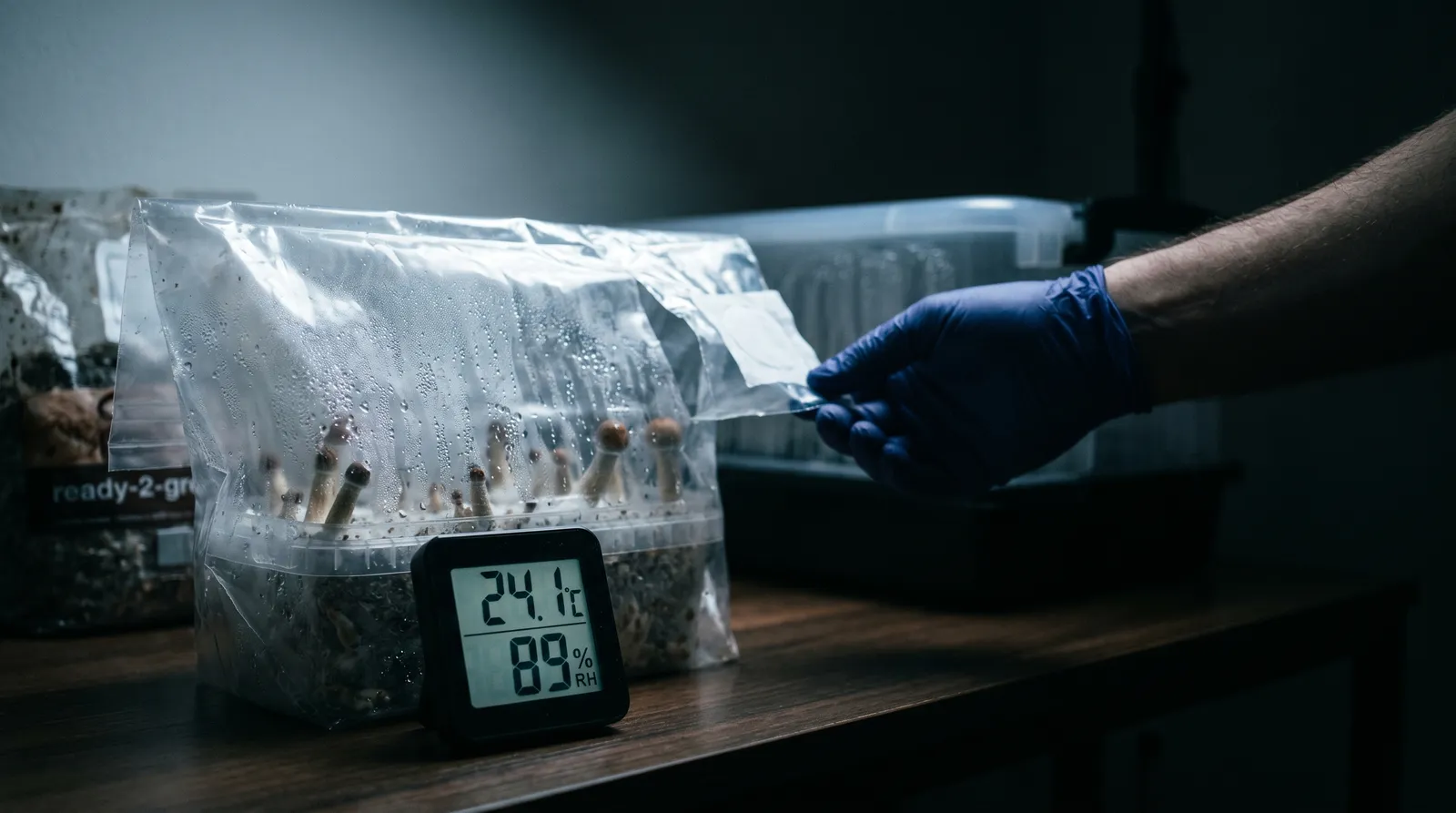
Humidity is where the formats split. Tub kits rely on the outer bag to hold roughly 90–95% RH around the casing, maintained by your misting — typically 1–2 light mistings per day on the inside of the bag walls (never directly on the pins, which can cause aborts or blue bruising). Fresh air exchange happens 2–3 times daily: fan the bag open for 15–30 seconds to flush CO₂ out and drop ambient CO₂ below roughly 1000 ppm, which is the threshold at which P. cubensis switches from stem elongation to cap formation.
R2G bags handle this passively. The sealed bag with its filter patch self-regulates to the correct internal RH, and the filter handles slow gas exchange. You still want indirect light (not direct sun) and a stable ambient temperature, but you're not misting or fanning on a schedule.
We can tell you what the formats do on paper and what we see fail most often across customer calls, but we can't predict your specific cupboard. Ambient humidity, draughts from a nearby window, a radiator cycling on at night, a cat that sleeps near the bag — all of these change outcomes in ways no guide can pre-empt. Treat your first kit as a calibration run, not a guaranteed harvest.
Which format fits which grower
The tub-format grow kit rewards attention and the R2G bag rewards restraint — pick the one that matches how you actually behave around a growing thing. If you like the ritual of misting, fanning, dunking between flushes, and watching pins develop over weeks, the tub is the format that gives you the longest engagement and the most learning. You'll also, honestly, fail more often at the start — the open casing, the repeated handling, and the multi-flush window all add up to more chances for something to go wrong. Strains in this format lean towards the classic, forgiving end: Golden Teacher, Mexican, Mazatapec, B+.
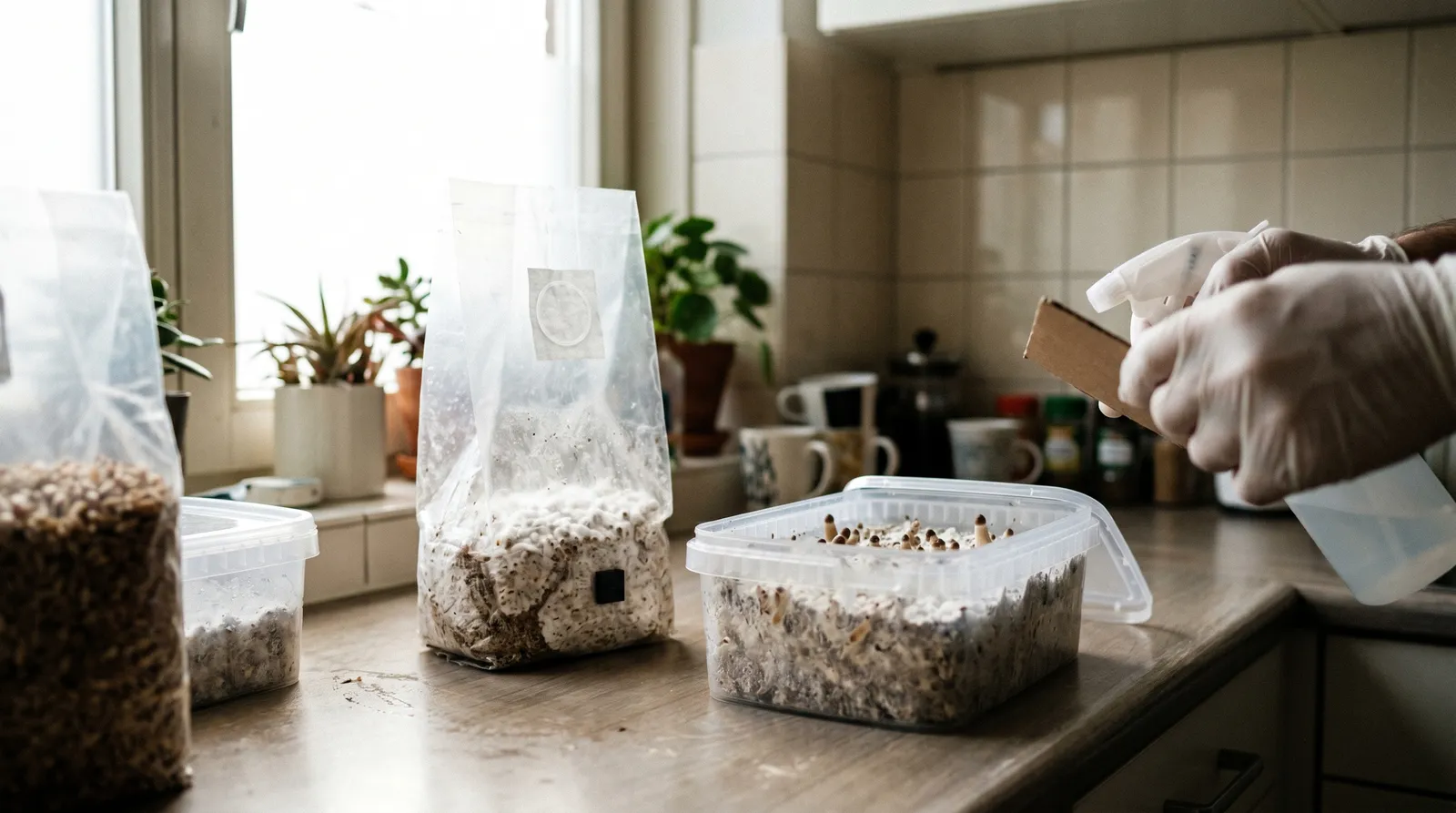
The R2G format suits growers who want a working flush with minimum intervention. First-time growers in particular tend to do better with it — less to mess up, less anxiety about whether you're misting correctly, and a cleaner contamination profile. It's also the only route to certain genetics in the Azarius range: APE, Enigma, Jack Rabbit, Jedi Mind Fuck, Makilla Gorilla, MVP, and Hillbilly Pumpkin are R2G-exclusive. Whether those stronger or more unusual strains suit you is a separate question — a first grow is almost always better on Golden Teacher or Mazatapec than on APE, regardless of format.
A practical rule: if contamination has burned you before, buy an R2G. If you want to learn the craft and don't mind a failed kit along the way, get a tub. Plenty of growers eventually keep one of each running on a staggered schedule.
Shared ground: storage, harvest, and what comes next
Both formats harvest the same way — pick just before or just as the veil breaks under the cap (the thin membrane connecting cap edge to stem). Waiting too long drops spores across the substrate, which speeds up the aging of the next flush and cosmetically stains everything purple-black. Pick by gripping the base of the stem and twisting gently — clean break at the substrate surface, no pulling chunks of casing out with it.
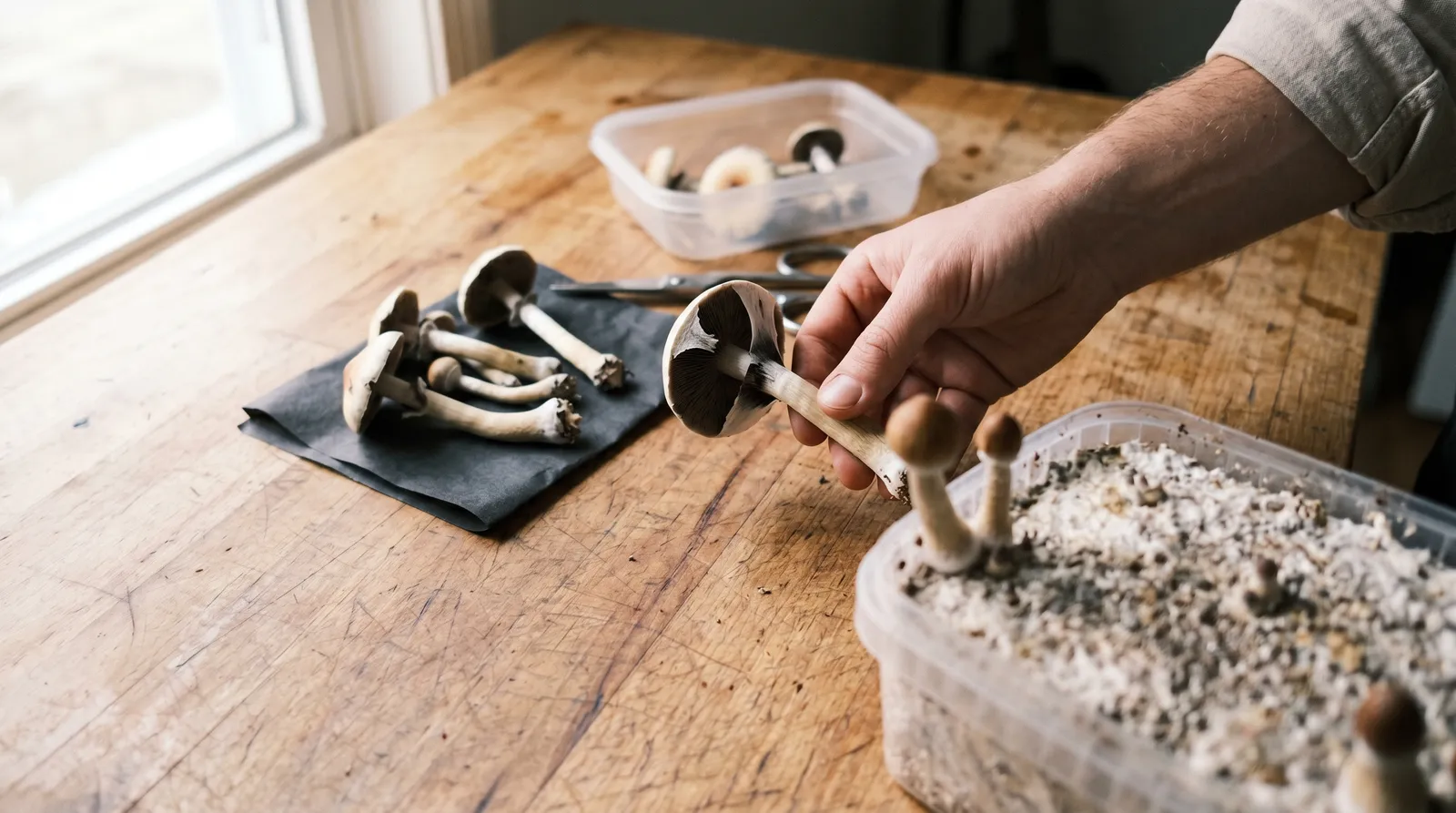
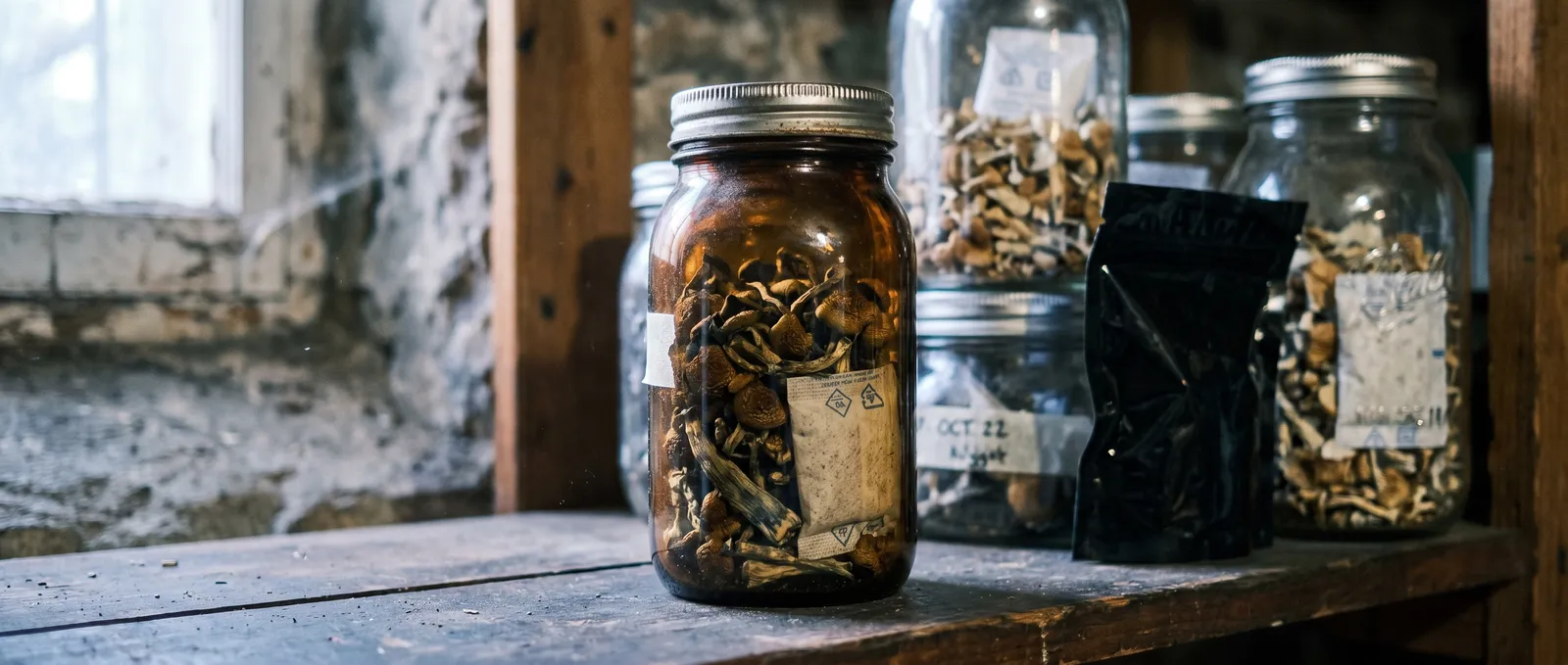
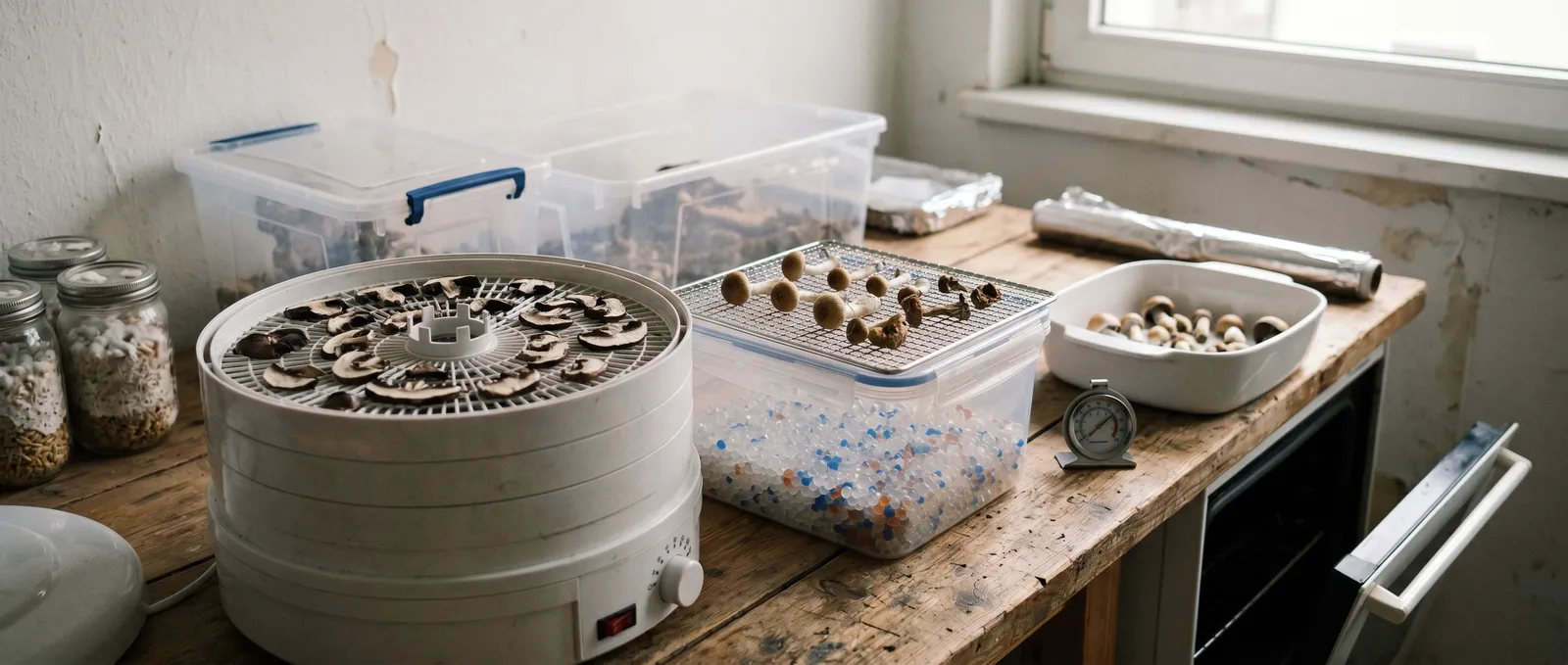
Drying is the step that determines shelf life and potency retention. Fresh mushrooms need to go from ~90% water content to "cracker-dry" — stems snap cleanly rather than bend — using air-drying for 24 hours followed by desiccant drying (food-grade silica or anhydrous calcium chloride) in an airtight container. Tsujikawa et al. (2003) documented that properly dried and sealed P. cubensis retains the bulk of its alkaloid content for months when kept cool, dark, and dry, though stability drops sharply if residual moisture is present. Wet-harvest storage in the fridge is fine for 3–5 days only.
A brief safety note applies equally to both: the dust produced when handling dry mushrooms can trigger respiratory sensitivity in some growers — a basic FFP2 mask during the break-down and grinding stage is sensible. Lock-up storage is sensible if there are children or pets in the house, since dried mushrooms look like ordinary dried food. Questions about consumption, dose, or combining with other substances belong on the psilocybin hub — including the standard MAOI, SSRI and lithium interaction notes covered there, not here.
Verdict
If this is your first grow and you mostly want a harvest, buy an R2G bag with Golden Teacher — it's the lowest-failure route into home cultivation and it won't punish a slightly-too-warm cupboard or an off day with the mister. If you want to learn cultivation, chase multiple flushes, and don't mind occasionally binning a contaminated kit: order a tub-format grow kit in the same strain. Either way, Golden Teacher is the sensible starting genetic — the stronger or more novel strains in the R2G line-up are better once you've got one successful run behind you.
Related Azarius grow formats
Azarius carries both formats side by side: 8 strains in the tub-style Grow Kit range (B+, Cambodia, Golden Teacher, Mazatapec, McKennaii, Mexican, PES Amazonian, Treasure Coast) and 9 strains in the Ready-2-Grow Bag range (APE, Enigma, Golden Teacher, Hillbilly Pumpkin, Jack Rabbit, Jedi Mind Fuck, Makilla Gorilla, McKennaii, MVP). Golden Teacher and McKennaii appear in both, which is the cleanest way to compare the two formats on identical genetics — get one of each if you want a side-by-side calibration.
Last updated: April 2026
Frequently Asked Questions
8 questionsWhat is the main difference between a mushroom grow kit and a Ready-2-Grow Bag?
Which format is better for a first-time grower?
How many flushes can I expect from each format?
Which strains are only available in the Ready-2-Grow format?
Does a Ready-2-Grow Bag really need less maintenance?
What contamination signs mean I should throw the kit out?
What temperature do I need to maintain for a grow kit or Ready-2-Grow Bag?
Can I reuse or get a second flush from a Ready-2-Grow Bag?
About this article


Adam Parsons is an external cannabis and psychedelics writer and editor who contributes to Azarius's wiki as both author and reviewer. On the writing side, he authors Azarius's kratom and kanna clusters, drawing on exten
This wiki article was drafted with AI assistance and reviewed by Adam Parsons, External contributor. Editorial oversight by Joshua Askew.
Medical disclaimer. This content is for informational purposes only and does not constitute medical advice. Consult a qualified healthcare provider before use of any substance.
Last reviewed April 25, 2026
References (2)
- [1]Stamets, P. (2000). Growing Gourmet and Medicinal Mushrooms (3rd ed.). Ten Speed Press, Berkeley, CA. Source
- [2]Sánchez, C. (2010). Cultivation of Pleurotus ostreatus and other edible mushrooms. Applied Microbiology and Biotechnology, 85(5), 1321-1337. DOI: 10.1007/s00253-009-2343-7
Related Articles
Cannabis Hermaphrodite: Identify, Prevent, Act
A cannabis hermaphrodite is a female plant that develops male pollen sacs or banana-shaped anthers (nanners), self-pollinating and seeding your harvest.
DIY Cannabis Fertilizer: Homemade Nutrient Guide
DIY cannabis fertilizer guide: compost, teas, banana ferments and feed schedules, with safety notes and cited research for home growers.
What To Do With Male Cannabis Plants: 6 Practical Uses
What to do with male cannabis plants: identify, isolate, breed, extract, or compost. A practical 6-step guide with sourcing and safety notes.
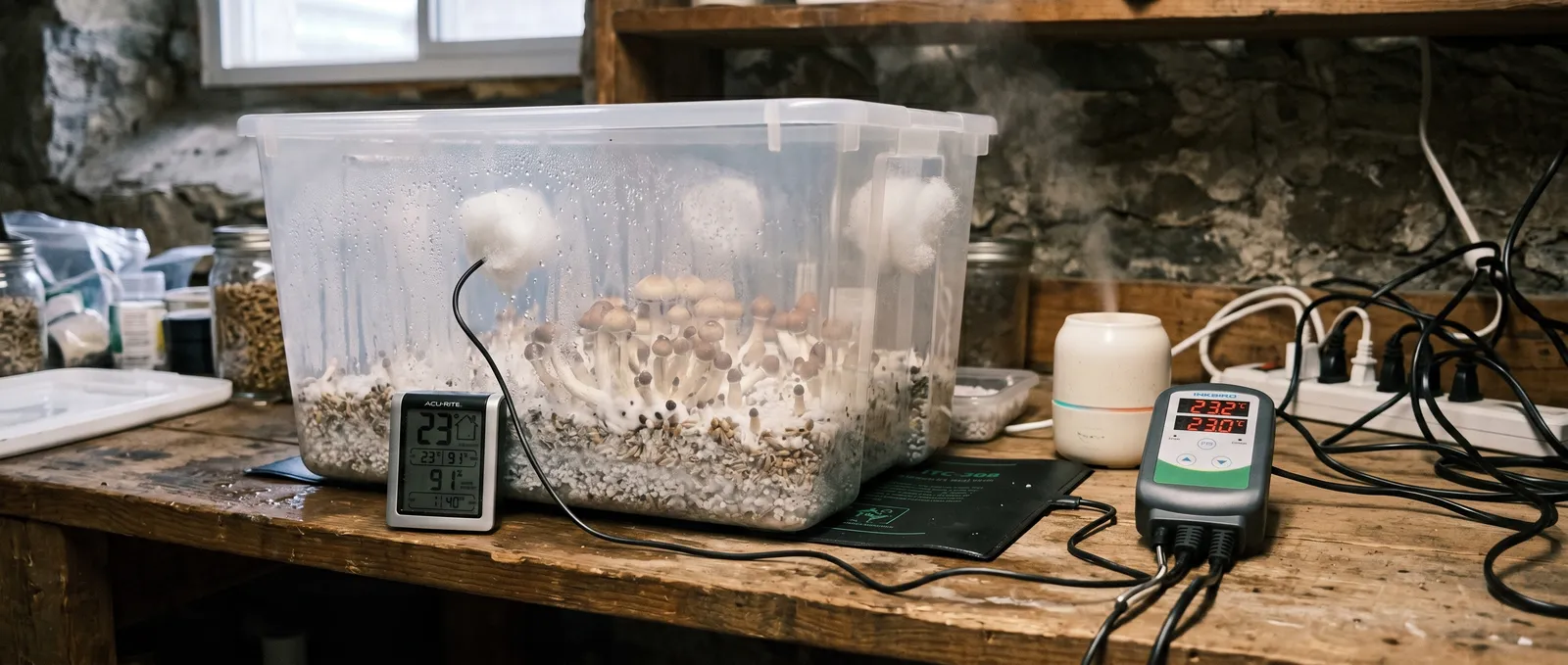
Mushroom Grow Kit Temperature & Humidity: Full Setup Guide
A temperature humidity control grow kit is the small set of climate tools — hygrometer, heat mat, humidifier or perlite tray — that keeps a mushroom fruiting…
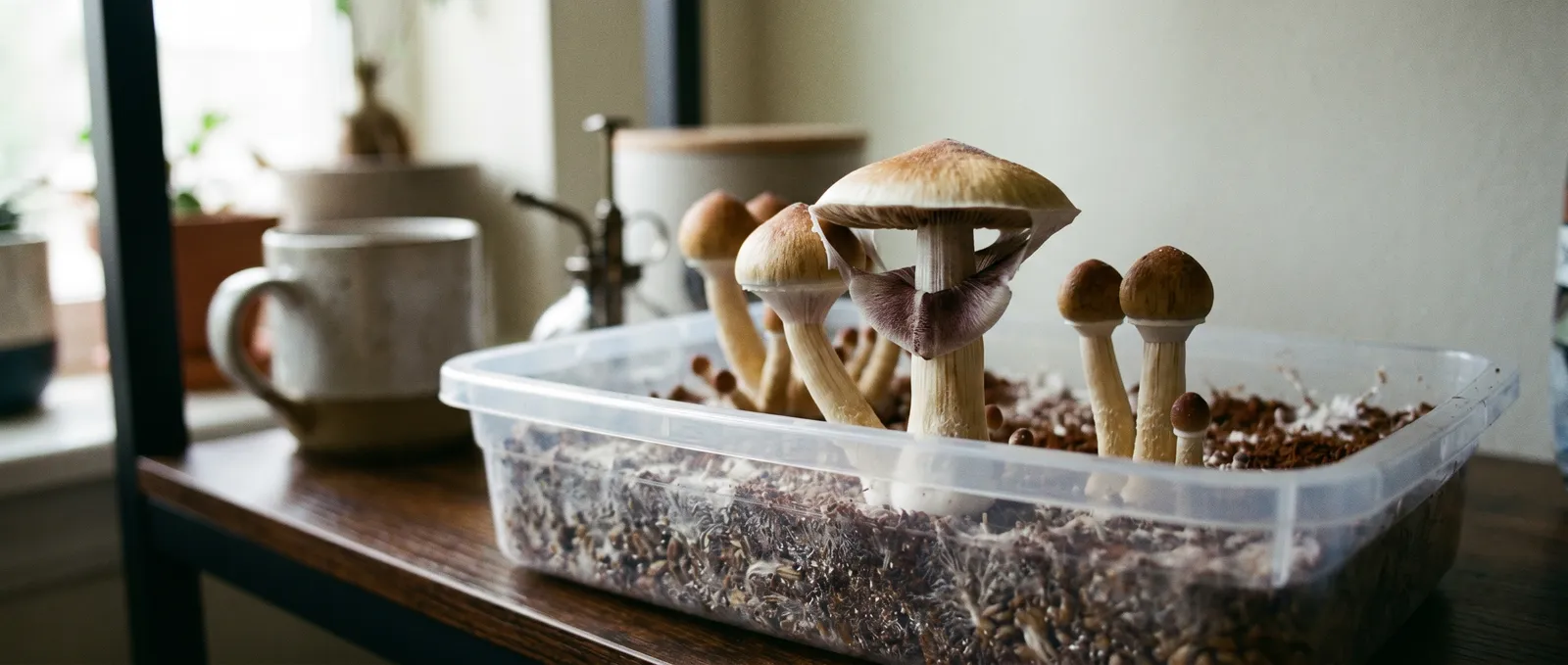
When to Harvest Mushrooms: Veil Break Timing Explained
Harvest timing veil break is a cultivation technique that uses the tearing of the partial veil on maturing Psilocybe cubensis to mark peak alkaloid content.
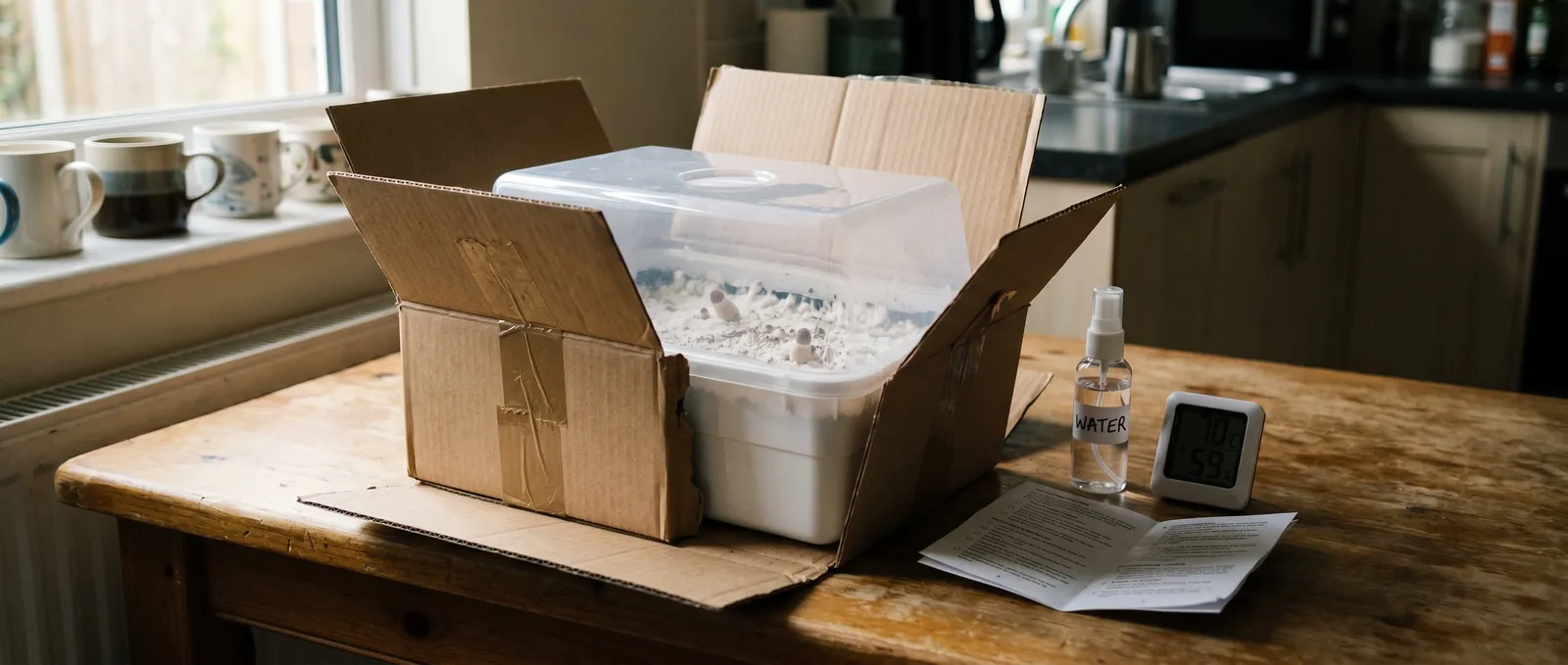
First Grow Checklist: What You Need for Mushroom Kits
A first grow checklist is the short list of supplies and environmental conditions needed to run a home psilocybin mushroom kit from inoculated substrate to…
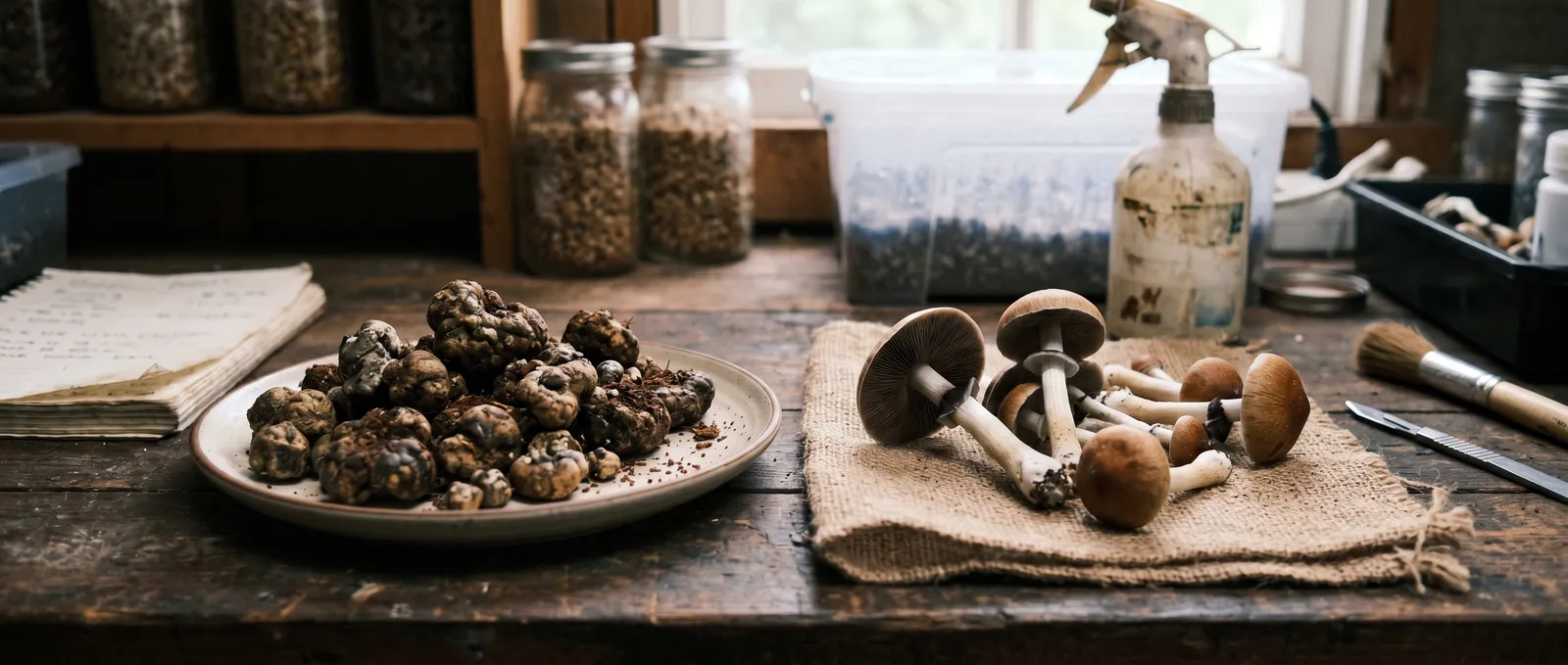
Sclerotia vs Fruit Bodies: Cultivation Comparison
Sclerotia and fruit bodies are two different life stages of Psilocybe fungi: sclerotia are hardened underground mycelial storage bodies (the 'magic…
Storing Dried Mushrooms Long Term: Full Guide
Storing dried mushrooms long term means keeping well-dried Psilocybe fruit bodies in airtight, opaque containers with desiccant, cool and dark, to slow…
Drying Mushrooms Air Desiccant Oven: Methods Compared
Drying mushrooms air desiccant oven refers to the three home methods for reducing fresh fruit bodies from ~90% water to cracker-dry (<5%). Gotvaldová et al.