
This article discusses psychoactive substances intended for adults (18+). If you have a health condition or take medication, consult a doctor before use. Our age policy
Guerrilla Cannabis Growing: Outdoor Cultivation Explained
Definition
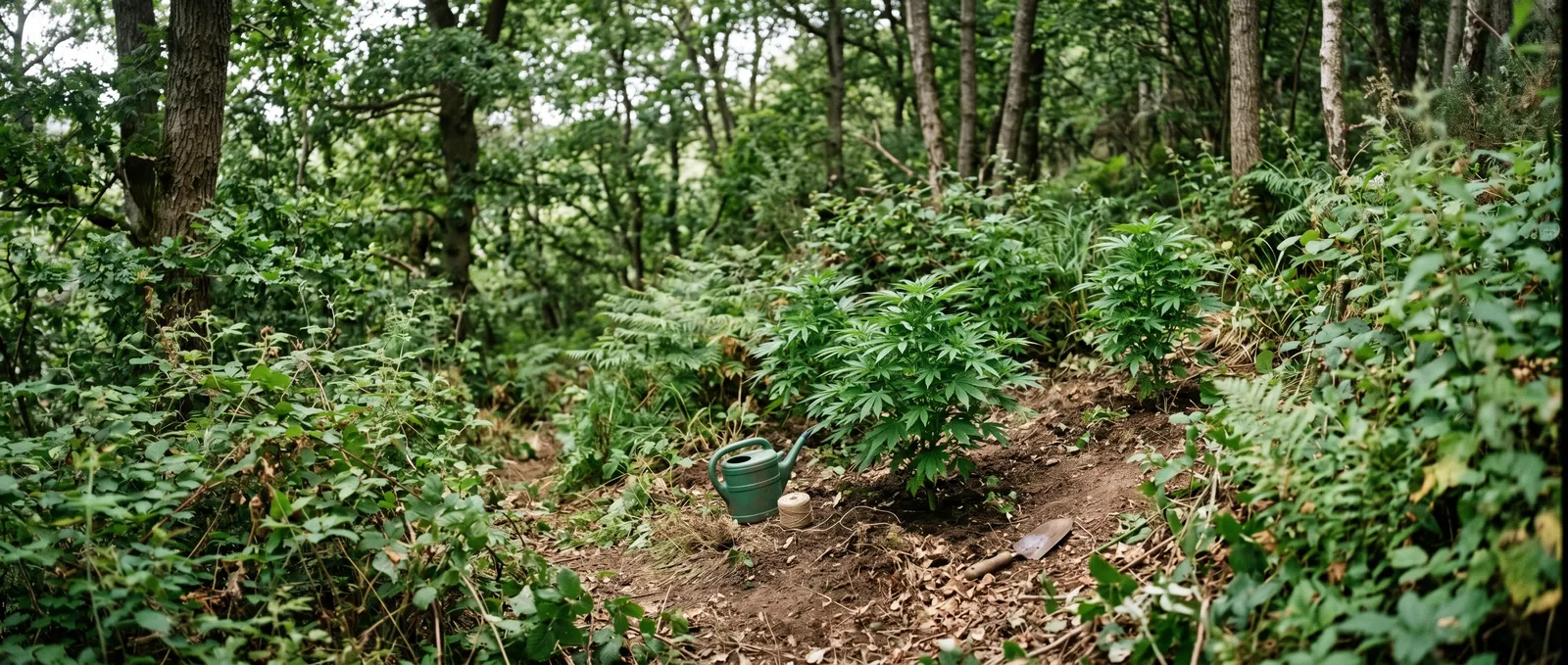
Guerrilla cannabis growing is an outdoor cultivation practice that uses unsupervised wild land — woodland, scrubland, field edges — with minimal visits across the season. Success hinges on strain choice, site preparation, and mould-resistant genetics bred for short Northern European summers (Chandra et al., 2008).
Guerrilla cannabis growing is an outdoor cultivation practice that uses unsupervised wild land — woodland clearings, riverbanks, overgrown fields — to grow plants with minimal inputs and infrequent visits. It's an old technique, older than formal home-grow frameworks, and it persists because outdoor sun is free and indoor tents cost money. This guide is written for adults who want to buy seeds and get a harvest from land without the electricity bill of a tent. What follows is a horticultural explainer.
18+ only The word "guerrilla" is borrowed from irregular warfare and it fits the practice better than it should — the grower is working against the clock, the weather, wildlife, and often the calendar.
What guerrilla growing actually means
Guerrilla cannabis growing means cultivating on land you don't own or manage, with visits limited to a handful across the season. You're working against the clock, against weather, against wildlife. The grower visits the site a few times across a season: once to prepare, once or twice to water and feed if rain fails, once to check for problems, once to harvest. No tent, no timer, no 400W LED. Just soil, sky, and whatever genetics can stomach both.
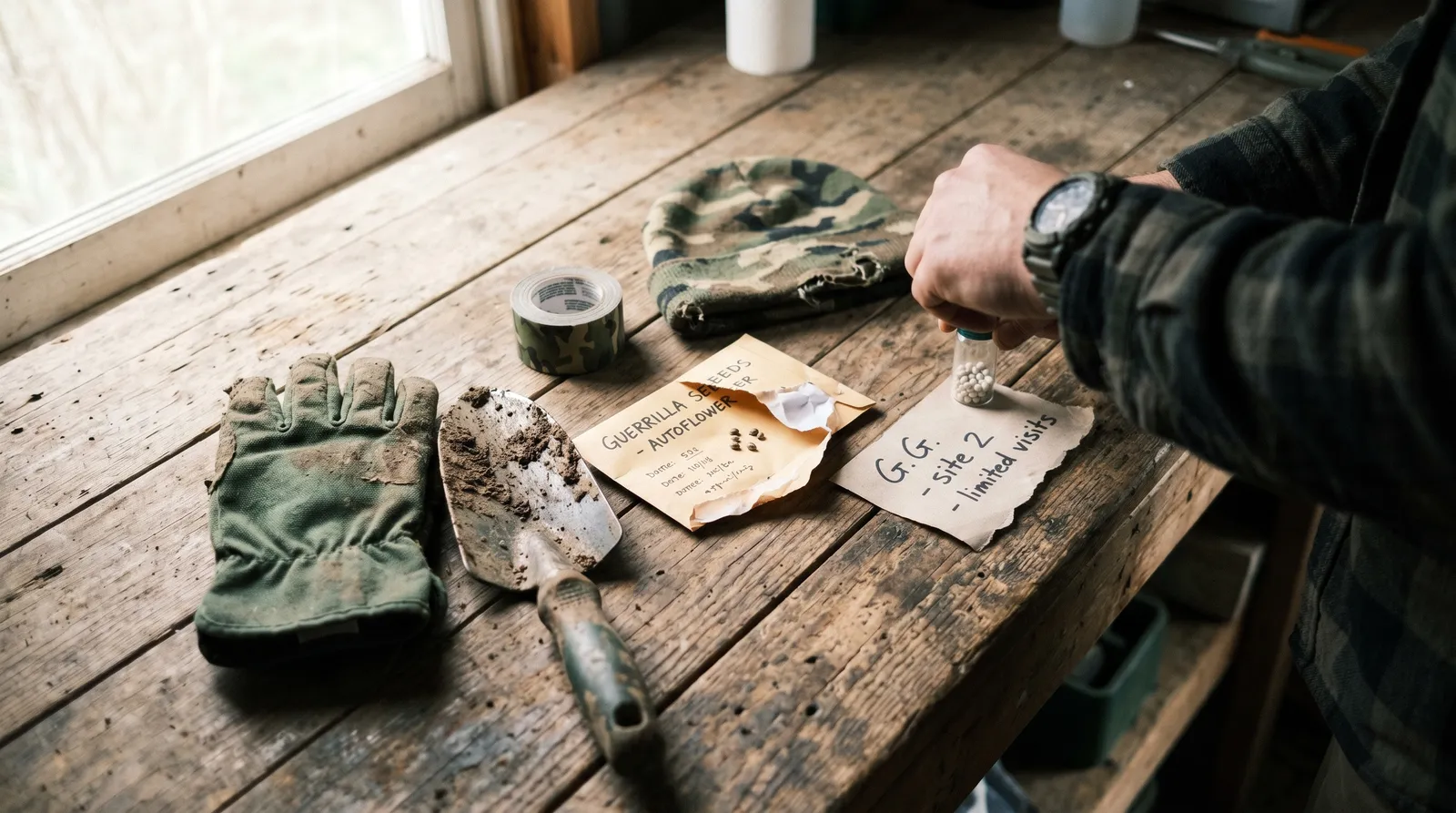
This is distinct from a back-garden grow, where you have daily access, a tap, and walls. It's also distinct from stealth indoor growing in a cupboard. Guerrilla sits outside on land someone else owns or manages — public forest, farmland edges, scrubland — and the entire strategy is shaped by that fact. Home cultivation rules differ wildly by country; as of Q2 2026, Germany's Cannabisgesetz permits up to three plants per adult at their registered home address (Bundesgesetzblatt, 2024), Malta allows up to four plants at home under Act No. LXVI of 2021, and the Netherlands tolerates up to five plants in private gardens per Opiumwet Article 3. Guerrilla sites — on land you don't own — fall outside these home-cultivation frameworks in every EU jurisdiction we've checked.
Why anyone does it
Sunlight is the best grow light ever made, and it's the single reason guerrilla growing continues to exist. Midsummer solar PPFD at 50° N latitude peaks around 1,500–2,000 µmol/m²/s at solar noon on a clear day, comfortably above the 600–1,000 PPFD range most indoor growers target in flower (Chandra et al., 2008, Physiology and Molecular Biology of Plants). The electricity bill is zero. A well-chosen spot in rich earth needs minimal input. Outdoor plants also grow large — two to three metres is normal for a photoperiod strain with a full season — producing yields that would require a serious indoor setup to match.
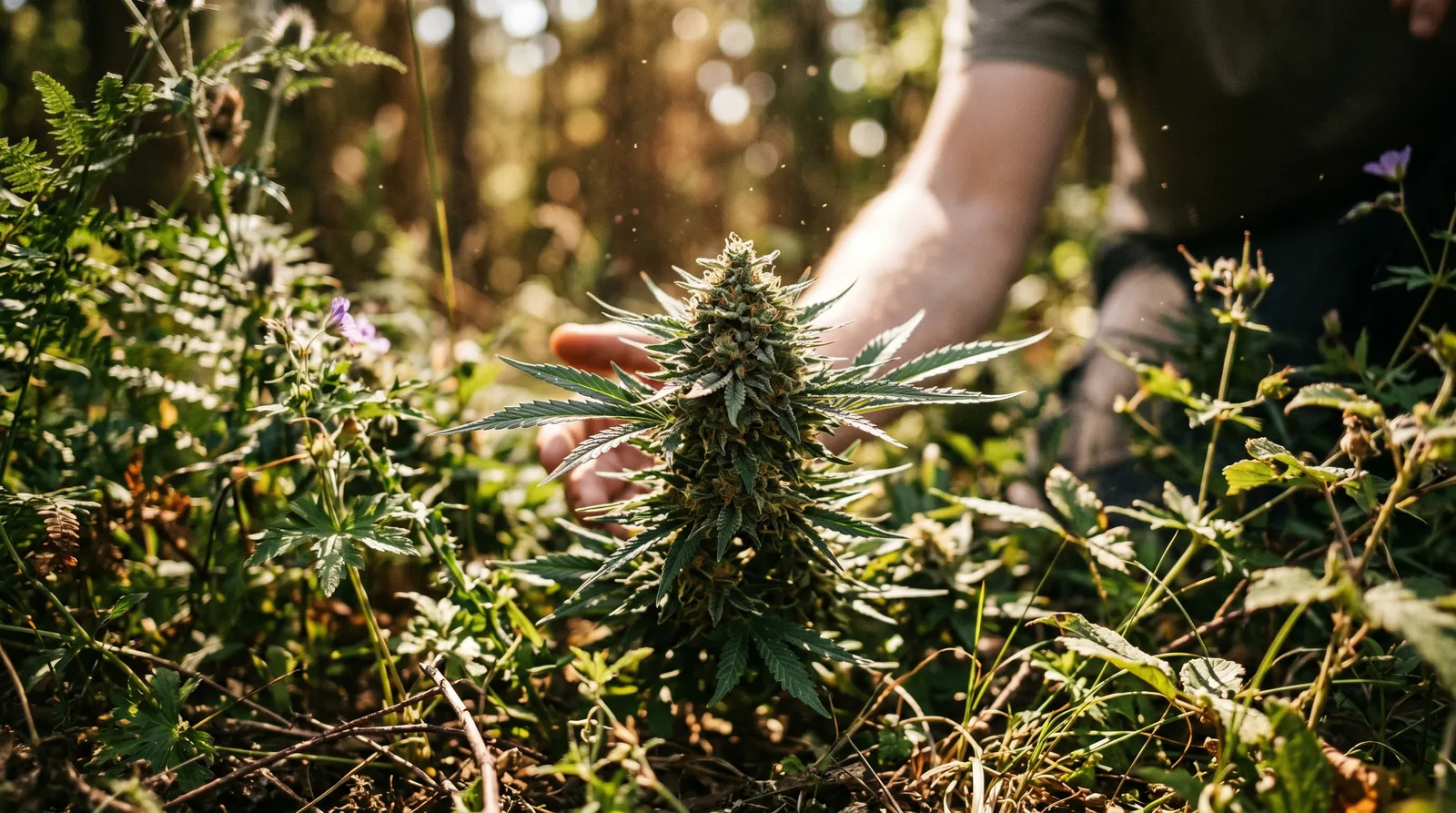
Against that: everything else. You cannot control rainfall, temperature swings, deer, slugs, powdery mildew, botrytis, curious walkers, off-leash dogs, or the farmer who decides to mow the edge of his field in August. You cannot fix problems you don't see because you're not there. The plants live or die on genetics, site selection, and luck.
The genetics question
Strain choice matters more in guerrilla growing than in any other cultivation context. Indoor under lights, you can bully a finicky sativa into finishing. Outdoors, in a hedgerow, you need a plant that flowers early enough to finish before autumn rot sets in, handles temperature drops below 10°C without sulking, and resists mould when September fog rolls across the field at 4am.
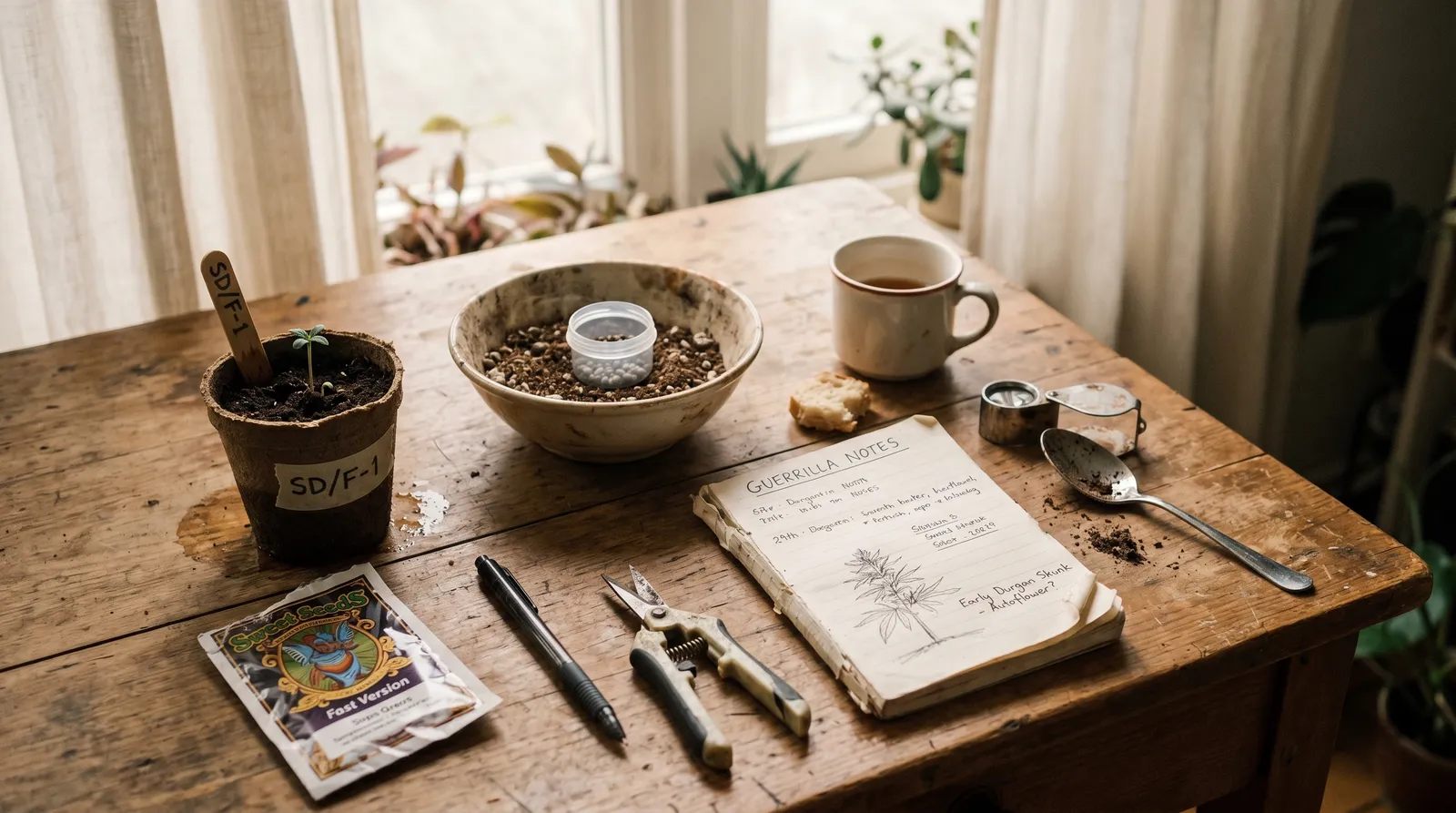
Two routes dominate. Autoflowering genetics — derived from Cannabis ruderalis — flower on age rather than photoperiod, typically completing seed-to-harvest in 9–11 weeks regardless of light hours. Sown in May at 50° N latitude, an autoflower finishes in late July or early August, dodging the wet September that kills many photoperiod outdoor grows. Plants stay small (60–120cm), which is useful when you're trying not to be spotted from a footpath. Yields per plant are modest — often 30–80g dry from a healthy auto in good soil — but the fast turnaround lets you run two cycles in a long summer.
Photoperiod genetics flip to flowering when daylight drops below roughly 14 hours, which at Northern European latitudes happens around mid-August. They finish in late September through October depending on the variety. The trade-off: bigger plants, bigger yields, but much more exposure to autumn weather. Early-finishing photoperiod varieties bred specifically for Northern outdoor conditions — Dutch Passion's Frisian Dew, Paradise Seeds' Durga Mata, Sensi Seeds' Early Skunk, Royal Queen Seeds' Easy Bud — are the honest recommendations here, chosen by breeders for short-season resilience rather than peak cannabinoid content.
Mould resistance is the trait guerrilla growers should weigh highest. A dense, sugary indica bud that finishes in mid-October at 90% humidity will almost certainly botrytis. Sativa-dominant hybrids with airier bud structure, or varieties explicitly tagged by breeders as mould-resistant, survive the back half of a Northern European autumn much better.
Site selection and its limits
A cannabis plant needs roughly six hours of direct sun, free-draining soil, and a water source within reach — either rainfall, a nearby stream, or a grower willing to carry jerrycans. South-facing slopes collect more light. North-facing ones do not. Clay-heavy soil waterlogs; sandy soil drains too fast and leaches nutrients. Brambles and nettles are actually a good sign: they indicate decent soil nitrogen and also deter casual foot traffic.
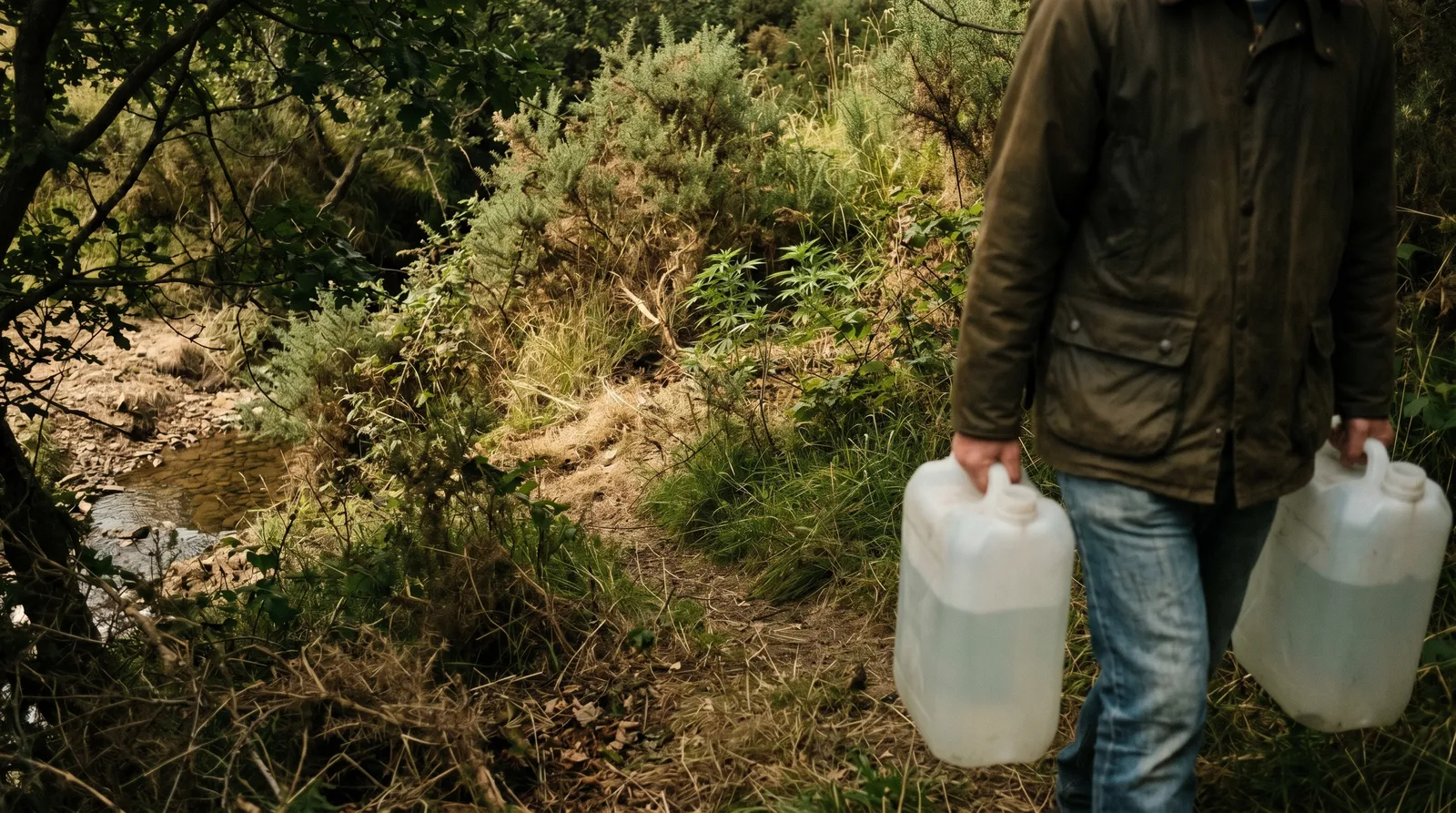
What you cannot engineer away is the fundamental problem: the plants are large, green, and smell remarkable from mid-August onward. Carbon filters don't exist in a forest. A single flowering plant produces enough terpenes to give itself away to anyone within 20 metres downwind, and photos of the site taken today by a passing walker appear on social media tomorrow. Growers who treat this as a solvable problem — with netting, camouflage, companion planting — are generally underestimating it.
The horticulture that actually works
Site preparation in early spring makes the single biggest difference to end-of-season yield. Digging out a 40–60cm hole and backfilling with a mix of local soil, compost, and a slow-release organic amendment (BioTabs and similar "plant it and forget it" nutrient systems are designed precisely for this) gives roots something to live on across months without visits. Mycorrhizal inoculant at transplant is often cited as helpful for drought tolerance in outdoor soils. Mulching heavily with straw or leaf litter reduces evaporation and suppresses competing weeds.
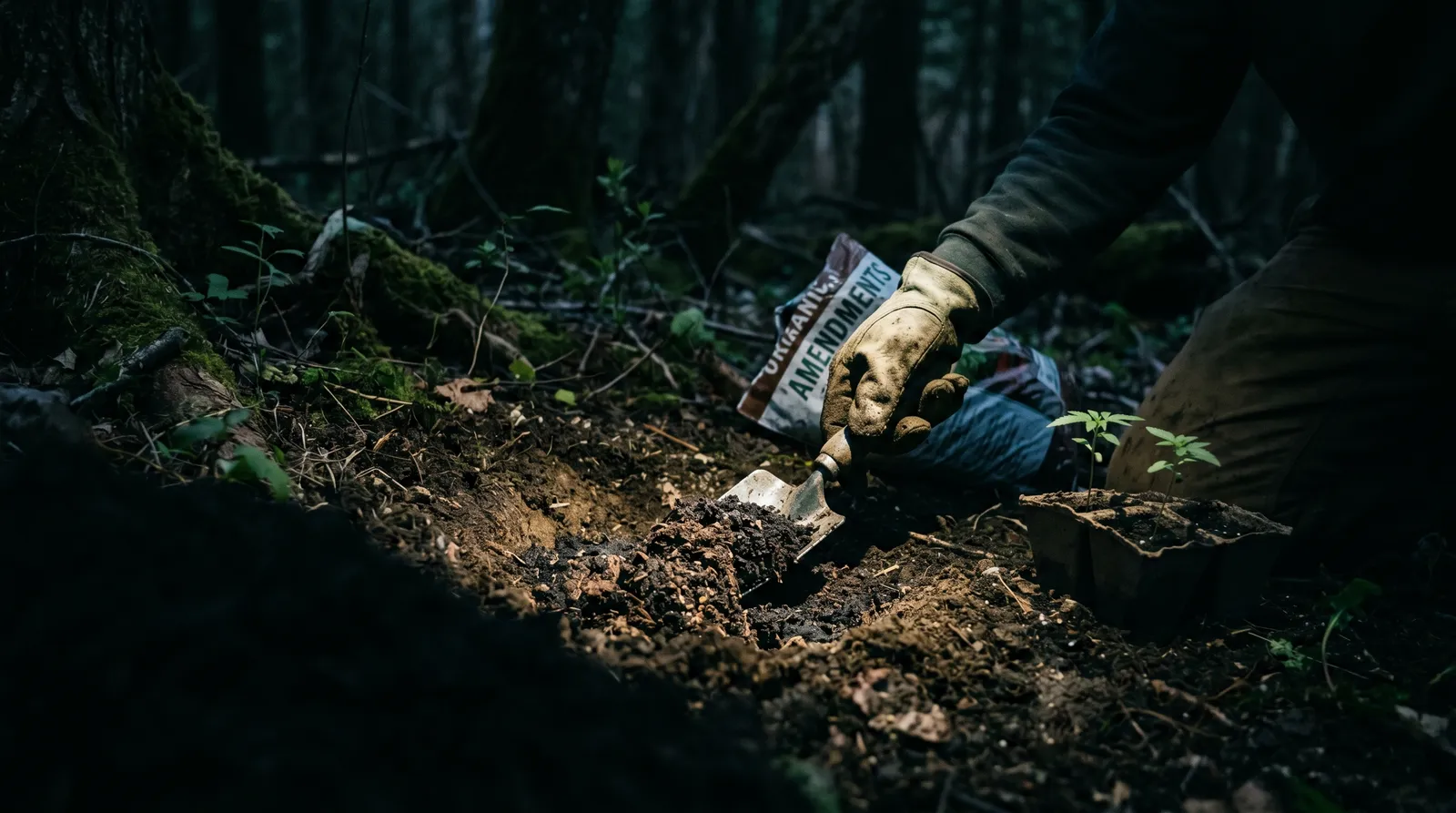
Key preparation checklist for a guerrilla site:
- Hole: 40–60cm deep, backfilled with local soil, compost, and slow-release organic amendment.
- Mulch: 5–10cm of straw or leaf litter over the root zone.
- Water buffer: perforated buried bottle or olla, filled at transplant.
- Seedling collar: cut plastic bottle for the first fortnight against slugs.
- Bt spray schedule: every 10–14 days from early flower, stop two weeks before harvest.
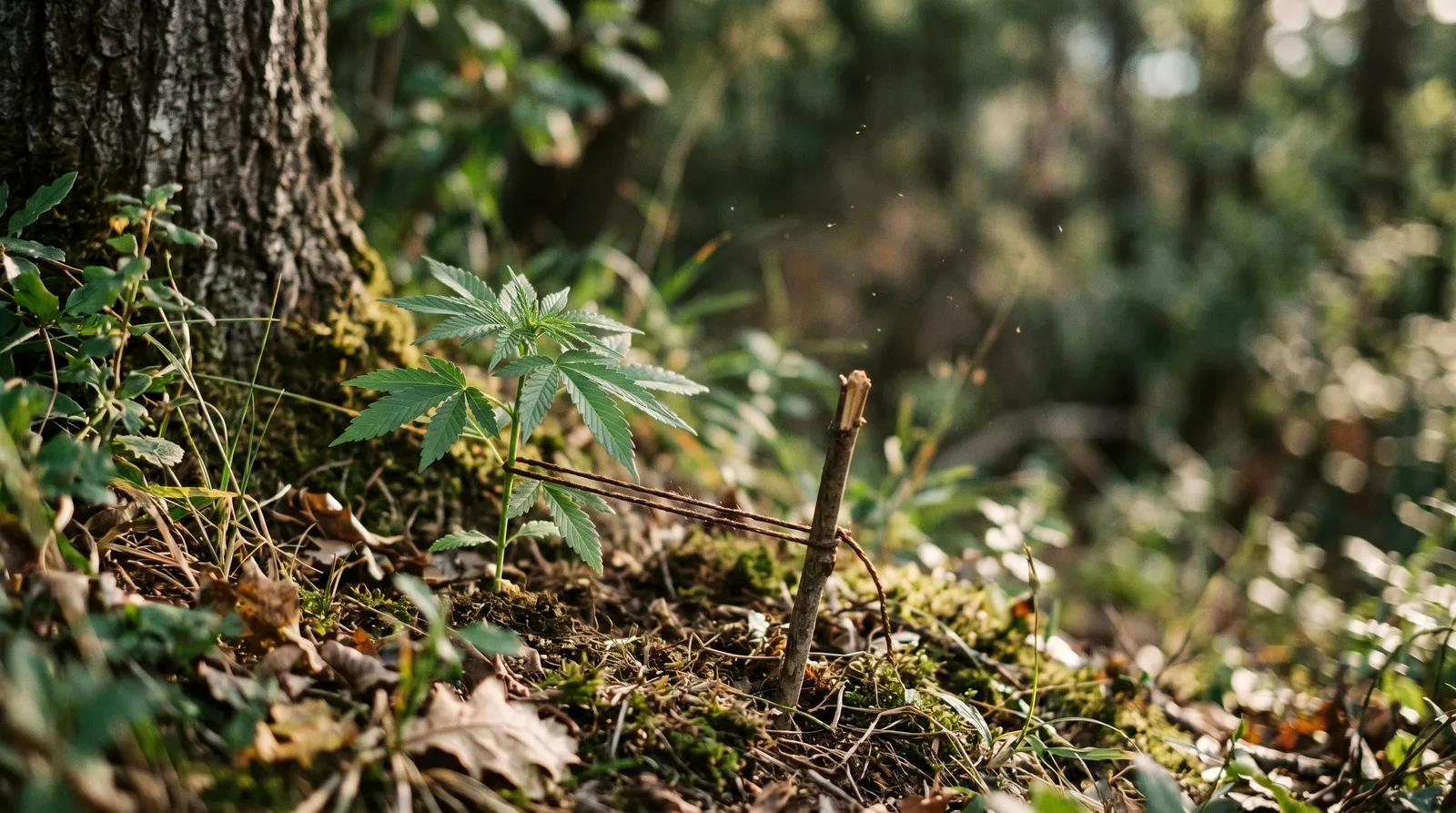
Transplant out after last frost — mid-May for most of Northern Europe — when soil temperatures sit above 12°C. Starting seedlings indoors for three to four weeks before transplant gives a head start on local flora and on slugs, which will eat a freshly germinated seedling overnight. Protect young plants with a collar (a cut plastic bottle works) for the first fortnight.
Watering is the hardest variable to manage remotely. A well-prepared hole with moisture-retentive soil and heavy mulch can go 10–14 days without rain before stress shows, but a dry July will kill unwatered plants in open ground. Some growers bury a perforated water reservoir — a slow-release olla or a buried plastic bottle with pinholes — next to the root ball. It buys days, not weeks.
Pest pressure outdoors is constant and varied. Caterpillars bore into flowers and cause bud rot from the inside. Bacillus thuringiensis (Bt) sprayed every 10–14 days through flowering is the standard organic control and has no withdrawal period issues when applied correctly before the last two weeks (Cranshaw, 2013, Garden Insects of North America). Spider mites explode in hot dry weather. Deer eat the tops off young plants. No systemic pesticides on a flowering cannabis plant — ever. Residues end up in anything consumed.
Guerrilla vs. home grow: the honest comparison
Guerrilla growing wins on scale and electricity cost; almost everything else favours a home grow. Here's the rough trade-off most growers face when deciding where to put a season's effort:
| Factor | Guerrilla outdoor | Back-garden / tent |
|---|---|---|
| Electricity cost | €0 | €40–120 per cycle (tent) |
| Yield per plant (typical) | 20–400g dry (high variance) | 80–200g dry (tent, controlled) |
| Crop loss rate | High — weather, pests, discovery | Low — controlled environment |
| Visit frequency | 4–8 times per season | Daily |
| Smell control | None | Carbon filter possible |
| Strain flexibility | Short-season, mould-resistant only | Any genetics |
Harvest and the part no one plans for
Harvest timing outdoors is dictated by weather as much as by trichome maturity. A forecast of a week of rain in the first week of October, with plants 80% finished, forces the question: cut now, or risk botrytis through the wet spell? Most experienced outdoor growers cut early when the alternative is losing the crop entirely. Cloudy trichomes with a few amber indicate you are within the usable harvest window even if the breeder's stated finish date is still a week away.
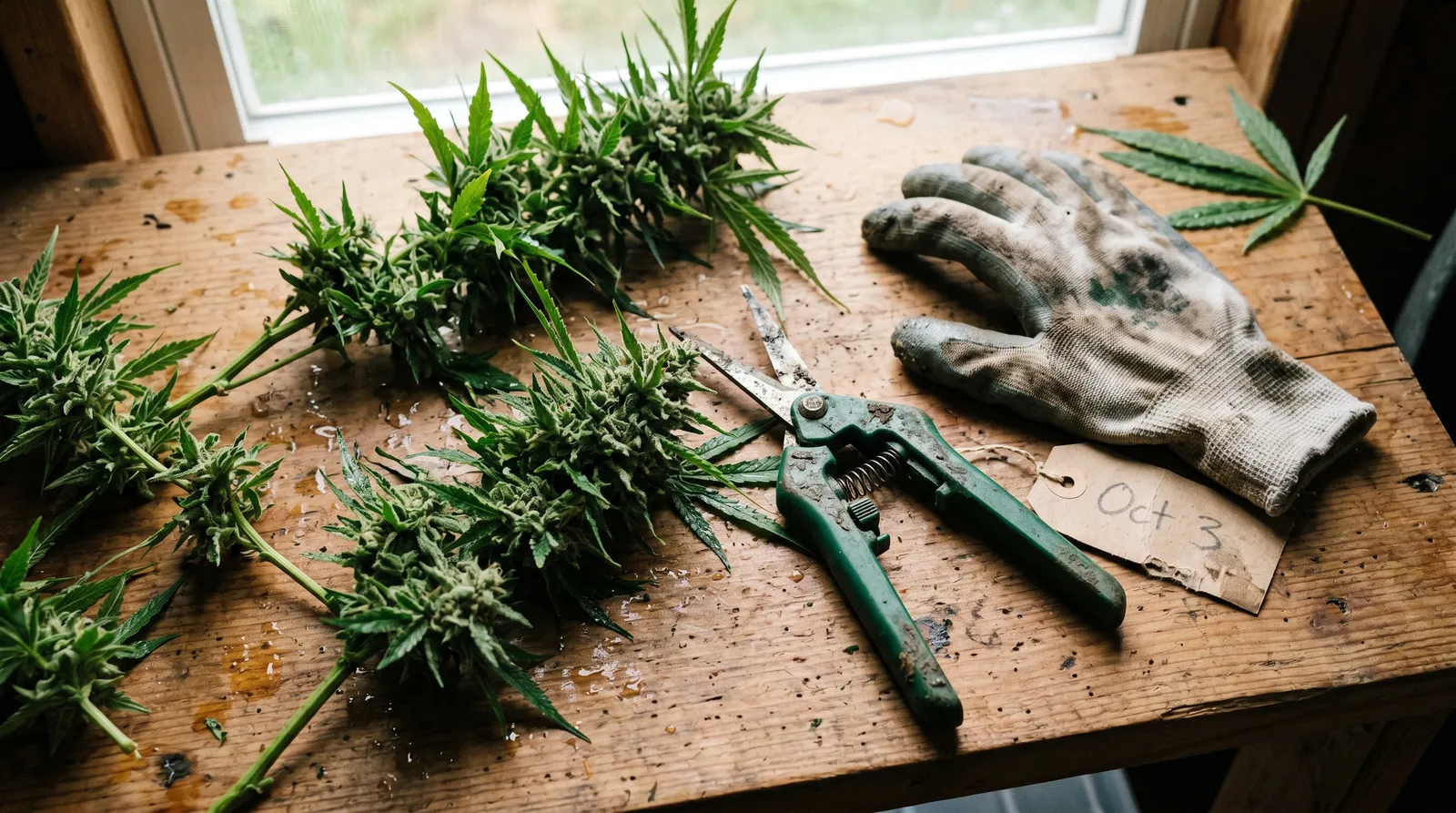
Drying is the logistical problem few guerrilla growers solve well. A tent in a garage at 18–20°C and 55–60% RH is the gold standard; a damp shed or a plastic bag in a car boot is how months of work become unsmokeable. Budget the drying space before planting the seed.
Honest assessment
Guerrilla cannabis growing can work, but the failure rate is high and the failures are often total. Growers in rural Europe have done it for decades, some with results that rival carefully managed indoor grows. A plant lost to rot, theft, or mowing represents an entire season. Yields vary wildly: a well-sited photoperiod plant in good soil might produce 100–400g dry, while a neglected or stressed plant produces 20g of smokeable material and a lot of stem. Reliable outdoor yield figures are hard to find in the literature because most published cannabis horticulture research is indoor-controlled; outdoor numbers come from grower surveys (including EMCDDA cultivation reports) rather than controlled trials.
Where home cultivation is permitted in your jurisdiction, a small tent or a back-garden grow on land you control will almost always give you more harvest, less stress, and less hassle than a guerrilla site. The genetics, nutrient, and pest-management principles covered here apply equally to a legitimate back-garden plant — and that's where most readers of this article are better served directing their effort. If you're going to order seeds this spring, think carefully about where you can visit them weekly before you buy.
Legal notice: Cannabis cultivation laws vary by country and region and change frequently. This guide is educational. Before growing, verify current laws for your specific jurisdiction. Azarius does not provide legal advice.
Educational content for adults. Guerrilla cannabis growing carries significant horticultural risk and falls outside home-cultivation frameworks in most EU jurisdictions; this article is a horticultural explainer, not operational advice. Consult qualified professionals for jurisdiction-specific questions.
Last updated: April 2026
Frequently Asked Questions
8 questionsWhat are the main advantages of guerrilla cannabis growing over indoor cultivation?
Which strain characteristics matter most for a guerrilla grow?
Are autoflowers better than photoperiod strains for guerrilla growing?
How do you water guerrilla plants when you can't visit daily?
What are the biggest risks that kill guerrilla grows?
When should you harvest outdoor cannabis if rain is forecast?
How do you choose the best location for a guerrilla cannabis grow?
How do you protect guerrilla cannabis plants from pests and mould without daily access?
About this article


Luke Sholl has been writing about cannabis, cannabinoids, and the broader benefits of nature since 2011, and has personally grown cannabis in home grow tents for more than a decade. That first-hand cultivation experience
This wiki article was drafted with AI assistance and reviewed by Luke Sholl, External contributor since 2026. Editorial oversight by Adam Parsons.
Medical disclaimer. This content is for informational purposes only and does not constitute medical advice. Consult a qualified healthcare provider before use of any substance.
Last reviewed April 24, 2026
References (6)
- [1]Chandra, S., Lata, H., Khan, I. A., & ElSohly, M. A. (2008). Photosynthetic response of Cannabis sativa L. to variations in photosynthetic photon flux densities. Physiology and Molecular Biology of Plants, 14(4), 299–306.
- [2]Cranshaw, W. (2013). Garden Insects of North America (2nd ed.). Princeton University Press.
- [3]EMCDDA (2023). Cannabis production and markets in Europe. European Monitoring Centre for Drugs and Drug Addiction, Lisbon.
- [4]Bundesgesetzblatt (2024). Gesetz zum kontrollierten Umgang mit Cannabis (Cannabisgesetz – CanG). BGBl. 2024 I Nr. 109.
- [5]Government of Malta (2021). Authority on the Responsible Use of Cannabis Act (Act No. LXVI of 2021).
- [6]Small, E., & Marcus, D. (2003). Tetrahydrocannabinol levels in hemp (Cannabis sativa) germplasm resources. Economic Botany, 57(4), 545–558.
Related Articles
Cannabis Hermaphrodite: Identify, Prevent, Act
A cannabis hermaphrodite is a female plant that develops male pollen sacs or banana-shaped anthers (nanners), self-pollinating and seeding your harvest.
DIY Cannabis Fertilizer: Homemade Nutrient Guide
DIY cannabis fertilizer guide: compost, teas, banana ferments and feed schedules, with safety notes and cited research for home growers.
What To Do With Male Cannabis Plants: 6 Practical Uses
What to do with male cannabis plants: identify, isolate, breed, extract, or compost. A practical 6-step guide with sourcing and safety notes.
Mushroom Grow Kit Temperature & Humidity: Full Setup Guide
A temperature humidity control grow kit is the small set of climate tools — hygrometer, heat mat, humidifier or perlite tray — that keeps a mushroom fruiting…
When to Harvest Mushrooms: Veil Break Timing Explained
Harvest timing veil break is a cultivation technique that uses the tearing of the partial veil on maturing Psilocybe cubensis to mark peak alkaloid content.
First Grow Checklist: What You Need for Mushroom Kits
A first grow checklist is the short list of supplies and environmental conditions needed to run a home psilocybin mushroom kit from inoculated substrate to…
Sclerotia vs Fruit Bodies: Cultivation Comparison
Sclerotia and fruit bodies are two different life stages of Psilocybe fungi: sclerotia are hardened underground mycelial storage bodies (the 'magic…
Storing Dried Mushrooms Long Term: Full Guide
Storing dried mushrooms long term means keeping well-dried Psilocybe fruit bodies in airtight, opaque containers with desiccant, cool and dark, to slow…
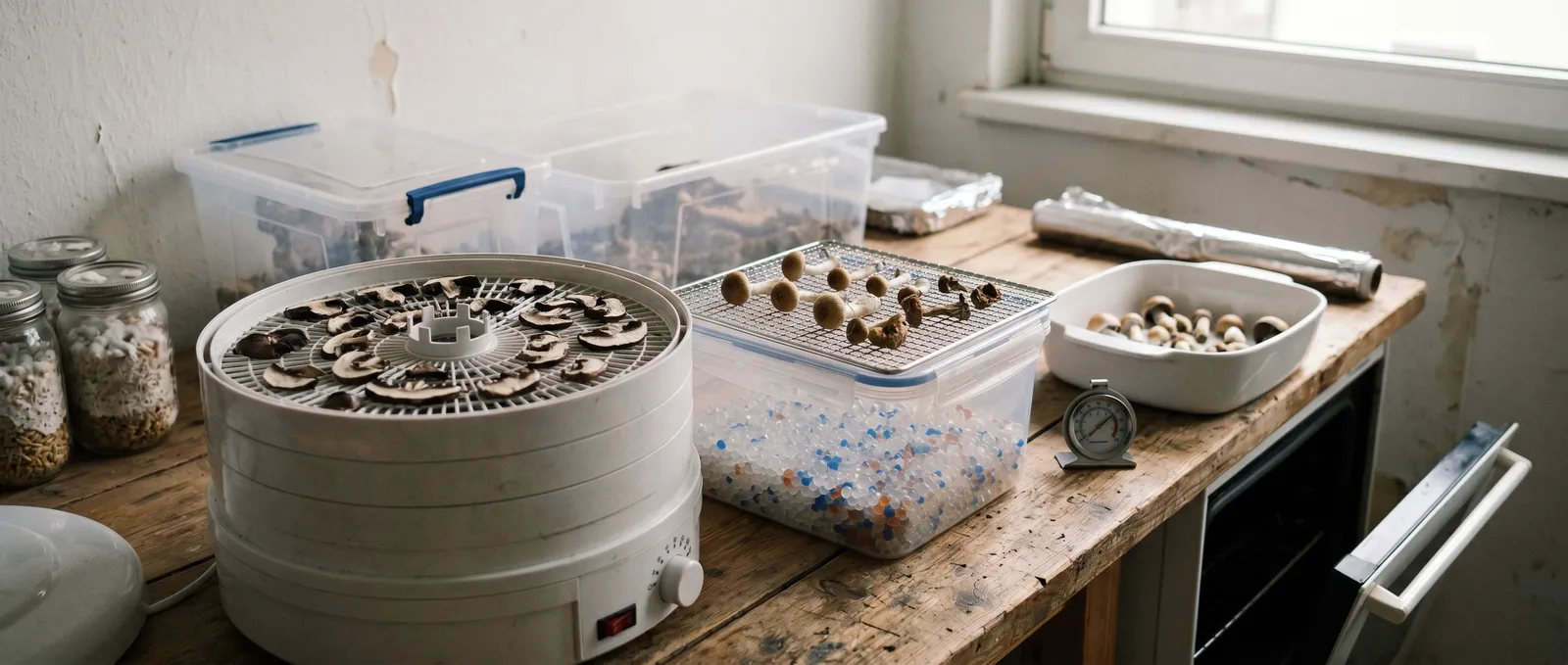
Drying Mushrooms Air Desiccant Oven: Methods Compared
Drying mushrooms air desiccant oven refers to the three home methods for reducing fresh fruit bodies from ~90% water to cracker-dry (<5%). Gotvaldová et al.