
This article discusses psychoactive substances intended for adults (18+). If you have a health condition or take medication, consult a doctor before use. Our age policy
Germany 3 Plant Rule vs NL, CZ, ES: Home Grow Compared
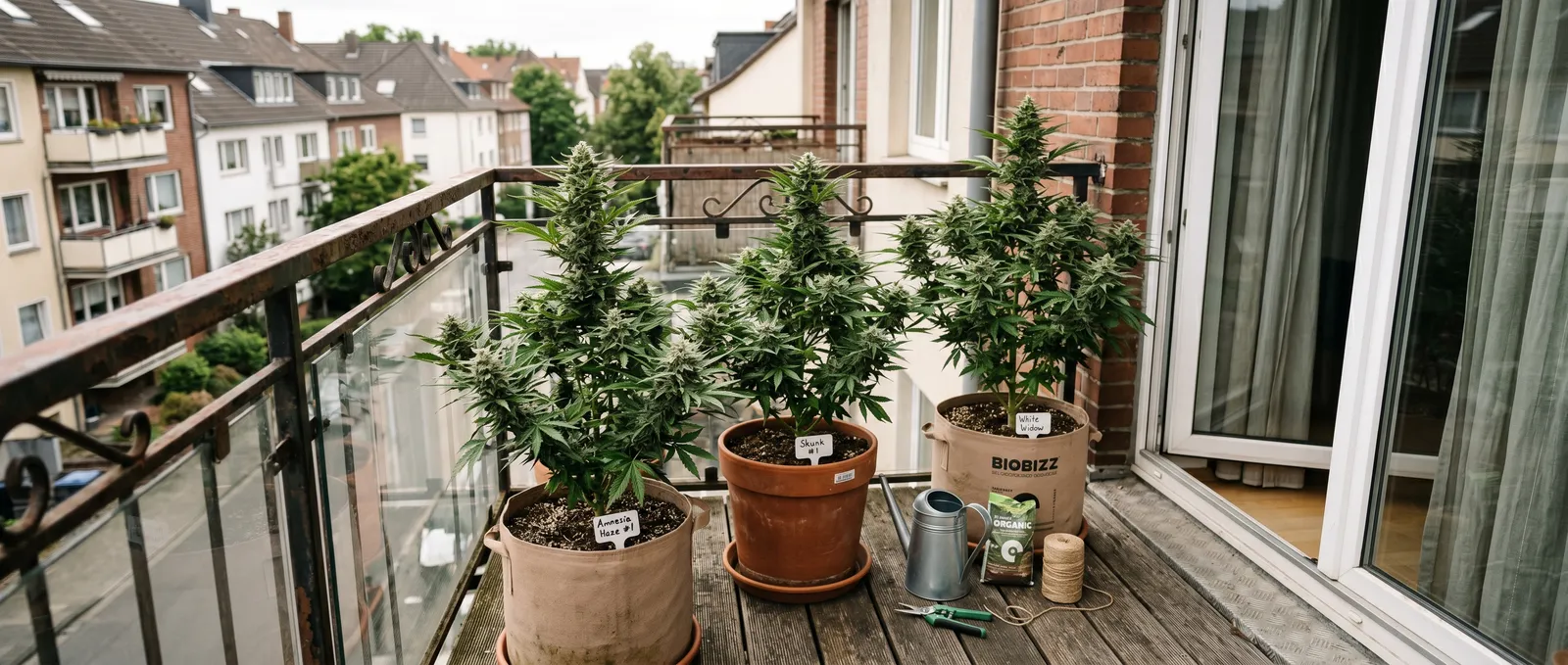
Definition
The Germany 3 plant rule, codified in the Cannabisgesetz (BMG, 2024), is a statutory allowance that lets adults grow up to three cannabis plants at home. This guide compares it against the Dutch five-plant tolerance, Czechia's misdemeanour threshold and Spain's private-sphere doctrine as of Q2 2026.
The Germany 3 plant rule is a statutory home-cultivation allowance that lets adults aged 18+ grow up to three flowering cannabis plants at their primary residence for personal use. This guide is educational. Before you buy seeds or start a grow, verify the current rules for your specific jurisdiction.
Adult use only (18+). This comparison covers home cultivation rules for adults across four European jurisdictions. The Germany 3 plant rule — the headline figure from the 2024 Cannabisgesetz — has become the benchmark other European home growers check their own rules against. Below is how it stacks up against the Netherlands, Czechia and Spain, as of Q2 2026.
At a glance: the four jurisdictions compared
Four jurisdictions operate four very different frameworks. The table below summarises plant counts, possession thresholds and the statute or doctrine each sits on.
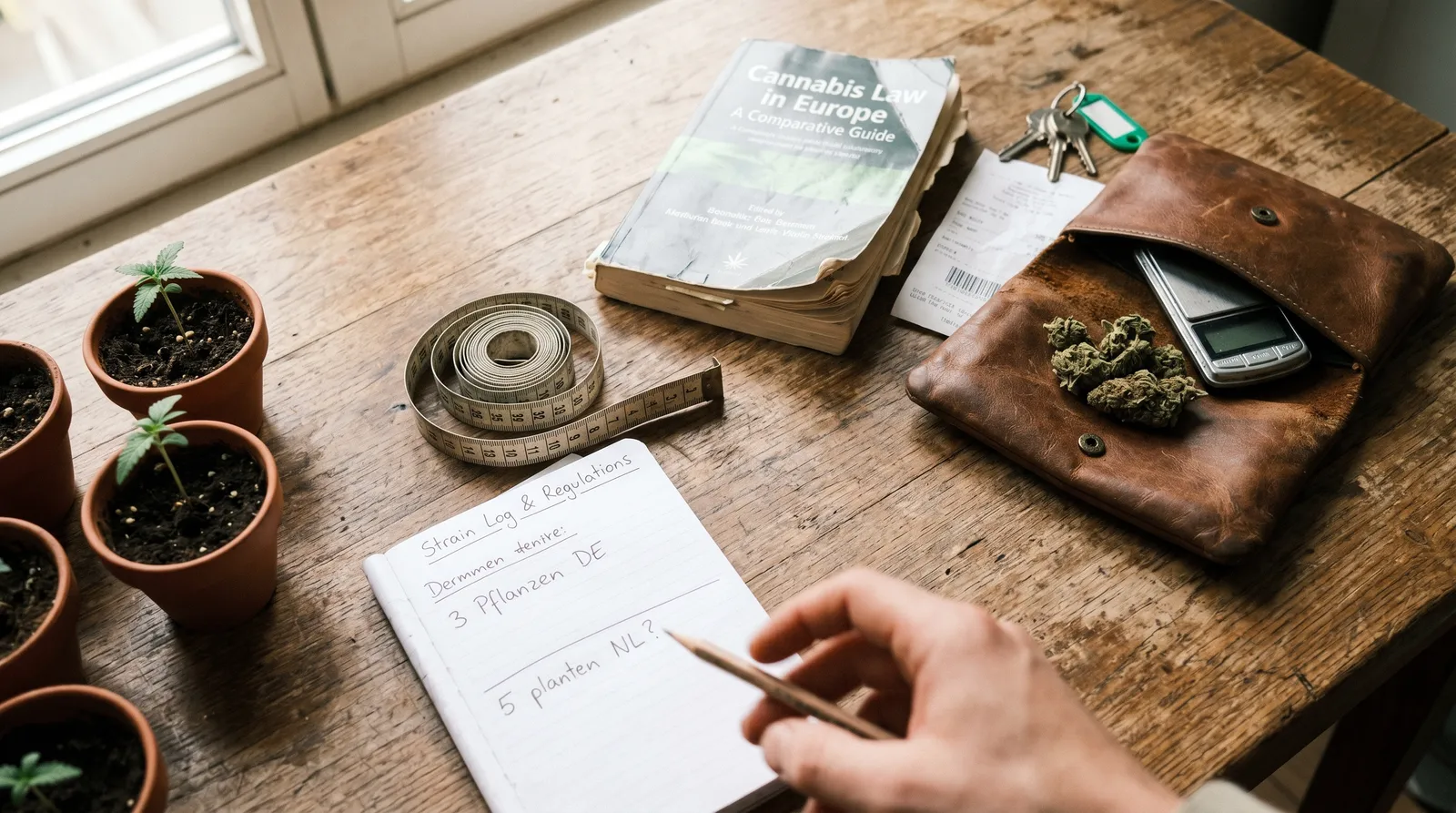
| Jurisdiction | Plants per adult household | Possession limit (dried) | Seeds | Framework (as of Q2 2026) |
|---|---|---|---|---|
| Germany | Up to 3 flowering plants per adult, at the private residence | 50g at home, 25g in public | Permitted to buy/possess for personal cultivation | Cannabisgesetz (CanG), in force 1 April 2024 |
| Netherlands | Up to 5 plants, tolerated under Opiumwet policy — not a positive right | 5g tolerated (personal possession) | Permitted to buy and possess; germination remains a grey area | Opiumwet + Aanwijzing Opiumwet (prosecutor guidelines) |
| Czechia | No explicit written allowance; "small amount" tolerated as misdemeanour (case guidance ~5 plants) | ~10g dried treated as misdemeanour, not criminal | Permitted to buy and possess | Act No. 167/1998 Coll. + government decree on "small amounts" |
| Spain | No national limit; private, non-visible cultivation for personal use tolerated by Supreme Court jurisprudence | No fixed figure; personal-use thresholds set by case guidance | Permitted to buy and possess | Ley Orgánica 4/2015 + Supreme Court rulings on cannabis social clubs |
That's the headline. The interesting part is what those numbers actually mean on the ground, because "three plants" in Berlin is a very different reality to "five plants" in Amsterdam or "private consumption" in Barcelona.
Germany: the 3 plant rule under the Cannabisgesetz
Germany permits adults aged 18+ to cultivate up to three cannabis plants simultaneously at their primary residence for personal use. The Cannabisgesetz (CanG) has been in force since 1 April 2024. The Bundesministerium für Gesundheit published the text and the 25g public / 50g private possession limits alongside the plant count (BMG, 2024). That makes Germany the first large EU member state to write a positive, codified right to home-grow into federal statute — not a tolerance policy, an actual allowance.
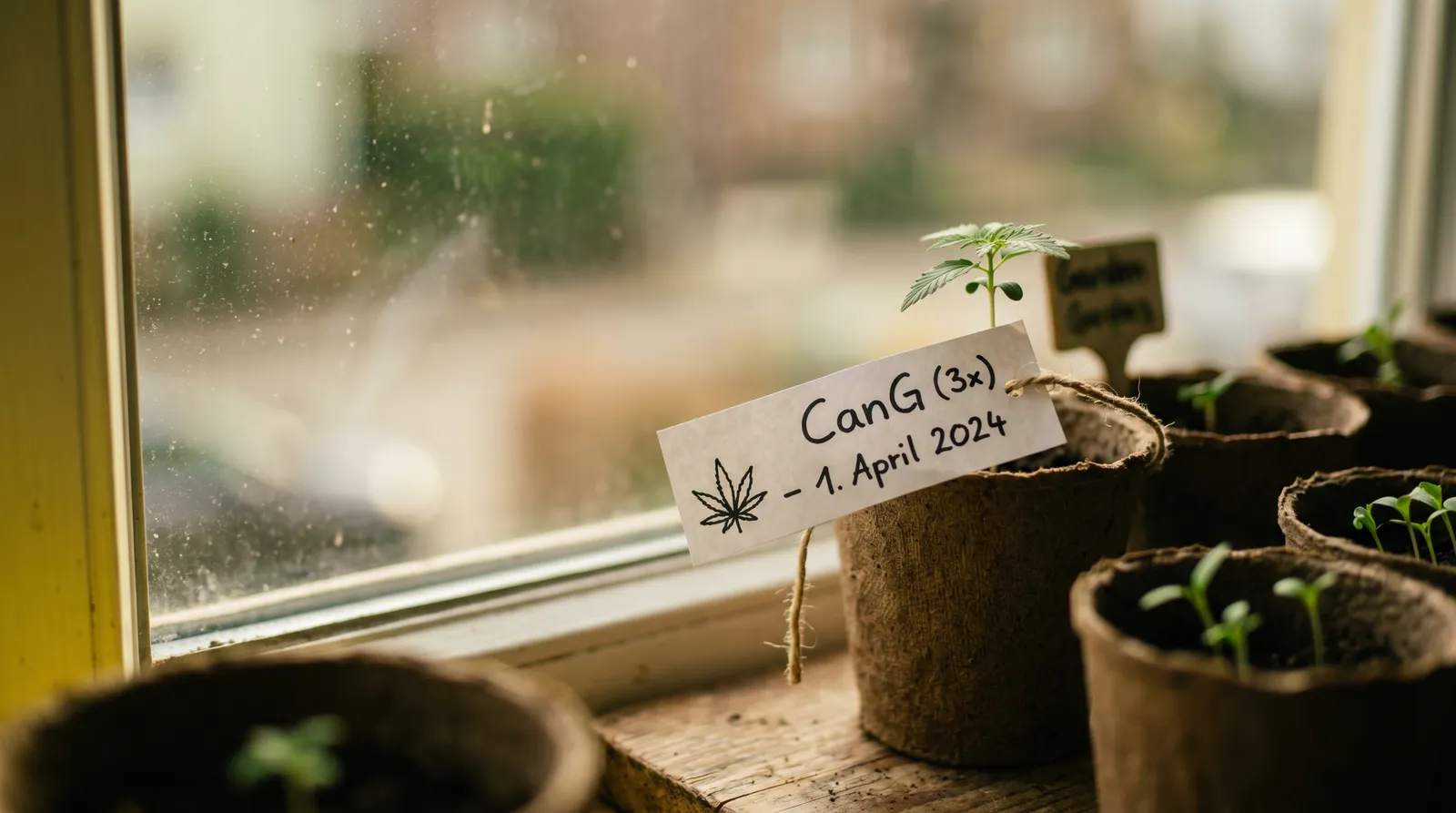
Three plants sounds tight, and it is. In practice it nudges German growers toward two strategies: photoperiod plants trained hard (SCROG, main-lining, aggressive LST) to extract the most canopy per plant, or autoflowering genetics run in rotation so a harvest lands every 10–11 weeks without exceeding the "flowering simultaneously" count. Autoflowers from breeders like Dutch Passion, Royal Queen Seeds and Paradise Seeds are particularly popular for exactly this reason — a 9–11 week seed-to-harvest window means a single grower can run staggered cycles all year. You can order these genetics across most of the EU.
The statute also requires child-resistant storage, bars cultivation in shared spaces visible to minors, and excludes transfer outside the sanctioned Anbauvereinigungen (cultivation associations). Growing three plants for yourself is covered. Handing half of one to a neighbour is not. This matters more than the plant count — the CanG is strict on non-commercial transfer.
Critical detail: "three plants" means three adult (flowering-stage) plants. Seedlings, clones and drying/curing material sit in a separate bucket that the statute addresses via the possession limits, not the plant count. A German grower with three flowering photoperiod plants and a tray of seedlings for the next cycle is compliant; one with six plants all flowering is not.
Netherlands: five plants, tolerated not codified
Dutch home cultivation rests on prosecutor tolerance, not a positive statutory right. Cannabis is still a Schedule II substance under the Opiumwet (Opium Act, 1976, regularly amended). What makes home cultivation possible is the Aanwijzing Opiumwet — the prosecutor's guideline — which instructs authorities not to prosecute adults for up to five plants grown without commercial intent, without artificial lighting, and without hydroponic or otherwise "professional" setups (Openbaar Ministerie guideline, 2024).
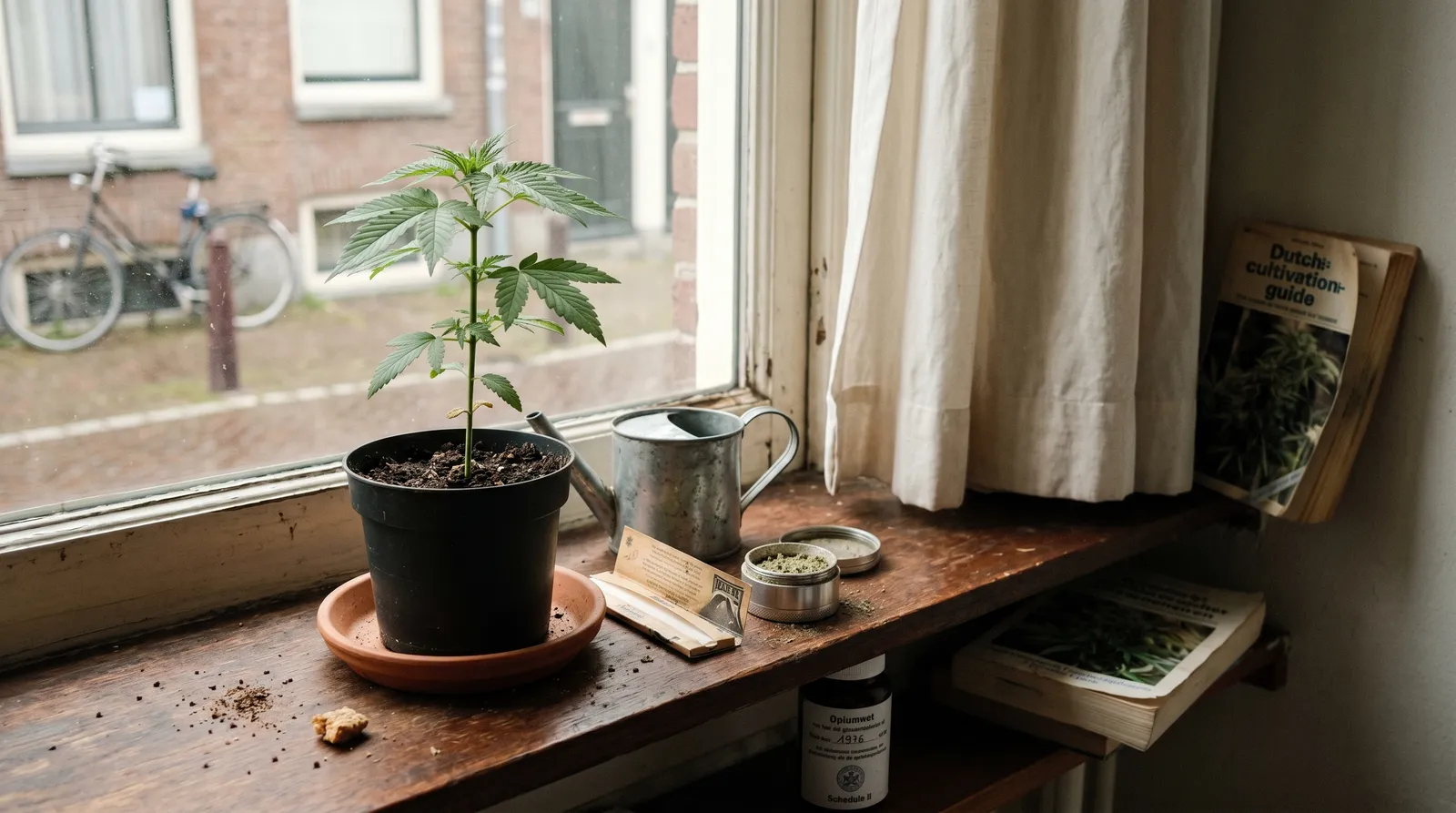
Read that again: no artificial lighting. A strict reading of the Dutch guideline makes a 600W HPS in your attic technically non-compliant even at four plants, while five plants on a sunny Amsterdam balcony with tap water and bagged soil is the archetypal tolerated setup. In reality enforcement is patchy and context-dependent — landlords, housing associations and the Belastingdienst (tax office, famous for energy-use reviews) are often the real pressure points, not the politie.
The Netherlands has the larger nominal plant count (5 vs 3) but the narrower permitted method. Germany's CanG makes no distinction between sunlight and a Lumatek 465W LED. Dutch tolerance, strictly read, does. For indoor tent growers, Germany is actually the more straightforward framework despite the lower plant cap.
Seeds and grow supplies are sold openly in the Netherlands and have been since the 1990s — this is why Dutch breeders (Sensi Seeds, Dutch Passion, Barney's Farm, Paradise Seeds) dominate European genetics. You can walk into a shop and buy seeds; germination sits in the policy grey zone described above.
Czechia: the misdemeanour threshold
Czechia has no positive home-grow allowance. What it has is a de-criminalisation framework: Act No. 167/1998 Coll. on addictive substances, together with Government Decree No. 467/2009 (as amended), sets "small amount" thresholds below which possession and cultivation are treated as misdemeanours (přestupek) rather than criminal offences. Czech case guidance has generally treated around five plants or ~10g of dried flower as within that "small amount" zone, though the Constitutional Court has pushed back against rigid numerical limits (Ústavní soud rulings, 2013 onward).
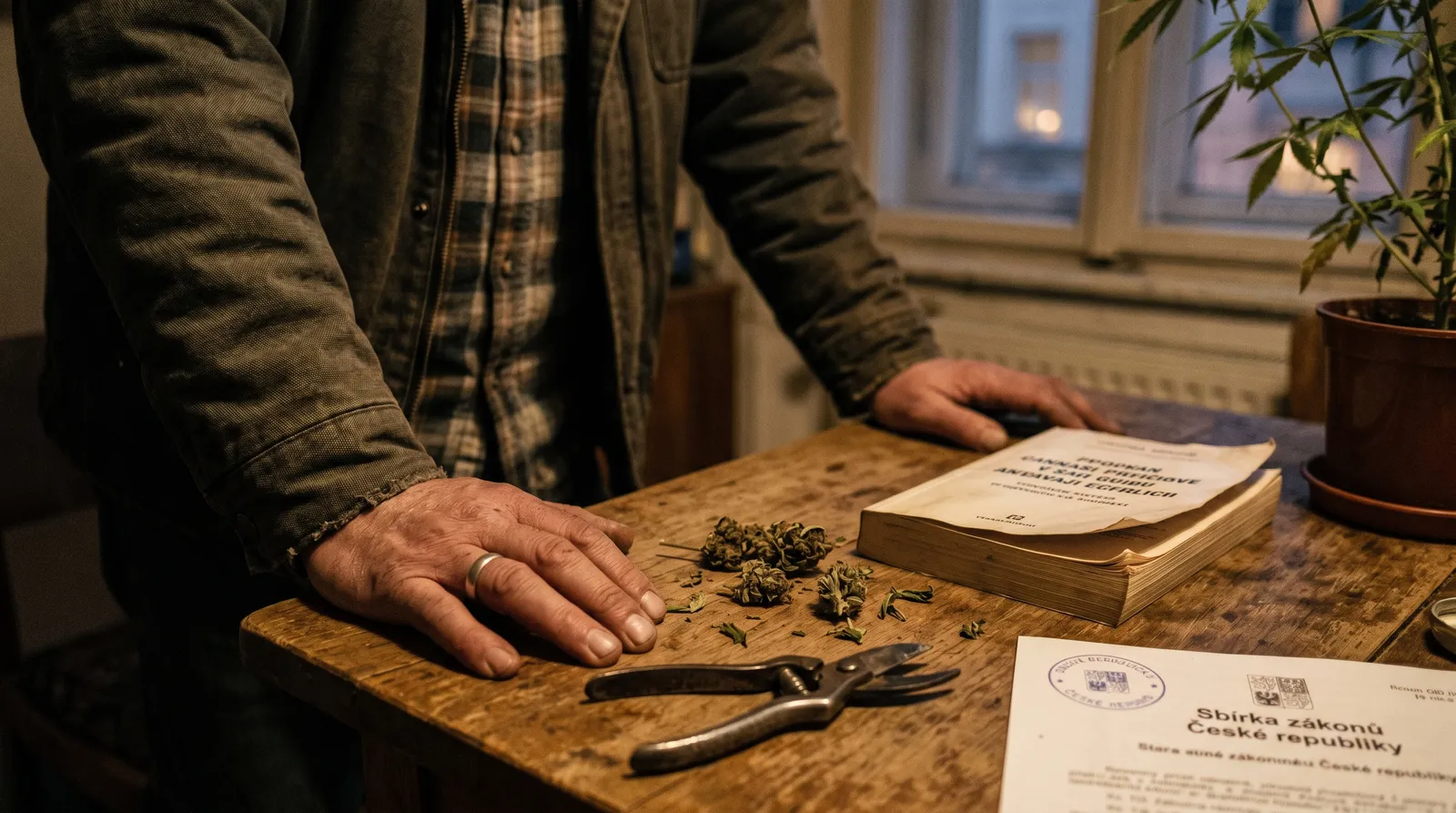
Practically, a Czech home grower with a small tent and a handful of plants is unlikely to face criminal prosecution, but is also not doing anything the state affirms. A 2026 amendment process is ongoing — the Pirate Party and successive governments have floated a regulated-market model similar to Germany's — but as of Q2 2026 nothing has been enacted. The misdemeanour framework is what's live.
The difference from Germany is philosophical and important: Germany says "yes, you may, up to 3." Czechia says "we won't send you to court, probably, below roughly this line." A grower who values clarity finds that distinction meaningful.
Spain: the private-sphere doctrine
Spain relies on Supreme Court doctrine rather than a plant-count rule or a misdemeanour threshold. The doctrine — built through rulings on cannabis social clubs from roughly 2015 onward — holds that cultivation for strictly personal use in a non-visible private space does not constitute a public health offence under the Penal Code. Ley Orgánica 4/2015 (the "Gag Law") then overlaid administrative fines for cannabis use or possession in public spaces, which is what most people actually get fined for (Boletín Oficial del Estado, 2015).
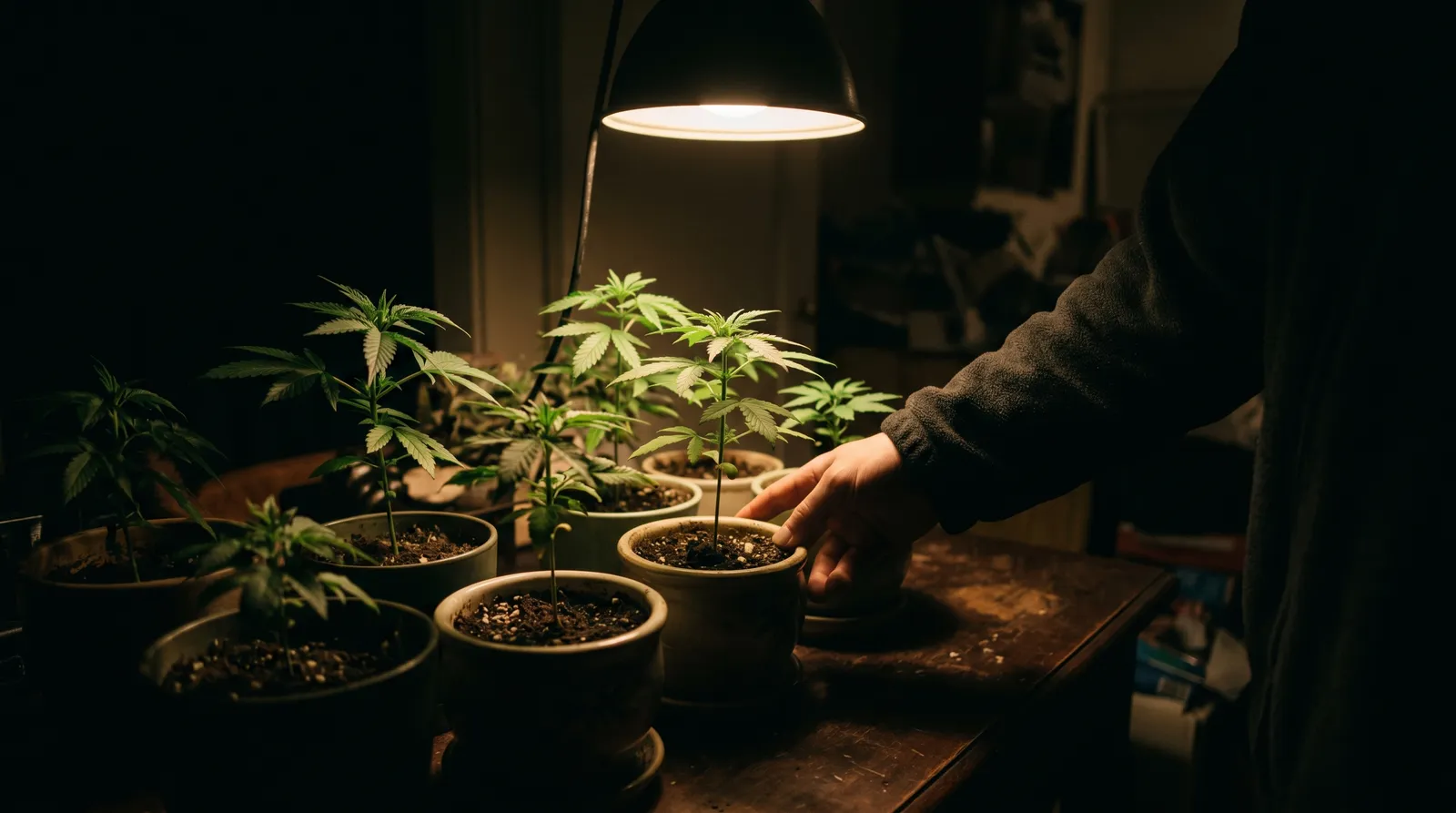
The outcome: a Spanish adult growing a few plants on an enclosed balcony or inside an apartment, for personal consumption, in a space not visible from the street, is operating within tolerated territory. Take those plants out onto a public terrace, or start distributing, and you cross into sanctionable behaviour under LO 4/2015 or — at scale — the Penal Code.
Spain is the jurisdiction with the most cultivation flexibility in numerical terms and the least formal certainty. There is no number to point at. Growers rely on the private-sphere doctrine and on the pragmatic reality that Spanish police have bigger priorities than someone's balcony tomato-and-cannabis garden.
What this means for a home grower choosing a setup
The framework drives the grow decision more than most guides admit. A few concrete patterns:
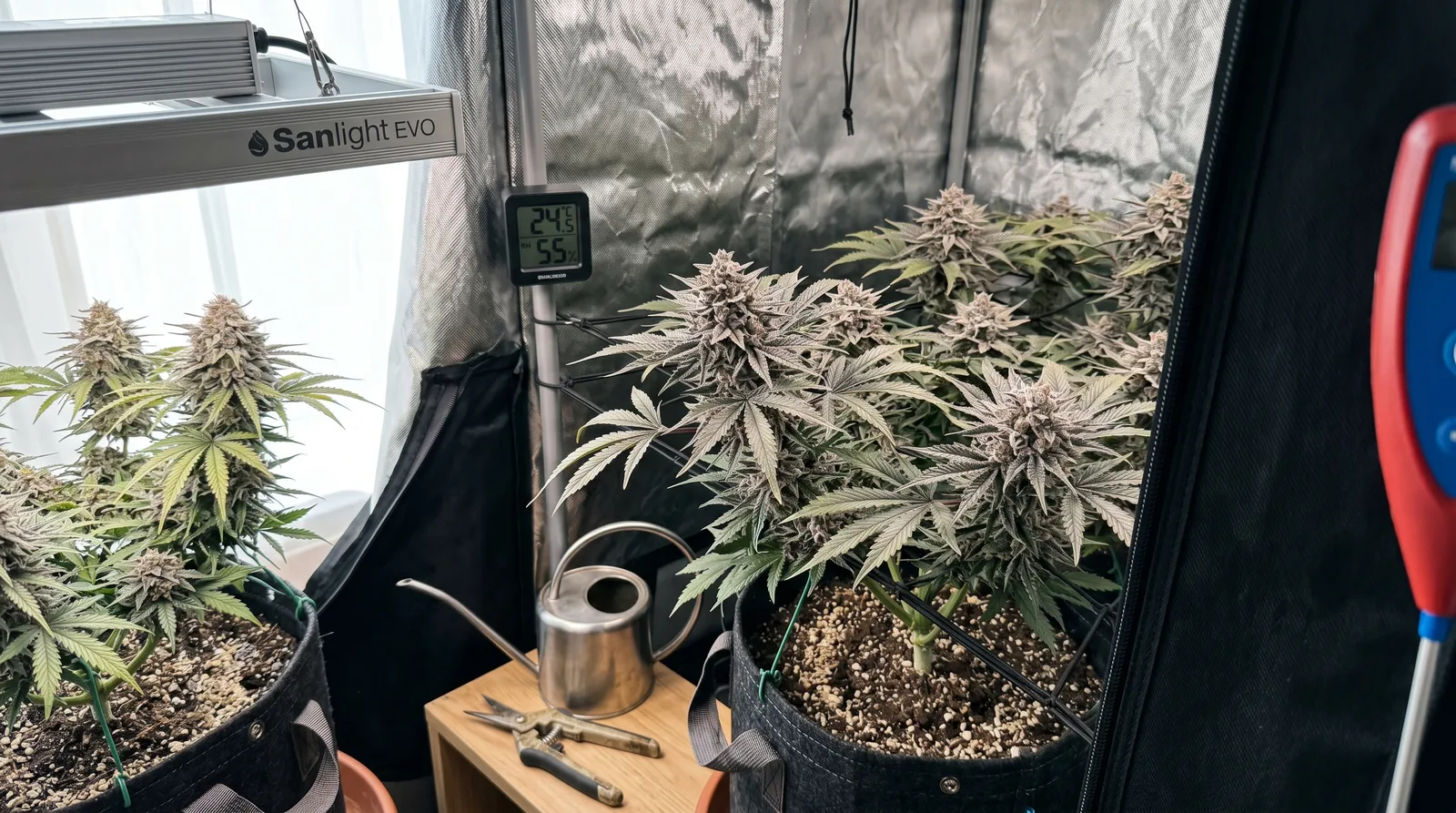
Germany (3 plants, indoor-permitted): Invest in quality. Three plants means each one matters, so a decent LED (400–600 PPFD in veg, 600–1,000 PPFD in flower under a 200–300W fixture), a 80×80 or 100×100 tent, stable VPD (0.8–1.1 kPa veg, 1.0–1.5 kPa flower), and genetics with known performance. Photoperiod varieties trained SCROG or main-lined will out-yield three untrained autos; autos will give you more harvests per year. Pick your trade-off.
Netherlands (5 plants, natural light preferred): Outdoor or greenhouse favours the tolerance framework. Northern European-adapted genetics — early finishers like Frisian Dew, Early Skunk, or auto genetics from Dutch Passion — handle the short Dutch summer. Indoor with HID/LED is common but operates in a greyer zone than most growers realise.
Czechia (~5 plants, misdemeanour zone): Scale matches Germany–Netherlands. Indoor setups work practically but carry ambiguity. Keep it small, keep it personal, keep it quiet.
Spain (no fixed count, private sphere): The grow tent and the balcony both work. The rule is non-visibility and non-distribution. Autoflowers under LED in a closet tent are the most discreet path; larger outdoor plants on a shaded private terrace work when the sightlines are right.
Verdict: which framework is the most grower-friendly?
Germany wins on clarity and formal certainty. The CanG is a written statute with a specific number (3), a specific age (18+), and specific possession limits (25g / 50g). You know where you stand. The three-plant cap is the cost of that clarity.
Spain wins on flexibility. No number, no cap, just a private-sphere doctrine. The cost is ambiguity — no statute to point at if you need one.
The Netherlands wins on infrastructure and genetics access. 25+ years of open seed trade, breeders on your doorstep, grow shops in every city. The five-plant tolerance is more generous than Germany's three on paper, but the "no artificial lighting" reading complicates indoor setups.
Czechia sits in the middle on every axis — decriminalised but not affirmed, similar scale to Germany-Netherlands, less developed supply infrastructure. An amendment process that may yet move it toward a Germany-style model is worth watching.
For someone building their first home setup in 2026, the practical read is: pick your jurisdiction's rules, then pick genetics and equipment around them. Three photoperiod plants trained SCROG under a quality LED will out-perform six neglected plants under a cheap light in any jurisdiction. The number on the statute matters less than what you do within it.
Related products at Azarius
For home growers operating within their local framework, you can order feminised and autoflowering seeds from Dutch Passion, Paradise Seeds, Royal Queen Seeds, Sensi Seeds and Barney's Farm, plus grow tents, LEDs and nutrient lines sized for small home-scale setups. Browse the cannabis seeds category and the grow supplies section to get started.
Educational disclaimer
This article is provided for educational and informational purposes only. It describes frameworks as of Q2 2026 and is not advice. Rules change; always verify the current position in your jurisdiction before you buy seeds or start a grow. Azarius sells seeds as collectables and grow equipment for horticultural use.

Legal notice: Cannabis cultivation laws vary by country and region and change frequently. This guide is educational. Before growing, verify current laws for your specific jurisdiction. Azarius does not provide legal advice.
Last updated: April 2026
Frequently Asked Questions
7 questionsDoes Germany's 3 plant rule count seedlings and clones?
Can I share cannabis I grew at home with friends in Germany?
How does the Germany 3 plant rule compare to the Dutch five-plant tolerance for indoor growers?
Are seeds treated the same across all four jurisdictions?
Which jurisdiction gives the most yield flexibility for a personal grower?
What equipment should a German grower buy to get the most from three plants?
What happens if I exceed the 50g home possession limit in Germany while my three plants are still drying?
About this article


Luke Sholl has been writing about cannabis, cannabinoids, and the broader benefits of nature since 2011, and has personally grown cannabis in home grow tents for more than a decade. That first-hand cultivation experience
This wiki article was drafted with AI assistance and reviewed by Luke Sholl, External contributor since 2026. Editorial oversight by Adam Parsons.
Medical disclaimer. This content is for informational purposes only and does not constitute medical advice. Consult a qualified healthcare provider before use of any substance.
Last reviewed April 24, 2026
References (7)
- [1]Bundesministerium für Gesundheit (BMG). (2024). Cannabisgesetz (CanG) — Gesetz zum kontrollierten Umgang mit Cannabis, in force 1 April 2024.
- [2]Openbaar Ministerie. (2024). Aanwijzing Opiumwet (prosecutor's guideline on the Opium Act), current version.
- [3]Czech Republic. (1998/2009). Act No. 167/1998 Coll. on Addictive Substances, and Government Decree No. 467/2009 on "small amounts", as amended.
- [4]Ústavní soud České republiky. (2013 onward). Constitutional Court rulings on "small amount" thresholds.
- [5]Boletín Oficial del Estado. (2015). Ley Orgánica 4/2015, de 30 de marzo, de protección de la seguridad ciudadana.
- [6]Tribunal Supremo (Spain). (2015 onward). Jurisprudence on cannabis social clubs and private-sphere cultivation.
- [7]European Union Drugs Agency (EUDA, formerly EMCDDA). (2024–2025). Country Drug Reports — Germany, Netherlands, Czechia, Spain.
Related Articles
Cannabis Hermaphrodite: Identify, Prevent, Act
A cannabis hermaphrodite is a female plant that develops male pollen sacs or banana-shaped anthers (nanners), self-pollinating and seeding your harvest.
DIY Cannabis Fertilizer: Homemade Nutrient Guide
DIY cannabis fertilizer guide: compost, teas, banana ferments and feed schedules, with safety notes and cited research for home growers.
What To Do With Male Cannabis Plants: 6 Practical Uses
What to do with male cannabis plants: identify, isolate, breed, extract, or compost. A practical 6-step guide with sourcing and safety notes.
Mushroom Grow Kit Temperature & Humidity: Full Setup Guide
A temperature humidity control grow kit is the small set of climate tools — hygrometer, heat mat, humidifier or perlite tray — that keeps a mushroom fruiting…
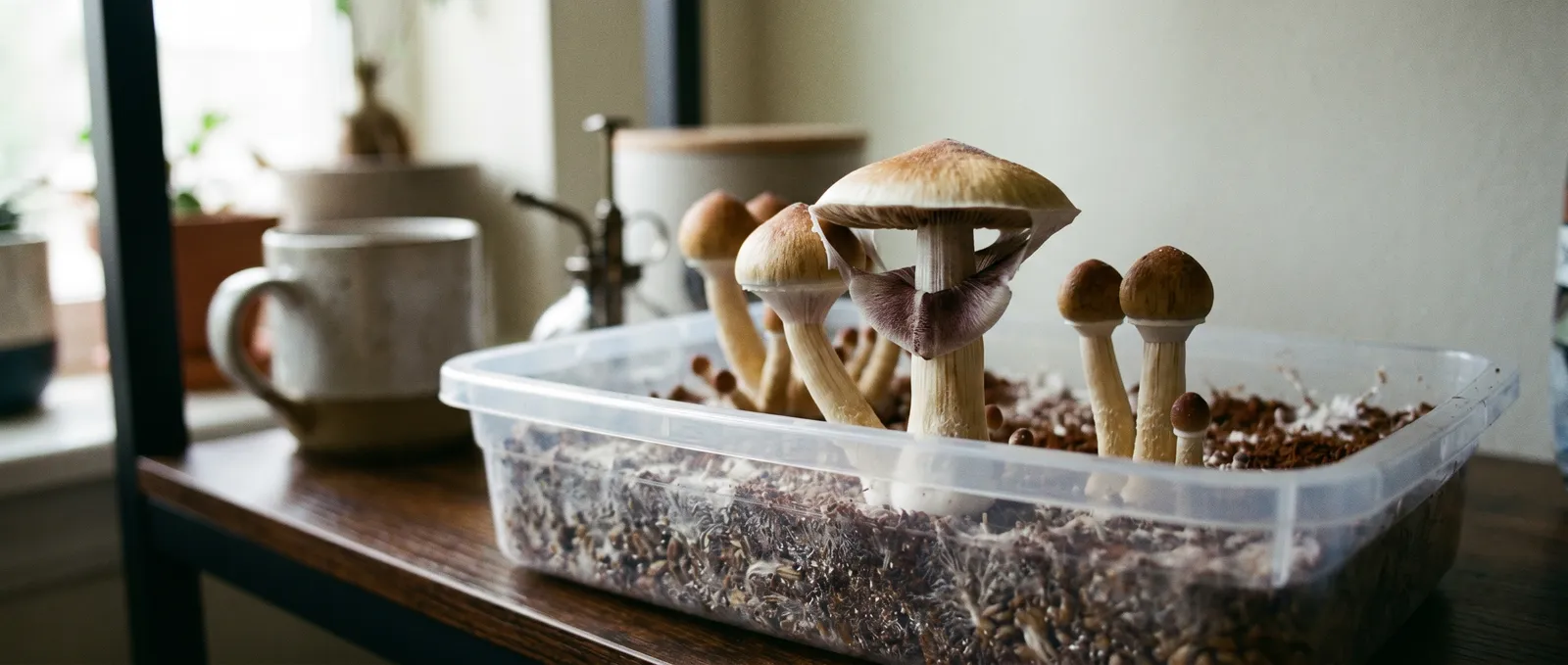
When to Harvest Mushrooms: Veil Break Timing Explained
Harvest timing veil break is a cultivation technique that uses the tearing of the partial veil on maturing Psilocybe cubensis to mark peak alkaloid content.
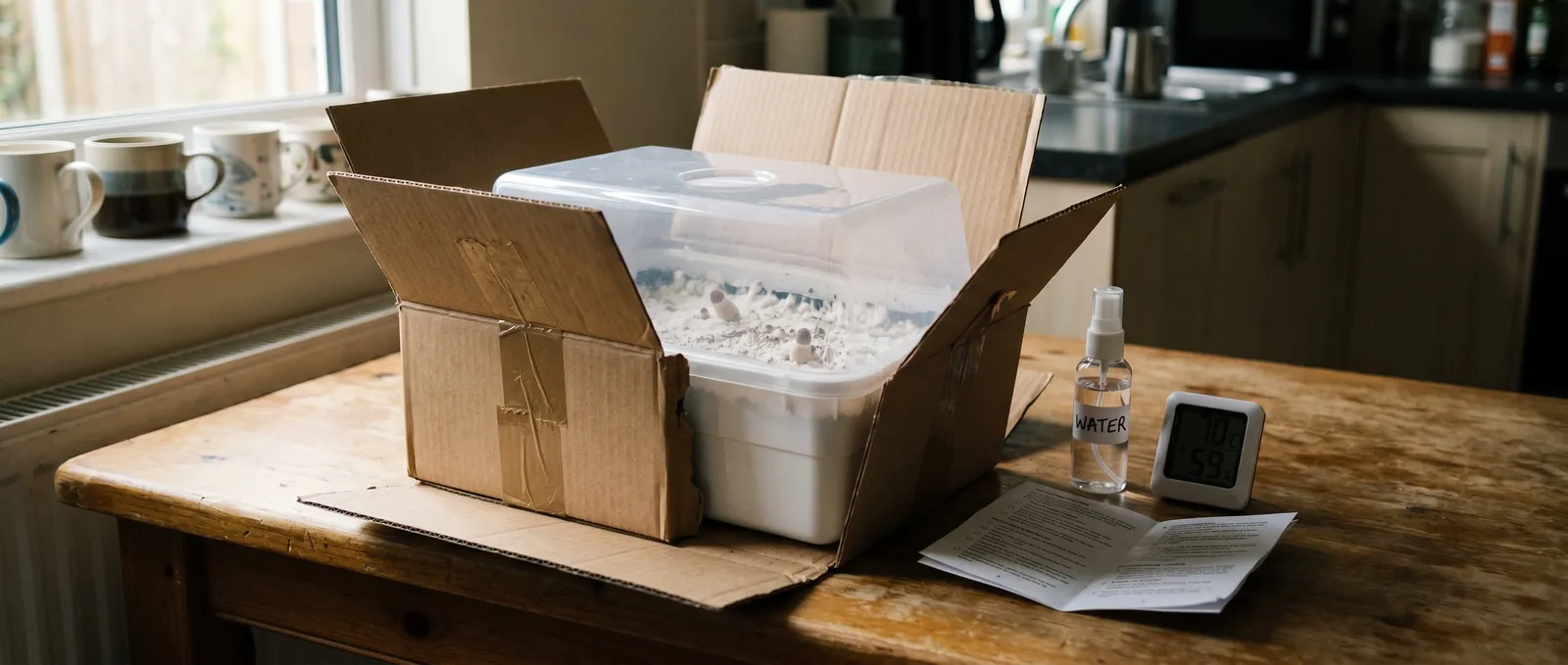
First Grow Checklist: What You Need for Mushroom Kits
A first grow checklist is the short list of supplies and environmental conditions needed to run a home psilocybin mushroom kit from inoculated substrate to…
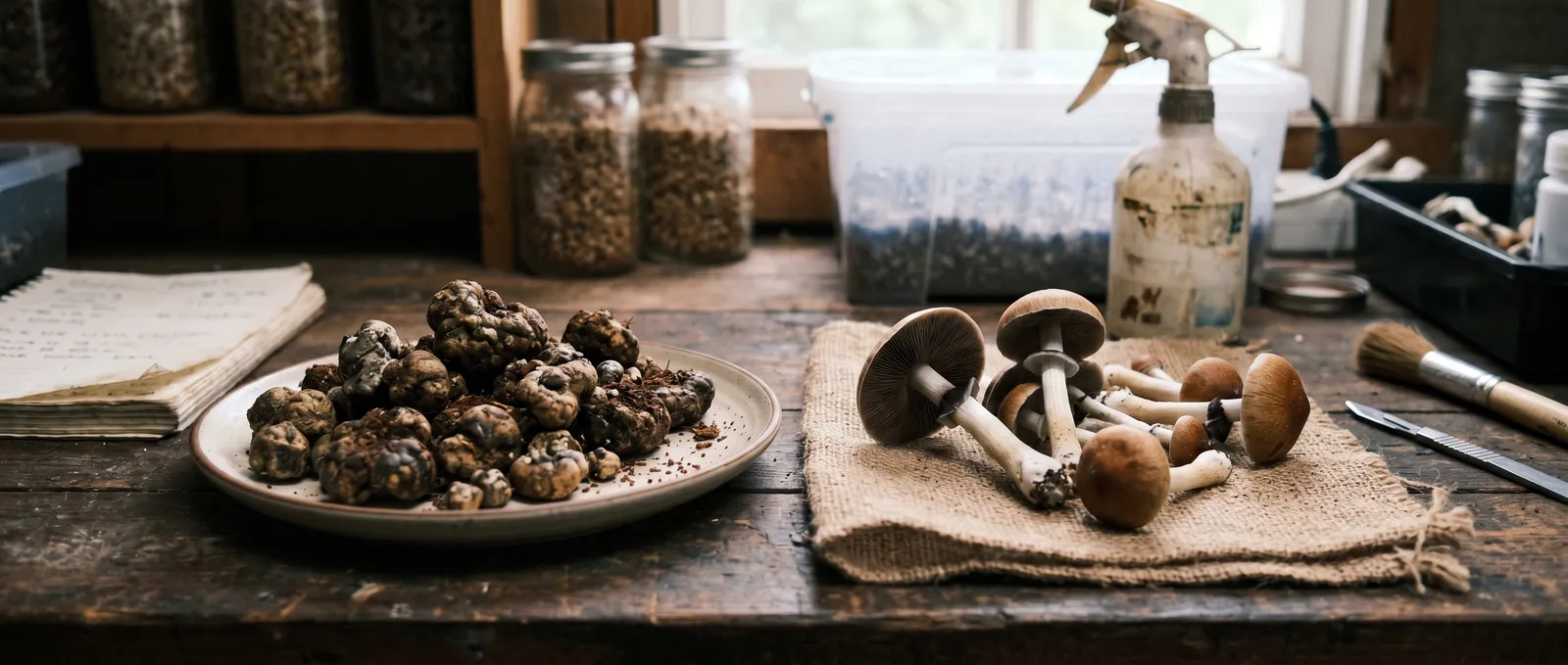
Sclerotia vs Fruit Bodies: Cultivation Comparison
Sclerotia and fruit bodies are two different life stages of Psilocybe fungi: sclerotia are hardened underground mycelial storage bodies (the 'magic…
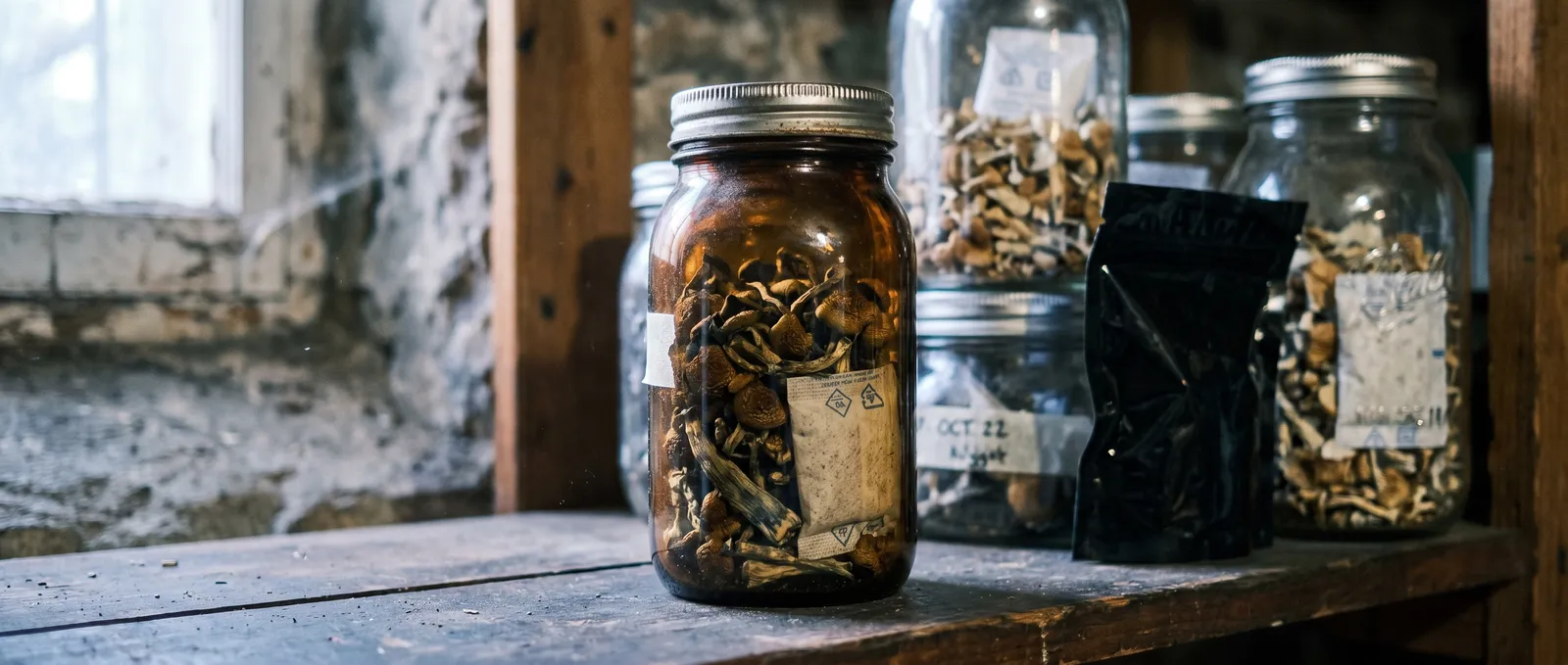
Storing Dried Mushrooms Long Term: Full Guide
Storing dried mushrooms long term means keeping well-dried Psilocybe fruit bodies in airtight, opaque containers with desiccant, cool and dark, to slow…
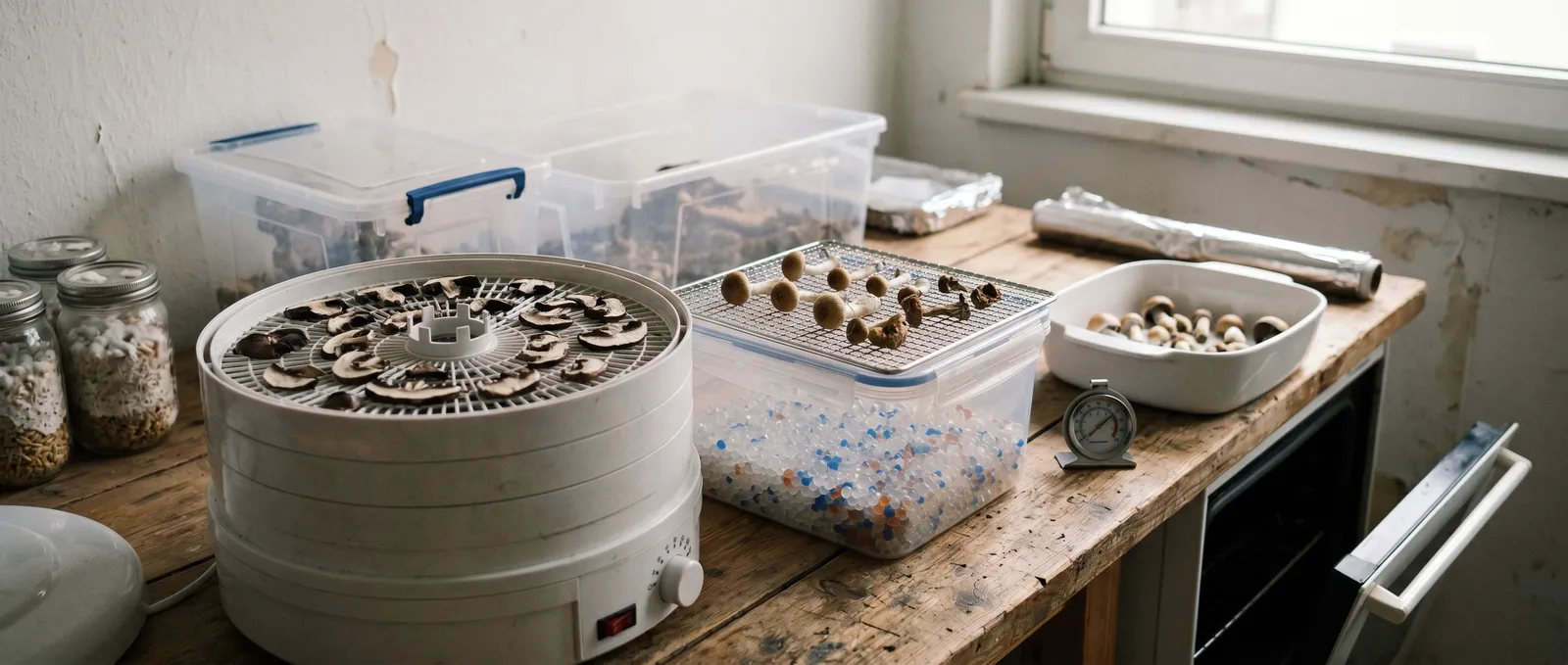
Drying Mushrooms Air Desiccant Oven: Methods Compared
Drying mushrooms air desiccant oven refers to the three home methods for reducing fresh fruit bodies from ~90% water to cracker-dry (<5%). Gotvaldová et al.