
This article discusses psychoactive substances intended for adults (18+). If you have a health condition or take medication, consult a doctor before use. Our age policy
Curing Cannabis In Jars: Step-by-Step Guide
Definition
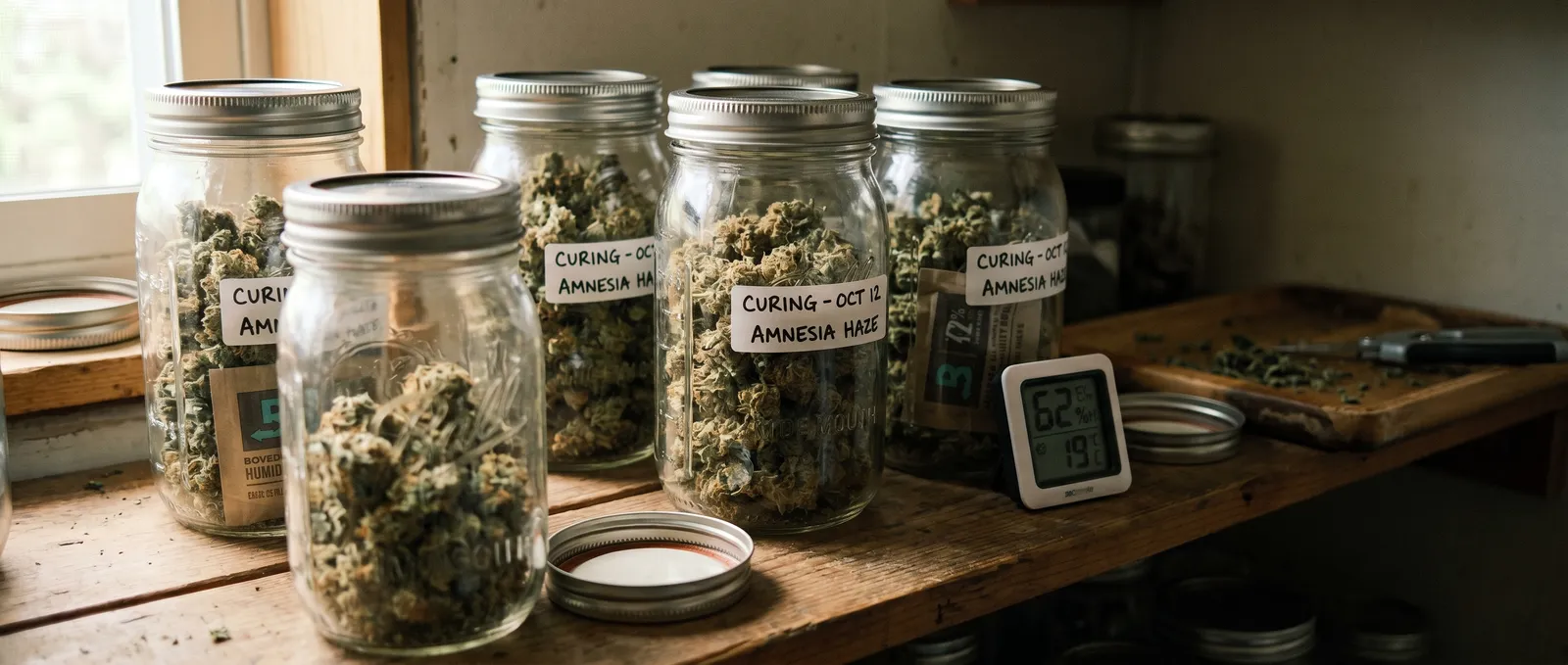
Curing cannabis in jars is the post-dry phase where trimmed buds rest in sealed glass at 60–65% relative humidity, allowing chlorophyll and sugars to break down while terpenes are preserved. Research links controlled curing to measurably better aromatic retention (Das et al., 2022). Typical duration: 2–8 weeks.
Cannabis cultivation rules vary by country and region and change frequently. This guide is educational. Azarius does not provide formal advice.
Curing cannabis in jars is a post-dry technique that transforms harsh, grassy buds into a smoother, more aromatic smoke by resting trimmed flowers in sealed glass at 60–65% relative humidity. Adult use only — this guide is written for growers aged 18 and over. Get it right and you trade grassy harshness for a smoother smoke and better-preserved terpenes. Get it wrong and you're either staring at mould or watching aroma evaporate into nothing. The process itself is simple; the discipline is in the daily rhythm of opening, checking, and resealing. Many growers buy jars, hygrometers and humidity packs together before they even start a grow, and order them as a single kit to save time.
Why cure at all?
Curing breaks down residual chlorophyll, sugars and starches that a dry alone cannot reach (Chandra et al., 2017). A properly dried bud still contains moisture deeper in the flower than on its surface, plus plant compounds left over from the living plant. Curing lets enzymes and slow non-enzymatic reactions work in a low-oxygen, stable-humidity environment (Chandra et al., 2017). Research on post-harvest cannabis quality (Das et al., 2022, Frontiers in Plant Science) links controlled curing at 60–65% relative humidity to better terpene retention and reduced chlorophyll residue compared with rapid-dry protocols. In plain language: the hay-smell goes, the complex smell comes forward.
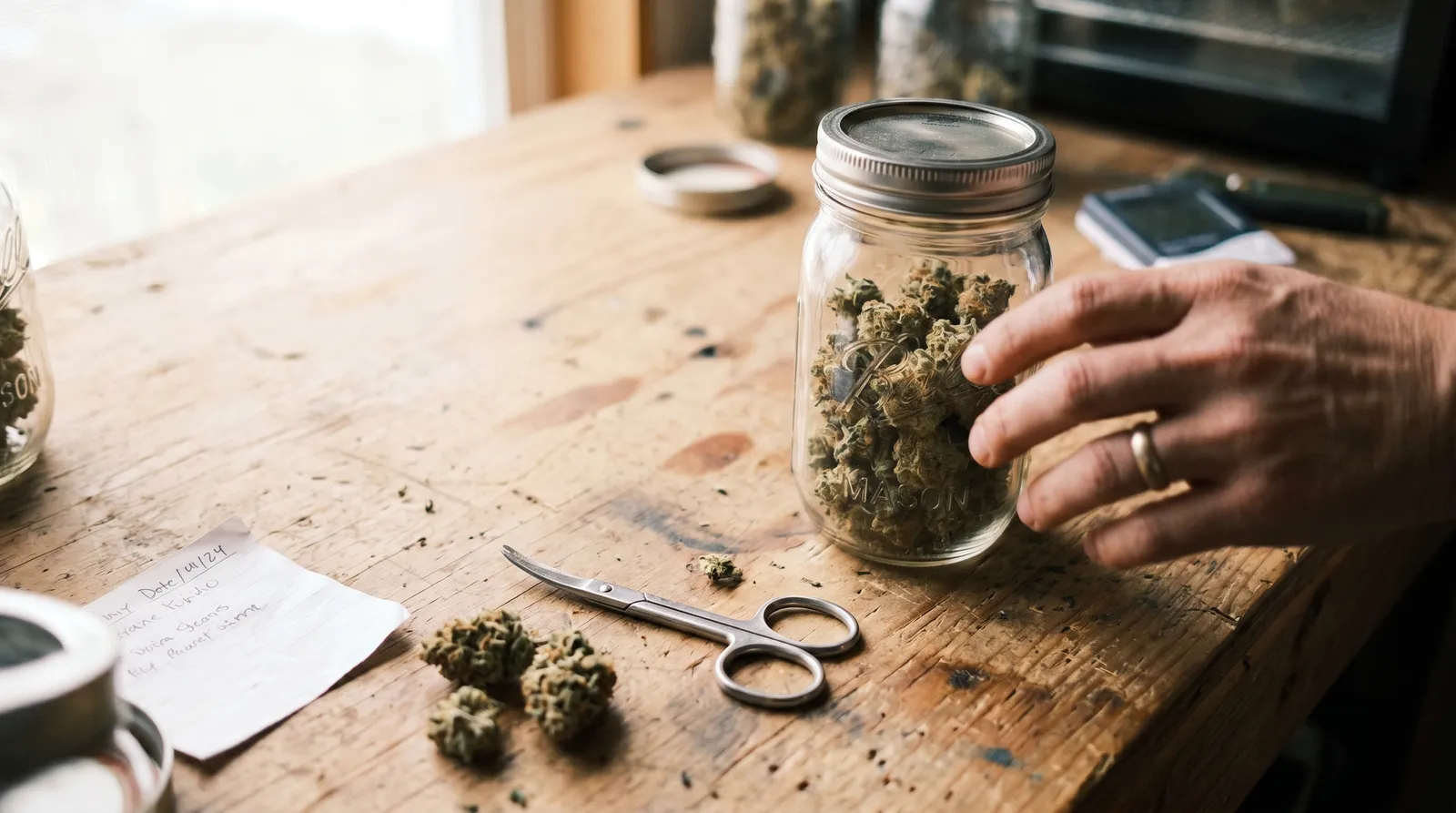
Curing doesn't build new cannabinoids or terpenes. It preserves what's already there and lets harsh precursor compounds degrade (Burgel et al., 2020). If your buds were dried badly — too fast, too hot, too dry — no amount of jar time will fix them.
Before you start: is it actually dry?
Buds are jar-ready when a small stem snaps cleanly rather than folds, which corresponds to roughly 60–65% internal RH (CSU Extension, 2023). A digital hygrometer in a sealed jar (give it two hours to equilibrate) is more reliable — you want it parked between 60 and 65% at around 18–20 °C.
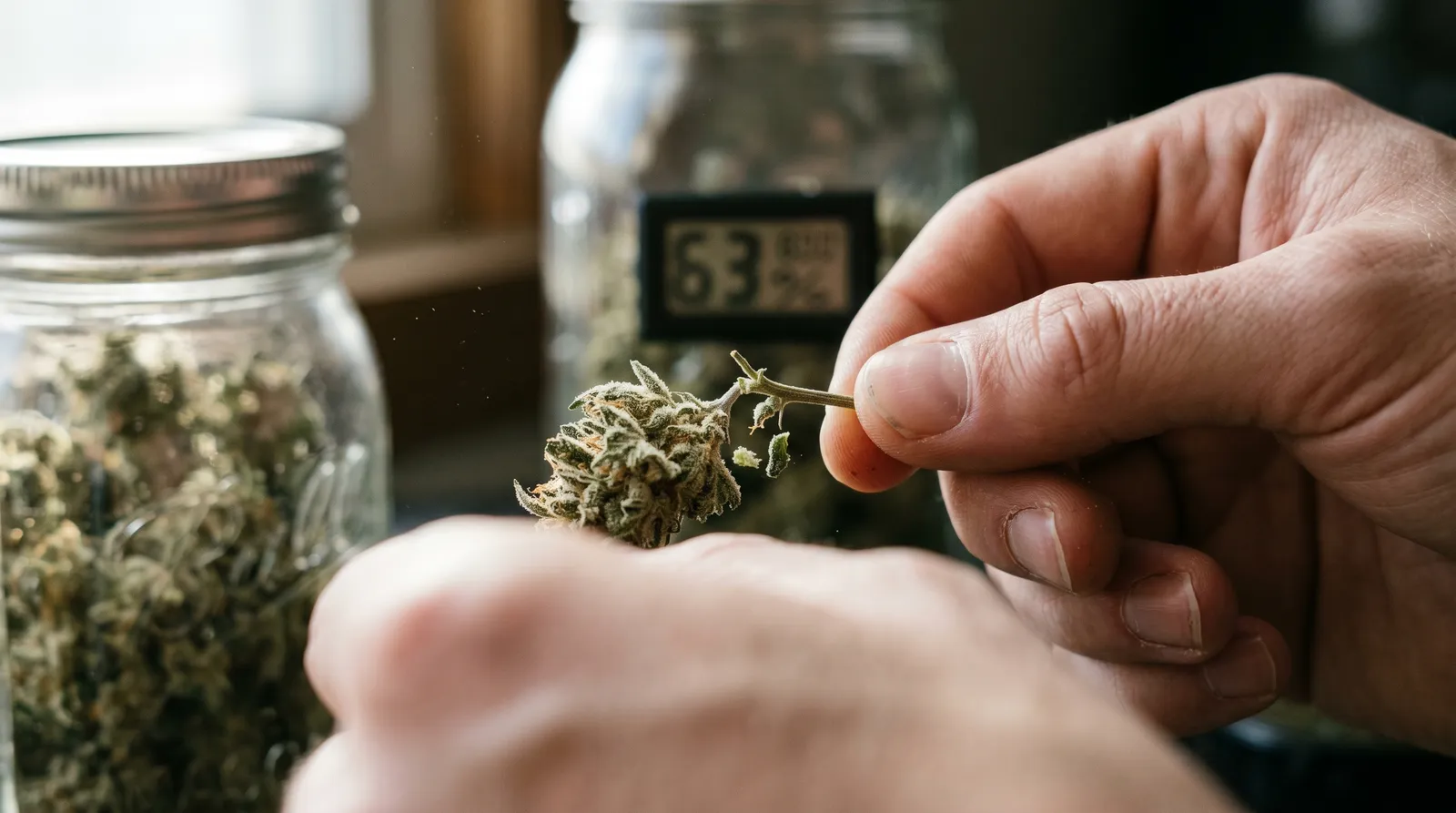
Seal buds too wet (above ~68%) and you're incubating Botrytis cinerea — grey mould (Punja, 2021). Seal them too dry (below ~55%) and the cure basically stalls; trichomes get brittle and terpenes volatilise faster. In our own tent over the years, the single biggest cause of ruined batches has been impatience at this stage — pulling branches off the line a day early because the outer leaves felt crispy.
Step 1: Pick your jars
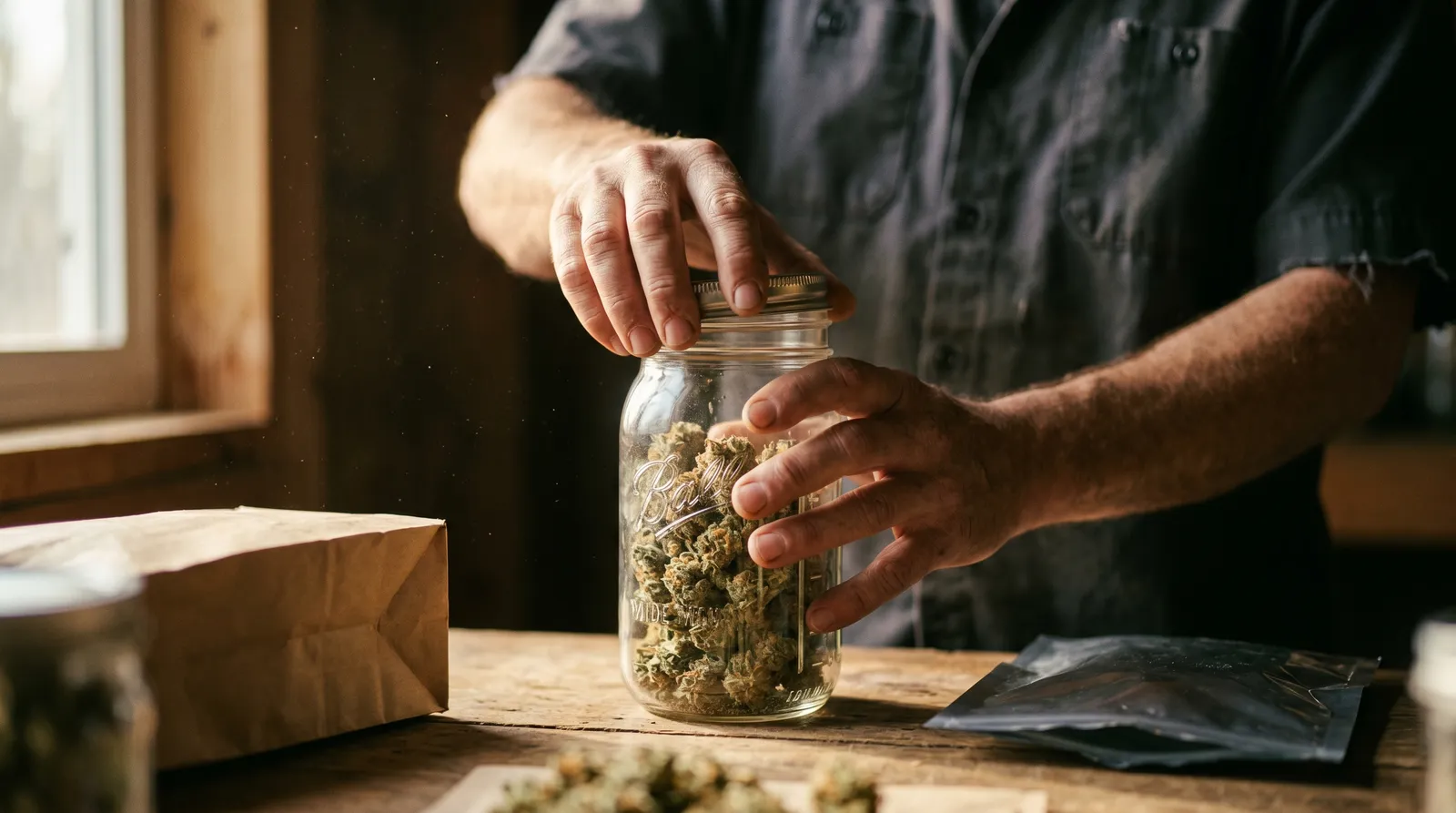
Wide-mouth glass Mason or Weck jars in the 0.5–1 litre range are the default choice for curing cannabis in jars. Glass is non-porous, doesn't off-gas, and lets you eyeball the buds. Plastic (even food-grade) can interact with terpenes over weeks; silicone is inert but flexes, making a proper seal harder to verify. Metal lids with rubber gaskets seal reliably. You can buy suitable jars at any kitchen supply shop.
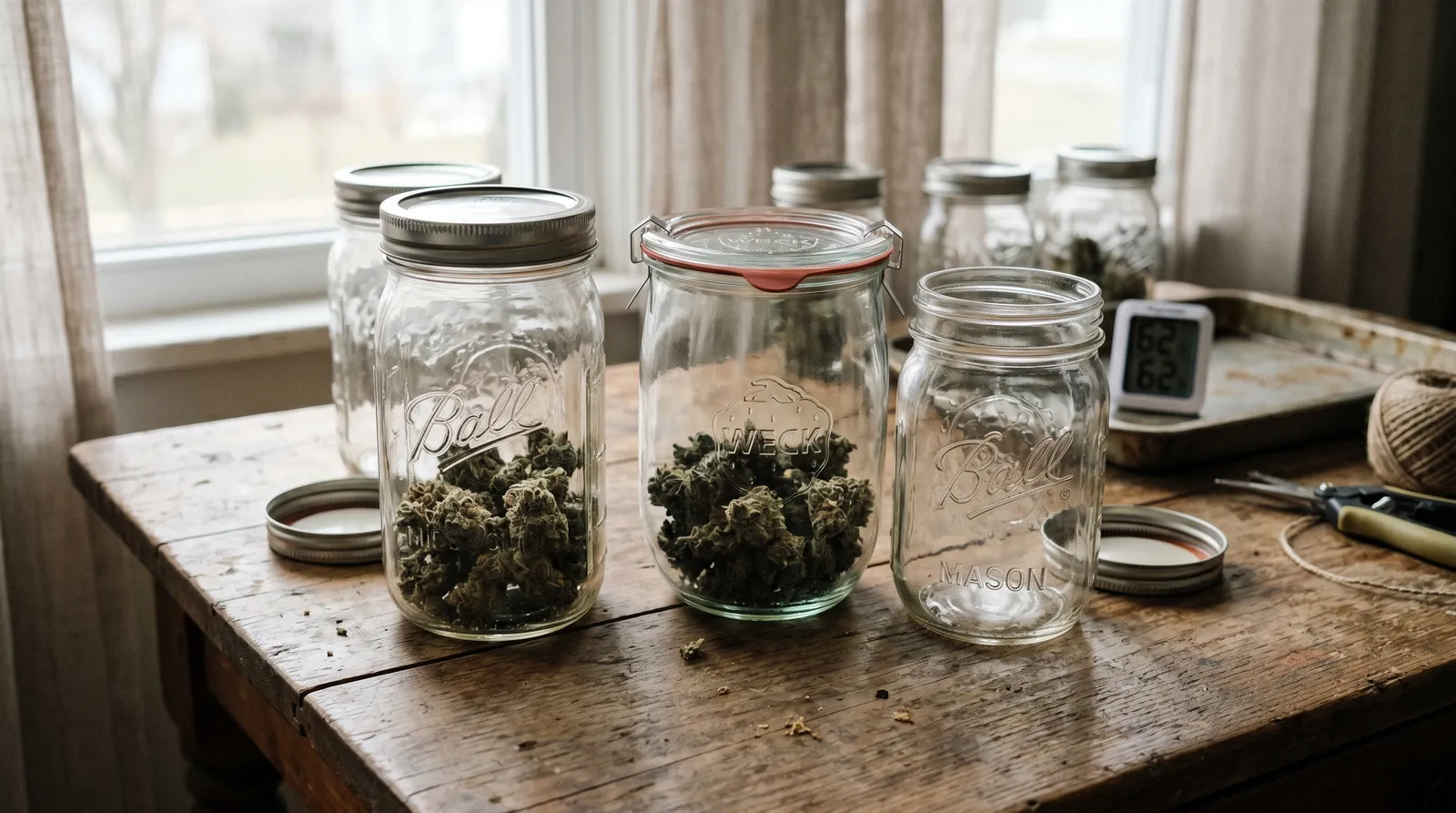
Fill each jar roughly three-quarters full. You want the buds loose enough to shuffle and tumble when you tip the jar, not compressed. Overpacking traps moisture pockets in the middle and is the classic route to a mouldy core you don't notice for a week.
Step 2: Load and seal on day zero
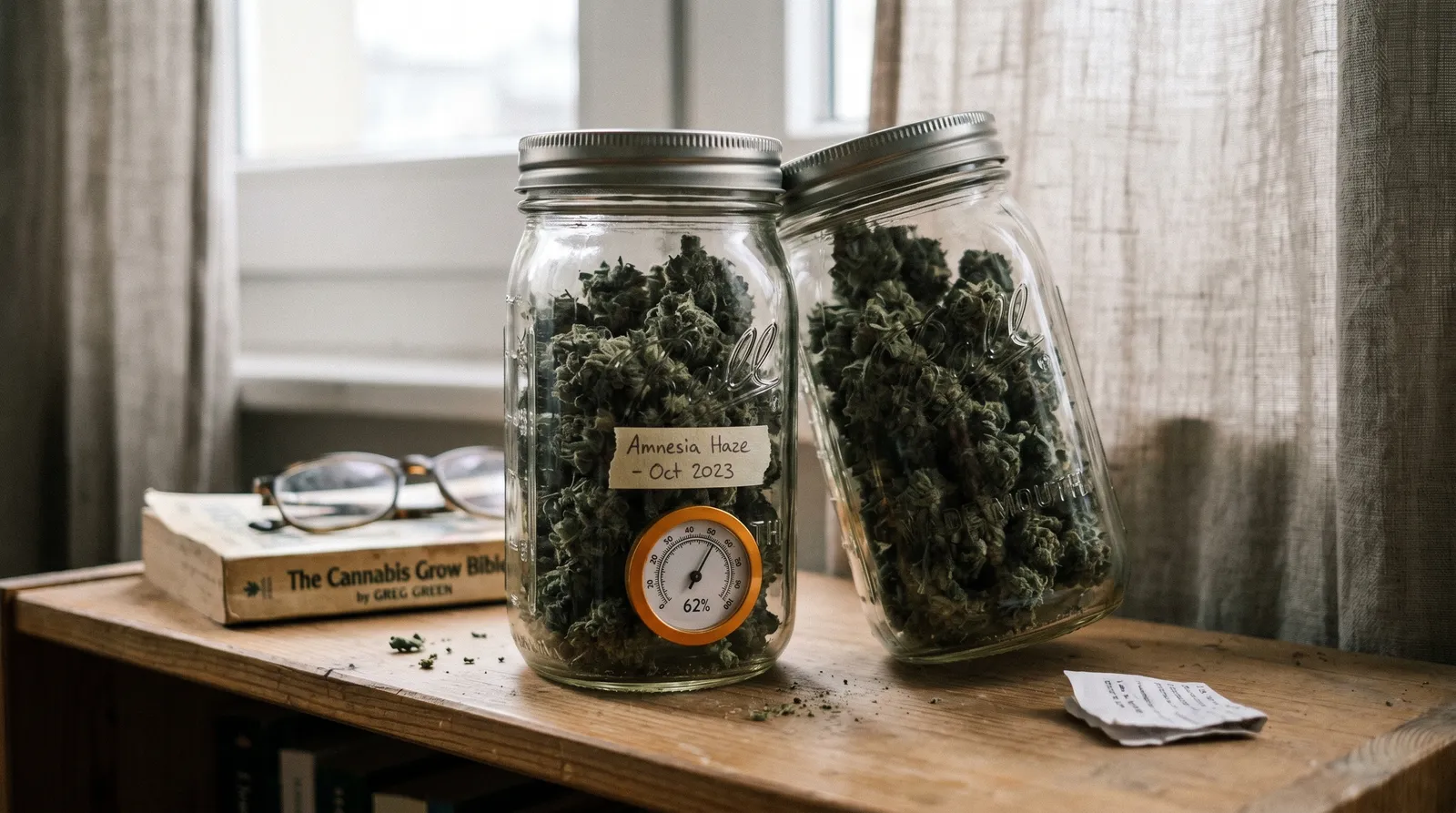
Day zero means transferring trimmed, dried buds into the jars gently, closing the lid, and leaving the jars in a cool, dark, stable spot. Drop a small hygrometer inside each jar if you've got them — a pack of five miniature digital hygrometers is cheap and genuinely useful. Aim for 18–21 °C, away from temperature swings (CSU Extension, 2023). A cupboard interior wall, not near a window or radiator.
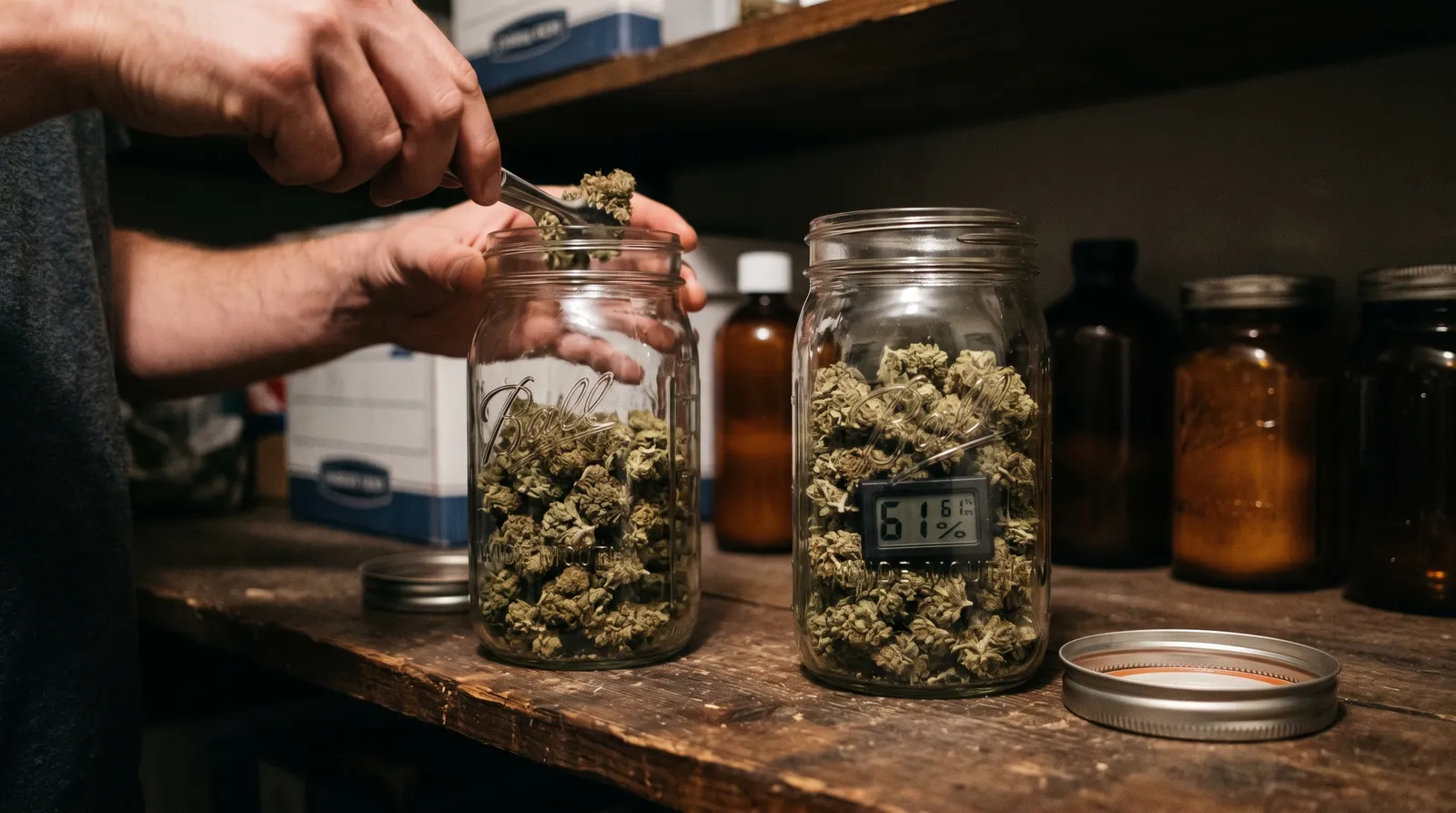
Within two to four hours, check the hygrometer. If it reads 70%+, the buds weren't dry enough — open the jar, tip them onto a paper bag for a few hours, and try again. If it reads 55% or below, a 62% two-way humidity pack (Boveda or Integra Boost) can bring it up, though purists argue the pack flattens the natural cure curve.
Step 3: Burp daily for the first week
Burping means opening the jar for a minute or two to swap humid air for dry. For the first 5–7 days, open each jar once or twice daily for about 30–60 seconds. Give the jar a gentle shake or tumble so buds don't sit stuck against each other.
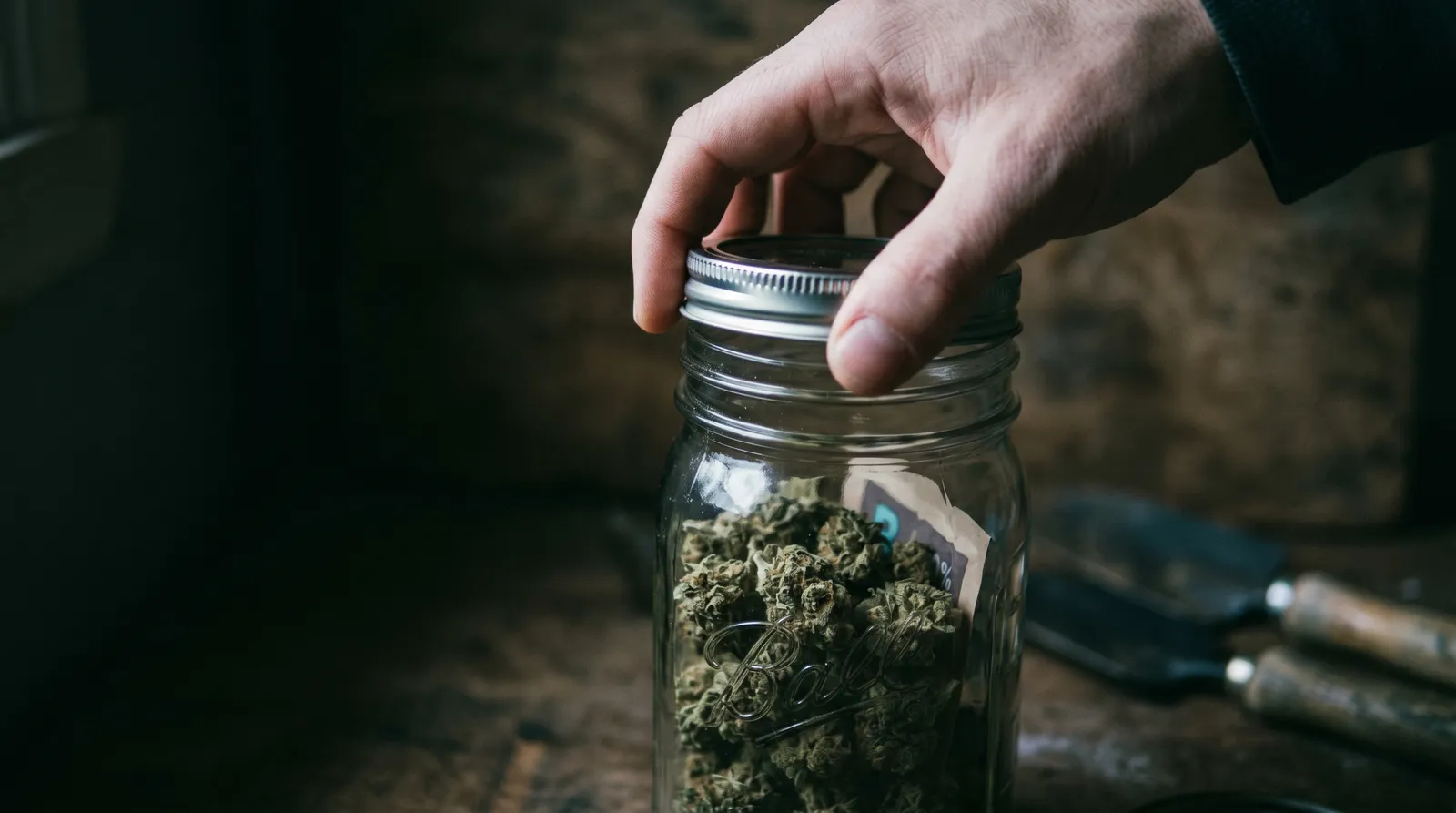
What you're smelling for: hay or ammonia. Hay means residual chlorophyll and slightly damp plant matter — normal in the first few days, should fade. Ammonia means anaerobic bacteria — the buds were too wet, and you need to get them out of the jar onto a paper surface to dry back a few percentage points immediately. Don't reseal ammonia-smelling jars "to see if it improves". It won't.
Step 4: Week two and beyond — slow it down
After the first week, RH inside sealed jars should stabilise in the 60–63% range. From week two onward, burp every two or three days, then drop to once a week. Most of the noticeable quality improvement happens in the first 2–4 weeks. Growers often describe a clear jump around the 3-week mark where the remaining vegetal notes drop out and the terpene profile sharpens (Jin et al., 2017), though perceived quality is subjective and varies by genetics.
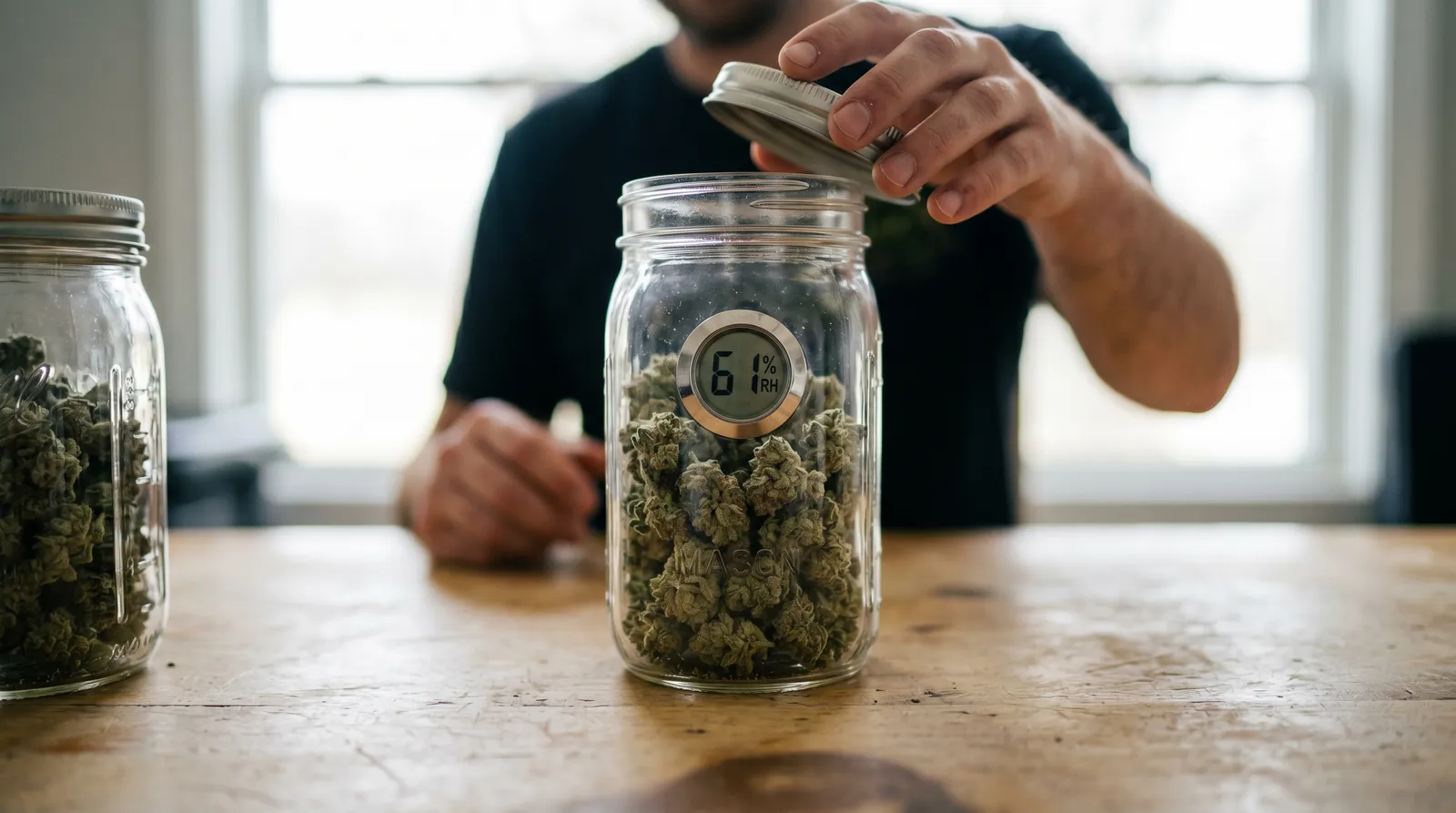
Technically, a cure continues for months. Two to four weeks is the minimum for a usable smoke; six to eight weeks is where many growers feel the peak sits for most chemovars. Beyond about three months in a sealed jar at steady RH, you're in storage territory rather than active curing.
Common things that go wrong
Most curing failures come from four repeat offenders: mould, ammonia, overdrying, and thermal swings. Here's how to read each signal and what to do about it.
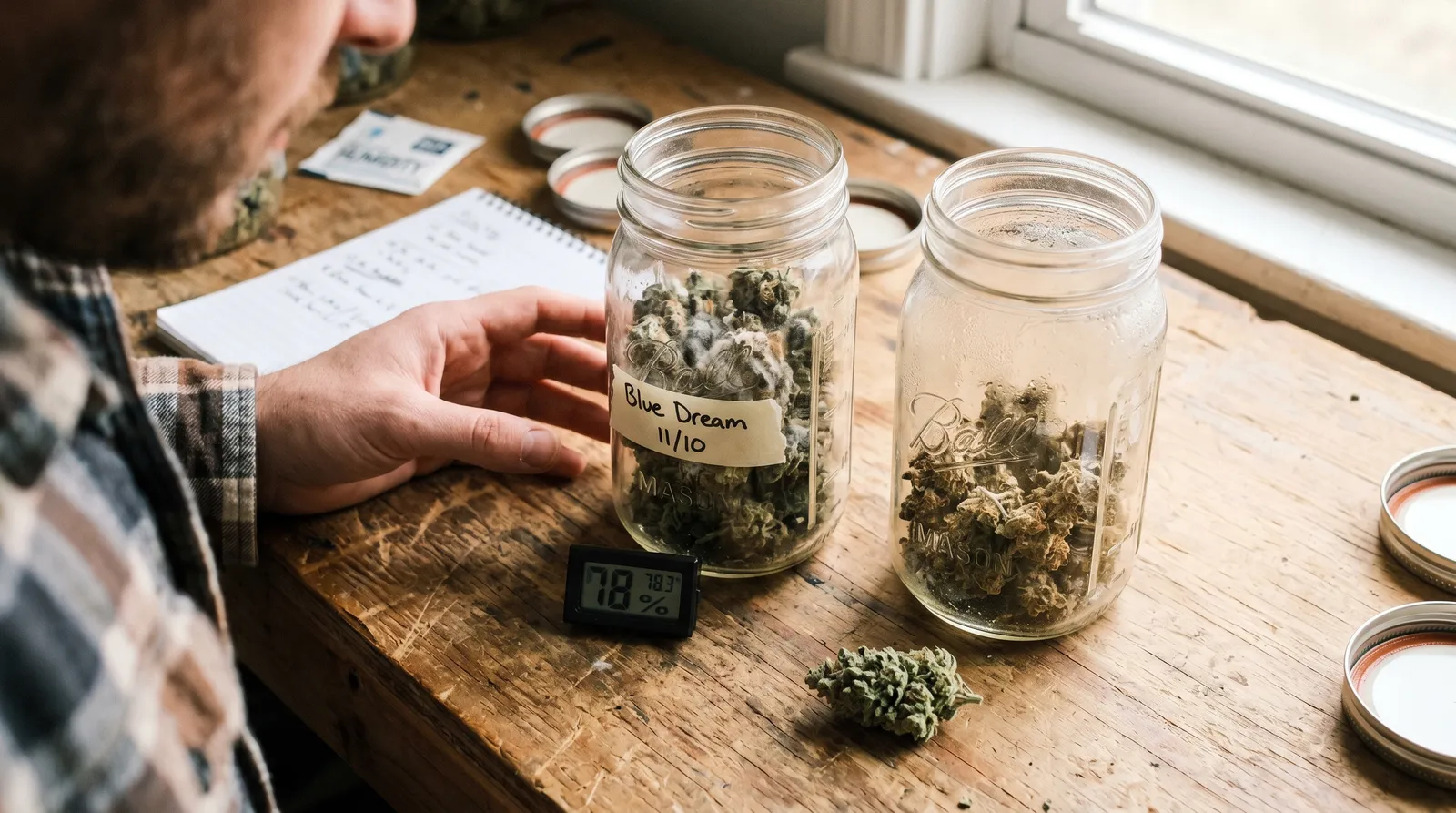
- Mould spots. White fluff deep in a bud, or dark grey powder — toss the affected bud and any touching it (Punja, 2021). Mouldy cannabis is a respiratory risk (Kagen et al., 1983, Journal of Allergy and Clinical Immunology, documented Aspergillus sensitisation in cannabis users). Don't try to salvage by drying it out.
- Ammonia smell. Anaerobic bacteria from sealing too wet. Empty the jar, spread buds on parchment or a paper bag for 6–12 hours, recheck RH, then reseal. Catch this in day one or two and you save the batch.
- RH keeps dropping below 55%. Buds were overdried. A 62% humidity pack will rehydrate them over a few days. Don't add fresh plant material or orange peel — both are folk remedies that introduce contamination risk.
- Condensation on jar walls. Temperature swing, usually from moving jars between rooms. Keep them somewhere thermally stable.
Curing methods compared
Jars aren't the only way to finish dried buds — here's how the common options stack up on the variables that matter.
| Method | RH control | Feedback | Typical use |
|---|---|---|---|
| Glass Mason jar | Manual, via burping | Visual + hygrometer | Default home cure, 2–8 weeks |
| Jar + 62% humidity pack | Passive, automatic | Hygrometer only | Long storage, overdried buds |
| Grove Bag (breathable) | Selective moisture transfer | Weaker — can't see inside | Space-limited setups |
| Vacuum / mylar + O₂ absorber | Sealed, no exchange | None until opened | Long-term storage, 6+ months |
When does curing become storage?
Curing becomes storage once RH has held steady for 3–4 weeks with no burping needed and no aroma shifts between checks. At that point the jar is doing long-term holding rather than active improvement. For storage beyond a few months, move jars to a cool (15–18 °C), fully dark location. UV degrades cannabinoids — a 2023 review in Molecules (Milay et al.) found light exposure to be the single largest driver of THC loss during storage, ahead of temperature and oxygen (Milay et al., 2020). The EMCDDA's 2023 European drug report also notes that home-grown cannabis quality in Europe varies widely by post-harvest handling more than by genetics alone. Vacuum-sealed bags or mylar with oxygen absorbers extend shelf life further but lock out the slow aromatic evolution some growers value.
Related Azarius reading
If you're still upstream of the jar stage, our drying cannabis guide covers the hang-dry step that makes or breaks everything described above. For seed genetics — Ministry of Cannabis, Dutch Passion, Royal Queen Seeds and others — see the cannabis seeds category, where you can buy breeder packs directly. Azarius has stocked breeder seeds and grow supplies since 1999.
Legal notice: Cannabis cultivation laws vary by country and region and change frequently. This guide is educational. Before growing, verify current laws for your specific jurisdiction. Azarius does not provide legal advice.
Educational information only. Azarius does not provide medical, formal or professional advice; consult a qualified professional for decisions relating to cultivation or consumption in your jurisdiction.
Last updated: April 2026
Frequently Asked Questions
8 questionsHow long should I cure cannabis in jars?
What humidity should my curing jars sit at?
How often should I burp curing jars?
Are glass Mason jars better than Grove Bags or plastic?
What does ammonia smell in a curing jar mean?
Can I speed up the cure with a humidity pack?
How full should I fill my curing jars?
What temperature should I store curing jars at?
About this article


Luke Sholl has been writing about cannabis, cannabinoids, and the broader benefits of nature since 2011, and has personally grown cannabis in home grow tents for more than a decade. That first-hand cultivation experience
This wiki article was drafted with AI assistance and reviewed by Luke Sholl, External contributor since 2026. Editorial oversight by Adam Parsons.
Medical disclaimer. This content is for informational purposes only and does not constitute medical advice. Consult a qualified healthcare provider before use of any substance.
Last reviewed April 24, 2026
References (8)
- [1]Milay, L., Berman, P., Shapira, A., Guberman, O., & Meiri, D. (2020). Metabolic profiling of cannabis secondary metabolites for evaluation of optimal postharvest storage conditions. Frontiers in Plant Science, 11, 583605. DOI: 10.3389/fpls.2020.583605
- [2]Chandra, S., Lata, H., Khan, I. A., & ElSohly, M. A. (2017). Cannabis sativa L.: Botany and Horticulture. Cannabis sativa L. - Botany and Biotechnology, pp. 79-100. DOI: 10.1007/978-3-319-54564-6_3
- [3]Jin, D., Jin, S., Yu, Y., Lee, C., & Chen, J. (2017). Classification of Cannabis Cultivars Marketed in Canada for Medical Purposes by Quantification of Cannabinoids and Terpenes Using HPLC-DAD and GC-MS. Journal of Analytical & Bioanalytical Techniques, 8(1), 349. DOI: 10.4172/2155-9872.1000349
- [4]Caplan, D., Dixon, M., & Zheng, Y. (2017). Optimal rate of organic fertilizer during the flowering stage for cannabis grown in two coir-based substrates. HortScience, 52(12), 1796-1803. DOI: 10.21273/HORTSCI12401-17
- [5]Burgel, L., Hartung, J., Schibano, D., & Graeff-Hönninger, S. (2020). Impact of different phytohormones on morphology, yield and cannabinoid content of Cannabis sativa L.. Plants, 9(6), 725. DOI: 10.3390/plants9060725
- [6]Punja, Z. K. (2021). Emerging diseases of Cannabis sativa and sustainable management. Pest Management Science, 77(9), 3857-3870. DOI: 10.1002/ps.6307
- [7]Colorado State University Extension (2023). Hemp Production: Drying and Storage. CSU Extension Fact Sheet, No. 0.310. Source
- [8]Toth, J. A., Stack, G. M., Cala, A. R., Carlson, C. H., Wilk, R. L., Crawford, J. L., Viands, D. R., Philippe, G., Smart, C. D., Rose, J. K., & Smart, L. B. (2020). Development and validation of genetic markers for sex and cannabinoid chemotype in Cannabis sativa L.. GCB Bioenergy, 12(3), 213-222. DOI: 10.1111/gcbb.12667
Related Articles
Cannabis Hermaphrodite: Identify, Prevent, Act
A cannabis hermaphrodite is a female plant that develops male pollen sacs or banana-shaped anthers (nanners), self-pollinating and seeding your harvest.
DIY Cannabis Fertilizer: Homemade Nutrient Guide
DIY cannabis fertilizer guide: compost, teas, banana ferments and feed schedules, with safety notes and cited research for home growers.
What To Do With Male Cannabis Plants: 6 Practical Uses
What to do with male cannabis plants: identify, isolate, breed, extract, or compost. A practical 6-step guide with sourcing and safety notes.
Mushroom Grow Kit Temperature & Humidity: Full Setup Guide
A temperature humidity control grow kit is the small set of climate tools — hygrometer, heat mat, humidifier or perlite tray — that keeps a mushroom fruiting…
When to Harvest Mushrooms: Veil Break Timing Explained
Harvest timing veil break is a cultivation technique that uses the tearing of the partial veil on maturing Psilocybe cubensis to mark peak alkaloid content.
First Grow Checklist: What You Need for Mushroom Kits
A first grow checklist is the short list of supplies and environmental conditions needed to run a home psilocybin mushroom kit from inoculated substrate to…
Sclerotia vs Fruit Bodies: Cultivation Comparison
Sclerotia and fruit bodies are two different life stages of Psilocybe fungi: sclerotia are hardened underground mycelial storage bodies (the 'magic…
Storing Dried Mushrooms Long Term: Full Guide
Storing dried mushrooms long term means keeping well-dried Psilocybe fruit bodies in airtight, opaque containers with desiccant, cool and dark, to slow…
Drying Mushrooms Air Desiccant Oven: Methods Compared
Drying mushrooms air desiccant oven refers to the three home methods for reducing fresh fruit bodies from ~90% water to cracker-dry (<5%). Gotvaldová et al.