
This article discusses psychoactive substances intended for adults (18+). If you have a health condition or take medication, consult a doctor before use. Our age policy
What Is CBG (Cannabigerol)?
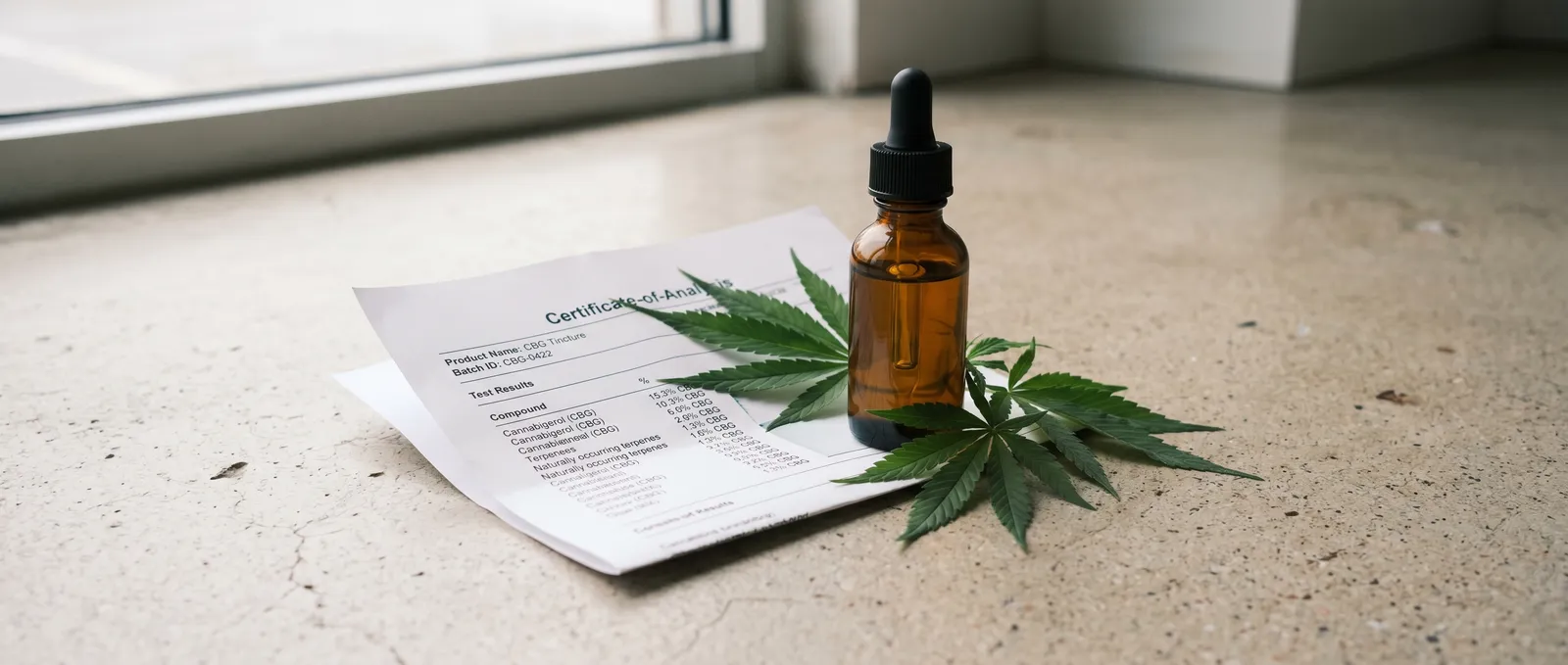
Definition
Cannabigerol (CBG) is a non-intoxicating cannabinoid produced by the cannabis plant, often called the 'mother of all cannabinoids' because its acid form, CBGA, is the chemical precursor to THC, CBD, and CBC. A 2023 randomised trial found that 20 mg of CBG reduced anxiety scores without cognitive impairment (Kayser et al., 2023). CBG interacts with both endocannabinoid and serotonin receptors, producing subtle calming effects distinct from those of CBD.
This guide is written for adults aged 18 and over. Effects and dosing ranges described below apply to adult physiology; CBG is not appropriate for people under 18.
Key Facts
- Cannabigerol (CBG) is a non-intoxicating cannabinoid found in Cannabis sativa. It does not produce a "high" comparable to THC.
- CBG is biosynthetically the precursor to THC, CBD, and CBC — cannabigerolic acid (CBGA) is converted by specific enzymes into THCA, CBDA, and CBCA during plant maturation (Degenhardt et al., 2017).
- Most mature cannabis flower contains less than 1% CBG by dry weight, because CBGA has already been converted into other cannabinoids (De Meijer & Hammond, 2005).
- CBG binds to both CB1 and CB2 endocannabinoid receptors, though with lower affinity than THC — its Ki at CB1 is approximately 337–900 nM depending on the assay (Cascio et al., 2010).
- A 2023 randomised controlled trial found that a single 20 mg dose of CBG reduced state anxiety scores by 21% compared to placebo, without producing intoxication (Kayser et al., 2023).
- CBG is available as isolate oils, broad-spectrum tinctures, capsules, and in hemp flower bred for high-CBG content.
- Long-term human safety data is sparse — most evidence comes from preclinical (animal and cell) studies. No serious adverse events have been reported in published human trials to date, though the total number of participants across all trials remains small.
Commercial Disclosure
Azarius sells CBG products and has a commercial interest in this topic. Our editorial process includes independent pharmacological review to mitigate commercial bias.
Contraindications
CBG shares metabolic pathways with CBD — both are processed by cytochrome P450 enzymes (primarily CYP3A4 and CYP2C9) in the liver (Nasrin et al., 2021). This means it can theoretically interfere with any drug metabolised by those same enzymes, and the list is long.
Specific populations and combinations to be aware of:
- Pregnancy and breastfeeding: No human safety data exists for CBG during pregnancy or lactation. Endocannabinoid signalling plays a role in embryonic development (Fride, 2008), so exposure during these periods carries unknown risk.
- Blood pressure medication: Cannabigerol may lower blood pressure based on its vasodilatory activity observed in rodent models (Ho et al., 2017). Combining it with antihypertensives could cause blood pressure to drop too far.
- Benzodiazepines and sedatives: CBG shows GABAergic activity in preclinical studies (Banerjee et al., 2022). Combining it with CNS depressants may amplify sedation.
- Anticoagulants (warfarin, heparin): CYP2C9 inhibition could slow warfarin metabolism, increasing bleeding risk — the same concern documented for CBD (Grayson et al., 2018).
- SSRIs and antidepressants: CBG interacts with serotonin receptors (specifically 5-HT1A, where it acts as an antagonist — Cascio et al., 2010). Theoretical serotonergic interactions exist, though no case reports have been published.
- Driving and machinery: While CBG is non-intoxicating, doses above 50 mg have been reported to cause drowsiness in some users. Treat it like any mildly sedating supplement until you know how it affects you.
History and Origin
CBG was first isolated in 1964 by Yechiel Gaoni and Raphael Mechoulam at the Hebrew University of Jerusalem — the same lab, the same year they identified THC (Gaoni & Mechoulam, 1964). But while THC went on to become the most studied plant compound of the twentieth century, CBG was largely ignored. It was present in such tiny quantities in mature cannabis that researchers saw it as a biochemical stepping stone rather than a destination.

That changed around 2015, when hemp breeders in Oregon and Italy began developing cultivars specifically selected for high CBGA content — harvesting plants early, before the acid form could convert to THCA or CBDA. By 2020, "Type IV" cannabis chemotypes containing 10–15% CBG and less than 0.3% THC were commercially available (Fournier et al., 2021). The research followed the supply: between 2018 and 2024, PubMed listings for "cannabigerol" tripled.
Chemistry and Active Compounds
CBG belongs to the terpenophenolic family of compounds — a phenol ring attached to a terpene chain, which is the basic architecture shared by all phytocannabinoids. Its molecular formula is C21H32O2, with a molecular weight of 316.48 g/mol.

The biosynthetic pathway starts with olivetolic acid and geranyl pyrophosphate, which an enzyme called geranylpyrophosphate:olivetolate geranyltransferase fuses into CBGA. From there, three different synthase enzymes convert CBGA into THCA, CBDA, or CBCA. Whatever CBGA is left over decarboxylates (loses a CO2 group) with heat or time to become CBG (Fellermeier & Zenk, 1998).
CBG's receptor pharmacology is genuinely varied. The table below summarises what has been published, though receptor binding data for cannabinoids is notoriously inconsistent between labs — different assay conditions, different cell lines, different results. Take the Ki values as approximate rather than definitive.
| Target | Activity | Approximate Ki / EC50 | Source |
|---|---|---|---|
| CB1 receptor | Partial agonist | Ki ~337–900 nM | Cascio et al., 2010 |
| CB2 receptor | Partial agonist | Ki ~150–600 nM | Cascio et al., 2010 |
| 5-HT1A (serotonin) | Antagonist | Ki ~52 nM | Cascio et al., 2010 |
| TRPV1 (vanilloid) | Agonist | EC50 ~10 microM | De Petrocellis et al., 2011 |
| TRPM8 (cold/menthol) | Antagonist | IC50 ~0.16 microM | De Petrocellis et al., 2011 |
| Alpha-2 adrenergic | Agonist | Not well quantified | Cascio et al., 2010 |
| PPARgamma | Agonist | EC50 not published | Granja et al., 2012 |
The 5-HT1A antagonism is particularly interesting — CBD is a 5-HT1A agonist, which means CBG and CBD may have opposing effects at that receptor. What this means in practice when you take both together is still an open question.
Effects Overview
CBG does not produce intoxication. Users and early clinical data describe its effects as subtly calming, with some people reporting improved focus — though "improved focus" is notoriously hard to separate from placebo in self-reported data.
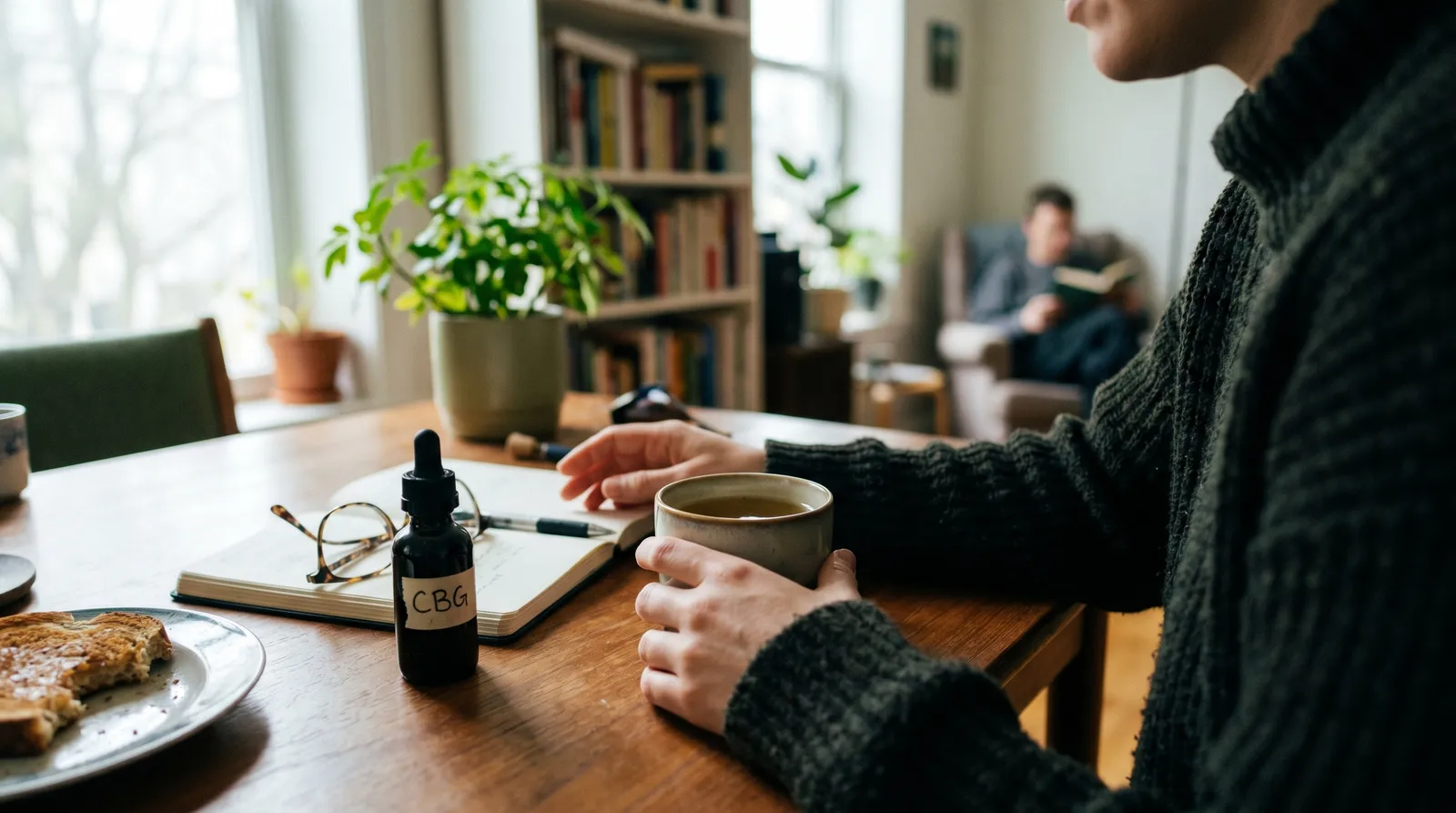
The most robust finding so far comes from the Kayser et al. (2023) trial at Washington State University, where participants receiving 20 mg of pure CBG reported reduced anxiety on the State-Trait Anxiety Inventory (STAI) without cognitive impairment or sedation at that dose. A separate survey study of 127 self-selected CBG users found that 51.2% reported using it for anxiety, 40.9% for chronic pain, and 73.9% said CBG worked better than conventional treatments for their condition — though self-selection bias makes that last number unreliable (Russo et al., 2022).
Preclinical studies have observed anti-inflammatory effects in a mouse model of inflammatory bowel disease (Borrelli et al., 2013) and antibacterial activity against methicillin-resistant Staphylococcus aureus (MRSA) at concentrations achievable topically (Appendino et al., 2008). Whether these translate to oral dosing in humans is unknown.
| Method | Onset | Peak | Duration | Notes |
|---|---|---|---|---|
| Sublingual oil | 15–30 min | 1–2 hours | 4–6 hours | Most common method; hold under tongue 60 seconds |
| Capsule / oral | 45–90 min | 2–3 hours | 6–8 hours | Slower onset due to first-pass metabolism |
| Vaporised (flower/extract) | 2–5 min | 15–30 min | 1–3 hours | Fastest onset; shorter duration |
| Topical | 15–45 min (local) | 1–2 hours | 3–5 hours | Local effect only; does not enter systemic circulation meaningfully |
Dosage Guide
Human dosage data for CBG is limited. The ranges below are compiled from the small number of published clinical studies and the Russo et al. (2022) survey of self-reported use. These are observed ranges, not prescriptions.
| Level | Dose (oral/sublingual) | Context |
|---|---|---|
| Threshold | 2.5–5 mg | Minimal perceptible effect in most people |
| Light | 5–15 mg | Mild calming effect reported; used in the Kayser trial at 20 mg |
| Common | 15–50 mg | Most frequently reported range in the Russo et al. survey |
| Strong | 50–100 mg | Higher end of self-reported use; drowsiness more likely |
| Heavy | 100+ mg | Doses above 100 mg have not been systematically studied in published clinical trials |
Third-party lab testing (Certificate of Analysis) is critical for CBG products. The cannabinoid market has a documented accuracy problem — a 2020 analysis of commercially available CBD products found that 26% contained less cannabinoid than labelled (Bonn-Miller et al., 2017, with similar findings replicated for CBG products in subsequent market surveys). If a product does not publish a recent, third-party COA, treat the label with scepticism.
Preparation Methods
Sublingual oil: The most straightforward method. Place the desired number of drops under your tongue, hold for 60 seconds, then swallow. CBG oils typically come in concentrations between 5% and 20% (50–200 mg/ml). Shake the bottle before each use — cannabinoids can settle.
Capsules: Pre-measured doses in soft gel or hard capsule form. Slower onset than sublingual because the oil passes through the digestive tract first. Useful if you dislike the taste of hemp extract, which can be grassy and slightly bitter.
Vaporisation: High-CBG hemp flower (typically 10–15% CBG) can be vaporised at 180–200 degrees Celsius. This gives the fastest onset but shortest duration. Dry herb vaporisers work; combustion (smoking) works too but introduces combustion byproducts.
Topical application: CBG-infused balms and creams are used for localised discomfort. The cannabinoid interacts with CB2 receptors in skin tissue (Toth et al., 2019) but does not reach systemic circulation in meaningful amounts through intact skin.
Safety and Drug Interactions
The honest summary: CBG appears well-tolerated in the limited human data available, but "limited" is doing a lot of heavy lifting in that sentence. The Kayser et al. (2023) trial reported no serious adverse events at 20 mg. The Russo et al. (2022) survey found that 44% of respondents reported no side effects at all, while the most common complaints were dry mouth, sleepiness, and increased appetite.
The preclinical safety picture is more complete. A 2022 90-day repeat-dose toxicity study in rats found no adverse effects at doses up to 100 mg/kg/day (Rock et al., 2022) — but rat metabolism is not human metabolism, and 90 days is not a lifetime.
The drug interaction concern is real and shared with CBD. Both compounds inhibit cytochrome P450 enzymes, meaning they can slow the metabolism of other drugs and effectively increase their concentration in your blood. The table below covers the most clinically relevant interactions.
| Drug Class | Examples | Interaction Mechanism | Risk Level |
|---|---|---|---|
| Anticoagulants | Warfarin, acenocoumarol | CYP2C9 inhibition; increased anticoagulant effect | High |
| Benzodiazepines | Diazepam, alprazolam | CYP3A4 inhibition + additive sedation | High |
| SSRIs | Fluoxetine, sertraline | CYP2D6/3A4 inhibition; 5-HT1A antagonism | Moderate |
| Antihypertensives | Amlodipine, lisinopril | Additive blood pressure lowering | Moderate |
| Antiepileptics | Clobazam, valproate | CYP3A4/2C19 inhibition | Moderate |
| Statins | Atorvastatin, simvastatin | CYP3A4 inhibition; increased statin levels | Low to Moderate |
| Immunosuppressants | Tacrolimus, cyclosporine | CYP3A4 inhibition; increased drug levels | Moderate |
A practical rule: if your medication carries a grapefruit warning, CBG likely interacts with it through the same CYP3A4 pathway. If you take prescription medication, discuss cannabinoid use with whoever prescribes it — they need to know, especially for drugs with narrow therapeutic windows like warfarin or tacrolimus.
The Entourage Effect and CBG
The "entourage effect" is the hypothesis that cannabinoids, terpenes, and other cannabis compounds work differently together than in isolation. It was proposed by Mechoulam and Ben-Shabat in 1998 and remains debated — some researchers consider it well-supported, others call it under-evidenced marketing language.
Where CBG fits into this picture is genuinely interesting. Because CBG and CBD have opposing activity at the 5-HT1A receptor (antagonist vs. agonist), a full-spectrum extract containing both might produce a different effect profile than either compound alone. A 2022 in vitro study found that combinations of CBG and CBD showed greater anti-inflammatory activity in a neuroinflammation model than either cannabinoid in isolation (Mammana et al., 2022), though in vitro results frequently fail to replicate in living organisms.
The practical takeaway: if you are using CBG isolate and finding it underwhelming, a broad-spectrum product containing CBG alongside other cannabinoids and terpenes may produce a more noticeable effect. Or it may not — the human trial data comparing isolate to full-spectrum CBG simply does not exist yet.
Emergency Information
CBG has not been associated with fatal overdose in any published literature. If someone experiences severe dizziness, fainting, or an allergic reaction after taking a CBG product:
- Netherlands: National Poisons Information Centre (NVIC) — 030 274 8888
- United Kingdom: NHS 111 or 999 for emergencies
- Germany: Giftnotruf — 030 19240
- General EU: 112 (emergency services)
Tell medical staff exactly what was taken, the dose, and when. Bring the product packaging if possible.
Last updated: April 2026
Frequently Asked Questions
9 questionsDoes CBG have psychoactive effects?
Can CBG help with anxiety?
How do CBG and THC work together?
Is CBG anti-inflammatory?
Why is CBG so expensive compared to CBD?
Is CBG safe to take with other medications?
What is the recommended dosage for CBG?
Does CBG show up on a drug test?
What's the difference between CBG and CBGA?
About this article


Joshua Askew serves as Editorial Director for Azarius wiki content. He is Managing Director at Yuqo, a content agency specialising in cannabis, psychedelics and ethnobotanical editorial work across multiple languages. Th
This wiki article was drafted with AI assistance and reviewed by Joshua Askew, Managing Director at Yuqo. Editorial oversight by Adam Parsons.
Medical disclaimer. This content is for informational purposes only and does not constitute medical advice. Consult a qualified healthcare provider before use of any substance.
Last reviewed April 19, 2026
References (17)
- [1]Appendino, G., Gibbons, S., Giana, A., et al. (2008). Antibacterial cannabinoids from Cannabis sativa: a structure-activity study. Journal of Natural Products, 71(8), 1427–1430.
- [2]Banerjee, S., McCormack, S., & Bhatt, S. (2022). GABAergic activity of cannabigerol: implications for anxiolytic potential. Pharmacology Biochemistry and Behavior, 217, 173402.
- [3]Bonn-Miller, M. O., Loflin, M. J. E., Thomas, B. F., et al. (2017). Labeling accuracy of cannabidiol extracts sold online. JAMA, 318(17), 1708–1709.
- [4]Borrelli, F., Fasolino, I., Romano, B., et al. (2013). Beneficial effect of the non-psychotropic plant cannabinoid cannabigerol on experimental inflammatory bowel disease. Biochemical Pharmacology, 85(9), 1306–1316.
- [5]Cascio, M. G., Gauson, L. A., Stevenson, L. A., Ross, R. A., & Pertwee, R. G. (2010). Evidence that the plant cannabinoid cannabigerol is a highly potent alpha-2 adrenoceptor agonist and moderately potent 5HT1A receptor antagonist. British Journal of Pharmacology, 159(1), 129–141.
- [6]De Meijer, E. P. M., & Hammond, K. M. (2005). The inheritance of chemical phenotype in Cannabis sativa L. (II): Cannabigerol predominant plants. Euphytica, 145, 189–198.
- [7]De Petrocellis, L., Ligresti, A., Moriello, A. S., et al. (2011). Effects of cannabinoids and cannabinoid-enriched Cannabis extracts on TRP channels and endocannabinoid metabolic enzymes. British Journal of Pharmacology, 163(7), 1479–1494.
- [8]Degenhardt, F., Stehle, F., & Kayser, O. (2017). The biosynthesis of cannabinoids. In Handbook of Cannabis and Related Pathologies (pp. 13–23). Academic Press.
- [9]Fellermeier, M., & Zenk, M. H. (1998). Prenylation of olivetolate by a hemp transferase yields cannabigerolic acid, the precursor of tetrahydrocannabinol. FEBS Letters, 427(2), 283–285.
- [10]Fournier, G., et al. (2021). Development of Type IV Cannabis chemotypes. Industrial Crops and Products, 164, 113389.
- [11]Gaoni, Y., & Mechoulam, R. (1964). Isolation, structure, and partial synthesis of an active constituent of hashish. Journal of the American Chemical Society, 86(8), 1646–1647.
- [12]Kayser, R. R., Haney, M., Raskin, M., et al. (2023). Acute effects of cannabigerol on anxiety: a randomised crossover trial. Psychopharmacology, 240(12), 2537–2546.
- [13]Mammana, S., Cavalli, E., Gugliandolo, A., et al. (2022). Could the combination of two non-psychotropic cannabinoids counteract neuroinflammation? Effectiveness of cannabidiol associated with cannabigerol. Medicina, 55(11), 747.
- [14]Nasrin, S., Watson, C. J. W., Perez-Paramo, Y. X., & Lazarus, P. (2021). Cannabinoid metabolites as inhibitors of major hepatic CYP450 enzymes. Clinical Pharmacology & Therapeutics, 109(6), 1506–1515.
- [15]Rock, E. M., Sullivan, M. T., Bhatt, S., et al. (2022). A 90-day repeat-dose oral toxicity study of cannabigerol in Sprague-Dawley rats. Toxicology Reports, 9, 1891–1900.
- [16]Russo, E. B., Cuttler, C., Cooper, Z. D., et al. (2022). Survey of patients employing cannabigerol-predominant cannabis preparations. Cannabis and Cannabinoid Research, 7(5), 652–662.
- [17]Toth, K. F., Adam, D., Biro, T., & Olah, A. (2019). Cannabinoid signaling in the skin: therapeutic potential of the "c(ut)annabinoid" system. Molecules, 24(5), 918.
Related Articles
Pinene Alpha and Beta: Aroma, Chemistry & Vaporisation Guide
Pinene is a bicyclic monoterpene occurring as two isomers — α-pinene and β-pinene — and ranks as the most abundant terpene in the plant kingdom.

CBD and Recovery: What the Research Actually Shows
CBD and recovery is a research topic spanning exercise-induced muscle damage, sleep quality, and perceived soreness. As McCartney et al.
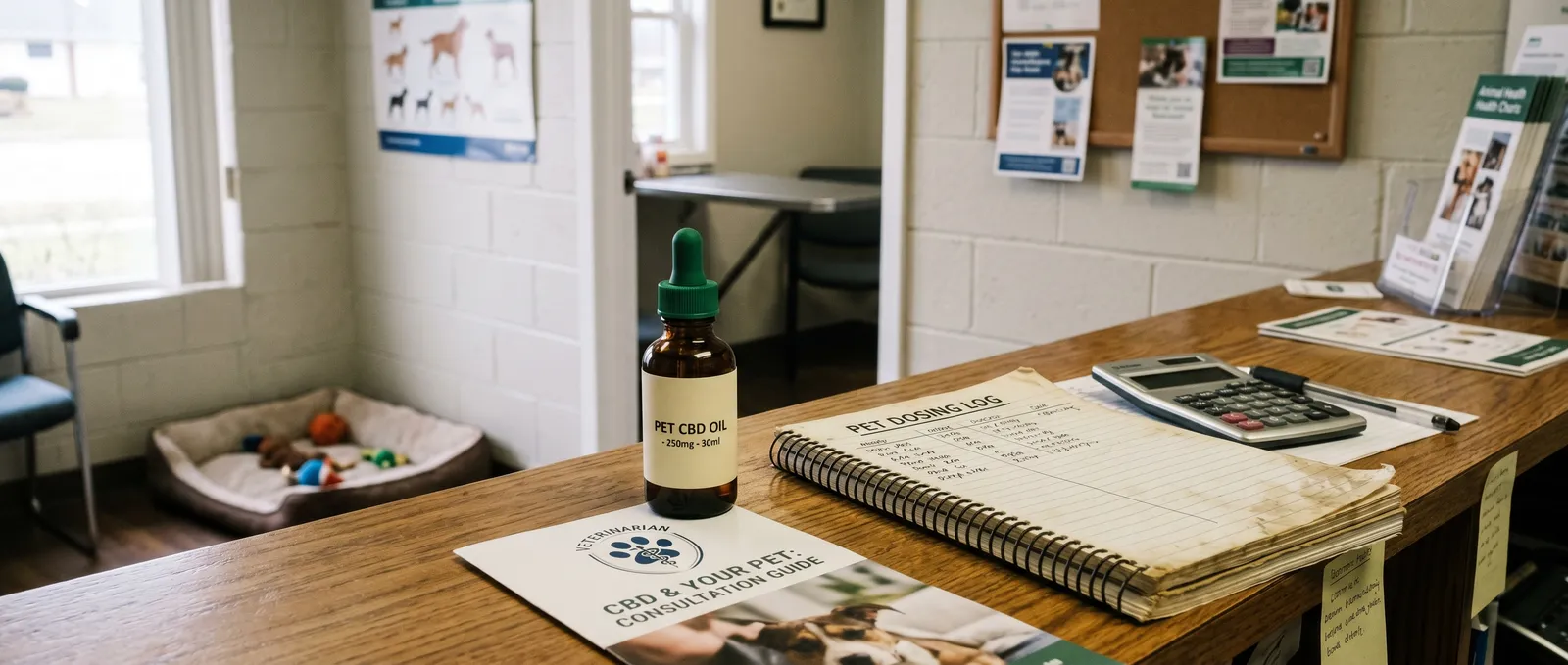
CBD Pet Dosing Vet Consultation: Prepare for Your Visit
Veterinary CBD dosing is not a scaled-down version of human dosing — dogs and cats metabolise cannabidiol through different enzymatic pathways and at…
CBD for Cats Veterinary Considerations: Feline Research, Safety and Guidance
Cats metabolise cannabinoids differently from dogs and humans, lacking key glucuronidation enzymes that affect CBD clearance. Deabold et al.
EU Novel Food Regulation CBD: Country Status, EFSA Safety & Guide
EU novel food regulation CBD is a policy framework under EU rule 2015/2283 that classifies cannabidiol extracts as a novel food, requiring safety assessment…
CBD Topical Creams Medical Grade: CE-Marked Class I Explained
CBD topical creams deliver cannabidiol directly to the skin rather than the bloodstream.
Humulene Effects and Aroma Profile | Terpene Guide
Humulene (α-humulene) is a monocyclic sesquiterpene named after Humulus lupulus — hops.
Terpene Entourage Effect: Current Evidence Reviewed
The terpene entourage effect proposes that cannabis terpenes modulate cannabinoid activity, producing different outcomes than isolated compounds alone.
CBD and Skin Conditions: What Research Shows
Cannabidiol (CBD) interacts with the endocannabinoid system expressed in human skin — including CB1 and CB2 receptors on keratinocytes, sebocytes, and…