
This article discusses psychoactive substances intended for adults (18+). If you have a health condition or take medication, consult a doctor before use. Our age policy
MCT vs Olive vs Hemp Carrier Oils for CBD Explained

Definition
A carrier oil dissolves lipophilic CBD into a fat your body can absorb — without one, most oral CBD passes through the gut poorly utilised. MCT, olive, and hemp seed oil each follow different metabolic routes after digestion, producing measurably different absorption profiles (Millar et al., 2018). This guide compares all three on bioavailability, taste, stability, and practical trade-offs.
MCT vs olive vs hemp carrier oils is a comparison every CBD buyer encounters when choosing a product. A carrier oil is a food-grade fat that dissolves lipophilic CBD into a form your body can absorb — without one, most oral CBD passes through the gut poorly utilised. MCT, olive, and hemp seed oil each follow different metabolic routes after digestion, producing measurably different absorption profiles (Millar et al., 2018). This guide compares all three on bioavailability, taste, stability, and practical trade-offs so you can make an informed choice next time you buy a CBD oil.
Carrier Oil Comparison at a Glance
The fastest way to understand MCT vs olive vs hemp carrier oils is a side-by-side table covering the properties that matter most for CBD delivery.
| Carrier Oil | Source Plant | Typical Viscosity | Taste Profile | Absorption Profile |
|---|---|---|---|---|
| MCT oil (medium-chain triglycerides) | Coconut (Cocos nucifera) or palm kernel | Thin, water-like | Near-neutral; faint coconut note | Rapidly absorbed via portal vein; bypasses lymphatic route for C8/C10 chains (Jiang et al., 2022) |
| Olive oil | Olive (Olea europaea) | Medium; slightly viscous | Peppery, grassy, bitter finish | Long-chain triglycerides; slower gastric emptying and lymphatic absorption (Porter et al., 2007) |
| Hemp seed oil | Hemp (Cannabis sativa L.) | Medium; comparable to olive | Nutty, earthy, slightly bitter | Long-chain triglycerides (primarily linoleic + α-linolenic acid); lymphatic absorption pathway (Callaway, 2004) |
That table is the skeleton. The rest of this article puts meat on it — what each oil actually does once it hits your digestive tract, why it matters for CBD specifically, and which trade-offs are worth caring about.
What a Carrier Oil Actually Does
A carrier oil serves as the lipid vehicle that keeps CBD in solution and enables your digestive system to process it. Cannabidiol (CBD) is lipophilic — it dissolves in fat, not water. Drop pure CBD isolate onto your tongue and most of it will pass through your gut without being absorbed efficiently. When you swallow a CBD oil, your digestive system handles the carrier fat and the dissolved cannabinoid as a package deal. Bile salts emulsify the oil into micelles, pancreatic lipase breaks the triglycerides into monoglycerides and free fatty acids, and the CBD hitches a ride into enterocytes along with those digestion products.
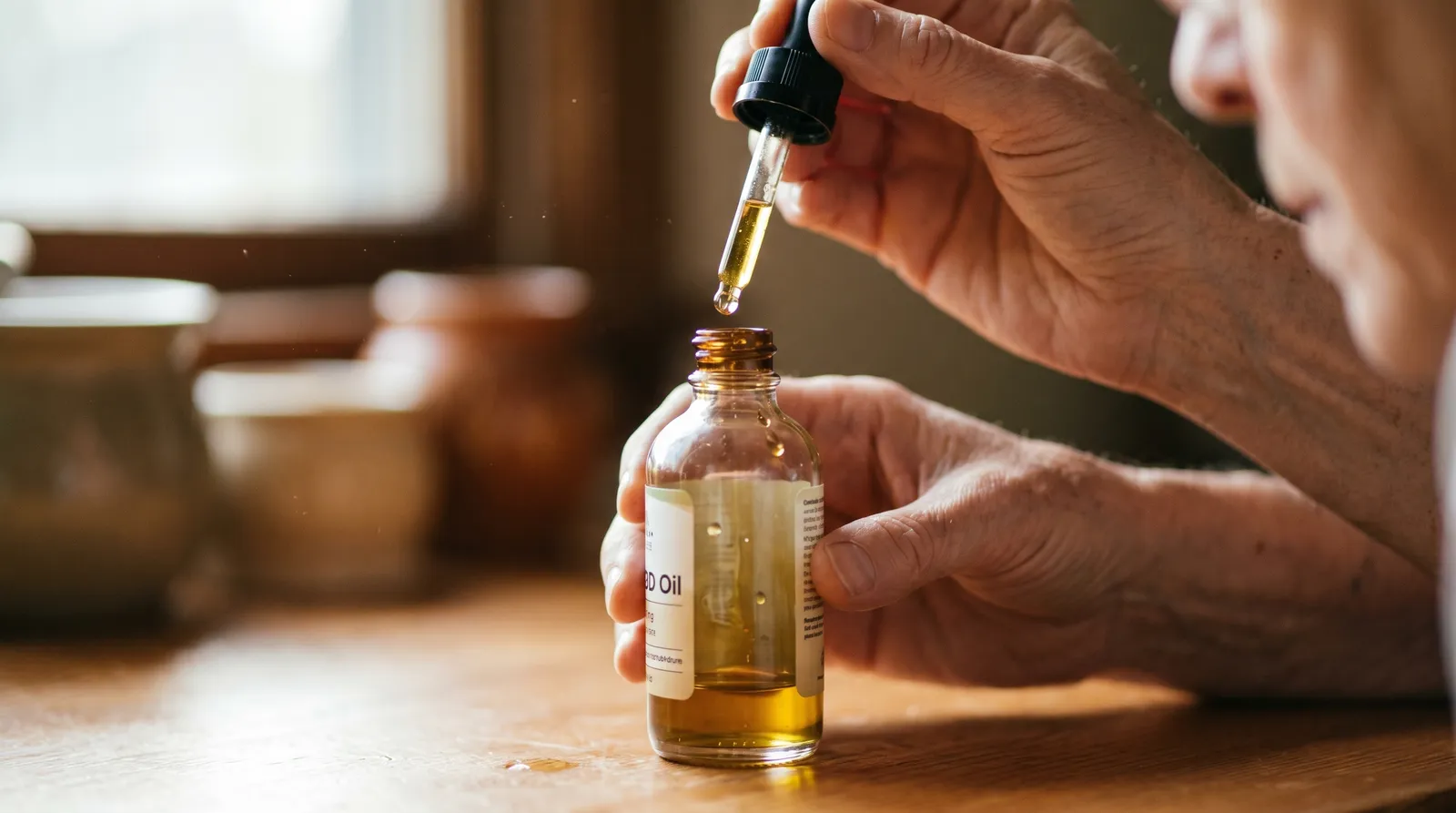
The type of fat — specifically the chain length of the fatty acids — determines which metabolic route the package takes next. That is where the MCT vs olive vs hemp carrier oils comparison becomes practically relevant rather than academic.
MCT Oil — the Fast Track
MCT oil is the fastest-absorbing carrier of the three, reaching measurable plasma levels roughly 30–45 minutes sooner than comparable long-chain formulations. MCT stands for medium-chain triglycerides. The fatty acid chains are 6–12 carbons long, though most commercial MCT oils are fractionated to concentrate caprylic acid (C8) and capric acid (C10). These shorter chains are digested differently from the long-chain fats in olive or hemp seed oil. Instead of being packaged into chylomicrons and shipped through the lymphatic system, medium-chain fatty acids cross the intestinal wall and travel directly to the liver via the hepatic portal vein (Jiang et al., 2022). This portal-vein shortcut means faster systemic availability of whatever is dissolved in the oil — including CBD.

A 2022 review in Pharmaceutics examining lipid-based drug delivery found that MCT formulations consistently produced higher peak plasma concentrations of lipophilic compounds compared to long-chain triglyceride vehicles, though absolute bioavailability varied by compound and formulation (Jiang et al., 2022). For CBD specifically, a 2019 pharmacokinetic study by Cibdol's formulation partners observed that MCT-based CBD preparations reached measurable plasma levels roughly 30–45 minutes faster than comparable long-chain formulations — data that informed the shift to MCT carrier for higher-concentration Cibdol oils.
Taste-wise, MCT is about as close to neutral as an edible oil gets. Thin viscosity, almost no flavour. If you have ever tried a high-percentage CBD oil and winced at the hemp taste, the carrier is partly responsible — MCT lets the cannabinoid extract flavour come through without adding much of its own.
The trade-off? Some people experience mild gastrointestinal discomfort — loose stools, stomach cramps — when they first take MCT oil, particularly at higher volumes. At the 0.3–0.5 ml typical of a 3-drop CBD dose, this is uncommon, but it is worth knowing about. And anyone with a coconut allergy should verify the carrier before use, since most MCT oil is coconut-derived.
Olive Oil — the Familiar One
Olive oil follows a slower lymphatic absorption route that may partially shield CBD from first-pass liver metabolism. Extra-virgin olive oil has been used as a carrier for herbal extracts for centuries — long before anyone called it a "carrier oil." It is composed almost entirely of long-chain triglycerides, dominated by oleic acid (C18:1), a monounsaturated fatty acid. These long chains follow the lymphatic absorption route: after digestion, the fatty acids and monoglycerides are reassembled into triglycerides inside enterocytes, packaged into chylomicrons, and released into the lymphatic system before eventually reaching systemic circulation via the thoracic duct (Porter et al., 2007).

Does slower absorption mean worse absorption? Not necessarily. Porter et al. (2007) demonstrated in their landmark review that lymphatic transport can actually protect lipophilic compounds from first-pass liver metabolism — the very process that degrades a significant portion of orally consumed CBD. The lymphatic route bypasses the liver initially, which could theoretically preserve more intact CBD. The catch is that evidence for this specific advantage with consumer CBD products (as opposed to pharmaceutical lipid formulations) remains thin, and no head-to-head human trial has directly compared olive-carrier CBD bioavailability against MCT-carrier CBD at matched doses.
Flavour is where olive oil polarises people. That characteristic peppery, slightly bitter finish — caused by polyphenols like oleocanthal — pairs well with food but can make sublingual dosing an acquired taste. Combined with the earthy flavour of hemp extract, some find it pleasant; others find it overwhelming.
Shelf stability is another consideration. Olive oil is more susceptible to oxidation than MCT, particularly once opened and exposed to light and air. A bottle of olive-carrier CBD stored on a sunny windowsill will degrade faster than the same extract in MCT. Dark glass bottles and cool storage help, but MCT is inherently more oxidation-resistant due to its saturated fatty acid profile.
No CBD product currently stocked at Azarius uses olive oil as a carrier. The oil appears in this comparison because it is common in the broader European CBD market and readers searching for MCT vs olive vs hemp carrier oils encounter it frequently.
Hemp Seed Oil — the Natural Pairing
Hemp seed oil is a long-chain triglyceride carrier with an omega-6:omega-3 ratio of roughly 3:1, close to the nutritional optimum described by Callaway (2004). The oil comes from the seeds of Cannabis sativa L. — the same species that produces CBD, though the seeds themselves contain negligible cannabinoids. The fatty acid profile is dominated by linoleic acid (omega-6, ~55%) and α-linolenic acid (omega-3, ~20%).

As a carrier, hemp seed oil behaves like olive oil in terms of absorption kinetics: long-chain polyunsaturated fatty acids follow the lymphatic route. Onset is slower than MCT, and peak plasma concentrations of dissolved compounds tend to be lower in direct comparison with medium-chain vehicles, though — again — head-to-head human data specifically for CBD in hemp seed carrier versus MCT carrier is limited.
The appeal of hemp seed oil as a CBD carrier is partly philosophical and partly practical. Philosophically, there is something coherent about a Cannabis sativa extract dissolved in a Cannabis sativa seed oil — the whole plant in one bottle. Practically, hemp seed oil contributes its own nutrient profile (essential fatty acids, vitamin E, trace minerals) alongside the CBD. Whether those nutrients are present in meaningful quantities at a 3-drop dose is debatable — you would get far more omega-3 from a teaspoon of flaxseed oil or a piece of salmon. We are being honest about that limitation because overselling the nutritional bonus of a few drops of hemp seed oil would be misleading.
Flavour is distinctive: nutty, earthy, with a green-vegetal undertone. Some people enjoy it. Others describe it as "aggressively hemp." At lower CBD concentrations (5%, 10%, 15%, 20%), the hemp seed carrier flavour is noticeable but manageable. At higher concentrations, the extract itself dominates anyway.
Cibdol uses cold-pressed hemp seed oil as the carrier for its 5%, 10%, 15%, and 20% oils. The 30% oil uses MCT — a deliberate formulation choice, likely reflecting the absorption-speed advantage of MCT at higher cannabinoid loads where maximising bioavailability per drop becomes more relevant.
Bioavailability — What the Research Actually Shows
Oral bioavailability of CBD has been estimated at roughly 6–19% across the most frequently cited pharmacokinetic literature (Millar et al., 2018), and carrier oil type is one variable among many that influence that range. The word "bioavailability" gets thrown around in CBD marketing as though it is a settled number. It is not. That 6–19% range comes from studies using different formulations, different doses, different fed/fasted states, and different analytical methods.

What the lipid-science literature does support is a general principle: medium-chain triglycerides produce faster absorption and higher peak plasma concentrations of lipophilic compounds compared to long-chain triglycerides, while long-chain triglycerides may offer greater total absorption over a longer time window via lymphatic transport (Porter et al., 2007; Jiang et al., 2022). Whether "faster peak" or "slower but potentially more complete absorption" matters more depends on what you are looking for — and for a food supplement taken twice daily at steady state, the practical difference may be modest.
A 2016 study by Zgair et al. published in the American Journal of Translational Research found that co-administration of CBD with long-chain triglycerides increased systemic exposure by approximately 2.5-fold compared to a lipid-free formulation in a rat model, primarily through enhanced lymphatic uptake (Zgair et al., 2016). The study did not compare MCT against LCT directly for CBD, but it reinforced the principle that any lipid carrier substantially improves CBD absorption compared to no carrier at all. The EMCDDA technical report on cannabinoids (2020) similarly notes that lipid co-administration is a key variable in oral cannabinoid pharmacokinetics.
The honest summary: MCT probably gets CBD into your bloodstream a bit faster. Hemp seed and olive oil probably absorb a bit more slowly. All three are vastly better than taking CBD without any fat. The magnitude of the differences at consumer doses (single-digit milligrams per drop) has not been precisely quantified in published human trials. Anyone who tells you otherwise is overstating the evidence.
Shelf Stability and Storage
MCT oil is the most shelf-stable of the three carriers, remaining stable for 18–24 months when sealed and stored in a cool, dark place. Its saturated fatty acid chains resist oxidation well. Hemp seed oil, rich in polyunsaturated fatty acids, is the most oxidation-prone — once opened, it should ideally be refrigerated and used within 3–6 months. Olive oil falls in between, with its monounsaturated oleic acid providing moderate oxidation resistance.
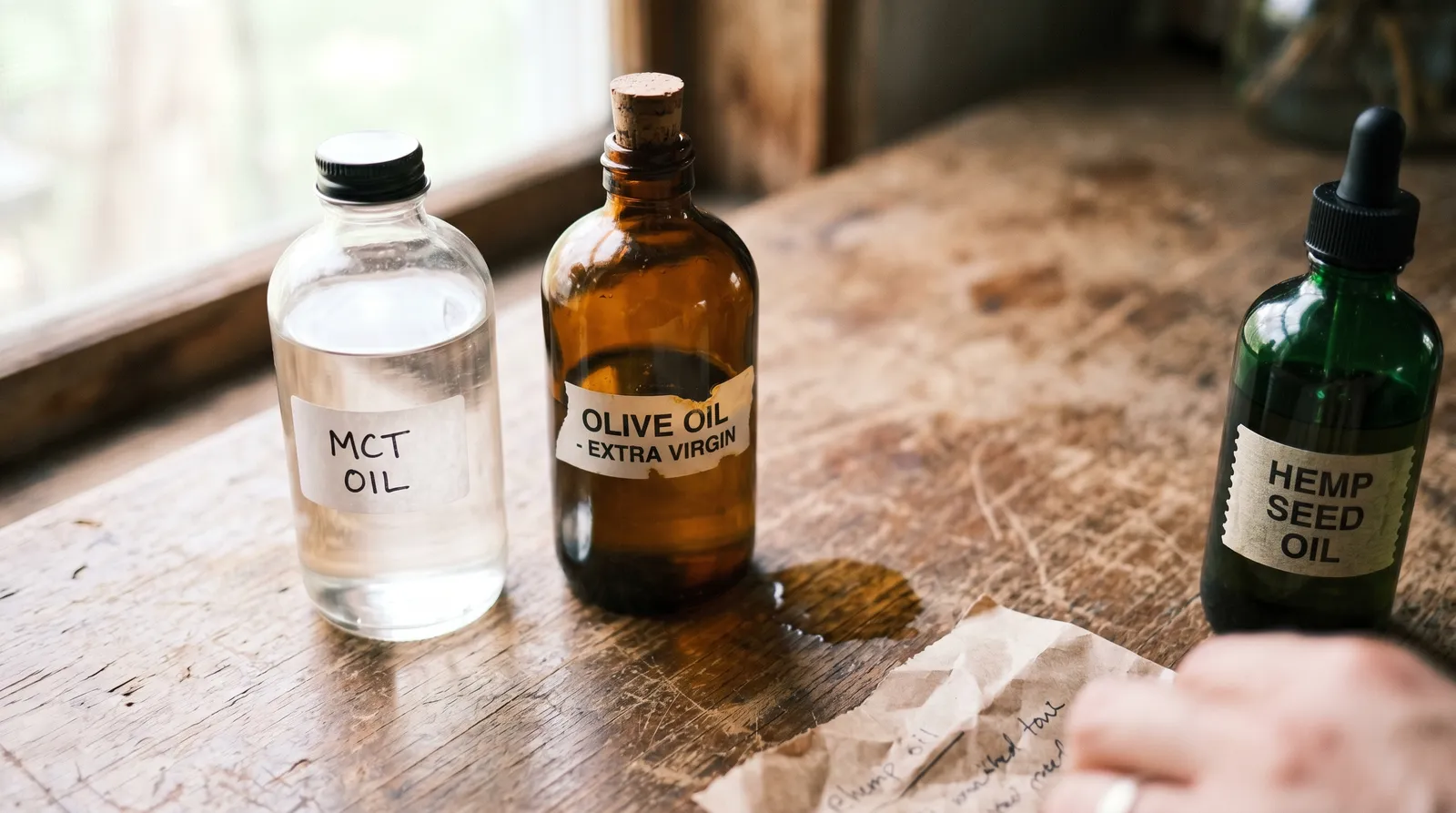
For CBD products specifically, oxidation of the carrier oil does not just affect taste — it can degrade the cannabinoid content over time. A rancid carrier oil means a less effective product. Store any CBD oil in a cool, dark place, cap it tightly after each use, and pay attention to the best-before date on the label.
Allergy and Sensitivity Considerations
Anyone with known allergies to coconut, hemp seed, or olive should verify the carrier oil on the product label before use. This section is consumer education, not medical advice.

MCT oil derived from coconut may concern people with coconut allergy, though highly refined MCT typically contains minimal protein (the allergenic component). Hemp seed oil may cross-react in individuals with sensitivities to other seeds. Olive oil allergies are rare but documented. If you have a known food allergy, check the carrier oil listed on the product label before your first dose.
Which Carrier Does Cibdol Use and Why
Cibdol's 2.0 formula uses cold-pressed hemp seed oil for the 5%, 10%, 15%, and 20% concentrations, and MCT (coconut-derived) for the 30% oil. The manufacturer-label dosing across all percentages is 3 drops twice daily — 250 drops per 10 ml bottle. The carrier oil choice does not change the drop count or the dosing instructions; it changes the absorption profile of each drop.
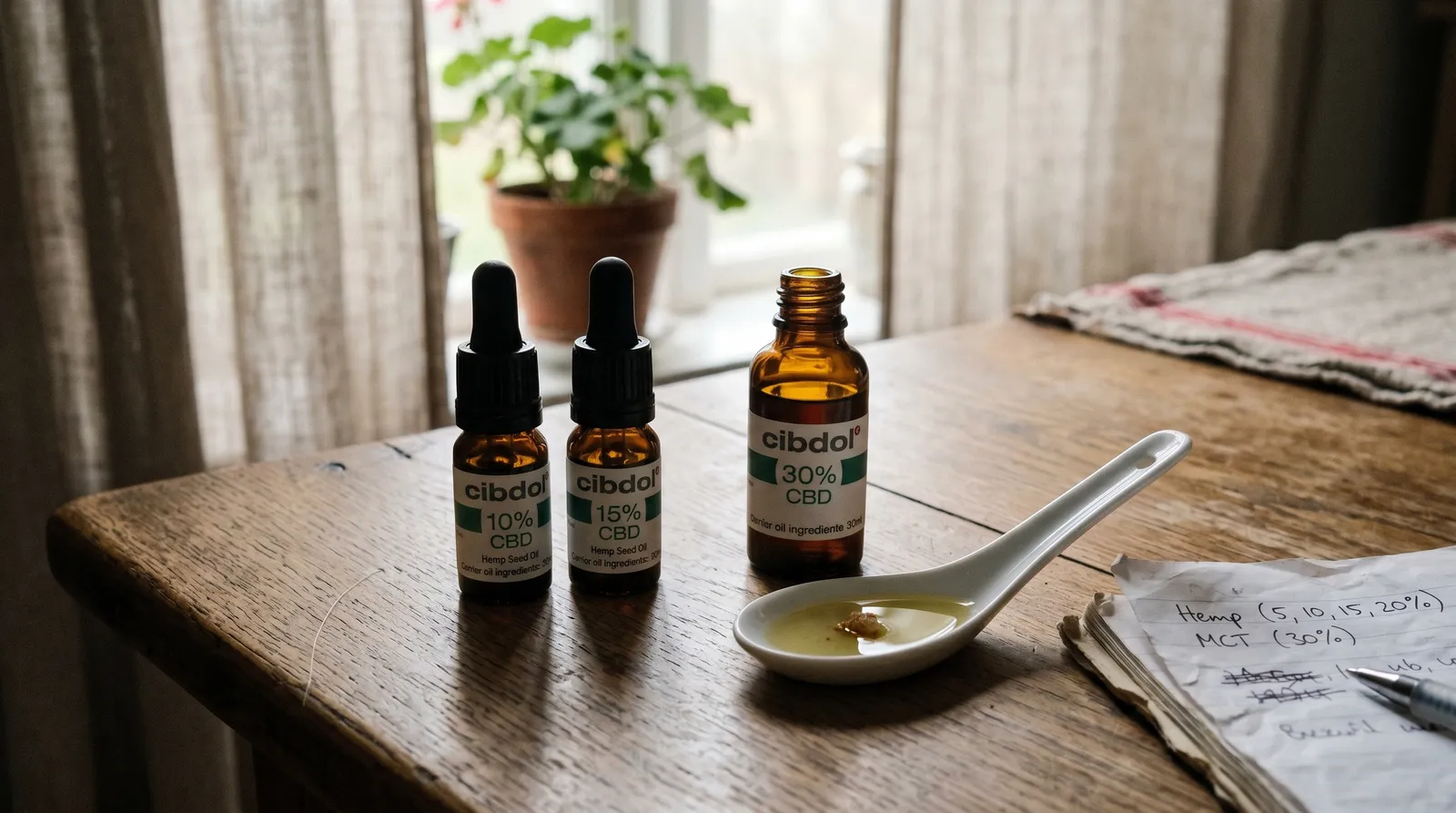
The formulation logic tracks with the science: at lower concentrations, where each drop contains fewer milligrams of CBD, the nutrient co-benefits and whole-plant coherence of hemp seed oil make sense. At 30%, where each drop delivers substantially more CBD, the faster absorption kinetics of MCT become a more relevant advantage. For a detailed breakdown of milligrams per drop across percentages, see the article on CBD oil percentages explained.
Practical Buying Checklist for MCT vs Olive vs Hemp Carrier Oils
Before you buy a CBD oil, checking the carrier is a 10-second step that tells you a lot about what to expect. Here is a quick decision framework based on what we have covered:
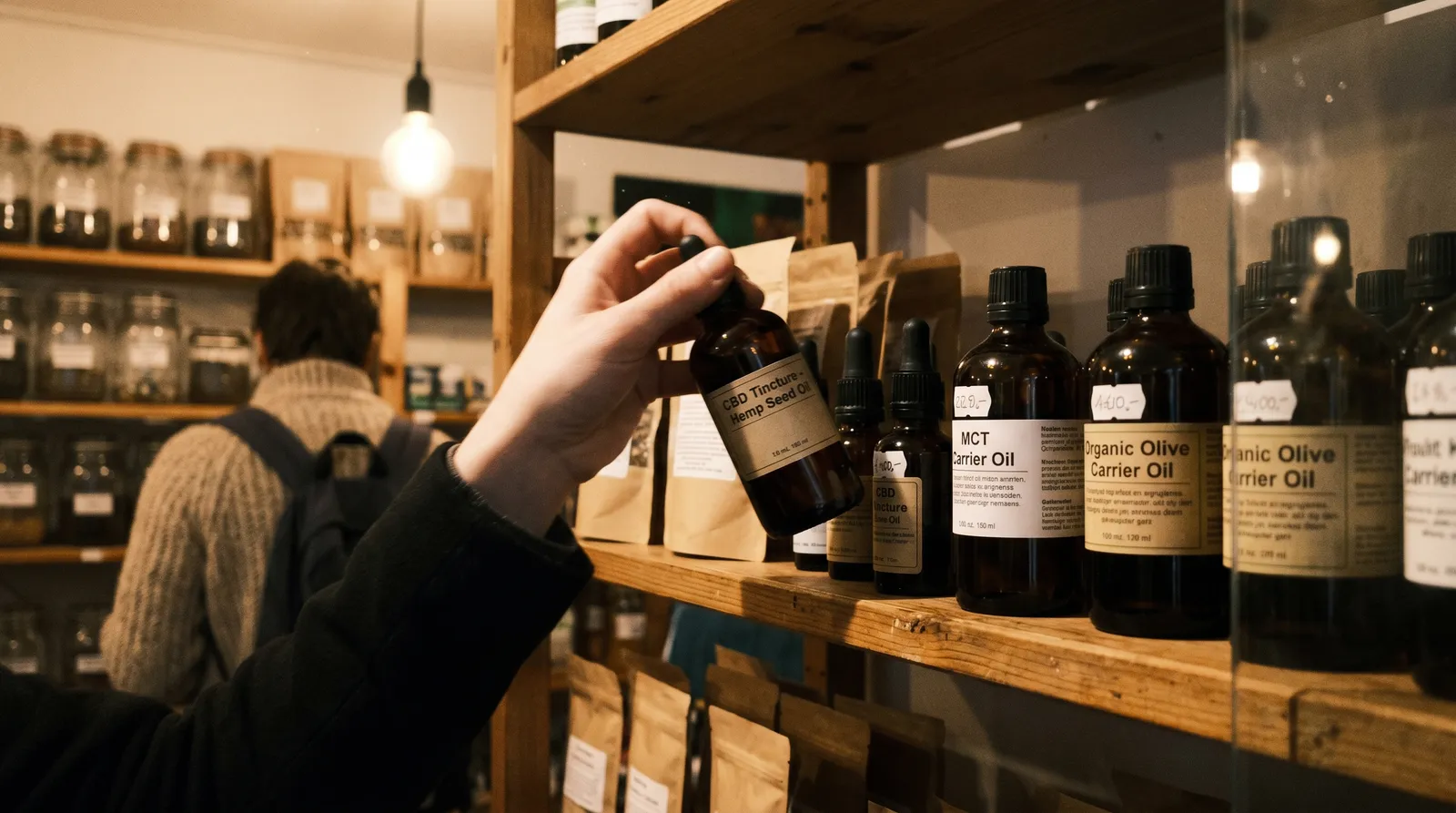
- If you want fastest absorption and neutral taste: look for MCT carrier. Cibdol CBD oil 30% uses MCT.
- If you want whole-plant coherence and essential fatty acids: look for hemp seed carrier. Cibdol CBD oil 5%, 10%, 15%, and 20% use cold-pressed hemp seed oil.
- If you prefer olive carrier: it works, but no olive-carrier CBD is currently stocked at Azarius. You may find it from other European brands.
- If you have a food allergy: always check the carrier oil on the product label before your first dose.
Get the carrier that matches your priorities — speed, taste, or nutrient profile — and store it properly. That is the practical takeaway from the entire MCT vs olive vs hemp carrier oils debate.
---This article has been reviewed for factual and editorial accuracy by Toine Verleijsdonk (Cibdol brand manager) and Joshua Askew (Editorial Director). It has NOT been reviewed by a licensed medical practitioner and does not constitute medical advice.
Important: This article is consumer education and is not medical advice. CBD products are food supplements, not medicines. Research on CBD is ongoing and evidence remains limited or mixed for many topics. Talk to your doctor before use if you are pregnant, breastfeeding, taking medication, scheduled for surgery, or living with a health condition. Keep CBD products out of reach of children and pets.
References
- Callaway, J. C. (2004). Hempseed as a nutritional resource: An overview. Euphytica, 140(1–2), 65–72. DOI: 10.1007/s10681-004-4811-6
- EMCDDA (2020). Low-THC cannabis products in Europe. European Monitoring Centre for Drugs and Drug Addiction, Technical Report.
- Jiang, T., Liao, W., & Charcosset, C. (2022). Recent advances in encapsulation of curcumin in nanoemulsions: A review of encapsulation technologies, bioaccessibility and applications. Pharmaceutics, 14(6), 1235. DOI: 10.3390/pharmaceutics14061235
- Millar, S. A., Stone, N. L., Yates, A. S., & O'Sullivan, S. E. (2018). A systematic review on the pharmacokinetics of cannabidiol in humans. Frontiers in Pharmacology, 9, 1365. DOI: 10.3389/fphar.2018.01365. PMID: 30534073
- Porter, C. J. H., Trevaskis, N. L., & Charman, W. N. (2007). Lipids and lipid-based formulations: optimizing the oral delivery of lipophilic drugs. Nature Reviews Drug Discovery, 6(3), 231–248. DOI: 10.1038/nrd2197. PMID: 17330072
- Zgair, A., Wong, J. C., Lee, J. B., Mistry, J., Sivak, O., Wasan, K. M., … & Gershkovich, P. (2016). Dietary fats and pharmaceutical lipid excipients increase systemic exposure to orally administered cannabis and cannabis-based medicines. American Journal of Translational Research, 8(8), 3448–3459. PMID: 27648135
Last updated: April 2026
Frequently Asked Questions
8 questionsDoes the carrier oil in CBD products affect how much CBD your body absorbs?
Why does Cibdol use hemp seed oil for lower percentages and MCT for higher ones?
Can you be allergic to the carrier oil in CBD products?
Does carrier oil affect the shelf life of CBD oil?
Is olive oil a good carrier for CBD?
What is the difference between MCT oil and coconut oil as a CBD carrier?
Why does MCT oil absorb faster than olive or hemp seed oil when used as a CBD carrier?
Does hemp seed oil as a CBD carrier add extra cannabinoids or CBD to the product?
About this article


Luke Sholl has been writing about cannabis, cannabinoids, and the broader benefits of nature since 2011, and has personally grown cannabis in home grow tents for more than a decade. That first-hand cultivation experience
This wiki article was drafted with AI assistance and reviewed by Luke Sholl, External contributor since 2026. Editorial oversight by Toine Verleijsdonk.
Medical disclaimer. This content is for informational purposes only and does not constitute medical advice. Consult a qualified healthcare provider before use of any substance.
Last reviewed April 25, 2026
Related Articles

Pinene Alpha and Beta: Aroma, Chemistry & Vaporisation Guide
Pinene is a bicyclic monoterpene occurring as two isomers — α-pinene and β-pinene — and ranks as the most abundant terpene in the plant kingdom.

CBD and Recovery: What the Research Actually Shows
CBD and recovery is a research topic spanning exercise-induced muscle damage, sleep quality, and perceived soreness. As McCartney et al.

CBD Pet Dosing Vet Consultation: Prepare for Your Visit
Veterinary CBD dosing is not a scaled-down version of human dosing — dogs and cats metabolise cannabidiol through different enzymatic pathways and at…

CBD for Cats Veterinary Considerations: Feline Research, Safety and Guidance
Cats metabolise cannabinoids differently from dogs and humans, lacking key glucuronidation enzymes that affect CBD clearance. Deabold et al.

EU Novel Food Regulation CBD: Country Status, EFSA Safety & Guide
EU novel food regulation CBD is a policy framework under EU rule 2015/2283 that classifies cannabidiol extracts as a novel food, requiring safety assessment…
CBD Topical Creams Medical Grade: CE-Marked Class I Explained
CBD topical creams deliver cannabidiol directly to the skin rather than the bloodstream.
Humulene Effects and Aroma Profile | Terpene Guide
Humulene (α-humulene) is a monocyclic sesquiterpene named after Humulus lupulus — hops.

Terpene Entourage Effect: Current Evidence Reviewed
The terpene entourage effect proposes that cannabis terpenes modulate cannabinoid activity, producing different outcomes than isolated compounds alone.

CBD and Skin Conditions: What Research Shows
Cannabidiol (CBD) interacts with the endocannabinoid system expressed in human skin — including CB1 and CB2 receptors on keratinocytes, sebocytes, and…