
This article discusses psychoactive substances intended for adults (18+). If you have a health condition or take medication, consult a doctor before use. Our age policy
CBD Gummies Buyer's Guide: Sleep, Relax, Energy, Vegan
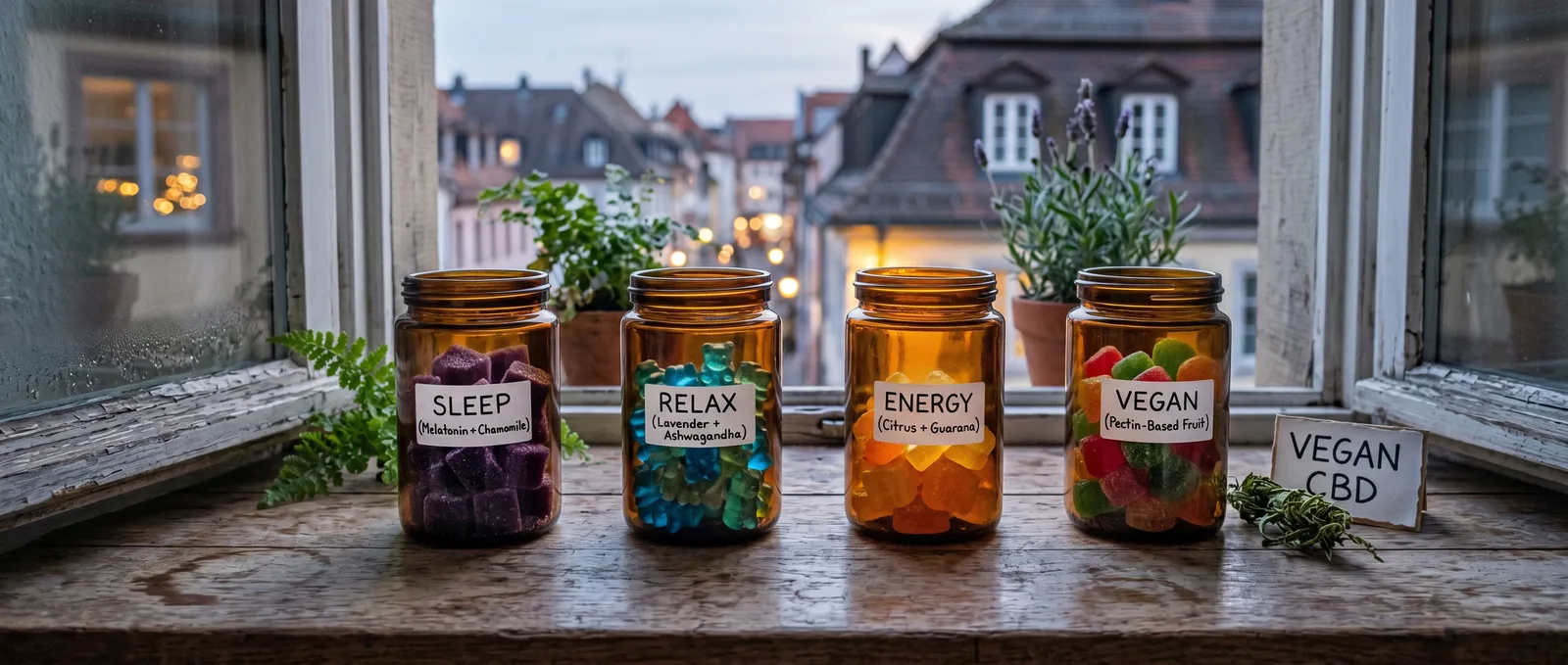
Definition
CBD gummies are oral edibles containing cannabidiol from Cannabis sativa L., pressed into chewable form with added ingredients that define distinct product tiers — sleep, relax, energy, and vegan-base. Oral bioavailability sits at roughly 6–19% (Millar et al., 2018), making ingredient transparency and label literacy critical when choosing between tiers.
What CBD Gummies Actually Are — And Why Tiers Exist
A CBD gummies buyers guide is a structured resource that helps you understand the growing range of cannabidiol edibles by breaking them into distinct product tiers — sleep, relax, energy, and vegan-base — so you can buy the right formulation instead of guessing. CBD gummies are chewable edibles containing cannabidiol (CBD) extracted from Cannabis sativa L., the same non-intoxicating phytocannabinoid found in oils and capsules, pressed into a gummy matrix with sweeteners, flavourings, and sometimes additional active ingredients. The format has exploded in the EU market partly because gummies solve two complaints about sublingual oils: taste and convenience. You chew, you swallow, you move on with your day.

But not all gummies are the same product wearing different labels. Manufacturers now split their ranges into tiers — typically sleep, relax, energy, and vegan-base — each built around a distinct supporting-ingredient profile. A sleep-tier gummy with melatonin and a B12-spiked energy-tier gummy are fundamentally different formulations that happen to share a shape. This cbd gummies buyers guide walks through the tiers step by step, explains what is actually in each one, and flags what to check on the label before you order.
Step 1: Understand the Tier System
The tier system groups CBD gummies by their added-ingredient profile and the time of day the manufacturer positions them for — it is not a formal classification but an industry shorthand that has become standard across most EU-facing brands. Here is the reference table — keep it open mentally as you read the rest of the guide.
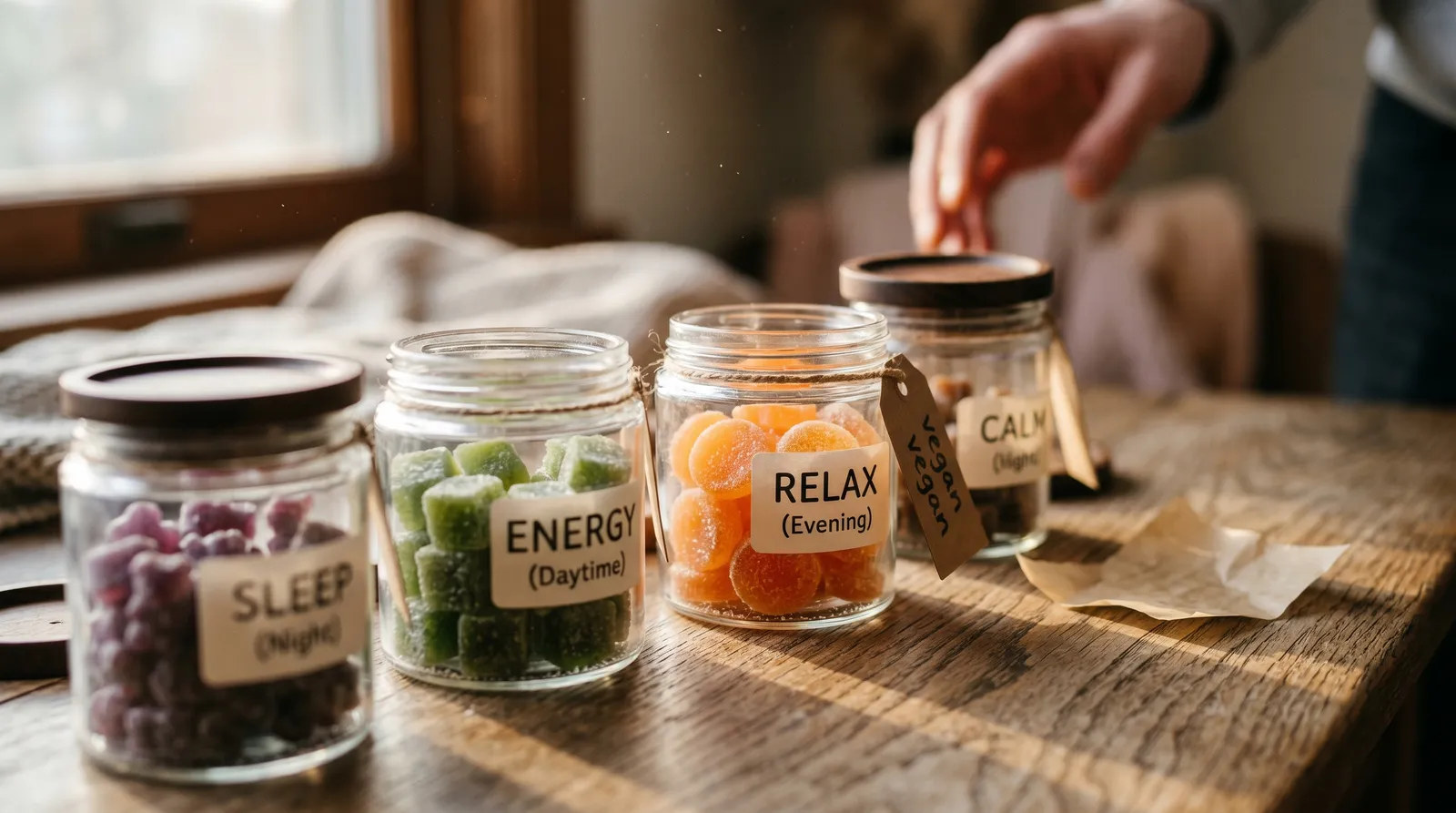
| Tier | Common added ingredients | Manufacturer-label dosage note | Drug-test relevance note |
|---|---|---|---|
| Sleep | Melatonin (typically 0.5–1 mg per gummy), chamomile extract, lemon balm, passionflower (Passiflora incarnata), sometimes cannabinol (CBN) | Usually 1–2 gummies before bedtime (follow the specific brand label) | Full-spectrum formulations contain trace THC (below 0.2% in EU products), which may register on a sensitive workplace screening test |
| Relax | Ashwagandha (Withania somnifera) root extract, L-theanine, magnesium, sometimes cannabigerol (CBG) | Usually 1–2 gummies per day (follow the specific brand label) | Same trace-THC note applies to full-spectrum versions; broad-spectrum and isolate formulations contain no detectable THC |
| Energy | Vitamin B12 (cyanocobalamin or methylcobalamin), vitamin B6, guarana extract, green tea extract (L-theanine + caffeine), sometimes coenzyme Q10 | Usually 1–2 gummies in the morning (follow the specific brand label) | Same trace-THC note for full-spectrum; isolate-based energy gummies typically carry no THC |
| Vegan-base | Pectin (fruit-derived gelling agent instead of gelatin), tapioca syrup, natural fruit flavourings, sometimes added vitamin C or zinc | Varies — vegan-base is a formulation choice, not a functional tier; dosage follows whichever functional tier the gummy belongs to | Same as whichever spectrum type (full, broad, isolate) the product uses |
The vegan-base row deserves a quick note. "Vegan" describes the gelling agent and coating — pectin instead of pork or beef gelatin — not a separate functional category. A vegan gummy can be sleep-tier, relax-tier, or energy-tier. When you see "vegan CBD gummies" on a label, check which functional tier it actually belongs to, because the added ingredients matter more than the gelling agent for understanding what you are taking.
Step 2: Read the Added-Ingredient List, Not Just the CBD Content
The added ingredients — not the CBD milligram count — define which tier a gummy belongs to and determine what else you are putting into your body. Most shoppers look at the milligrams of CBD per gummy first. That number matters, but the added ingredients carry their own considerations that any thorough cbd gummies buyers guide should flag.
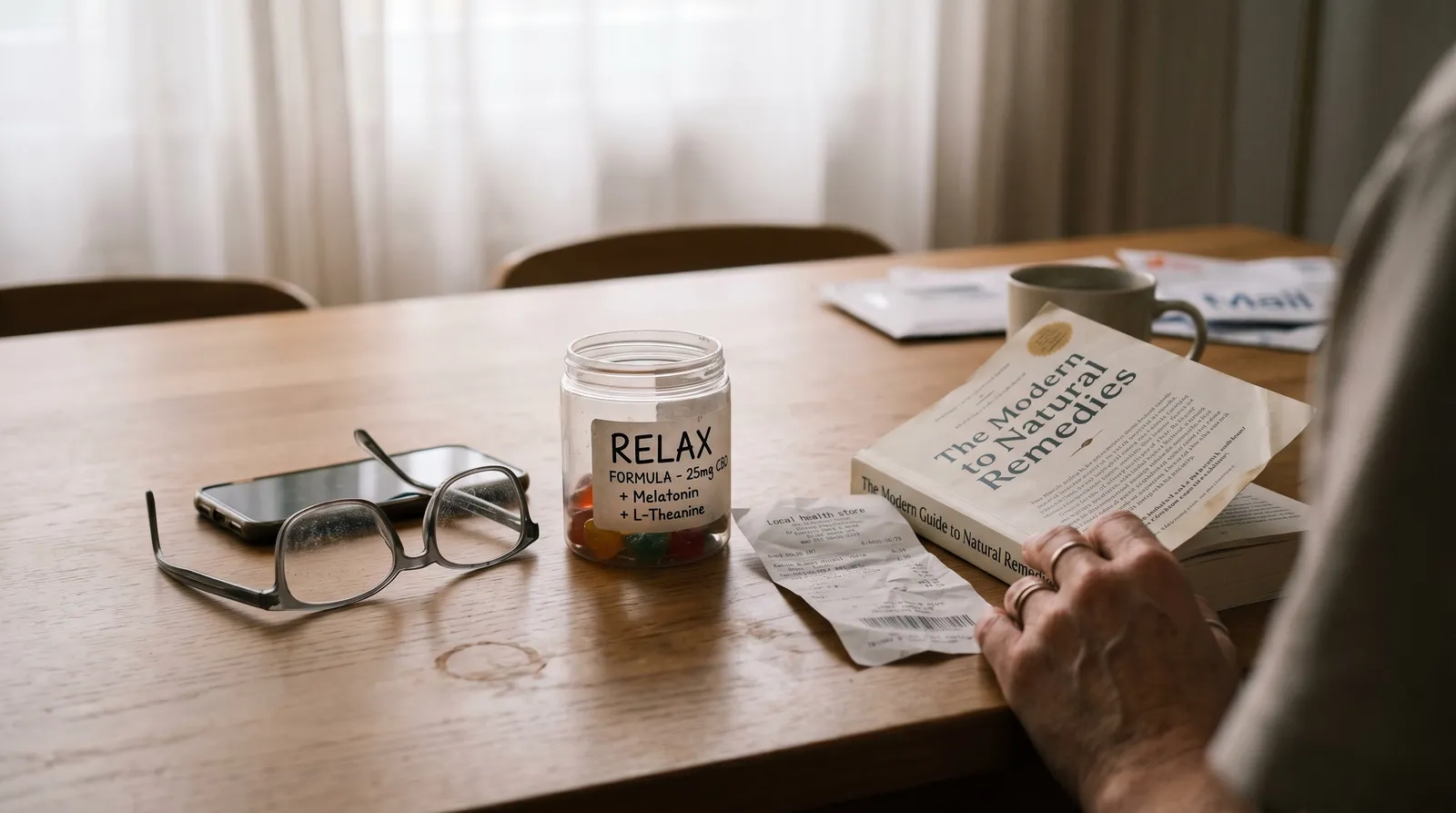
Melatonin in sleep-tier gummies
Melatonin is a hormone your body produces naturally to regulate circadian rhythm. In the EU, supplemental melatonin is permitted in food supplements at doses that vary by member state. A 2013 EFSA opinion authorised the health claim that melatonin "contributes to the reduction of time taken to fall asleep" at a dose of 1 mg taken shortly before bedtime (EFSA Journal, 2011;9(6):2241). That is one of the few authorised health claims relevant to gummy ingredients — and it applies to the melatonin, not the CBD.
The practical point: if a sleep-tier gummy contains 1 mg melatonin and 25 mg CBD, the melatonin is doing specific, EFSA-recognised work on sleep onset. The CBD is present as a food-supplement ingredient with ongoing but still limited research around sleep parameters. A 2019 case series (Shannon et al., Perm J, 23:18-041; PMID 30624194) observed changes in sleep scores in 72 adults given 25 mg CBD capsules, though the authors noted the results were not sustained uniformly across the study period — hardly a slam-dunk, but it is the most-cited consumer-relevant data point in this space.
Ashwagandha and L-theanine in relax-tier gummies
Ashwagandha root extract (Withania somnifera) is classified as a traditional herbal ingredient in the EU, not an authorised novel food in all member states — status varies by country. L-theanine is an amino acid found naturally in tea (Camellia sinensis) and is permitted as a food ingredient. Neither has an authorised EFSA health claim for relaxation, so any functional framing on the label must stay within traditional-use language.
B-vitamins and guarana in energy-tier gummies
Vitamin B6 and B12 do carry authorised EFSA health claims — specifically, "contributes to the reduction of tiredness and fatigue" (Commission Implementing Decision (EU) No 432/2012). Guarana (Paullinia cupana) contains caffeine, typically 40–80 mg per gram of extract. If you are sensitive to caffeine or take it from other sources (coffee, tea, pre-workout), check the guarana dose on the label to avoid stacking more caffeine than you intended.
Step 3: Check the Spectrum Type
Every CBD gummy uses one of three extract types, and the choice affects both the cannabinoid profile and the trace-THC question. For a full breakdown, see the article on full-spectrum, broad-spectrum, and CBD isolate — here is the short version relevant to gummy shopping:
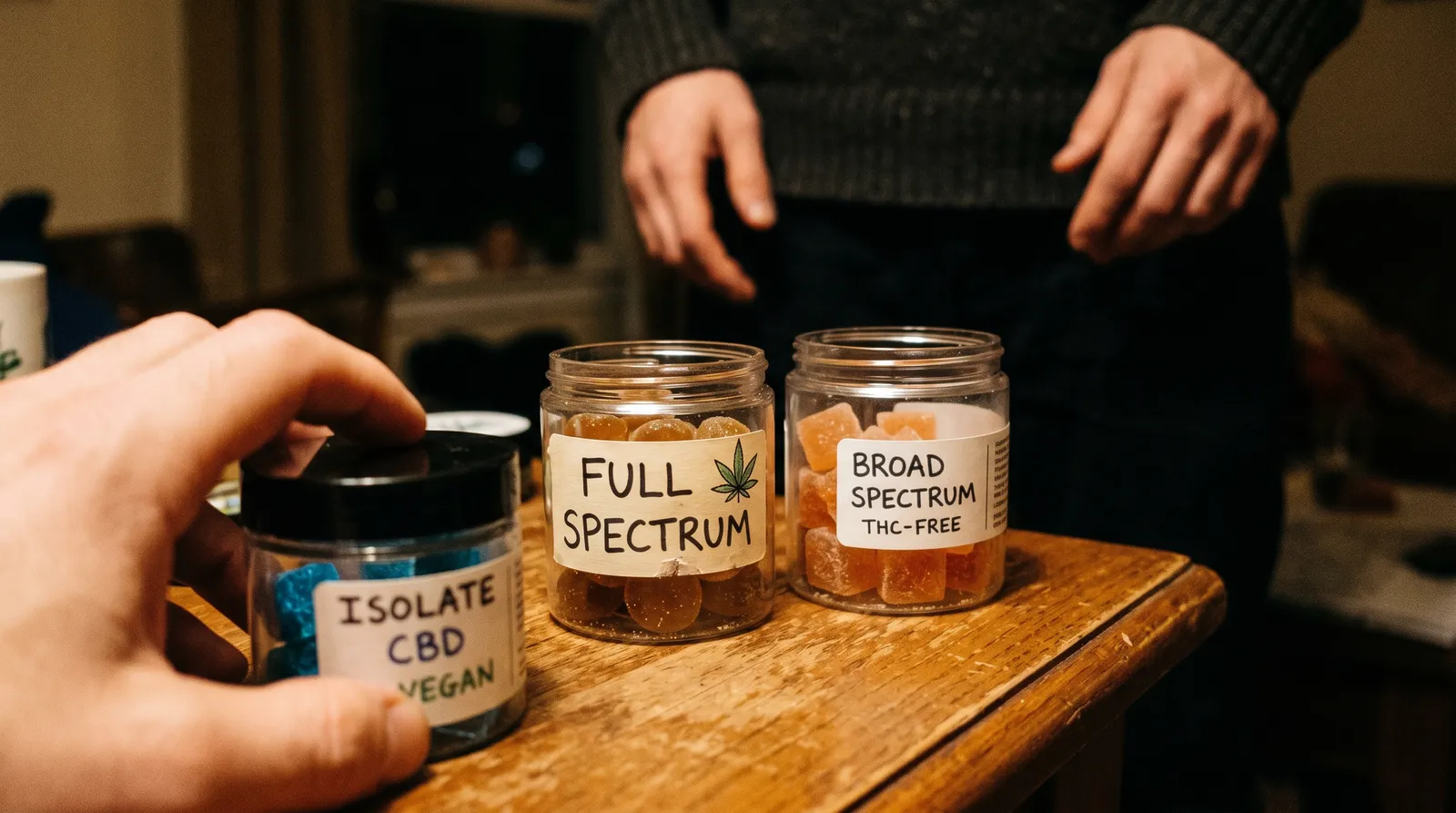
- Full-spectrum extract retains the plant's original range of cannabinoids, terpenes, and flavonoids, including trace tetrahydrocannabinol (THC) at or below the EU threshold of 0.2%. That trace amount is not intoxicating, but it may register on a sensitive workplace drug screening.
- Broad-spectrum extract goes through additional processing to remove detectable THC while retaining other cannabinoids and terpenes.
- CBD isolate is purified cannabidiol — typically 99%+ CBD, with no other cannabinoids or terpenes present. Isolate-based gummies carry the lowest risk of any THC exposure.
A 2020 review of CBD product labelling accuracy (Bonn-Miller et al., JAMA, 2017;318(24):2708-2709; and the follow-up by Lachenmeier et al., Cannabis Cannabinoid Res, 2020;5(2):172-178; PMID 32656350) found that a meaningful percentage of tested products contained more THC than labelled. The practical takeaway: buy from brands that publish batch-specific certificates of analysis (COAs) with third-party lab verification. The article on reading CBD labels and COAs covers what to look for in detail.
Step 4: Understand Bioavailability of Edibles
Oral bioavailability of CBD in gummy form sits at roughly 6–19%, meaning most of the cannabidiol you swallow is metabolised before reaching systemic circulation. When you swallow a gummy, the CBD passes through your digestive tract and liver before reaching the bloodstream — a process called first-pass metabolism (Millar et al., Front Pharmacol, 2018;9:1365; PMID 30534073). That is substantially lower than inhaled CBD (estimated 11–45% in the same review) but comparable to capsules and softgels.
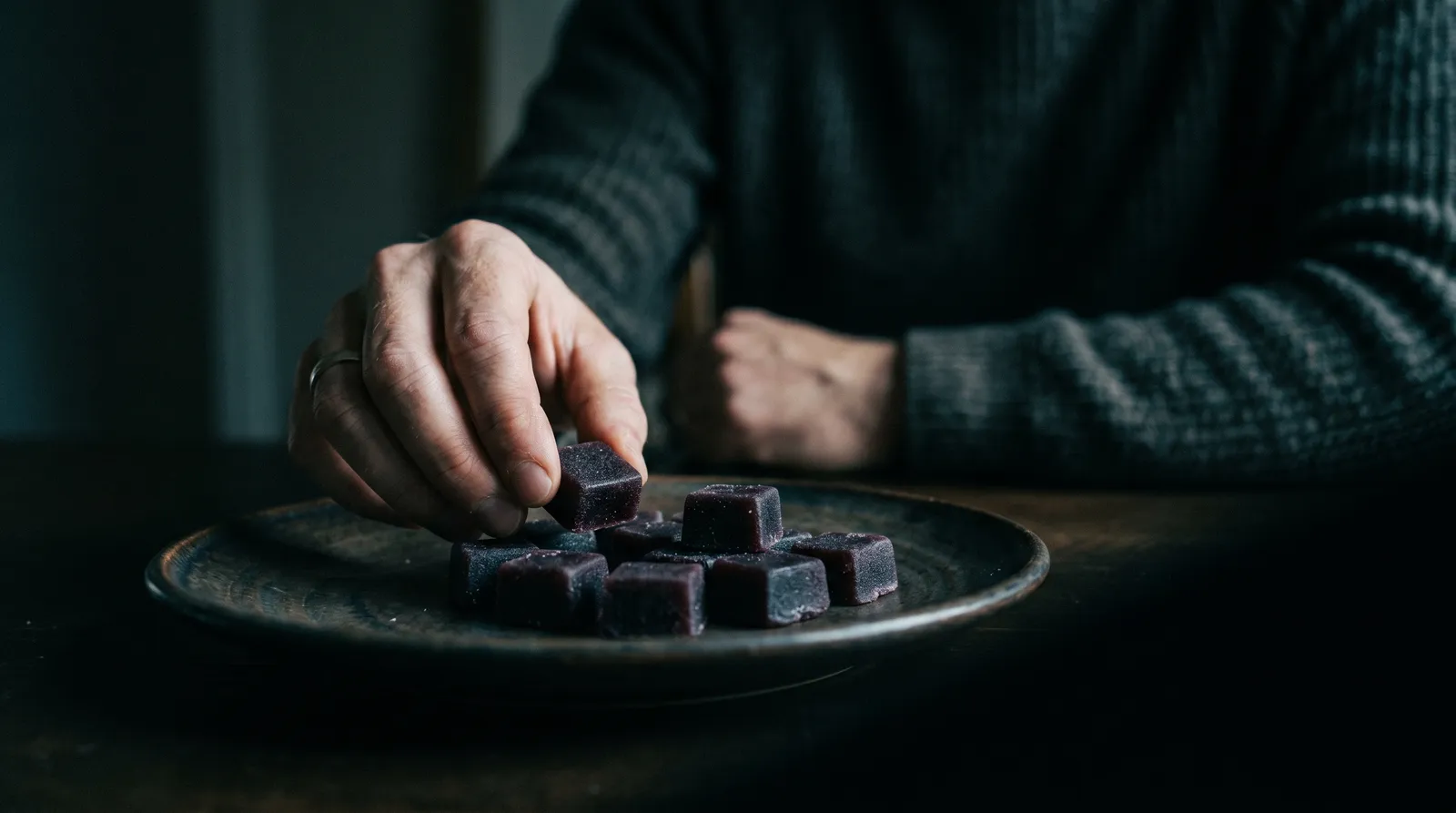
What does that mean in practice? If a gummy contains 25 mg of CBD, your body may absorb somewhere between 1.5 mg and 4.75 mg into systemic circulation. The rest is metabolised before it gets there. This is not a flaw of gummies specifically — it is how oral cannabinoid delivery works. Taking edibles with a meal containing fat may improve absorption; a 2019 University of Minnesota study (Birnbaum et al., Epilepsia, 2019;60(8):1586-1592; PMID 31247132) found that high-fat meals increased CBD plasma concentrations roughly four- to five-fold compared to fasting, though that study used pharmaceutical-grade CBD at doses far above typical consumer-product levels.
Onset is also slower than sublingual oils. Expect 45–90 minutes before you notice anything from a gummy, versus 15–30 minutes for a sublingual oil held under the tongue. Duration tends to be longer — roughly 4–6 hours for oral CBD, based on the pharmacokinetic data in the Millar et al. review. For a detailed comparison across all routes, see the article on CBD bioavailability by format.
Step 5: Check the Gelling Agent — Gelatin vs Pectin
The gelling agent determines whether a CBD gummy suits your dietary requirements — gelatin is animal-derived, pectin is plant-derived, and neither affects CBD absorption. Traditional gummies use gelatin, a protein derived from animal collagen, usually porcine or bovine. Vegan gummies replace gelatin with pectin, a polysaccharide extracted from fruit (typically citrus peel or apple pomace). Some brands use agar-agar (seaweed-derived) or modified starch instead.
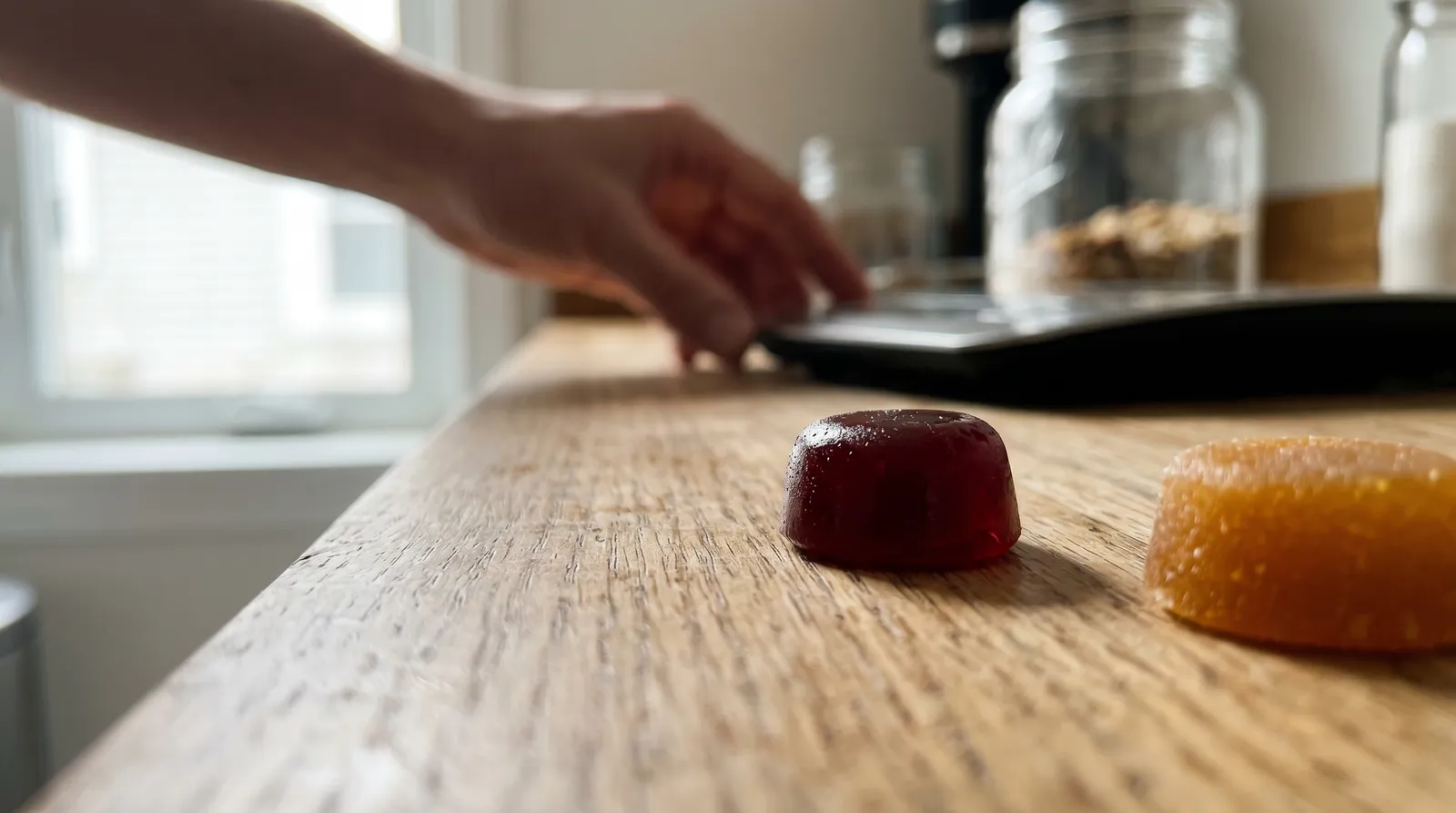
The gelling agent affects texture. Gelatin gummies tend to be chewier and more elastic; pectin gummies are softer and slightly less bouncy, with a texture closer to fruit pastilles. Neither gelling agent affects CBD absorption in any documented way — the difference is dietary preference and mouthfeel.
If you follow a vegan, halal, or kosher diet, pectin-based gummies are the straightforward choice. Just confirm the rest of the ingredient list too: some "vegan" gummies use beeswax as a coating agent, which is not vegan. Carnauba wax (from the Copernicia prunifera palm) is the plant-based alternative.
Step 6: Verify the Label Dosing
Every gummy product should state the CBD content per gummy (not just per packet) and the manufacturer's recommended serving size — this is the single most important line on the packaging. Common ranges on the EU market sit between 10 mg and 50 mg of CBD per gummy, with 1–2 gummies per serving as the typical manufacturer recommendation.
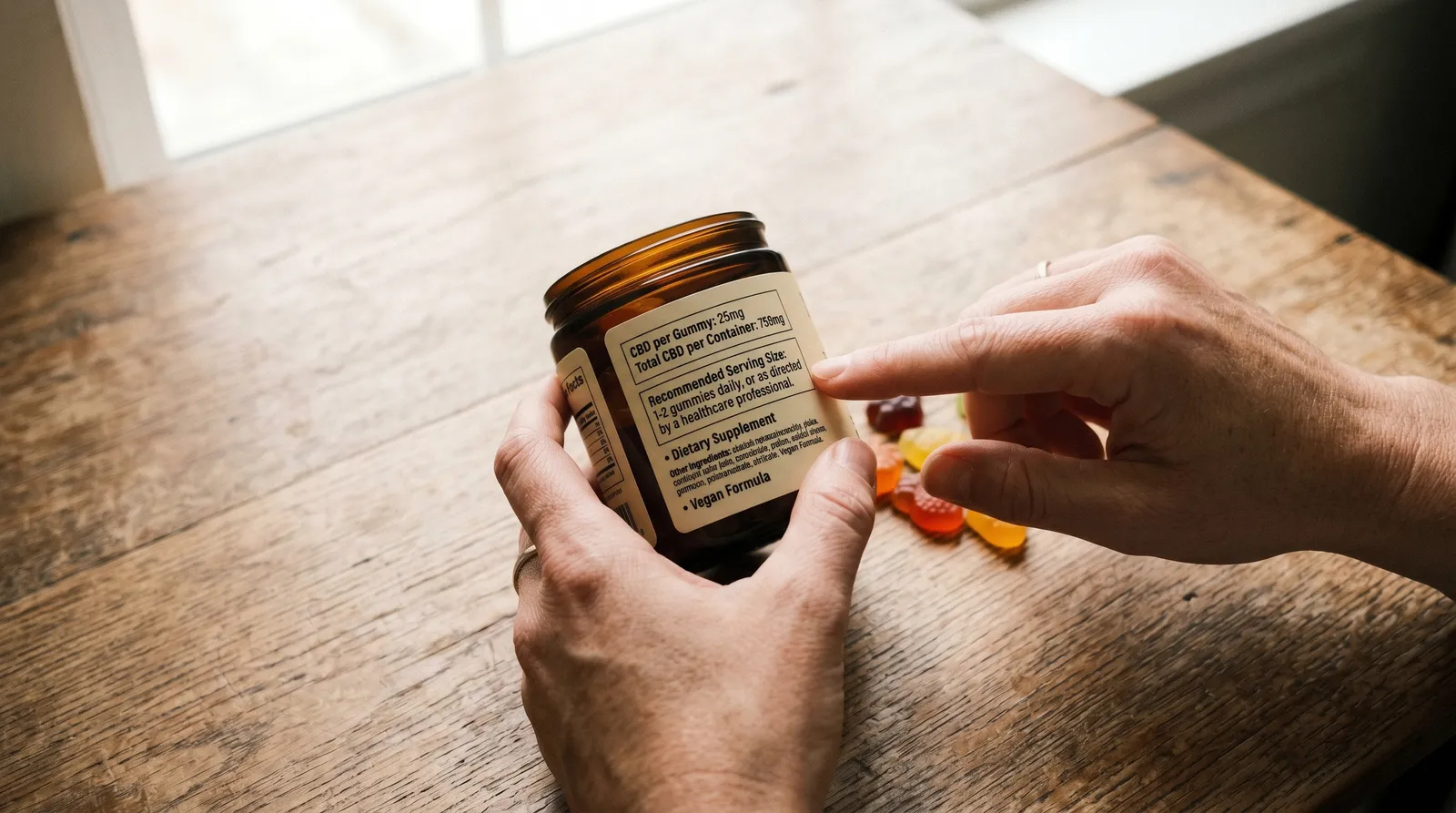
Stick to the label. The dosage-starting guide for manufacturer recommendations covers the reasoning in full, but the short version is: manufacturer-label dosing is the only dosing framework this wiki endorses. There is no universally agreed "optimal" CBD dose in the peer-reviewed literature — clinical trials have used everything from 15 mg to 1,500 mg daily depending on the research question, and consumer products are not clinical trials.
For Cibdol oil products (not gummies, but for reference), the manufacturer-label dose is 3 drops twice daily across all percentages in the 2.0 formula range. Gummy dosing is product-specific — always read the label of the specific gummy you have in hand.
Step 7: Storage and Shelf Life
CBD gummies should be stored at room temperature (15–25 °C), away from direct sunlight, in the original sealed packaging — heat fuses them together, cold makes them brittle. Most CBD gummies carry a shelf life of 12–18 months from manufacture — check the best-before date.
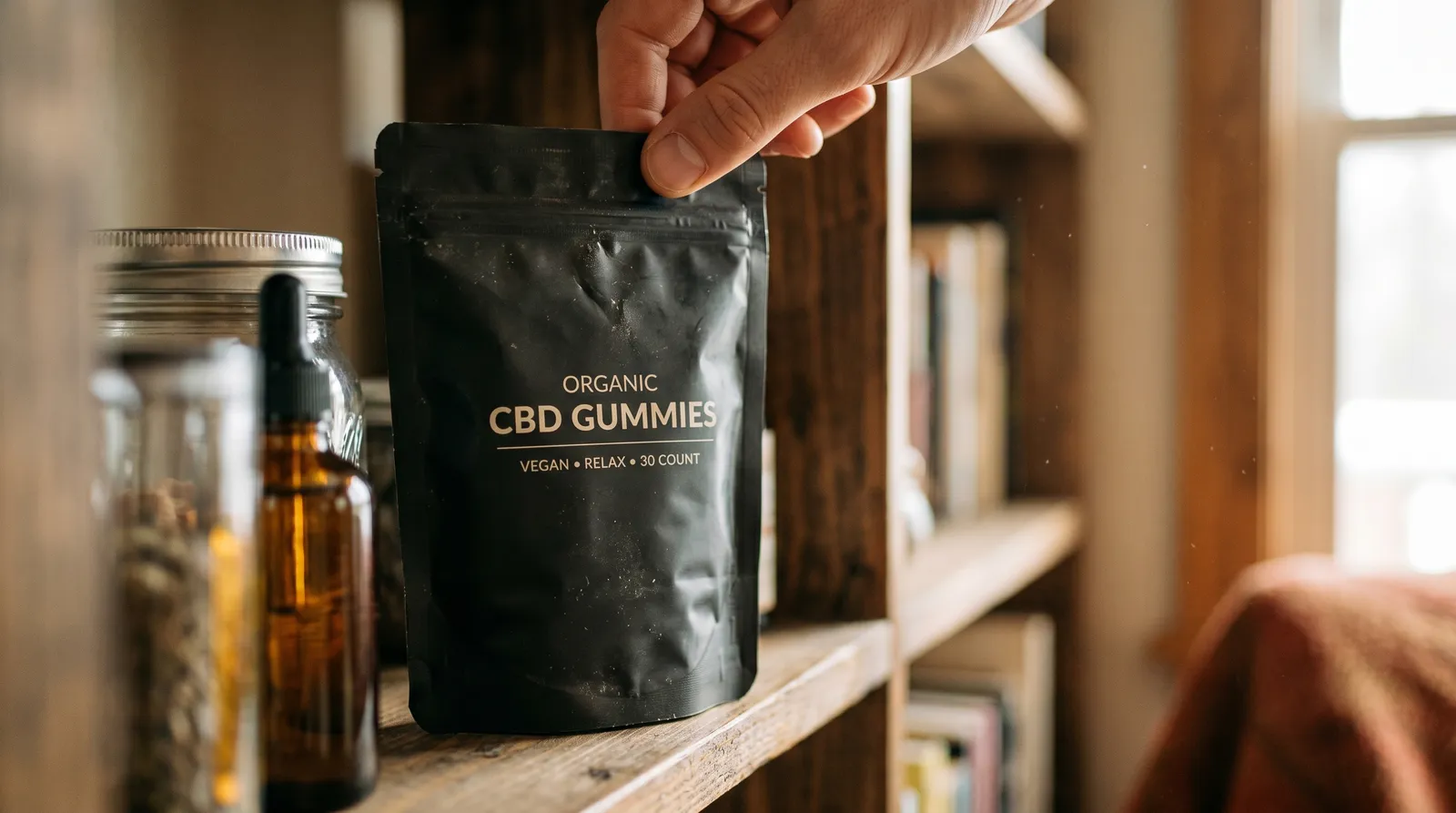
CBD itself degrades slowly under UV light and heat, converting partially to cannabinol (CBN) over time. A 2021 stability study (Mazzetti et al., Molecules, 2021;26(21):6555; PMID 34770973) found measurable CBD degradation in hemp extracts stored at 40 °C over 90 days, though room-temperature samples remained relatively stable. The practical rule: do not leave your gummies on a sunny windowsill or in a hot car.
Step 8: What to Look for on the COA
A certificate of analysis (COA) from a third-party laboratory is the single most useful document for verifying what is actually in a gummy. The article on reading CBD labels and COAs goes deep on this, but for gummy shopping specifically, check three things:
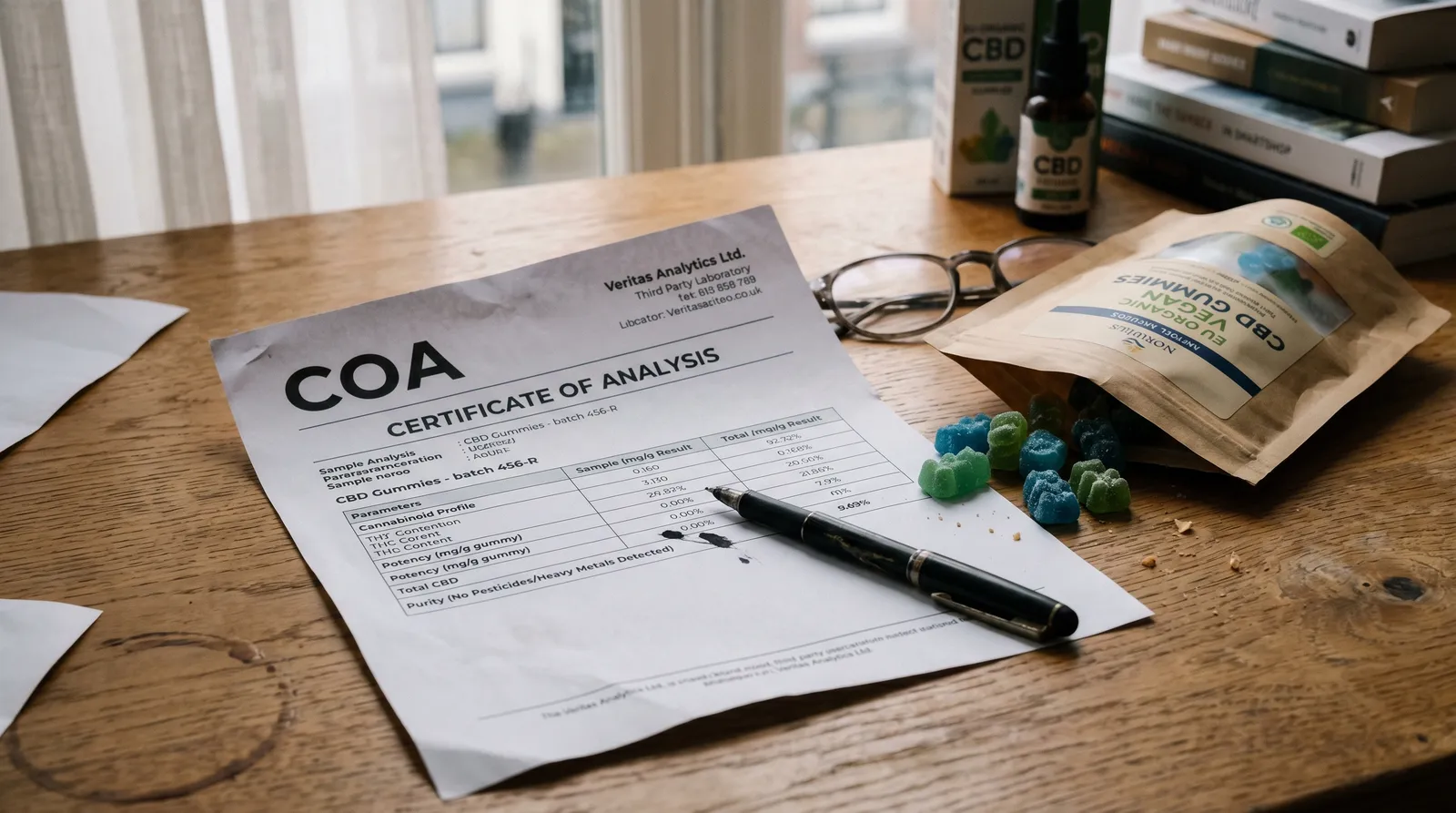
- Cannabinoid content — does the tested CBD per gummy match the label claim within a reasonable tolerance (±10% is standard lab variance)?
- THC content — is it below the permitted threshold for your jurisdiction? For most EU member states, the threshold is 0.2% THC in the finished product.
- Contaminant panel — heavy metals, pesticides, residual solvents, microbial load. Any reputable manufacturer tests for these. If the COA only shows cannabinoid content and nothing else, that is a red flag.
How CBD Gummies Compare to Other CBD Formats
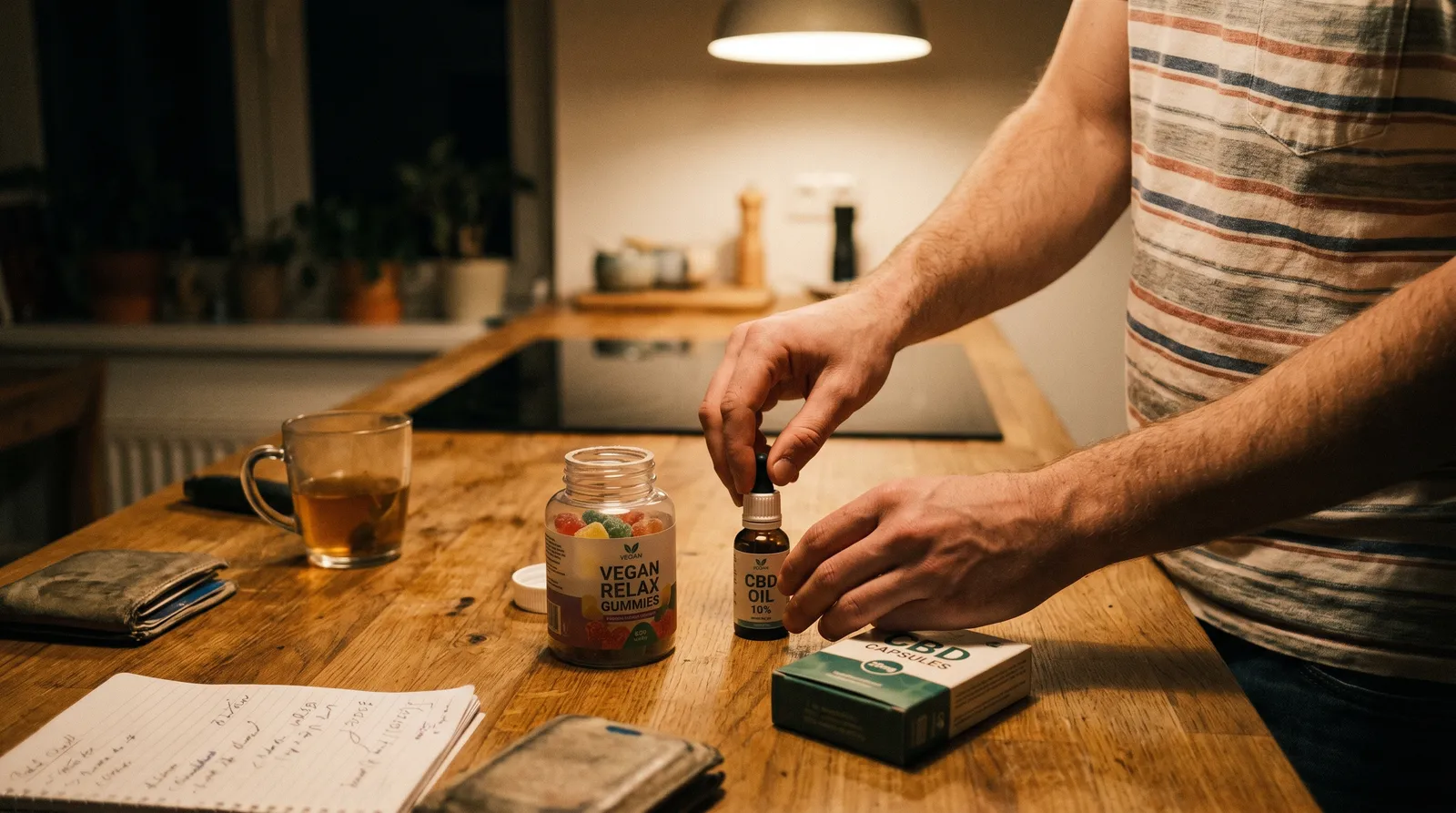
CBD gummies are not the only oral CBD option, and understanding where they sit relative to oils, capsules, and beverages helps you decide whether the gummy format is actually the right choice for you — or whether you are paying a convenience premium for something another format does better.
| Format | Typical onset | Estimated bioavailability | Key advantage | Key limitation |
|---|---|---|---|---|
| CBD gummies | 45–90 min | 6–19% | Taste, pre-measured dose, portability | Slow onset, lower absorption |
| Sublingual oil | 15–30 min | 13–35% (sublingual route) | Faster onset, flexible dosing | Taste complaints, requires holding under tongue |
| Capsules / softgels | 45–90 min | 6–19% | No taste, precise dose | Same slow onset as gummies, no flavour appeal |
| CBD beverages | 30–60 min | Variable (nano-emulsion dependent) | Hydration, social format | Lower CBD per serving, bulky packaging |
The honest limitation: gummies sacrifice onset speed and bioavailability for taste and convenience. If you need faster effects, sublingual oil is the better tool. If you value pre-measured dosing and do not mind waiting an hour, gummies are a solid choice. Neither format is objectively superior — it depends on what you prioritise. The article on CBD bioavailability by format covers the pharmacokinetic detail behind these numbers.
EU Market Context for CBD Edibles
The European CBD edibles market operates under the EU Novel Food framework, which requires pre-market authorisation for CBD extracts used as food ingredients. As of early 2026, the European Food Safety Authority (EFSA) has not completed its novel food assessment for CBD, meaning the market exists in a transitional state where member states apply varying enforcement approaches. The EMCDDA (now the EUDA — European Union Drugs Agency) monitors cannabinoid products across member states and publishes periodic market snapshots that track product types, cannabinoid concentrations, and consumer trends. Their 2023 report noted that edibles — including gummies — represent a growing share of the CBD product market in western Europe, though oils remain the dominant format by revenue.
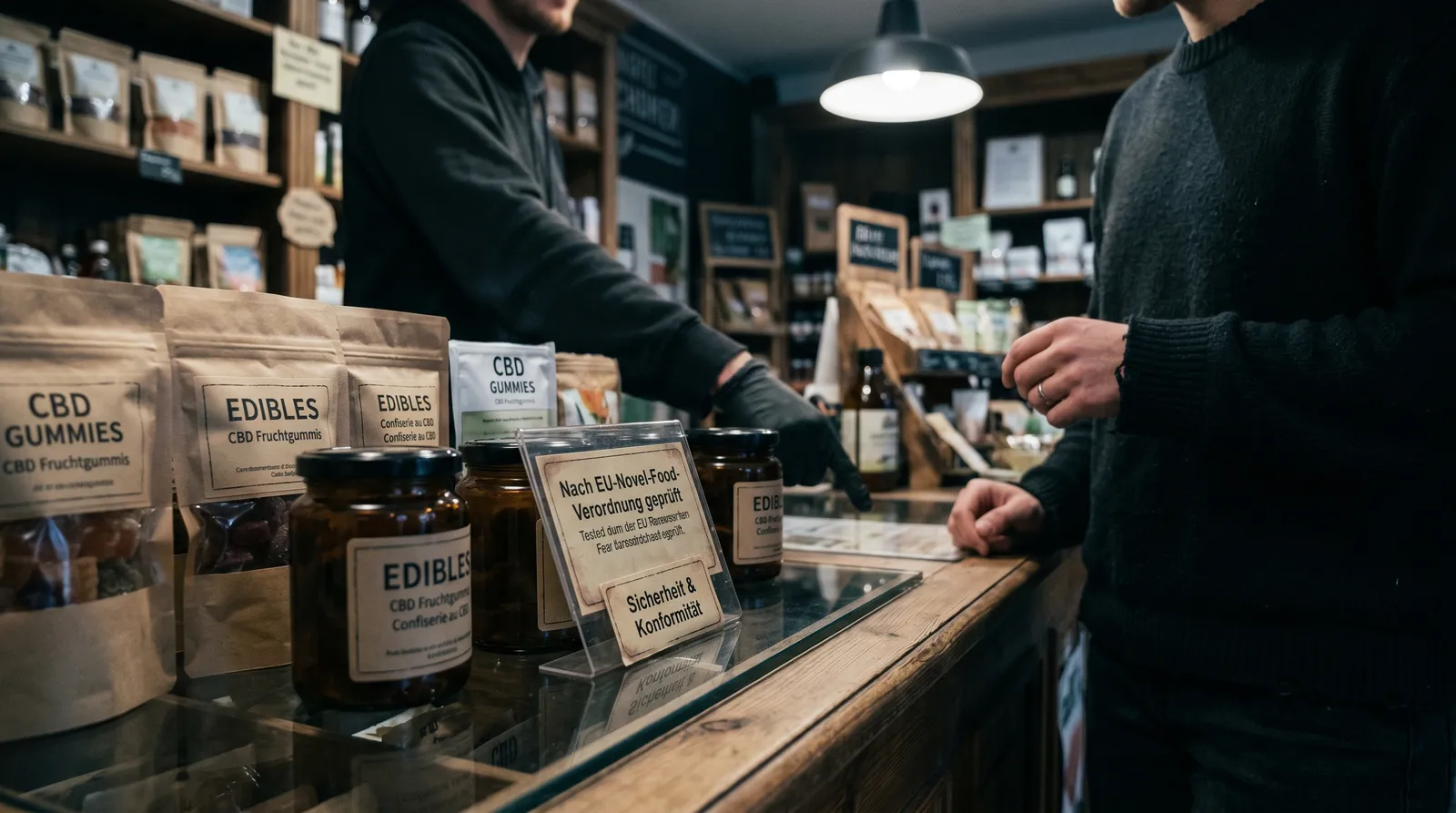
For shoppers, this transitional status means product availability and labelling standards can differ between countries. A gummy you can get in the Netherlands may carry different labelling requirements than the same product sold in Germany or France. Checking the COA and the ingredient panel remains your best protection regardless of where you buy.
Safety Notes for Gummy Formats
This article describes CBD gummy product tiers. It is consumer education and is not medical advice. CBD products are food supplements, not medicines. Sleep-positioned gummies may contain additional ingredients such as melatonin; check the label and do not drive or operate machinery after a sedating dose. Keep CBD edibles out of reach of children and pets — they look like candy.
CBD inhibits the cytochrome P450 enzymes CYP3A4 and CYP2C19, which means it can interact with medications metabolised by the same pathway. The practical shortcut: if your medication carries a "do not take with grapefruit" warning, the same caution applies to CBD. Specifically flagged in the literature are warfarin, clobazam, valproate, certain SSRIs, and certain statins. Talk to your doctor before combining CBD with any prescription medication — the dosage-starting guide and the dedicated interactions article cover this in more detail.
Allergy note: gummies may contain tree nuts, soy lecithin, coconut-derived MCT, or fruit-derived pectin. If you have known food allergies, read the full ingredient list and allergen declaration on the packaging.
---Important: This article is consumer education and is not medical advice. CBD products are food supplements, not medicines. Research on CBD is ongoing and evidence remains limited or mixed for many topics. Talk to your doctor before use if you are pregnant, breastfeeding, taking medication, scheduled for surgery, or living with a health condition. Keep CBD products out of reach of children and pets.
This article has been reviewed for factual and editorial accuracy by Toine Verleijsdonk (Cibdol brand manager) and Joshua Askew (Editorial Director). It has NOT been reviewed by a licensed medical practitioner and does not constitute medical advice.
References
- Shannon, S. et al. (2019). Cannabidiol in Anxiety and Sleep: A Large Case Series. Perm J, 23:18-041. PMID: 30624194.
- Millar, S.A. et al. (2018). A Systematic Review on the Pharmacokinetics of Cannabidiol in Humans. Front Pharmacol, 9:1365. DOI: 10.3389/fphar.2018.01365. PMID: 30534073.
- Birnbaum, A.K. et al. (2019). Food effect on pharmacokinetics of cannabidiol oral capsules in adult patients with refractory epilepsy. Epilepsia, 60(8):1586-1592. PMID: 31247132.
- Lachenmeier, D.W. et al. (2020). Are side effects of cannabidiol (CBD) products caused by tetrahydrocannabinol (THC) contamination? F1000Research, 8:1394. Related labelling analysis: Bonn-Miller, M.O. et al. (2017). Labeling Accuracy of Cannabidiol Extracts Sold Online. JAMA, 318(24):2708-2709. PMID: 32656350 / 29114823.
- Mazzetti, C. et al. (2021). Stability Study of Cannabinoids in Hemp Extracts. Molecules, 26(21):6555. PMID: 34770973.
- EFSA Panel on Dietetic Products, Nutrition and Allergies (2011). Scientific Opinion on the substantiation of a health claim related to melatonin and reduction of sleep onset latency. EFSA Journal, 9(6):2241.
- Commission Implementing Decision (EU) No 432/2012 establishing a list of permitted health claims made on foods.
- EMCDDA / EUDA (2023). European Drug Report: Cannabis and cannabinoid market monitoring. European Union Drugs Agency.
Last updated: April 2026
Frequently Asked Questions
8 questionsDo CBD gummies work faster if you chew them longer?
Can you take a sleep-tier CBD gummy during the day?
What is the difference between pectin and gelatin in CBD gummies?
Why do some CBD gummies contain both CBD and CBN?
How do I know if a CBD gummy is full-spectrum or isolate?
Should I take CBD gummies with food?
Can full-spectrum CBD gummies cause a positive drug test?
What is the difference between a sleep-tier and a relax-tier CBD gummy?
About this article


Luke Sholl has been writing about cannabis, cannabinoids, and the broader benefits of nature since 2011, and has personally grown cannabis in home grow tents for more than a decade. That first-hand cultivation experience
This wiki article was drafted with AI assistance and reviewed by Luke Sholl, External contributor since 2026. Editorial oversight by Toine Verleijsdonk.
Medical disclaimer. This content is for informational purposes only and does not constitute medical advice. Consult a qualified healthcare provider before use of any substance.
Last reviewed April 25, 2026
Related Articles

Pinene Alpha and Beta: Aroma, Chemistry & Vaporisation Guide
Pinene is a bicyclic monoterpene occurring as two isomers — α-pinene and β-pinene — and ranks as the most abundant terpene in the plant kingdom.

CBD and Recovery: What the Research Actually Shows
CBD and recovery is a research topic spanning exercise-induced muscle damage, sleep quality, and perceived soreness. As McCartney et al.

CBD Pet Dosing Vet Consultation: Prepare for Your Visit
Veterinary CBD dosing is not a scaled-down version of human dosing — dogs and cats metabolise cannabidiol through different enzymatic pathways and at…

CBD for Cats Veterinary Considerations: Feline Research, Safety and Guidance
Cats metabolise cannabinoids differently from dogs and humans, lacking key glucuronidation enzymes that affect CBD clearance. Deabold et al.

EU Novel Food Regulation CBD: Country Status, EFSA Safety & Guide
EU novel food regulation CBD is a policy framework under EU rule 2015/2283 that classifies cannabidiol extracts as a novel food, requiring safety assessment…
CBD Topical Creams Medical Grade: CE-Marked Class I Explained
CBD topical creams deliver cannabidiol directly to the skin rather than the bloodstream.
Humulene Effects and Aroma Profile | Terpene Guide
Humulene (α-humulene) is a monocyclic sesquiterpene named after Humulus lupulus — hops.

Terpene Entourage Effect: Current Evidence Reviewed
The terpene entourage effect proposes that cannabis terpenes modulate cannabinoid activity, producing different outcomes than isolated compounds alone.
CBD and Skin Conditions: What Research Shows
Cannabidiol (CBD) interacts with the endocannabinoid system expressed in human skin — including CB1 and CB2 receptors on keratinocytes, sebocytes, and…