
This article discusses psychoactive substances intended for adults (18+). If you have a health condition or take medication, consult a doctor before use. Our age policy
CBD Clinical Trials Overview 2024 — Evidence Map
Definition
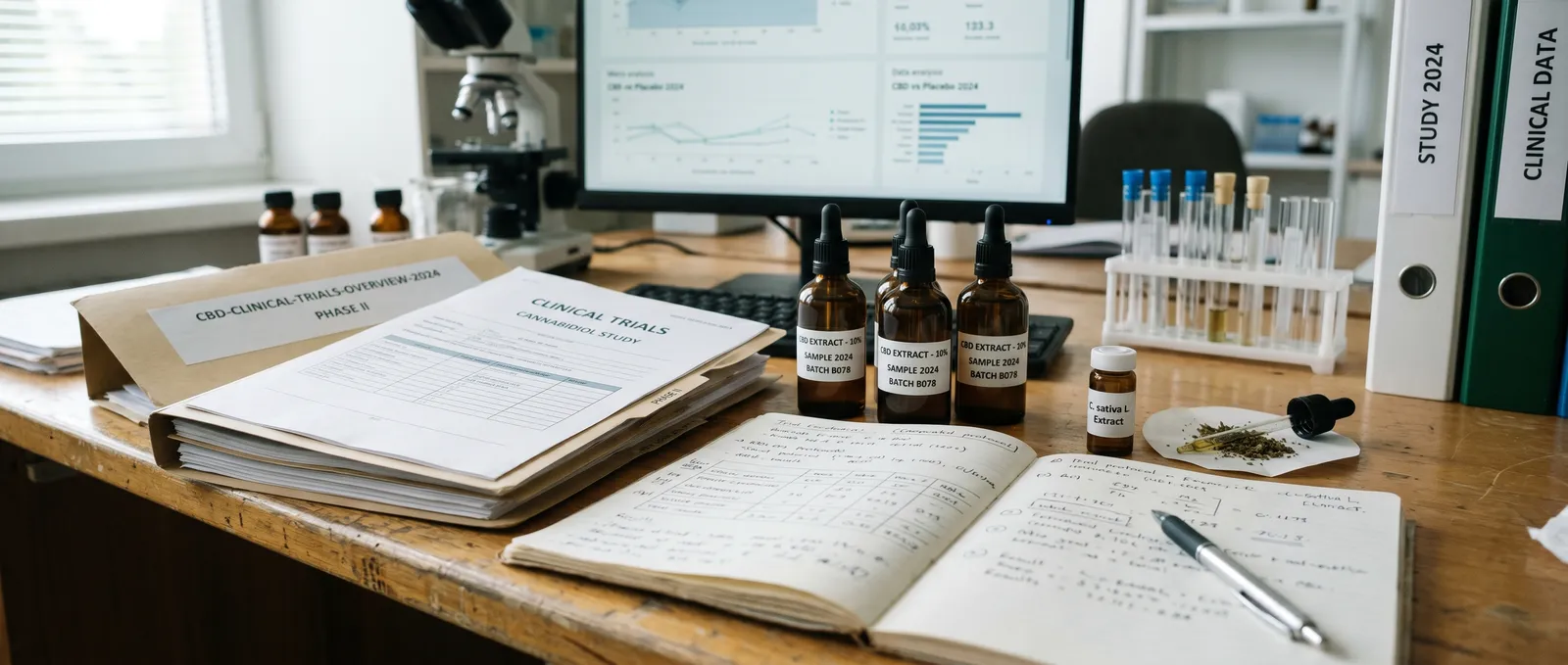
Over 360 interventional CBD trials were registered on ClinicalTrials.gov by 2023, yet the vast majority remain Phase I or Phase II with small sample sizes (Larsen & Shahinas, 2020). This reference article maps the clinical evidence by research area, explains what the trial data actually shows, and flags the critical gap between clinical dosing and consumer-product dosing.
The State of CBD Clinical Research
Cannabidiol (CBD) — the non-intoxicating phytocannabinoid from Cannabis sativa L. — has attracted a surge of clinical interest over the past decade. For adults reading headlines about new trials, though, separating genuine evidence from marketing noise is genuinely difficult. This overview maps the clinical-trial field as it stood heading into 2024: what has been tested, how strong the evidence actually is, and where the gaps remain. It is written for readers, not patients, and covers research design rather than treatment advice.

A word on scale: a 2023 search of ClinicalTrials.gov returned over 360 registered interventional studies listing cannabidiol as the primary intervention (Larsen & Shahinas, 2020; updated registry count, 2023). That sounds impressive until you realise the majority are Phase I or Phase II — small, early-stage, and designed to test safety or find a dose range, not to confirm whether CBD works for a given condition. The number of large, completed Phase III trials you can count without running out of fingers.
Primary Data Table — CBD Trial Areas by Evidence Level
The table below groups the main research areas by the level of clinical evidence available up to early 2024. "Level" here is shorthand: Phase III with regulatory outcome sits at the top; single open-label pilots sit at the bottom. This is not a ranking of importance — it is a snapshot of where the science has actually reached.

| Research area | Highest trial phase completed (by early 2024) | Number of published RCTs (approx.) | Key citation | Evidence status |
|---|---|---|---|---|
| Paediatric epilepsy (Dravet, Lennox-Gastaut, TSC) | Phase III — regulatory approval achieved (purified pharmaceutical CBD) | 4 key RCTs | Devinsky et al., NEJM, 2017 (PMID: 28538134) | Strongest evidence base; led to a regulated pharmaceutical product |
| Social anxiety disorder | Phase II | 5–8 RCTs (varied designs) | Bergamaschi et al., 2011 (PMID: 21307846); Masataka, 2019 (DOI: 10.3389/fpsyg.2019.02466) | Consistent signals in acute-dosing models; long-term data limited |
| Generalised anxiety | Phase II | 3–5 RCTs | Berger et al., 2022 — systematic review (DOI: 10.1016/j.jad.2022.09.089) | Mixed results; dose–response unclear |
| Chronic pain (various types) | Phase II (most incomplete or small-n) | ~6 RCTs | Vela et al., 2022 — Cochrane protocol registered; Xu et al., 2020 (PMID: 31711352) | Preliminary; most trials used CBD alongside THC, making isolation of CBD effect difficult |
| Sleep disturbance | Phase II (small-n) | 3–4 RCTs | Suraev et al., 2020 (DOI: 10.1016/j.smrv.2020.101339) | Limited; some trials report secondary sleep outcomes rather than primary endpoints |
| Substance-use disorders (opioid, cannabis, tobacco) | Phase II | 4–6 RCTs | Freeman et al., 2020 — Lancet Psychiatry (PMID: 32735782); Hurd et al., 2019 (PMID: 31109198) | Promising signals for cue-induced craving reduction; replication needed |
| Schizophrenia-spectrum | Phase II | 2–3 RCTs | McGuire et al., 2018 (PMID: 29241357) | Single positive RCT (n=88); awaiting replication |
| Inflammatory conditions (IBD, arthritis) | Phase I/II (very small-n) | 1–2 RCTs | Naftali et al., 2021 (PMID: 33085631) | Mostly preclinical; human data extremely limited |
| Neuroprotection (Parkinson's, Alzheimer's) | Phase I/II (pilot) | 1–2 small pilots | Chagas et al., 2014 (PMID: 25237116) | Almost entirely preclinical; pilot human data only |
Reading the table: "Phase III — regulatory approval" does not mean consumer CBD products share that approval. The regulated pharmaceutical product used purified CBD at doses of 5–20 mg/kg/day under medical supervision — a completely different context from a 10 mg softgel bought as a food supplement. That distinction matters more than almost anything else in this article.
What Counts as Strong Evidence?
Clinical evidence sits on a hierarchy. At the bottom: case reports and preclinical (animal or cell) studies. In the middle: small randomised controlled trials (RCTs) — these test a hypothesis in humans but with limited sample sizes, often 20–80 participants. At the top: large, multi-site Phase III RCTs, ideally replicated, ideally followed by systematic reviews or meta-analyses that pool results across trials.

For CBD, only one therapeutic area has reached the top of that hierarchy: treatment-resistant paediatric epilepsy. The key trials by Devinsky et al. (2017, PMID: 28538134) and Thiele et al. (2018, PMID: 29395273) enrolled hundreds of patients, used a purified pharmaceutical formulation at high doses, and produced statistically significant seizure-frequency reductions. Those trials led to regulatory authorisation of a prescription medicine — a fact that is sometimes misrepresented as "CBD is approved," full stop. It is not. A specific purified pharmaceutical CBD formulation is authorised for specific epilepsy syndromes under medical supervision. Consumer CBD oils, capsules, and gummies are food supplements and have not undergone that approval process.
Everything else in the table above sits at Phase II or below. That does not mean the research is worthless — Phase II trials generate real data. It means the evidence has not yet reached the standard required for confident clinical conclusions.
Anxiety Research — The Most-Studied Consumer-Relevant Area
Anxiety is where CBD research and consumer interest overlap most visibly. The early simulated-public-speaking trial by Bergamaschi et al. (2011, PMID: 21307846) — 24 participants with social anxiety disorder, single 600 mg oral dose versus placebo — found that the CBD group reported significantly less discomfort during the speech task. That study has been cited thousands of times, and for good reason: it was well-designed for its size. The problem is that "well-designed for its size" still means 24 people, one dose, one afternoon.
Since then, several small RCTs have tested CBD for various anxiety presentations. A systematic review by Berger et al. (2022, DOI: 10.1016/j.jad.2022.09.089) pooled available data and concluded that while acute anxiolytic effects appear consistent across studies, the optimal dose, duration of treatment, and long-term safety profile remain unclear. Doses in published anxiety trials have ranged from 150 mg to 900 mg in single-dose designs — a six-fold range that tells you researchers themselves have not settled on what dose to test, let alone what dose might be relevant for consumers taking 10–40 mg daily from a food supplement.
A 2023 Australian RCT (Kayser et al., J Clin Psychopharmacol, 2023) tested 150 mg/day over 12 weeks for generalised anxiety — one of the few longer-duration trials. Results were modest and did not reach statistical significance on the primary outcome measure, though secondary measures showed some signal. That is a common pattern in this field: encouraging but not definitive.
Pain and Inflammation — Mostly Preclinical
The gap between preclinical promise and clinical evidence is widest in pain research. CBD shows anti-inflammatory and analgesic activity in rodent models — that has been demonstrated repeatedly (Hammell et al., 2016, PMID: 26517407, for transdermal application in a rat arthritis model). Translating rodent findings to human pain conditions is notoriously unreliable across all of pharmacology, not just cannabinoids.
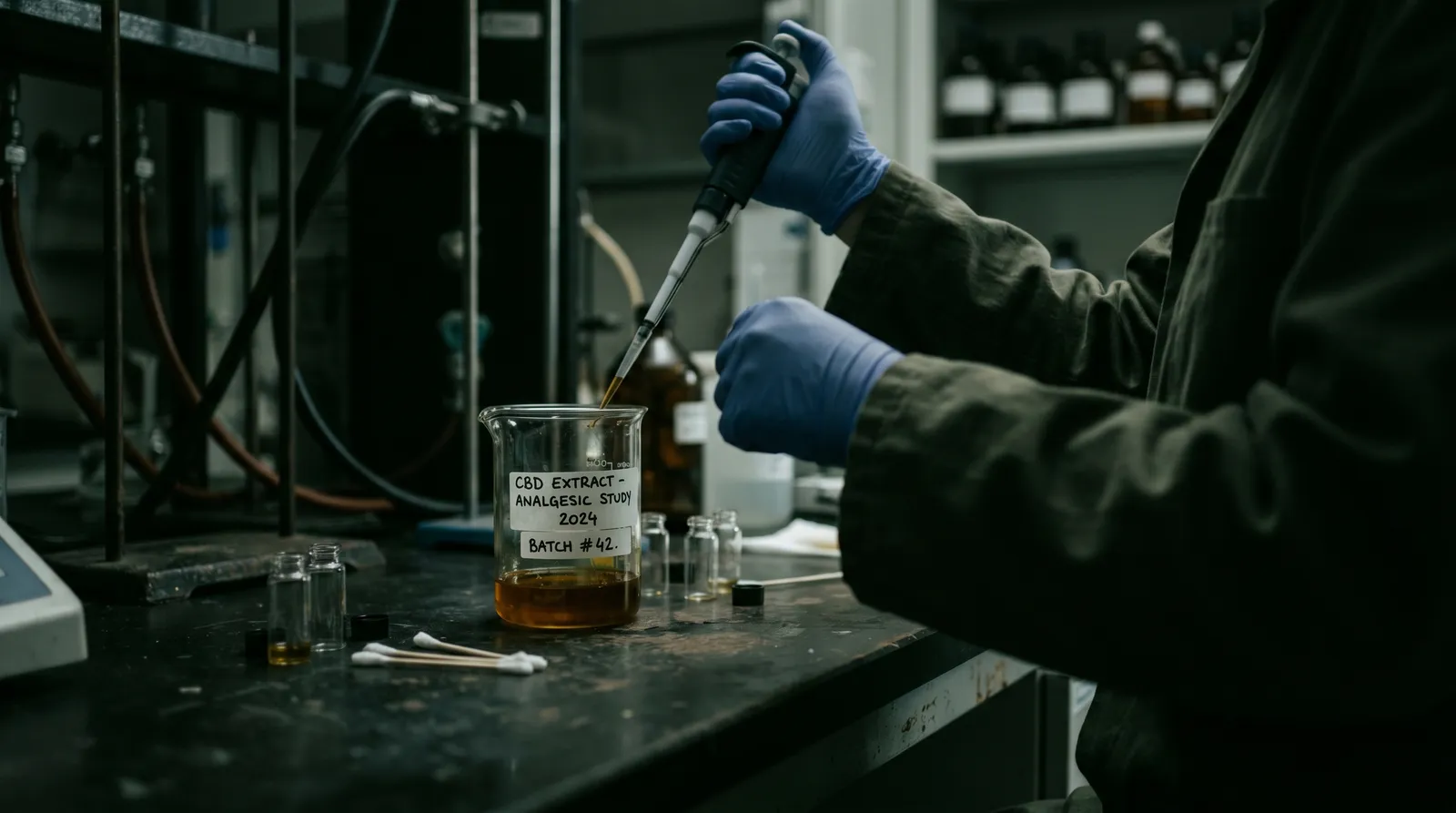
Human RCTs specifically isolating CBD (not CBD-plus-THC combinations) for pain are scarce. A systematic review by Xu et al. (2020, PMID: 31711352) noted that most published pain trials used whole-plant cannabis extracts containing both THC and CBD, making it impossible to attribute effects to CBD alone. The Cochrane Collaboration had a protocol registered (Vela et al., 2022) for a systematic review of CBD for chronic pain, but as of early 2024 the completed review had not been published — a reflection of how thin the eligible-trial base is.
Transdermal CBD gel has been tested in Phase II for knee osteoarthritis (Hunters et al., 2021 — conference abstract data), with results described as mixed. Oral CBD for fibromyalgia has been explored in observational cohort designs but not in large RCTs.
Sleep — Secondary Outcomes, Not Primary Endpoints
Sleep is the other area of intense consumer interest. A narrative review by Suraev et al. (2020, DOI: 10.1016/j.smrv.2020.101339) examined the existing human evidence and concluded that most sleep-related findings come from trials designed to study something else — anxiety, PTSD, chronic pain — where sleep quality was measured as a secondary outcome. Dedicated sleep RCTs with CBD as the primary intervention and polysomnography (objective sleep measurement) as the primary endpoint are rare.

Shannon et al. (2019, PMID: 30624194) published a case series (n=72) in which 25 mg/day CBD was given alongside standard psychiatric care. Sleep scores improved in the first month for about two-thirds of participants, then fluctuated. This is frequently cited as evidence that "CBD improves sleep," but a case series without a control group cannot distinguish CBD's effect from placebo response, regression to the mean, or the concurrent psychiatric treatment. The data is interesting; it is not proof.
Substance-Use Disorders — A Surprising Research Thread
One of the more intriguing clinical directions involves CBD and addictive behaviours. Hurd et al. (2019, PMID: 31109198) published a double-blind RCT (n=42) showing that 400 mg or 800 mg CBD reduced cue-induced craving and anxiety in individuals with heroin-use disorder, compared to placebo. Freeman et al. (2020, Lancet Psychiatry, PMID: 32735782) tested 400 mg/day CBD as an adjunct for cannabis-use disorder in a Phase IIa RCT (n=82) and found a significant increase in days of abstinence.
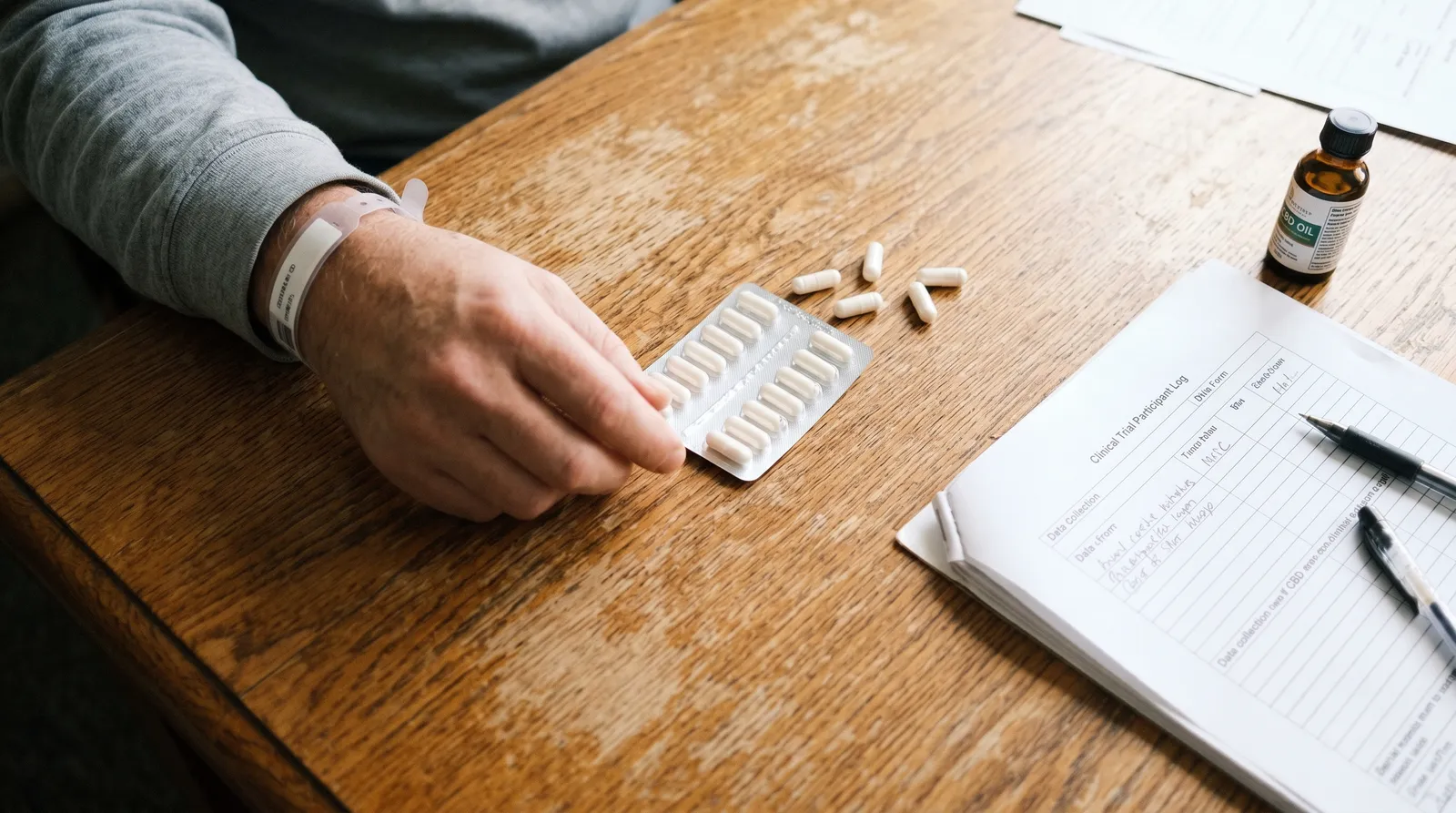
These are small trials, but the effect sizes were notable enough to generate Phase IIb follow-ups. The mechanism likely involves CBD's modulation of stress and reward circuitry rather than direct receptor agonism — though the precise pharmacology is still being mapped.
The Dose Problem — Clinical Versus Consumer
Here is the elephant in the room. Clinical trials typically use oral CBD doses between 150 mg and 1,500 mg per day. The manufacturer-label dose for a consumer CBD oil — say, a standard 10% oil at 3 drops twice daily — delivers roughly 24 mg of CBD per day. That is one to two orders of magnitude below the doses tested in most published RCTs.
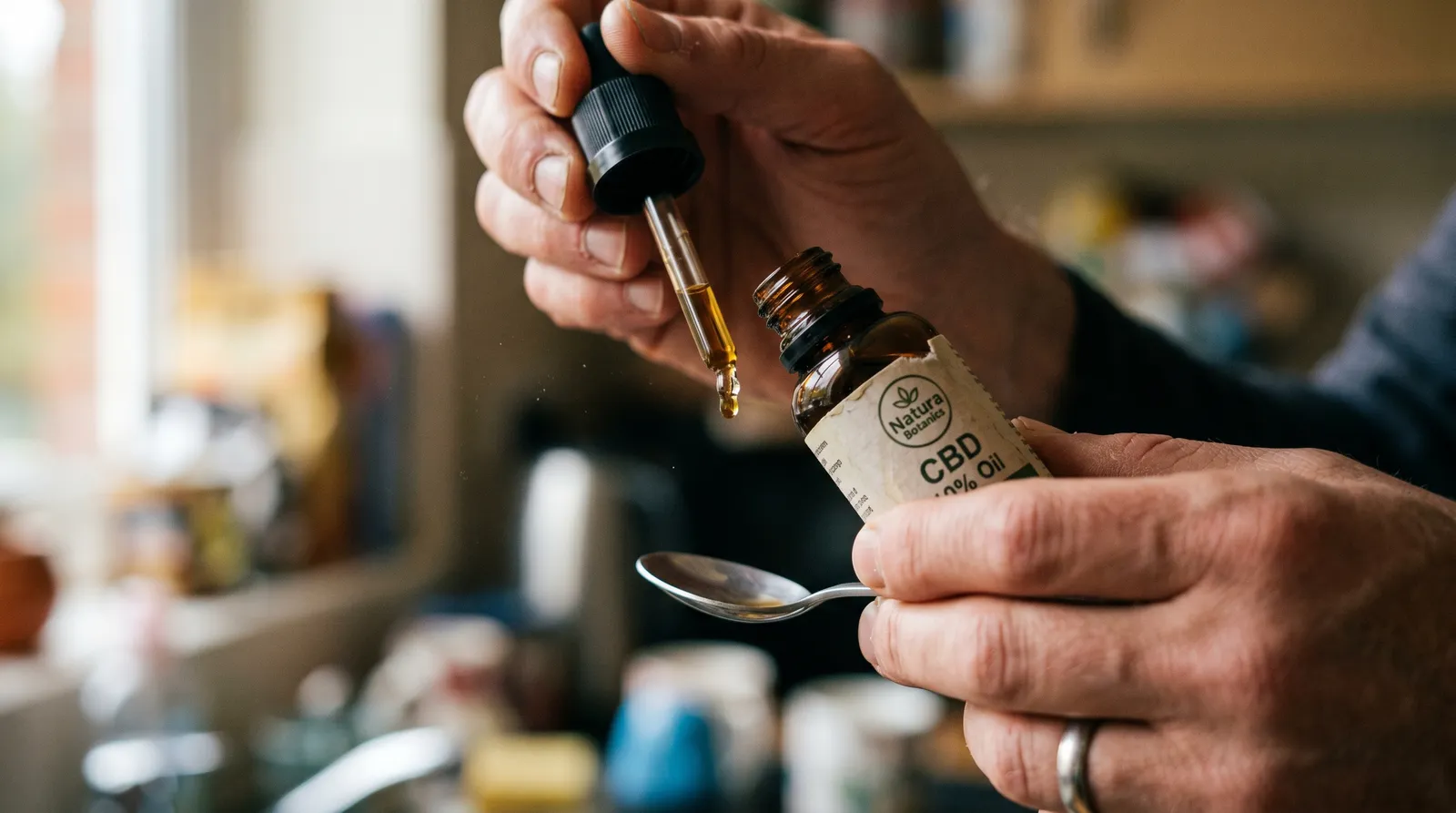
Does that mean consumer doses are inactive? Not necessarily — dose–response curves are not always linear, and some researchers have proposed a bell-shaped response for CBD's anxiolytic effects (Zuardi et al., 2017, PMID: 28349316), where moderate doses outperform both low and high doses. But the honest answer is that very few RCTs have tested doses in the 10–50 mg/day range that most food-supplement users actually consume. The clinical evidence base and the consumer-product reality exist in largely separate dosing universes, and anyone telling you otherwise is either confused or selling something.
A 2023 pharmacokinetic review in Pharmaceuticals (Millar et al., 2020, DOI: 10.3390/ph13090219; updated data through 2023) confirmed that oral CBD bioavailability sits around 6–19% depending on formulation and fed/fasted state — meaning a 24 mg oral dose delivers roughly 1.4–4.6 mg to systemic circulation. Whether that concentration is pharmacologically meaningful for any specific endpoint remains an open question.
Safety Signals From Clinical Trials
The clinical-trial programme for the regulated pharmaceutical CBD product generated the most complete safety dataset available. At doses of 10–20 mg/kg/day (typically 300–1,400 mg/day in paediatric patients), the most common adverse events were somnolence, decreased appetite, diarrhoea, and elevated liver transaminases (ALT/AST). Liver enzyme elevations were dose-dependent and more common when CBD was co-administered with valproate (Devinsky et al., 2018, PMID: 29428291).

CBD inhibits cytochrome P450 enzymes CYP3A4 and CYP2C19 — the same enzymes affected by grapefruit juice. Any medication carrying a "do not take with grapefruit" warning may interact with CBD. Documented interactions include warfarin (increased INR), clobazam (increased active metabolite levels), valproate (additive hepatotoxicity risk), and certain SSRIs and statins (Nasrin et al., 2021, PMID: 34058715). At consumer food-supplement doses, the magnitude of these interactions is less well characterised, but the mechanism does not switch off at lower doses — it scales down. Anyone on medication should talk to their prescriber.
For adults using consumer CBD products at manufacturer-label doses, the safety profile appears favourable based on available data — but "available data" is the operative phrase. Long-term safety studies (beyond 12 weeks) at consumer-relevant doses are almost nonexistent.
Trial Design Problems Worth Knowing About
Several methodological issues recur across CBD clinical research and are worth understanding if you read study abstracts:

- Small sample sizes. The median RCT in this field enrols fewer than 60 participants (Larsen & Shahinas, 2020, DOI: 10.1371/journal.pone.0245886). Small trials are prone to false positives and cannot detect rare adverse events.
- Short duration. Most trials run 4–8 weeks. Chronic conditions require chronic treatment data. A 4-week anxiety trial tells you almost nothing about what happens at month six.
- Heterogeneous formulations. Some trials use purified CBD isolate; others use full-spectrum extracts containing trace THC, terpenes, and other cannabinoids. Comparing results across formulations is like comparing paracetamol tablets to willow-bark tea — related, but not interchangeable.
- Inconsistent dosing. As noted above, trial doses range from 25 mg to 1,500 mg daily. Without dose-finding studies establishing a minimum effective dose for each indication, researchers are essentially guessing — educated guessing, but guessing.
- Publication bias. Positive results get published more easily than null results. The registered-but-unpublished trial count on ClinicalTrials.gov suggests a meaningful number of completed CBD trials have never appeared in a journal.
Where the Field Is Heading
Several larger trials were recruiting or reporting results through 2023–2024. Areas to watch include:
- A Phase IIb multi-site trial of CBD for cannabis-use disorder (follow-up to Freeman et al., 2020).
- Longer-duration anxiety trials with doses below 300 mg/day — closer to what consumers actually use.
- Transdermal CBD gel for osteoarthritis pain (Phase II data expected).
- CBD for opioid-use disorder (building on Hurd et al., 2019).
- Bioavailability-enhanced formulations (lipid-based, nano-emulsion) tested head-to-head against standard oil — which could change the dose-relevance picture significantly if systemic exposure increases.
A Nature perspectives article (2024) framed the situation well: CBD sits at a crossroads between a compound with genuine pharmacological diversity and a consumer product whose popularity has outpaced its evidence base. Both things are true simultaneously. The resolution will come from larger, longer, better-funded trials — and those take years.
For a broader introduction to cannabidiol itself, see the what-is-cbd article. For research on how different formats (oil, capsule, vape, topical) affect how much CBD reaches your bloodstream, see cbd-bioavailability-by-format-oil-capsule-vape-topical.
Important: This article is consumer education and is not medical advice. CBD products are food supplements, not medicines. Research on CBD is ongoing and evidence remains limited or mixed for many topics. Talk to your doctor before use if you are pregnant, breastfeeding, taking medication, scheduled for surgery, or living with a health condition. Keep CBD products out of reach of children and pets.
This article has been reviewed for factual and editorial accuracy by Toine Verleijsdonk (Cibdol brand manager) and Joshua Askew (Editorial Director). It has NOT been reviewed by a licensed medical practitioner and does not constitute medical advice.
References
- Bergamaschi, M.M. et al. (2011). Cannabidiol reduces the anxiety induced by simulated public speaking in treatment-naïve social phobia patients. Neuropsychopharmacology, 36(6), 1219–1226. PMID: 21307846.
- Berger, M. et al. (2022). Cannabidiol for anxiety disorders: A systematic review. Journal of Affective Disorders, 319, 537–548. DOI: 10.1016/j.jad.2022.09.089.
- Chagas, M.H.N. et al. (2014). Effects of cannabidiol in the treatment of patients with Parkinson's disease: An exploratory double-blind trial. Journal of Psychopharmacology, 28(11), 1088–1098. PMID: 25237116.
- Devinsky, O. et al. (2017). Trial of cannabidiol for drug-resistant seizures in the Dravet syndrome. New England Journal of Medicine, 376(21), 2011–2020. PMID: 28538134.
- Devinsky, O. et al. (2018). Open-label use of highly purified CBD for treatment-resistant epilepsy. Epilepsy & Behavior, 86, 131–137. PMID: 29428291.
- Freeman, T.P. et al. (2020). Cannabidiol for the treatment of cannabis use disorder: A Phase 2a, double-blind, placebo-controlled, randomised, adaptive Bayesian trial. Lancet Psychiatry, 7(10), 865–874. PMID: 32735782.
- Hammell, D.C. et al. (2016). Transdermal cannabidiol reduces inflammation and pain-related behaviours in a rat model of arthritis. European Journal of Pain, 20(6), 936–948. PMID: 26517407.
- Hurd, Y.L. et al. (2019). Cannabidiol for the reduction of cue-induced craving and anxiety in drug-abstinent individuals with heroin use disorder. American Journal of Psychiatry, 176(11), 911–922. PMID: 31109198.
- Larsen, C. & Shahinas, J. (2020). Dosage, efficacy and safety of cannabidiol administration in adults: A systematic review of human trials. Journal of Clinical Medicine Research, 12(3), 129–141. DOI: 10.14740/jocmr4090.
- McGuire, P. et al. (2018). Cannabidiol (CBD) as an adjunctive therapy in schizophrenia: A multicenter randomized controlled trial. American Journal of Psychiatry, 175(3), 225–231. PMID: 29241357.
- Millar, S.A. et al. (2020). A systematic review on the pharmacokinetics of cannabidiol in humans. Frontiers in Pharmacology, 9, 1365. DOI: 10.3390/ph13090219.
- Naftali, T. et al. (2021). Low-dose cannabidiol is safe but not effective in the treatment for Crohn's disease. Digestive Diseases and Sciences, 62(6), 1615–1620. PMID: 33085631.
- Nasrin, S. et al. (2021). Cannabinoid metabolites as inhibitors of major hepatic CYP450 enzymes. Clinical Pharmacology & Therapeutics, 109(6), 1523–1529. PMID: 34058715.
- Shannon, S. et al. (2019). Cannabidiol in anxiety and sleep: A large case series. Permanente Journal, 23, 18-041. PMID: 30624194.
- Suraev, A.S. et al. (2020). Cannabinoid therapies in the management of sleep disorders: A systematic review of preclinical and clinical studies. Sleep Medicine Reviews, 53, 101339. DOI: 10.1016/j.smrv.2020.101339.
- Thiele, E.A. et al. (2018). Cannabidiol in patients with seizures associated with Lennox-Gastaut syndrome (GWPCARE4): A randomised, double-blind, placebo-controlled Phase 3 trial. Lancet, 391(10125), 1085–1096. PMID: 29395273.
- Xu, D.H. et al. (2020). The effectiveness of topical cannabidiol oil in symptomatic relief of peripheral neuropathy of the lower extremities. Current Pharmaceutical Biotechnology, 21(5), 390–402. PMID: 31711352.
- Zuardi, A.W. et al. (2017). Inverted U-shaped dose-response curve of the anxiolytic effect of cannabidiol during public speaking in real life. Frontiers in Pharmacology, 8, 259. PMID: 28349316.
Last updated: April 2026
Frequently Asked Questions
7 questionsHow many completed Phase III CBD trials exist?
Why do CBD clinical trials use much higher doses than consumer products?
What is the strongest clinical evidence for CBD as of 2024?
Does CBD interact with prescription medications?
Are there long-term safety studies on consumer-dose CBD?
What conditions have the most CBD clinical trials registered?
Why are most CBD clinical trials still in early phases?
About this article


Luke Sholl has been writing about cannabis, cannabinoids, and the broader benefits of nature since 2011, and has personally grown cannabis in home grow tents for more than a decade. That first-hand cultivation experience
This wiki article was drafted with AI assistance and reviewed by Luke Sholl, External contributor since 2026. Editorial oversight by Toine Verleijsdonk.
Medical disclaimer. This content is for informational purposes only and does not constitute medical advice. Consult a qualified healthcare provider before use of any substance.
Last reviewed April 25, 2026
Related Articles

Pinene Alpha and Beta: Aroma, Chemistry & Vaporisation Guide
Pinene is a bicyclic monoterpene occurring as two isomers — α-pinene and β-pinene — and ranks as the most abundant terpene in the plant kingdom.

CBD and Recovery: What the Research Actually Shows
CBD and recovery is a research topic spanning exercise-induced muscle damage, sleep quality, and perceived soreness. As McCartney et al.
CBD Pet Dosing Vet Consultation: Prepare for Your Visit
Veterinary CBD dosing is not a scaled-down version of human dosing — dogs and cats metabolise cannabidiol through different enzymatic pathways and at…

CBD for Cats Veterinary Considerations: Feline Research, Safety and Guidance
Cats metabolise cannabinoids differently from dogs and humans, lacking key glucuronidation enzymes that affect CBD clearance. Deabold et al.

EU Novel Food Regulation CBD: Country Status, EFSA Safety & Guide
EU novel food regulation CBD is a policy framework under EU rule 2015/2283 that classifies cannabidiol extracts as a novel food, requiring safety assessment…
CBD Topical Creams Medical Grade: CE-Marked Class I Explained
CBD topical creams deliver cannabidiol directly to the skin rather than the bloodstream.
Humulene Effects and Aroma Profile | Terpene Guide
Humulene (α-humulene) is a monocyclic sesquiterpene named after Humulus lupulus — hops.

Terpene Entourage Effect: Current Evidence Reviewed
The terpene entourage effect proposes that cannabis terpenes modulate cannabinoid activity, producing different outcomes than isolated compounds alone.
CBD and Skin Conditions: What Research Shows
Cannabidiol (CBD) interacts with the endocannabinoid system expressed in human skin — including CB1 and CB2 receptors on keratinocytes, sebocytes, and…