Kaleidoscope Toy
Buy more, pay less
Kaleidoscope Toy for Visual Enhancement
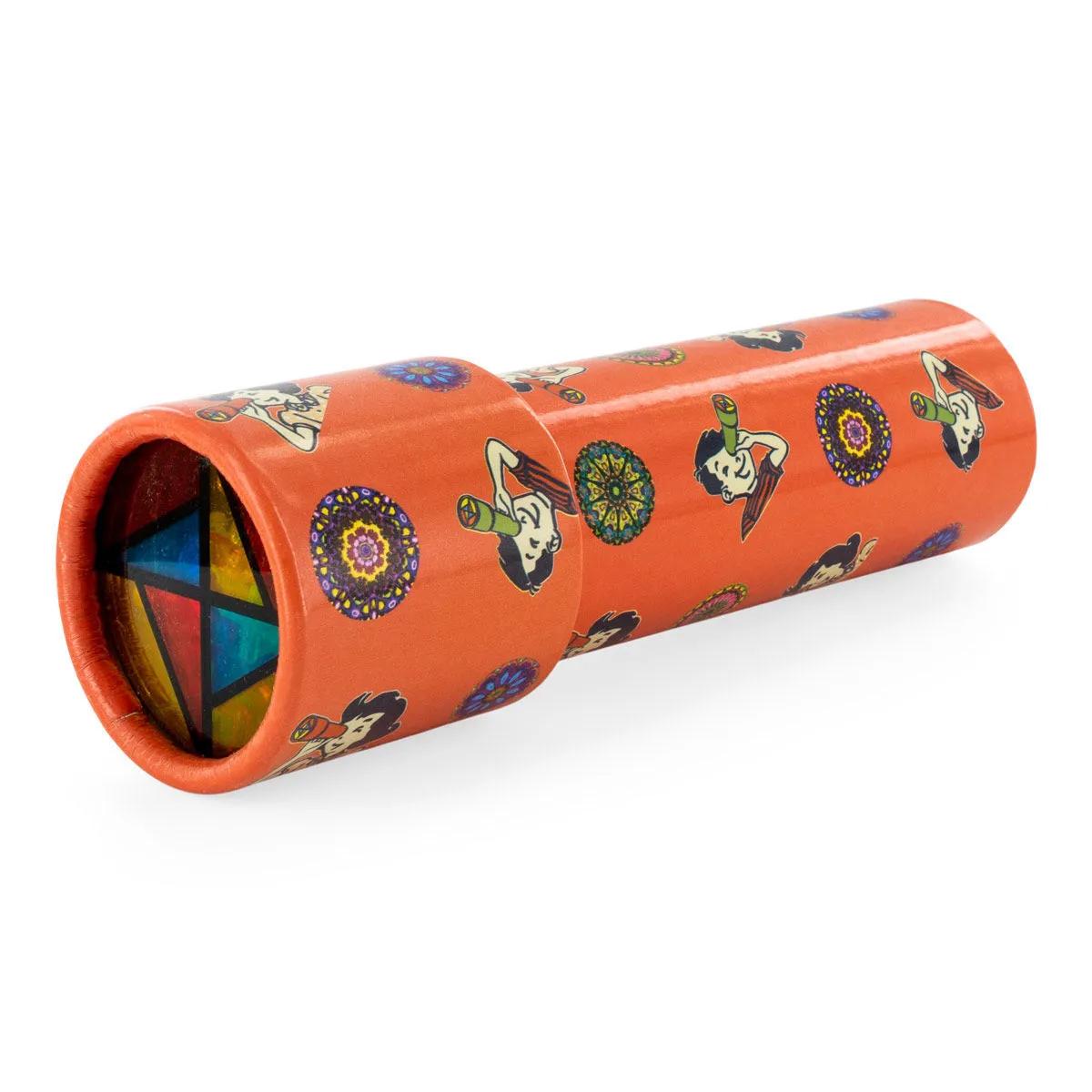
A kaleidoscope toy is a handheld optical instrument that transforms ambient light into rotating symmetrical patterns — and it's been doing so since Sir David Brewster patented the design in 1817. Forget the screens. This old-school tube uses mirrors and loose coloured beads to generate fractal-like visuals that shift every time you rotate the base. It weighs next to nothing, fits in a pocket, and doesn't need batteries, Wi-Fi, or a software update.
| Spec | Value |
|---|---|
| SKU | HS1808 |
| Type | Classic rotating kaleidoscope |
| Mechanism | Internal mirrors with loose coloured beads |
| Operation | Hold to eye, rotate base manually |
| Power source | None — fully analogue |
| Portability | Pocket-sized, lightweight |
Pair the kaleidoscope toy with a set of diffraction glasses for layered visual effects, or grab a UV blacklight torch to change the colour temperature of what you see through the tube. Both make solid additions to any sensory toolkit.
Why You Need a Kaleidoscope Toy
There's a specific kind of screen fatigue that hits when you've been staring at a phone for hours trying to find the right visual content. Apps crash, autoplay ads interrupt the vibe, and battery warnings pop up at the worst possible moment. A kaleidoscope has zero failure modes — no dead pixels, no buffering wheel, no notification sounds pulling you out of the moment.
The patterns you get from a kaleidoscope are genuinely unpredictable. Each tiny rotation of the base shifts the coloured beads into a new arrangement, reflected across the internal mirrors into symmetrical designs that never repeat in quite the same way. It's the kind of slow, tactile interaction that feels good in the hands — the tube has a satisfying weight to it, and the slight scraping sound of the beads tumbling is part of the charm. We've had customers tell us they spent 45 minutes with one of these and didn't notice the time pass.
The honest limitation: it's a simple toy, not a precision optical instrument. The build is lightweight plastic, and the beads are basic. You're not getting Swarovski crystals in here. But that's the point — it costs less than a round of drinks, it's practically indestructible, and it does exactly one thing very well. If you want something analogue and immediate for visual stimulation, this is the best kaleidoscope toy for the price in our shop.
How to Use the Kaleidoscope Toy
- Hold the kaleidoscope tube up to one eye and close the other. Point the far end towards a light source — a window, a lamp, or even a candle works well. Brighter light means more vivid colours.
- Slowly rotate the base at the far end of the tube. The internal beads shift and tumble, and the angled mirrors multiply them into symmetrical patterns. Go slow — the best visuals come from gentle, deliberate turns rather than spinning it fast.
- Experiment with different light sources. Natural daylight gives warm, saturated tones. Coloured LED lights or a UV torch change the palette entirely. Try pointing it at a lava lamp for an extra layer of movement.
- When you're done, just pocket it. No off switch, no charging cable. It's ready whenever you are.
Frequently Asked Questions
How does a kaleidoscope create patterns?
Two or three mirrors are arranged at angles inside the tube. Loose coloured beads sit in a chamber at the far end. Light passes through the beads, hits the mirrors, and reflects into symmetrical patterns. Rotating the base shifts the beads into new positions, generating a different design each time.
Is the kaleidoscope toy made of glass or plastic?
The body is lightweight plastic, which makes it durable and easy to carry. The internal mirrors are reflective surfaces rather than glass, so there's no risk of shards if you drop it. It's built to survive being tossed in a bag or a pocket.
Does the kaleidoscope need batteries or a light source?
No batteries at all — it's completely analogue. It does need ambient light to work, though. Any light source will do: daylight, a desk lamp, a phone torch, or coloured LEDs. The brighter and more varied the light, the more vivid the patterns.
Can I take a kaleidoscope toy to a festival?
Absolutely. It's small, light, and has no electronic components to break or get wet. Toss it in your pocket or hang it on a lanyard. It's one of those things that ends up getting passed around the group within about 30 seconds.
What makes this better than a kaleidoscope app on my phone?
No screen glare, no battery drain, no ads, and the patterns are generated by actual physics rather than an algorithm. The tactile element — holding the tube, feeling the beads shift as you rotate the base — is something a touchscreen can't replicate. It's also about 200 years of proven design versus a 3-star app.
How long does a kaleidoscope toy last?
There are no moving parts that wear out — the beads just sit in a chamber, and the mirrors don't degrade. As long as you don't physically crush the tube, it'll keep working indefinitely. We've seen vintage ones from the 1970s that still look great.
Last updated: April 2026