
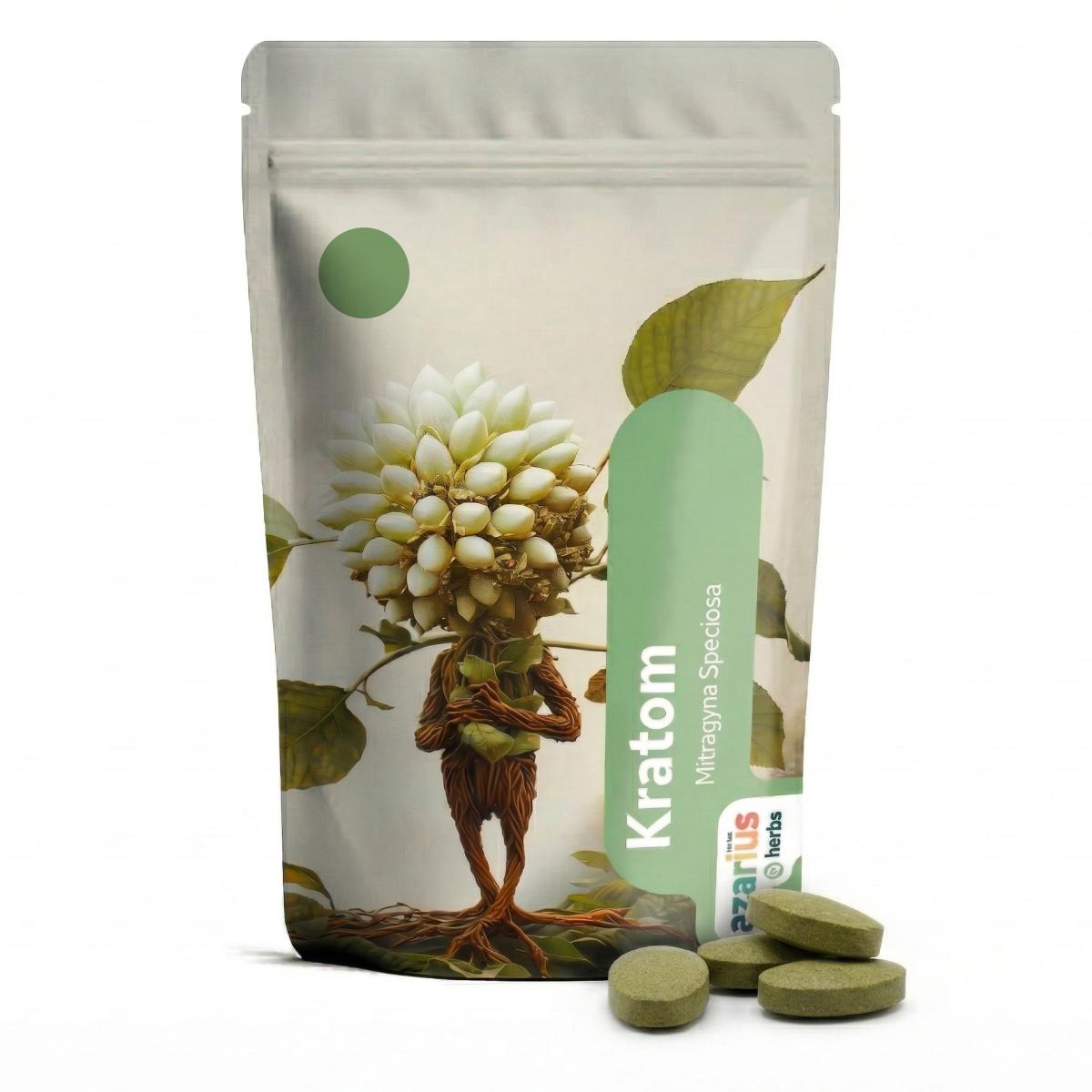
Kratom Tablets
10 x 12mg
by Azarius
Buy more, pay less
Kratom Tablets for Precise, Consistent Dosing
Kratom tablets are pressed Mitragyna speciosa in a standardised 12mg format — each tablet delivers exactly the same amount, every single time. No scales, no messy powder, no guesswork. These Azarius Herbs tablets take the faff out of working with kratom and put you in control of your intake down to the milligram. Available in a single 10-tablet pack across three vein colours — White, Green, and Red — so you can pick the one that matches what you're after.
Which Colour Should You Pick?
| Colour | Tablet Count | Commonly Reported Character |
|---|---|---|
| White | 10 x 12mg | More stimulating, described as energising and focus-oriented |
| Green | 10 x 12mg | Balanced, described as a middle ground |
| Red | 10 x 12mg | More sedating, described as calming |
All three come from the same pressed 12mg Azarius Herbs tablet — only the vein colour differs. White is the one people usually reach for earlier in the day; Red is more often picked for winding down in the evening; Green is the moderate middle ground if you're not sure which way you lean. These are broad, user-reported tendencies rather than a pharmacological guarantee, and batch-to-batch variation is real. If you genuinely can't decide, picking up all three to compare is the most reliable approach.
Why Kratom Tablets Over Loose Powder
Loose kratom powder works, but it comes with trade-offs that tablets simply eliminate. We've sold both formats since the early days, and the number one complaint with powder has always been the same: inconsistency. One slightly heaped spoon versus one level spoon can mean a noticeably different experience. With a pressed 12mg tablet, that variable disappears entirely.
There's also the taste. Kratom powder is bitter — genuinely, properly bitter. The kind of bitter that makes you pull a face even after years of using it. Tablets bypass your taste buds almost completely. You swallow them with water and move on. No toss-and-wash grimace, no gritty residue stuck to the inside of your cheeks.
The portability factor matters too. A bag of powder in your rucksack is an invitation for a mess. Tablets sit in a blister or container, weigh next to nothing, and don't require a milligram scale when you're away from home. For anyone who values discretion and convenience, this is the format that makes the most sense.
What's Inside Each Kratom Tablet
Each tablet contains 12mg of pressed Mitragyna speciosa — the tropical tree native to Southeast Asia whose leaves contain the alkaloids mitragynine and 7-hydroxymitragynine. These are the two primary active compounds that researchers have focused on most extensively.
| Specification | Detail |
|---|---|
| Active ingredient | Mitragyna speciosa (kratom) |
| Amount per tablet | 12mg |
| Format | Pressed tablet |
| Brand | Azarius Herbs |
| Pack size | 10 tablets |
| Available colours | White, Green, Red vein |
| Primary alkaloids | Mitragynine, 7-hydroxymitragynine |
| Origin plant | Mitragyna speciosa (Rubiaceae family) |
| Recommended storage | Cool, dry, away from direct sunlight |
The standardised 12mg dose means you can adjust your intake in precise 12mg increments. Want 24mg? Two tablets. Want 36mg? Three. No arithmetic with powder densities, no calibrating a scale. Just count.
From Our Counter: What We've Learned Selling Kratom
We've been stocking kratom in various forms since the early 2000s, and the shift towards tablets has been steady. The customers who switch from powder to tablets almost never switch back. The reason is always the same: "I know exactly what I'm taking now." That predictability changes the entire relationship with the plant.
One honest limitation worth flagging: the 12mg fixed dose means you can't fine-tune below 12mg increments. If you're someone who likes to work in, say, 5mg steps, powder with a precision scale still gives you more granularity. For most people though, 12mg increments are more than precise enough. We've had maybe three customers in all our years ask for something smaller — the rest find this format spot on.
The texture of the tablets themselves is smooth, compact, and about the size of a standard supplement pill. They don't crumble in the pack, and they don't have that chalky feel some pressed herbal tablets get. Swallowing them is straightforward — no bigger than a standard paracetamol.
How to Use Kratom Tablets
- Decide on your desired amount in multiples of 12mg. If you're new to kratom, clinical research contexts have used varied doses — start conservatively and see how you respond before adjusting.
- Take the tablets with a full glass of water (at least 200ml). This helps them break down efficiently in your stomach.
- Take on an empty or light stomach for faster onset. A heavy meal can delay the effects noticeably — we hear this from customers constantly.
- Wait at least 45–60 minutes before considering whether to take more. Onset with tablets can be slightly slower than powder since the pressed format needs to dissolve first.
- Keep a note of how many tablets you took and when. The whole point of this format is precision — use it. A simple note on your phone does the job.
- Store remaining tablets in their original packaging, in a cool and dry spot. Direct sunlight and humidity are the enemies of shelf life.
Kratom Tablets Compared to Other Formats
If you're weighing up tablets against capsules or loose powder, here's how they stack up based on what we see in the shop daily.
| Factor | Tablets (12mg) | Capsules | Loose Powder |
|---|---|---|---|
| Dosing precision | Exact — 12mg per tablet | Good — pre-measured per capsule | Variable — depends on your scale |
| Taste | Minimal — swallow whole | None — encapsulated | Full bitterness |
| Onset speed | Moderate — tablet dissolves first | Moderate — capsule dissolves first | Fastest — direct absorption |
| Portability | Excellent — compact, no mess | Good — can be bulky in quantity | Poor — powder spills easily |
| Flexibility | 12mg increments | Fixed per capsule size | Total — any amount you want |
| Shelf stability | Very good — compressed format | Good | Decent — keep sealed and dry |
We'd pick tablets over capsules for one simple reason: they're denser and smaller per dose, so you're swallowing less bulk. Compared to powder, you trade a bit of onset speed and total flexibility for the convenience of never touching a scale again. For most people, that's a trade worth making.
White vs. Green vs. Red Kratom Tablets — A Quick Comparison
| Vein colour | Commonly reported character | Typical time of use | Evidence level |
|---|---|---|---|
| White | More stimulating, described as energising and focus-oriented | Morning, daytime tasks | Anecdotal / user-reported |
| Green | Balanced, described as a middle ground | Daytime, general-purpose | Anecdotal / user-reported |
| Red | More sedating, described as calming | Evening, winding down | Anecdotal / user-reported |
White is the better starting pick if you're after something more energising for daytime use. Red is the one most people reach for in the evening. Green splits the difference if you'd rather not commit to either extreme on your first order. Treat this as a rough starting direction rather than a rule — the number of tablets you take shapes the experience more reliably than the colour on the pack, and no two batches behave identically.
If you want to compare formats, we also carry kratom in loose powder and capsule form. Grab a pack of tablets alongside a small bag of powder to see which suits your routine better — many customers end up keeping both on hand, using tablets when they're out and about and powder at home when they have more control over preparation.
What the Research Says About Kratom
Kratom (Mitragyna speciosa) has been used traditionally in Southeast Asia for generations, where fresh leaves were chewed by labourers and farmers. Modern research is still catching up with that long history of traditional use. The primary alkaloid, mitragynine, makes up roughly 66% of the alkaloid content in most kratom leaf material, with 7-hydroxymitragynine present in much smaller quantities — typically under 2%.
According to available research, kratom's alkaloids interact with opioid receptors, though their pharmacological profile differs from classical opioids. Studies have noted that lower amounts tend to produce stimulant-like effects while larger amounts lean towards sedative properties — a dose-dependent duality that's fairly unusual in the botanical world. Research in this area is ongoing, and much of what we know comes from observational and preclinical studies rather than large-scale clinical trials.
On the safety side: research has flagged that higher doses may be associated with nausea, dizziness, and drowsiness. Prolonged heavy use has been linked to dependence in some case reports. This isn't a substance to be cavalier with — respect the dose, keep track of your intake, and take regular breaks. That's not scaremongering; it's just sensible practice with any active botanical.
Frequently Asked Questions
What does 12mg per tablet actually mean?
Each tablet contains exactly 12mg of pressed Mitragyna speciosa material. This is the total kratom content per tablet, giving you a fixed, repeatable unit to work with. Multiply by the number of tablets for your total intake.
How many kratom tablets should I take?
That depends on your experience with kratom and your individual response. Clinical and ethnobotanical literature describes a wide range of amounts used. Start with fewer tablets and adjust gradually over separate sessions. The 12mg increment makes it straightforward to track exactly what you're taking.
Can I break the tablets in half for a smaller dose?
You can try, but pressed tablets don't always split cleanly. You'll get roughly 6mg per half, though it won't be as precise as a full tablet. If you need doses below 12mg, loose powder with a milligram scale gives you more control.
How should I store kratom tablets?
Keep them in the original packaging, in a cool and dry place away from direct sunlight. Humidity is the main enemy — it can cause tablets to soften or degrade. A cupboard or drawer at room temperature is fine. No need to refrigerate.
Do kratom tablets taste as bitter as the powder?
Barely. You'll catch a faint bitterness if the tablet sits on your tongue, but if you swallow it straight with water, you'll taste almost nothing. That's the single biggest reason customers switch from powder to tablets — the powder is genuinely unpleasant to taste.
Are these kratom tablets suitable for someone who's never tried kratom?
The tablet format is actually one of the best ways to start, precisely because each dose is fixed at 12mg. You know exactly what you're taking, which removes the biggest variable that trips up newcomers with loose powder. Start low and give yourself plenty of time between sessions to gauge your response.
What's the difference between kratom tablets and kratom capsules?
Tablets are pressed and compressed, making them smaller and denser than capsules for the same amount. Capsules contain powder inside a gelatin or cellulose shell. Both offer pre-measured dosing — tablets are just more compact and tend to have a longer shelf life due to the compression.
What's the difference between White, Green, and Red kratom tablets?
The names refer to the colour of the leaf vein at harvest, before it's pressed into a 12mg tablet. White is generally reported as more stimulating, red as more calming, and green as a balance between the two — but this is based on user reports and vendor convention rather than confirmed lab differences in alkaloid content. All three are pressed to the same 12mg Azarius Herbs standard; only the vein colour and reported character differ.
Last updated: July 2026
You might also like
Medical disclaimer. This content is for informational purposes only and does not constitute medical advice. Consult a qualified healthcare provider before use of any substance.