
Pack: 5 seeds
Lemon Haze Auto Cannabis Seeds by Kannabia
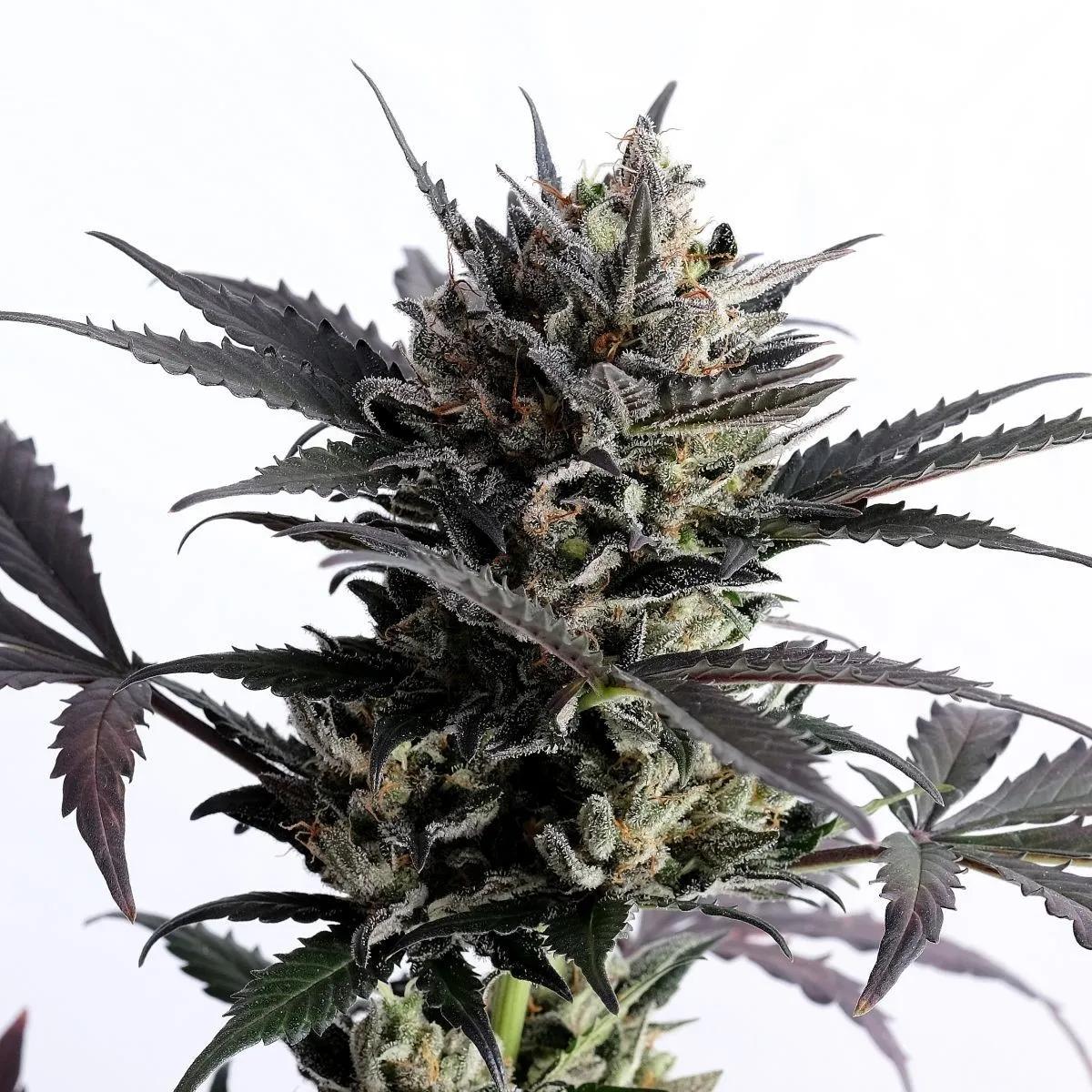
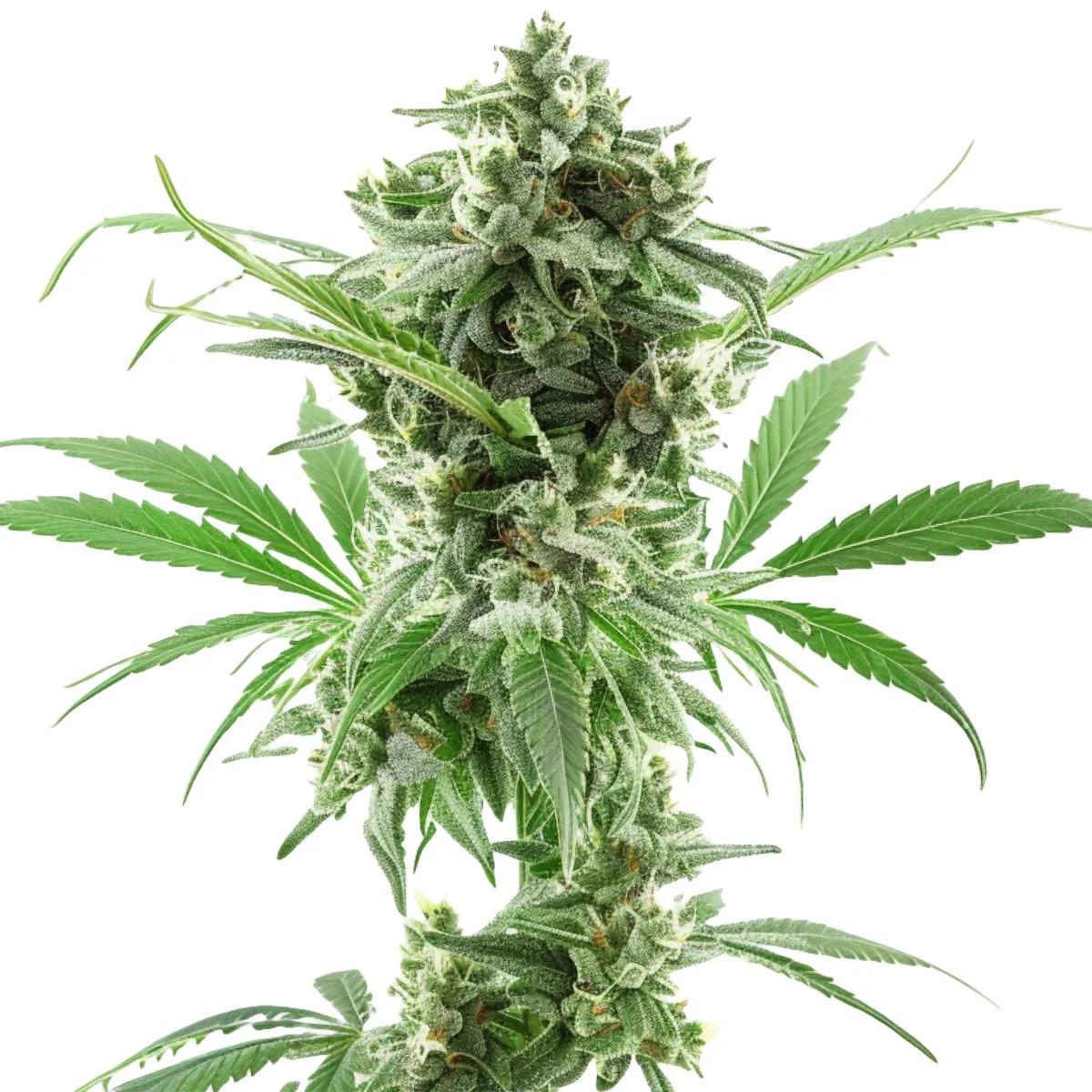
Lemon Haze Auto is an autoflowering feminised cannabis seed from Kannabia that delivers the classic Lemon Haze citrus profile in a compact, fast-finishing plant. Crossed with ruderalis genetics, she goes from germination to harvest in just 9–10 weeks, stays under one metre tall, and still produces dense, silvery buds with striking purple foliage. At 18% THC, this sativa-dominant auto packs enough weight to satisfy experienced growers while staying manageable enough for a first autoflower run.
Why Lemon Haze Auto Deserves a Spot in Your Grow
Kannabia took the original Lemon Haze — a strain that's won over growers and smokers alike with its unmistakable citrus punch — and crossed it with ruderalis to create something genuinely useful. The autoflowering genetics mean she flips to flower on her own schedule, no light-cycle changes needed. That alone saves you a timer, a headache, and about three weeks of waiting.
But here's what makes this particular auto worth your attention: she hasn't lost the character of the original. We've seen plenty of autos where the ruderalis cross dilutes the terpene profile into something bland and forgettable. Not this one. Kannabia calls her a "cocktail of sensations," and the nose backs that up — sharp lemon up front, grapefruit and lime underneath, then a surprising base of wood, incense, and pepper. It's layered in a way that most autos simply aren't. According to research on terpene profiles in commercial cannabis, this kind of phytochemical diversity is what separates memorable cultivars from generic ones (Mudge et al., 2022, PMC9119530).
The honest limitation? She's compact. If you're chasing towering sativa trees with massive colas, this isn't your plant. She tops out around one metre and takes on a bushy shape that's unusual for a sativa-dominant hybrid. But that's actually the point — she's built for indoor tents, balconies, and small terraces where vertical space is limited. Her natural pest resistance is a genuine bonus for outdoor growers who don't want to babysit their plants through every aphid season.
Lemon Haze Auto Growing Specifications
| Specification | Detail |
|---|---|
| Seed Bank | Kannabia |
| Seed Type | Autoflowering Feminised |
| Genetics | Lemon Haze x Ruderalis |
| Dominance | Sativa-dominant hybrid |
| THC Content | 18% |
| Seed to Harvest | 9–10 weeks from germination |
| Indoor Yield | Approximately 500g/m² |
| Outdoor Yield | Approximately 150g/plant |
| Plant Height | Under 1 metre |
| Appearance | Purple leaves, silvery buds |
| Pest Resistance | Good |
| Seeds per Pack | 5 |
| SKU | CSKA0067 |
Aroma, Flavour, and Terpene Profile of Lemon Haze Auto
The nose on Lemon Haze Auto is genuinely complex for an autoflower. The dominant note is lemon — bright, sharp, and unmistakable — but it's layered with grapefruit and lime that give it a broader citrus character than a one-note lemon strain. Underneath that, you'll pick up wood, incense, and a peppery spice that grounds the whole profile and stops it from being purely sweet.
This kind of terpene complexity matters beyond just smelling nice. According to a review published in Molecules, terpenes found in cannabis — including limonene, pinene, and linalool — have demonstrated anti-inflammatory and analgesic properties in both in vitro and animal studies (Gonczarek et al., 2021, PMC8489319). A separate review in Frontiers in Psychiatry found that pinene and linalool showed effects on parameters relevant to neurological function (Weston-Green et al., 2021, PMC8426550). The interplay between these compounds and cannabinoids is an active area of research, and strains with diverse terpene profiles like this one are exactly what researchers are looking at.
The purple colouring in the leaves, incidentally, comes from anthocyanins — the same pigments found in blueberries and red cabbage. According to a 2025 systematic review, dietary anthocyanins may be associated with cognitive function, though more research is needed (PMC11775034). It's a visual cue that this plant is producing a broad spectrum of secondary metabolites, not just cannabinoids.
How to Grow Lemon Haze Auto Seeds
Autoflowers are forgiving, but a few things will make the difference between a decent harvest and a genuinely impressive one. Here's the straightforward approach:
- Germinate your Lemon Haze Auto seeds using the paper towel method or directly in a small pot of moist, light soil. Taproots typically appear within 24–72 hours.
- Plant the germinated seed about 1cm deep in its final container. Autos don't like being transplanted — their short lifecycle means any root stress costs you yield. Start in the pot you plan to finish in. A 10–15 litre fabric pot works well.
- Provide 18–20 hours of light per day throughout the entire lifecycle. Unlike photoperiod strains, Lemon Haze Auto doesn't need a 12/12 switch. More light hours means more energy for bud production.
- Keep the soil moist but never waterlogged during the seedling stage. Once she's established (around week 2–3), water when the top 2–3cm of soil feels dry.
- Begin light feeding around week 3 with a balanced vegetative nutrient, then switch to a bloom formula when you see the first pistils — usually around week 4–5 from germination.
- Watch for her bushy growth pattern. She won't stretch much, so ensure good airflow around the lower canopy. A gentle defoliation of large fan leaves blocking bud sites can help light penetration, but don't go overboard — autos don't have time to recover from heavy pruning.
- Harvest when roughly 70–80% of trichomes have turned milky with a few amber ones appearing. This typically falls at the 9–10 week mark from germination. The silvery buds will be dense and resinous.
Lemon Haze Auto vs. Photoperiod Lemon Haze
The obvious question: what do you lose going auto? Less than you'd think. The original photoperiod Lemon Haze can grow tall — easily 1.5 metres indoors — and needs a dedicated flowering period triggered by switching to 12/12 light. Total time from seed to harvest is typically 14–16 weeks. Lemon Haze Auto does it in 9–10 weeks, stays under a metre, and doesn't care what your light timer says.
| Feature | Lemon Haze Auto (Kannabia) | Photoperiod Lemon Haze |
|---|---|---|
| Seed to Harvest | 9–10 weeks | 14–16 weeks |
| Height | Under 1 metre | 1–1.5+ metres |
| Light Schedule | 18–20 hours (no change needed) | 18/6 veg, 12/12 flower |
| THC | 18% | Typically 17–21% |
| Indoor Yield | ~500g/m² | ~500–600g/m² |
| Training Suitability | LST only | LST, HST, SCROG, topping |
The trade-off is flexibility. With a photoperiod, you can extend veg time, top aggressively, and run a full SCROG setup. With the auto, you get speed and simplicity at the cost of training options. For balcony grows, stealth setups, or growers who want multiple harvests per season, the auto is the smarter pick. If you've got a dedicated tent and enjoy the craft of training, the photoperiod gives you more to work with.
What to Expect from the Finished Product
At 18% THC, Lemon Haze Auto sits in that sweet spot — strong enough to deliver a clear, noticeable effect without flattening you. The sativa dominance shows in the onset: expect a creative, uplifting head effect that Kannabia describes as "almost psychedelic." It's energetic and cerebral at first, then gradually settles into a gentle, relaxed body state. Not couch-lock territory — more like the pleasant wind-down after a productive afternoon.
The citrus terpene profile likely contributes to the overall character. Research into citrus-derived aromatics has shown interesting results: according to a study on yuzu fragrance, inhalation of citrus scent significantly decreased tension-anxiety and depression-dejection scores on mood assessment tests (Matsumoto et al., 2014, PMC4048973). A separate study found that citrus aromatic compounds may influence autonomic nervous system activity (Matsumoto et al., 2016, PMC4839105). While these studies examined citrus essential oils rather than cannabis terpenes specifically, the overlap in volatile compounds — particularly limonene — is notable.
Visually, the dried buds are a conversation piece. The contrast between purple-tinged sugar leaves and silvery, trichome-coated calyxes makes for a genuinely striking jar appeal. If you're the type who appreciates how your harvest looks as much as how it smokes, Lemon Haze Auto delivers.
Complete your setup with a propagation kit to give these seeds the best start, and consider a carbon filter if you're growing indoors — the citrus-incense terpene profile on Lemon Haze Auto is potent, and your neighbours will notice without proper extraction. A set of fabric pots in the 10–15 litre range is the best match for autoflowers that don't want to be transplanted.
Related products



You might also like


Medical disclaimer. This content is for informational purposes only and does not constitute medical advice. Consult a qualified healthcare provider before use of any substance.