
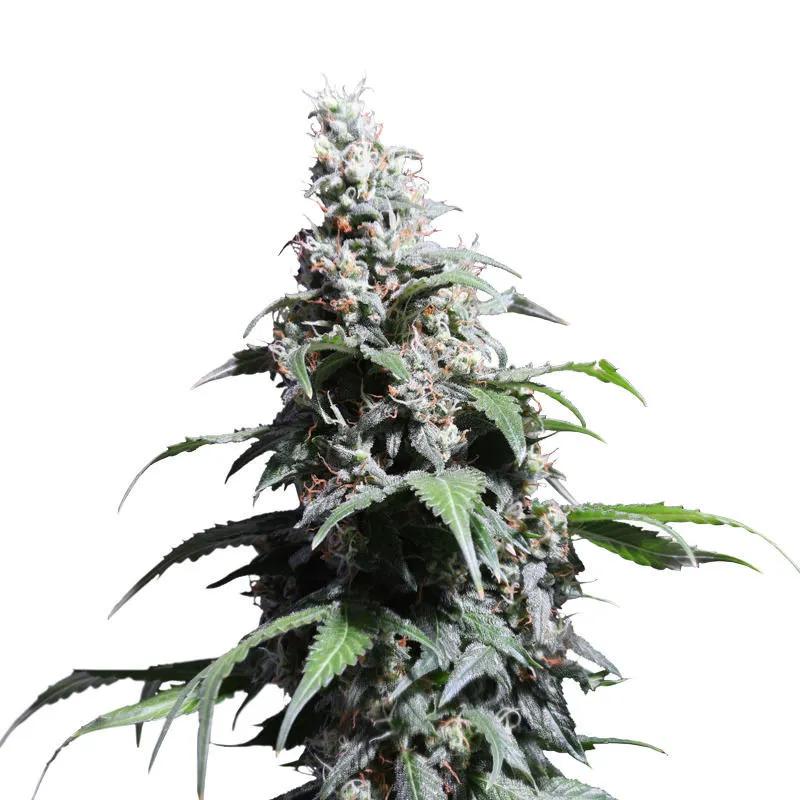
Pineapple Poison Feminised Cannabis Seeds by Super Sativa Seed Club
Pineapple Poison is a 60% sativa-dominant feminised cannabis seed bred by the legendary Super Sativa Seed Club in Amsterdam. She crosses an old-school Pineapple Skunk mother with a Dutch cut of Durban Poison, producing a plant that grows like a proper sativa — tall, bright-green, thin-fingered leaves — but finishes faster and fights harder than most sativa-leaning genetics you'll find. If you've been eyeing sativa grows but worried about the fuss, this one's your entry point.
Why Pineapple Poison Seeds Deserve a Spot in Your Garden
Most sativa-dominant strains come with a list of caveats: long flowering times, lanky stretch that outgrows your tent, sensitivity to mould, and a general attitude of "good luck, mate." Pineapple Poison sidesteps nearly all of that. The 40% indica genetics from the Durban Poison side inject resilience and vigour into the frame without dulling the sativa character. You still get the towering stature, the generous internodal spacing, and the bright, thin-fingered fan leaves — but the plant actually cooperates.
We've seen growers lose interest in sativas after one bad run with a 14-week flowering monster that stretched into the lights. Pineapple Poison finishes in 8 to 10 weeks, which puts her right in line with many indica-dominant strains. That's a meaningful difference when you're counting electricity bills or racing against autumn weather outdoors. And speaking of outdoors: this is where she truly shines. Planted directly in the ground or in a large pot with plenty of root space, Pineapple Poison can produce up to 1000 grams per plant. That's not a typo — she's a genuine producer when given room to stretch.
The honest limitation? Indoors, she still grows to medium-tall heights. If you're working with a 60x60 tent with limited vertical clearance, you'll need to top or train her early. She's manageable, but she's not a compact indica that stays put on her own. In a taller tent or a dedicated grow room, she's no trouble at all. Skilled indoor growers can pull up to 450 grams per square metre with proper light and feeding.
Pineapple Poison Grow Specs and Seed Specifications
| Specification | Detail |
|---|---|
| Seed Bank | Super Sativa Seed Club (Amsterdam) |
| Genetics | Pineapple (Skunk) x Durban Poison (Dutch cut) |
| Type | Feminised photoperiod |
| Sativa / Indica | 60% / 40% |
| Flowering Time | 8-10 weeks |
| Indoor Yield | Up to 450 g/m² |
| Outdoor Yield | Up to 1000 g/plant |
| Height | Medium to tall |
| Resistance | Mould resistant, pest resistant |
| Seeds per Pack | 3 |
| SKU | CSSC0030 |
Growing Pineapple Poison: What to Expect from Seed to Harvest
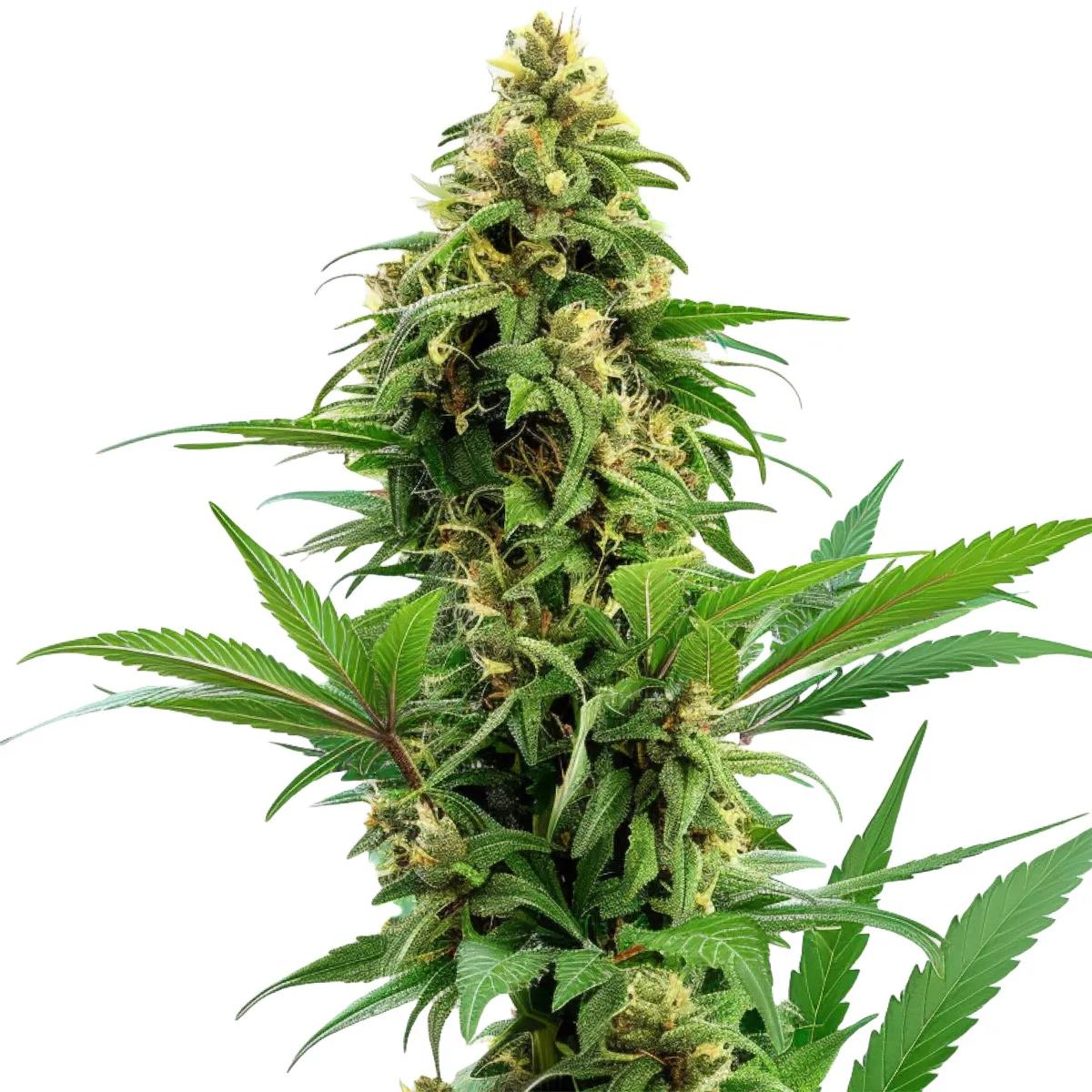
Pineapple Poison's growth pattern tells you exactly what she is — a sativa that's been given a sturdier backbone. During veg, expect fairly rapid vertical growth with noticeable spacing between nodes. The leaves are classic sativa: slim, bright green, and plentiful. She responds well to topping and LST (low-stress training), which is worth doing indoors to keep the canopy even and maximise light penetration to lower bud sites.
Outdoors is where Pineapple Poison really earns her keep. Her natural mould and pest resistance — inherited from both the hardy Skunk lineage and the robust Durban Poison genetics — means she handles damp European autumns far better than most sativa-leaning plants. According to a study on consumer perceptions of cannabis strain differences, Durban Poison consistently scored high in both potency perception and consumer interest (Elzinga et al., 2015, PMC5798829), which speaks to the quality of genetics feeding into this cross.
One thing we'd flag: don't skimp on nutrients during the stretch phase. When she flips to flower, Pineapple Poison can put on significant height in the first two to three weeks. Feed her well, support the branches if needed, and she'll reward you with dense, resinous colas that smell like a tropical fruit bowl left in the sun.
Aroma, Flavour, and the Pineapple Poison Smoking Experience
This is where the name earns itself. Crack open a cured bud of Pineapple Poison and you get hit with a sweet, unmistakably tropical pineapple scent — sharp and tangy, with a skunky undertone that reminds you of her old-school heritage. The Durban Poison side adds a spicy, almost anise-like edge that keeps things interesting. It's not a one-note fruit strain; there's genuine depth in the terpene profile.
The smoke itself is smooth for a sativa-dominant strain. You'll taste the pineapple sweetness on the inhale, followed by a peppery, earthy finish on the exhale. According to research on human olfactory discrimination of cannabis genetic variation (de la Fuente et al., 2022, PMC9651054), genetically cohesive strains tend to produce more consistent and identifiable aromatic profiles — and Pineapple Poison's lineage is about as well-defined as it gets.
The effect leans sativa: uplifting, cerebral, and energetic. The 40% indica presence rounds off the edges, so you're not likely to feel wired or anxious. It's the kind of smoke you'd reach for on a Saturday afternoon when you've still got things to do but want to enjoy doing them. Traditionally, Durban Poison has been valued for its clear-headed, functional character, and that shines through here.
How to Grow Pineapple Poison Feminised Seeds
- Germinate your seeds using the paper towel method or directly in a moist propagation plug. Pineapple Poison seeds tend to be vigorous germinators — expect taproots within 24-72 hours.
- Transplant seedlings into small pots (0.5-1L) once the first true leaves appear. Use a light, airy growing medium with good drainage.
- Move to final containers once the plant has 4-5 nodes. For indoor grows, 11-15L pots work well. Outdoors, go as large as you can — 30L minimum, or plant directly in the ground for maximum yield potential.
- Top the main stem above the 4th or 5th node to encourage lateral branching. This is especially important indoors where vertical space is limited. LST (bending and tying branches) further improves canopy evenness.
- Veg for 4-6 weeks indoors before flipping to 12/12. Outdoors, she'll naturally begin flowering as daylight hours decrease in late summer.
- During the first 2-3 weeks of flower (the stretch), increase phosphorus and potassium while tapering nitrogen. Support heavy branches with stakes or a trellis net.
- Monitor trichomes from week 7 onwards. Harvest when trichomes shift from clear to mostly milky with a few amber heads — typically between weeks 8 and 10 of flower.
- Dry in a dark, ventilated space at 18-21°C and 55-60% humidity for 7-14 days. Cure in glass jars for at least 2 weeks, burping daily for the first few days.
Pineapple Poison vs Other Sativa-Dominant Seeds
If you're comparing options, here's how Pineapple Poison stacks up against two other popular sativa-leaning strains we carry:
| Trait | Pineapple Poison (SSSC) | Durban Poison (typical) | Pineapple Haze (typical) |
|---|---|---|---|
| Sativa % | 60% | 100% | 70% |
| Flowering Time | 8-10 weeks | 8-9 weeks | 10-12 weeks |
| Outdoor Yield | Up to 1000 g/plant | 400-500 g/plant | 600-800 g/plant |
| Mould Resistance | Strong | Moderate | Low-Moderate |
| Beginner Friendly | Yes | Yes | Not really |
| Dominant Aroma | Tropical pineapple, skunk | Spicy, earthy, anise | Sweet pineapple, haze |
We'd pick Pineapple Poison over a pure Durban Poison if yield is a priority, and over a Pineapple Haze if you don't want to babysit a 12-week flowering sativa through a wet October. She hits the sweet spot between the two.
Complete your grow setup with a proper propagation kit for germination and a quality carbon filter if you're running indoors — Pineapple Poison's tropical terpenes are lovely, but your neighbours might have opinions. Pair these seeds with a reliable pH meter and CalMag supplement to keep her fed through that sativa stretch.
Related products



You might also like
Medical disclaimer. This content is for informational purposes only and does not constitute medical advice. Consult a qualified healthcare provider before use of any substance.