
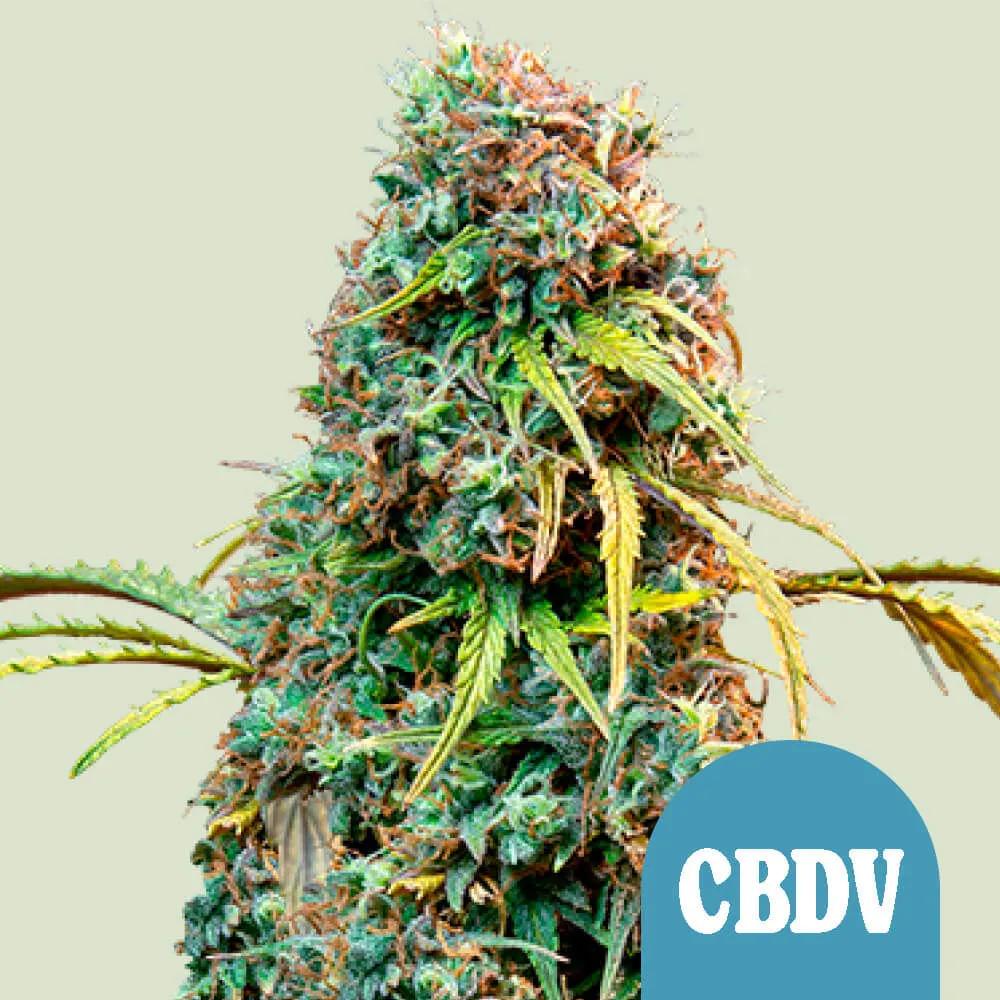
Royal CBDV Autoflower Cannabis Seeds
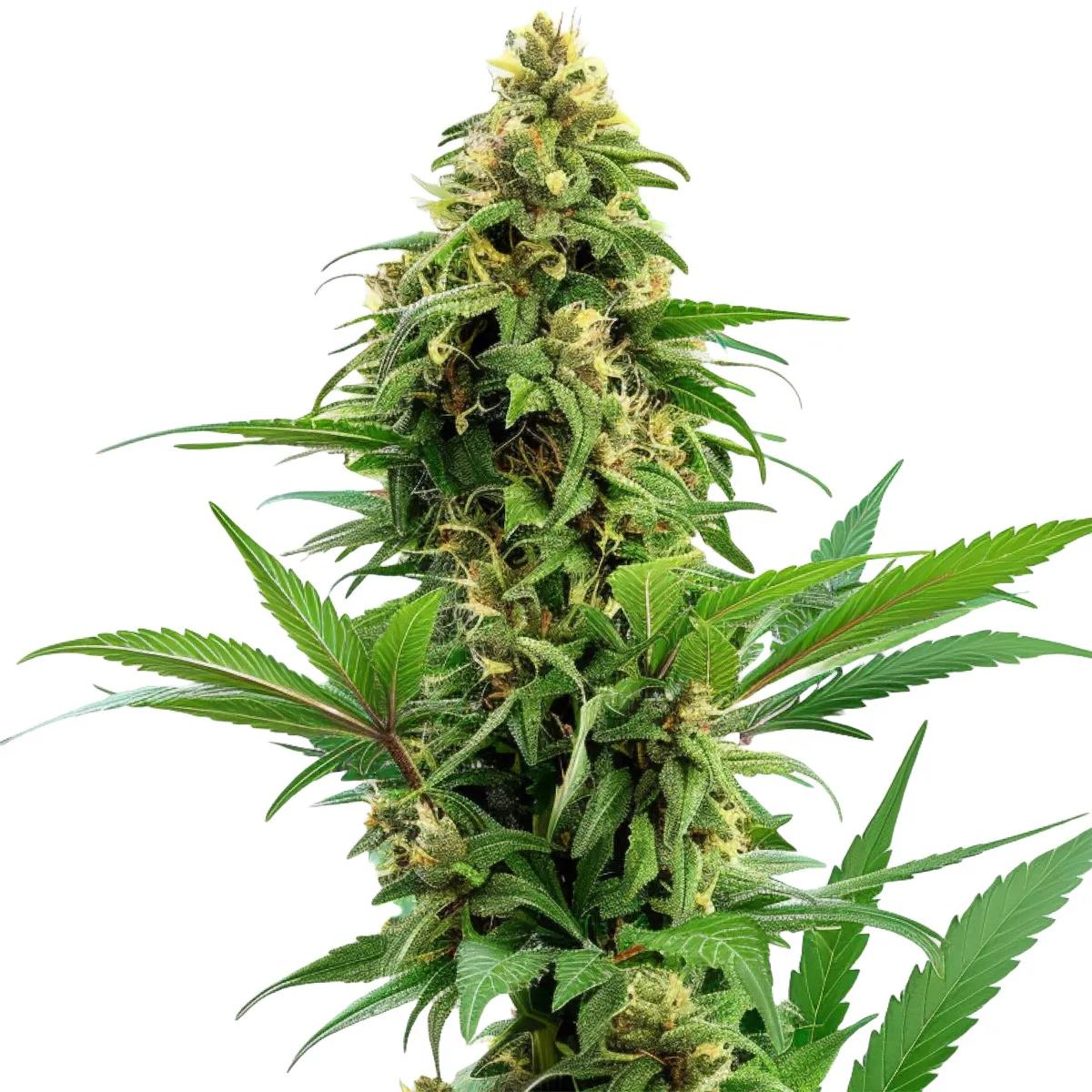
Royal CBDV Autoflower is a non-intoxicating autoflowering cannabis seed from Royal Queen Seeds that delivers high levels of both CBDV (cannabidivarin — a lesser-known cannabinoid attracting growing research interest) and CBD, with virtually no THC. Created by crossing Solomatic CBD with Durban Poison, this sativa-dominant auto produces resinous, forest-scented buds in just 8–9 weeks from seed. If you want cannabinoid-rich flower without any psychotropic effects, this is where you start.
Pack Sizes
Royal CBDV Autoflower is available in packs of 1, 3, 5, or 10 seeds. Growing a single seed first is a smart move if you want to see how she performs in your specific setup before committing to a full run. For a proper harvest — enough to keep a steady rotation — the 5- or 10-pack gives you room to select the best phenotypes and fill out a grow space properly.
Genetics: Solomatic CBD x Durban Poison
Royal Queen Seeds built this strain by crossing two heavy hitters from opposite ends of the spectrum. Solomatic CBD is one of the most CBD-rich genetics in their catalogue — a three-way cross of Diesel CBD, Asia CBD Auto, and an undisclosed CBD-dominant line. Durban Poison brings landrace sativa vigour from South Africa: fast growth, sturdy structure, and that unmistakable earthy-pine terpene profile. The result is a plant that channels its energy into cannabinoid production rather than THC, landing at roughly 5% CBDV, 5% CBD, and a negligible 0.3% THC.
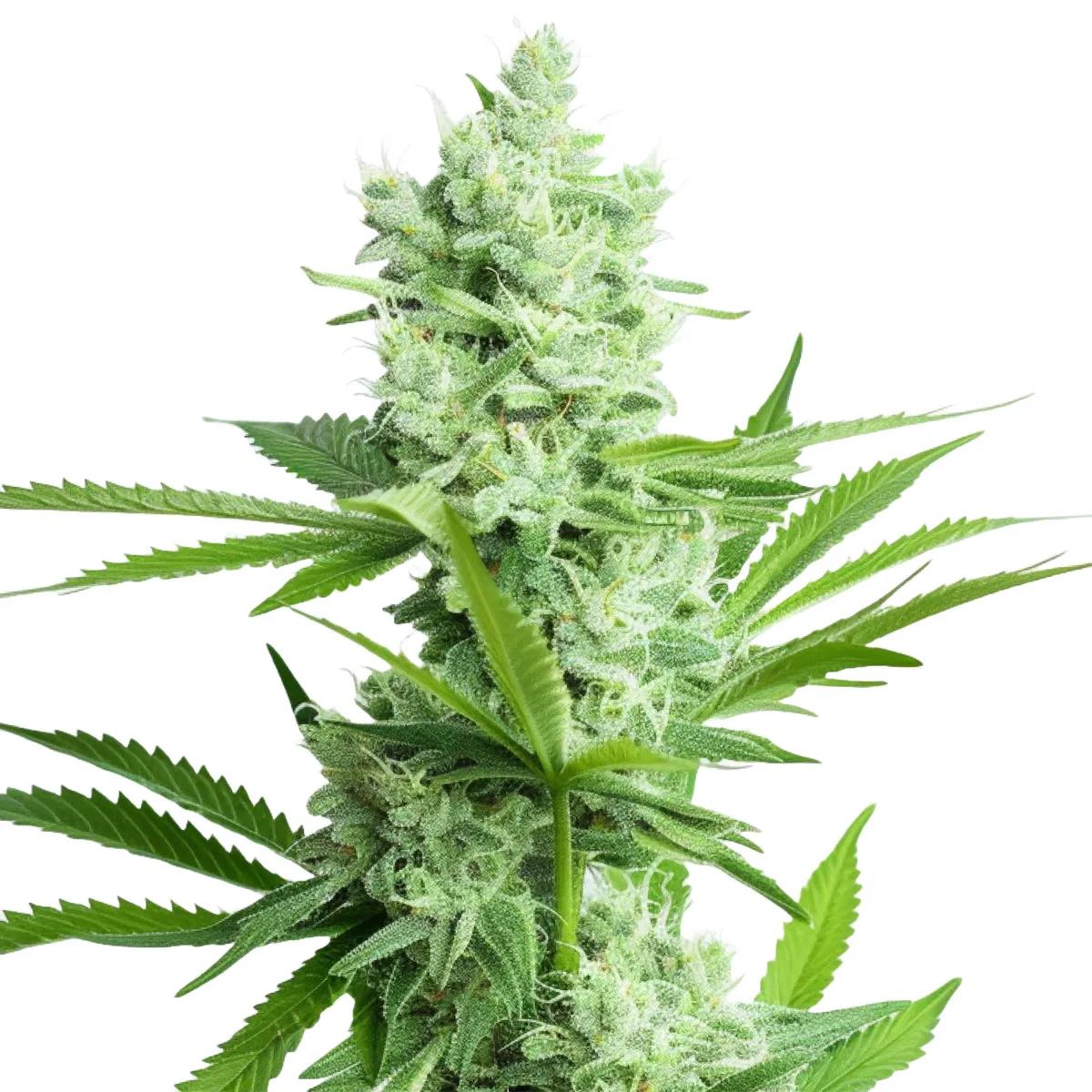
That Durban Poison influence shows up in the growth pattern too. Royal CBDV Autoflower stays compact but pushes out dense, resinous colas that punch above their weight class for a plant this size. The autoflowering genetics (ruderalis heritage) mean she flowers on her own internal clock — no light-cycle manipulation needed.
What Is CBDV and Why Does It Matter?
CBDV (cannabidivarin) is a non-intoxicating cannabinoid structurally similar to CBD but with its own distinct research profile. It won't get you high — not even slightly. What makes it interesting is the emerging science. According to a study published in the British Journal of Pharmacology, CBDV-rich cannabis extracts demonstrated significant anticonvulsant effects in three seizure models, and these effects were not mediated by the CB1 receptor (PMC3792005). Separately, research published in the International Journal of Molecular Sciences found that CBDV significantly decreased levels of IL-6 in astrocytes, suggesting potential protective effects against neuroinflammation (PMC8380798).
This is still early-stage research — nobody is calling CBDV a cure for anything, and we'd side-eye anyone who did. But the fact that Royal Queen Seeds developed a strain specifically to maximise CBDV content tells you the industry sees where this is heading. In studies, participants tolerated daily doses of 10mg CBDV without intoxicating effects. The most commonly reported side effects of cannabinoid use in general, according to a review in Cannabis and Cannabinoid Research, were tiredness, diarrhoea, and changes in appetite/weight (PMC5569602).
Growing Royal CBDV Autoflower Seeds
This is one of the most forgiving autos we've come across, and we've seen a lot of autoflowers pass through over the years. The autoflowering genetics mean Royal CBDV runs on her own schedule — plant the seed, provide light, water, and nutrients, and she does the rest. No need to flip to 12/12. No need to stress about light leaks. She finishes her entire life cycle in 8–9 weeks from germination, which is genuinely fast even by autoflower standards.
Indoors, expect heights between 60–80cm. That's compact enough for a small tent — even a 60x60cm space can accommodate a couple of these comfortably. Despite the modest stature, yields are respectable: 375–450g/m² under proper lighting and feeding. She responds well to 18/6 or 20/4 light schedules throughout her entire life.
Outdoors, she handles cooler climates without complaint. That Durban Poison backbone gives her resilience, and the autoflowering genetics mean she doesn't depend on shortening daylight hours to trigger flowering. If you're in Northern Europe and tired of strains that need a Mediterranean summer to finish, Royal CBDV Autoflower is a solid pick. Outdoor plants reach 80–110cm and can yield 30–80g per plant depending on conditions.
| Specification | Detail |
|---|---|
| Seed bank | Royal Queen Seeds |
| Genetics | Solomatic CBD x Durban Poison |
| Type | Autoflowering, feminised |
| Dominance | Sativa-dominant |
| CBDV content | 5% |
| CBD content | 5% |
| THC content | 0.3% |
| Seed to harvest | 8–9 weeks |
| Indoor height | 60–80cm |
| Outdoor height | 80–110cm |
| Indoor yield | 375–450g/m² |
| Outdoor yield | 30–80g/plant |
| Climate tolerance | Cool to warm; greenhouse compatible |
| Available packs | 1, 3, 5, or 10 seeds |
Growing indoors? Pair Royal CBDV Autoflower with a complete grow tent kit — she's compact enough for even the smallest setups. If you're after another non-intoxicating option to compare, RQS also offers Solomatic CBD Auto, which shares half the parentage and leans more heavily on the CBD side.
Why Grow a CBDV-Rich Strain?
Most growers chase THC. Fair enough — it's the headliner. But there's a growing crowd who want cannabinoid-rich flower without the intoxication. Maybe you want to make your own extracts. Maybe you're interested in the entourage effect — the idea that cannabinoids work better together than in isolation — and you want CBDV alongside CBD rather than a pure isolate. Or maybe you just want a plant you can harvest, dry, and use at any time of day without it affecting your ability to function.
The honest limitation here: Royal CBDV Autoflower won't deliver the kind of yields you'd get from a photoperiod giant. At 60–80cm indoors, she's not filling a SCROG net from edge to edge. But that trade-off buys you speed (8–9 weeks, done) and simplicity (no light schedule changes, no sexing). For the cannabinoid profile she delivers, that's a deal we'd take.
We'd pick Royal CBDV Autoflower over most CBD-only strains because you're getting two cannabinoids in meaningful concentrations — 5% CBDV and 5% CBD — from one plant. That's uncommon. Most "CBD strains" give you CBD and trace amounts of everything else. This one actually delivers on the CBDV promise.
Flavour and Aroma of Royal CBDV
Crack open a cured bud and you get hit with pine forest first — sharp, resinous, like snapping a fresh spruce branch. Underneath that sits an earthy, almost savoury quality that comes through on the exhale. It's not sweet, not fruity, not trying to taste like a dessert. Think woodland floor after rain. The Durban Poison lineage contributes that classic earthy-spice backbone, while the CBD-heavy Solomatic side keeps things smooth and rounded rather than harsh.
The effect is described by Royal Queen Seeds as soothing and relaxing — a body-level calm without mental fog. At 0.3% THC, there is no psychotropic component to speak of. You could use this flower in the morning before work or late at night before bed without noticing a difference in your headspace.
How to Grow Royal CBDV Autoflower
- Germinate your seed using the paper towel method or directly in a small pot of moist, light soil mix. Keep temperatures between 22–25°C for fastest germination, typically within 24–72 hours.
- Transplant the seedling into its final container once the taproot emerges. For autos, we'd go straight to the final pot — 7–11 litres is the sweet spot. Transplant shock can stunt autoflowers since they're on a fixed clock.
- Set your indoor light schedule to 18 hours on, 6 hours off. Some growers run 20/4 for autos. Either works. Royal CBDV Autoflower isn't fussy about this.
- Feed lightly during the first two weeks — seedlings don't need much. From week three onward, introduce a balanced vegetative nutrient at half the recommended strength and increase gradually.
- Switch to bloom nutrients once you see the first pre-flowers, usually around week 3–4. She'll stretch slightly during this transition, then focus energy on bud production.
- Maintain humidity around 50–60% during veg, dropping to 40–50% during flower to prevent mould. Good airflow is non-negotiable, especially once those dense colas start stacking.
- Flush with plain water for the final 5–7 days before harvest. Trichomes should be mostly cloudy with a few amber ones. At 8–9 weeks from seed, check daily — she finishes fast.
- Harvest, trim, and hang-dry in a dark room at 18–20°C and 55–60% humidity for 7–10 days. Cure in glass jars for at least two weeks for the best flavour development.
Frequently Asked Questions
What is CBDV and how is it different from CBD?
CBDV (cannabidivarin) is a non-intoxicating cannabinoid structurally similar to CBD but with a slightly shorter molecular side chain. Both are non-psychotropic, but CBDV is the subject of separate research — notably, preclinical studies have observed anticonvulsant properties distinct from CBD's mechanisms (PMC3792005). Royal CBDV Autoflower produces roughly equal amounts of both: 5% CBDV and 5% CBD.
Will Royal CBDV Autoflower get me high?
No. With THC at just 0.3%, there is no psychotropic effect. You could smoke, vape, or extract this flower and remain completely clear-headed. That's the entire point of this strain.
How long does Royal CBDV Autoflower take from seed to harvest?
8–9 weeks from germination to harvest. That's the full life cycle — no separate veg and flower periods to manage. She flowers automatically regardless of your light schedule.
Can I grow Royal CBDV Autoflower outdoors in a cold climate?
Yes. The Durban Poison genetics give her solid resilience, and autoflowering plants don't depend on seasonal light changes. She handles cooler Northern European climates well. Just avoid planting during frost — she's tough, not invincible.
What yields can I expect from Royal CBDV Autoflower indoors?
Under good conditions — proper lighting, nutrients, and airflow — expect 375–450g/m². That's strong for an autoflower of this size (60–80cm). Light intensity is the biggest yield lever with compact autos like this.
Are there any side effects associated with CBDV?
Research on CBDV specifically is still limited. For cannabinoids in general, the most commonly reported side effects are tiredness, diarrhoea, and changes in appetite or weight, according to a review in Cannabis and Cannabinoid Research (PMC5569602). CBDV is not intoxicating and is generally well-tolerated in studies at doses of 10mg daily.
What does Royal CBDV Autoflower taste like?
Pine-forward with an earthy, savoury undertone. Not sweet, not fruity — more like a walk through a damp forest. The Durban Poison heritage gives it that classic spicy-earth character. Smooth on the exhale.
Last updated: April 2026
Related products
You might also like
Medical disclaimer. This content is for informational purposes only and does not constitute medical advice. Consult a qualified healthcare provider before use of any substance.