
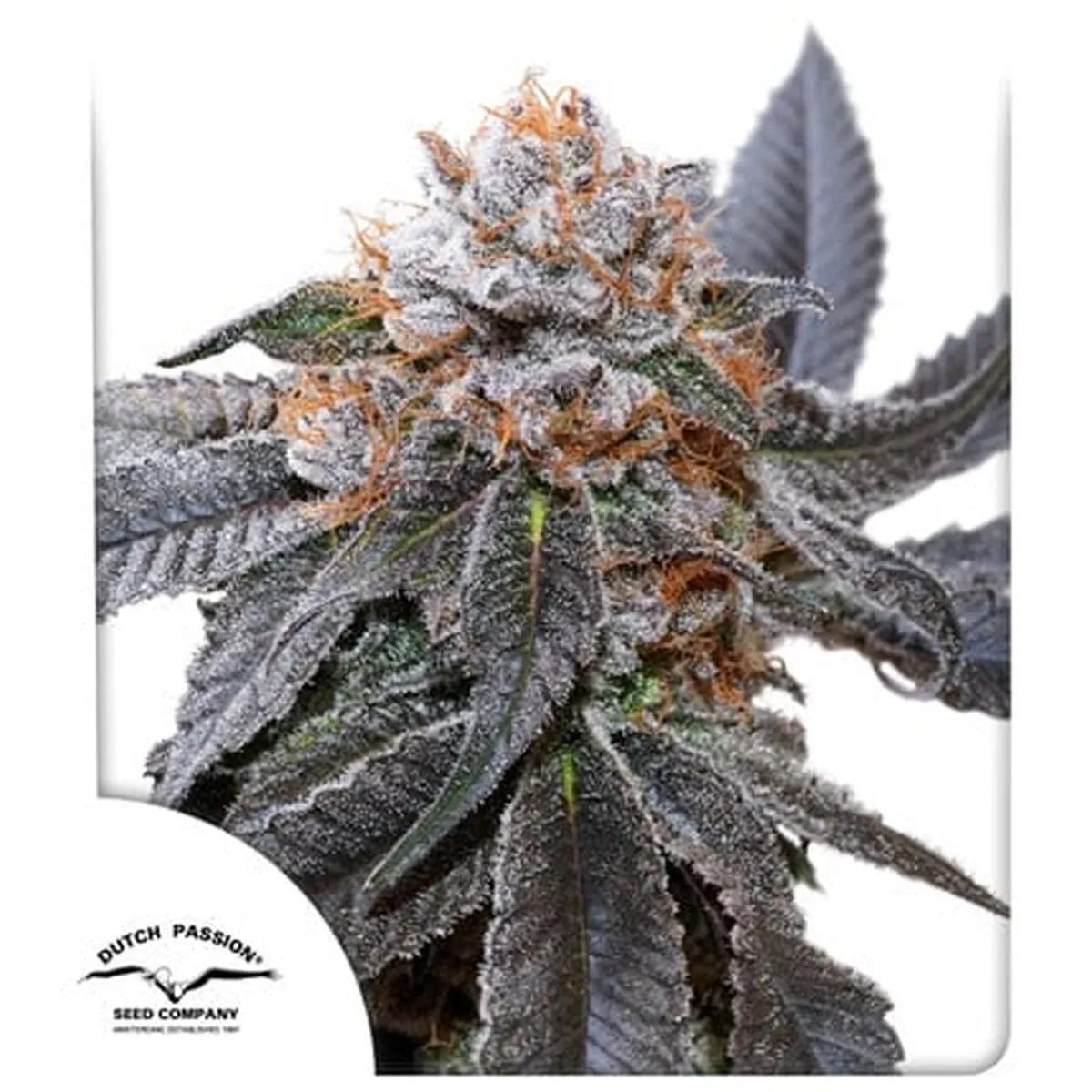
Pack: 3 seeds
Blue Zushi Cannabis Seeds by Dutch Passion
Blue Zushi seeds produce a high-THC indica-dominant hybrid cannabis plant from Dutch Passion, bred from a cross of Kush Mints and Zkittlez — two of North America's most coveted genetic lines. Buy Blue Zushi seeds if you want up to 26% THC, an 8–9 week flowering time, and a terpene profile that smells like a fruit stand collided with a petrol station. This is dispensary-grade cannabis you grow at home. Sold in packs of 3 feminised seeds.
This guide is written for adults aged 18 and over. The growing characteristics and cannabinoid data below apply to mature plants cultivated by experienced or learning growers.
Why Blue Zushi Seeds Deserve a Spot in Your Garden
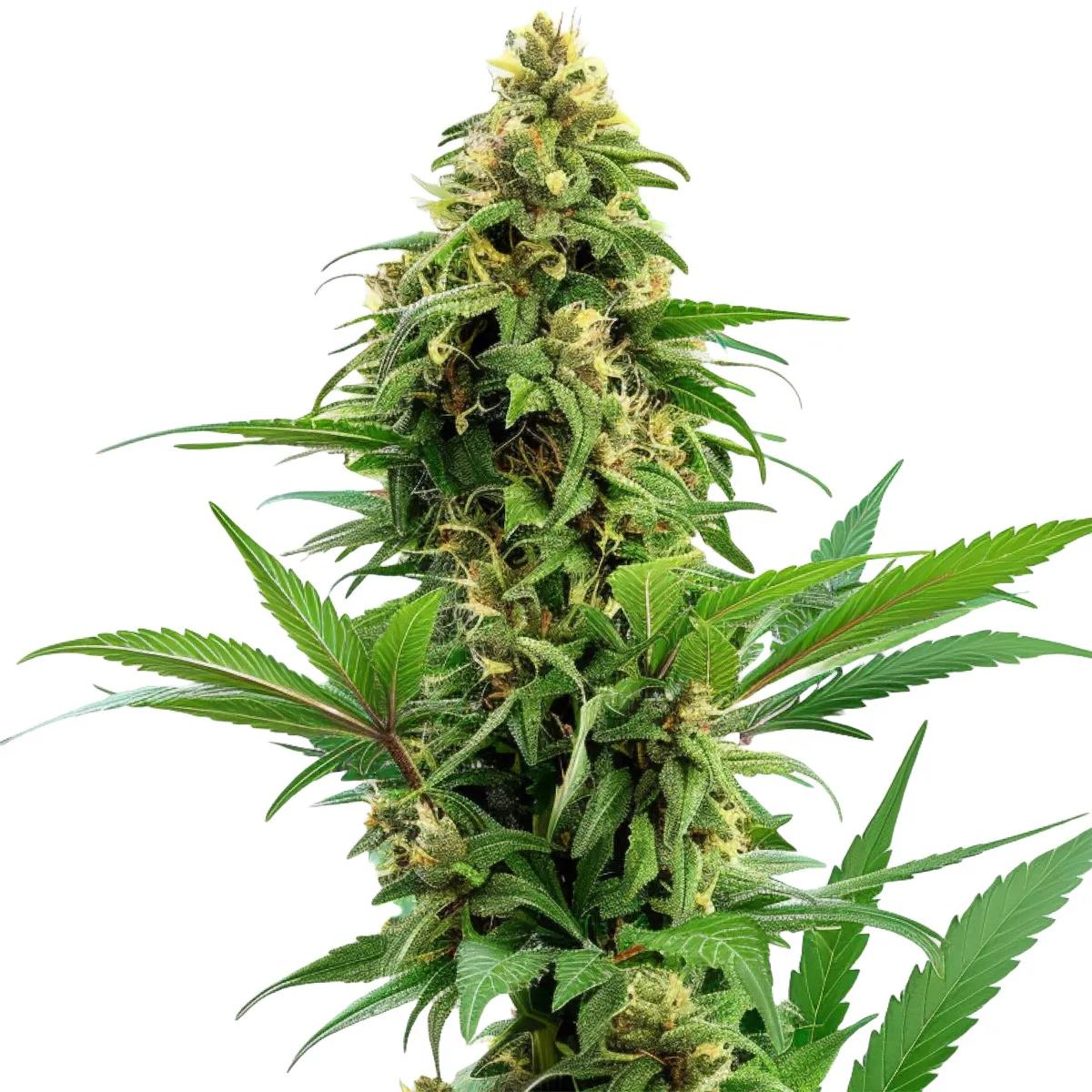
Blue Zushi is one of the most terpene-complex feminised strains currently available from Dutch Passion, combining five dominant terpenes with THC levels up to 26%. The seeds produce stout, vigorous plants with compact nodal spacing and strong side branches — textbook indica architecture. If you've grown Zkittlez or anything from the Kush Mints line before, you'll recognise the structure: short internodes, thick stems, and a canopy that practically begs for a ScrOG net. The genetics come from Dutch Passion's selection of top-tier US breeding stock, so you're getting American flavour profiles backed by decades of Dutch seed-making precision.
What actually sets Blue Zushi apart from the dozen other "USA genetics" strains on the market right now? The terpene combination. We're talking limonene, linalool, caryophyllene, terpinolene, and myrcene all present in notable quantities. That's 5 dominant terpenes — most strains lean on 2 or 3. The result is a complex aroma: fresh and candied fruit up front, sour lemon in the middle, and a gassy, earthy finish that lingers in the room. Crack open a curing jar and your nose will tell you this isn't a one-note strain.
The honest limitation? Blue Zushi is an indoor specialist. She'll grow outdoors in regions with short, cool summers — Dutch Passion says so themselves — but if you want to see what 26% THC and those dense, resin-packed colas actually look like, give her good soil, strong lights, and a controlled environment. Outdoors in a British or Northern European summer, you'll get decent results but probably won't hit that ceiling.
Blue Zushi Growing Specifications
Blue Zushi is a feminised photoperiod indica-dominant hybrid that flowers in 8–9 weeks and reaches up to 26% THC under optimal conditions. The full specifications are listed below.
| Specification | Detail |
|---|---|
| Seed Bank | Dutch Passion |
| Genetics | Kush Mints x Zkittlez |
| Type | Feminised photoperiod |
| Dominance | Indica-dominant hybrid |
| THC Content | Up to 26% |
| Flowering Time | 8–9 weeks |
| Plant Structure | Stout, compact nodal spacing, strong side branches |
| Yield | Heavy (dense indica colas) |
| Dominant Terpenes | Limonene, linalool, caryophyllene, terpinolene, myrcene |
| Aroma Profile | Candied fruit, sour lemon, earth, gas |
| Seeds per Pack | 3 |
| Best Environment | Indoor (outdoor possible in short, cool summers) |
Blue Zushi Terpene Profile — What You'll Actually Smell and Taste
Blue Zushi contains five dominant terpenes — limonene, linalool, caryophyllene, terpinolene, and myrcene — which is unusually complex for a single cannabis cultivar. We get asked about terpenes constantly, so here's what each one contributes in plain terms:
Limonene — the sharp citrus hit you get when you first open the jar. Think lemon zest, not lemon candy. It's bright and cuts through the heavier notes immediately.
Linalool — floral and slightly sweet. This is the terpene that gives lavender its scent. In Blue Zushi, it softens the sour edges and adds a layer of sweetness to the smoke.
Caryophyllene — peppery and warm. Also found in black pepper and cloves. This is the earthy, spicy backbone of the strain's aroma. Caryophyllene is also one of the few terpenes that interacts with CB2 receptors, a finding documented in research reviewed by the Beckley Foundation's cannabis science programme.
Terpinolene — herbal and slightly piney. Less common as a dominant terpene, which makes Blue Zushi's profile unusual. It adds a fresh, almost woody quality.
Myrcene — the classic "dank" terpene. Earthy, musky, with a hint of ripe fruit. Myrcene is the most common terpene in cannabis overall, and in Blue Zushi it anchors the whole profile with that unmistakable gassy undertone.
The combination of all five is what makes Blue Zushi smell like candied fruit and petrol at the same time. It's not subtle — visitors will comment on it during flowering, and your curing jars will fill the room when opened.
How to Grow Blue Zushi Seeds
Blue Zushi seeds germinate reliably and grow into compact, trainable plants that finish flowering in 8–9 weeks under a 12/12 light cycle. Follow these steps for best results:
- Germinate your seeds. Use the paper towel method or soak directly in water for 12–24 hours until taproots emerge. Blue Zushi feminised seeds have strong germination rates, but keep temperatures between 20–25°C for best results.
- Transplant into your medium. Good soil is what Dutch Passion recommends for Blue Zushi specifically. A well-aerated organic mix with perlite works well. If you're running coco or hydro, she'll respond fine — just watch your EC levels as indica-dominant plants can be sensitive to overfeeding in early veg.
- Veg under 18/6 lighting. Blue Zushi's compact nodal spacing and strong side branches make her an excellent candidate for low-stress training (LST) or ScrOG. She stays stout, so you won't need to fight vertical stretch. 3–4 weeks of veg is typically enough indoors.
- Flip to 12/12 to trigger flowering. This is where Blue Zushi starts to show her colours. Expect thick cola development within the first 2–3 weeks of bloom, with resin production ramping up significantly from week 5 onwards.
- Harvest at 8–9 weeks of flowering. Check trichomes with a jeweller's loupe — you're looking for mostly cloudy with a few amber heads for peak potency. The dense indica buds will be visibly frosted by this point.
- Dry and cure properly. Hang-dry in a dark room at 18–20°C and 55–60% humidity for 10–14 days. Then jar-cure for at least 2 weeks. With Blue Zushi's terpene load, the cure is where the magic happens — that candied fruit and gas aroma develops and deepens over time.
Blue Zushi Compared to Similar Dutch Passion Strains
Blue Zushi sits at the top of Dutch Passion's range for THC potency and terpene complexity, outperforming Mokum's Tulip on both counts and matching Banana Blaze on strength while flowering a week faster. Here's how they compare side by side:
| Feature | Blue Zushi | Mokum's Tulip | Banana Blaze |
|---|---|---|---|
| Genetics | Kush Mints x Zkittlez | Dutch Passion original | Dutch Passion original |
| THC | Up to 26% | Up to 21% | Up to 25% |
| Flowering Time | 8–9 weeks | 8–9 weeks | 9–10 weeks |
| Dominance | Indica-dominant | Indica-dominant | Indica-dominant |
| Aroma | Candied fruit, lemon, gas | Sweet, earthy | Banana, tropical |
| Best For | US-style potency and terps | Classic Dutch indica | Fruity flavour chasers |
If you want the American dispensary experience from Dutch genetics, order Blue Zushi. Mokum's Tulip is a solid choice if you prefer a more traditional Dutch indica profile with slightly lower THC. Banana Blaze takes a week longer to flower but delivers a different flavour spectrum — more tropical, less gassy. We'd pick Blue Zushi if potency and terpene complexity are your top priorities. For growers who want to compare even more options, Dutch Passion's full feminised seed range and the Azarius cannabis seeds category page are worth browsing.
Complete your grow setup: If you're running Blue Zushi indoors, pair these seeds with a quality grow tent and LED light kit. A carbon filter is non-negotiable with this strain — the terpene output during weeks 5–8 of flowering is intense, and your neighbours will know about it without proper filtration. Also worth grabbing: a jeweller's loupe for trichome checking at harvest time, plus a digital hygrometer to keep humidity dialled in during late flower.
What to Watch Out For When Growing Blue Zushi
Blue Zushi's dense indica bud structure makes humidity management the single most important factor in avoiding mould during late flowering. The compact nodal spacing and thick colas that make her so productive also make her susceptible to moisture issues. Keep your relative humidity below 50% from week 6 of flowering onwards — ideally closer to 40–45% in the final 2 weeks.
The other thing: don't overfeed her. Indica-dominant hybrids with this kind of genetic background tend to be efficient feeders. Start at 50–60% of your nutrient manufacturer's recommended strength and work up based on how the plant responds. Burnt tips in week 3 of flower means you've already lost potential — those leaves don't recover, and they're the solar panels your buds need.
One more honest note — "up to 26% THC" means exactly that: up to. You'll hit those numbers with dialled-in conditions, strong lighting (600W HPS minimum or equivalent LED), and proper nutrition. A first-time grower with a budget light in a cupboard will still get good bud, but probably in the 18–22% range. Still excellent — just manage expectations.
Frequently Asked Questions
How long does Blue Zushi take from seed to harvest?
Roughly 11–13 weeks total: 3–4 weeks of vegetative growth plus 8–9 weeks of flowering. Add 10–14 days for drying and at least 2 weeks of curing. From popping the seed to smoking, you're looking at about 4 months.
Is Blue Zushi suitable for beginner growers?
Yes, with a caveat. Her compact structure and strong branching make training straightforward, and the 8–9 week flowering time is forgiving. The main challenge is humidity management during late flower — those dense colas need good airflow. If you've got a fan and a hygrometer, you'll be fine.
What does Blue Zushi smell like when growing?
Expect a strong aroma from mid-flower onwards. The dominant scent is a mix of sweet, candied fruit and sour lemon, with a gassy, earthy undertone that gets stronger as harvest approaches. A carbon filter is strongly recommended for indoor grows — this strain is not discreet.
Can I grow Blue Zushi outdoors in Northern Europe?
Dutch Passion states Blue Zushi is suitable for regions with short, cool summers, so Northern Europe is technically viable. That said, she performs best indoors where you can control light, temperature, and humidity. Outdoor yields and potency will likely be lower than what's achievable under strong indoor lighting.
What's the difference between Blue Zushi and regular Zkittlez?
Blue Zushi is a cross of Zkittlez and Kush Mints, so she inherits the fruity sweetness of Zkittlez but adds the gassy, earthy, minty edge from the Kush Mints side. THC is typically higher in Blue Zushi (up to 26% vs. 20–23% for most Zkittlez cuts), and the terpene profile is more complex with 5 dominant terpenes rather than 2–3.
How many Blue Zushi seeds come in a pack?
Each pack contains 3 feminised photoperiod seeds. All seeds are bred by Dutch Passion from their selection of US genetics.
What yield can I expect from Blue Zushi indoors?
Dutch Passion describes yields as heavy, with dense, resin-packed colas. Exact gram-per-square-metre figures depend on your setup — light intensity, pot size, and training method all play a role. With a proper ScrOG under strong LEDs, experienced growers can expect generous harvests from this strain's indica structure.
Where can I buy Blue Zushi seeds?
You can get Blue Zushi seeds from Azarius. Each pack contains 3 feminised seeds bred by Dutch Passion, shipped from Amsterdam.
Last updated: April 2026
Related products
You might also like
Medical disclaimer. This content is for informational purposes only and does not constitute medical advice. Consult a qualified healthcare provider before use of any substance.