
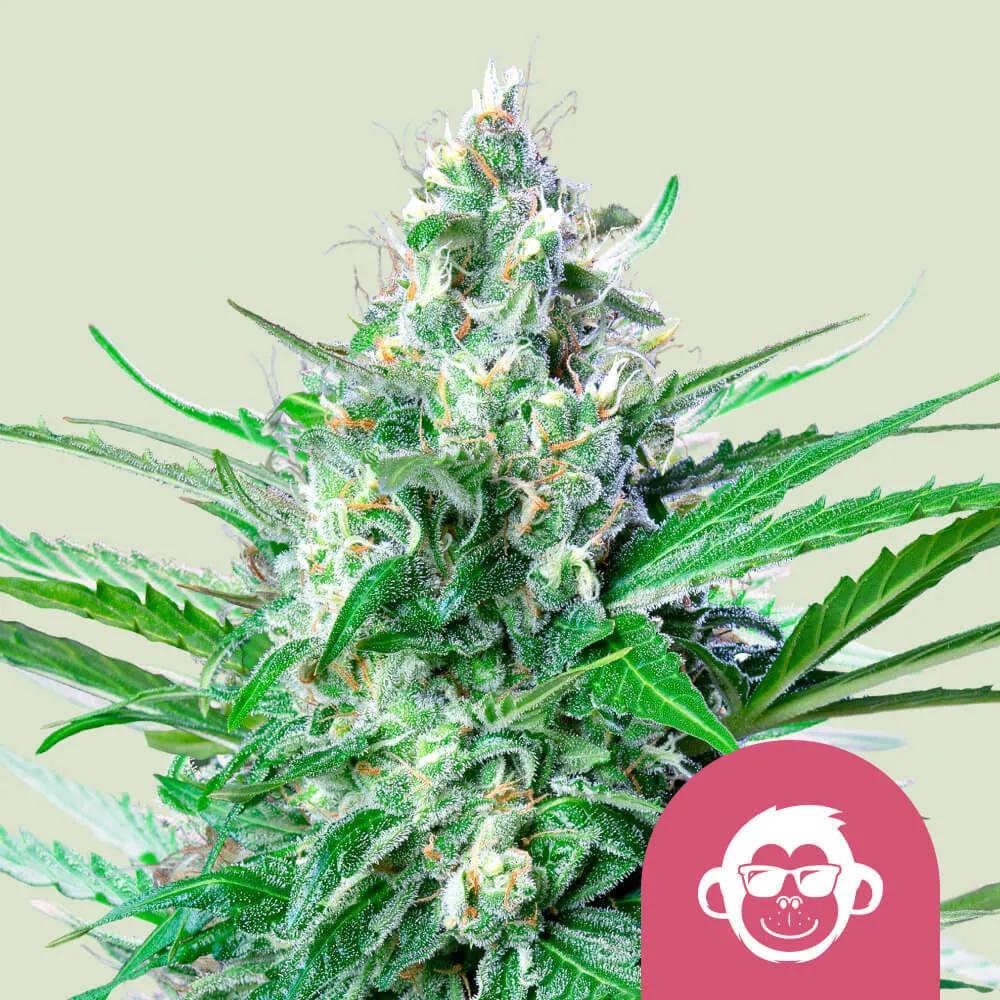
Grape Ape
Cannabis seeds
by Royal Queen Seeds
Grape Ape is a feminized cannabis seed strain from Royal Queen Seeds that crosses Afghani, Mendocino Purps, and Skunk #1 into a 90% indica with up to 20% THC. Originally bred around 2004 in the US, this cultivar has built a devoted following for its dense purple buds, grape-forward aroma, and heavy physical stone. Royal Queen Seeds' breeding team has stabilised the genetics into reliable feminized seeds you can grow indoors or out — stocky plants, manageable heights, and harvests that reward the effort.
Grape Ape Seeds: Why This Indica Hits Different
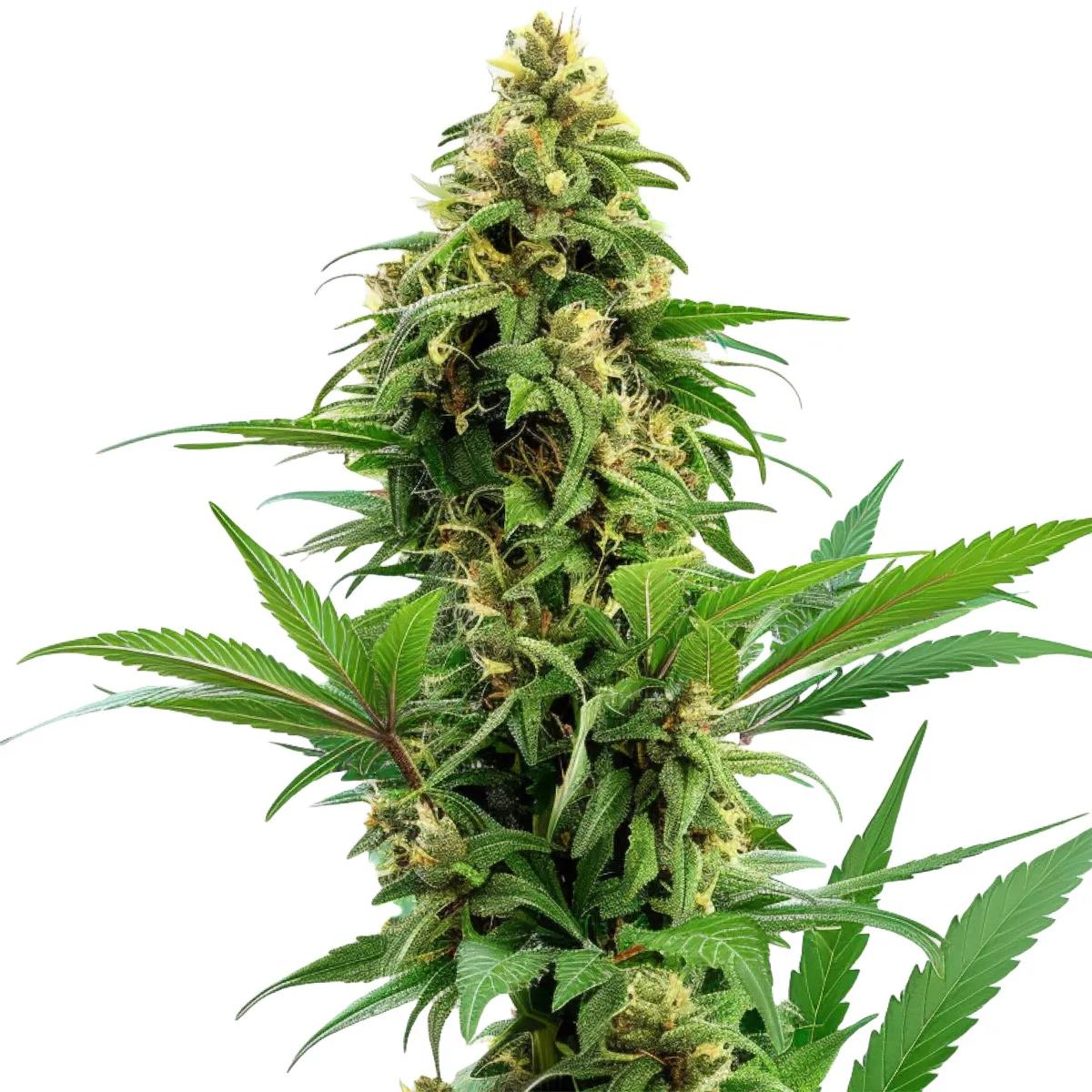
Grape Ape feminized seeds produce plants that smell exactly like they should — crushed dark grapes with a skunky backbone that fills the room the moment you crack a jar. The buds cure into dense, almost rock-hard nuggets shot through with deep purple hues and bright orange pistils. It's the kind of strain where the bag appeal does half the selling before anyone even lights up. At 90% indica and up to 20% THC, the effect is unmistakably physical: heavy limbs, a warm blanket behind the eyes, and the sort of deep calm that pins you to the sofa. According to research published in Cannabis and Cannabinoid Research, terpenoid profiles vary significantly even within named cultivars, so expect some phenotypic variation between plants — but the grape-berry-skunk signature comes through consistently in this RQS line (Elzinga et al., 2015, PMC5436332).
We've carried Royal Queen Seeds for years. Their feminized genetics are stable, germination rates are solid, and their packaging actually protects the seeds during shipping — which sounds basic, but not every seed bank bothers. Grape Ape is one of their stronger catalogue entries: proven genetics, no guesswork on sex, and a grow profile that forgives the odd mistake.
How Many Seeds Do You Need?
| Pack Size | SKU | Best For |
|---|---|---|
| 1 seed | CSRQ0595 | Single-plant test run or a SOG slot |
| 3 seeds | CSRQ0596 | Small tent grow (60x60 or 80x80) |
| 5 seeds | CSRQ0597 | Pheno hunting — pick the best and clone her |
| 10 seeds | CSRQ0598 | Full garden run or keeping a mother plant |
If you're growing Grape Ape for the first time, the 3-pack gives you enough plants to see variation without committing your whole grow space. Grab the 5-pack if you want to find that one standout pheno worth cloning.
Grape Ape Growing Characteristics: Compact, Hardy, Forgiving
Grape Ape feminized seeds grow into stocky, indica-dominant plants with tight internodal spacing and dark green fan leaves that often develop purple edges as temperatures drop at night. Indoors, expect mature heights of 60–100cm — short enough for a standard 120cm tent with room to spare for lights and filters. Outdoors, plants stretch to 160–190cm, still manageable without scaffolding in most gardens.
The minimal stretch during early bloom is a genuine advantage. You won't lose the first two weeks of flower watching your canopy race towards the lights. That compact structure also means Grape Ape responds well to low-stress training and SOG setups. Bend the main stem early, open up the lower bud sites, and you'll get a flat, even canopy that catches light uniformly.
| Growing Spec | Detail |
|---|---|
| Genetics | Afghani x Mendocino Purps x Skunk #1 |
| Type | Feminized photoperiod |
| Indica/Sativa | 90% Indica / 10% Sativa |
| THC | Up to 20% |
| Indoor Height | 60–100cm |
| Outdoor Height | 160–190cm |
| Indoor Flowering Time | 7–9 weeks |
| Outdoor Harvest | Late September |
| Indoor Yield | 450–500g/m² |
| Outdoor Yield | 500–600g/plant |
| Seed Type | Feminized |
| Breeder | Royal Queen Seeds |
Grape Ape Yield and Flowering Time: What to Expect
Indoors, Grape Ape finishes flowering in 7–9 weeks and delivers 450–500g/m² under a decent light setup. That's a strong return for a plant this short — you're getting dense, resinous colas rather than airy popcorn. Outdoors, the late September harvest window means growers in temperate European climates can pull 500–600g per plant and still have time to pop a round of autoflowers before the cold sets in.
One honest watch-out: those dense buds and tight structure mean airflow matters. In humid climates or poorly ventilated tents, Grape Ape's chunky colas can trap moisture. Keep your extraction fan running, defoliate strategically during week 3 of flower, and you'll avoid any mould issues. This isn't a fragile plant — the Afghani genetics give it genuine resilience — but ignoring humidity is how people lose harvests with any dense indica.
Grape Ape Aroma, Flavour, and Terpene Profile
Open a jar of properly cured Grape Ape and the first thing that hits you is sweet, dark grape — not artificial grape flavouring, but the real thing, like walking past a vineyard in late summer. Underneath that sits a layer of berry sweetness from the Mendocino Purps lineage, and then the Skunk #1 backbone kicks in with an earthy, slightly musky funk that grounds the whole profile. According to Elzinga et al. (2015), terpenoid content in cannabis varies significantly by growing conditions and harvest timing (PMC5436332), so your specific terpene expression will depend on your environment — but growers consistently report myrcene, linalool, and pinene as dominant in this cultivar.
The smoke is thick and smooth. You taste the grape on the inhale, the berry sweetness lingers mid-draw, and the exhale leaves that classic skunky earthiness on the palate. It's one of those strains where people who don't usually comment on flavour will stop and say something. The purple colouring in the buds isn't just cosmetic either — it tends to correlate with cooler night temperatures during late flower, so if you can drop your grow room to 18–20°C at lights-off during the last two weeks, you'll get more dramatic colour expression.
Grape Ape Effects: Heavy Indica Stone
At up to 20% THC and 90% indica genetics, Grape Ape delivers exactly what you'd expect from its lineage — a slow-building, full-body stone that starts behind the eyes and works its way down. It's an evening strain. Don't smoke this before you need to do anything productive. The Afghani genetics bring that classic "melting into the sofa" weight, while the Mendocino Purps adds a slightly dreamy, contemplative quality that keeps it from feeling purely sedative.
According to research on Cannabis sativa published in PMC (PMC10967063), cannabis has been used medicinally for thousands of years across Central Asia and beyond, with indica-dominant cultivars traditionally associated with physical relaxation. We're not making medical claims — but Grape Ape's reputation as a nighttime strain is well-earned. This is the one you reach for when the day is done.
The one limitation worth mentioning: if you're after a creative, uplifting, daytime smoke, Grape Ape isn't it. This strain does one thing and does it well — deep relaxation. If you want something more balanced for daytime, look at a hybrid like Royal Queen Seeds' Royal Gorilla or a sativa-leaning option instead. Grape Ape is the closer, not the opener.
Complete your grow setup with a proper carbon filter and extraction fan — Grape Ape gets loud in flower, and those dense colas need airflow. If you're after a daytime counterpart to pair with Grape Ape in your garden, Royal Queen Seeds' Amnesia Haze gives you the opposite end of the spectrum: energetic, cerebral, and sativa-dominant. Two strains, two moods, one grow cycle.
How to Grow Grape Ape Feminized Seeds
- Germinate your seeds using the paper towel method or directly in a starter plug. Keep temperatures at 22–25°C and humidity around 70%. Taproots typically emerge within 24–72 hours.
- Transplant seedlings into their final pots once the first true leaves appear. A 7–11 litre pot works well indoors; outdoor growers can go larger for bigger yields. Use a well-draining soil mix with perlite.
- During vegetative growth, keep your light cycle at 18/6. Grape Ape stays compact, so start low-stress training early — bend the main stem at the 4th or 5th node to open up the canopy and encourage even bud development.
- Flip to 12/12 when your plants reach roughly half the final height you want. Grape Ape stretches minimally in early flower, so what you see at the flip is close to what you get.
- During weeks 3–5 of flower, defoliate any large fan leaves blocking light to lower bud sites. This also improves airflow through those dense colas — critical for preventing moisture buildup.
- In the final two weeks, consider dropping night temperatures to 18–20°C to encourage purple colouration. Flush with plain water for the last 7–10 days before harvest.
- Harvest when 70–80% of trichomes are milky with 10–20% amber. Dry slowly at 18–20°C and 55–60% humidity for 10–14 days, then cure in glass jars for at least two weeks. The grape aroma intensifies dramatically with a proper cure.
Related products
You might also like
Medical disclaimer. This content is for informational purposes only and does not constitute medical advice. Consult a qualified healthcare provider before use of any substance.