
This article discusses psychoactive substances intended for adults (18+). If you have a health condition or take medication, consult a doctor before use. Our age policy
Trip Stoppers: How They Work
Definition
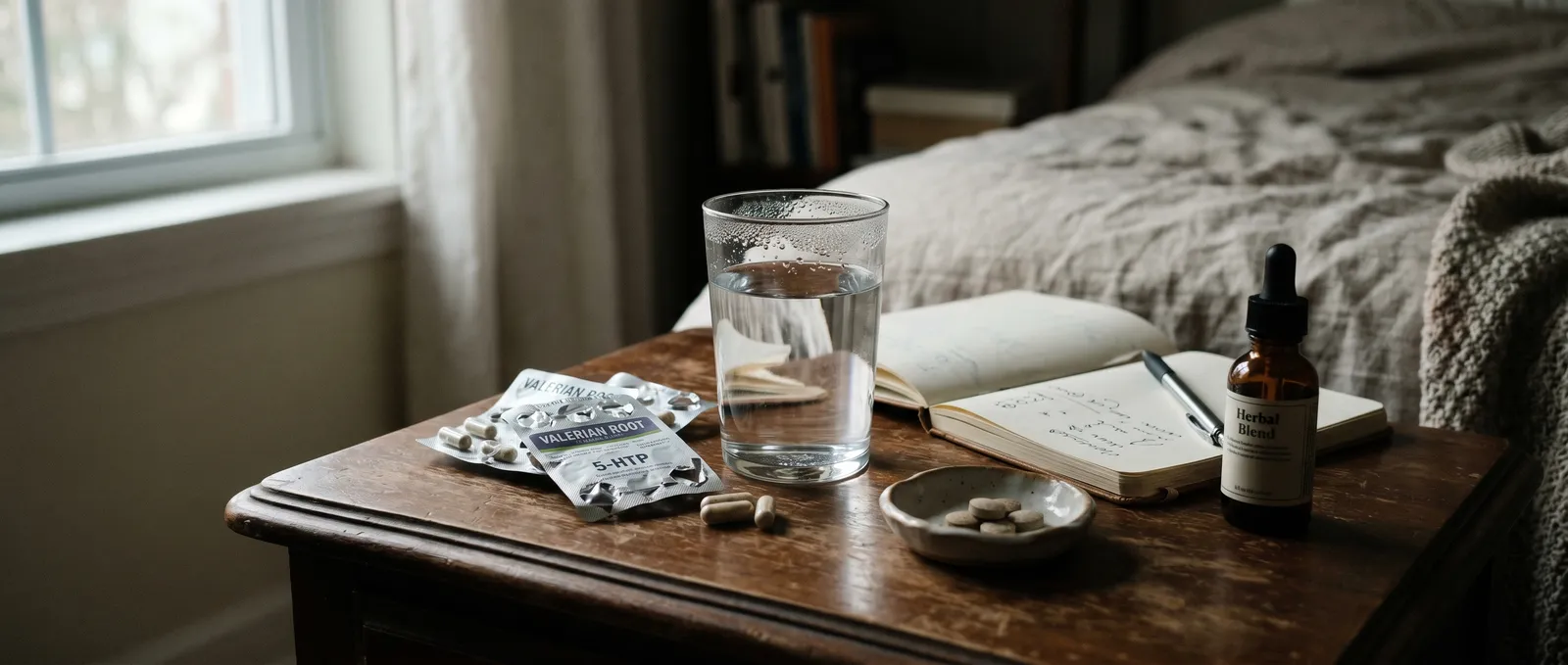
Trip stoppers are supplements or pharmaceutical substances used to reduce the intensity of a difficult psychedelic experience. Supplement-based kits typically contain valerian, maltodextrin, and vitamin C — ingredients that calm anxiety and stabilise blood sugar rather than blocking serotonin receptors directly. They soften the experience but do not end it.
A trip stopper is a supplement or substance that people use to reduce the intensity of a difficult psychedelic experience. These products target anxiety, blood sugar, and nervous system activation rather than blocking serotonin receptors directly. They are not an off switch — nothing is — but certain ingredients can take the edge off anxiety, ground your headspace, and help your body settle. Here we explain how the different mechanisms actually function, what the science says, and what remains genuinely unclear.
Adult audience (18+). The dosing ranges and effects described in this article apply to adult physiology. This content is not intended for minors.
This article is for informational and harm-reduction purposes only. It does not constitute medical advice. The supplements and substances described here are not medicines and are not intended to diagnose, treat, cure, or prevent any disease or medical condition. If you experience severe psychological distress, contact a medical professional or emergency services immediately.
What exactly is a trip stopper?
A trip stopper is any substance used to dampen or reduce the intensity of the effects of a serotonergic psychedelic — most commonly psilocybin (from truffles or mushrooms) or LSD. The term covers everything from pharmaceutical interventions like benzodiazepines and antipsychotics to gentler, over-the-counter options built around valerian, maltodextrin, and vitamin C.
The smartshop variety — the kind you can buy as a supplement kit — typically works through a different route than the pharmaceutical kind. Rather than blocking serotonin receptors directly, these kits aim to reduce peripheral anxiety, stabilise blood sugar, and provide a mild sedative cushion. They will not delete the experience. They can, however, make an uncomfortable one more manageable.
A 2020 survey published in the Journal of Psychopharmacology by Garcia-Romeu, Kersgaard, and Addy found that among individuals reporting difficult psychedelic experiences, the most commonly self-administered interventions were benzodiazepines, followed by reassurance from a sober companion and simple environmental changes (Garcia-Romeu et al., 2020). The supplement-based approach sits in a different category entirely — closer to the "reassurance and environment" side than the pharmaceutical one.
How do pharmaceutical approaches work?
Pharmaceutical approaches work by acting directly on brain receptor systems — either enhancing GABA inhibition or blocking serotonin and dopamine receptors. Benzodiazepines — alprazolam and diazepam being the most commonly reported — do not actually interfere with psychedelic binding at 5-HT2A receptors. What they do is enhance GABA activity in the brain, which dials down anxiety, muscle tension, and the panic response. The perceptual shifts may still be present, but the fear wrapped around them loosens.
Antipsychotics like haloperidol and olanzapine take a more direct approach: they antagonise the 5-HT2A and dopamine D2 receptors, which can genuinely truncate the psychedelic effect. A 2023 analysis in BMJ Evidence-Based Medicine flagged that while antipsychotics are sometimes administered in emergency departments for severe agitation, their use in this context carries risks including akathisia (an unbearable restlessness), dystonia, and cardiovascular effects (Bright et al., 2023). These are prescription medications with their own serious side-effect profiles — not something to keep in a drawer "just in case."
The critical distinction: benzodiazepines soften the experience; antipsychotics can abort it. Neither is officially indicated for this use, and both carry risks — benzodiazepines particularly so when combined with alcohol or other depressants.
How do supplement-based trip stoppers work?
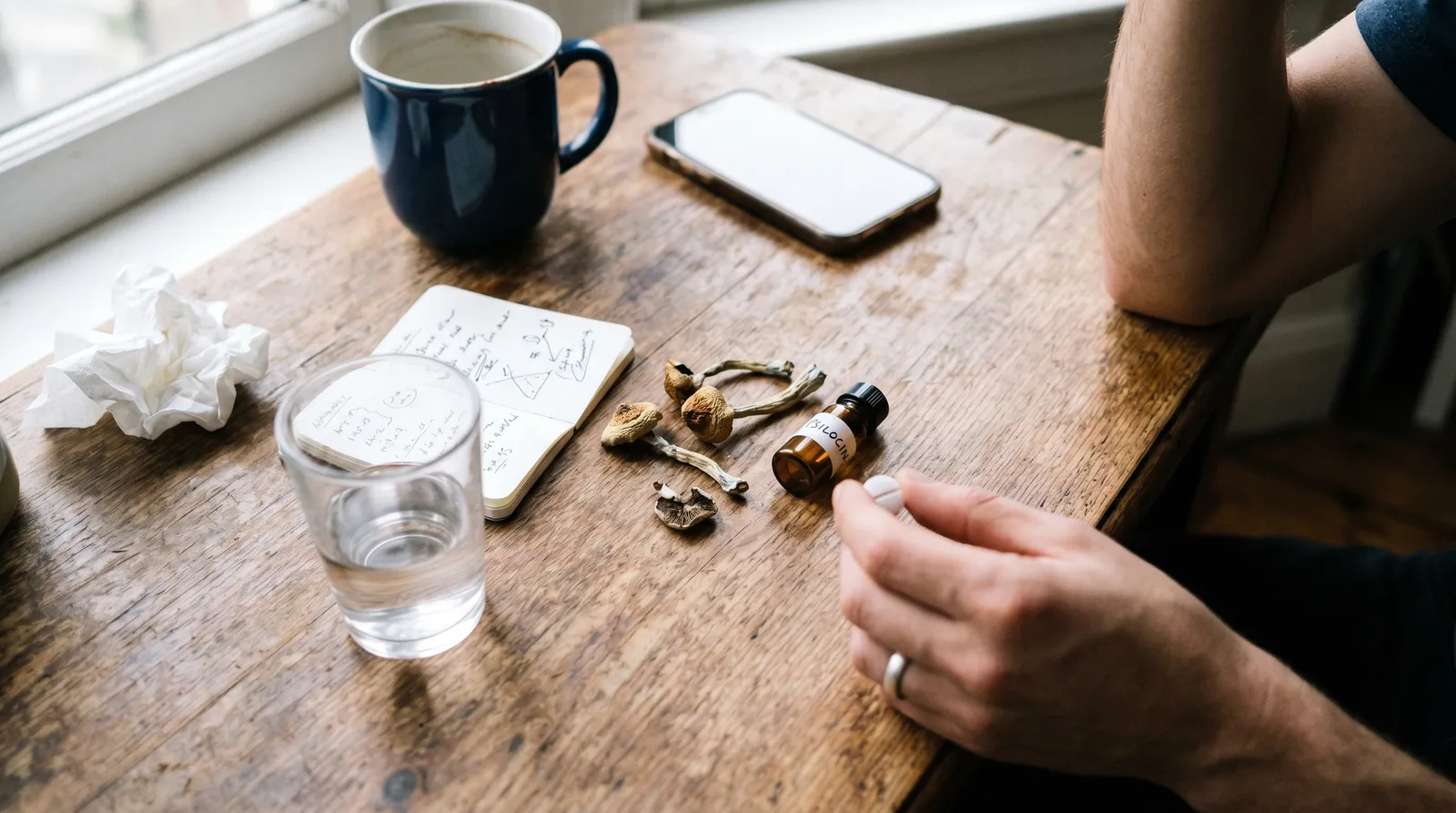
Supplement-based trip stoppers work by calming the nervous system and stabilising the body rather than interfering with serotonin binding. Understanding trip stoppers how they work at the supplement level means looking at each ingredient separately. The typical smartshop kit — such as the Trip Stopper 3000 — contains some combination of valerian root, maltodextrin (a fast-absorbing carbohydrate), and sometimes vitamin C. Each ingredient targets a different piece of the discomfort puzzle:
| Ingredient | Mechanism | Onset | Evidence strength |
|---|---|---|---|
| Valerian root | GABA-A receptor agonism via valerenic acid — mild sedation and anxiolytic effect | 20–30 minutes | Moderate (systematic reviews in non-psychedelic contexts) |
| Maltodextrin | Rapid glucose absorption — addresses blood sugar dips that amplify anxiety and shakiness | 10–15 minutes | Strong (basic physiology, well-established) |
| Vitamin C | Unclear pharmacological role; may function primarily as a placebo anchor and active coping mechanism | Variable | Weak (no controlled data in psychedelic context) |
- Valerian root — acts on GABA-A receptors, producing mild sedation and anxiolytic effects. A 2006 systematic review identified valerenic acid as the primary active compound, with effects comparable to a very low dose of a benzodiazepine — measurable, but modest (Bentley et al., 2006). It will not knock you out. It can help your muscles unclench and your breathing slow.
- Maltodextrin — this one surprises people. It is essentially fast sugar. During an intense experience, blood sugar can dip — especially if you fasted beforehand, which many people do to speed onset. Low blood sugar amplifies anxiety, shakiness, and confusion. A quick glucose hit addresses that physical layer directly. It is not pharmacology so much as basic physiology.
- Vitamin C — the evidence here is thinner. Some users report that high-dose ascorbic acid shortens or reduces intensity, but controlled data supporting this specific claim in the context of psilocybin is essentially absent. What vitamin C does reliably do is provide a placebo anchor — the act of taking something, of doing something active, can itself reduce panic. That is not nothing.
None of these ingredients interact with the 5-HT2A receptor. They work around the edges: calming the nervous system, feeding the body, and giving you a sense of agency when things feel out of control.
Supplement kits vs pharmaceutical interventions
It is worth being honest about where supplement-based stopper kits sit relative to pharmaceutical options. A valerian kit and a benzodiazepine are not in the same league pharmacologically. The supplement approach is gentler, safer, and far less effective at aborting an experience. For most people having a moderately difficult time, that is enough. For someone in genuine crisis, it is not. Knowing the difference matters.
| Approach | Type | Accessibility | Can abort experience? | Safety profile |
|---|---|---|---|---|
| Supplement kit (e.g. Trip Stopper 3000) | Over-the-counter | Available to buy from smartshops | No — reduces anxiety only | Favourable |
| Benzodiazepines | Prescription | Requires medical access | No — softens panic response | Moderate risk (respiratory depression with depressants) |
| Antipsychotics | Prescription | Requires medical access | Yes — blocks 5-HT2A receptors | Higher risk (akathisia, dystonia, cardiovascular) |
Does a supplement-based stopper actually end the experience?
No — a supplement-based stopper does not end the experience. This is worth being direct about, because misunderstanding this point can create its own problems. If someone takes a supplement kit expecting the experience to vanish in 15 minutes, and it does not, the disappointment can actually make the anxiety worse.
What a supplement-based kit can do is reduce the anxiety component within 20–30 minutes, based on the onset profile of valerian's GABAergic activity. The perceptual effects — visual distortions, time dilation, emotional amplification — will still run their course. Psilocin has a plasma half-life of approximately 50 minutes (Hasler et al., 1997), and the subjective effects of a standard truffle dose typically resolve within 4–6 hours regardless of intervention.
The most effective approach in clinical settings is not a pill at all. According to Johnson, Richards, and Griffiths (2008), the single most effective intervention for difficult psychedelic experiences in controlled research is interpersonal support: a calm, sober person offering reassurance, physical grounding (a hand on the shoulder, a blanket), and verbal reminders that the experience is temporary and caused by a substance. Johns Hopkins' psilocybin research programme has used this approach across hundreds of sessions with a serious adverse event rate near zero (Johnson et al., 2008).
When should you actually use one?
You should consider using a stopper kit when anxiety is building during onset or when physical discomfort is feeding psychological distress. Having one on hand is a bit like packing a first-aid kit for a hike — you probably will not need it, but knowing it is in your bag changes how you walk. The psychological safety of having an exit strategy is itself a form of harm reduction.
Practical scenarios where a supplement-based stopper makes sense:
- Rising anxiety during onset — the 30–60 minute window where the effects are building but have not plateaued. This is when most panic happens. A valerian tablet plus some sugar can smooth the climb.
- Physical discomfort — nausea, jaw tension, cold hands. These somatic symptoms feed psychological distress. Addressing the body often calms the mind.
- Someone who wants to feel "done" — even if the stopper will not end the experience, the act of taking it provides a psychological turning point. "I have taken the stopper, now I am on the way down" becomes a self-fulfilling narrative.
For genuinely severe distress — dissociation, psychotic features, or a person who cannot be redirected with verbal support — supplement kits are insufficient. That is the territory where clinical intervention matters, and the Azarius guide on psychedelic safety and harm reduction covers those scenarios in detail.
What about interactions with the psychedelic itself?
Valerian's GABAergic mechanism does not conflict with psilocybin's serotonergic action — they operate on different receptor systems. The combination is generally considered low-risk, which is why valerian appears in most commercial stopper formulations.
Benzodiazepines are a different story. While they are commonly used in emergency settings, combining them with other depressants (alcohol, opioids, GHB) creates genuine respiratory depression risk. Anyone considering pharmaceutical-grade intervention should consult the dedicated Azarius drug interactions guide for full detail on contraindications involving MAOIs, SSRIs, lithium, and CNS depressants. The European Monitoring Centre for Drugs and Drug Addiction (EMCDDA) also provides regularly updated interaction data relevant to European consumers (EMCDDA, 2024).
Vitamin C and maltodextrin have no known pharmacological interactions with serotonergic psychedelics.
What don't we know yet?
Quite a lot remains unknown about trip stoppers how they work in practice. The 2023 BMJ review by Bright and colleagues noted that clinical evidence specifically evaluating interventions to reduce difficult psychedelic experiences is extremely limited — most data comes from emergency department case reports, online harm-reduction forums, and retrospective surveys rather than controlled trials (Bright et al., 2023). No randomised controlled trial has directly compared a valerian-based supplement kit against placebo in the context of a difficult psilocybin experience. The mechanism is plausible, the safety profile is favourable, but the specific efficacy data does not exist yet.
What we do have is roughly 25 years of customer feedback and the broader clinical literature on valerian as an anxiolytic. According to Bentley et al. (2006), valerian demonstrates a mild but real effect on subjective anxiety in non-psychedelic contexts — extrapolating to psychedelic contexts is reasonable but unproven.
What to get and how to prepare
The best preparation is to order a stopper kit like the Trip Stopper 3000 from the Azarius smartshop before your session. You can also get dextrose tablets or buy a sugary drink to have on hand as a backup glucose source. Some people order both a stopper kit and a set of calming herbal teas — chamomile or lemon balm — to cover the later hours when the acute effects are fading but sleep feels far away. For truffle sessions specifically, many customers also pick up the Azarius Psychedelic Trip Preparation Guide alongside their stopper kit.
Preparation matters more than intervention. Set, setting, dosage, and having a trusted sober companion present will do more for your experience than any supplement taken after the fact. The stopper kit is the backup plan. The real plan is everything you do before you start. For a full overview of how to prepare your environment and mindset, see the Azarius psychedelic preparation guide in our encyclopedia. You can also browse the Azarius trip stopper category page for the full range of products we carry, including the Trip Stopper 3000 and individual valerian supplements.
Last updated: April 2026
Frequently Asked Questions
8 questionsCan a trip stopper completely end a psilocybin experience?
How long does it take for a trip stopper to kick in?
Are benzodiazepines safe to use as trip killers?
Is there clinical evidence that supplement-based trip stoppers work?
What is the most effective way to manage a difficult psychedelic experience?
Can I eat food to weaken a psilocybin trip?
Does vitamin C or niacin stop a mushroom trip?
Why do some people drink alcohol to stop a trip?
About this article


Adam Parsons is an external cannabis and psychedelics writer and editor who contributes to Azarius's wiki as both author and reviewer. On the writing side, he authors Azarius's kratom and kanna clusters, drawing on exten
This wiki article was drafted with AI assistance and reviewed by Adam Parsons, External contributor. Editorial oversight by Joshua Askew.
Medical disclaimer. This content is for informational purposes only and does not constitute medical advice. Consult a qualified healthcare provider before use of any substance.
Last reviewed April 18, 2026
References (6)
- [1]Bentley, S. et al. (2006). A review of the pharmacological properties of valerian. Journal of Pharmacy and Pharmacology , 58(4), 459–468.
- [2]Bright, S. et al. (2023). Using 'trip killers' to cut short bad drug trips is potentially dangerous. BMJ Evidence-Based Medicine , 28(5), 291–293.
- [3]EMCDDA (2024). Drug interactions and polydrug use. European Monitoring Centre for Drugs and Drug Addiction.
- [4]Garcia-Romeu, A., Kersgaard, B. & Addy, P.H. (2020). Clinical applications of hallucinogens: A review. Journal of Psychopharmacology , 34(9), 945–960.
- [5]Hasler, F. et al. (1997). Determination of psilocin and 4-hydroxyindole-3-acetic acid in plasma by HPLC-ECD and pharmacokinetic profiles of oral and intravenous psilocybin in man. Pharmaceutica Acta Helvetiae , 72(3), 175–184. DOI: 10.1016/s0031-6865(97)00014-9
- [6]Johnson, M.W., Richards, W.A. & Griffiths, R.R. (2008). Human hallucinogen research: guidelines for safety. Journal of Psychopharmacology , 22(6), 603–620. DOI: 10.1177/0269881108093587
Related Articles

Hawaiian Baby Woodrose Sourcing
Hawaiian baby woodrose sourcing is a practice that covers how to obtain quality Argyreia nervosa seeds — a vine whose seeds contain LSA (lysergic acid amide).
LSA Legal Status in Europe
LSA (lysergic acid amide, or ergine) occupies a legal grey zone across Europe — rarely scheduled as a compound, yet subject to varied NPS legislation that…

Ololiuqui Mazatec Tradition: Ceremonial Seeds of the Sierra Mazateca
Ololiuqui — the seeds of Turbina corymbosa — played a specific ceremonial role among the Mazatec people of Oaxaca, distinct from their better-known use of…

Morning Glory LSA Plants Family
Morning glory LSA plants family is a group of Convolvulaceae vines whose seeds contain d-lysergic acid amide (ergine), a naturally occurring tryptamine first…
Hawaiian Baby Woodrose Plant Botany
Argyreia nervosa, commonly called Hawaiian baby woodrose, is a perennial climbing vine native to the Indian subcontinent, not Hawai'i.

Magic Truffle Quality Indicators
Magic truffle quality indicators are the measurable and sensory characteristics — psilocybin content, texture, aroma, packaging integrity, and storage…

Mescaline Cactus Market Observations
Mescaline cactus market observations is a research and retail term that describes the shifting patterns in sourcing, species selection, and consumption of…

Growing Mescaline Cacti as Ornamental Plants
Growing mescaline cacti ornamental is a horticultural practice that involves cultivating species like San Pedro, Peruvian Torch, and peyote for their…
Commercial Magic Truffle Cultivation
Commercial magic truffle cultivation is a large-scale agricultural process that produces psilocybin-containing sclerotia in climate-controlled indoor…