
This article discusses psychoactive substances intended for adults (18+). If you have a health condition or take medication, consult a doctor before use. Our age policy
Psilocybin Tolerance Frequency

Definition
Psilocybin tolerance frequency is a pharmacological pattern describing how quickly repeated psilocybin use builds tolerance and how long the body needs to fully reset. Tolerance develops within hours of a single dose, takes 10–14 days to clear, and extends to other serotonergic psychedelics like LSD and mescaline through cross-tolerance at the 5-HT2A receptor.
How rapidly repeated psilocybin use builds tolerance — and how long the body needs between sessions for full sensitivity to return — is a pharmacological concept worth understanding. The short answer: tolerance develops fast, within hours of a single dose, and takes roughly 10–14 days to fully reset. This rapid pattern of tolerance onset and recovery is actually one of the reasons psilocybin is not considered addictive in the traditional sense — your body essentially says "no thanks" if you try to dose again the next day. Understanding how often you can use psilocybin before tolerance interferes helps you plan sessions effectively, whether you're exploring full doses or microdosing protocols.
Adult audience (18+). The dosing ranges and effects described in this article apply to adult physiology. This content is not intended for minors.
How Fast Does Psilocybin Tolerance Actually Build?
A single dose of psilocybin produces near-complete tolerance to a second dose taken within 24 hours. In a classic study by Isbell (1961), subjects who received psilocybin daily showed substantially diminished responses by the third or fourth consecutive day — and by day seven, even doubled doses produced minimal effects. The mechanism behind this rapid desensitisation with repeated use is straightforward: psilocybin's active metabolite, psilocin, works primarily by binding to serotonin 2A receptors (5-HT2AR). Repeated stimulation causes these receptors to internalise — they literally pull back from the cell surface, reducing the number available for psilocin to activate.
A 2022 mouse study published in Neuropsychopharmacology by Haberzettl et al. confirmed that tolerance to the 5-HT2AR-mediated head-twitch response (the standard animal model for psychedelic effects) developed after just 1–4 daily doses, depending on the compound tested. The receptors don't vanish permanently — they recycle back to the surface once the repeated stimulation stops. But the process isn't instant.
How Long Does It Take for Psilocybin Tolerance to Fully Reset?
Full psilocybin tolerance reset takes approximately 10–14 days based on both clinical observation and receptor pharmacology. After Isbell's (1961) subjects stopped daily dosing, full responsiveness returned within approximately two weeks. More recent survey data supports this recommended spacing between sessions: a large observational study by Ona et al. (2022), published in Journal of Psychopharmacology, found that users who spaced sessions at least 14 days apart reported consistent effect intensity, while those dosing more frequently reported diminished responses.
That said, the 14-day figure isn't a hard biological switch — it's a general guideline. Some people report near-full sensitivity after 7–10 days; others feel subtle residual tolerance at the two-week mark. Individual variation in receptor density, metabolism, and body composition all play a role, though controlled data on these individual differences remains limited.
| Days Since Last Dose | Estimated Sensitivity | Practical Implication |
|---|---|---|
| 0–1 days | ~10–20% of baseline | Redosing essentially ineffective |
| 2–3 days | ~30–40% of baseline | Noticeably weaker experience |
| 4–6 days | ~50–70% of baseline | Partial effects; many report "flat" quality |
| 7–10 days | ~70–90% of baseline | Most people feel near-normal sensitivity |
| 14+ days | ~100% of baseline | Full reset for most individuals |
| Substance | Tolerance Onset | Full Reset Period | Cross-Tolerance with Psilocybin? |
|---|---|---|---|
| Psilocybin | Within hours | 10–14 days | N/A |
| LSD | Within hours | 10–14 days | Yes (strong) |
| Mescaline | Within hours | ~14 days | Yes (strong) |
| Cannabis | Gradual (weeks) | 2–4+ weeks | No |
| MDMA | After single dose | 6–12 weeks recommended | No |
| DMT (smoked) | Minimal | Minimal needed | Unclear |
Does Psilocybin Tolerance Affect Other Psychedelics Too?
Yes — psilocybin shows strong cross-tolerance with other serotonergic psychedelics, particularly LSD and mescaline. Because all three primarily activate the same 5-HT2A receptors, downregulation from one compound reduces sensitivity to the others. Haberzettl et al. (2022) demonstrated this directly in mice: tolerance to psilocybin-induced head-twitch responses transferred to LSD-induced responses and vice versa.
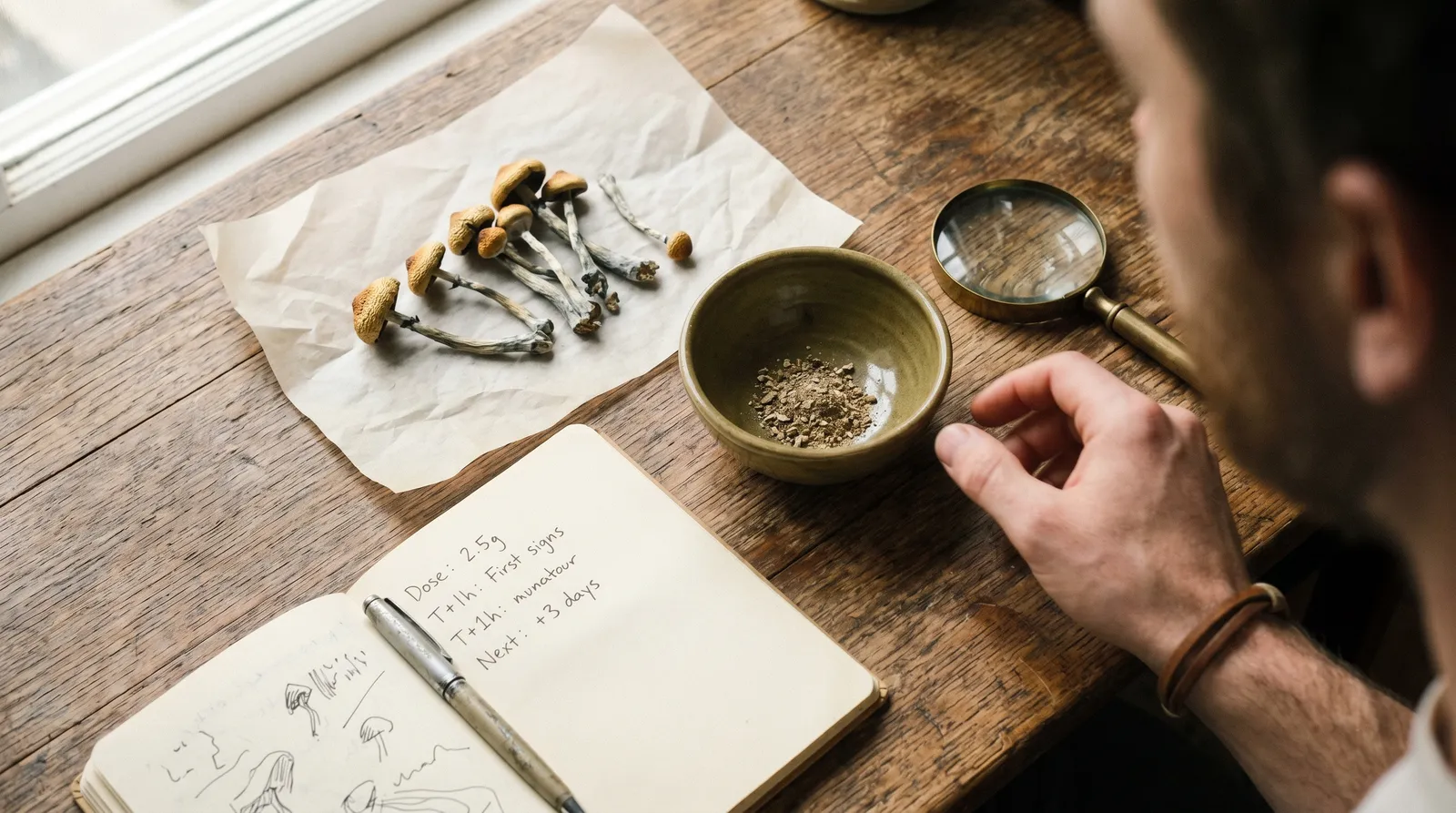
Practically, this means taking LSD on a Monday and psilocybin on a Thursday will likely produce a noticeably weaker psilocybin experience. The 14-day reset window for how often you can dose psilocybin without diminished effects applies across these compounds, not just within a single substance. Compounds that work through different primary mechanisms — MDMA (serotonin release rather than 5-HT2A agonism) or ketamine (NMDA antagonism) — do not share this cross-tolerance, though combining substances carries its own distinct risks covered in our psilocybin drug interactions wiki article.
Does Microdosing Lead to Psilocybin Tolerance?
The evidence suggests some tolerance may develop, but it is thinner than many microdosing advocates suggest, and no definitive answer exists yet. The most common microdosing protocols (Fadiman's one-day-on, two-days-off; or Stamets's four-days-on, three-days-off) were designed specifically to manage how often psilocybin is taken and avoid tolerance accumulation. A study identifying three psilocybin use patterns by Rootman et al. (2022) found that the "microdoser profile" — about 18% of respondents — used psilocybin 2–4 times per week, typically at sub-perceptual doses around 0.1–0.3 g of dried mushroom (roughly 1–3 mg psilocybin).
Whether these sub-perceptual doses trigger the same receptor downregulation as full doses isn't definitively settled. A double-blind study by Marschall et al. (2022), published in Translational Psychiatry, found no significant tolerance effects across repeated low doses over several weeks — but the sample sizes were small and the dosing period short. The receptor pharmacology suggests that any 5-HT2A agonism, even at low levels, should produce some degree of downregulation. Whether that matters at sub-perceptual doses is a different question, and one where controlled human data is still catching up to the practice.
Why Does Rapid Tolerance Matter for Safety?
Rapid tolerance functions as a built-in pharmacological safety mechanism against compulsive use. According to the EMCDDA's 2023 Drug Profile on psilocybin, the substance is classified among serotonergic hallucinogens with low toxicity and no documented lethal dose in humans. The speed at which this repeated-use desensitization develops makes compulsive redosing essentially self-defeating — unlike alcohol, opioids, or stimulants, where chasing the effect with higher or more frequent doses is both possible and dangerous.

A 2023 systematic review published by Bream et al. in Frontiers in Psychiatry examined psilocybin across clinical and preclinical evidence and concluded that physical dependence is rare precisely because tolerance renders repeated use unrewarding. This doesn't mean psilocybin is without risks — psychological distress, particularly at high doses or in poor set and setting, remains a real concern. But the way rapid tolerance development limits how often the substance can be used is itself protective against the pattern of escalating use that defines substance dependence.
The one risk tolerance creates is indirect: someone who doesn't wait long enough, notices reduced effects, and decides to take a much larger dose to compensate. If tolerance then partially resets mid-session (unlikely within a single sitting, but a concern with poorly timed redosing), the result can be more intense than anticipated. Clinical studies have used doses of 5–40 mg of pure psilocybin orally (roughly 1–5 g of dried Psilocybe cubensis), with 25 mg being the standard "high dose" in therapeutic trials. Doses above 40 mg were not included in published clinical studies.
Most of what we know about how often one can use psilocybin before tolerance builds comes from studies with small sample sizes, self-reported survey data, or animal models. The 14-day reset figure is well-supported but not individually precise — your personal reset time could be shorter or longer. We don't yet have large-scale controlled human studies tracking receptor recovery in real time. Take the numbers as solid guidelines, not guarantees.
What Spacing Should You Use Between Psilocybin Sessions?
For full-dose sessions, wait at least 14 days between uses — this is the standard recommendation supported by both clinical data and receptor pharmacology. Some researchers and experienced users extend this to 3–4 weeks, not because of how often one can dose without building resistance but for integration — giving yourself time to process the experience before the next one. The Johns Hopkins psilocybin research programme, which has published over 30 peer-reviewed papers since 2006, typically spaces sessions 2–4 weeks apart in their clinical protocols.
For microdosing, the built-in off-days in popular protocols (Fadiman: dose on day 1, off days 2–3, repeat; Stamets: dose days 1–4, off days 5–7, repeat) are designed to stay ahead of tolerance. If you notice diminishing effects over several weeks of microdosing, that's a signal to take a longer break — most practitioners suggest 2–4 weeks off after every 4–8 weeks of dosing.
For detailed guidance on dosing ranges and what to expect at different levels, see our psilocybin dosage wiki article. And if you're combining psilocybin with any medication — particularly lithium, which is considered absolutely contraindicated based on adverse event reports (Nayak et al., 2023), or SSRIs, which may blunt effects — consult our psilocybin drug interactions wiki article before dosing.
How Does Psilocybin Tolerance Frequency Compare to Other Substances?
Psilocybin builds tolerance faster and resets more completely than most other psychoactive substances. This comparison helps put its buildup-and-reset pattern in context:

- Psilocybin vs. LSD: Both develop rapid tolerance on nearly identical timelines (full reset ~14 days), and they share cross-tolerance. LSD's longer duration of action (8–12 hours vs. 4–6 hours) doesn't change the tolerance reset period.
- Psilocybin vs. cannabis: Cannabis tolerance develops more gradually over weeks of daily use and can take 2–4 weeks or longer to fully reset. Psilocybin tolerance frequency is faster to develop but also faster to clear.
- Psilocybin vs. MDMA: MDMA does not share cross-tolerance with psilocybin (different mechanism), but MDMA's recommended spacing is even longer — typically 6–12 weeks — due to serotonin depletion rather than receptor downregulation.
- Psilocybin vs. alcohol: Alcohol tolerance builds slowly with chronic use and involves different neurochemical systems entirely (GABA, glutamate). Unlike psilocybin, alcohol tolerance encourages dose escalation, contributing to dependence risk.
- Psilocybin vs. DMT: Smoked or vaporised DMT appears to produce minimal acute tolerance due to its extremely short duration (~15 minutes), though oral DMT (ayahuasca) follows a psilocybin tolerance frequency pattern closer to psilocybin.
Medical consultation note: If you have a health condition, take prescription medication, or are pregnant or breastfeeding, consult a qualified healthcare provider before using any psychoactive substance. Drug interactions are substance- and dose-dependent, and the information in this article is for educational reference only — it does not replace personalised medical advice.
Last updated: April 2026
Frequently Asked Questions
9 questionsCan you take psilocybin two days in a row?
Does psilocybin tolerance affect LSD sensitivity?
Does microdosing psilocybin cause tolerance buildup?
Why does psilocybin tolerance develop so quickly?
Is rapid psilocybin tolerance a sign of addiction risk?
How long should you wait between psilocybin trips for full effects?
Can you overcome psilocybin tolerance by taking a higher dose?
How long should I wait between psilocybin trips to reset tolerance?
Does eating more mushrooms overcome an active tolerance?
About this article


Adam Parsons is an external cannabis and psychedelics writer and editor who contributes to Azarius's wiki as both author and reviewer. On the writing side, he authors Azarius's kratom and kanna clusters, drawing on exten
This wiki article was drafted with AI assistance and reviewed by Adam Parsons, External contributor. Editorial oversight by Joshua Askew.
Medical disclaimer. This content is for informational purposes only and does not constitute medical advice. Consult a qualified healthcare provider before use of any substance.
Last reviewed April 24, 2026
References (8)
- [1]Isbell, H. (1961). Comparison of the reactions induced by psilocybin and LSD-25 in man. Psychopharmacologia , 1, 29–38.
- [2]Haberzettl, R. et al. (2022). Tolerance and cross-tolerance among psychedelic and nonpsychedelic serotonin 2A receptor agonists in mice. Neuropsychopharmacology , 47(6), 1189–1197.
- [3]Ona, G. et al. (2022). Patterns of psilocybin use and effects: An online survey. Journal of Psychopharmacology , 36(8), 922–932.
- [4]Rootman, J.M. et al. (2022). Psilocybin microdosers demonstrate greater observed improvements in mood and mental health. Scientific Reports , 12, 11091. DOI: 10.1038/s41598-022-14512-3
- [5]Marschall, J. et al. (2022). Psilocybin microdosing does not affect emotion-related symptoms and processing: A preregistered field and lab-based study. Translational Psychiatry , 12, 180.
- [6]EMCDDA (2023). Drug Profile: Psilocybin. European Monitoring Centre for Drugs and Drug Addiction.
- [7]Bream, L. et al. (2023). Systematic review of psilocybin for obsessive-compulsive behaviors across clinical and preclinical evidence. Frontiers in Psychiatry , 14, 1243929.
- [8]Nayak, S.M. et al. (2023). Lithium and psilocybin: Adverse event reports and clinical considerations. Psychopharmacology , 240(7), 1545–1552.
Related Articles
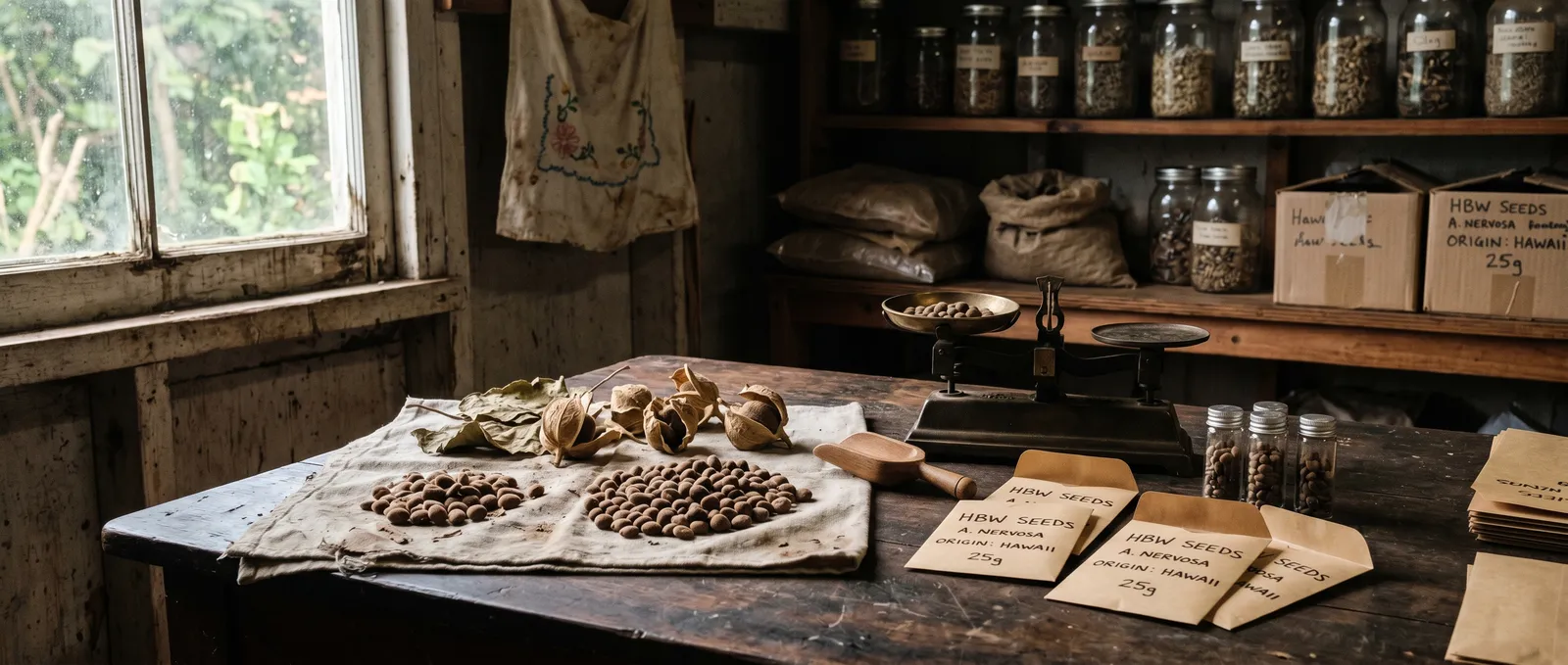
Hawaiian Baby Woodrose Sourcing
Hawaiian baby woodrose sourcing is a practice that covers how to obtain quality Argyreia nervosa seeds — a vine whose seeds contain LSA (lysergic acid amide).

LSA Legal Status in Europe
LSA (lysergic acid amide, or ergine) occupies a legal grey zone across Europe — rarely scheduled as a compound, yet subject to varied NPS legislation that…
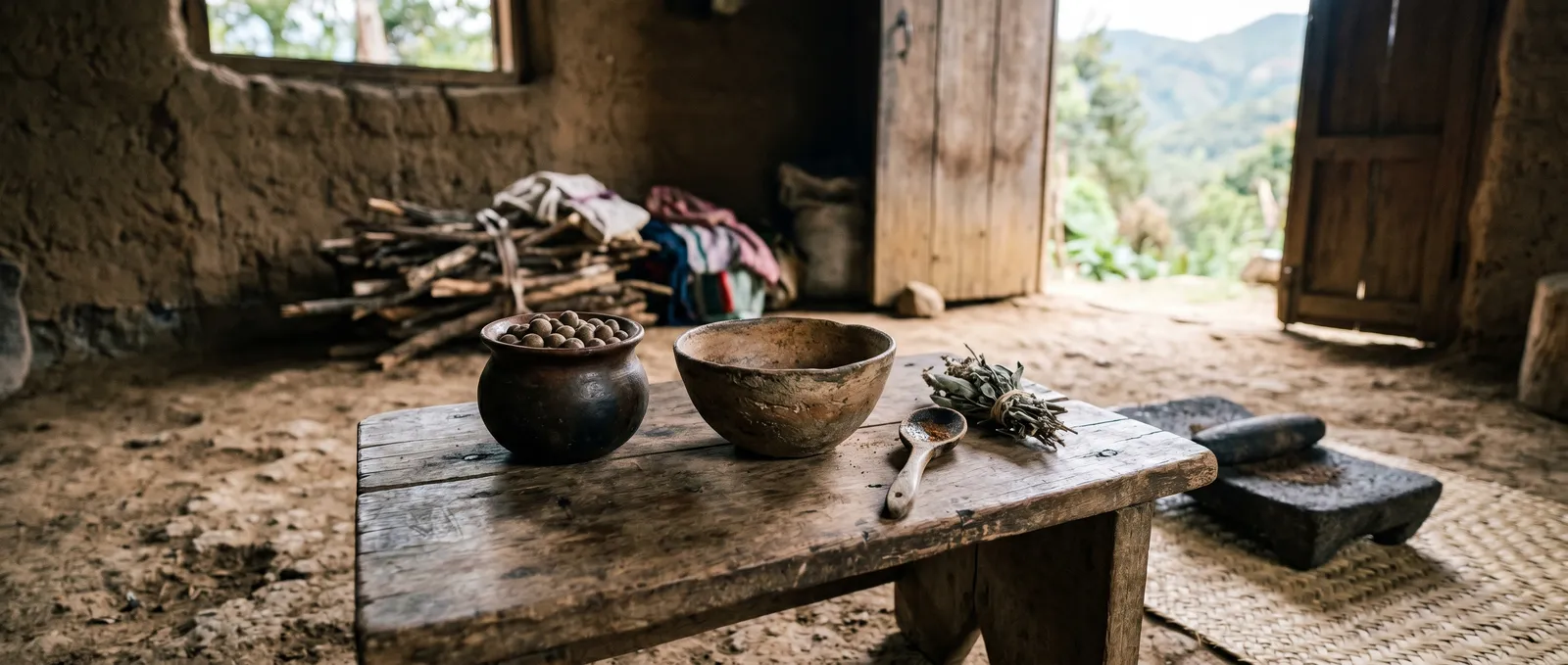
Ololiuqui Mazatec Tradition: Ceremonial Seeds of the Sierra Mazateca
Ololiuqui — the seeds of Turbina corymbosa — played a specific ceremonial role among the Mazatec people of Oaxaca, distinct from their better-known use of…

Morning Glory LSA Plants Family
Morning glory LSA plants family is a group of Convolvulaceae vines whose seeds contain d-lysergic acid amide (ergine), a naturally occurring tryptamine first…
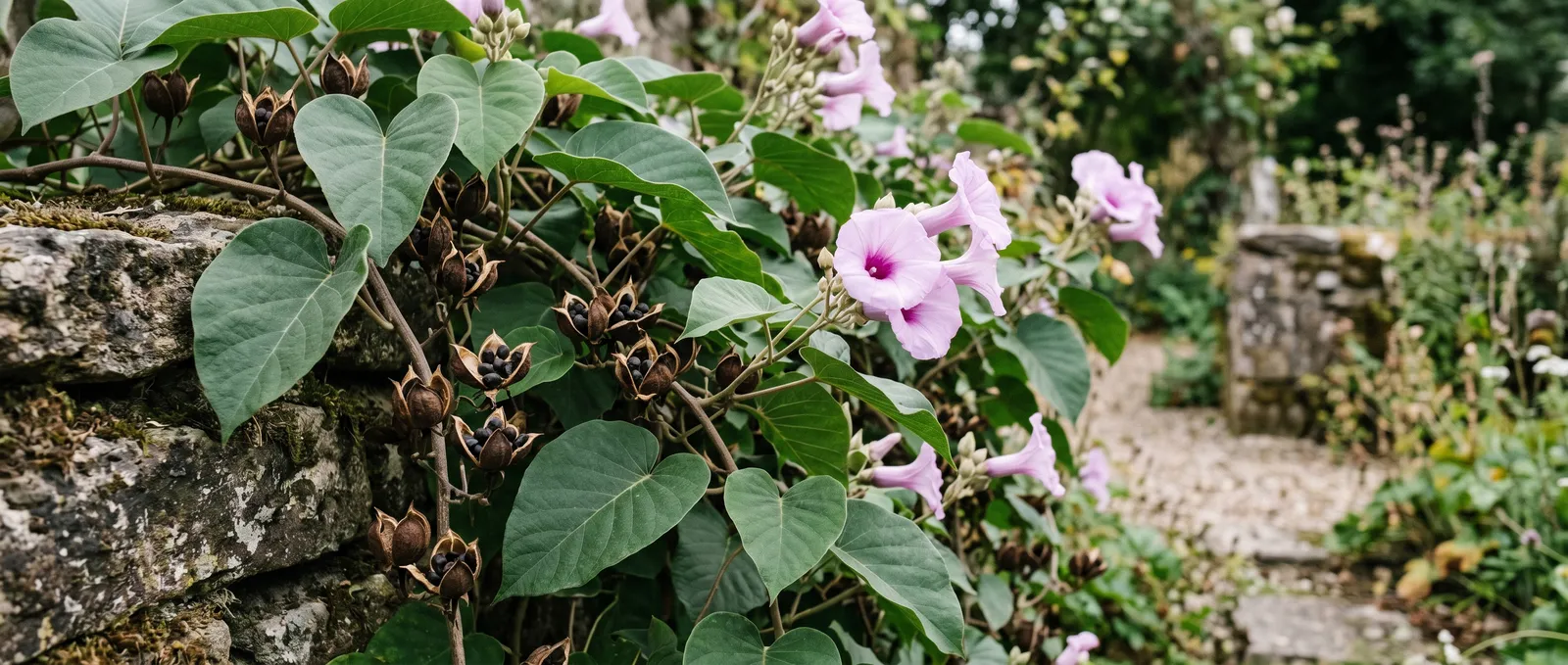
Hawaiian Baby Woodrose Plant Botany
Argyreia nervosa, commonly called Hawaiian baby woodrose, is a perennial climbing vine native to the Indian subcontinent, not Hawai'i.
Magic Truffle Quality Indicators
Magic truffle quality indicators are the measurable and sensory characteristics — psilocybin content, texture, aroma, packaging integrity, and storage…

Mescaline Cactus Market Observations
Mescaline cactus market observations is a research and retail term that describes the shifting patterns in sourcing, species selection, and consumption of…

Growing Mescaline Cacti as Ornamental Plants
Growing mescaline cacti ornamental is a horticultural practice that involves cultivating species like San Pedro, Peruvian Torch, and peyote for their…
Commercial Magic Truffle Cultivation
Commercial magic truffle cultivation is a large-scale agricultural process that produces psilocybin-containing sclerotia in climate-controlled indoor…