
This article discusses psychoactive substances intended for adults (18+). If you have a health condition or take medication, consult a doctor before use. Our age policy
Bad Trip Prevention Management
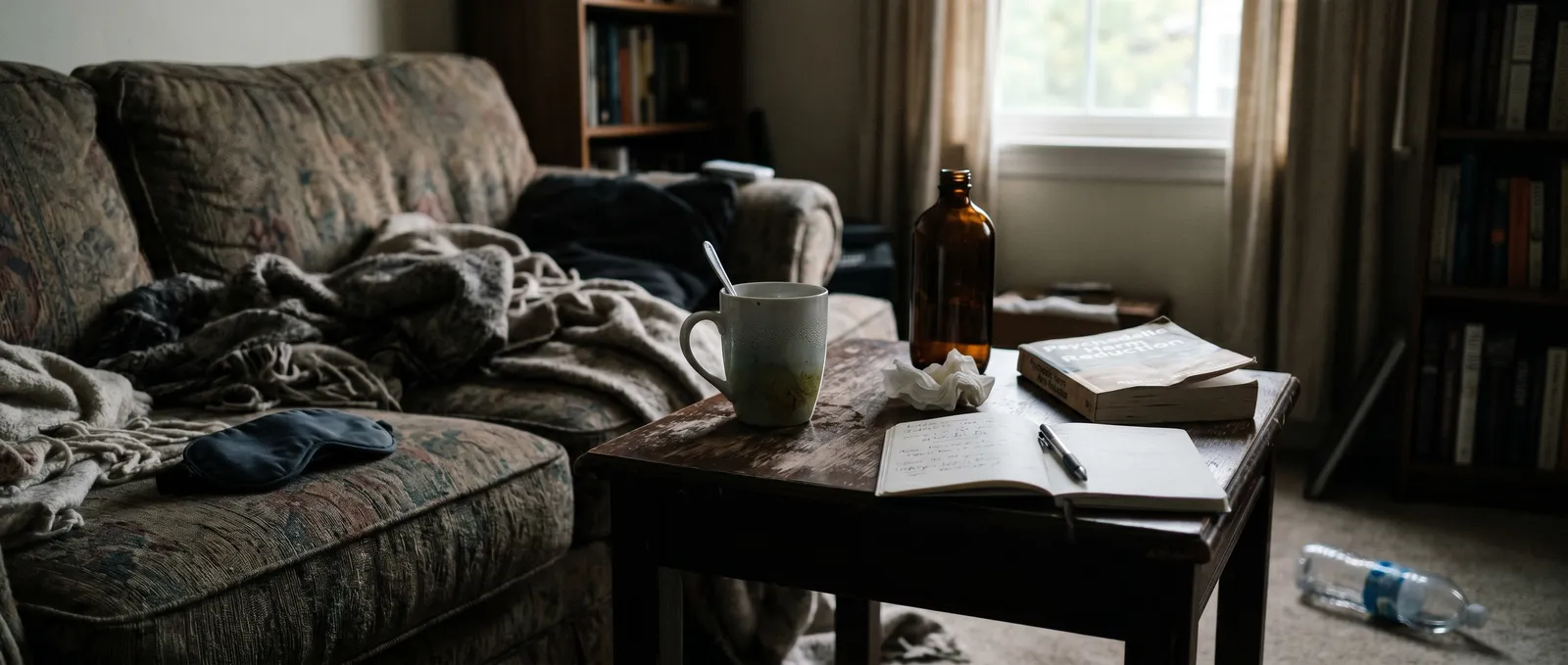
Definition
A challenging session involves acute psychological distress during the effects of serotonergic substances. Challenging experience prevention management is a structured approach that covers the practical steps taken before, during, and after a session to reduce distress and navigate it safely when it occurs.
Challenging Experience Prevention and Management
Challenging experience prevention management is a structured set of practices designed to reduce acute psychological distress before, during, and after a serotonergic session. A challenging session — sometimes called a difficult experience — is an episode of intense psychological discomfort that can occur with substances such as psilocybin, LSD, or DMT. Challenging experience prevention management covers the practical steps you can take to lower the likelihood of distress and to navigate it safely if it occurs. According to a 2016 survey published in the Journal of Psychopharmacology, 39% of psilocybin users reported having had at least one challenging experience, yet 84% of those same respondents said they still benefited from it in the long run (Barrett et al., 2016). That gap between "difficult" and "damaging" is largely determined by preparation and response — the core of challenging experience prevention management as outlined below.
Adult audience (18+). The dosing ranges and effects described in this article apply to adult physiology. This content is not intended for minors.
What Actually Happens During a Challenging Experience
A challenging experience typically involves acute anxiety, paranoid ideation, time distortion, ego dissolution, looping thought patterns, or overwhelming sensory input. It is not simply "feeling a bit off." A 2021 systematic review in Psychopharmacology found that the most commonly reported features were anxiety (reported in roughly 65% of challenging experiences), confusion (48%), and fear (43%) (Simonsson et al., 2021).
Physiologically, heart rate and blood pressure often spike during acute distress. Serotonergic substances themselves carry low physiological toxicity — the EMCDDA's 2023 Drug Profile on LSD and psilocybin classifies both as having no documented lethal dose in humans — but the psychological distress can lead to dangerous behaviour: running into traffic, self-harm, or jumping from heights. That is why challenging experience prevention management matters as much after onset as it does before.
Step 1: Screen for Personal Risk Factors
Screening for personal risk factors is the first and most consequential step in any challenging experience prevention management protocol. The single strongest predictor of a prolonged crisis is a personal or first-degree family history of psychotic disorders such as schizophrenia, schizoaffective disorder, or bipolar I with psychotic features. A 2023 case series in Cureus documented instances where substance use precipitated prolonged psychotic episodes in individuals with family histories of schizophrenia (Feulner et al., 2023). If that applies to you, the honest advice is to sit this one out entirely.
Other risk factors include current depressive episodes, high baseline anxiety, sleep deprivation in the 48 hours before a session, and concurrent use of substances that interact with serotonin pathways — SSRIs, SNRIs, MAOIs, and lithium in particular. For a detailed breakdown of specific drug combinations, see the dedicated Substance Interaction Guide article in the Azarius encyclopedia.
Step 2: Get Set and Setting Right
Set and setting are the two environmental variables most strongly correlated with session outcome and form a central pillar of challenging experience prevention management. A 2018 double-blind study at Johns Hopkins found that participants given psilocybin in a comfortable, living-room-style environment with trained guides reported challenging experiences at roughly one-third the rate of earlier studies conducted in clinical hospital settings (Johnson et al., 2018). The environment genuinely matters.
Set (your mindset) means going in rested, fed, hydrated, and in a reasonably stable emotional state. "Reasonably stable" doesn't mean positive — it means not in active crisis. If you've had a brutal week and you're hoping a session will fix it, that hope itself can become the source of a difficult loop when the substance amplifies rather than resolves the distress.
Setting (your physical environment) means a space that is:
- Private — no strangers, no chance of unexpected visitors
- Temperature-controlled and comfortable
- Free of sharp objects, open windows at height, or access to roads
- Stocked with water, fruit, blankets, and a pre-made playlist of calm, mostly instrumental music
A 2017 study in Psychopharmacology found that music selection during psilocybin sessions significantly influenced emotional trajectory, with "overtonal" and "rhythmically predictable" music correlating with lower anxiety scores (Kaelen et al., 2017). Curate the playlist before the session, not during it.
Step 3: Dose Conservatively, Especially the First Time
Conservative dosing is the variable most directly under your control and the one most often misjudged in challenging experience prevention management. Research at Imperial College London has used psilocybin doses ranging from 10 mg to 25 mg in clinical settings, with the lower end producing meaningful results and the higher end producing more challenging material (Carhart-Harris et al., 2018). For dried psilocybin mushrooms, that roughly translates to 1–2.5 g — though potency varies substantially between species and even between flushes of the same species, so treating any number as exact is a mistake. A precision milligram scale is essential for accurate dosing before you begin.

The same principle applies to LSD: 50–75 µg produces noticeable results; 200 µg and above enters territory where challenging experiences become significantly more likely. A controlled comparison published in Neuropsychopharmacology found that LSD at 200 µg produced anxiety ratings roughly 2.5 times higher than at 100 µg (Holze et al., 2021).
The practical rule: take less than you think you need. You can always have a stronger session next time. You cannot un-take a dose.
Step 4: Have a Sober Sitter Present
A sober sitter is the single most effective harm-reduction measure during the experience itself. Their job is not to entertain you, guide you through spiritual revelations, or talk you through your childhood. Their job is to:
- Ensure physical safety (keep you indoors, away from hazards)
- Provide calm, grounding reassurance if you become distressed
- Remind you of basic facts: your name, where you are, that you took a substance, and that the session will end
- Recognise when professional medical help is genuinely needed
The MAPS manual for substance-assisted therapy (2015) emphasises that the sitter's most important skill is "being with" rather than "doing to" — sitting quietly beside someone in distress is often more effective than trying to talk them out of it. Silence, a hand on the shoulder (if welcome), and steady breathing do more than a monologue about how everything is going to be fine.
Step 5: Managing Distress in the Moment
The most effective in-the-moment strategy is to stop resisting the experience and allow it to move through you. If a challenging experience begins despite preparation, the following approaches are supported by both clinical practice and peer-reviewed observation:
Surrender rather than resist. This sounds counterintuitive when you are terrified, but fighting the experience tends to intensify it. A 2019 analysis in Journal of Psychopharmacology found that participants who reported "letting go" during difficult psilocybin sessions had significantly better psychological outcomes at 6-month follow-up than those who reported trying to control the experience (Roseman et al., 2019).
Change one sensory input. If the current music feels oppressive, switch to something gentler or to silence. If the room feels claustrophobic, move to another room. If eyes-open visuals are overwhelming, close your eyes — or vice versa. A sleep mask from the Azarius shop can help reduce visual overwhelm quickly. Small environmental shifts can redirect the trajectory.
Breathe with structure. Box breathing (4 seconds in, 4 hold, 4 out, 4 hold) gives the panicking mind a task. It also activates the parasympathetic nervous system, which directly counteracts the physiological anxiety response.
Ground through the body. Hold an ice cube, press your feet into the floor, wrap yourself tightly in a blanket. Tactile input anchors attention to the physical rather than the abstract.
Use simple, repeated verbal reassurance. The sitter (or the person themselves) can repeat short phrases: "You're safe. You took a substance. This will pass." Repetition works because short-term memory is impaired — the person may need to hear it twenty times.
Step 6: Know When to Seek Medical Help
Emergency medical assistance is warranted when distress moves beyond psychological discomfort into physiological danger. Most challenging experiences resolve on their own as the substance wears off — typically 4–6 hours for psilocybin, 8–12 hours for LSD, and 15–45 minutes for smoked DMT. However, seek emergency medical assistance if:
- The person has a seizure
- They become violent toward themselves or others and cannot be safely contained
- They lose consciousness
- Symptoms of serotonin syndrome appear (hyperthermia, rigid muscles, rapid heart rate, agitation) — this is most likely when substances are combined with serotonergic medications
- Psychological distress persists beyond the expected duration of the substance by several hours
If you do call emergency services, tell them exactly what was taken, when, and how much. This is not the moment for vagueness.
Step 7: Integration After a Difficult Session
Integration is the process of making sense of session material in the days and weeks that follow. A 2020 study in PLOS ONE found that participants who engaged in structured integration — talking through their experience with a therapist or trained facilitator — reported significantly less lasting distress and more perceived benefit from difficult sessions than those who did not (Watts et al., 2020). Integration is where the difference between lasting harm and lasting benefit is most often determined, and it is a critical final phase of challenging experience prevention management.
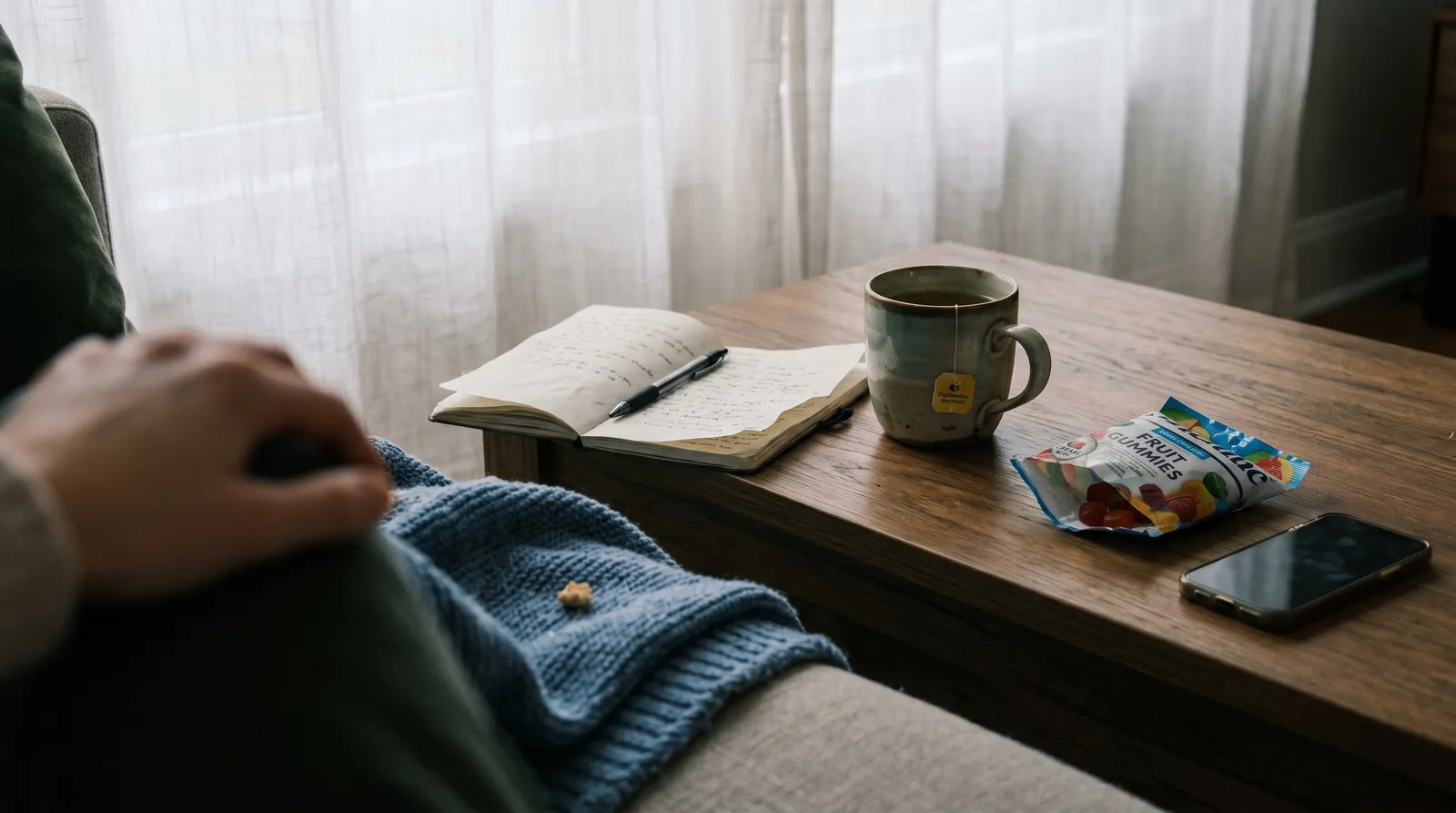
Practical integration steps include:
- Writing down what happened within 24 hours, while the memory is still vivid — buy a dedicated journal and keep it beside your session space
- Talking to someone you trust — a friend, a therapist, or a peer-support group
- Avoiding another session for at least several weeks; the impulse to "fix" a difficult experience with another experience rarely works
- Watching for persistent symptoms (recurring anxiety, depersonalisation, intrusive imagery) that might indicate the need for professional support
The Fireside Project (US-based, but accessible internationally) operates a peer-support line that provides free, non-judgemental conversation for people processing difficult experiences. For a broader discussion of how to work with session material afterward, see the Integration Practices article in the Azarius encyclopedia.
Honest Limitation: What Preparation Cannot Guarantee
Even flawless preparation does not eliminate all risk. Proactive efforts to prevent and manage difficult experiences reduce the probability and severity of distress, but serotonergic substances interact with individual neurochemistry in ways that no checklist can fully predict. A person who has had ten smooth sessions can encounter a deeply difficult eleventh. The clinical literature consistently shows that set, setting, dose, and support account for a large share of outcome variance — but not all of it. Accepting that residual uncertainty is itself part of responsible challenging experience prevention management.

Preparation Tools and Supplies
Proper preparation requires having the right physical tools on hand before the session begins. The table below summarises the key items worth assembling as part of your challenging experience prevention management kit, many of which you can order through the Azarius shop.
| Item | Purpose | When to Use |
|---|---|---|
| Precision milligram scale | Accurate dosing to avoid accidental high doses | Before the session |
| Reagent test kit (Marquis, Mecke, or Ehrlich) | Substance identification and purity check | Days before the session |
| Sleep mask | Reduces visual overwhelm; encourages inward focus | During the session if needed |
| Blanket | Tactile grounding and comfort during distress | During the session |
| Pre-made music playlist | Stabilises emotional trajectory | Throughout the session |
| Journal or notebook | Recording experience for integration | Within 24 hours after |
| Water and light snacks (fruit) | Hydration and blood sugar maintenance | Before and during |
Having these items ready before you begin is part of proactive challenging experience prevention management — not an afterthought.
Comparing Approaches: Clinical vs. Informal Settings
Clinical settings handle challenging experiences with dedicated medical staff and pharmaceutical-grade dosing, while informal settings rely on personal preparation and peer support. Understanding the comparison helps you adapt clinical insights to your own challenging experience prevention management practice.
| Factor | Clinical Setting | Informal Setting |
|---|---|---|
| Sitter training | Therapists with hundreds of hours of protocol training | Usually a trusted friend with no formal training |
| Dose control | Pharmaceutical-grade, precisely measured | Variable potency; depends on scale accuracy |
| Emergency access | Medical team on-site or on call | Requires calling emergency services |
| Integration | Structured follow-up sessions with therapists | Self-directed or peer-supported |
| Screening | Complete psychiatric evaluation | Self-assessment (often skipped) |
The honest limitation here is that informal settings will never replicate clinical safety standards. What you can do is borrow the principles — screening, controlled dosing, trained presence, structured integration — and apply them as rigorously as your circumstances allow. That borrowing is the practical heart of challenging experience prevention management outside a clinic.
A Note on Session-Termination Substances
Benzodiazepines and antipsychotics are sometimes discussed as emergency abort options but they do not replace proactive challenging experience prevention management. Research published in Psychopharmacology confirms that benzodiazepines can reduce acute anxiety without fully terminating the session, while antipsychotics (particularly serotonin antagonists like quetiapine) more directly block the 5-HT2A receptor activity responsible for the experience (Vollenweider et al., 1998). However, combining pharmaceuticals with other substances carries its own risks — antipsychotics can cause unpredictable cardiovascular responses, and benzodiazepines add sedation to an already altered state. Self-medicating with these substances without medical guidance is not a reliable safety strategy, and their availability should not substitute for the proactive harm-reduction and preparatory measures outlined above.
Last updated: April 2026
Frequently Asked Questions
10 questionsCan a challenging session cause lasting psychological damage?
Do benzodiazepines actually stop a session?
Is it better to talk someone through a difficult experience or stay silent?
Does cannabis help or worsen a challenging session?
How long should you wait before another session after a difficult experience?
What should I buy to prepare for a safe session?
What are the most common symptoms of a challenging psychedelic experience?
Who should avoid psychedelics entirely to prevent a challenging experience?
Can eating before a session reduce the risk of a challenging experience?
Does set and setting really make a measurable difference?
About this article

Adam Parsons is an external cannabis and psychedelics writer and editor who contributes to Azarius's wiki as both author and reviewer. On the writing side, he authors Azarius's kratom and kanna clusters, drawing on exten
This wiki article was drafted with AI assistance and reviewed by Adam Parsons, External contributor. Editorial oversight by Joshua Askew.
Medical disclaimer. This content is for informational purposes only and does not constitute medical advice. Consult a qualified healthcare provider before use of any substance.
Last reviewed April 18, 2026
References (11)
- [1]Barrett, F.S. et al. (2016). Classic hallucinogens and mystical experiences: phenomenology and neural correlates. Journal of Psychopharmacology , 30(12), 1182–1190.
- [2]Carhart-Harris, R.L. et al. (2018). Psilocybin with psychological support for treatment-resistant depression: six-month follow-up. Psychopharmacology , 235(2), 399–408.
- [3]Feulner, L. et al. (2023). Substance-induced psychosis: a case series and literature review. Cureus , 15(3), e36882.
- [4]Holze, F. et al. (2021). Distinct acute effects of LSD, MDMA, and D-amphetamine in healthy subjects. Neuropsychopharmacology , 46(2), 462–471.
- [5]Johnson, M.W. et al. (2018). Classic substances: an integrative review of epidemiology, therapeutics, mystical experience, and brain network function. Pharmacology & Therapeutics , 197, 83–102.
- [6]Kaelen, M. et al. (2017). The hidden therapist: evidence for a central role of music in substance-assisted therapy. Psychopharmacology , 235(2), 505–519.
- [7]MAPS (2015). A Manual for MDMA-Assisted Therapy in the Treatment of PTSD . Multidisciplinary Association for Psychedelic Studies.
- [8]Roseman, L. et al. (2019). Emotional breakthrough and psychedelics: validation of the Emotional Breakthrough Inventory. Journal of Psychopharmacology , 33(9), 1076–1087. DOI: 10.1177/0269881119855974
- [9]Simonsson, O. et al. (2021). Prevalence and associations of challenging, distressing and enduring experiences. Psychopharmacology , 238(9), 2549–2558.
- [10]Vollenweider, F.X. et al. (1998). Psilocybin induces schizophrenia-like states in humans via a serotonin-2 agonist action. NeuroReport , 9(17), 3897–3902. DOI: 10.1097/00001756-199812010-00024
- [11]Watts, R. et al. (2020). Patients' accounts of increased "connectedness" and "acceptance" after psilocybin for treatment-resistant depression. PLOS ONE , 12(4), e0189564.
Related Articles
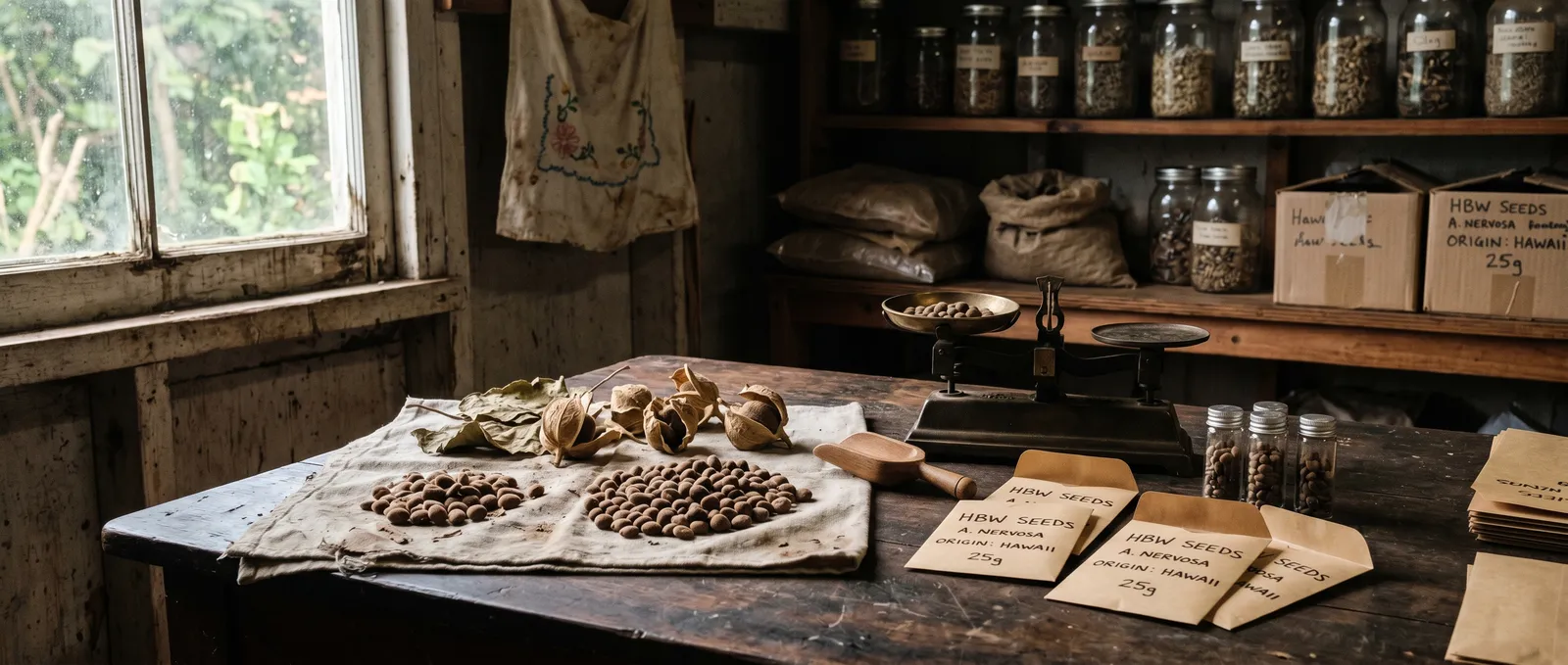
Hawaiian Baby Woodrose Sourcing
Hawaiian baby woodrose sourcing is a practice that covers how to obtain quality Argyreia nervosa seeds — a vine whose seeds contain LSA (lysergic acid amide).
LSA Legal Status in Europe
LSA (lysergic acid amide, or ergine) occupies a legal grey zone across Europe — rarely scheduled as a compound, yet subject to varied NPS legislation that…
Ololiuqui Mazatec Tradition: Ceremonial Seeds of the Sierra Mazateca
Ololiuqui — the seeds of Turbina corymbosa — played a specific ceremonial role among the Mazatec people of Oaxaca, distinct from their better-known use of…

Morning Glory LSA Plants Family
Morning glory LSA plants family is a group of Convolvulaceae vines whose seeds contain d-lysergic acid amide (ergine), a naturally occurring tryptamine first…

Hawaiian Baby Woodrose Plant Botany
Argyreia nervosa, commonly called Hawaiian baby woodrose, is a perennial climbing vine native to the Indian subcontinent, not Hawai'i.
Magic Truffle Quality Indicators
Magic truffle quality indicators are the measurable and sensory characteristics — psilocybin content, texture, aroma, packaging integrity, and storage…

Mescaline Cactus Market Observations
Mescaline cactus market observations is a research and retail term that describes the shifting patterns in sourcing, species selection, and consumption of…

Growing Mescaline Cacti as Ornamental Plants
Growing mescaline cacti ornamental is a horticultural practice that involves cultivating species like San Pedro, Peruvian Torch, and peyote for their…
Commercial Magic Truffle Cultivation
Commercial magic truffle cultivation is a large-scale agricultural process that produces psilocybin-containing sclerotia in climate-controlled indoor…