
PAX Vaporizer Lineup Guide: PAX 3 vs Mini vs Flow
Definition
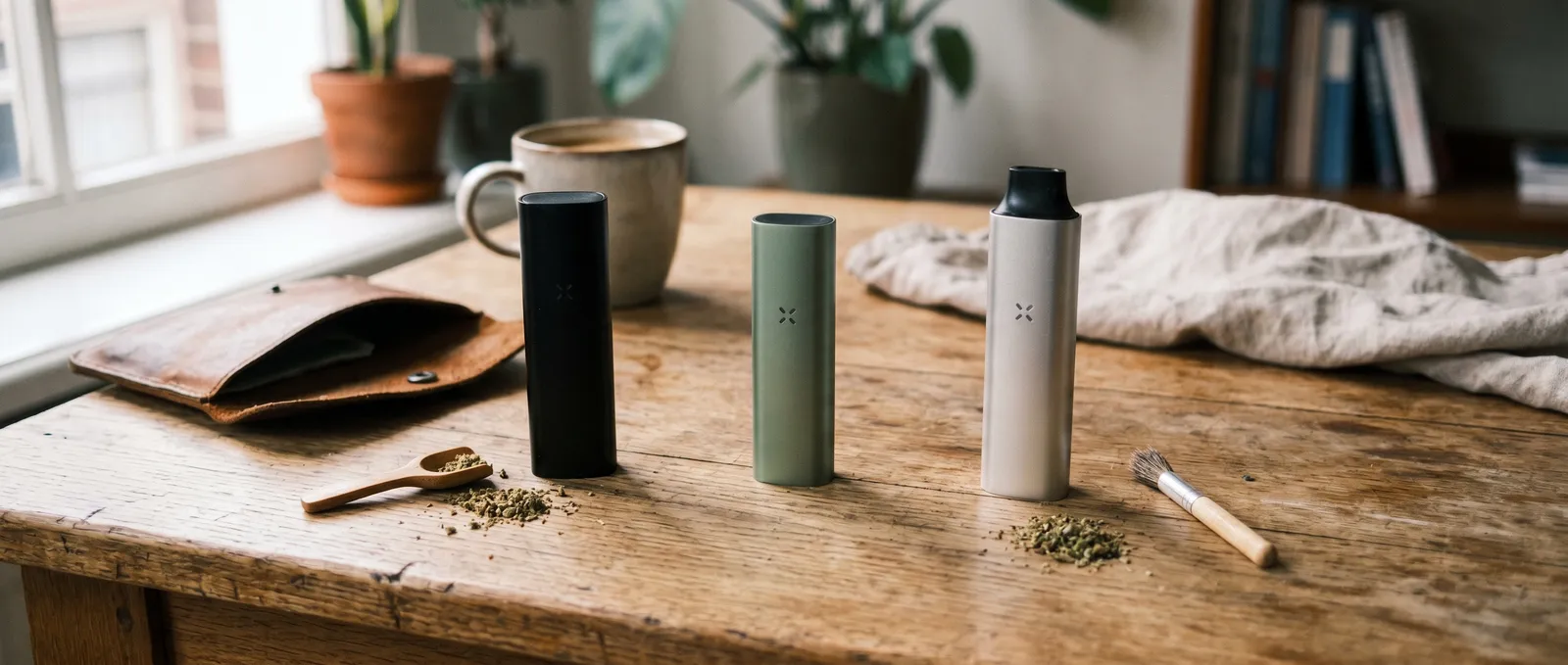
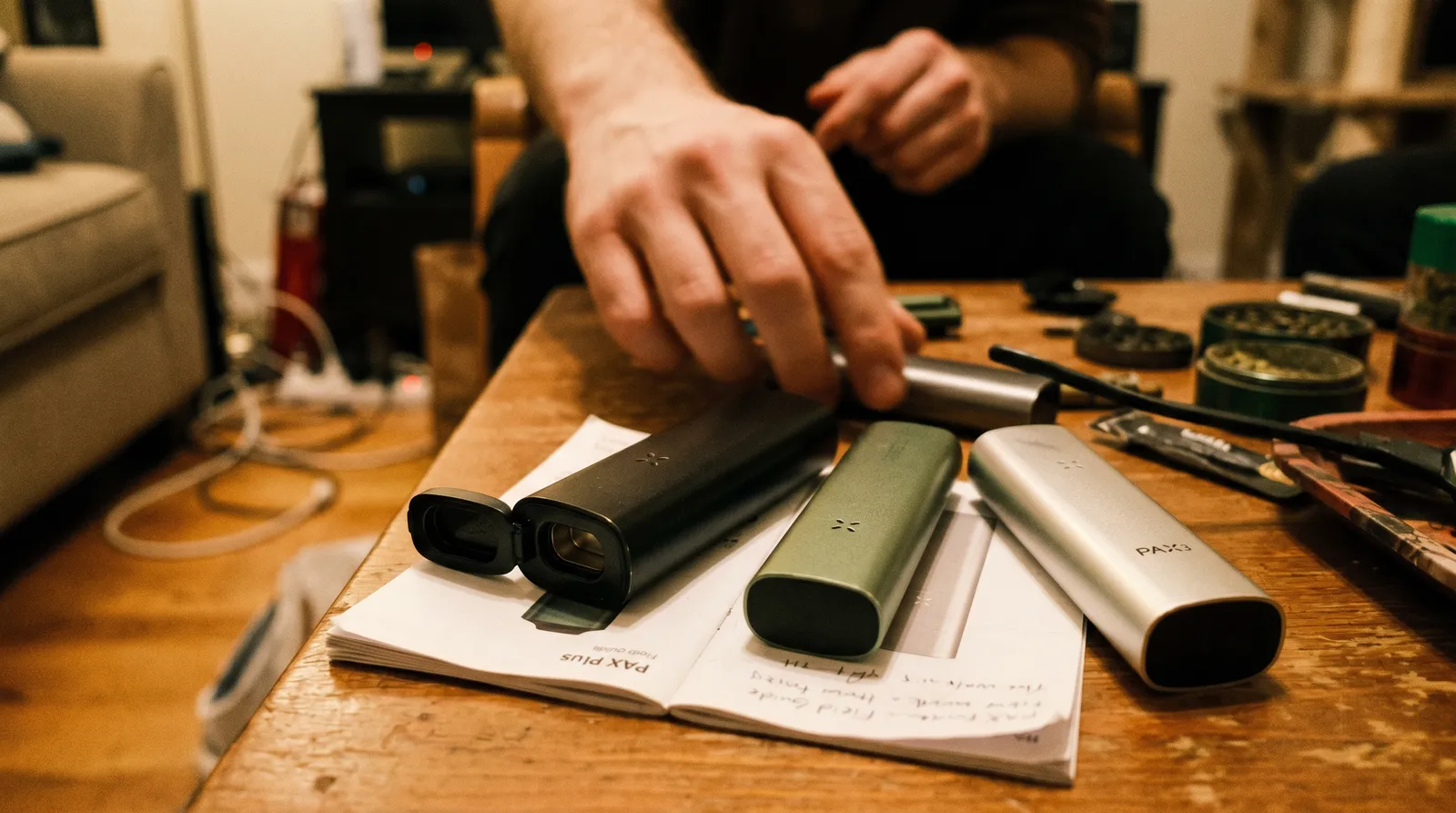
PAX's current portable vaporizer lineup spans three models — the conduction-based PAX 3 and PAX Mini, and the hybrid-heating PAX Flow. Each targets a different session style, from micro-dosing on the go to flavour-focused home sessions. A 2025 teardown by Vapefully confirmed the Flow's redesigned vapour path delivers measurably cooler output than its conduction predecessors (Vapefully, 2025).
PAX Lineup at a Glance
PAX vaporizer lineup guide is a comparison resource that helps you choose between the three current PAX portables — the PAX 3, PAX Mini, and PAX Flow — by weighing up size, heating method, oven capacity, and real-world session style. Whether you want to buy a compact micro-doser or order a flavour-focused hybrid device, this PAX vaporizer lineup guide breaks down each model so you can figure out which one fits your sessions, your pockets (literally — jacket pockets), and your expectations. No fluff, just specs and honest trade-offs.
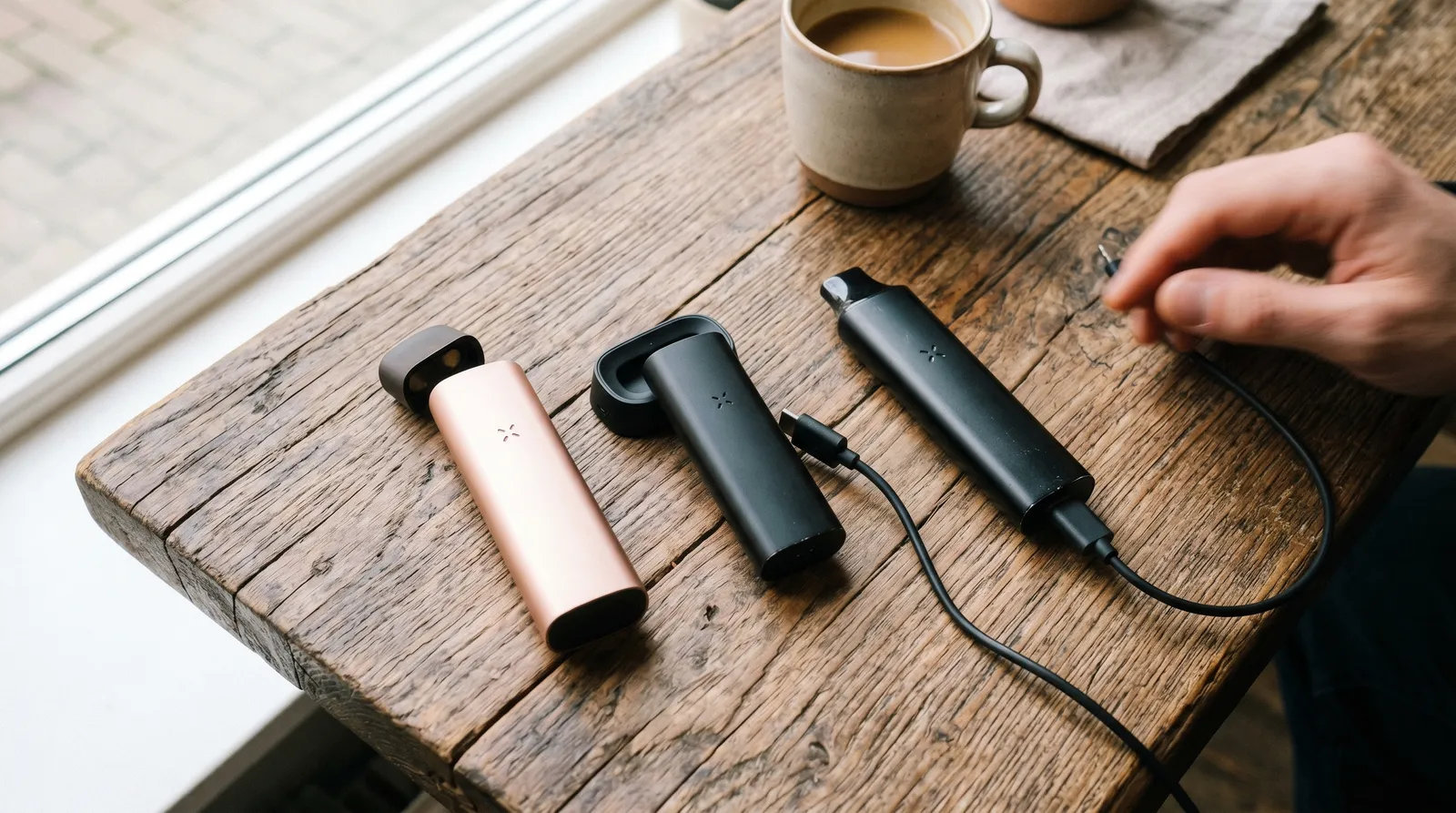
| Feature | PAX 3 | PAX Mini | PAX Flow |
|---|---|---|---|
| Heating type | Conduction | Conduction | Hybrid (conduction + convection) |
| Oven capacity | Approx. 0.35g | Approx. 0.15g | Approx. 0.3g |
| Temperature control | 4 presets via app or device | Single temp (approx. 200 C) | Full range via app |
| Battery life (approx.) | 8-10 sessions | 5-6 sessions | 6-8 sessions |
| Heat-up time | Approx. 20 seconds | Approx. 22 seconds | Approx. 15 seconds |
| Lip-sensing tech | Yes | No | Yes (improved) |
| Concentrate insert | Yes (included) | No | No (dry herb only) |
| Dimensions (approx.) | 98 x 30 x 22 mm | 89 x 28 x 22 mm | 112 x 32 x 22 mm |
| Weight (approx.) | 93g | 72g | 100g |
| Charging | USB-C (magnetic on older units) | USB-C | USB-C |
| Best suited for | All-rounders wanting versatility | Micro-dosers, ultra-portability | Flavour chasers, longer draws |
That table gives you the bones. The sections below unpack what each column actually means for your day-to-day use.
Heating Method — Why It Matters More Than You Think
The single biggest engineering difference across the PAX vaporizer lineup guide models is how each one heats your herb. The PAX 3 and PAX Mini both use pure conduction: the oven walls get hot, and your material touches those walls directly. This works well — conduction vaporizers have been the standard in portables for years — but it means the herb closest to the walls cooks faster than the material in the centre. Many experienced users recommend stirring the oven halfway through a conduction session. According to a 2018 analysis published by the EMCDDA, conduction-dominant devices show measurably uneven extraction across the chamber compared to convection or hybrid designs (EMCDDA, 2018). Stirring addresses that gradient and genuinely improves extraction evenness.

The PAX Flow introduced a hybrid heating system. Hot air also passes through the chamber (convection), which means less reliance on direct wall contact. According to Vapefully's 2025 teardown, the Flow relocated the oven and redesigned the vapour path so heated air enters from below and moves upward through the herb (Vapefully, 2025). The practical result: more even extraction per bowl and noticeably better flavour on the first few draws, since convection preserves lower-boiling-point terpenes that conduction tends to blast through early.
For a deeper dive into how these two heating principles compare across brands — not just PAX — see our convection-vs-conduction article.
PAX 3 — The All-Rounder That Refuses to Retire
The PAX 3 is the longest-running model in the current lineup, available since 2016 and still a solid daily driver. Four temperature presets (roughly 182°C, 193°C, 204°C, and 215°C) give you enough range to go from wispy, flavour-forward draws at the low end to thick, aggressive clouds at the top. The included concentrate insert lets you run waxes and rosins too — no other current PAX model offers that out of the box. If you want to get a single device that covers both herbs and concentrates, this is the only PAX that qualifies.
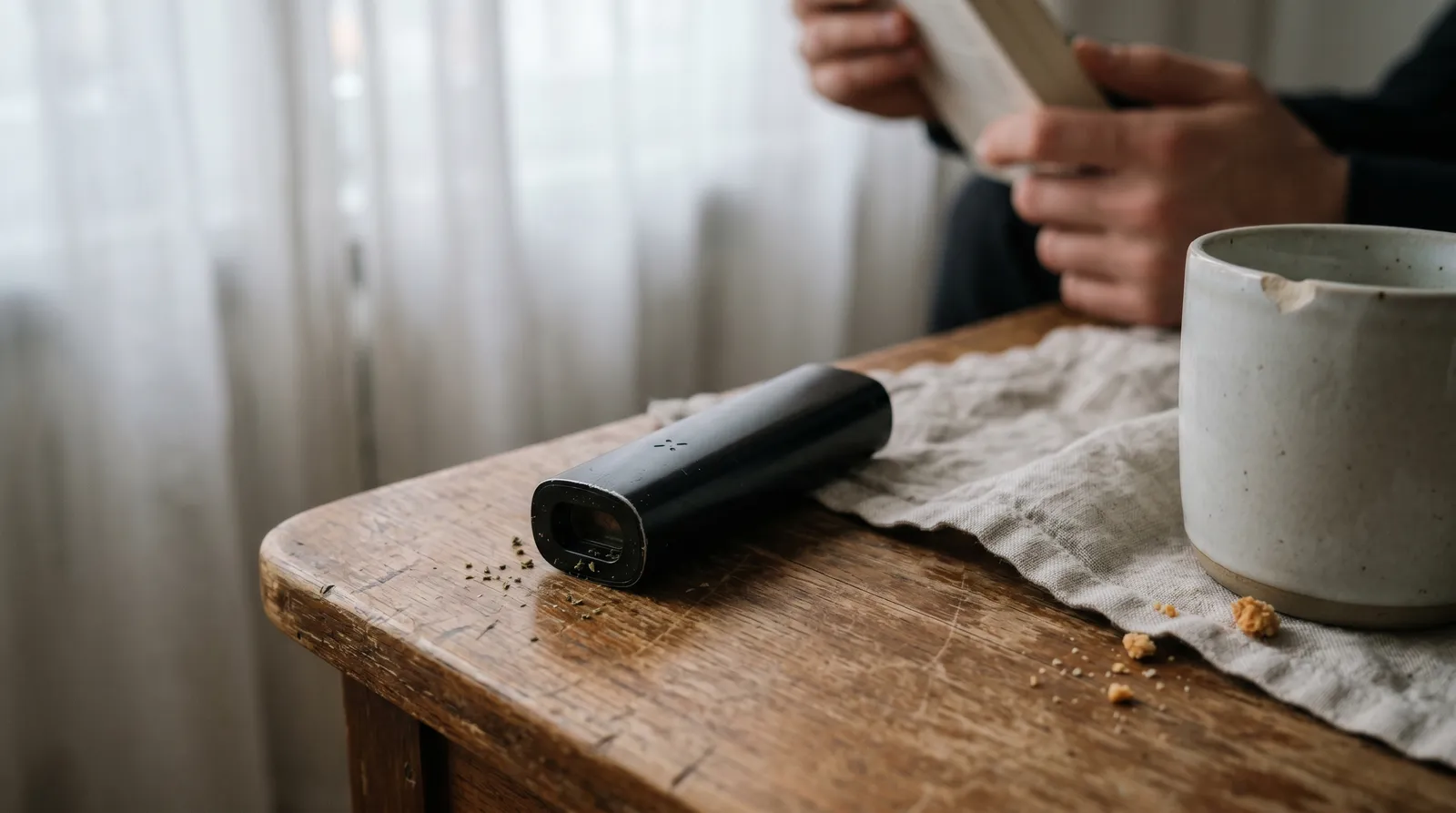
The lip-sensing technology is a genuine battery saver. PAX's patented system detects when the mouthpiece reaches your lips and ramps up the oven temperature; when you set it down, it dials back. This is not gimmicky — it meaningfully extends both battery life and herb efficiency. You are not just roasting material into the air while the device sits on a table.
Where the PAX 3 shows its age is airflow. The draw resistance is tighter than most modern portables. If you are coming from something like a Storz and Bickel Crafty or a TinyMight 2, the PAX 3 will feel like breathing through a narrow straw by comparison. Some people prefer that — it mimics the draw of a joint more closely. Others find it frustrating.
Grind and pack matter here. A medium to medium-fine grind with a firm pack fills the oven's gaps and maximises surface contact with the heated walls. A coarse grind in a conduction oven is just wasted real estate.
PAX Mini — Micro-Sessions, Micro Footprint
The PAX Mini is the most stripped-back device in the PAX range, designed purely for quick solo draws with zero complexity. No app connectivity, no temperature adjustment, no concentrate compatibility. You get a single temperature setting (around 200°C), a 0.15g oven, and a body small enough to disappear in a closed fist. That is the point.

This device is built for people who want one or two draws, not a 10-minute session. At roughly 72g, it is lighter than most smartphones and shorter than a lighter. If discretion and portability are your top priorities — say, a quick solo session on a walk — the Mini does exactly that and nothing more.
The trade-off is obvious: zero flexibility. You cannot dial down the temperature for a cooler, more flavourful draw, and you cannot crank it up for thicker vapour. The fixed setting sits in a reasonable middle ground, but "reasonable middle ground" is another way of saying "compromise." If you are the sort of person who fiddles with settings, this will drive you mad. If you just want to load, draw, and get on with your day, it is genuinely excellent at that narrow job.
Battery life is modest — five to six sessions before you need to charge. With a 0.15g oven, each session is short, so that is less limiting than it sounds. But if you are sharing with a friend or planning a longer evening, you will be reaching for the charger or a second device.
PAX Flow — The Hybrid Newcomer
The PAX Flow is PAX's first hybrid-heating portable, combining conduction oven walls with convection airflow for noticeably improved flavour. The chamber sits in a different position compared to earlier models, and the vapour path has been completely redesigned so that air travels a longer route before reaching your lips. Longer path means cooler vapour, which means less throat irritation and more perceptible flavour — especially at lower temperatures.
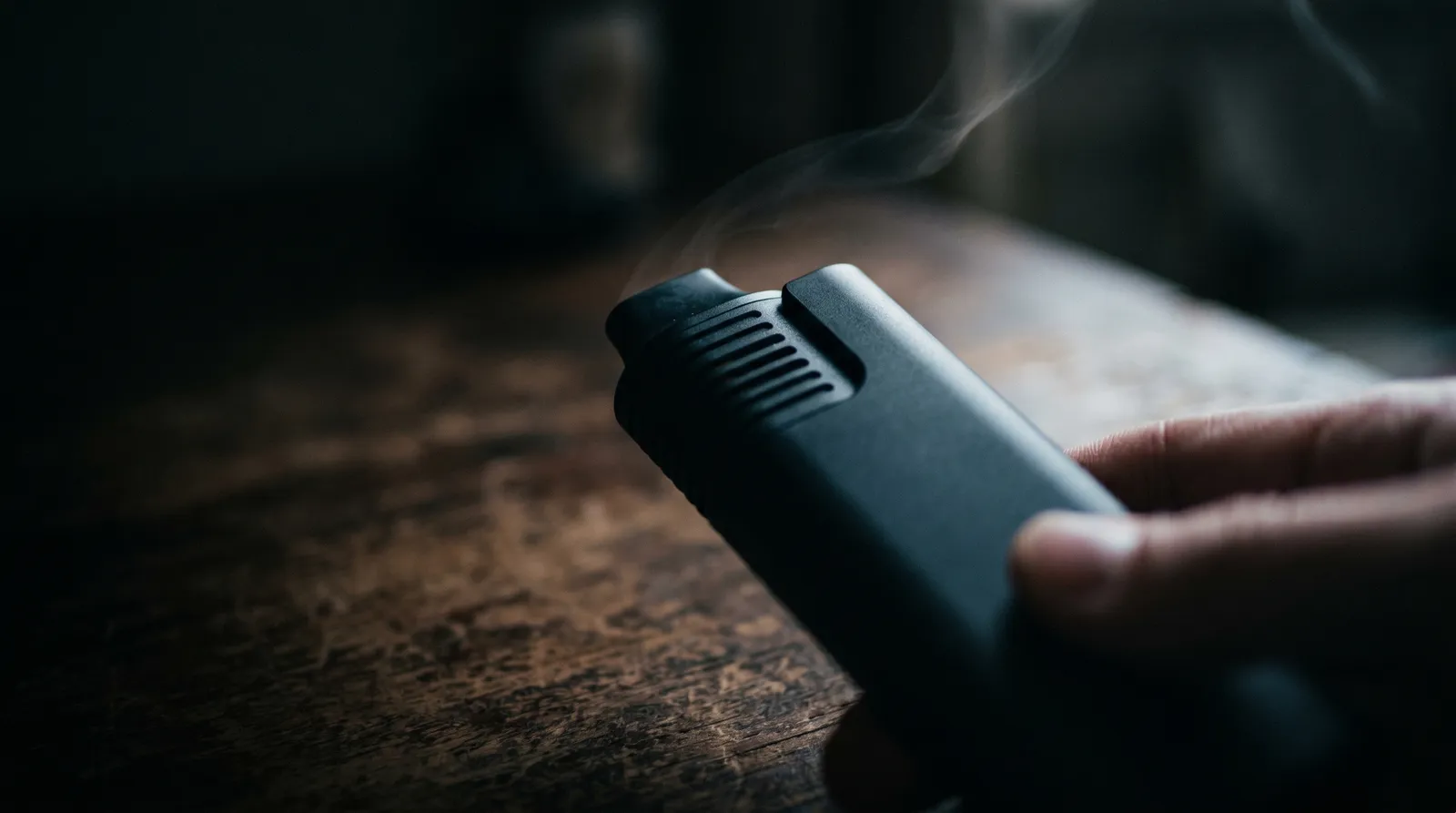
The Flow works best with a medium-coarse grind and a medium pack, which is the opposite advice from the PAX 3. Because convection air needs to flow through the material, packing too tightly chokes the airflow and defeats the purpose of the hybrid system. The oven maxes out at around 0.3g, so it holds slightly less than the PAX 3 but more than the Mini.
Full temperature control via the app gives you granular adjustment across the entire range. The improved lip-sensing technology is quicker to respond than the PAX 3's version, which means less wasted heat between draws. Heat-up time clocks in at roughly 15 seconds — not the fastest in the portable market (the TinyMight 2 and DynaVap heat faster in practice), but quick enough that you are not standing around waiting.
One thing worth flagging: the Flow is dry-herb only. No concentrate insert, no dual-use capability. If concentrates matter to you, the PAX 3 remains the only model in this lineup that handles both.
Which PAX for Which Session Style?
The best PAX model depends entirely on how you actually vape, not on which one has the most features. Forget specs for a moment and think about your typical session.
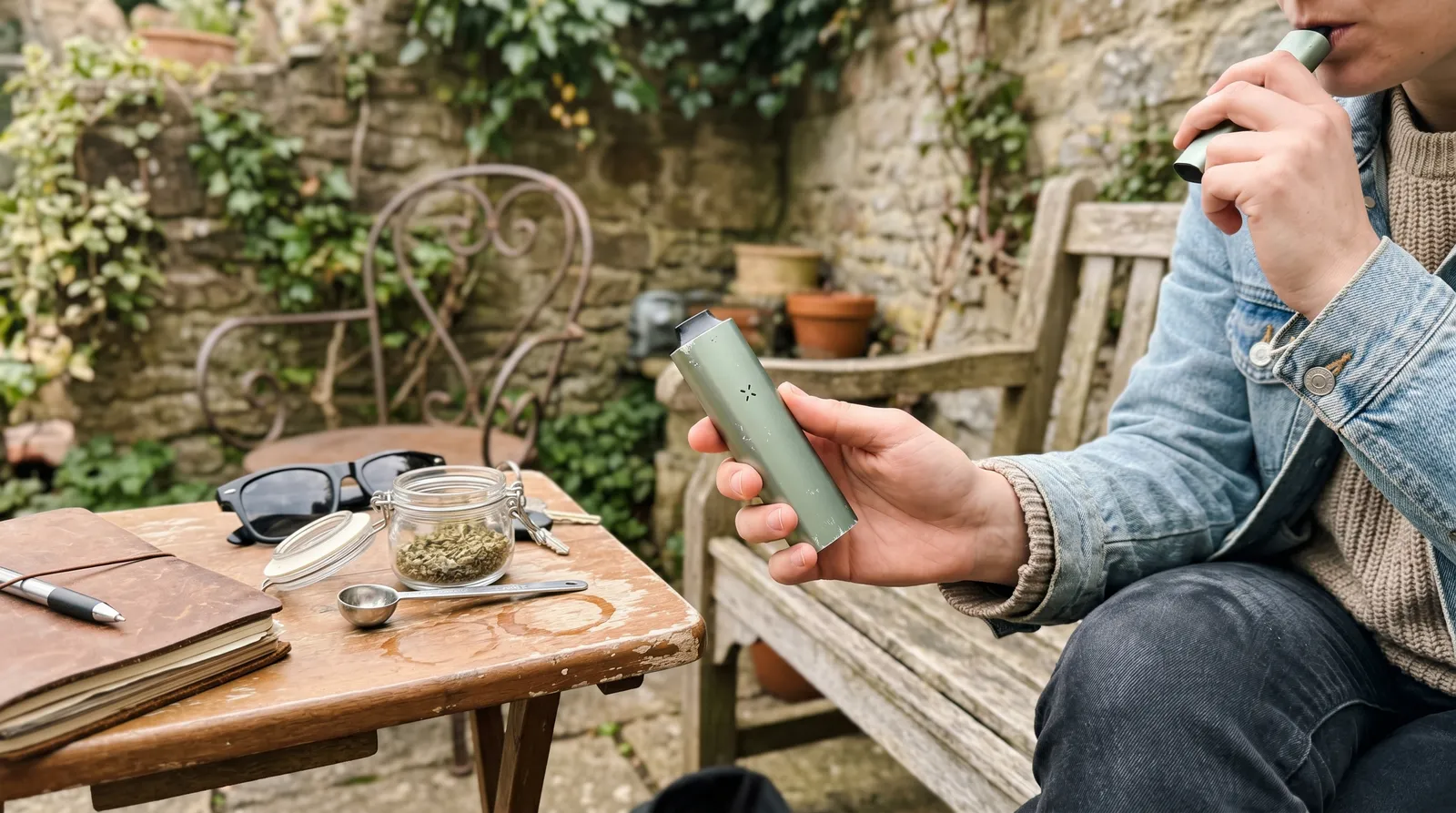
Solo micro-doser, out and about: PAX Mini. You are not sharing, you are not sitting down for a long session, and you do not care about temperature tweaking. Load 0.15g, take a few draws, done. The device disappears into a pocket and you move on.
Versatile daily driver, herbs and concentrates: PAX 3. It handles both materials, offers four temperature presets, and the lip sensor conserves your herb. The draw is tighter than modern convection portables, but if you have used a PAX before, you know what to expect. The concentrate insert alone makes it the most flexible option in the lineup.
Flavour-first, herb-only sessions: PAX Flow. The hybrid heating and redesigned vapour path produce noticeably cleaner flavour than either conduction-only model. If you have ever tried a Storz and Bickel Mighty and thought "I want something like that but smaller," the Flow is PAX's answer — though the Mighty's vapour volume is still hard to beat at that price tier. The Flow trades some raw cloud density for portability and a faster heat-up.
Grind, Pack, and Maintenance
Every PAX model responds to how you prepare your herb, but the conduction and hybrid models respond in opposite ways. Here is a quick breakdown of grind and packing recommendations:
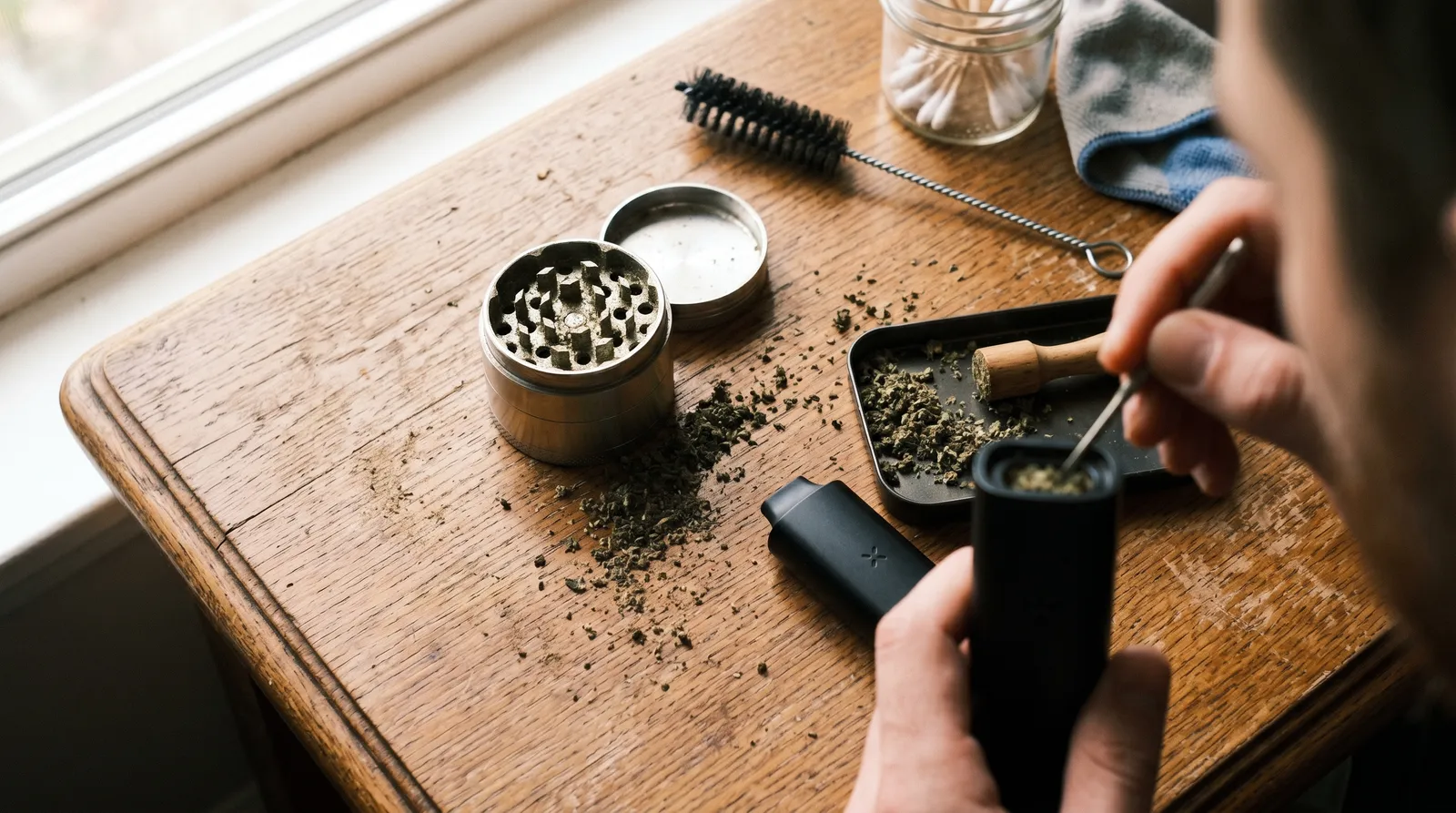
- PAX 3 and PAX Mini (conduction): Medium-fine grind, firm pack. A four-piece grinder — something like an SLX or Santa Cruz Shredder — gives a consistent particle size that packs evenly against the oven walls. Tamp it down firmly with the flat end of a tool or your finger. You want full contact between herb and metal.
- PAX Flow (hybrid): Medium-coarse grind, gentle pack. You still want the oven reasonably full, but do not compress it as hard. Air needs to move through the material. Think "gently settled" rather than "pressed down."
- All models — cleaning supplies: Isopropyl alcohol (90%+ concentration), pipe cleaners, and a small brush. The mouthpiece and vapour path collect residue fastest.
- Cleaning frequency: Every 3-5 sessions. You will taste the difference if you skip it — residue build-up restricts airflow and adds a stale, burnt note to your vapour that no temperature setting can fix.
- Safety note: Let isopropyl evaporate completely before using the device. Iso vapour plus a hot oven is not a combination you want. Clean in a ventilated space and give everything five minutes to air-dry.
Battery and Charging Expectations
All three PAX models charge via USB-C, and real-world battery life depends on temperature setting, draw frequency, and cell age. Older PAX 3 units shipped with a proprietary magnetic charger — if you are buying second-hand, check which version you are getting.
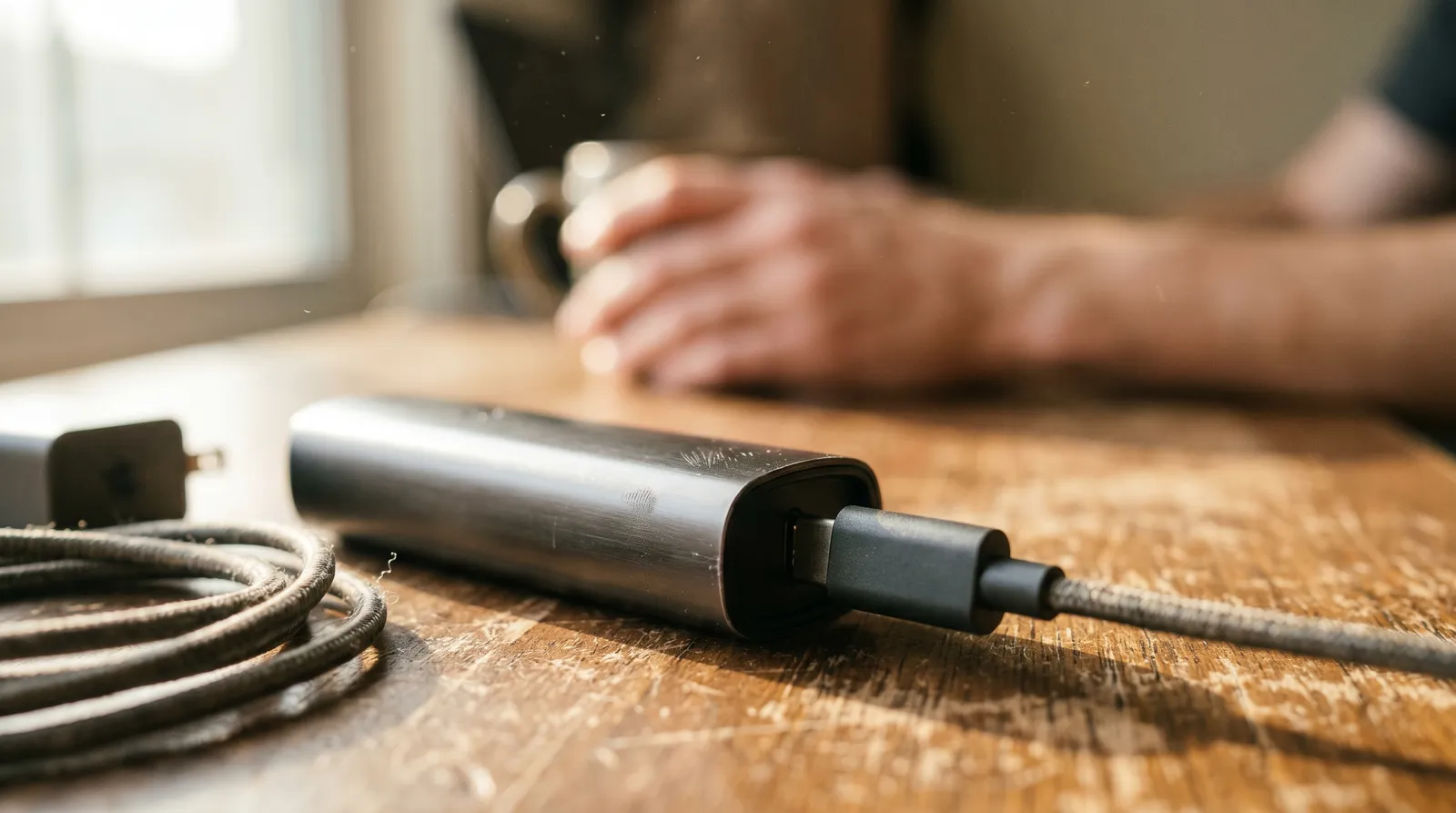
Battery life numbers from manufacturers are always optimistic, measured under ideal conditions with fresh cells. The PAX 3's 8-10 session estimate holds up reasonably well in the first year of ownership but degrades over time, as all lithium-ion cells do. The Mini's smaller battery means fewer sessions but also a faster full charge — roughly 45 minutes versus 60-90 for the PAX 3 and Flow.
Standard lithium-ion safety applies to all models: do not leave them charging unattended overnight, do not expose them to extreme heat (a car dashboard in summer is a bad place for any vaporizer), and if the device takes physical damage — a hard drop, visible denting near the battery compartment — stop using it and contact PAX support. None of these models use removable 18650 cells, so you cannot swap in a fresh battery when the internal one degrades. That is a design trade-off for the slim form factor.
How PAX Compares to Other Stocked Portables
PAX occupies a specific niche in the portable vaporizer market: slim, pocketable, session-style vaping with minimal learning curve. That is not the only way to vape, and it is worth knowing what else exists before you buy.
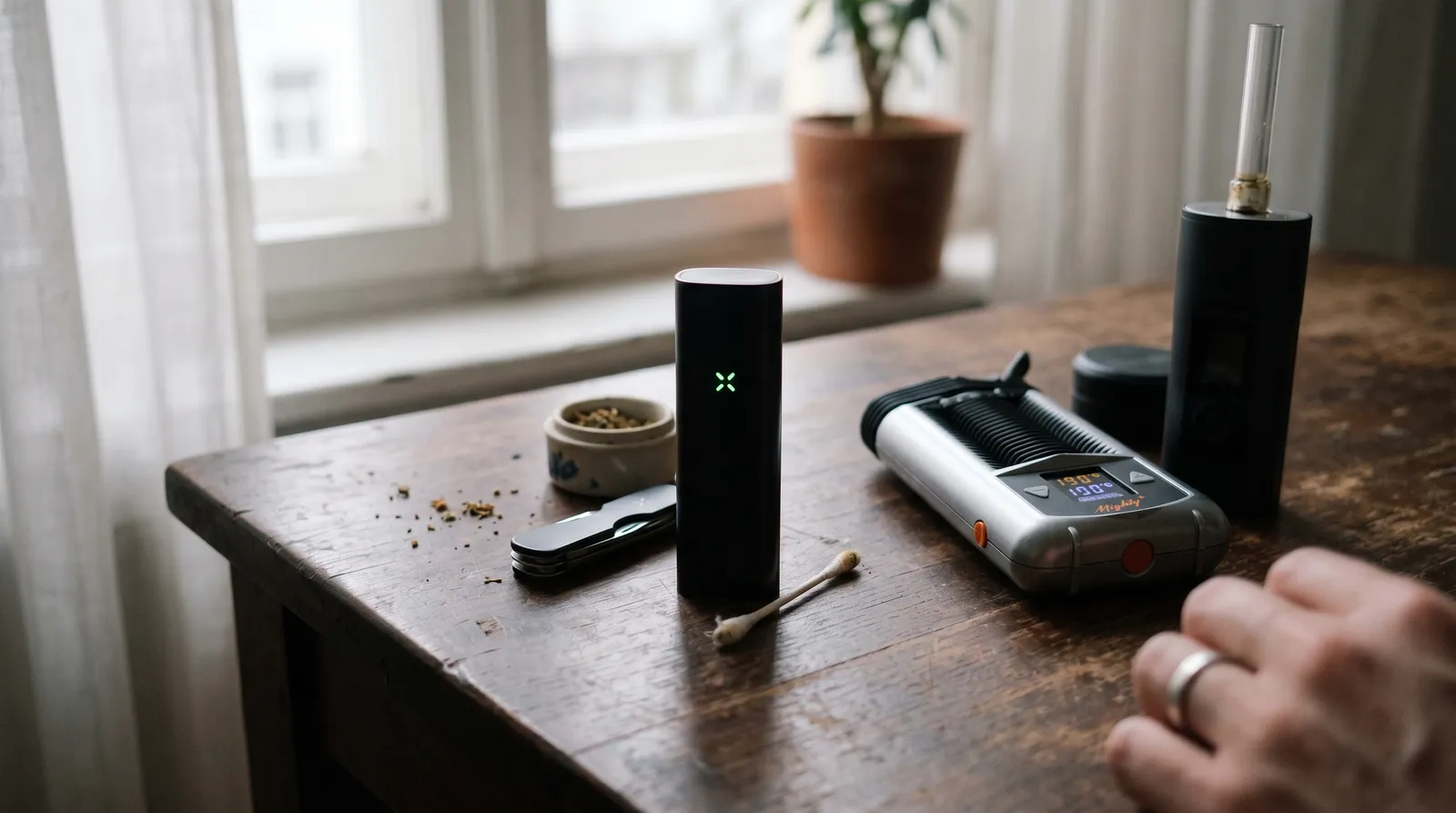
For on-demand convection — where you heat the herb only when you draw and stop heating when you stop — the DynaVap and TinyMight 2 take a fundamentally different approach. The DynaVap uses no battery at all; you heat it with a butane torch and draw when the click tells you it is ready. The TinyMight 2 is electric but heats on demand, giving you single-draw flexibility that no PAX model offers. Both produce excellent flavour but require more technique.
For session-style vaping with bigger clouds and less concern about pocket size, the Storz and Bickel Crafty and Mighty remain the benchmark. They are bulkier than any PAX, but vapour quality — especially at lower temperatures — is hard to argue with. A 2007 study published in Clinical Chemistry found that the Volcano desktop (same manufacturer) delivered cannabinoids with measurably fewer combustion byproducts compared to smoking methods (Bloor et al., 2008). Storz and Bickel's portable models use similar heating principles. Additionally, a Beckley Foundation review of vaporization research noted that well-designed vaporizers substantially reduce exposure to harmful pyrolytic compounds relative to combustion (Beckley Foundation, 2016).
The Arizer Solo and ArGo offer glass vapour paths, which some users prefer for flavour purity. The DaVinci IQ2 has a built-in airflow dial and dosage tracking. The Healthy Rips Rogue sits at a lower price tier but punches above its weight on vapour quality. Each of these makes different compromises. PAX's specific strength is that it looks and feels like a consumer electronics product rather than a piece of smoking paraphernalia — which matters to some people and is irrelevant to others.
Quick Decision Guide
If you need a one-line answer, here is a summary table to help you order the right PAX model on the first try.
| Your priority | Best PAX pick | Why |
|---|---|---|
| Smallest possible size | PAX Mini | 72g, fits in a closed fist, zero fuss |
| Herb + concentrate versatility | PAX 3 | Only PAX with a concentrate insert |
| Best flavour from dry herb | PAX Flow | Hybrid heating, redesigned vapour path |
| Tightest budget | PAX Mini | Fewest features, lowest price tier |
| App-controlled precision | PAX Flow | Full temperature range via app |
| Sharing with friends | PAX 3 or PAX Flow | Larger oven, longer battery life |
Last updated: April 2026
Frequently Asked Questions
8 questionsWhat grind size works best for the PAX Flow?
Can the PAX Mini use concentrates?
How does PAX lip-sensing technology work?
Is the PAX Flow a convection vaporizer?
How often should I clean a PAX vaporizer?
Which PAX model has the best battery life?
Do I need to stir the oven during a PAX session?
What is the oven capacity difference between PAX models?
About this article


Adam Parsons is an external cannabis and psychedelics writer and editor who contributes to Azarius's wiki as both author and reviewer. On the writing side, he authors Azarius's kratom and kanna clusters, drawing on exten
This wiki article was drafted with AI assistance and reviewed by Adam Parsons, External contributor. Editorial oversight by Joshua Askew.
Medical disclaimer. This content is for informational purposes only and does not constitute medical advice. Consult a qualified healthcare provider before use of any substance.
Last reviewed April 25, 2026
Related Articles

Gravity Bongs Explained: How They Work and Why
A gravity bong uses water displacement to pull concentrated smoke into a chamber, then forces it into your lungs under positive pressure.
Storz Bickel Volcano Complete Guide: Setup, Temps & Cleaning
The Storz & Bickel Volcano is a convection desktop vaporizer that fills detachable balloons with vapour — a system clinically validated by Hazekamp et al.
TinyMight Boundless XMAX Premium Portables Compared
The TinyMight 2, Boundless CFX/CFC and XMAX V3/Starry/Ace represent three tiers of portable dry-herb vaporizer — from budget conduction to premium convection.
How To Clean a Vaporizer: Step-by-Step Guide
How to clean a vaporizer is a straightforward maintenance routine that keeps your device tasting fresh, drawing smoothly, and lasting years longer than a…

ROOR Grace Glass Black Leaf Blaze Brand Comparison — Glass Bong Guide
Four borosilicate glass bong brands — ROOR, Grace Glass, Black Leaf, and Blaze Glass — dominate the European market at different price points.

Joint Filters Crutches Glass Tips Activated Charcoal — Buyer's Guide
Joint filters range from simple card crutches that block loose herb to activated charcoal tubes that trap 40–60% of gas-phase toxicants like benzene and…
Quartz Banger Temperature and Care Guide
A quartz banger's performance depends almost entirely on temperature control and maintenance.
Arizer Portable Lineup Compared: Solo vs Solo 2 vs Solo 3 vs ArGo
Arizer's portable vaporizers all use borosilicate glass vapour paths and session-style heating, but differ meaningfully in battery architecture, heating…
Kief: What It Is and How to Collect It | Full Guide
Kief is the fine, powdery accumulation of trichome heads that detach from cannabis flower during grinding or handling.