
DynaVap Complete Guide: Heating, Technique & Tips
Definition
A DynaVap is a battery-free, butane-heated dry-herb vaporizer that relies on an audible click to signal vaporisation temperature. According to Abrams et al. (2007), vaporisation at controlled temperatures produces significantly fewer combustion byproducts than smoking. This guide walks through loading, heating, draw technique, and maintenance step by step.
What Is a DynaVap, and Why Does It Need a Guide?
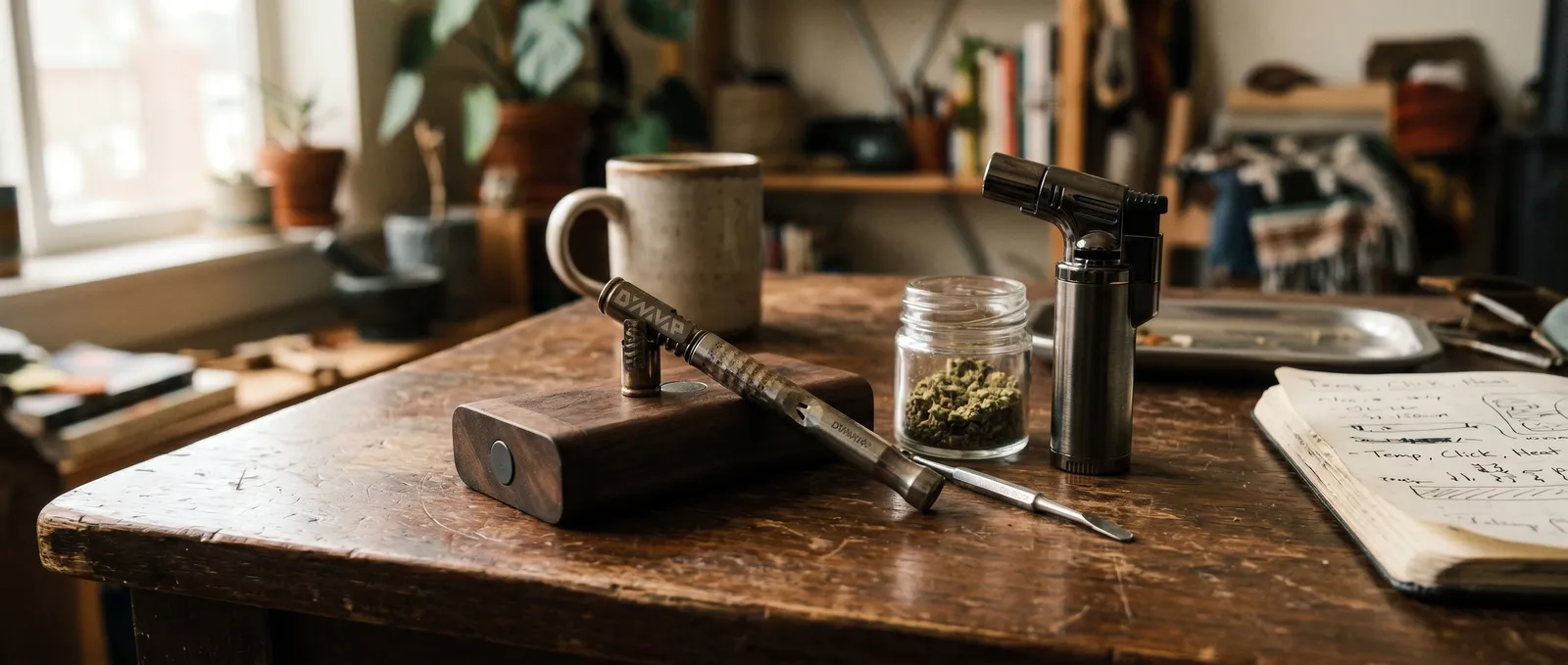
DynaVap complete guide — this is the definitive walkthrough for getting the most out of a manual, butane-powered dry-herb vaporizer with no batteries, no charging cables, and no circuit boards. A DynaVap is a compact thermal-extraction device that delivers dense vapour from remarkably small amounts of herb. You heat a stainless steel or titanium tip with a torch lighter, wait for an audible click that signals the chamber has reached vaporisation temperature, and inhale. That's the entire electronic component list: zero.
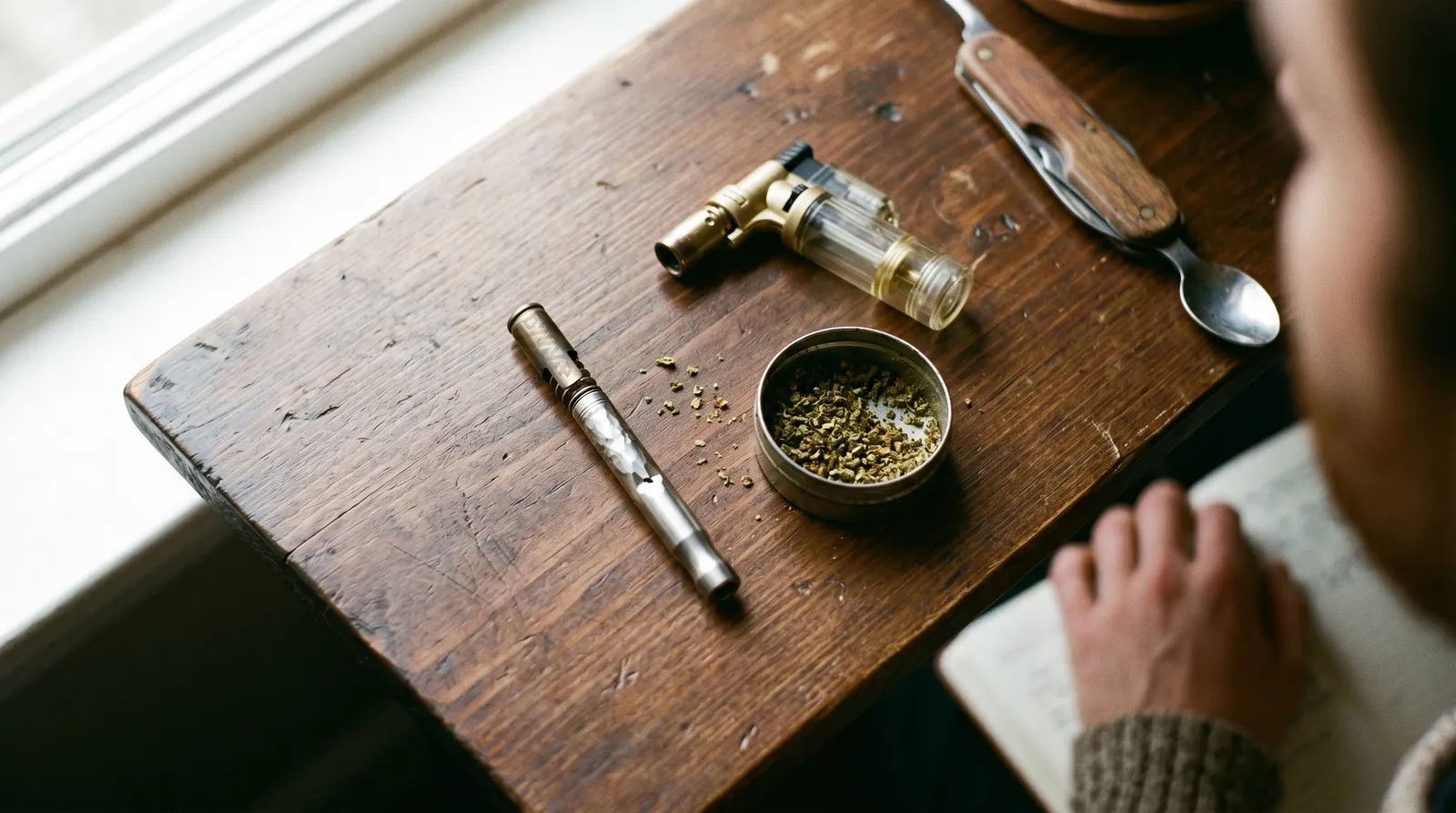
The simplicity is the point, but it's also why a proper walkthrough matters. Unlike a session vaporizer with a digital temperature display, the DynaVap relies on your technique — how you heat, where you aim the flame, how long you draw, and how you manage airflow. Get it right and you'll extract dense, flavourful vapour from a remarkably small amount of material. Get it wrong and you'll either combust your herb (defeating the purpose) or pull thin, unsatisfying wisps. According to the EMCDDA's 2017 report on cannabis administration methods, vaporisation at controlled temperatures produces significantly fewer combustion byproducts than smoking, which is the core advantage you're trying to protect with good technique. Abrams et al. (2007) confirmed this finding in a clinical setting, showing measurable reductions in harmful gas exposure.
The two main models you'll encounter are the M (stainless steel, the entry point) and the OmniVap (titanium, with a built-in adjustable airflow condenser). Both follow the same heating principle — the differences come down to weight, heat retention, and fine-tuning options. If you're looking to buy a DynaVap, either model is a solid starting point, though this DynaVap complete guide will help you decide which suits your style.
Step 1 — Grind Your Material Properly
A medium grind — roughly the consistency of coarse sea salt — produces the best results in a DynaVap. You're not rolling a joint; you don't want powder, and you don't want chunky pieces. A 4-part grinder from SLX or Santa Cruz Shredder handles this well; the ceramic coating on the SLX keeps material from sticking to the teeth, which matters when you're loading small amounts.
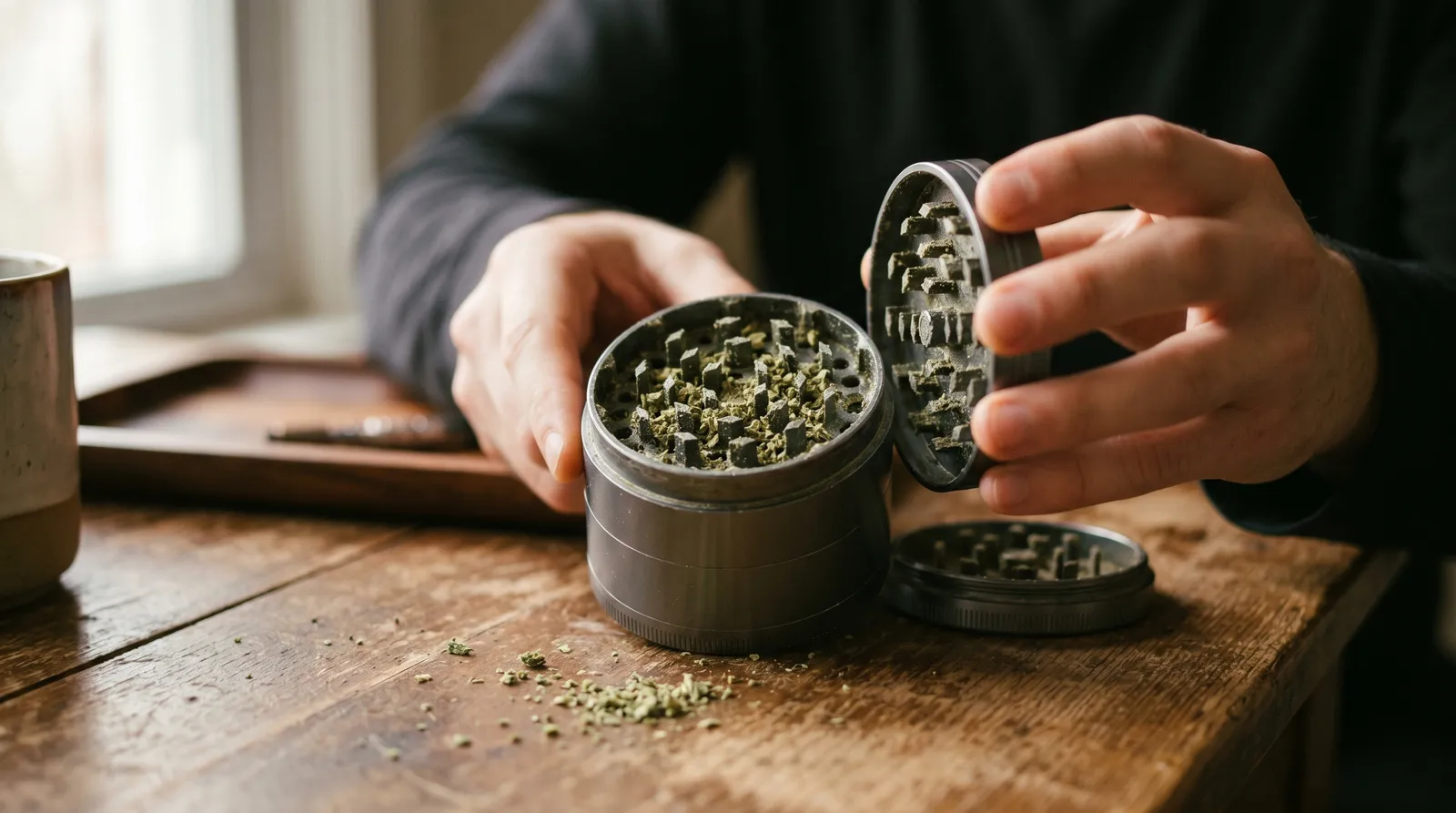
Remove the cap from the tip. The DynaVap tip has an adjustable bowl: with the screen sitting in its default position, you get a full-size bowl (roughly 0.1g). Push the screen halfway down with a tool or your finger and the bowl halves to about 0.05g. That half-bowl setting is genuinely useful — a 2018 user survey on the DynaVap subreddit (n ≈ 1,200) found that the majority of daily users preferred the half-bowl for flavour and efficiency, though self-reported survey data from an online community should be taken with a grain of salt.
Pack loosely. Don't tamp it down. You can gently press the open end of the tip directly into your grinder's herb chamber and let gravity do the loading — this "straw method" naturally fills the bowl without compressing. Airflow through the material is what produces vapour; a packed-tight bowl restricts that flow and leads to uneven extraction or combustion.
Step 2 — Choose Your Heat Source
A single-flame or dual-flame torch lighter gives you the most control over your DynaVap heating cycle. Triple and quad flames heat faster but make it easier to overshoot. A soft flame (standard Bic-style lighter) technically works but takes ages and deposits soot on the cap.
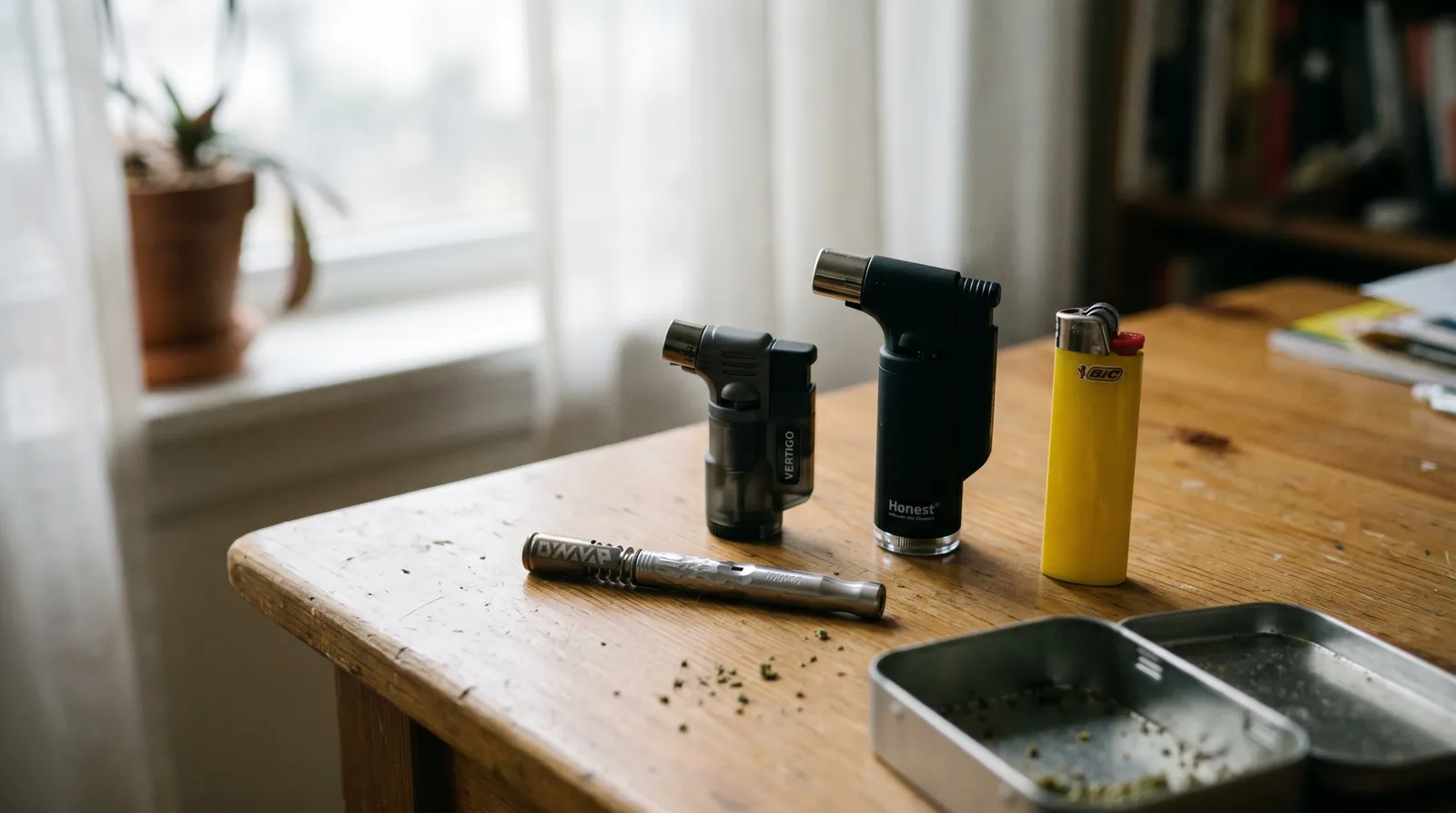
Butane torch lighters are stocked at most tobacconists and headshops. Refill with quality butane — cheap gas with impurities clogs the jet nozzle within weeks. You'll know it's clogged when the flame sputters or goes orange.
Induction heaters exist as an alternative (battery-powered or mains-powered devices that heat the cap magnetically). They remove the torch entirely and make the process more consistent, though they add cost and bulk. The DynaVap community has embraced them, but the torch remains the default and the method this guide focuses on.
Step 3 — Heat the Cap (This Is Where Most People Go Wrong)
The heating step determines roughly 80% of your vapour quality. Hold the DynaVap at roughly a 45-degree angle. Position the tip of the flame so the inner cone (the hottest part, usually blue) touches the cap. Now rotate the device continuously — spin it between your fingers like a slow rotisserie. Even heating prevents hot spots.
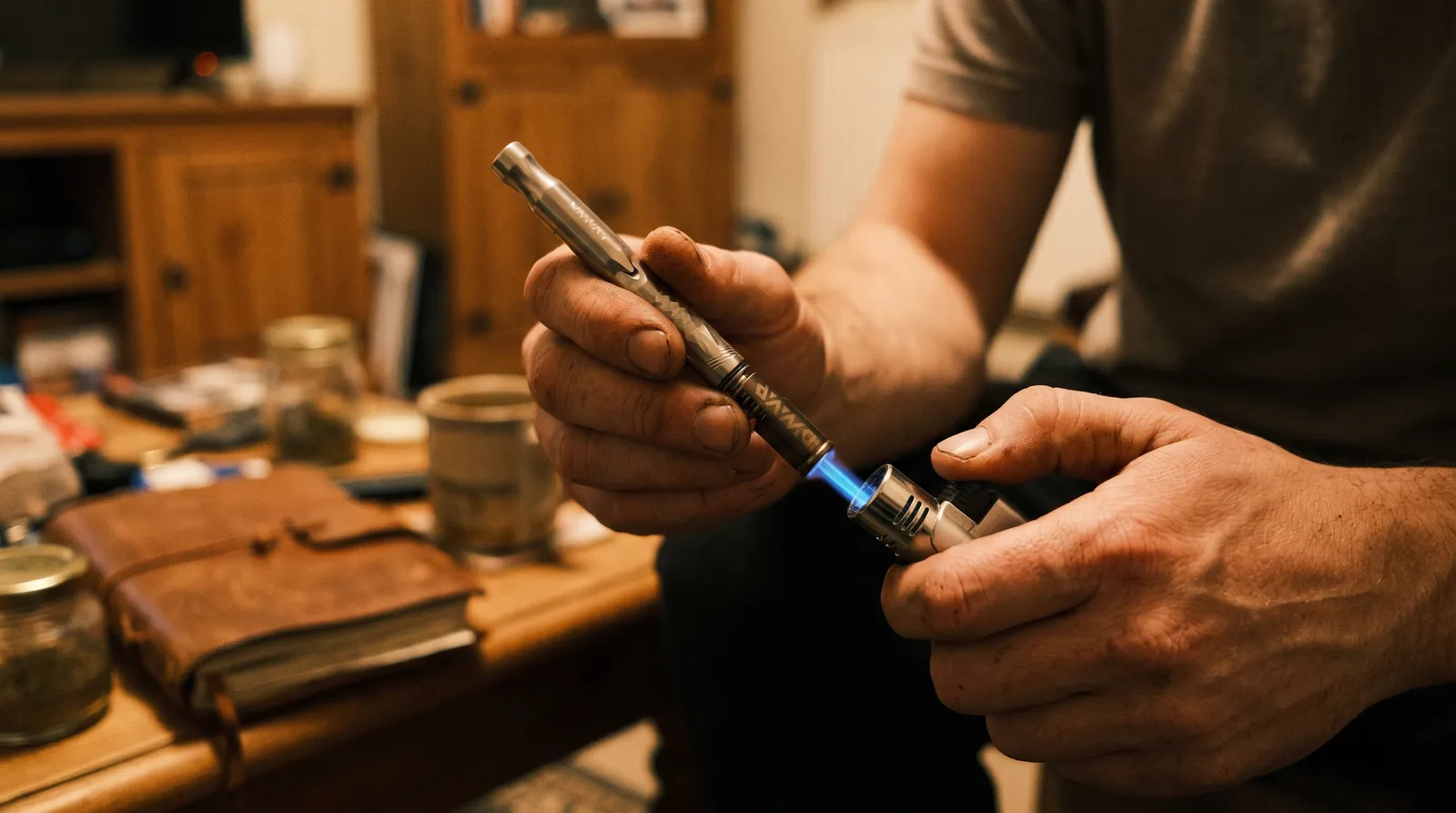
Where you aim on the cap changes everything:
- Heating near the base of the cap (close to the digger-outer): The click arrives later because the bimetallic disc at the cap's apex takes longer to reach trigger temperature. This means higher chamber temperatures — thicker vapour, more extraction per cycle, closer to the edge of combustion. Best for later heat cycles when you've already extracted the lighter compounds.
- Heating near the tip of the cap (the very top): The click comes sooner. Lower chamber temperature, more flavour, lighter vapour. Start here on your first cycle for the best terpene expression.
Keep the flame moving and rotating until you hear the click — actually, you'll hear two clicks in rapid succession. Stop heating immediately when you hear the click. That's not a suggestion. The click is a calibrated thermal signal from the bimetallic disc inside the cap. Heating past the click is the single fastest route to combustion, and combusted herb in a DynaVap tastes absolutely foul.
Step 4 — Inhale: Airflow and the Carb Hole
The carb hole (also called the airport) is your live airflow control during each draw. The DynaVap has a small air intake hole on the body, and how you manage it shapes the entire experience:
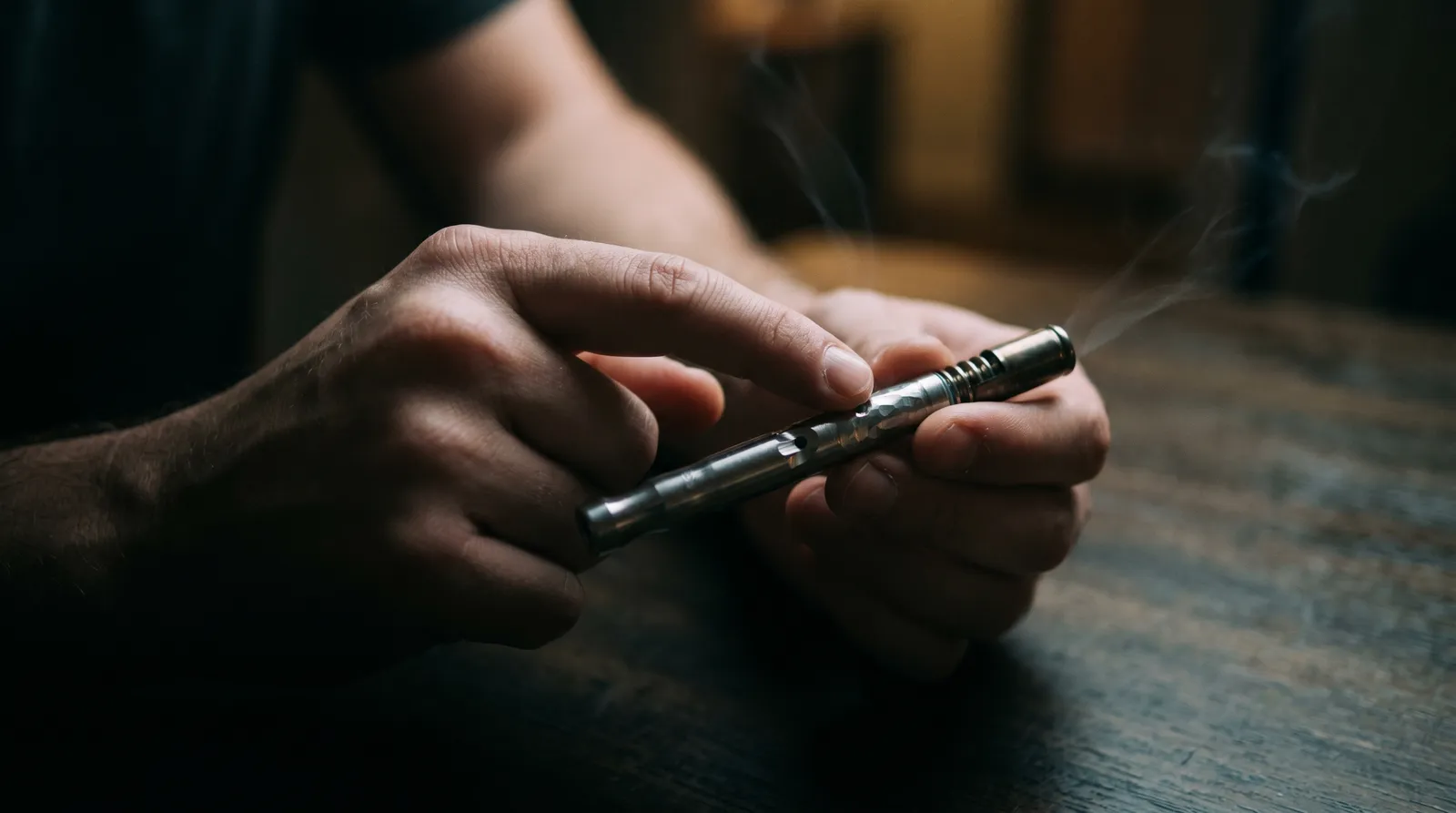
- Carb fully covered (finger over the hole): Maximum restriction. The draw is tight, vapour is dense and warm. Similar to sipping through a coffee stirrer.
- Carb fully open: Air mixes freely with vapour. The draw is loose, vapour is cooler and thinner.
- Feathering (partially covering, rhythmically opening and closing): This is where experienced users land. You modulate the density and temperature in real time. Start covered, then gently lift your finger to let cool air mix in as you draw.
Draw slowly and steadily for 7–15 seconds. This isn't a bong rip — aggressive suction cools the chamber too fast and kills extraction. Think of it as sipping hot tea through a narrow straw. You should feel mild warmth and see visible vapour on exhale.
The OmniVap simplifies this with its adjustable condenser: twist the mouthpiece to set a fixed airflow restriction, removing the need to manage the carb manually. It's a genuine ergonomic upgrade for anyone who finds the feathering technique fiddly.
Step 5 — Wait for the Cooldown Click
After your draw, the cap cools and you'll hear another click (or double-click) — this is the cooldown click, telling you the cap has dropped below vaporisation temperature and it's safe to reheat for another cycle.
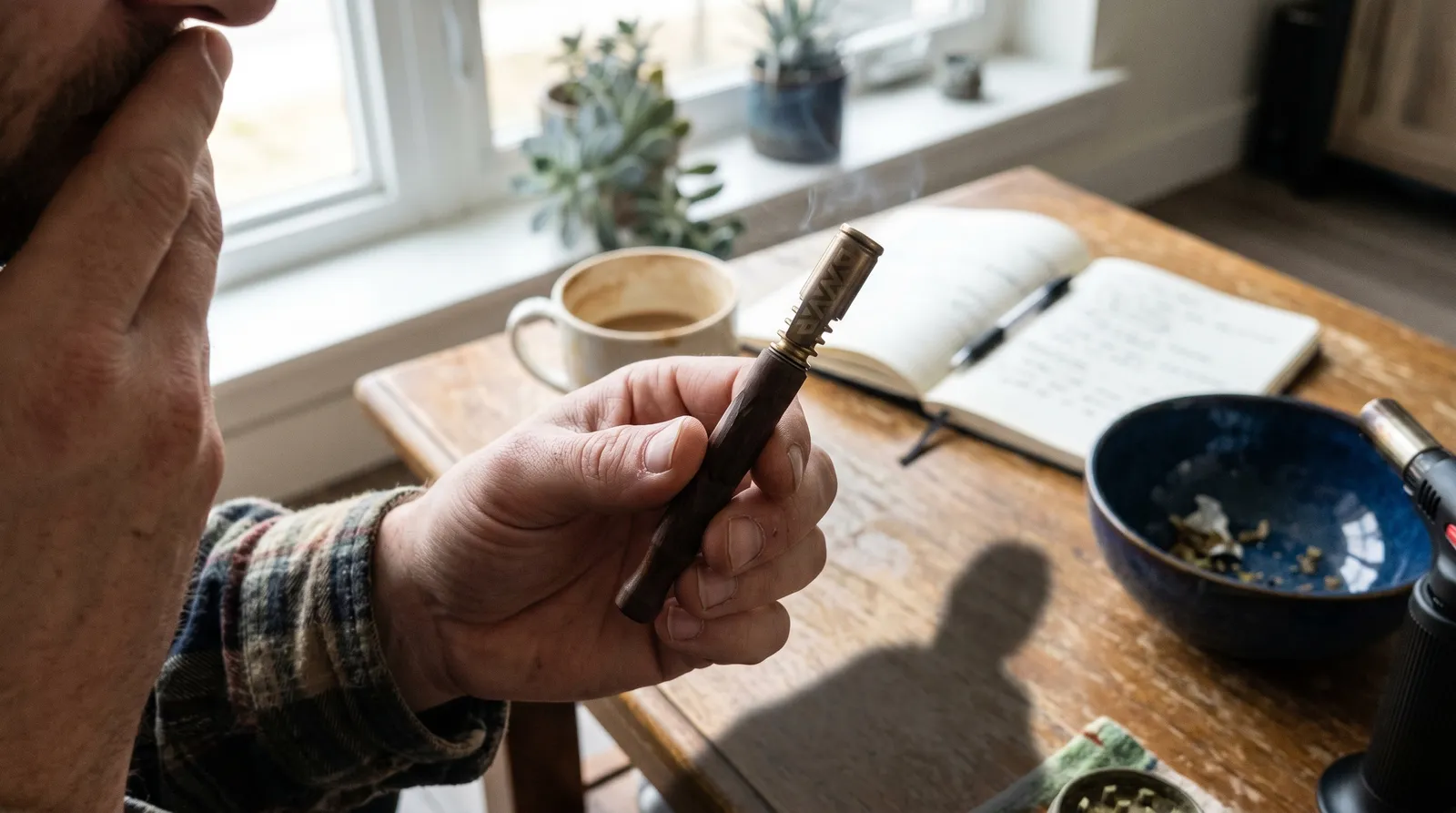
Do not reheat before the cooldown click. The cap retains enough heat that reheating too early stacks residual temperature onto the new cycle, pushing you past the combustion threshold. Patience here is the difference between a clean session and a charred mess.
A typical bowl lasts 3–5 heat cycles before the herb is spent. You'll know extraction is complete when the vapour thins out noticeably and the flavour turns slightly toasted or popcorn-like. The spent herb (ABV — already been vaped) should be a uniform dark brown. If it's black and ashy, you combusted at some point.
Step 6 (Optional) — Use Through a Water Piece
DynaVap tips fit a standard 10mm female glass joint, making water filtration straightforward. Many users run their DynaVap through a small glass water pipe or bubbler — the water cools the vapour and adds moisture, making the draw noticeably smoother, especially on low-temp cycles where the vapour can feel dry.
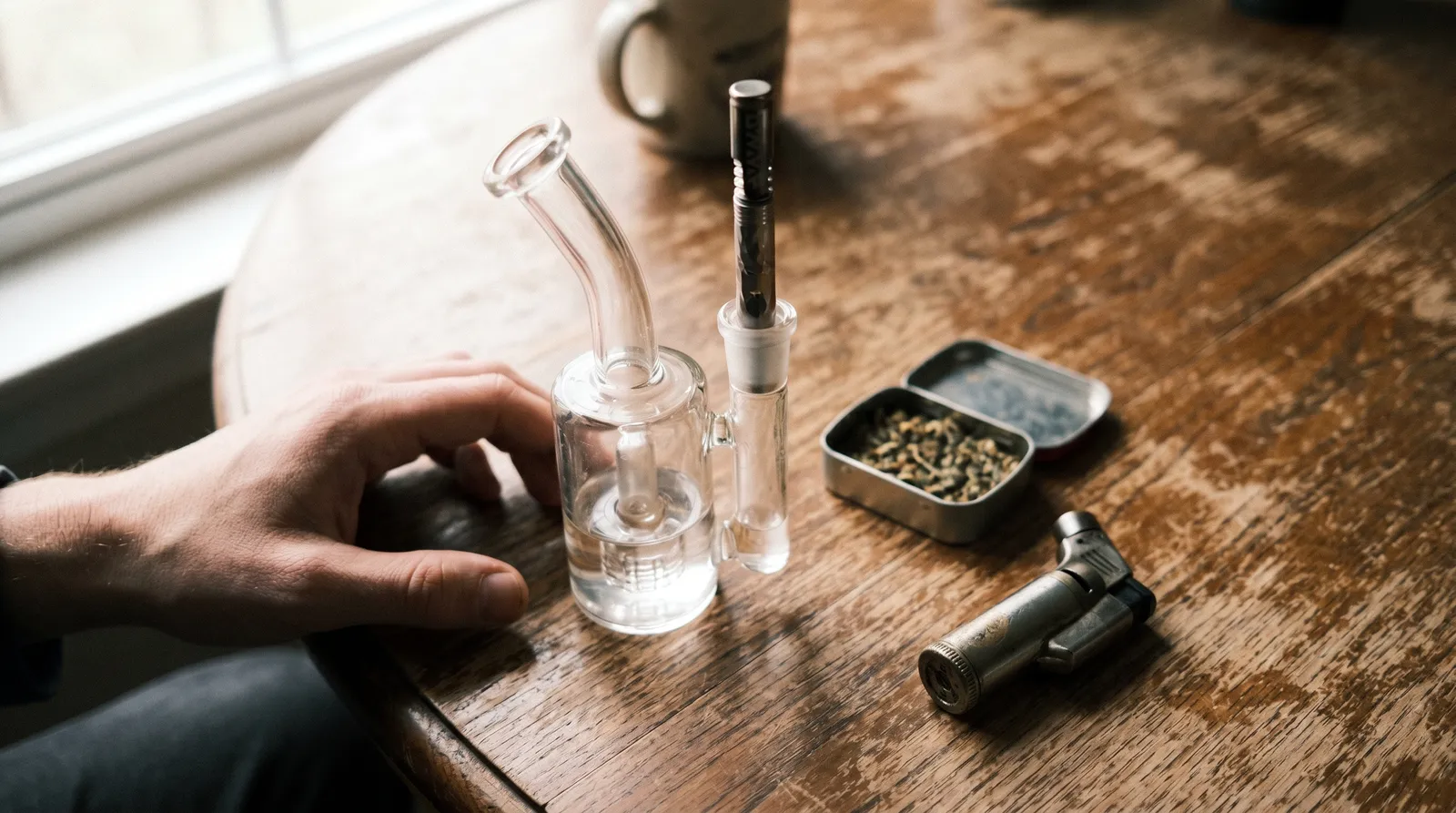
A compact glass bong from Black Leaf or Blaze Glass with a 10mm joint works perfectly. You don't need a percolator — in fact, too much diffusion can strip flavour. A simple straight tube or small beaker is ideal. If your glass piece has a 14mm joint, a 10mm-to-14mm adapter sorts it out.
Cleaning and Maintenance
A clean DynaVap performs noticeably better than a gunked-up one — plan on a full clean every 1–2 weeks with regular use. The DynaVap is mostly metal, which makes cleaning straightforward:
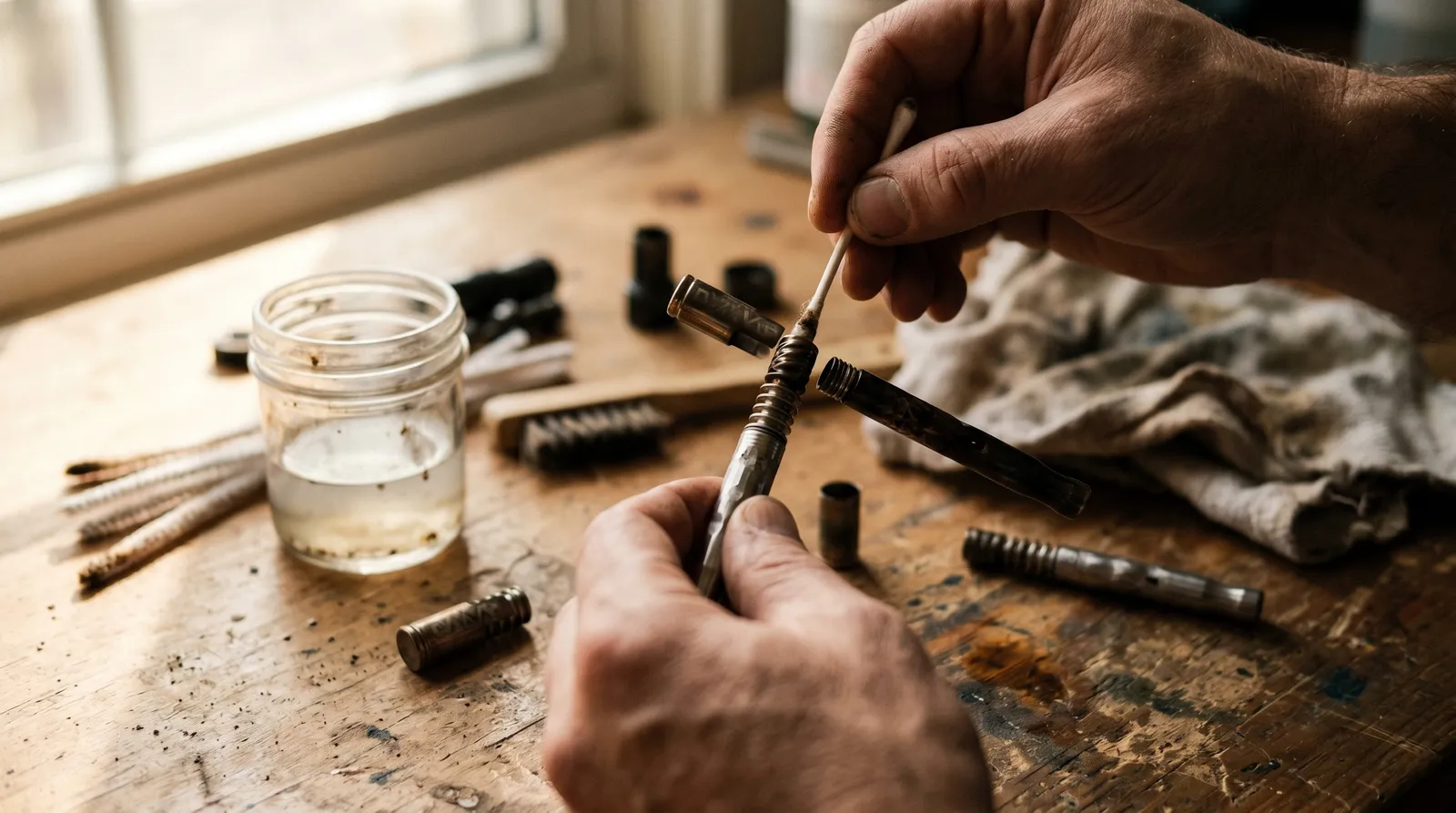
- Disassemble fully: Remove the cap, tip, screen, O-rings, and condenser. The O-rings are the only part you need to keep away from solvents.
- Soak metal parts in isopropyl alcohol (90%+): 20–30 minutes loosens resin. Use a pipe cleaner or the included stash tool to push residue out of the condenser tube.
- Rinse with hot water and let everything air-dry completely before reassembling. Isopropyl is flammable — do this in a ventilated space, away from open flames or your torch lighter.
- O-rings: Wipe with a damp cloth. Apply a tiny amount of food-grade lubricant (coconut oil works, or DynaVap's own Dynawax) to keep them supple. Dried-out O-rings lose their seal and cause air leaks.
- Screens: If airflow feels restricted even after cleaning, replace the screen. They're cheap and should be swapped every few months with regular use.
The reclaim (condensed resin) inside the condenser tube is potent. Some users save it by pushing it out with a cotton bud before the iso soak — it can be added back to a fresh bowl or used on its own. This is one of the few vaporizers where the cleaning process yields something usable rather than just waste.
Common Mistakes and How to Fix Them
| Problem | Likely Cause | Fix |
|---|---|---|
| Combustion (black ash, harsh taste) | Heating past the click, or reheating before cooldown click | Stop at the click. Wait for the cooldown click. Heat closer to the tip of the cap for a lower-temp cycle. |
| Thin, wispy vapour | Herb ground too coarsely, bowl packed too tight, or heating too close to cap tip | Use a medium grind, pack loosely, and try aiming the flame slightly lower on the cap. |
| No click at all | Worn-out cap (bimetallic disc fatigue after extended use) | Replace the cap. They're a consumable part — expect replacement every 1–2 years with daily use. |
| Uneven extraction (half brown, half green) | Not rotating during heating | Spin the device continuously. Use a single-flame torch for better precision. |
| Harsh, dry vapour | High-temp cycles without moisture | Run through a water piece, or feather the carb hole to mix in cool air. |
| Draw feels blocked | Clogged screen or packed bowl | Clean or replace the screen. Load less material and don't compress it. |
The M vs the OmniVap — Which One?
The M is the better choice if you're learning; the OmniVap is the better choice if you already know what you want. Here's the breakdown.
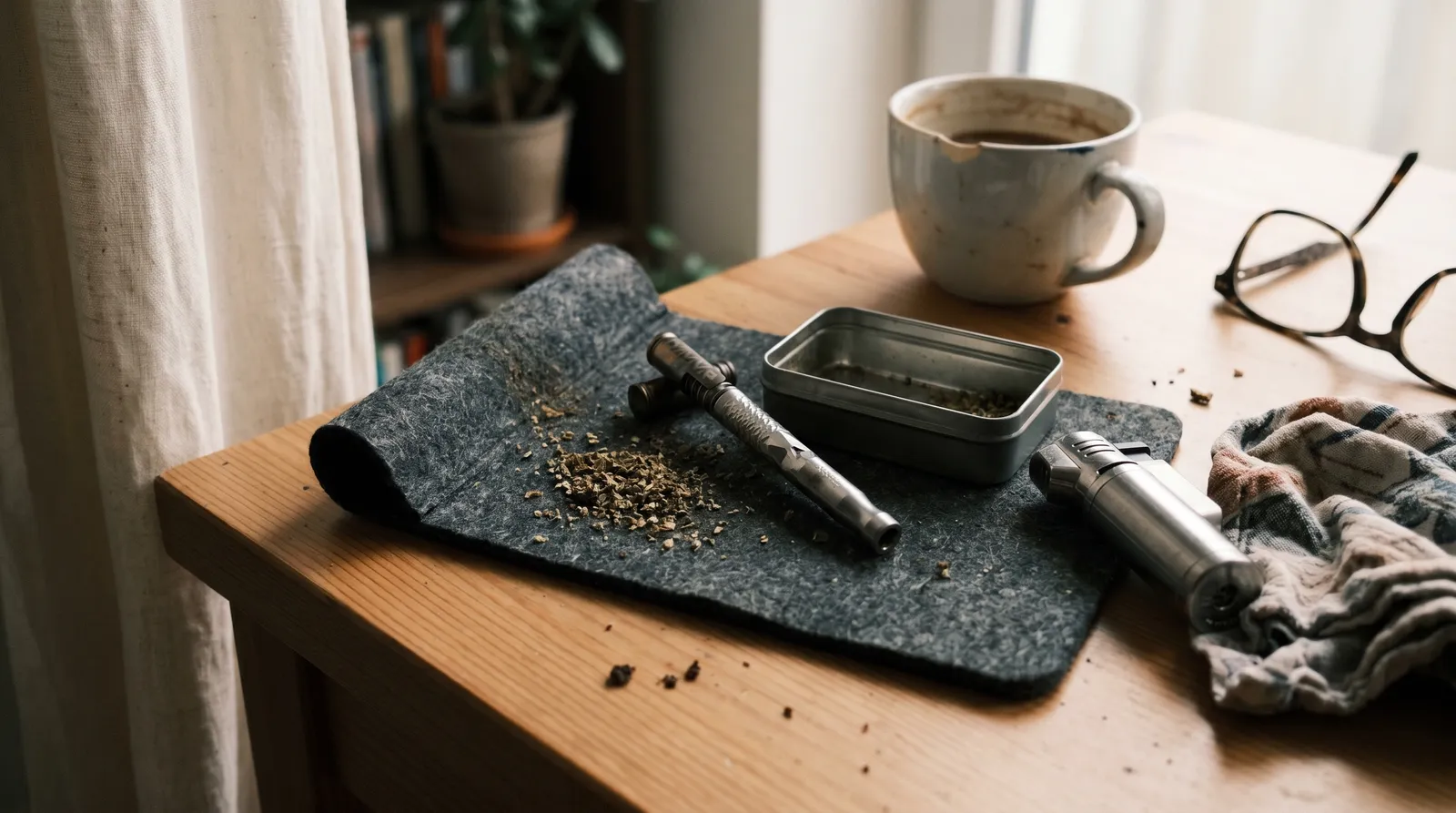
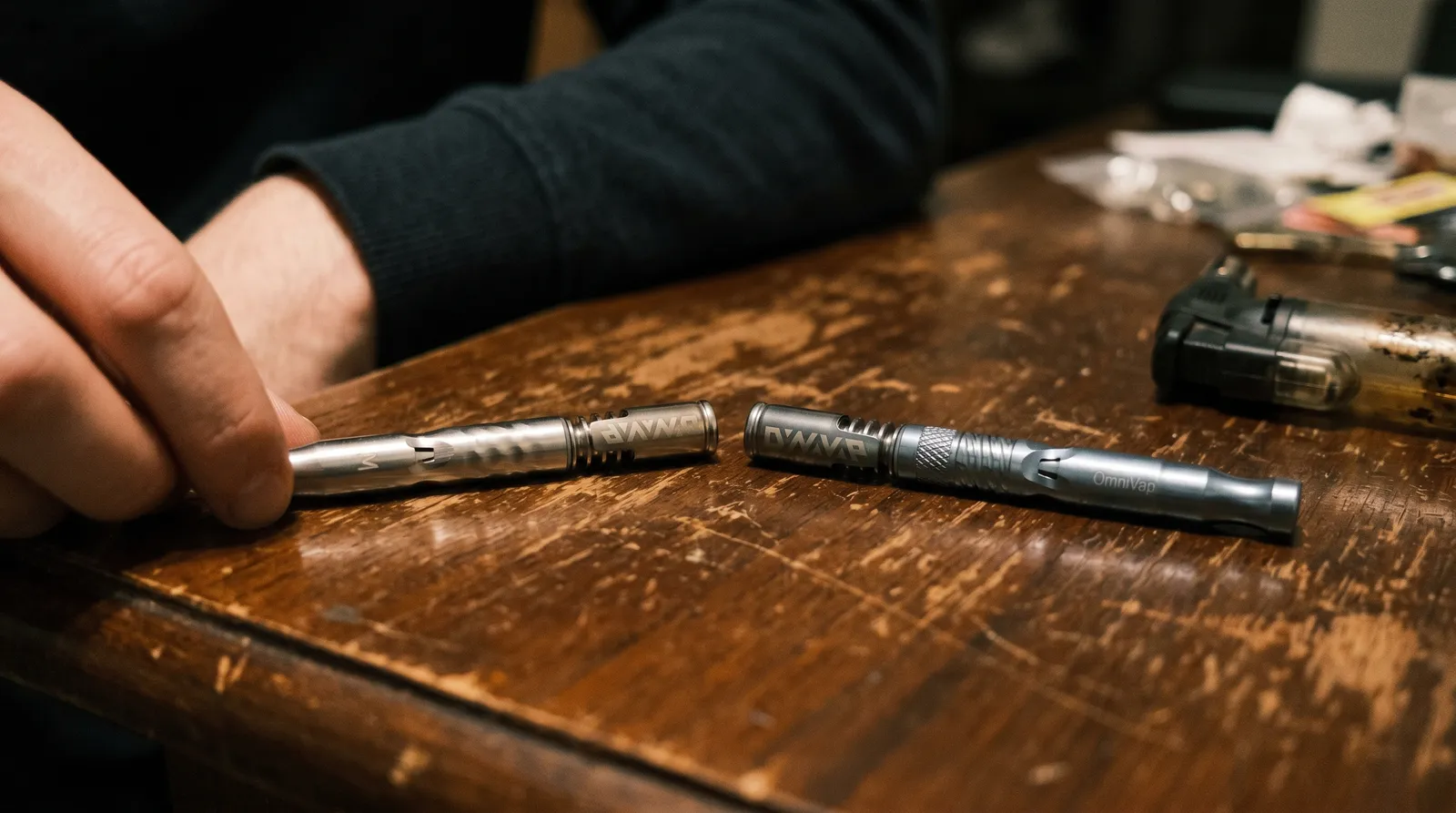
The M is stainless steel throughout. It's heavier, retains heat longer between cycles, and costs significantly less. It's the starting point for a reason — you learn the technique without worrying about the investment.
The OmniVap uses a titanium tip and condenser. Titanium heats faster, cools faster, and weighs noticeably less in the hand. The adjustable airflow condenser means you set your preferred restriction once and forget about the carb hole. Vapour quality is marginally better according to most side-by-side comparisons — the faster heat-up preserves more volatile terpenes on the first cycle.
The honest answer: the M teaches you more, because you have to manage every variable manually. The OmniVap rewards you once you already know what you're doing. If you're deciding between the two and budget isn't the constraint, the OmniVap is the better daily driver. If you want to learn the platform before committing, order the M as your first entry into the DynaVap complete guide experience.
References
- Abrams, D.I. et al. (2007). Vaporization as a smokeless cannabis delivery system: a pilot study. Clinical Pharmacology & Therapeutics, 82(5), 572–578.
- Pomahacova, B. et al. (2009). Cannabis smoke condensate III: the cannabinoid content of vaporised Cannabis sativa. Inhalation Toxicology, 21(13), 1108–1112.
- Earleywine, M. & Barnwell, S.S. (2007). Decreased respiratory symptoms in cannabis users who vaporize. Harm Reduction Journal, 4, 11.
- EMCDDA (2017). Cannabis and cannabinoids: administration routes and pharmacokinetics. European Monitoring Centre for Drugs and Drug Addiction.
Last updated: April 2026
Frequently Asked Questions
8 questionsHow many heat cycles does a DynaVap bowl last?
Can you use a DynaVap with a bong or water pipe?
What does heating the DynaVap at the base vs tip of the cap do?
How often should you clean a DynaVap?
Single-flame or multi-flame torch lighter for DynaVap?
What is the DynaVap cooldown click and why does it matter?
Do you need to grind herb for a DynaVap?
Why isn't my DynaVap clicking?
About this article


Adam Parsons is an external cannabis and psychedelics writer and editor who contributes to Azarius's wiki as both author and reviewer. On the writing side, he authors Azarius's kratom and kanna clusters, drawing on exten
This wiki article was drafted with AI assistance and reviewed by Adam Parsons, External contributor. Editorial oversight by Joshua Askew.
Medical disclaimer. This content is for informational purposes only and does not constitute medical advice. Consult a qualified healthcare provider before use of any substance.
Last reviewed April 25, 2026
Related Articles
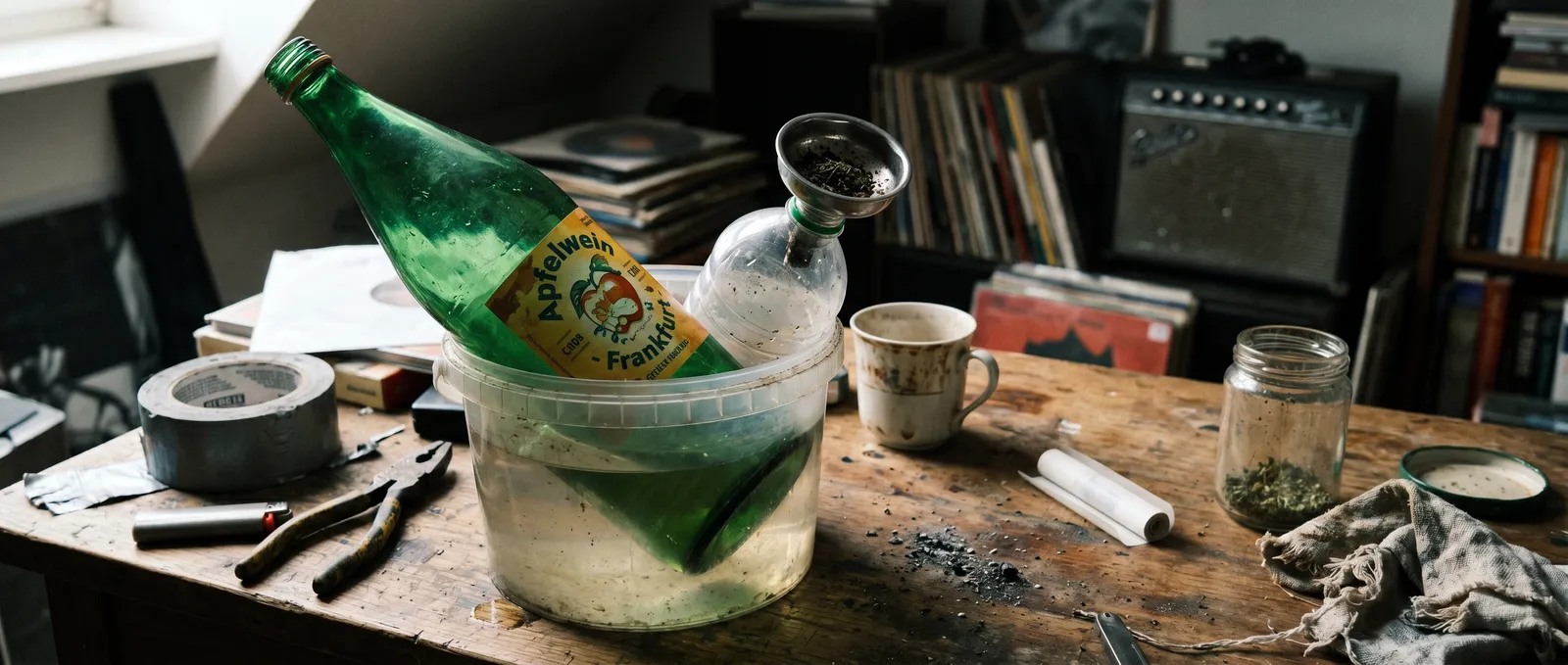
Gravity Bongs Explained: How They Work and Why
A gravity bong uses water displacement to pull concentrated smoke into a chamber, then forces it into your lungs under positive pressure.
Storz Bickel Volcano Complete Guide: Setup, Temps & Cleaning
The Storz & Bickel Volcano is a convection desktop vaporizer that fills detachable balloons with vapour — a system clinically validated by Hazekamp et al.
TinyMight Boundless XMAX Premium Portables Compared
The TinyMight 2, Boundless CFX/CFC and XMAX V3/Starry/Ace represent three tiers of portable dry-herb vaporizer — from budget conduction to premium convection.
How To Clean a Vaporizer: Step-by-Step Guide
How to clean a vaporizer is a straightforward maintenance routine that keeps your device tasting fresh, drawing smoothly, and lasting years longer than a…
ROOR Grace Glass Black Leaf Blaze Brand Comparison — Glass Bong Guide
Four borosilicate glass bong brands — ROOR, Grace Glass, Black Leaf, and Blaze Glass — dominate the European market at different price points.
Joint Filters Crutches Glass Tips Activated Charcoal — Buyer's Guide
Joint filters range from simple card crutches that block loose herb to activated charcoal tubes that trap 40–60% of gas-phase toxicants like benzene and…
Quartz Banger Temperature and Care Guide
A quartz banger's performance depends almost entirely on temperature control and maintenance.
Arizer Portable Lineup Compared: Solo vs Solo 2 vs Solo 3 vs ArGo
Arizer's portable vaporizers all use borosilicate glass vapour paths and session-style heating, but differ meaningfully in battery architecture, heating…
Kief: What It Is and How to Collect It | Full Guide
Kief is the fine, powdery accumulation of trichome heads that detach from cannabis flower during grinding or handling.