
Kief: What It Is and How to Collect It | Full Guide
Definition
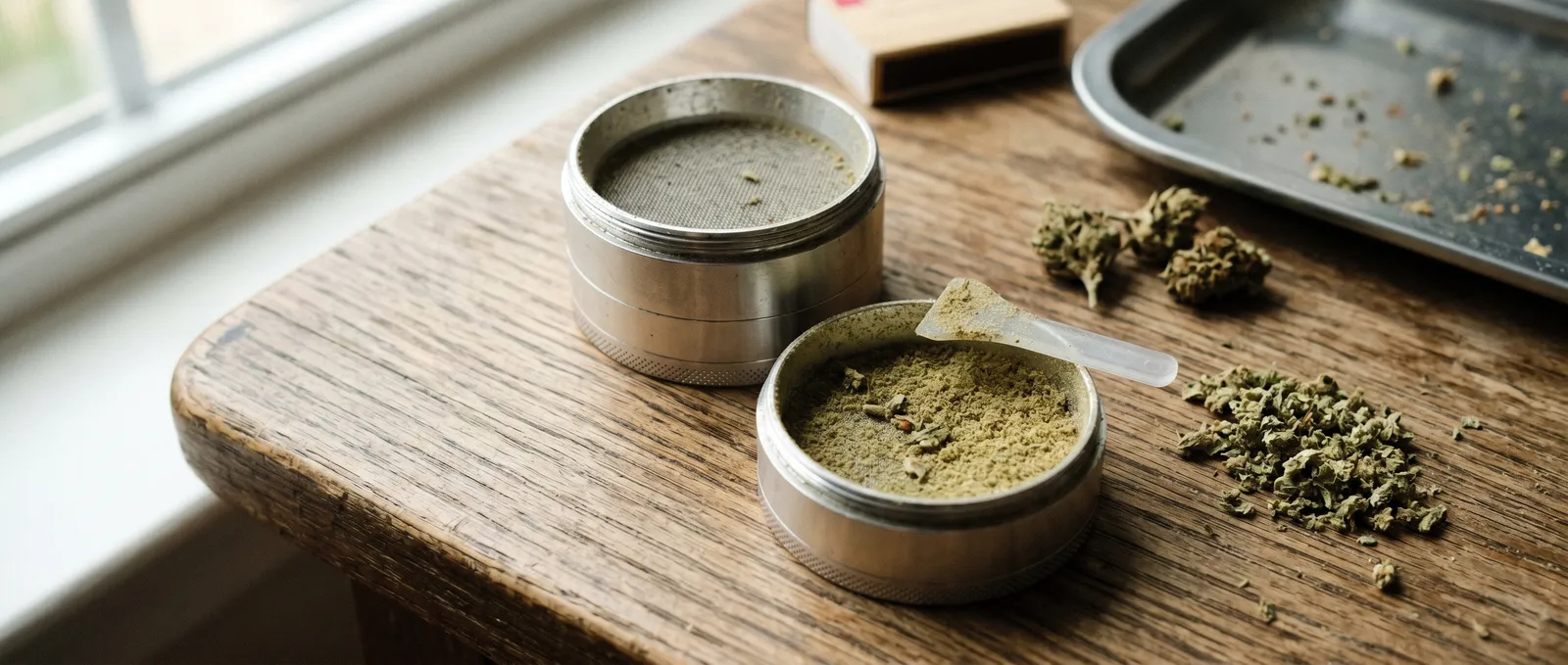
Kief is the fine, powdery accumulation of trichome heads that detach from cannabis flower during grinding or handling. These glandular trichome heads contain the highest concentration of cannabinoids and terpenes on the plant (Happyana et al., 2013). Collecting it requires little more than a screened grinder or a sifting frame, some patience, and a bit of cold.
What Is Kief, Exactly?
Kief what it is and how to collect it starts with a simple definition: kief is a fine, powdery concentrate that accumulates when trichome heads detach from dried cannabis flower during grinding or handling. The word derives from the Arabic kayf, meaning pleasure or well-being. Trichomes are the tiny, mushroom-shaped resin glands covering the surface of cannabis buds and sugar leaves, and they concentrate the plant's cannabinoids and terpenes. When those bulbous heads snap off during handling or grinding, the dust that gathers is kief. According to a morphological study by Happyana et al. (2013), the glandular trichome heads contain the highest density of cannabinoid-producing cells on the plant, which is why kief packs considerably more punch gram-for-gram than the flower it came from.
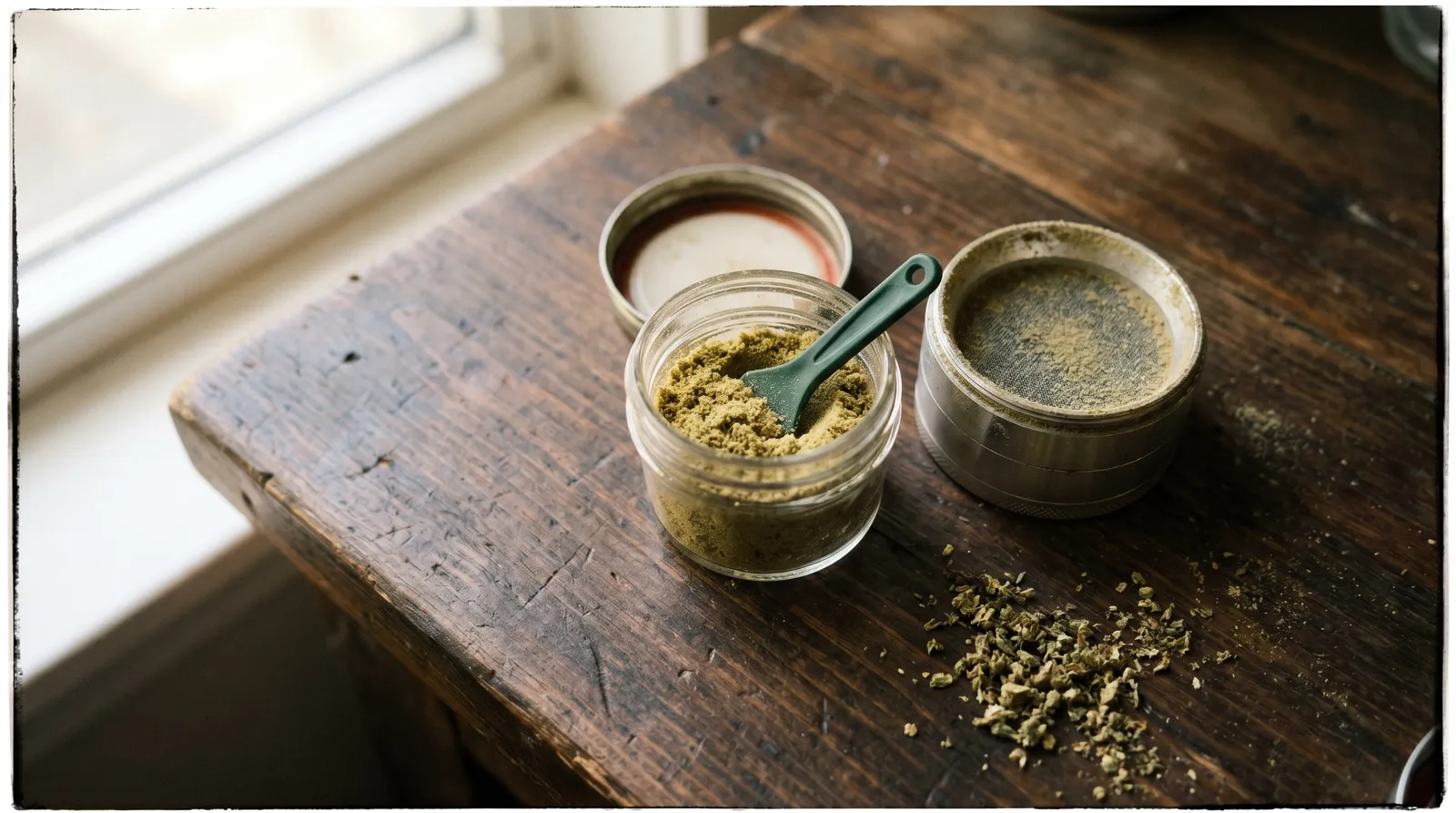
Collecting it is straightforward — you just need the right hardware and a bit of patience. Below is a step-by-step walkthrough covering the main collection methods, from the simplest grinder technique to dedicated sifting screens, plus tips on storage and common mistakes that waste your yield. If you want to buy a quality four-part grinder or sifting screen to get started, the equipment section below covers what to look for.
Why Trichomes Matter for Collection
Trichome type determines both yield and purity when you collect kief. Cannabis trichomes come in three main types — bulbous, capitate-sessile, and capitate-stalked — but it is the capitate-stalked variety that matters here. These are the largest (roughly 50–100 micrometres across the head), sit on visible stalks, and hold the bulk of the resin. A study by Livingston et al. (2020) published in The Plant Journal confirmed that capitate-stalked trichomes are the primary site of cannabinoid and terpene biosynthesis in Cannabis sativa.
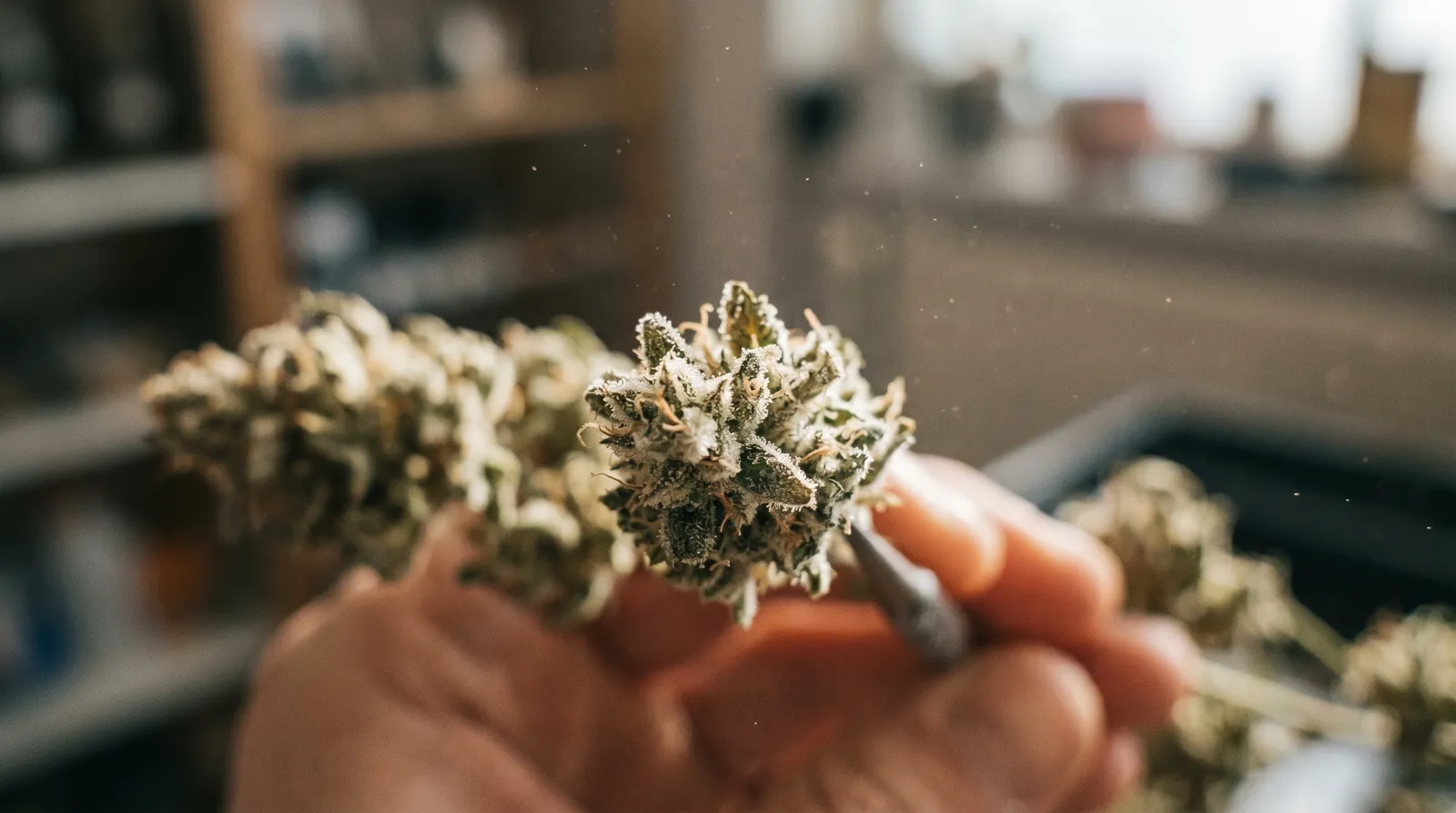
The heads are attached to their stalks by a fairly fragile abscission zone. Mechanical agitation — grinding, shaking, tumbling — snaps them off. Temperature plays a role too: cold, brittle trichomes detach more cleanly than warm, sticky ones. That single fact underpins almost every collection trick worth knowing. The European Monitoring Centre for Drugs and Drug Addiction (EMCDDA) notes that traditional hashish production across North Africa and Central Asia has relied on this same cold-sifting principle for centuries.
Step 1 — The Four-Part Grinder Method (Easiest Route)
A four-part grinder is the most accessible way to collect kief because it works passively while you prepare flower. The anatomy is simple — a lid with teeth, a grinding chamber, a perforated screen that lets trichome heads fall through, and a bottom catch chamber (often called the kief catcher or pollen chamber) where the dust collects.
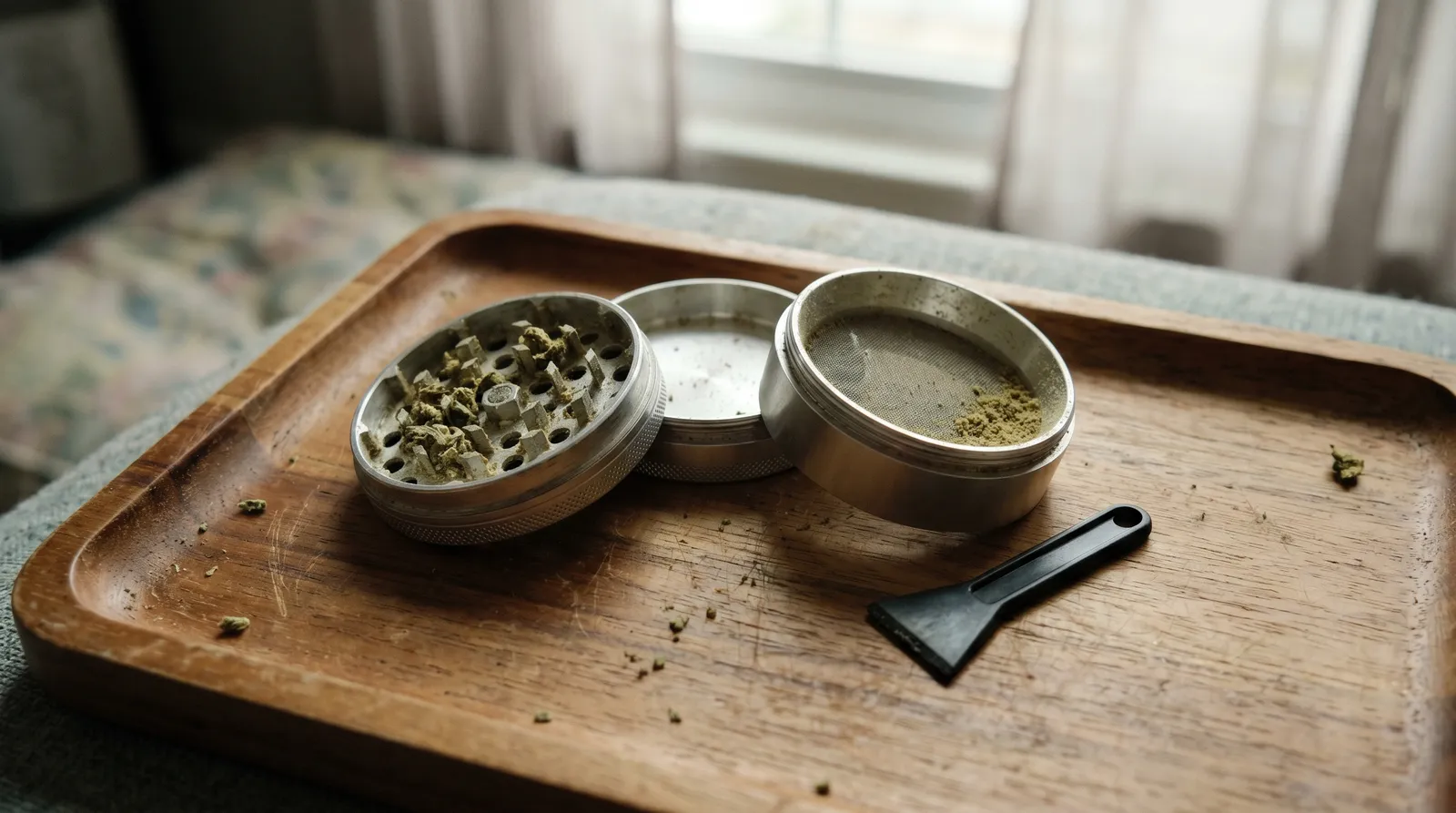
How to do it:
- Break your flower into small pieces by hand and load them into the grinding chamber. Don't overstuff — the teeth need room to shear the material, not compress it into a puck.
- Grind with a firm, steady twist — about 10–15 rotations. Over-grinding turns plant matter into a fine powder that clogs the screen and contaminates your kief with green material.
- Tap the grinder lightly against your palm or a table after grinding. This nudges loose trichome heads through the screen without forcing larger particles through.
- Leave the ground flower in the chamber for a minute or two before opening, if you can resist. A short rest lets any airborne trichome dust settle onto the screen rather than escaping when you open the lid.
- Unscrew the bottom chamber periodically to check your yield. Depending on the flower's trichome density and how much you grind, a visible layer can take anywhere from a few grams to half an ounce of flower to accumulate.
The screen mesh size matters. Most four-part grinders use screens in the 60–100 micrometre range, which is well-matched to capitate-stalked trichome heads. Finer screens (around 50 µm) produce purer kief with less plant contamination but slower accumulation. Coarser screens let more through faster, but the result is greener and less concentrated.
| Mesh Size (µm) | Purity | Accumulation Speed | Best For |
|---|---|---|---|
| 40–50 | Very high (golden) | Slow | Pressing into hash |
| 60–100 | Good (sandy gold) | Moderate | General collection |
| 110–150 | Lower (greenish) | Fast | Bulk topping for bowls |
Grinder material affects performance too. Ceramic-coated aluminium grinders — like the SLX range — resist the resin build-up that gradually clogs uncoated metal screens. Anodised aluminium options such as the Santa Cruz Shredder hold up well over time and maintain sharp teeth that cut rather than tear, which reduces the amount of fine plant matter pushed through the screen. If you want to order a grinder specifically optimised for kief, look for one that explicitly states its screen micron rating.
Step 2 — The Coin Trick (Boosting Grinder Yield)
A small coin in the grinder chamber acts as a mechanical agitator that increases trichome separation — and it genuinely works, though the mechanism is often misunderstood.
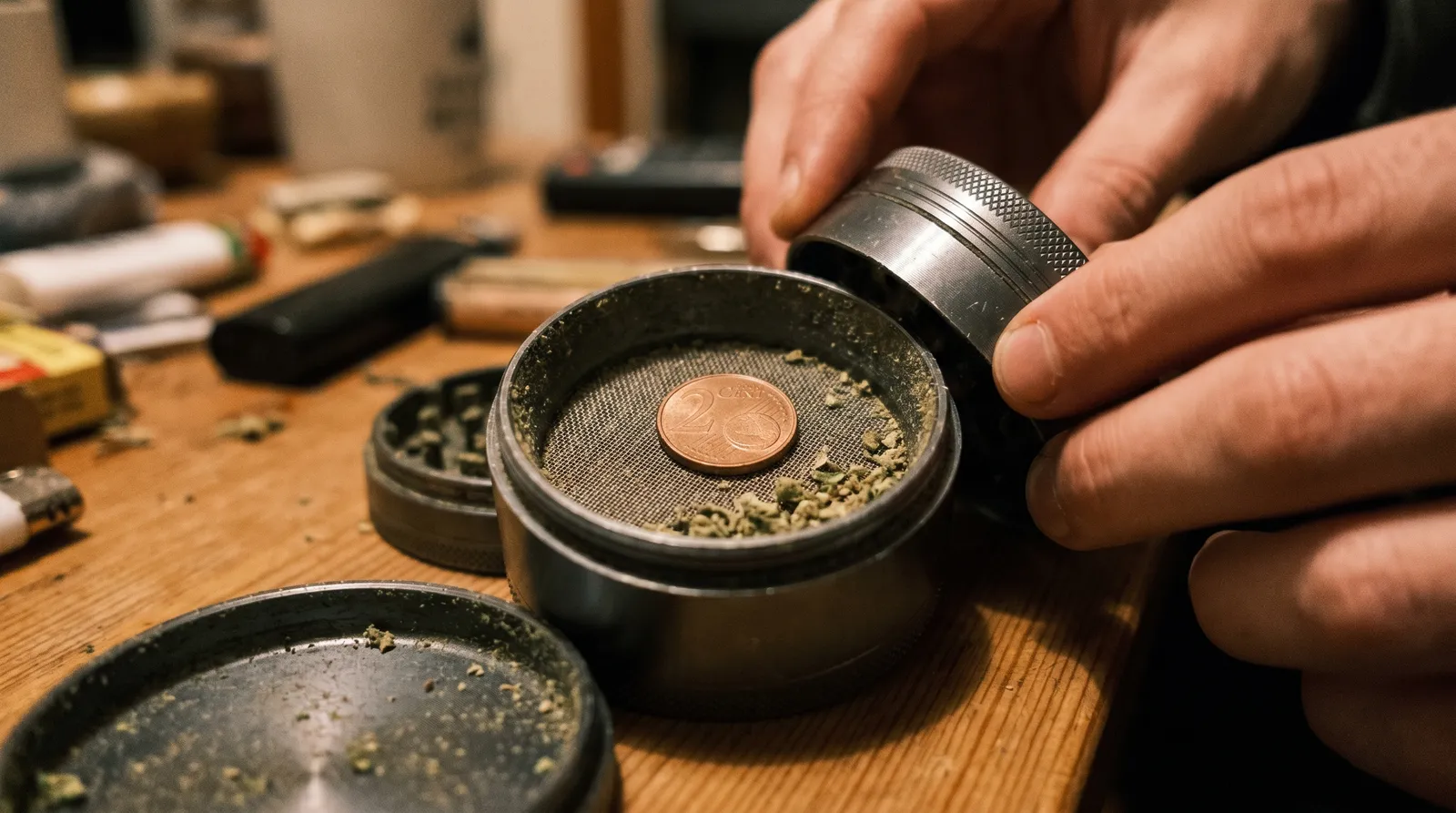
- Place a small, clean coin (a euro cent or similar) in the middle chamber of your four-part grinder, on top of the screen.
- After grinding, close the grinder and shake it side to side for 10–15 seconds. The coin knocks trichome heads off the ground flower and through the screen.
- For even better results, freeze the grinder (with flower inside) for 15–30 minutes before shaking. Cold makes trichomes brittle and far easier to detach. This is the temperature principle mentioned earlier in action.
A word of caution: aggressive shaking with a coin does increase yield, but it also pushes more plant matter through the screen. The kief you collect will be slightly less pure — more green, less golden. If purity matters to you (for pressing into hash, for instance), skip the coin and let the trichomes fall through naturally over time.
Step 3 — Dry Sifting with a Screen (Higher Volume)
Dry sifting is the most efficient method to collect kief in bulk when you have a larger quantity of flower or trim. Silk-screen frames, pollen boxes, and multi-tier sifting kits all work on the same principle: flower sits on a fine mesh, you agitate it, and trichome heads fall through.
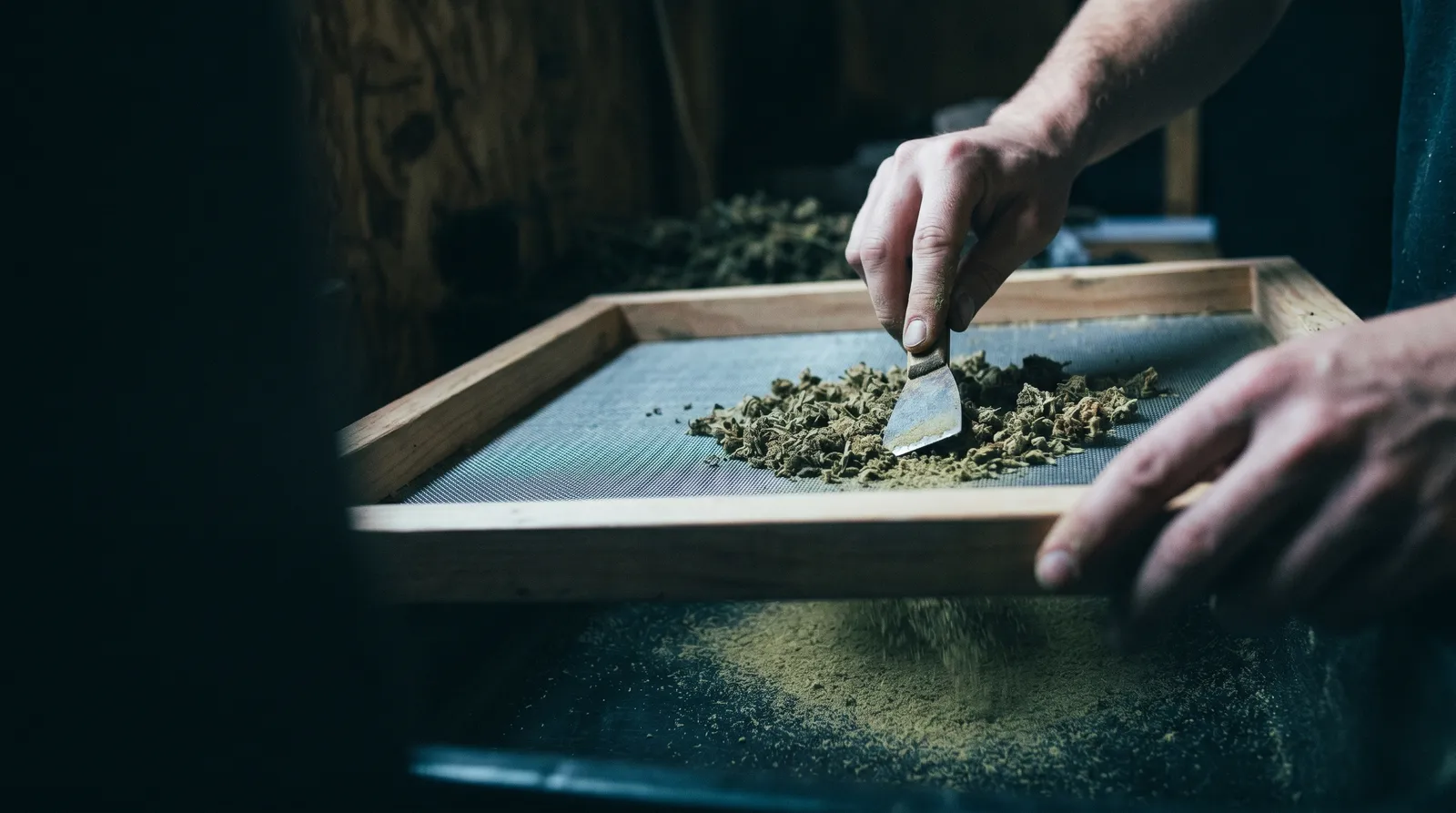
- Freeze your material for at least 30 minutes. This step is not optional for dry sifting — warm, sticky trichomes cling to the mesh and to each other, tanking your yield.
- Place the frozen flower on the screen over a clean, smooth collection surface (a glass tray or mirror works well — you can see the kief and scrape it up easily).
- Gently card the material back and forth across the screen using a stiff card or your hands (wearing gloves — body heat is the enemy here). Don't press down hard; let the agitation do the work.
- Sift for 2–5 minutes, then check your yield. The first pass produces the purest, most golden kief. Subsequent passes yield more but with increasing plant contamination.
- For graded purity, use stacked screens with progressively finer mesh — 150 µm on top, 75 µm in the middle, 45 µm at the bottom. The finest layer catches nearly pure trichome heads with minimal green material. According to cannabis processing literature reviewed by Roggen et al. (2021), multi-stage dry sifting at controlled temperatures can produce concentrates with cannabinoid content exceeding 50% by weight.
Screen size reference: 150 µm captures large trichome heads plus some stalk material. 70–90 µm is the standard "full melt" range — mostly intact heads. Below 45 µm, you're catching fragments and very small glandular trichomes, which can be potent but difficult to handle.
Step 4 — Storing Your Kief Properly
Kief degrades faster than intact flower because the protective trichome membrane has already been ruptured or removed during collection. Exposure to light, heat, oxygen, and moisture all accelerate the breakdown of cannabinoids and terpenes.
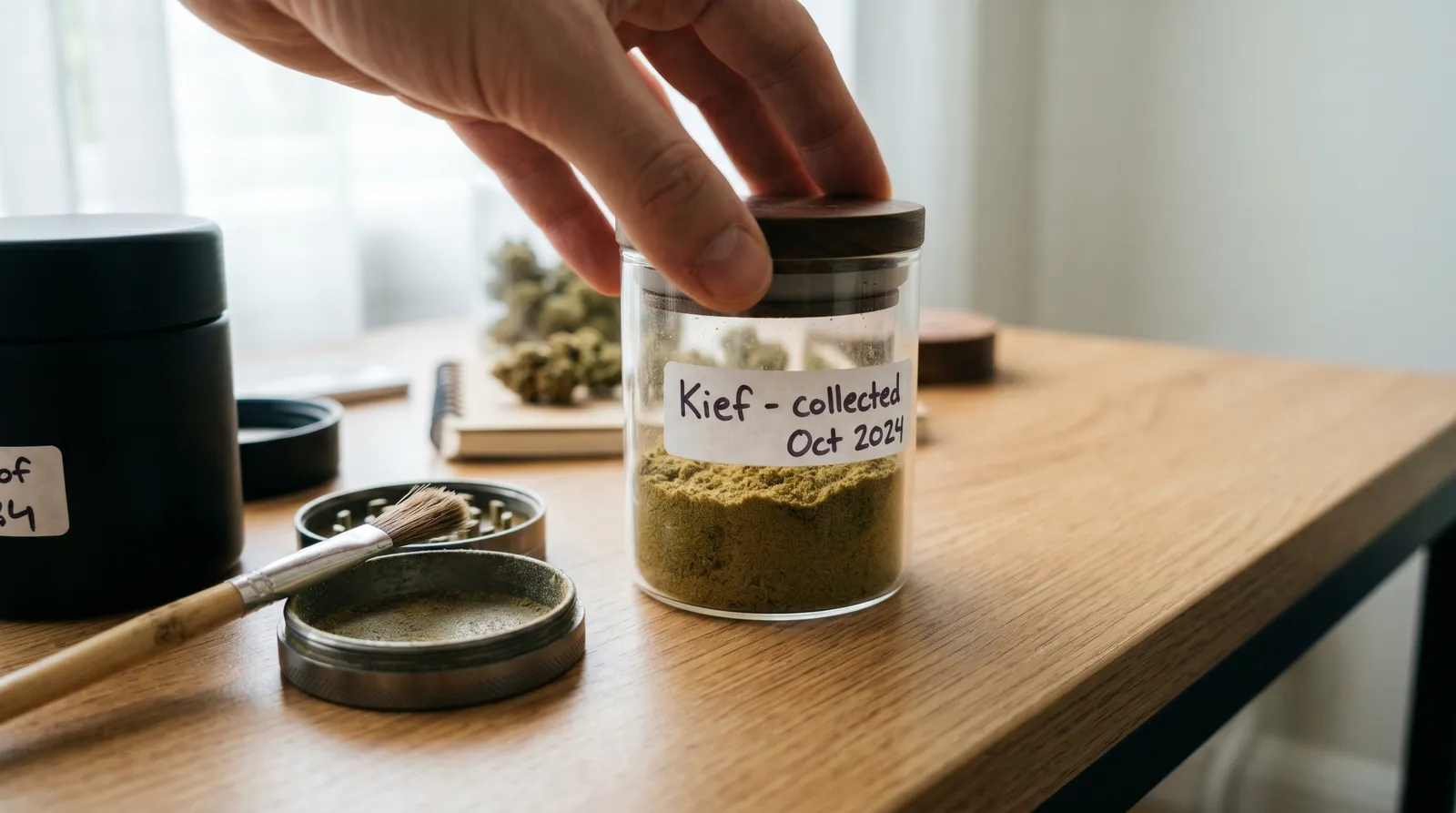
- Transfer collected kief to a small, airtight glass jar. Silicone containers work in a pinch, but trichomes can stick to silicone surfaces over time — glass is better for long-term storage.
- Store in a cool, dark place. A cupboard or drawer away from heat sources is fine. The fridge works for longer storage (weeks to months), though you will want to let the jar reach room temperature before opening to avoid condensation.
- Avoid plastic bags and containers where possible. Static charge on plastic attracts trichome heads and makes it difficult to retrieve your full yield. If you must use plastic, an anti-static stash container is a better option than a standard baggie.
- Handle as little as possible. Every time you open the jar, scoop, or touch the kief, you are losing material to your fingers and tools. A small metal dab tool or scoop is more precise than fingers or a spoon.
Properly stored kief remains usable for several months, though terpene content — and therefore aroma and flavour — diminishes noticeably after 3–6 months even under good conditions. The cannabinoid profile is more stable, but there is limited published data on precise degradation curves specific to isolated trichome heads; most cannabis stability research, such as the work by Trofin et al. (2012), focuses on whole-flower or extract preparations.
Common Mistakes That Waste Your Yield
Most kief collection failures come down to heat, impatience, or the wrong equipment. Here are the ones we see most often:
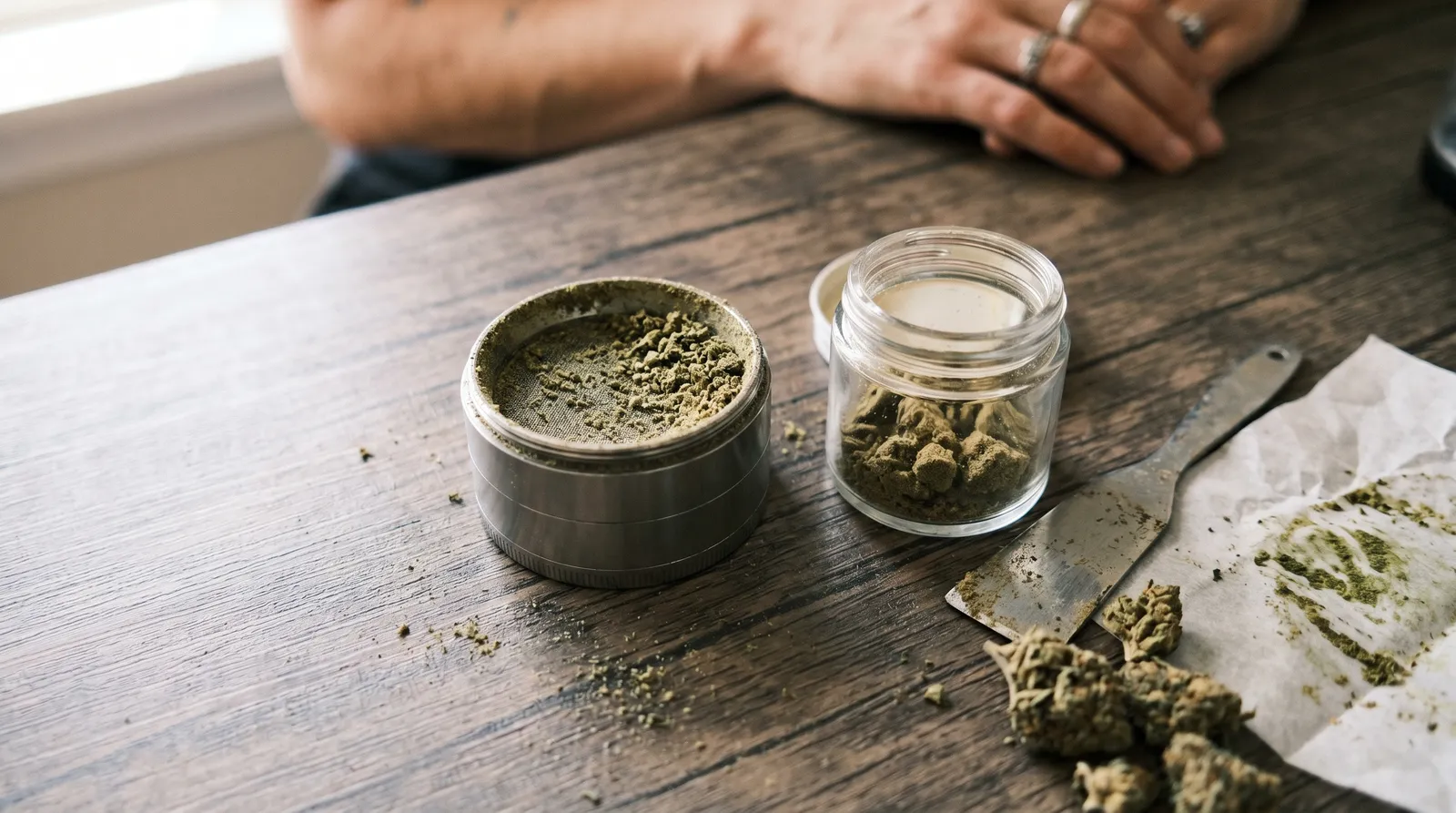
- Grinding warm, freshly purchased flower. Flower straight from a warm pocket or a heated room produces sticky, pliable trichomes that smear rather than separate. Even 10 minutes in the freezer before grinding makes a noticeable difference.
- Never cleaning the grinder screen. Resin build-up gradually blocks the mesh, reducing kief throughput to almost nothing. A quick soak in isopropyl alcohol (90%+) every few weeks clears the screen — just make sure the grinder is completely dry and ventilated before using it again, as isopropyl vapour near a flame is a fire hazard.
- Over-grinding to dust. Pulverising your flower forces chlorophyll-rich plant matter through the screen. The result is a green, harsh-tasting powder rather than the sandy gold you are after. A coarse to medium grind is better for kief collection than a fine one.
- Storing kief loose in the grinder indefinitely. The bottom chamber of a grinder is not airtight. If you leave kief sitting in there for weeks, it dries out, loses terpenes, and picks up pocket lint and debris every time the grinder goes in a bag.
- Using a two-part grinder and expecting kief. Two-part grinders have no screen and no catch chamber. They grind flower perfectly well, but there is nowhere for trichomes to separate and collect. You need a four-part (three-chamber) grinder at minimum.
What Can You Do with Collected Kief?
Collected kief is one of the most versatile concentrates you can produce at home with minimal equipment. The most common uses — which fall under substance preparation rather than hardware, so we will keep this brief:
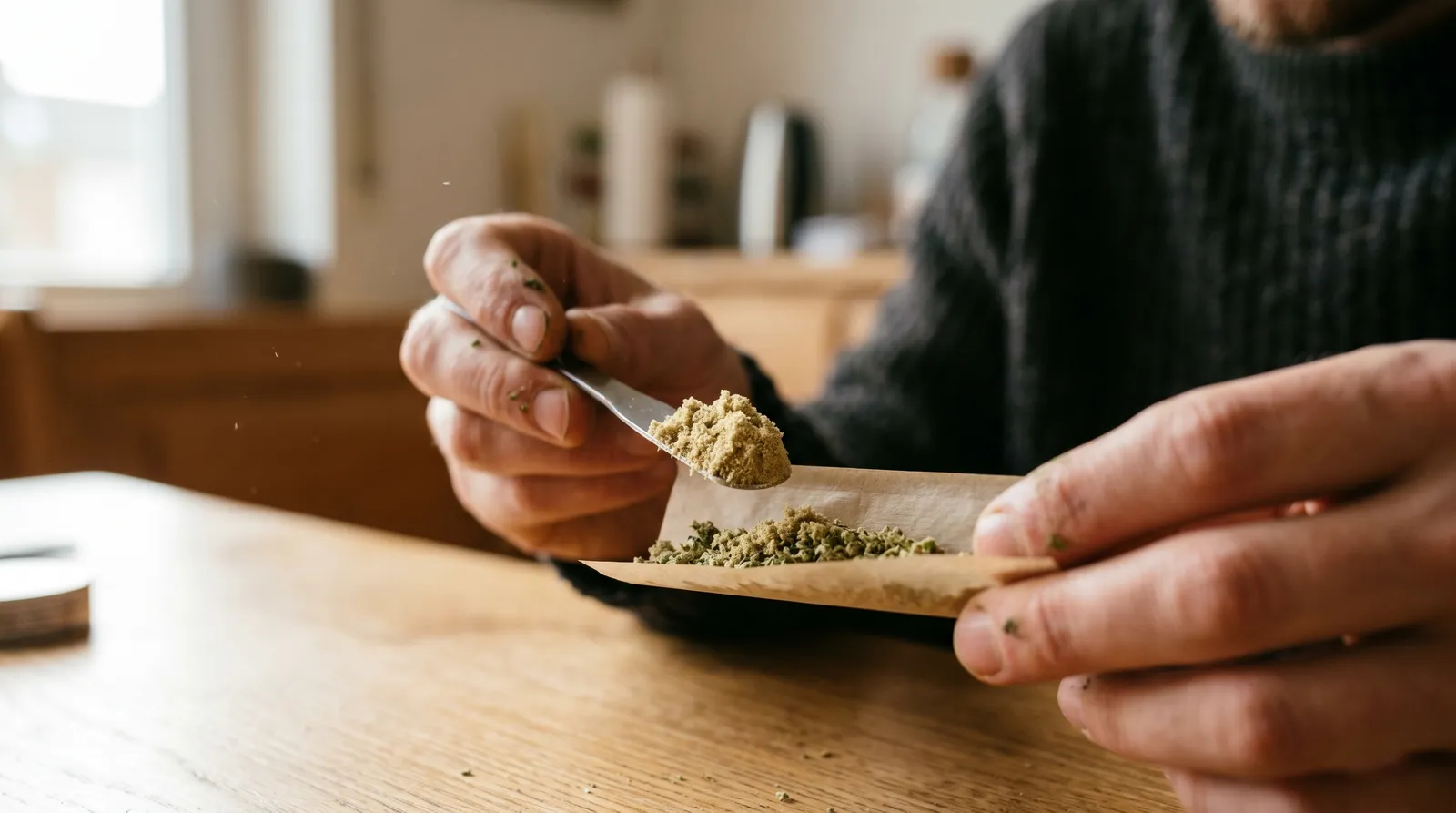
- Crown a bowl or top a joint. Sprinkling kief onto ground flower before rolling or packing a bowl increases concentration without changing the consumption method. A little goes a long way.
- Press it into hash. Applying heat and pressure to kief fuses the trichome heads into a solid mass. This can be as low-tech as wrapping kief in parchment paper and pressing it with a warm bottle, or as precise as using a dedicated pollen press. The resulting hash is easier to handle, stores better, and burns more evenly than loose powder.
- Vaporise it. Many dry-herb vaporisers handle kief well, especially conduction-based devices where the material sits on a heated surface. Sandwich a thin layer between two layers of ground flower to prevent fine particles from falling through the screen or oven. Devices like the Storz & Bickel Mighty or the DaVinci IQ2 have dosing capsules that work well for this — the capsule contains the kief and keeps the oven clean.
For more on cannabinoid content, effects, and harm-reduction guidance, see the dedicated cannabinoids hub articles — that territory sits outside the scope of this hardware-focused guide.
What We Do Not Know Yet
We should be upfront about the gaps. While the general principles of kief collection are well established, there is surprisingly little peer-reviewed research comparing specific grinder brands, screen materials, or agitation techniques under controlled conditions. Most of what the community treats as settled knowledge — the coin trick, optimal freeze times, screen micron preferences — comes from collective trial and error rather than published studies. The Beckley Foundation has funded cannabinoid research broadly, but detailed work on mechanical trichome separation efficiency remains thin. If you find a method that works for your setup, stick with it, but stay open to adjusting as better information emerges.
References
- Happyana, N., Agnolet, S., Muntendam, R., et al. (2013). Analysis of cannabinoids in laser-microdissected trichomes of medicinal Cannabis sativa using LCMS and cryogenic NMR. Phytochemistry, 87, 51–59.
- Livingston, S.J., Quilichini, T.D., Booth, J.K., et al. (2020). Cannabis glandular trichomes alter morphology and metabolite content during flower maturation. The Plant Journal, 101(1), 37–56.
- Roggen, M., Colizzi, C., & Muntendam, R. (2021). Solventless cannabis concentrate production. In Recent Advances in Cannabinoid Research. IntechOpen.
- Trofin, I.G., Dabija, G., Vaireanu, D.I., & Filipescu, L. (2012). Long-term storage and cannabis oil stability. Revista de Chimie, 63(3), 293–297.
- European Monitoring Centre for Drugs and Drug Addiction (EMCDDA). (2023). Cannabis drug profile. EMCDDA, Lisbon.
Last updated: April 2026
Frequently Asked Questions
8 questionsWhat micron screen size is best for collecting kief in a grinder?
Does freezing your grinder really increase kief yield?
How long does kief stay potent in storage?
Why is my collected kief green instead of golden?
Can you collect kief without a four-part grinder?
Is kief the same thing as hash?
How much more potent is kief compared to regular cannabis flower?
What is the best temperature for sifting kief from cannabis?
About this article


Adam Parsons is an external cannabis and psychedelics writer and editor who contributes to Azarius's wiki as both author and reviewer. On the writing side, he authors Azarius's kratom and kanna clusters, drawing on exten
This wiki article was drafted with AI assistance and reviewed by Adam Parsons, External contributor. Editorial oversight by Joshua Askew.
Medical disclaimer. This content is for informational purposes only and does not constitute medical advice. Consult a qualified healthcare provider before use of any substance.
Last reviewed April 25, 2026
Related Articles
Gravity Bongs Explained: How They Work and Why
A gravity bong uses water displacement to pull concentrated smoke into a chamber, then forces it into your lungs under positive pressure.
Storz Bickel Volcano Complete Guide: Setup, Temps & Cleaning
The Storz & Bickel Volcano is a convection desktop vaporizer that fills detachable balloons with vapour — a system clinically validated by Hazekamp et al.
TinyMight Boundless XMAX Premium Portables Compared
The TinyMight 2, Boundless CFX/CFC and XMAX V3/Starry/Ace represent three tiers of portable dry-herb vaporizer — from budget conduction to premium convection.
How To Clean a Vaporizer: Step-by-Step Guide
How to clean a vaporizer is a straightforward maintenance routine that keeps your device tasting fresh, drawing smoothly, and lasting years longer than a…
ROOR Grace Glass Black Leaf Blaze Brand Comparison — Glass Bong Guide
Four borosilicate glass bong brands — ROOR, Grace Glass, Black Leaf, and Blaze Glass — dominate the European market at different price points.
Joint Filters Crutches Glass Tips Activated Charcoal — Buyer's Guide
Joint filters range from simple card crutches that block loose herb to activated charcoal tubes that trap 40–60% of gas-phase toxicants like benzene and…
Quartz Banger Temperature and Care Guide
A quartz banger's performance depends almost entirely on temperature control and maintenance.
Arizer Portable Lineup Compared: Solo vs Solo 2 vs Solo 3 vs ArGo
Arizer's portable vaporizers all use borosilicate glass vapour paths and session-style heating, but differ meaningfully in battery architecture, heating…
Rolling Papers Compared: RAW vs OCB vs Elements vs Rizla
Rolling papers vary dramatically by material, thickness, burn rate, and adhesive — and those differences shape every session.