
Hemp vs Rice Papers: Choosing by Taste and Burn
Definition
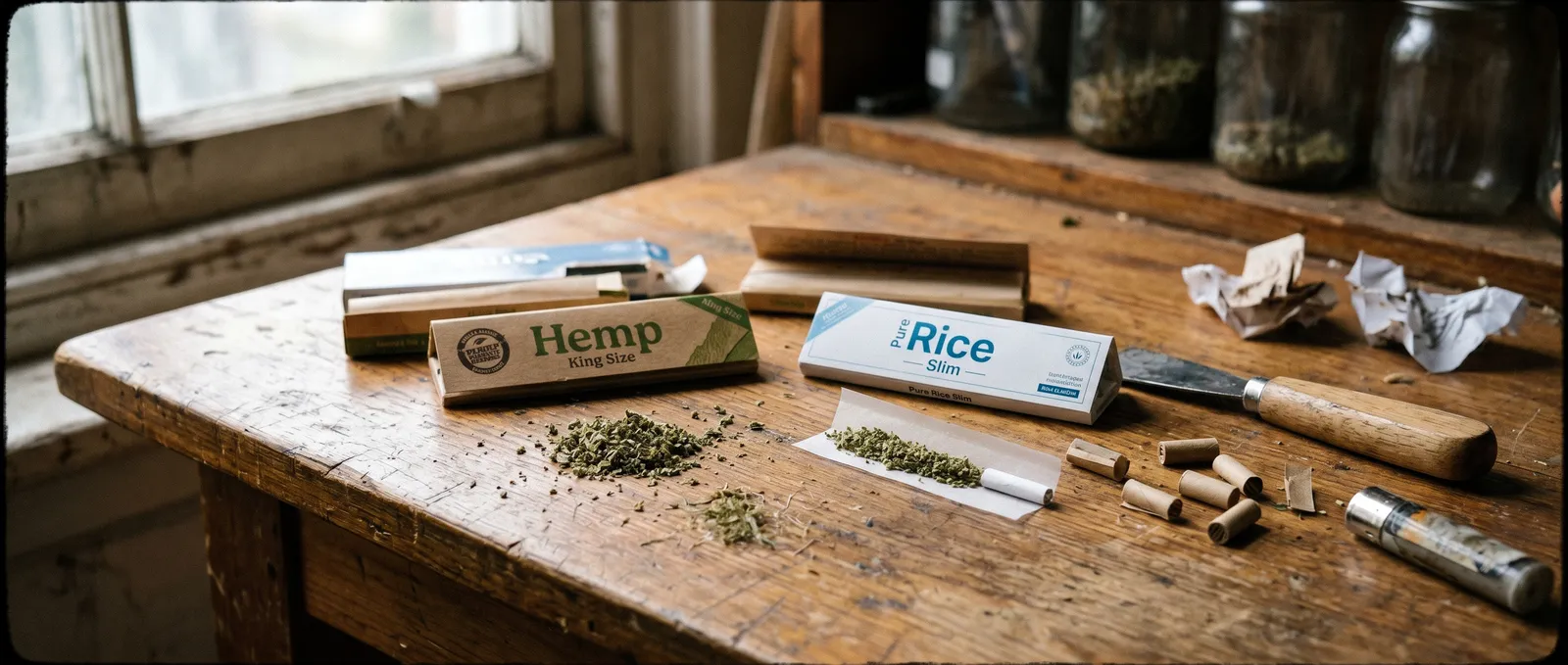
Hemp and rice are the two dominant natural-fibre rolling paper materials, each with distinct burn, taste, and handling characteristics. Hemp papers offer a forgiving roll with a faint earthy note, while rice papers deliver near-zero flavour and the slowest burn of any mainstream sheet (Graves et al., 2017). Choosing between them comes down to your rolling skill and how much you care about tasting the herb over the paper.
Hemp vs Rice Papers at a Glance
| Dimension | Hemp Papers | Rice Papers |
|---|---|---|
| Base material | Hemp fibre pulp (Cannabis sativa L. — industrial, non-psychoactive) | Processed rice straw or rice plant fibre, sometimes blended with flax |
| Typical thickness | Medium — roughly 18–25 g/m² | Ultra-thin — roughly 10–14 g/m² |
| Burn rate | Slow, even | Very slow, sometimes uneven if poorly packed |
| Ash colour | Light grey, moderate volume | Near-white, minimal volume |
| Taste contribution | Faint earthy or grassy note | Almost none — closest to "tasteless" of any paper type |
| Rolling difficulty | Forgiving — good grip, slight texture | Trickier — slippery, tears more easily when damp |
| Gum line | Usually natural Arabic gum | Usually natural Arabic gum (thinner strip) |
| Common formats | King size slim, 1 1/4, pre-rolled cones | King size slim, 1 1/4 |
| Stocked brand examples | RAW Organic Hemp, OCB Virgin, Smoking Deluxe (hemp blend) | Elements (rice), OCB Premium (rice-flax blend) |
That table is the short version. The rest of this article unpacks each row — what actually causes those differences, why they matter when you're rolling, and how to pick the right paper for the way you smoke. This guide is aimed at adult smokers (18+) choosing between the two most popular natural-fibre paper types on the market today.
What Actually Makes a Paper "Hemp" or "Rice"?
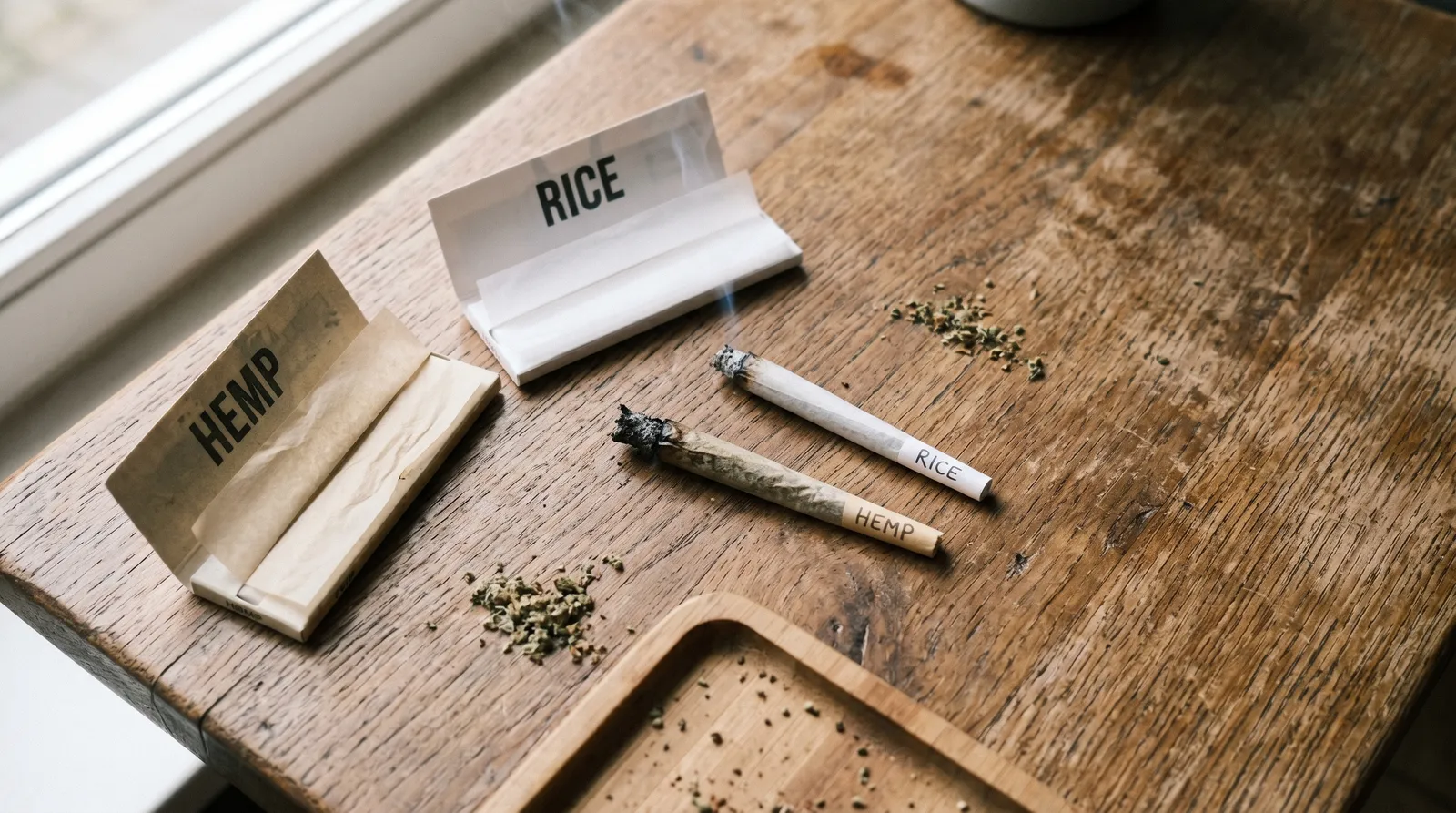
The label refers to the primary plant fibre in the pulp. Hemp papers use bast fibres from industrial cannabis stalks — the same crop grown for rope, textiles, and building insulation. Rice papers use fibres from the rice plant (Oryza sativa), typically the straw left after grain harvest. Both are processed into a thin sheet using variations of standard papermaking: pulping, pressing, drying, and cutting.
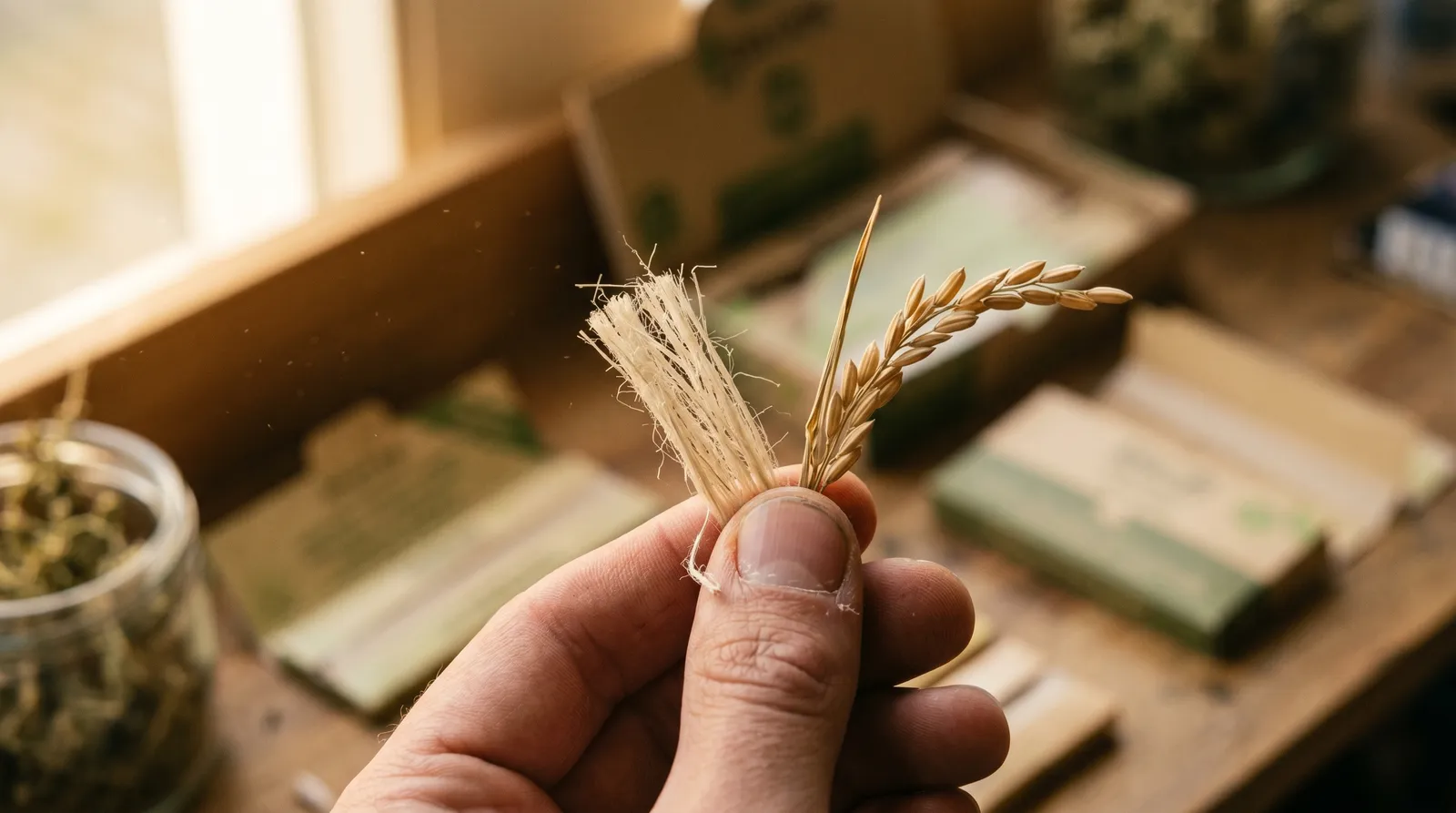
The fibre structure is where the differences start. Hemp bast fibres are long and relatively coarse, which gives the finished sheet a slight texture you can feel between your fingers — almost like very fine linen. Rice fibres are shorter and finer, producing a smoother, thinner, more translucent sheet. According to a comparative analysis of natural-fibre papers by Danielewicz and Surma-Ślusarska (2010), hemp fibres exhibit higher tensile strength per unit weight than most grass-derived fibres, which explains why hemp papers hold together better under clumsy fingers.
One thing worth noting: not every paper labelled "rice" is pure rice. Some brands blend rice fibre with flax or wood pulp to improve handling. Elements papers are a well-known example of a genuinely rice-based sheet — they're made from rice and sugar, pressed thin enough that you can practically read through them. OCB's Premium Black line, by contrast, uses a rice-flax blend for a slightly sturdier feel while keeping the thinness.
Burn Rate: Why Hemp Burns Differently from Rice
Burn rate is probably the single biggest practical difference between the two, and it comes down to fibre density and sheet thickness.
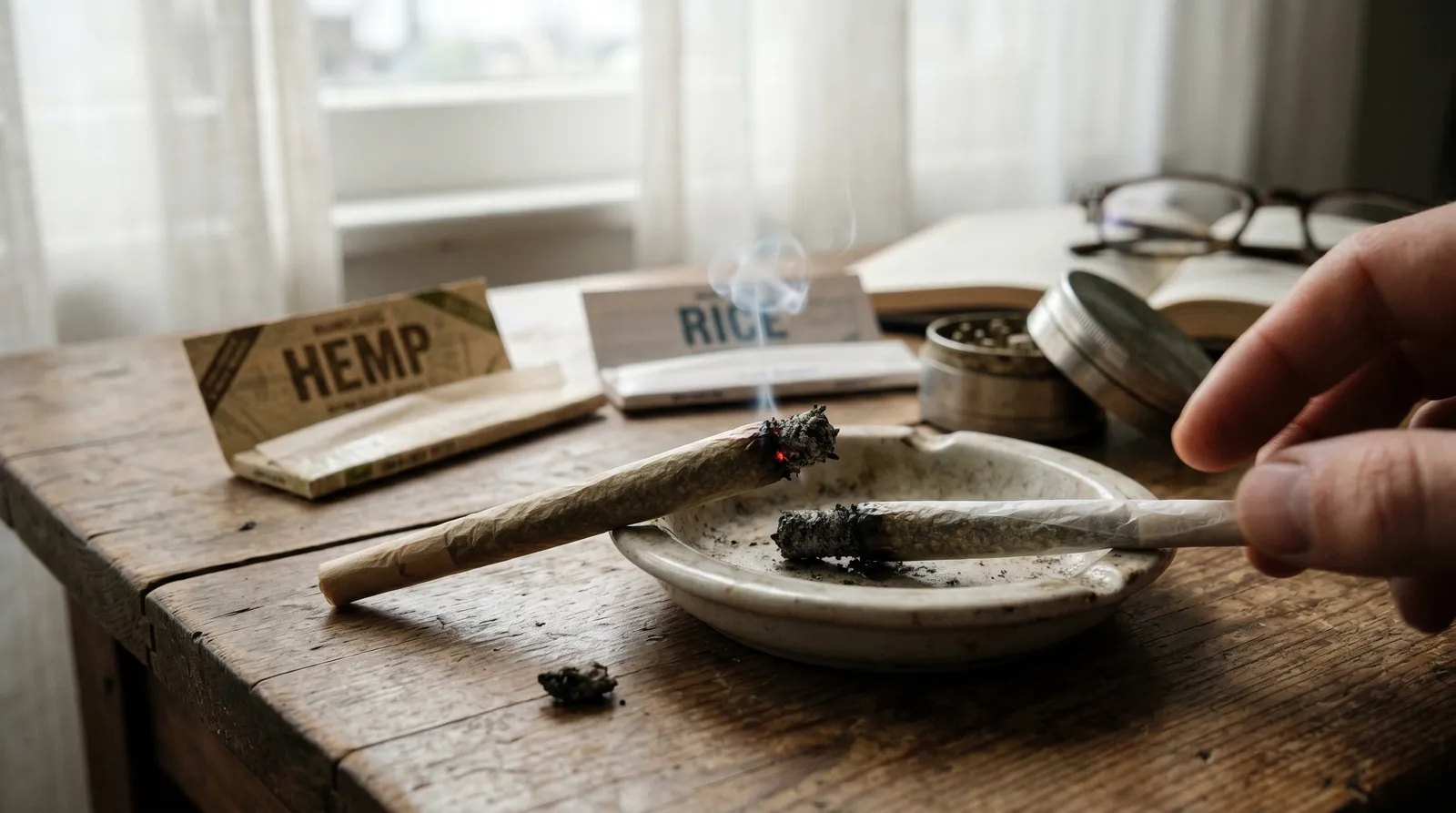
Hemp papers burn slowly and evenly. The longer fibres create a denser matrix that combusts at a predictable, steady pace. You light it, and the cherry moves down the joint at a consistent speed. Side-burning (canoeing) is relatively rare with hemp because the sheet is uniform enough that no thin spots burn through prematurely.
Rice papers burn even more slowly — they're the slowest-burning mainstream paper type available. But here's the trade-off: because they're so thin, they're more sensitive to how tightly and evenly you've packed the joint. A loosely packed cone in rice paper can canoe badly because the paper burns faster in the air gaps than in the packed sections. A well-packed joint in rice paper, though, burns beautifully — slow, clean, and with barely any paper taste intruding on the smoke.
A 2017 study published in Inhalation Toxicology (Graves et al., 2017) measured sidestream and mainstream smoke composition from cigarettes with different wrapper papers. Thinner papers with lower basis weight (grams per square metre) produced less combustion byproduct per puff. Rice papers, with their lower basis weight, fit that profile — meaning less paper-derived material entering the smoke stream per draw.
Taste and Flavour Interference
If you're rolling with herb that has a distinct terpene profile — say, something piney, citrusy, or earthy — the paper you wrap it in either preserves or muddies those flavours. This is where rice papers genuinely shine.
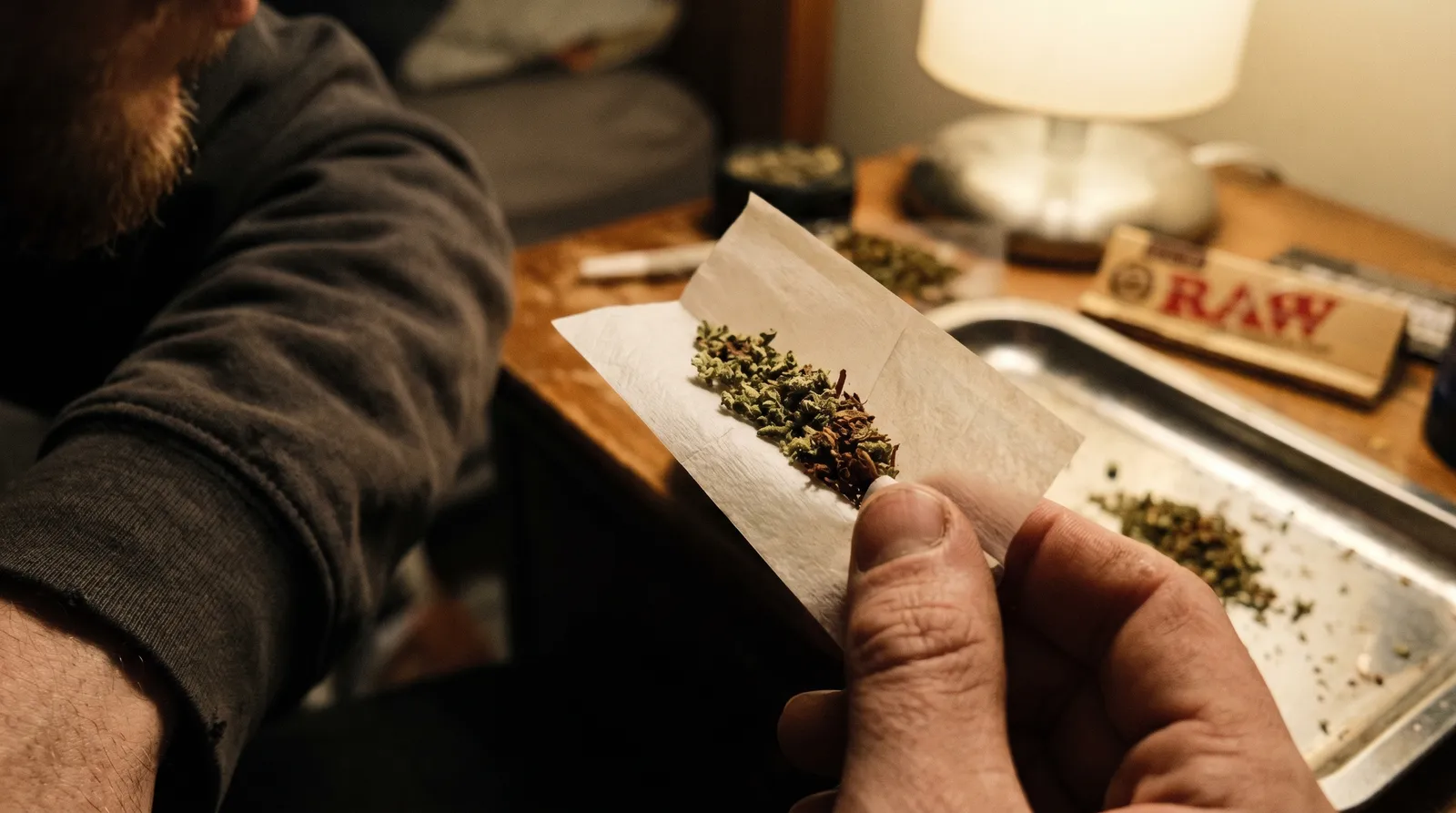
Rice papers contribute almost zero flavour to the smoke. The thin, mineral-light sheet combusts cleanly, and what little ash it produces has a neutral taste. For smokers who care about tasting their herb rather than their paper, rice is the go-to. Elements markets this explicitly, and it's not just branding — the near-transparent thinness of the sheet means there's simply less material burning alongside your herb.
Hemp papers aren't flavourless, but they're close. Most people describe the taste as a faint earthy or grassy undertone — subtle enough that it blends with most herbal profiles rather than clashing. RAW's Organic Hemp line, which uses unbleached hemp with no added chalk or dye, keeps that background note mild. Some smokers actually prefer it: the slight earthiness rounds out sharper terpene profiles rather than letting them dominate.
Wood pulp papers, by comparison, tend to produce a harsher, more papery taste — which is one reason the market has shifted so heavily toward hemp and rice over the past decade. Rizla's classic blue, for instance, is a wood-pulp paper that many long-time smokers grew up with but have since moved away from in favour of natural-fibre options.
Flavoured papers like Juicy Jay's are a separate category entirely — they're designed to add taste, not minimise it. If you want the paper to contribute flavour, that's a deliberate choice rather than a material property.
The Rolling Experience: Grip, Tear Resistance, and Forgiveness
This is where hemp papers win for most people, especially anyone who hasn't been rolling for years.
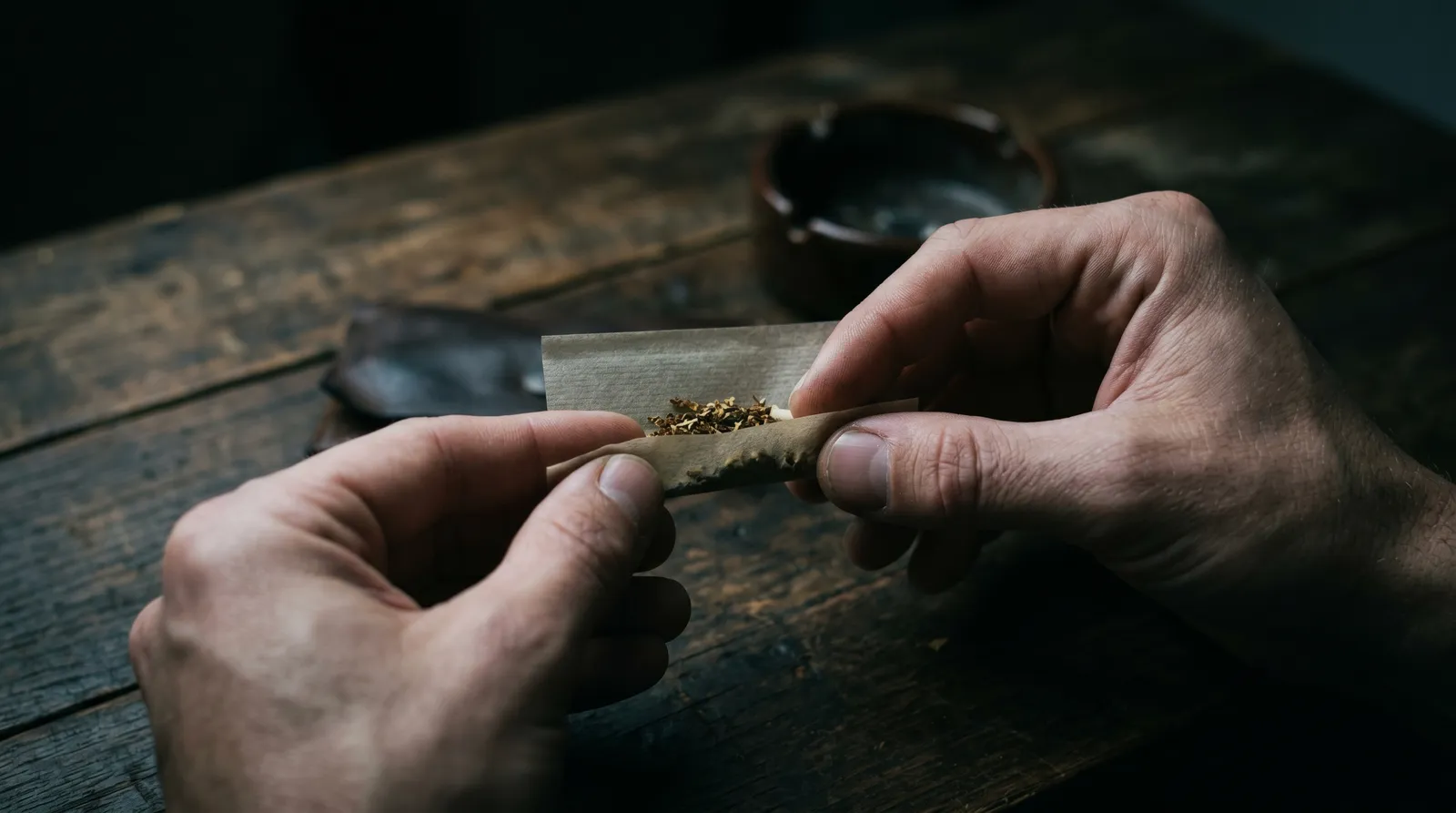
Hemp papers have a slight texture — not rough, but grippy enough that the sheet doesn't slide around while you're tucking and rolling. The fibre matrix is forgiving: you can handle a hemp paper with slightly damp fingers, re-tuck a bad fold, and generally muscle through a mediocre technique without the paper falling apart. RAW's unbleached hemp papers are a good example — they've got just enough tooth to grip the herb as you roll.
Rice papers are a different beast. They're slippery, thin, and unforgiving. Wet fingers will stick to them or tear them. Over-licking the gum line can saturate the paper and cause it to disintegrate. If your rolling technique is solid, rice papers reward you with a beautiful, tight, thin joint. If your technique is shaky, they punish you mercilessly.
A practical middle ground exists in papers that blend rice with other fibres. OCB's Premium line, for instance, uses enough flax alongside the rice to give the sheet a bit more body without sacrificing much thinness. It's a reasonable compromise for someone who wants the flavour neutrality of rice but doesn't trust their rolling skills completely.
Pre-rolled cones sidestep the skill question entirely — just pack and twist. Both hemp and rice cones are widely available in king size and 1 1/4 formats. If you love rice paper's clean taste but hate rolling with it, cones are the obvious solution.
Bleached vs Unbleached: A Separate Question
People sometimes conflate "hemp vs rice" with "bleached vs unbleached," but these are independent variables. You can get bleached hemp papers, unbleached hemp papers, bleached rice papers, and unbleached rice papers.
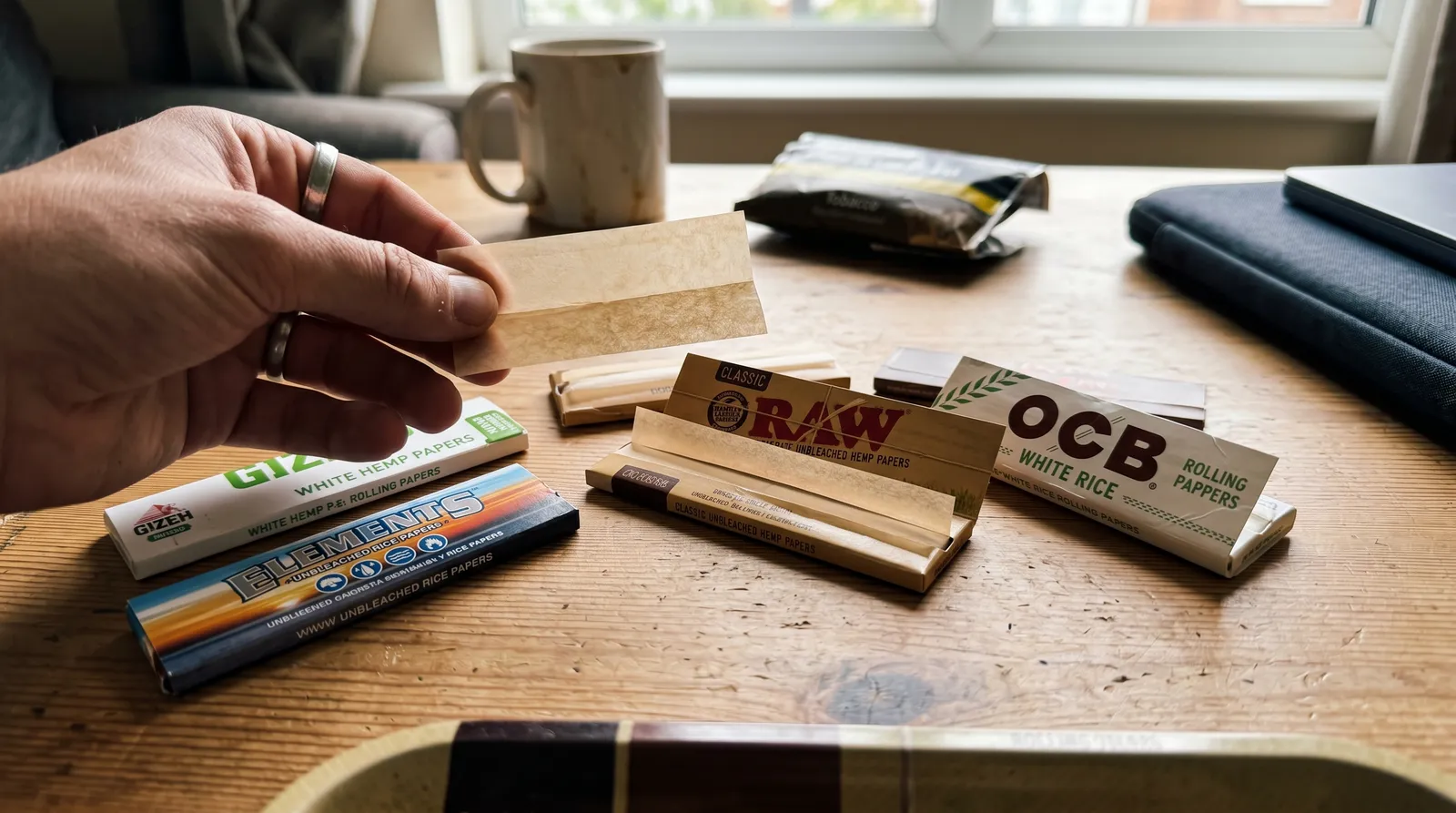
Bleaching (typically with chlorine or calcium carbonate) whitens the paper and can slightly alter burn characteristics. Unbleached papers — like RAW's entire line — skip this step, leaving the paper its natural brown (hemp) or translucent off-white (rice) colour. The argument for unbleached is straightforward: fewer processing chemicals means fewer potential combustion byproducts. A 2015 analysis of rolling paper composition (Moir et al., 2008, extended by Graves et al., 2017) found that papers with added calcium carbonate produced slightly different ash chemistry, though the health significance of this difference at typical smoking volumes remains unclear.
If minimising chemical additives matters to you, look for papers labelled unbleached regardless of whether you choose hemp or rice. RAW Organic Hemp, Elements (which uses no chlorine or calcium carbonate), and OCB Virgin are all options in the unbleached category.
Which Paper Suits Your Style?
There's no objectively "better" paper — it depends on what you prioritise.
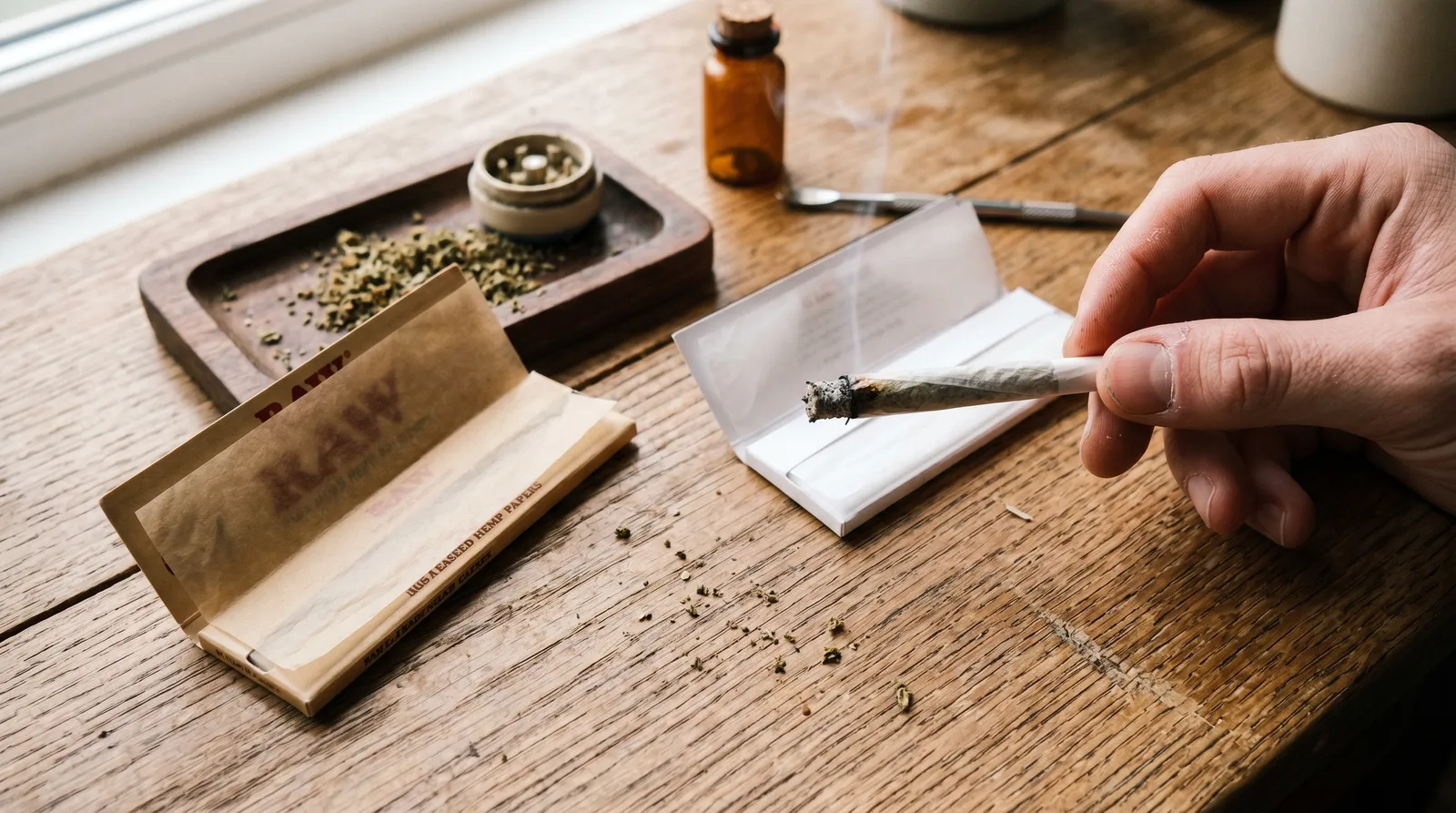
Choose hemp if: you want a forgiving roll, you don't mind a faint earthy background note, you value a consistent burn that doesn't punish loose packing, or you're relatively new to hand-rolling. Hemp papers are the all-rounders — they do everything reasonably well and nothing badly.
Choose rice if: you prioritise flavour purity above all else, you've got confident rolling technique (or you use pre-rolled cones), and you want the slowest possible burn with the least paper taste. Rice papers reward precision and punish sloppiness.
Try both if: you've only ever used one type. Grab a pack of RAW Organic Hemp and a pack of Elements, roll the same herb in each, and smoke them side by side. The difference is subtle but real — and your preference will become obvious within two or three sessions.
For smokers who want to go further in eliminating taste interference, activated charcoal filters or glass tips can reduce harshness from any paper type. That's a separate rabbit hole — see our article on filter types for rolling for the full breakdown.
References
- Danielewicz, D. and Surma-Ślusarska, B. (2010). 'Properties and fibre characterisation of bleached hemp pulp.' Fibres & Textiles in Eastern Europe, 18(6), pp. 32–38.
- Graves, B.M. et al. (2017). 'Complete characterization of mainstream marijuana and tobacco smoke.' Scientific Reports, 7(1), article 46596.
- Moir, D. et al. (2008). 'A study of mainstream and sidestream cigarette smoke components.' Chemistry Central Journal, 2, article 8.
This guide covers hardware for adults (18+). Use of vaporizers, bongs, pipes, dab rigs and rolling accessories is for adult use only. Verify your local laws on the substances you choose to use — Azarius does not provide legal advice. Consult a qualified professional if you have a health condition or take medication.
Last updated: April 2026
Frequently Asked Questions
8 questionsDo rice rolling papers burn slower than hemp papers?
Why do rice papers tear so easily when rolling?
Can you taste the difference between hemp and rice papers?
Are unbleached rolling papers healthier than bleached ones?
Which rolling paper is best for beginners — hemp or rice?
Do Elements papers contain any additives?
How should hemp and rice rolling papers be stored to keep them fresh?
Do hemp or rice papers produce more ash when burned?
About this article


Adam Parsons is an external cannabis and psychedelics writer and editor who contributes to Azarius's wiki as both author and reviewer. On the writing side, he authors Azarius's kratom and kanna clusters, drawing on exten
This wiki article was drafted with AI assistance and reviewed by Adam Parsons, External contributor. Editorial oversight by Joshua Askew.
Medical disclaimer. This content is for informational purposes only and does not constitute medical advice. Consult a qualified healthcare provider before use of any substance.
Last reviewed April 25, 2026
Related Articles

Gravity Bongs Explained: How They Work and Why
A gravity bong uses water displacement to pull concentrated smoke into a chamber, then forces it into your lungs under positive pressure.

Storz Bickel Volcano Complete Guide: Setup, Temps & Cleaning
The Storz & Bickel Volcano is a convection desktop vaporizer that fills detachable balloons with vapour — a system clinically validated by Hazekamp et al.
TinyMight Boundless XMAX Premium Portables Compared
The TinyMight 2, Boundless CFX/CFC and XMAX V3/Starry/Ace represent three tiers of portable dry-herb vaporizer — from budget conduction to premium convection.
How To Clean a Vaporizer: Step-by-Step Guide
How to clean a vaporizer is a straightforward maintenance routine that keeps your device tasting fresh, drawing smoothly, and lasting years longer than a…
ROOR Grace Glass Black Leaf Blaze Brand Comparison — Glass Bong Guide
Four borosilicate glass bong brands — ROOR, Grace Glass, Black Leaf, and Blaze Glass — dominate the European market at different price points.
Joint Filters Crutches Glass Tips Activated Charcoal — Buyer's Guide
Joint filters range from simple card crutches that block loose herb to activated charcoal tubes that trap 40–60% of gas-phase toxicants like benzene and…

Quartz Banger Temperature and Care Guide
A quartz banger's performance depends almost entirely on temperature control and maintenance.
Arizer Portable Lineup Compared: Solo vs Solo 2 vs Solo 3 vs ArGo
Arizer's portable vaporizers all use borosilicate glass vapour paths and session-style heating, but differ meaningfully in battery architecture, heating…
Kief: What It Is and How to Collect It | Full Guide
Kief is the fine, powdery accumulation of trichome heads that detach from cannabis flower during grinding or handling.