
Hash Vs Kief Vs Rosin: Concentrate Hardware Primer
Definition
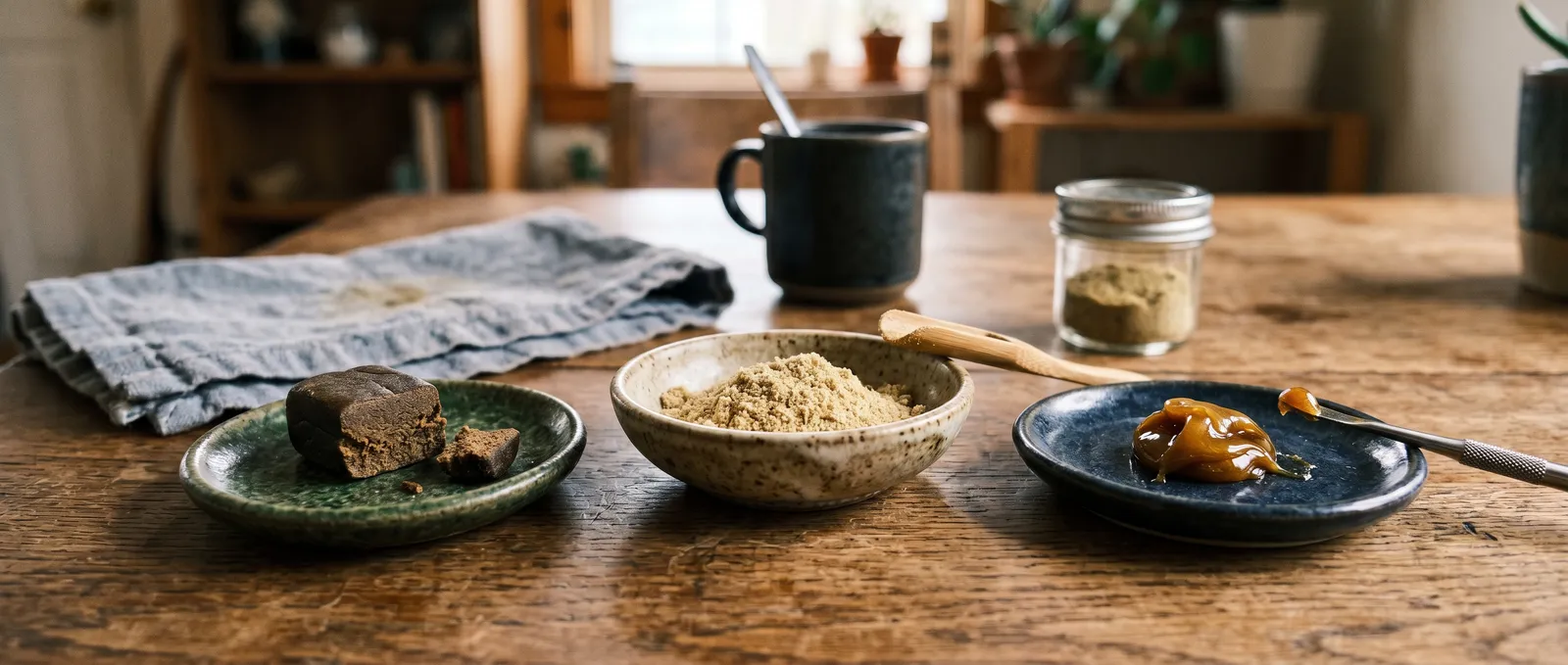
Hash vs kief vs rosin is a comparison that determines which solventless concentrate hardware you actually need. Hash, kief, and rosin are all trichome-derived cannabis concentrates, but they differ in processing, texture, and the gear they require. Analytical data compiled by the CCSA (2019) places their potency from roughly 30% (raw kief) up to 80% (pressed rosin), making gear choice — grinder, vaporizer, or dab rig — a practical decision, not just preference.
Hash Vs Kief Vs Rosin — At a Glance
Hash vs kief vs rosin is a comparison every concentrate-curious adult eventually faces when choosing hardware. Hash, kief, and rosin are solventless cannabis concentrates derived from trichomes — the resin glands coating cannabis flowers — but they differ in processing, texture, and the gear they demand. This comparison covers the hardware angle: what each concentrate is, how its physical properties affect your choice of vaporizer, pipe, or dab rig, and which accessories handle each one best. For deeper reading on cannabinoids and pharmacology, see the dedicated cannabinoids hub.
| Dimension | Kief | Hash | Rosin |
|---|---|---|---|
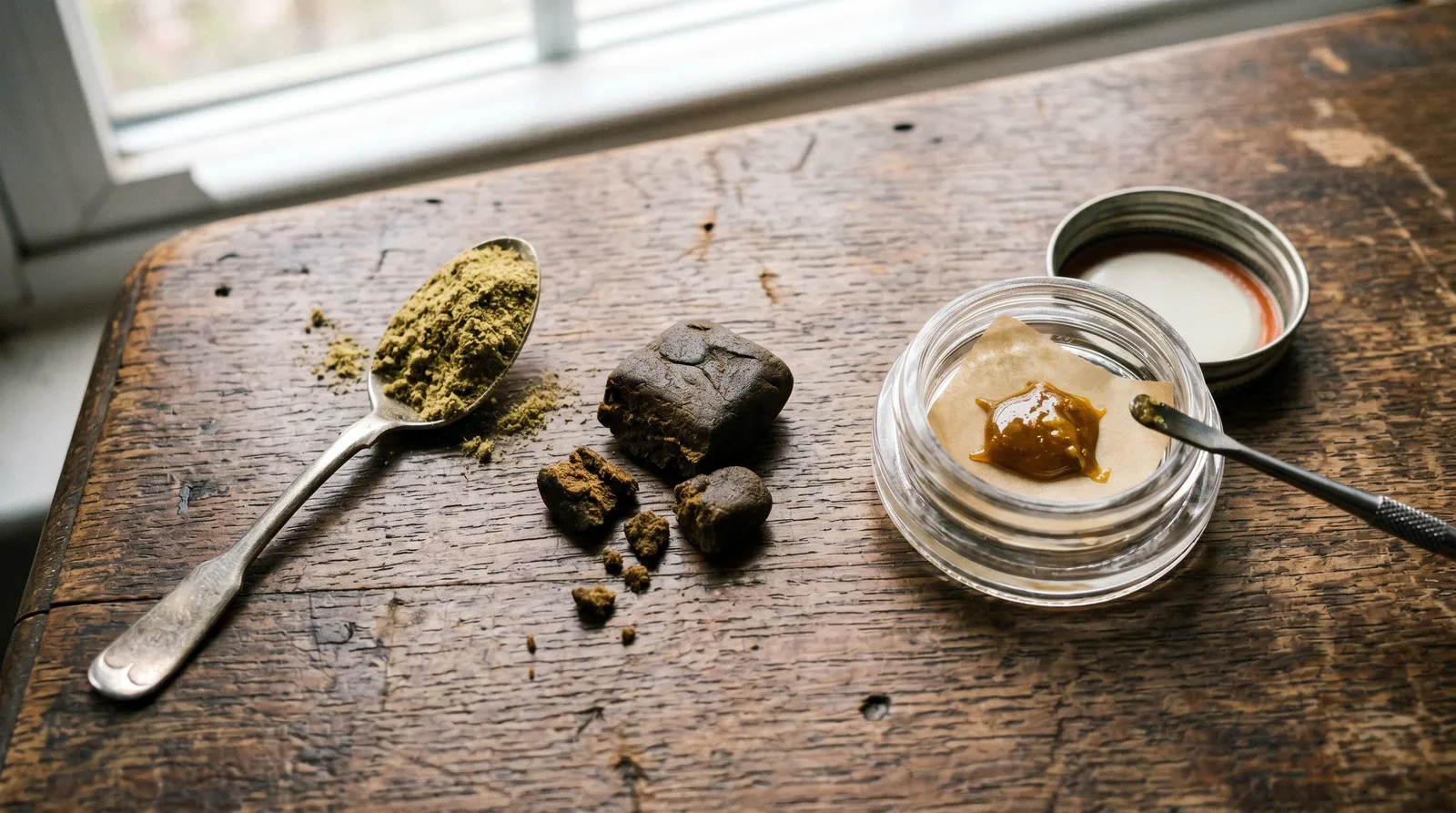
| What it is | Loose, dry trichome heads separated from flower | Compressed and/or heated trichomes formed into a solid mass | Trichome resin extracted by heat and pressure alone — no solvents |
| Texture | Fine powder, sand-like | Ranges from crumbly (dry-sift) to pliable (hand-rubbed) | Sticky, sap-like to shatter-like depending on temperature used |
| Typical potency range | ~30–50% total cannabinoids | ~40–65% total cannabinoids | ~60–80% total cannabinoids |
| Solvent used | None — mechanical separation | None — mechanical + heat/pressure | None — heat and pressure only |
| Primary hardware | 4-part grinder (collection screen), dry-herb vaporizer, bowl topper | Pipe, dry-herb vaporizer with concentrate pad, bong bowl | Dab rig, e-rig, dab pen, concentrate-compatible vaporizer |
| Ideal temperature window | 180–200 °C (356–392 °F) | 190–210 °C (374–410 °F) | 230–290 °C (446–554 °F) — low-temp dab range |
| Mess factor | High — powder migrates everywhere | Low — solid block, easy to handle | Medium-high — sticky, needs a dab tool |
The potency ranges above come from analytical data compiled by the Canadian Centre on Substance Use and Addiction (CCSA, 2019), which reported average THC levels of 40–60% for hash and noted that solventless concentrates like rosin frequently exceed 60%. A complementary EMCDDA technical report (2020) on European cannabis resin markets confirmed similar ranges for commercially available hash. Kief potency varies widely depending on how much plant material remains mixed in.
Kief — the Grinder By-Product You Already Have
Kief is the easiest solventless concentrate to obtain because any 4-part grinder produces it automatically. If you own something like an SLX or a Santa Cruz Shredder with a mesh screen, you're already collecting kief whether you planned to or not. That fine, golden-green dust in the bottom chamber is composed of trichome heads that break off during grinding. The mesh screen (typically 100–150 microns) lets resin glands fall through while blocking larger plant fragments.
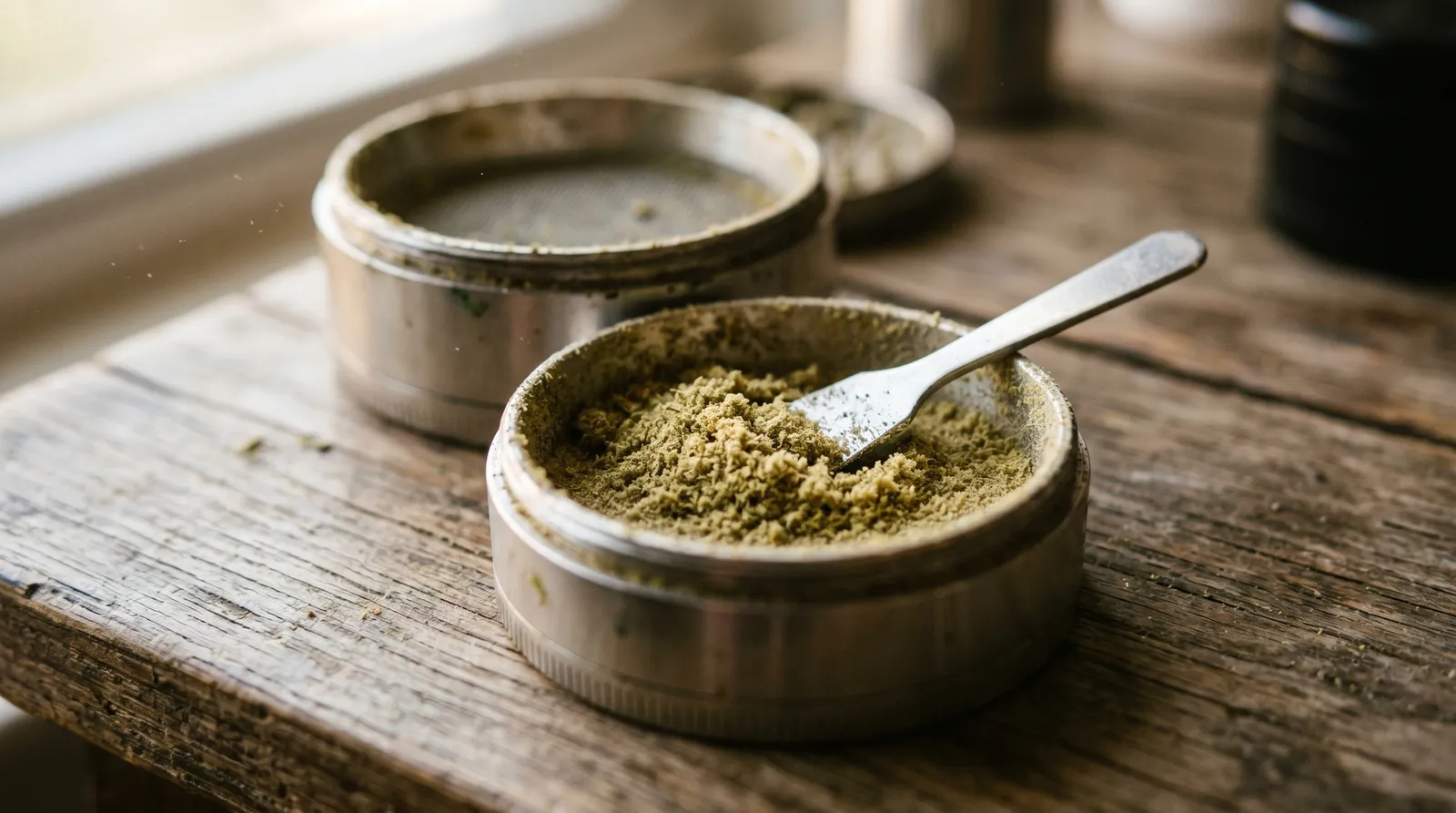
From a hardware standpoint, kief requires zero extra equipment to produce. You just grind flower and wait. The trade-off is purity: a standard grinder screen lets through some plant matter alongside the trichomes, so kief from a grinder tends to sit at the lower end of that 30–50% potency range. Finer screens (60–70 microns) yield purer kief but collect it more slowly.
Using kief is straightforward. The most common approach is sprinkling it on top of flower in a bowl or rolling it into a joint — "crowning" a bowl, as it's sometimes called. You can also load it into a dry-herb vaporizer, though loose powder can fall through screens and clog airflow paths. Sandwiching kief between two layers of ground flower in the chamber solves this neatly. Vaporizers with smaller ovens, such as the DynaVap or DaVinci MIQRO, benefit from this sandwich method because the kief stays compressed between flower rather than rattling around a large chamber.
Storage matters: kief degrades faster than flower because the protective trichome membrane has already been broken. Keep it in a small, airtight container — a stash jar works — away from heat and light. Humidity is the enemy here; damp kief clumps into a sticky mess that's difficult to dose evenly.
- Best grinder feature for kief: a 4-part design with a 100–150 micron screen — finer screens yield purer kief but collect more slowly
- Best vaporizer technique: sandwich kief between two layers of ground flower to prevent it falling through the chamber screen
- Best storage: small airtight glass or metal container, kept cool and dry
- Avoid: loading loose kief directly onto a hot banger — it scatters and wastes material
Hash — Kief's Older, Compressed Sibling
Hash is compressed kief — trichome heads that have been pressed and sometimes heated until they rupture and fuse into a cohesive mass. The process changes both the texture and the way it interacts with hardware. Where kief is loose powder, hash is a solid you can break apart, slice, or crumble — which makes it far easier to handle and dose.
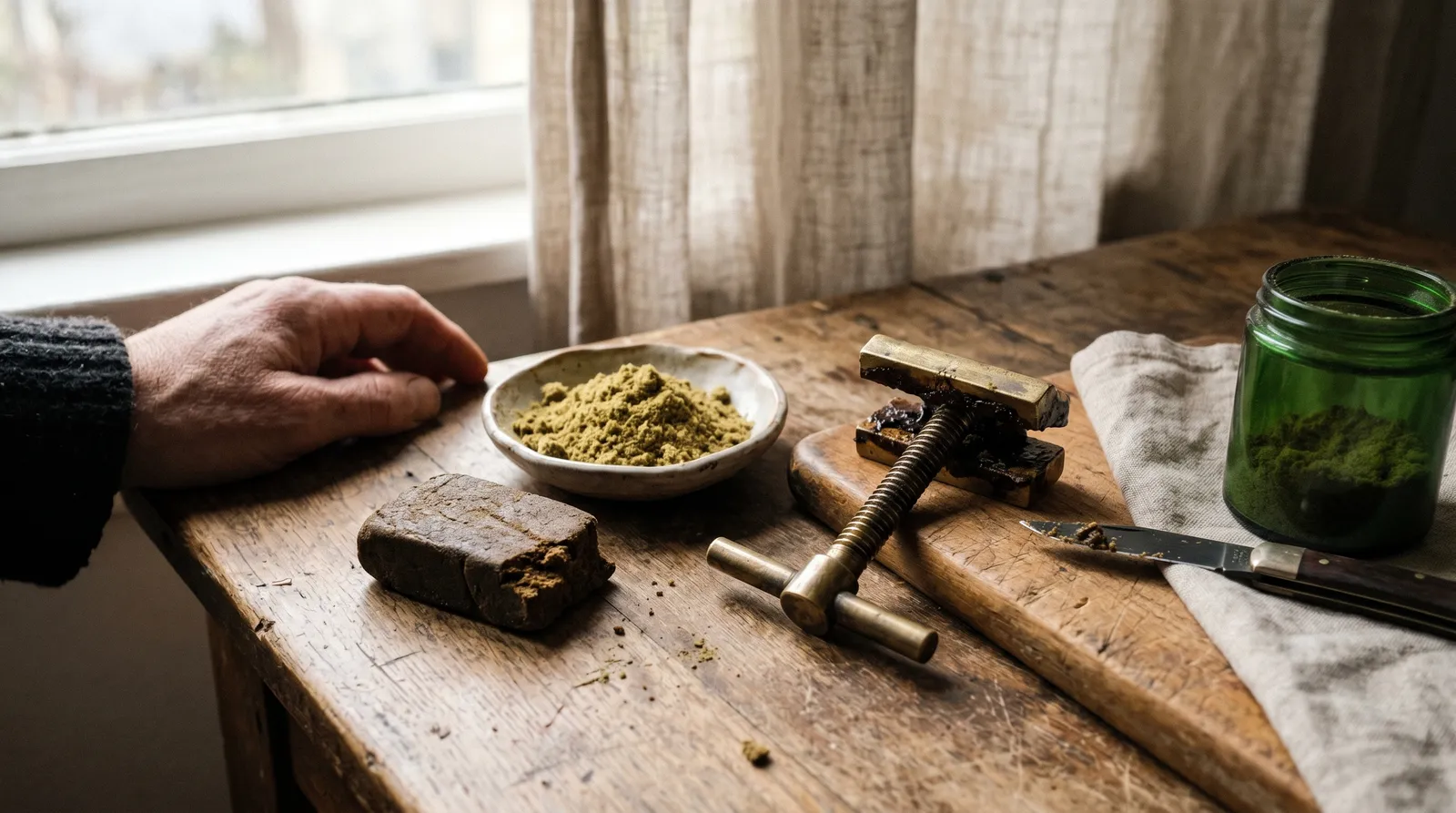
Traditional production methods vary enormously. Dry-sift hash involves screening dried flowers over progressively finer meshes, then pressing the collected trichomes. Hand-rubbed hash (charas) is made by rolling fresh flowers between the palms until resin accumulates. Bubble hash uses ice water and filter bags to separate trichomes — a method that yields some of the purest solventless hash available, with top-grade "full melt" bubble hash reaching 60%+ cannabinoid content. A 2020 analysis published in Forensic Science International (Dujourdy & Besacier, 2020) found that traditional Moroccan hash averaged around 25% THC, while more refined European dry-sift products reached 40–55%.
For hardware, hash is versatile. You can crumble it into a bowl, mix it with flower in a joint, or — if it's high-grade — vaporize it. Most dry-herb vaporizers from Storz & Bickel, Arizer, and others come with (or sell separately) concentrate pads or steel-wool inserts designed to hold semi-solid concentrates. The Volcano desktop unit, for instance, handles hash well on its dosing capsule pad because the convection airflow heats the material evenly without direct contact with the heating element.
One thing to watch: low-quality hash sometimes contains contaminants — sand, plant fibre, or worse. A quick test: good hash softens and becomes pliable when warmed between your fingers. If it stays rock-hard or crumbles into green dust, it's likely more plant material than resin. The "bubble test" — holding a flame near a small piece — should produce clean bubbling rather than black smoke or a harsh chemical smell.
Rosin — the Dab-Ready Concentrate
Rosin is the highest-potency solventless concentrate most users will encounter, typically testing between 60–80% total cannabinoids. It's made by applying heat (typically 80–120 °C) and mechanical pressure to flower, kief, or hash, squeezing out a translucent, sap-like resin. No chemical solvents are involved — just physics. The result is a concentrate with a terpene profile that tends to stay more intact than in solvent-based extracts, since temperatures remain relatively low.
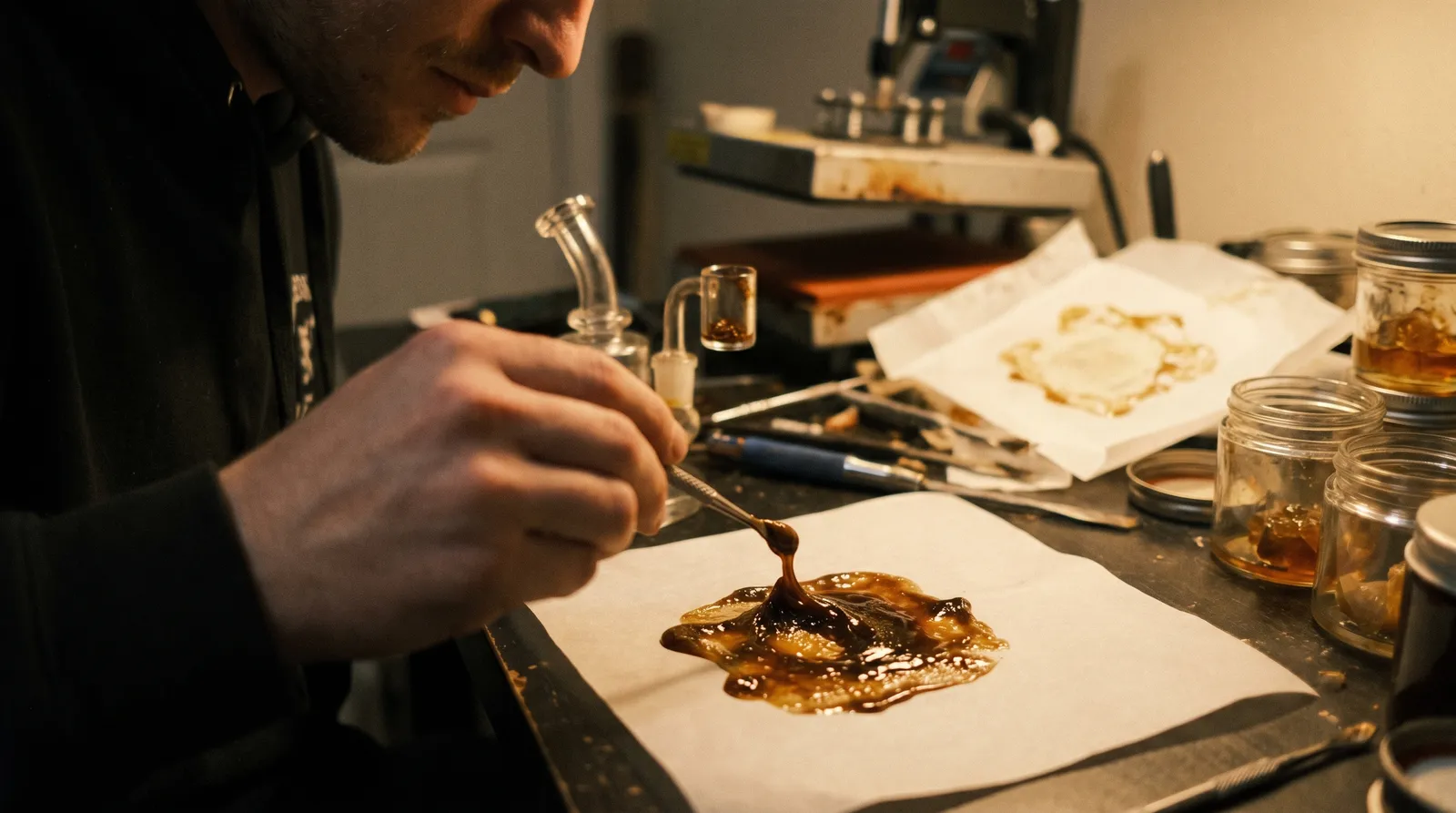
The texture of rosin ranges from glassy and shatter-like (pressed at lower temperatures) to buttery and opaque (pressed warmer or from fresher starting material). This matters for hardware choice. Shatter-like rosin is easy to handle with a dab tool — a metal scoop or pick — and loads cleanly onto a quartz banger or into a dab pen. Budder-consistency rosin can be stickier and benefits from a flat-tipped tool rather than a pointed one.
Rosin's higher cannabinoid concentration means it belongs in concentrate-specific hardware. A quartz banger on a dab rig is the classic setup: heat the banger with a dab torch, let it cool to the target range (230–290 °C is the sweet spot for flavour; a 2017 Portland State University study by Meehan-Atrash et al. found that above 322 °C, terpene degradation products including methacrolein and benzene increase significantly), then apply the rosin with a dab tool. A carb cap traps heat and lowers air pressure inside the banger, helping the rosin vaporize fully at lower temperatures. Terp pearls — small quartz or ceramic balls that spin inside the banger — distribute heat more evenly across the concentrate.
Electric dab rigs and dab pens remove the torch from the equation entirely, which is both safer and more consistent. Temperature control means you're not guessing when the banger has cooled enough — you set a number and the device holds it. For anyone who finds the torch-and-timing ritual intimidating, an electric rig is the more approachable entry point.
Can you use rosin in a dry-herb vaporizer? Technically, yes — with a concentrate pad and a unit that reaches adequate temperatures. The Mighty, for example, handles small amounts of rosin on its liquid pad reasonably well. But purpose-built dab hardware delivers better flavour and more complete vaporization, because the chamber geometry and airflow are designed for sticky, high-potency material rather than loose plant matter.
Choosing Hardware for Each Concentrate
The right hardware depends entirely on which concentrate you're working with and what you already own. Here's a practical breakdown by starting point.
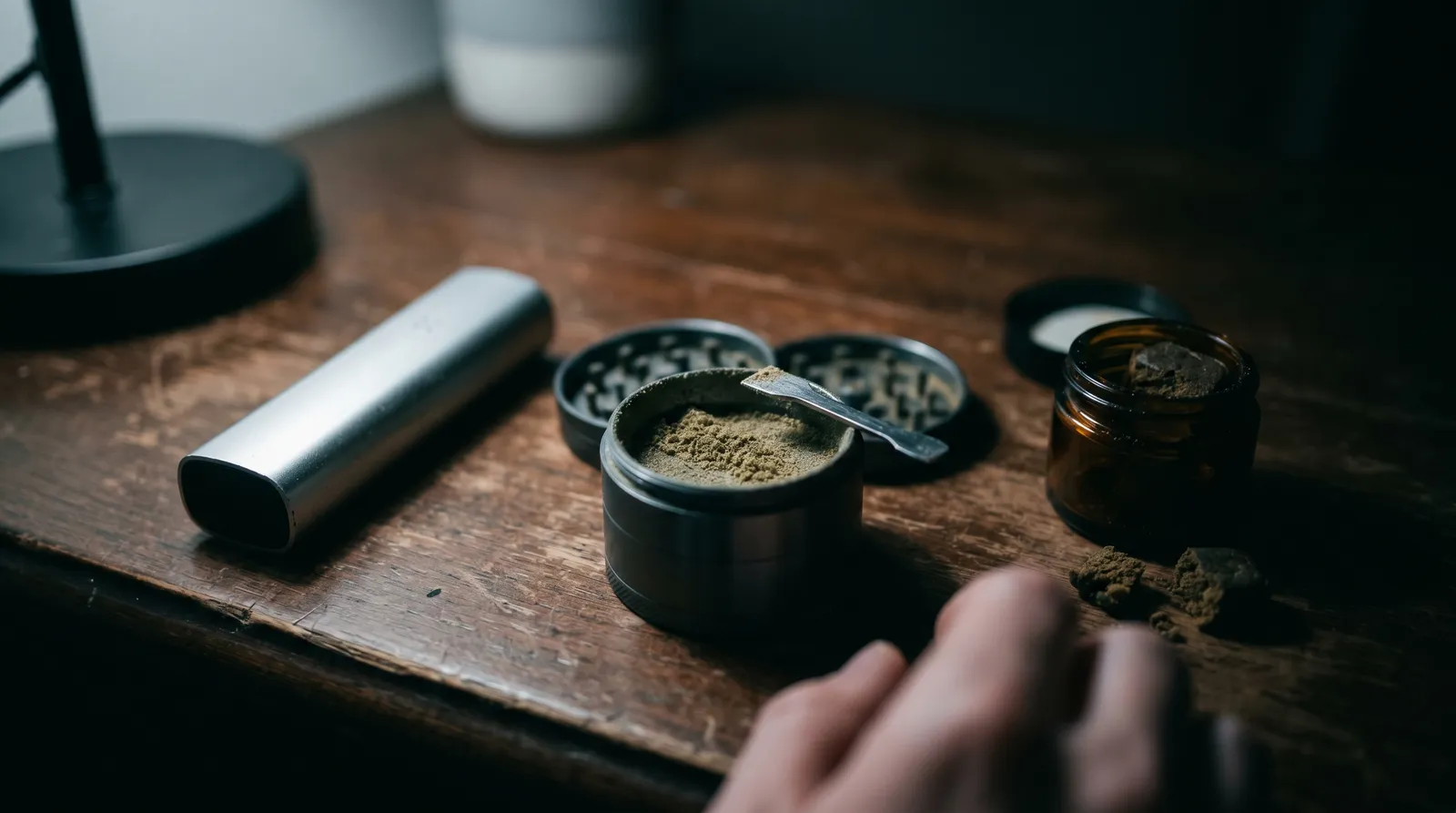
If you have a 4-part grinder and a dry-herb vaporizer: You're set for kief and hash. Collect kief passively, sandwich it in your vaporizer chamber, and you've upgraded your sessions without buying anything new. For hash, get a concentrate pad compatible with your vaporizer — Storz & Bickel sell them for the Mighty and Crafty, and Arizer units accept similar inserts.
If you want to order rosin-ready gear: You'll need concentrate-specific hardware. At minimum: a dab pen or an electric dab rig. For the full manual experience: a glass rig (something from ROOR or Grace Glass with a 14mm or 18mm joint), a quartz banger, a carb cap, a dab torch, and a dab tool. It's a bigger investment, but the flavour payoff from low-temp dabbing is substantial — terpene preservation at 230–260 °C is noticeably better than what you get from combustion or high-temp methods.
Temperature matters more than you'd think. The Meehan-Atrash et al. (2017) study mentioned above found that dabbing at temperatures above roughly 320 °C produced significantly higher levels of degradation by-products. Staying in the 230–290 °C window — easy with an electric rig, trickier with a torch — keeps flavour cleaner and reduces exposure to unwanted compounds. If you're using a torch, a common technique is to heat the banger until it just begins to glow, then wait 30–45 seconds before loading. The exact cool-down time depends on banger thickness; thicker quartz retains heat longer.
Cleaning considerations: Kief is the least messy to clean up — a brush and occasional isopropyl wipe handles grinder screens and vaporizer chambers. Hash leaves more residue, especially in airpaths; soak removable parts in isopropyl alcohol and use pipe cleaners for narrow channels. Rosin is the stickiest of the three. Quartz bangers need a cotton swab dipped in isopropyl after every use (while still warm, not hot) to prevent carbon buildup. Neglect this step and you'll end up with a permanently clouded banger that tastes burnt regardless of temperature. Ventilate well when using isopropyl near warm surfaces — the vapour is flammable.
Which One Suits Your Setup?
There's no single "best" in the hash vs kief vs rosin debate — it depends on what hardware you own and how much effort you want to put in. Kief is the path of least resistance: passive collection, no extra gear, works in what you already have. Hash is the middle ground: more concentrated, easy to handle, compatible with most vaporizers using a concentrate pad. Rosin is the specialist option: highest potency, best terpene preservation when dabbed correctly, but it asks for dedicated hardware and a bit more technique.
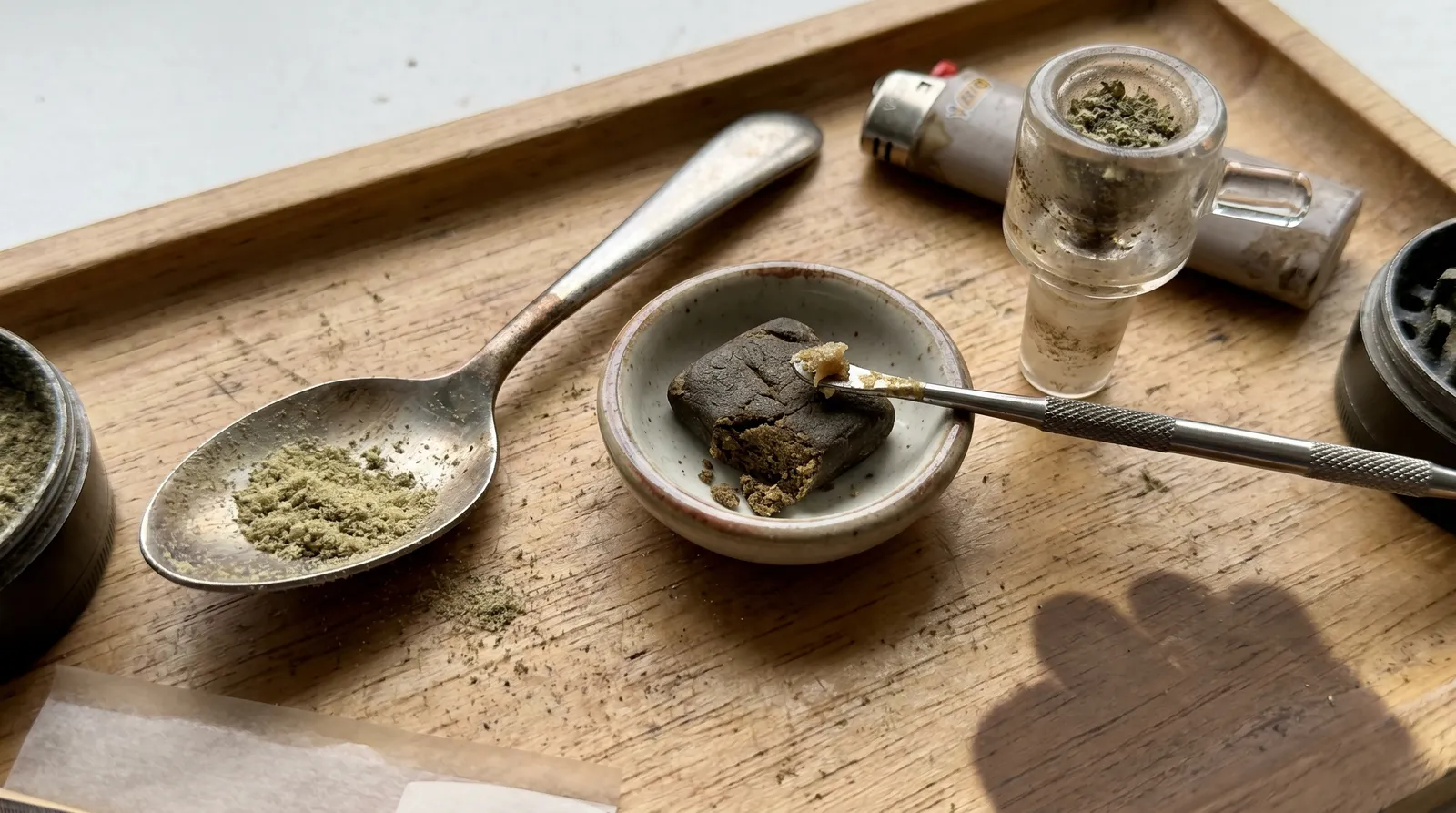
An honest limitation worth noting: this guide focuses on hardware compatibility, not on the full spectrum of concentrate quality. Two batches of rosin from different starting material can vary enormously in flavour and potency even when pressed identically. Hardware gets you to the right temperature — starting material determines what you taste when you get there.
If you're just getting into concentrates, start with kief — you're probably already making it. Once your grinder's bottom chamber is full, sandwich it in your vaporizer and see how the experience compares to flower alone. If you want something more refined, buy a quality hash and use it on a concentrate pad. And if you find yourself chasing cleaner flavour and stronger results, that's when it makes sense to get dedicated dab gear.
Last updated: April 2026
Frequently Asked Questions
8 questionsCan you dab kief the same way you dab rosin?
Do you need a concentrate pad to vaporize hash?
What temperature should you dab rosin at?
Is rosin more potent than hash?
How do you clean a quartz banger after dabbing rosin?
Why does kief from my grinder look green instead of golden?
Can you press kief into rosin at home?
What is the difference between dry-sift hash and hand-rubbed hash in terms of hardware?
About this article


Adam Parsons is an external cannabis and psychedelics writer and editor who contributes to Azarius's wiki as both author and reviewer. On the writing side, he authors Azarius's kratom and kanna clusters, drawing on exten
This wiki article was drafted with AI assistance and reviewed by Adam Parsons, External contributor. Editorial oversight by Joshua Askew.
Medical disclaimer. This content is for informational purposes only and does not constitute medical advice. Consult a qualified healthcare provider before use of any substance.
Last reviewed April 25, 2026
Related Articles
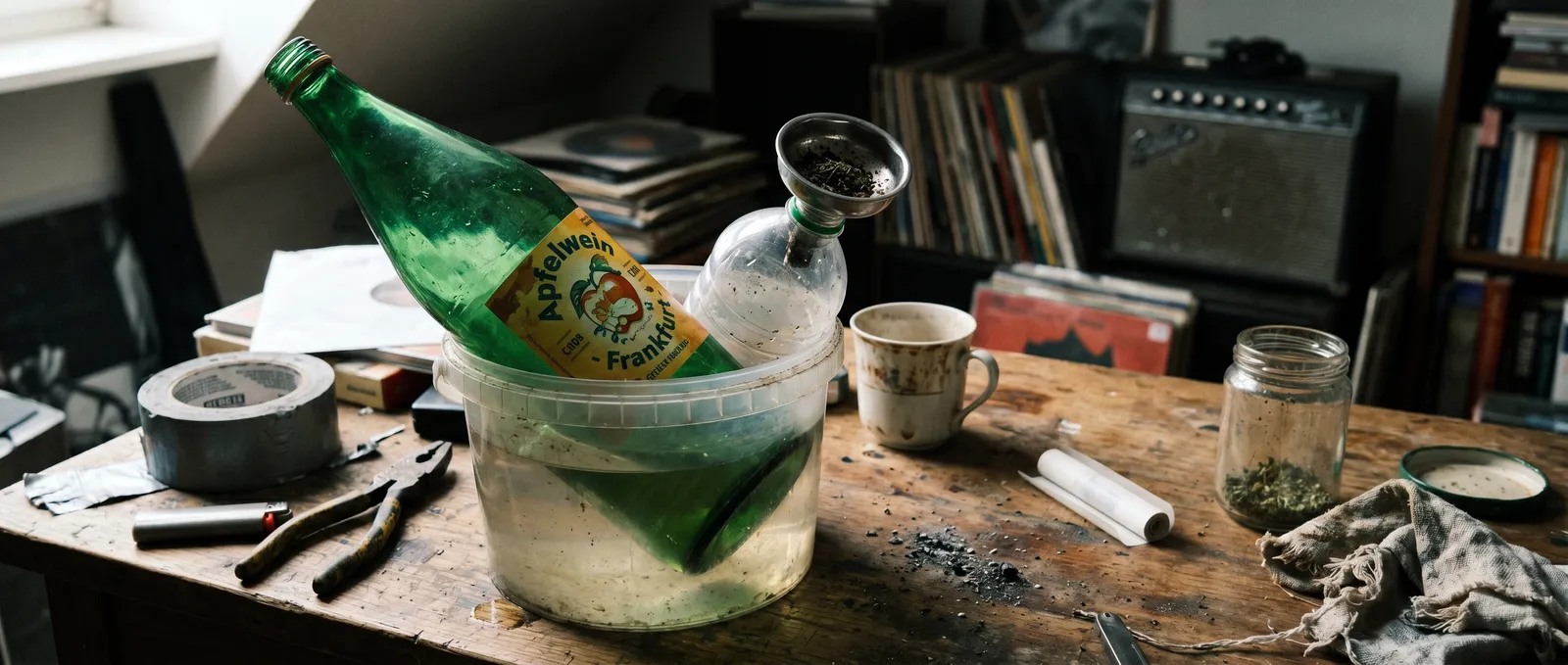
Gravity Bongs Explained: How They Work and Why
A gravity bong uses water displacement to pull concentrated smoke into a chamber, then forces it into your lungs under positive pressure.
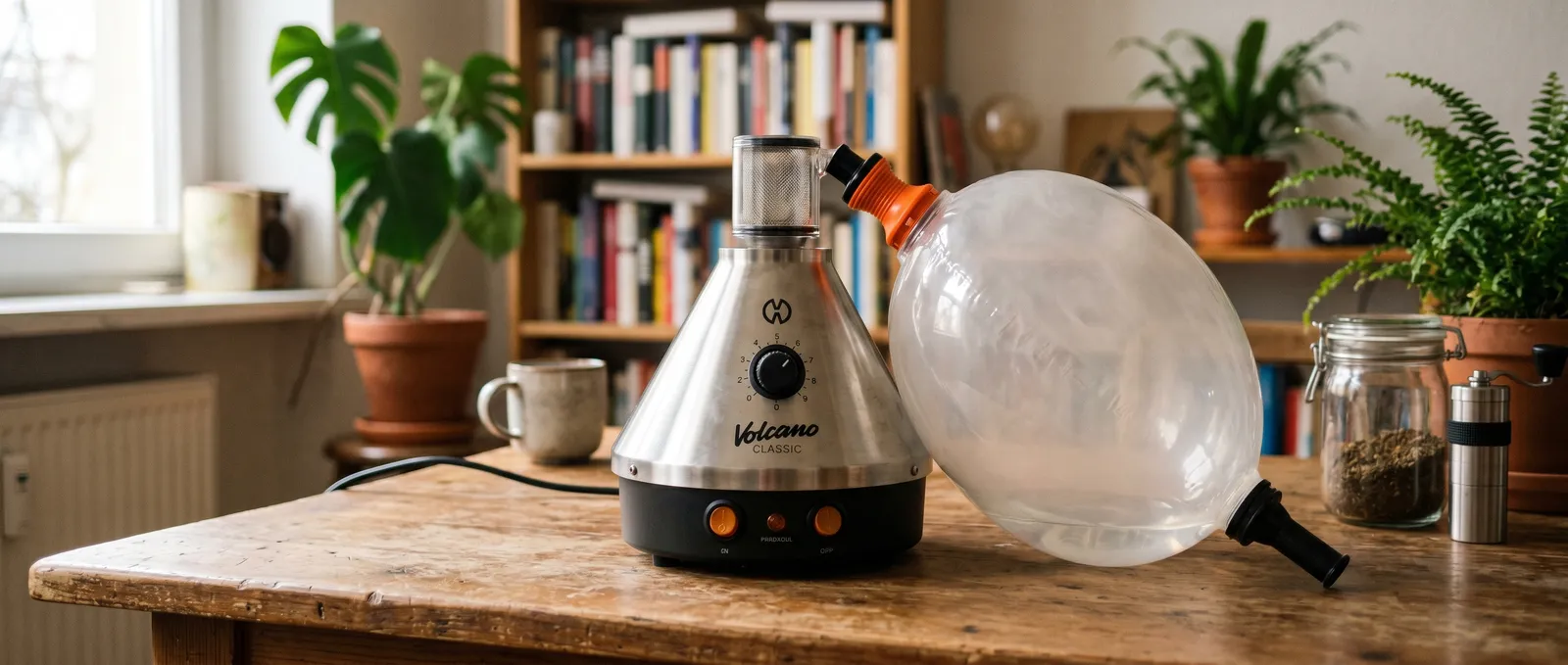
Storz Bickel Volcano Complete Guide: Setup, Temps & Cleaning
The Storz & Bickel Volcano is a convection desktop vaporizer that fills detachable balloons with vapour — a system clinically validated by Hazekamp et al.
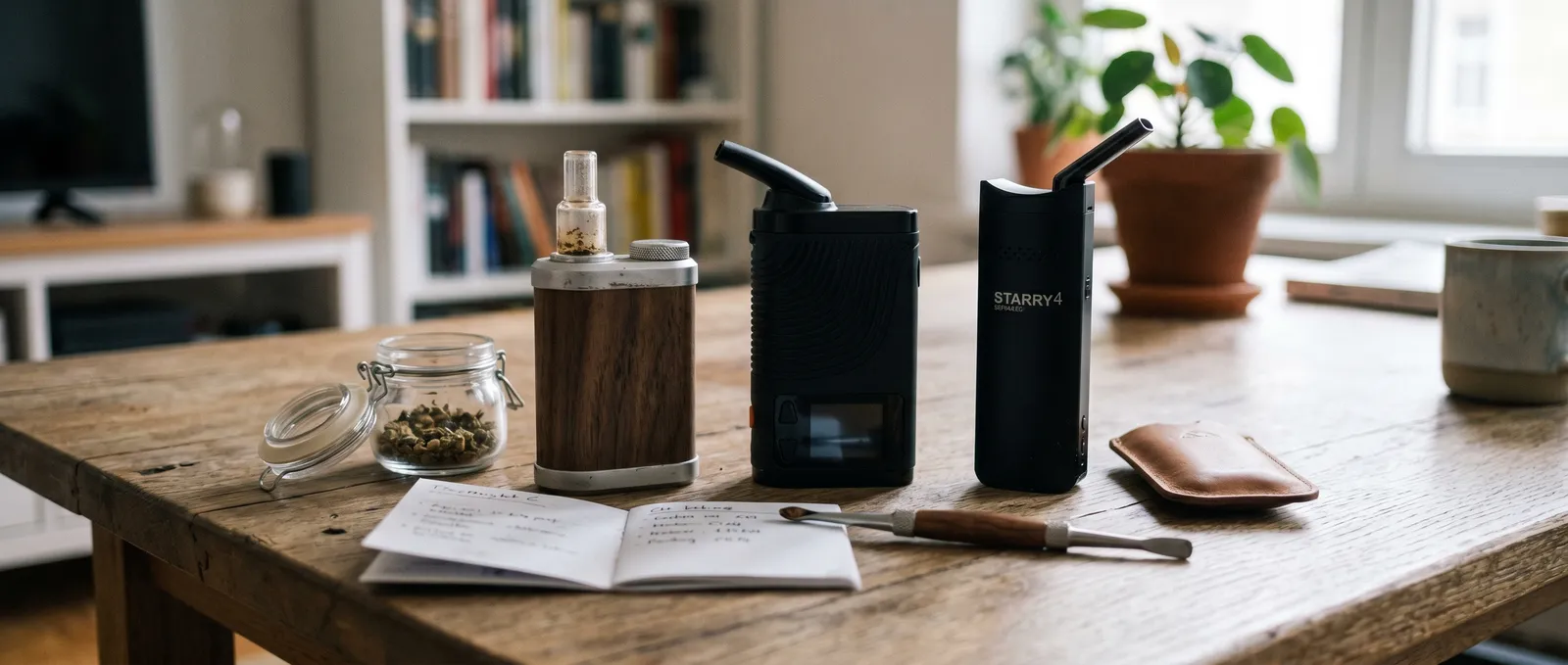
TinyMight Boundless XMAX Premium Portables Compared
The TinyMight 2, Boundless CFX/CFC and XMAX V3/Starry/Ace represent three tiers of portable dry-herb vaporizer — from budget conduction to premium convection.
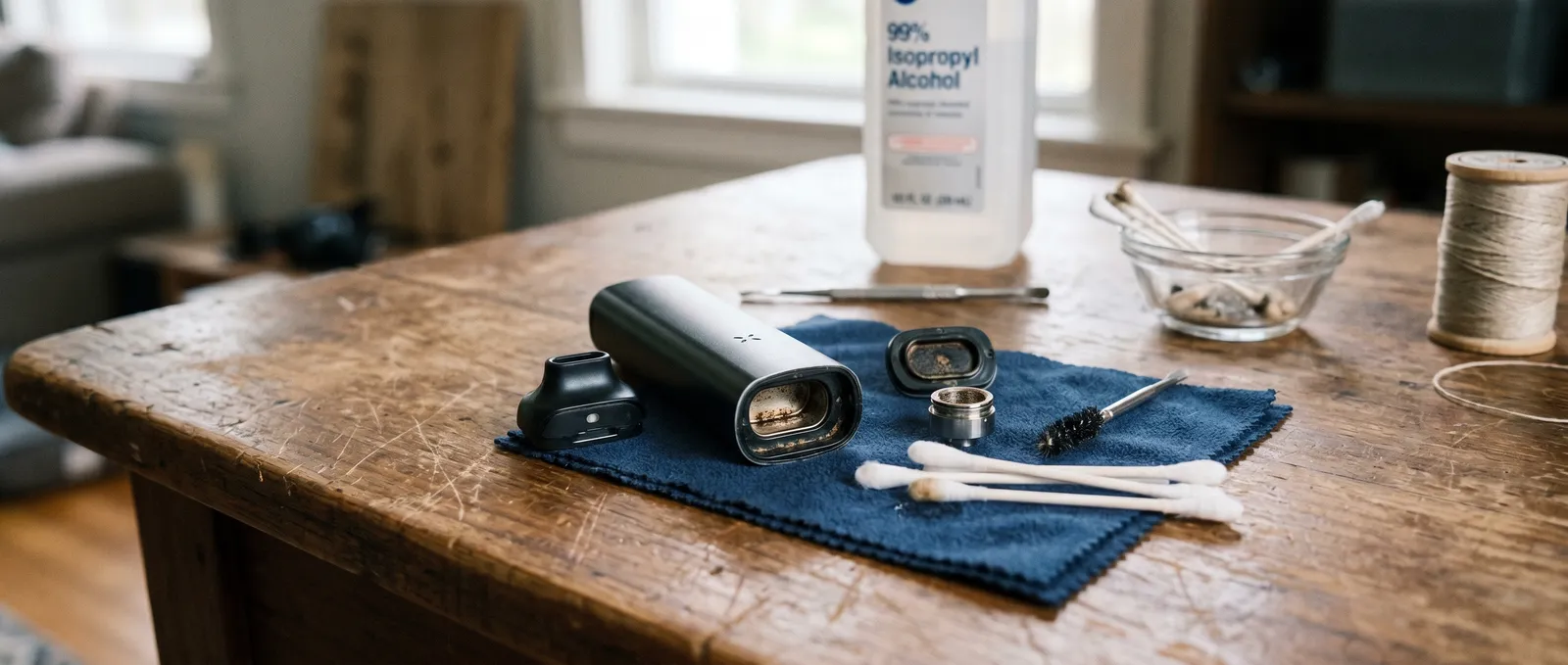
How To Clean a Vaporizer: Step-by-Step Guide
How to clean a vaporizer is a straightforward maintenance routine that keeps your device tasting fresh, drawing smoothly, and lasting years longer than a…
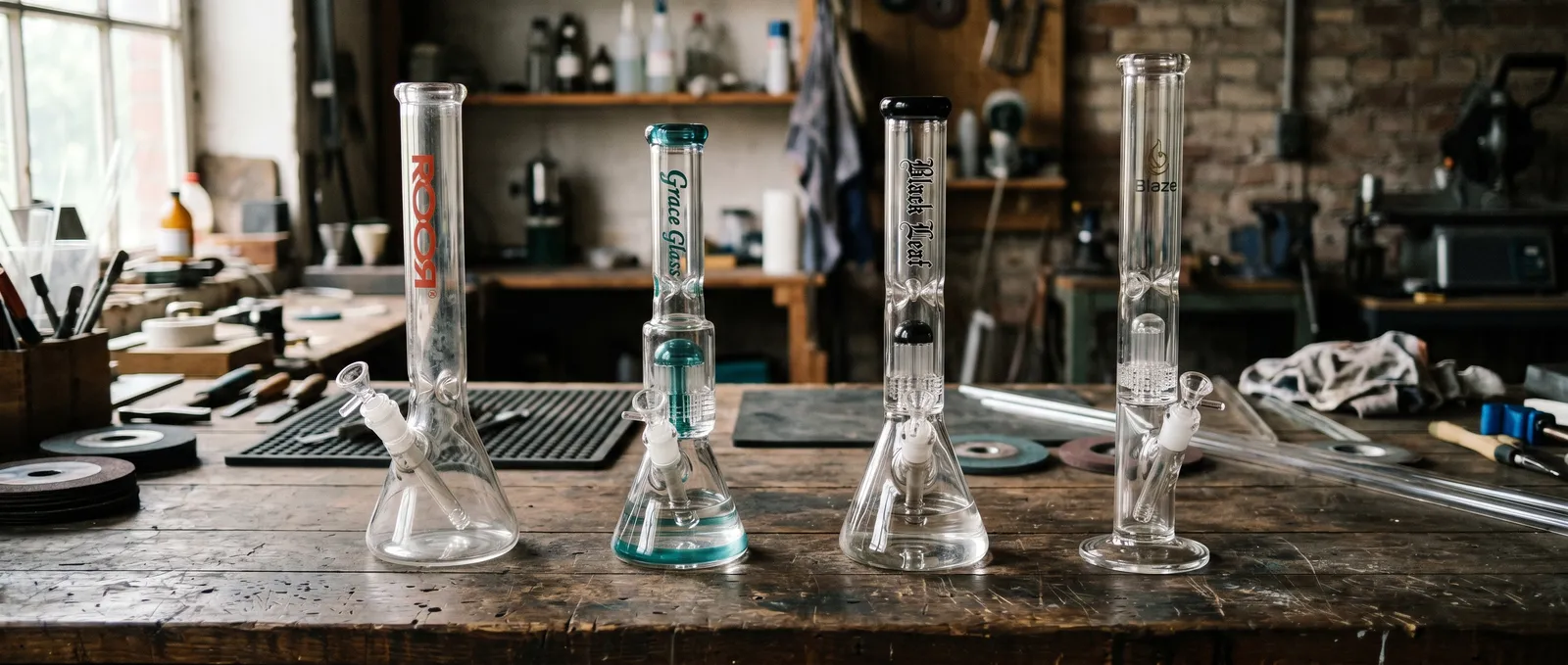
ROOR Grace Glass Black Leaf Blaze Brand Comparison — Glass Bong Guide
Four borosilicate glass bong brands — ROOR, Grace Glass, Black Leaf, and Blaze Glass — dominate the European market at different price points.
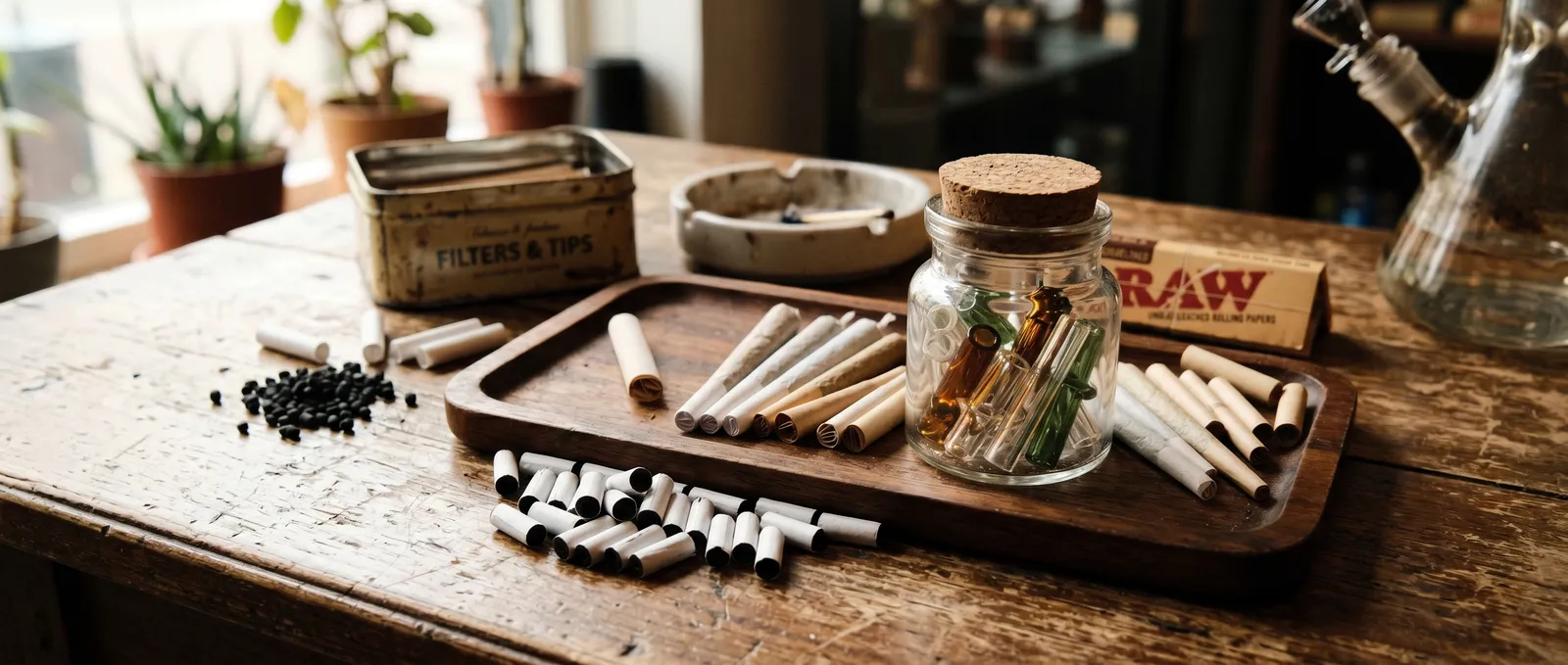
Joint Filters Crutches Glass Tips Activated Charcoal — Buyer's Guide
Joint filters range from simple card crutches that block loose herb to activated charcoal tubes that trap 40–60% of gas-phase toxicants like benzene and…
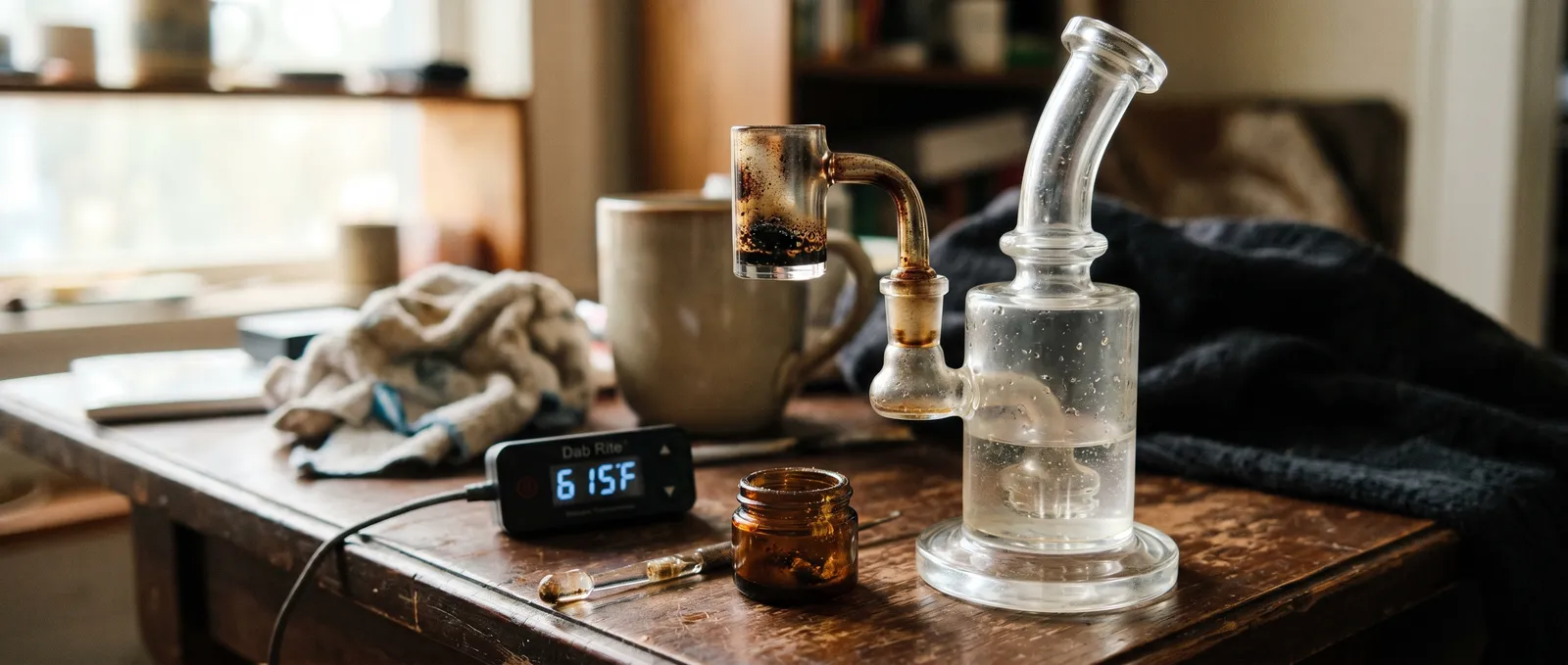
Quartz Banger Temperature and Care Guide
A quartz banger's performance depends almost entirely on temperature control and maintenance.
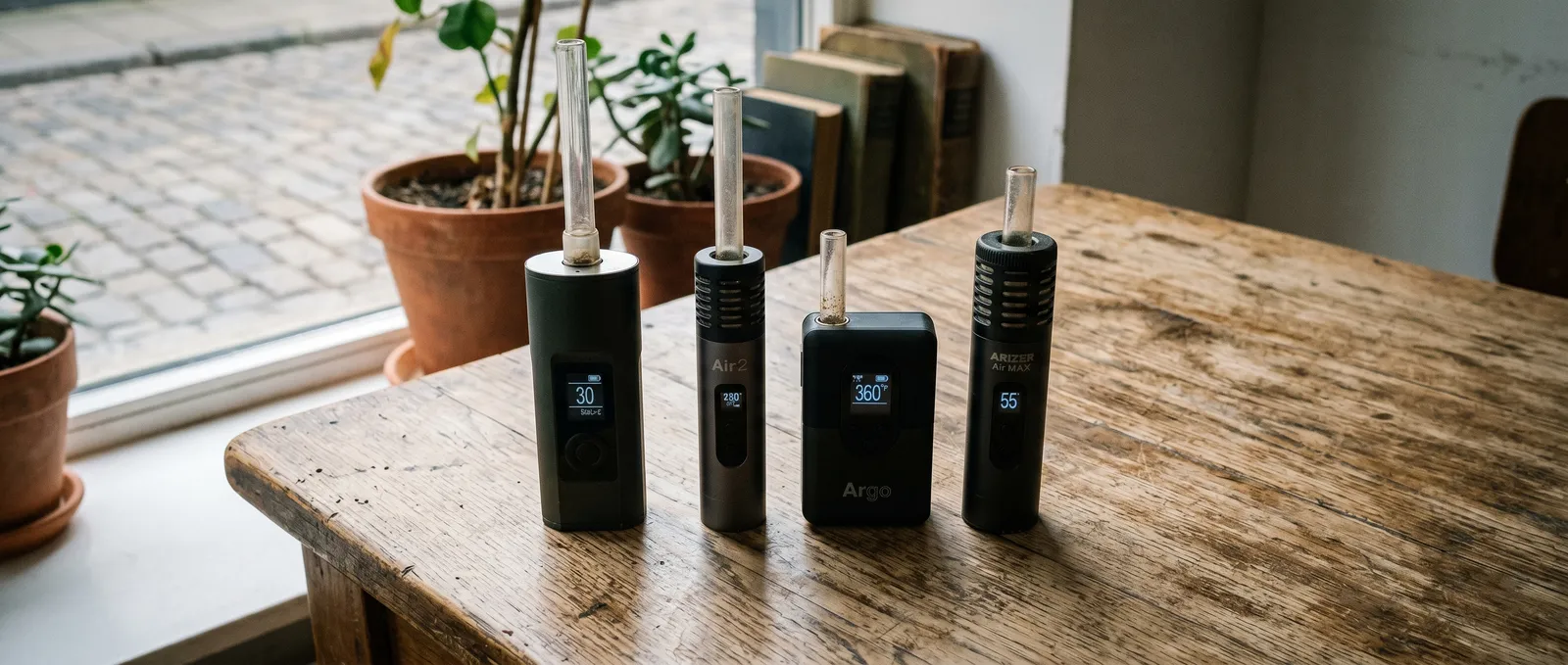
Arizer Portable Lineup Compared: Solo vs Solo 2 vs Solo 3 vs ArGo
Arizer's portable vaporizers all use borosilicate glass vapour paths and session-style heating, but differ meaningfully in battery architecture, heating…
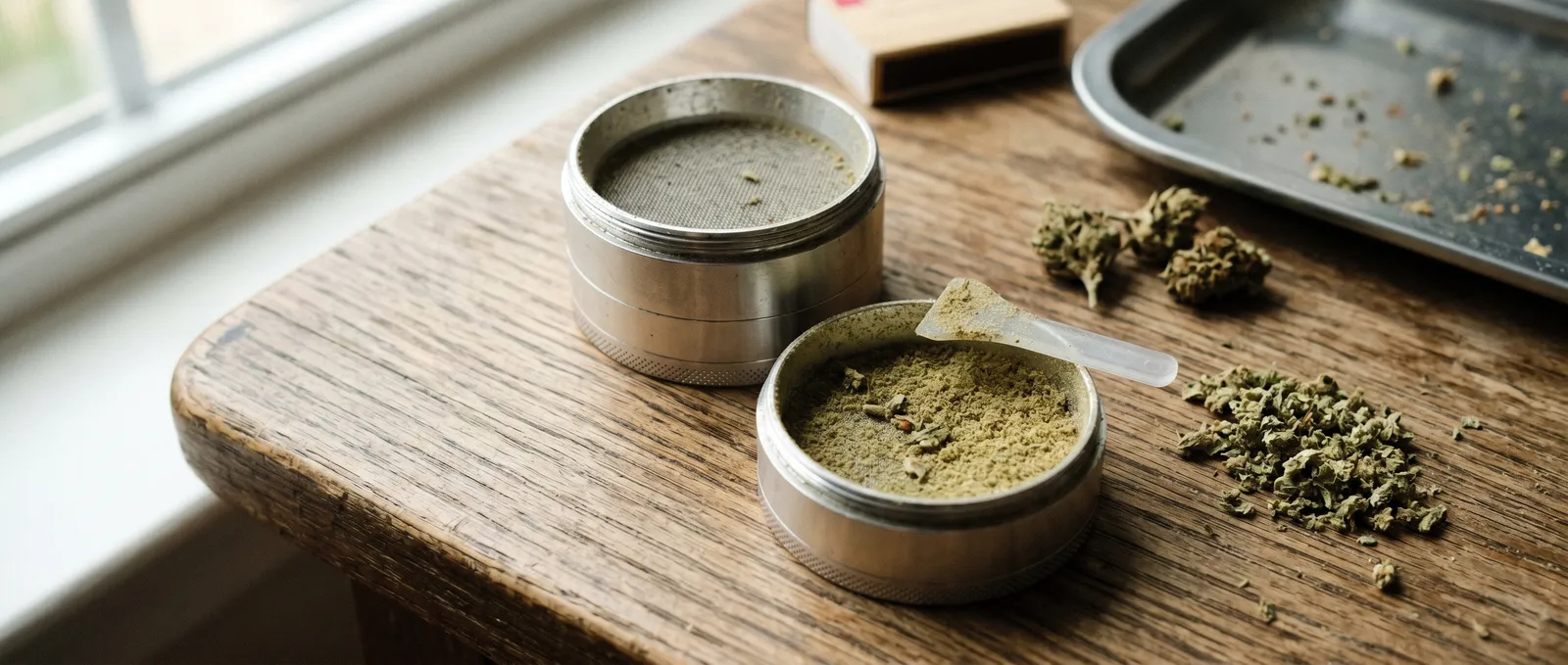
Kief: What It Is and How to Collect It | Full Guide
Kief is the fine, powdery accumulation of trichome heads that detach from cannabis flower during grinding or handling.