
Blunt vs Joint vs Spliff Explained: Key Differences
Definition
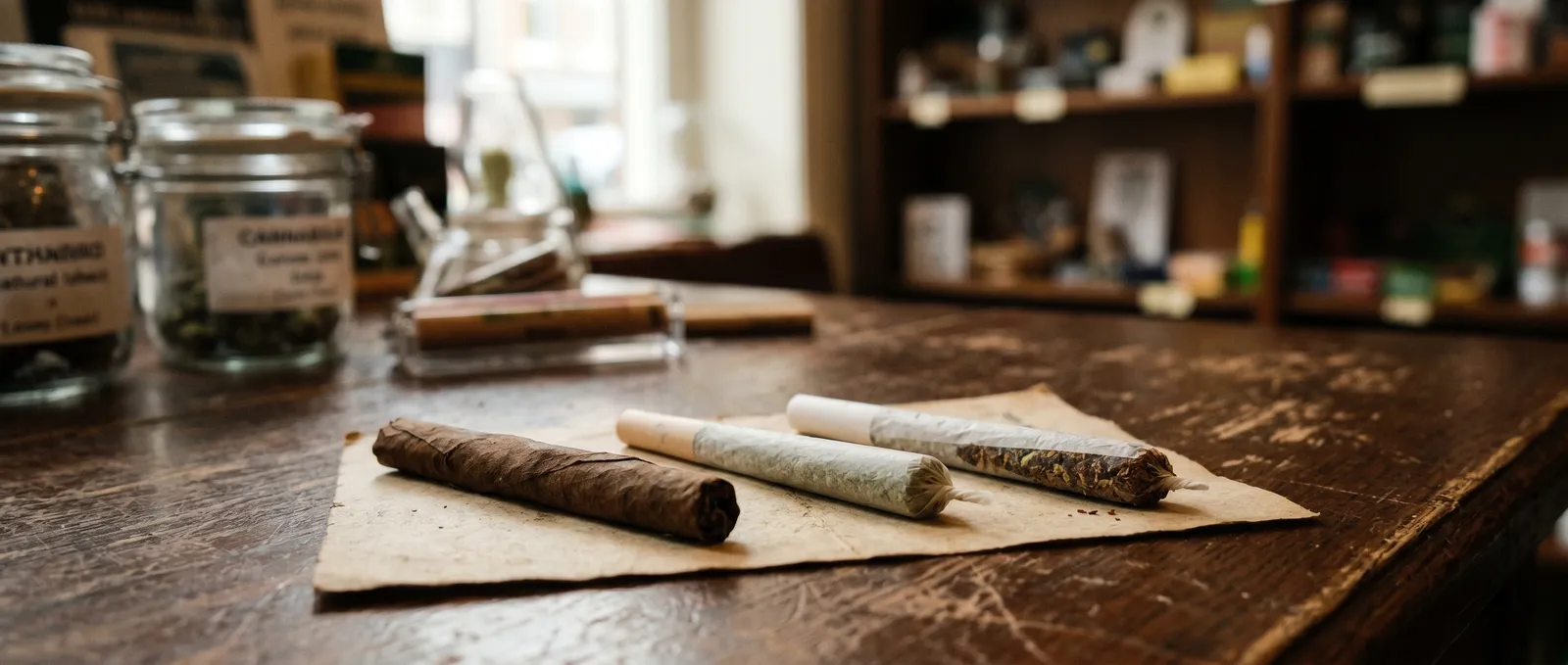
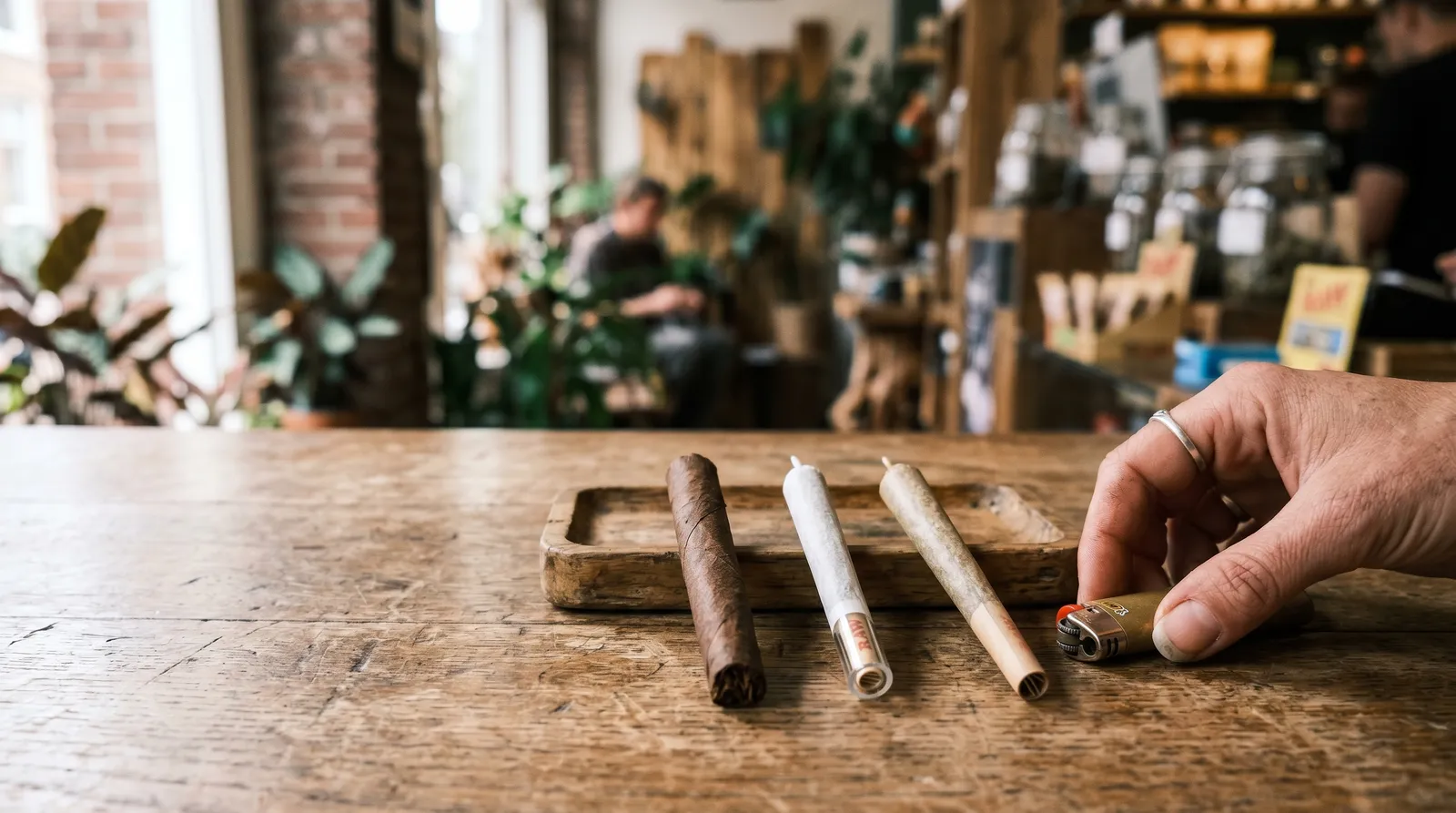
A joint is cannabis in a thin paper. A spliff mixes cannabis with tobacco in the same paper. A blunt uses a thick wrap — tobacco leaf or hemp — around cannabis. The distinction matters because wrap material and fill composition directly affect nicotine exposure, burn rate, and flavour (Ream et al., 2008).
Blunt vs Joint vs Spliff: At a Glance
| Feature | Joint | Spliff | Blunt |
|---|---|---|---|
| Wrapping material | Thin rolling paper (hemp, rice, or wood pulp) | Thin rolling paper (same as joint) | Tobacco leaf wrap or thick hemp wrap |
| Contents | Cannabis only | Cannabis + tobacco blend | Cannabis only (though the wrap itself may contain tobacco) |
| Tobacco present | No | Yes — mixed into the fill | Depends on wrap type (tobacco leaf = yes; hemp wrap = no) |
| Nicotine exposure | None | Moderate — from loose tobacco in the blend | Low-to-moderate if tobacco-leaf wrap; none if hemp wrap |
| Typical size | 0.25–0.75 g cannabis | 0.25–0.5 g cannabis + variable tobacco | 0.5–2 g cannabis |
| Burn rate | Fast to moderate (paper-dependent) | Moderate (tobacco slows the burn slightly) | Slow — thick wrap extends session |
| Flavour profile | Closest to pure cannabis terpenes | Cannabis + tobacco taste; paper flavour minimal | Heavier, often sweet or earthy from the wrap |
| Rolling difficulty | Beginner-friendly with practice | Same as joint — just a different fill | Harder — wraps are thicker, less forgiving |
| Common paper brands | RAW, OCB, Elements, Rizla | RAW, OCB, Rizla, Smoking | Blunt wraps (hemp or tobacco leaf) |
That table covers the basics. Now let's unpack each column so you actually know what you're choosing — and why it matters more than most people think.
What Exactly Is a Joint?
A joint is cannabis rolled in a thin paper with no tobacco. That's it. The paper is usually made from hemp, rice, or wood pulp, and the only thing burning is the paper and whatever herb you've ground up inside. In North America, "joint" has always meant tobacco-free. In Europe — especially the Netherlands, France, and the UK — the word sometimes gets used loosely for what's technically a spliff, which muddies the water. For this article, a joint means cannabis only, rolled in a standard rolling paper.
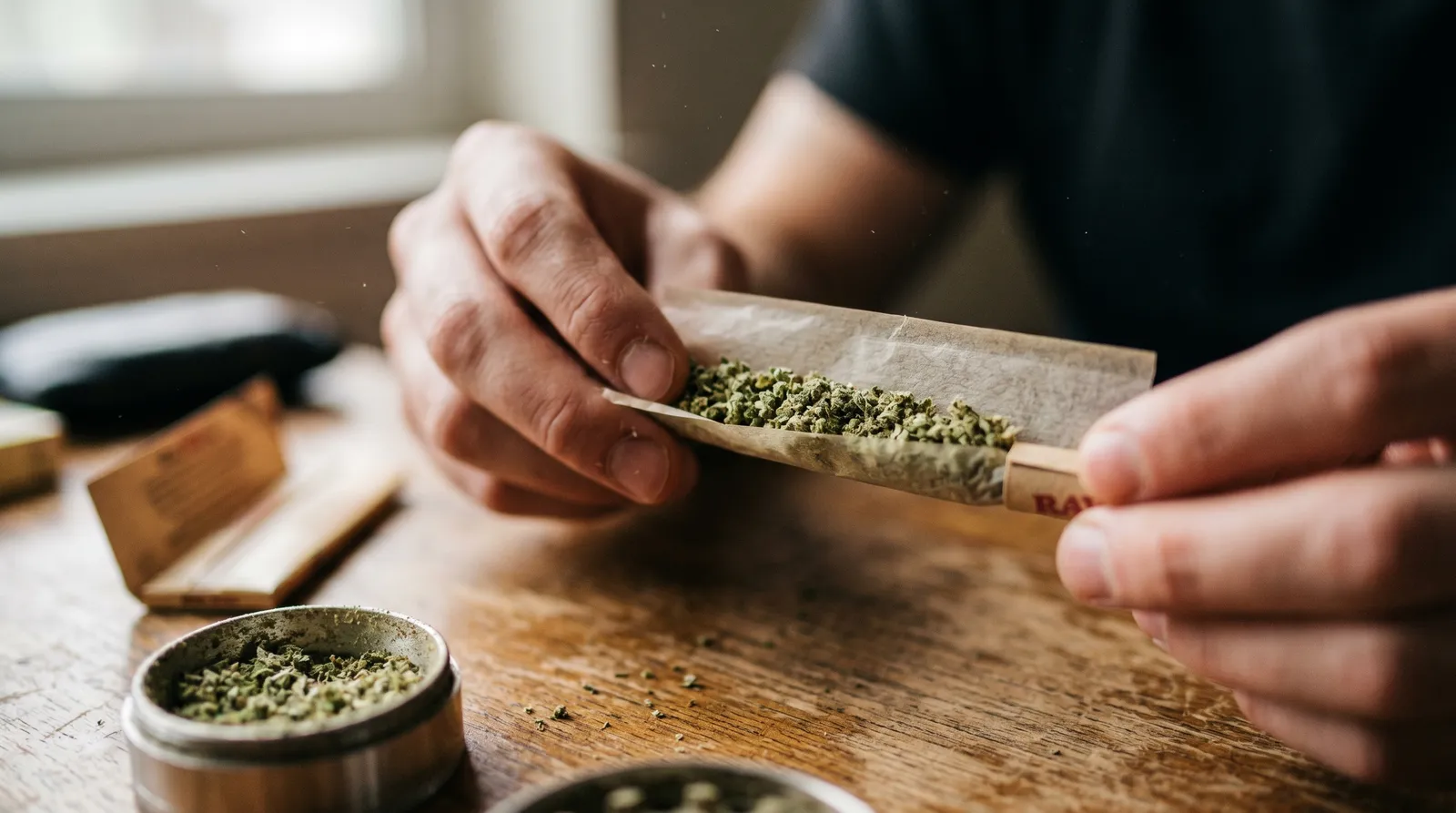
Paper choice has a real effect on the smoking experience. Rice papers like Elements burn extremely thin and add almost no flavour. Unbleached hemp papers like RAW Organic or OCB Virgin have a faint earthiness but let terpenes come through clearly. Bleached wood-pulp papers — the classic white Rizla — burn a touch faster and carry a mild papery taste that some smokers notice and others don't. A 2018 study in the journal Inhalation Toxicology found that paper composition measurably affects the ratio of combustion by-products in sidestream smoke (Moir et al., 2018), which is a fancy way of saying: the paper you pick isn't just about aesthetics.
Joints are the simplest format. Grind, fill, roll, twist. A paper tip or glass tip at the mouthpiece end keeps herb out of your teeth and gives the roll structural integrity. Pre-rolled cones — available from RAW, OCB, and others — skip the rolling step entirely: you just pack and twist.
What Is a Spliff?
A spliff uses the same thin rolling paper as a joint, but the fill is a blend of cannabis and tobacco. The ratio varies wildly — some people go 70/30 cannabis to tobacco, others flip it the other way. In much of Europe, this is the default way people smoke cannabis. Walk into a coffeeshop in Amsterdam and watch people roll: most are making spliffs, not joints. The habit traces back to hash culture — crumbling Moroccan or Afghan hash into tobacco was the standard method for decades, and the convention carried over even as dried flower became more common.
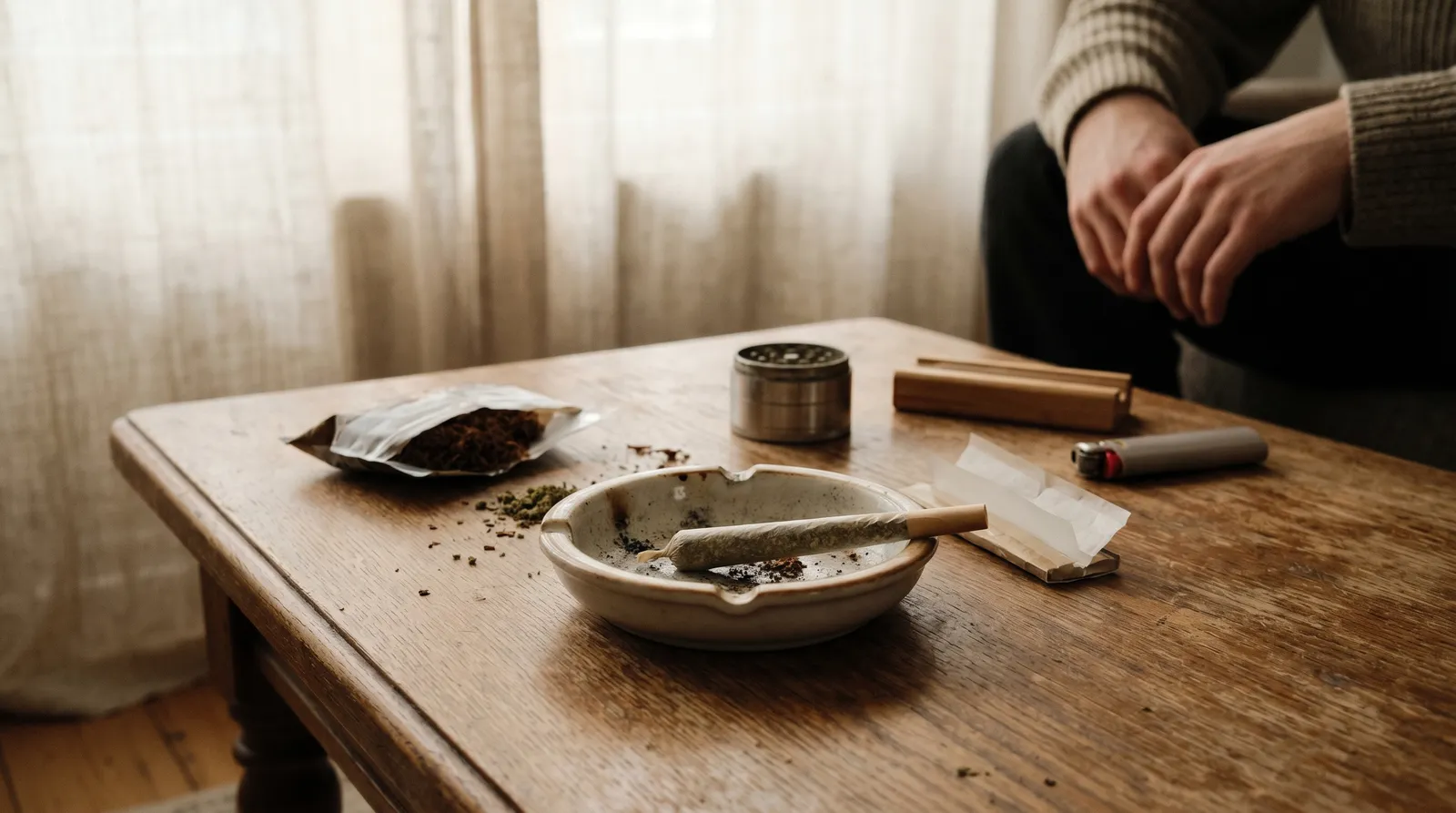
The tobacco does a few practical things. It helps hash burn more evenly (pure hash in a paper tends to go out). It stretches your cannabis further. And it changes the subjective experience — nicotine is a stimulant, so the combination produces a different feeling than cannabis alone. According to a University College London study, experienced cannabis users who normally smoked spliffs reported that removing tobacco from the mix changed the perceived intensity and character of the effects (Morgan et al., 2009). Whether that change is welcome depends entirely on the individual.
The obvious downside: tobacco means nicotine, and nicotine means dependence risk. A study published in Drug and Alcohol Dependence found that people who regularly smoked blunts or spliffs had significantly higher odds of developing co-dependence on both cannabis and tobacco compared to those who smoked joints or used other methods (Ream et al., 2008). That's not a moral judgement — it's a data point worth knowing if you're choosing between formats.
What Is a Blunt?
A blunt is cannabis rolled in a thick wrap rather than a thin paper. Traditionally, that wrap is a tobacco leaf — either a hollowed-out cigar or a standalone blunt wrap sold for the purpose. The name comes from the Phillies Blunt cigar brand, which American smokers in the 1980s started gutting and refilling with cannabis. The wrap itself is substantially thicker than any rolling paper, which means blunts burn slowly, hold more herb (typically 0.5–2 g), and produce denser smoke.
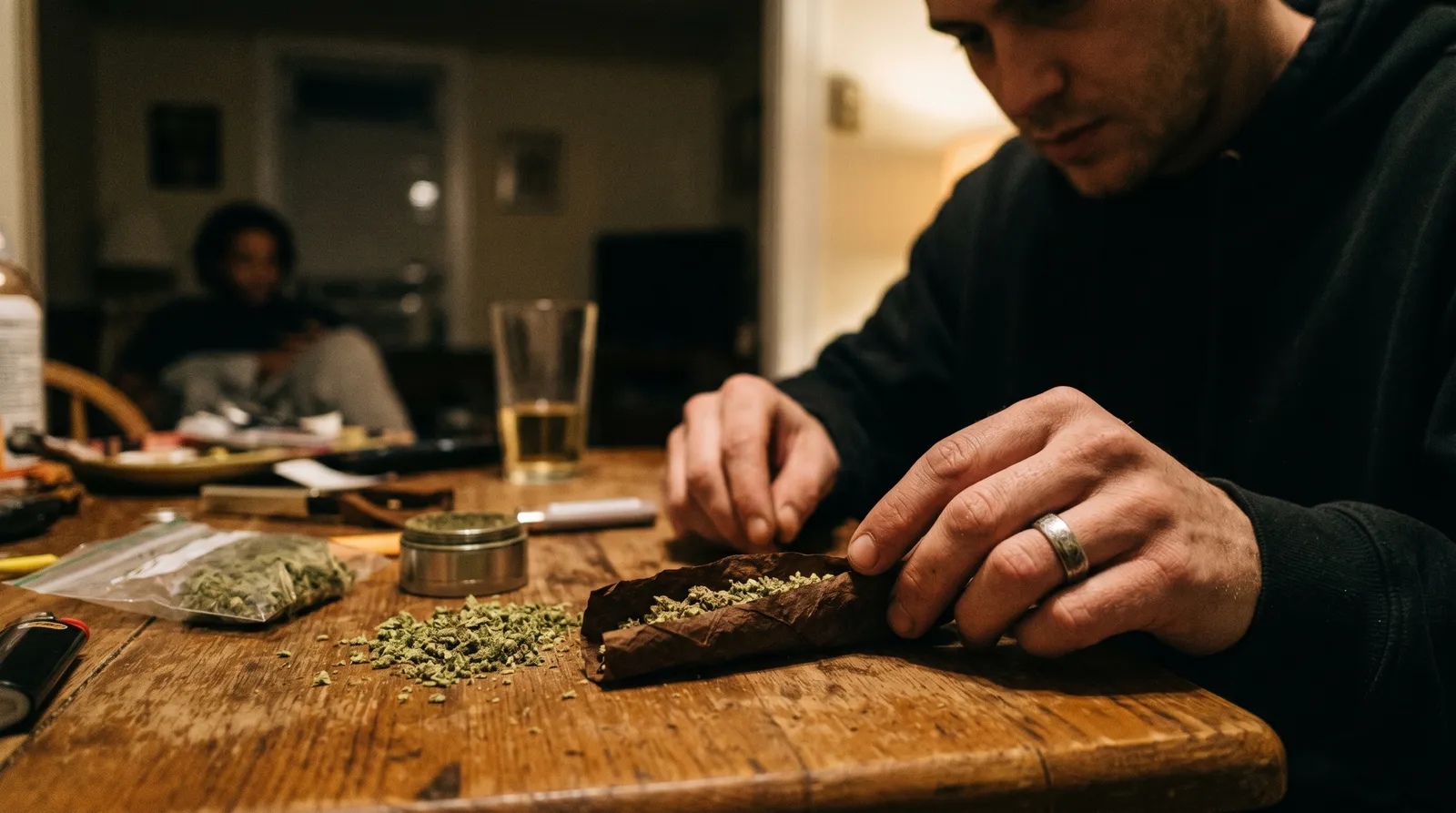
Here's where it gets interesting for European smokers: hemp blunt wraps have become increasingly popular, and they change the equation entirely. A tobacco-leaf wrap exposes you to nicotine through the wrap material itself — even though the fill is pure cannabis. A hemp blunt wrap eliminates that nicotine exposure while keeping the slow burn and thick-smoke characteristics that define the blunt experience. If you want the format without the tobacco, hemp wraps are the way to go.
Flavour-wise, blunts are the boldest of the three. Tobacco-leaf wraps add a sweet, sometimes musty undertone. Hemp wraps tend to be more neutral but still heavier than a thin rice or hemp rolling paper. That's a feature or a bug depending on your priorities.
Tobacco Wraps vs Hemp Wraps: Why It Matters
This is the comparison gap most articles skip, and it's arguably the most relevant detail for anyone choosing between a blunt and a joint. The wrap material determines whether tobacco enters the picture at all.
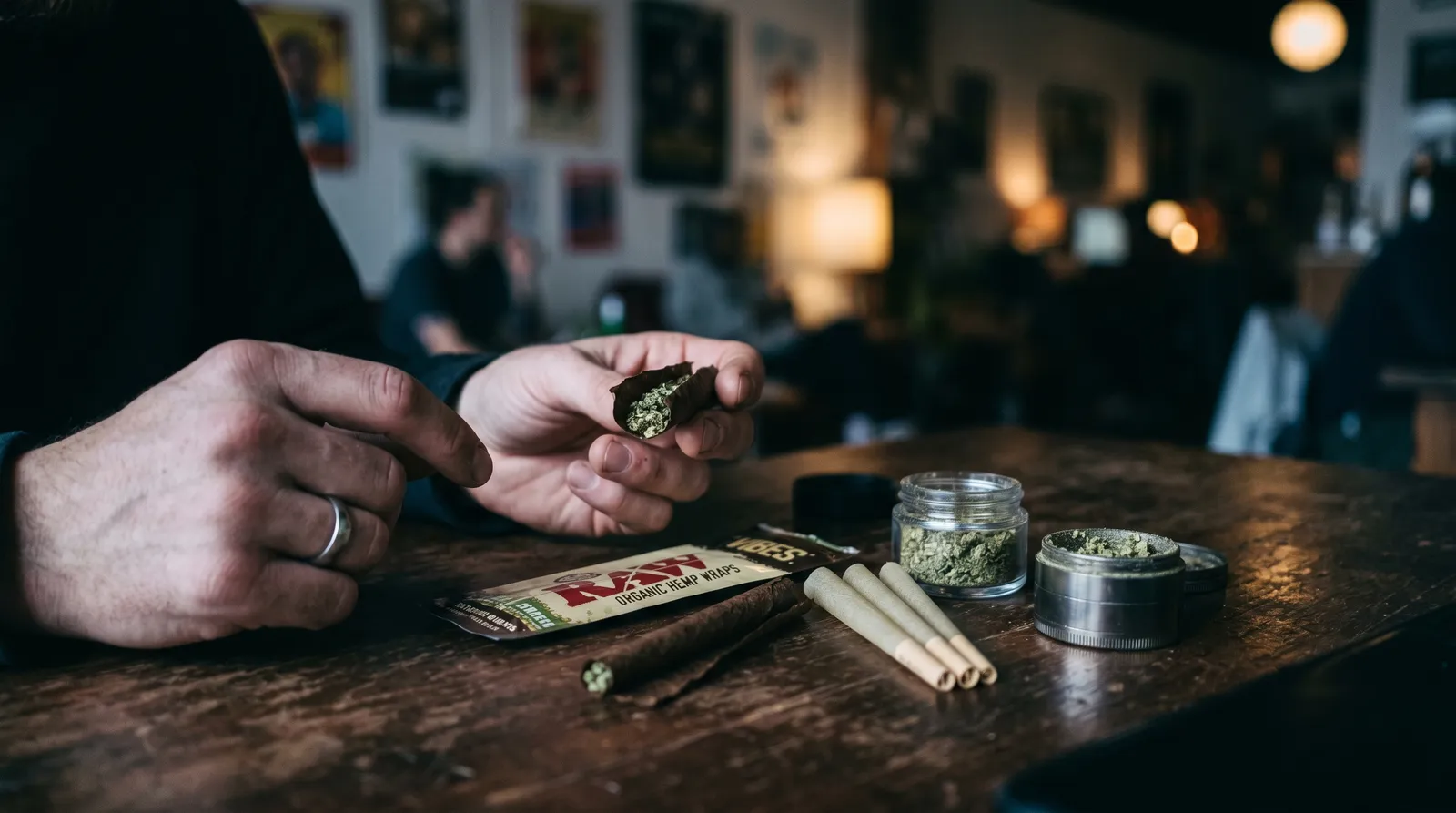
A traditional tobacco-leaf blunt wrap delivers nicotine through combustion of the wrap itself. You don't need to add tobacco to the fill — the leaf is doing the work. Research from the National Institute on Drug Abuse (NIDA, 2016) confirmed measurable nicotine delivery from cigar wrappers used for blunts, even when the fill contained no tobacco. For someone trying to avoid nicotine entirely, this matters.
Hemp blunt wraps sidestep the issue. They're made from hemp fibre, burn slowly like a tobacco wrap, and deliver zero nicotine. The trade-off is flavour — hemp wraps taste different from tobacco leaf, and some smokers find them slightly harder to seal because the material behaves differently when wet. But for anyone who wants the slow-burn, high-capacity format of a blunt without tobacco exposure, hemp wraps are the clear answer.
How Rolling Papers Affect Flavour and Burn
Paper type is the variable people underestimate most. The differences are subtle but real, and they compound over a full session.
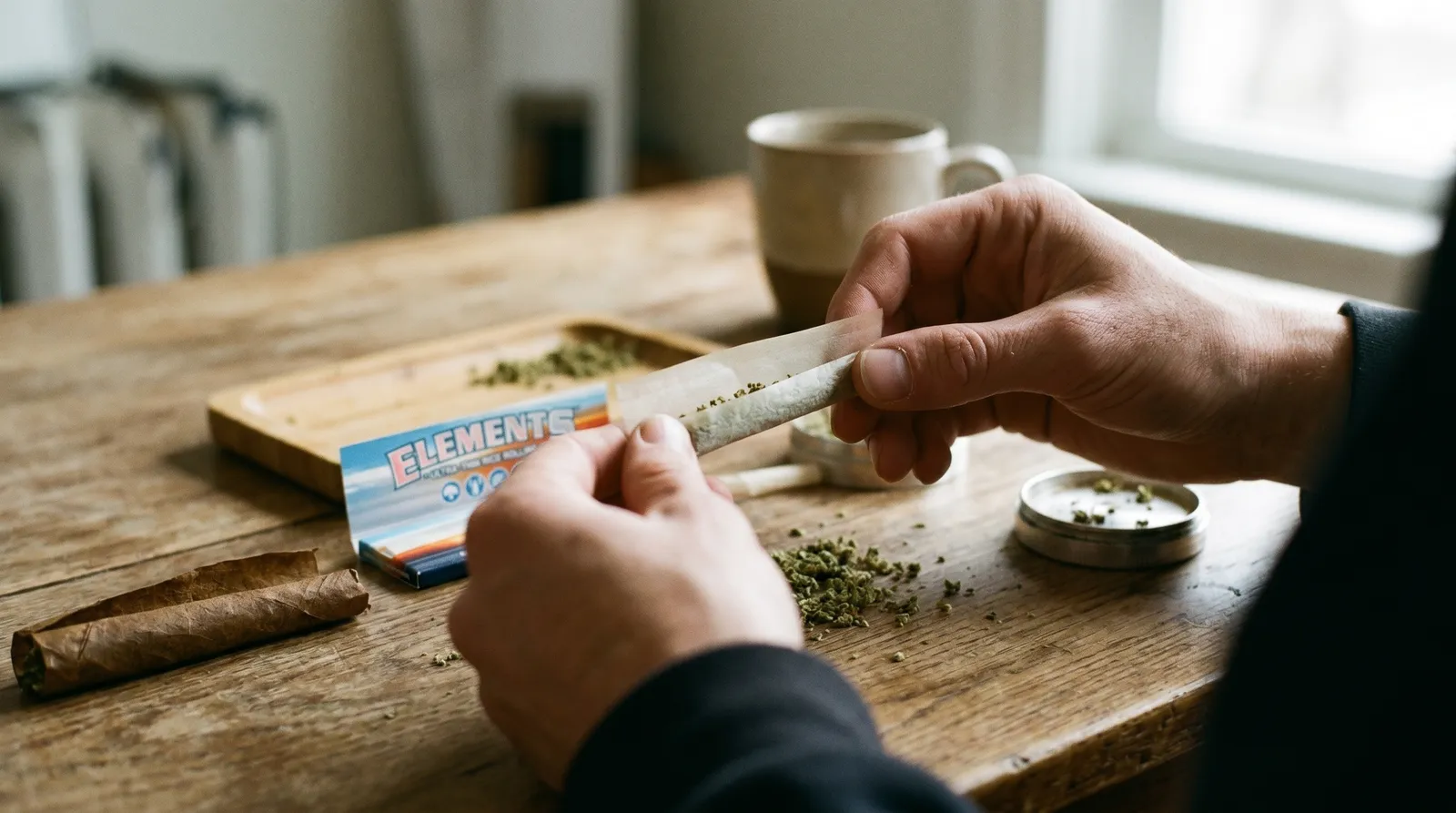
Rice papers (like Elements) are the thinnest option. They burn clean, add virtually no flavour, and let the cannabis terpene profile speak for itself. The downside: they're harder to roll with if your technique isn't solid — they tear more easily and don't stick as forgivingly.
Unbleached hemp papers (RAW Organic, OCB Virgin, OCB Bamboo) offer a middle ground. Slightly thicker than rice, easier to handle, with a faint natural taste that most people find neutral. They burn evenly and hold their shape well. For most smokers, this is the sweet spot between flavour transparency and ease of rolling.
Wood-pulp papers (classic Rizla, Smoking brand) are the traditional European choice. They're the easiest to roll with — they hold their shape, stick reliably, and forgive sloppy technique. They burn a bit faster and have a mild paper taste. Not unpleasant, but noticeable if you switch from rice or hemp.
Flavoured papers (Juicy Jay's full lineup) add a sweet or fruity taste layer. They're fun for social sessions but completely overwrite the cannabis flavour profile, which is either the point or the problem depending on what you're after.
King-size slim papers (the standard for European joints and spliffs) typically measure around 108 × 44 mm. The 1¼ size is shorter and slightly wider — more common in North American joint-rolling. Pre-rolled cones eliminate the skill requirement entirely and come in both sizes.
So Which One Should You Roll?
This isn't a "one is better" situation. Each format serves a different purpose, and the right choice depends on three things: whether you want tobacco involved, how much cannabis you're using, and how long you want the session to last.
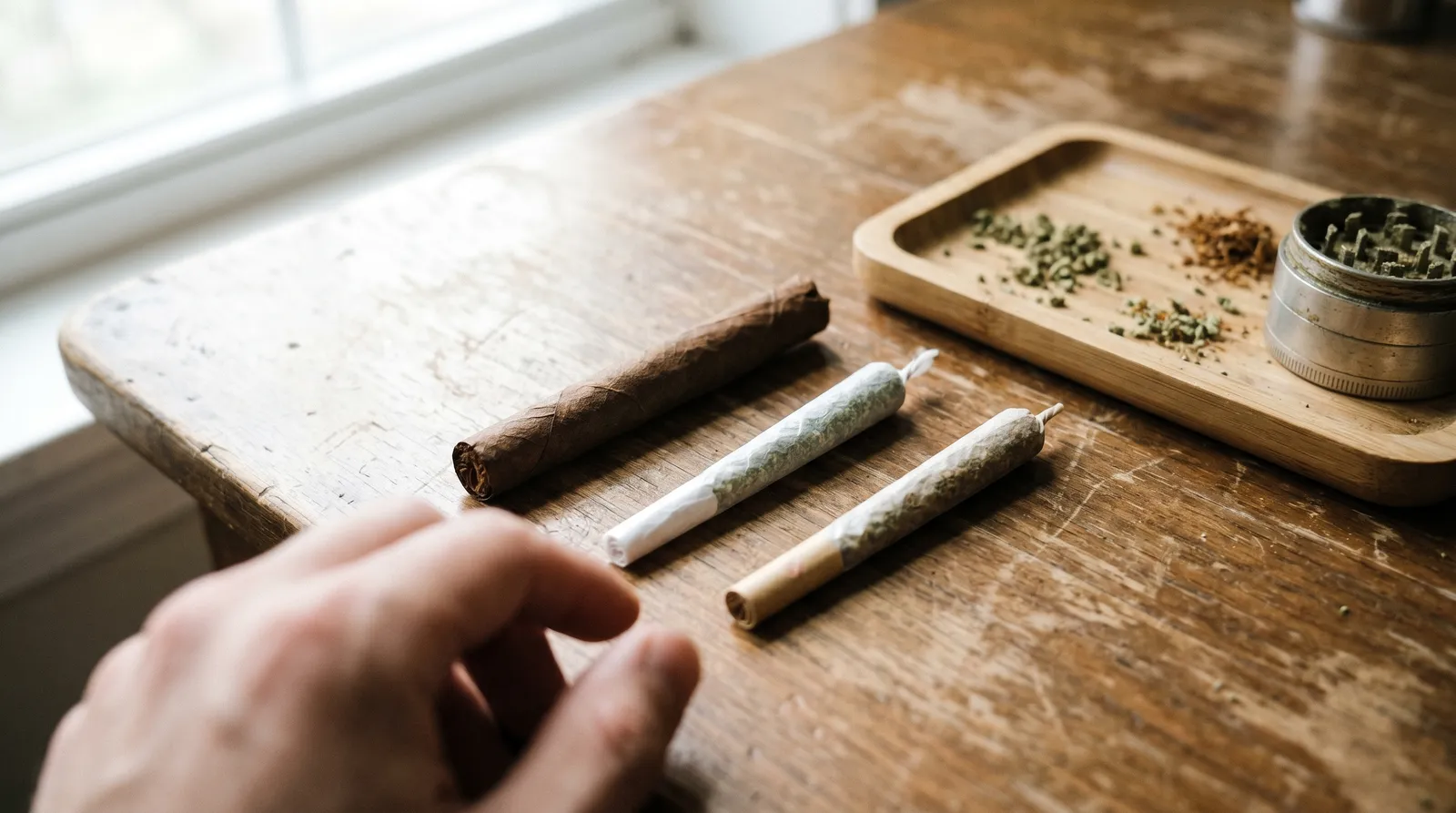
Choose a joint if: you want pure cannabis flavour with no tobacco or nicotine. Joints are the cleanest-tasting option and the most straightforward to roll. They use less herb than blunts and burn faster, which makes them practical for solo sessions or smaller amounts.
Choose a spliff if: you're used to the cannabis-tobacco combination (common across Europe), you want to stretch a small amount of cannabis further, or you're working with hash that needs tobacco to burn evenly. Be aware of the nicotine dependence angle — it's real and well-documented.
Choose a blunt if: you want a slow-burning, high-capacity format for sharing or longer sessions. Go with a hemp wrap if you want to avoid tobacco entirely. Go with a tobacco-leaf wrap if you specifically want that flavour profile — but know that it delivers nicotine even without tobacco in the fill.
And if you'd rather skip combustion altogether, that's a different conversation — see our vaporizer guides for the hardware side of that switch.
Filter Tips: Paper, Glass, or Activated Charcoal
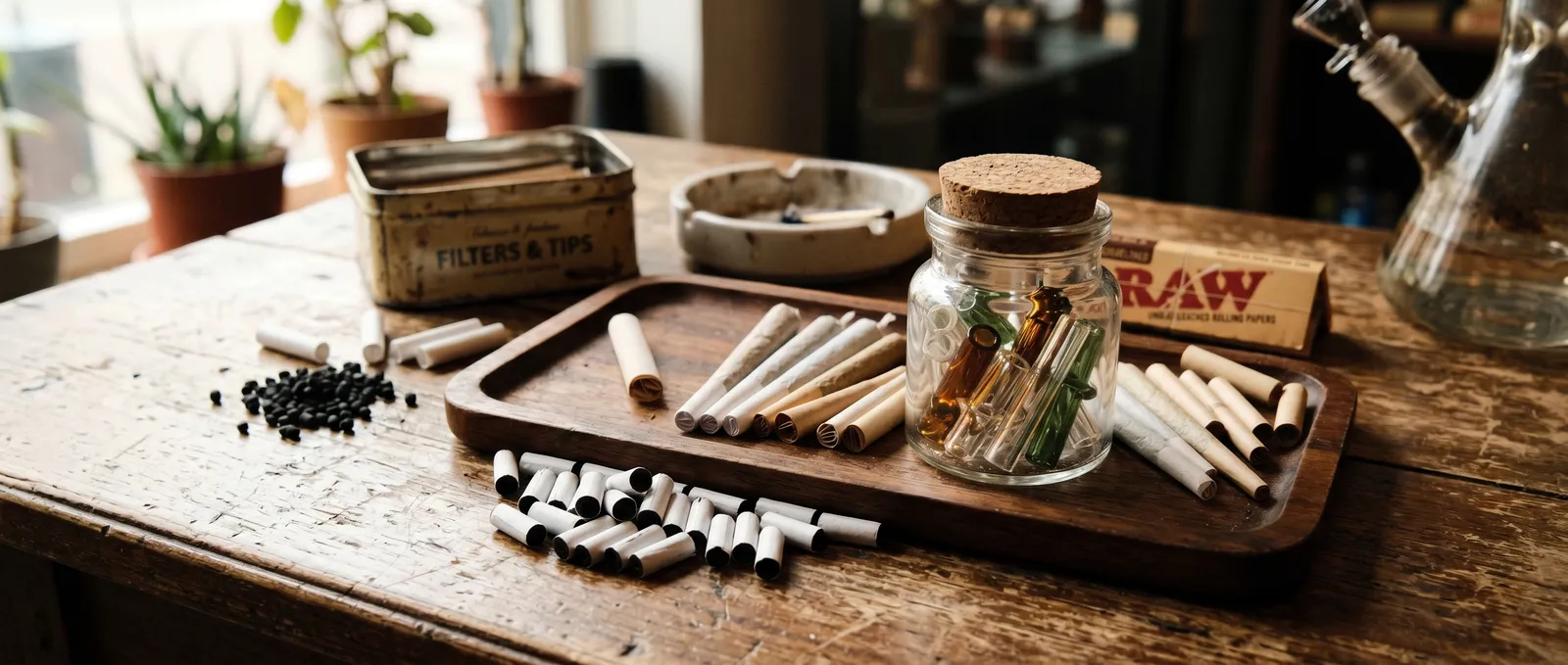
Whatever format you choose, a filter tip at the mouthpiece end improves the experience. Paper tips (the little cardboard strips that come with RAW and OCB packs) are the baseline — they keep herb out of your mouth and give the roll structure. Glass tips are reusable, feel smoother on the lips, and cool the smoke marginally. Activated charcoal filters go further, physically trapping some particulate matter before it reaches your lungs — though the degree of filtration varies by brand and isn't a substitute for the cleaner delivery of a vaporiser.
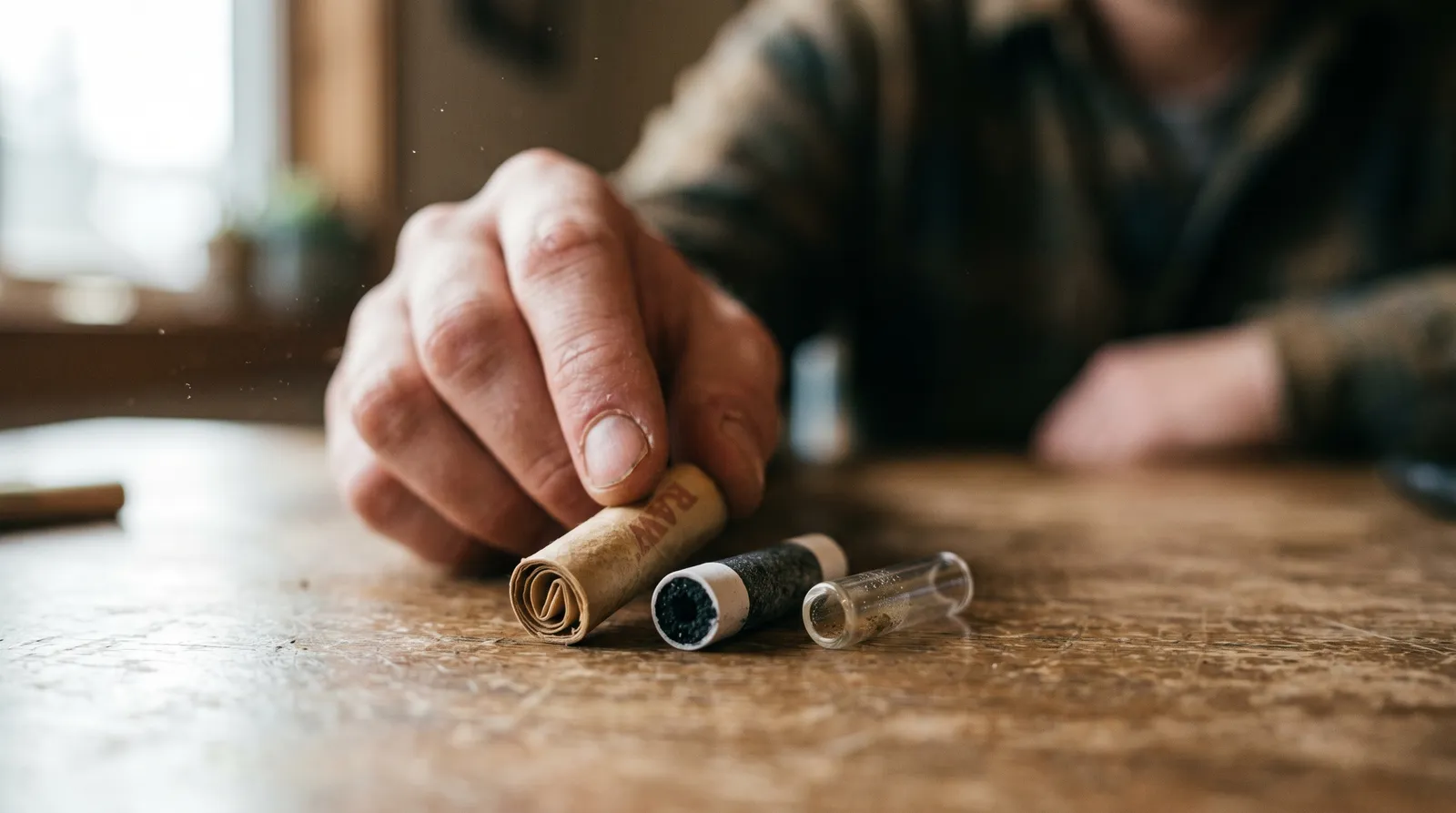
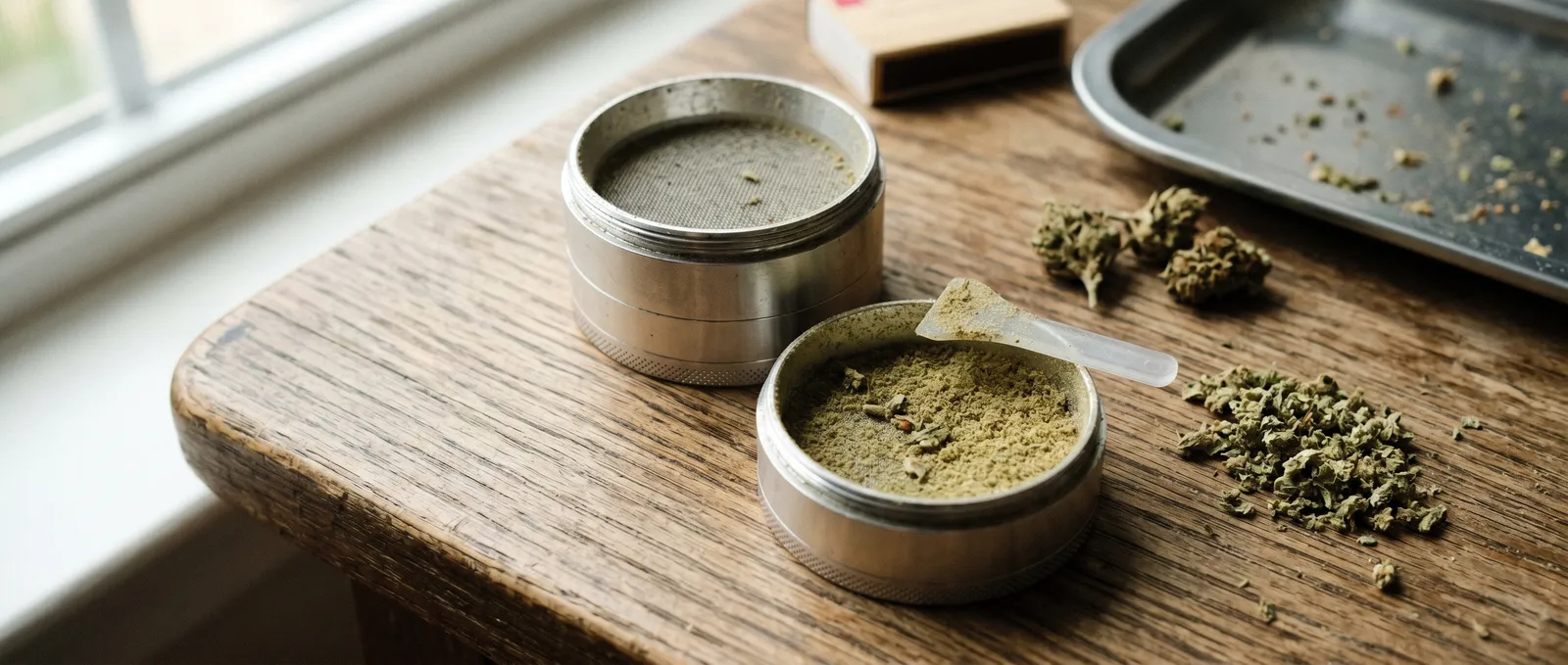
A decent grinder also makes a measurable difference to how evenly your roll burns. Consistent particle size means consistent airflow, which means fewer relights and less canoeing (where one side burns faster than the other). A 4-part grinder with a screen — like the SLX or Santa Cruz Shredder — gives you uniform grind and collects kief as a bonus.
References
- Moir, D. et al. (2018). 'Mainstream and sidestream smoke composition from rolling papers of different materials.' Inhalation Toxicology, 30(4-5), pp. 153–163.
- Morgan, C.J.A. et al. (2009). 'Impact of cannabidiol on the acute memory and psychotomimetic effects of smoked cannabis.' Neuropsychopharmacology, 35(3), pp. 764–774.
- Ream, G.L. et al. (2008). 'Smoking tobacco along with marijuana increases symptoms of cannabis dependence.' Drug and Alcohol Dependence, 95(3), pp. 199–208.
- National Institute on Drug Abuse (2016). 'Cigar and blunt use among youth and young adults.' NIDA Research Report.
This guide covers hardware for adults (18+). Use of vaporizers, bongs, pipes, dab rigs and rolling accessories is for adult use only. Verify your local laws on the substances you choose to use — Azarius does not provide legal advice. Consult a qualified professional if you have a health condition or take medication.
Last updated: April 2026
Frequently Asked Questions
8 questionsDoes a blunt contain tobacco even without adding any?
Why do Europeans mostly smoke spliffs instead of joints?
Do rolling paper materials actually affect taste?
Is a spliff more addictive than a joint?
What is the best filter type for joints and spliffs?
How long does a blunt burn compared to a joint?
Can you roll a joint without a filter or crutch?
What is the difference between a spliff and a cigarette?
About this article


Adam Parsons is an external cannabis and psychedelics writer and editor who contributes to Azarius's wiki as both author and reviewer. On the writing side, he authors Azarius's kratom and kanna clusters, drawing on exten
This wiki article was drafted with AI assistance and reviewed by Adam Parsons, External contributor. Editorial oversight by Joshua Askew.
Medical disclaimer. This content is for informational purposes only and does not constitute medical advice. Consult a qualified healthcare provider before use of any substance.
Last reviewed April 25, 2026
Related Articles

Gravity Bongs Explained: How They Work and Why
A gravity bong uses water displacement to pull concentrated smoke into a chamber, then forces it into your lungs under positive pressure.
Storz Bickel Volcano Complete Guide: Setup, Temps & Cleaning
The Storz & Bickel Volcano is a convection desktop vaporizer that fills detachable balloons with vapour — a system clinically validated by Hazekamp et al.
TinyMight Boundless XMAX Premium Portables Compared
The TinyMight 2, Boundless CFX/CFC and XMAX V3/Starry/Ace represent three tiers of portable dry-herb vaporizer — from budget conduction to premium convection.
How To Clean a Vaporizer: Step-by-Step Guide
How to clean a vaporizer is a straightforward maintenance routine that keeps your device tasting fresh, drawing smoothly, and lasting years longer than a…

ROOR Grace Glass Black Leaf Blaze Brand Comparison — Glass Bong Guide
Four borosilicate glass bong brands — ROOR, Grace Glass, Black Leaf, and Blaze Glass — dominate the European market at different price points.
Joint Filters Crutches Glass Tips Activated Charcoal — Buyer's Guide
Joint filters range from simple card crutches that block loose herb to activated charcoal tubes that trap 40–60% of gas-phase toxicants like benzene and…
Quartz Banger Temperature and Care Guide
A quartz banger's performance depends almost entirely on temperature control and maintenance.
Arizer Portable Lineup Compared: Solo vs Solo 2 vs Solo 3 vs ArGo
Arizer's portable vaporizers all use borosilicate glass vapour paths and session-style heating, but differ meaningfully in battery architecture, heating…
Kief: What It Is and How to Collect It | Full Guide
Kief is the fine, powdery accumulation of trichome heads that detach from cannabis flower during grinding or handling.