
Cooking With Lion's Mane
Definition
Cooking with lion's mane is a rewarding culinary practice centred on Hericium erinaceus, a fungus that produces a stringy, crab-like texture when seared properly. Thermal processing affects the bioavailability of its bioactive compounds, including hericenones and beta-glucans (Friedman, 2015). This guide covers practical kitchen techniques — from the dry-sear method to storage — so you get the best flavour and texture out of every piece.
Cooking with lion's mane is the best way to experience one of the most unusual edible fungi available. Lion's mane mushroom (Hericium erinaceus) is a culinary and medicinal fungus that produces shaggy, white fruiting bodies prized for their crab-like texture when seared properly. This guide covers how to actually cook the thing — from prep to plate — because most online guides skip straight to supplements and ignore that you're holding a genuinely delicious ingredient. The culinary side matters: a 2017 review found that thermal processing affects the bioavailability of lion's mane bioactive compounds, including hericenones and erinacines (Friedman, 2015). So how you cook it changes what you get from it.
This article is for informational purposes only. It does not constitute medical advice. The health-related claims discussed reflect published research and are not intended to diagnose, treat, cure, or prevent any disease. Consult a qualified healthcare professional before using lion's mane or any supplement for a medical purpose.
What Does Lion's Mane Taste and Feel Like?
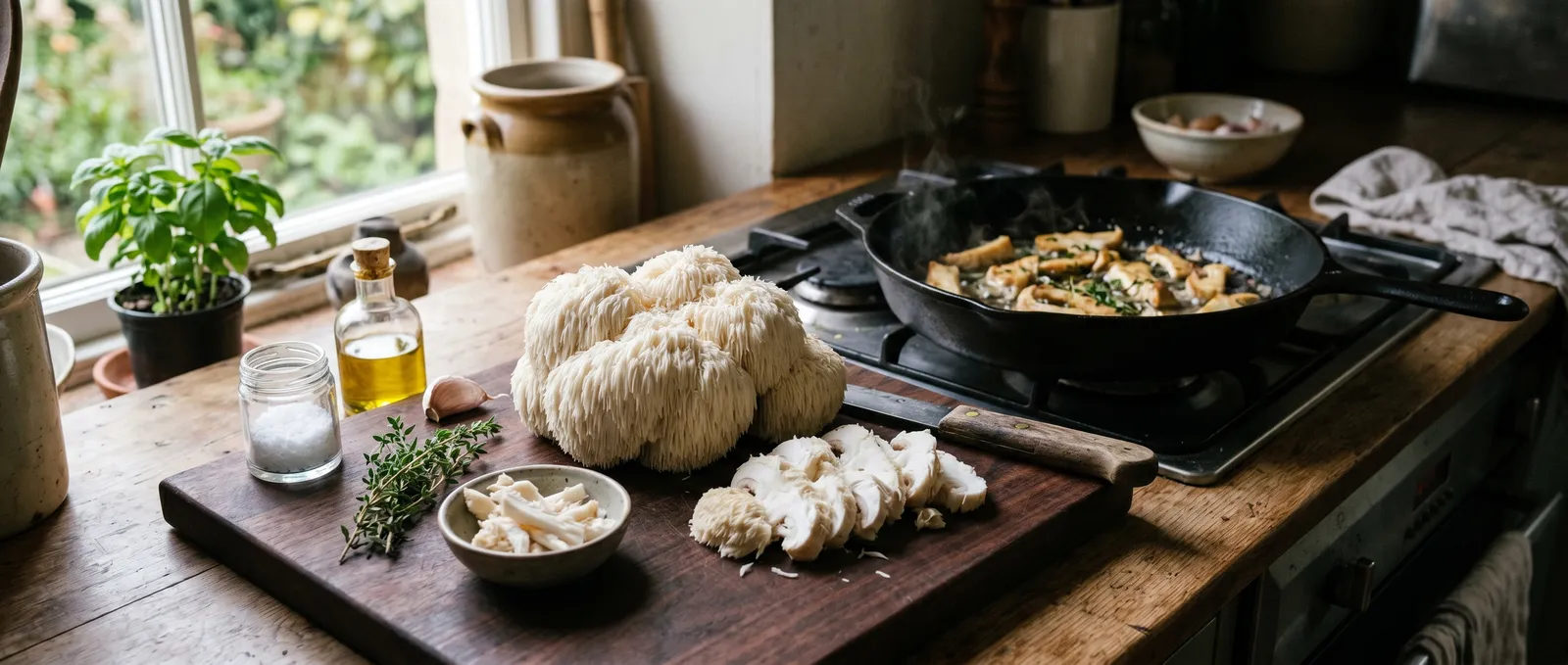
Lion's mane tastes mild and slightly sweet, with a texture often compared to crab or lobster meat when cooked properly. Fresh lion's mane looks like a white, shaggy pompom — clusters of soft, cascading spines rather than a cap-and-stem structure. Pick one up and you'll notice it's surprisingly light for its size, almost spongy. The texture when raw is fibrous and slightly rubbery. Cooked properly, it turns into something remarkably close to crab or lobster meat — stringy, slightly chewy, with a mild sweetness that's nothing like the earthy funk of a portobello.
The flavour is subtle. Don't expect it to carry a dish on its own the way a porcini would. Think of it more like a canvas: it absorbs butter, garlic, soy sauce, and stock brilliantly. That absorbency is also why you should never soak it in water — it'll turn into a soggy mess. If you want to explore cooking with lion's mane beyond the kitchen, the Azarius lion's mane growing kit lets you cultivate fresh specimens at home — but this guide focuses on what to do once you're holding one.
How Should You Prep Lion's Mane Before Cooking?
The most important prep rule for cooking with lion's mane is to skip the water entirely. Lion's mane is roughly 88% water already (USDA FoodData Central, 2019). Running it under a tap or submerging it just waterloggs the spines and makes it steam instead of sear.
Instead:
- Brush off debris with a dry pastry brush or clean cloth. Wild-foraged specimens may have bark fragments; cultivated ones are usually clean.
- Tear, don't cut. Use your hands to pull the mushroom into flat slabs roughly 1–1.5 cm thick. Tearing along the natural grain creates more surface area than a knife, which means better browning. The shredded edges crisp up beautifully.
- Squeeze gently. If your specimen feels particularly damp, press the slabs between clean tea towels for a minute. Removing surface moisture is the single biggest factor in getting a good sear.
What Is the Dry-Sear Method for Lion's Mane?
The dry-sear method is the single best all-round technique for cooking with lion's mane, producing golden, crispy edges and a tender, crab-like centre in about 8–10 minutes. Most people default to tossing mushrooms into oil or butter straight away — with lion's mane, you want to start dry.
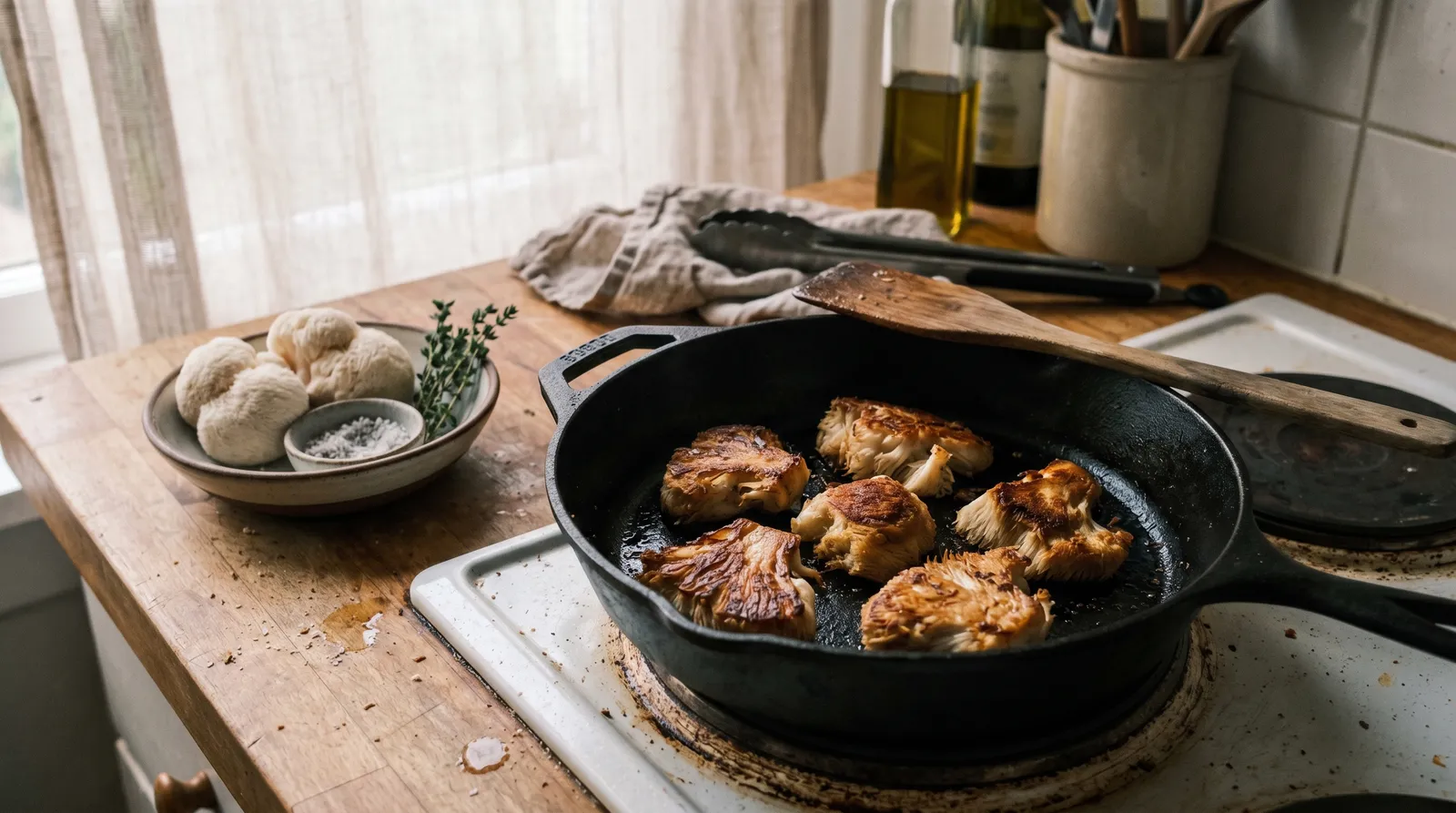
- Heat a heavy pan (cast iron is ideal) over medium-high heat. No oil, no butter, nothing.
- Lay the slabs flat in a single layer. Don't crowd the pan — work in batches if needed. Overcrowding traps steam and you'll end up with something limp and pale.
- Press down gently with a spatula. You'll hear moisture sizzle out. Leave them for 3–4 minutes without moving. You're driving off water and building a golden crust.
- Flip once. The underside should be golden-brown with crispy edges. Cook another 2–3 minutes on the second side.
- Now add fat. A generous knob of butter (or ghee, or olive oil — your call). The already-dry surface will absorb the fat and turn properly caramelised. Season with salt and a crack of black pepper. Garlic goes in here if you want it — 30 seconds, no more, or it burns.
Total cook time: about 8–10 minutes. The result should be golden, crispy at the edges, and tender in the centre. The texture genuinely mimics pulled crab meat — it's uncanny.
What Other Cooking Methods Work for Lion's Mane?
Oven-roasting, deep-frying, grilling, and simmering in broth all produce good results when cooking with lion's mane, though each method suits different dishes and textures.
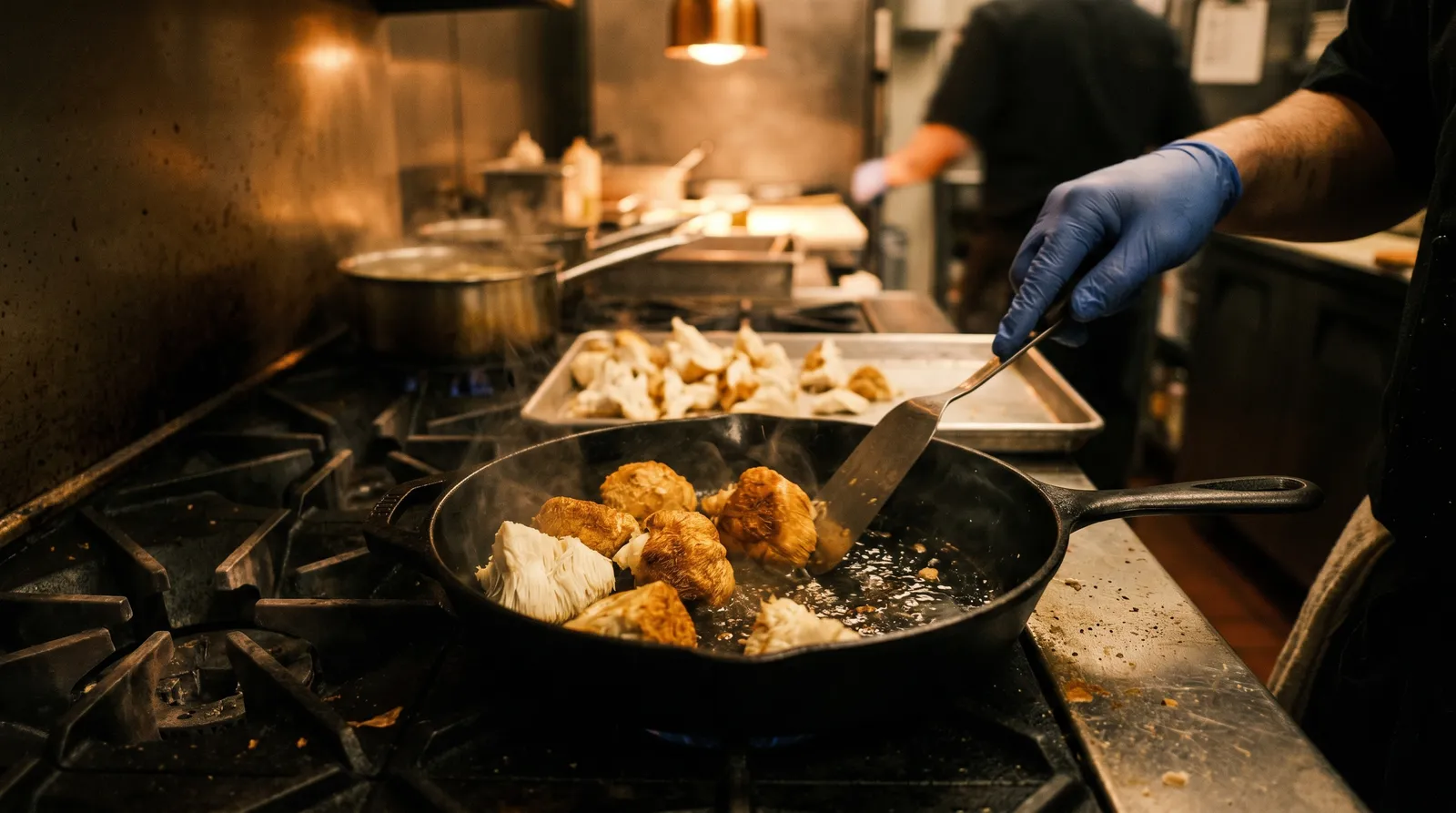
Oven-roasting: Tear into chunks, toss lightly in oil, spread on a baking tray, and roast at 200°C for 20–25 minutes. Flip once halfway. Good for larger batches. The edges get properly crispy while the centres stay meaty.
Deep-frying: Batter-dipped lion's mane is a popular substitute for crab cakes in plant-based cooking. A light tempura batter works well — the spines hold batter better than smooth-capped mushrooms. Fry at 180°C for 2–3 minutes until golden.
Soups and broths: Tear into small pieces and add during the last 10–15 minutes of simmering. Lion's mane holds up in liquid better than most mushrooms, though it won't develop the same caramelised flavour as a dry-seared version. In East Asian cooking, it's traditionally added to hot pot and clear broths.
Grilling: Slice into thick steaks (2 cm), brush lightly with oil, and grill over medium-high heat for 3–4 minutes per side. The spines char nicely and develop a smoky sweetness. A squeeze of lemon at the end lifts the whole thing.
Does Cooking Destroy Lion's Mane's Beneficial Compounds?
Cooking does not destroy all beneficial compounds in lion's mane — beta-glucans are heat-stable, and hot-water extraction may actually improve their accessibility (Sari et al., 2020). Lion's mane contains two families of compounds that researchers focus on: hericenones (found in the fruiting body) and erinacines (found primarily in the mycelium). A study by Mori et al. (2009) observed that oral supplementation with lion's mane powder (3g/day for 16 weeks) was associated with improved cognitive function scores in adults aged 50–80 — but that study used dried, powdered mushroom, not pan-fried steaks.
Does cooking destroy these compounds? The honest answer is that nobody has run a controlled trial comparing the bioactive content of a raw versus seared lion's mane steak. What we do know is that beta-glucans — the polysaccharides responsible for much of lion's mane's observed immunomodulatory activity — are relatively heat-stable. A 2020 analysis found that hot-water extraction actually improved beta-glucan accessibility compared to raw consumption (Sari et al., 2020). The EMCDDA and Beckley Foundation have not specifically addressed lion's mane, but their broader frameworks on functional fungi underscore the importance of distinguishing between culinary use and therapeutic claims. So making a broth or tea from lion's mane isn't nutritional nonsense — it may actually help release certain compounds.
Hericenones, however, are alcohol-soluble rather than water-soluble, which is why dual-extraction (water + ethanol) supplement methods exist. A quick sauté in butter won't replicate a laboratory ethanol extraction, obviously. If you're eating lion's mane primarily for the culinary experience, cook it however tastes best. If you're after specific bioactive compounds at research-relevant concentrations, a standardised extract supplement is a more reliable delivery method — the Azarius wiki article on lion's mane covers this comparison in more detail. Those looking to buy lion's mane extract in capsule or powder form can find standardised options in the Azarius mushroom supplements category.
Fresh vs. Dried Lion's Mane: Which Is Better for Cooking?
Fresh lion's mane is better for any dish where texture matters — searing, grilling, stir-frying — while dried lion's mane works best in soups, broths, and stews where concentrated umami is the goal.
| Factor | Fresh | Dried |
|---|---|---|
| Texture after cooking | Meaty, stringy, crab-like | Chewier, slightly leathery if not rehydrated well |
| Best cooking method | Dry-sear, roast, grill | Soups, broths, stews (rehydrate first) |
| Flavour intensity | Mild, sweet, delicate | Concentrated, more umami |
| Shelf life | 5–7 days refrigerated | 6–12 months in airtight container |
| Beta-glucan availability | Present; released during cooking | Concentrated per gram due to water loss |
| Availability | Seasonal; farmers' markets, specialty shops | Year-round; online, health food shops |
To rehydrate dried lion's mane, soak in warm water for 20–30 minutes, then squeeze out excess moisture before cooking. Save the soaking liquid — it makes a decent light stock.
How Should You Store Fresh Lion's Mane?
Fresh lion's mane keeps for 5–7 days in the fridge when stored in a paper bag — never plastic, which traps moisture and accelerates spoilage. If the spines start yellowing or the mushroom develops a sour smell, it's past its best. A slight browning at the tips is normal and doesn't affect flavour much — just trim those bits off.
You can also freeze cooked lion's mane. Sear it first using the dry method above, let it cool completely, then freeze in a single layer on a tray before transferring to a freezer bag. This prevents the pieces from clumping into one solid block. Frozen cooked lion's mane keeps for about 3 months and reheats well in a hot pan.
What Are the Most Common Mistakes When Cooking Lion's Mane?
The most common mistake when cooking with lion's mane is adding oil or butter too early, before the mushroom's natural moisture has cooked off. Here are the errors we see most often:
- Adding oil too early. The number one error. Start dry, add fat after the moisture has cooked off.
- Cutting with a knife. You lose the fibrous texture that makes lion's mane special. Tear it.
- Underseasoning. Lion's mane is mild. It needs salt. Don't be shy.
- Expecting supplement-level bioactive doses from dinner. A 150g serving of cooked lion's mane is a nutritious, tasty food — providing roughly 35 kcal, 2.5g protein, and meaningful amounts of potassium and zinc (USDA FoodData Central, 2019). But it's not equivalent to taking a standardised 500mg extract capsule. Enjoy it as food first.
How Does Lion's Mane Compare to Other Culinary Mushrooms?
Lion's mane is the only widely available culinary mushroom that genuinely mimics the texture of shellfish, making it a standout for seafood-free cooking. Here's how it stacks up against common alternatives:
| Mushroom | Texture | Flavour profile | Best use |
|---|---|---|---|
| Lion's mane | Stringy, crab-like | Mild, sweet | Searing, crab cake substitute, grilling |
| King oyster | Dense, scallop-like | Mild, slightly nutty | Searing, slicing into "scallops" |
| Shiitake | Chewy, meaty | Strong umami, earthy | Stir-fries, broths, drying |
| Portobello | Dense, spongy | Earthy, robust | Burgers, stuffing, roasting |
| Maitake | Frilly, crispy edges | Woodsy, peppery | Roasting, tempura |
If you enjoy cooking with lion's mane, king oyster mushrooms make a good companion — they sear similarly but offer a denser bite. Maitake is another excellent option for anyone building a mushroom-forward meal. The Azarius blog on functional mushrooms in the kitchen explores several of these species side by side.
Where Can You Buy Lion's Mane for Cooking?
Fresh lion's mane is available seasonally at farmers' markets and specialty grocers, typically from late summer through autumn in Europe. Dried lion's mane is available year-round from health food shops and online retailers. For those who want a steady supply, home cultivation is surprisingly straightforward — you can buy a lion's mane grow kit from Azarius that produces multiple flushes from a single block, giving you fresh mushrooms on demand for weeks. You can also buy dried lion's mane slices in the Azarius mushroom category, which are ideal for broths and rehydrating.
We can't tell you this is the cheapest hobby — fresh lion's mane runs €20–35/kg at most European markets. Growing your own brings the per-serving cost down considerably, and frankly the flavour of a just-harvested specimen is noticeably better than anything that's sat on a shop shelf for three days.
Quick Recipe: Lion's Mane "Crab" Cakes
Lion's mane "crab" cakes are the single most popular recipe for showcasing this mushroom's shellfish-like texture without any seafood. We include this recipe because it's the dish that converts sceptics — the shredded texture is so close to real crab meat that we've seen people do a double-take at the ingredients list.
- Dry-sear 300g of torn lion's mane using the method above. Let it cool, then shred finely with a fork.
- Mix with 2 tbsp mayonnaise (vegan or regular), 1 tsp Dijon mustard, 1 beaten egg (or flax egg), a squeeze of lemon, a pinch of Old Bay or smoked paprika, and 40g breadcrumbs. Season generously with salt and white pepper.
- Form into patties about 2 cm thick. Refrigerate for 20 minutes to firm up.
- Pan-fry in a thin layer of oil over medium heat, 3–4 minutes per side, until golden and crispy.
Serve with a lemon wedge and a simple remoulade. The result is remarkably close to a traditional crab cake — stringy, savoury, with crispy edges. It's the recipe we recommend to anyone who asks us what to do with their first harvest from an Azarius lion's mane growing kit.
Last updated: April 2026
Frequently Asked Questions
10 questionsDoes cooking lion's mane destroy its health benefits?
What does lion's mane mushroom taste like when cooked?
Should I wash lion's mane before cooking?
Can I use dried lion's mane for cooking?
Why should I tear lion's mane instead of cutting it?
Where can I buy lion's mane mushroom for cooking?
How long does it take to cook lion's mane mushroom?
Can you eat lion's mane mushroom raw?
Why does my lion's mane mushroom release so much water when cooking?
What oils or fats pair best with lion's mane when cooking?
About this article


Joshua Askew serves as Editorial Director for Azarius wiki content. He is Managing Director at Yuqo, a content agency specialising in cannabis, psychedelics and ethnobotanical editorial work across multiple languages. Th
This wiki article was drafted with AI assistance and reviewed by Joshua Askew, Managing Director at Yuqo. Editorial oversight by Adam Parsons.
Medical disclaimer. This content is for informational purposes only and does not constitute medical advice. Consult a qualified healthcare provider before use of any substance.
Last reviewed April 24, 2026
References (4)
- [1]Friedman, M. (2015). Chemistry, Nutrition, and Health-Promoting Properties of Hericium erinaceus (Lion's Mane) Mushroom Fruiting Bodies and Mycelia and Their Bioactive Compounds. Journal of Agricultural and Food Chemistry, 63(32), 7108–7123.
- [2]Mori, K. et al. (2009). Improving effects of the mushroom Yamabushitake (Hericium erinaceus) on mild cognitive impairment: a double-blind placebo-controlled clinical trial. Phytotherapy Research, 23(3), 367–372.
- [3]Sari, M. et al. (2020). Extraction and characterisation of beta-glucans from Hericium erinaceus: effect of processing on bioactive polysaccharide yield. International Journal of Biological Macromolecules, 163, 2236–2243.
- [4]USDA FoodData Central (2019). Mushrooms, lion's mane, raw. U.S. Department of Agriculture.
Related Articles
Medicinal Mushrooms TCM Western Pharmacognosy Guide
Guide to medicinal mushrooms TCM Western pharmacognosy — how reishi, lion's mane, cordyceps are classified, extracted, and studied.
Research on Immune Modulation by Functional Mushrooms
What does research on immune modulation by functional mushrooms actually show? Beta-glucans, Dectin-1 signalling, human trials, and the honest gap...
Allergic Reactions & Mushroom Sensitivities
Understand allergic reactions and mushroom sensitivities: mould cross-reactivity, shiitake dermatitis, species-specific risks, and safer product…
Turkey Tail Trametes versicolor — Buy Supplements
Buy turkey tail Trametes versicolor supplements at Azarius. PSK and PSP evidence, beta-glucan dosage, extraction methods, and safety.
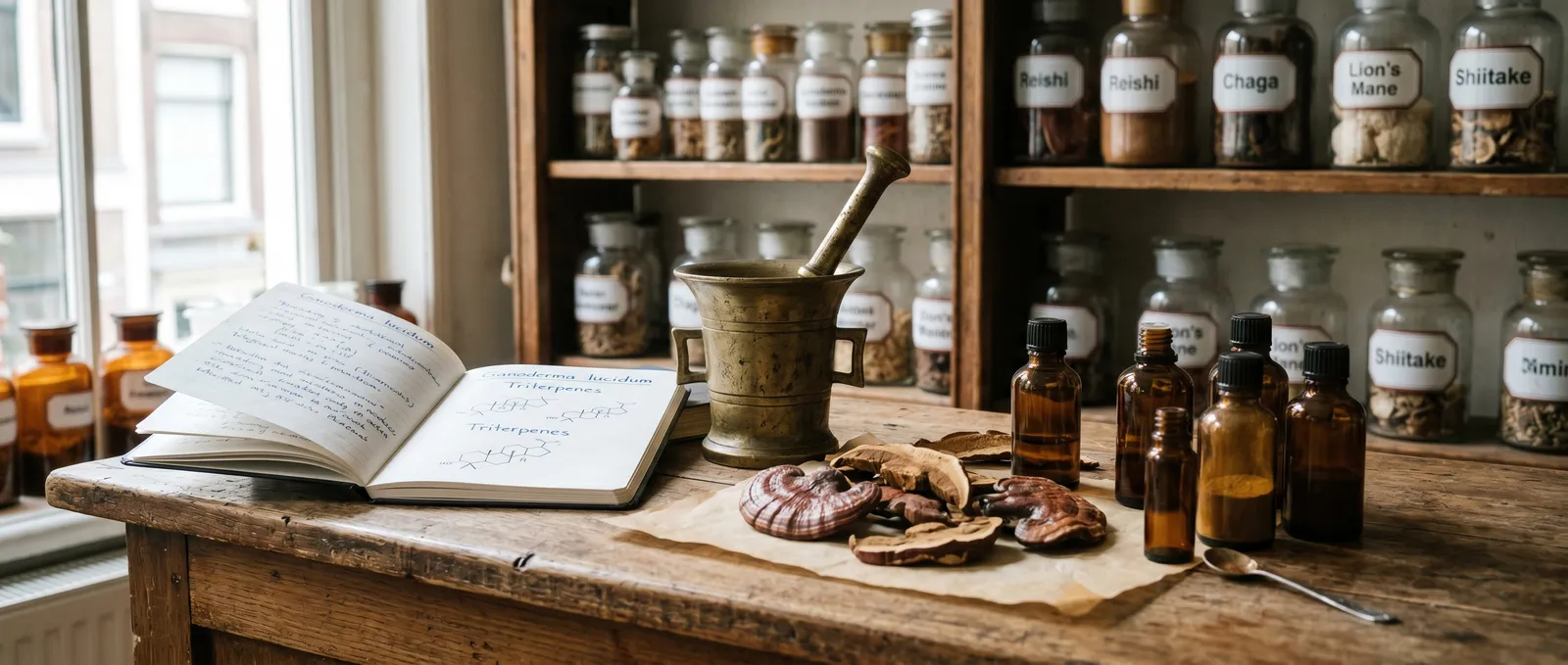
Triterpenes In Medicinal Mushrooms
Triterpenes in medicinal mushrooms are a class of 30-carbon terpenoid compounds produced as secondary metabolites by several functional mushroom species…
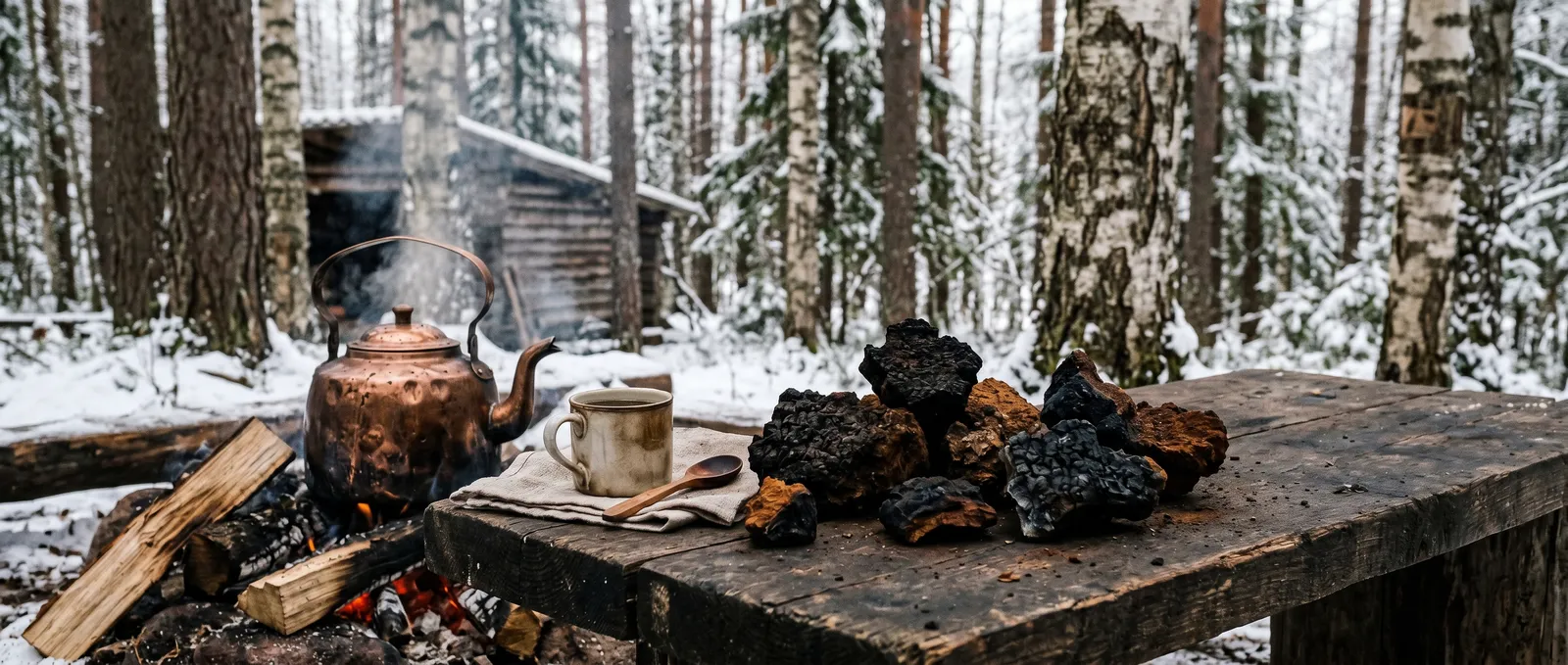
Chaga Siberian Nordic Folk Use
Chaga Siberian Nordic folk use is a centuries-old tradition in which indigenous Siberians and Nordic communities brewed the birch-parasitising fungus…
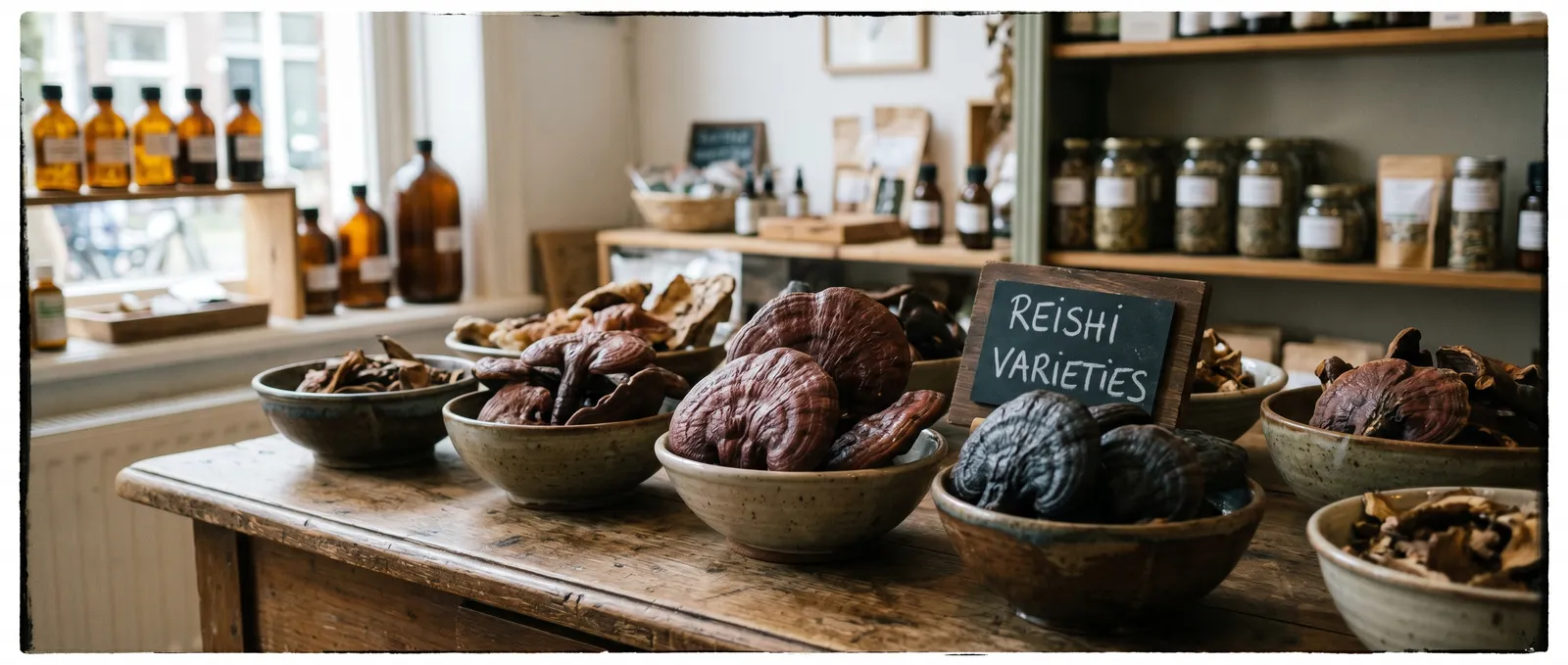
Red and Black Reishi Varieties
Red reishi (Ganoderma lucidum) and black reishi (Ganoderma sinense) both fall under the lingzhi umbrella in traditional Chinese medicine, but they differ in…
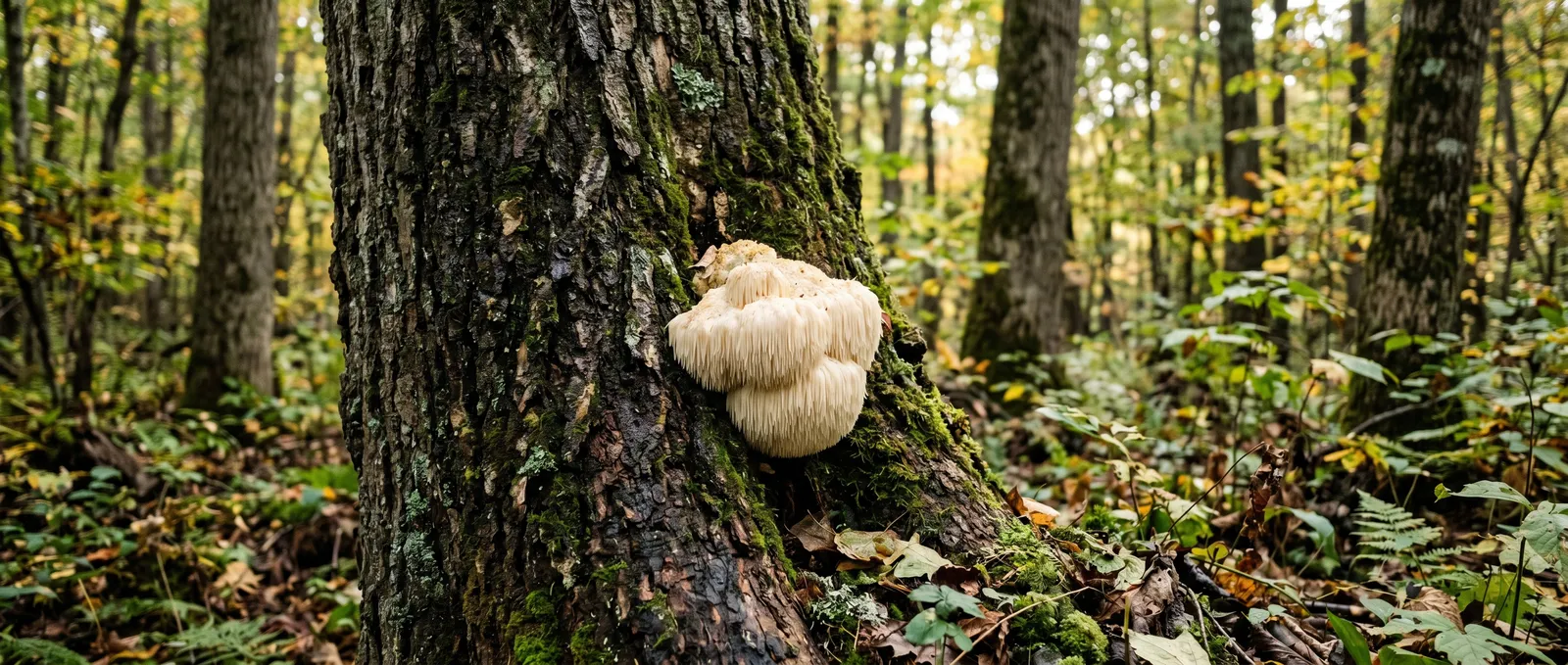
Lion's Mane Identification & Habitat
Hericium erinaceus is a tooth fungus that fruits as a single white, spine-covered mass on wounded or dead hardwood trees.
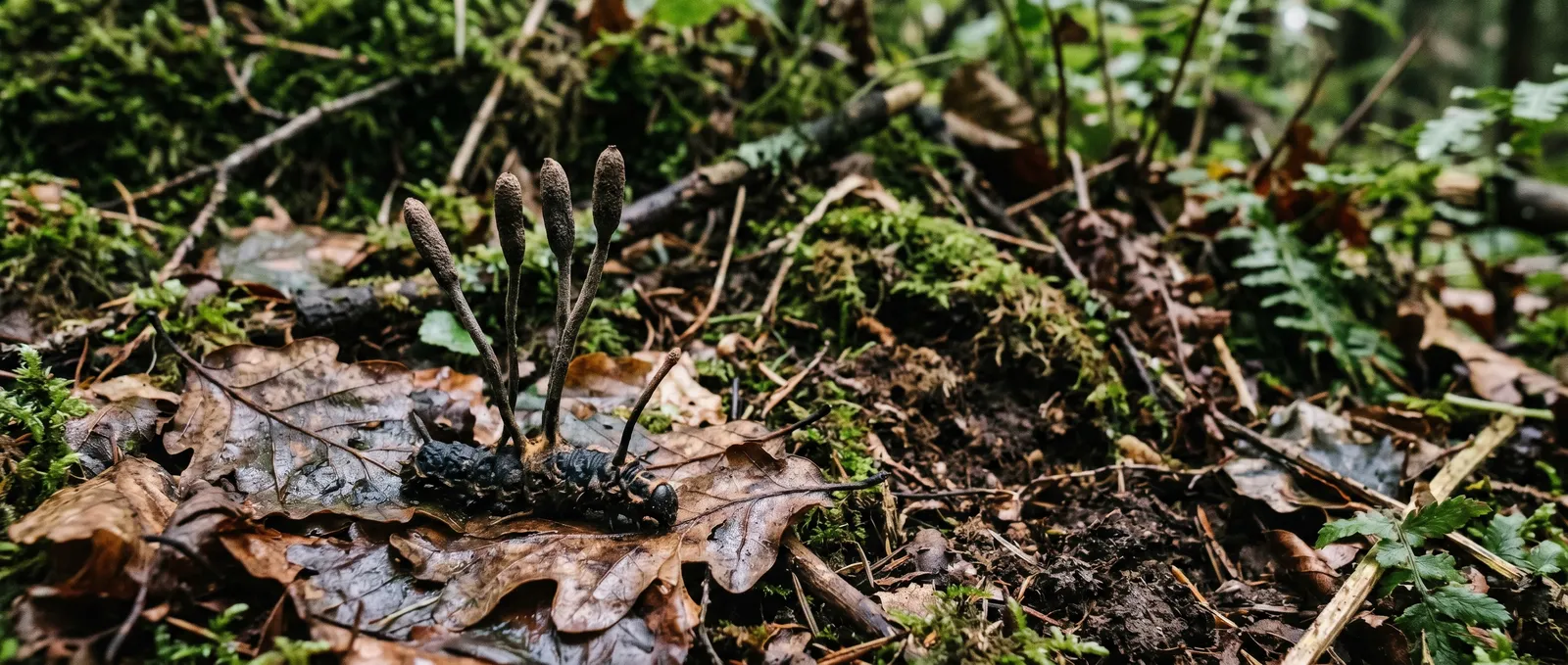
Cordyceps Lifecycle
The cordyceps lifecycle is a parasitic biological sequence in which a fungus infects an insect host, colonises its body from within, and erupts as a…