
This article discusses psychoactive substances intended for adults (18+). If you have a health condition or take medication, consult a doctor before use. Our age policy
Kanna Dosage Guide
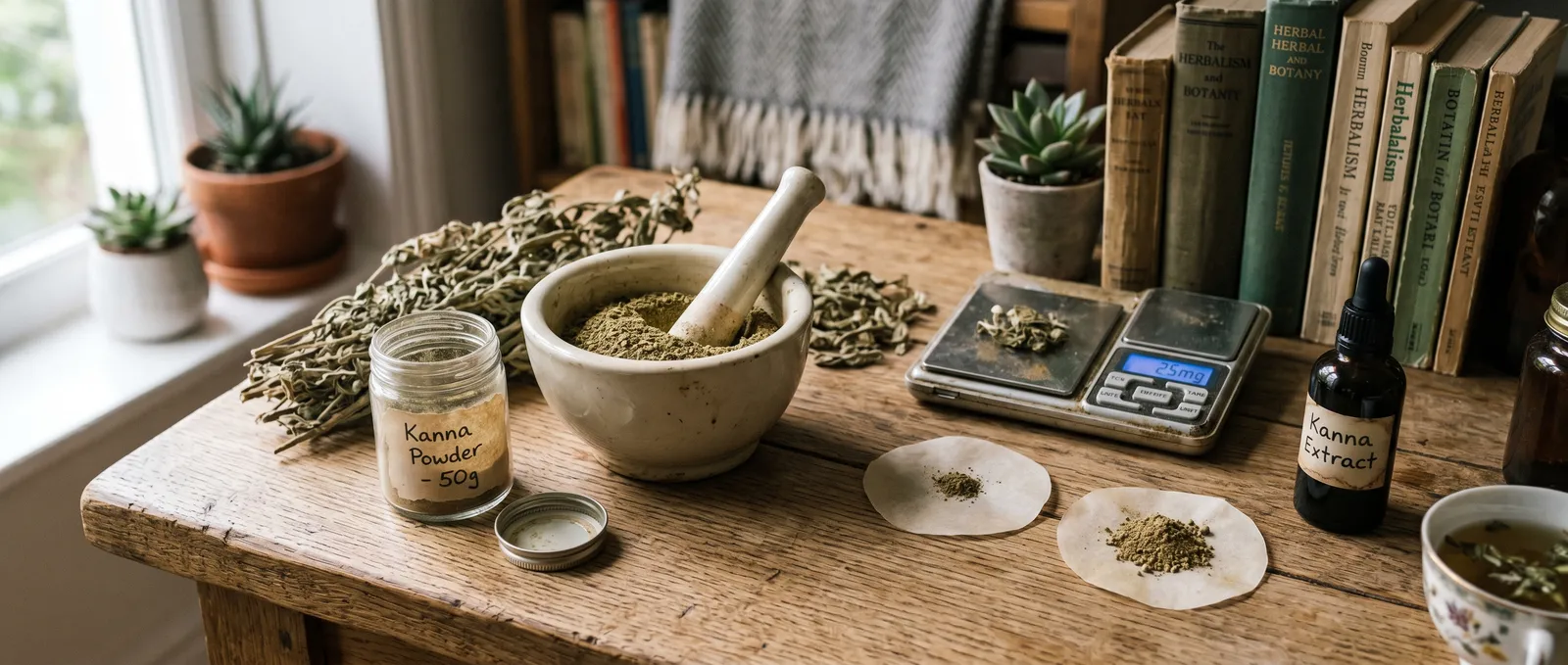
Definition
Dosing kanna correctly depends on whether you're working with dried plant material, fermented kougoed, or a concentrated extract — and on whether you swallow, hold it under your tongue, or insufflate it. Gericke and Viljoen (2008) documented significant alkaloid variation across Sceletium tortuosum specimens, which means batch-to-batch consistency cannot be assumed. This kanna dosage guide breaks down reported dose ranges by form and route, with the safety caveats you need before measuring anything out.
A kanna dosage guide is a structured reference resource that helps you match the right amount of Sceletium tortuosum to the specific form and route you are using — because the gap between "barely felt anything" and "uncomfortably stimulated" can be surprisingly narrow, and because the form you choose (raw plant material, fermented kougoed, or a concentrated extract) changes the numbers dramatically. Getting the amount right with kanna matters more than with most botanicals. This kanna dosage guide lays out the reported ranges by form and route of administration, explains why those ranges differ, and flags the safety considerations you need to know before you buy kanna or measure anything out.
Adult audience (18+). The dosing ranges and effects described in this article apply to adult physiology. This content is not intended for minors.
| Form | Route | Low range | Moderate range | Strong range | Notes |
|---|---|---|---|---|---|
| Dried plant material (unfermented) | Oral (chewed / tea) | 200–500 mg | 500 mg – 1 g | 1–2 g | Alkaloid content varies widely between batches; onset 45–90 min orally |
| Fermented plant material (kougoed) | Oral (chewed / sublingual) | 100–200 mg | 200–500 mg | 500 mg – 1 g | Fermentation alters alkaloid ratios; traditionally chewed and held in the mouth |
| Extract (10:1 – 20:1) | Oral | 20–50 mg | 50–100 mg | 100–150 mg | Concentrated mesembrine; treat with more caution than plant material |
| Extract (10:1 – 20:1) | Sublingual | 10–25 mg | 25–50 mg | 50–100 mg | Faster onset (15–30 min); bypasses first-pass metabolism |
| Extract (10:1 – 20:1) | Insufflated | 10–20 mg | 20–50 mg | 50–80 mg | Rapid onset (minutes); irritating to nasal mucosa; hardest to control |
Read the sections below before using this kanna dosage guide table. These figures are compiled from user reports, ethnobotanical literature, and the limited clinical data available — they are not prescriptions. Inter-individual variation is substantial, alkaloid content in non-standardised material is inconsistent, and published human pharmacokinetic data for kanna remain thin.
Why form matters more than you think
The form of kanna you use determines the effective reported range more than any other single variable. The single biggest source of errors with kanna is treating plant material and extracts as interchangeable. They are not. A 10:1 extract concentrates the Sceletium alkaloids — primarily mesembrine, mesembrenone, and mesembrenol — by roughly an order of magnitude relative to the raw plant. That means 50 mg of a 10:1 extract contains approximately the same alkaloid load as 500 mg of dried plant material. Confuse the two and you may end up with a very different experience than you expected.
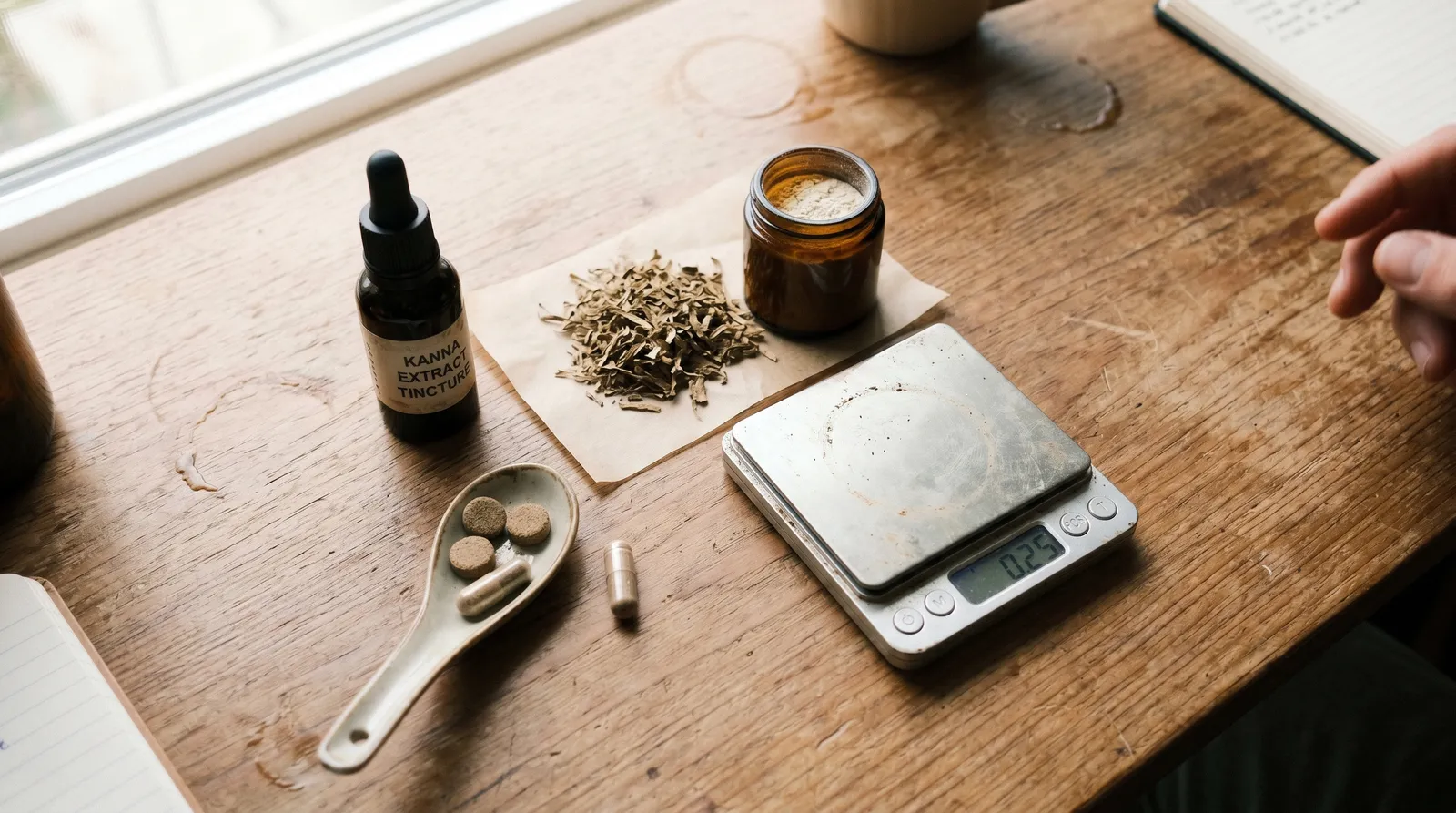
Fermented plant material (traditional kougoed) sits somewhere between raw herb and extract in terms of perceived potency. The fermentation process — traditionally involving bruising and burying the aerial parts for several days — modifies the alkaloid profile, notably reducing oxalate content and shifting the mesembrine-to-mesembrenone ratio. According to Smith et al. (2011), fermented Sceletium tortuosum showed a different alkaloid fingerprint compared to unfermented material, with higher relative proportions of Δ7-mesembrenone. The practical upshot: fermented kougoed is not simply "dried kanna that sat around longer." It is a different preparation with a different chemical character.
If you're working with an extract, check the concentration ratio on the packaging. A "20:1" extract is roughly twice as concentrated as a "10:1." Some extracts are standardised to a specific mesembrine percentage (commonly 3–5%), which gives a more reliable basis for comparison than a ratio alone — though even standardised extracts can vary between manufacturers. When you order kanna extract from any supplier, always confirm the concentration before consulting this kanna dosage guide.
Route of administration and onset
Route of administration determines both how quickly kanna takes effect and how strong a given milligram amount feels. This is because different routes have different bioavailability — the proportion of the alkaloids that actually reaches your bloodstream.
Oral (swallowed): The most forgiving route. Onset is typically reported at 45–90 minutes, sometimes longer on a full stomach. First-pass metabolism in the liver reduces bioavailability, which means a higher amount is needed for the same subjective effect compared to sublingual or insufflated routes. This is where most people start, according to user community reports.
Sublingual (held under the tongue): Faster onset — usually reported at 15–30 minutes — because the alkaloids absorb through the oral mucosa directly into the bloodstream, partially bypassing the liver. Reported effective amounts are lower than oral. The taste is distinctly bitter and somewhat astringent. Fermented kougoed was traditionally used this way: chewed and held in the cheek or under the tongue, not swallowed immediately.
Insufflated (snorted): The fastest onset (within minutes) and the hardest to control. Kanna extracts are irritating to the nasal mucosa, and the rapid absorption means the margin between a comfortable experience and an unpleasant one narrows considerably. Published pharmacokinetic data for insufflated kanna are essentially non-existent, so the ranges in the kanna dosage guide table above come almost entirely from user reports — treat them with appropriate caution.
Vaporised: Some users report vaporising kanna extracts. Onset is very rapid, but temperature control matters and there is no published data on the thermal stability of Sceletium alkaloids or the safety of inhaling their pyrolysis products. This route is excluded from the table for that reason.
The "start low" principle and why it applies here
Starting at the lowest amount in the range for your chosen form and route is the single most commonly repeated recommendation in kanna user communities. With most botanicals, the standard advice to begin conservatively is sensible but not always critical. With kanna, it carries extra weight for three reasons:
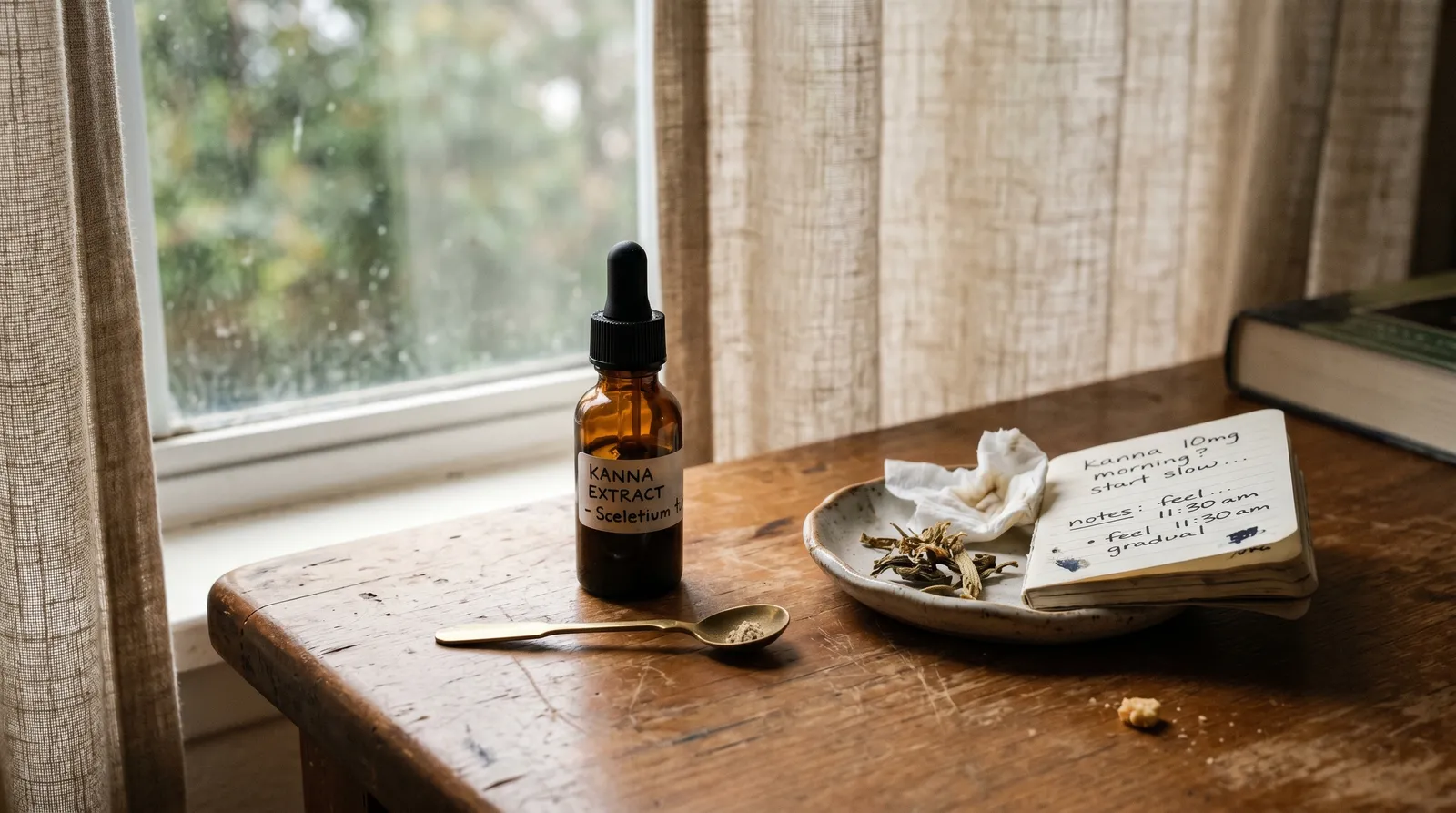
1. Alkaloid content is inconsistent in non-standardised material. Two batches of dried Sceletium tortuosum from different sources — or even the same source at different harvest times — can contain meaningfully different concentrations of mesembrine. Gericke and Viljoen (2008) documented significant variation in alkaloid profiles across wild-harvested and cultivated specimens. You cannot assume that the amount that produced a given effect last time will produce the same effect with a new batch.
2. Serotonergic activity demands respect. In-vitro data and the mechanism proposed for kanna's effects involve serotonin reuptake inhibition (Harvey et al., 2011). The relative contribution of SRI versus PDE4 inhibition in humans is not settled, but the serotonergic component is well-supported enough that conservative approaches are warranted — particularly for anyone who has not used kanna before and does not know their individual sensitivity.
3. Some users report a "priming" effect. Anecdotally, the first few uses of kanna produce less noticeable effects than subsequent uses, with the subjective experience building over the first three to five sessions. This is not established in controlled studies, but it is reported consistently enough in user communities that it is worth mentioning: if your first experience at a low amount seems underwhelming, the commonly recommended response is to try the same amount again the next day, not to jump higher immediately.
Serotonergic safety considerations
Kanna has demonstrated serotonin reuptake inhibition activity in vitro, which means combining it with other serotonergic substances carries a risk of serotonin syndrome. This section is not optional reading. Reported guidance from both ethnobotanical researchers and user communities consistently advises against combining kanna with SSRIs (e.g. fluoxetine, sertraline, citalopram), SNRIs (e.g. venlafaxine, duloxetine), MAOIs, tricyclic antidepressants, or other serotonergic substances including 5-HTP, St John's Wort, MDMA, or classical psychedelics such as psilocybin or LSD. The combination risks serotonin syndrome — a condition characterised by agitation, hyperthermia, rapid heart rate, muscle rigidity, and in severe cases, seizures. The EMCDDA notes that serotonin syndrome risk increases when multiple serotonergic agents are combined, even at individually moderate amounts.
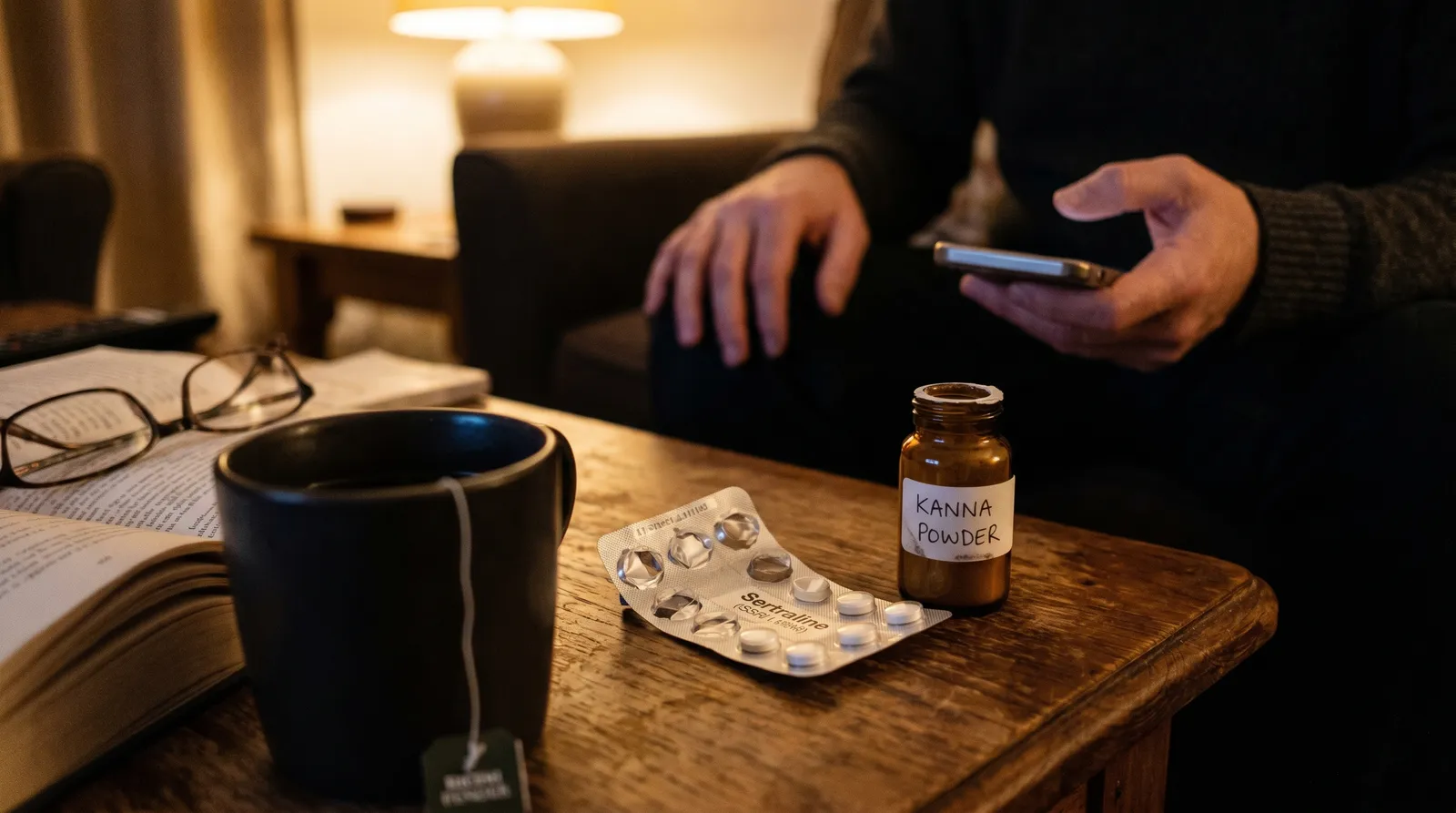
If you are currently taking any antidepressant medication, the widely reported guidance is to avoid kanna entirely. This applies even if you have recently stopped taking an SSRI: pharmacologically active metabolites can persist for weeks, particularly with fluoxetine (which has a half-life of 4–6 days, with its active metabolite norfluoxetine persisting even longer). For a detailed breakdown of specific interactions, see the dedicated Azarius wiki article Kanna Drug Interactions and Contraindications.
The serotonergic interaction concern applies with greater weight to extracts than to plant material, because extracts contain higher concentrations of the alkaloids responsible for serotonin reuptake inhibition.
What clinical research actually tells us about amounts
Clinical trials have only tested one specific proprietary standardised extract, so their figures cannot be applied directly to other kanna products. This distinction is critical: you cannot take the amount used in a clinical trial on that specific preparation and apply it to a different extract or to raw plant material.
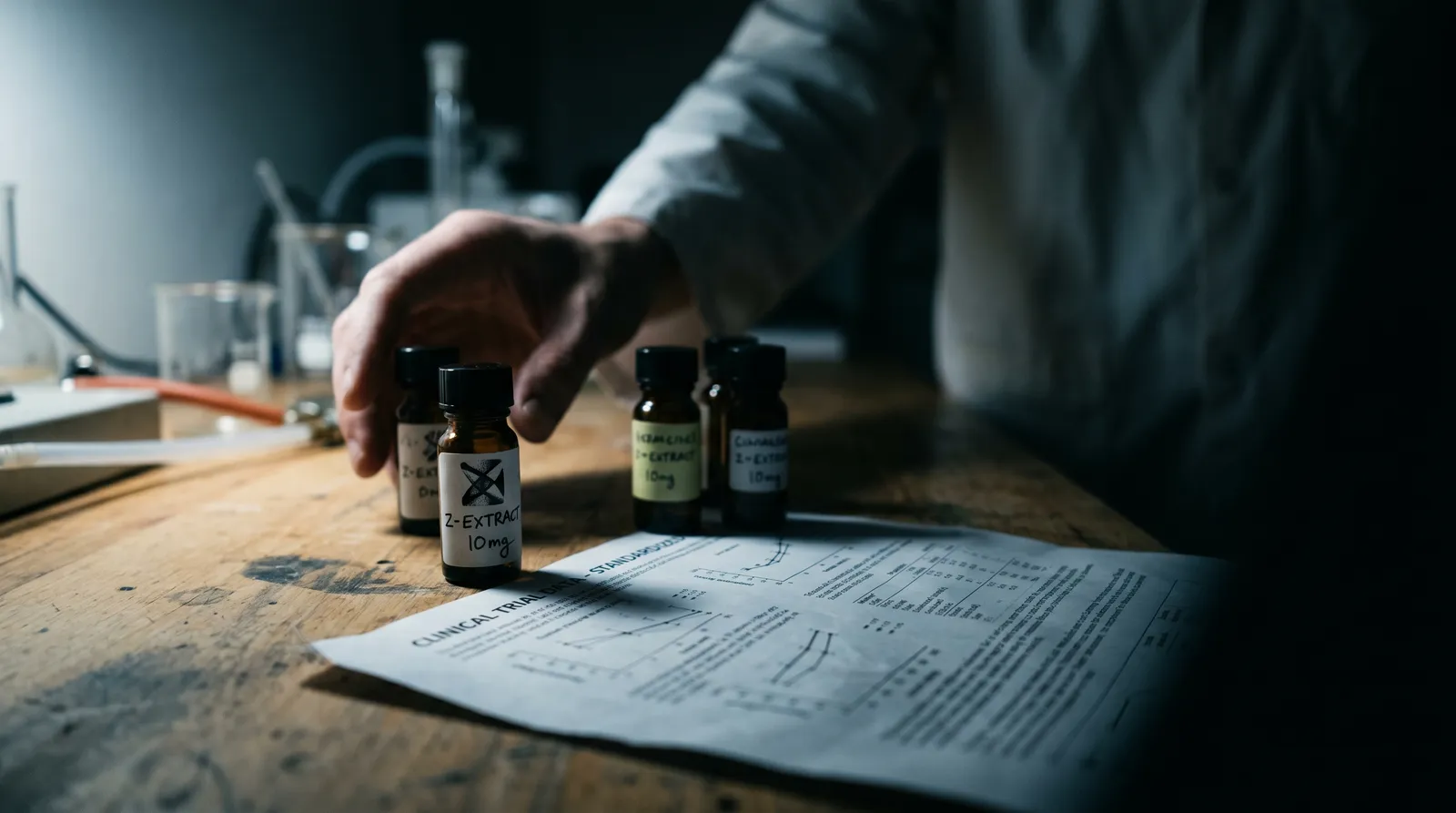
Terburg et al. (2013) administered 25 mg of this specific standardised extract to healthy volunteers in a double-blind, placebo-controlled study and observed effects on amygdala reactivity to threat-related stimuli. That 25 mg figure applies to that preparation only — a 25 mg amount of a 20:1 extract from a different manufacturer is a pharmacologically different proposition, because the alkaloid profile and total mesembrine content may differ substantially.
A separate randomised controlled trial by Chiu et al. (2014) used the same standardised extract at 25 mg daily over six weeks and reported improvements in cognitive flexibility and executive function. Again, these findings pertain to that specific preparation and cannot be generalised to kanna products broadly.
What the clinical data do confirm is that kanna alkaloids are pharmacologically active at low milligram amounts in extract form — which reinforces the point that extract weighing requires precision and a good scale. The Beckley Foundation has also supported research into Sceletium alkaloids, further underscoring the pharmacological significance of even small amounts.
Kanna compared to other botanicals by weight
Kanna extract amounts are much lower by weight than most herbal preparations, which catches newcomers off guard. Where you might buy kratom and measure in full grams, or get valerian root capsules at 300–600 mg, kanna extract operates in the 20–100 mg range — closer to the weight scale of something like pure caffeine powder than a traditional herbal tea. This is why a milligram scale is non-negotiable for extracts, while it would be overkill for most other botanicals in the Azarius range.
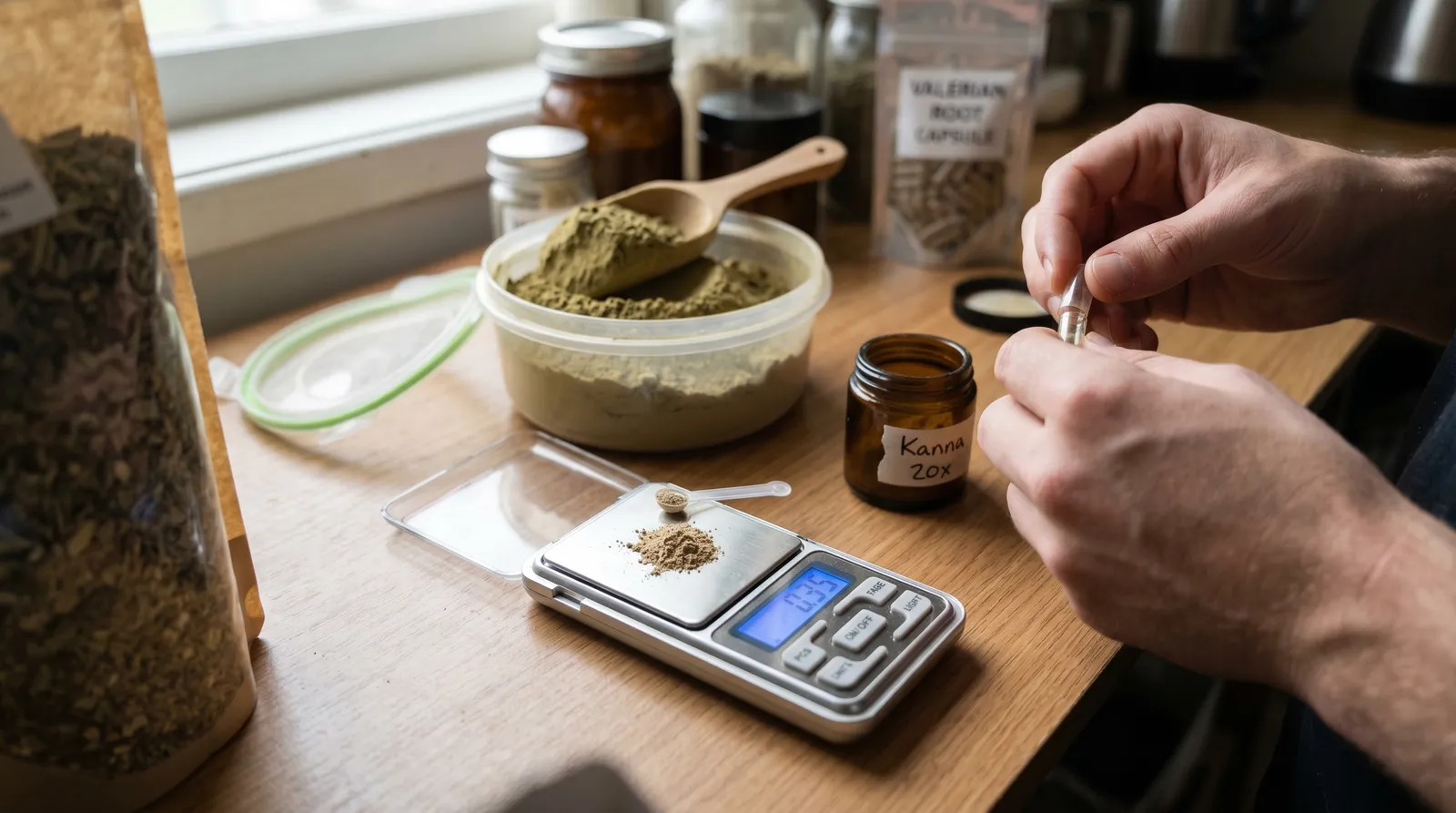
The following list puts kanna dosage guide ranges in context alongside other popular botanicals:
- Kanna extract (oral): 20–150 mg reported range — requires a milligram-precision scale
- Kratom powder (oral): 1–8 g reported range — a standard kitchen scale works fine
- Valerian root extract: 300–600 mg — typically pre-measured in capsules
- Blue lotus (dried flowers, tea): 3–10 g — measured by volume or kitchen scale
- Kava root powder (traditional prep): 2–4 tablespoons — volumetric measurement is standard
- Pure caffeine powder: 50–200 mg — also requires milligram precision, similar to kanna extract
As the list shows, kanna extract sits at the low end of the weight scale alongside pure caffeine powder. If you are used to scooping herbs by the tablespoon, the shift to milligram weighing can feel unfamiliar — but it is essential for safety.
Practical weighing and preparation steps
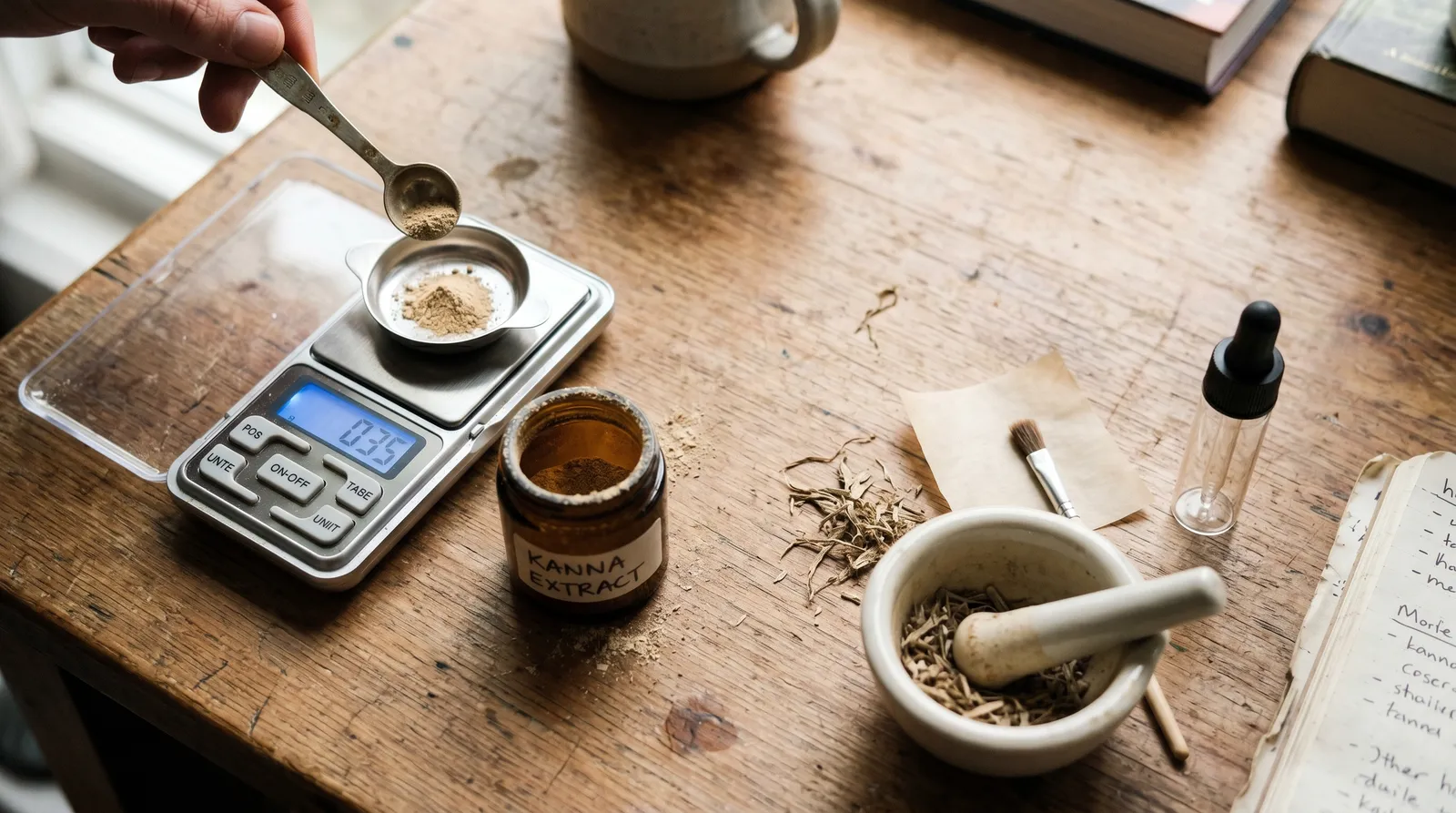
Following a structured sequence is the safest way to approach kanna preparation, whether you are working with plant material or extract. These six steps reflect the process most commonly recommended in experienced user communities:
- Step 1 — Identify your form. Is it dried plant material, fermented kougoed, or an extract? If it's an extract, what's the concentration ratio or standardised mesembrine percentage? If you don't know, don't guess — contact the supplier.
- Step 2 — Choose your route. Oral is the most forgiving and the best starting point according to user reports. Sublingual is faster but reported effective amounts are lower. Insufflation is the least predictable and not recommended for first-time users.
- Step 3 — Weigh accurately. For extracts, you need a milligram-precision scale (0.001 g). Eyeballing or using a "small scoop" is not adequate when the difference between 20 mg and 80 mg is the difference between subtle and overwhelming. For plant material, a scale accurate to 0.1 g is sufficient. You can get a suitable milligram scale from the Azarius accessories range, such as the On Balance CT-250 or similar models.
- Step 4 — Start at the low end of the reported range for your form and route. Refer to the kanna dosage guide table at the top of this article. Weigh out the low-range amount, note the time, and wait. For oral consumption, experienced users generally recommend waiting a full 90 minutes before concluding that the effects are minimal.
- Step 5 — Keep a simple log. Record the form, the amount weighed, the route, the time, and what you noticed. Kanna's effects can be subtle — especially at lower amounts and especially during the first few sessions — and a written record is more reliable than memory for finding your preferred range over time.
- Step 6 — Adjust gradually. If the low-range amount produced no noticeable effect after two or three sessions, move to the low end of the moderate range. Increase in small increments. There is no rush, and the consequences of overshooting are unpleasant (nausea, headache, overstimulation) even if not typically dangerous in isolation.
Common mistakes when weighing and preparing kanna
The most frequent kanna preparation mistake is confusing extract amounts with plant-material amounts — a mix-up that can result in weighing out ten times the intended quantity. Here are the errors reported most often in user communities:
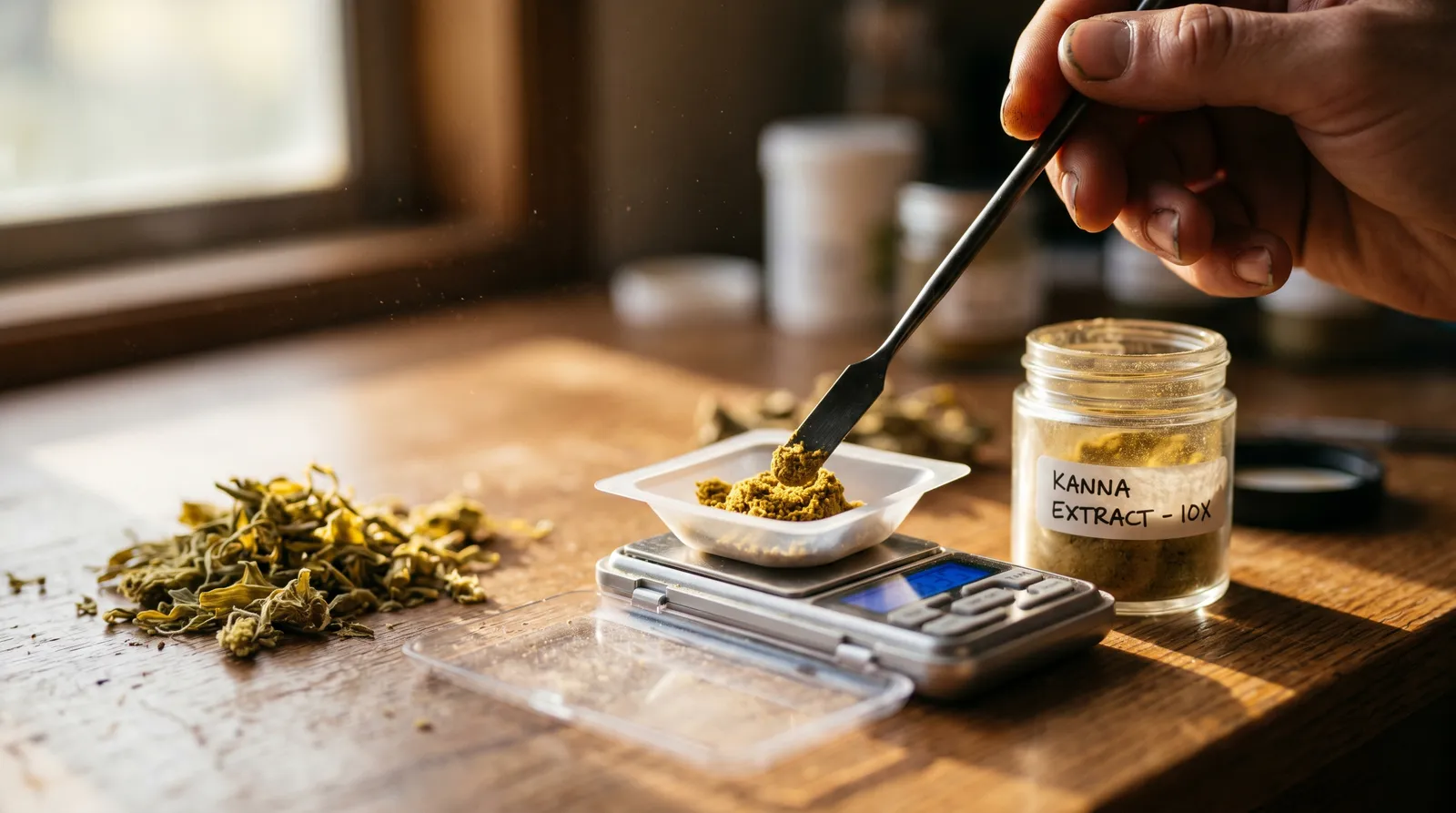
- Confusing extract and plant-material amounts. Already covered above, but it bears repeating: 1 g of dried plant material falls in the moderate-to-strong oral range. 1 g of a 10:1 extract is a very large amount — roughly equivalent to 10 g of plant material in alkaloid content. These are not interchangeable numbers.
- Redosing too soon. Oral kanna can take over an hour to reach full effect. Taking a second amount at the 30-minute mark because "nothing's happening" is how people end up with twice what they intended.
- Ignoring the priming period. Some users report that their first session with kanna is underwhelming, with effects becoming more apparent after a few uses. Whether this reflects a genuine pharmacological priming effect or simply learning to recognise subtle effects is unclear — but either way, jumping to a high amount on day one because day one felt mild is not the recommended response according to experienced users.
- Using volumetric scoops instead of a scale. Extract powders vary in density. A "level scoop" of one product might weigh 30 mg; the same scoop of another might weigh 60 mg. Weigh everything.
- Combining with other serotonergic substances. This is not a weighing mistake — it is a safety mistake. But it appears in preparation contexts because people sometimes reason that "a low amount of kanna plus a low amount of X should be fine." With serotonergic combinations, the risk is not simply additive. The widely reported guidance is to avoid combining entirely.
What the evidence does not cover
Published human pharmacokinetic data for kanna are limited, and no kanna dosage guide — including this one — can fully compensate for that gap. Onset times, peak plasma concentrations, and duration figures cited in user communities are drawn primarily from self-reports, not from controlled pharmacokinetic studies — and they vary widely between individuals. The ranges in this article reflect the best available information from ethnobotanical literature, clinical trials on a specific standardised extract, and aggregated user reports, but they are not validated across all the forms and preparations available on the market. Long-term safety data for daily kanna use are also lacking: the longest published trial ran six weeks.
Information disclaimer
The information in this kanna dosage guide is provided for educational and harm-reduction purposes only. It does not constitute medical advice, and it is not intended to diagnose, treat, cure, or prevent any disease or condition. The reported ranges presented here are drawn from ethnobotanical literature, limited clinical research on a specific standardised extract, and aggregated user reports — they have not been validated for all commercially available kanna products. Individual responses vary significantly based on body weight, metabolism, sensitivity, and other factors. Always consult a qualified healthcare professional before using kanna, especially if you are taking any medication, have a pre-existing health condition, or are pregnant or breastfeeding. Azarius does not accept responsibility for any adverse effects resulting from the use or misuse of information presented on this page. By using this information, you acknowledge that you do so entirely at your own risk.

Related products and further reading
If you're looking to buy kanna and try it yourself, the plant material and extracts in the Azarius Sceletium tortuosum category are a good starting point — just make sure you've read the kanna dosage guide and safety information above first. The Kanna ET2 extract and Kanna Extreme extract are among the most popular concentrated options, while the Kanna fermented shredded product offers a traditional kougoed preparation. You can also order kanna in capsule form if you prefer pre-measured amounts. We carry milligram-precision scales in the Azarius accessories category — the On Balance CT-250 is a reliable budget option — which are essential if you get any kanna extract. For broader context on how kanna compares to other mood-supporting herbs, see the Azarius wiki article on Natural Mood Enhancers. The Azarius blog also features articles on responsible use of herbal products, including a piece comparing kanna to other entheogens.
Last updated: April 2026
Frequently Asked Questions
10 questionsWhy do some people feel nothing the first time they try kanna?
Can I use a kitchen scale to measure kanna extract doses?
Is sublingual kanna stronger than swallowing it?
How long should I wait before deciding a kanna dose isn't working?
Are the doses used in kanna clinical trials applicable to smartshop products?
Can I combine kanna with SSRIs or other antidepressants?
What is the difference between a 10:1 and a 20:1 kanna extract in terms of dosing?
How should I adjust my kanna dose if I build tolerance?
Does kanna dosage change when taken on an empty stomach versus with food?
Is it safe to redose kanna within the same session?
About this article


Adam Parsons is an external cannabis and psychedelics writer and editor who contributes to Azarius's wiki as both author and reviewer. On the writing side, he authors Azarius's kratom and kanna clusters, drawing on exten
This wiki article was drafted with AI assistance and reviewed by Adam Parsons, External contributor. Editorial oversight by Joshua Askew.
Medical disclaimer. This content is for informational purposes only and does not constitute medical advice. Consult a qualified healthcare provider before use of any substance.
Last reviewed April 24, 2026
References (1)
- [1]Harvey, A.L. et al. (2011). Pharmacological actions of the South African medicinal and functional food plant Sceletium tortuosum and its principal alkaloids. Journal of Ethnopharmacology , 137(3), pp.1124–1129.
Related Articles
Blue Lotus vs Kanna: Effects & Safety
Blue lotus vs kanna compared — Nymphaea caerulea's aporphine profile against Sceletium tortuosum's mesembrine chemistry, with interaction warnings.
Lotus Clinical Research Overview
What does lotus clinical research actually show? A critical review of Nymphaea caerulea and Nelumbo nucifera pharmacology, preclinical data, and…
Kanna South Africa To West History
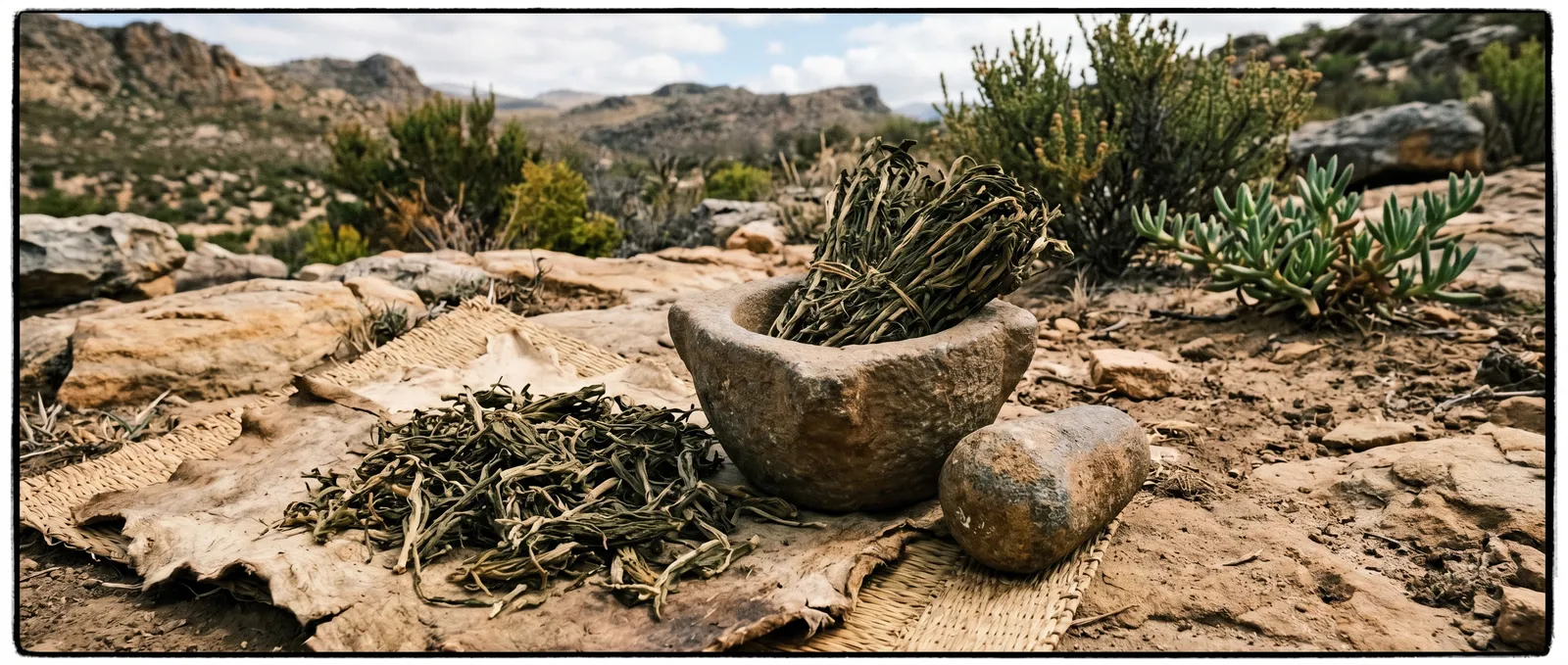
Sceletium tortuosum was used by San and Khoekhoe communities in southern Africa for centuries before European colonists first documented it in the 1660s.
Sceletium Tortuosum Plant
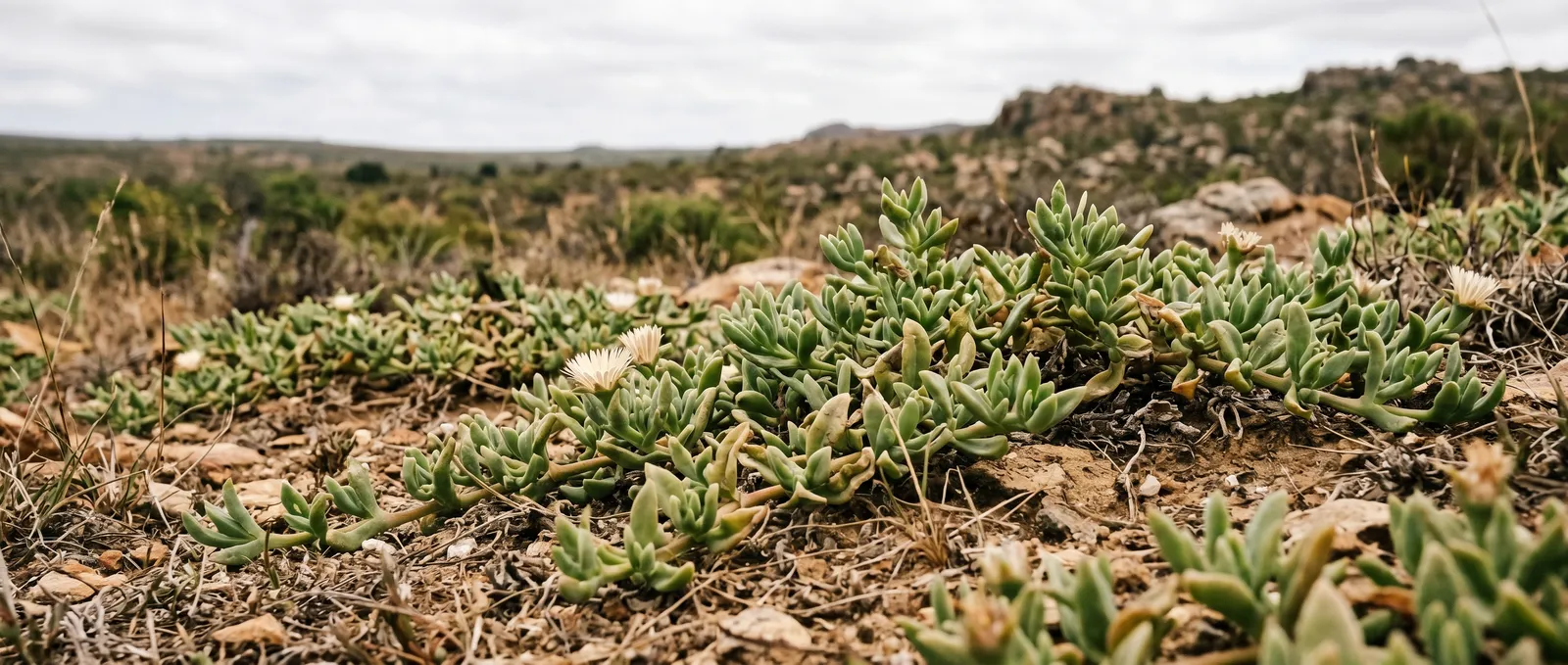
Learn about the sceletium tortuosum plant: botany, alkaloids, fermentation, safety warnings, and where to buy kanna.
Kanna Pharmacokinetics Explained
Complete guide to kanna pharmacokinetics: how Sceletium tortuosum alkaloids are absorbed, metabolised via CYP2D6, and eliminated.
Kanna Chemistry: Sceletium Alkaloids Explained
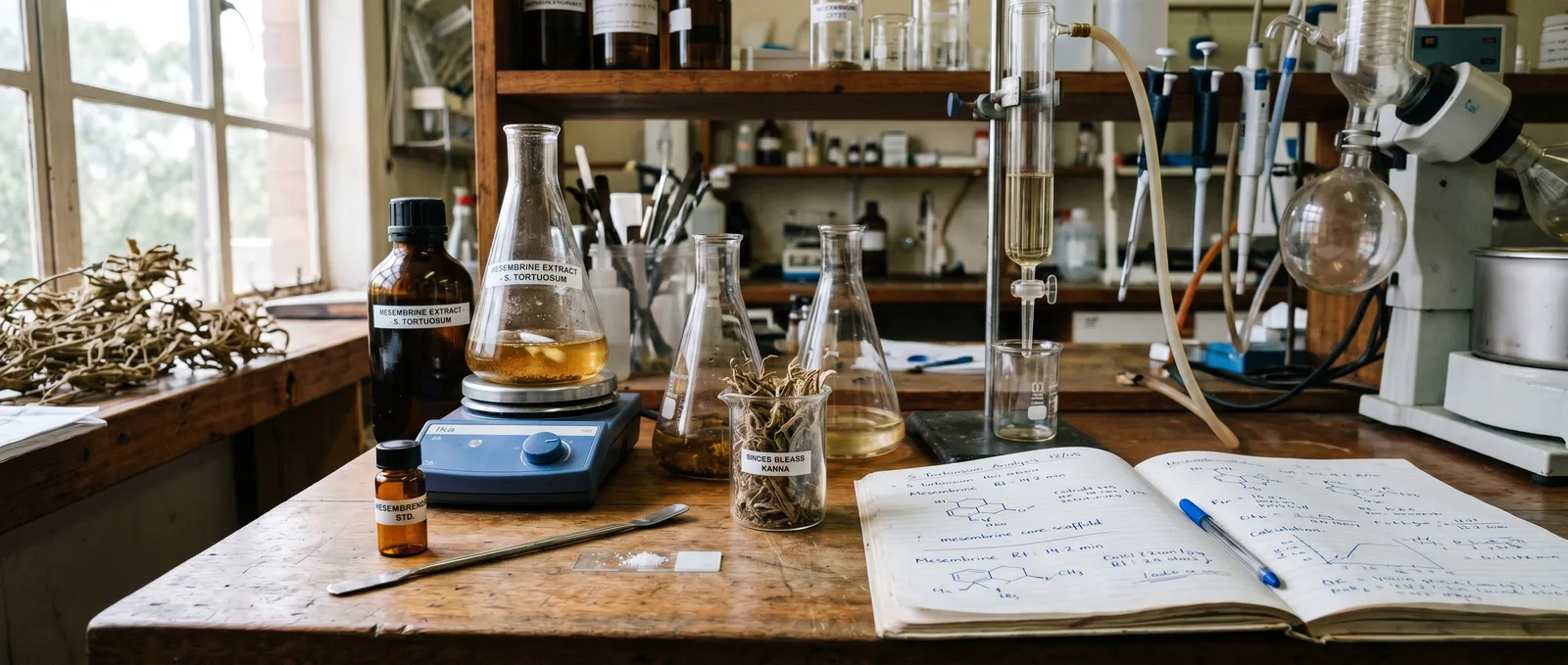
Kanna chemistry explained: mesembrine, mesembrenone, their mechanisms, how fermentation and extraction change alkaloid profiles, and why it matters…

Rapé Shamanic Snuff Guide: How to Use It Safely
A practical rapé shamanic snuff guide covering dose, kuripe technique, effects, nicotine safety, interactions and Amazonian tradition.
White Sage Salvia Apiana Cultural Smudging Guide
Salvia apiana is a non-psychoactive shrub native to southern California's coastal sage scrub, burned as ceremonial incense in Indigenous North American…
Mulungu Erythrina Traditional Amazonian Use — Bark, Alkaloids & Research
Erythrina mulungu is a Brazilian legume tree whose bark has been brewed as a calming decoction in rural folk medicine for generations.