
This article discusses psychoactive substances intended for adults (18+). If you have a health condition or take medication, consult a doctor before use. Our age policy
Identifying Contamination Trichoderma Cobweb Wet Rot: Guide
Definition
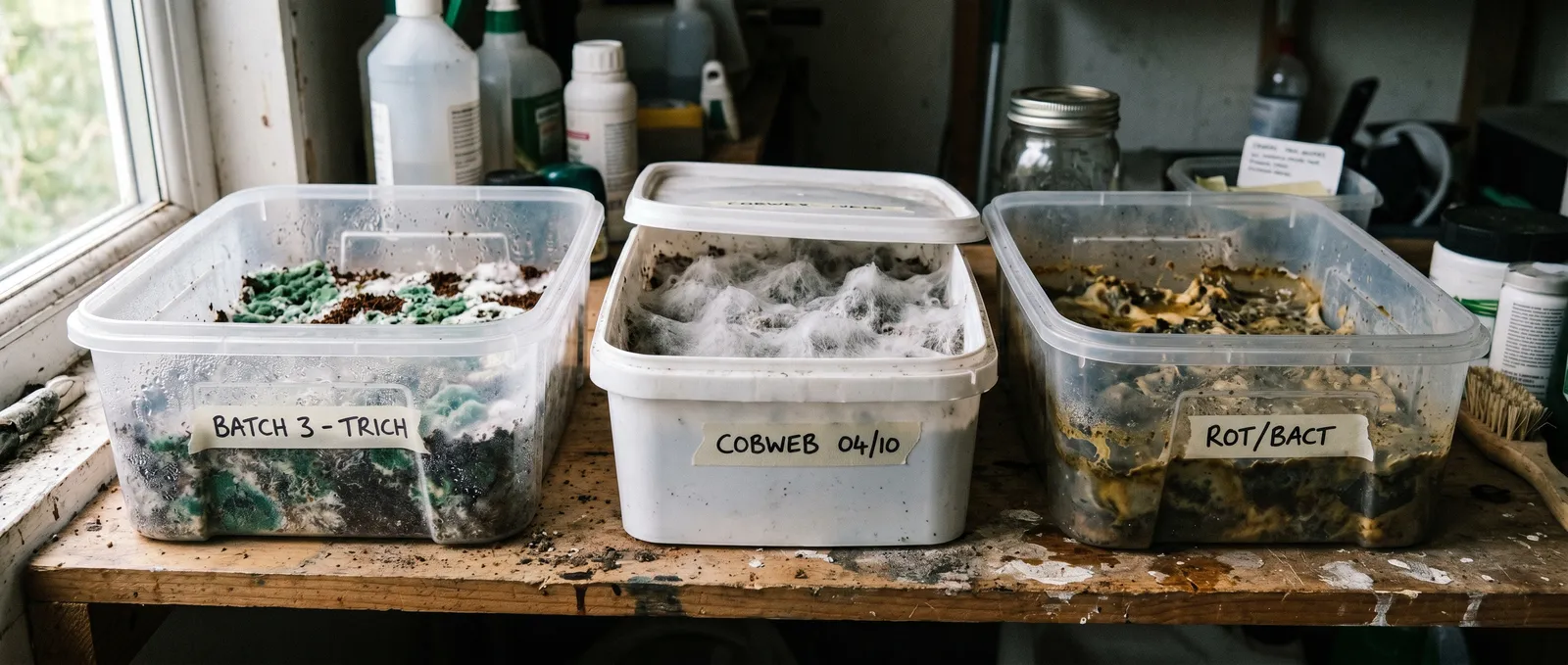
Identifying contamination trichoderma cobweb wet rot is a diagnostic skill that lets home mushroom cultivators distinguish three failure modes by colour, texture, smell, and position on the substrate. Trichoderma turns green, cobweb spreads wispy and grey, wet rot smells sour before it shows (Fletcher & Gaze, 2008).
This guide is written for adults. Contamination identification applies to adult home cultivators; the substrate and mould discussion below is educational reference, not consumption advice. Always consult a qualified professional before making decisions based on this content.
Identifying contamination trichoderma cobweb wet rot is a diagnostic skill that lets home mushroom cultivators distinguish three distinct failure modes by colour, texture, smell, and position on the substrate. Trichoderma turns green, cobweb spreads wispy and grey, and wet rot smells sour before it ever shows (Fletcher & Gaze, 2008). Get this reading right and you know whether to bin the kit, spot-treat it, or leave healthy mycelium alone.
Contamination at a glance
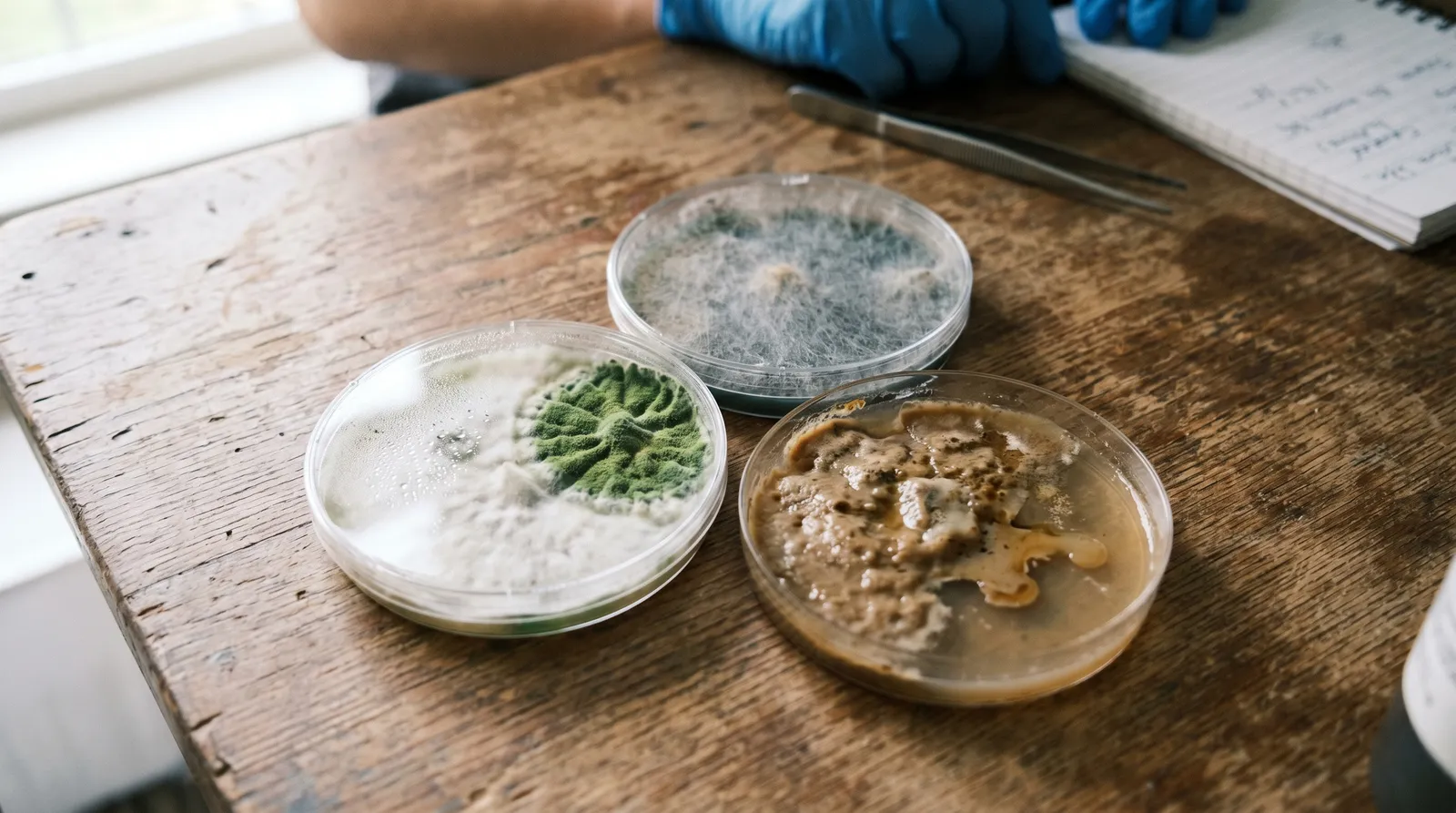
Identifying contamination trichoderma cobweb wet rot comes down to a single reference table: each mould shows its own colour, texture, smell, and location on the substrate, and each one tells you something different about what went wrong with your temperature, humidity, or sterile handling. The table below is the reference; the sections after it unpack what you're actually looking at.
| Contaminant | Colour & texture | Where it appears | Smell | Trigger conditions | Action |
|---|---|---|---|---|---|
| Trichoderma (green mould) | Starts bright white and fluffy, turns forest-green or blue-green within 24–72 hours as it sporulates | Patches on casing layer, grain substrate, or tub walls — often near tears in the mycelium | Musty, earthy, sometimes coconut-like | Substrate pH below 5.0, temps above 25 °C, airborne spores from unfiltered FAE | Bag and bin the entire block. No salvage. |
| Cobweb mould (Cladobotryum / Dactylium) | Wispy, grey-white, fast-spreading fuzz — looks like actual spider web, not dense mycelium | Surface of the casing layer; advances 2–5 cm per day across the top | Faintly damp, mushroomy | Casing RH above 95%, stagnant air, temps 23–27 °C | Catch it early: spot-treat with 3% hydrogen peroxide, increase FAE. Late-stage: bin. |
| Wet rot (bacterial "wet spot", Bacillus spp.) | Yellow-brown to grey wet patches, slimy, glossy, sometimes with amber droplets | Inside grain substrate (visible through the bag wall) or at the base of fruit bodies | Sharply sour, rotting fruit, sometimes like bad cheese | Under-sterilised grain, substrate moisture above 70%, heat stress | Bin the kit. Bacterial endospores survive pasteurisation. |
| Healthy mycelium (for reference) | Dense, rope-like, bright white; bruises blue when touched | Colonising grain and casing uniformly | Mild, like fresh bread or damp forest | 21–24 °C, 90–95% RH, 2–4 FAE per hour | Leave it alone. |
Trichoderma: the one that starts white and lies to you
Trichoderma is the most aggressive contaminant in home cultivation, and it disguises itself as healthy mycelium until it sporulates. Trichoderma harzianum and related species grow roughly 40% faster than Psilocybe cubensis at 25 °C and actively produce mycoparasitic enzymes that digest the target mycelium (Gams & Bissett, 1998). The trap: it comes in bright white and fluffy — visually near-identical to healthy mycelium — and only reveals its green sporulation after 1–3 days.
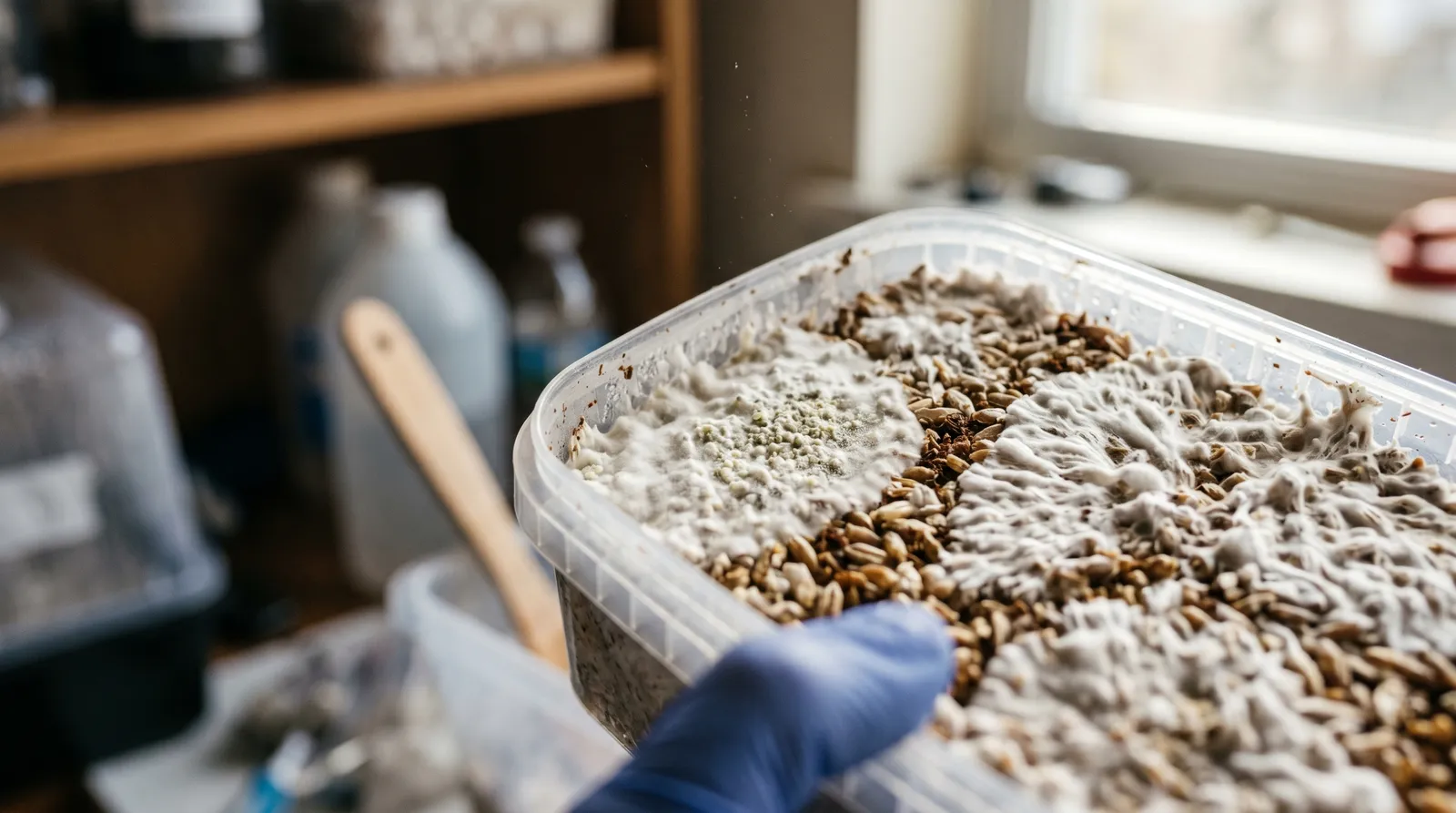
Three diagnostic tells separate trich from cubensis mycelium before the green arrives:
- Texture. Cubensis builds rope-like rhizomorphs; trichoderma grows flat and powdery, like icing sugar pressed onto the substrate.
- Bruising. Poke the suspect patch with a sterile cotton swab. Cubensis bruises blue within minutes (psilocin oxidising). Trichoderma doesn't bruise at all. This is the classic Q-tip test.
- Edge advance. Trichoderma fronts are sharp and circular; cubensis fronts are feathery and uneven.
Once you see green, the spores have already seeded the air around your grow. A sneeze-worth of conidia per patch is normal. Do not open the kit indoors to "clean it" — seal the bag, take it straight outside to the bin, and wipe down the grow area with 70% isopropanol. Grain-based kits (including the Azarius Grow Kit format and Ready-2-Grow Bag) are not salvageable once trich has breached the casing into the substrate; by the time green is visible, the underlying grain is already colonised.
Cobweb mould: the fast one that you can sometimes save
Cobweb mould is the only one of the three contaminations where early intervention sometimes works, because it sits on top of the substrate rather than inside it. Usually Cladobotryum mycophilum or Dactylium dendroides, it's a casing-layer disease, not a grain disease. Fletcher & Gaze (2008) documented cobweb growth rates of 30–50 mm per day at 25 °C and 95% RH — faster than any fruiting cycle, which is why a patch the size of a €1 coin becomes a fully colonised casing in 48 hours.
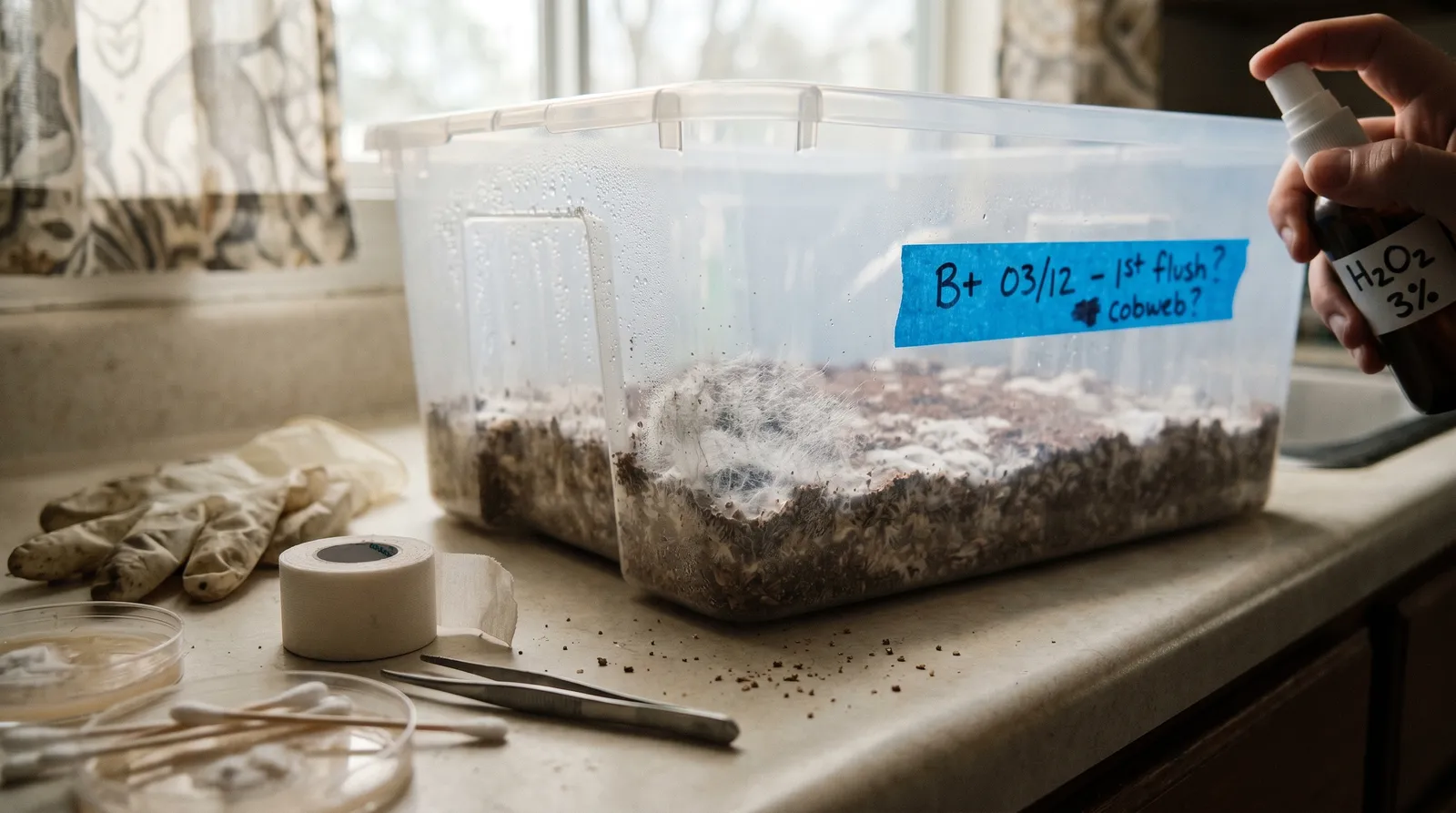
The visual tell is in the name: genuinely wispy, grey-tinged, low-density fluff that looks like it would blow away if you exhaled on it. Healthy mycelium is dense and refuses to move. Cobweb also tends to engulf pins and young fruit bodies, producing the classic "wet brown rot on cap" described in commercial mushroom pathology literature.
If you catch it as a single small patch before it reaches pins:
- Spray the patch directly with 3% food-grade hydrogen peroxide — a 2–3 second mist, not a soak.
- Increase fresh air exchange to 4–6 FAE per hour (open the bag more often, longer fanning).
- Drop casing humidity to ~88% for 48 hours. Cobweb hates moving, drier air.
If it's across more than ~20% of the casing, or if it's wrapped around pins, the kit is gone. Peroxide at salvage concentrations won't penetrate established mycelial networks.
Wet rot: the smell tells you before the eyes do
Wet rot is a bacterial contamination you smell before you see, because it takes hold inside the grain mass where air can't reach. Most often Bacillus spp., sometimes Pseudomonas tolaasii, it announces itself as sour rotting fruit or bad dairy long before yellow-brown slime blooms through the bag wall — by which point the anaerobic bacterial colony has been active for days.
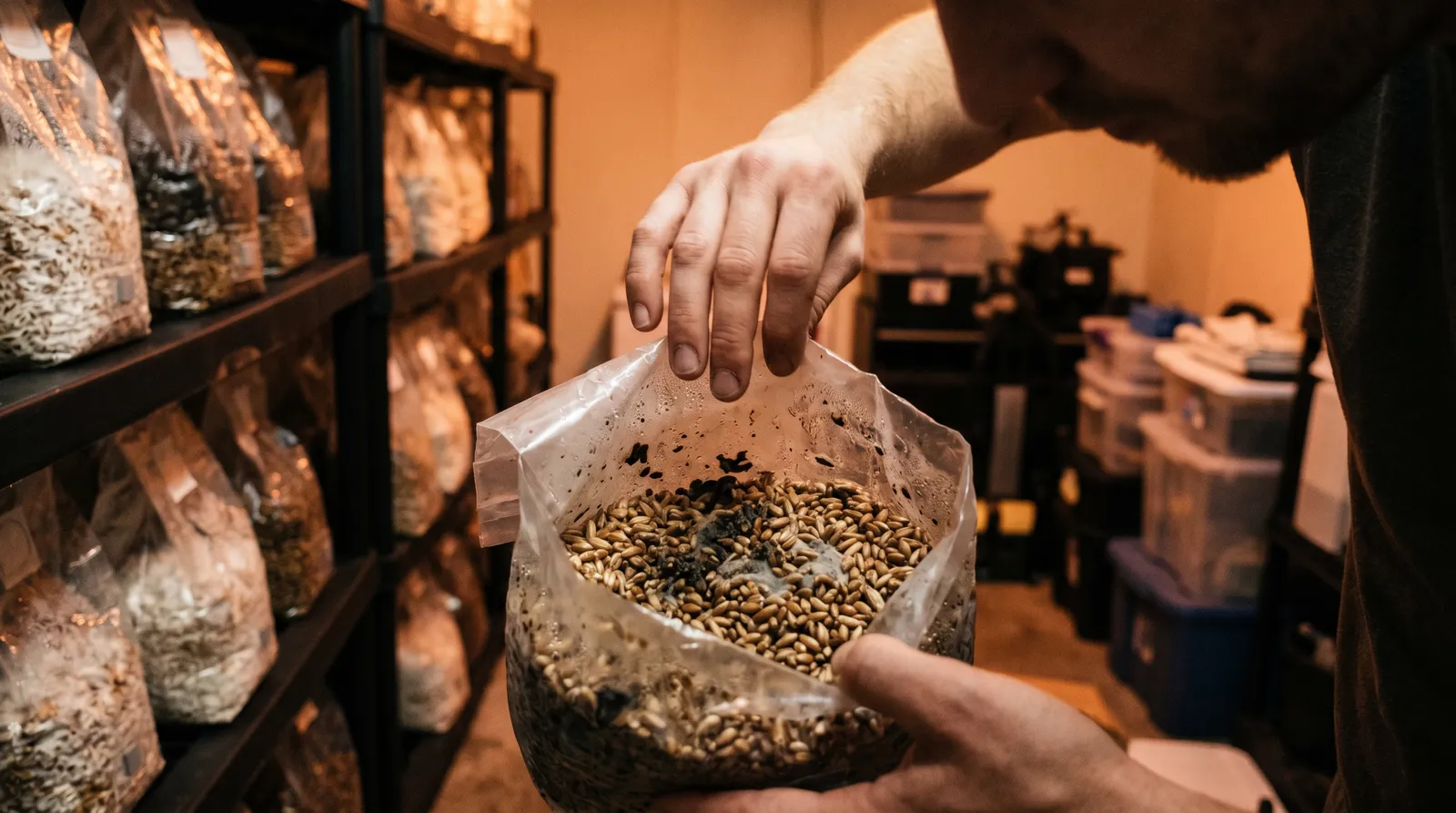
The trigger is almost always under-sterilised or over-hydrated grain. Bacillus endospores survive 15 minutes at 121 °C and hatch when moisture content climbs above ~70%; commercial grain substrate is engineered to sit at 60–65%, which is why reputable grow kits are assembled in laminar flow conditions and sealed immediately. Pre-colonised kits like the Ready-2-Grow Bag bypass the grain-prep stage entirely, which is why wet-spot contamination is rarer in sealed formats than in open PF-tek jars — though it still occurs in roughly 2–5% of commercially produced kits based on vendor return data, with the true rate harder to pin down because many cultivators bin kits without reporting. Honest limitation: that 2–5% figure is vendor-reported and almost certainly undercounts home failures.
There is no salvage path. Hydrogen peroxide doesn't reach the interior of the grain mass, and opening the bag to "dry it out" just aerosolises bacterial endospores across your grow space. Bag, seal, bin, sterilise the surface.
Preventing contamination in the first place
Prevention comes down to three levers: temperature, humidity, and sterile handling — and all three of the contaminations above trace back to failures in one of them. Keep the grow chamber at 21–24 °C (cubensis fruits happily in that window and most contaminants accelerate above it), maintain 90–95% RH at the casing but never let condensation pool, and exchange the air 2–4 times per hour — still air is cobweb's best friend. Wash hands, wipe the exterior of the kit with 70% isopropanol before every misting, and never open the kit in the same room as composting food waste or houseplants.
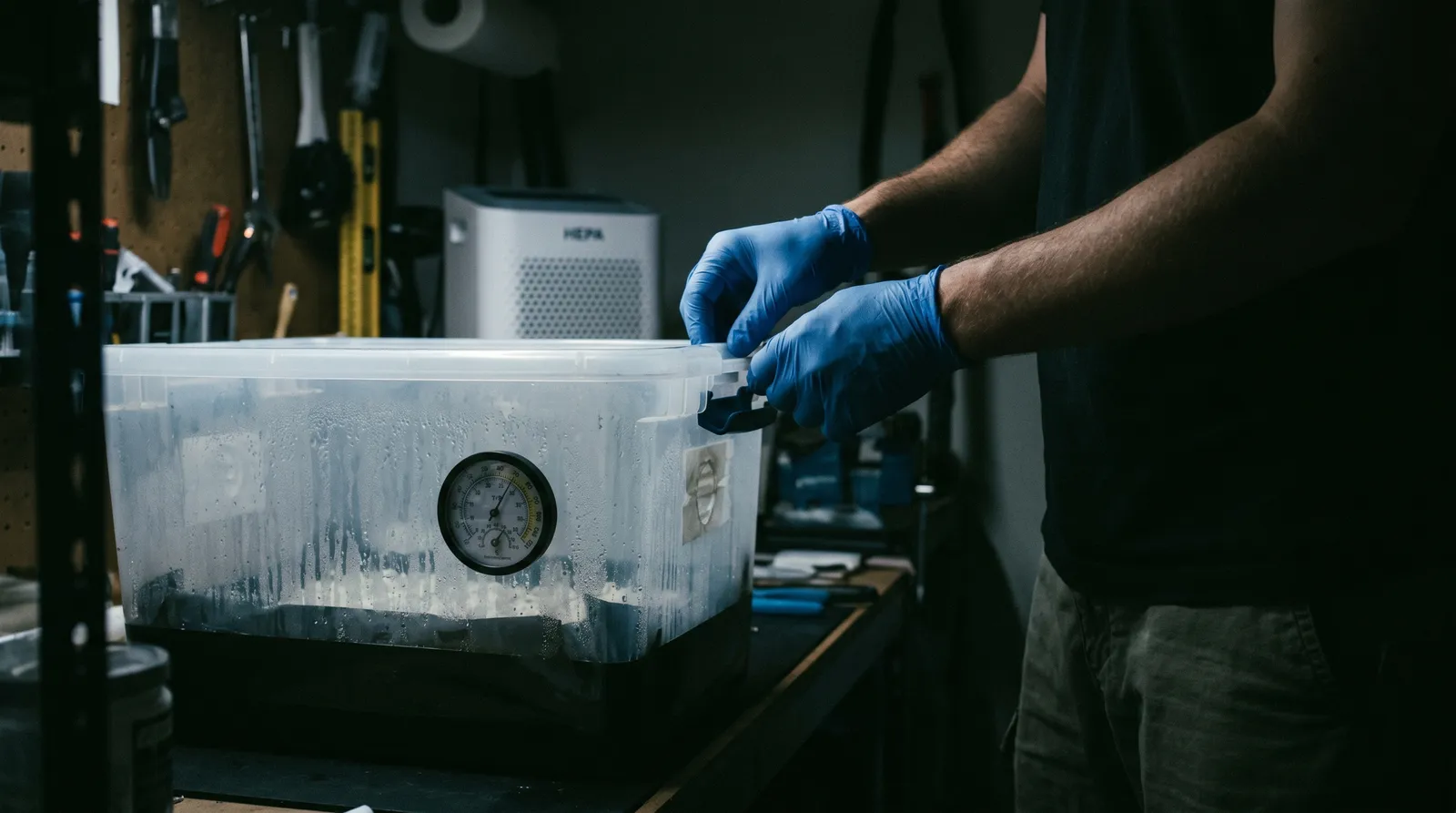
Consumption of contaminated mushrooms is a separate question entirely and belongs on the psilocybin hub. If a kit shows any of the three contaminations above, the whole kit goes in the bin — don't harvest "clean-looking" fruits from a contaminated substrate.
Related products
Azarius stocks both grow kit formats that are most resistant to contamination when handled correctly: the Grow Kit (plastic-tub casing-layer format, 8 strains including Golden Teacher, McKennaii, and B+) and the Ready-2-Grow Bag (sealed one-flush format, 9 strains including Enigma, APE, and Jedi Mind Fuck). Growers who want to buy a format with a lower contamination ceiling usually order the Ready-2-Grow Bag; cultivators who'd rather skip the contamination risk entirely can get Azarius truffles — Atlantis, Hollandia, Mexicana and seven others — which ship fresh and require refrigeration, not cultivation.
Last updated: April 2026
Frequently Asked Questions
8 questionsHow do I tell trichoderma apart from healthy white mycelium?
Can I save a kit with cobweb mould?
What does wet rot smell like?
Why did my kit get trichoderma — was it me?
Is blue staining on my mushrooms contamination?
Can contamination spread between kits in the same room?
How fast does cobweb mould spread compared to normal mycelium?
At what temperature does trichoderma outcompete mushroom mycelium?
About this article


Adam Parsons is an external cannabis and psychedelics writer and editor who contributes to Azarius's wiki as both author and reviewer. On the writing side, he authors Azarius's kratom and kanna clusters, drawing on exten
This wiki article was drafted with AI assistance and reviewed by Adam Parsons, External contributor. Editorial oversight by Joshua Askew.
Medical disclaimer. This content is for informational purposes only and does not constitute medical advice. Consult a qualified healthcare provider before use of any substance.
Last reviewed April 25, 2026
References (3)
- [1]Stamets, P. (2000). Growing Gourmet and Medicinal Mushrooms (3rd ed.). Ten Speed Press, Berkeley, CA. Source
- [2]Adams, B. R., Dadar, M., & Pajot, F. C. (2018). Microbial contamination in mushroom cultivation: identification and control strategies. Journal of Applied Microbiology, 124(3), 645-661. DOI: 10.1111/jam.13688
- [3]Sharma, V. P., Annepu, S. K., Gautam, Y., Singh, M., & Kamal, S. (2017). Status of mushroom production in India. Mushroom Research, 26(2), 111-120.
Related Articles
Cannabis Hermaphrodite: Identify, Prevent, Act
A cannabis hermaphrodite is a female plant that develops male pollen sacs or banana-shaped anthers (nanners), self-pollinating and seeding your harvest.
DIY Cannabis Fertilizer: Homemade Nutrient Guide
DIY cannabis fertilizer guide: compost, teas, banana ferments and feed schedules, with safety notes and cited research for home growers.
What To Do With Male Cannabis Plants: 6 Practical Uses
What to do with male cannabis plants: identify, isolate, breed, extract, or compost. A practical 6-step guide with sourcing and safety notes.
Mushroom Grow Kit Temperature & Humidity: Full Setup Guide
A temperature humidity control grow kit is the small set of climate tools — hygrometer, heat mat, humidifier or perlite tray — that keeps a mushroom fruiting…
When to Harvest Mushrooms: Veil Break Timing Explained
Harvest timing veil break is a cultivation technique that uses the tearing of the partial veil on maturing Psilocybe cubensis to mark peak alkaloid content.
First Grow Checklist: What You Need for Mushroom Kits
A first grow checklist is the short list of supplies and environmental conditions needed to run a home psilocybin mushroom kit from inoculated substrate to…
Sclerotia vs Fruit Bodies: Cultivation Comparison
Sclerotia and fruit bodies are two different life stages of Psilocybe fungi: sclerotia are hardened underground mycelial storage bodies (the 'magic…
Storing Dried Mushrooms Long Term: Full Guide
Storing dried mushrooms long term means keeping well-dried Psilocybe fruit bodies in airtight, opaque containers with desiccant, cool and dark, to slow…
Drying Mushrooms Air Desiccant Oven: Methods Compared
Drying mushrooms air desiccant oven refers to the three home methods for reducing fresh fruit bodies from ~90% water to cracker-dry (<5%). Gotvaldová et al.