
This article discusses psychoactive substances intended for adults (18+). If you have a health condition or take medication, consult a doctor before use. Our age policy
Drying Mushrooms Air Desiccant Oven: Methods Compared
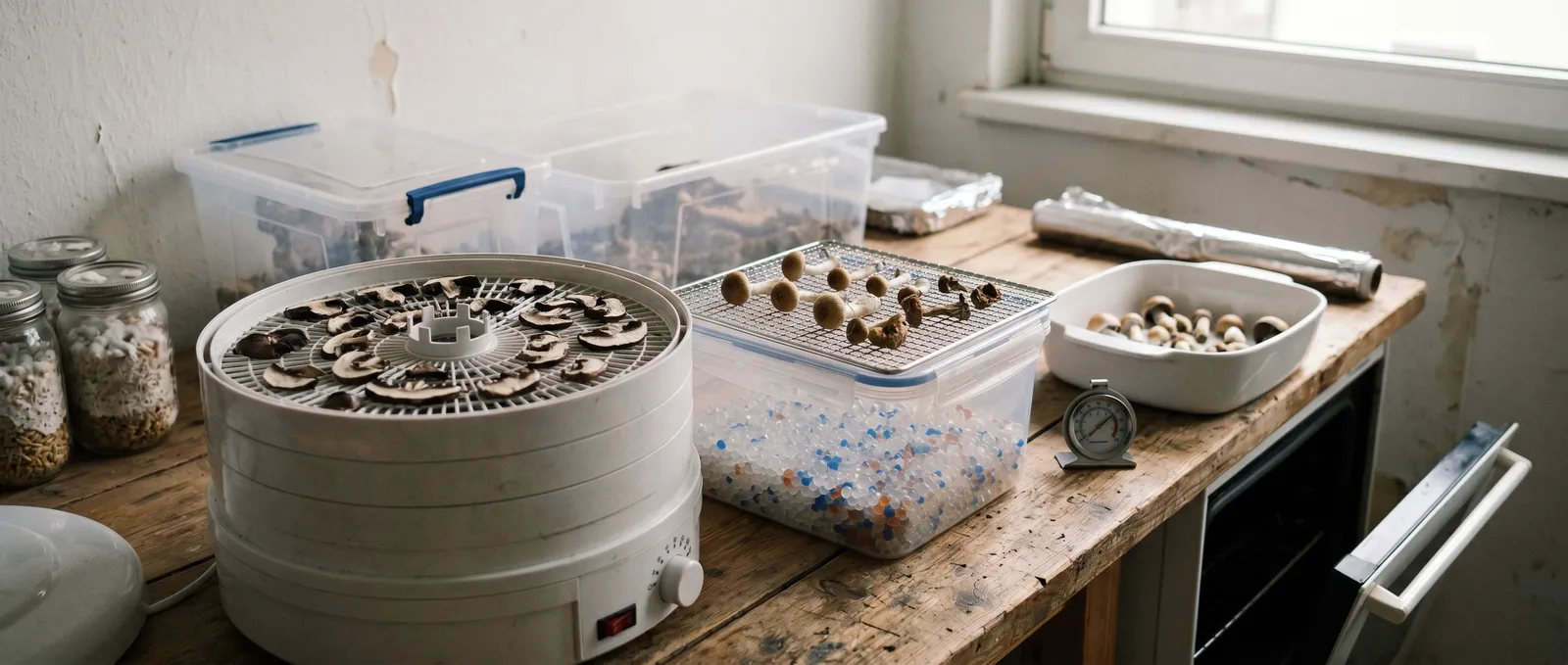
Definition
Drying mushrooms air desiccant oven refers to the three home methods for reducing fresh fruit bodies from ~90% water to cracker-dry (<5%). Gotvaldová et al. (2022) found properly dried, cold-stored material retained most psilocybin for over a year, while heat-dried or damp-stored mushrooms lost potency within weeks.
Drying mushrooms air desiccant oven is a three-method comparison that helps home cultivators reduce fresh psilocybin-producing fruit bodies from ~90% water down to cracker-dry (<5%) with minimum potency loss. Getting your fresh flush down to cracker-dry is the single most important preservation step for potency and shelf life, and the three common routes — open-air drying, desiccant drying, and low-temperature oven drying — are not equal. This guide compares drying mushrooms air desiccant oven side-by-side so you know which to trust and which to skip when you buy, order or get your drying kit together.
The three methods compared
Fan-dry first, finish on desiccant, and keep the oven as a last resort. The table unpacks why.
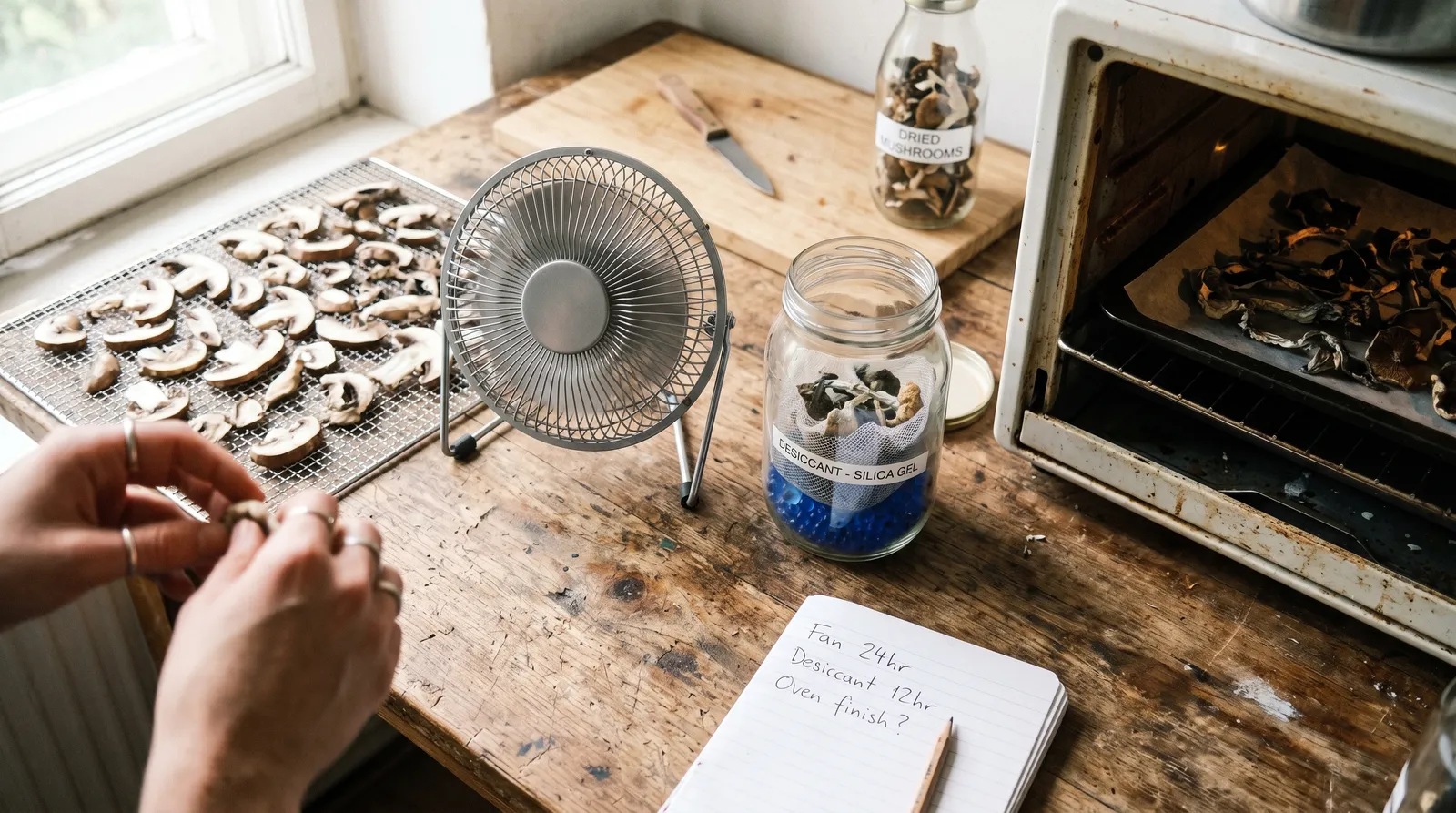
| Method | Temperature | Time to cracker-dry | Final moisture | Potency risk | Best for |
|---|---|---|---|---|---|
| Air (fan) drying | 20–24 °C ambient | 12–48 hours to leather-dry | ~10–15% (not storage-safe alone) | Low | Stage 1 — removing surface and bulk water |
| Desiccant finish | Room temperature | 12–24 hours after fan drying | <5% (cracker-dry) | Very low | Stage 2 — long-term storage prep |
| Low-temp oven | 40–50 °C max (fan/convection) | 2–6 hours | Variable — easy to overshoot or understay | Moderate to high | Emergency only — when time beats quality |
Why proper drying matters
Proper drying matters because a fresh Psilocybe cubensis fruit body is roughly 90% water by weight, and residual moisture is what destroys potency. Until that number drops below about 5%, two things keep happening: enzymatic activity inside the tissue continues to break down psilocybin into psilocin (which is far less stable), and residual moisture lets mould and bacteria colonise the stored product. Gotvaldová et al. (2022) measured alkaloid degradation across storage conditions and found that poorly dried mushrooms stored at room temperature lost measurable potency within weeks, while properly dried material kept in airtight containers at <5 °C retained most of its psilocybin content for over a year.
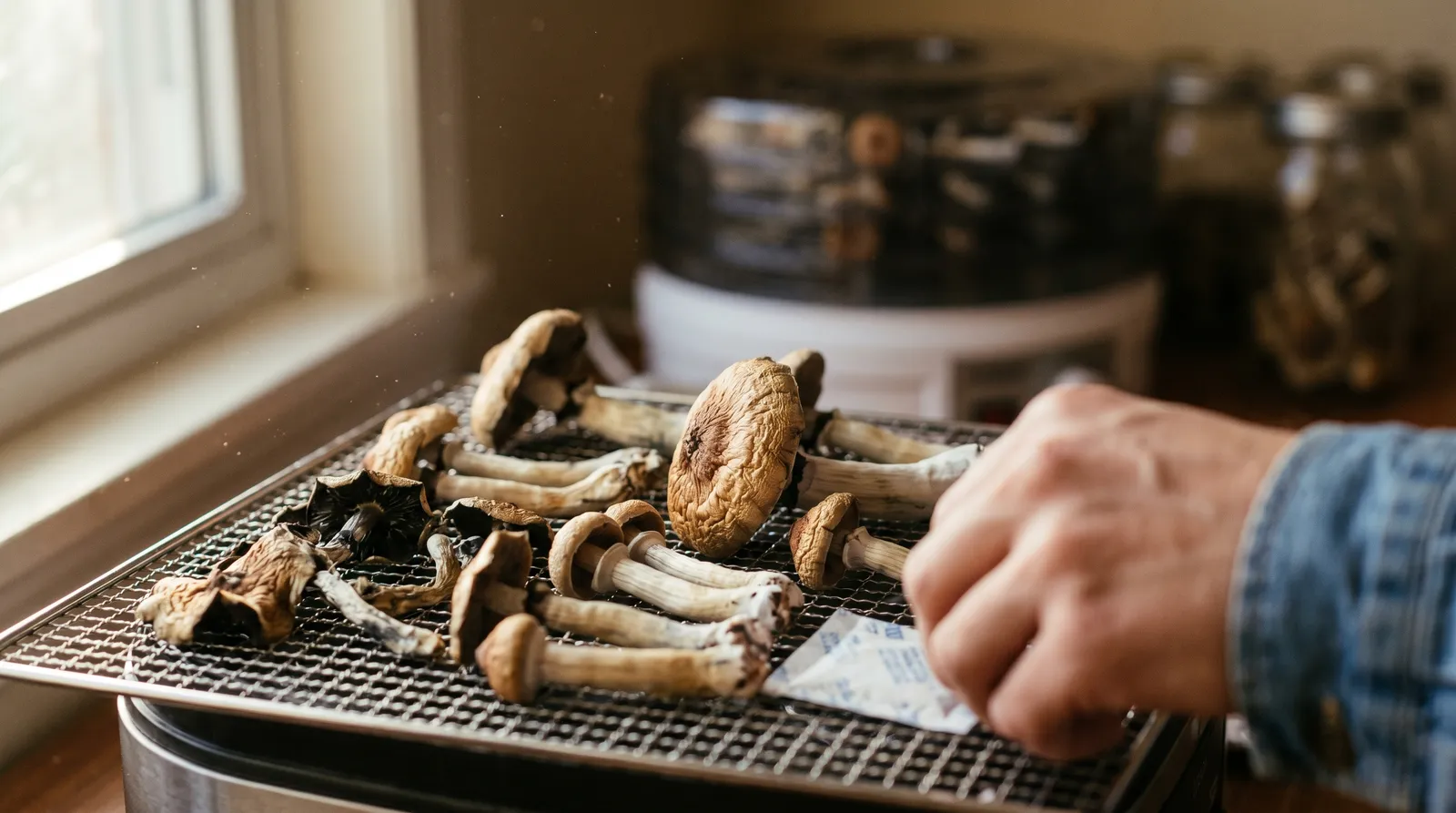
Cracker-dry is the benchmark — stems should snap cleanly rather than bend, and caps should feel papery. Bendy is not dry. Leathery is not dry. If you can dent a stem with a fingernail, there is still water hiding inside.
Stage 1: Air drying
Air drying is the bulk-water removal stage and it is non-negotiable regardless of which finishing method you pick. The goal here is not to reach final moisture — it is to get the fruit bodies from wet-sponge to leathery in a controlled, low-heat way that protects alkaloid content.
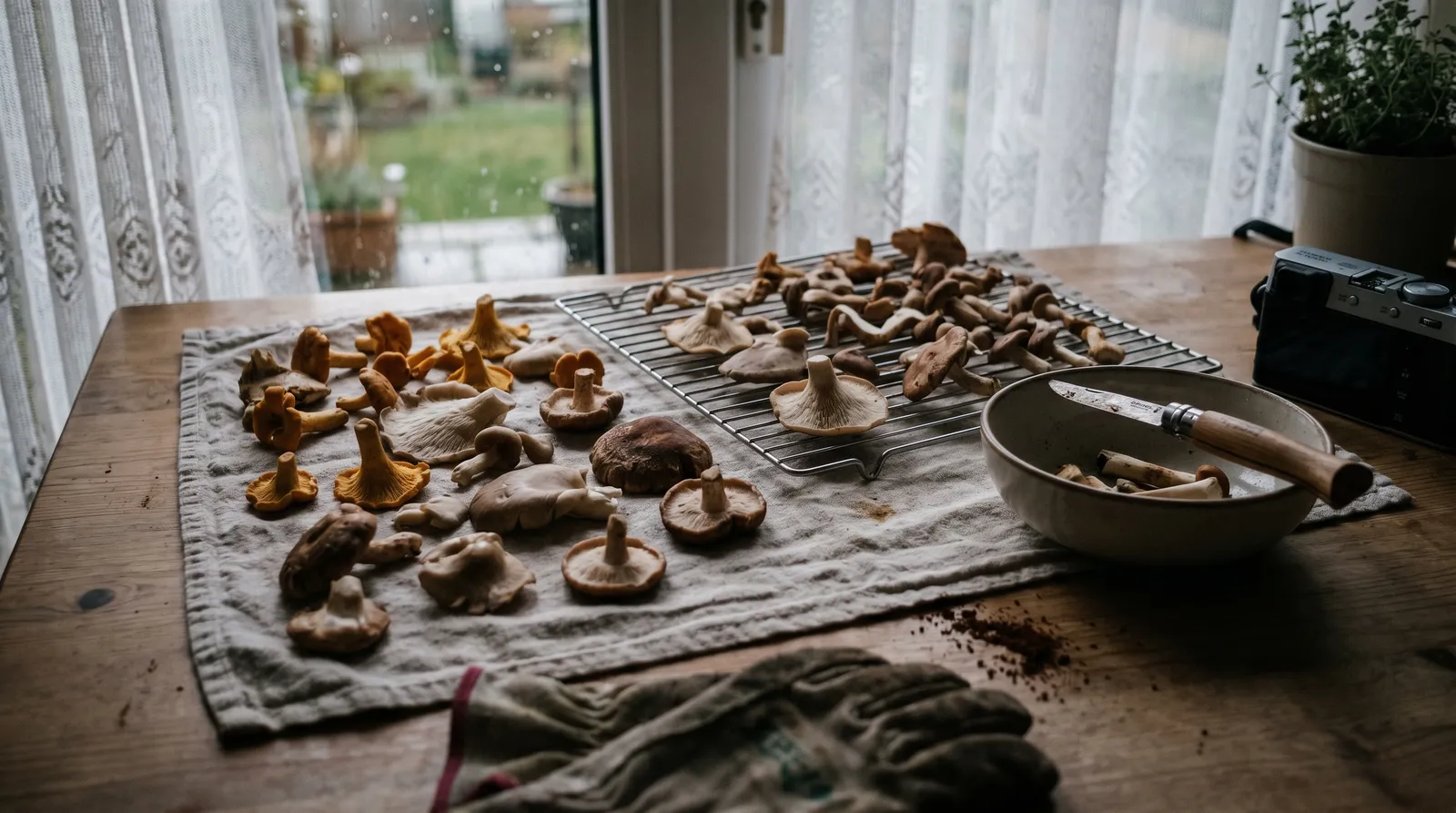
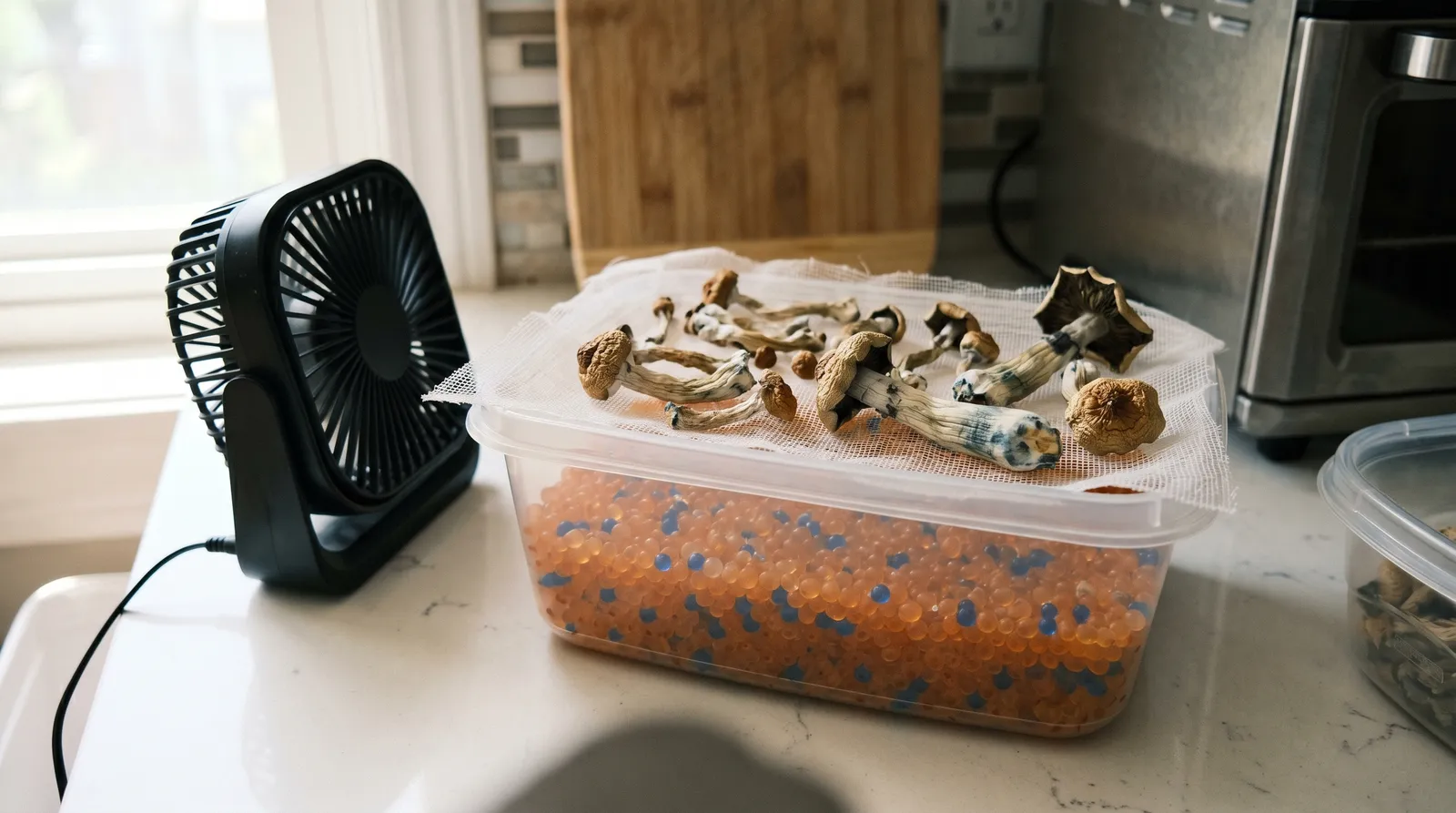
The setup is embarrassingly simple. Spread freshly harvested mushrooms on a wire cooling rack or piece of cardboard, caps up, with space between each one. Point a small fan at them on low speed. Ambient room temperature between 20 and 24 °C is ideal — psilocybin starts degrading noticeably above about 50 °C, so you want the fan doing the work, not heat. Humidity in the room matters too; if your home sits above 60% relative humidity, run a dehumidifier in the same room or move operations to a drier cupboard.
Expect 12 to 48 hours depending on the size of the fruits. A chunky McKennaii cap takes longer than a slender Mexican. They will shrink dramatically, darken in colour, and reach a state where the outside feels dry but the stems still bend rather than snap. That is the handoff point to stage two.
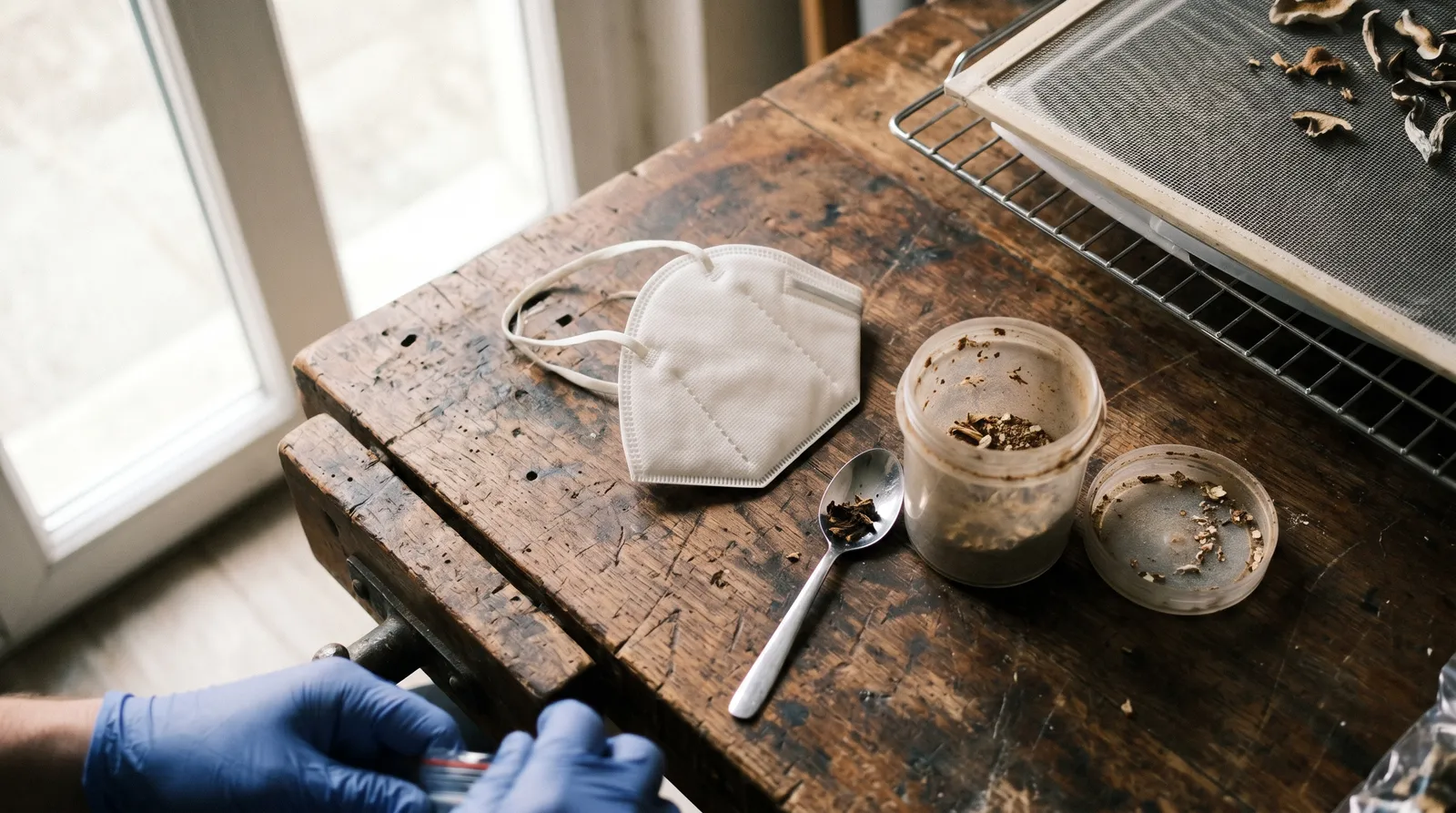
Respiratory note: dried and drying spore-producing mushrooms release spores and fine particulates that can trigger hypersensitivity pneumonitis in sensitive people. Wear an FFP2 mask when handling dry material, and keep the drying rack out of the kitchen.
Stage 2: Desiccant drying
Desiccant drying takes leather-dry mushrooms to cracker-dry without heat by sealing them in an airtight container with a water-absorbing material. Silica gel, anhydrous calcium sulphate (Drierite), or molecular sieve beads are the three common options you can buy at hardware or craft stores. The desiccant yanks the last stubborn water out of the tissue over 12 to 24 hours.
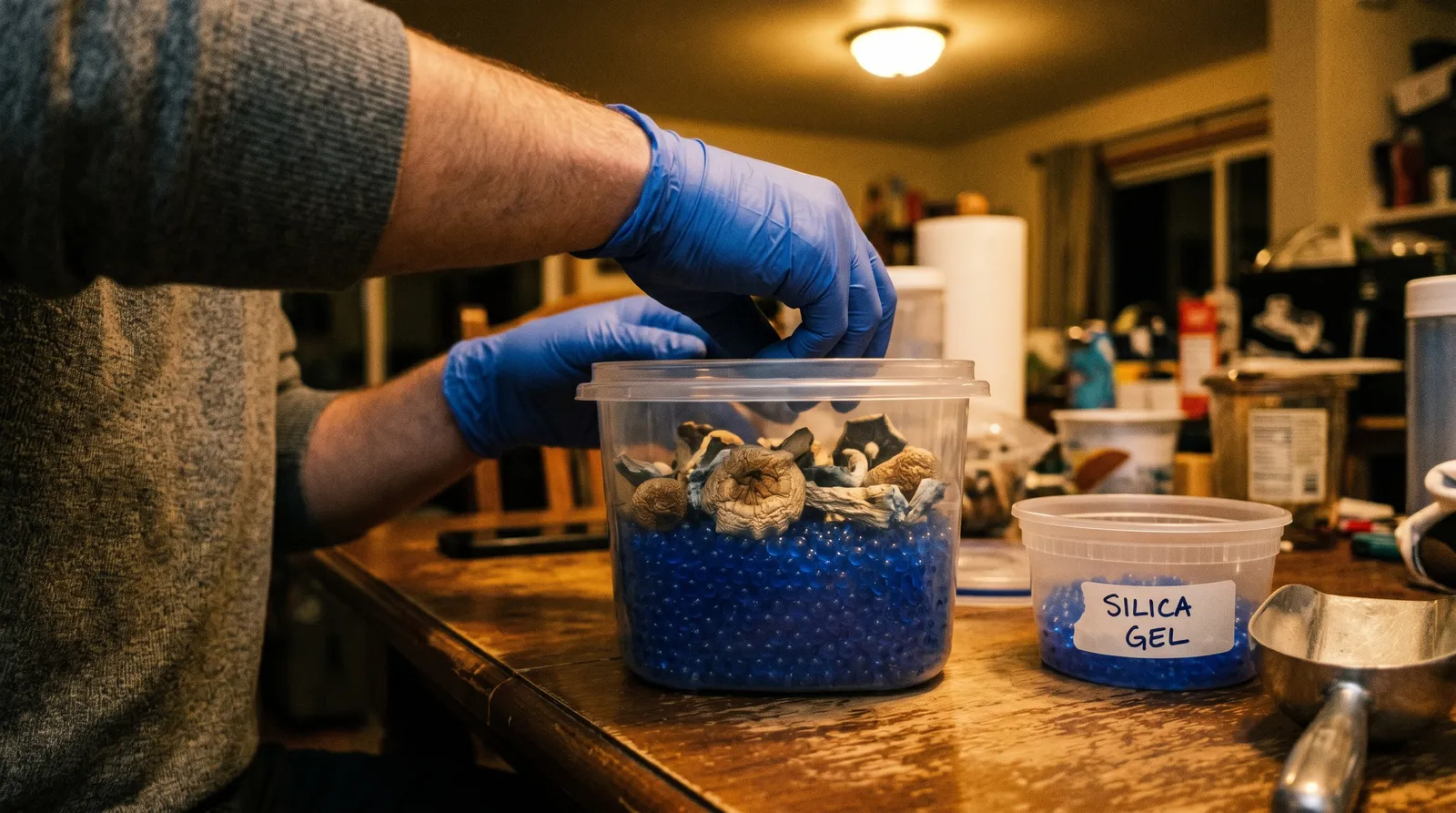
The practical setup: a plastic tub or glass jar with a tight lid. Put 200–500 g of fresh silica gel beads (the kind with colour indicators that shift from orange to green, or blue to pink, when saturated) in the bottom. Place a wire rack or layer of kitchen paper over the desiccant so the mushrooms do not touch it directly. Lay the leather-dry mushrooms on top, seal the container, and leave it at room temperature.
Silica gel can be regenerated by baking it at 120 °C for 2–3 hours until the indicator colour resets, which makes it effectively reusable forever. A single 500 g bag you order once will dry many flushes. Shroomery community protocols (long-running desiccant threads dating back to the early 2000s) consistently report cracker-dry results within 24 hours using this method, with no measurable potency loss compared to fan-only drying.
One honest limitation worth flagging: most potency-retention data comes from Psilocybe cubensis fruit bodies. Sclerotia (magic truffles) behave somewhat differently — they are denser, lower in baseline moisture, and truffle-specific desiccant drying data is thin on the ground. For truffles, most growers keep them refrigerated fresh rather than drying at all.
The oven method — and why to avoid it
Low-temperature oven drying works but introduces two problems the other methods avoid: unreliable temperature control and uneven hotspots. It is the method reached for when patience has run out.
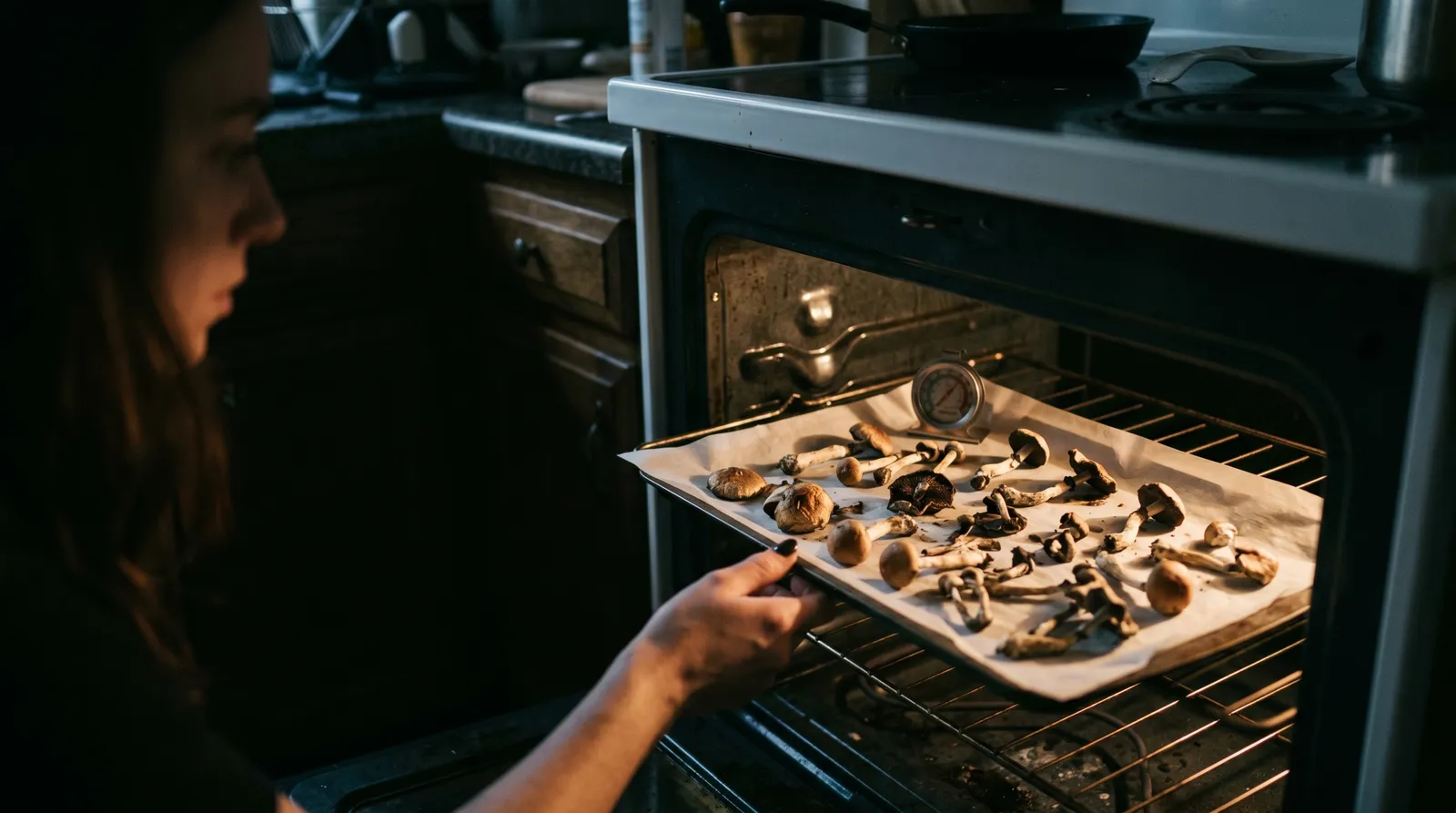
First, temperature control. Most domestic ovens cannot hold steady below 50 °C even on their lowest setting — many sit at 60–80 °C regardless of what the dial says. Psilocybin is reasonably heat-tolerant in dry conditions but begins noticeable thermal degradation above 50 °C, and the freshly-harvested state (still wet) is exactly when heat damage is worst. Bigwood and Beug (1982) documented alkaloid variance across processing conditions and temperature was one of the larger swing factors.
Second, hotspots. Fan-assisted ovens dry more evenly than conventional ones, but unless you have a probe thermometer inside the oven, you are guessing at the actual temperature at the rack. A single hot spot can cook a patch of caps while the rest stay leathery.
If you have to use the oven — say a flush came in during a rainy week and your air-drying room is already at 70% humidity — the harm-reduction version looks like this: fan-dry to leathery first (never oven-dry fresh fruits), set the oven to its absolute lowest setting with the door cracked open 2–3 cm, use a probe thermometer to confirm temperature stays at or below 50 °C, and check every 30 minutes. Even then, finish on desiccant rather than pushing oven time to cracker-dry. The oven gets you most of the way; desiccant takes you the last 5%.
The verdict
Fan-dry to leather, finish on silica gel, skip the oven unless the situation demands it. This sequence is what most experienced home cultivators settle on because it gives the best potency retention, the most predictable final moisture, and the lowest chance of contamination during storage. The upfront investment to buy a small fan, a reusable tub of silica gel, and an airtight container runs under €30 and lasts for years.
Storage after drying is its own topic, but briefly: vacuum-sealed or airtight jars with a fresh desiccant packet, kept dark, dry, and below room temperature (a fridge at ~4 °C works; a freezer at –18 °C is better for multi-year storage). Properly dried and stored cubensis material retains most of its potency for 12+ months by the Gotvaldová et al. (2022) data.
Safety and harm-reduction notes
Mushroom dust is a respiratory allergen — FFP2 mask during handling and grinding is sensible, especially if you dry multiple flushes in a confined space. Keep drying operations separate from food prep areas to avoid cross-contamination in both directions. Store dried material in containers that are clearly labelled and out of reach of children and pets; dried psilocybin mushrooms are visually close to several edible species and accidental ingestion is a real risk. Interactions with MAOIs, SSRIs, and lithium are significant — see the dedicated psilocybin interactions article for detail before planning any consumption.
Disclaimer: This article is educational harm-reduction information and not medical advice. Psilocybin-containing mushrooms carry real physical and psychological risks, including panic reactions, interactions with medications, and lasting effects for people with a personal or family history of psychosis. Consult a qualified healthcare professional before making decisions about use, and never combine psilocybin with MAOIs, SSRIs, or lithium without medical oversight.
Last updated: April 2026
Frequently Asked Questions
8 questionsWhat is the difference between drying and dehydrating mushrooms?
Can you dry magic mushrooms in the oven without losing potency?
How much silica gel do you need to dry mushrooms?
How do you know when mushrooms are cracker-dry?
Why fan-dry before using desiccant?
Does drying destroy psilocybin?
What humidity level is too high for air-drying mushrooms?
How long can cracker-dry mushrooms be stored without losing potency?
About this article


Adam Parsons is an external cannabis and psychedelics writer and editor who contributes to Azarius's wiki as both author and reviewer. On the writing side, he authors Azarius's kratom and kanna clusters, drawing on exten
This wiki article was drafted with AI assistance and reviewed by Adam Parsons, External contributor. Editorial oversight by Joshua Askew.
Medical disclaimer. This content is for informational purposes only and does not constitute medical advice. Consult a qualified healthcare provider before use of any substance.
Last reviewed April 25, 2026
References (2)
- [1]Gotvaldová, K., Hájková, K., Borovička, J., Jurok, R., Cihlářová, P., & Kuchař, M. (2021). Stability of psilocybin and its four analogs in the biomass of the psychotropic mushroom Psilocybe cubensis. Drug Testing and Analysis, 13(2), 439-446. DOI: 10.1002/dta.2950
- [2]Lenz, C., Wick, J., Braga, D., García-Altares, M., Lackner, G., Hertweck, C., & Hoffmeister, D. (2020). Injury-triggered blueing reactions of Psilocybe magic mushrooms. Angewandte Chemie International Edition, 59(4), 1450-1454. DOI: 10.1002/anie.201910175
Related Articles
Cannabis Hermaphrodite: Identify, Prevent, Act
A cannabis hermaphrodite is a female plant that develops male pollen sacs or banana-shaped anthers (nanners), self-pollinating and seeding your harvest.
DIY Cannabis Fertilizer: Homemade Nutrient Guide
DIY cannabis fertilizer guide: compost, teas, banana ferments and feed schedules, with safety notes and cited research for home growers.
What To Do With Male Cannabis Plants: 6 Practical Uses
What to do with male cannabis plants: identify, isolate, breed, extract, or compost. A practical 6-step guide with sourcing and safety notes.
Mushroom Grow Kit Temperature & Humidity: Full Setup Guide
A temperature humidity control grow kit is the small set of climate tools — hygrometer, heat mat, humidifier or perlite tray — that keeps a mushroom fruiting…
When to Harvest Mushrooms: Veil Break Timing Explained
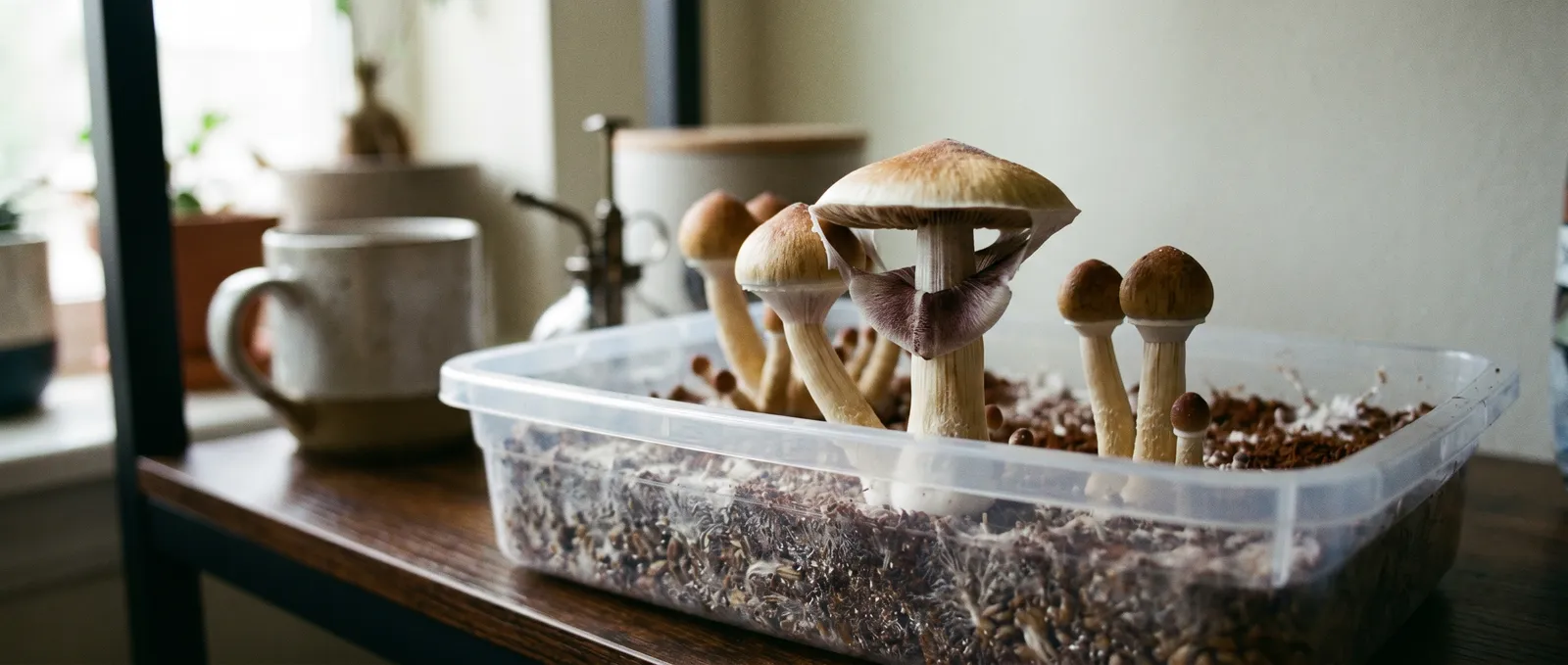
Harvest timing veil break is a cultivation technique that uses the tearing of the partial veil on maturing Psilocybe cubensis to mark peak alkaloid content.
First Grow Checklist: What You Need for Mushroom Kits
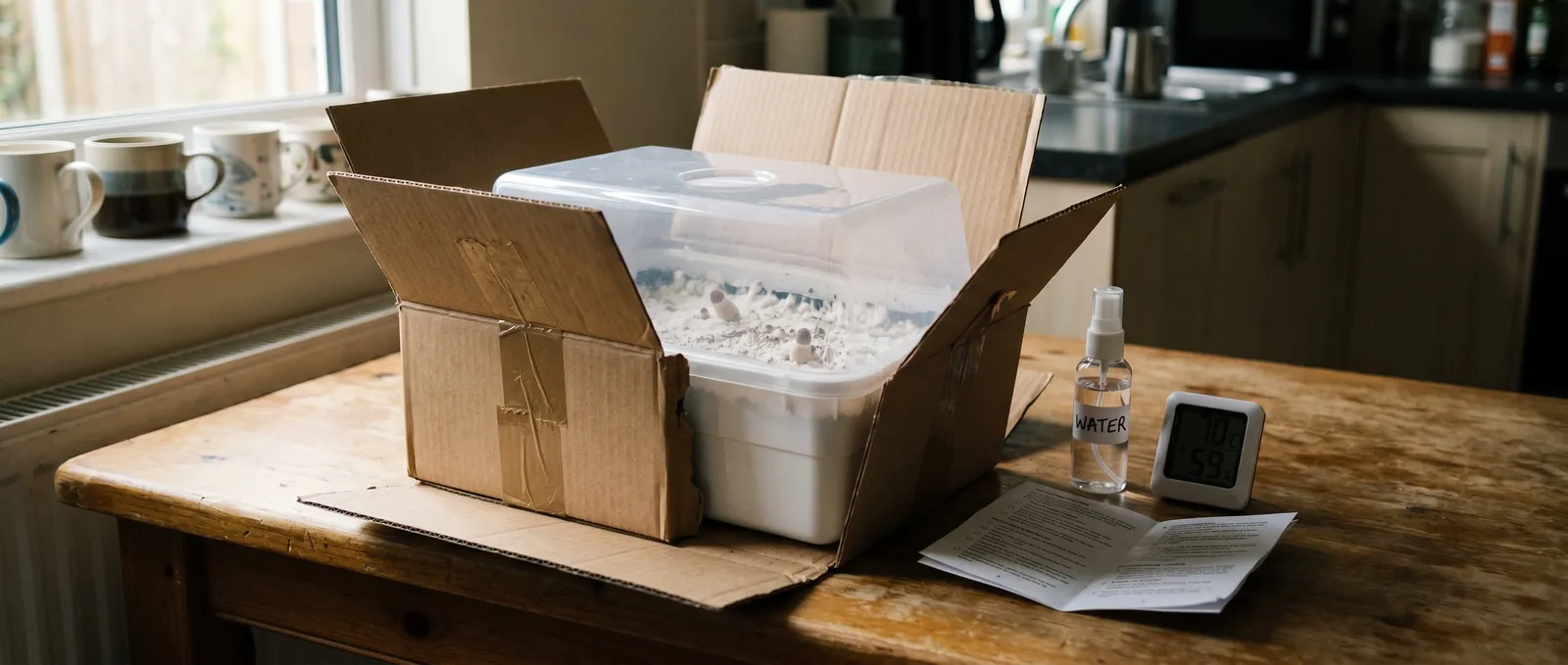
A first grow checklist is the short list of supplies and environmental conditions needed to run a home psilocybin mushroom kit from inoculated substrate to…
Sclerotia vs Fruit Bodies: Cultivation Comparison
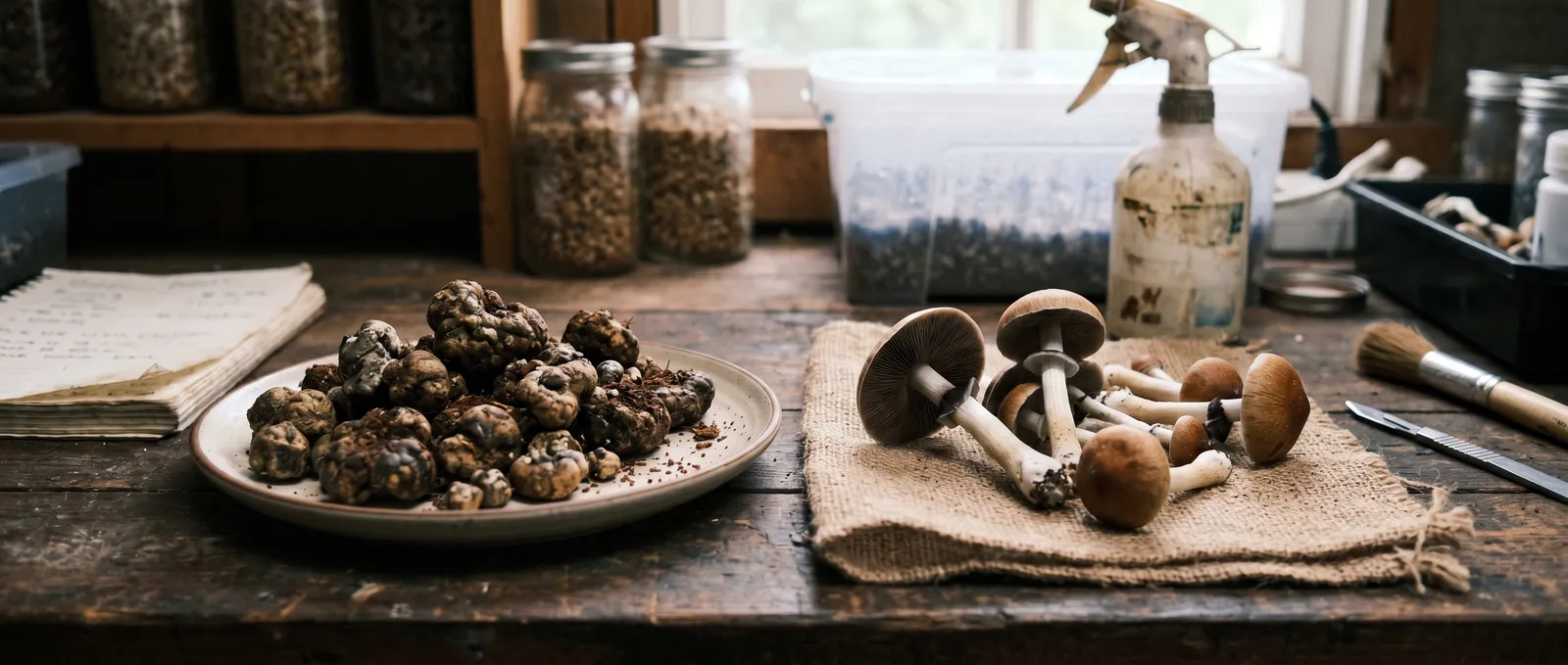
Sclerotia and fruit bodies are two different life stages of Psilocybe fungi: sclerotia are hardened underground mycelial storage bodies (the 'magic…
Storing Dried Mushrooms Long Term: Full Guide
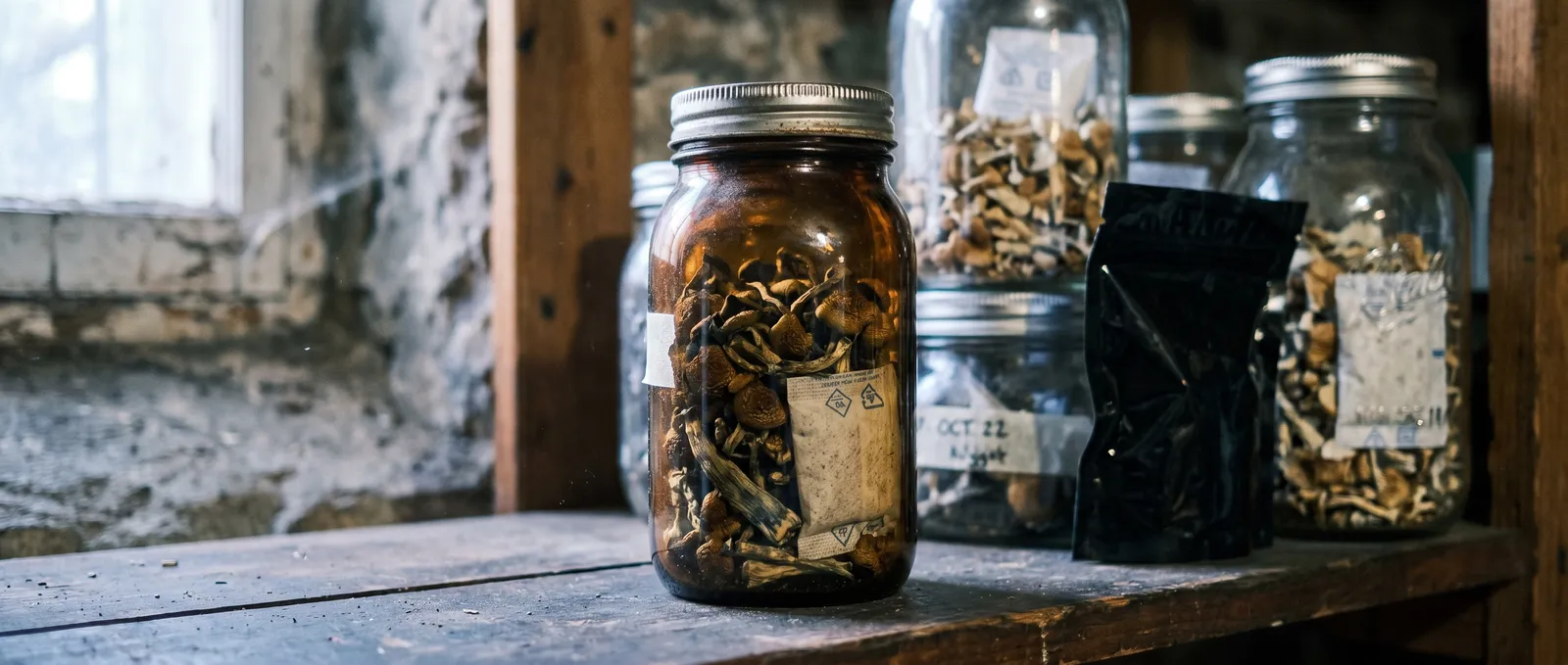
Storing dried mushrooms long term means keeping well-dried Psilocybe fruit bodies in airtight, opaque containers with desiccant, cool and dark, to slow…
Grow Kit vs Ready 2 Grow Bag: Which to Pick
The grow kit vs Ready 2 Grow Bag choice compares two Psilocybe cubensis home-cultivation formats: a tub with rye substrate and casing layer designed for…