
This article discusses psychoactive substances intended for adults (18+). If you have a health condition or take medication, consult a doctor before use. Our age policy
Flushing Cannabis: Why, When and How to Do It
Definition
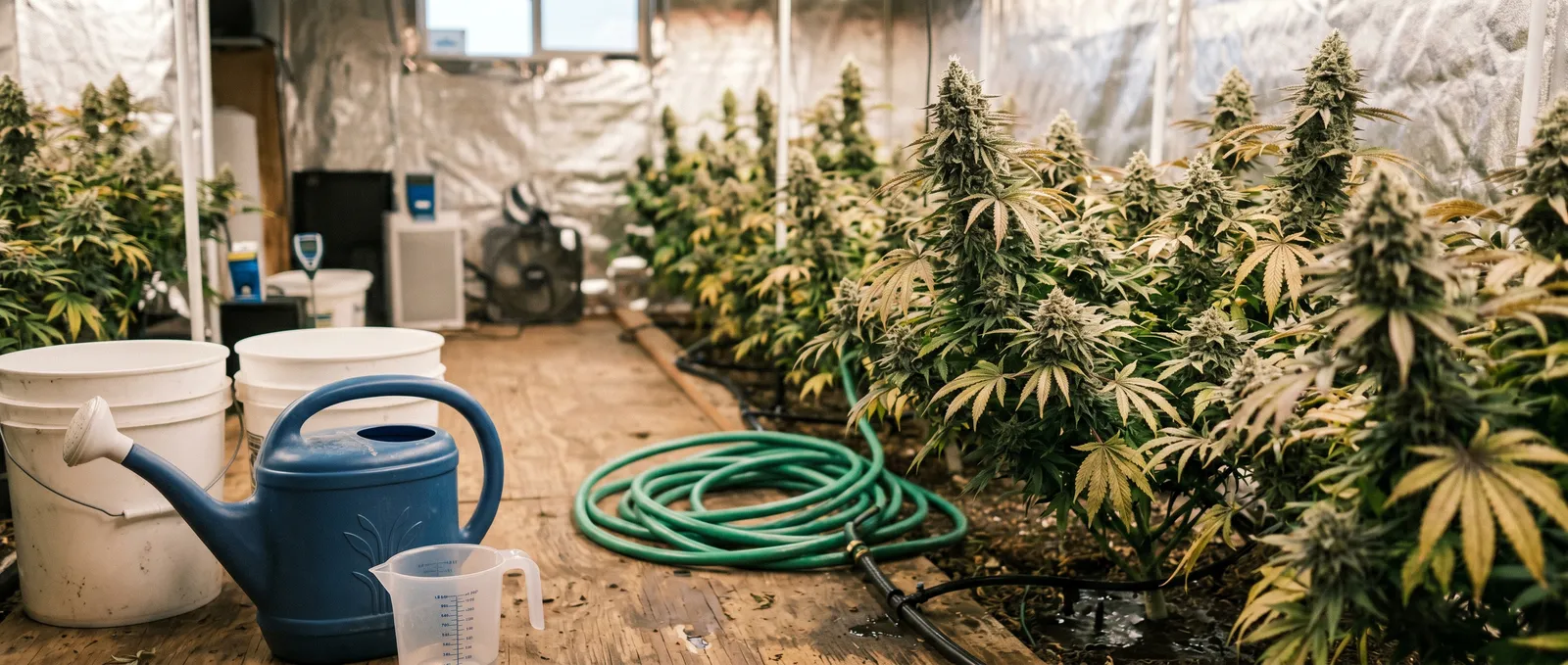
Flushing cannabis is a pre-harvest technique that involves watering plants with plain, pH-adjusted water in the final 1–14 days before harvest to draw down stored nutrients and improve flavour, ash colour and smoothness. Recent work by Stack et al. (2024) found minimal measurable impact on cured flower when plants were fed at moderate EC, though the practice may still help with overfed crops.
Flushing cannabis is a pre-harvest technique that draws down stored nutrients in plant tissue to improve flavour, ash colour, and smoothness of the cured flower. The practice — watering with plain, pH-adjusted water in the final stretch before harvest — is one of those cultivation rituals that growers swear by and researchers keep poking holes in. This guide is written for adults. Whether you need to flush, when to start, and how to do it properly depends on your medium, your feeding history, and which study you trust. Below, we walk through the questions growers actually ask, with what the evidence says and what a decade in the tent has taught us.
Cannabis cultivation rules vary by country and region and change frequently. This guide is educational only and is not formal advice. Azarius does not provide formal advice.
What is flushing, really?
Flushing is watering your plants with plain water — no added nutrients — for a defined period before harvest, with the goal of drawing down the nutrient reserves inside the plant tissue. The theory: if buds contain less residual nitrogen, phosphorus, and potassium at chop, they'll burn cleaner, taste better, and produce a whiter ash. In soil and coco, you can also do a mid-grow flush to correct nutrient lockout by running 2-3x the pot volume of pH-adjusted water through the medium to wash out salt buildup.
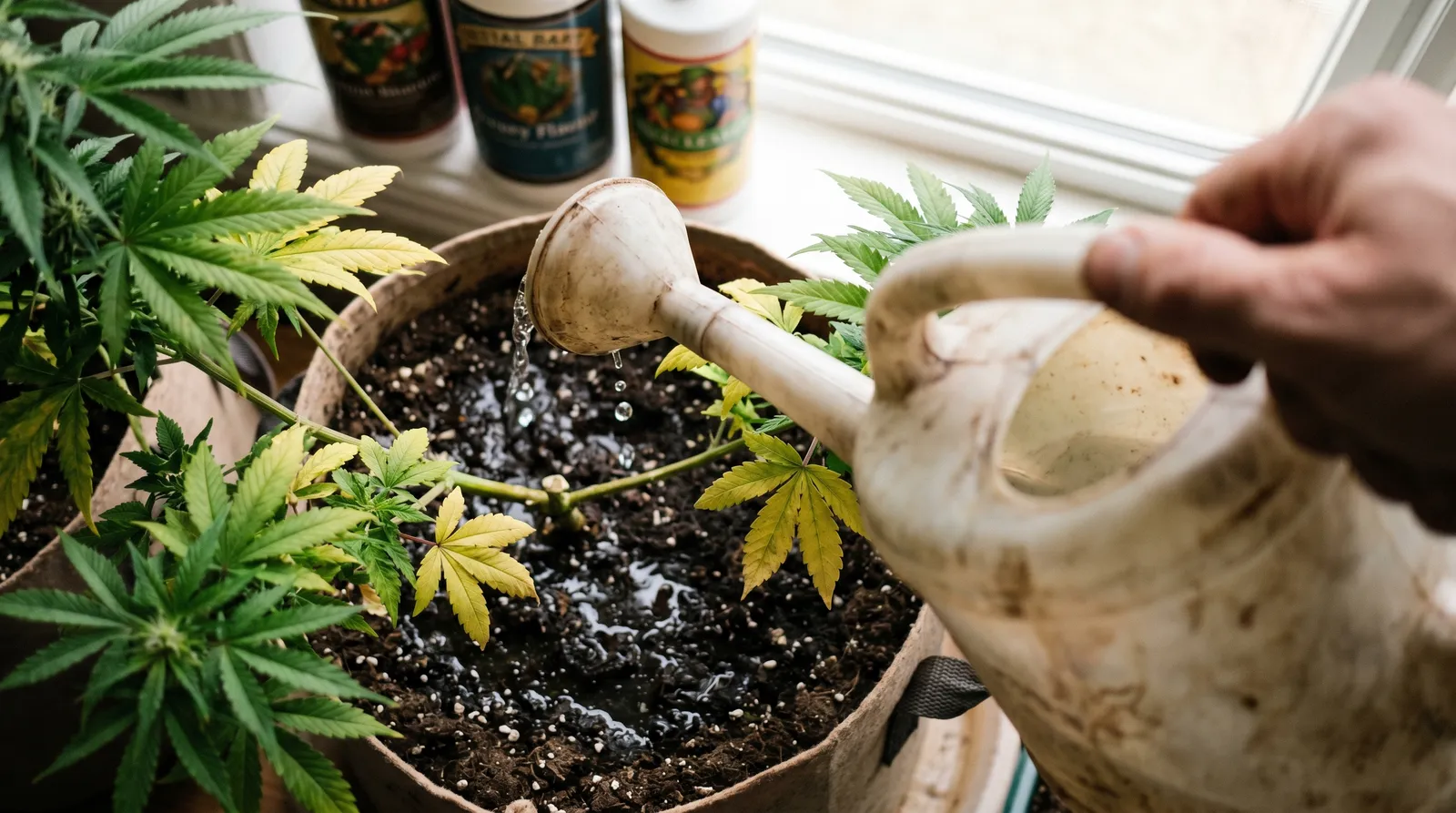
Two different operations, one word. A pre-harvest flush is about what's inside the plant. A lockout flush is about what's in the root zone. Growers mix them up constantly.
Does flushing actually improve the final product?
The evidence is mixed and leans sceptical for moderately-fed plants. A 2020 study from RX Green Technologies compared cannabis plants flushed for 0, 7, 10, and 14 days before harvest and found no significant differences in cannabinoid content, terpene profile, or smoke quality as rated by a blinded panel. A 2024 peer-reviewed paper in the Journal of Cannabis Research (Stack et al., 2024) similarly found that pre-harvest flushing duration had minimal measurable impact on mineral content of cured flower when plants had been fed at reasonable EC levels throughout.
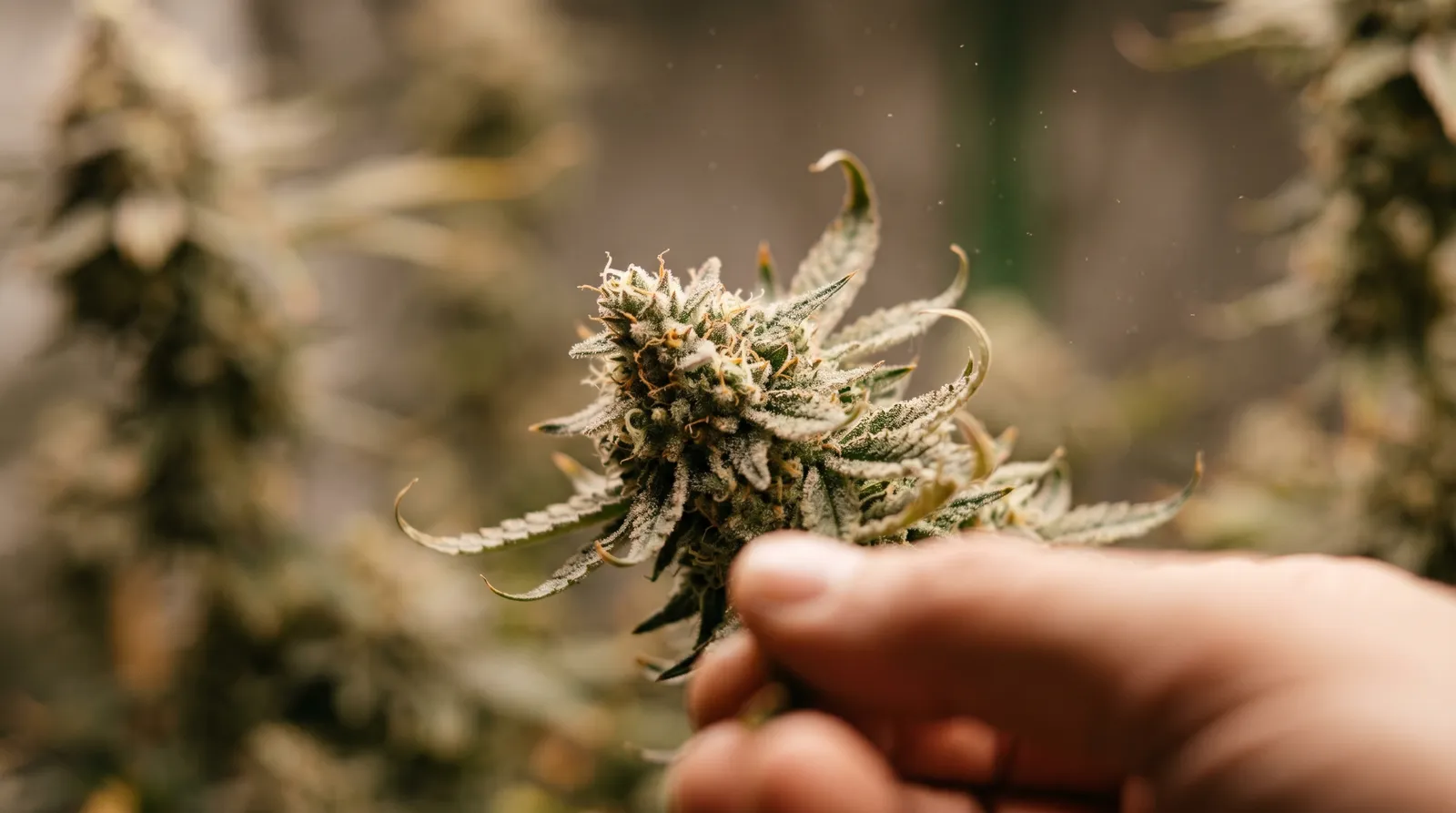
So the science leans sceptical. But — and this is the caveat — most studies tested plants fed within normal ranges. If you've been pushing high EC (say, 2.2+ in coco) all through flower, a flush arguably gives the plant a chance to mobilise stored nutrients rather than sitting on a surplus. The observed taste and ash-colour improvements growers report may come from that mobilisation, not from "washing" anything out of the buds (buds don't have roots; you can't rinse them from the soil up).
Bottom line: if you're overfeeding, flushing probably helps. If you're feeding moderately, flushing probably doesn't change much either way.
When should you start flushing?
Timing depends on your medium, because the nutrient reservoir each medium holds is completely different.
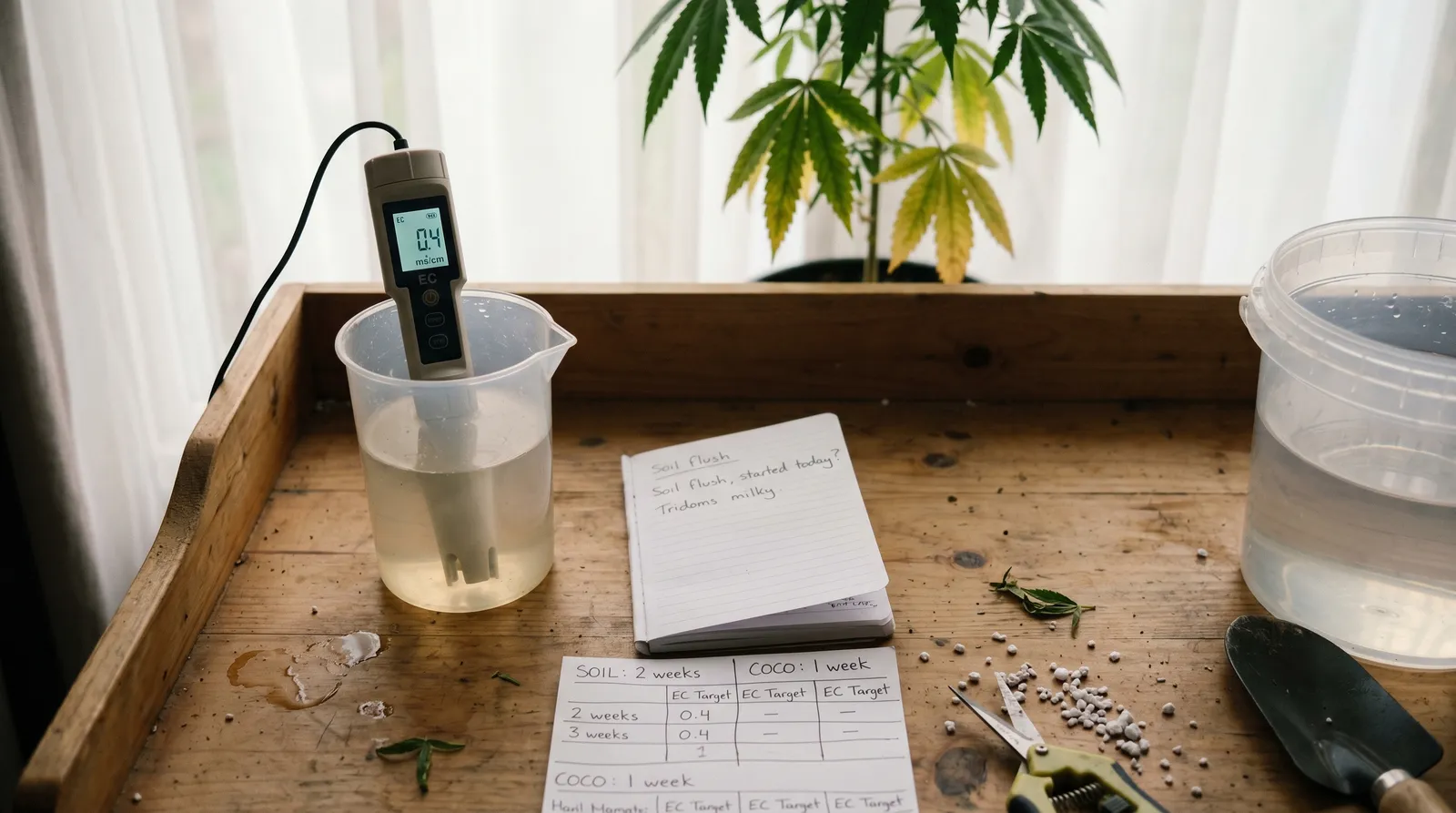
- Soil: 10–14 days before harvest. Soil holds the most residual nutrients and releases them slowly, so it needs the longest runway.
- Coco coir: 7–10 days before harvest. Coco holds less than soil but more than pure hydro — it's an inert medium, but the cation exchange sites still bind some nutrients.
- Hydroponics (DWC, NFT, ebb-and-flow): 1–3 days before harvest, or a simple reservoir swap to plain pH'd water. No medium to flush, so the plant's internal reserves are all you're working with.
- Autoflowers: Same rules by medium, but watch trichomes closely — autos can finish faster than expected and a 14-day soil flush started too early leaves you harvesting under-ripe.
Here's a quick comparison of flushing windows, EC targets and risks by medium:
| Medium | Flush duration | Flush water pH | Target runoff EC | Main risk |
|---|---|---|---|---|
| Soil | 10–14 days | 6.0–6.5 | 0.8–1.0 | Starting too early → nitrogen fade during bud fill |
| Coco coir | 7–10 days | 5.8–6.2 | 0.8–1.0 | Salt rebound if feeding EC was very high |
| Hydroponics | 1–3 days | 5.8–6.2 | n/a (res swap) | Root slime if water sits warm |
| Organic living soil | Optional, 0–7 days | 6.2–6.8 | n/a | Over-flushing disrupts microbiome |
The trigger isn't the calendar, it's the trichomes. Once you see 20-30% amber under a loupe or jeweller's microscope, you're within a window where flushing timing is meaningful. Starting three weeks out is too early — you'll induce nitrogen deficiency during active bud development and lose yield.
How do you actually flush?
The mechanics differ by medium, but the principle is the same: plain water, correct pH, enough of it.
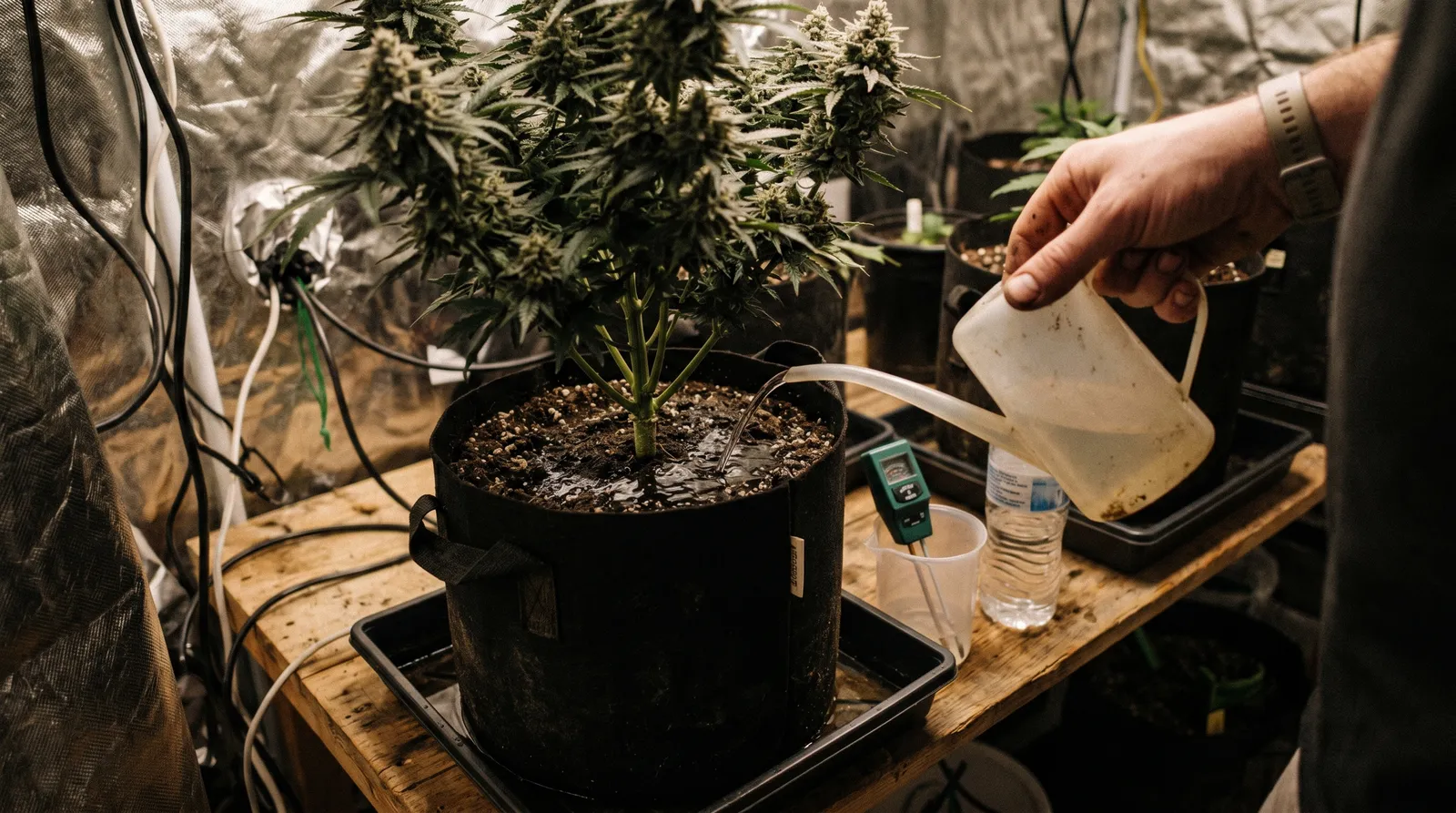
Soil and coco: Water with pH-adjusted plain water (6.0–6.5 for soil, 5.8–6.2 for coco) at your normal watering frequency. Some growers do a "heavy flush" — running 2-3x the pot volume through once at the start, then returning to normal watering — to leach out the root zone. Others just cut nutes and water normally. Both work. Check runoff EC if you have a meter: a starting EC of 2.0+ that drops to 0.8–1.0 over the flush period suggests the medium is actually clearing.
Hydroponics: Drain the reservoir, refill with plain pH'd water (5.8–6.2), and let the plants drink it down for 1–3 days. Some growers add an enzyme product like Hygrozyme or Canna Flush to break down root debris and residual salts, though the evidence for these products is anecdotal. If you want to buy a dedicated flushing agent, read the label carefully — many are mostly chelators and surfactants, and plain pH'd water does most of the job on its own.
Mid-grow lockout flush: Different job. If you see nutrient lockout symptoms (claw-leaf, interveinal yellowing not tied to a specific deficiency), run 2–3x pot volume of pH'd water through the medium in one session, then resume feeding at 50-70% strength the next watering.
What should you see during a flush?
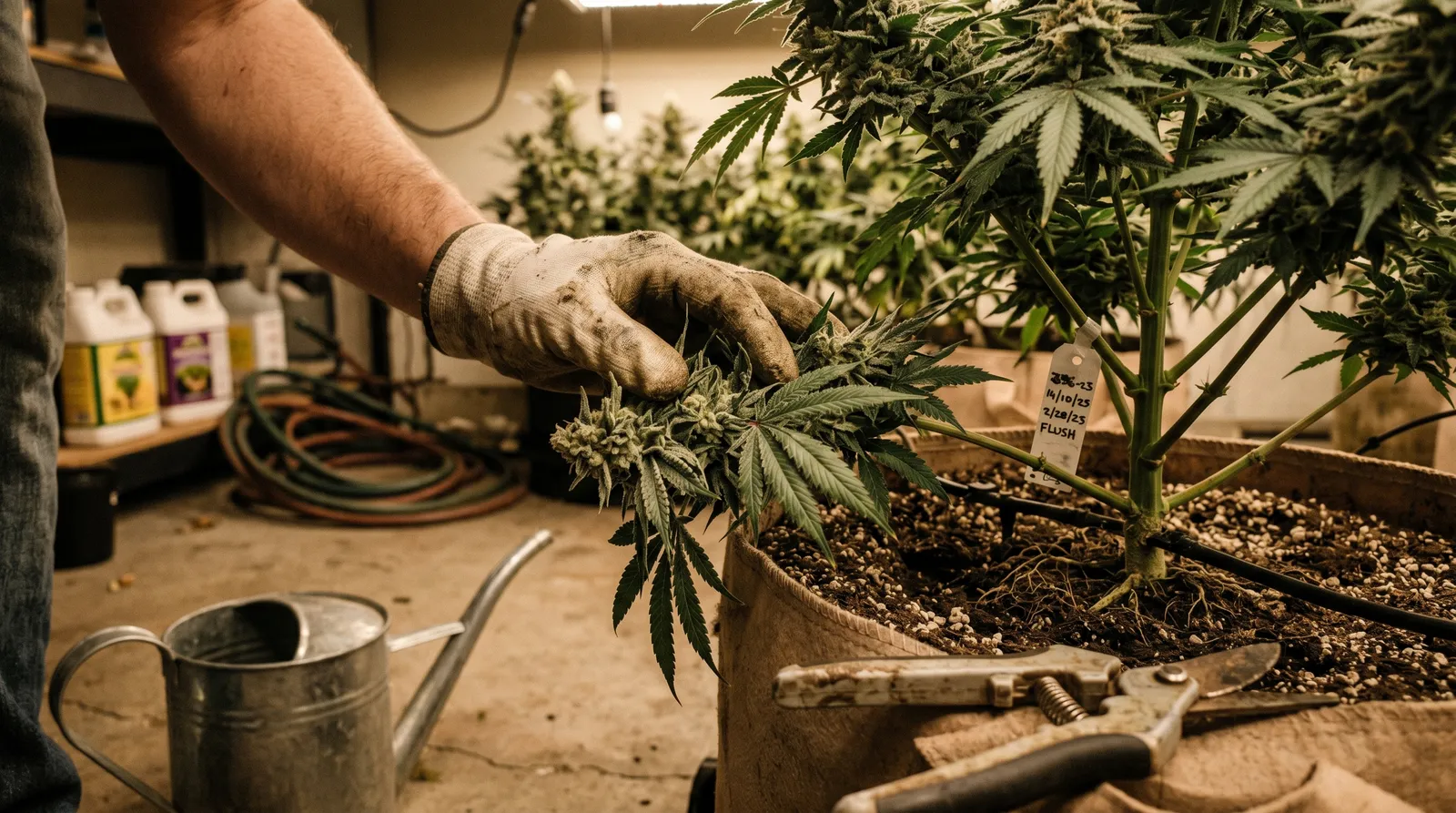
Fan leaves should yellow gradually from the bottom up. This is the plant translocating nitrogen from foliage into flower — exactly what you want to happen. A plant still dark green at harvest has stored nitrogen that will carry into the cure and, according to the flushing crowd, produce harsher smoke and black ash.
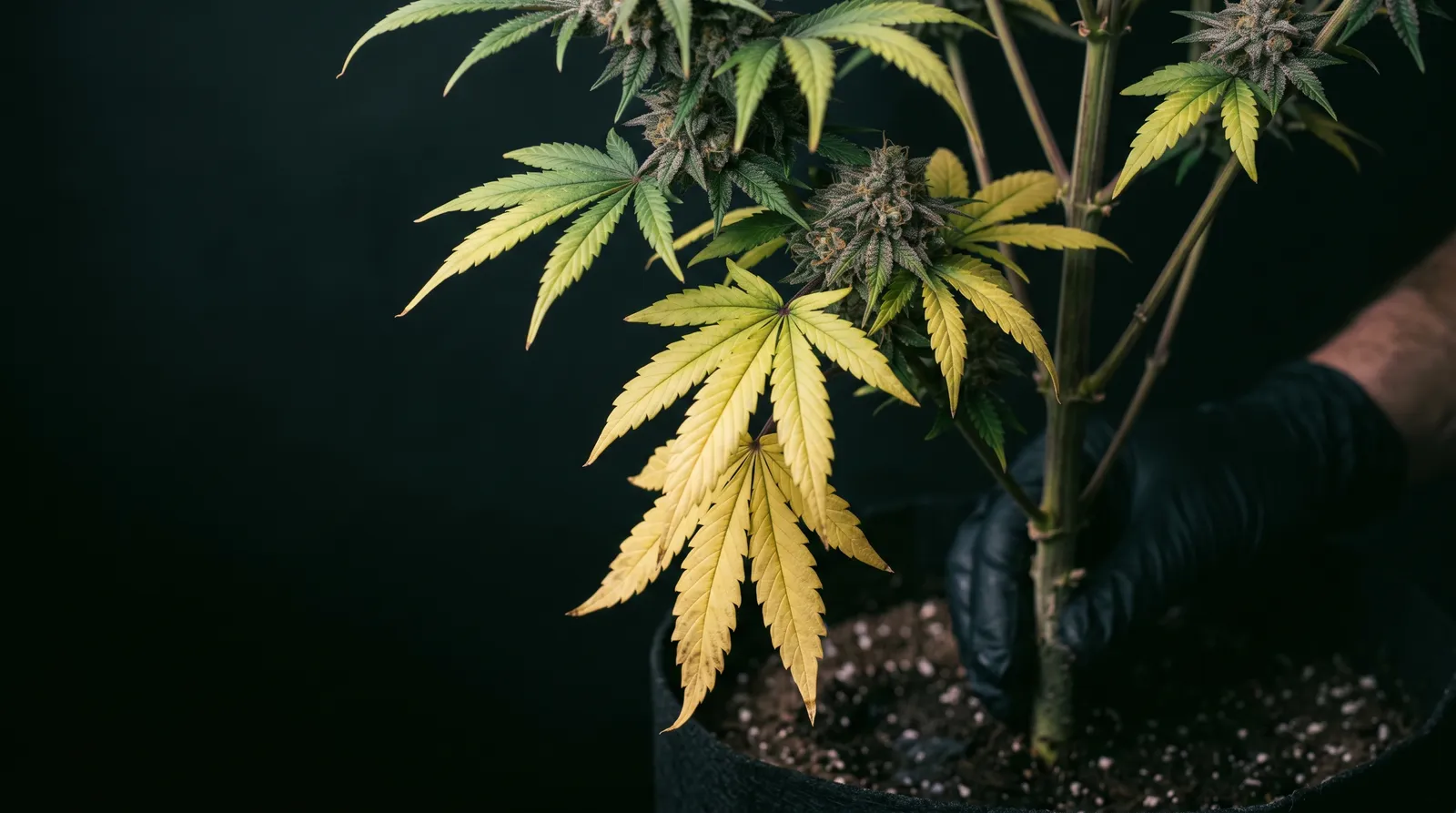
What you don't want: severe defoliation, crispy leaves, or bud leaves yellowing before the fans. That's a flush started too early, or a plant that was already nutrient-stressed. Nitrogen fade should be gradual and start from the bottom up.
If you're growing organically, do you still need to flush?
Probably not — and arguably not at all. Organic living soil relies on microbial decomposition to feed the plant — nutrients are released slowly through biological activity, not dumped in as mineral salts. There's no salt buildup to leach, and the plant isn't sitting on a reservoir of synthetic NPK. Most organic growers simply water with plain water in the final 1–2 weeks and let the soil biology taper off naturally. Super Soil and no-till setups often skip the "flush" step entirely and just harvest when trichomes are ready.
What goes wrong?
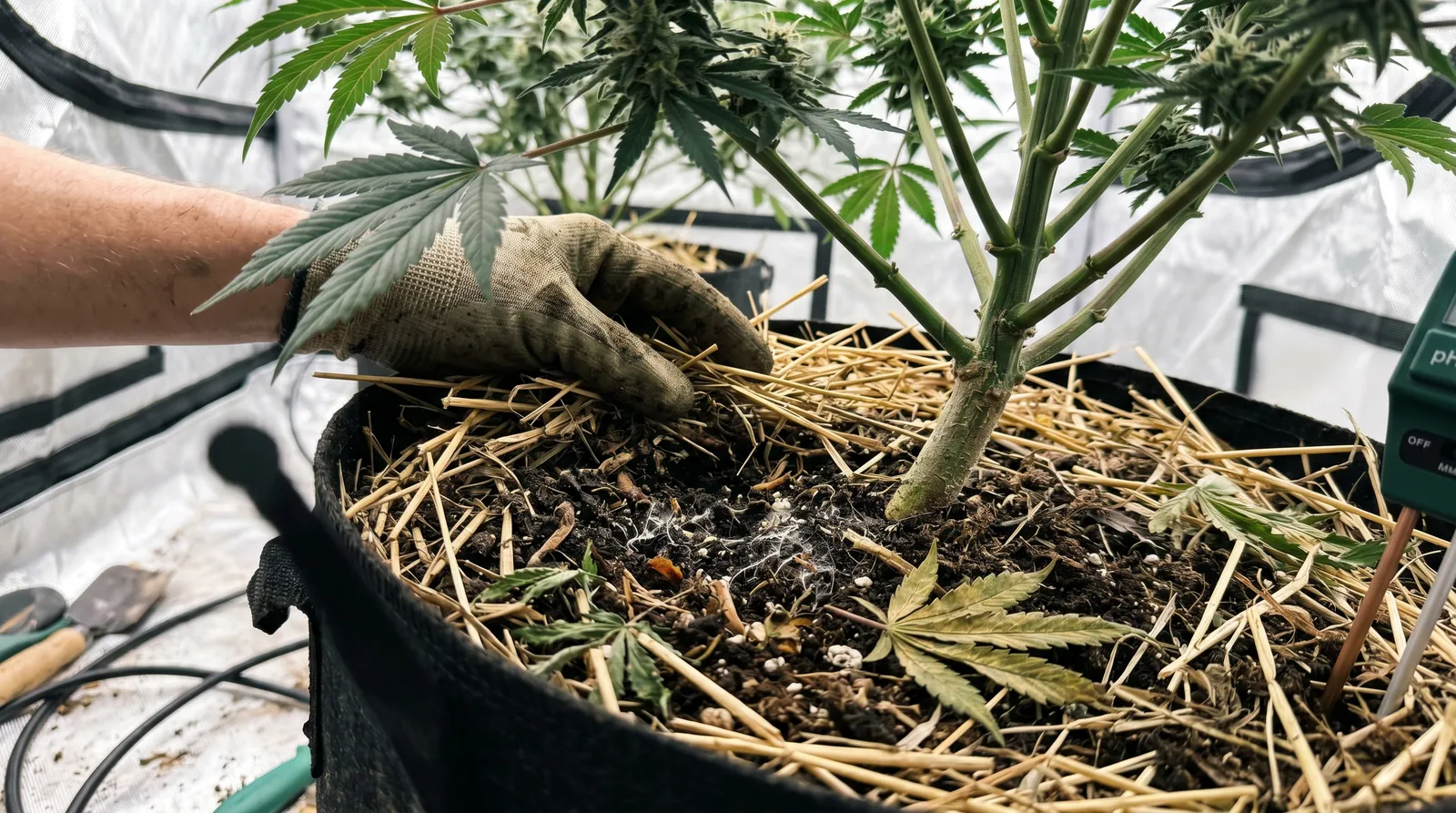
Three things consistently tank otherwise-fine grows:
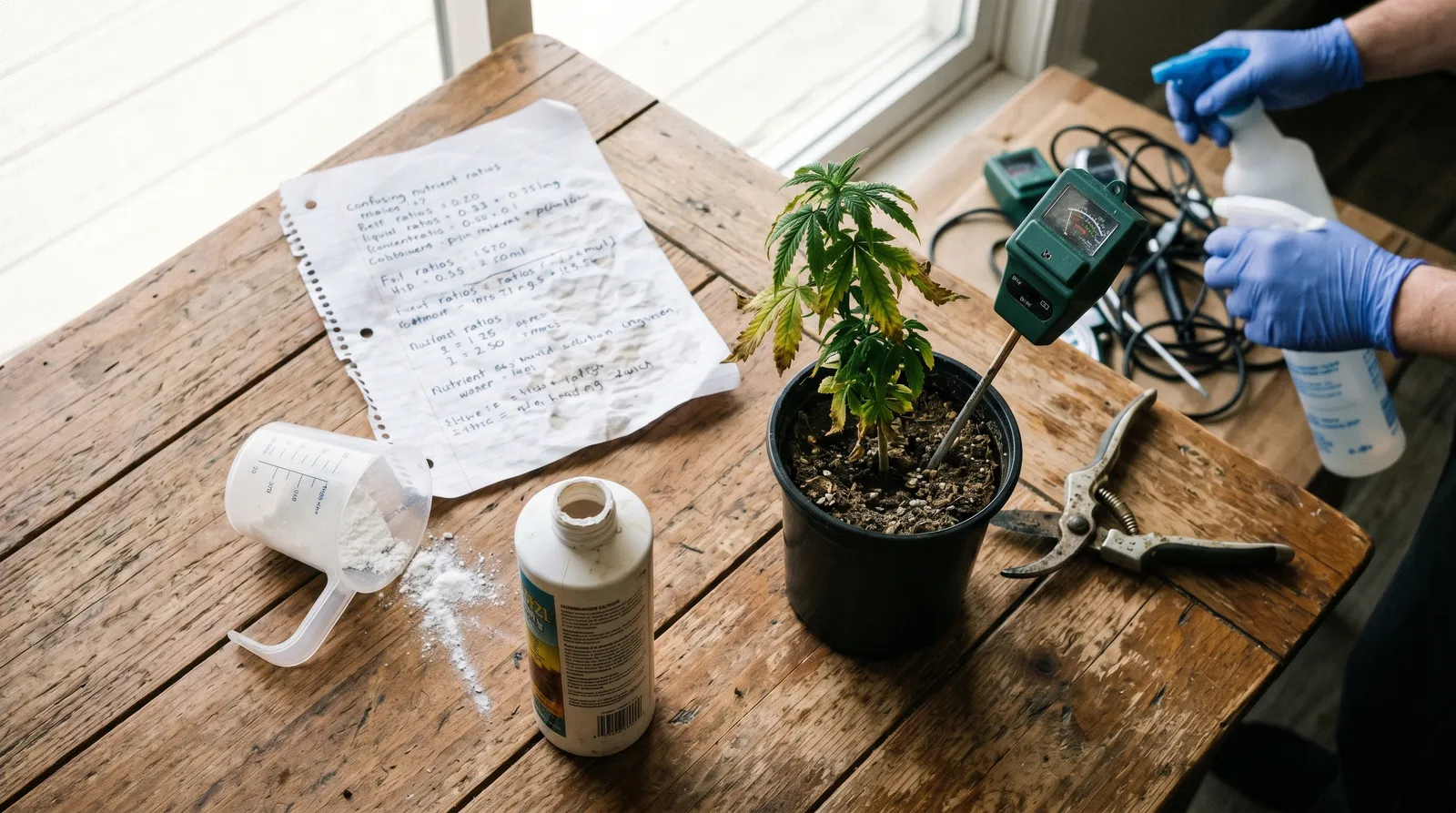
- Flushing too early. Starting a 14-day flush at week 6 of an 8-week flower strain means two weeks of nitrogen starvation during peak bud fill. You'll lose density and weight. Check trichomes first, calendar second.
- Wrong pH on the flush water. Plain tap water at pH 7.8 doesn't flush anything usefully — it creates lockout. pH-adjust every time, even on flush water.
- Confusing flush with drought. Flushing means plain water at normal frequency. It doesn't mean letting the pot dry out. Stressed, wilting plants at harvest produce worse product than well-watered ones, flushed or not.
The honest answer on flushing
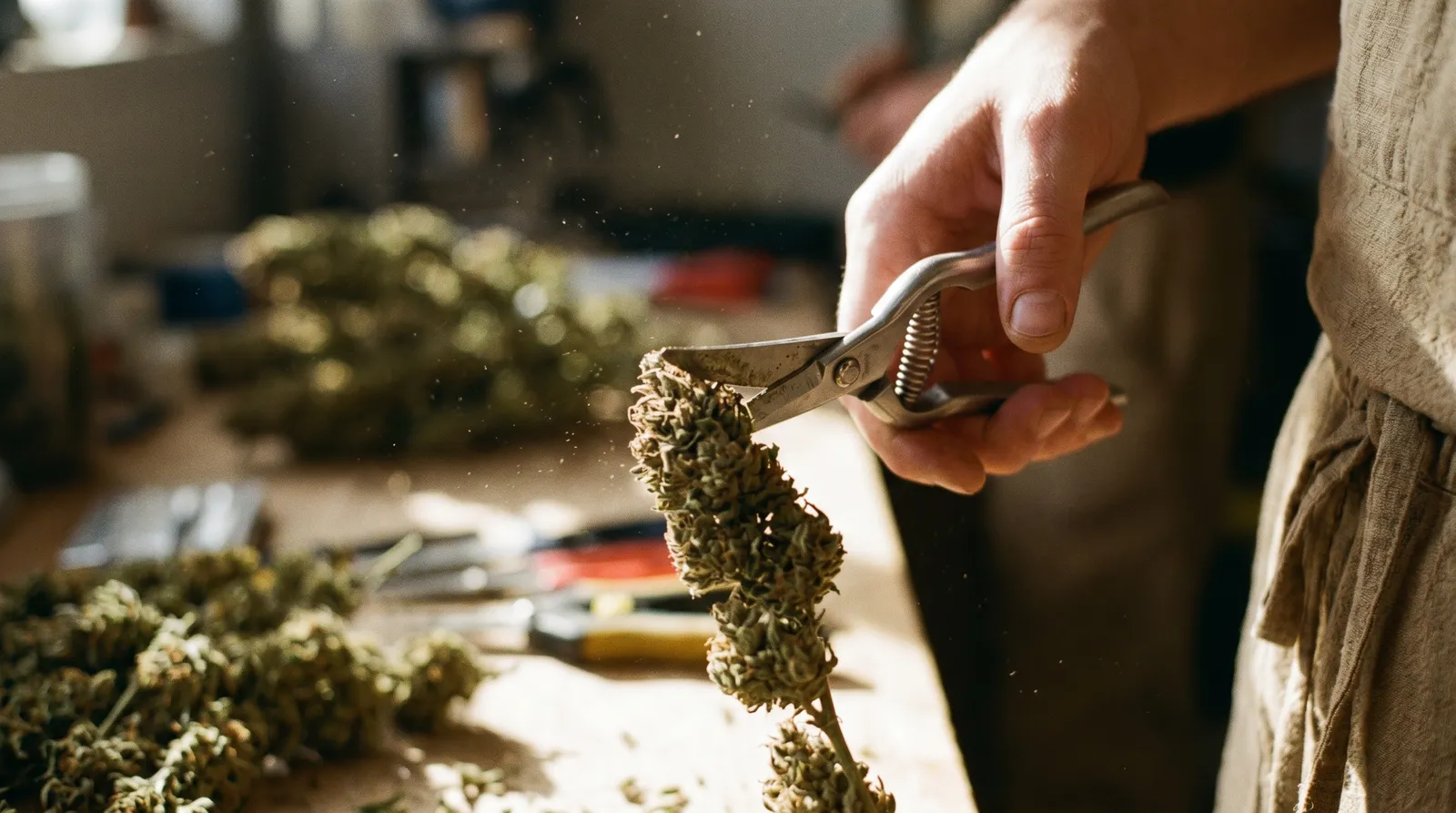
Compared against a proper cure, flushing's effect on final quality is small — that's the honest comparison. The controlled data suggests flushing cannabis has a smaller effect on cured flower quality than grower forums claim — the Stack et al. (2024) work and the RX Green study both point to negligible measurable differences when plants were fed reasonably. Our own tent-level impression lines up with that. But "smaller than claimed" isn't "zero," and if you've been running hot EC, a 7–10 day flush is cheap insurance that costs you almost nothing in yield. If you've been feeding moderately, you can probably skip it and spend the effort on a proper 14-day cure instead — which, incidentally, has far better evidence behind it for smoothness and flavour than anything flushing does. If you want to get serious, order a decent pH pen and EC meter before you buy another bottle of flushing agent.
Disclaimer
This article is for educational purposes only. It is not medical, agronomic, or professional advice. Cannabis cultivation is an adult activity and outcomes vary with genetics, environment and grower experience. Readers should independently verify techniques and consult qualified professionals where appropriate. Azarius makes no warranty as to the completeness or accuracy of the information presented. Trichome monitoring, pH measurement and EC monitoring all carry a learning curve — take your time and don't rush the final weeks of flower.
Last updated: April 2026
Frequently Asked Questions
8 questionsDoes flushing cannabis increase THC or yield?
How long should you flush cannabis before harvest?
Do you need to flush organic cannabis?
What pH should flush water be?
How do you know if a flush is working?
Can you flush cannabis plants mid-grow?
Can you over-flush cannabis plants?
Should you flush cannabis in living soil or no-till setups?
About this article


Luke Sholl has been writing about cannabis, cannabinoids, and the broader benefits of nature since 2011, and has personally grown cannabis in home grow tents for more than a decade. That first-hand cultivation experience
This wiki article was drafted with AI assistance and reviewed by Luke Sholl, External contributor since 2026. Editorial oversight by Adam Parsons.
Medical disclaimer. This content is for informational purposes only and does not constitute medical advice. Consult a qualified healthcare provider before use of any substance.
Last reviewed April 24, 2026
References (6)
- [1]Stack, G.M., et al. (2024). Effects of pre-harvest flushing on mineral content and quality of cannabis inflorescence. Journal of Cannabis Research.
- [2]RX Green Technologies (2020). The Effect of Flushing on Cannabis Yield and Quality.
- [3]Caplan, D., Dixon, M., Zheng, Y. (2019). Increasing inflorescence dry weight and cannabinoid content in medical cannabis using controlled drought stress. HortScience, 54(5).
- [4]Bernstein, N., Gorelick, J., Koch, S. (2019). Interplay between chemistry and morphology in medical cannabis. Industrial Crops and Products, 129.
- [5]EMCDDA (European Monitoring Centre for Drugs and Drug Addiction). Cannabis drug profile and cultivation overview.
- [6]Beckley Foundation. Research briefings on cannabis cultivation, potency and harm reduction.
Related Articles
Cannabis Hermaphrodite: Identify, Prevent, Act
A cannabis hermaphrodite is a female plant that develops male pollen sacs or banana-shaped anthers (nanners), self-pollinating and seeding your harvest.
DIY Cannabis Fertilizer: Homemade Nutrient Guide
DIY cannabis fertilizer guide: compost, teas, banana ferments and feed schedules, with safety notes and cited research for home growers.
What To Do With Male Cannabis Plants: 6 Practical Uses
What to do with male cannabis plants: identify, isolate, breed, extract, or compost. A practical 6-step guide with sourcing and safety notes.
Mushroom Grow Kit Temperature & Humidity: Full Setup Guide
A temperature humidity control grow kit is the small set of climate tools — hygrometer, heat mat, humidifier or perlite tray — that keeps a mushroom fruiting…
When to Harvest Mushrooms: Veil Break Timing Explained
Harvest timing veil break is a cultivation technique that uses the tearing of the partial veil on maturing Psilocybe cubensis to mark peak alkaloid content.
First Grow Checklist: What You Need for Mushroom Kits
A first grow checklist is the short list of supplies and environmental conditions needed to run a home psilocybin mushroom kit from inoculated substrate to…
Sclerotia vs Fruit Bodies: Cultivation Comparison
Sclerotia and fruit bodies are two different life stages of Psilocybe fungi: sclerotia are hardened underground mycelial storage bodies (the 'magic…
Storing Dried Mushrooms Long Term: Full Guide
Storing dried mushrooms long term means keeping well-dried Psilocybe fruit bodies in airtight, opaque containers with desiccant, cool and dark, to slow…
Drying Mushrooms Air Desiccant Oven: Methods Compared
Drying mushrooms air desiccant oven refers to the three home methods for reducing fresh fruit bodies from ~90% water to cracker-dry (<5%). Gotvaldová et al.